Ch. 3 Branding Strategy and Consumer Behaviour
 Call Kai
 Learn
Learn Practice Test
 Spaced Repetition
 Match
Match Flashcards
 Knowt Play
1/33

There's no tags or description
Looks like no tags are added yet.
Name | Mastery | Learn | Test | Matching | Spaced | Call with Kai | Chat |
|---|
No analytics yet
Send a link to your students to track their progress
34 Terms
opportunities matrix
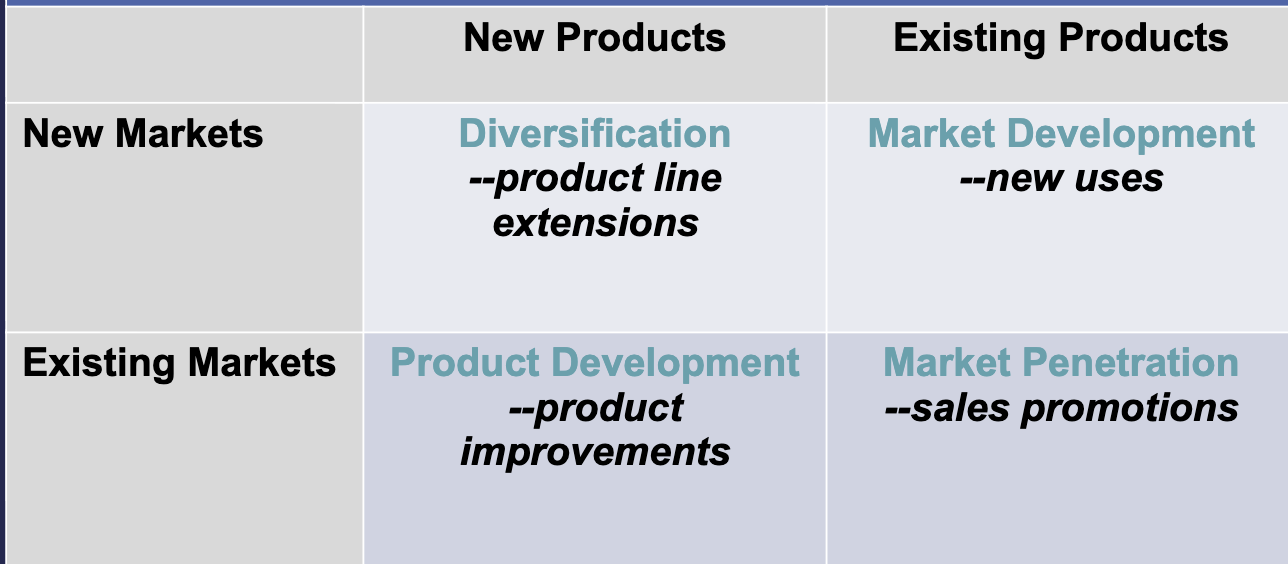
diversification
new products, new markets
product line extensions
eg. arm and hammer toothpaste, carpet cleaner
market development
existing products, new markets
new uses
eg. arm and hammer baking soda deodorizes fridges, sinks, and freezers
product development
new products, existing markets
product improvements
eg. variations on a theme, arm and hammer baking soda for cakes vs cookies vs breads
market penetration
existing products, existing markets
sales promotions
diffusion of innovations
the rate at which a new product spreads or is adopted across the marketplace
the rate is influenced by
relative advantage of the new product
compatibility with consumers lifestyles
complexity
observability
perceived risk
trialability
pioneering brand advantage
the first brands to enter a new market often enjoy a long term preference advantage over copycat brands
product life cycle

introduction stage
focus on innovators / innovators try product
create awareness
induce trial
advertise
promote
growth stage
snowball effect, focus on early adopters
build market share
stimulate WOM
new segments
brand extensions
maturity stage
when maximum adoption happens, focus on early majority
control costs
production efficiency
monitor competition
decline stage
category attrition, focus on late majority
harvest
rejuvenate
strategies for extending the product life cycle
does the product have a new or extended use?
is the product category “under-advertised”?
is there a broader target market?
can you cut price and build volume and profit?
is there a social trend ot exploit?
can you expand distribution channels?
brand
the names, terms, designs, symbols, or other features that identify a good/service
provides a way to differentiate the product offering
triggers strong associations stored in consumers memories
brand resonance
refers to a consumers intense and actively loyal relationship with a brand
leads to high purchase frequencies and volumes, feelings of attachment, feelings of brand community or kinship with other users of the brand, and active engagement like joining clubs associated with the brand
brand equity
the value of a brand above and beyond its measurable attributes
the positive differential effect that knowing the brand name has on customer response to the product or service
can be measured by comparing consumers evaluation of the same product with and without the brand name attached
brand awareness
familiar with brand and what it stands for; have an opinon or attitude about the brand
perceived value
benefit to cost relationship compared to competition
brand loyalty
measured by consumers repeat purchases
brand associations
mental links that consumers make between a brand and its key product attributes
building a strong brand
establish strong brand identity (distinction)
build strong brand meaning (knowledge)
foster strong brand responses (positive feelings)
brand resonance pyramid

measures to determine the value of a brand
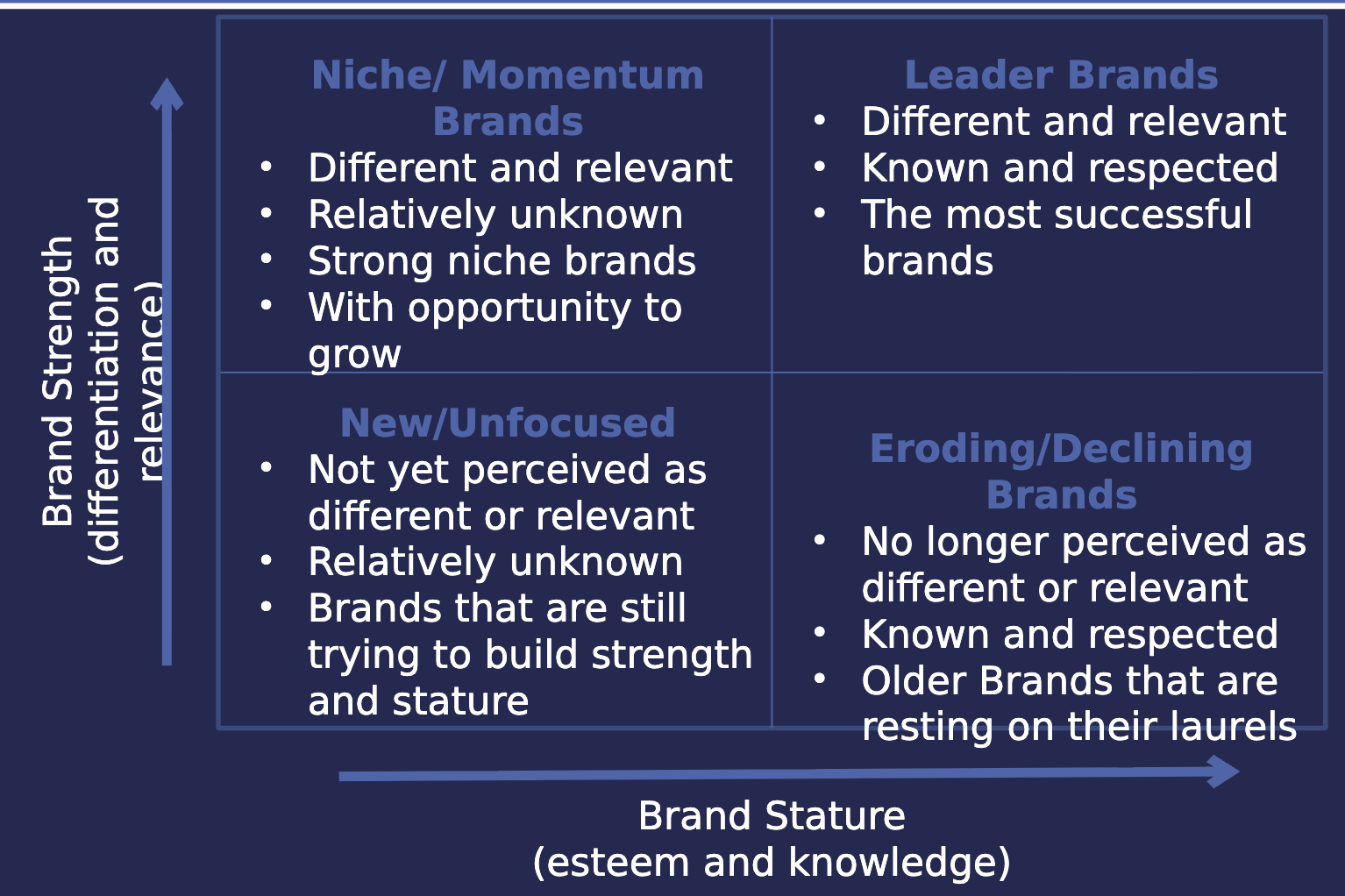
brand strength (brand vitality) - differentiation x relevance
brand stature (esteem x knowledge)
brand strength
differentiation x relevance
differentiation: is the brand perceived as different from other brands?
relevance: are the differentiated benefits relevant to consumers
brand stature
esteem x knowledge
esteem: is the brand highly regarded (respected) and liked
knowledge: are consumers knowledgeable about the brand and its benefits? does it have a clear consistent image?
brand equity chart
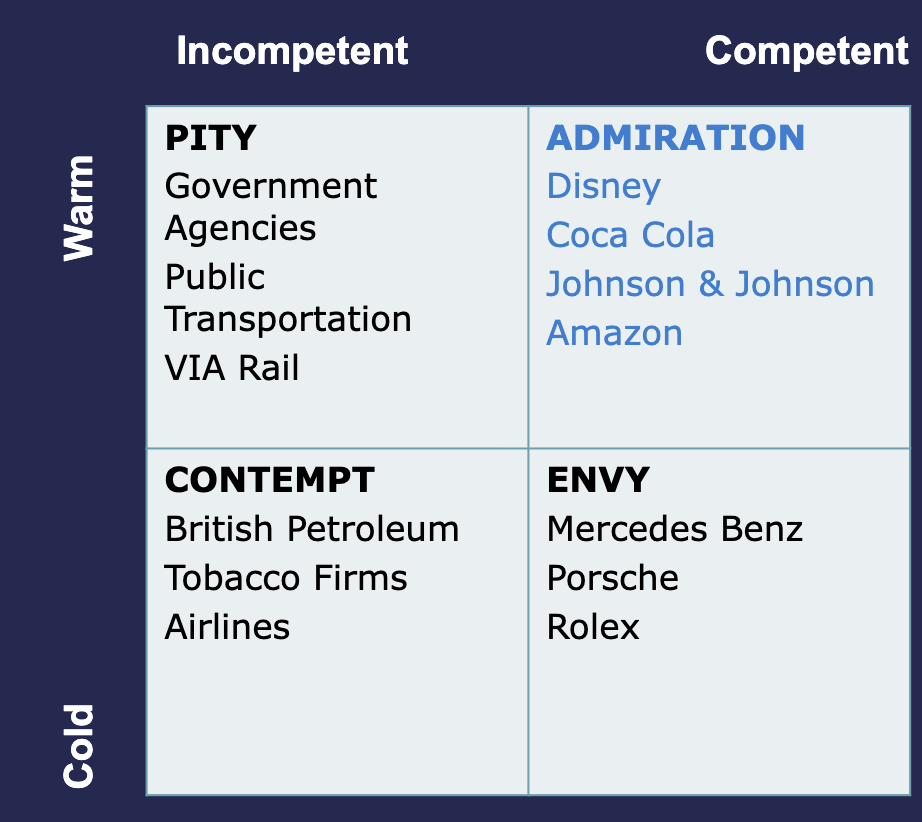
warmth competence model
product line management
how to deliver value
one product or many?
one brand or many?
product line breadth
how many different products a firm should offer
cannibalization
when the sales of one product take sales away from another product in the same product line
more likely to occur when consumers are brand loyal vs attribute loyal
brand loyal
consumers have a strong preference for a brand and so are more likely to continue o buy products within a brand
attribute loyal
consumers have a strong preference for a particular attribute and are more likely to switch brands in search of that attribute
acquisition strategies (managing continued growth)
strategies that attract new customers
retention strategies (managing continued growth)
strategies that retain current customers