CH. 24 Fluid, Electrolyte, and Acid-Base Exam 3 Rebecca Effler SUMMERTIME
 Call Kai
 Learn
Learn Practice Test
 Spaced Repetition
 Match
Match Flashcards
 Knowt Play
1/57

There's no tags or description
Looks like no tags are added yet.
Name | Mastery | Learn | Test | Matching | Spaced | Call with Kai | Chat |
|---|
No analytics yet
Send a link to your students to track their progress
58 Terms
What is the significance of fluid, electrolyte, and acid-base balance in treating serious illnesses?
Restoring normal fluid, electrolyte, and acid-base balance is essential for treating illnesses affecting the nervous, cardiovascular, respiratory, urinary, or digestive systems.
Fluid compartments
areas separated by selectively permeable membranes and differing in chemical composition
Two major fluid compartments of the body
Intracellular fluid (ICF) and Extracellular fluid (ECF).
What is the composition of Intracellular fluid (ICF)?
-Cytosol of cells (65%)
-Composed of potassium (K+), magnesium (Mg+), phosphate (HPO4^2-), and negatively charged proteins
What is the composition of Extracellular fluid (ECF)?
-Interstitial fluid (25%), blood plasma and lymph (8%), and transcellular fluid (2%)
-Transcellular fluid - CSF, synovial, peritoneal, pleural, and pericardial fluids; vitreous and aqueous humors of the eye; fluids of the digestive, urinary, and reproductive tracts
-Sodium (Na+), Chloride (Cl-), and bicarbonate (HCO3-)4
How does water move between fluid compartments?
-Water exchanges passively both ways between blood and tissue fluid and between tissue and intracellular fluid
-Excess tissue fluid is picked up by the lymphatic system which returns it to the bloodstream
-Any factor that affects pressure will alter the distribution of fluid
Fluid balance
is achieved when daily water gains and losses are equal, approximately 2,500 mL/day.
Two sources of water gain
-Metabolic water from aerobic metabolism and dehydration synthesis
-Preformed water ingested in food and drink
Routes of water loss from the body
-Urine, feces, expired breath, sweat, and cutaneous transpiration—water that diffuses through epidermis and evaporates
-Most is lost through urine and feces
Water balance involves
controlling the ionic concentrationsinside and outside the cell
Electrolytes play the principal role in
-Governing the body's water distribution and total water content
-Most solute particles are electrolytes: sodium salts in ECF, potassium salts in ICF
Electrolyte balance
amount of electrolytes absorbed (small intestine) balances the amount lost from the body(urine)
Physiological importance of electrolytes:
-Chemically reactive and participate in metabolism
-Determine electrical potential (charge difference) across cell membranes
-Strongly affect osmolarity of body fluids
-Affect body's water content and distribution
Major cations:
Na+, K+, Ca2+, Mg2+, H+
Major anions:
Cl-, HCO3- (bicarbonate), and PO43-
Electrolyte imbalance issues
-Can have serious consequences in the body
-Elevated Ca+ or K+ ions in the ECF can cause cardiac arrhythmias and death
Acid-base balance
Production of H+ is offset by their loss, keeping the pH of body fluids within normal limits
How do the kidneys contribute to acid-base balance?
The kidneys secrete H+ into urine and produce buffers that enter the bloodstream, helping to maintain pH.
What are the three primary hormones regulating water balance?
1. Antidiuretic hormone (ADH)
2. Aldosterone
3. Natriuretic peptides.
Action of Antidiuretic Hormone (ADH)
-Osmoreceptors in the hypothalamus respond to the osmotic concentration of the ECF and angiotensin II
-The pituitary release ADH into blood when osmotic concentration is high.
Antidiuretic Hormone stimulates
The thirst center in the brain (reduced saliva) and reduces urinary water loss (the DCT and collecting duct) in the kidneys
Action of Aldosterone
-Is secreted by the adrenal cortex and controls Na+ absorption and K+ loss along the DCT
-Increased aldosterone secretion increases Na+ and Cl-reabsorption
-Since water follows salt, water is retained
-Aldosterone also increases the sensitivity of salt receptors on the tongue.
Atrial natriuretic peptide (ANP)
atrial muscle
Brain natriuretic peptide (BNP)
ventricular muscle
ANP and BNP are released
-In response to abnormal stretching (increased BP and blood volume)
-Reduce thirst
-Block the release of ADH and aldosterone
-Increase fluid loss at the kidneys•
-Lower the BP and plasma volume
Fluid deficiency
-Fluid imbalance that arises when fluid output exceeds intake over long period of time
-Two types of deficiency: volume depletion and dehydration
Volume depletion (hypovolemia)
-Proportional amounts of sodium and water are lost without replacement
-Total body water declines but osmolarity remains normal
-Caused by hemorrhage, burns, chronic vomiting or diarrhea, aldosterone hyposecretion (Addison disease)
Dehydration (negative water balance)
-Body eliminates significantly more water than sodium
-ECF osmolarity rises
-Caused by lack of water intake, diabetes mellitus, diabetes insipidus (ADH hyposecretion), profuse sweating, overuse of diuretics
Fluid excess is much less common than
fluid deficiency because kidneys are highly effective in compensating for excessive intake by excreting more urine
-Two types of fluid excesses: volume excess & hypotonic hydration
Volume excess
-Both sodium and water are retained and ECF
remains isotonic
-Caused by aldosterone hypersecretion or renal failure
Hypotonic hydration (water intoxication or positive fluid balance)
-More water than sodium is retained or ingested and ECF becomes hypotonic
-Caused losing large amounts of water and salt through urine and sweat, but replace it by drinking only plain water
-Water dilutes ECF, makes it hypotonic, leads to cellular swelling and dysfunction
Volatile acids
leave solution and enter atmosphere (carbonic acid)
Fixed acids
do not leave solution, removed by kidney (sulfuric and phosphoric acid - catabolism of AA and PO4-)
Organic acids
-By products of metabolism
-(Lactic acid and keytones) - do not accumulate unless extended anaerobic metabolism or starvation
Mechanisms of pH control
-The pH of a solution is determined by its H+
-An acid is any chemical that releases H+
-H+ are gained at the digestive tract and metabolic activities with cells
-H+ is eliminate by the lungs and kidneys
-H+ must be neutralized while traveling through the body to prevent damaging tissues
Buffer
-Any mechanism that resists pH changes by converting a strong acid or base to weak one
-Donate or bind H+
Chemical buffer
-Substance that binds H+ and removes it from solution as its concentration begins to rise, or releases H+ into solution as its concentration falls
-Restores normal pH in fractions of a second
-Buffer systems are mixtures composed of weak acids and weak bases
-Three major chemical buffers: protein, phosphate, and bicarbonate systems
Protein buffer system
proteins act as buffers due to the side groups of their amino acids
Phosphate buffer system
Important for buffering in the intracellular fluid and renal tubules
Bicarbonate buffer system
-Buffers changes caused by organic and fixed acids
-Almost all cells generate CO2 24 hrs/day
-CO2 is the most important factor in determining pH in the body.
-In the lungs, carbonic acid breaks down into CO2 and H2O
-In the peripheral tissues, CO2 in solution interacts with water to forn carbonic acid, which dissociates to H+ and bicarbonate ions.26
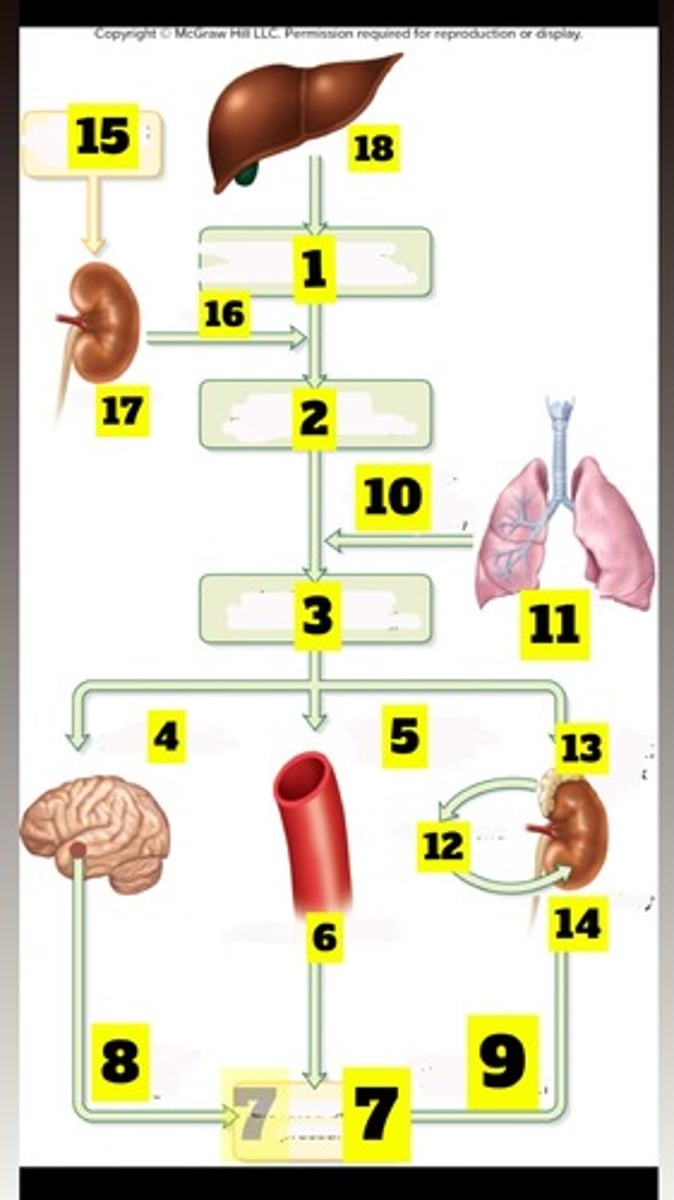
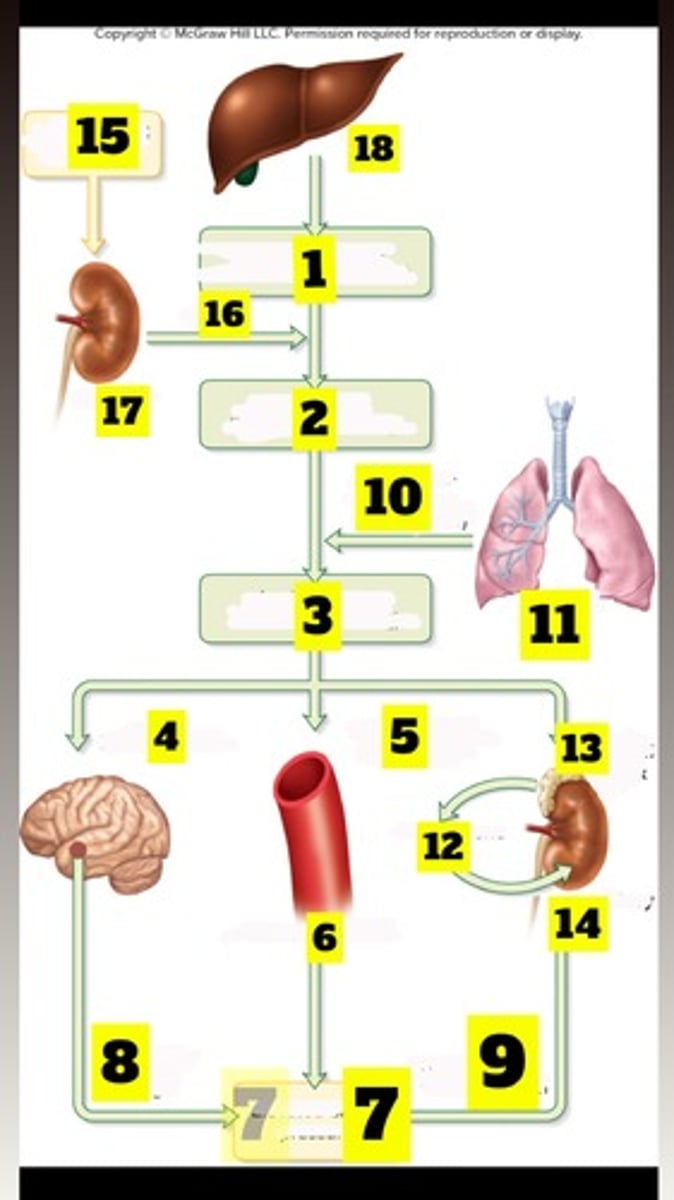
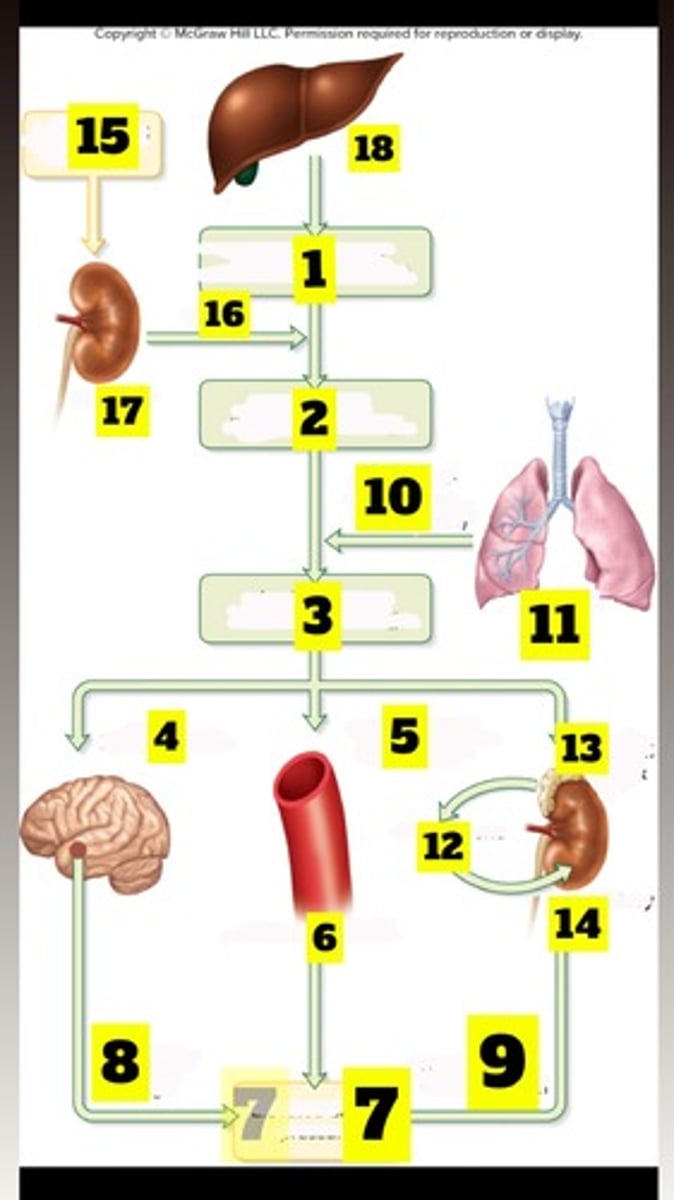
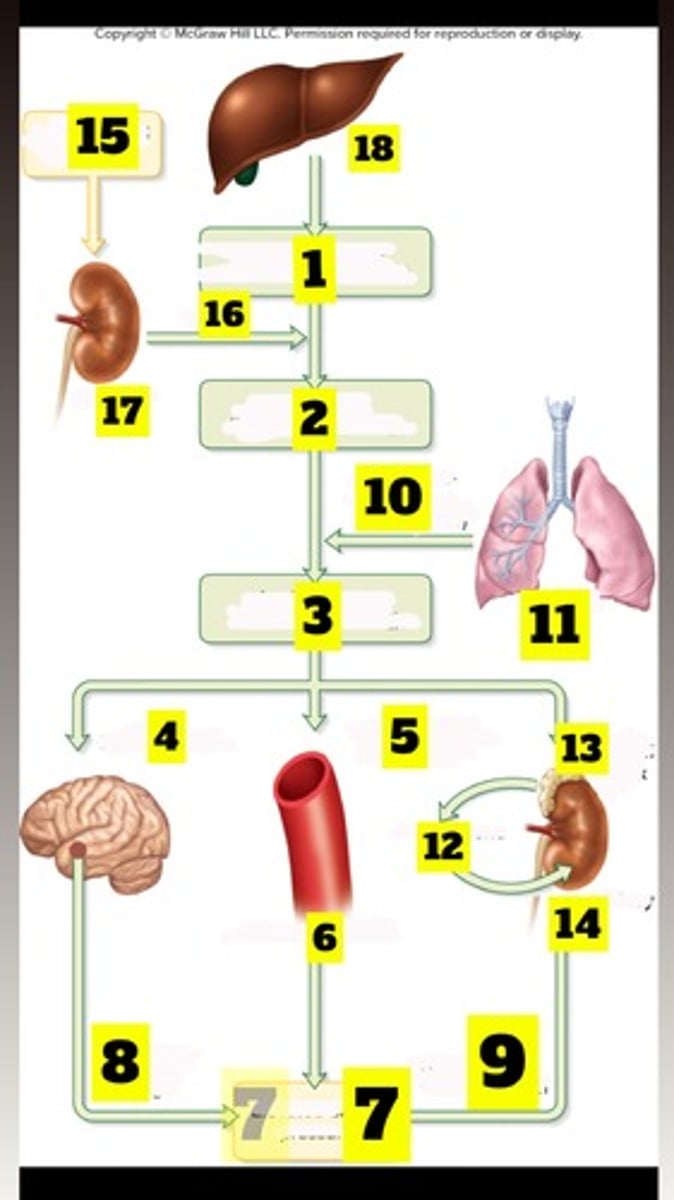
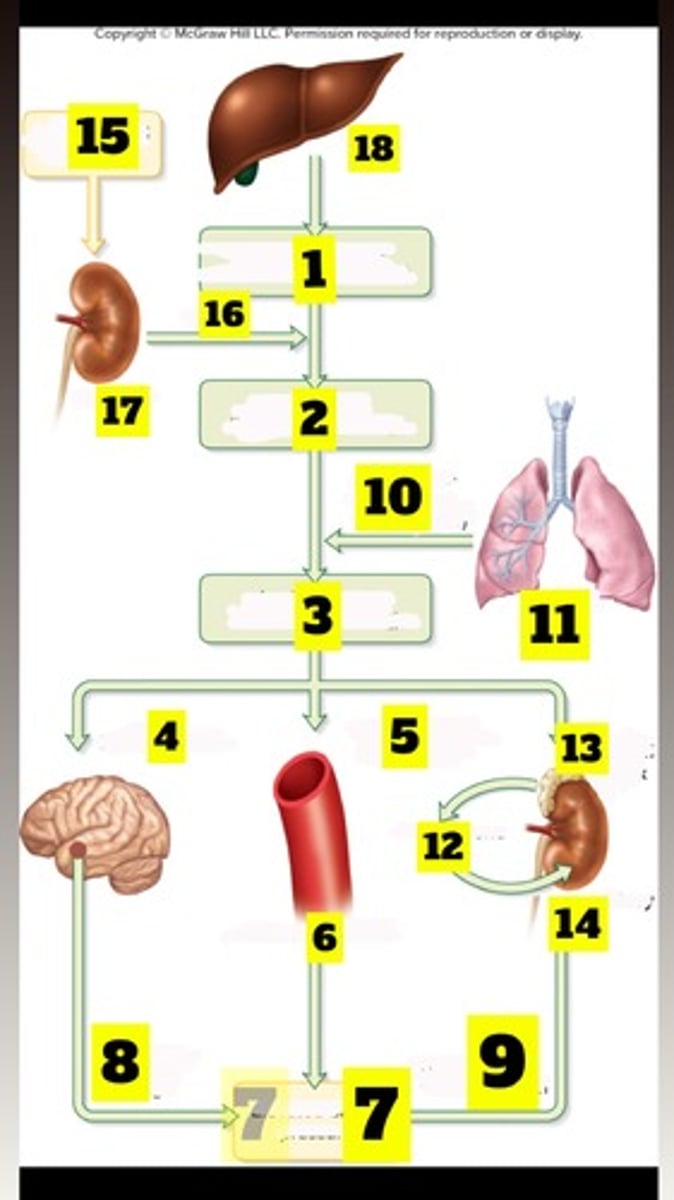
What is number 1?
Angiotensinogen
(453 amino acids long)
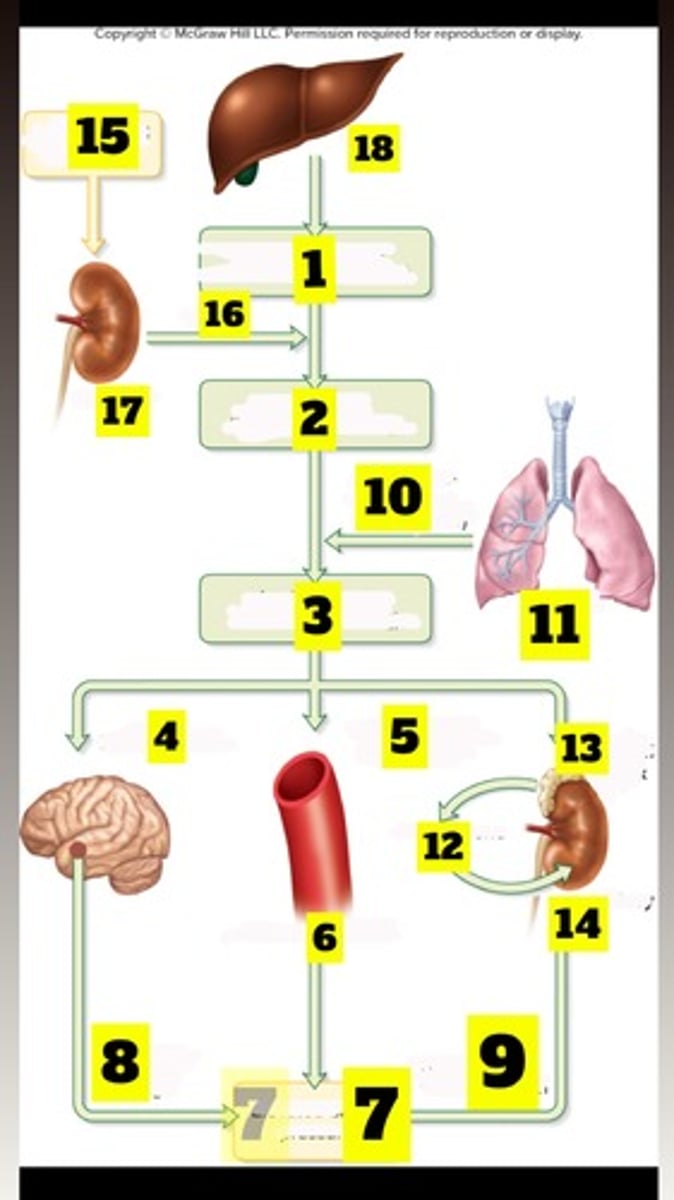
What is number 2?
Angiotensin I
(10 amino acids long)
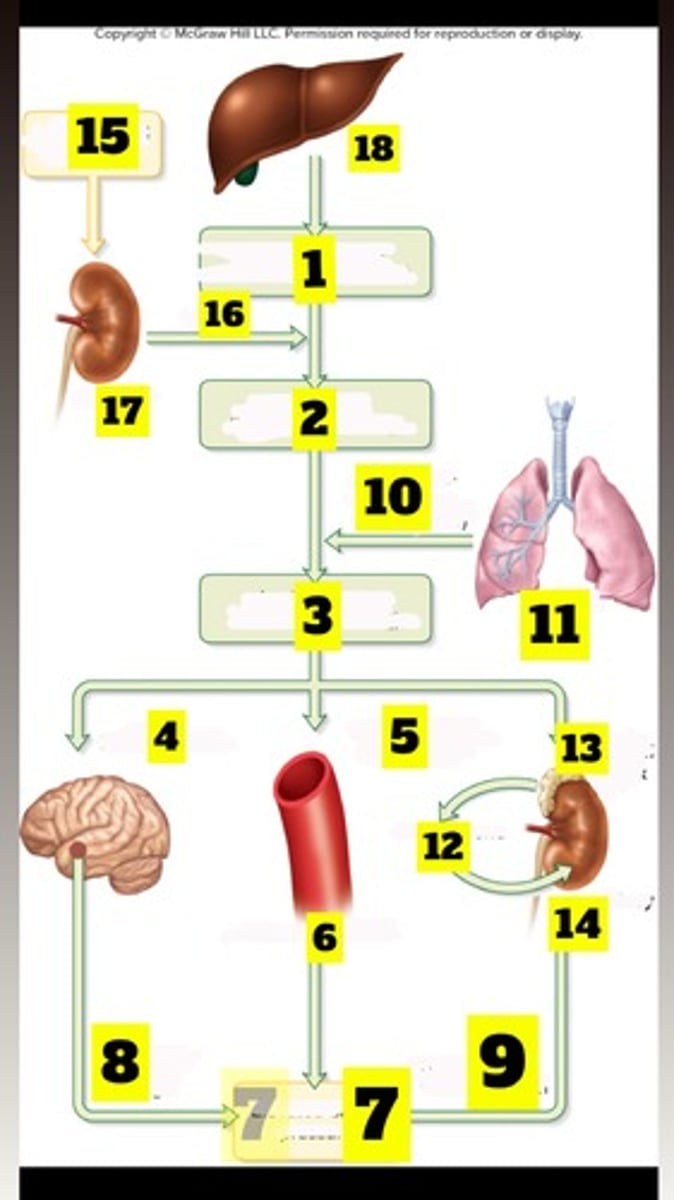
What is number 3?
Angiotensin ||
(8 amino acids long)
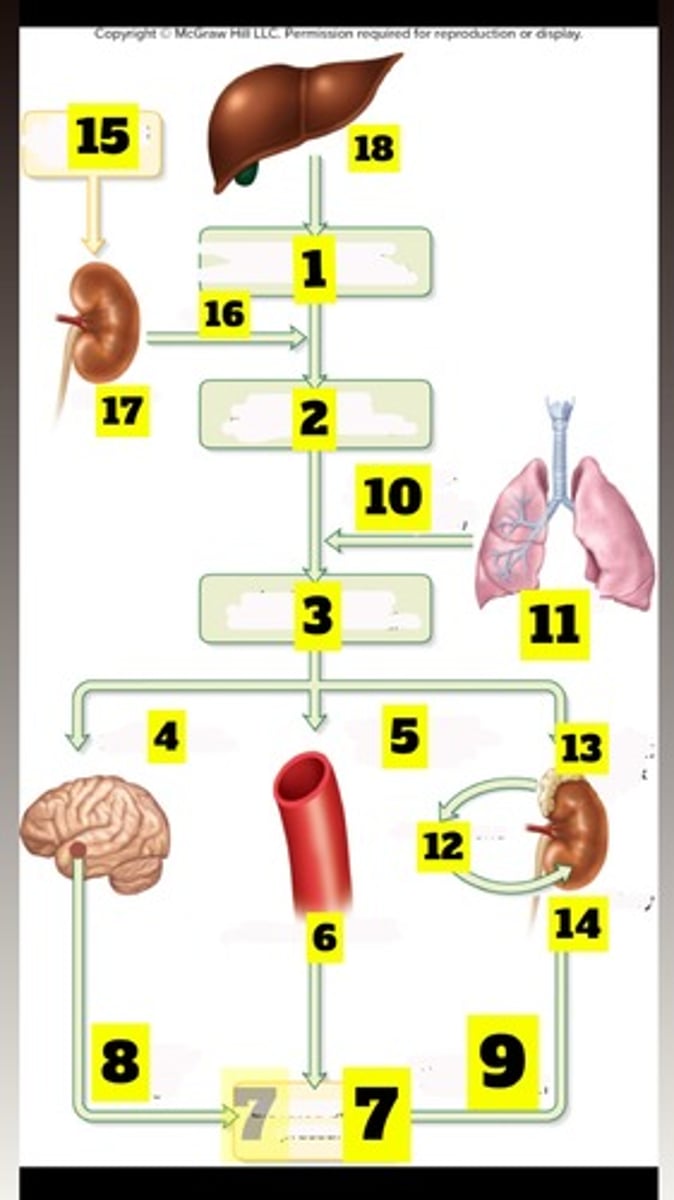
What is number 4?
Hypothalamus
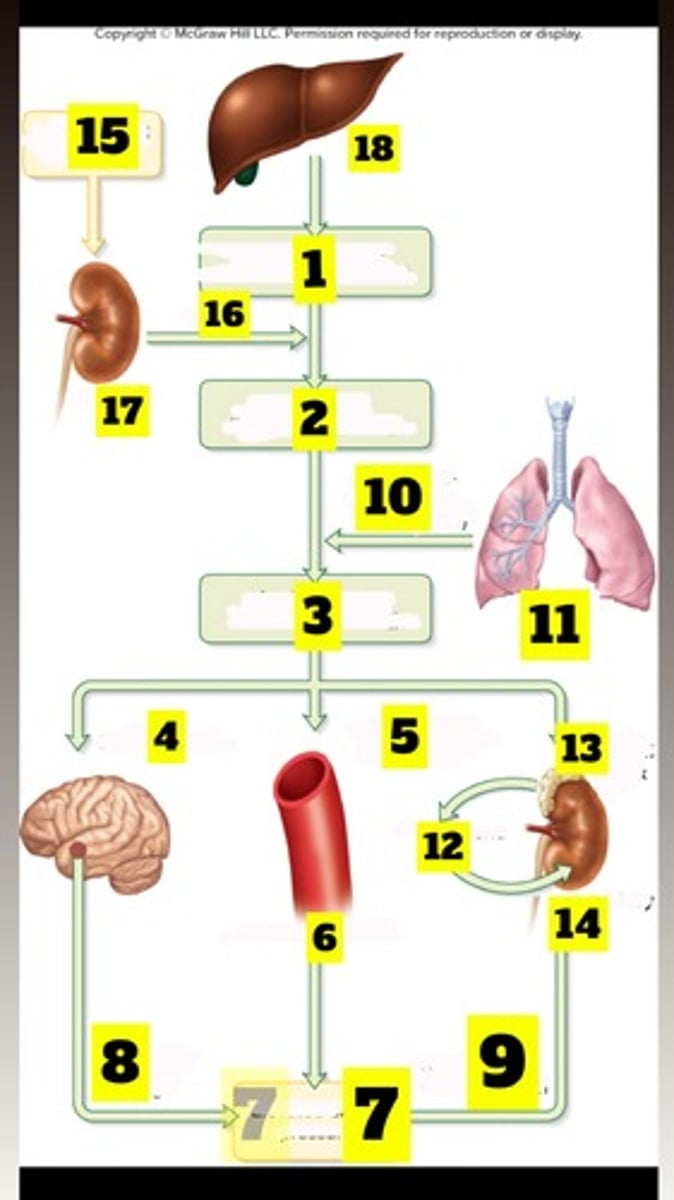
What is number 5?
Cardiovascular system
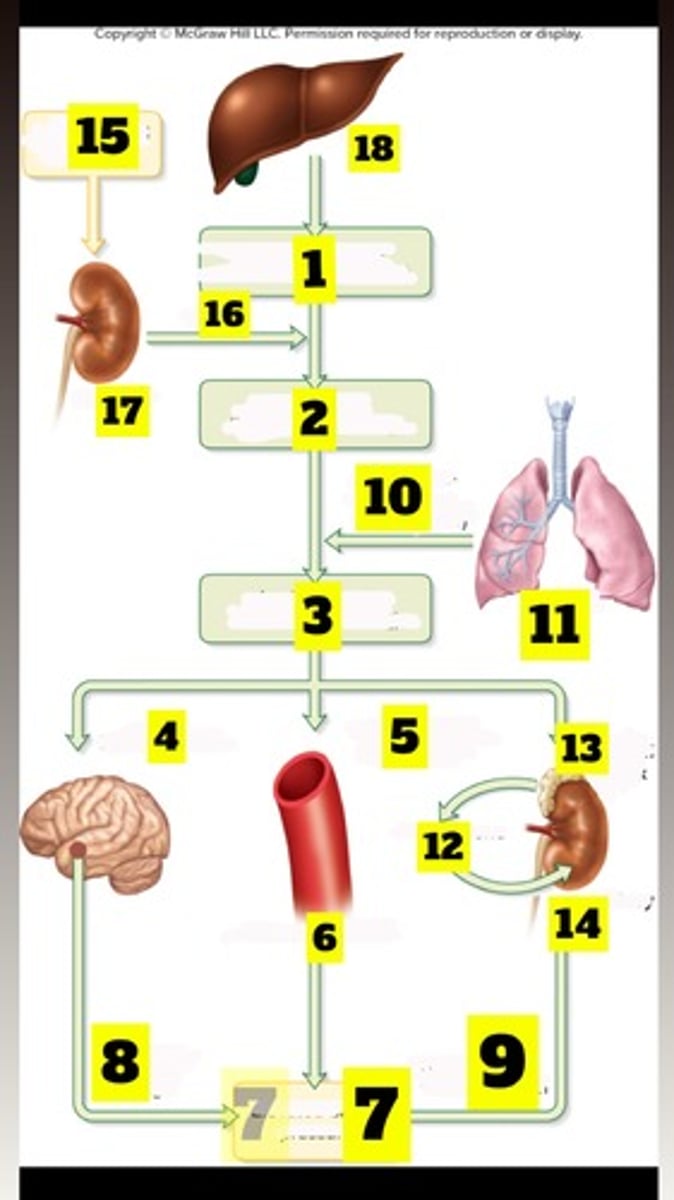
What is number 6?
Vasoconstriction
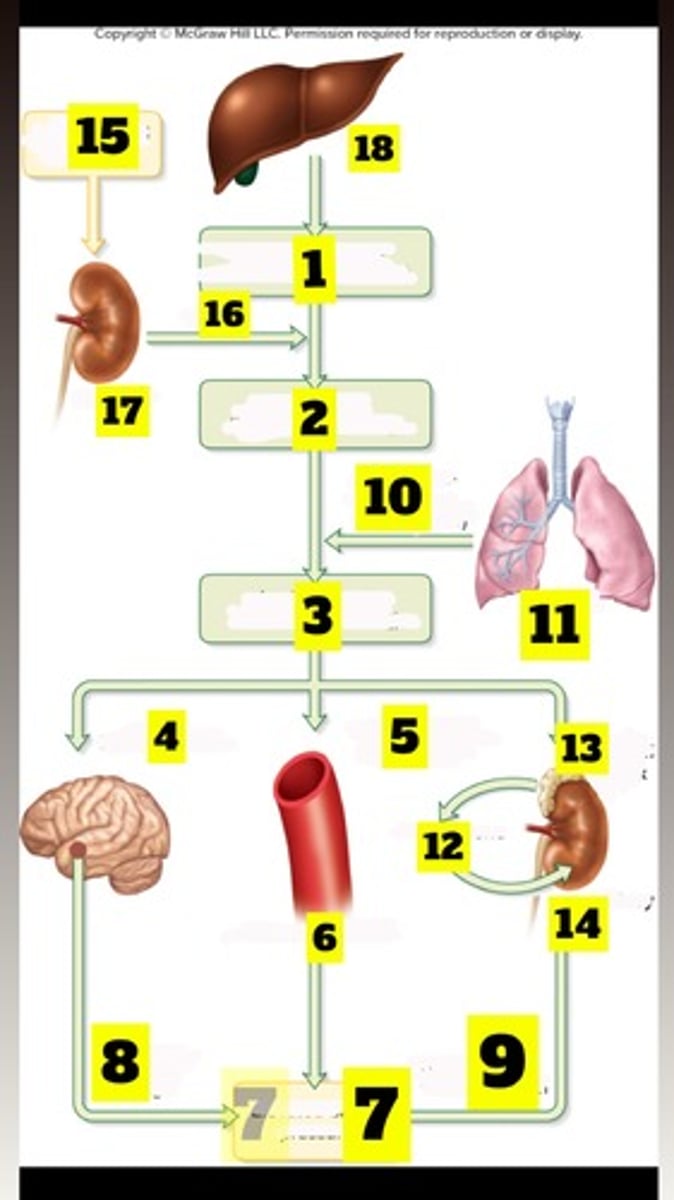
What is number 7?
Elevated blood pressure
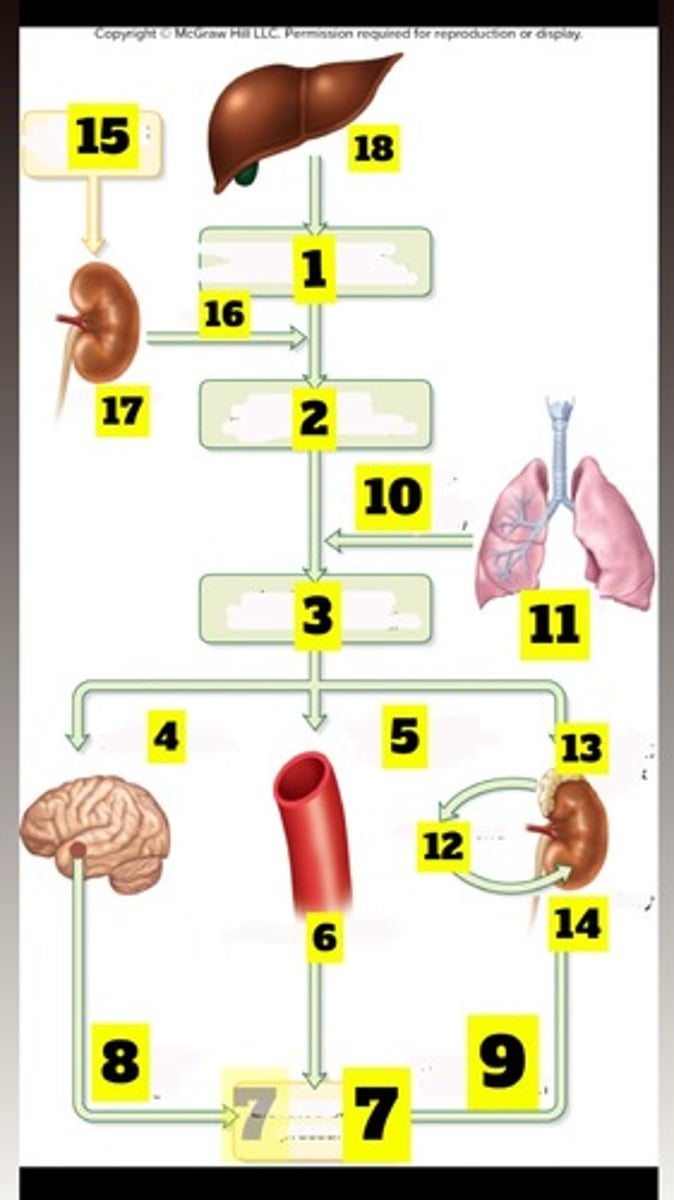
What is number 8?
Thirst and drinking
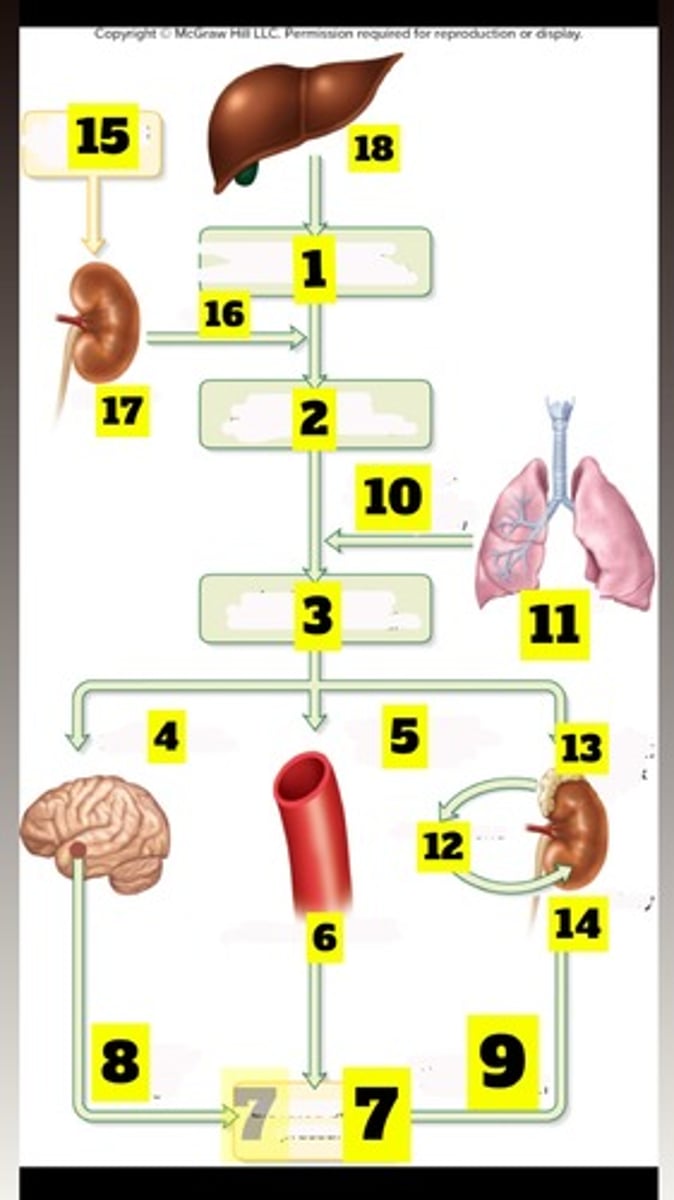
What is number 9?
Sodium and water retention
What is number 10?
Angiotensin-converting enzyme (ACE)
Aldosterone
What is number 11?
Lungs
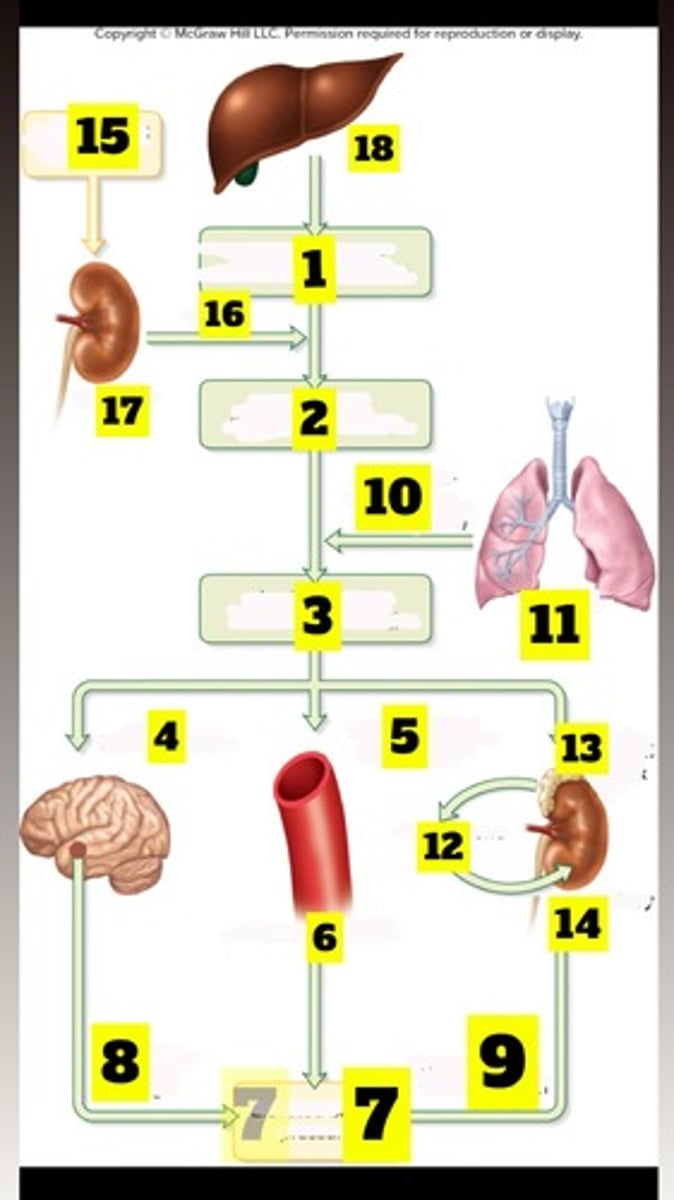
What is number 13?
Adrenal cortex
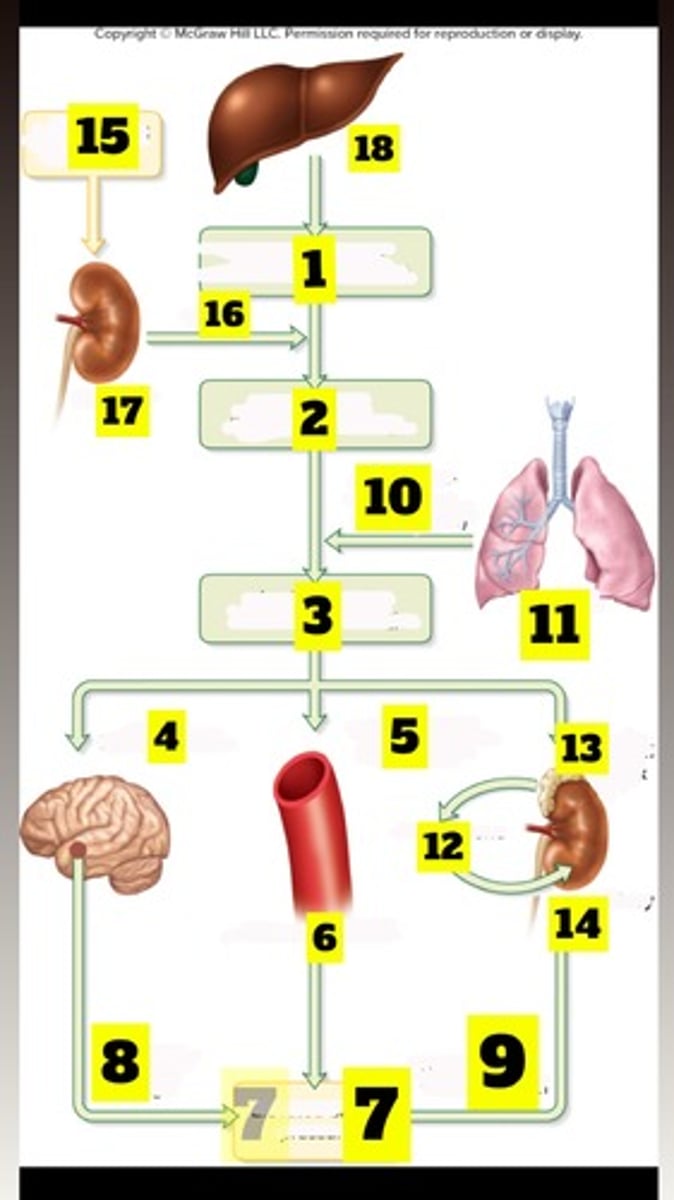
What is number 14?
Kidney
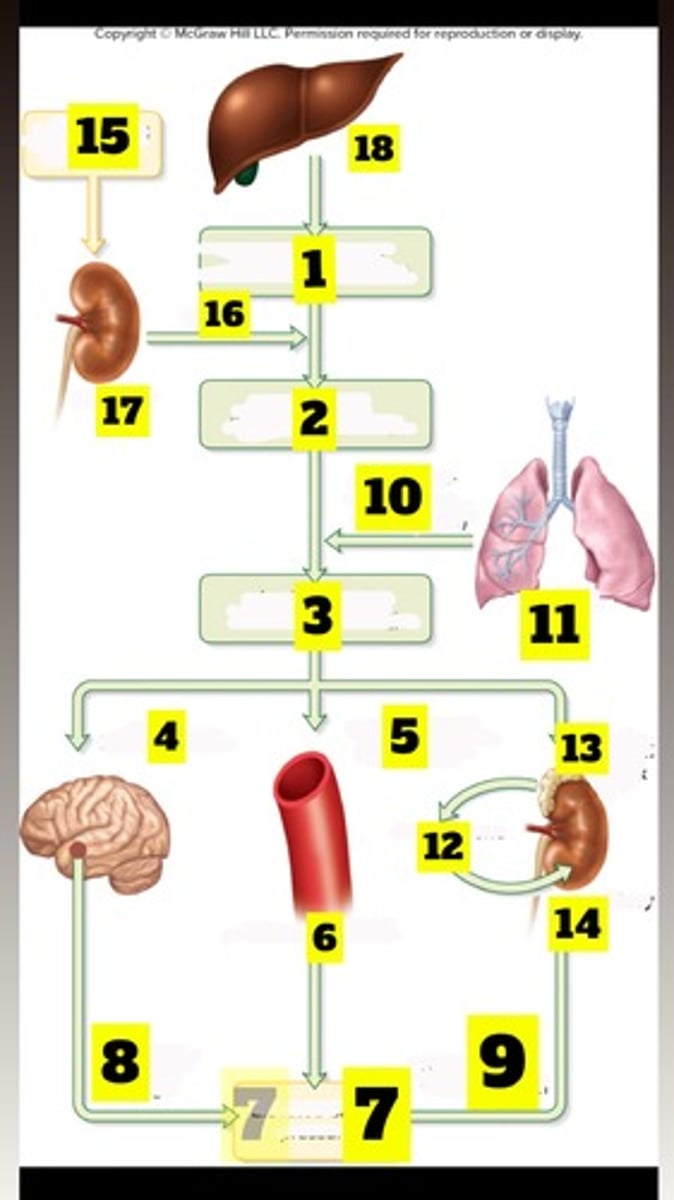
What is number 15?
Drop in blood pressure
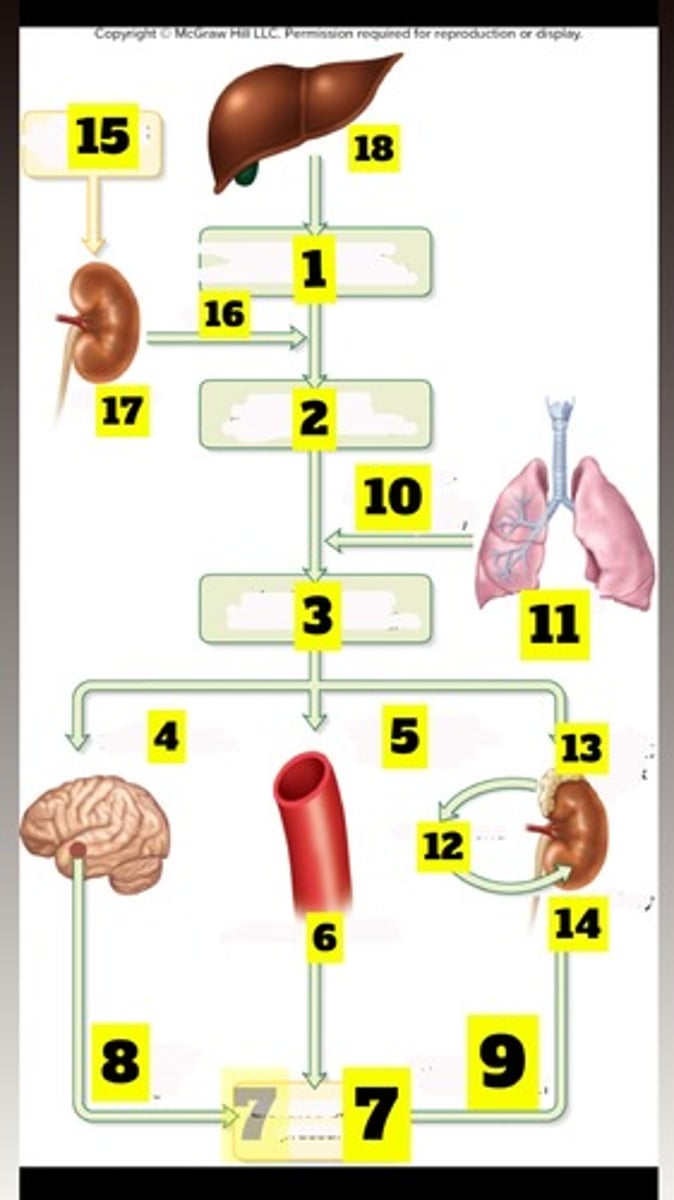
What is number 16?
Renin
What is number 17?
Kidney
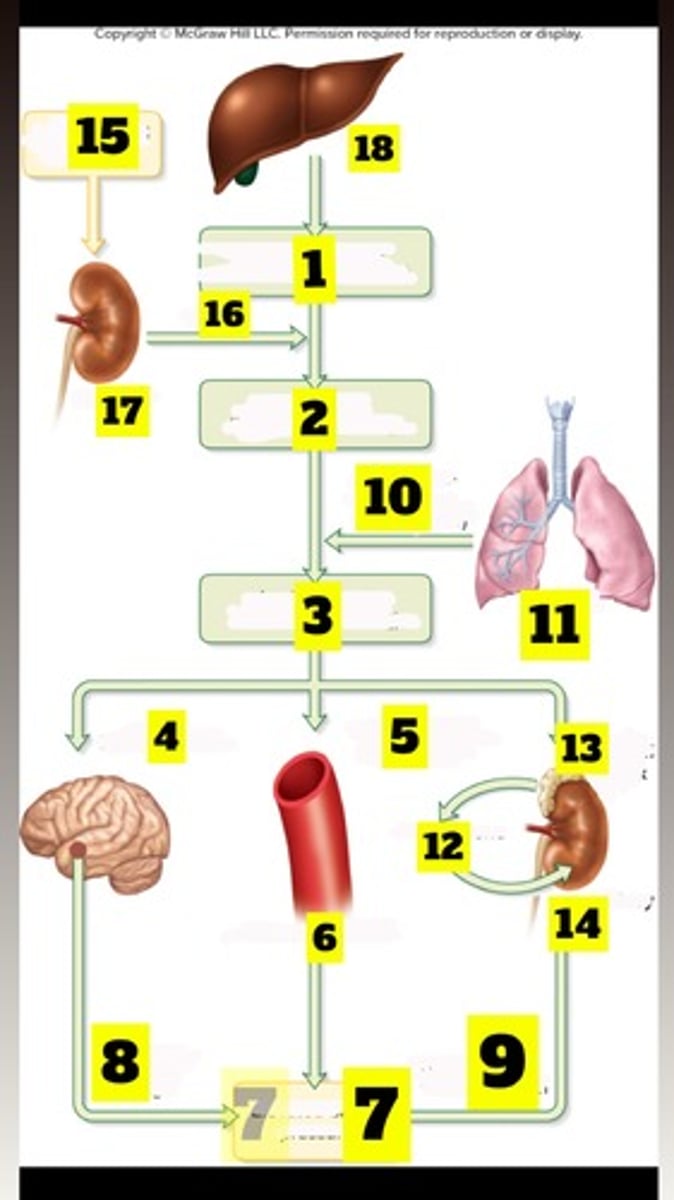
What is number 18?
Liver