adult health pre midterm 1
 Call Kai
 Learn
Learn Practice Test
 Spaced Repetition
 Match
Match Flashcards
 Knowt Play
1/91

There's no tags or description
Looks like no tags are added yet.
Name | Mastery | Learn | Test | Matching | Spaced | Call with Kai | Chat |
|---|
No analytics yet
Send a link to your students to track their progress
92 Terms
stress related to
leading causes of death
can cause people to seek healthcare
affects nursing care bc adpie aims to prevent, identify and alleviate stress
stress definitions
individualised reaction or response to a stimulus when real or perceived demands exceed one’s available coping resources
response of the body to any demand made on it (diverse noxious agents)
traditional research focused on physiological stress, current research looks at emotional, psychological and spiritual stress
stress is a response to demands on the mind or body
its a perception
perception that one cant cope with demands
personal meaning attached to a potential stressor
types of stress
physiological (chronic pain, starvation, noise)
emotional
psychological
(emotional and psychological) (diagnosis, marital problems, grief)
factors affecting stress response
internal coping and external coping
personal characteristics: resilience, attitude, sense of coherence, hardiness, optimism

general adaptation syndrome
physical response to stress
3 stages
alarm/reaction
stage of resistance
stage of exhaustion
GAS- alarm/reaction
perception of stressor (physically or mentally)
fight or flight response initiated
temporarily decreased resistance
increased HR, dilated pupils, increased RR, decreased bowel motility, constricting blood vessels, increased cardiac output, breakdown of glucagon into glucose
GAS- resistance
transition from alarm to resistance is quick
fewer overt physical signs but adaptation occurs
changes happen, prepare to take on stressor, or person advances to exhaustion
GAS- exhaustion
occurs when all energy for adaption has been exhausted
physical symptoms of alarm reaction may briefly appear again as a final effort
stage can be reversed by external sources
body systems during stress
NOTES

nervous system during stress
cerebral cortex- plans course of action after evaluating stress with past experience and future consequences
limbic system- mediates emotions, feelings and behaviors to ensure survival and self-preservation
reticular formation- send alertness impulses to limbic system and cerebral cortex, stress increases alertness impulses, leads to wakefulness and sleep disturbances
hypothalamus- connects nervous and endocrine system, regulates function of sympathetic and parasympathetic branches of ANS
***cortisol, stress hormone

immune system during stress
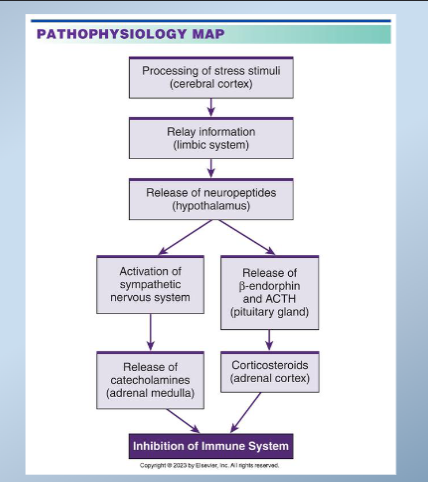
effects of stress
can lead to physiological changes
maladaptive response leads to harm and disease (ex- substance abuse)
cognitive function, behavior, excessive activation of sympathetic nervous system, immunosuppresion
coping
cognitive and behavioral efforts to manage internal or external stressors
positive vs negative coping
emotion focused: managing emotions that person feels when event occurs (when person doesn’t have control over stressor)
problem focused coping: finding solutions to resolve problems causing the stress
coping resources: health status, belief systems, problem solving skills, social skills and support, financial
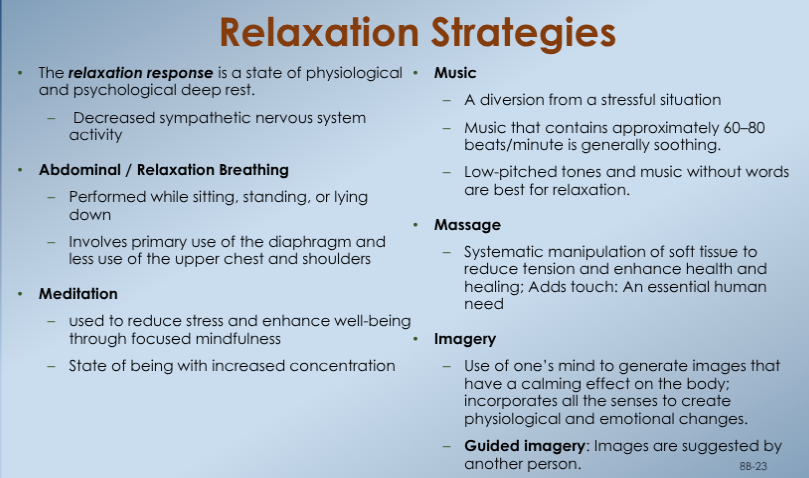
relaxation strategies
***understand guided imagery bs imagery
adpie assessment of stress
aware of situations likely to result in stress
assess pt’s perception of situation and coping used
s+s: bp and hr, hyperventilation, headache, anxiety, irritability or impaired speech, self reports of forgetfulness or indecision
adpie diagnosis of stress
ineffective coping (inadequate confidence in ability to cope, inadequate social support or resources, uncertainty, high degree of threat)
compromised family coping (usually supportive primary care giver provides insufficient or compromised support)
adpie implementation of stress
identify and express stressful feelings
facilitate and enhance processes of coping and adaptation
encourage pt/family to seek info related to treatment
strategies (on a prev slide)
recognise when a pt needs to be referred to a professional for counselling
chronic illness
health condition that persist over extended periods, often (not always) associated with participation and activity limitations (disability), tobacco use, unhealthy diet and harmful use of alcohol
characteristics of chronic illness
persists over extended periods of time
longer onset
rarely cured or eliminated
exacerbation and remissions
phases (crisis, chronic, terminal)
often no single direct or identifiable cause
terms
acute- fast onset, treatment
chronic illness- long term
exacerbation- flare up or worsening of symptoms
remission- symptoms not as visible right now (DOES NOT MEAN ILLNESS IS GONE)
sign- objective
symptom- subjective
comorbidity- additional diseases or disorders (2 or more diseases/disorders)
multimorbidity- 5 or more diseases or disorders
disease- pathophysiological and diagnosed by physician
illness- patient perception of condition
health- general state of well being
leading chronic illness in canada
cancer
other ex- cardiovascular, resp diseases, chronic kidney failure, diabetes, mental illness
risk factors for chronic illness
modifiable vs non modifiable

chronic illness impact on population
increased morbidity (population with diseases and illness)
increased mortality (population dying of diseases)
chronic illness among Indigenous ppl
higher rates compared to average
prone to: diabetes, hep c, HIV, heart disease, high bp
healthcare management in canada
usually focuses on acute or episodic care, don’t really focus on chronic illness or people who live in the community (75% of deaths are chronic illness)

self management
daily activities that individuals undertaake to keep their chronic illness under control
leads to better overall physical and psychological health outcomes
use various strategies to maintain a normal life
may hide or conceal disease
healthcare workers need to encourage self management as it leads to better outcomes
caregiver burden
physical, emotional and financial costs of caregiving over time
burnout
role of nurse during self management
be sensitive to strategies used by patients
explore if strategies are helpful or maladaptive
empower patient
ensure autonomy in adjusting the treatment regiment as necessary
encourage adherance and self care management
med surg nursing
working in all units
challenges in future
evolving roles
shifting emphasis of roles
increasing tech, need to be up to date
pain
causes suffering and reduces quality of life
#1 reason for ppl coming in to seek healthcare
nurses have central role in assessment and management
effective pain management is a basic human right
nurses role in pain
assess, document and communicate about it
delivery of effective pain relief
evaluate effectiveness of interventions
monitor ongoing effectiveness of pain management
pain is subjective and that is challenging
provide education to patients and their families
pain problem
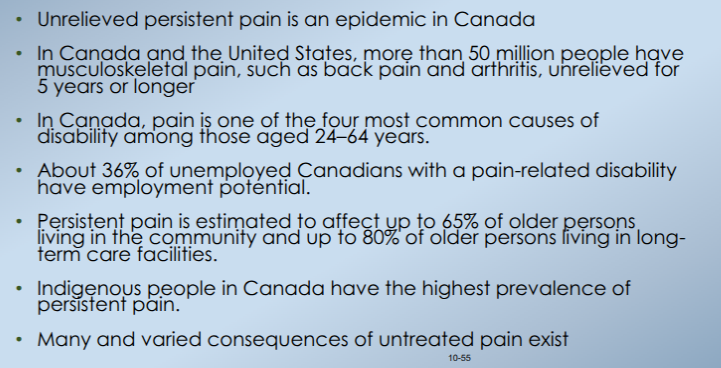
why is pain undertreated
inadequate skills to treat and assess pain
misconceptions abt pain
inaccurate info abt addiction and opioids (lowest dose possible for best pain control and least side effects)
nonmalificence (not wanting to harm the patient)
what is pain
whatever the patient says it is
not synonymous with suffering
unpleasant sensory and emotional experience
with or without disease or injury
multidimensional
difficult when working with nonverbal or cognitively unable to rate pain, use nonverbal information and behaviors
understand pain as talked abt in hollistic and psych
describing pain
nociceptive (somatic)- S structure/surface - skin, muscles, bones, joints (localised)
nociceptive (visceral)- Vital organs - bowel, kidney, heart, appendix (deep organ pain) (less well localised)
neuropathic - N - Nerves
acute vs chronic pain
basal medications - scheduled medication, taken for baseline (chronic pain)
prn medications - for acute pains
breakthrough pain - for pain that goes beyond normal management (ex for those with chronic conditions, the pain is more than the basal medication manages)
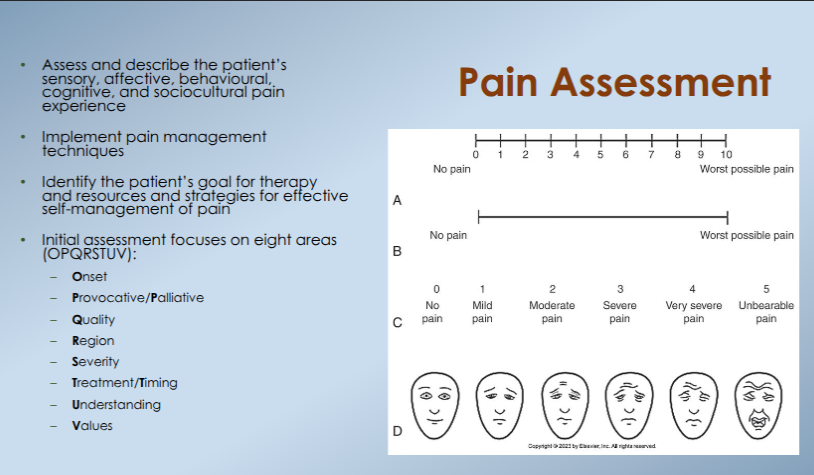
pain assessment
Indigenous considerations with pain
high rates of persistant pain
awareness of discrimination related to substance misuse and pain issues
acknowledgement and understand experiences related to historical social issues to be culturally sensitive
equinanalgesic dose
dose of one analgesic equivalent in pain reliving effects compared with another analgesic
important when substituting one analgesic for another and when changing the admin route of opioids
titration
dose adjustment based on assessment of analgesic effect vs adverse effects
use smallest dose to provide effective pain control with the fewest adverse effects
scheduled analgesics
prevention or ongoing control
do not wait for severe pain to occur
constant pain requires scheduling
fast acting for incident or breakthrough and long acting for constant pain
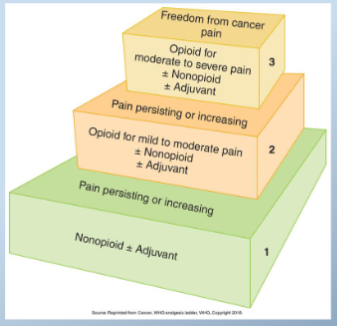
analgesic ladder
rating pain: 1-3, 4-6, 4-10
step 1, mild pain: non opioids (with or without adjuvant)
step 2, mild to moderate pain: mild opioids (step 2) given with step 1 medications
step 3, moderate to severe pain: stronger pain: strong opioids (step 3) (mu receptor agonists) these drugs are more potent, no analgesic ceiling, delivered via many routes
ceiling effect
increasing the dose beyond upper limit provides no greater analgesia
step 2 medications
given for mild to moderate or moderate to severe pain
Mu: morphine, oxycodone, hydromorphone, methadone
opiod agonists- morphine
opioid antagonist- naloxone
mixed agonist antagonist (pentazocine, butorphanol) shouldn’t be used bc they bind as agonists at the mu receptor
nsaid med warnings
NSAIDS (not aspirin) linked to higher CV events
pts who have just had heart surgery should not take nsaids
opioid med warnings
opioids may cause resp depression
withhold opiods if resps are under 12 per minute
transdermal fentanyl shouldnt be used for acute pain|
adjuvant analgesic therapy
used with non opioids and opioids
sometimes called co analgesics
enhance pain therapy by:
enhancing effect of opioid or non opioid
possessing analgesic properties of their own
counteracting adverse effects of other analgesics
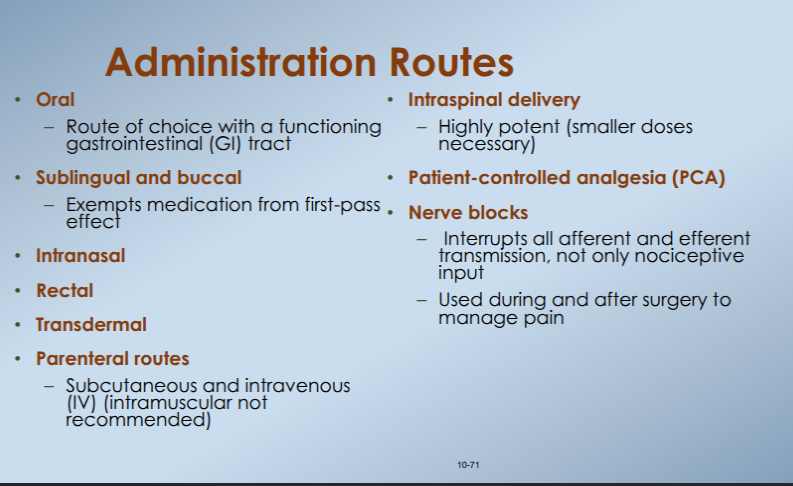
admin routes for medication
non pharmacological pain therapy
reduced amt of analgesics required (minimises adverse effects)
possible alters ascending nociceptive input or stimulates descending pain modulation mechanisms (REWORD)
ex: massage, excersize, transcutaneous electrical nerve stimulation, heat therapy, cold compress, cognitive techniques like distraction, relaxation and self management
tolerance
need more med for equal pain control over time
physical dependance
expected response to exposure to meds, manifested by withdrawal when levels drop, medication should be slowly weaned to avoid
substance misuse
tolerance and physical dependence are not indicators of addiction or substance misues
using a substance in high doses or inappropriate situation, can lead to health and social problems
ethical issues in pain management
fear of hastening death by administering analgesics
use of placebos in pain assessment and treatment
age related considerations for pain
persistent pain (common- musculoskeletal)
pain in elderly inadequately assessed and treated
results in depression and functional impairments
barriers to treating pain: belief that pain is part of agining, fear of using opioids, words like aching, soreness or discomfort
treatment cautions: older persons metabolise meds slower, greater risk for AE, risk of GI bleeds with nsaids, multuple med use (watch for interactions), cognitive impairment and ataxia can be exacerbated
considerations for cognitvely impaired individuals
may prevent pts from clearly communicating
use behavioral and physiological changes may be the only indicators of pain
scales to assess pain in cognitively impared person are based on behavior
vocalisations
expressions
breathing
body movements or tension
inability to validate meaning of behavior prompts nurses to rely on pts usual (baseline) behavior, if nurse is unaware of baseline ask family or other caregivers
considerations for pts with substance use issues
right to receive effective pain management
assess and provide relief with a dual diagnosis of pain and substance use disorder is imperative
establish treatment that will relieve pain and minimize withdrawal
usually requires interprofessional approach
homeostasis
state of equilibrium in body
naturally maintained by adaptive responses
body fluids and electrolytes are maintained within narrow limits
water content of the body
70-80% in infants
60% in adults
45-55% in older persons
*% of body weight, varies with sex, body mass and age
lab values to know
Na+ 135-145
K+ 3.5-5.1
Cl- 96-106
BUN 2.9-8.2 (M/F)
Creat 44-106 (M/F)
Hgb 120-180 (M/F)
Hct 0.37-0.52
fluid compartments of the body
intracellular fluid (ICF) (~28L)
extracellular fluid (ECF) (~13L)
intravascular (plasma, fluid inside vessels) (~3L)
interstitial (fluid around the cells) (IF) (~1L)
transcellular
electrolytes
substance we take in through foods
substances whose molecules dissociate into ions (charged particles)
cations are positive
anions are negatime
measured in millimoles per litre mmol/L
electrolyte composition
ICF
prevalent cation is K+
prevalent anion in PO4 ³^-
ECF
main cation is Na+
prevalent anion is Cl-
mechanisms controlling fluid and electroyte movement
diffusion
facilitated diffusion
active transport
osmosis
hydrostatic pressure
oncotic pressure
diffusion
moves molecules from high to low conc
occurs in liquids, solids and gases
membrane separating 2 areas must be permeable
no energy
facilitated diffusion
movement of molecules from high to low conc without energy
uses carrier molecules or proteins to accelerate diffusion
active transport
molecules move against concentration gradient
external energy required
ex- sodium potassium pump
osmosis
movement of water btwn 2 compartments by a membrane permeable to water but not solute
moves from low solute to high solute conc
requires no energy
albumin (protein, larger than electrolyte- can’t go inside cell membrane) found inside blood vessel, holds fluid inside intravascular space
osmotic pressure
amt of pressure required to stop osmotic flow of water
determined by conc of solutes in solution
osmotic pressure, pulls water into vessel
low osmotic pressure causes more fluid in tissues
high osmotic pressure causes more fluid in vessels
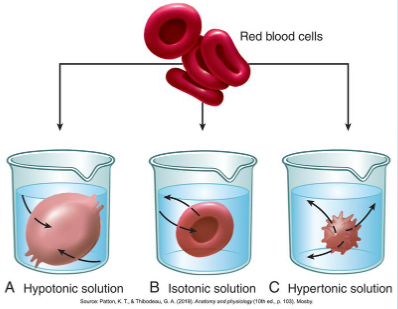
effects of water status on rbc
Tonicity
more solute in cell causes more water to go in- hypotonic (think LOW conc OUTSIDE cell)
less sulute in cell causes water to leave- hypertonic (think HIGH conc OUTSIDE cell)
isotonic: normal saline or lactated ringers, mirrors composition of blood to avoid cells shrinking or swelling
hydrostatic pressure
antagonistic to osmotic pressure
force within fluid compartment
major force that pushes water out of vascular system at capillary level
oncotic pressure
osmotic pressure exerted by colloids in solution
protein is a major colloid
this pressure does the pulling of proteins like albumin, keeping them in the vessels
crystalloid
solutions you can see through
dissolved substances
colloids
proteins like albumin, even a bag of blood
solution not clear, not dissolved
fluid movement in capillaries
capillary hydrostatic pressure
plasma oncotic pressure
interstitial hydrostatic pressure
interstitial oncotic pressure

fluid shifts
re word
fluid volume excess- gain or retention of excess water, more water into tissues and cells, peripheral edema, *ascites, crackles, daily weights required for these pts (1Kg = 1L)
fluid volume defecit aka hypovolemia- symptoms that result from cell shrinkage as water pulled into vascular system, dryness, causes urine retention, low bp, faster hr, dry skin, mental status changes- disorientation or headache, dizziness, muscle cramps
***

fluid shifts
first spacing
normal distribution of fluid in OCF and ECF
second spacing
abnormal accumulation of intersitial fluid (peripheral edema), body can work to return to first spacing
third spacing
fluid accumulation in part of body where it is not easily exchanged with ECF (ascites), this fluid has to be drained
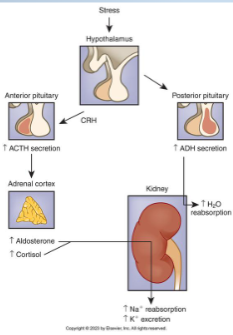
hypothalamic regulation of water
osmoreceptors in hypothalamus sense fluid deficit or increase and receives the signal
stimulate: thirst and antidiuretic hormone release (ADH)
result in increased free water and decreased plasma osmolarity
pituitary regulation of water
under control of hypothalamus, posterior pituitary releases ADH
stress, nausea, nicotine and morphine also stimulate ADH
ADH- causes less water to be peed out, water retention
adrenal cortical regulation of water
releases hormones to regulate water and electrolytes
glucocorticoids- cortisol and minteralcorticoids- aldosterone
renal regulation of water
kidneys are primary organs for regulating fluid and electrolyte balance
adjust urine volume by selective reaabsorption of water and electrylytes
renal tubules are sites of action of ADH and aldosterone
summary of fluid and electrolyte balance
cardiac regulation of water
atrial natriuretic factor (ANF) is a hormone
produced by cardiomyocytes in response to increased atrial pressure
primary actions are vasodilation and increased urinary excretuion of sodium and water, decreases blood volume
GI regulation of water
oral intake accounts for most water
small amts are eliminated by GI tract in feces
diarrhea and vomiting can lead to significant fluid and electrolyte loss
insensible water loss
invisible vaporisation from lungs and skin to regulate body temp
approx 900mL/day
no electrolytes loss
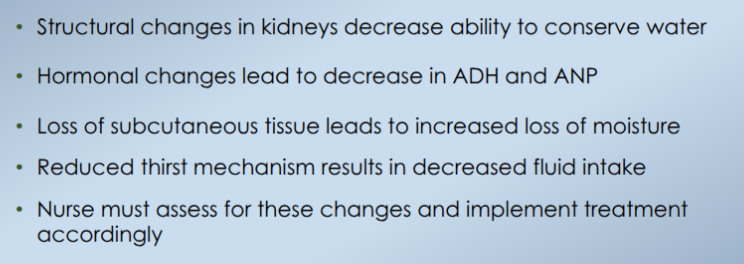
age related considerations for water
fluid and electrolyte imbalances
common in pts with major illness or injury
caused by illness or dieases (ex- burns or heart failure)
result of therapeutic measures (IV fluid replacement or diuretics)
for healthy individuals- fluid amts will vary by day or activity but body can adjust to it
extracellular fluid volume imbalances
ecf volume defecit (hypovolemia): abnormal loss of normal body fluids by diarrhea, fistula drainage, hemorrhage, inadequate intake or plasma to interstitial fluid shift
treated by replacing water and electrolytes with balanced IV solutions
fluid volume excess (hypervolemia): excessive intake of fluids, abnormal retention of fluids (HF) or intersitial to plasma fluid shift
remove fluid without changing electrolyte composition or osmolarity of ECF
stopped on slide 41