1.2 Aggregate Demand
 Call Kai
 Learn
Learn Practice Test
 Spaced Repetition
 Match
Match Flashcards
 Knowt Play
1/10

There's no tags or description
Looks like no tags are added yet.
Name | Mastery | Learn | Test | Matching | Spaced | Call with Kai | Chat |
|---|
No analytics yet
Send a link to your students to track their progress
11 Terms
Aggregate demand
The total demand for a country’s goods and services at a given price level and in a given time period
Aggregate demand formula
C + I + G + (X-M)
C
Consumer expenditure/consumption
Influenced by disposable income, prices, wealth, age, interest rates, inflation, consumer confidence and personal circumstances
I
Investment - an asset or item acquired with the goal of generating income or appreciation.
Influenced by interest rates, business confidence, profit and the government
G
Government spending
Depends on the government’s view on the extent of market failure occurring in the economy
X-M
Net exports - foreigners’ spending on the country’s goods and services minus spending by the country’s population on imports
Influenced by real disposable income abroad, the exchange rate, degree of protectionism
GDP (Gross Domestic Product)
The total value of goods and services produced in an economy in a specific time period
GDP per capita is GDP divided by the population of a country
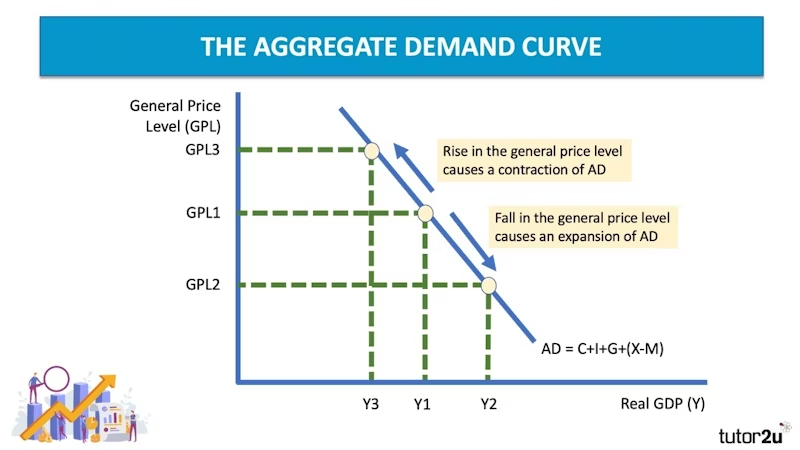
Aggregate demand curve
Slopes downward as it is inversely affected by the price level
A rise in the price level causes a contraction in AD
A fall in the price level causes an extension of AD
Factors that cause a shift of the AD curve
Net exports, government spending, interest rates, wealth, consumer confidence, depreciation/appreciation, taxes, external shocks
Monetary policy
Changes regarding interest rates, supply of money, credit and exchange rates
Fiscal policy
Changes regarding taxation, government spending and government borrowing