The Problem Of Evil
 Call Kai
 Learn
Learn Practice Test
 Spaced Repetition
 Match
Match Flashcards
 Knowt Play
1/31

There's no tags or description
Looks like no tags are added yet.
Name | Mastery | Learn | Test | Matching | Spaced | Call with Kai | Chat |
|---|
No analytics yet
Send a link to your students to track their progress
32 Terms
is the problem of evil a challenge of support to theism
how is the logical problem of evil described symbolically
inconsistent triad
what is an inconsistent triad
when three things are incompatible together
who created the idea of the inconsistent triad for the problem of evil
JL Mackie wh
what is the problem of evil’s inconsistent triad
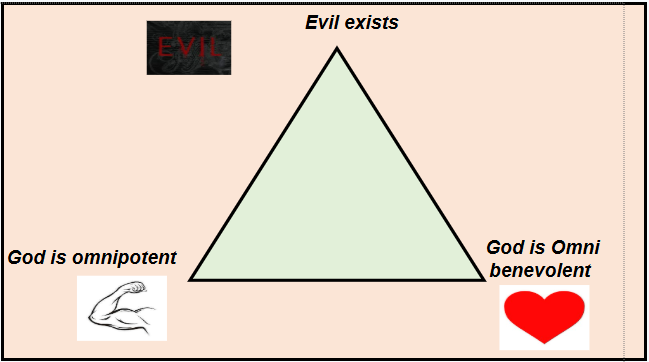
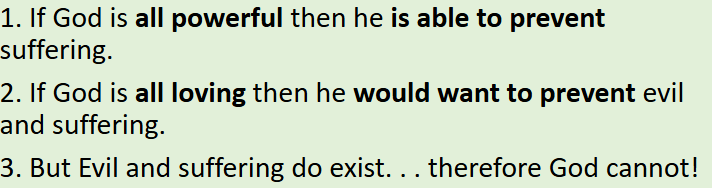
explain the logical problem of evil using words
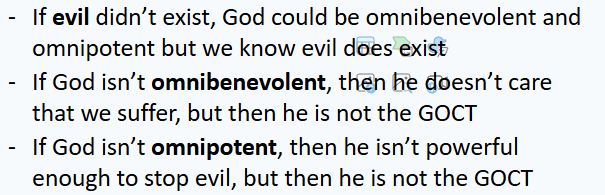
explain how if we remove 1 aspect of the inconsistent triad then the other 2 would be compatible
is the logical problem of evil a priori or a posteriori

what is the evidential problem of evil
maybe it has been shown that a good, all-powerful god has to allow for SOME evil so humans can be spiritually perfect but the evidential problem argues that there is SO MUCH suffering and evil that its unlikely god exists
an example that supports the evidential problem

Augustines view against the problem of evil
the fall

what is evil according to augustine

how does augustines view on what evil is effect the inconsistent triad
evil is not a thing in itself
god created the world good and it was corrupted
any absence of good is our fault not gods
davies response on augustines views (agrees)

McCabe response on augustines views (agrees)

what is the irenaean theodicy
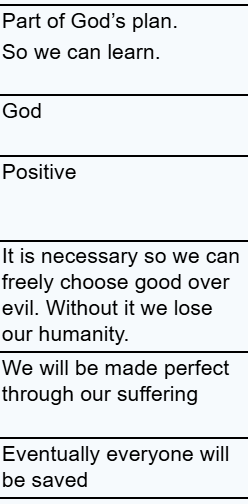
what hicks vale of soul making (development of the irenaean theodicy)
humans are made in the ‘image of God’ and through suffering we develop into his ‘likeness’
therefore, according to Hick, suffering helps us develop our souls into the ‘likeness’ of God.
vale of soul making quote
“A world which is to be a person-making environment cannot be a pain-free paradise but must contain challenges and dangers.” - hick
what is the counterfactual hypothesis
if everything was perfect we would drift around aimlessly like zombies/robots.
Generosity, patience and charity-virtues which enable us to become better would be impossible.
Many ordinary activities, even harmless ones would become impossible. eg no one would win a sport
Life without pain and suffering would be dull and we would be dull creatures unable to learn anything new.
what is swinburnes supportive response to hick
to demonstrate real virtues like compassion there needs to be genuine poverty to provide the opportunity to develop these virtues.
what is epistemic distance
God deliberately created a world where we could choose a free and loving relationship with Him – this must include struggles and hardships
This is part of the ‘epistemic distance’ – a distance in knowledge.
God deliberately chooses to be partially hidden from humanity so that we can make genuinely free choices about whether to believe in him.
how does epistemic distance counter the problem of evil
If we lived in a wholly good world, God’s existence would be far more likely and far less people would deny him. Actions would not truly be free.
what is universal salvation
further opportunity to develop your soul in afterlife-eventually everyone is saved.
how does universal salvation solve the problem of evil
This shows God is still all loving and suffering is justified because everyone is eventually rewarded and saved. Solves the problem of hell (omnibenevolent God would not condemn people to hell)
what are the problems with universal salvation
if the purpose of soul-making is to permit us the freedom to choose or reject God, then if we eventually choose him in the after life is there point of free will in the first place?
No incentive to do good in this life.
Why do some suffer more in this life if everyone is eventually saved?
Seems unfair that an omnibenevolent God would allow someone like Hitler to eventually be saved and end in the same place as someone who has been good all their life.
what does dysteleological mean
lack of purpose
what is dostoevskys criticism
he explains through his character Ivan
If everyone must suffer, in order to buy eternal harmony with their suffering, pray tell me what have children got to do with it?
People get into heaven because of the suffering of innocent children. Ivan says no good person or God would design this connection into heaven
Dostoevsky’s character ivan says in The Brothers Karamazov that the price we are expected to pay for our freedom of choice is too high and he ‘returns his entrance ticket’ as he wants no part in a world where the price is so high
kants criticism of hick
Hick’s vale of soul making is a consequentialist view. Kant would disagree and say the ends don’t justify the means- Humans shouldn’t be used as a means to an end but Hick allows this for ‘soul-making’
DZ Philips criticism of hick
Only an evil God would plan for evil in the world and actually plan for people to suffer in order to earn freedom. Some evil is soul breaking. It destroys a person’s character rather than building it up and developing it.
The holocaust is as an example of evil which is dysteleological, soul-breaking and where the amount of evil outweighs our soul-making requirements. He questioned whether anyone in their “right mind” could say the holocaust was justified because a few survivors were strengthened by it
william rowes example of dysteleogical suffering (criticism to hick)
Not all suffering has a purpose-
Animal suffering is a form of dysteleological suffering. William Rowe gave the example of a fawn dying in a forest fire. We have evidence that such things happen, but no one would ever be able to gain sympathy or compassion from them.
humes criticism of hick
Hume asks, could the world not be more hospitable and teach us or enable us to learn? Could God have created a world with less evil? Or is it equally a possibility to learn from goodness. E.G. Can learn how to improve on a sport and develop resilience.
what is hicks response to d z philips
“my suggestion is not that each particular evil least of all the holocaust, produces its own specific ‘soul-making’ benefit
