ID 2242 Exam 2 - Neoclassicism and Romanticism
 Call Kai
 Learn
Learn Practice Test
 Spaced Repetition
 Match
Match Flashcards
 Knowt Play
1/29

There's no tags or description
Looks like no tags are added yet.
Name | Mastery | Learn | Test | Matching | Spaced | Call with Kai | Chat |
|---|
No analytics yet
Send a link to your students to track their progress
30 Terms
Oath of the Horatii
- Neoclassicism
- Jacques-Louis David
-Story of Horance and his children. How to be rational when going to war/solving a conflict between cities.
- moralizing content with middle-class values
- Horace: Father
-Horatii: sons of Horace
-Was used as propaganda for the French Revolution
-Daughters on the right. One of the daughters has children with the enemy
- Didactic: teaching lessons, what are you willing to sacrifice
- Melodramatic, narrative about heroism. Pivotal moment of the hero
- Parallellism = unified
- Cult of Hero = different stories of a good citizen
-all action in foreground
-stage-like setting
-Tenebroso
-Life-size scale, you have the same scale as they do
-” baroque” composite, separateness of the stories
-Pyramidal configurations
-repetition of the same colors, red and blue, patriotic colors, French flag
-Moralizing, rejection of Rococo

The French Revolution 1789-1799
-Overthrow of monarchy
-Establishing a democratic government
-Storming og the Bastile, let all the prisoners out and free
-Rights of Man and Citizen, 1791, idea of democracy
-Reformatted the calendar: Republican Calendar
-1791 was year 1
-Renamed the months and days.
-10 day weeks, with the 10th off
-Abolished the catholic holidays
-Republican time: 10 hours in a day

Death of the Marat, 1793
- Neoclassicism
- Jacques-Louis David
-” cult of the hero”: Jean-Paul Marat: Radical journalist and politician from the French Revolution
-Assassinated by the Charlotte Chorday while he was soaking in a bath as a treatment for his skin condition
-didactic: how to be a good citizen
-” sacrifice for the good of the many”
-propaganda for the French Revolution
-death of a hero = peaceful
-Melodramatic
-all action in foreground
-stage-like setting
-Tenebroso
-pen still in hand, knife was on the floor
-” The pen is mightier than the sword”
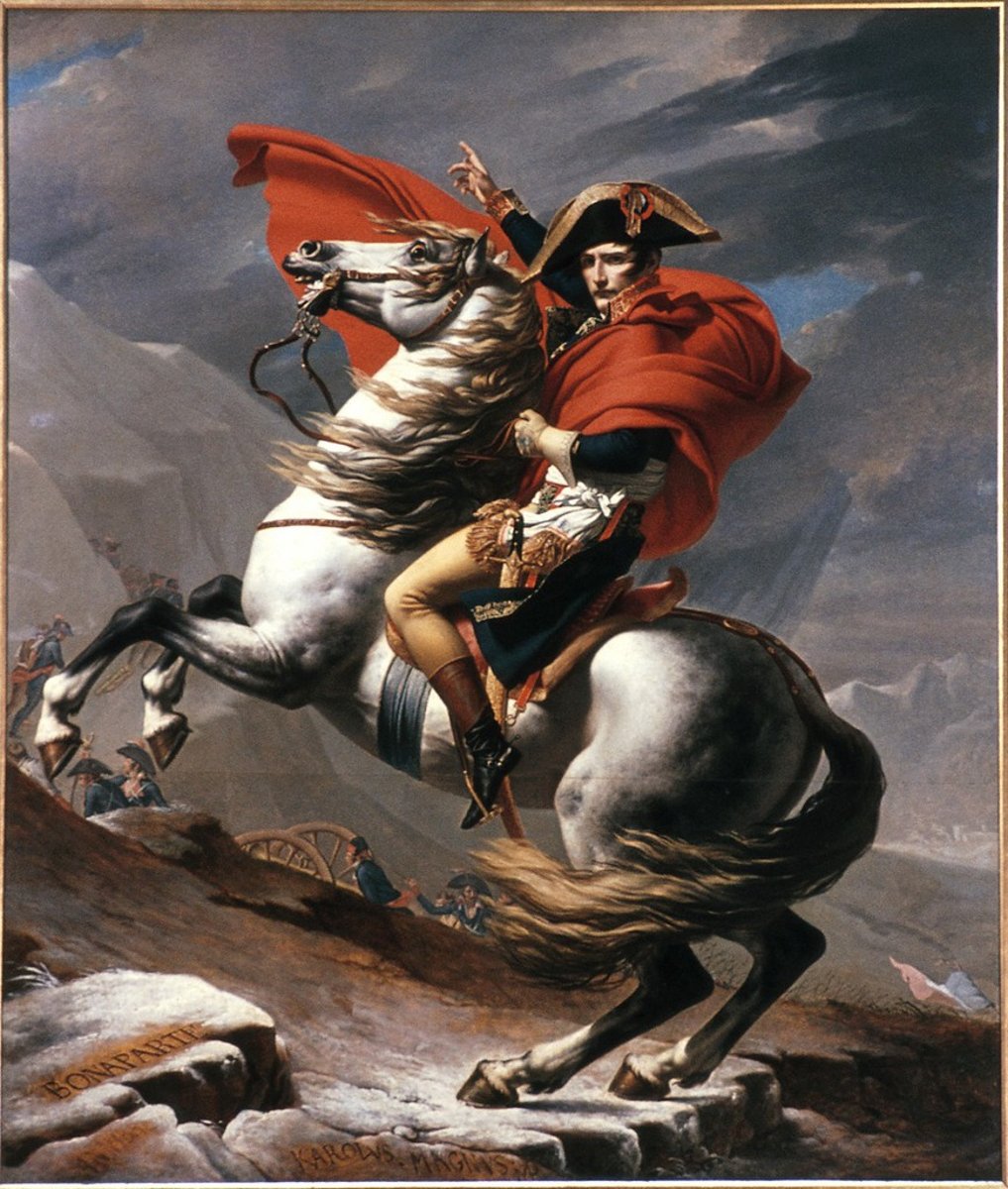
Napoleon Crossing the Alps, 1800
- Neoclassicism
- Jacques-Louis David
-” cult of the hero”: control of animal
-life size: 9 ft tall, 7 ft wide
-Melodramatic
-Leading France into Italy to expand the empire
-Enagaged Eye
-Hannibal and Charles the Great carved in stone as he follows in their footsteps

Pest House at Jaffa, 1804
- Neoclassicism
- Antoine Jean Gros
-pest house: hospital for those infected with the plague
-Napolean = hero
-life-sized scale
-commissioned by Napeoloean
-” cult of the hero”: touching the Plagued, like he can heal them

Mounted Officer of the Imperial Guard, 1892
-Romanticism
- Theodore Gericault
-leaves the scene, fleeing from battle
-The battle became so much that he doesn’t feel heroic to continue fighting
-tragic story
-anti-hero
-Romance literature: “The Sublime “ by edmond burke, “how do we learn“ - we have to have an extreme experience in learning to be able to absorb it
tragic story, victim, fear, ugliness, irrationality
proposed that we have a sublime experience when we intensely learn something
awe inspiring
intense
emolitonal
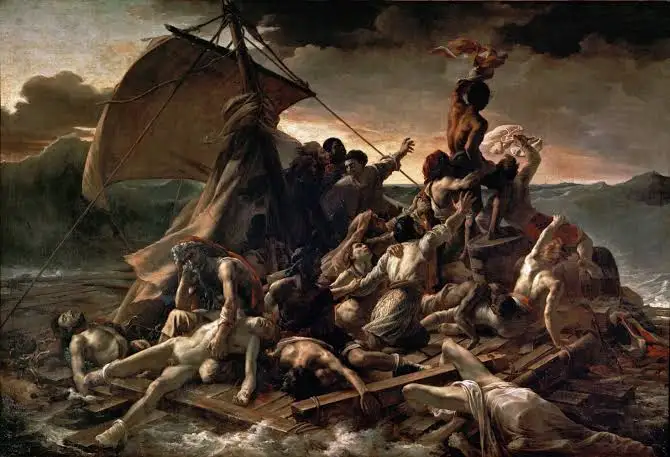
Raft of the Medusa, 1819
-Romanticism
- Theodore Gericault
-real life event
-after their rescue, originally celebrated as heroes
-after journalists' interviews, society knew they survived by cannibalism, and now turned into anti-heroes
-built a full-scale raft in the studio and had other artists pose as victims
-brought in body parts from a morgue as references and studied those corpses
-also did a preparatory painting with the rescue boat in the background to show a positive outcome
-final painting makes the outcome more sublime by not including the rescue boat
-life-scale painting

“Envy“, 1823
-Romanticism
- Theodore Gericault
-French psychartist, Etienne-Jean Georget, asked for Gericault to come in and paint some of the patients
believed in psychopathology, classified several types of monomania (obsessions), and believed you could recognize it in their faces
-woman consumed by envy
-physiognomic measurements: mapping out the mental illness in the face
distance between eyes
height of forehead
sublime: portrait of irrationality
her in the act of obsessing over something on the side
painter having sublime experience

Lion Attacking a Horse, 1763
-Romanticism
- George Stubbs
-sublime
-tragedy
-We can’t prevent these events
-We know that the horse will not survive
-irrational

The Nightmare, 1781
-Romanticism
- Henry Fuseli
-the sublime experience, and seeing her experince
-the incubus sitting on her chest
taking away her soul
-engaged eye
-The horse to the left is a reference to mere-riding, which people used as an indicator for nightmares
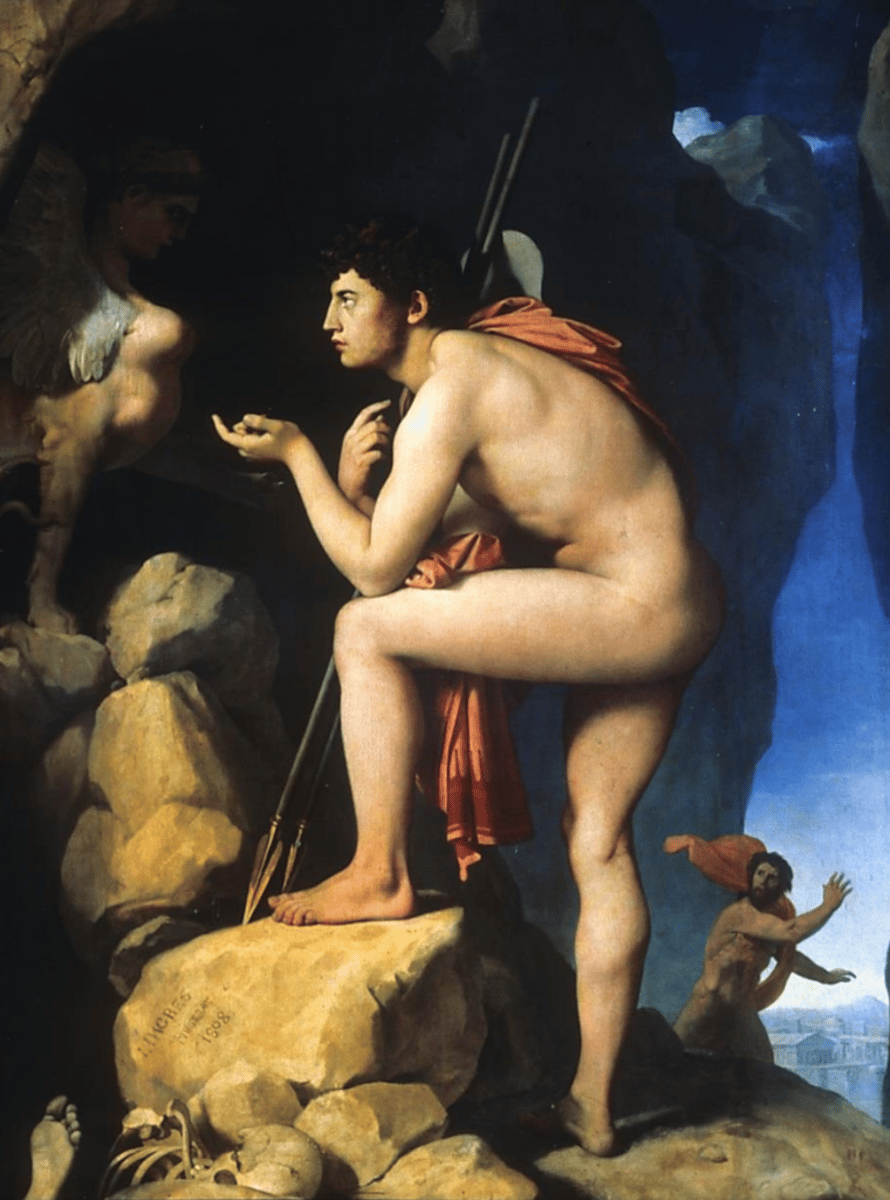
Oedipus and the Sphinx, 1801
-Romanticism
French translation = “novel with a key”
tragic twists in the plot
-J.A.D. Ingres
-sublime subject matter
-Oedipus had a tragic life
abandoned at birth
kill his father, marry his father
Comes in contact with a Sphinx when traveling to Thebes
Sphinx asks a riddle, if answered correctly, they can move forward, else eaten by the sphinx
A baby crawls, an adult walks, and the elderly uses a stick to walk
Odepius answered the question correctly
continues through and kills his father and marries his mother
Disgusted and blinds himself
-planimetric separation
foreground, present: sphinx riddle
middle ground: witness warning his not to go to Thebes
Background: Where the tragedy continues
-implied lines

Saturn Devouring His Children, 1823
-Goya
-Romanticism
-Saturn/Cronos: Roman God
prophesied that he would lose his power to his children
made a plan to eat the child every time the wife delivered
wife figured out and hid her 6th child and defeated his father
-tragic sublime
-out of focus: irrationality
-tenebroso
-engaged eye: wide-eyed and irrational

Third of May 1808, 1814
-Goya
-Romanticism
-Real tragic life event
Spanish peasants rose up against Napoolean’s squad The
next day, French soldiers came and killed them
-tenebroso
-sublime moment: tragic
-don’t see soldiers’ faces, united machine
-viewer’s vantage point: parallel
either apart of the firing squad or the peasants
-man brightly spotly lit in a crucifix position

Death of Sardanapalus, 1826
-Romanticism
-Eugene Delacroix
-Drew from an ancient story
-Sardanapalus: last king of Assyria
facing his defeat by an invading enemy
seeing wives being slain
decided to set the palace on fire and then took his life
-sublime tragic stories
-moment: murder
-shadows, smoke: tenebroso
-we watch him have this sublime experience
-red: absence of blood
drapery
cloth
ribbons
-life-scale painting
-viewers’ points look like we could dragged in to be killed

Medea, 1838
-Romanticism
-Eugene Delacroix
-Medea
abandoned by her husband and becomes irrational
decided to kill their children as revenge
-sublime, tragic story: irrationality
-shadow on face:insmae
-moments before the act
-foreground, moving towards us
-red: absence of blood
drapery

Cloister in the Snow, 1810
-Romanticism
-Caspar David Friedrich
-trees huge
-humans small
-contrast of scale: humans vs.nature
-the landscape becomes the sublime
-architeccure in ruins
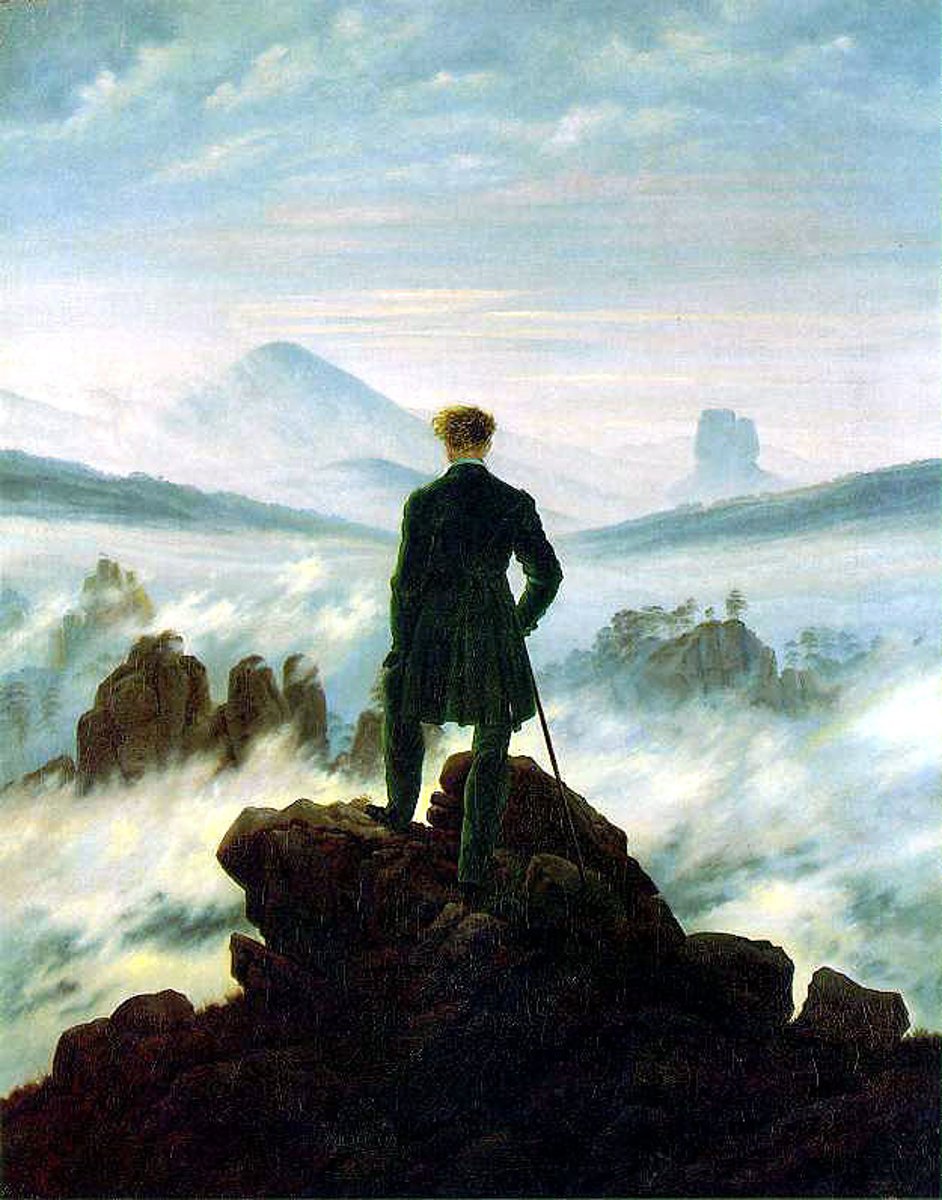
-Romanticism
-Caspar David Friedrich
-Looking over Alphs
-nature as sublime
-we watch him having a sublime experience
-deep background space
-vanishing point
Wanderer, 1818

Wreck of the Hope, 1824
-Romanticism
-Caspar David Friedrich
-power of nature
-historical event
-How dangerous the icebergs look
-often used as the cover of Frankenstein

The Burning of the Houses of Parliament, 1835
-Romanticism
-JMW Turner
-Houses of Parliament along the Thames River caught on fire and burned down
-Attracted crowds, and Turner was in the crowd and painted the event
-sublime: monumental scale of fire
-reflection of fire in the water

Slave Ship, 1840
-Romanticism
-JMW Turner
-Ship: Zong
Sailing thru a storm. The captain wanted to lighten the boat
threw slaves overboard
-Involved in the British anti-slavery society

Rain, Steam, and Speed, 1844
-Romanticism
-JMW Turner
-the sublime: nature vs. technology
-storm vs, himan made: bridge, locomotive
-Great Western Railway
-hints at the Industrial Revolution

Wivenhoe Park, 1817
-Romanticism
-John Constable
-focus on nature as awe-inspiring in a positive way
-Pantheism
-god created the world in happy coexistence with the human-made world
-tree in clouds
-clouds in trees
-birds in leaves
-nature as beautiful
Pantheism
God is present in everything

The Haywain, 1821
-Romanticism
-John Constable
-haywain: wagon for hay
-human inventions: wheel, mill, wagon, architecture
-Pantheism
--god created the world in happy coexistence with the human-made world

Morning on the Hudson, 1827
-Romanticism
-John Kensett
-The Hudson River School: embraced Romanticism through American landscape
-the beauty of the landscape where humans peacefully coexist
-monumental scale
-background focus
-vanish point
-human inventions: sailboat and bridge
-pastroal: happy coesxitence
-small human figure watching landscape

American Progress, 1872
-Romanticism
-John Kensett
-Manifest Destiny: Westward Expansion
-Sequence of technological advances over time

Among the Sierra Nevada Mountains, 1868
-Romanticism
-Albert Bierstadt
-The Hudson River School
-Used propaganda for the westward expansion
-Show how beautiful the landscape is
-They will have plenty of resources
-Nothing dangerous
-manifest destiny

Niagara Falls, 1877
-Romanticism
-Frederic Church
-no humans
-power of nature
-sublime nature
-monumental scale
-propaganda of the westward expansion
Neoclassicism
-influence: politics (French Revolution)
-didactic; propagandistic
-”cult of the hero”
Romanticism
-influence: french literature about sublime
-the sublime: irrationality, tragedy