Filtration
 Call Kai
 Learn
Learn Practice Test
 Spaced Repetition
 Match
Match Flashcards
 Knowt Play
1/9

There's no tags or description
Looks like no tags are added yet.
Name | Mastery | Learn | Test | Matching | Spaced | Call with Kai | Chat |
|---|
No analytics yet
Send a link to your students to track their progress
10 Terms
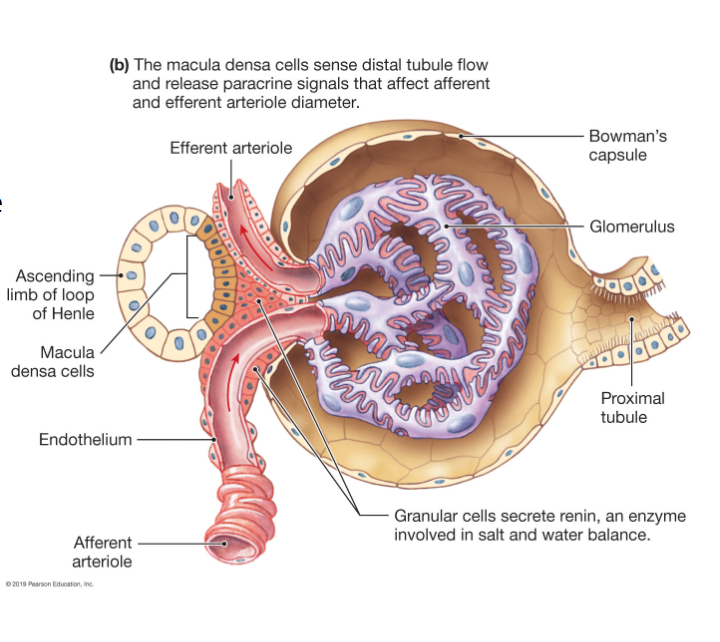
Filtration takes place in the glomerulus
~20% of plasma volume randomly filters out of the blood into the nephron tubule
→ formed elements and plasma proteins DO NOT leave blood
→ smaller solutes in the plasma enter the tubule
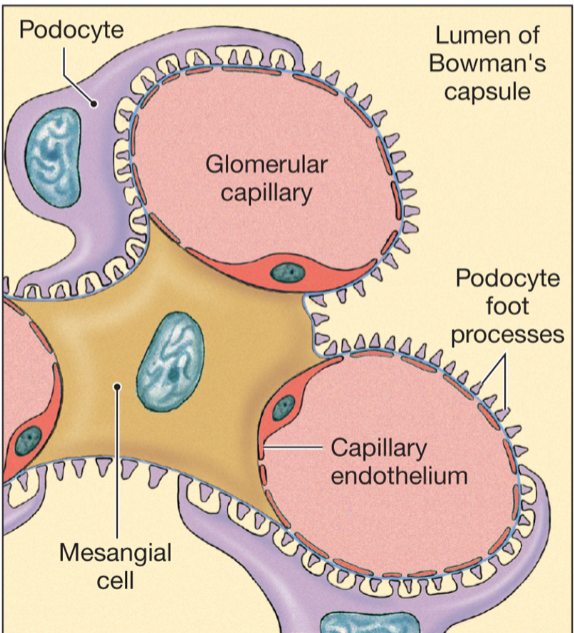
Glomerular capillary
Fenestrated — very leaky, big pores
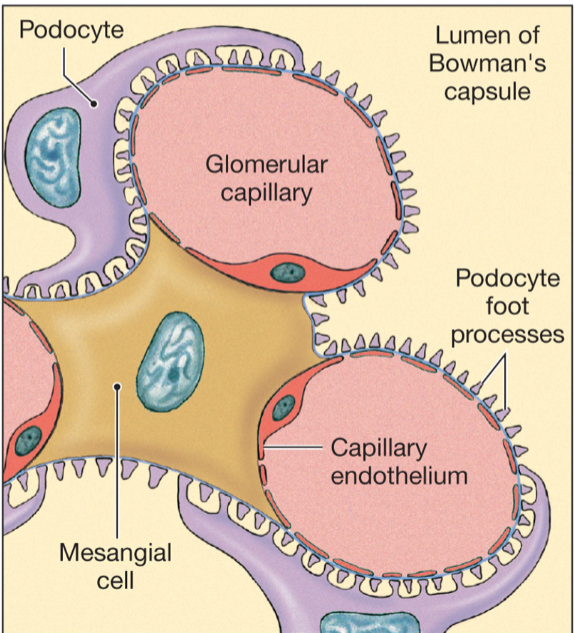
Podocytes
create foot processes, which are part of the glomerular filtering mechanism
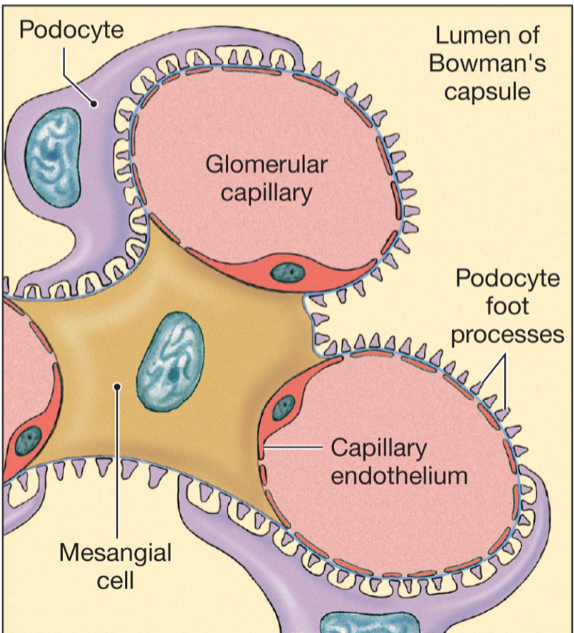
Mesangial cells
surround capillaries
contract/relax to alter blood flow through capillaries
secrete cytokines and are associated with inflammatory response
help to maintain the glomerular basement membrane (also part of the filtering mechanism)
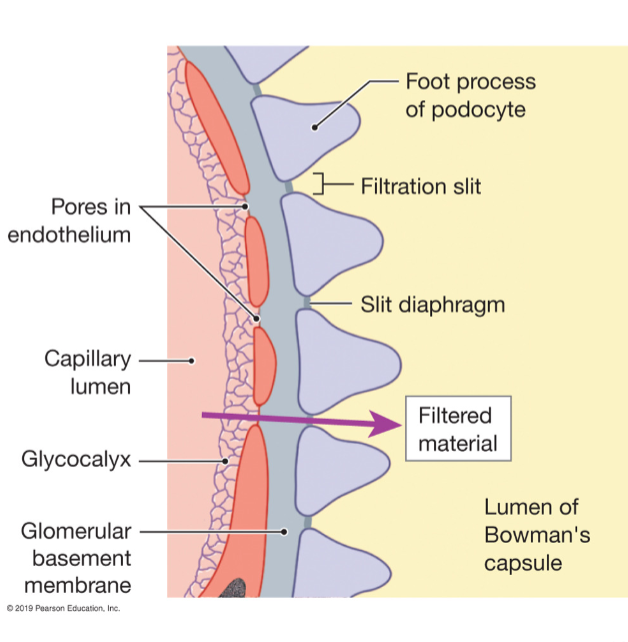
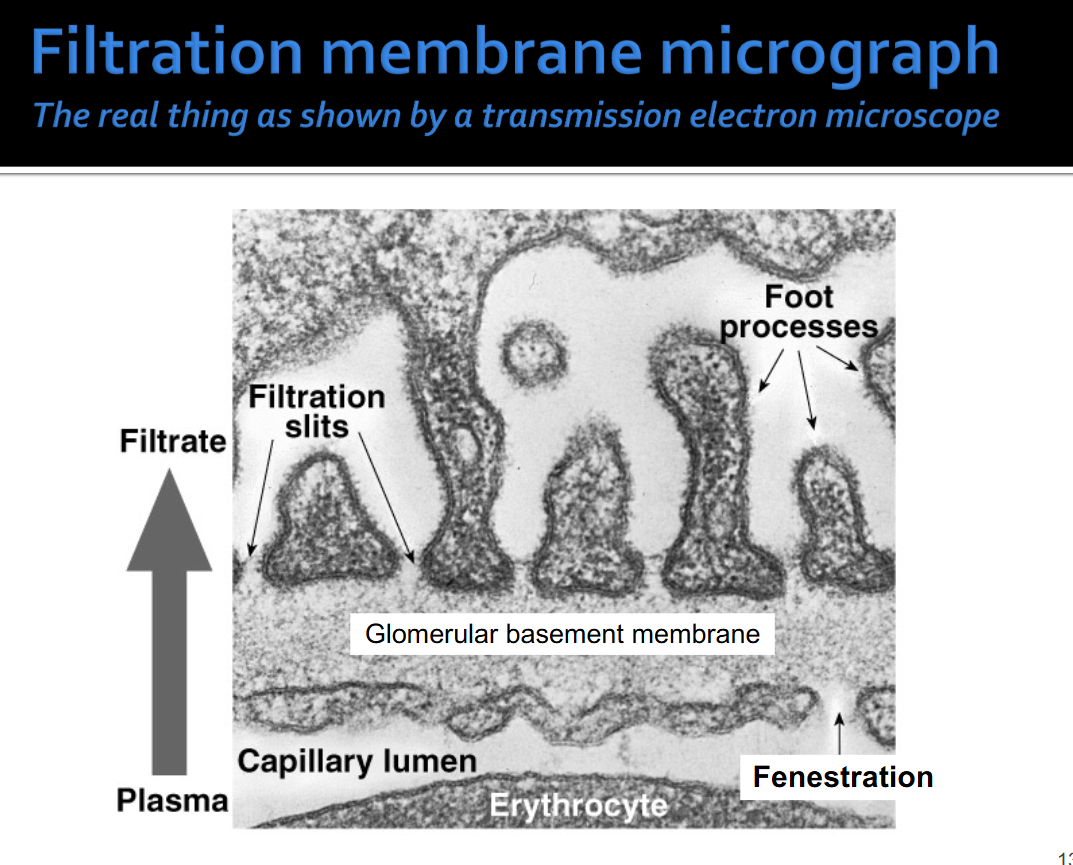
The three layers of the glomerular filter (from innermost to outermost)
Capillary fenestrations
→ size of pores in endothelial cells’ membrane filters cellular elements
Glomerular basement membrane
→ electrical charge repels plasma proteins
Filtration slits formed by podocytes
→ size of openings limits what solutes can move through
Glomerular filtration rate (GFR)
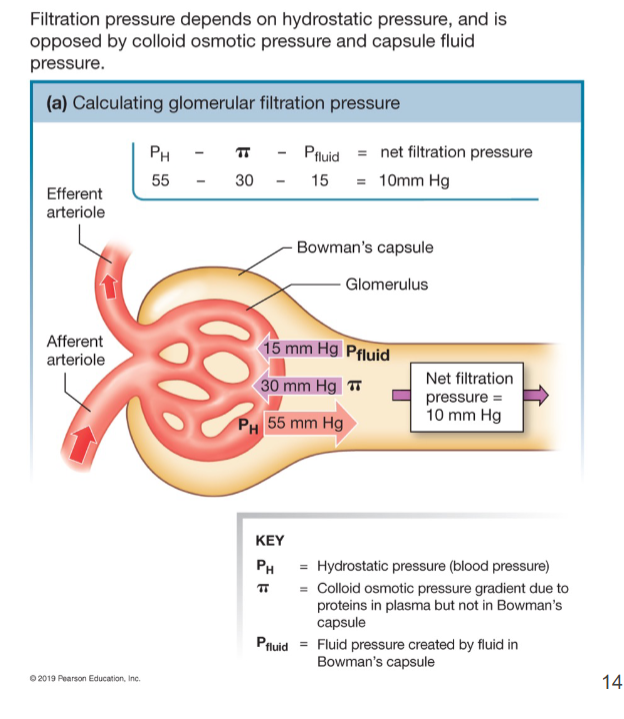
The amount of filtration that happens on the renal corpuscle depends on 3 pressures…
Capillary hydrostatic pressure (P sub H)
→ pushes outward against the walls of the capillary
Colloid osmotic pressure in capillary
→ osmotic pressure pulling fluid into the capillary
Bowman’s capsule fluid (hydrostatic pressure) pressure (P sub fluid)
→ pressure that resists movement of fluid into the capsule
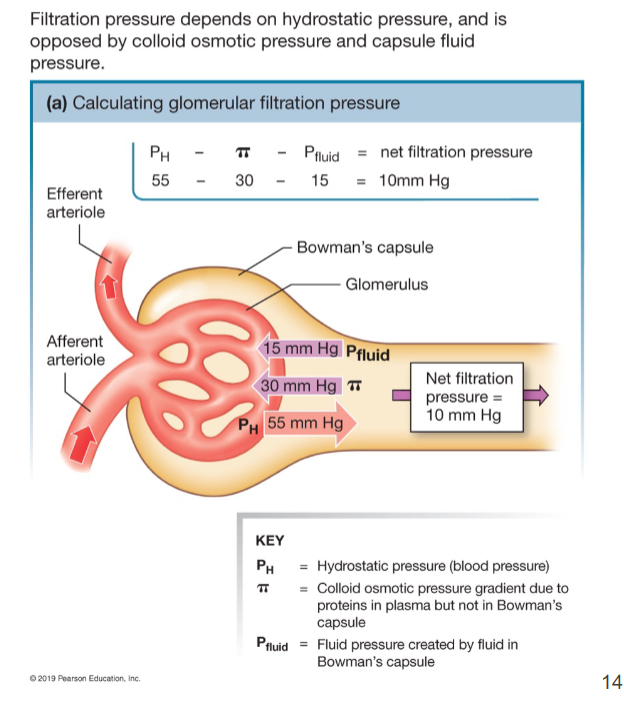
Glomerular filtration rate = sum of all 3 pressures
= 10 mmHg pushing fluid into tubule
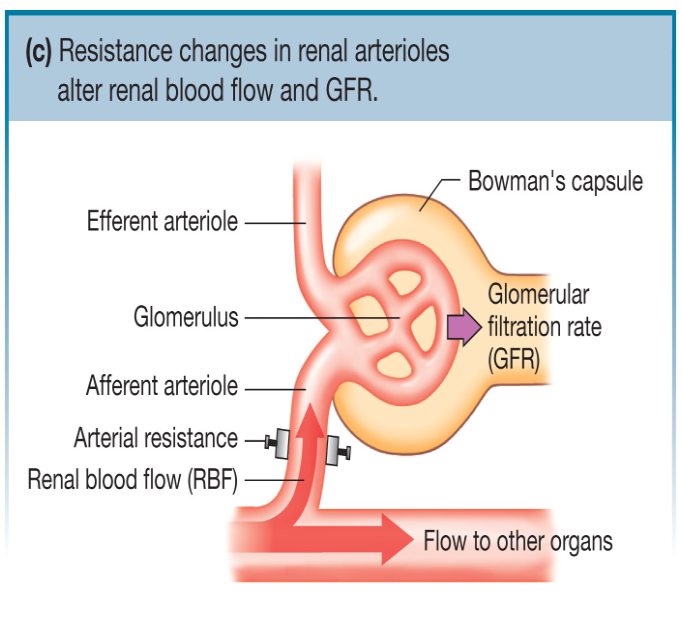
Changes in resistance in the afferent and efferent arterioles alters…
renal hydrostatic pressure (P sub H) and therefore overall GFR
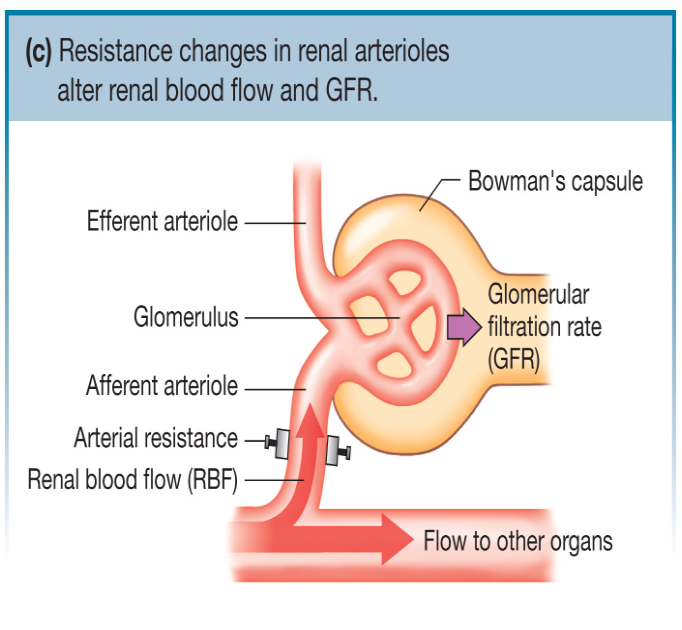
Resistance at both sites is modulated by the sympathetic nervous system AND…
locally
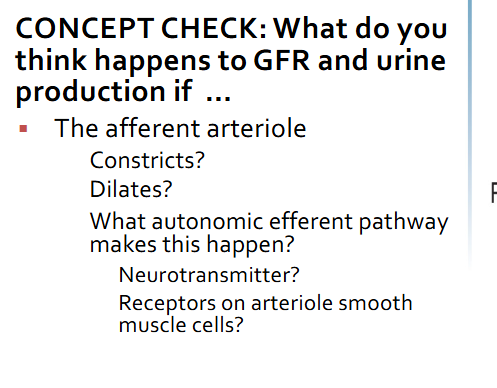
constricts: GFR decreases
dilates: GFR increases
→ sympathetic control (tonic control)
→ norepinephrine onto alpha 1 receptors