Chapter 1: Biochemistry and the organization of cells
 Call Kai
 Learn
Learn Practice Test
 Spaced Repetition
 Match
Match Flashcards
 Knowt Play
1/57

There's no tags or description
Looks like no tags are added yet.
Name | Mastery | Learn | Test | Matching | Spaced | Call with Kai | Chat |
|---|
No analytics yet
Send a link to your students to track their progress
58 Terms
biomolecules, energy
all living things use the same ___ and ___
simple (CH4, CO2, NH3etc), atoms
with the originmolecules and cells must have risen from ___ molecules and likewise those from ___
Amino acids
building blocks of proteins, contain carboxyl (CHOO-) and amino (-NH3+), hydrogen, and a variable R group
Carbohydrates
-compounds made up of C, H, and O
-general formula (CH2O)n, where n is at least 3
monosaccharides
-simplest form of sugar for example glucose
-make up larger polymers and are used for energy, storage, and structural components
nucleotides
-basic unit of hereditary materials DNA and RNA, composed of 5 carbon sugar, nitrogen containing ring and 1 or more phosphate groups
-can have 1 or 2 phosphate groups, 3 makes ATP
Lipids
poorly soluble in water, has long chains of hydrophobic hydrocarbons
abiotic (nonliving),
Ex) Friedrich Wohler and his experiment with ammonium cyanate into Urea
It has been shown that important biomolecules can be produced
under ____ conditions from simple compounds postulated to have been present in the atmosphere of the early Earth.
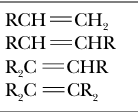
Alkenes
double bonds
Alcohols
hydroxyl group( —OH)

Ethers
Ether group (—OR)

Thiols
sulfhydryl group (—SH)
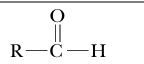
Aldehydes
carbonyl group
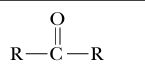
Ketones
carbonyl group
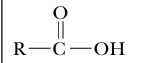
carboxylic acid
carbonyl group
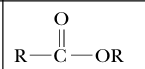
esthers
Ester groups
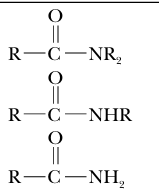
Amides
Amide group
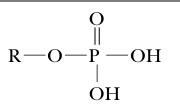
Phosphoric acid Ester
Phosphoric esther group
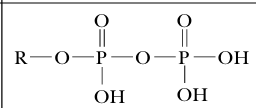
Phosphoric acid anhydrides
phosphoric anhydride group
H, He, Li
The first three elements on Earth
-theorized to be the start of the universe
-universe was once condensed to a very small space but then exploded causing expansion and heat
What’s the big bang
4 to 5 billion yrs
how old is earth
monomers
small molecules that can bond to others to form polymers
proteins
macromolecules formed by polymerization of amino acids
nucleic acids
macromolecules formed by polymerization of nucleotides Ex) DNA and RNA
catalytic activity
enzymes increase rates of chemical reactions compared to uncatalyzed reactions
nucleotide, amino, protein, informational
____ sequence determines ___ acid sequence which determines ___ function and catalytic speed. Biological macromolecules are _____
genetic code
information for the structure and function of all living things
carboxyl, amino, H2O
Amino acids build proteins by connecting the ___ group of one amino acid with the ____ group of the next amino acid. With elimination of ___
1st, 4th, H2O
Polysaccharides are built by linking the __ carbon of one sugar with the ___ carbon of the next sugar. With elimination of __
3’-OH, 5’-OH, H2O
n nucleic acids the ___ of the ribose ring of one nucleotide forms a bond to the __ of the ribose ring of a neighboring nucleotide. With elimination of __
-believed that RNA was once capable of coding its own replication and perform catalytic activity like modern day proteins. Eventually, the system evolved to the point of being able to encode the synthesis of more effective catalysts, namely proteins.
How is RNA associated with the origin of life
Prokaryotes
-bacteria and cyanobacteria (single-celled)
-no membrane enclosed organelles
-no nucleus, only nuclear region
-energy yielding reactions on plasma membrane
-ribosomes free in cytosol
-photosynthesis in chromatophores (an extension of plasma membrane) no chloroplasts
Eukaryotes
-single and multicellular
-nucleus with a membrane separating it from the rest of the cell
-membrane enclosed organelles
-energy yielding reactions in the mitochondria
-ribosomes on the endoplasmic reticulum
-uses chloroplasts
similarities in eukaryotes and prokaryotes
-plasma membrane separating the whole cell from the rest of the outside world
-uses ribosomes
-plasma membrane is a double bilayer with lipid molecules
-cell wall (bacteria and plants)
nucleus
-location of main genome, site of most DNA and RNA
-surrounded by a nuclear double membrane
-contains nucleolus (Rich in RNA)
-contains chromatin (aggregation of DNA and protein)
-contains chromosomes (condensed chromatin, coiled due to protein before replication)
mitochondrion
-site of energy yielding oxidation reactions
-has its own DNA
-double membrane
—>outer smooth
—>inner= folds called cristae
—> matrix: space within inner membrane
endoplasmic reticulum
-continuous membrane throughout the cell
-rough has ribosomes smooth does not
chloroplasts
-site of photosynthesis in green plants and algae
-has its own DNA
-contain grana: membranous bodies stacked within chloroplasts
-double membrane
Golgi apparatus
series of flattened membranes involved in secretion of proteins from cells in reactions that line sugars to other cellular components
Lysosome
membrane enclosed sacs containing hydrolytic enzymes
peroxisomes
sacs containing enzymes involved in metabolism of hydrogen peroxide
cell membrane
separates the cell contents from the outside world
cell wall
Rigid exterior later of plant walls made up of cellulose
vacuoles
cavities within the cytoplasm of a cell typically enclosed by a single membrane that may serve secretor, excretory, or storage features
cytosol
-portion of cell that lies outside the nucleus and other membrane enclosed organelles
-contain cytoskeleton: lattice of fine strands consisting mostly of proteins that hold structure in place and provide pathways for materials like a highway
monera (prokaryotes), protista (single cell eukaryotes), animals, plants, fungi
Five kingdom classification
Bacteria, archea, eukaryotes
3 Domains
reduction
gain of electrons
oxidation
loss of electrons
thermodynamics
study of transfer of energy
free energy (G)
diagnostic for the spontaneity of a reaction at a constant temp
spontaneous
reaction without outside intervention
delta G<0
free energy of a system decreases in a spontaneous (energy releasing process)
delta G>O
nonspontaneous process, energy is supplied
delta G =0
equilibrium
delta S(universe)>0
in any spontaneous process
deltaG= deltaH -TdeltaS
Gibbs free energy formula