chapter 22: the respiratory system
 Call Kai
 Learn
Learn Practice Test
 Spaced Repetition
 Match
Match Flashcards
 Knowt Play
1/120

There's no tags or description
Looks like no tags are added yet.
Name | Mastery | Learn | Test | Matching | Spaced | Call with Kai | Chat |
|---|
No analytics yet
Send a link to your students to track their progress
121 Terms
refers to ventilation of the lungs (breathing)
respiration
oxygen and carbon dioxide exchanged between blood and air. 2 types: external and internal respiration
gas exchange
exchange of gases between air and blood (alveoli)
external (pulmonary) respiration
blood and tissue fluid (systemic and gas exhange)
internal tissue respiration
principal organs of the respiratory system
nose, pharynx, larynx, trachea, bronchi, & lungs
what are conducting zones?
passages that serve only for airflow (no gas exchange happens, just moving air)
where is the conducting zone?
nostrils through the major bronchioles
what are respiratory zones?
regions that participate in gas exchange
what structures participate in the respiratory zone?
terminal ends of bronchi (alveoli) & nearby structures
airway from nose through larynx
upper respiratory tract
regions from trachea through lungs
lower respiratory tract
what is the job of the nose/nasal cavities
warms, cleans, and humidifies inhaled air, detects odor, and serves as a resonating chamber that amplifies the voice
what 2 major structure are located in the nose?
olfactory nerve/mucosa & ethmoid bone
what does charles law state?
the volume of gas is directly proportional to its absolute temp, for example, warm air has more volume
on a cool day (60 degrees), by how much will air temperature increase during inspiration?
39 degrees
if 500 mL of air inhaled, what will the volume expand to? (remember, warm air=more volume)
536 mL
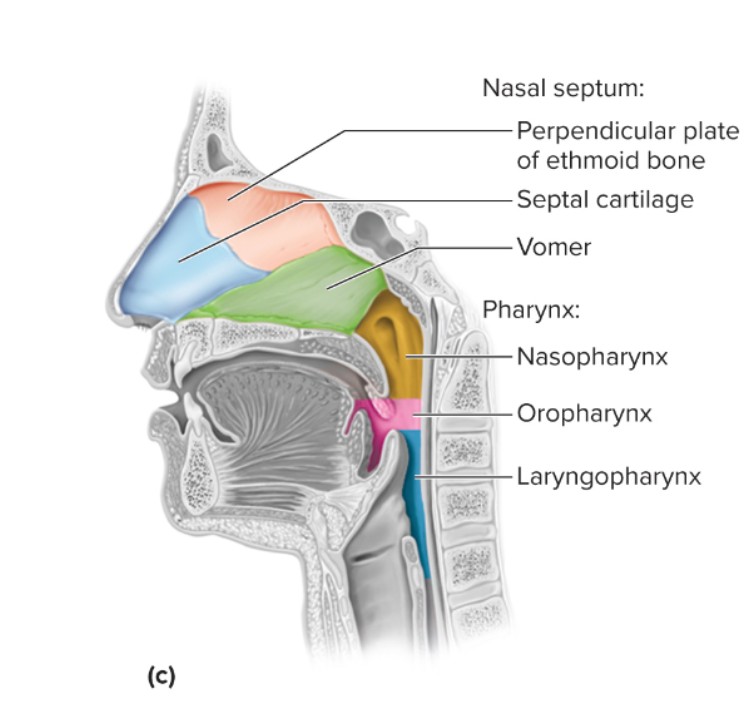
(throat) muscular funnel extending from nose to larynx, assist in swallowing and speech
pharynx
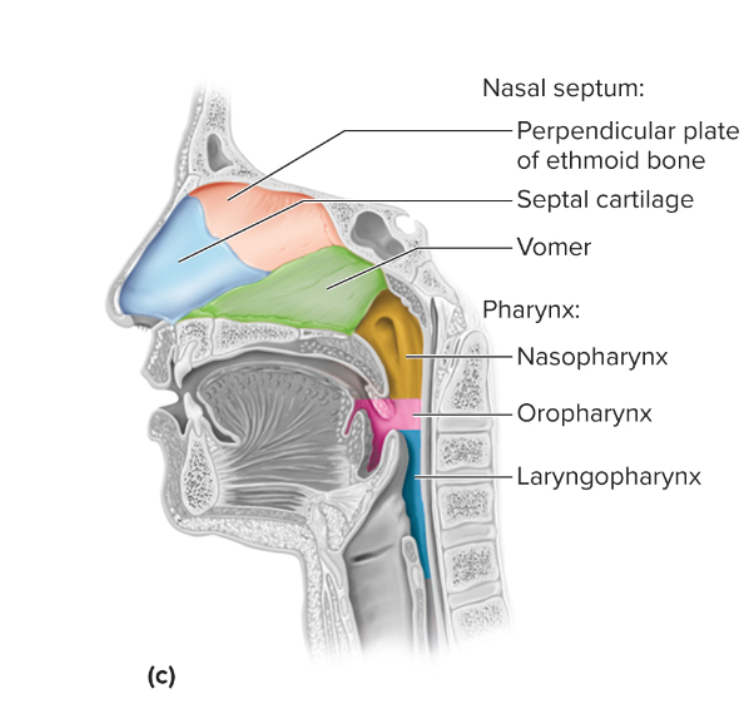
responsible for airflow: it receives auditory tubes & mucosa traps airborne pathogens near the pharyngeal tonsil
nasopharynx
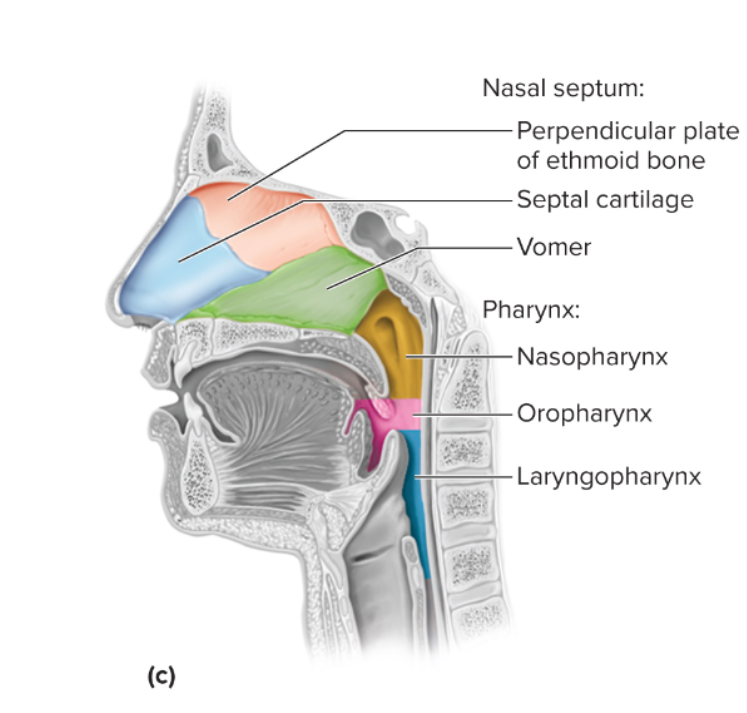
responsible for airflow and digestion: its the space between soft palate and epiglottis & contains palatine and lingual tonsils
oropharynx
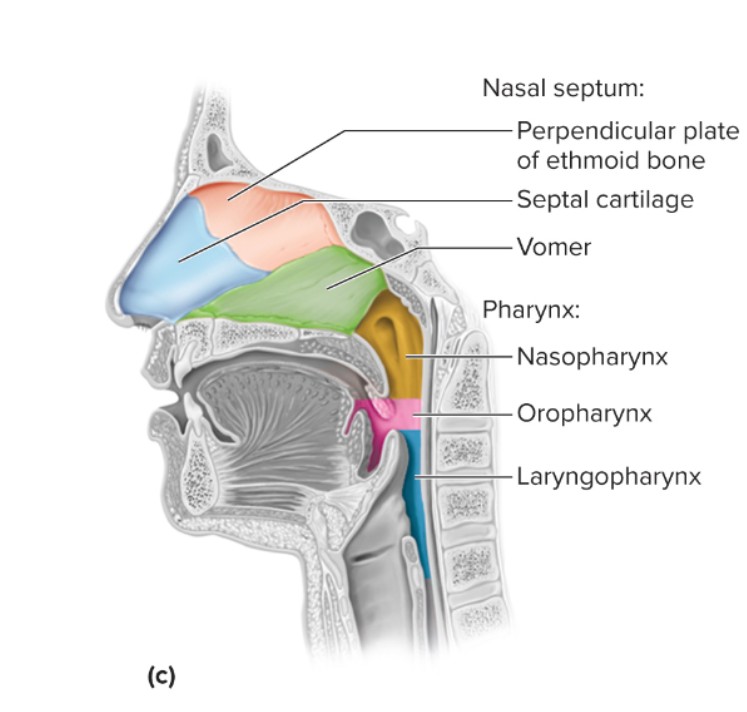
responsible for airflow and digestion: it is posterior to larynx, from epiglottis to cricoid cartilage, its also where the esophagus begins
laryngopharynx
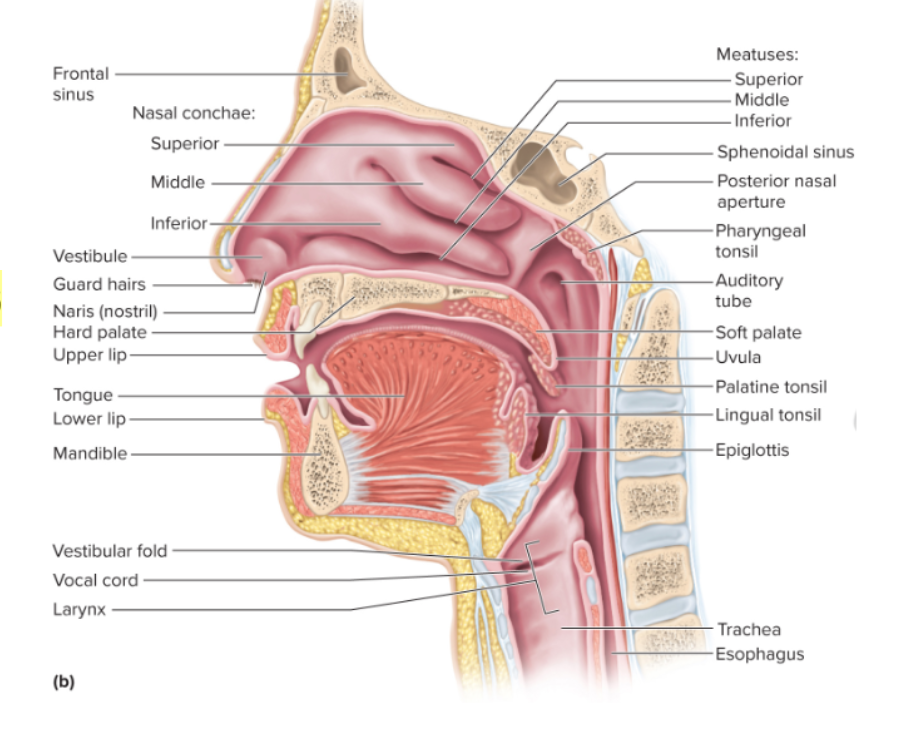
keeps food and drink out of the airway. the superior opening is guarded by the epiglottis and gives the voice box sound
larynx
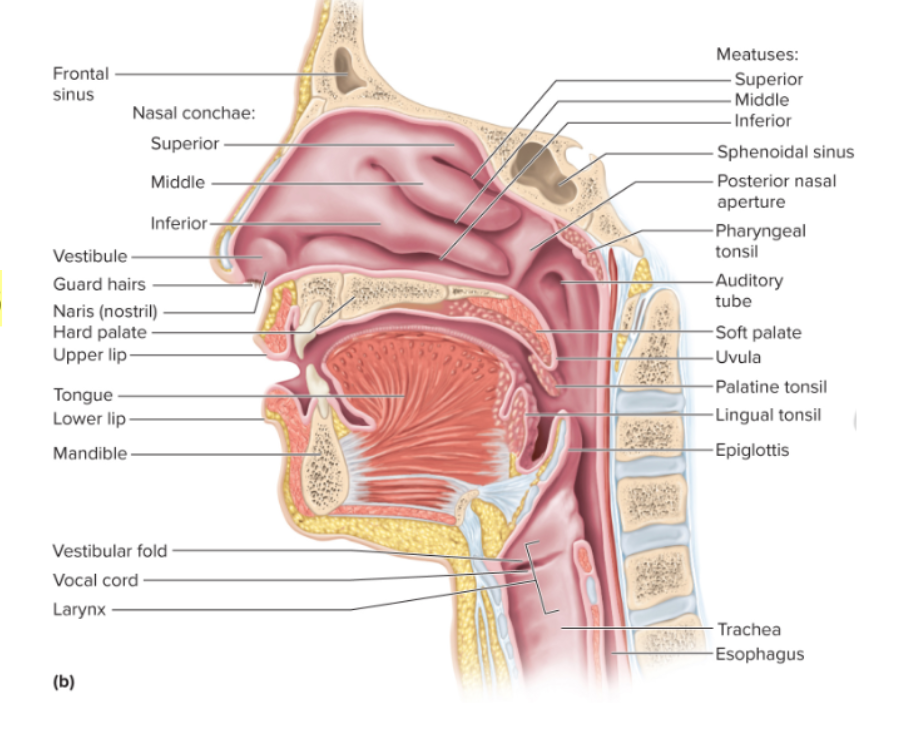
directs food to the esophagus
epiglottis
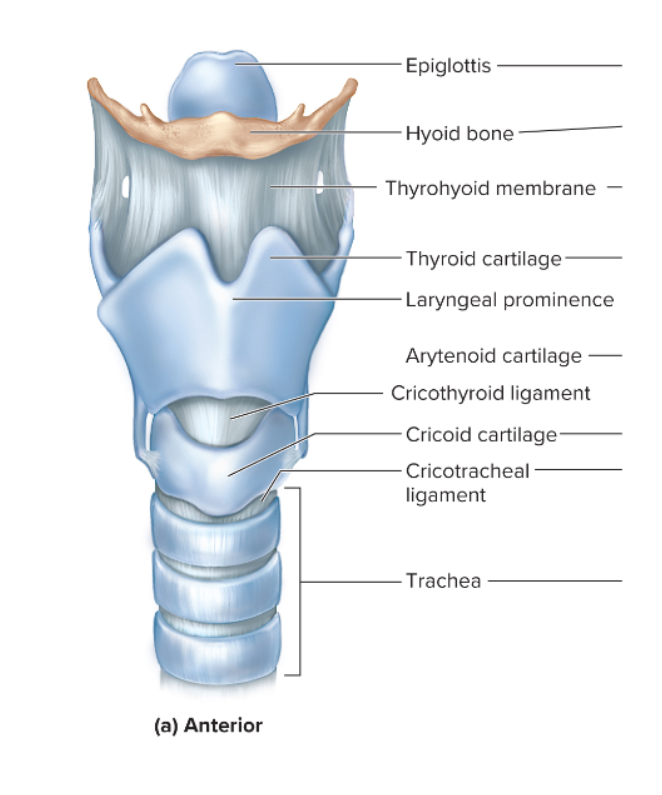
supportive plate in epiglottis (elastic cartilage)
Epiglottic cartilage
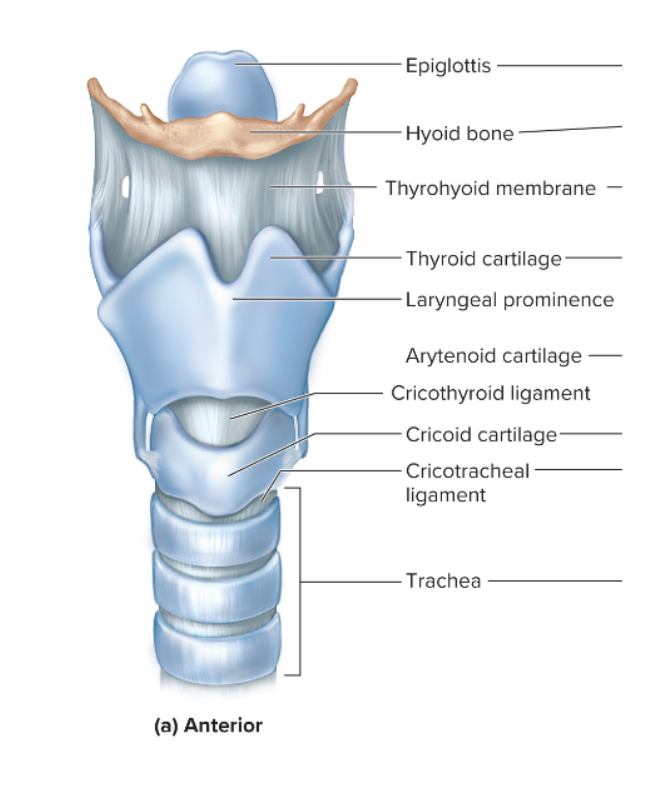
shield-shaped, largest laryngeal cartilage; contains laryngeal prominence (Adam’s apple)
Thyroid cartilage
what stimulates the growth of the adams apple? (this is why its more prominent in men)
testosterone
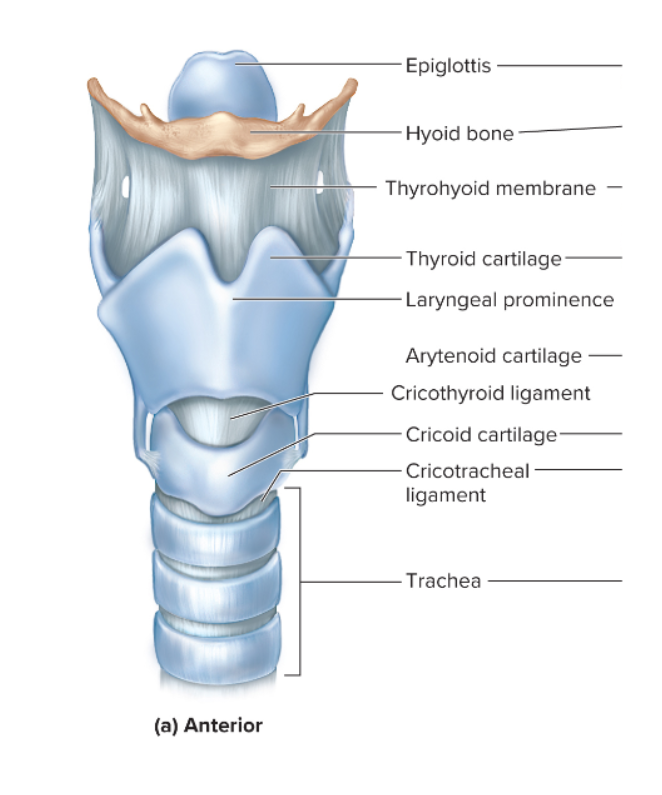
ring-like shape; connects larynx to trachea
cricoid cartilage
make the voice box
thyroid and cricoid
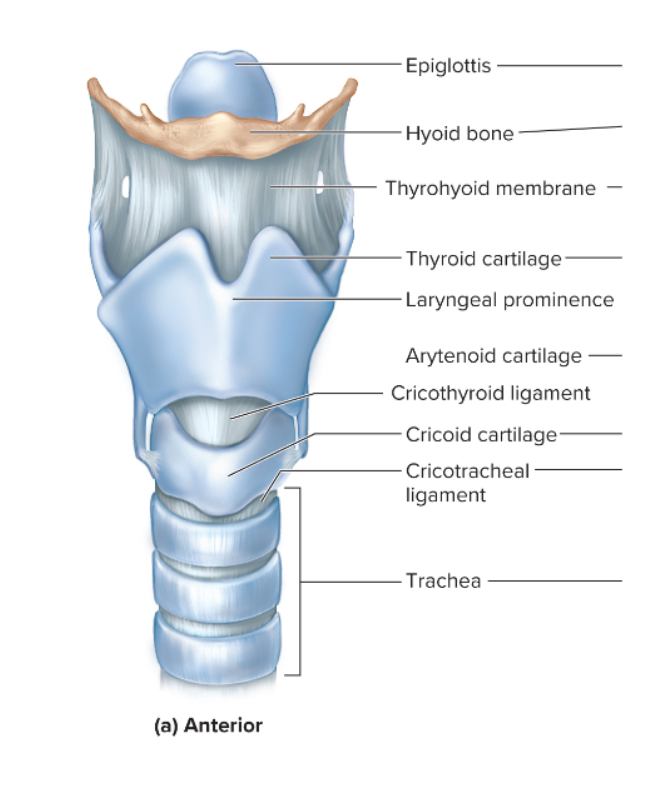
holds up the larynx
hyoid bone
if the muscles of the larynx are tighter, it gives off a __ pitch
higher
if the muscles of the larynx are looser, it gives off a __ pitch
low
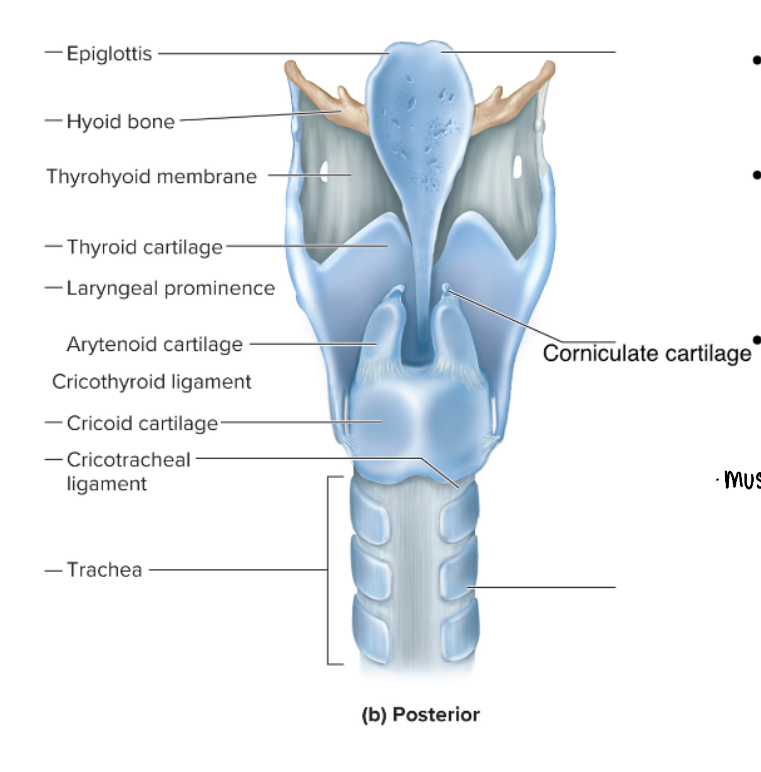
posterior to thyroid cartilage
Arytenoid cartilages
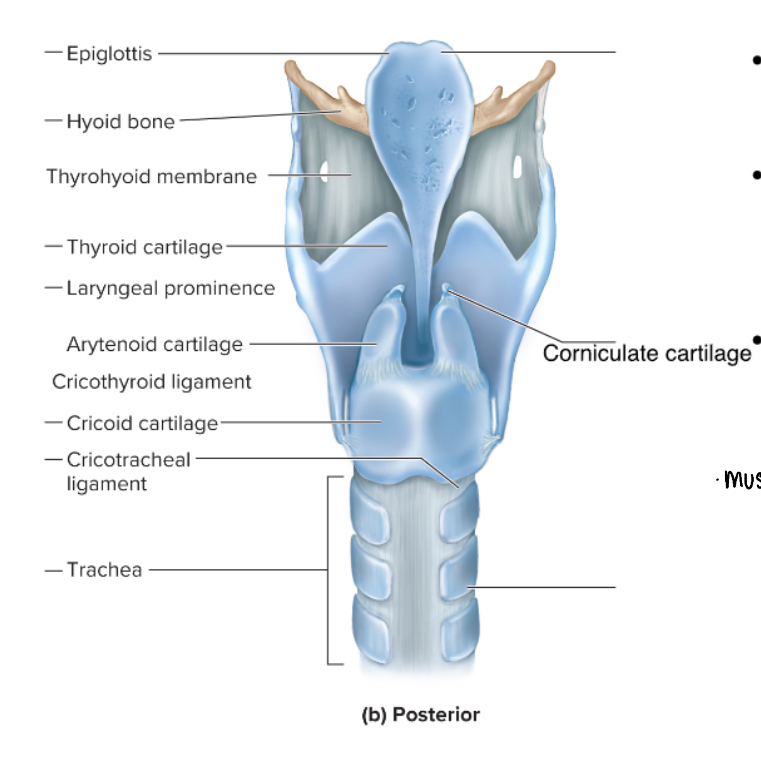
attached to arytenoid cartilages like a pair of little horns
Corniculate cartilages
these 2 cartilages are important for speech and the muscles that move cartilage attach at these points
Arytenoid and Corniculate
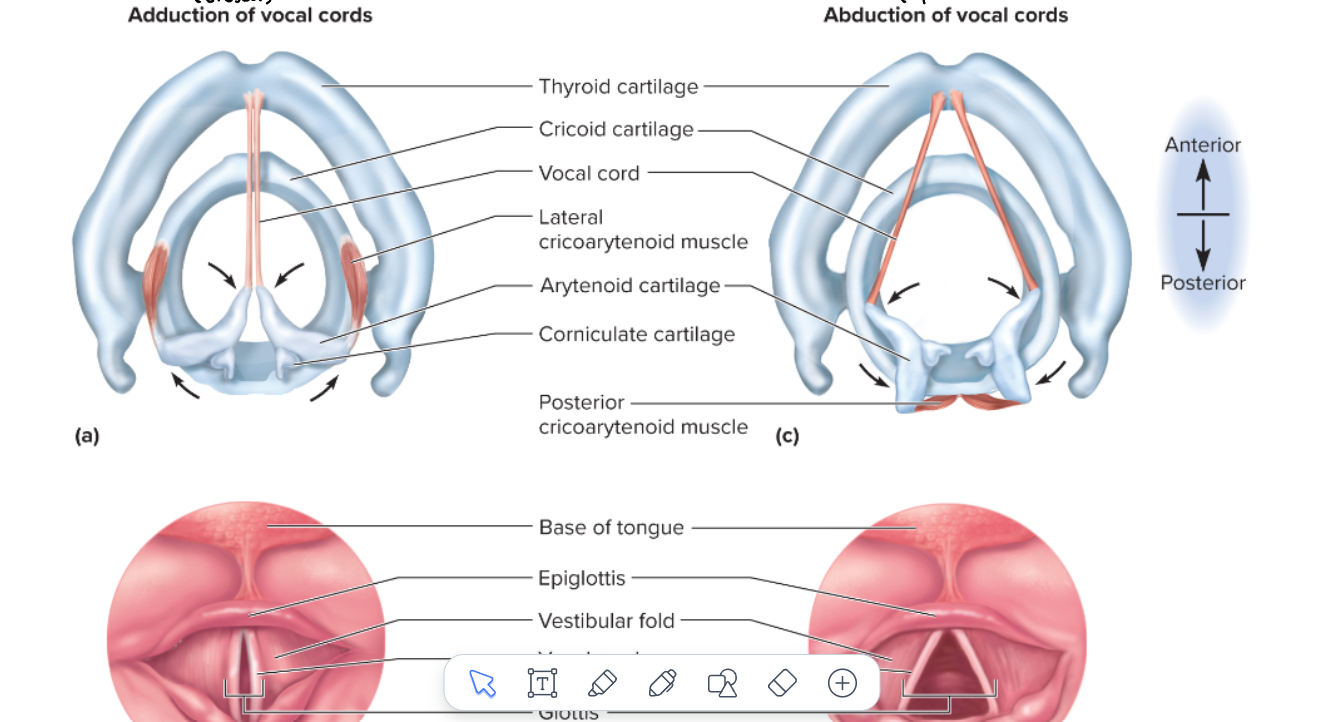
adduction v. abduction of the vocal chords
closed v. open
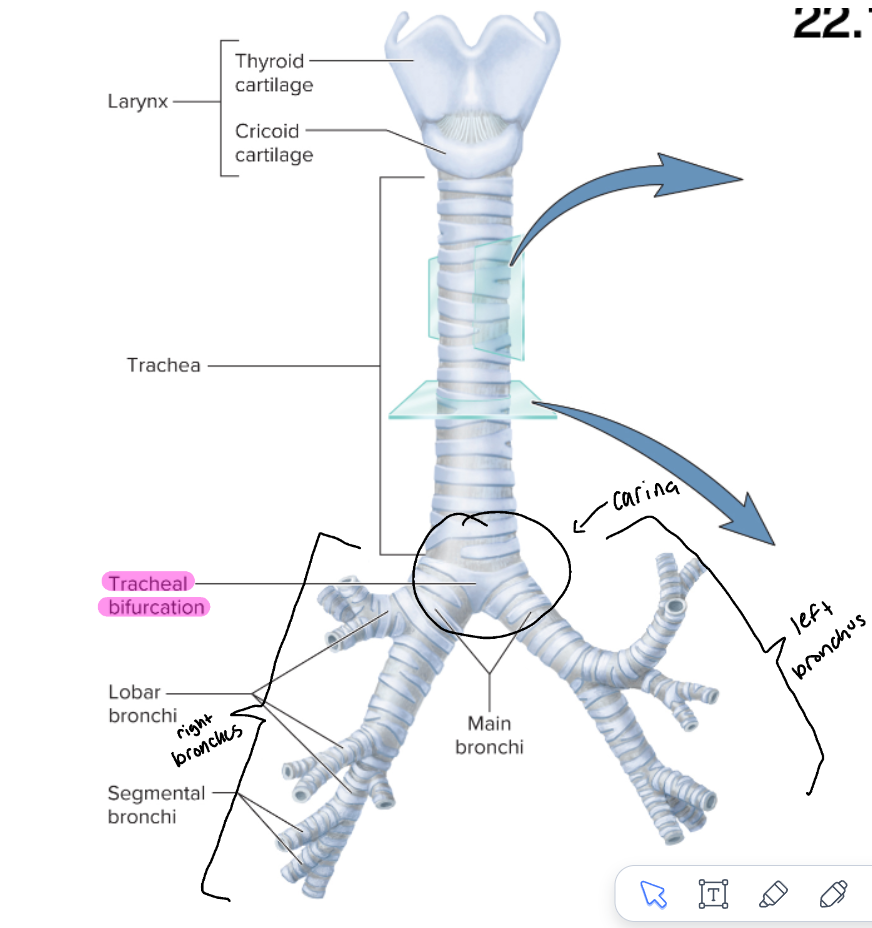
the “windpipe.” a rigid tube supported by 16-20 C shaped rings of hyaline cartilage to prevent collapse during inhalation
trachea
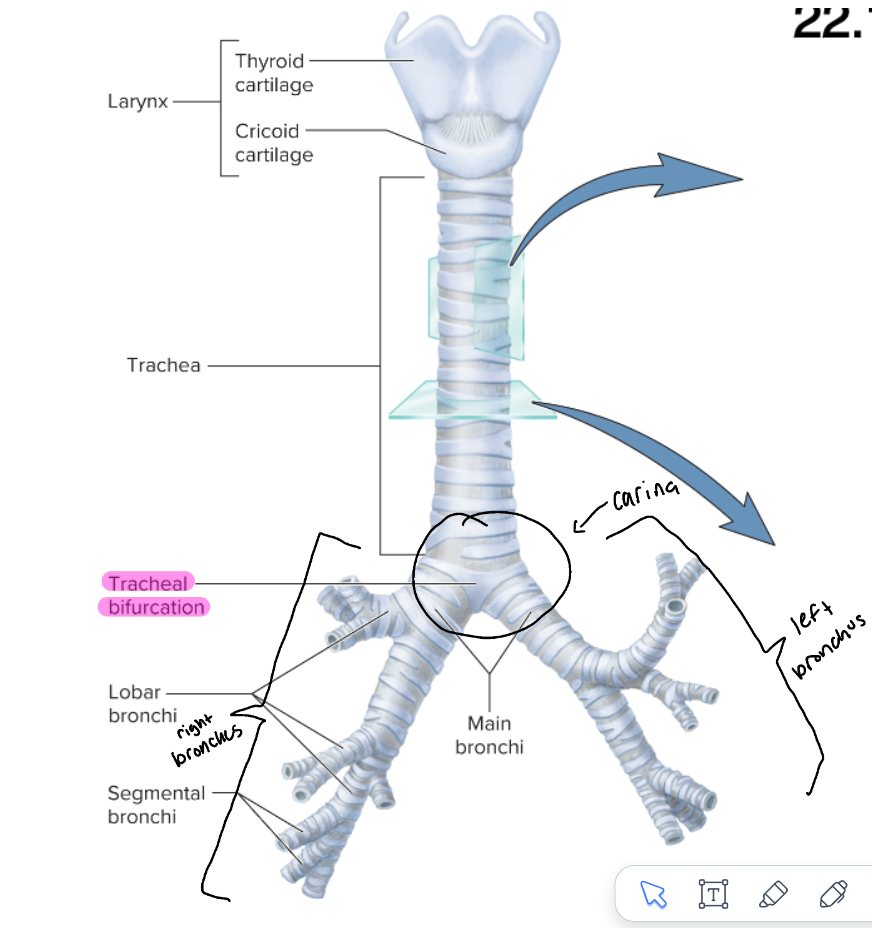
lowermost tracheal cartilage where the trachea splits into the left & right bronchi
carina
what is the trachea lined with?
pseudostratified ciliated columnar epithelium with goblet cells
mechanism for debris removal to prevent pathogens
mucociliary escalator
how does the mucociliary escalator work?
Mucus traps inhaled particles, upward beating cilia moves mucus to pharynx to be swallowed
to make a temporary opening in the trachea & insert a tube to allow airflow
tracheotomy
benefits of a tracheotomy
prevents asphyxiation
potential problems of a tracheotomy
air is not humidified & will dry out mucous membranes, resulting in it becoming crusty & interfering with clearance of mucus from the tract, thereby promoting infection
when a patient is on a ventilator, air is introduced directly into the trachea (through nose or mouth)
intubation
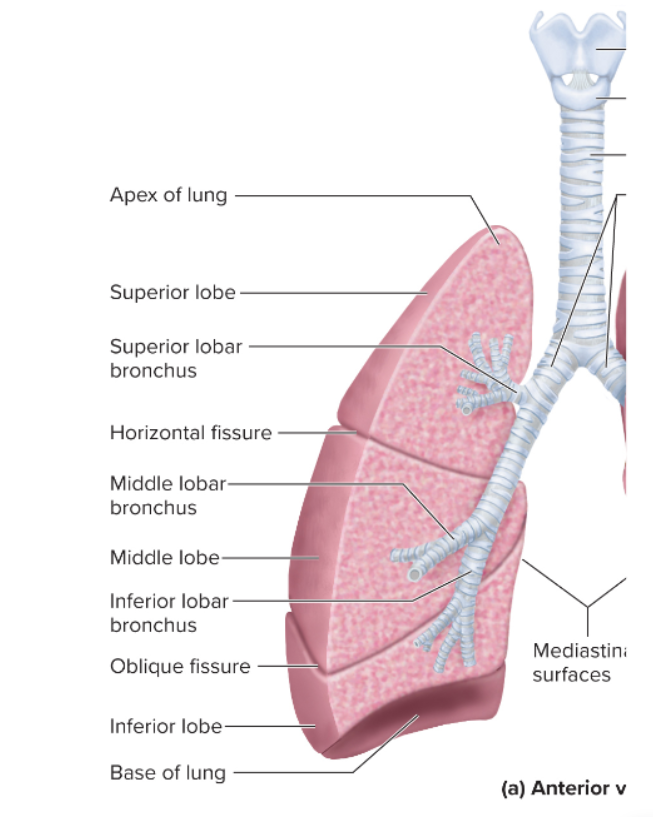
has 3 bronchi lobes, is wider and more vertical. aspiration typically occurs in this bronchus
right main bronchus
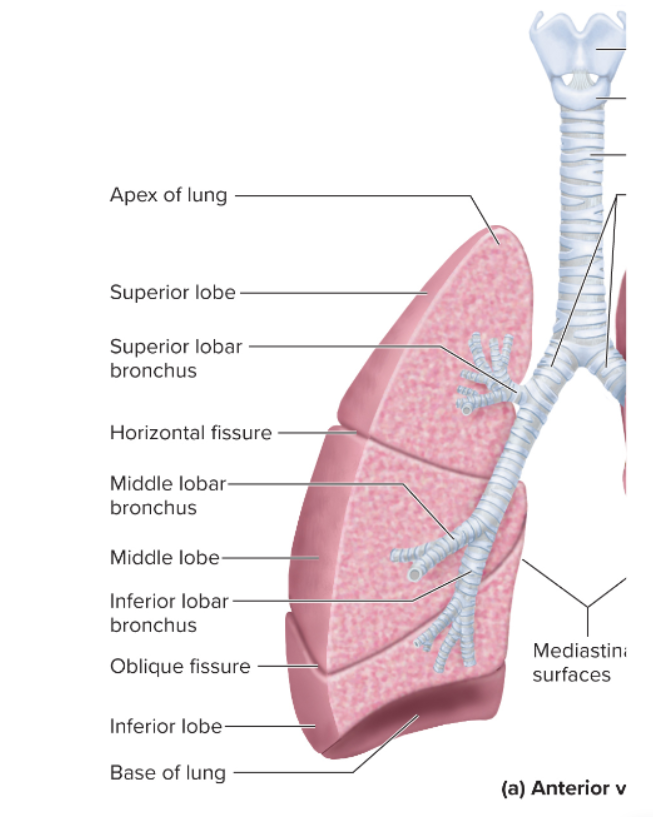
3 lobes of the right lung
superior, middle, & inferior
2 lobes of the left lung
superior & inferior
why is the right lung shorter?
the liver takes up space below it
why is the left lobe narrower?
the heart tilts into the left lung
the tertiary bronchi supply the _______ segment of the lungs
bronchopulmonary
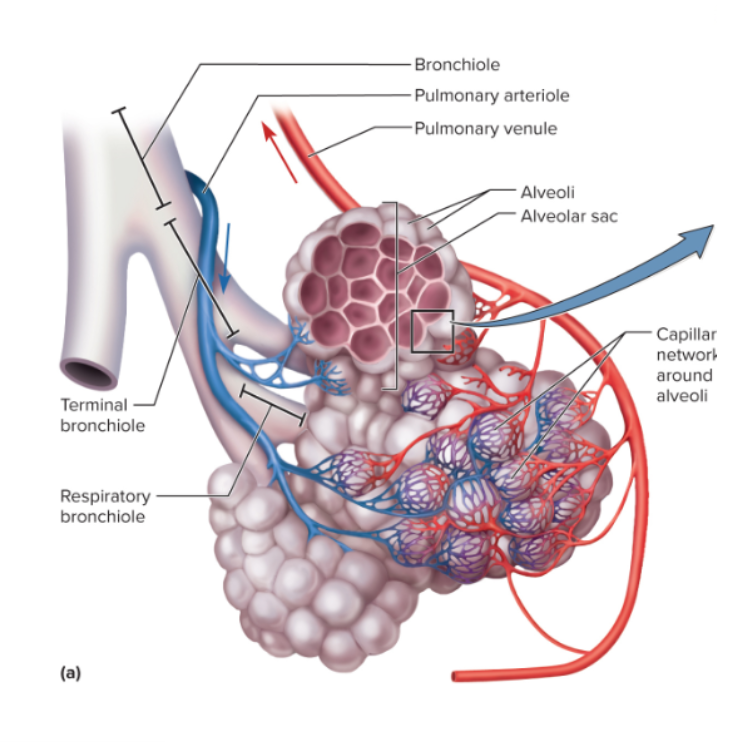
continuations of airway that lack supportive cartilage and are 1 mm or less in diameter
bronchioles
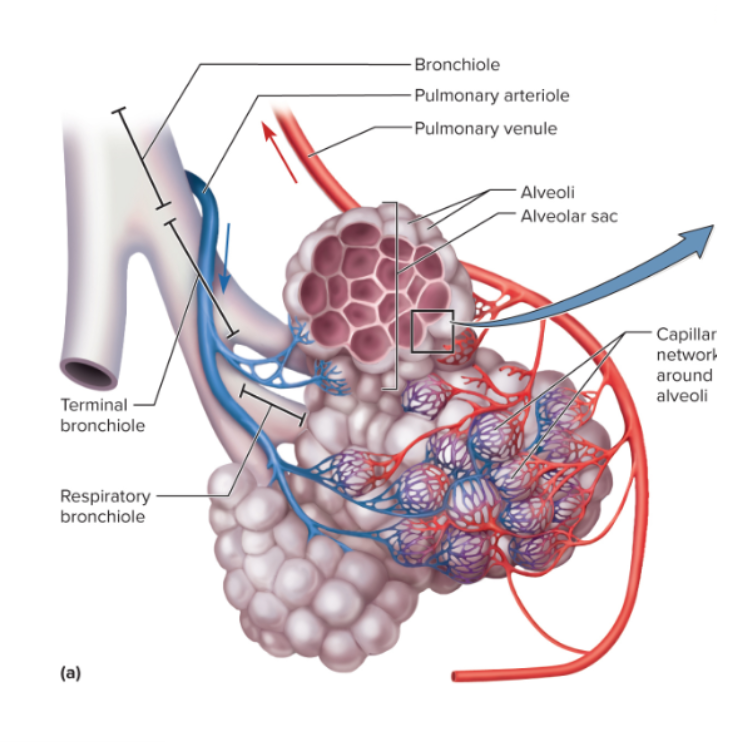
portion of lung ventilated by one bronchiole
pulmonary lobule
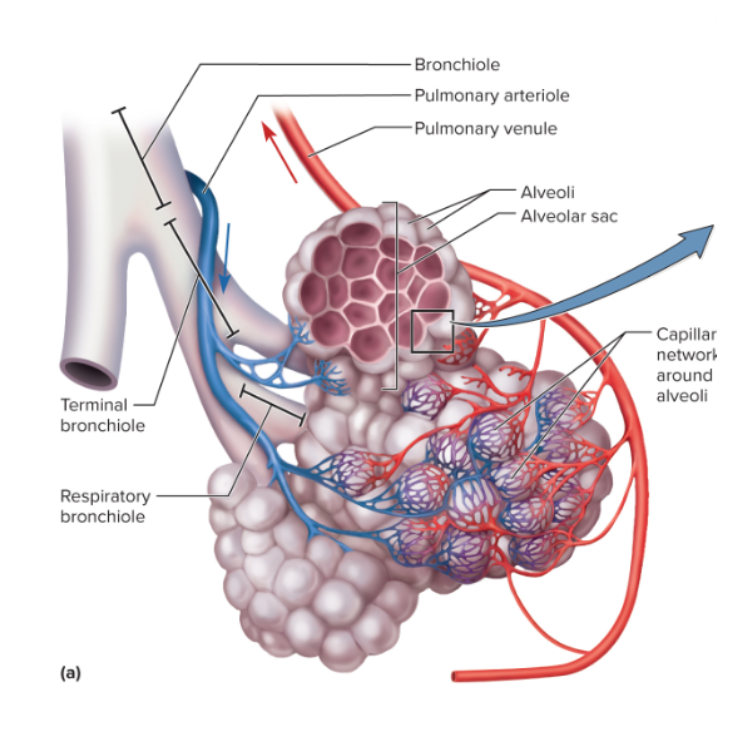
each bronchiole divides into terminal bronchioles, how many of these are there?
80
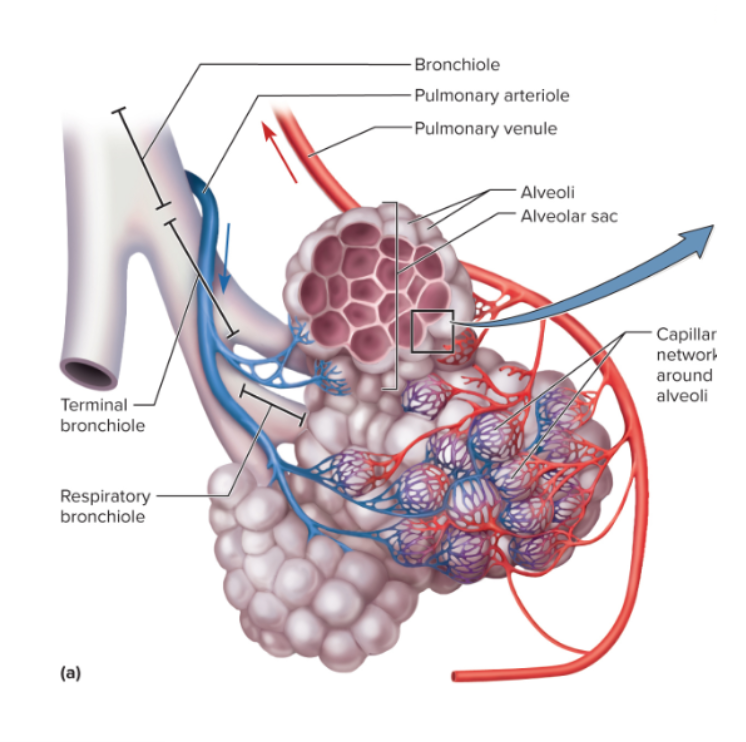
each terminal bronchiole gives off 2 or more smaller respiratory bronchioles, each with a ___
alveoli
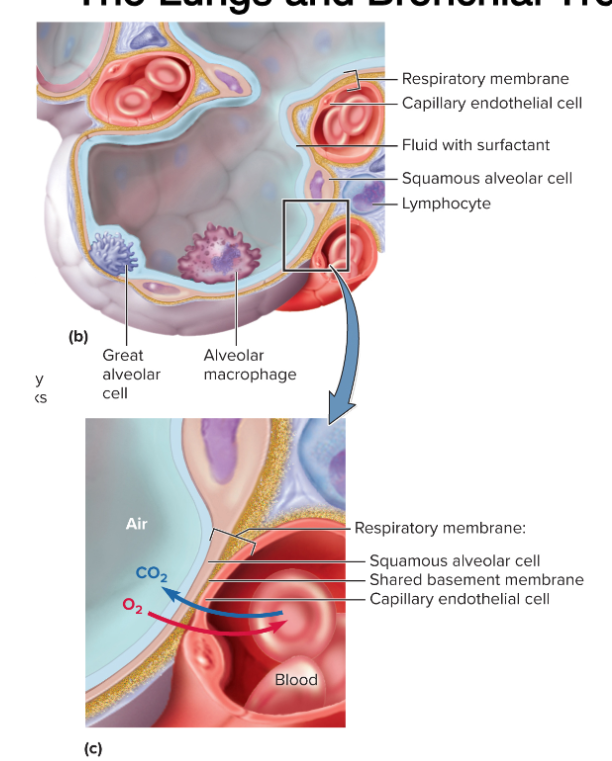
beginning of the respiratory zone (gas exchange)
alveoli
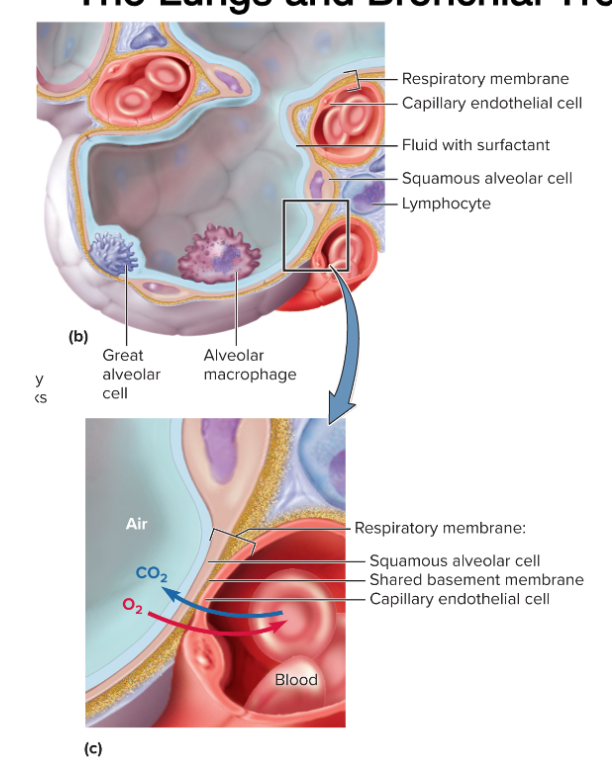
rapid gas exchange with blood
simple squamous alveolar cell layer
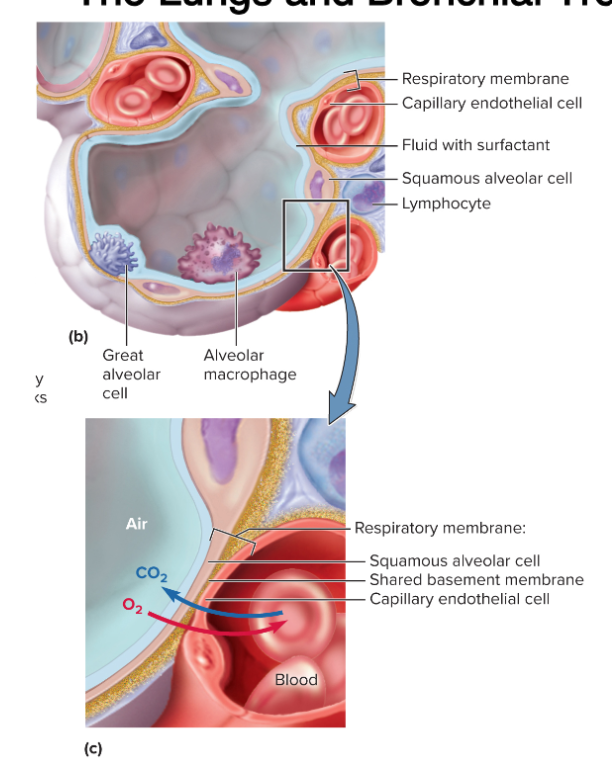
secret phospholipids and proteins to prevent collapse of alveoli
great alveolar cells
remove debris (wandering cells)
macrophages
how is gas exchanged across the alveolar membrane?
simple diffusion
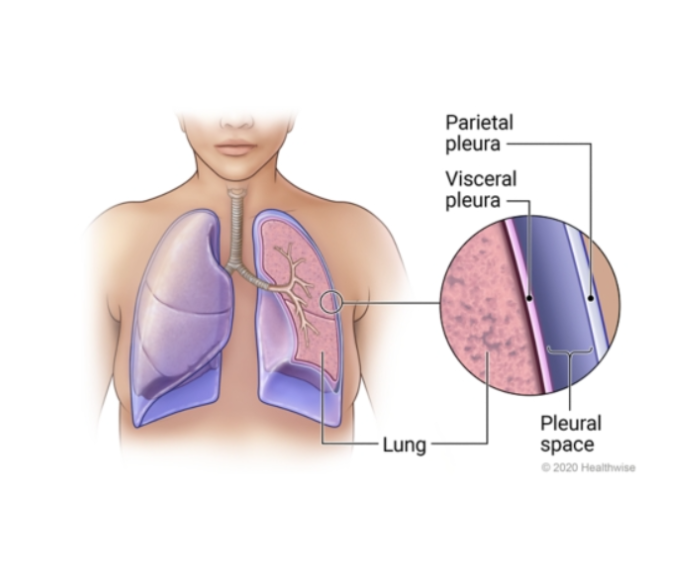
two-membrane, fluid filled sac surrounding the lungs
pleura
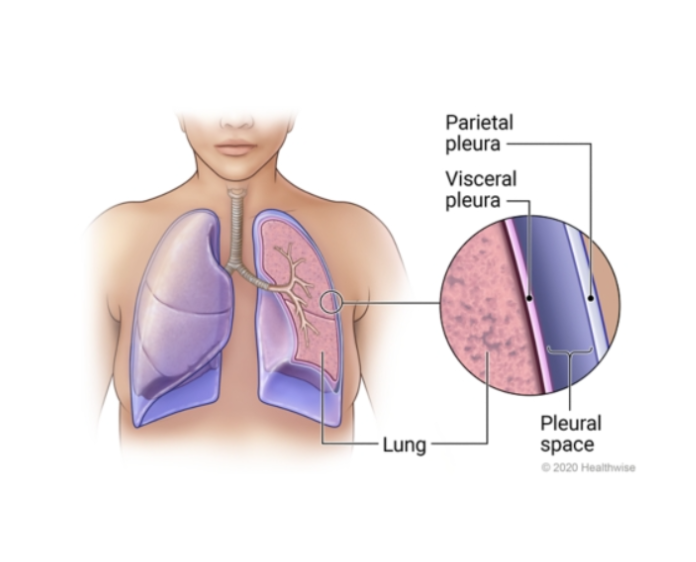
covers the inside of the lungs
visceral pleura
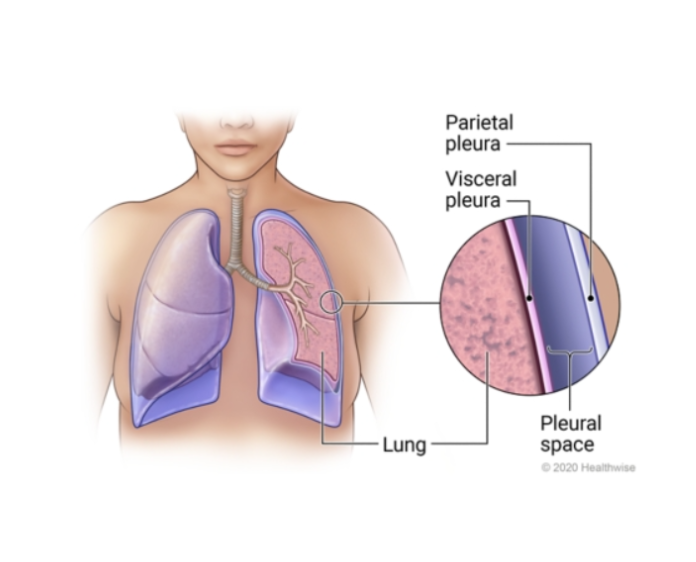
outer layer (connected to diaphragm and ribs)
parietal pleura
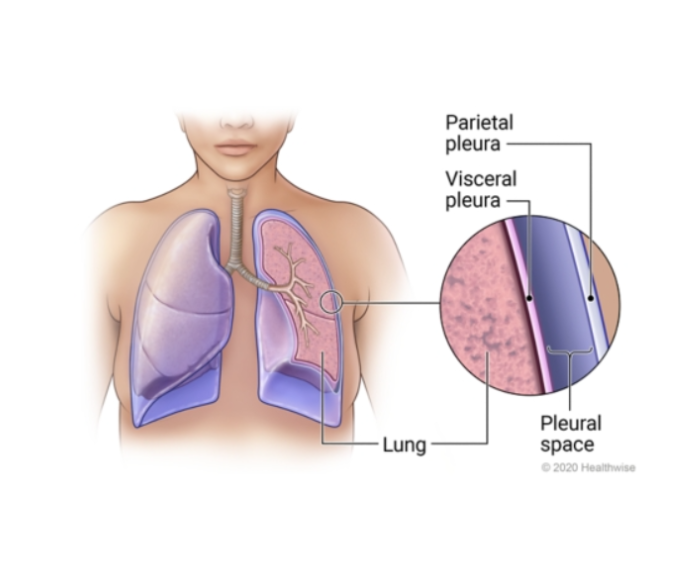
space between membranes that reduces friction breathing
pleural cavity
breathing is a repetitive cycle of ___ and ___
inhalation and exhalation
one complete breath, inspiration and expiration
respiratory cycle
requires a difference between air pressure within the lungs and the external air pressure
ventilation
major muscles involved in creating difference in pressure gradients
diaphragm (2/3 or airflow) & intercostal muscles (1/3 of airflow)
what happens when the diaphragm relaxes? (boyles law)
relieves pressure on organs and the lungs move up
what happens when the diaphragm contracts (boyles law)
it pushes abdominal organs down so the lungs can expand
exhale v. inhale pressure
positive v. negative pressure
what is the primary function of intercostal muscles?
stiffen thoracic cage and prevent collapsing when diaphragm decends and 1/3 of airflow
contract during inhaling to widen thoracic cavity (intercostal muscles)
external muscles
contract during exhaling to narrow thoracic cavity (intercostal muscles)
internal muscles
scalenes of the neck fix ribs 1 & 2 while external intercostals pull the ribs upward and forwards (quiet respiration)
quiet inhalation
the energy-saving passive process achieved by the elasticity of the lungs and thoracic cage. as muscles relax, structures recoil to og shape and original (smaller) size of thoracic cavity (quiet respiration)
quiet expiration
breathing while at rest; effortless and automatic
quiet respiration
deep or rapid breathing, such as during exercise or playing an instrument
forced respiration
what happens during forced inspiration?
erector spinae arches the back & upper ribs are elevated
what happens during forced expiration
increases abdominal pressure and pushes viscera up against diaphragm, increasing thoracic pressure & forcing air out. pelvic muscles move down
breathing technique used to help expel contents of certain abdominal organs
valsalva maneuver
how does the valsalva manuever work?
breathing hard against a closed airway for 15 seconds to increase pressure in the abdomen and slow the heart
what is the purpose of the valsalva maneuvar?
diagnoses heart conditions, problems with ANS, and clears ear tubes
what are the 2 words for a collapsed lung?
atelectasis and pneumothorax
caused by obstruction of an airway or pressure on the outside the lung
atelectasis
thoracic wall is punctured, with inspiration sucking air into the pleural cavity. causes a build up of pressure in the lungs
pneumothorax
Does your chest expand because your lungs inflate or do your lungs inflate because your chest expands?
your lungs inflate because your chest expands
When the diaphragm contracts, do you inhale or exhale?
inhale
When inferior accessory muscles contract, do you inhale or exhale?
exhale
When superior thoracic muscles contract, do you inhale or exhale?
inhale
which medulla respiratory center is the primary generator of the respiratory rhythm, reverberating circuits of inspiratory neurons and expiratory neurons?
ventral respiratory group (VRG)
which medulla respiratory center modified the rate and depth of breathing and receives influences from external sources?
dorsal respiratory group (DRG)
which medulla respiratory center modifies rhythm of VRG by outputs to both VRG & DRG, adapting breathing to special circumstances such as sleep, exercises, vocalization and emotional responses?
pontine respiratory group (PRG)
detects changes in pH of cerebrospinal fluid (CO2 levels increases, pH decreases) and brainstem neurons
central chemoreceptors
detect changes in oxygen and carbon dioxide content, pH of blood, carotid (glossopharyngeal nerve) & aortic (vagus nerve) bodies
peripheral chemoreceptors
what do stretch receptors do?
respond to inflation of the lungs (smooth muscles of bronchi/bronchioles & visceral pleura)
what do irritant receptors do? (nerve endings between the epithelial cells of the airway
respond to irritants like smoke, dust, pollen, cold air, chemical fumes, and excess mucus and trigger reflexes such as bronchoconstriction, shallower breathing, breath-holding (apnea), or couching
what does the motor cortex of the frontal lobe of the cerebrum do?
voluntary control of breathing, sends impulses down corticospinal tracts to respiratory neurons in the spinal cord (bypasses brainstem), and breaking point
when carbon oxide levels rise to a point where automatic controls override one’s voluntary will
breaking point
what is spirometry?
measuring pulmonary ventilation
what is spirometry used for?
assess severity of a disease, monitor improvement or deterioration
a device used to make measurements; recaptures expired breath and records variables such as rate and depth of breathing, speed of expiration and rate of oxygen consumption
spirometer