BCH4024 Module One Study Guide
 Call Kai
 Learn
Learn Practice Test
 Spaced Repetition
 Match
Match Flashcards
 Knowt Play
1/123

There's no tags or description
Looks like no tags are added yet.
Name | Mastery | Learn | Test | Matching | Spaced | Call with Kai | Chat |
|---|
No analytics yet
Send a link to your students to track their progress
124 Terms
Life itself is an ___ property of ___
emergent, property

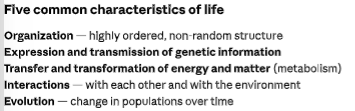
What are the five common characteristics of life?
iorganization, expression and transmission of genetic information, transfer and transformation of energy and matter (metabolism), interactions, evolution
what do prokaryotic and eukaryotic cells share in common?
DNA, ribosomes, cytosol, plasma membrane
eukaryotic cells
DNA is housed in a membrane-bound nucleus and there are other membrane-bound organelles (mitochondria, ER, Golgi, lysosomes, etc.)
What is the size of a bacterial cell?
1um
What is the size of an animal cell?
20-50um
Prokaryotes have a ___ region (DNA is not membrane enclosed)
nucleoid
what are the three domains of life?
bacteria, archaea, eukarya
bacteria
soils, surface waters, and and the tissues of other living or decaying organisms
archaea
inhibit extreeme environments; more similar to eukarya than to bacteria
eukarya
all eukaryotic organisms— animals, fungi, plants, protists
how are supramolecular structures created by cells
cells take a small set of carbon-based metabolites and build them up
carbon-based metabolites are built into
polymeric machines (proteins), supramolecular structures (chromatin, membranes, cell walls), and information repositories (DNA)
what is the heirarchy of of assembly?
monomeric units (nucleotides, amino acids, sugars), macromolecules (DNA, protein, cellulose), supramolecular complexes (chromatin, plasma membrane, cell call), the cell and its organelles
what bonds join monomers into macromolecules?
covalent bonds
what bonds hold together supramolecular complexes?
noncovalent interactions
what are noncovalent interactions?
hydrogen bonds, ionic interactions, van der waals interactions, and the hydrophobic effect
explain the elements of life
fewer than 30 of the naturally occurring elements are essential to life
most essential elements are the ones with the lowest atomic weights
hydrogen, oxygen, nitrogen, and carbon make up most of an organism

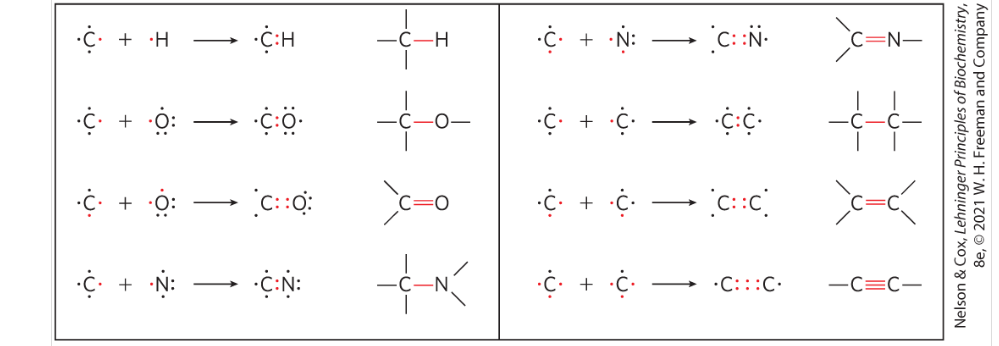
what is unique about carbon?
carbon can form covalent, single, double, and triple bonds
can bond with up to four other carbon atoms

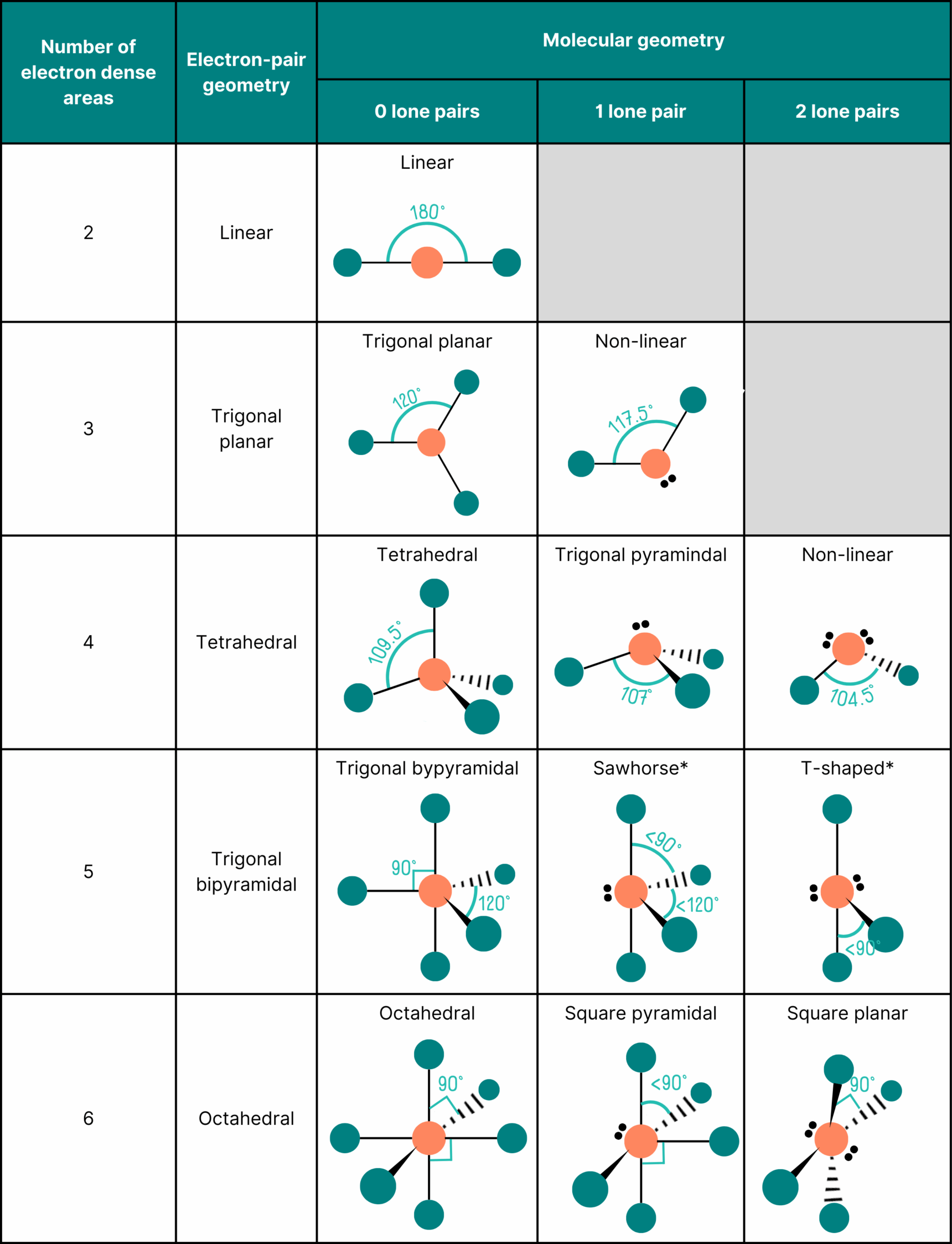
the geometry of carbon bonding
a carbon with four single bonds has tetrahedral arrangement and bond angles of 109.5
there is free rotation around each single bond
there is limited rotation about the axis of a double bond; substituents on a doubly bonded carbon lie on a plane with 120 angles
this is also the reason that the peptide bond is planar


functional groups
biomolecules are compounds of carbon carrying a variety of functional groups, characterized by C, O, N, S or P

nucleic acids (DNA, RNA)
built from nucleotides
store and transmit genetic information; some RNAs have structural and catalytic rolse in supramolecular complexes
genome
the entire sequence of a cells DNA or RNA
genomics is the characterization of the structure, function, evolution, and mapping of genomes
proteins
aminos acids
enzymes, structural elements, signal receptors, transporters
proteome
sum of all functioning proteins in a cell
proteomics is the systemic characterization of that protein complement under a specific set of conditions
polysaccharides
simple sugars
energy-rich fueld stores, rigid structural components of cell walls (plants, bacteria); extracellular recognition elements that bind proteins on other cells
glycome
entire complement of carbohydrate containing nucleus
lipids
hydrocarbon derivatives (water-insoluble)
structural components of membranes; energy-rich fueld stores; pigments; intracellular signals
lipidome
lipid-containing molecules in a cell
nucleic acid details
Strands run 5′ → 3′; the two strands of DNA are antiparallel. Base pairing: A–T (2 H-bonds), G–C (3 H-bonds).
amphipathic lipids
polar head and two hydrophobic tails that assemble into bilayers and micelles
stereochemistry
molecules with the same chemical bonds and same chemical formula but different configuration, the fixed spatial arrangement of atoms
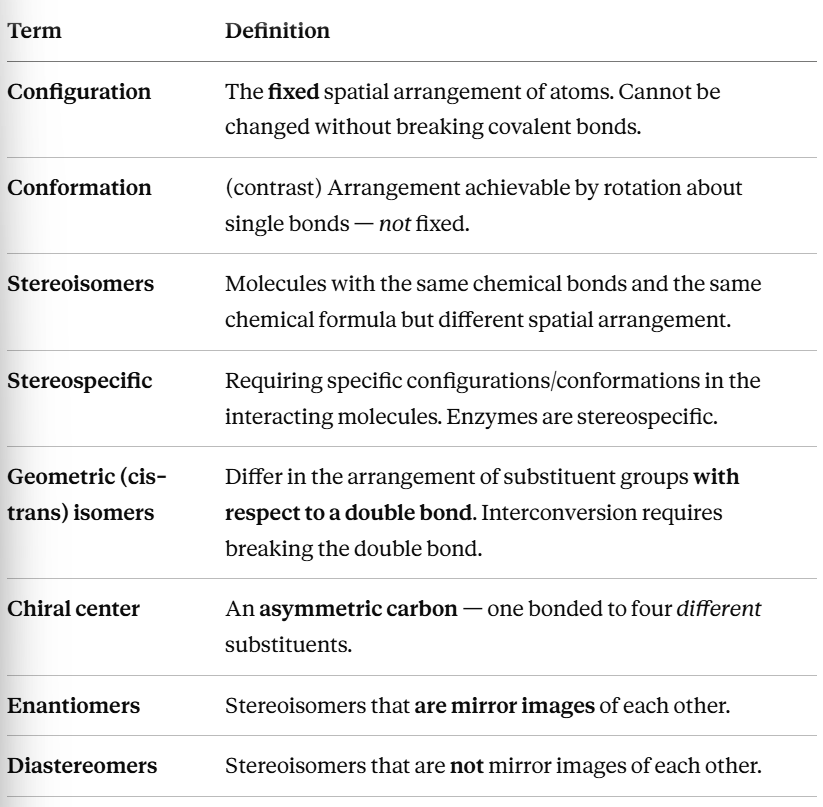
Configuration
The fixed spatial arrangement of atoms. Cannot be changed without breaking covalent bonds.
Conformation
(contrast) Arrangement achievable by rotation about single bonds — not fixed.
Stereoisomers
Molecules with the same chemical bonds and the same chemical formula but different spatial arrangement.
Stereospecific
Requiring specific configurations/conformations in the interacting molecules. Enzymes are stereospecific.
Geometric (cis–trans) isomers
Differ in the arrangement of substituent groups with respect to a double bond. Interconversion requires breaking the double bond.
chiral center
An asymmetric carbon — one bonded to four different substituents.
Enantiomers
Stereoisomers that are mirror images of each other.
every amino acid except glycine has a chiral α-carbon, so each has 2 enantiomers — the D and L forms. Proteins are built almost entirely from L-amino acids.
Diastereomers
Stereoisomers that are not mirror images of each other.
Chirality
A chiral molecule cannot be superimposed on its mirror image, even after rotation.
An achiral molecule can be superimposed on its mirror image after rotation (e.g., a carbon with two identical substituents).
Configuration at a chiral carbon is designated R (clockwise) or S (counterclockwise) by the RS system, after ranking the four groups by priority.

Counting stereoisomers
A molecule with n chiral carbons has 2ⁿ possible stereoisomers.
1 chiral carbon → 2¹ = 2 stereoisomers (a single enantiomeric pair)
2 chiral carbons → 2² = 4 stereoisomers (two enantiomeric pairs; members of different pairs are diastereomers)
3 chiral carbons → 2³ = 8
The dynamic steady state
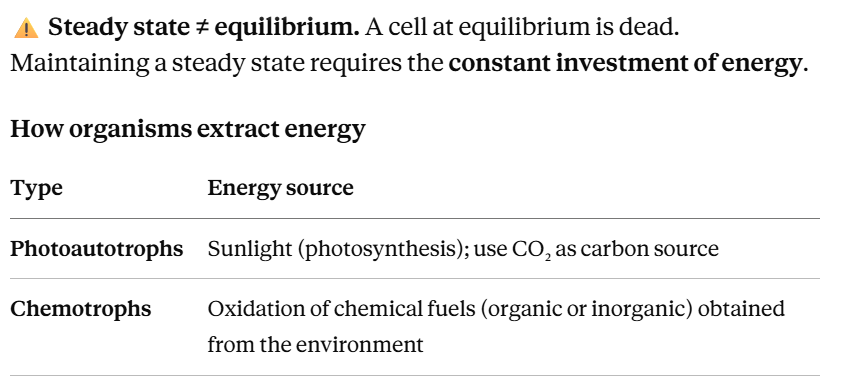
Small molecules, macromolecules, and supramolecular complexes are continuously synthesized and broken down. Living cells maintain themselves in a dynamic steady state, distant from equilibrium with their surroundings.
how do organisms extract energy?
photoautotrophs and chemotrpohs
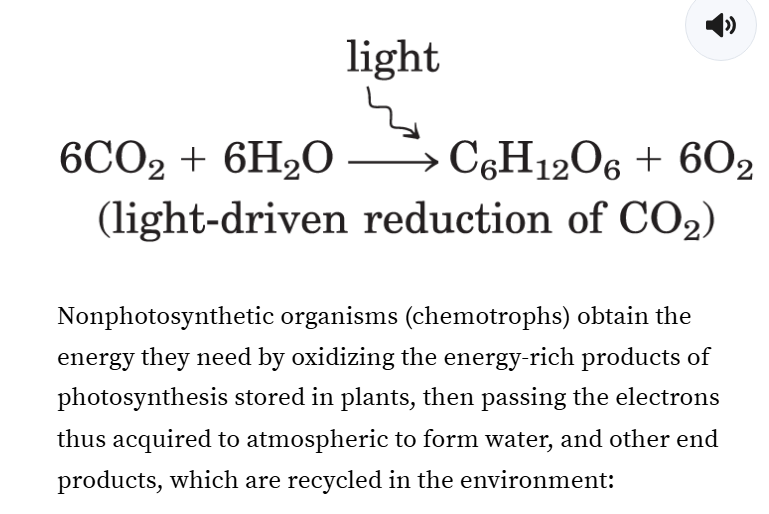
photoautotroph
energy derived from sunlight (photosynthesis); use CO₂ as carbon source
chemotroph
Oxidation of chemical fuels (organic or inorganic) obtained from the environment
the laws of thermodynamics
First law: In any physical or chemical change, the total amount of energy in the universe remains constant, although the form of the energy may change.
Second law: Randomness in the universe is constantly increasing.
Entropy (S) = the randomness or disorder of the components of a chemical system.
Creating and maintaining order requires work and energy.

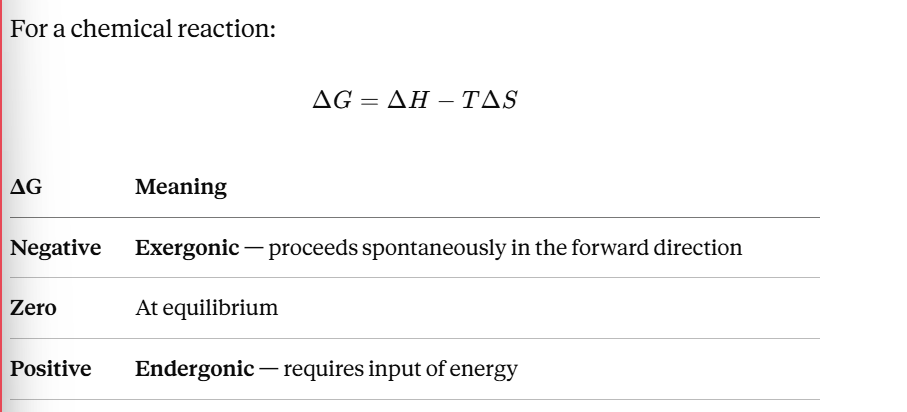
free energy
free energy, G, of any closed system can be defined in terms of three quantities: enthalpy, H, or heat content, roughly reflecting the number and kinds of bonds; entropy, S; and the absolute temperature, T (in Kelvin).
The definition of free energy is G = H − TS.
When a chemical reaction occurs at constant temperature, the free-energy change, ΔG, is determined by the enthalpy change,
ΔH, reflecting the kinds and numbers of chemical bonds and noncovalent interactions broken and formed,
and the entropy change, ΔS, describing the change in the system’s randomness: where, by definition, ΔH is negative for a reaction that releases heat, and ΔS is positive for a reaction that increases the system’s randomness.

what does postive G imply
the reaction is endergonic; requires the input of energy to continue forwards

what does negative G imply
exergonix; proceeds spontaneously in the forward direction
what is a G at zero?
the reaction is at equilibrium
The equilibrium constant, K_eq
K_eq is the ratio of the concentrations of all products to reactants at equilibrium. It is a known, fixed value for a given reaction at a given temperature.

Mass-action ratio, Q
the ratio of product concentrations to reactant concentrations at a given moment (not necessarily equilibrium). Comparing Q to K_eq tells you how far from equilibrium a reaction is, and therefore which way it will run.
free-energy change, ΔG
amount of energy available to do work
equilibrium
When a system is at equilibrium, the rate of product formation exactly equals the rate at which product is converted to reactant.
Thus there is no net change in the concentration of reactants and products. The energy change as the system moves from its initial state to equilibrium, with no changes in temperature or pressure, is given by the free-energy change, ΔG.
The magnitude of ΔG depends on the particular chemical reaction and on how far from equilibrium the system is initially.
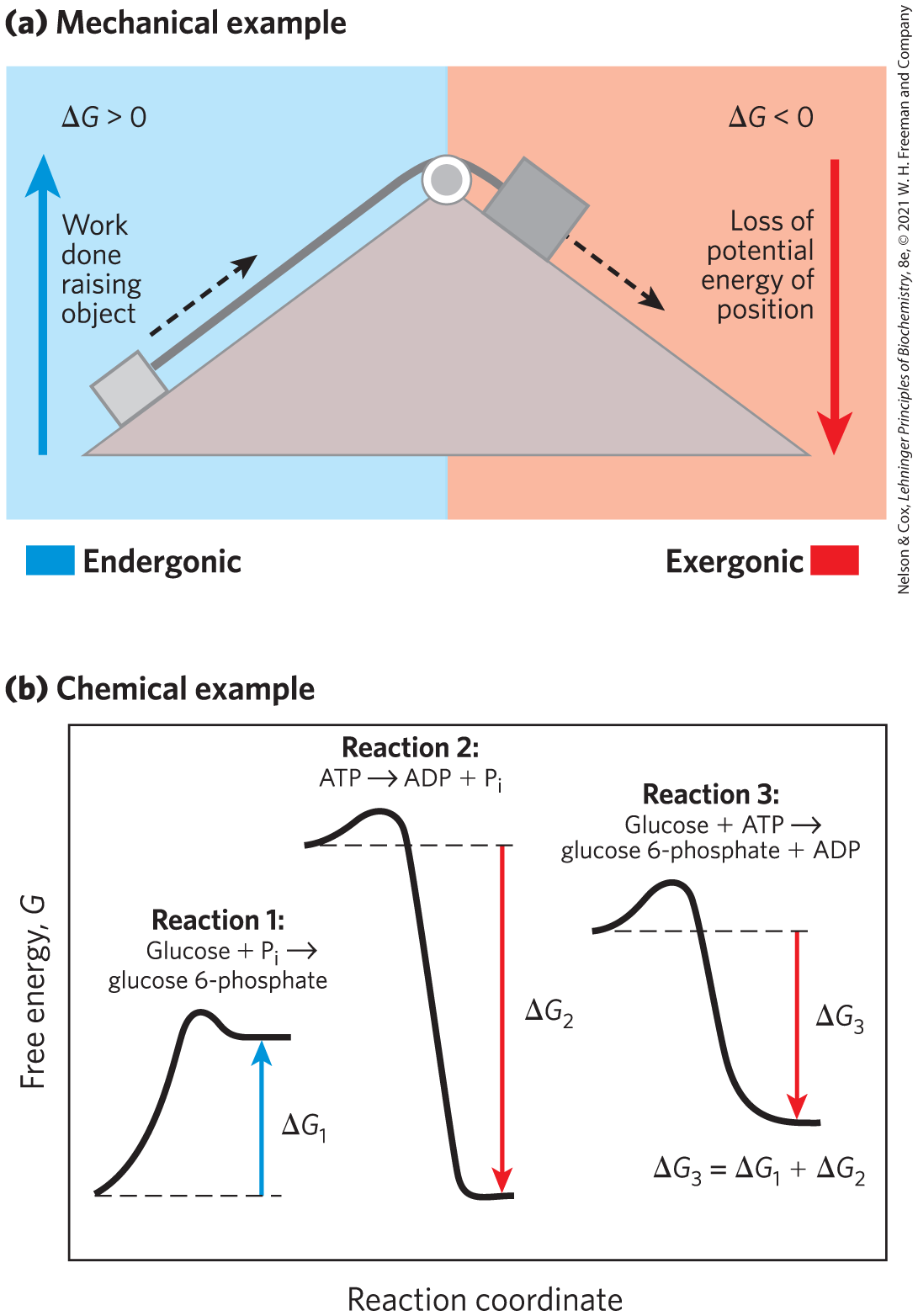
spontaneous reactions (exergonic)
In reactions that occur spontaneously, the products have less free energy than the reactants and thus the reaction releases free energy, which is then available to do work. Such reactions are exergonic; the decline in free energy from reactants to products is expressed as a negative value
endergonic reactions
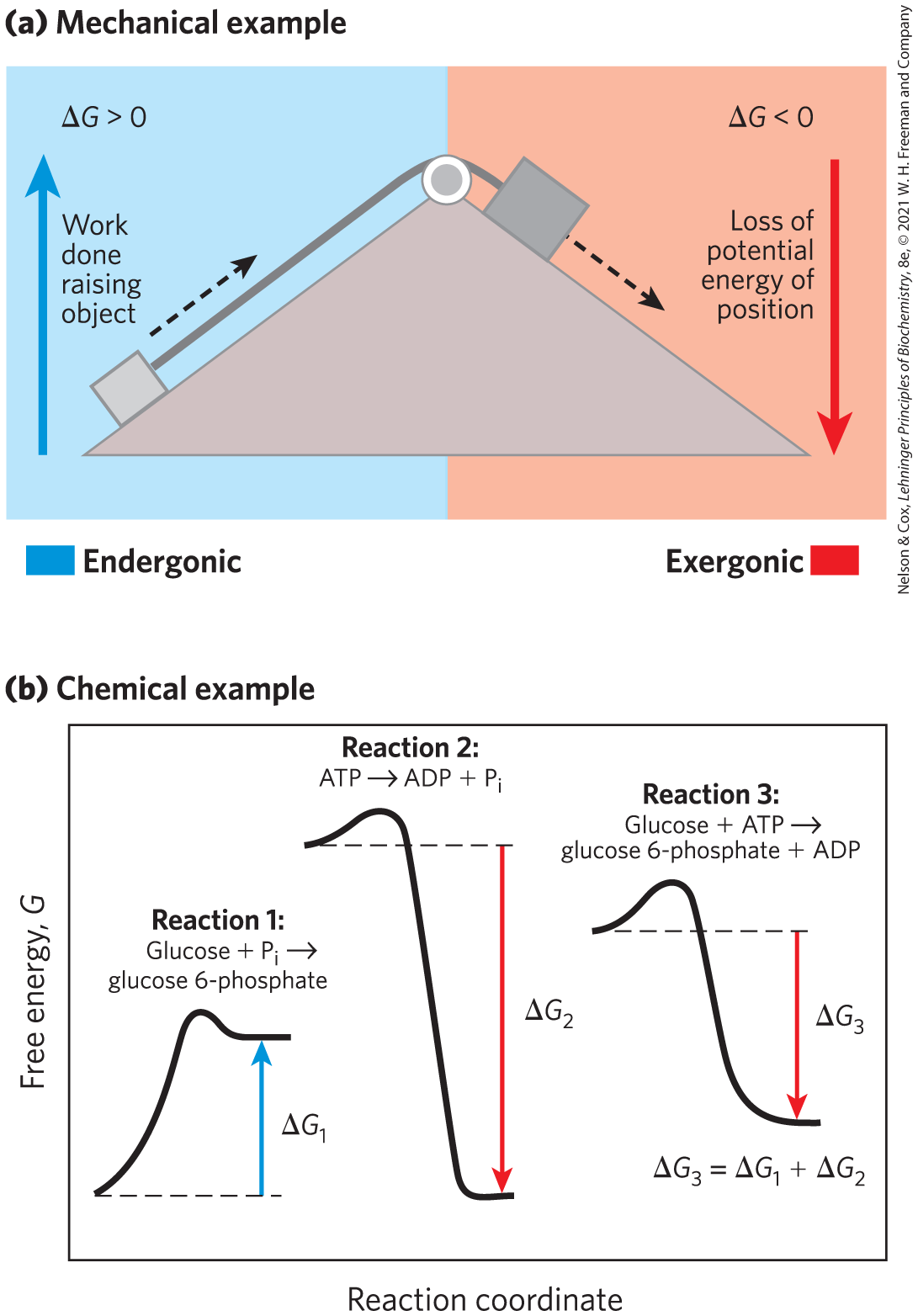
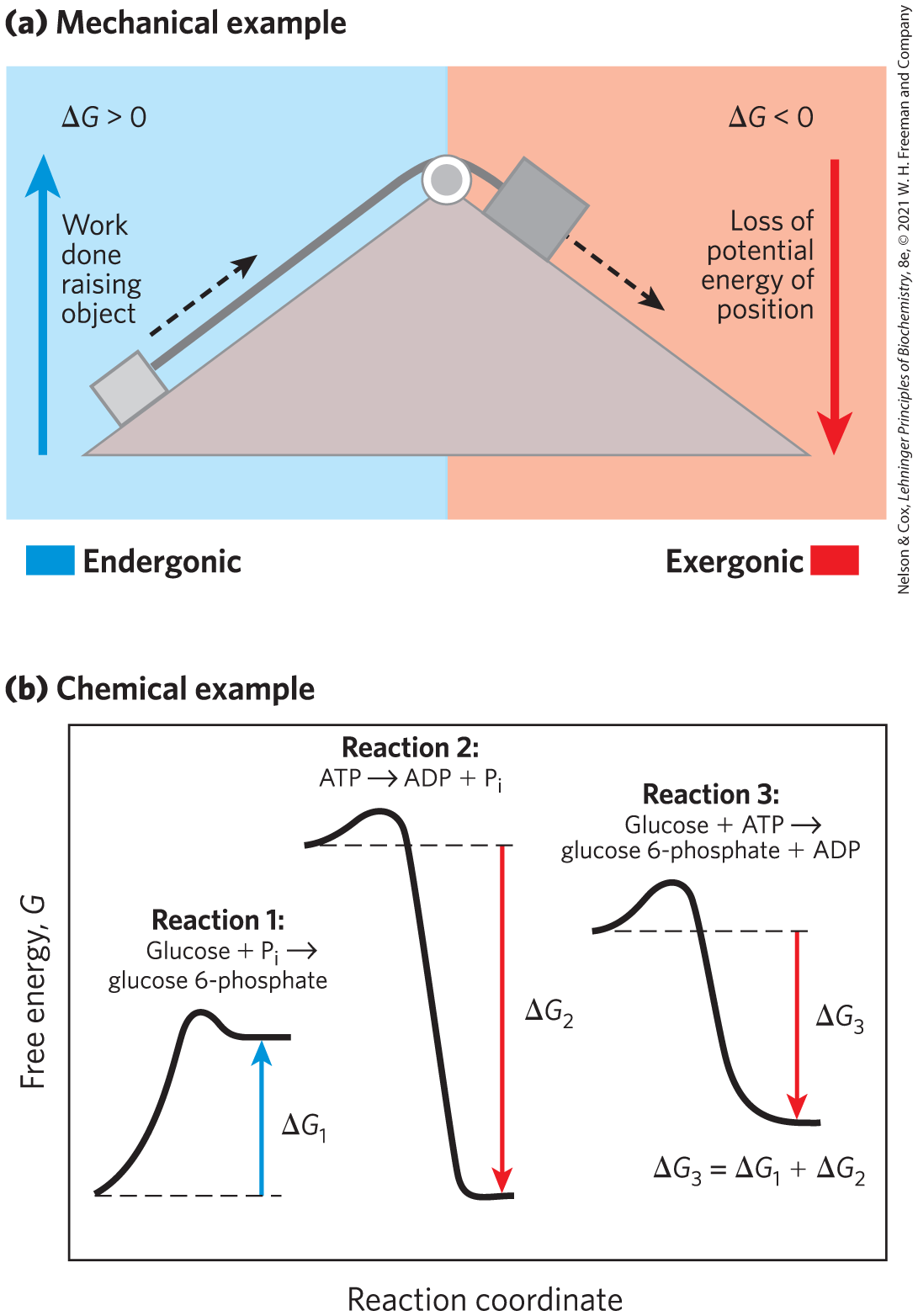
require an input of energy, and their ΔG values are positive. This coupling of an exergonic reaction to an endergonic reaction is illustrated in Figure 1-26b.
As in mechanical processes, only part of the energy released in exergonic chemical reactions can be used to accomplish work. In living systems, some energy is dissipated as heat or is lost to increasing entropy.
Standard free-energy change, ΔG°
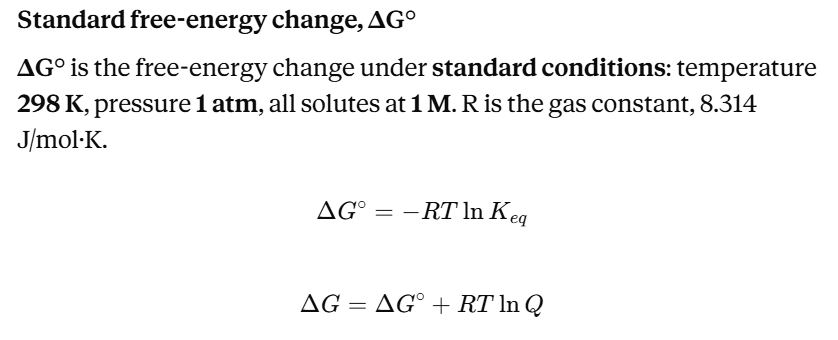
free-energy change under standard conditions: temperature 298 K, pressure 1 atm, all solutes at 1 M. R is the gas constant, 8.314 J/mol·K.
Keq and G are measures of a reaction’s tendency to proceed spontaneously
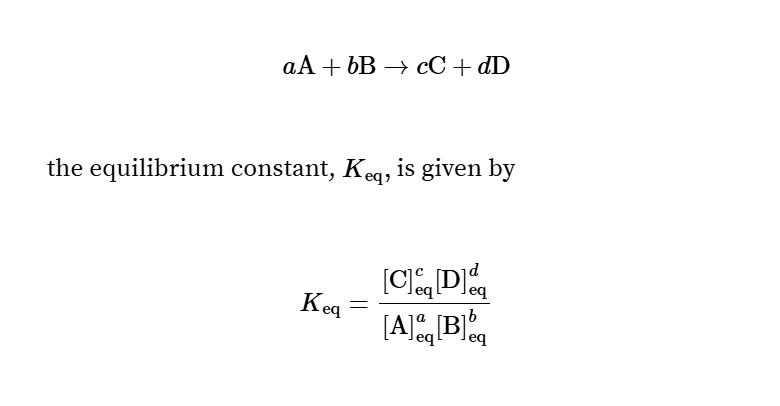
The tendency of a chemical reaction to go to completion can be expressed as an equilibrium constant. For the reaction in which a moles of A react with b moles of B to give c moles of C and d moles of D,
A large value of means the reaction tends to proceed until the reactants are almost completely converted into the products.

Are ATP and ADP at Equilibrium in Cells?
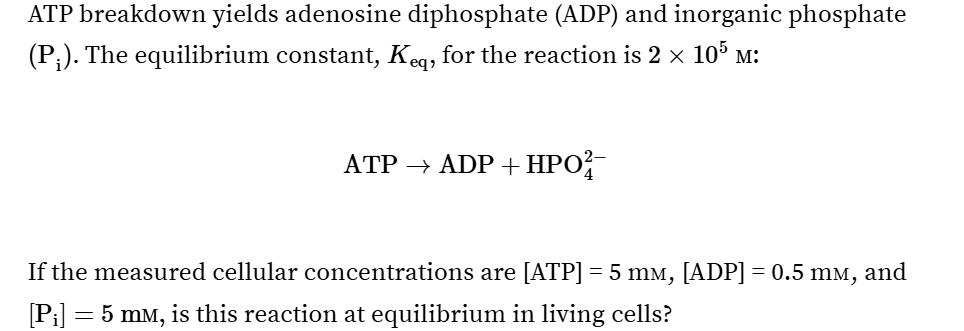
This value is far from the equilibrium constant for the reaction so the reaction is very far from equilibrium in cells. [ATP] is far higher, and [ADP] is far lower, than is expected at equilibrium. How can a cell hold its [ATP]/[ADP] ratio so far from equilibrium? It does so by continuously extracting energy (from nutrients such as glucose) and using it to make ATP from ADP and Pi
![<p><span>This value is far from the equilibrium constant for the reaction so the reaction is very far from equilibrium in cells. [ATP] is far higher, and [ADP] is far lower, than is expected at equilibrium. How can a cell hold its [ATP]/[ADP] ratio so far from equilibrium? It does so by continuously extracting energy (from nutrients such as glucose) and using it to make ATP from ADP and Pi</span></p>](https://assets.knowt.com/user-attachments/4205c87b-2475-40d7-89f4-03a63c6e4016.png)
ΔG (the actual free-energy change) for any chemical reaction is a function of the standard free-energy change, G° — a constant that is characteristic of each specific reaction — and a term that expresses the initial concentrations of reactants and products:
ΔG° is the free-energy change under standard conditions: temperature 298 K, pressure 1 atm, all solutes at 1 M. R is the gas constant, 8.314 J/mol·K.

Standard free-energy change, ΔG°

Is ATP hydrolysis spontaneous?
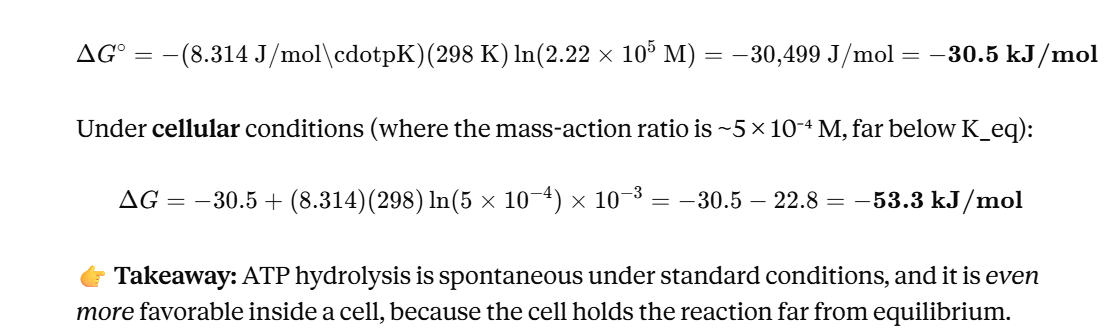
FORMULA SHEET

REASONING CHECKS
More acid than base in the mixture → pH must come out below the pKa.
More base than acid → above.
Added strong base to a buffer → pH goes up, but only a little. That's what "buffer" means.
Added a strong acid → pH goes down a little.
Below the lowest pKa, a molecule is fully protonated (most positive charge it can have).
Above the highest pKa, fully deprotonated (most negative). At exactly the pKa, that group is 50/50 protonated and deprotonated.
Breaking big molecules into smaller ones → entropy increases, energy is released
key functional groups
hydroxyl (–OH), carbonyl (C=O), carboxyl (–COOH), amino (–NH₂), sulfhydryl/thiol (–SH), phosphate, amide, methyl.
chiral and achiral molecules
Chiral centers are asymmetric carbons. A molecule can have 2ⁿ stereoisomers where n = number of chiral carbons. Priority order given: —OCH₃ > —OH > —NH₂ > —COOH > —CHO > —CH₂OH > —CH₃ > —H.
A carbon is chiral when all four attached groups are different. Chiral = its mirror image can't be superimposed on it by rotation. Achiral = it can
1. You must consider the entire group attached, not just the first atom. The T1 practice deck spends a whole slide on this for carbon 3 of glucose. Two carbons might both be "a carbon" at first glance, but if what's attached beyond them differs, they count as different groups.
2. A carbon with a double bond has only three groups → not chiral. A carbon with two hydrogens → not chiral.
conformation vs configuration
Configuration is fixed — you can only change it by breaking a bond. Conformation is free — different shapes from rotating around single bonds, no bonds broken. Cis-trans isomers exist precisely because the double bond can't rotate
energy coupling links reactions in biology
Living things need non-spontaneous reactions to proceed. Glucose → glucose-6-phosphate has ΔG°′ = +13.8 kJ/mol — unfavorable. Couple it to ATP hydrolysis (−30.5 kJ/mol) and the sum is −16.7 kJ/mol — favorable. ΔG₃ = ΔG₁ + ΔG₂.
Free-energy changes are additive. That's the mechanism cells use to drive uphill reactions: physically couple them, usually through a shared intermediate, to a downhill one. This is why ATP is the energy currency. You should be able to add two ΔG values and state whether the coupled reaction goes

energy coupling
The amount of energy available to do work is the free-energy change, ΔG; this is always somewhat less than the theoretical amount of energy released, because some energy is dissipated as the heat of friction. The greater the elevation of the larger object, the greater the energy released (ΔG) as the object slides downward and the greater the amount of work that can be accomplished. The larger object can lift the smaller one only because, at the outset, the larger object was far from its equilibrium position: it had at some earlier point been elevated above the ground, in a process that itself required the input of energy.
DNA
Deoxyribonucleic acid (DNA) — the sequence of its monomeric subunits (deoxyribonucleotides) — does two things:
Encodes the instructions for forming all other cellular components
Provides a template to produce an identical DNA molecule
Information is encoded in DNA
SUMMARY 1.1 Cellular Foundations
All cells share certain fundamental properties: they are bounded by a plasma membrane; have a cytosol containing metabolites, coenzymes, inorganic ions, and enzymes; and have a set of genes contained within a nucleoid (bacteria and archaea) or a nucleus (eukaryotes).
The size of cells is limited by the need to deliver oxygen to all parts of the cell.
By comparing their DNA sequences, researchers can place organisms in three domains: Bacteria, Archaea, and Eukarya. Archaea and Eukarya are more closely related to each other than either is to Bacteria.
All organisms require a source of energy to perform cellular work. Phototrophs obtain energy from sunlight; chemotrophs obtain energy from chemical fuels.
Bacterial and archaeal cells contain cytosol, a nucleoid, and plasmids, all within a cell envelope.
Eukaryotes contain a nucleus and a variety of membrane-enclosed organelles with specialized function, which can be studied in the isolated organelles.
Cytoskeletal proteins assemble into long filaments that give cells shape and rigidity and serve as rails along which cellular organelles move throughout the cell. The membrane-bounded compartments constitute an interconnected and dynamic endomembrane system.
Supramolecular complexes held together by noncovalent interactions are part of a hierarchy of structures, some visible with the light microscope.
Studying isolated cellular components in vitro simplifies the experimental system, but such study may overlook important interactions that occur in the living cell.
SUMMARY 1.2 Chemical Foundations
Because of its bonding versatility, carbon can produce a broad array of carbon–carbon skeletons with a variety of functional groups; these groups give biomolecules their biological and chemical personalities.
A nearly universal set of several thousand small molecules is found in living cells; the interconversions of these molecules in the central metabolic pathways have been conserved in evolution.
Proteins and nucleic acids are macromolecules — long, linear polymers of simple monomeric subunits; their sequences contain the information that gives each molecule its three-dimensional structure and its biological functions.
Molecular configuration can be changed only by breaking and re-forming covalent bonds. For a carbon atom with four different substituents (a chiral carbon), the substituent groups can be arranged in two different ways, generating stereoisomers with distinct properties. Only one stereoisomer is biologically active. Molecular conformation is the position of atoms in space that can be changed by rotation about single bonds, without covalent bonds being broken.
Interactions between biological molecules are often stereospecific: there is a close fit between complementary structures in the interacting molecules.
SUMMARY 1.3 Physical Foundations
Living cells extract and channel energy to maintain themselves in a dynamic steady state distant from equilibrium.
Living cells are open systems, exchanging matter and energy with their surroundings. Energy is obtained from sunlight or chemical fuels when the energy from electron flow is converted into the chemical bonds of ATP.
The tendency for a chemical reaction to proceed toward equilibrium can be expressed as the free-energy change, ΔG. When ΔG of a reaction is negative, the reaction is exergonic and tends to go toward completion; when ΔG is positive, the reaction is endergonic and tends to go in the reverse direction. When two reactions can be summed to yield a third reaction, the ΔG for this overall reaction is the sum of the ΔG values for the two separate reactions.
The reactions converting ATP to Pi and ADP are highly exergonic (large negative ΔG). Many endergonic cellular reactions are driven by coupling them, through a common intermediate, to these highly exergonic reactions.
The standard free-energy change for a reaction, G* is a physical constant that is related to the equilibrium constant by the equation G* = -RTLnKeq
Most cellular reactions proceed at useful rates only because enzymes are present to catalyze them. Enzymes act in part by stabilizing the transition state, reducing the activation energy, G** and increasing the reaction rate by many orders of magnitude. The catalytic activity of enzymes in cells is regulated.
Metabolism is the sum of many interconnected reaction sequences that interconvert cellular metabolites. Each sequence is regulated to provide what the cell needs at a given time and to expend energy only when necessary.
SUMMARY 1.4 Genetic Foundations
Genetic information is encoded in the linear sequence of four types of deoxyribonucleotides in DNA.
Despite the enormous size of DNA, the sequence of its nucleotides is very precise, and the maintenance of this precise sequence over very long times is the basis for genetic continuity in organisms.
The double-helical DNA molecule contains an internal template for its own replication and repair.
The linear sequence of amino acids in a protein, which is encoded in the DNA of the gene for that protein, produces a protein’s unique three-dimensional structure — a process that is also dependent on environmental conditions.
Individual macromolecules with specific affinity for other macromolecules self-assemble into supramolecular complexes.
SUMMARY 1.5 Evolutionary Foundations
Occasional inheritable mutations yield organisms that are better suited for survival and reproduction in an ecological niche, and their progeny come to dominate the population in that niche. This process of mutation and selection is the basis for the Darwinian evolution that led from the first cell to all modern organisms. The large number of genes shared by all living organisms explains organisms’ fundamental similarities.
The components for the first cell may have been produced near hydrothermal vents at the bottom of the sea or by the action of lightning and high temperature on simple atmospheric molecules such as CO2 and NH3
The earliest cells may have been formed by the enclosure of a self-replicating RNA molecule within a membrane-like lipid layer. The catalytic and genetic roles played by the early RNA genome were, over time, taken over by proteins and DNA, respectively.
Hydrothermal vents may have provided the oxidizable fuels (iron compounds) for the first organisms.
Eukaryotic cells acquired the capacity for photosynthesis and oxidative phosphorylation from endosymbiotic bacteria. In multicellular organisms, differentiated cell types specialize in one or more of the functions essential to the organism’s survival.
Detailed phylogenetic relationships can be determined from gene or protein sequence similarities between organisms.
From knowledge of the roles of proteins encoded in the genome, scientists can approximate the proportion of the genome dedicated to a specific process, such as membrane transport or protein synthesis.
Knowledge of the complete genomic sequences of organisms from different branches of the phylogenetic tree provides insights into evolution and offers great opportunities in medicine.
Replication and repair with near-perfect fidelity
Each deoxyribonucleotide in one strand pairs specifically with a complementary deoxyribonucleotide in the opposite strand.
The strands are held together by hydrogen bonds.
Because the pairing is specific, each strand can serve as a template for replication and for repair — this redundancy is what makes fidelity near-perfect.
The Central Dogma of Biology
DNA → (transcription) → mRNA → (translation) → protein, with replication looping DNA back to DNA. Some RNA functions as RNA.
Codon — three DNA bases coding one amino acid.
Anticodon — three complementary RNA bases.
What you need: Information flows DNA → RNA → protein. Some RNAs are the final product and never get translated
Mutation drives evolution
Mutation = a change in the nucleotide sequence of DNA. It changes the instructions for a cellular component. Mutations can be beneficial (as well as neutral or harmful).
Wild type = unmutated cells (the reference/normal form).
Classic example — sickle cell anemia. One base change in the DNA encoding hemoglobin (Glu → Val at position 6 of the β chain) changes the shape and function of the protein, which changes the shape of the red blood cell.
Molecular anatomy reveals evolutionary relationships
Gene or protein sequence similarity can be used to determine phylogenetic relationships.
Homologs
Proteins encoded by genes that share readily detectable sequence similarity (i.e., share an ancestor)
Orthologs
Homologs separated by speciation — same gene, different species
Orthologs = Other organism. Paralogs = Parallel copies in the same genome. Analogs = not related, just look-alikes in function.
Paralogs
Homologs separated by gene duplication — related genes within the same organism
Analogs
Proteins with similarity in function but NO detectable sequence similarity — convergent evolution, not homologs
Hydrogen Bonding Gives Water Its Properties
Water has a relatively high melting point, boiling point, and heat of vaporization compared to other solvents of similar size — all because of hydrogen bonding.
Hydrogen bond
an electrostatic attraction between the oxygen atom of one water molecule and the hydrogen of another
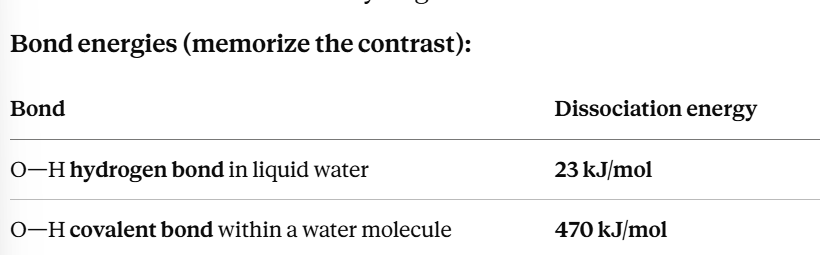
bond energies
Bond | Dissociation energy |
|---|---|
O—H hydrogen bond in liquid water | 23 kJ/mol |
O—H covalent bond within a water molecule | 470 kJ/mol |
strength of a hydrogen bond
A hydrogen bond is roughly 1/20th the strength of the covalent bond. This is why hydrogen bonds in liquid water are fleeting — constantly breaking and reforming. Individually weak, collectively decisive.
Number of hydrogen bonds formed
In liquid water, each H₂O molecule hydrogen-bonds with an average of 3.4 other molecules.
In ice, each H₂O molecule forms 4 hydrogen bonds in a rigid crystalline lattice.
This is why ice is less dense than liquid water — the fully hydrogen-bonded lattice holds molecules farther apart.
Why the melting/boiling points are high — a thermodynamic argument
During melting or evaporation, heat is taken up by the system and entropy increases:
Transition | ΔH |
|---|---|
H₂O (solid) → H₂O (liquid) | +5.9 kJ/mol |
H₂O (liquid) → H₂O (gas) | +44.0 kJ/mol |
Apply ΔG = ΔH − TΔS. At room temperature melting and evaporation occur spontaneously, so ΔG must be negative. But ΔH is positive (heat is absorbed to break H-bonds). Therefore the increase in ΔS (entropy) is what drives these changes.
⚠ Classic exam question: "What drives the melting of ice?" Answer: entropy, not enthalpy.
Water forms hydrogen bonds with polar solutes
Hydrogen bonds form readily between:
an electronegative atom = the hydrogen acceptor (usually O or N), and
a hydrogen atom covalently bonded to another electronegative atom = the hydrogen donor
Any biomolecule with —OH, —NH, or C=O groups can hydrogen-bond with water. This is why alcohols, aldehydes, ketones, and compounds with N—H bonds all dissolve well.
the three solubility categories
Category | Definition | Behavior in water | Examples |
|---|---|---|---|
Polar / hydrophilic | Charged or with polar groups | Dissolve readily | Glucose, salts, amino acids |
Nonpolar / hydrophobic | Hydrocarbon-like | Poorly soluble; cluster together | Waxes, O₂, N₂, CO₂ |
Amphipathic | Both a polar/charged region and a nonpolar region | Form micelles, bilayers | Phospholipids, fatty acid salts, many proteins |
Water as a solvent for salts
H₂O dissolves salts and charged biomolecules by screening the electrostatic interactions between them — the high dielectric constant of water weakens the ionic attraction so ions separate. Each ion becomes surrounded by a hydration shell of oriented water molecules.
Note the driver: the increase in entropy of the system is largely responsible for the ease of dissolving salts in water (the rigid crystal lattice becomes a disordered solution).
electronegativity
When two atoms share a pair of electrons, they don't always share fairly. Some atoms pull harder on the shared electrons than others
O and N pull hard. S pulls moderately. C and H barely pull at all. Oxygen is the greediest atom you'll meet. Nitrogen is close behind. Carbon and hydrogen are roughly equal to each other and both weak
What happens when the pull is unequal
the shared electrons spend more time near the greedy atom. Electrons are negative, so the greedy atom ends up slightly negative, and its partner is left slightly positive
these are partial charges — not full charges, just a lean. Chemists write them with the Greek letter delta: δ⁻ (slightly negative) and δ⁺ (slightly positive).
Polar
the bond (or molecule) has unequal sharing, so it has partial charges — a slightly negative end and a slightly positive end. O–H and N–H bonds are polar
Water is the example to hold in your head. Water is O with two H's attached. Oxygen pulls hard, hydrogen doesn't, so the oxygen end is δ⁻ and both hydrogen ends are δ⁺. Water is strongly polar.
The shortcut that will save you repeatedly: to decide whether some part of a molecule is polar or nonpolar, look for O or N. If a region has oxygens and nitrogens, it's polar. If it's just carbons and hydrogens, it's nonpolar
Nonpolar
sharing is essentially equal, no meaningful partial charges. C–H and C–C bonds are nonpolar.
Full charges and ions
A partial charge is a lean. A full charge is when an atom actually gains or loses an entire electron.
Lose an electron → you've lost a negative → the atom is now positive, written with a +
Gain an electron → you've gained a negative → the atom is now negative, written with a −
An atom or molecule carrying a full charge is called an ion. Positive ions are cations; negative ions are anions.
You'll see charges written as superscripts: Na⁺ (sodium, lost one electron), Cl⁻ (chloride, gained one), Ca²⁺ (calcium, lost two).
ionic interaction
Full charges attract each other strongly when opposite, and repel strongly when alike. That attraction between opposite full charges is called an ionic interaction (or salt bridge, or ion pair — same thing, three names). It's one of the four weak interactions the course keeps listing. The one that matters most in this course: the hydrogen ion, H⁺. Hydrogen has one proton and one electron. Take the electron away and all that's left is a bare proton. So H⁺ and "a proton" mean exactly the same thing, and the lectures use the words interchangeably without warning you. When a slide says "the group loses a proton," it means it lost an H⁺
The weak interactions
Covalent bonds are strong and permanent. But molecules also stick to each other through much weaker attractions that constantly form and break at body temperature. These are called noncovalent or weak interactions, and there are four you need.