Stereoisomers (Different Types)
 Call Kai
 Learn
Learn Practice Test
 Spaced Repetition
 Match
Match Flashcards
 Knowt Play
1/6

There's no tags or description
Looks like no tags are added yet.
Name | Mastery | Learn | Test | Matching | Spaced | Call with Kai | Chat |
|---|
No analytics yet
Send a link to your students to track their progress
7 Terms
Stereochemistry
Stereochemistry is the study of the three-dimensional arrangement of atoms in molecules and how that arrangement affects a molecule's properties and reactions.
EX: Two molecules can have:
The same molecular formula
The same connectivity of atoms
But different 3D arrangements
These different 3D arrangements can make them different molecules.
Isomers
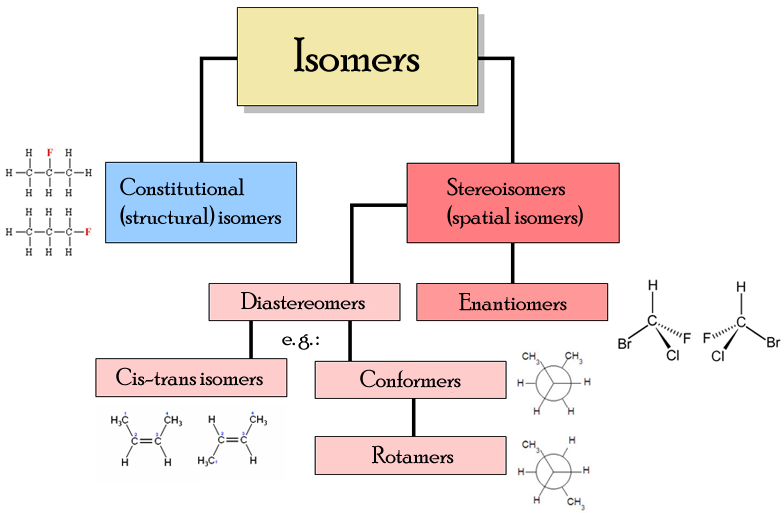
Isomers are molecules that share the exact same molecular formula (the same number and types of atoms) but have different structural arrangements or spatial orientations (see image)
For example, both of these have the formula C₂H₆O:
Ethanol: CH₃CH₂OH
Dimethyl ether: CH₃OCH₃
Since they have the same formula but are different compounds, they are isomers.
Constitutional Isomers
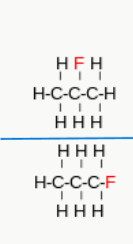
Same molecular formula, but atoms are connected differently anywhere in the molecule.(different bonding order) (see image). EX: Molecular formula: C₂H₆O
You can have: Ethanol: CH3CH2OH or also Dimethyl Ether: CH3OCH3 They both have:
2 carbons
6 hydrogens
1 oxygen
But they differ in how atoms are connected:
Molecule | Connectivity |
|---|---|
Ethanol | C–C–O |
Dimethyl ether | C–O–C |
So they are constitutional isomers.
Stereoisomers
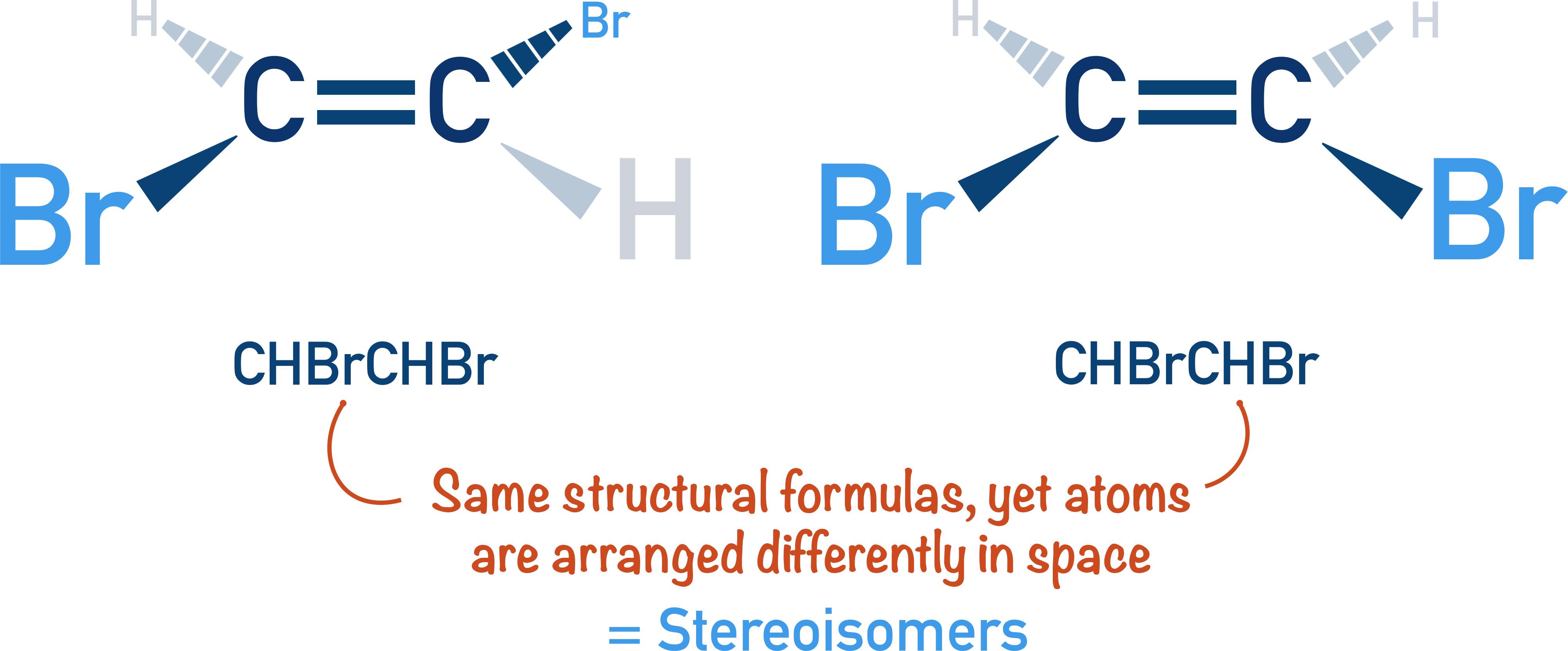
The same molecular formula, The same connectivity (atoms are attached in the same order), But a different three-dimensional arrangement of atoms in space
Two types of Stereoisomers
Enantiomers & Diastereomers
Enantiomers
Enantiomers are stereoisomers that are non-superimposable mirror images of each other. If you take one enantiomer and rotate it in every possible way, it still won't perfectly match the other. Like your hands, Mirror images, But you cannot place one exactly on top of the other, Your hands are a classic example of enantiomers.
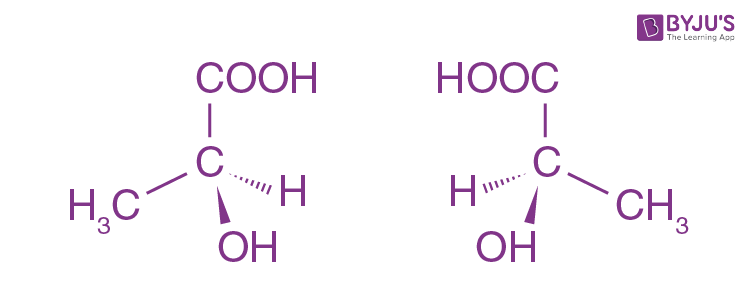
Diastereomers
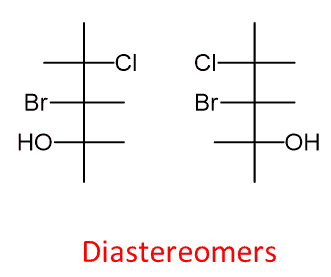
Diastereomers are stereoisomers that are NOT mirror images of each other.
They still have:
Same molecular formula
Same connectivity (atoms attached the same way)
But they differ in 3D arrangement, and they are not mirror-image pairs. (which is the difference with enantiomers, which are mirror images).