BCH4024 EXAM 3 (Nitrogen Metabolism)
 Call Kai
 Learn
Learn Practice Test
 Spaced Repetition
 Match
Match Flashcards
 Knowt Play
1/172

There's no tags or description
Looks like no tags are added yet.
Name | Mastery | Learn | Test | Matching | Spaced | Call with Kai | Chat |
|---|
No analytics yet
Send a link to your students to track their progress
173 Terms
Humans derive a small fraction of oxidative energy from the catabolism of what?
Amino acids
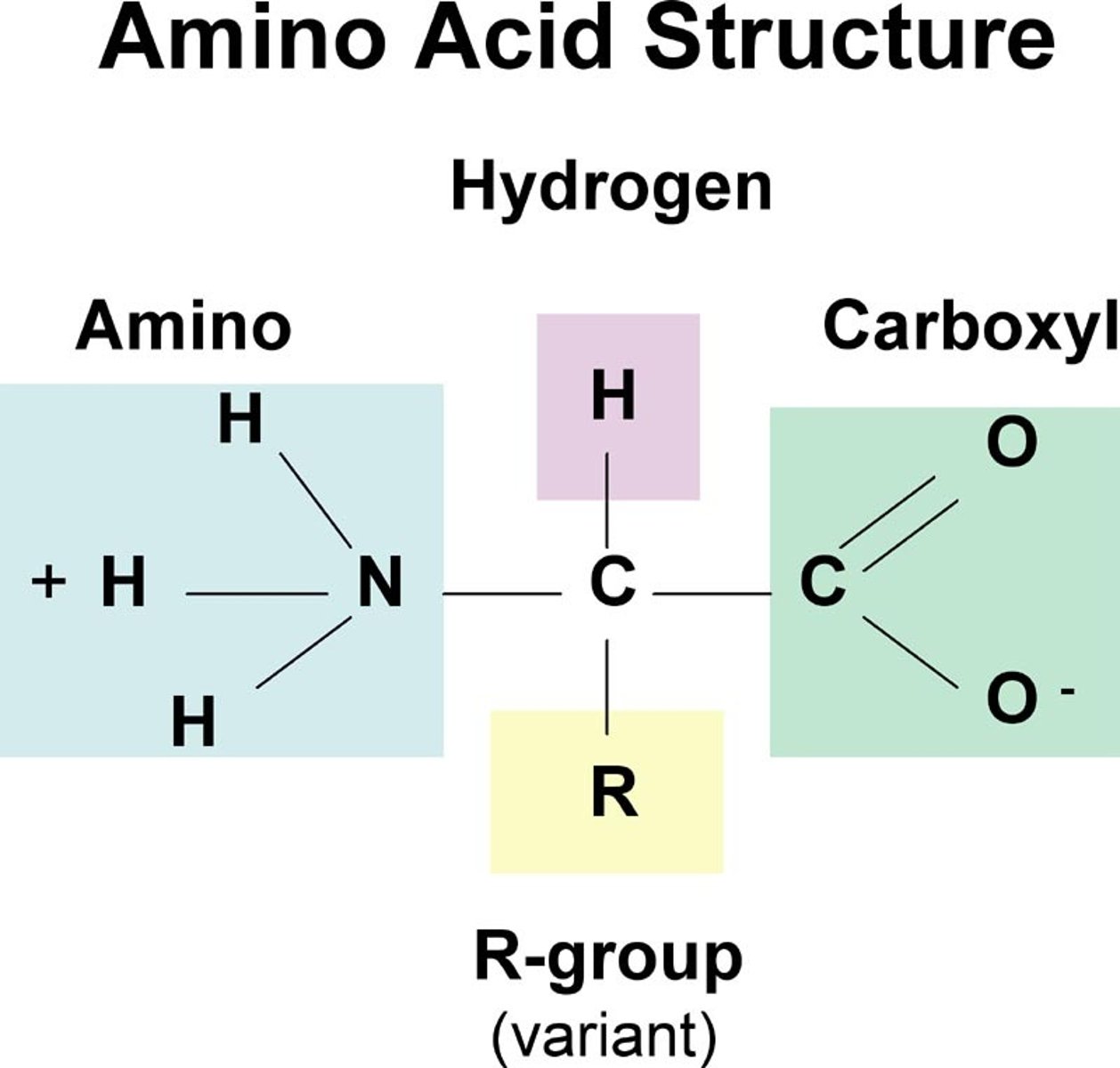
Amino acid catabolism involves two main parts
Separating the amino group (nitrogen metabolism) from the carbon skeleton.
What happens to amino acids during catabolism?
-The carbon skeleton becomes an alpha-keto acid.
-Carbon skeletons can enter metabolic pathways like the TCA cycle, glycolysis, gluconeogenesis, or ketone body synthesis.
-The nitrogen group is removed and primarily disposed of via the urea cycle, converting toxic free ammonia into urea.
-Each amino acid has a different catabolic fate.
All pathways for amino acid degradation require _____________________ as a cofactor for key steps, particularly in transamination reactions.
pyridoxal phosphate
Which amino acids are key for nitrogen transport and distribution?
Alanine, Glutamine, Glutamate, and Aspartate.
What are key compounds involved in amino acid metabolism?
Pyruvate, alpha-ketoglutarate, and oxaloacetate
What are the two main sources of amino acid breakdown?
Intracellular protein turnover and the degradation of dietary proteins.
Intracellular Proteolysis
Breakdown of proteins already within cells.
-Removes misfolded, old, no longer needed, and damaged proteins.
-Supplies essential amino acids when dietary intake is insufficient.
-Helps control cell-cycle transitions and gene expression levels (e.g., regulation of HMG-CoA reductase degradation in cholesterol synthesis).
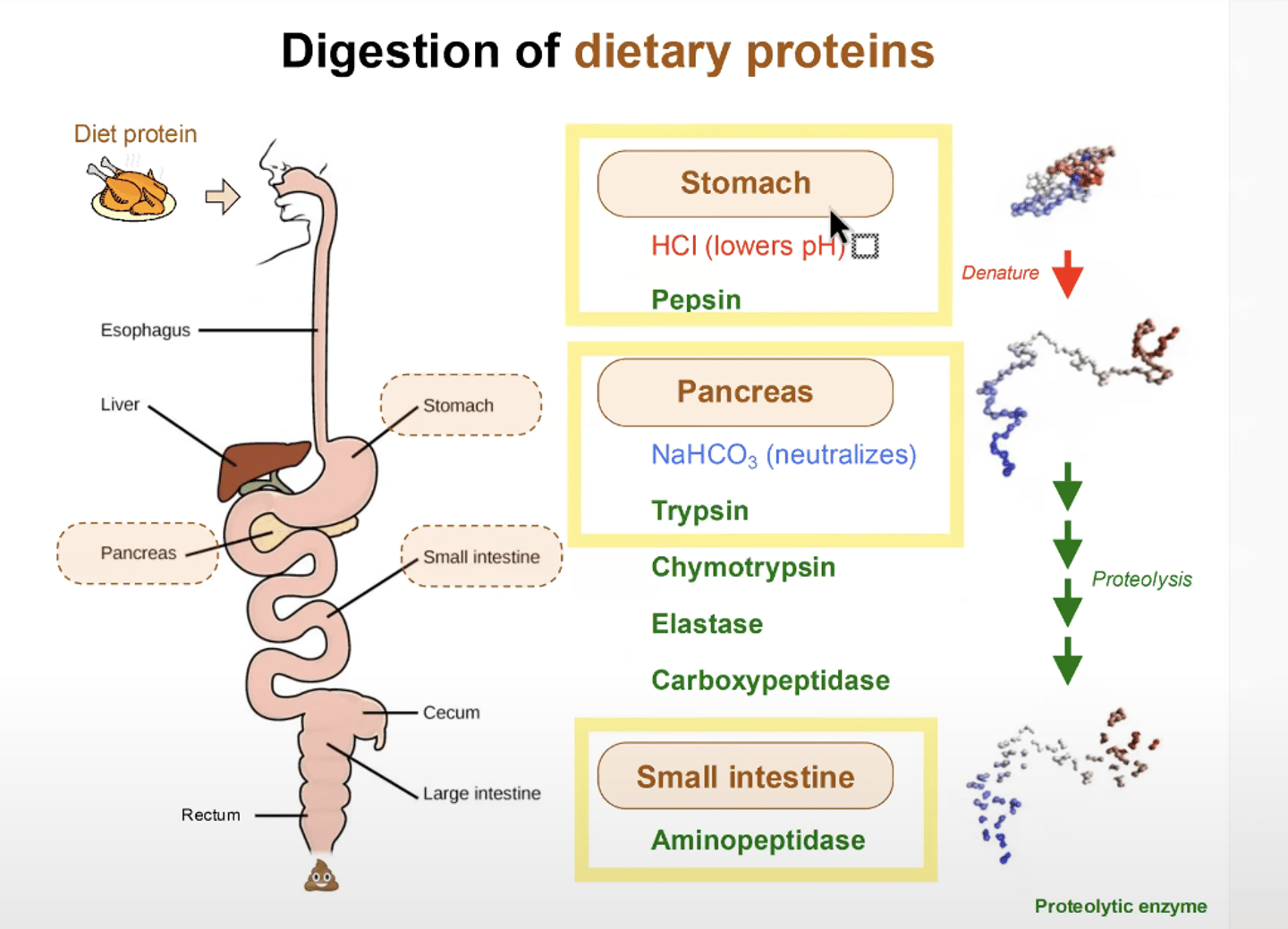
Digestion of Dietary Proteins
Supplies both nutritionally essential and nutritionally nonessential amino acids.
-This process involves digestion, absorption, and transport of amino acids from ingested food
De Novo Synthesis
Body's synthesis of non-essential amino acids from simpler precursors.
-Adjusts amino acid pools in different tissues and controls energy metabolism.
-Needed to make nucleotides, hemes, hormones, and neurotransmitters.
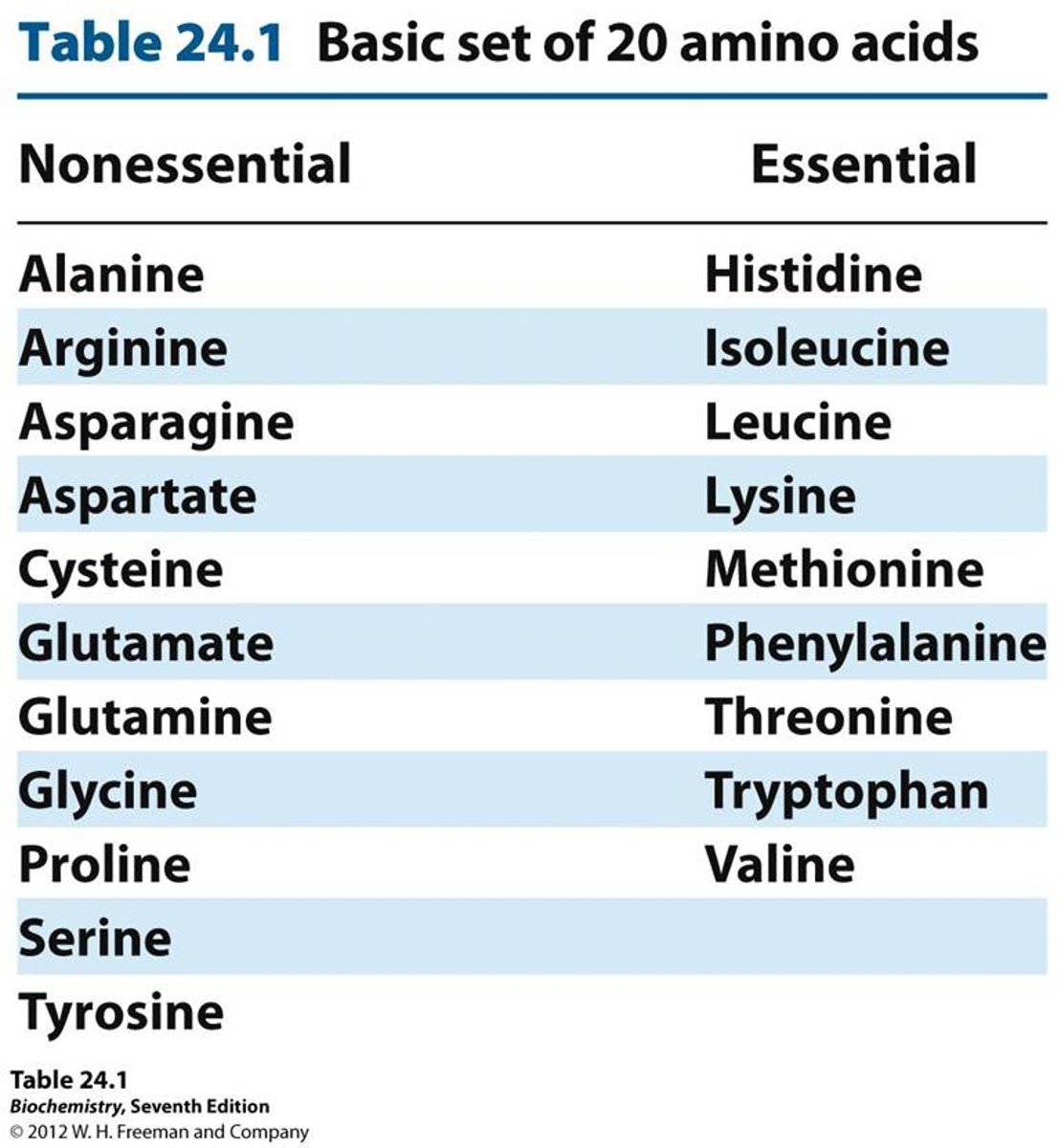
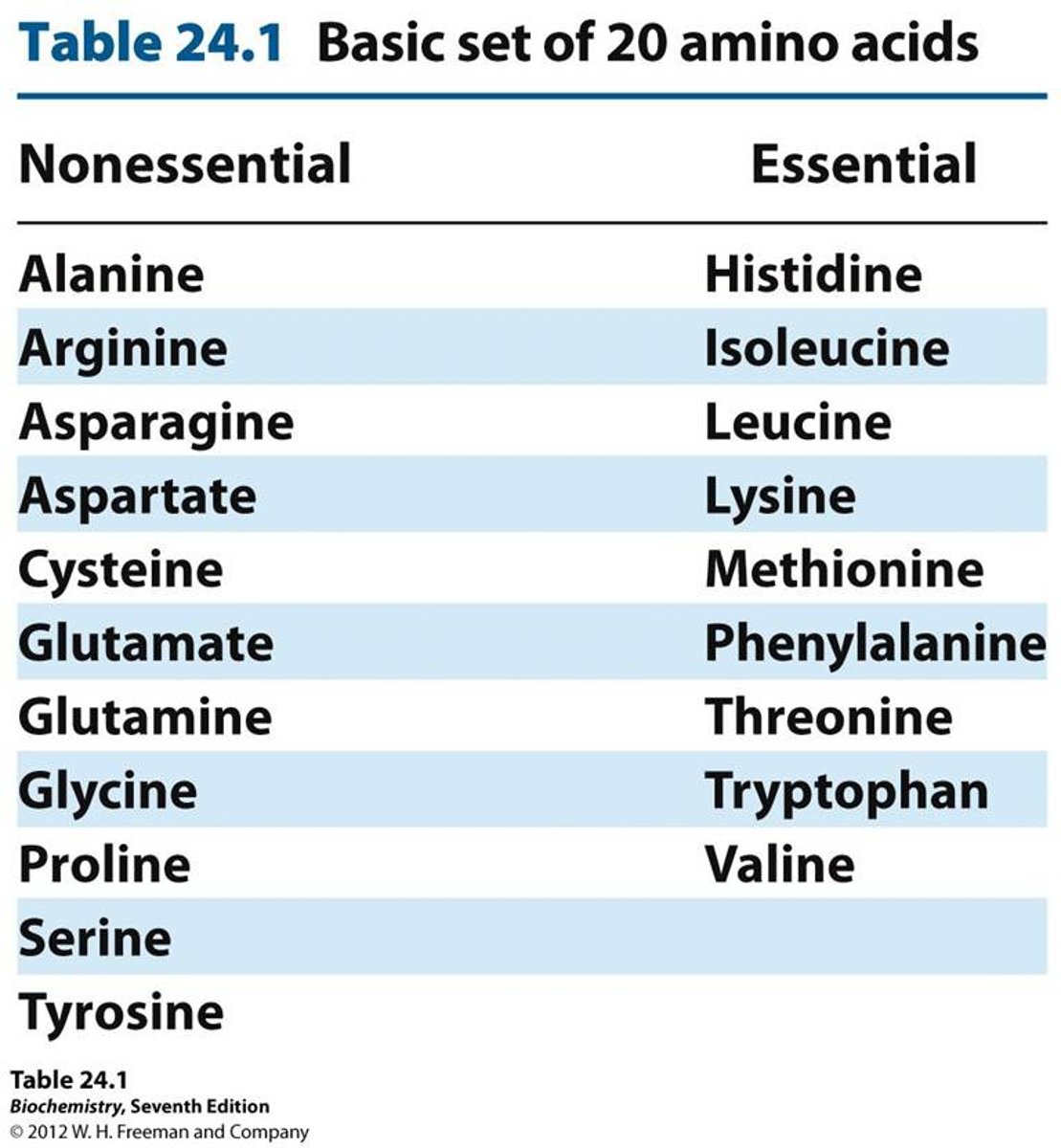
Essential Amino Acids
Nine amino acids that cannot be synthesized by mammals and must be acquired through diet.
-Examples: Valine, Leucine, Isoleucine, Tryptophan, Phenylalanine, Lysine, Histidine, Methionine, Threonine.
Conditionally Essential Amino Acids:
Amino acids that can be produced by the body but may be needed in greater quantities under specific conditions.
-Arginine: Needed in greater quantity for growth (e.g., childhood, pregnancy).
-Tyrosine: Becomes essential if Phenylalanine intake is inadequate.
-Cysteine: Becomes essential if Methionine intake is inadequate.
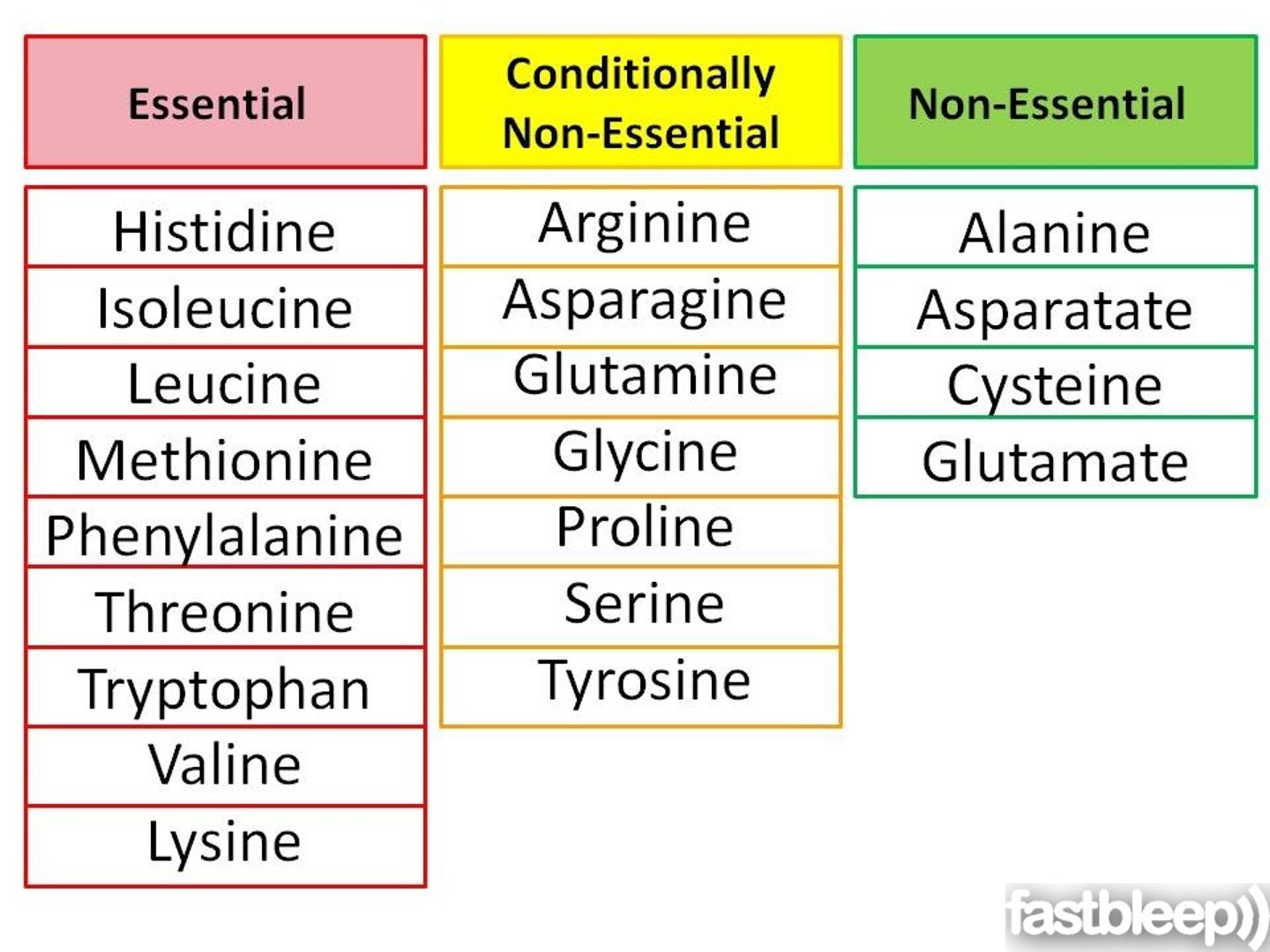
Non-essential Amino Acids
Amino acids that the body can synthesize through de novo synthesis.
Protein Turnover
Continuous synthesis and degradation of cellular proteins.
-Regulated tightly by proteostasis
-Ensures proteins are ready to respond to external stimuli appropriately
Proteostasis (Protein Homeostasis)
Maintenance of functional proteins at correct concentrations and locations, ensuring misfolded, aged, or damaged proteins are removed as needed.
-Lysosomes
-Proteasomes
-Autophagy
Protein degradation occurs via three proteolytic machineries
-Lysosome
-Proteasome
-Autophagy
Lysosome
Degrades Membrane proteins and extracellular proteins by engulfing them in membrane-enclosed vesicles (via endocytosis) which then fuse with lysosomes, where acidic compartments facilitate degradation.
-Used for membrane proteins and extracellular proteins.
Proteasome
Main pathway for selective protein degradation. Proteins are tagged with Ubiquitin and sent to the barrel-like proteasome for degradation.
-Used for cytosolic proteins.
-Barrel compartmentalizes degradation enzymes so only things within barrel are broken down.
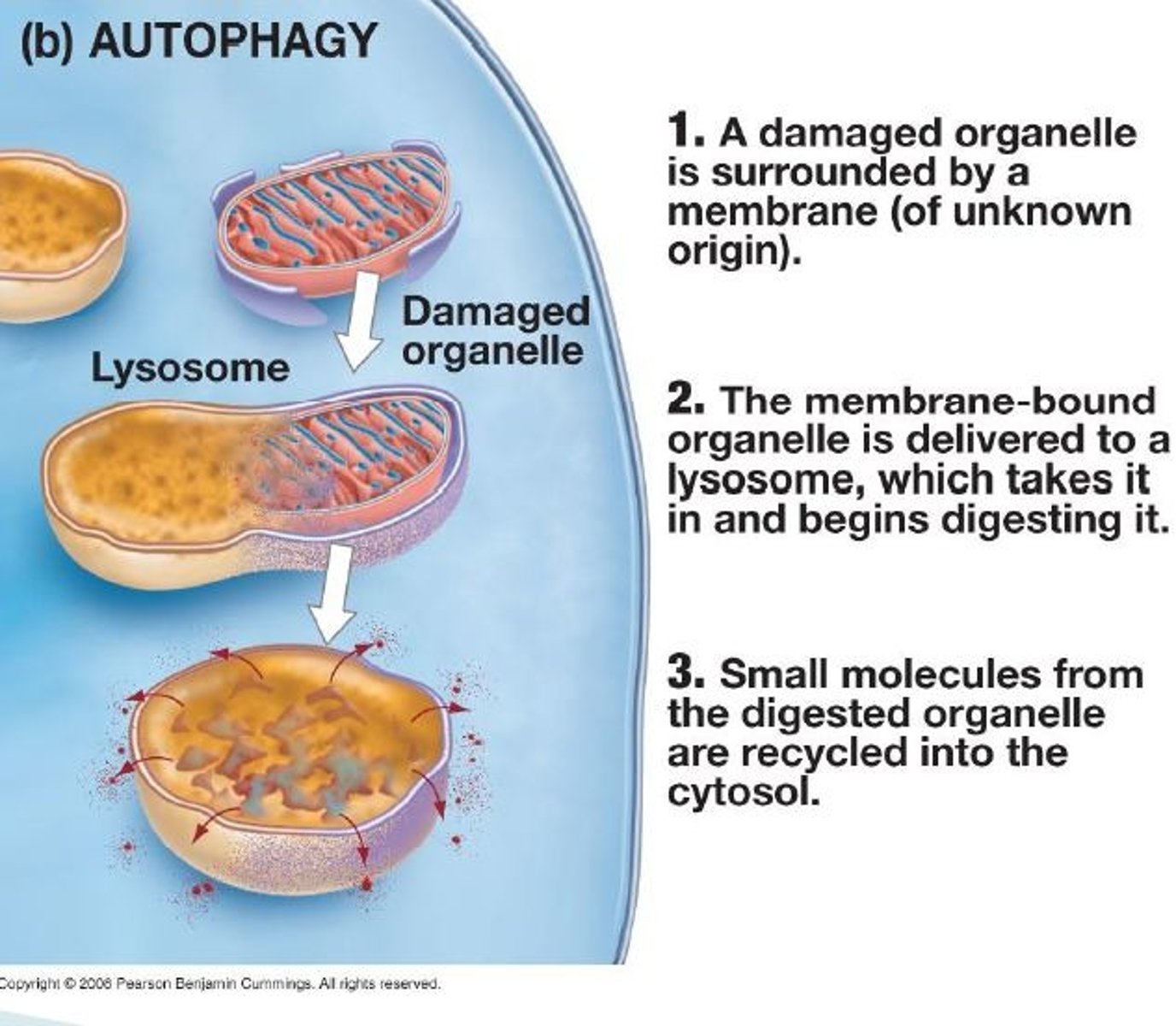
Autophagy
Engulfs and breaks down entire organelles (e.g., mitochondria) within a double-membrane compartment (autophagosome), which then fuses with a lysosome for degradation.
-Various inhibitors are shown to target specific steps: Wortmannin (autophagy), Bafilomycin (lysosomal acidification), Epoxomicin (proteasome), and Lactacystin (proteasome).
What is ubiquitination?
A form of post-translational modification where ubiquitin is attached to a target protein for proteolysis.
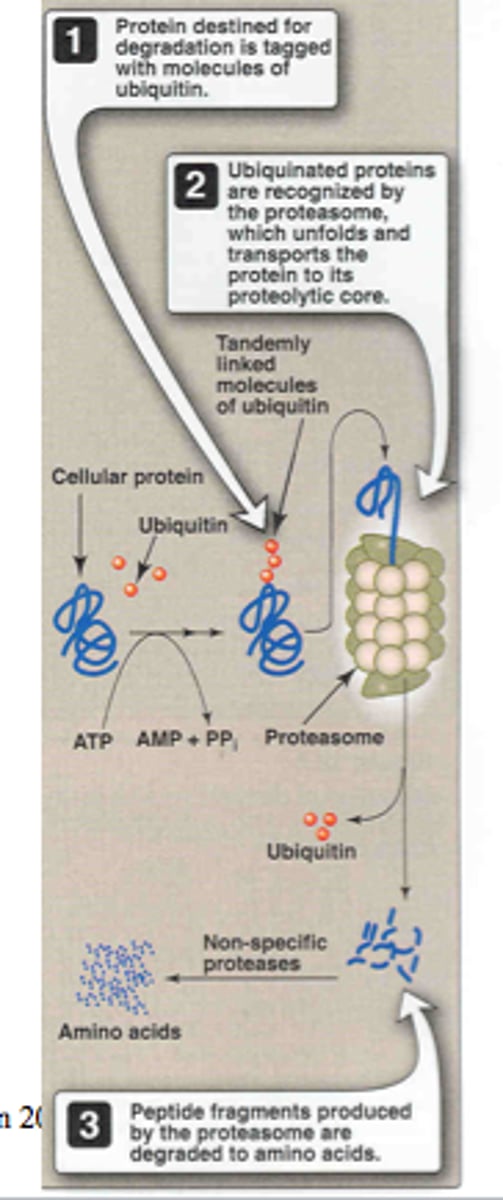
What are monoubiquitination and polyubiquitination?
Monoubiquitination: One ubiquitin tag attached to a protein. Polyubiquitination: Up to seven ubiquitin tags form a chain or ubiquitin tail.
What are the three key enzymes involved in ubiquitination?
1. E1 (Ubiquitin Activating Enzyme): Forms a thioester bond with ubiquitin, activating it.
2. E2 (Ubiquitin Conjugating Enzyme): Receives ubiquitin from E1.
3. E3 (Ubiquitin Protein Ligase): Transfers ubiquitin to a lysine residue on the target protein.
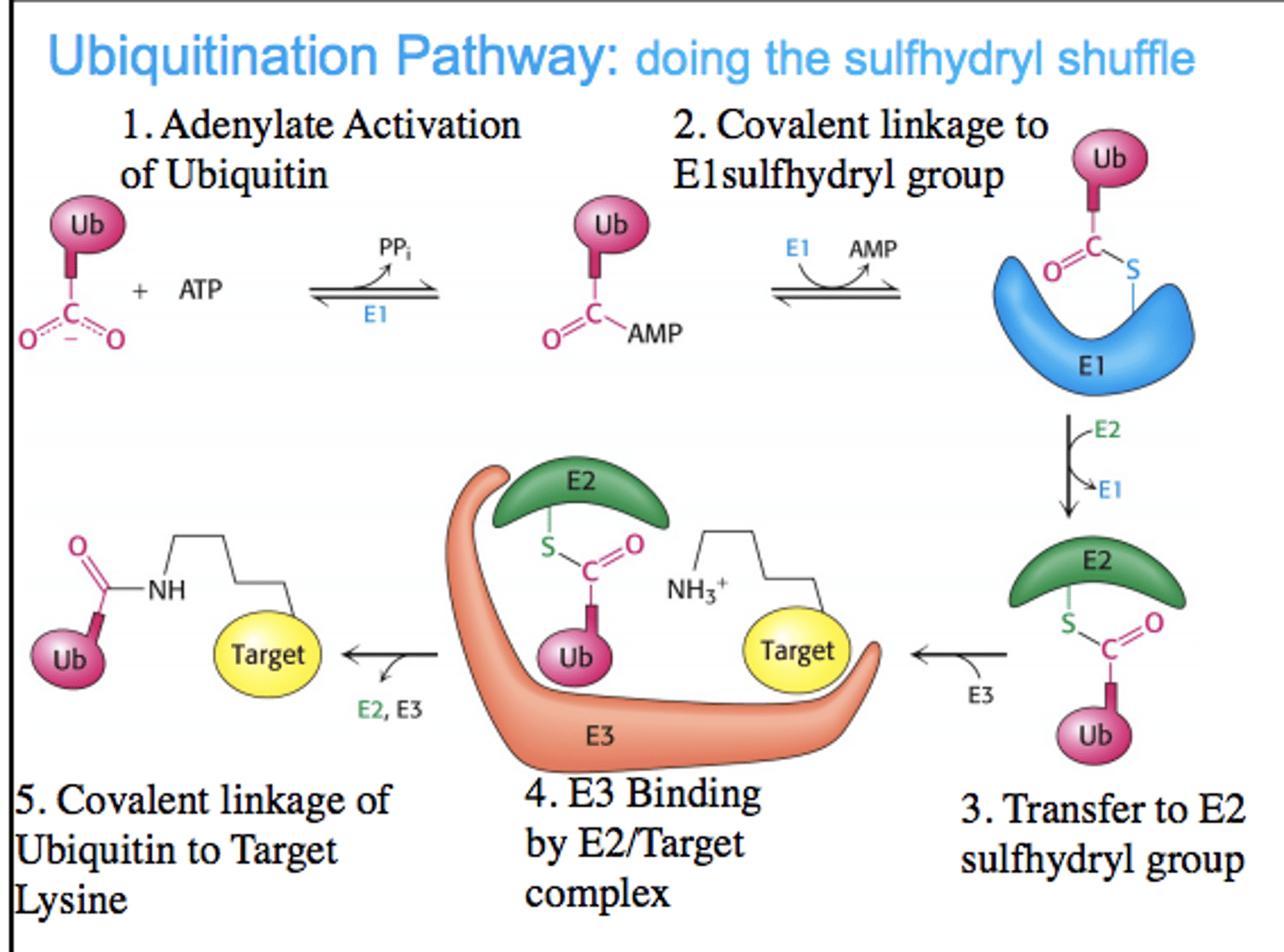
How is a polyubiquitin chain formed?
Additional ubiquitin molecules are added to lysine residues (e.g., Lys-48, Lys-63) of the previous ubiquitin.
What happens when a protein is ubiquitinated or polyubiquitinated?
It is usually targeted for degradation by the proteasome.
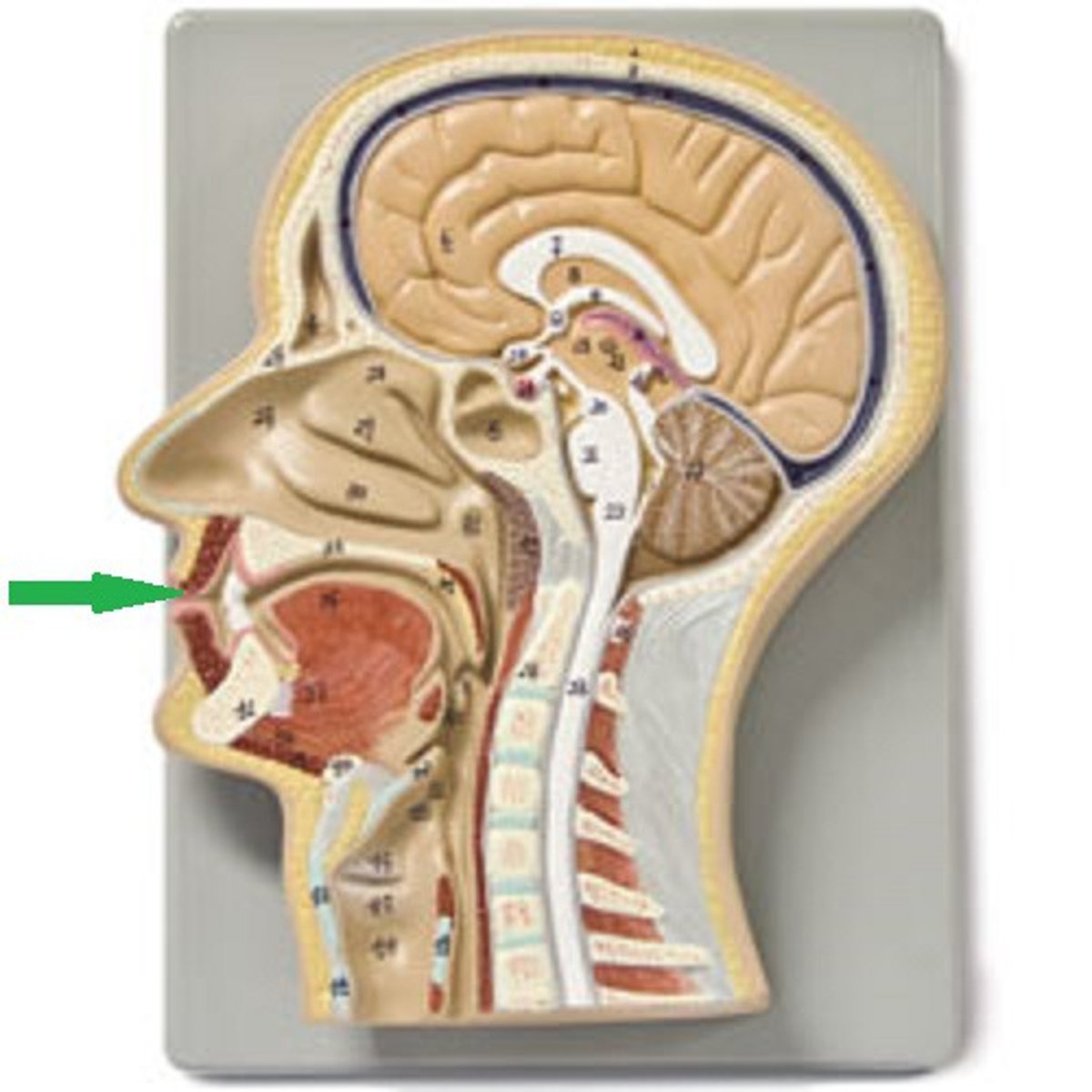
Where does protein digestion begin and how is it completed?
It starts mechanically (chewing) and continues enzymatically in the gastrointestinal tract.
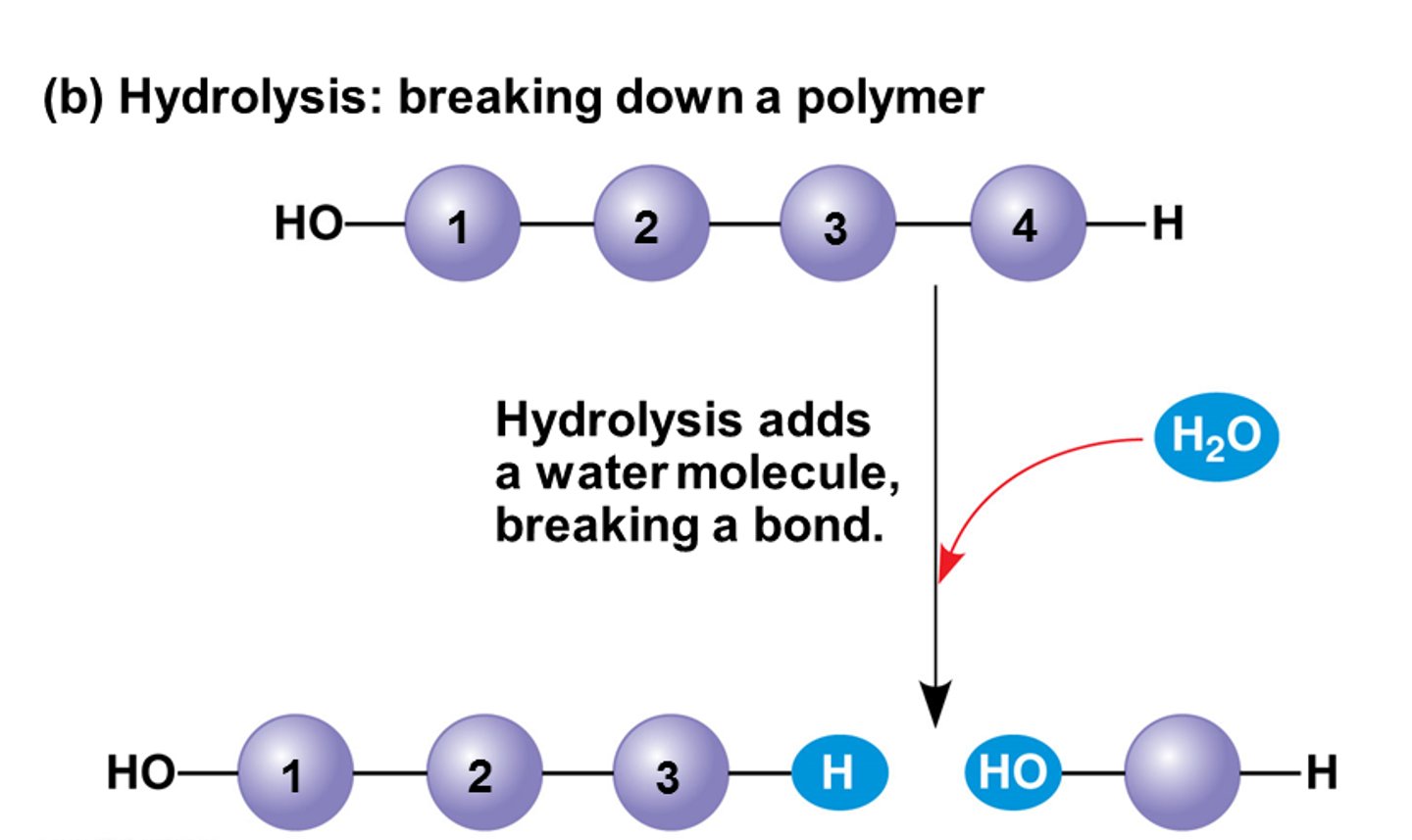
What type of reaction is involved in protein digestion?
Protein digestion is hydrolytic, using water to cleave peptide bonds.
Why must dietary proteins be broken down before absorption?
They must be broken into single amino acids, dipeptides, or tripeptides to prevent immunogenic responses.
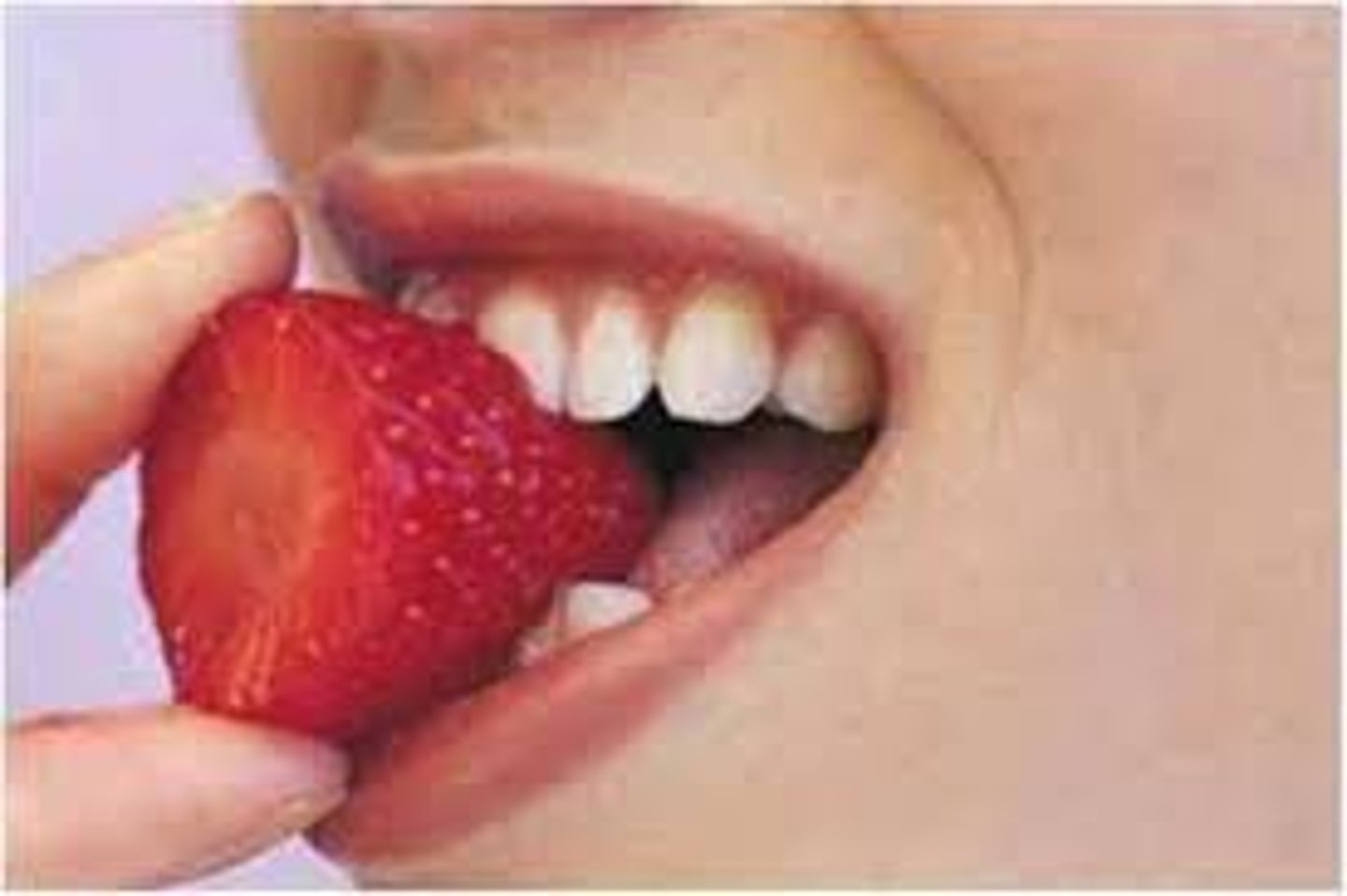
Where does mechanical digestion begin and which enzymes are released?
Mouth; Mechanical digestion starts. Salivary glands release amylase (for carbohydrates) and lipase (for fats).
Where does chemical protein digestion begin?
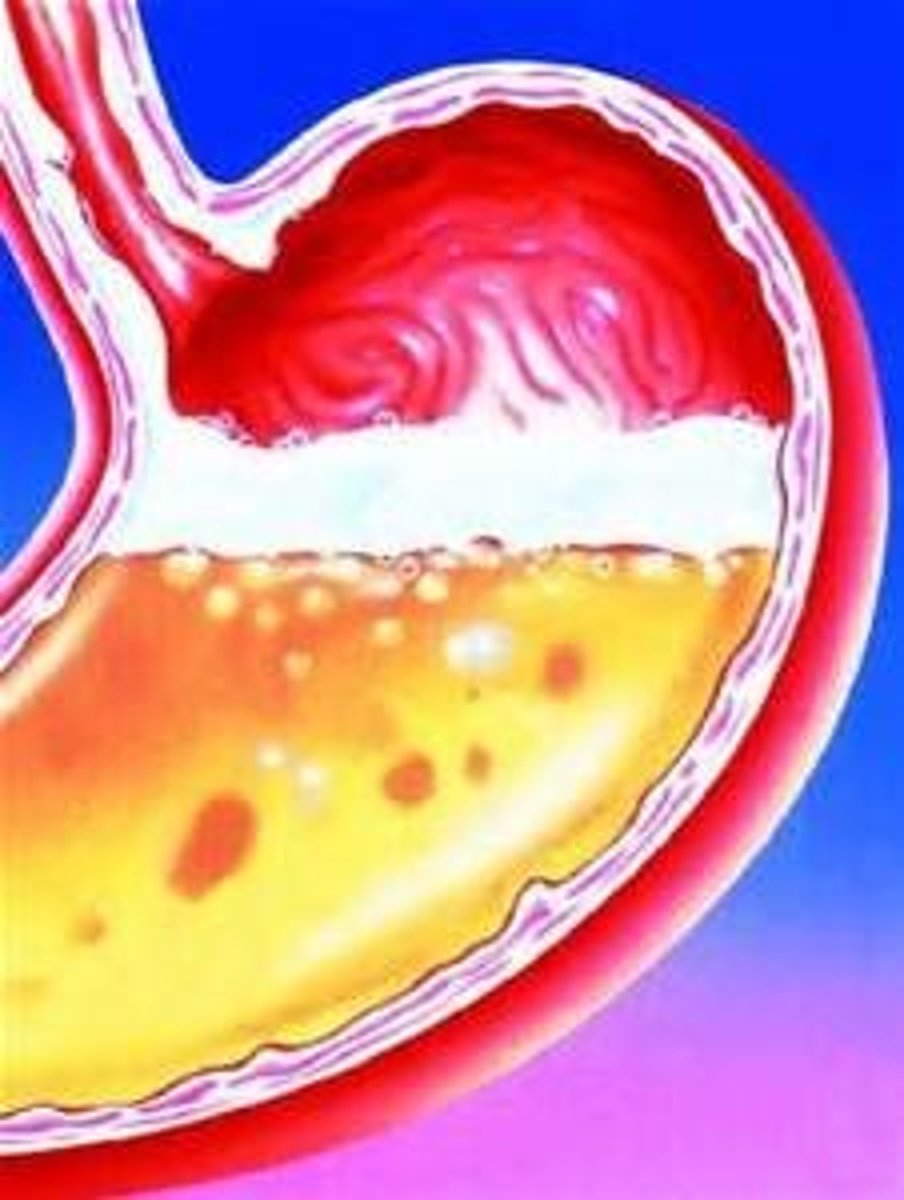
Stomach: Protein digestion chemically begins here. Low pH (below 2) denatures proteins. Pepsin starts protein hydrolysis.
What happens in the duodenum during digestion?
Acidic chyme enters from the stomach. The exocrine pancreas secretes bicarbonate to neutralize it and various zymogens (inactive digestive enzymes).
What happens in the jejunum and ileum during protein digestion?
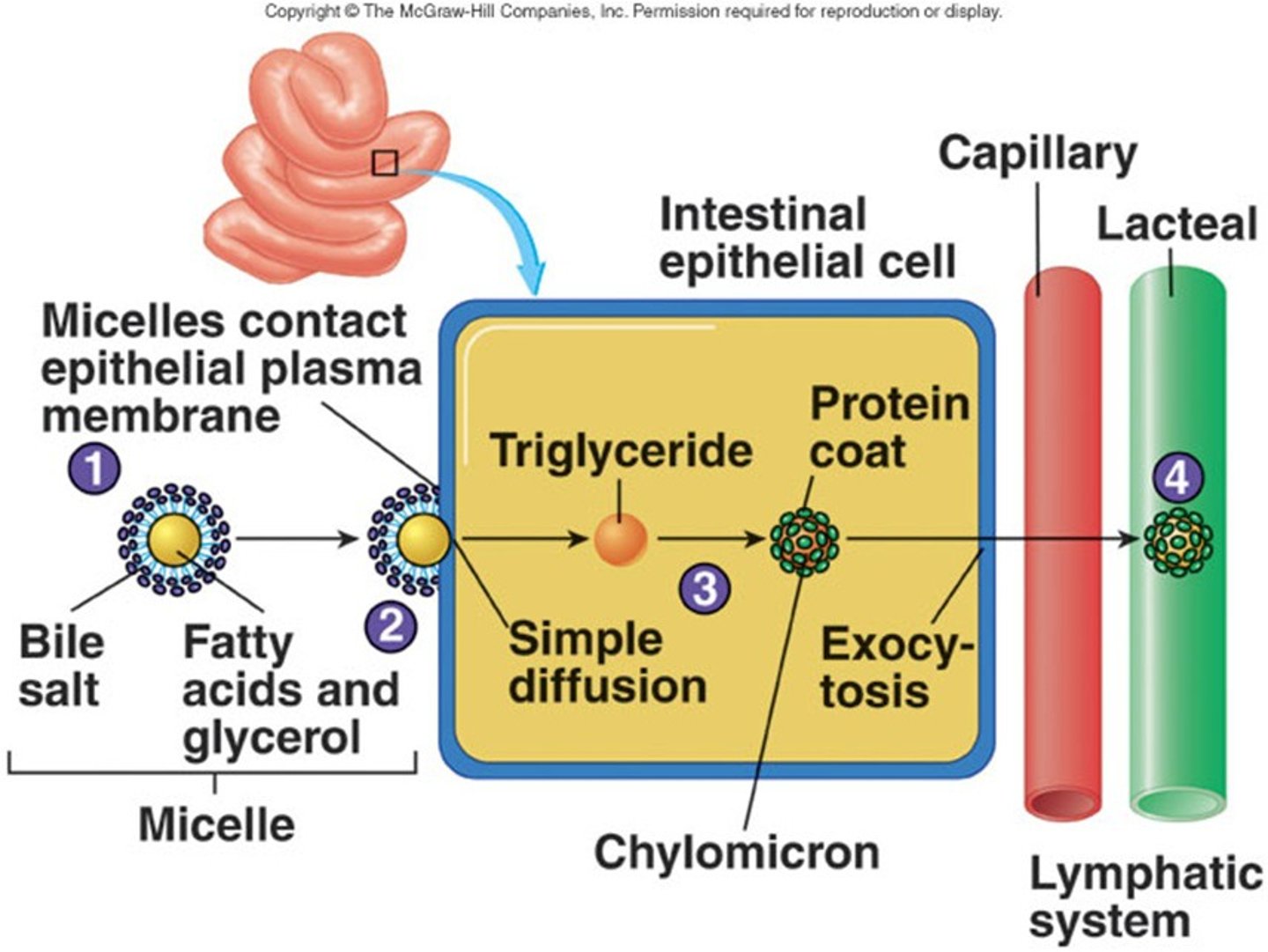
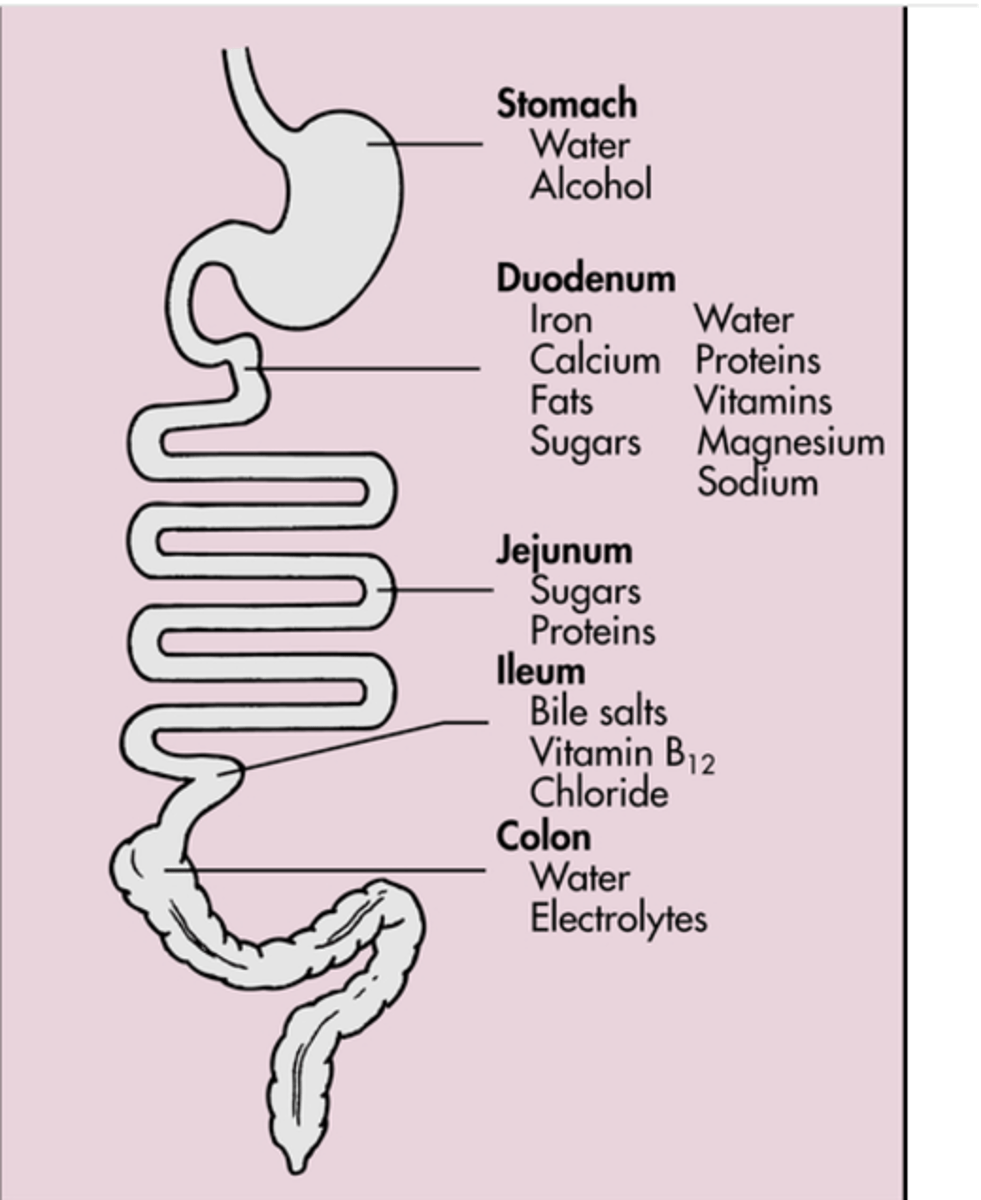
Further hydrolysis of oligopeptides by brush border peptidases; absorption of amino acids, dipeptides, and tripeptides.
What is absorbed in the colon?
Water and NaCl are absorbed in the colon.
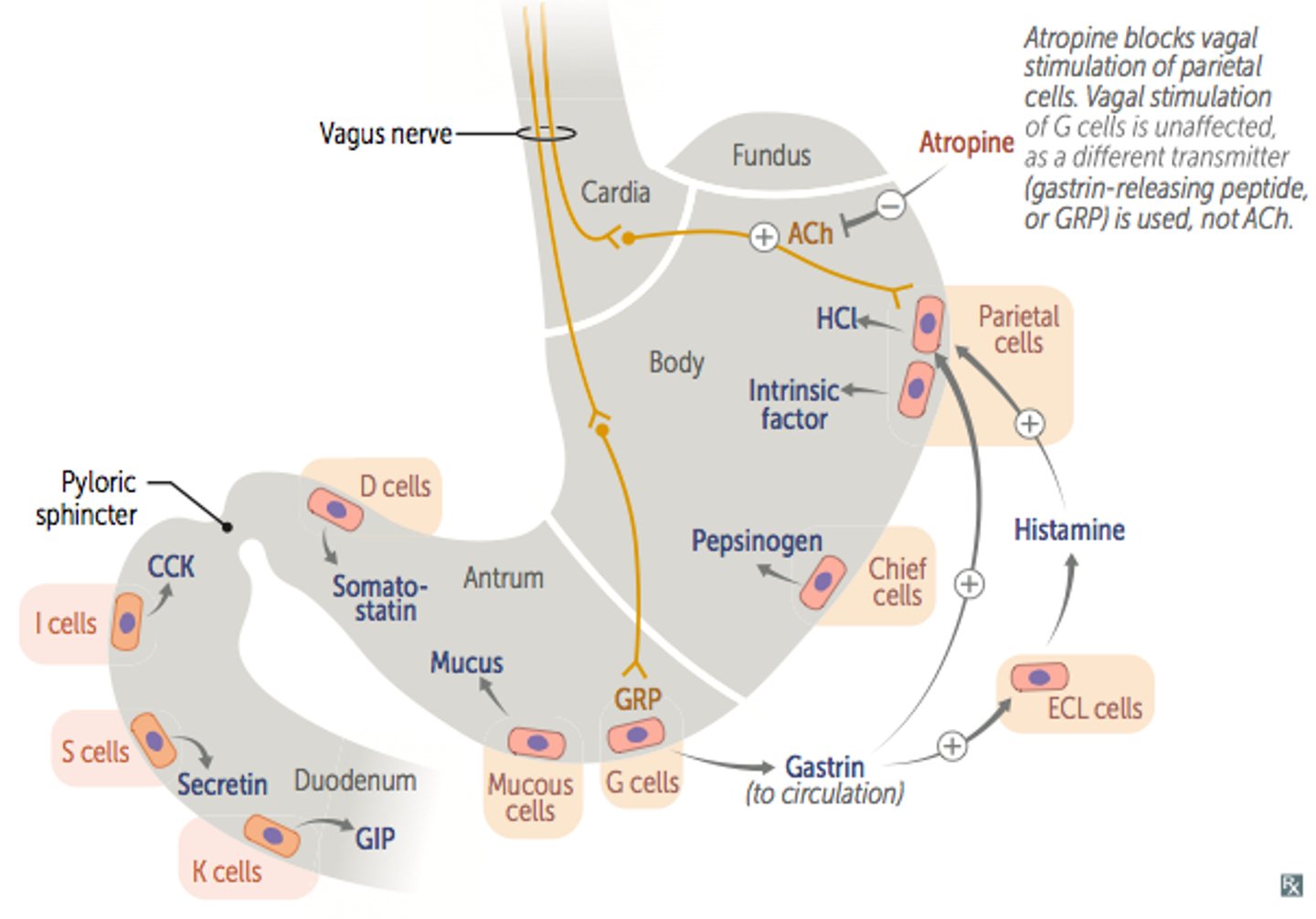
What hormone is secreted in response to dietary proteins in the stomach?
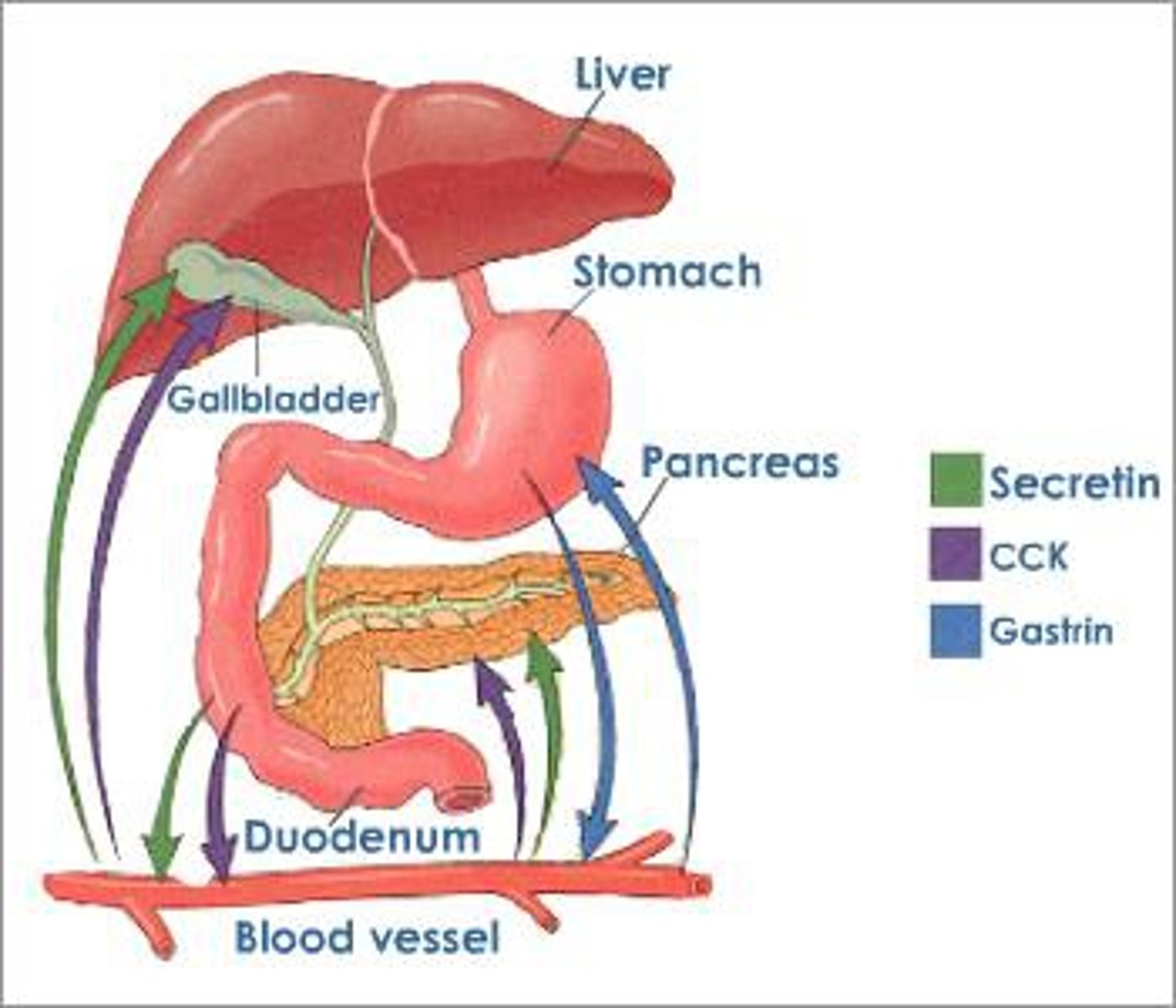
Gastrin is secreted by the gastric mucosa in response to protein intake.
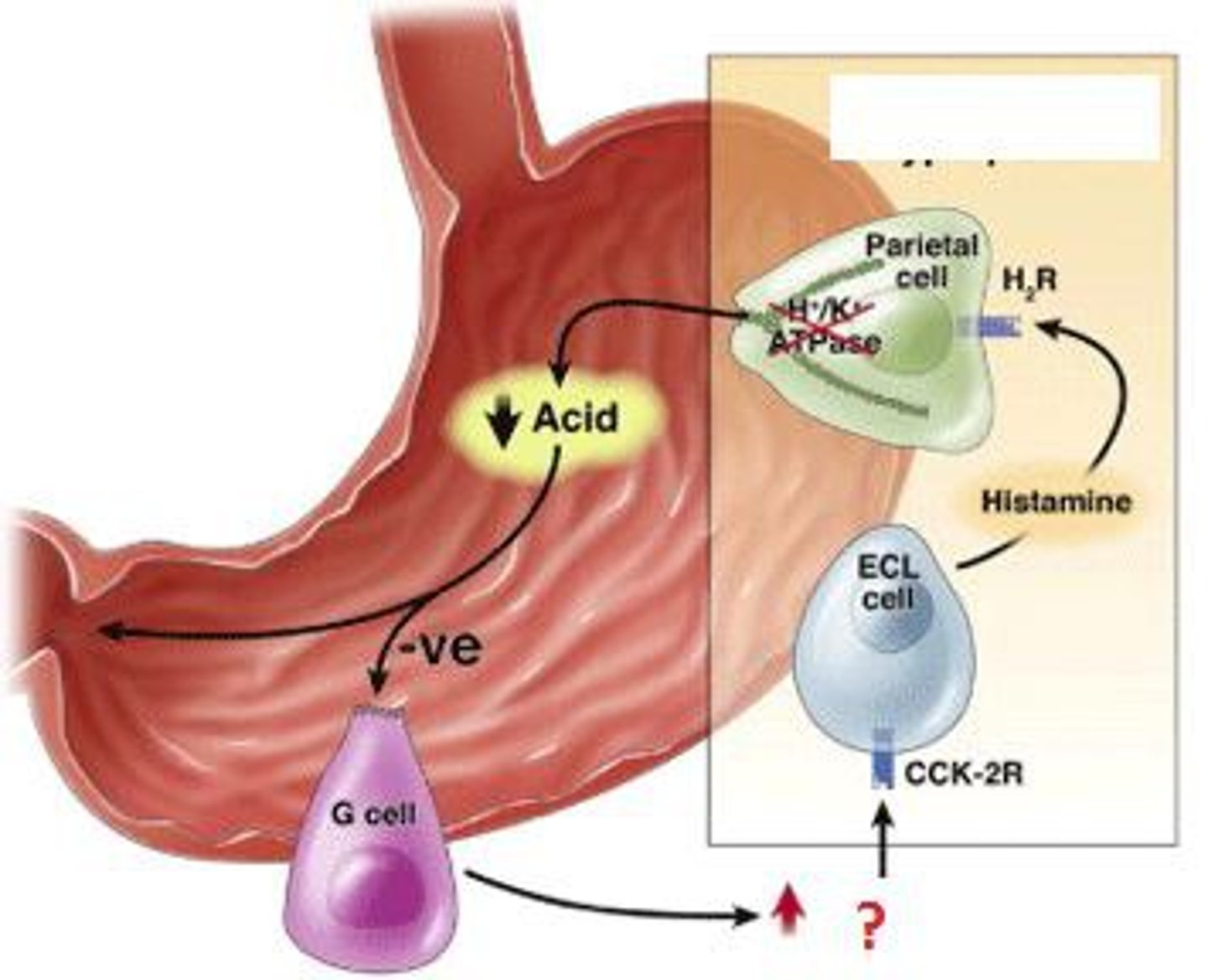
What does gastrin stimulate in the stomach?
Parietal cells to release HCl (makes highly acidic environment), and chief cells to secrete pepsinogen.
What is pepsinogen?
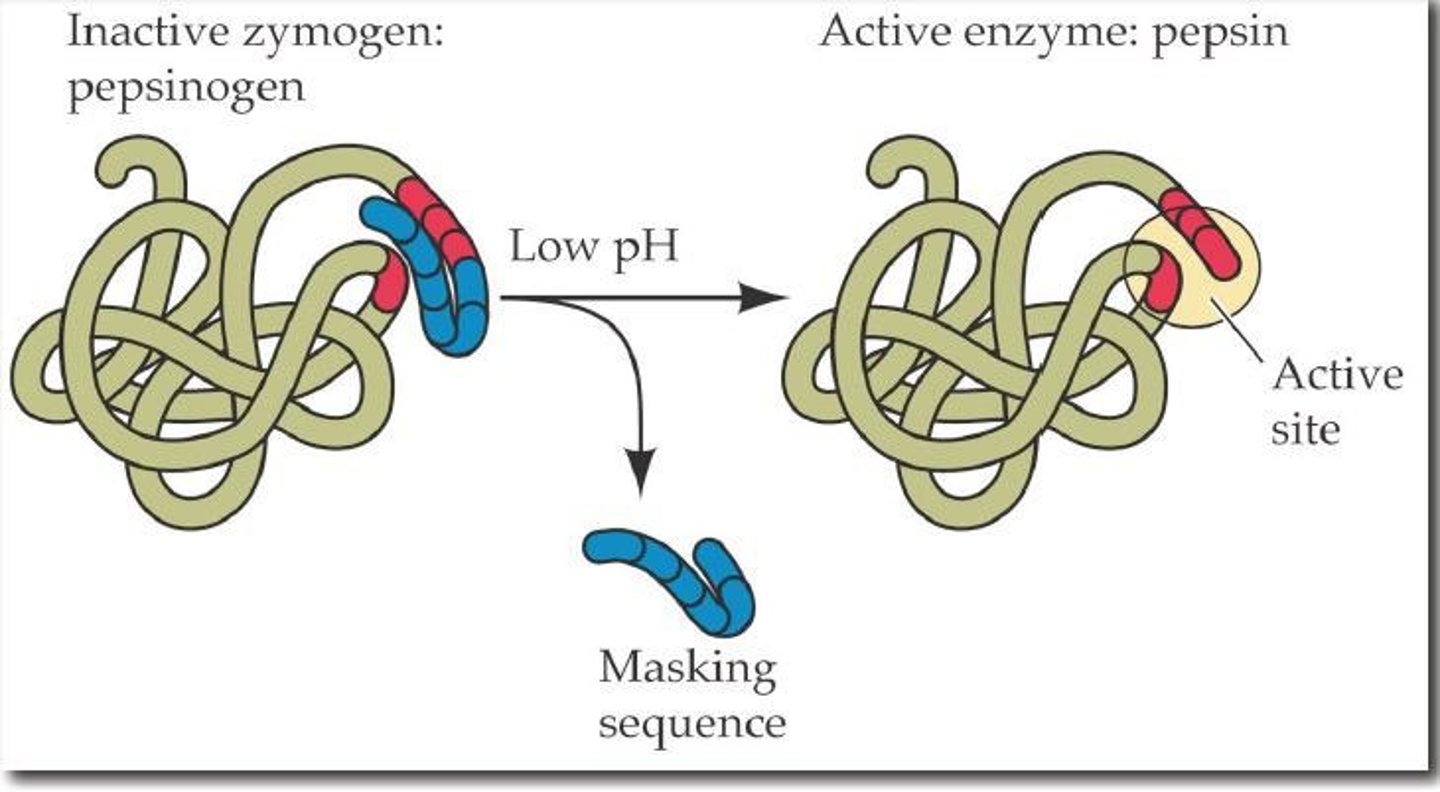
A zymogen (inactive precursor) of pepsin with a masking sequence (an auto-inhibitory peptide) that blocks its active site.
How is pepsinogen activated to pepsin?
In low pH, the masking sequence is removed by acid-catalyzed cleavage, leading to autocatalytic activation into pepsin.
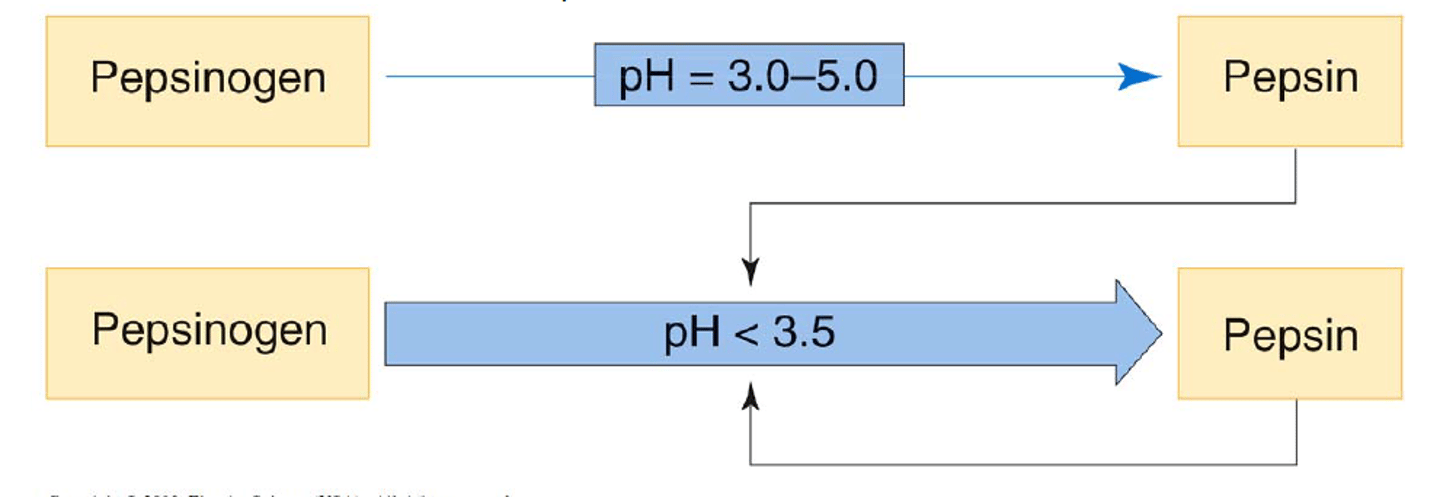
What is the function of pepsin?
Pepsin is an endopeptidase that hydrolyzes peptide bonds internally, breaking long polypeptide chains into smaller peptides.
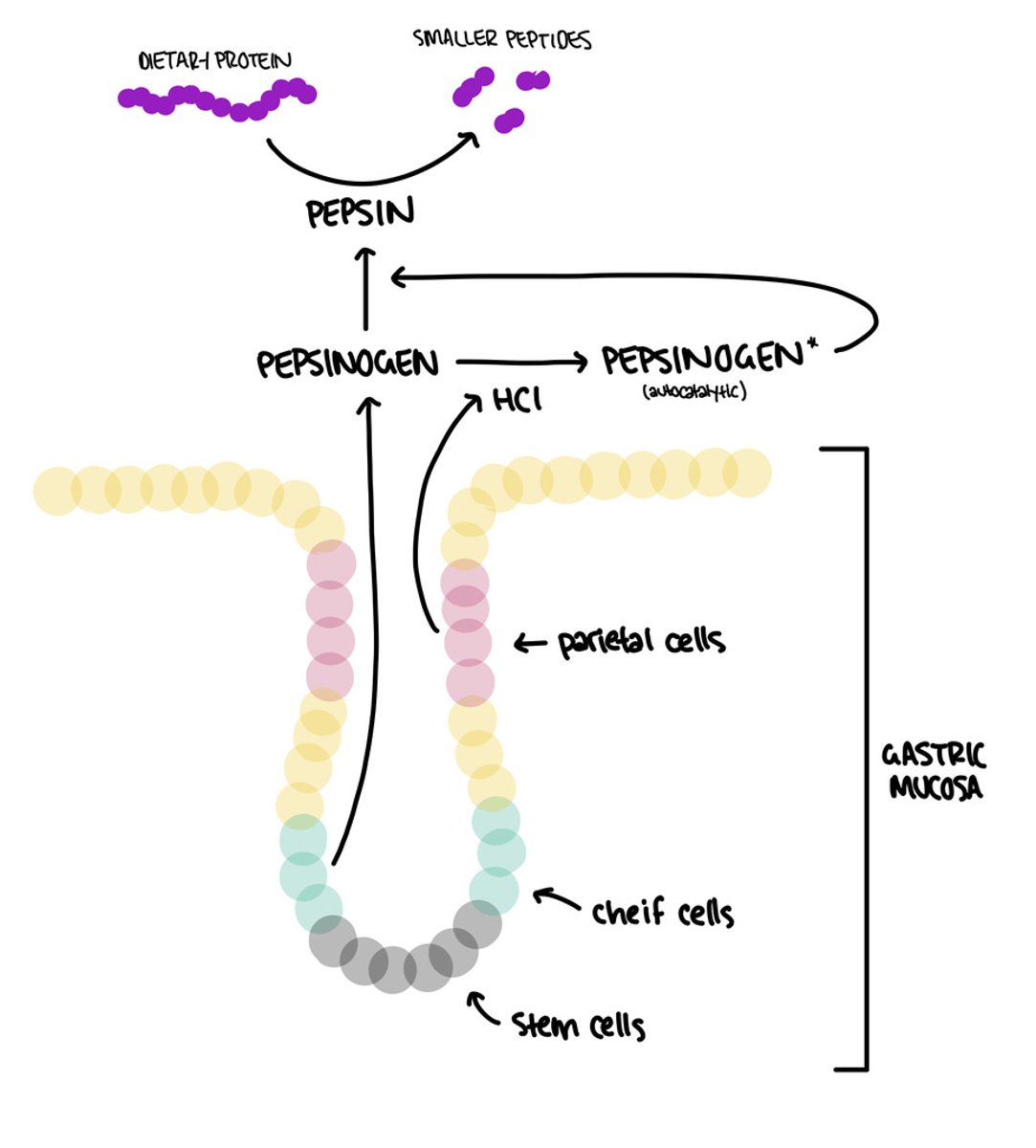
How is the activation of pepsin self-reinforcing?
Once one molecule of pepsin is formed, it catalyzes the formation of additional pepsin molecules.
How does low stomach pH aid in protein digestion?
It denatures proteins (unfolding them), exposing peptide bonds for enzymatic hydrolysis by pepsin.
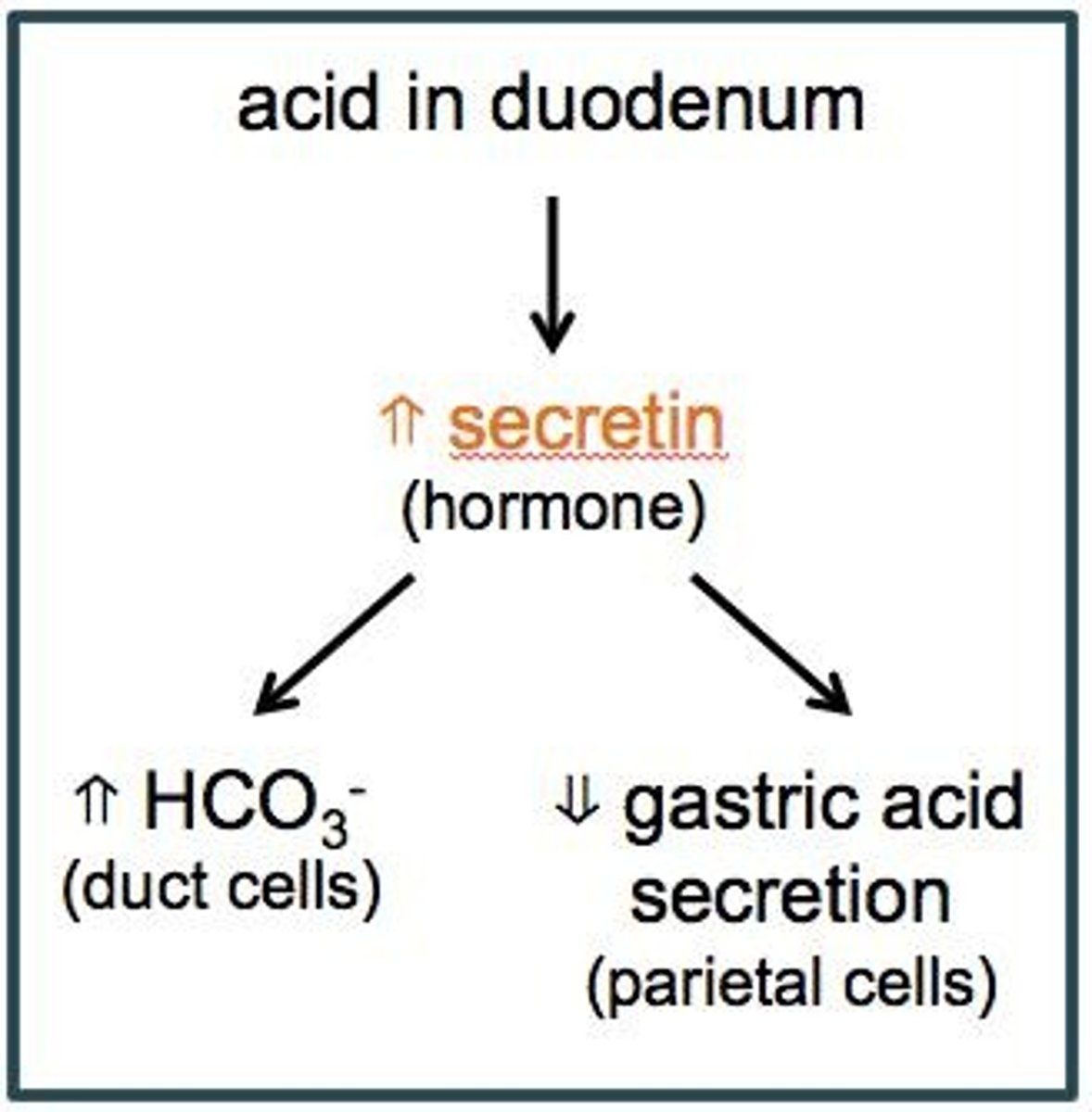
What hormone is released when acidic chyme enters the small intestine?
Secretin is secreted by the intestinal mucosa in response to low pH.
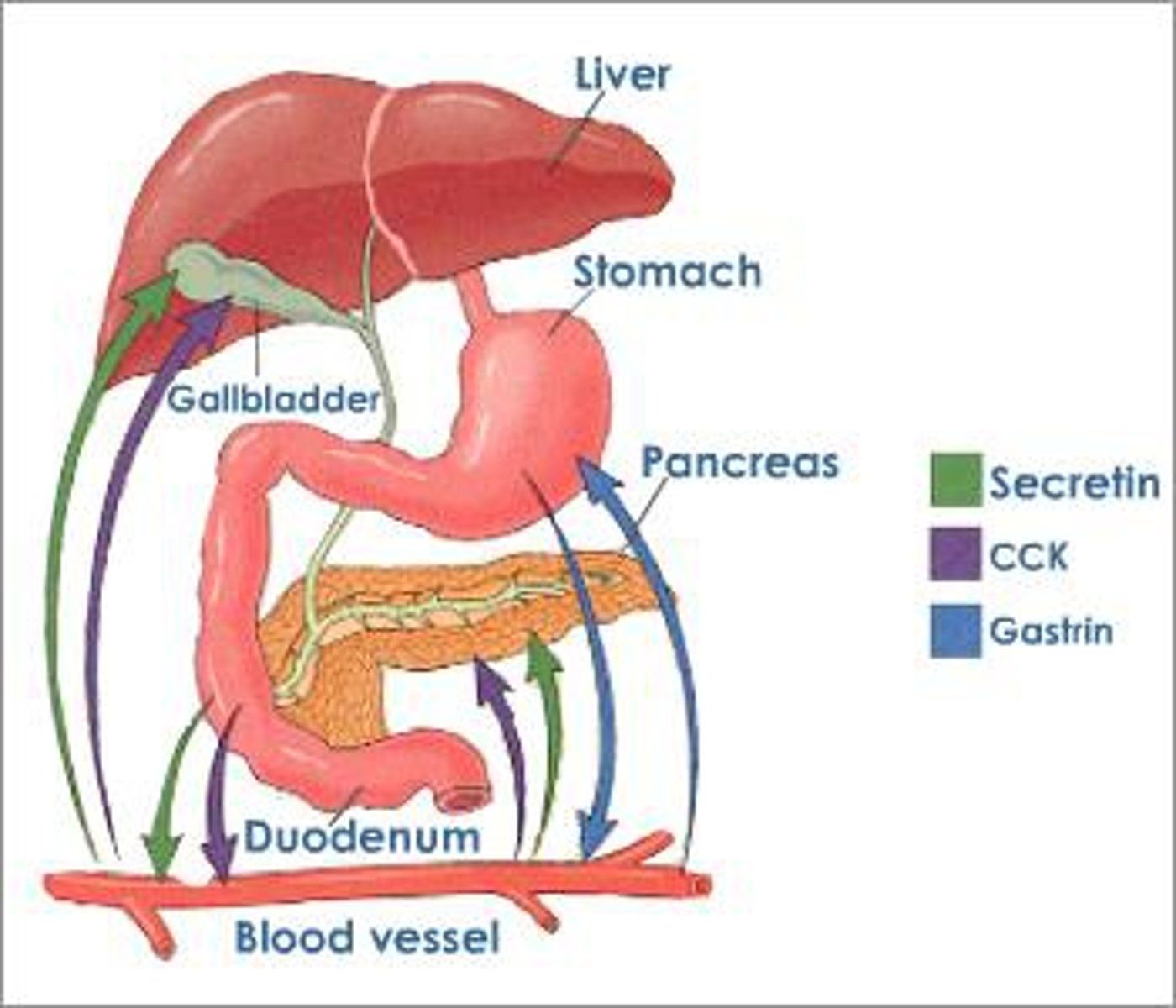
What does secretin stimulate?
It stimulates the pancreas to secrete bicarbonate, neutralizing gastric HCl and raising pH to ~7.
What are the major pancreatic zymogens secreted into the small intestine?
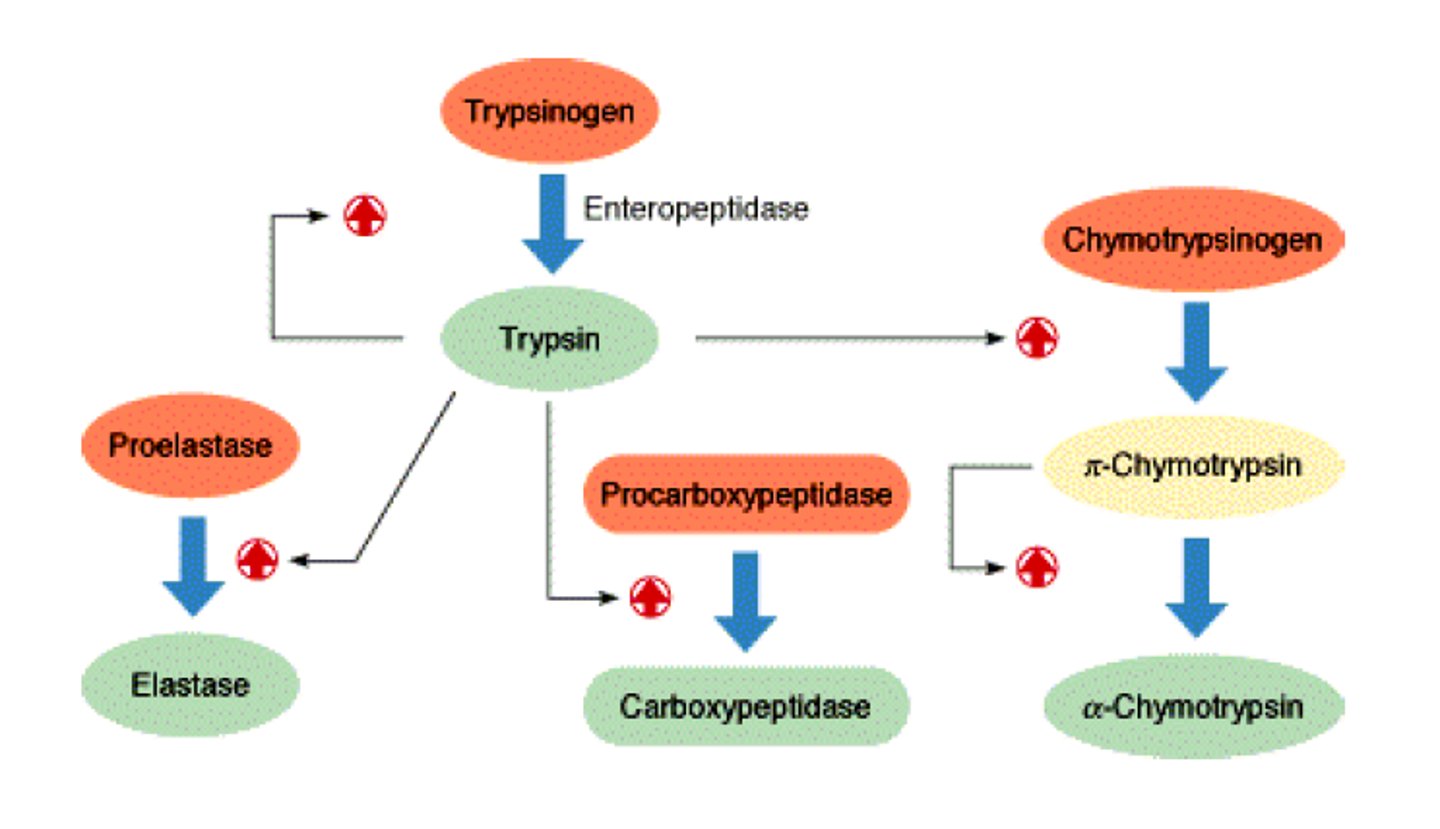
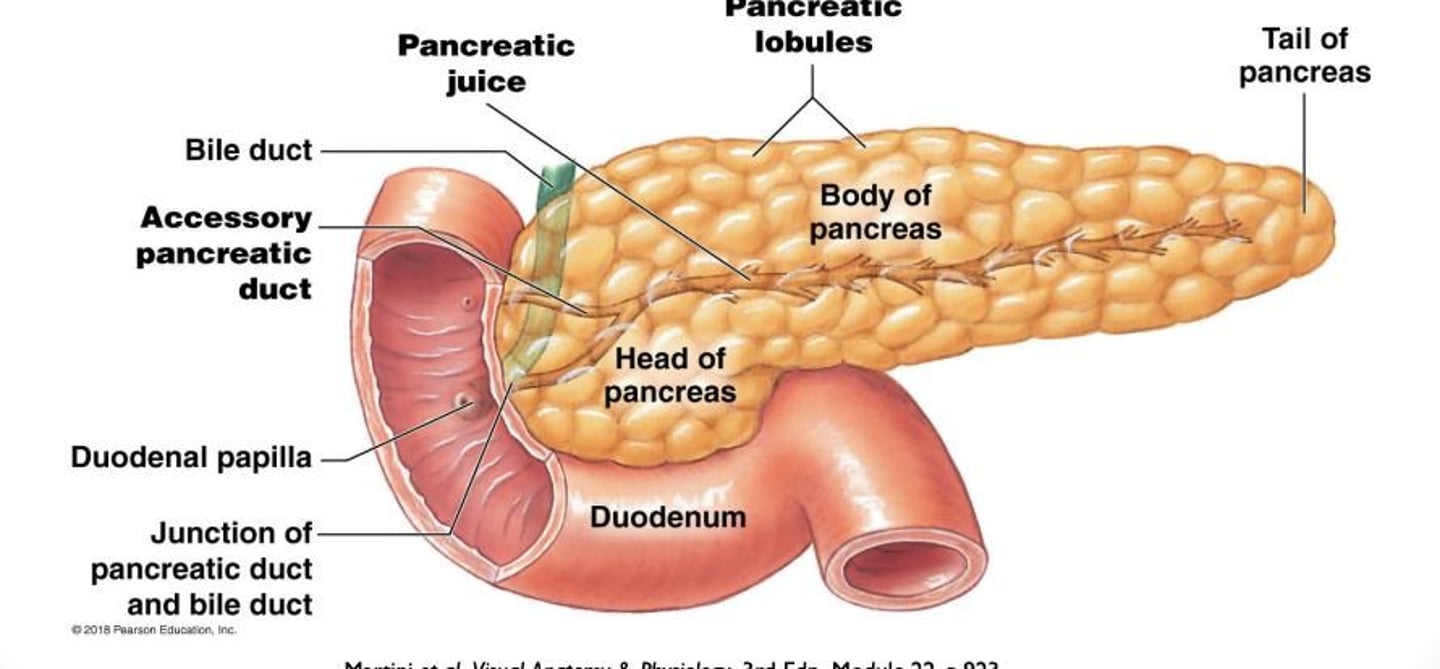
Trypsinogen, Chymotrypsinogen, Procarboxypeptidase, and Proelastase.
What activates trypsinogen into trypsin?
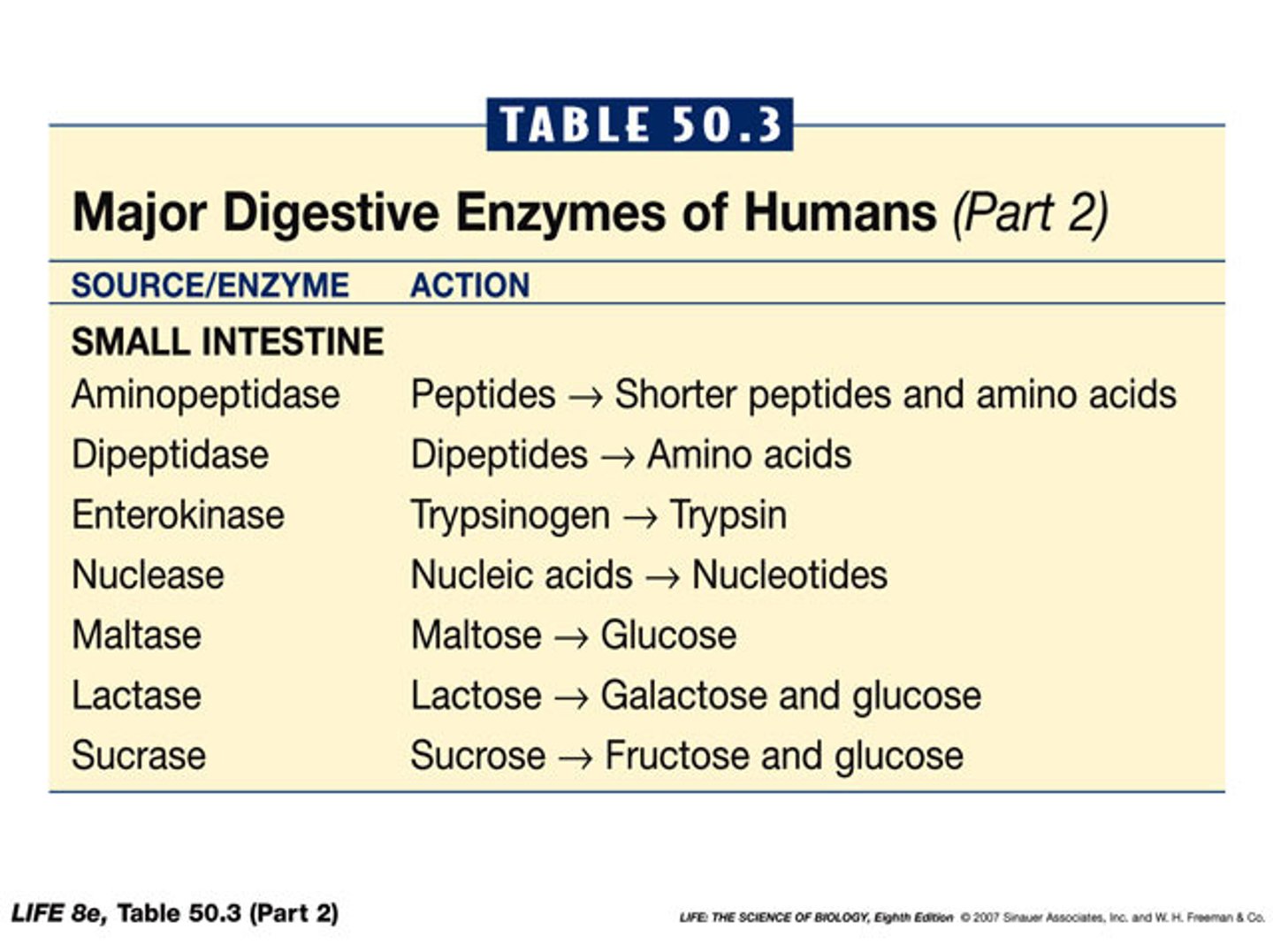
Enteropeptidase (on the intestinal mucosa) converts trypsinogen into active trypsin.
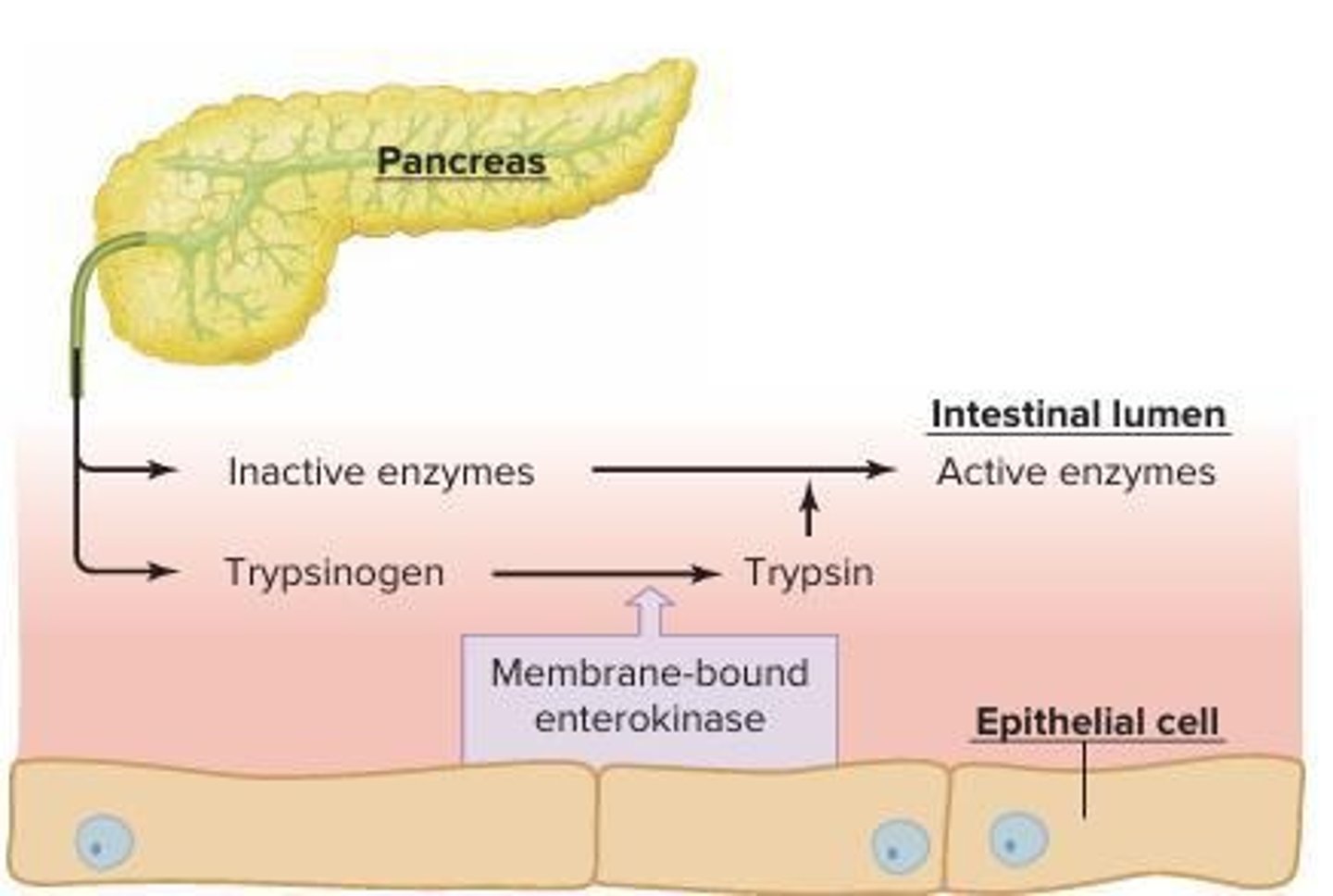
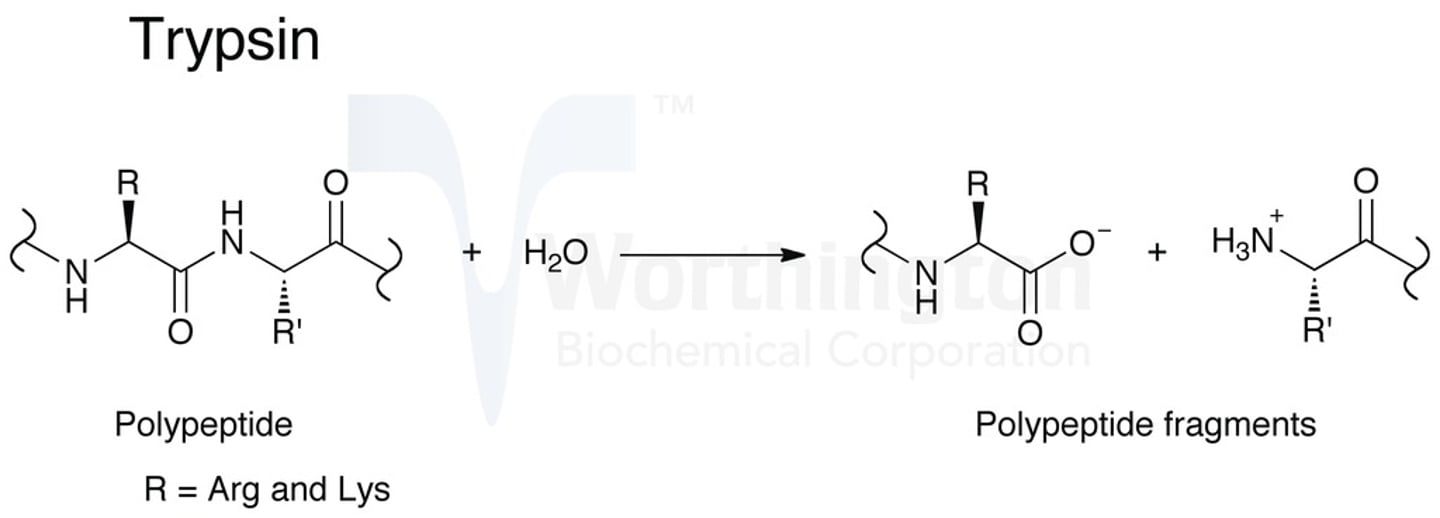
What is the function of trypsin?
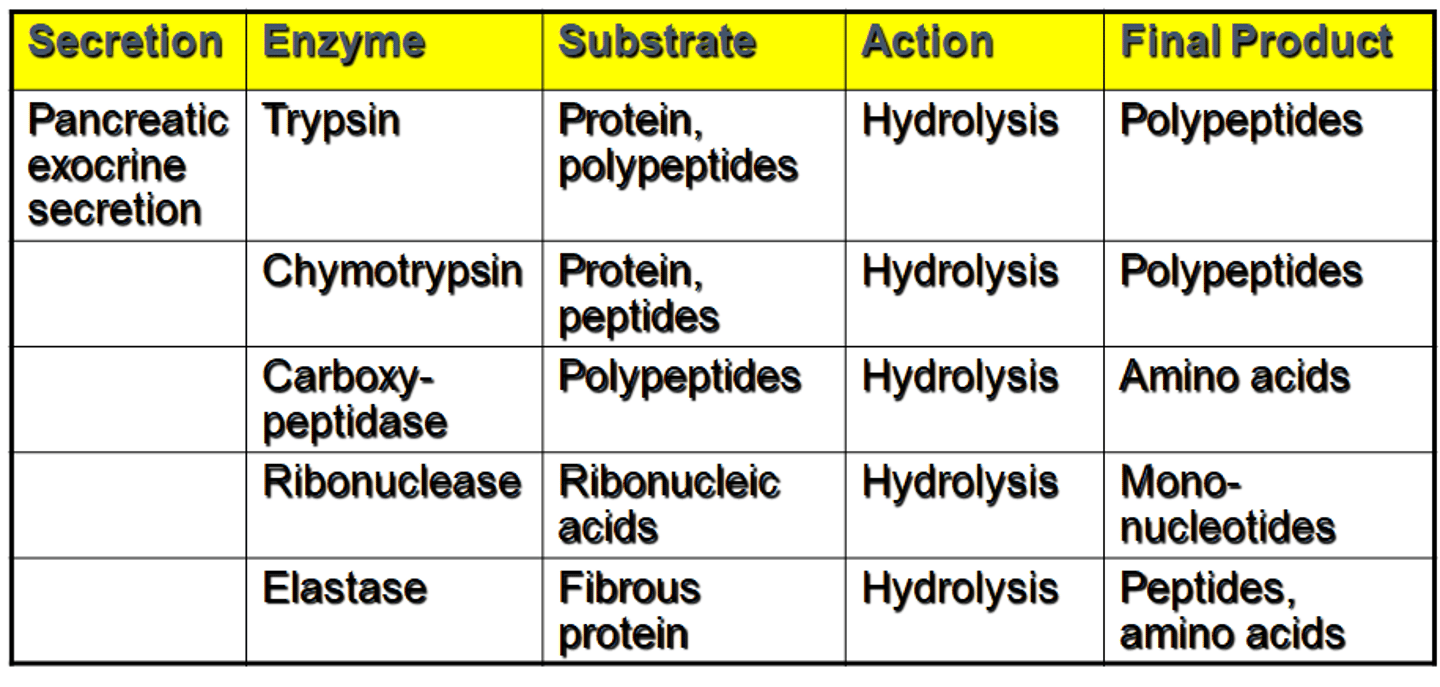
It cleaves at the carboxyl side of lysine and arginine and activates other zymogens.
How is unwanted proteolysis prevented in pancreatic cells?
Trypsin is stored with trypsin inhibitor in secretory vesicles.
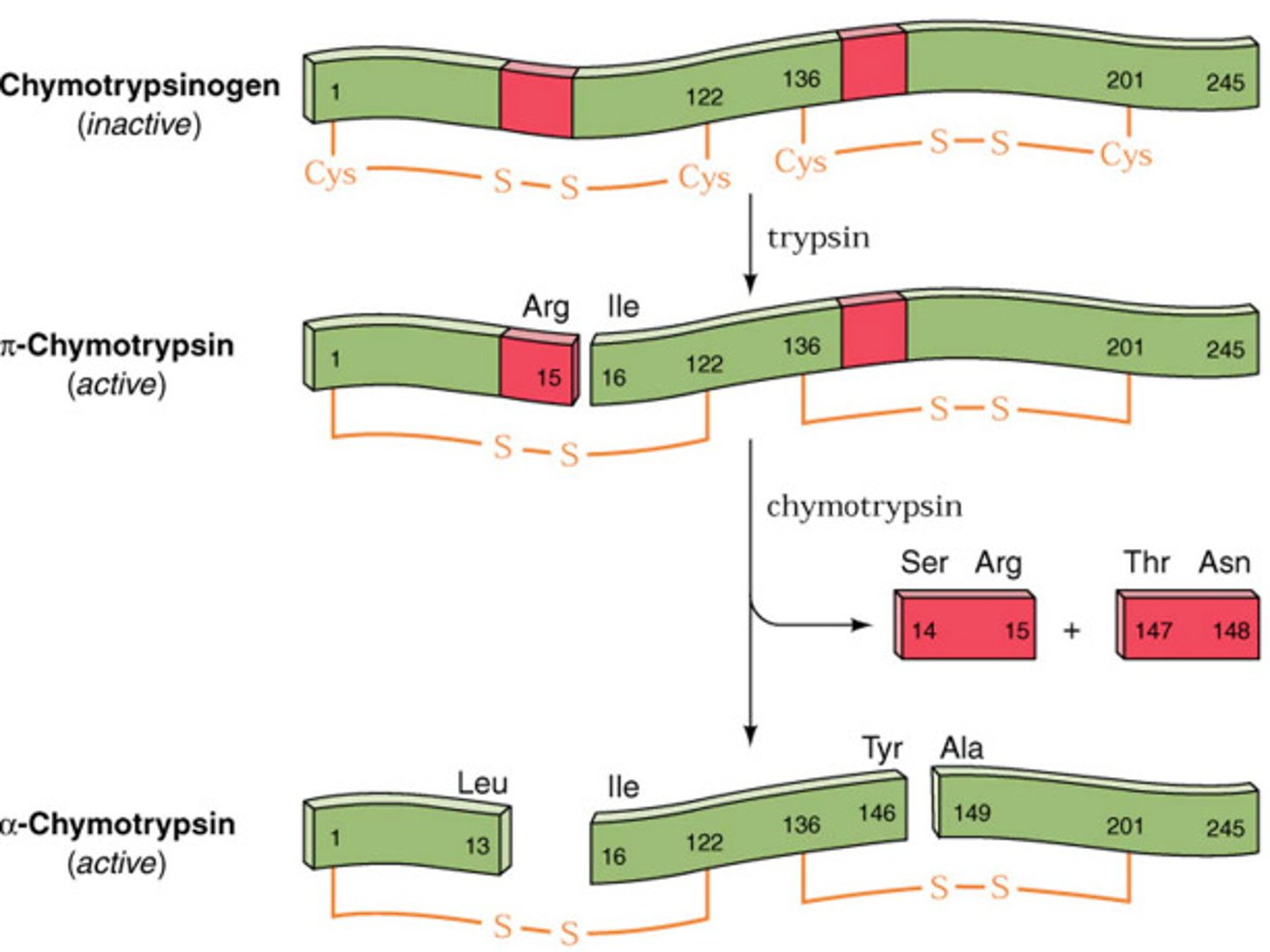
How is chymotrypsinogen activated?
Trypsin initiates cleavage to form pi-chymotrypsin, which undergoes further cleavage to more active alpha-chymotrypsin version
What does chymotrypsin do?
It cleaves peptide bonds at the carboxy side of aromatic residues.
What activates procarboxypeptidase (later carboxypeptidase) and what is its function?
Activated by chymotrypsin; removes one amino acid at a time from carboxyl ends.
What does elastase do and how is it formed?
Breaks down elastin in connective tissue; formed from proelastase by trypsin.
Which proteases are endopeptidases and which are exopeptidases?
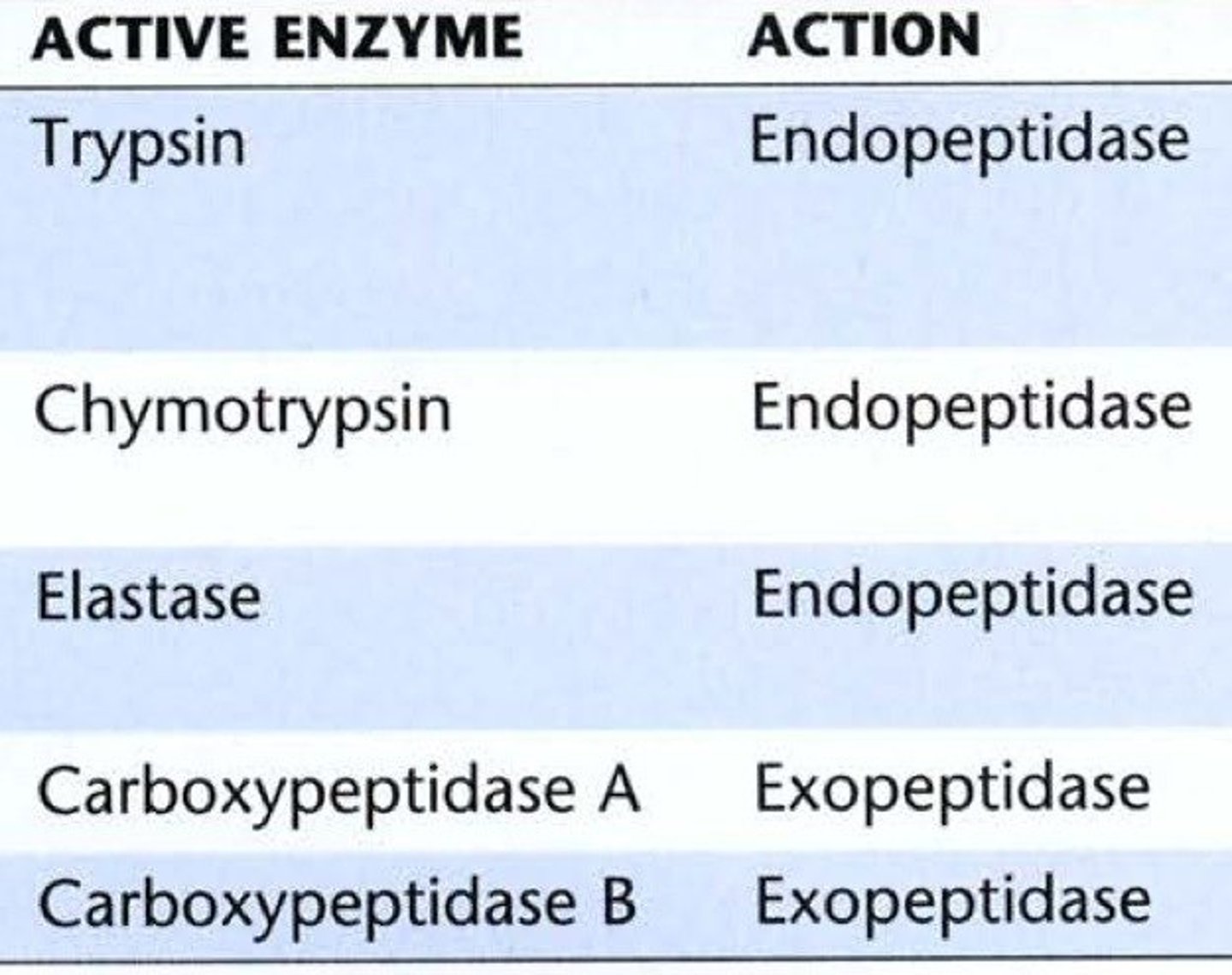
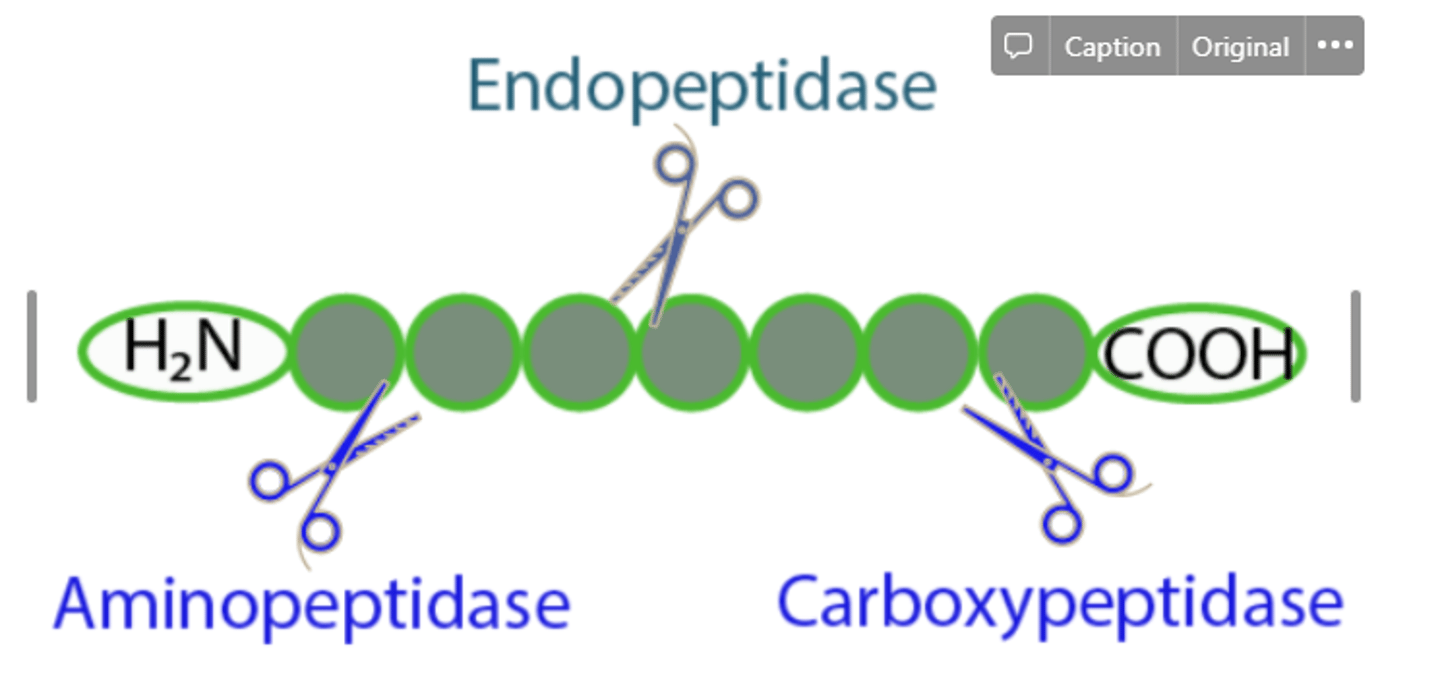
Trypsin, Chymotrypsin, and Elastase are endopeptidases; Carboxypeptidase is an exopeptidase.
What do aminopeptidases do?
They are brush border exopeptidases that cleave amino acids from the N-terminus of oligopeptides.
What do dipeptidases and tripeptidases do?
They hydrolyze di- and tripeptides into free amino acids.
How are amino acids and peptides absorbed in the small intestine?
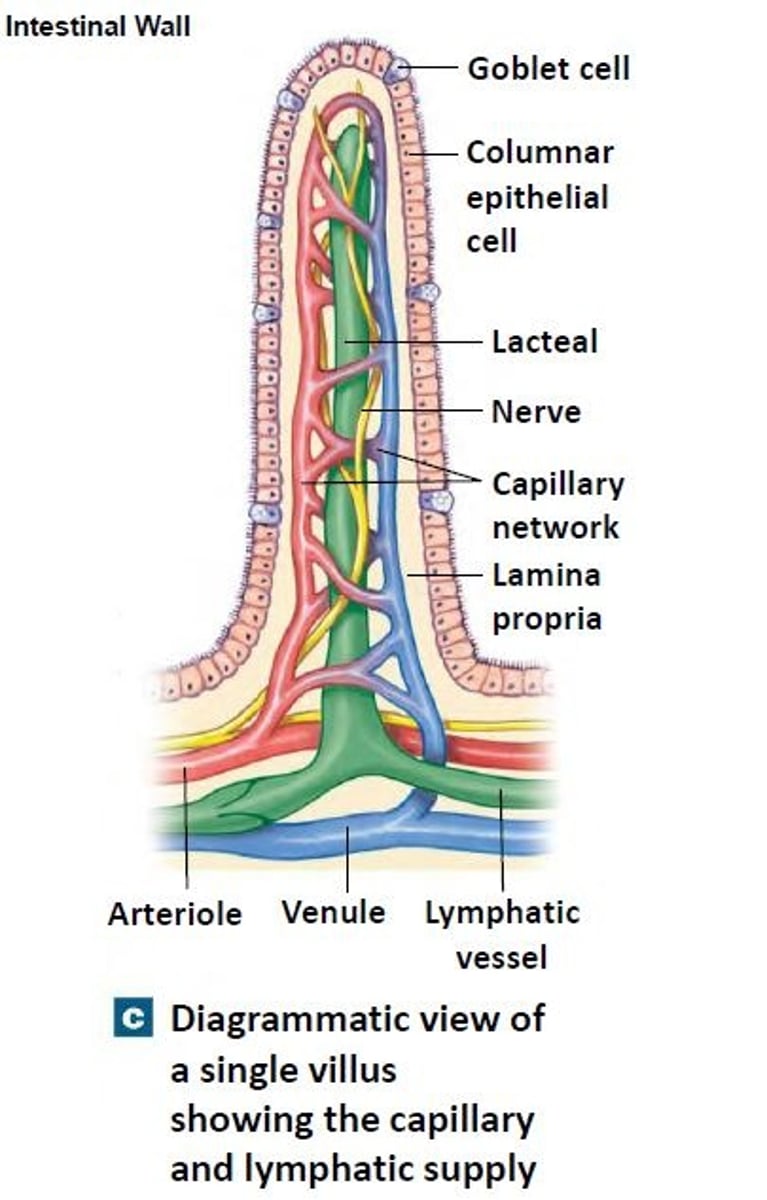
Through specific amino acid and peptide transporters in the intestinal cells.
What happens to di- and tripeptides inside intestinal cells?
They are further hydrolyzed to free amino acids.
How are amino acids transported to the bloodstream?
Through other transporters, into the portal vein and then to the liver.
What is the role of the pancreatic duct?
It carries zymogens from the pancreas into the small intestine.
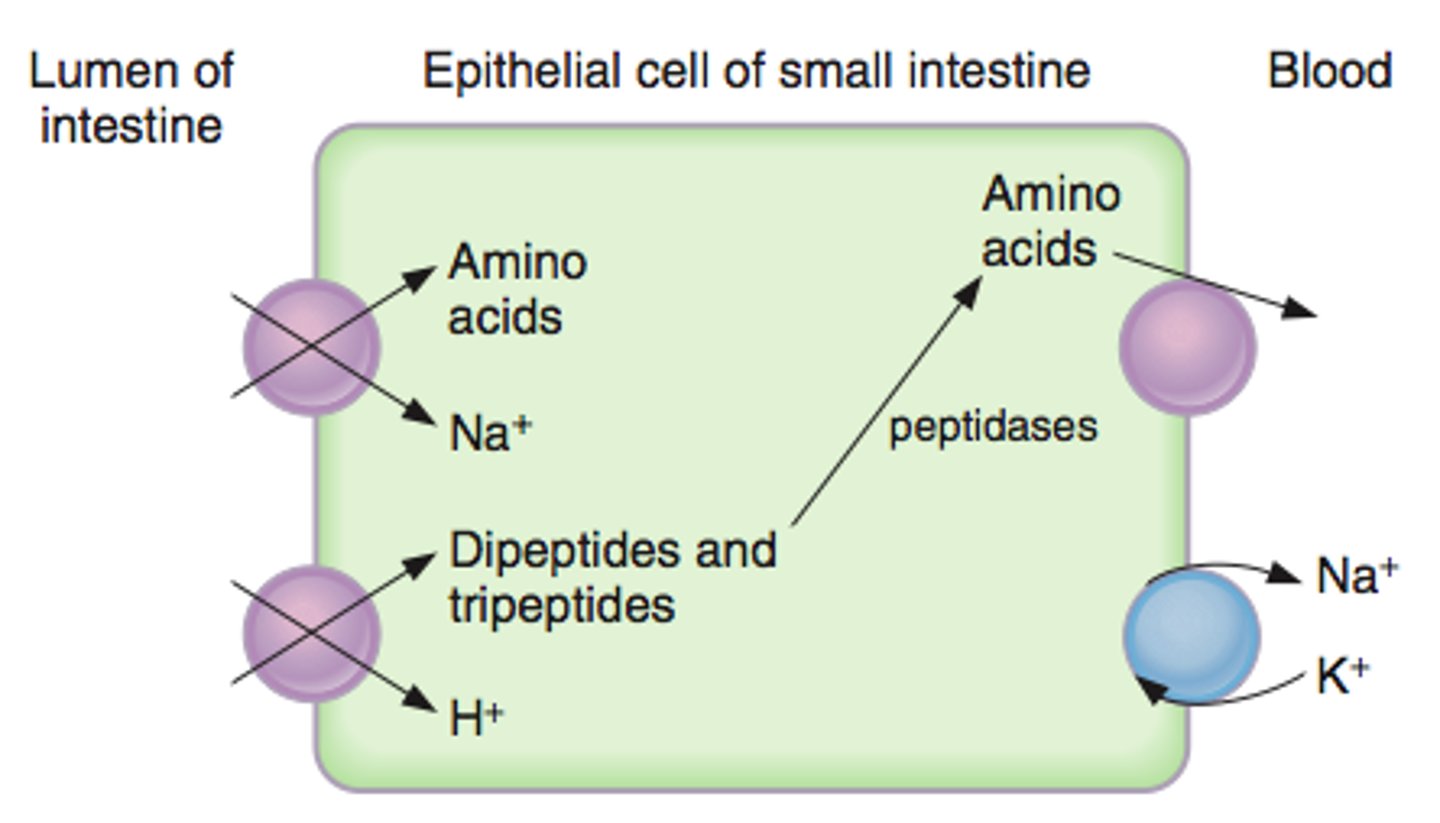
What is the function of the villi in the small intestine?
They absorb amino acids and peptides for transport to the liver using active and secondary active transport.
How does sodium gradient assist amino acid transport?
Na/K+ ATPase creates a gradient for secondary active transport into villi; amino acids then enter bloodstream via facilitative transport.
When does amino acid oxidation occur?
When dietary amino acids exceed demand, protein turnover releases excess, or proteins are used for energy in carb deficiency.
What happens to amino groups not reused in the body?
They are channeled into a single excretory end product (e.g., urea).
What is the Recommended Dietary Allowance (RDA) for protein?
0.8 grams per kilogram of body weight or 0.36 grams per pound.
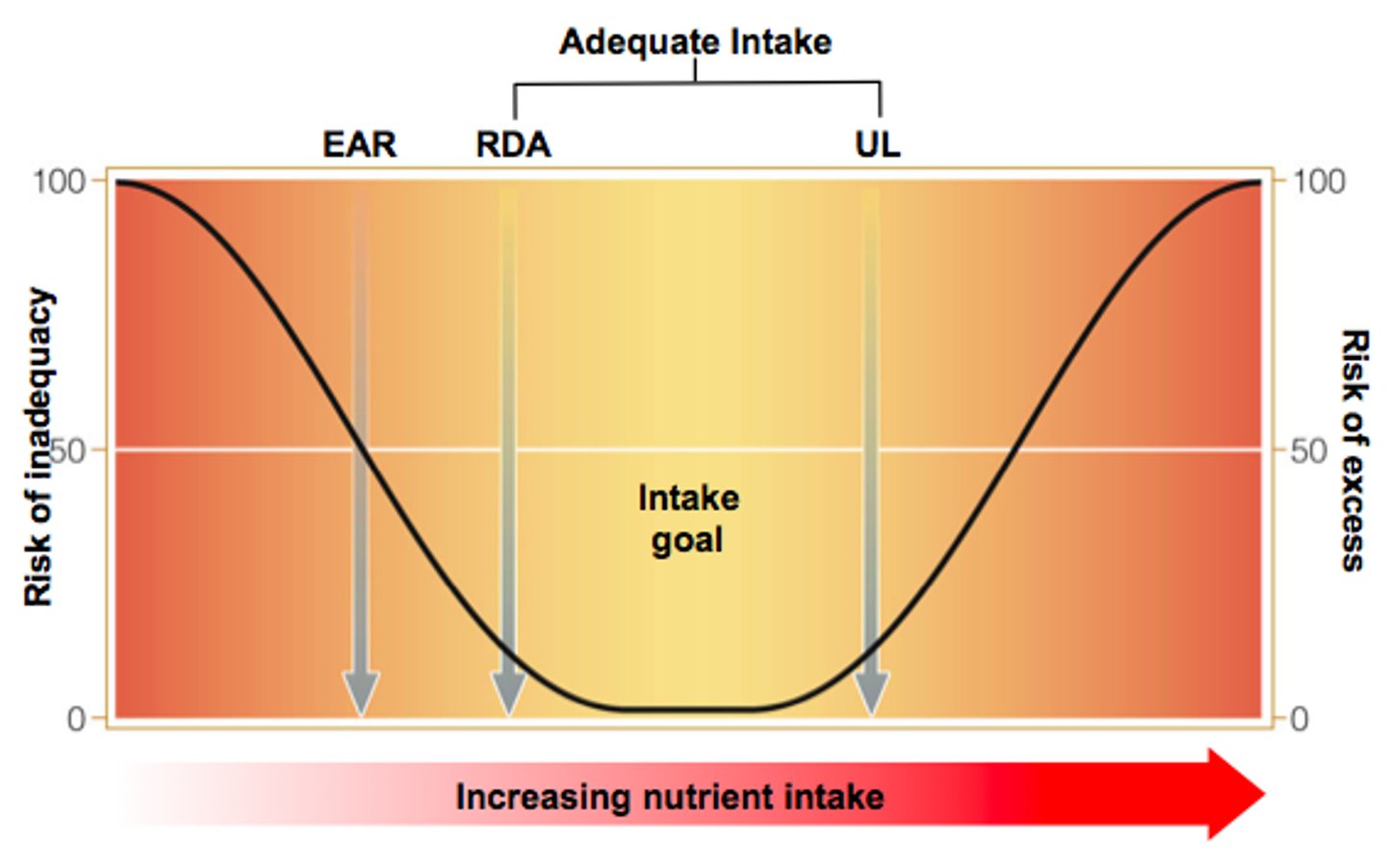
What is the RDA for protein based on?
The amount needed to achieve zero nitrogen balance (intake equals excretion).
How was the U.S. protein requirement historically determined?
Based on studies focused mainly on animal proteins.
Why might vegetarians and vegans need a different protein RDA?
Plant proteins have different digestibility and amino acid profiles.
What is nitrogen balance?
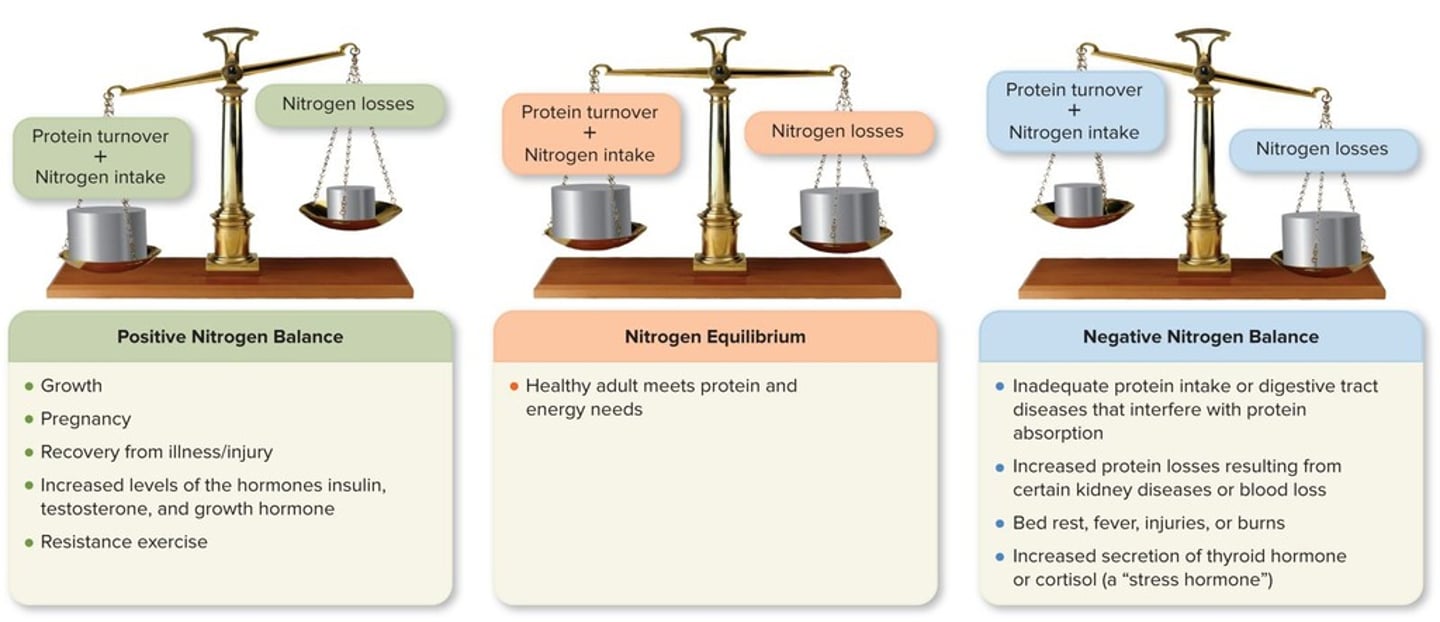
A state where nitrogen intake equals nitrogen excretion; no net change in body nitrogen.
What happens to nitrogen in well-fed individuals?
It is excreted due to excess protein or normal protein turnover.
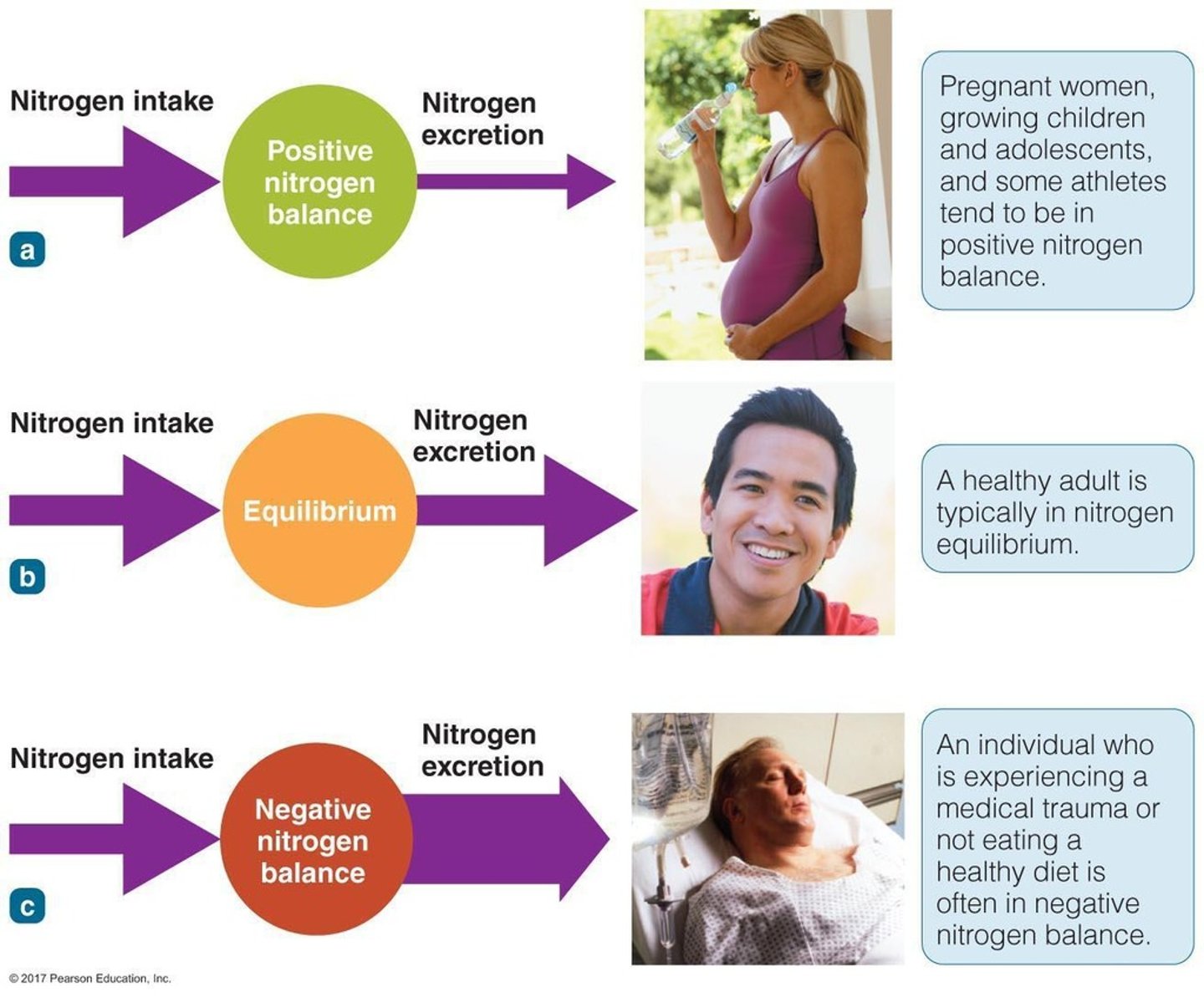
What is positive nitrogen balance and when does it occur?
Nitrogen intake exceeds excretion; occurs in growth, pregnancy, healing, and refeeding.
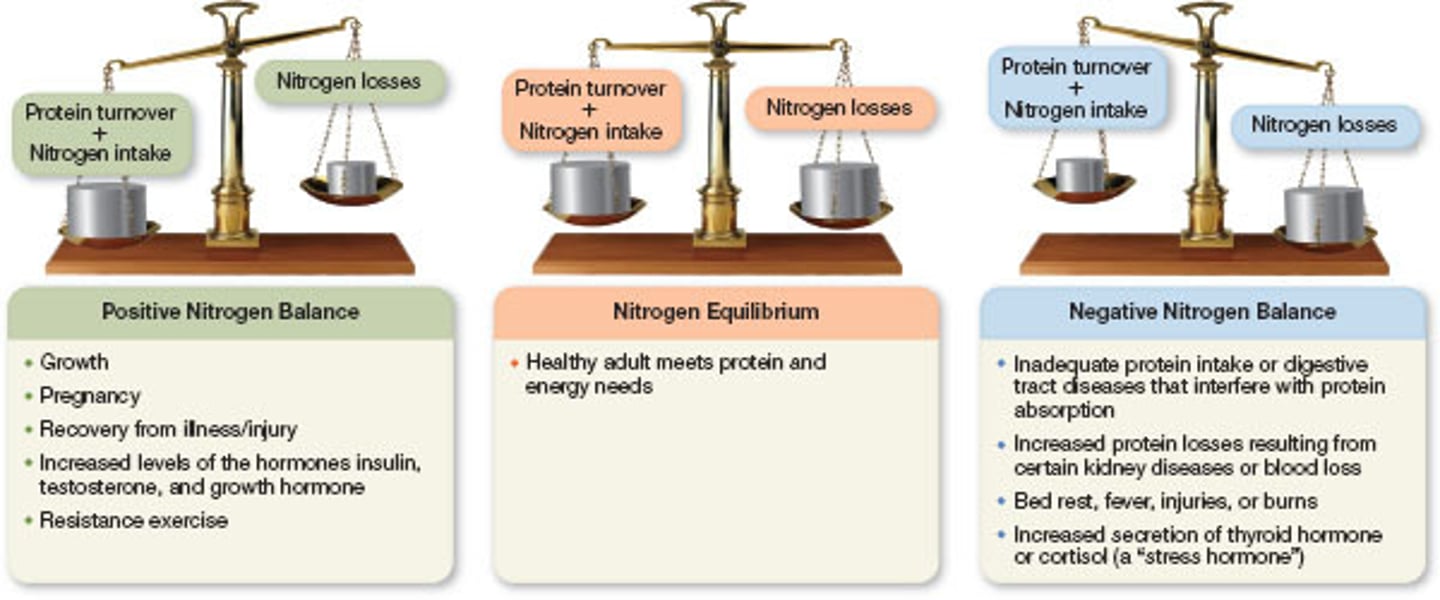
What is negative nitrogen balance and when does it occur?
Nitrogen excretion exceeds intake; occurs in starvation, malnutrition, trauma, burns, and surgery.
How does starvation lead to negative nitrogen balance?
It increases protein breakdown for gluconeogenesis.
What is marasmus?
Deficiency of all nutrients; causes severe wasting, no edema, and loose skin.
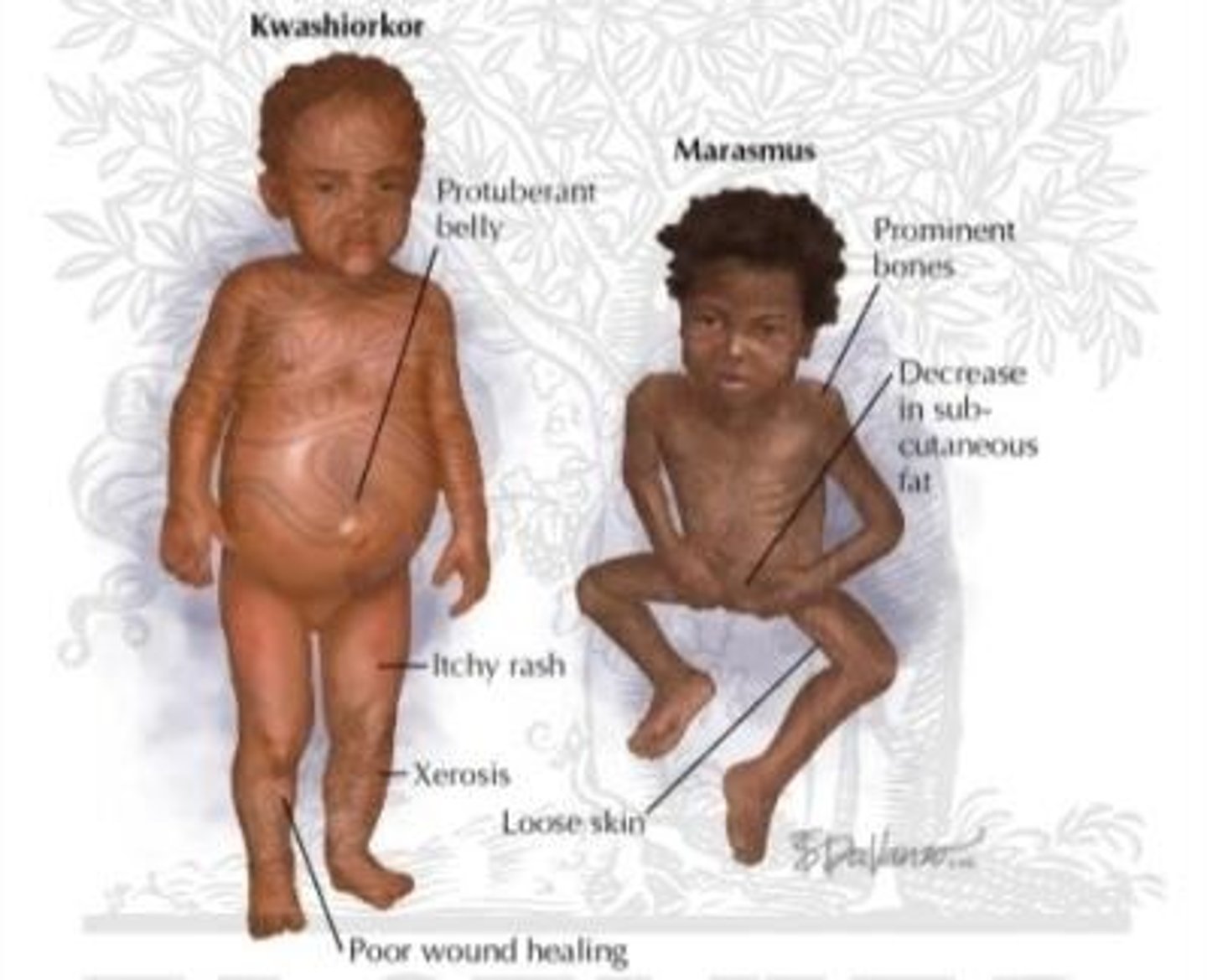
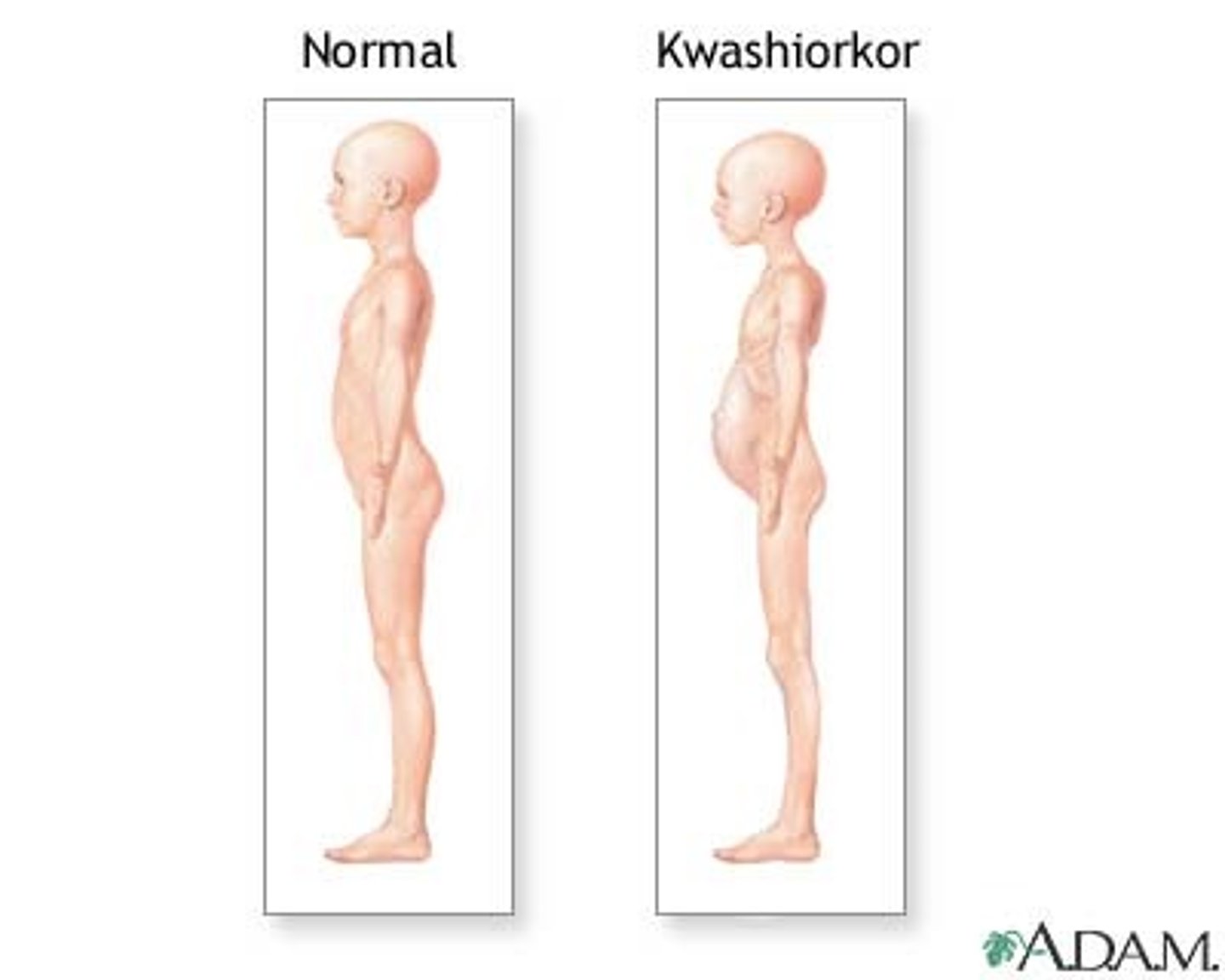
What is kwashiorkor?
Protein deficiency with adequate calorie intake; causes edema, swollen belly, irritability, and enlarged liver.
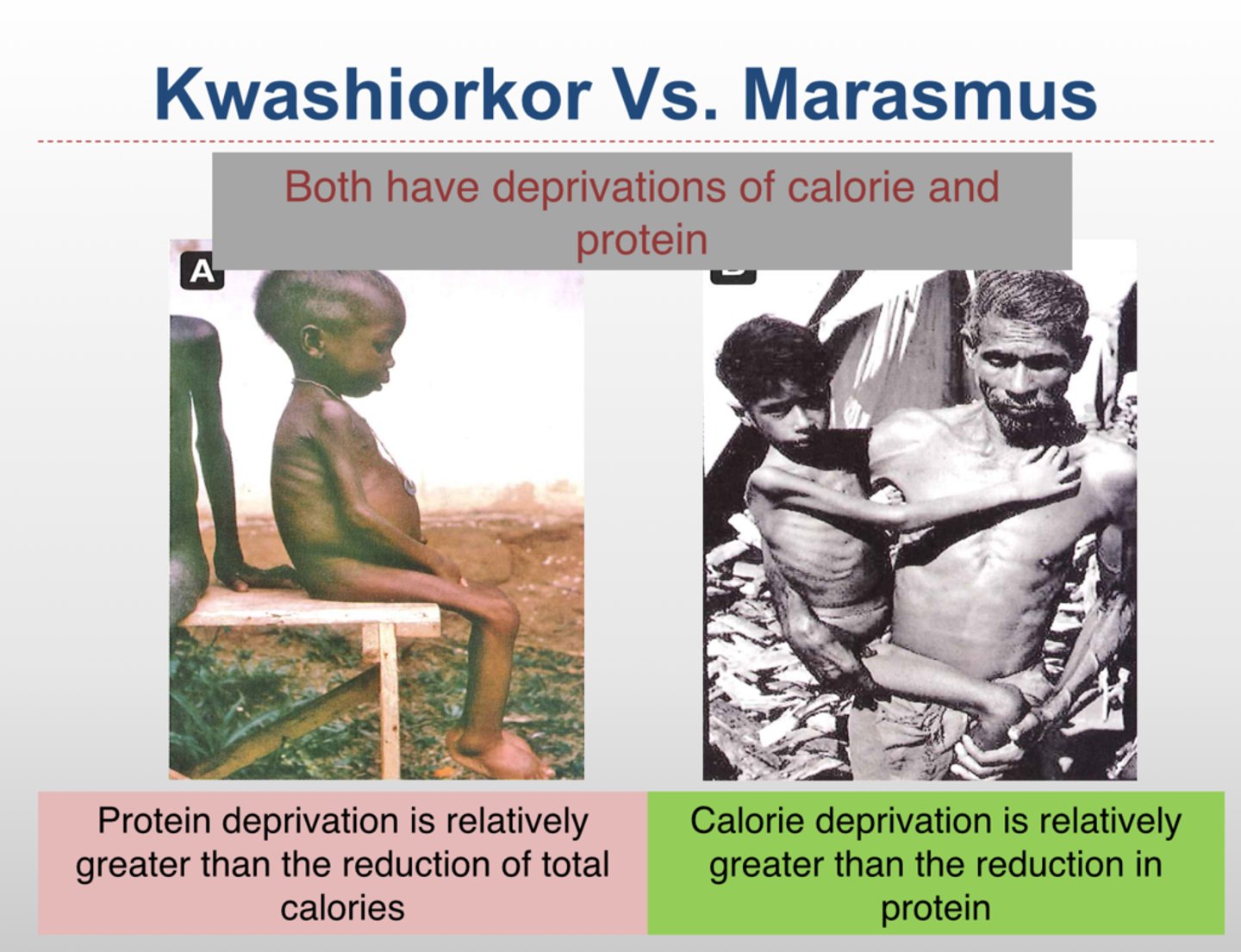
What is the main difference between marasmus and kwashiorkor?
Marasmus is total nutrient deficiency; kwashiorkor is mainly protein deficiency.
What are the two main processes in amino acid catabolism?
Transamination and deamination.
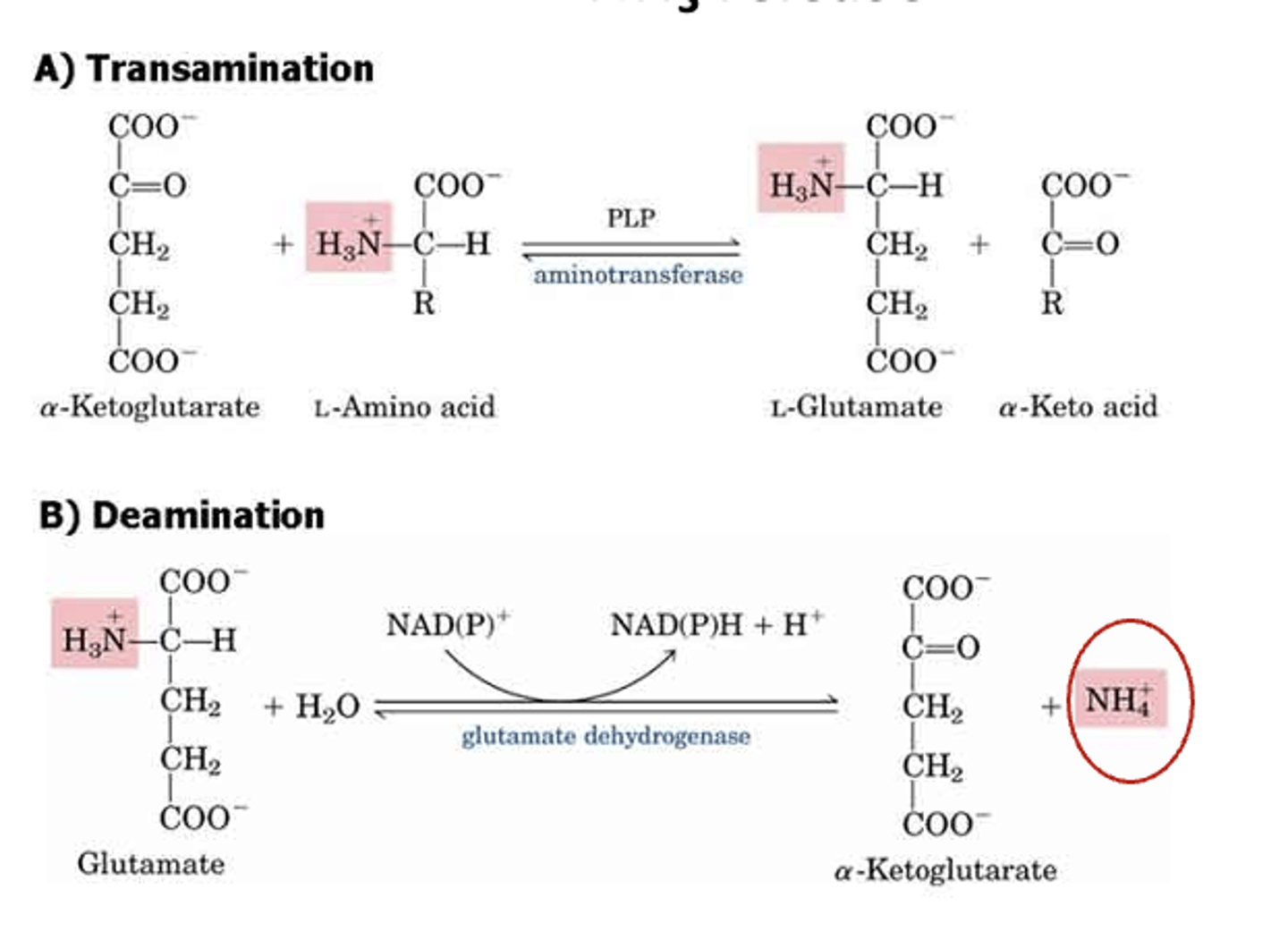
Why are transamination and deamination important?
They handle the nitrogen group of amino acids and convert carbon skeletons into metabolic intermediates.
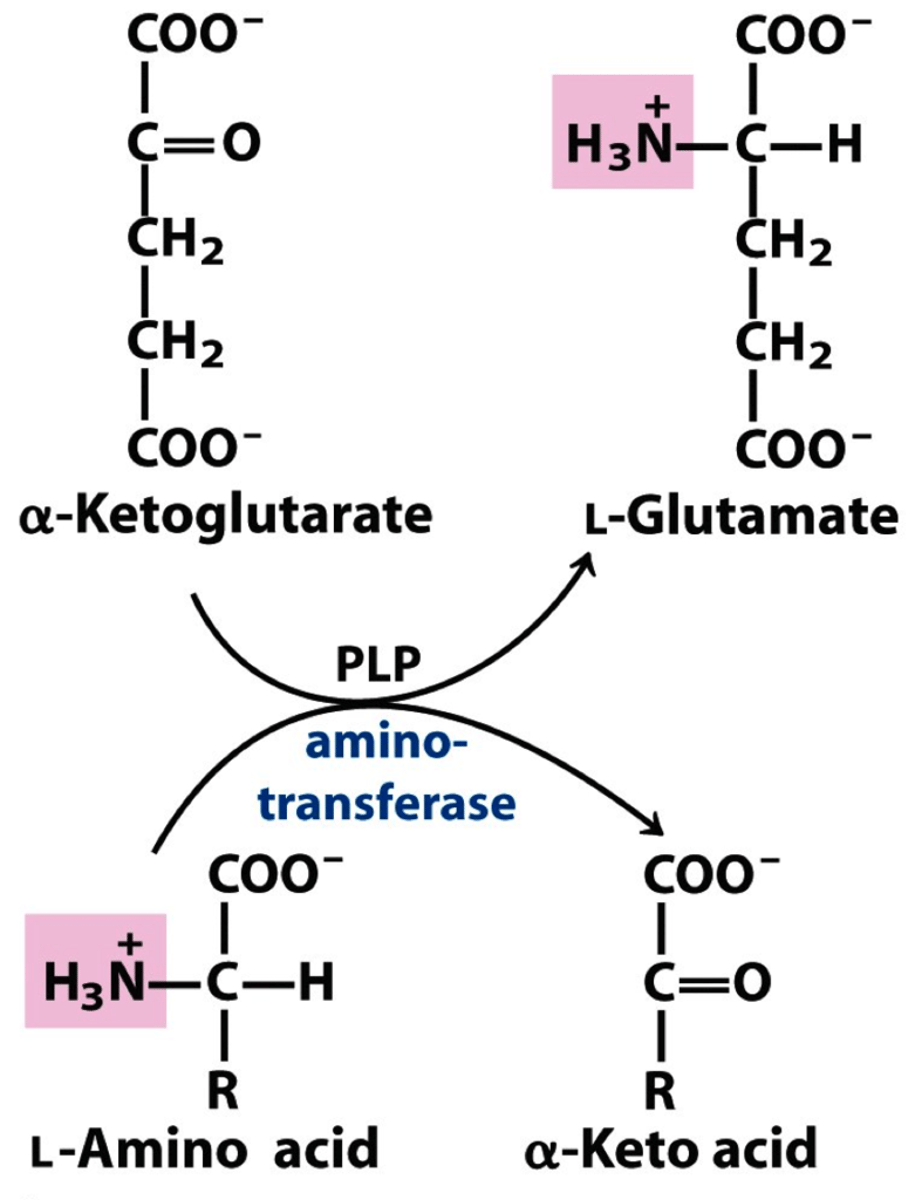
What is transamination?
The transfer of an amino group from an amino acid to an alpha-keto acid; the main way amino groups are removed.
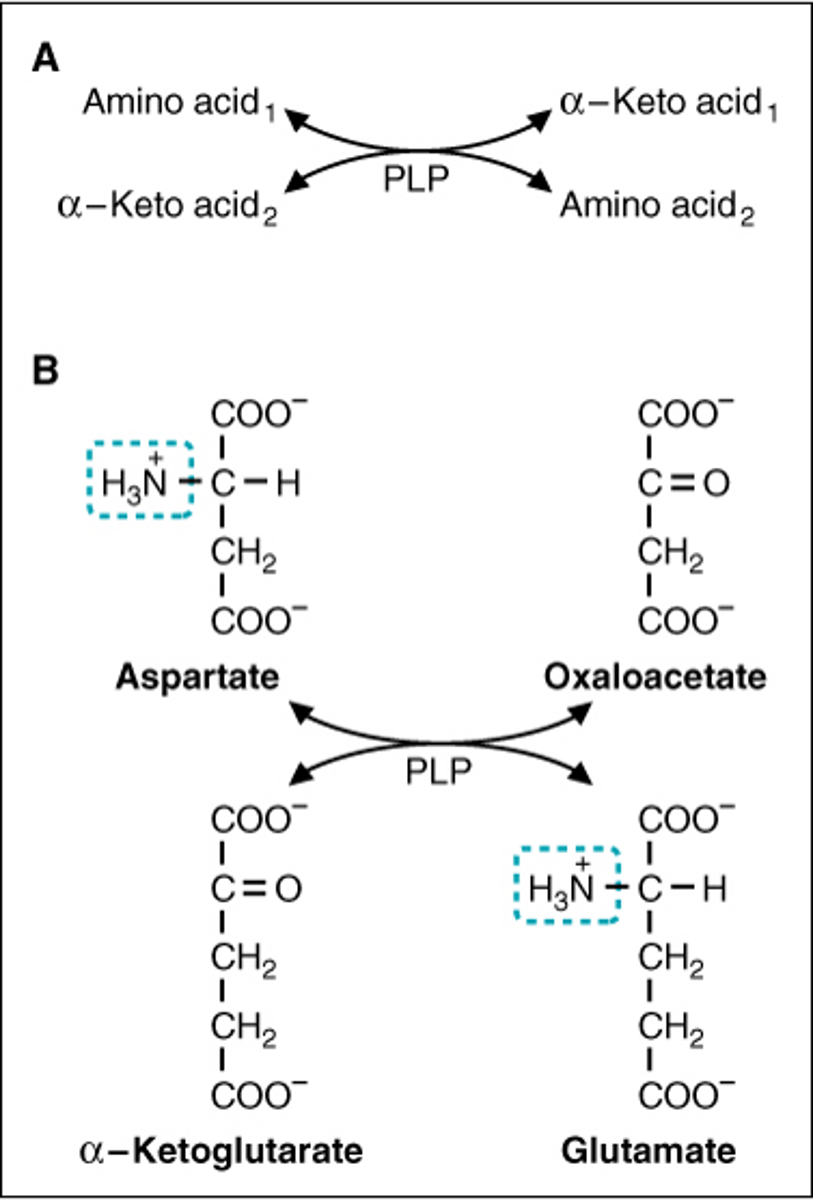
What happens to the original amino acid in transamination?
It becomes its corresponding alpha-keto acid (carbon skeleton).
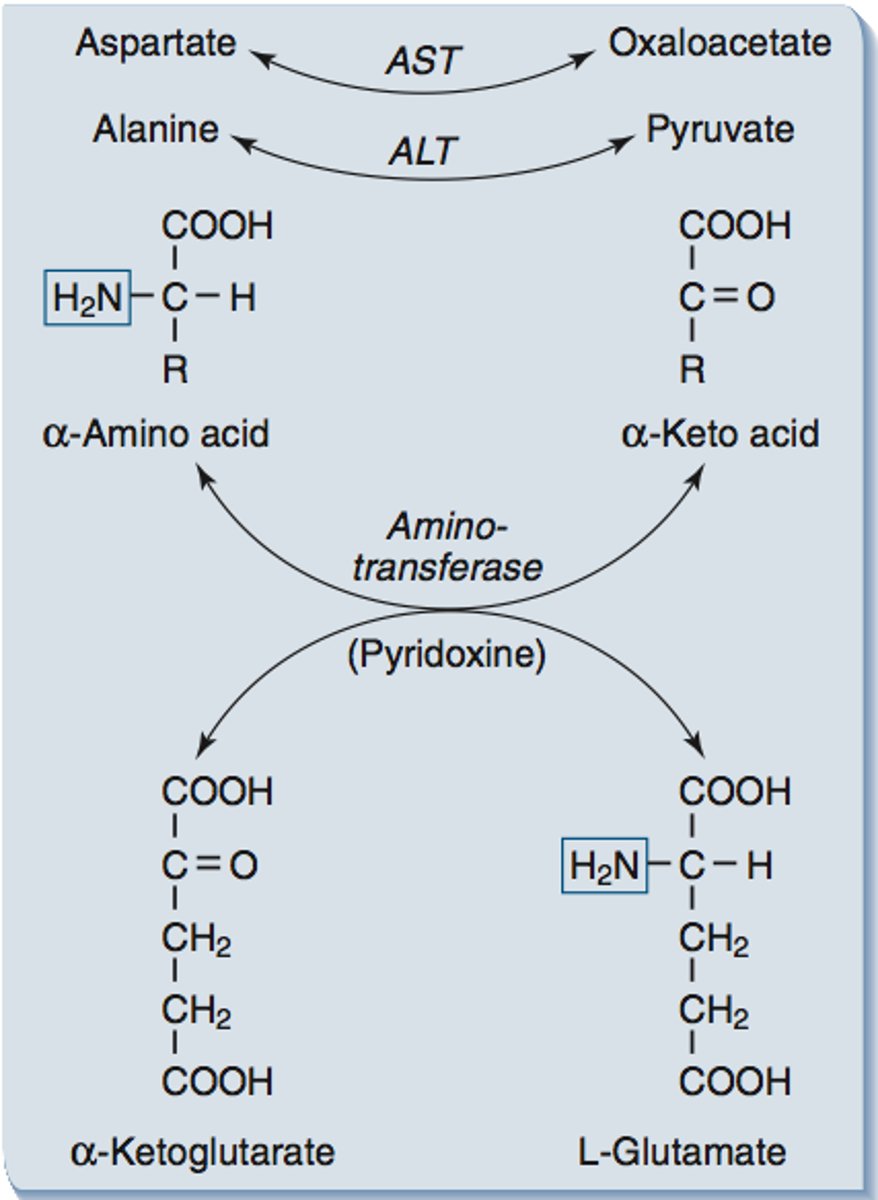
What happens to the alpha-keto acid that accepts the amino group?
It becomes a new amino acid.
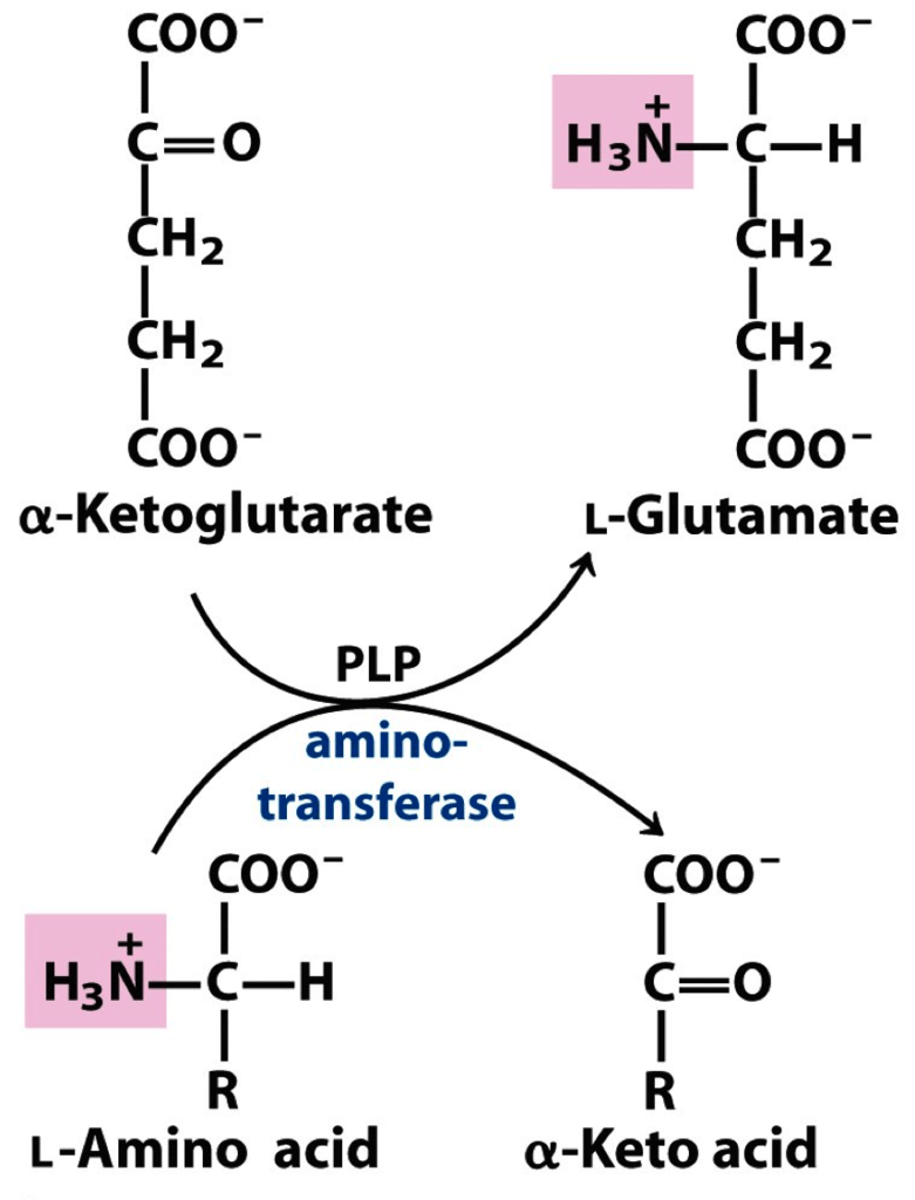
Why is transamination called a "teeter-totter" mechanism?
Because it involves a reciprocal exchange between an amino acid and alpha-keto acid pair.
Does transamination release ammonia?
No; it does not cause net deamination, so toxic ammonia is not directly released.
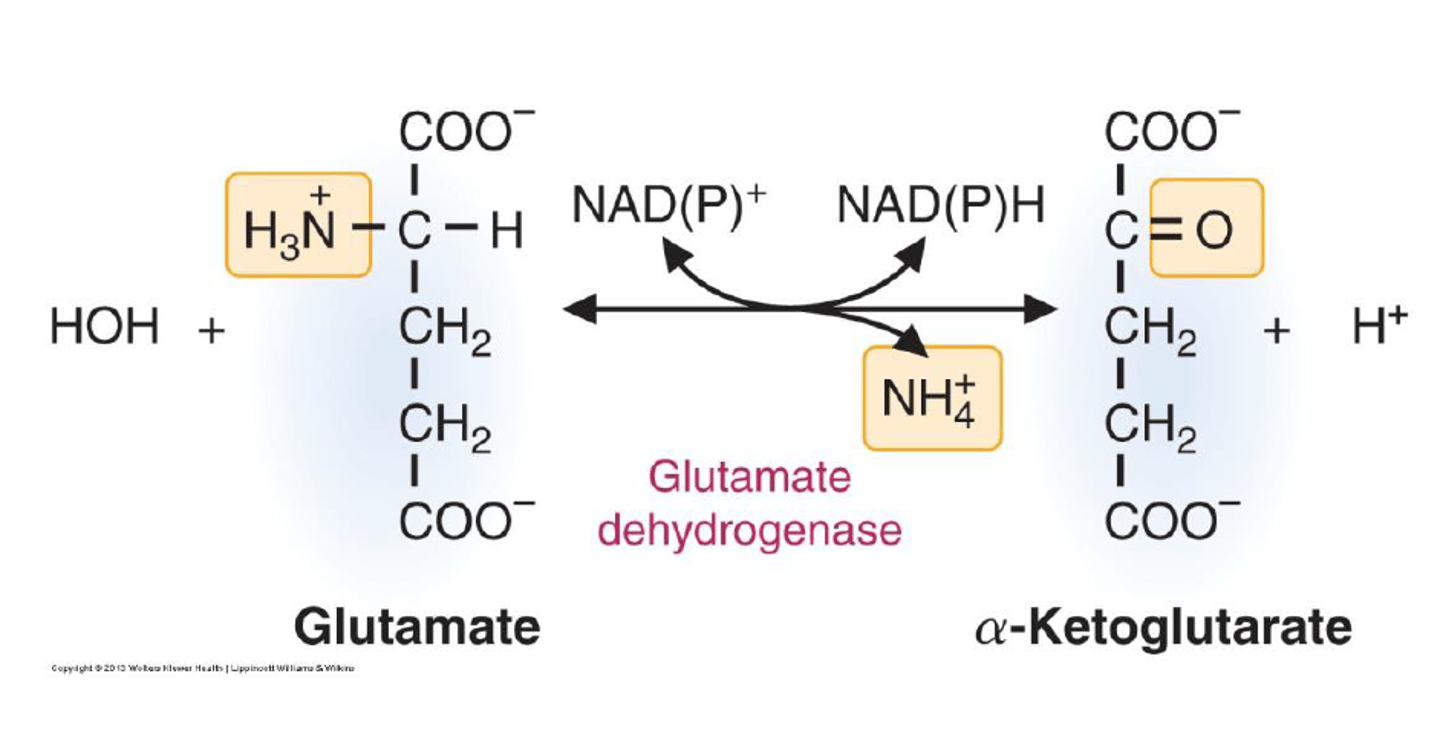
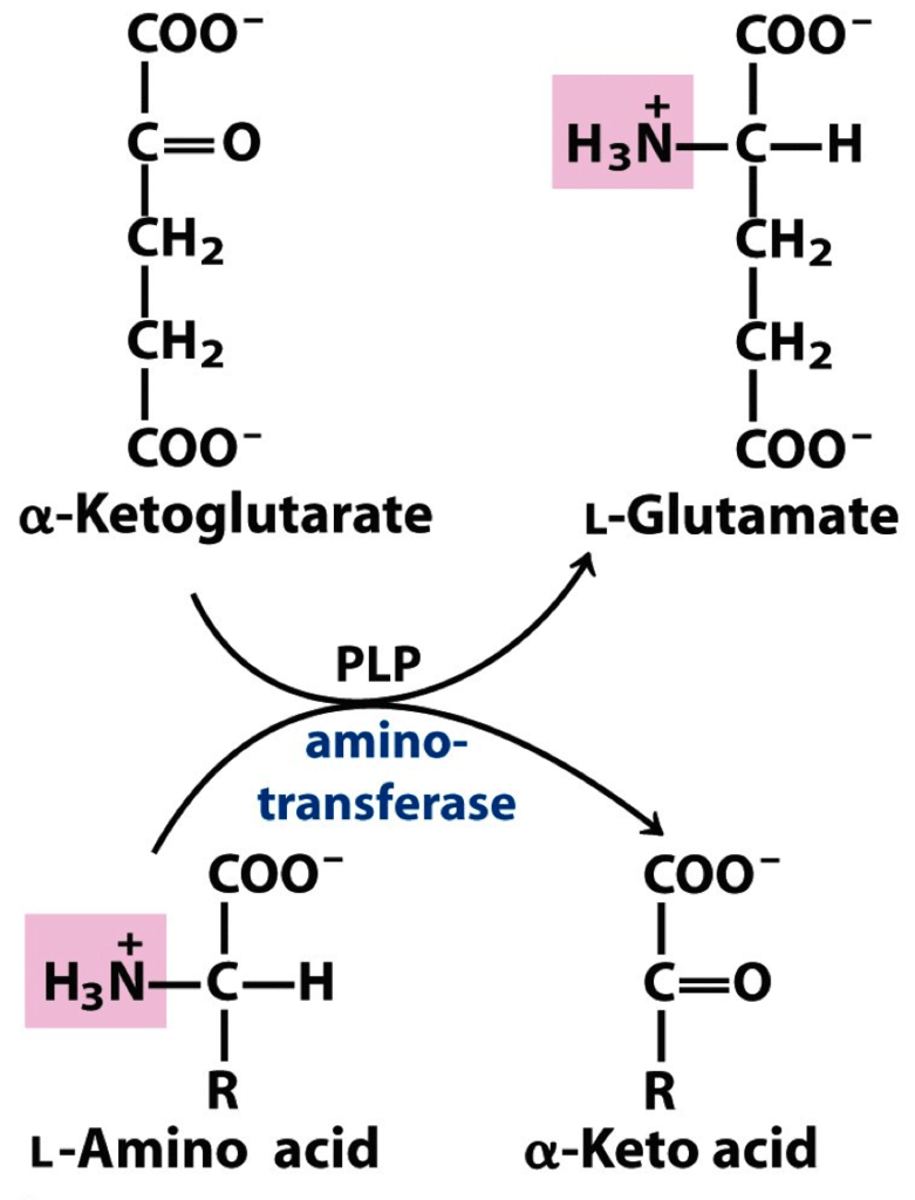
What is the central role of alpha-ketoglutarate in transamination?
It acts as the primary amino group acceptor and becomes glutamate.
-When α-KG accepts an amino group, it is converted into L-Glutamate, and the L-amino acid becomes alpha-keto acid.
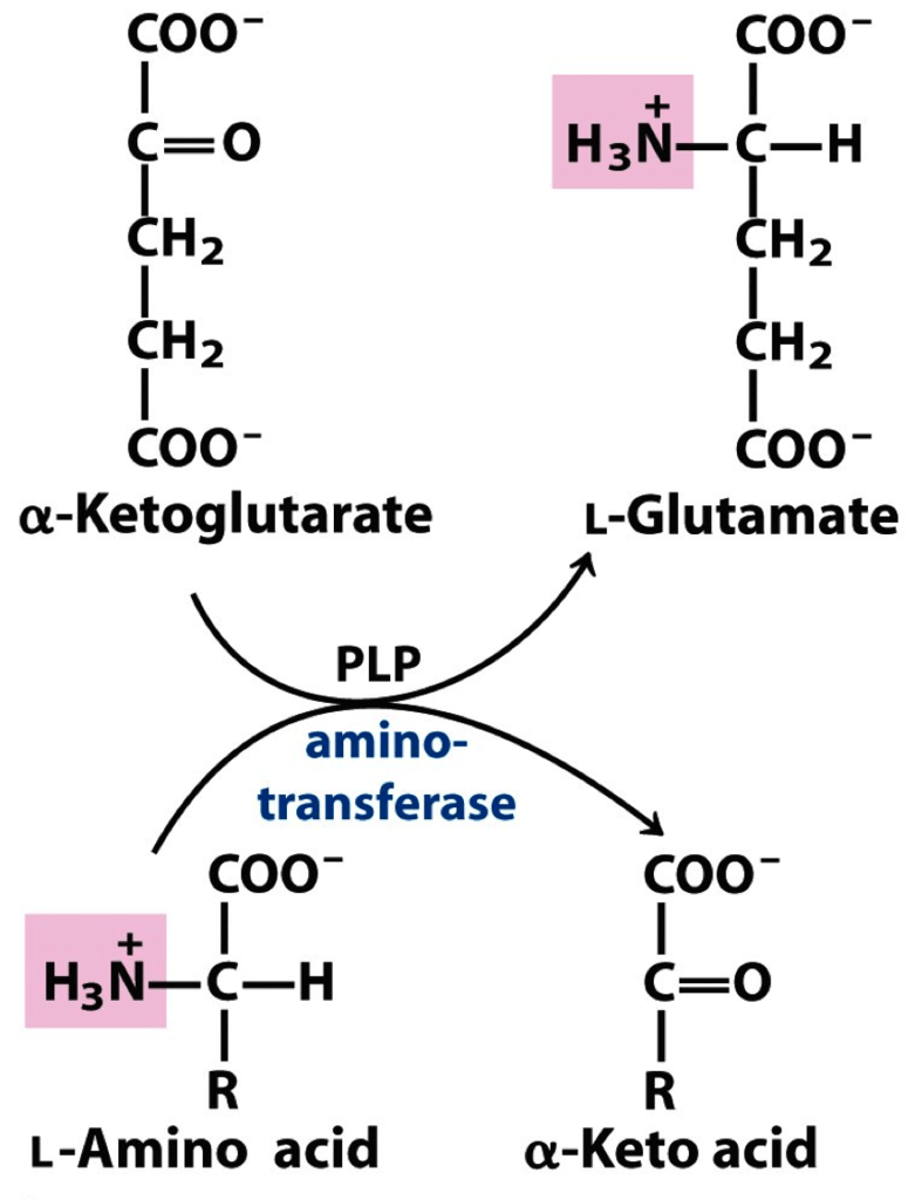
What is the role of glutamate in nitrogen metabolism?
A central collector of amino groups from various amino acids in the body. This allows for the carbon skeletons of the original amino acids to be liberated for other metabolic uses.
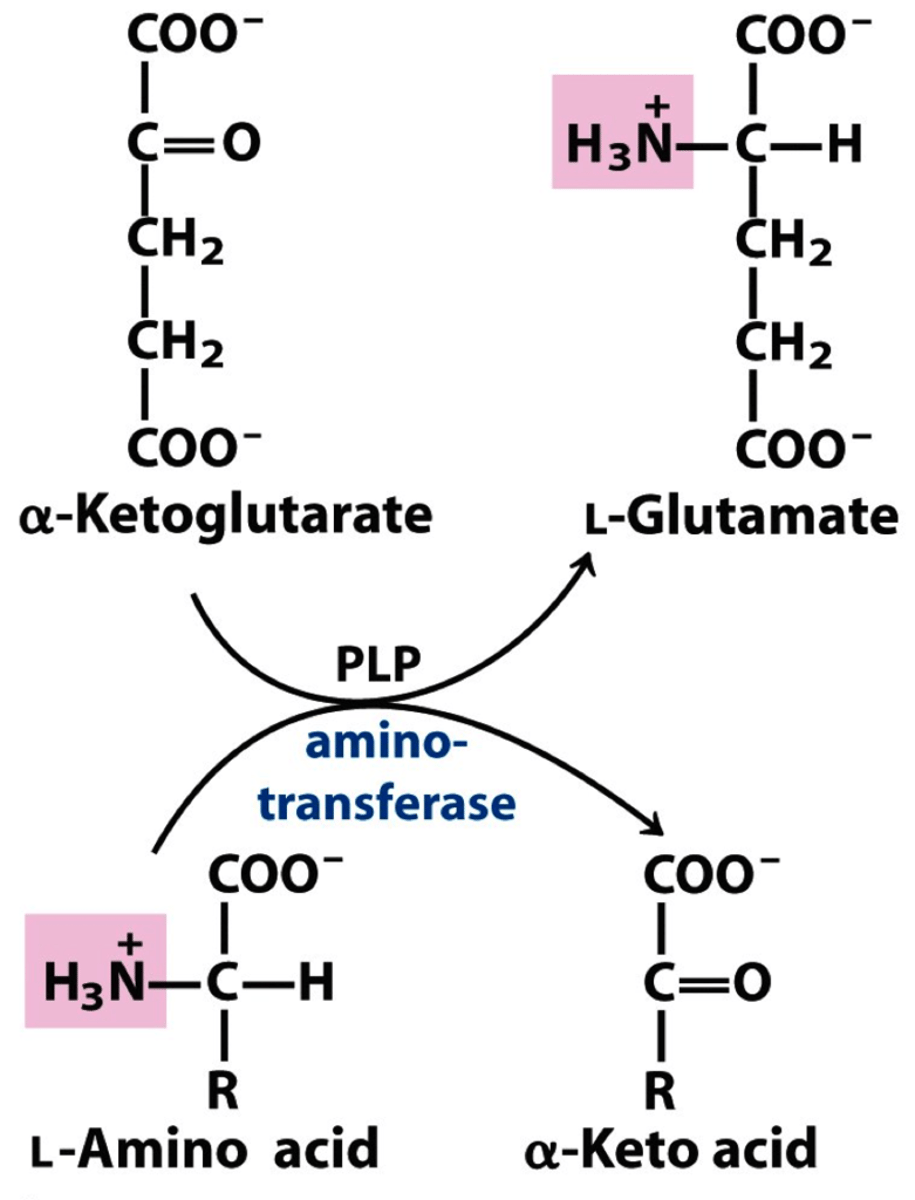
Which enzymes catalyze transamination reactions?
Aminotransferases (also called transaminases).
-These enzymes are specific to the amino acid/alpha-keto acid pairs they handle.
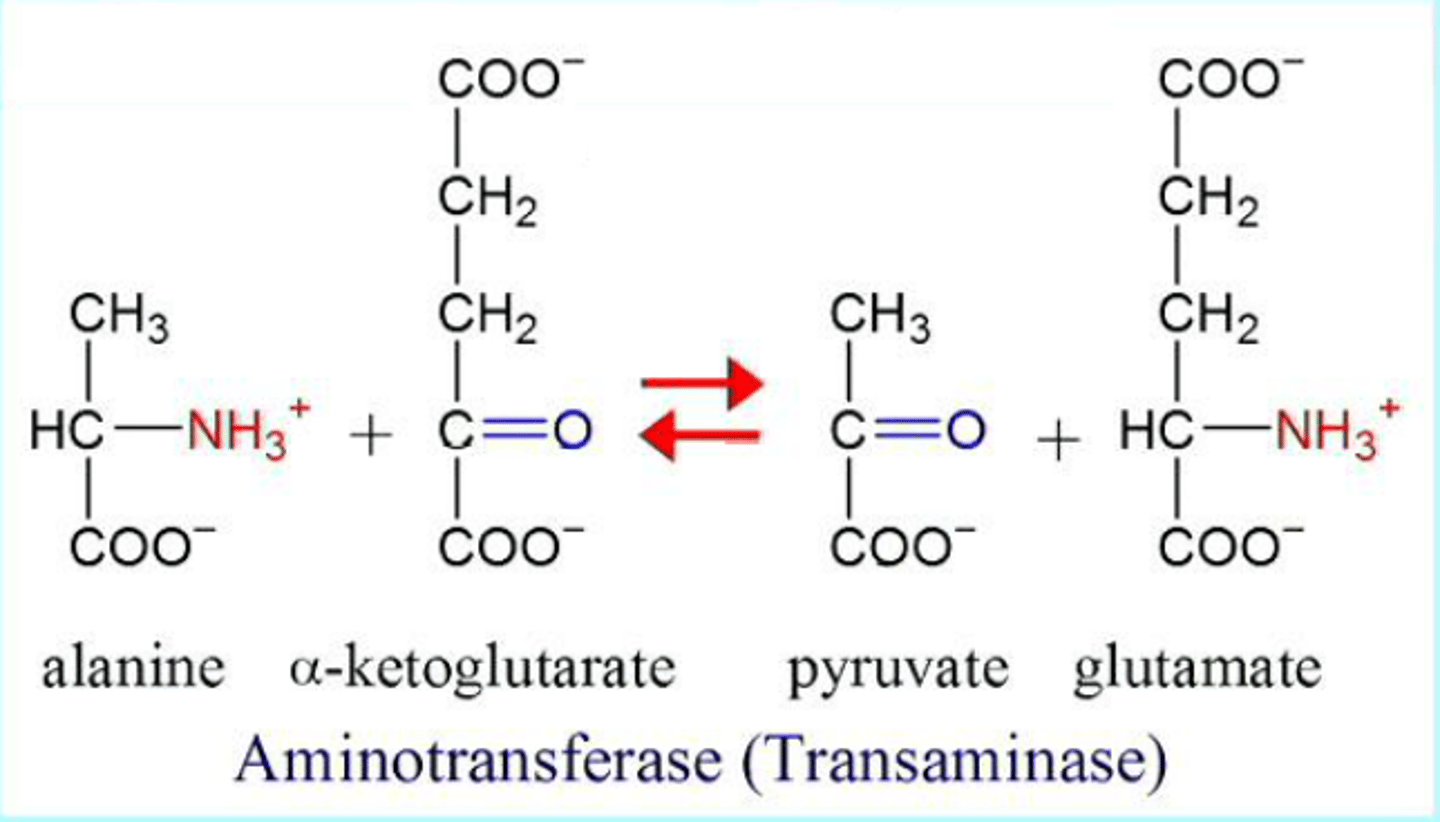
What coenzyme is essential for aminotransferase activity?
Pyridoxal Phosphate (PLP), derived from Vitamin B6.
-2 forms; its aldehyde form (pyridoxal phosphate, PLP) and its aminated form (pyridoxamine phosphate, PMP).
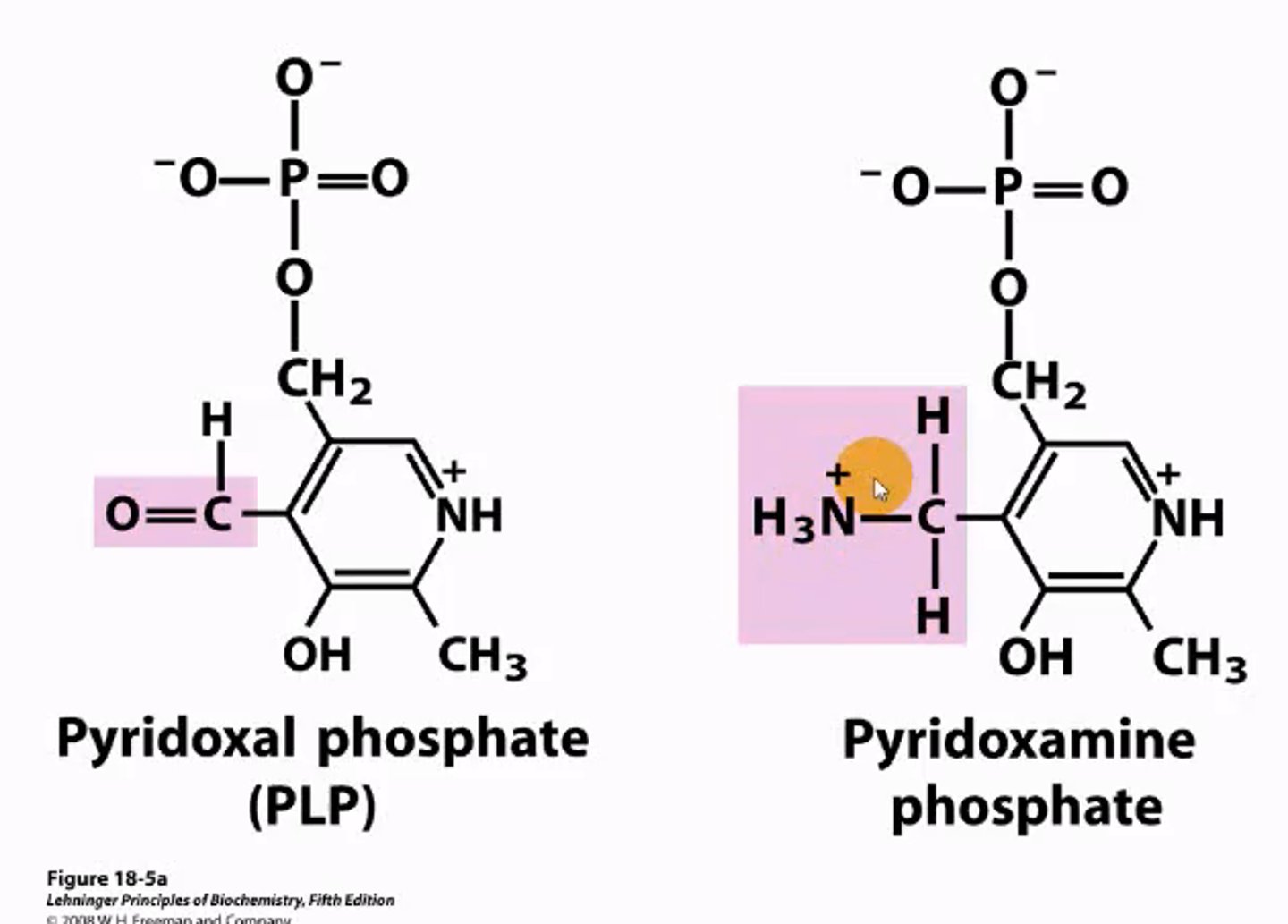
What is the role of PLP in transamination?
It acts as an intermediate carrier of the amino group, preventing ammonia release.
Initally, what is the inactive form of PLP in aminotransferases before transamination?
PLP is covalently bound to the enzyme (aminotransferase) via a Schiff base (aldimine linkage), specifically to a lysine residue on the enzyme (inactive). This is called the internal aldimine.
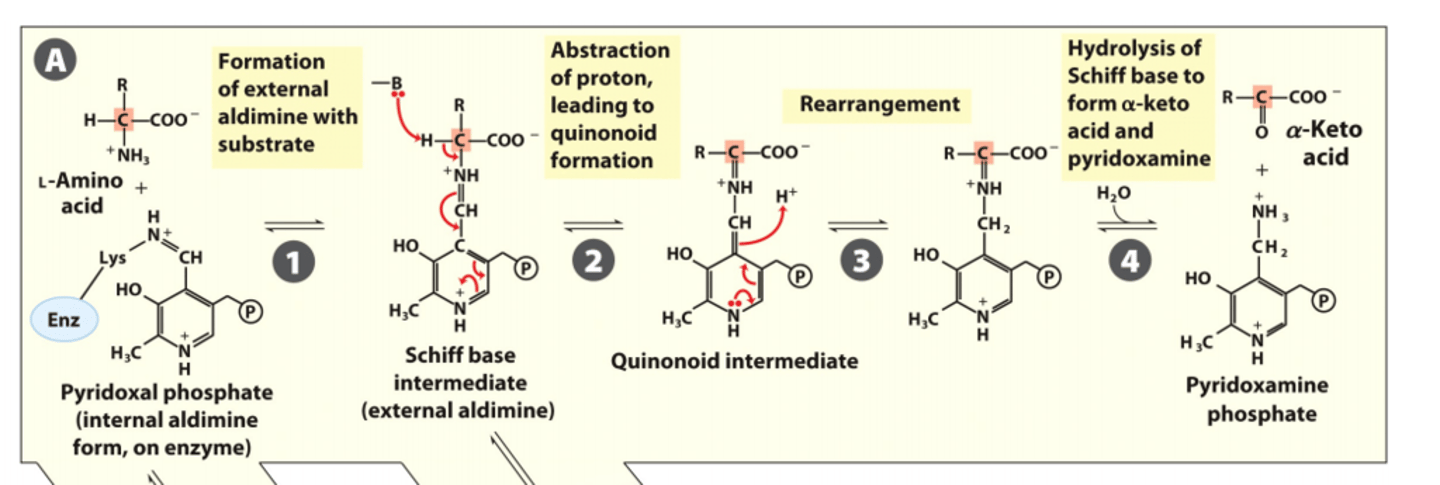
What happens when an amino acid enters the active site of an aminotransferase?
It displaces the enzyme's lysine, forming an external aldimine with PLP and amino acid.
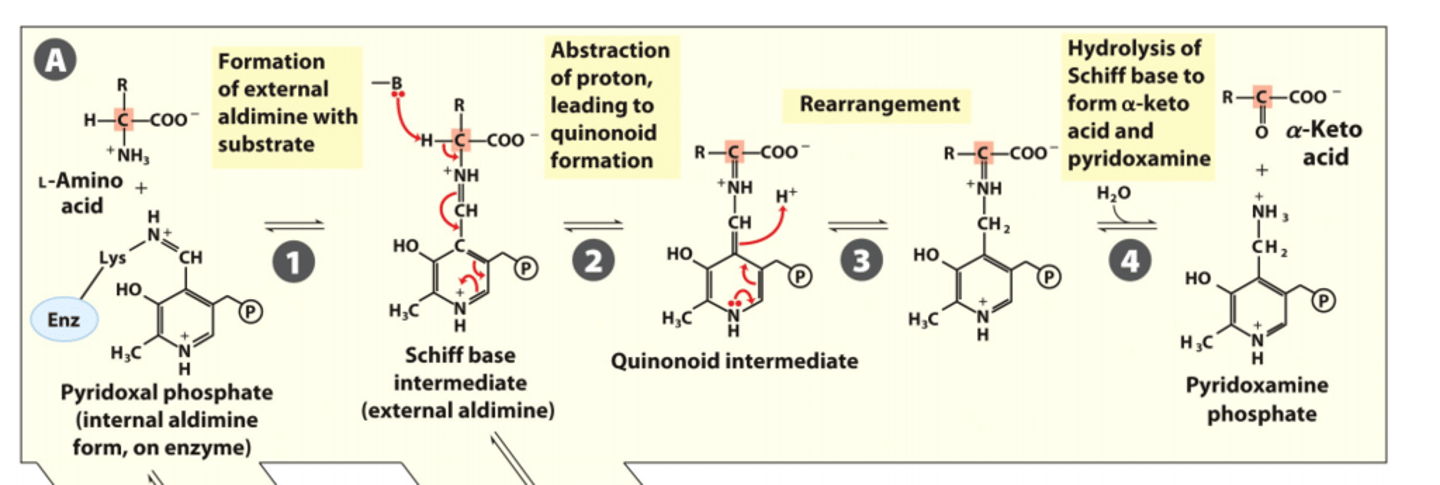
What happens after the external aldimine is formed?
A quinonoid intermediate is created and rearranged; amino acid then transfers its amino group to PLP and hydrolysis of the schiff base occurs, converting PLP into pyridoxamine phosphate (PMP).
-During this process, the original amino acid is released as its corresponding alpha-keto acid.
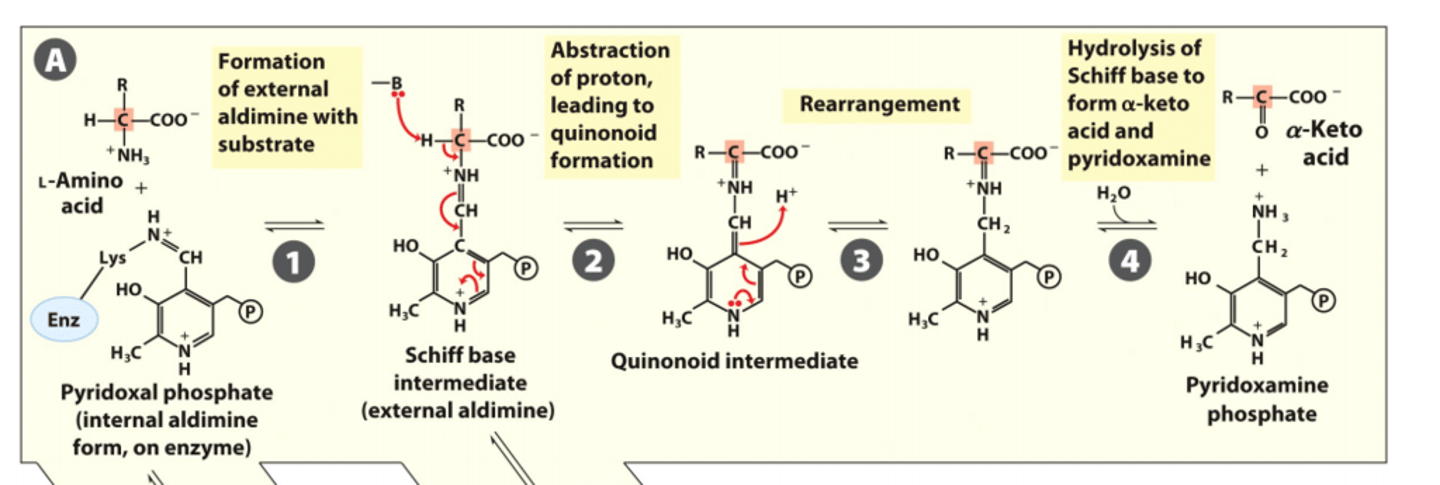
What is the second step of the PLP mechanism?
An alpha-keto acid (e.g., α-KG) enters active site, receives the amino group from PMP, becomes a new amino acid, and regenerates PLP.
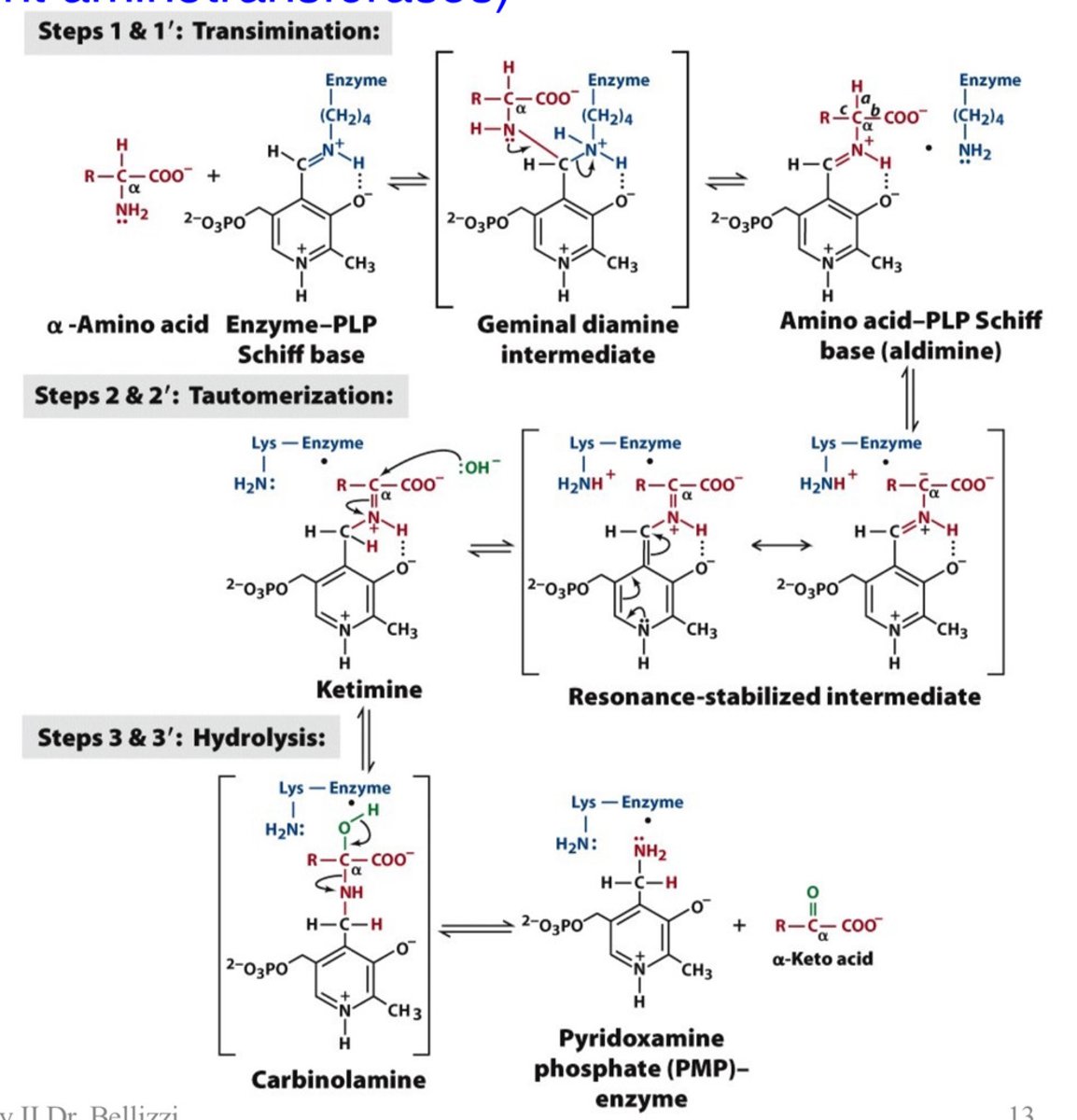
What ensures the amino group is safely transferred in transamination?
The amino group is carried by PLP and never released as free ammonia.
How are transaminases named?
They are named after the amino group donor (e.g., alanine transaminase).
Give an example of a transamination reaction.
L-alanine + E+PLP → E+PMP + pyruvate; E+PMP + α-ketoglutarate → E+PLP + L-glutamate.
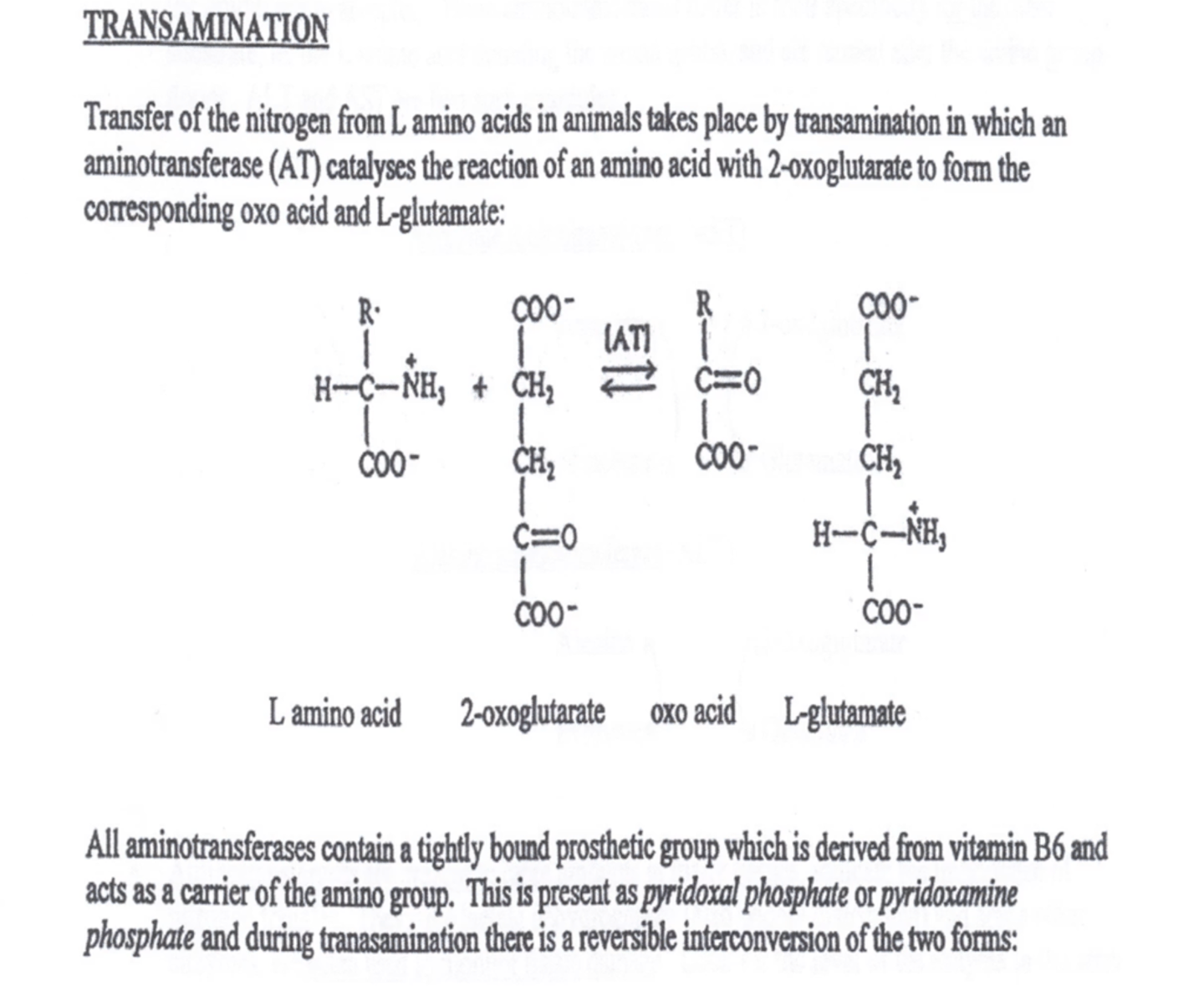
What is Alanine Aminotransferase (ALT) and what does it do?
It catalyzes the reversible transfer of an amino group from Alanine to alpha-ketoglutarate, forming Pyruvate and Glutamate.
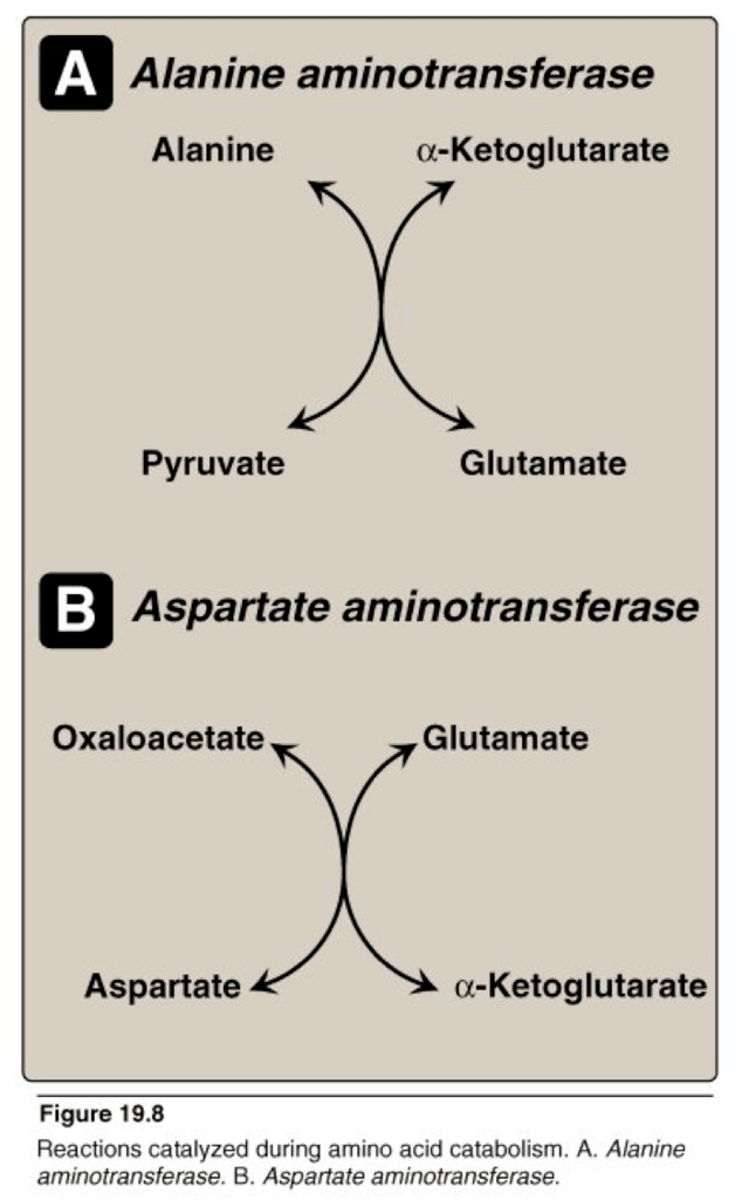
Why is ALT clinically important?
Elevated ALT levels in serum indicate liver damage; normal range is 5-35 U/L, but may increase up to 50-fold.
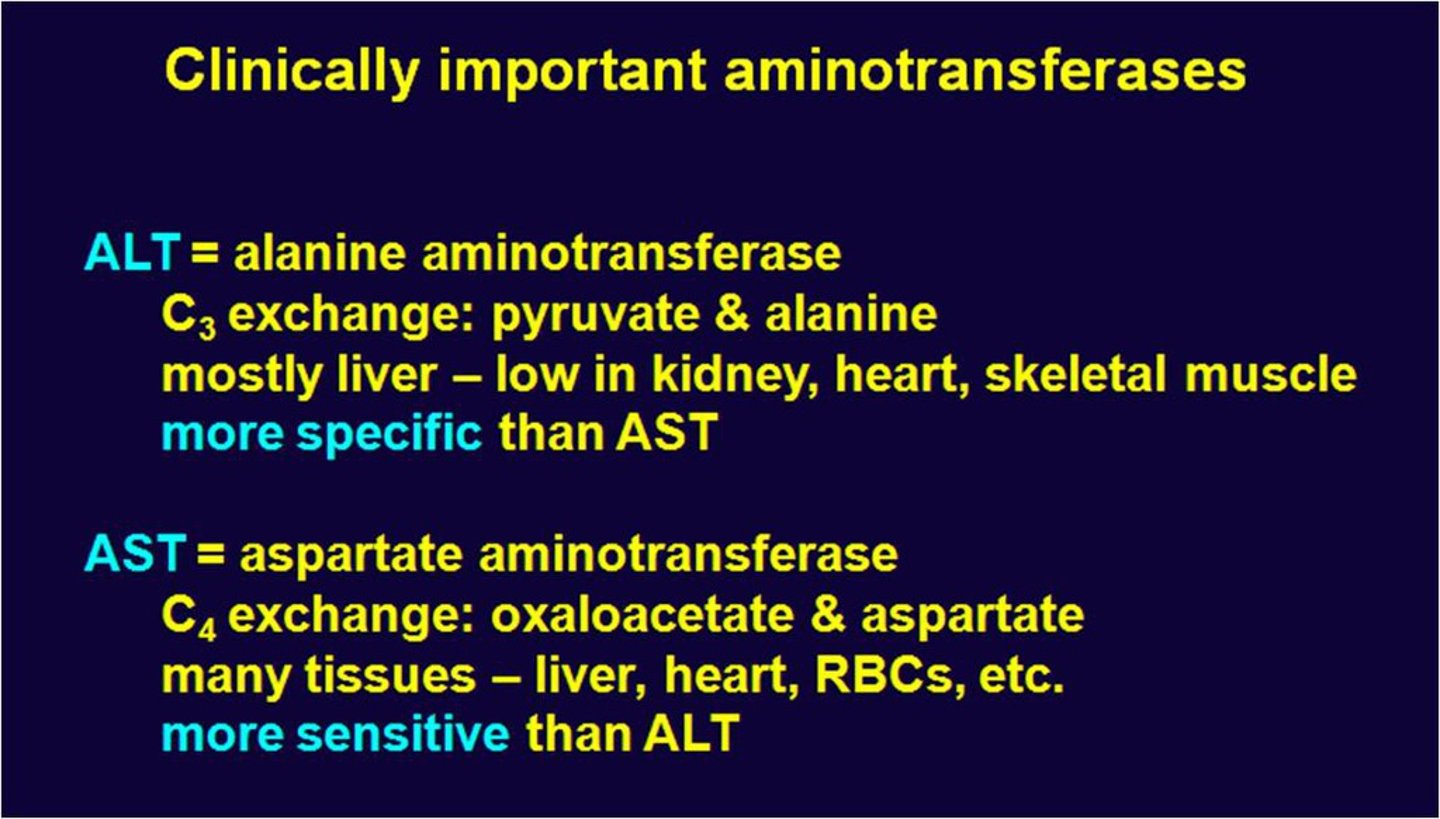
What can pyruvate formed from ALT activity be used for?
Pyruvate can enter gluconeogenesis or other metabolic pathways.
What is Aspartate Aminotransferase (AST) and what does it do?
It catalyzes the reversible transfer of an amino group from Aspartate to alpha-ketoglutarate, forming Oxaloacetate and Glutamate.
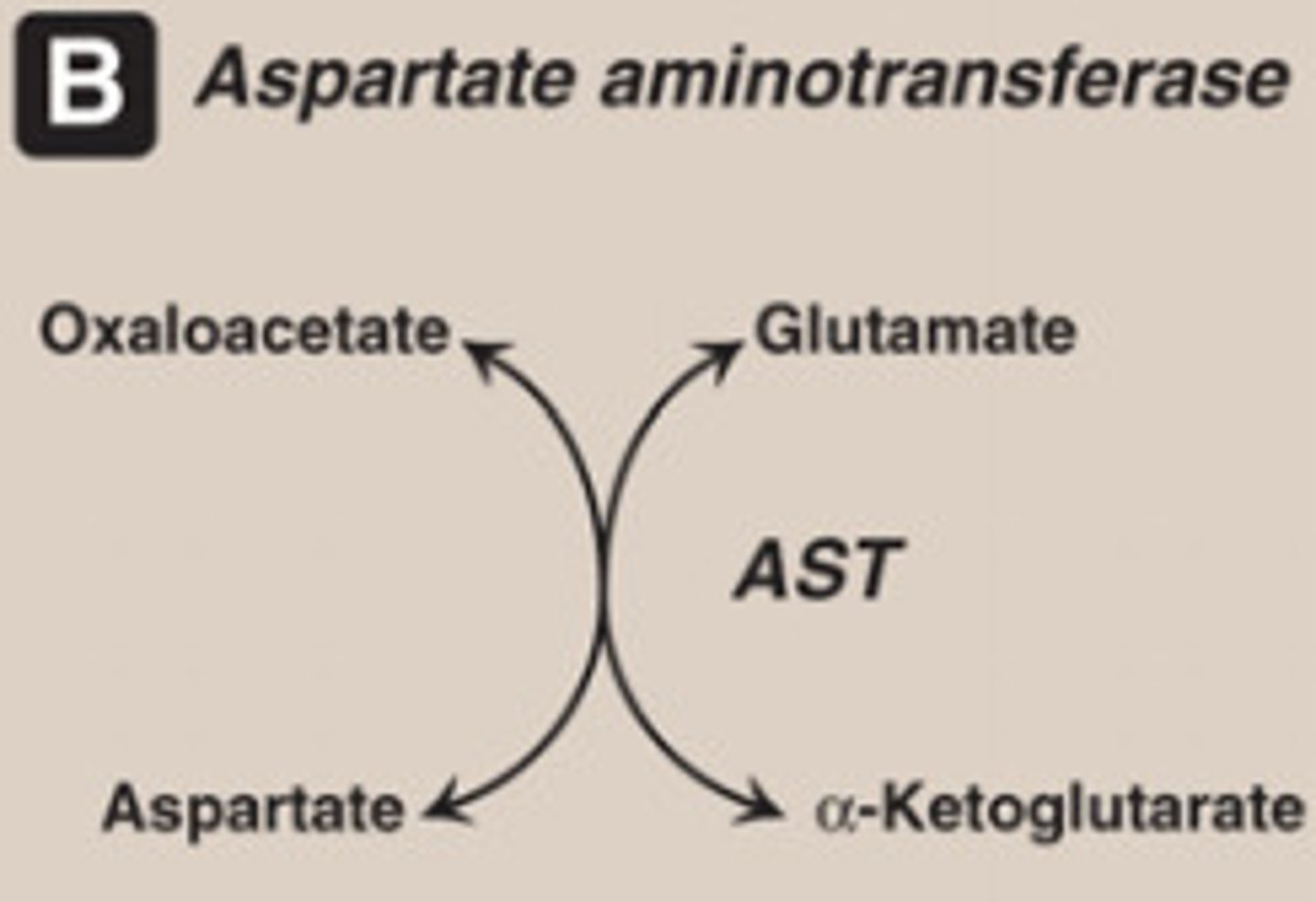
Where is AST found in high concentrations?
In the liver, heart muscle, and kidneys.
Why is AST clinically significant?
Elevated AST levels in blood indicate tissue damage, especially liver damage.
What is the metabolic role of oxaloacetate from AST activity?
It is used in gluconeogenesis and the TCA cycle.
Which amino acids cannot undergo transamination?
Proline, Hydroxyproline, Lysine, and Threonine.
Why can't Proline and Hydroxyproline undergo transamination?
They are secondary amines and lack the primary amino group required for the reaction.