EEI UNIT 1
 Call Kai
 Learn
Learn Practice Test
 Spaced Repetition
 Match
Match Flashcards
 Knowt Play
1/4

Earn XP
Name | Mastery | Learn | Test | Matching | Spaced | Call with Kai | Chat |
|---|
No analytics yet
Send a link to your students to track their progress
5 Terms
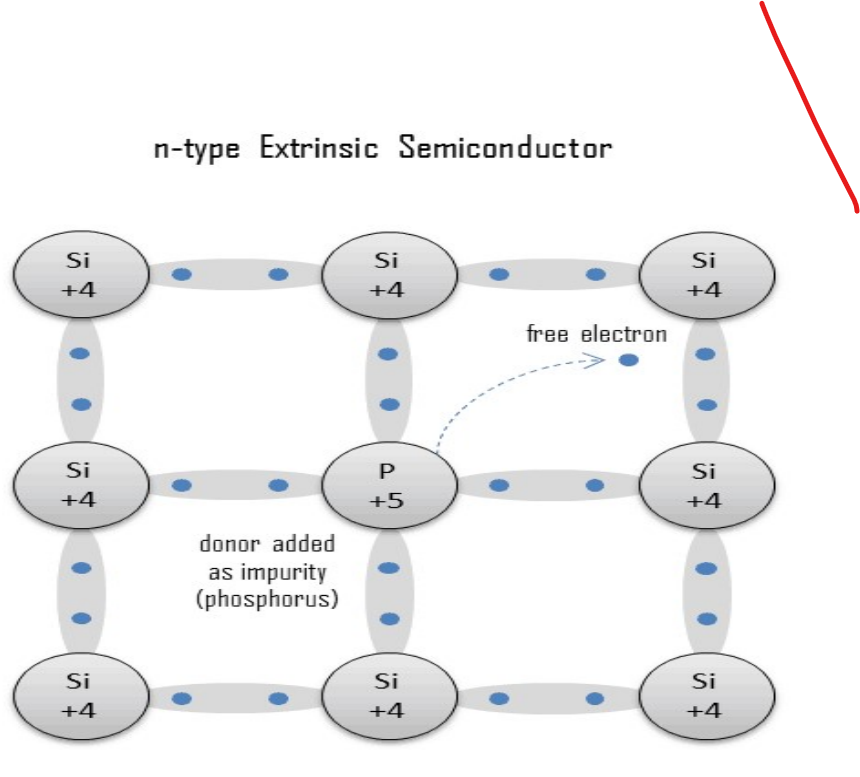
N-TYPE SEMICONDUCTORS
An Extrinsic semiconductor which has been doped with electron donor atoms is called an n-type semiconductor, because the majority of charge carriers in the crystal are negative electrons
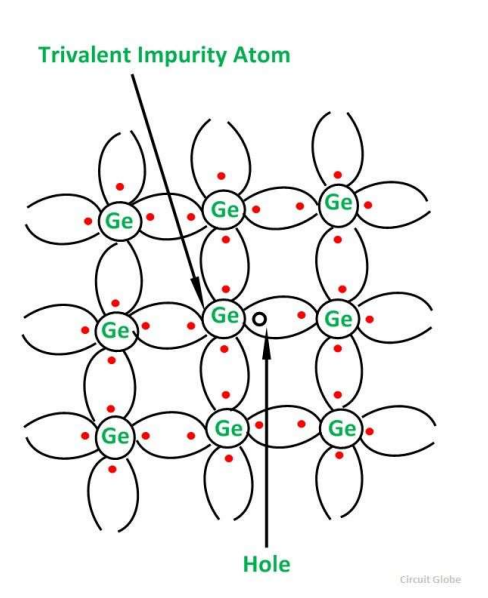
P-TYPE SMICONDUCTOR
The extrinsic p-Type Semiconductor is formed when a trivalent impurity is added to a pure semiconductor in a small amount, and as a result, a large number of holes are created in it.
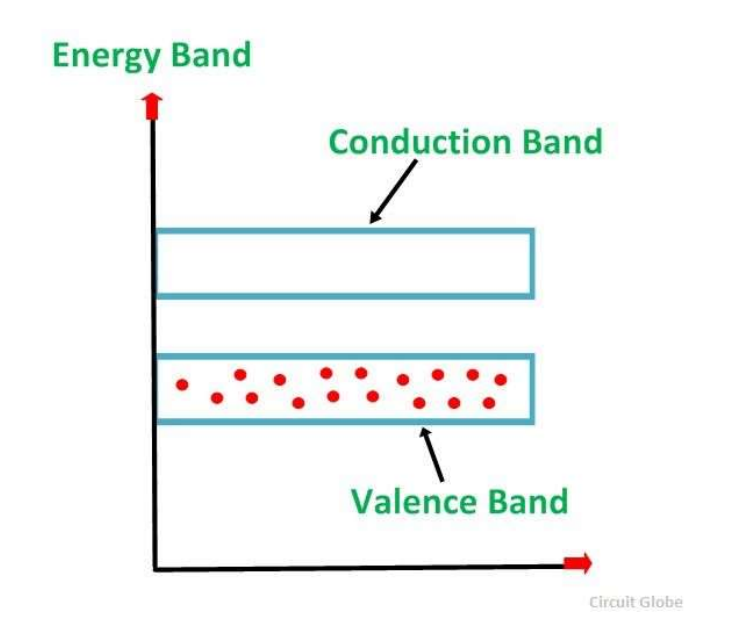
ENERGY BAND DIAGRAM OF P-TYPE SEMICONDUCTOR
A large number of holes or vacant space in the covalent bond is created in the crystal with the addition of the trivalent impurity. A small or minute quantity of free electrons is also available in the conduction band.
Application of Diodes
Voltage Rectification & Regulation,
Clipping & Clamping of voltages,
making digital logic circuits,
modulation, photo-voltaics
Light Emitting Diodes (LED's) are used for light production in visible and invisible region of Electromagnetic spectrum.
Many nations have switched their traffic light to LED's so that they have higher operational efficiency. PIN diodes are used for electricity production from light, they constitute much of Solar Cells.
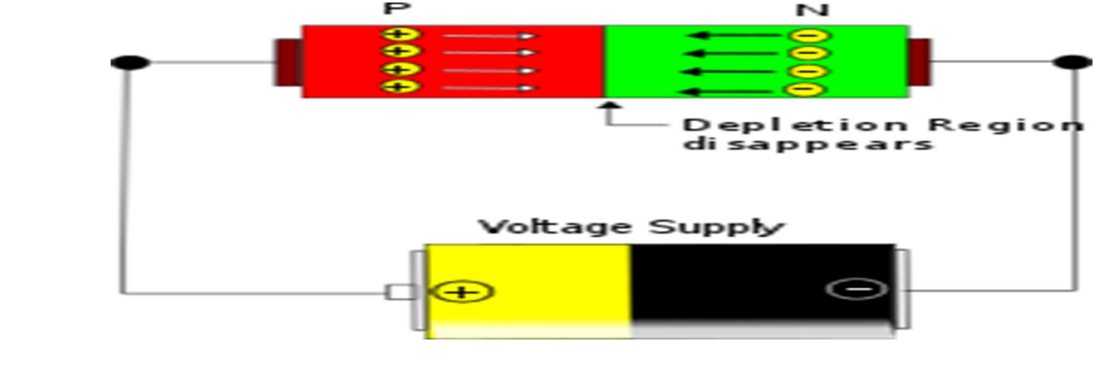
Zero Bias
When a diode is zero biased, that is has no bias, it just stays. Almost no current passes through the diode. However if you connect the anode and cathode of the diode you might be able to observe small voltage or current that is insignificant. For practical reasons this current can be considered zero.