Cambrian diversification
 Studied by 0 people
 Call Kai
 Learn
Learn Practice Test
 Spaced Repetition
 Match
Match Flashcards
 Knowt Play
1/17

There's no tags or description
Looks like no tags are added yet.
Name | Mastery | Learn | Test | Matching | Spaced | Call with Kai |
|---|
No analytics yet
Send a link to your students to track their progress
18 Terms
Above the Ediacaran / Cambrian boundary
A series of three events marks the life evolution just above the Ediacaran /Cambrian boundary
They happened in the WHAT
Overall, resulted in a major WHAT of life forms
Above the Ediacaran / Cambrian boundary
A series of three events marks the life evolution just above the Ediacaran /Cambrian boundary
They happened in the LOWER CAMBRIAN
Overall, resulted in a major DIVERSIFICATION of life forms
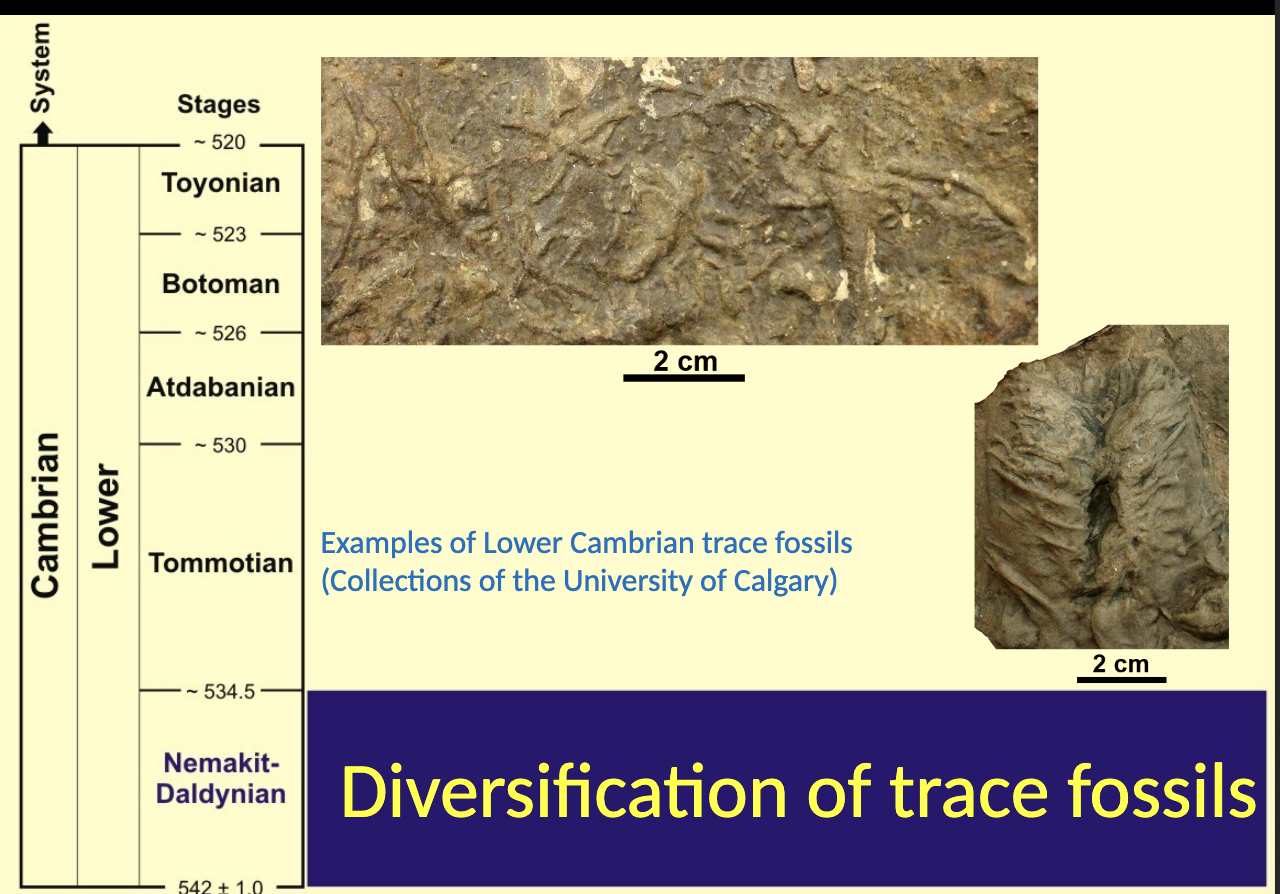
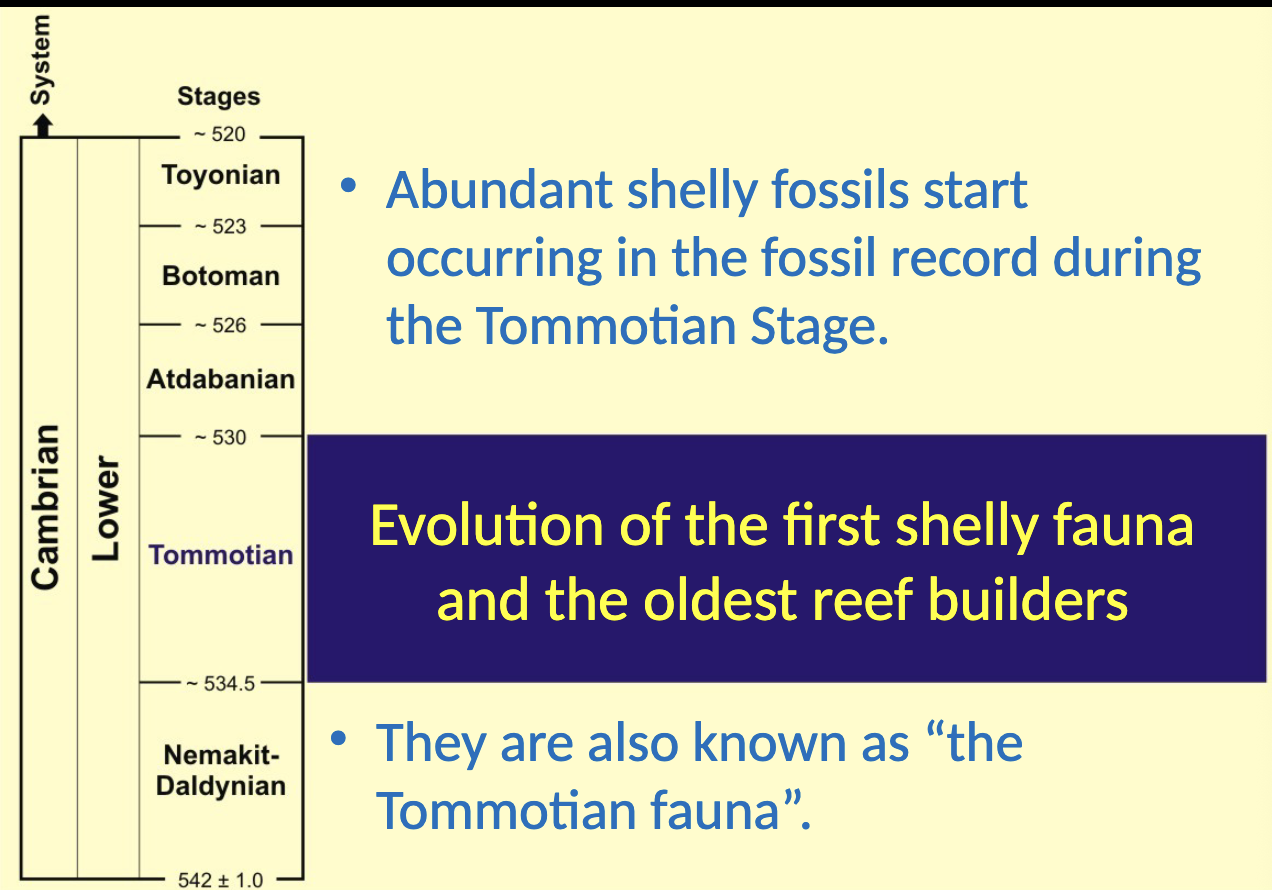
Evolution of the first shelly fauna and the oldest reef builders
Abundant WHAT fossils start occurring in the fossil record during the WHAT stage
They are also known as “WHAT”
Evolution of the first shelly fauna and the oldest reef builders
Abundant SHELLY fossils start occurring in the fossil record during the TOMMOTIAN stage
They are also known as “Tommotian fauna”
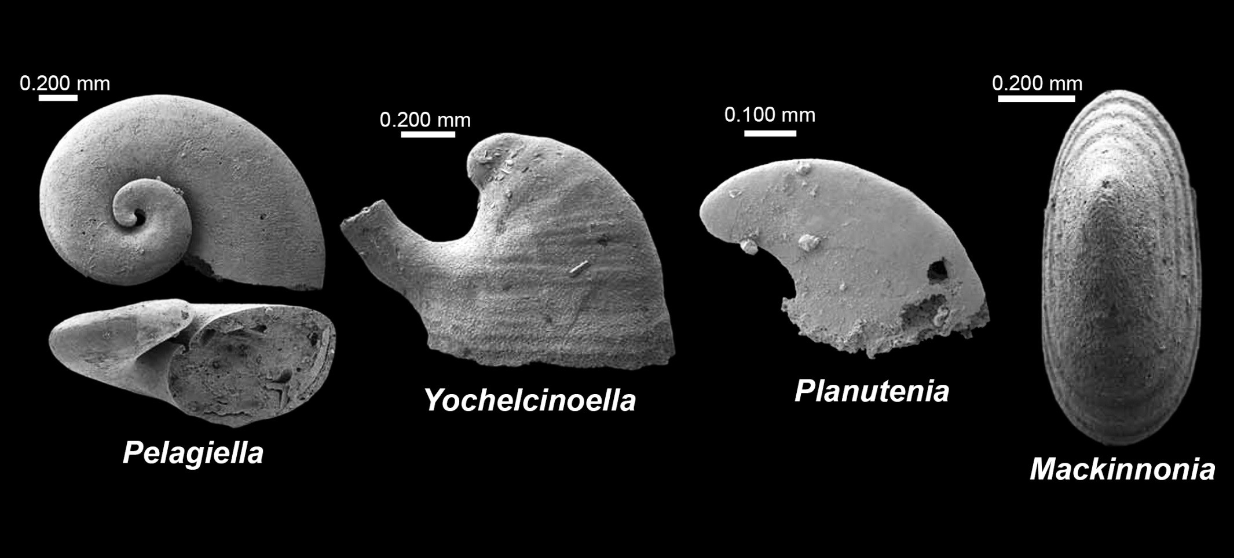
What are the Tommotians
small-sized WHAT, which commonly are less than WHAT millimetres in maximum dimensions
Most of them are WHAT, but some can be recognized as WHAT
The mineralogical/chemical compositions show that the WHAT and WHAT ones dominated
What are the Tommotians
small-sized SHELLS, which commonly are less than 5 millimetres in maximum dimensions
Most of them are ENIGMATICAL, but some can be recognized as MOLLUSCS
The mineralogical/chemical compositions show that the CALCITE and SILICEOUS ones dominated
Changes produced by tommotians
At the time of the evolution of the tommotians, the Earth was a “WHAT world.”
Some of the tommotians were WHAT, and just like today, it seems they used to feed on WHAT
A significant numerical reduction of the WHAT is encountered after the evolution of the tommotians
Changes produced by tommotians
At the time of the evolution of the tommotians, the Earth was a “STROMATOLITE world.”
Some of the tommotians were GASTROPODS, and just like today, it seems they used to feed on STROMATOLITES
A significant numerical reduction of the STROMATOLITES is encountered after the evolution of the tommotians
The first true reef builders
Stromatolite reduction resulted in the occurrence of new empty WHAT, and under these circumstances we witness the evolution of the first (oldest) WHAT
The first true reef builders
Stromatolite reduction resulted in the occurrence of new empty ECOLOGICAL NICHES, and under these circumstances we witness the evolution of the first (oldest) REEF BUILDERS
The first true reef builders
They were WHAT known as WHAT (class WHAT)
The first true reef builders
They were CALCAREOUS SPONGES known as ARCHAEOCYATHIDS (class ARCHAEOCYTHA)
Archaeocyathids - mode of living
Cup-like WHAT, which were of small dimensions, in general, up to a few WHAT in height
Archaeocyathids - mode of living
Cup-like CALCAREOUS SPONGES, which were of small dimensions, in general, up to a few CENTIMETERS in height
Archaeocyathids - mode of living
Lived attached to the WHAT with a WHAT-like structure
Archaeocyathids - mode of living
Lived attached to the SEA FLOOR with a ROOT-like structure
Archaeocyathids - mode of living
WHAT organisms and exclusively WHAT; never colonizes waters of low WHAT
Archaeocyathids - mode of living
SOLITARY organisms and exclusively MARINE; never colonizes waters of low SALINITY
Archaeocyathids - distribution
Evolved in the WHAT times and remain abundent for the rest of the WHAT
Very rare in the WHAT
Only one report from the WHAT
Archaeocyathids - distribution
Evolved in the LATE TOMMOTIAN times and remain abundent for the rest of the EARLY CAMBRIAN
Very rare in the MIDDLE CAMBRIAN
Only one report from the LATE CAMBRIAN
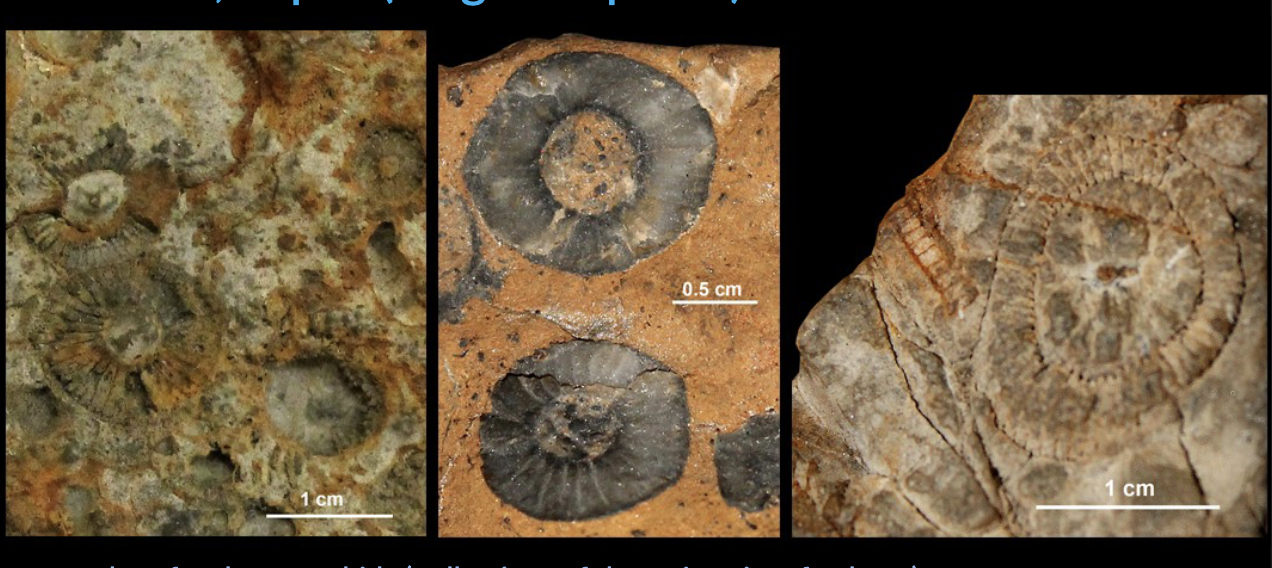
Archaeocyathids : Key morphological features
WHAT wall
WHAT wall
WHAT
WHAT
Archaeocyathids : Key morphological features
OUTER wall
INNER wall
SEPTA (sing = septum)
INVERVALLUM
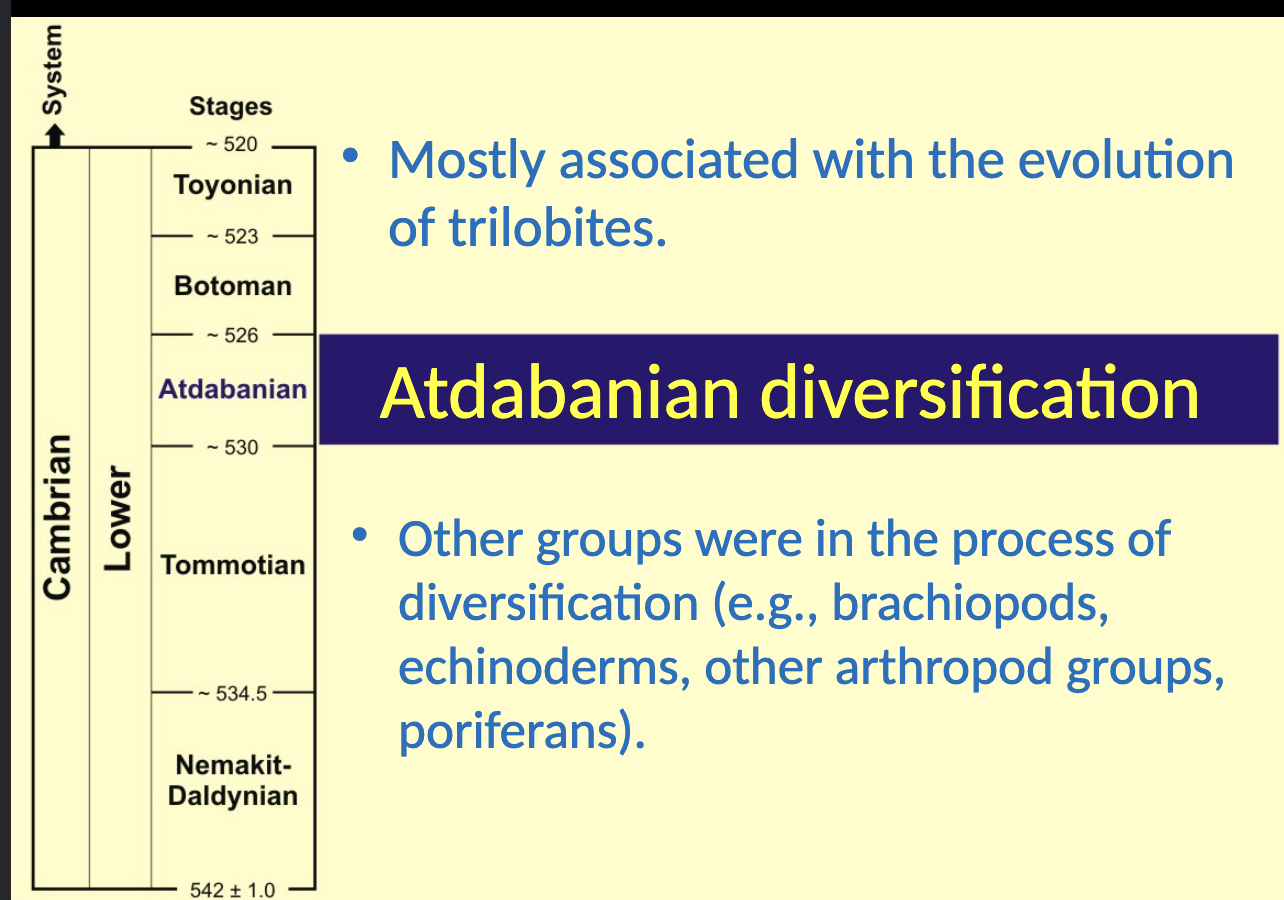
Atdabanian diversification
Mostly associated with the evolution of WHAT
Other groups were in the process of WHAT
Atdabanian diversification
Mostly associated with the evolution of TRILOBITES
Other groups were in the process of DIVERSIFICATION (e.g., brachiopods, echinoderms, other arthropod groups,
poriferans).
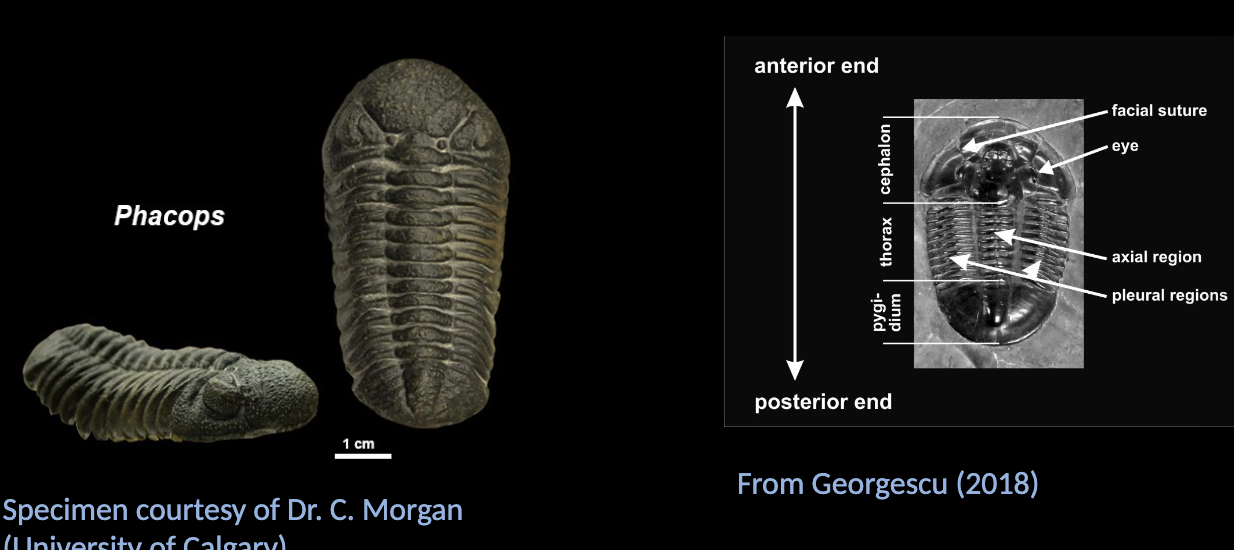
Trilobites - Key morphological terms
WHAT
WHAT
WHAT
WHAT
Trilobites - Key morphological terms
Cephalon
Thorax
Pygidium
Axial and lateral pleural zones
Cambrian diversification
Herein, it is detailed with two cases of exceptional fossil preservation
WHAT
WHAT
Cambrian diversification
Herein, it is detailed with two cases of exceptional fossil preservation
Burgess Shale
Chengjiang fauna
Burgess Shale (BC canada)
WHAT diversification and experimentation
Burgess Shale (BC canada)
INVERTEBRATE diversification and experimentation
Chengjiang fauna (Yunnan china)
Evolution and diversification of WHAT and WHAT
Chengjiang fauna (Yunnan china)
Evolution and diversification of CHORDATES and VERTEBRATES
Burgess shale
age: WHAT
Sedimentation at the WHAT; submarine landslides triggered by WHAT led to the rapid burial of (mostly) WHAT
WHAT conditions at certain stratigraphical levels prevented the occurrence of WHAT
Burgess shale
age: MIDDLE CAMBRIAN
Sedimentation at the SLOPE BASE; submarine landslides triggered by EARTHQUAKES led to the rapid burial of (mostly) INVERTEBRATES
ANOXIC conditions at certain stratigraphical levels prevented the occurrence of SCAVENGERS
Chengjiang fauna
age: WHAT
Sedimentation onto the WHAT in relatively WHAT conditions
Document the evolution of the earliest WHAT and WHAT in a highly diverse WHAT and WHAT assemblage
Chengjiang fauna
age: EARLY CAMBRIAN
Sedimentation onto the SHELF in relatively QUIET conditions
Document the evolution of the earliest CHORDATES and VERTEBRATES in a highly diverse ANIMAL and ALGAL assemblage
 Note
Note  Flashcards (142)