Lecture 5: Infectious Diseases
 Call Kai
 Learn
Learn Practice Test
 Spaced Repetition
 Match
Match Flashcards
 Knowt Play
1/71

There's no tags or description
Looks like no tags are added yet.
Name | Mastery | Learn | Test | Matching | Spaced | Call with Kai | Chat |
|---|
No analytics yet
Send a link to your students to track their progress
72 Terms
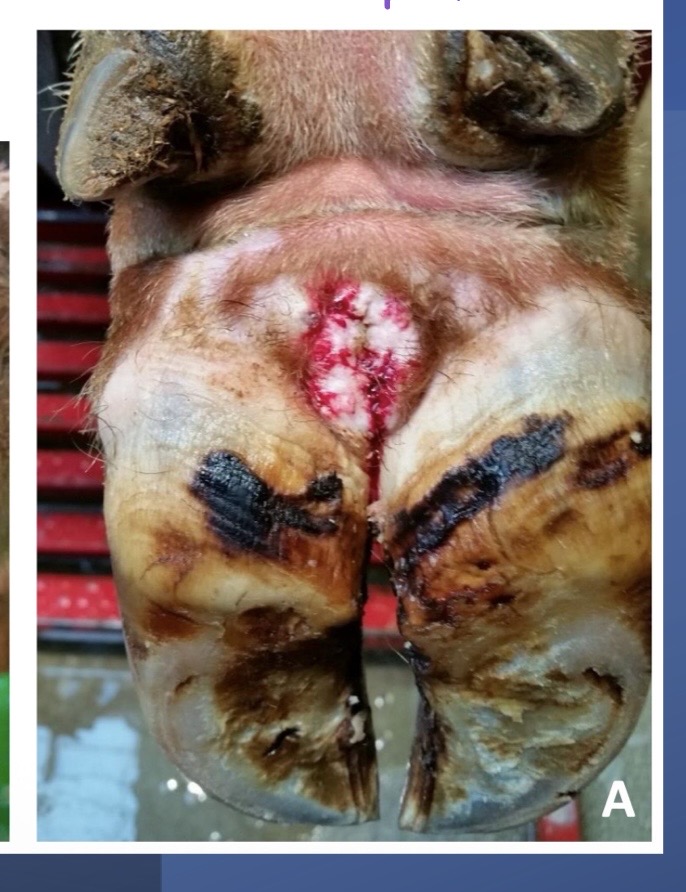
what is this?
digital dermatitis
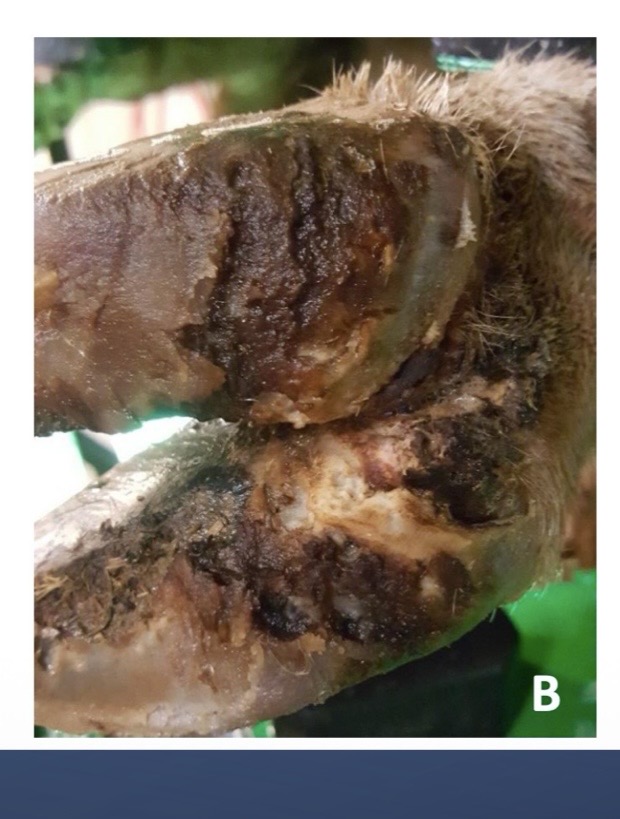
what is this?
heel erosion
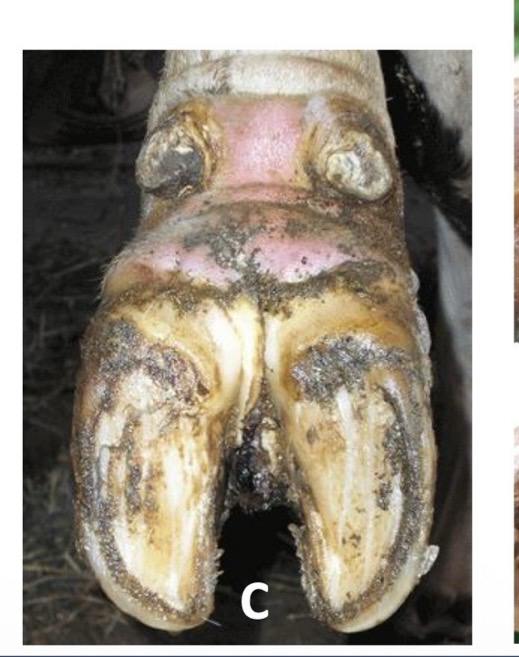
what is this?
foot rot
digital dermatitis
“hairy heel wart”
dairy cattle
70-95% of dairy farms affected in NA
confinement housed → high prevalence
pasture based → low prevalence
early lactation cows and heifers at higher risk
increased days open
reduction in milk production
digital dermatitis etiology
spirochetes → bacteriodes, campylobacter, fusobacterium, peptococcus
spirochetes (treponema)
what feet are affected by digital dermatitis?
rear feet (>90%)
plantar interdigital cleft → shifts weight bearing to the toe
corium → “hairy attack”
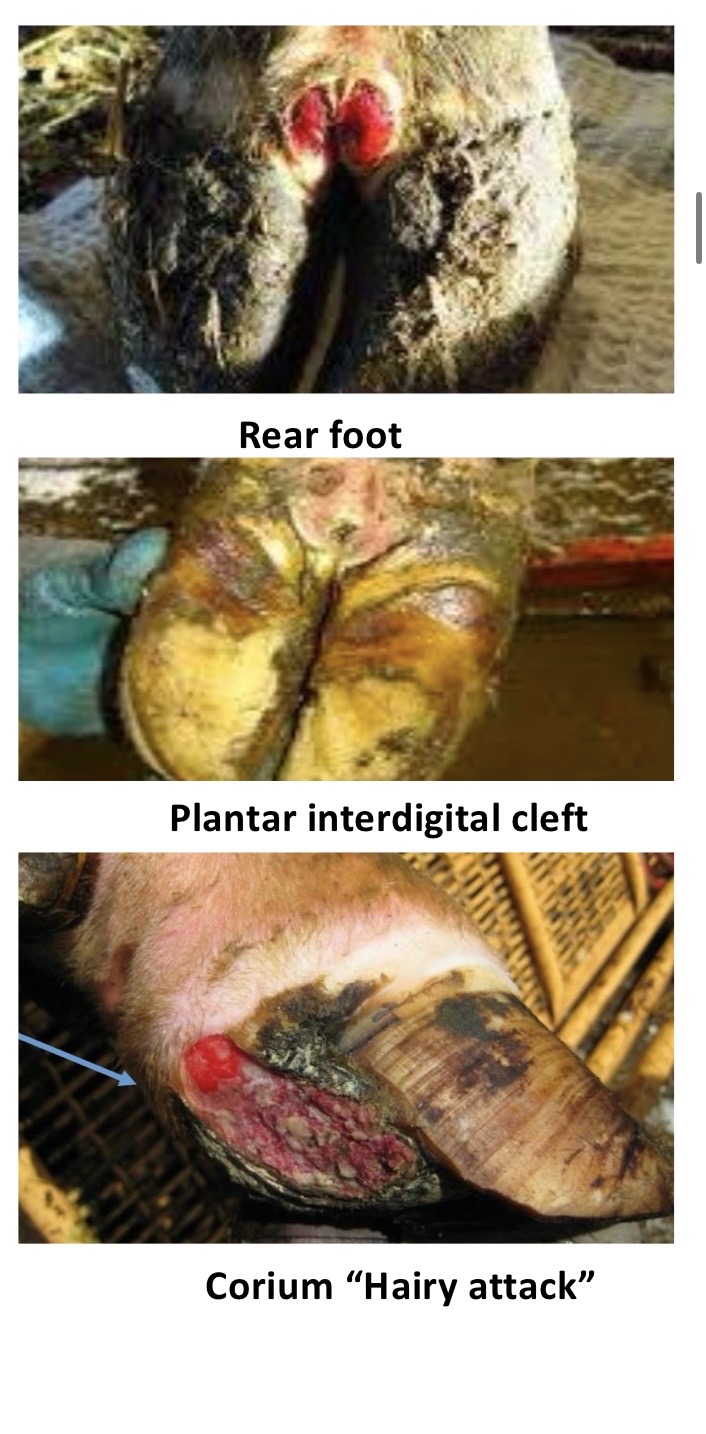
what are these showing?
digital dermatitis
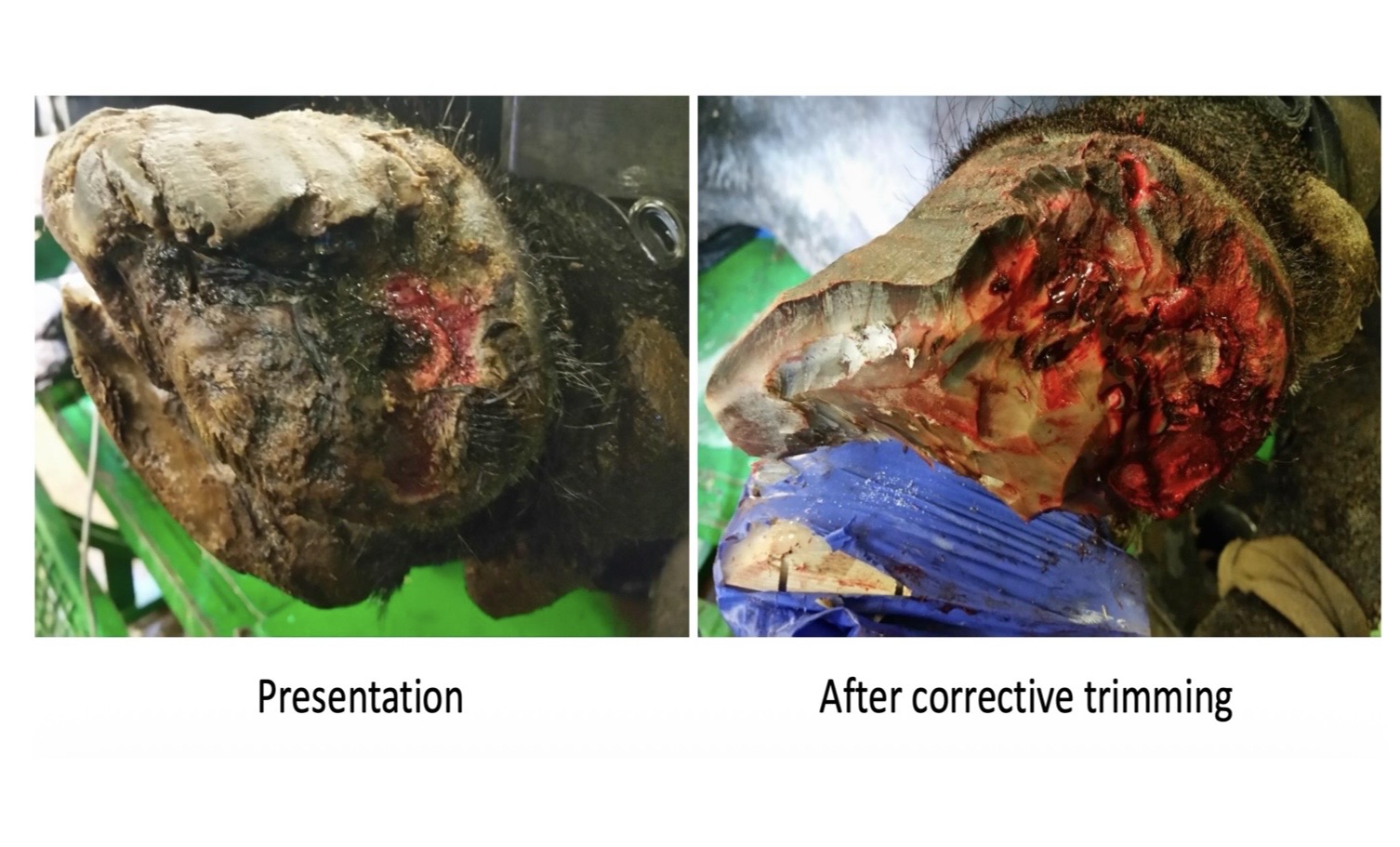
what is this?
DD of corium (hairy attack)
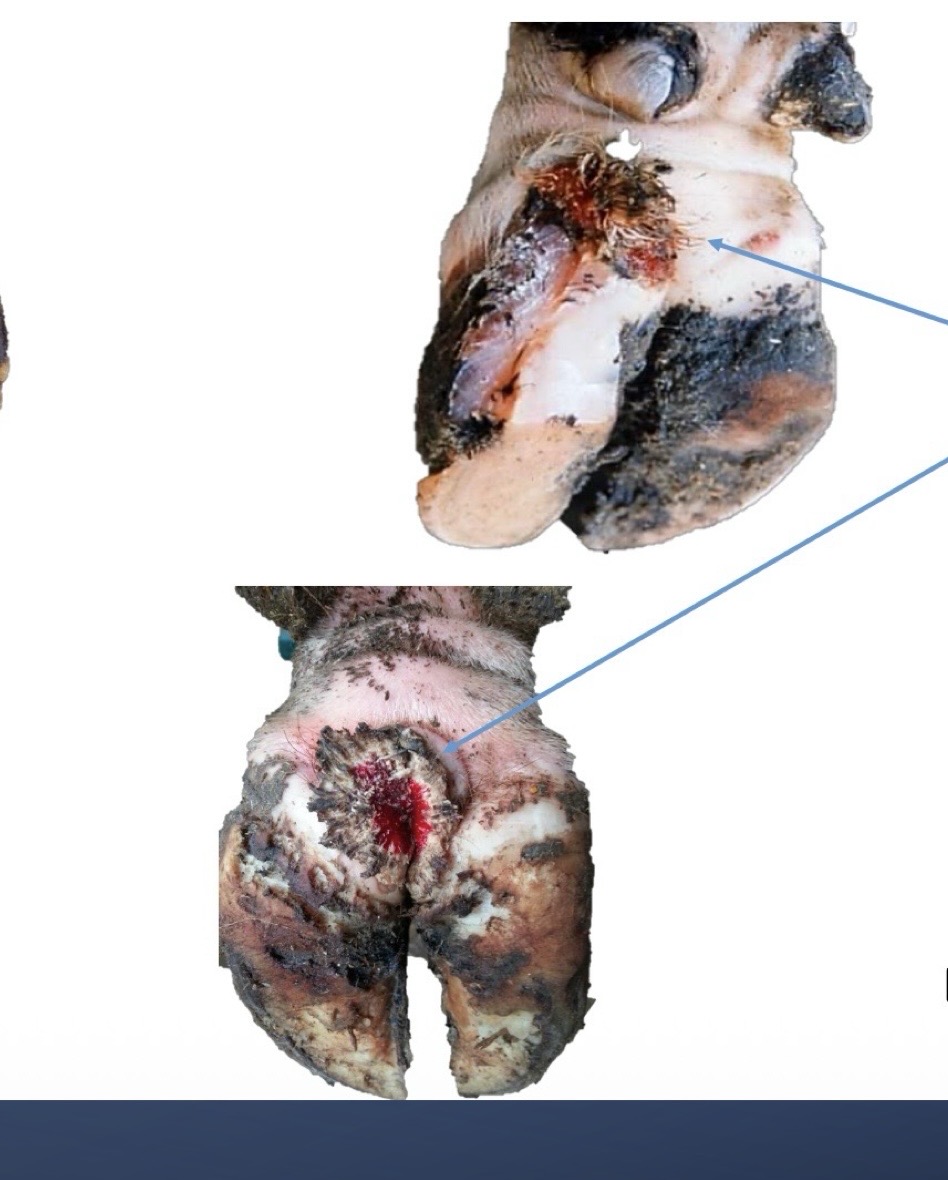
what is this?
hair-like projections from digital dermatitis
digital dermatitis risk factors
muddy or wet conditions
replacement heifers or cows from other farms
exhibition cattle
host genetic factors
not washing hoof trimming equipment between cows
outside hoof trimmers
presence of other infectious disorders
chronically infected cows can act as a reservoir
digital dermatitis in beef cattle
more common now
one study showed 4% prevalence
digital dermatitis treatment for individual cases
clean lesions (soap and water)
check for other foot issues
topical antibiotic → oxytetracycline with bandage
digital dermatitis treatment for herds
clean with water under pressure
foot bath → formaldehyde, copper sulfate, antibiotics
digital dermatitis prevention
no vaccine available
foot baths
improve environmental hygiene
automatic washing of hooves
biosecurity → check for lesions
copper sulfate foot bath
not fully effective if organic material is present (manure) (10-20%)
negative impact on environment
can contribute to high copper intake
formaldehyde foot bath
3-5%
effective in 20% manure
greater than 5% concentration can cause skin chemical burn
poor activity at low temps (<50F)
worker safety due to fumes
turns to water so no risk for disposal
foot bath design and maintenance
in parlor system
change every 150-300 cows
ideally 10ft long x 3ft wide x 6 inches deep
advantages to digital dermatitis foot baths
good access to lesions in interdigital space
convenient
disadvantages to digital dermatitis foot baths
hard to keep clean and correct concentration
cost
inefficient if low % affected
advantages of digital dermatitis sprays
less copper content waste
cost
disadvantages to digital dermatitis sprays
labor
poor access to interdigital space
risk of milk contamination
what kind of sprays are used for digital dermatitis treatment?
oxytetracycline and lincomycin
digital dermatitis prognosis
most cattle respond to treatment
positively correlated with cleanliness of farm and early treatment
negatively correlated if more than one limb affected
interdigital dermatitis
superficial dermatitis of the interdigital skin
often found with DD and heel horn erosion
may be painful to touch
may not cause lameness
more common in rear feet
prevention → foot bath, hygiene
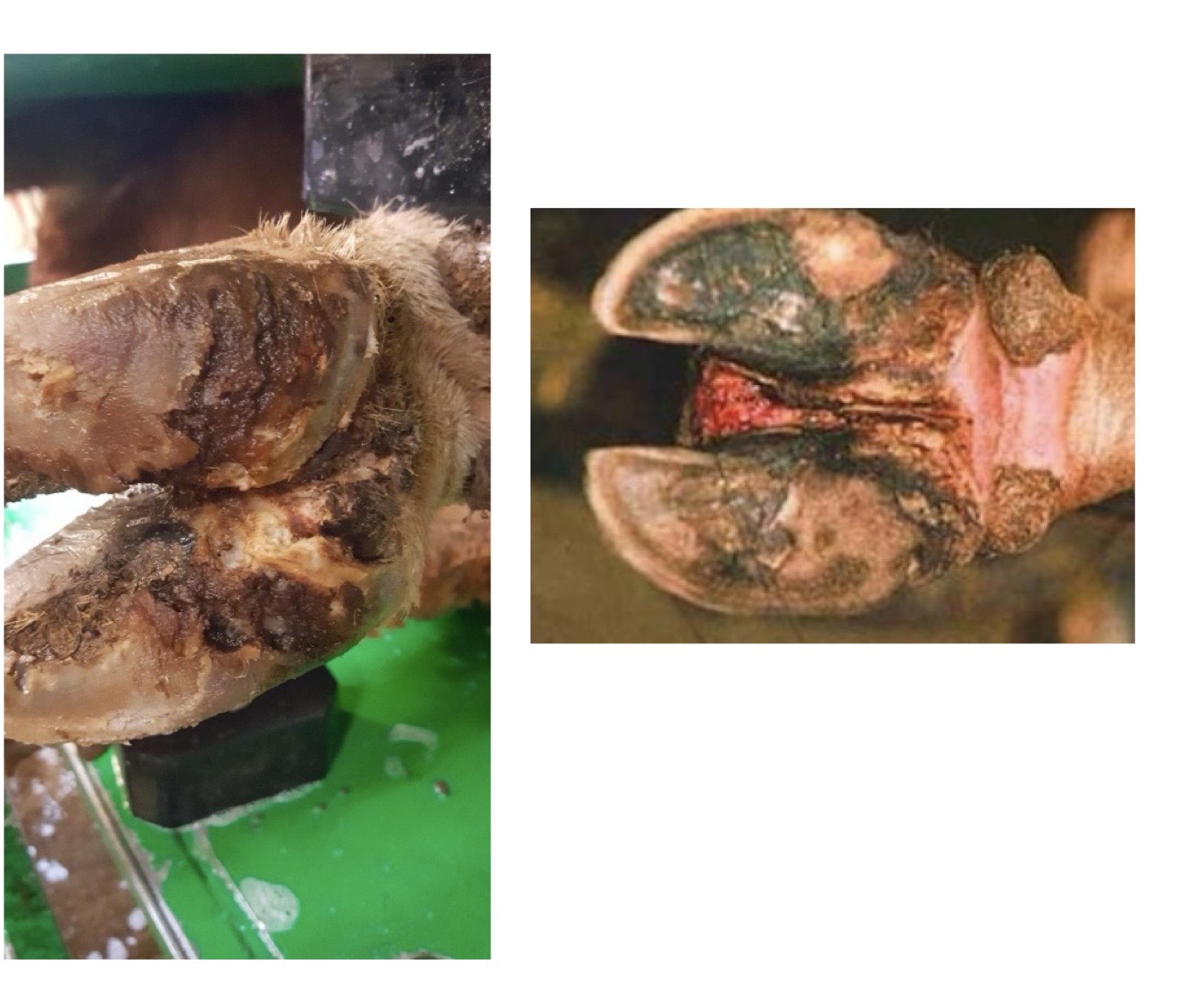
what is this?
interdigital dermatitis
interdigital hyperplasia
proliferative growth that may occupy part or all of the interdigital space
rarely causes lameness
usually result of chronic skin irritation
risk factors for interdigital hyperplasia
dermal inflammation
late treatment of foot rot
slurry/poor hygiene
rocky pasture
poor conformation
hereditary predisposition
more common in heavy cows
improper trimming
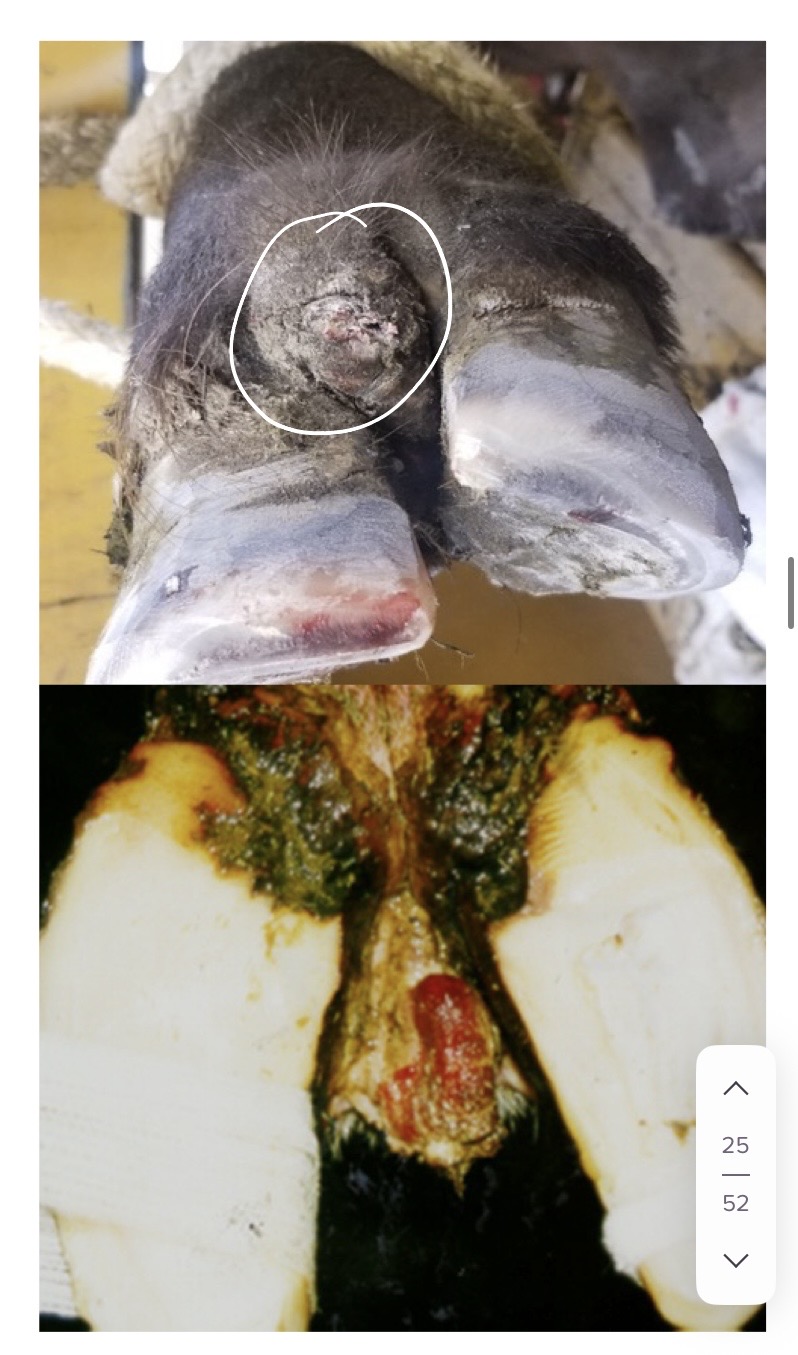
what is this?
interdigital hyperplasia aka corn, interdigital fibroma
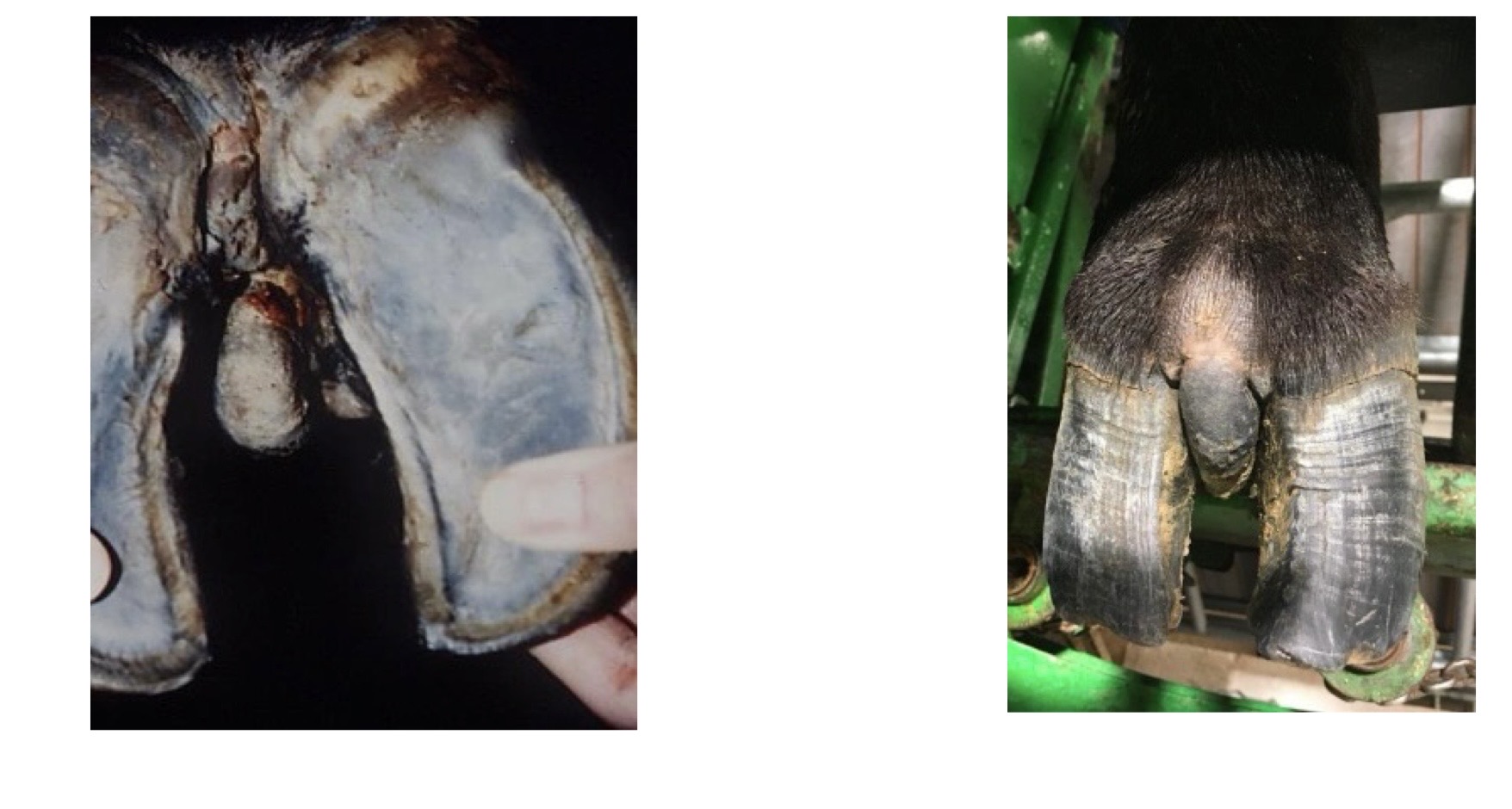
what are these?
corns
corn removal
foot anesthesia
pull claws apart
grab corn with towel clamps
excise corn
apply bandage with topical oxytetracycline
interdigital necrobacillosis (foot rot)
aka interdigital phlegmon, foul in the foot
mixed bacterial infection of soft tissues (anaerobes)
can lead to ascending infection of tendons and joints
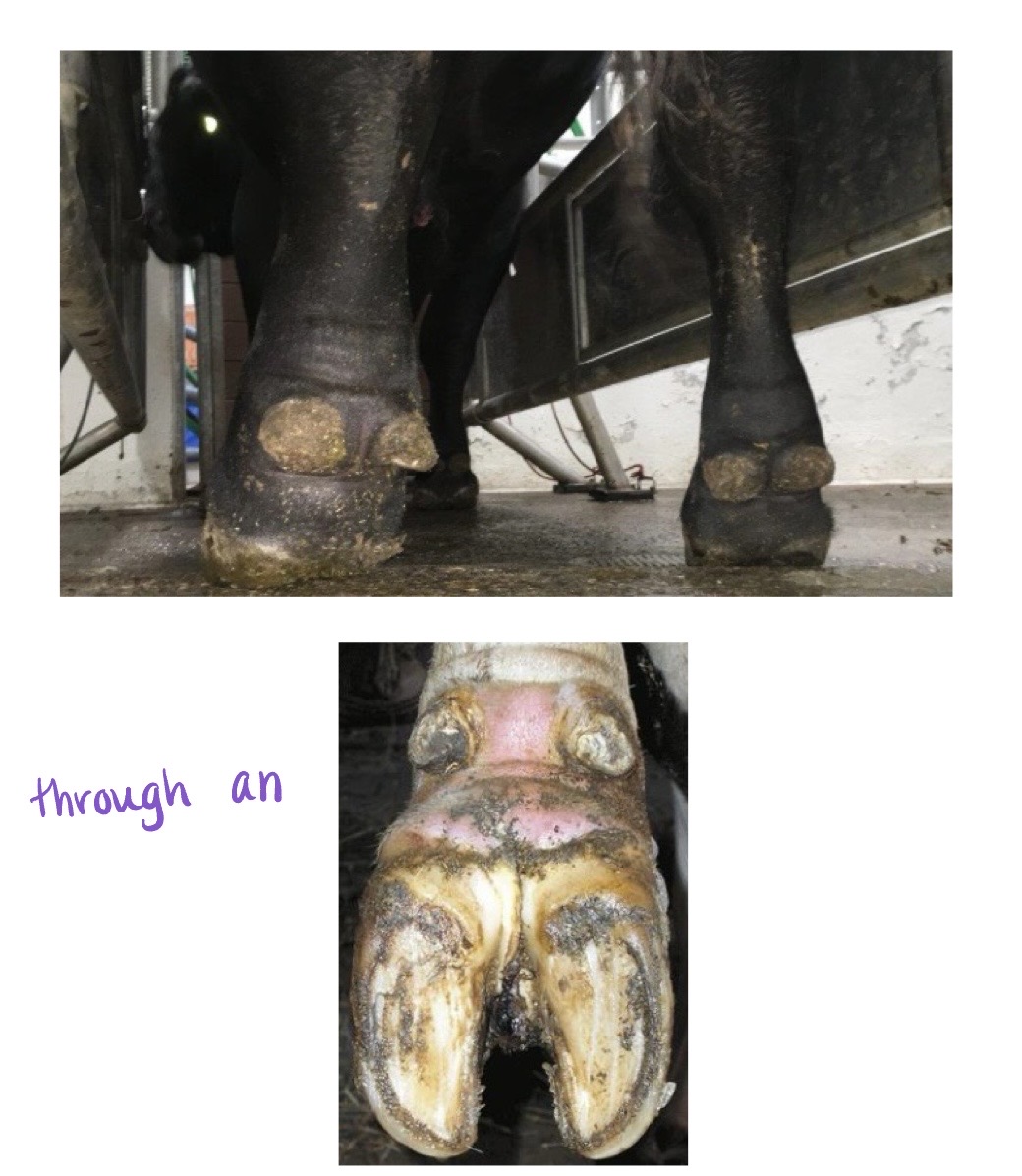
what is this?
interdigital necrobacillosis
foot rot is primarily caused by
fusobacterium necrophorum
foot rot bacteria
present in GI flora of cattle and environment
enters through defect in the interdigital skin
virulence factors
macerated skin + injury/trauma = infection
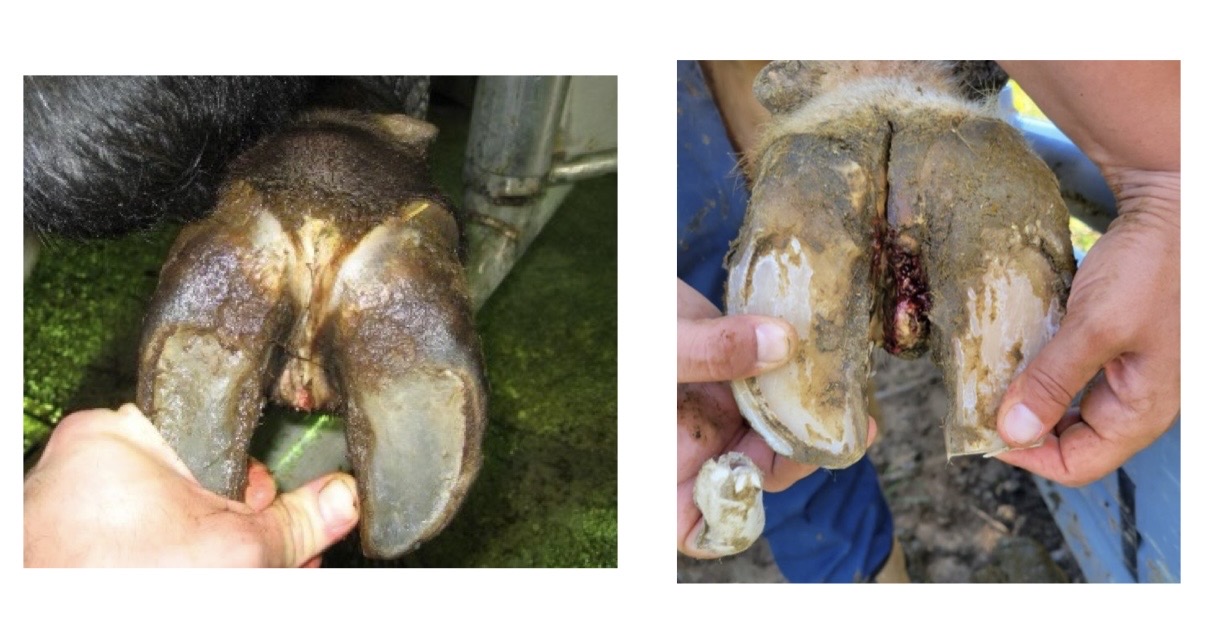
what is this?
foot rot
fusobacterium necrophorum causes
suppurative necrotic cellulitis
clinical signs of foot rot
swellings → claws spread, coronary band, joint distension
lameness
foul odor
sloughing, fissuring and necrosis of interdigital space
minimal pus
risk of invasion of soft tissues and coffin joint → septic arthritis
contributing factors for foot rot
usually only affects one foot
wet conditions → pasture cattle in mud and ponds, confined cattle in mud
trauma → stones, stubbles, manure, pieces of wood
organism may survive in environment for 1-10 months
foot rot treatment
early detection is key
clean and debride interdigital space
parenteral antibiotics
response rate is usually 70%
foot baths
foot rot prevention
minimize muddy, wet conditions
minimize access to ponds
good free stall, pen hygiene
reduce fecal contamination
vaccines → 2 available
prevention of infectious foot diseases
difficult
reduce conditions needed by microorganisms to reproduce
correct underlying factors affecting the immune system
tenosynovitis
usually from ascending infection or penetrating wound
causes severe lameness
can compare distance between dewclaws
treatment is long, claw block, lavage
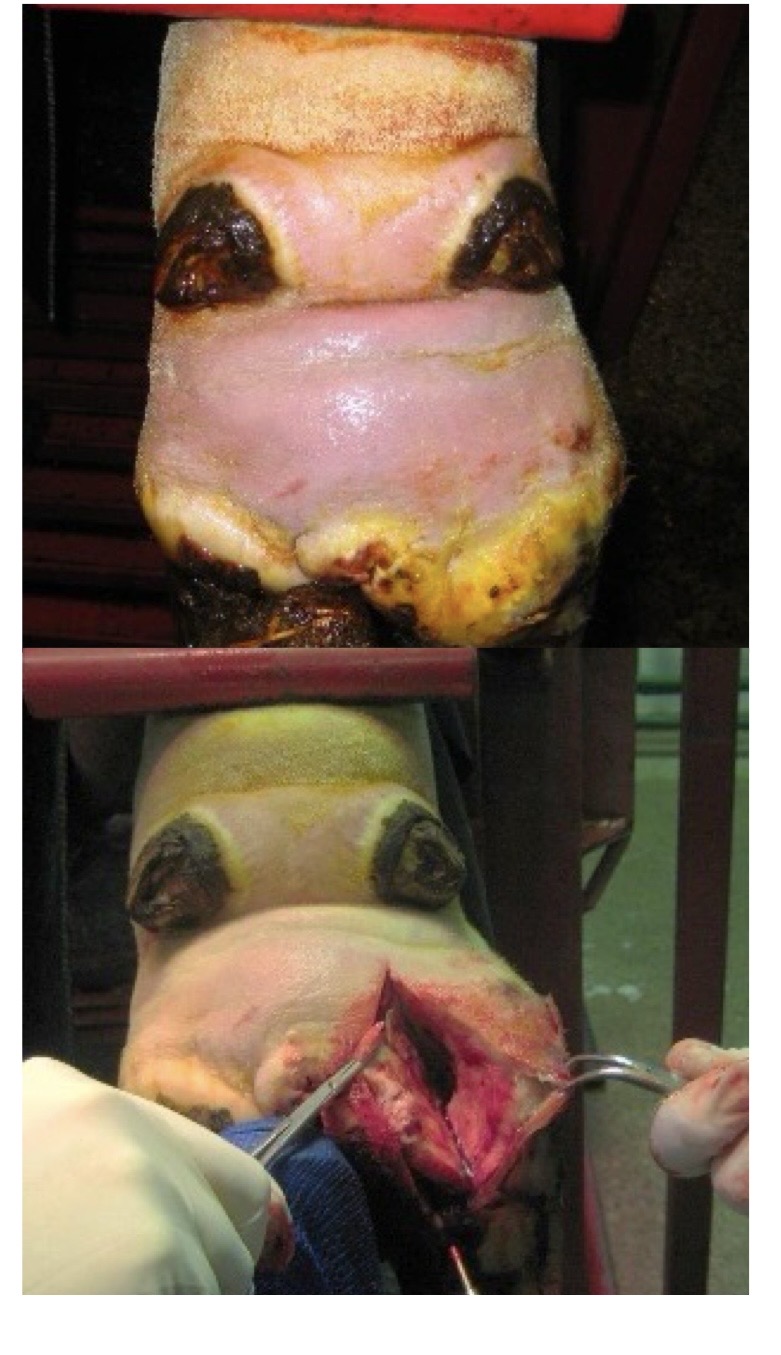
what is this?
tenosynovitis
pedal osteitis
inflammation and demineralization of P3
secondary to other hoof problems
severe lameness, chronic
hoof trimming, deep toe/sole ulcer
irregular margins of P3
loss of bone density, sequestrum
treatment of pedal osteitis
bone curettage, sequestrum removal
claw amputation, facilitated ankylosis, cull
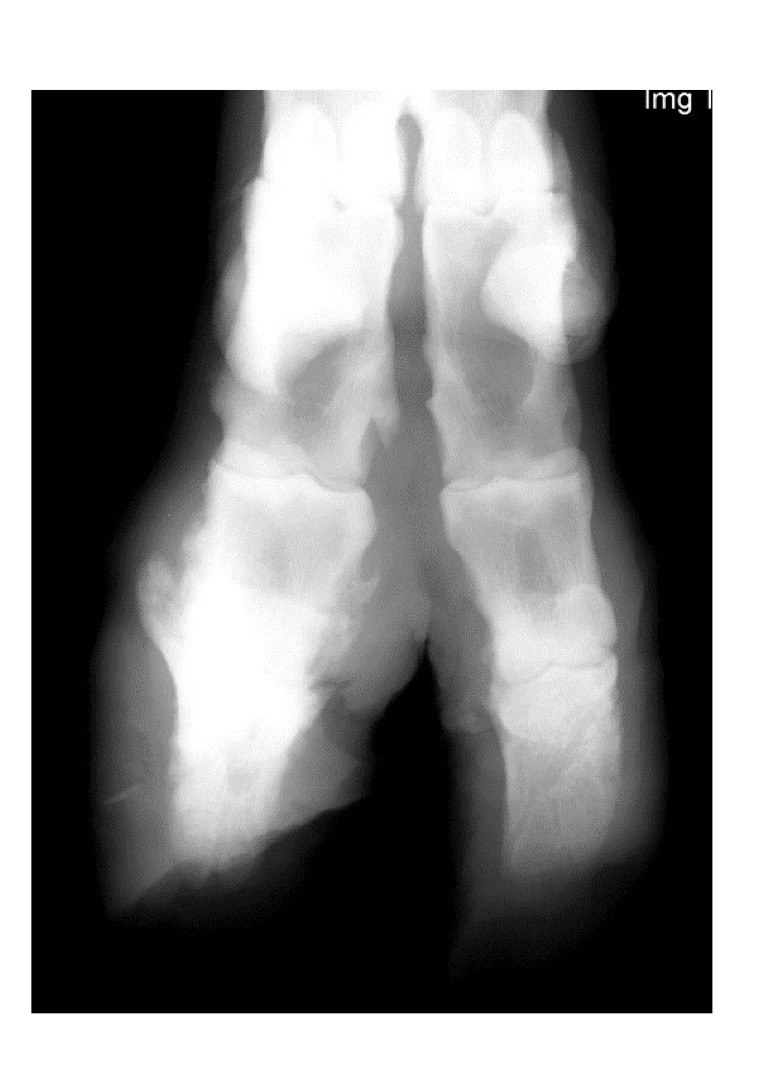
what is this?
pedal osteitis
foot rot and osteomyelitis
extension into the coffin joint
radiographs recommended
chronic or septic arthritis
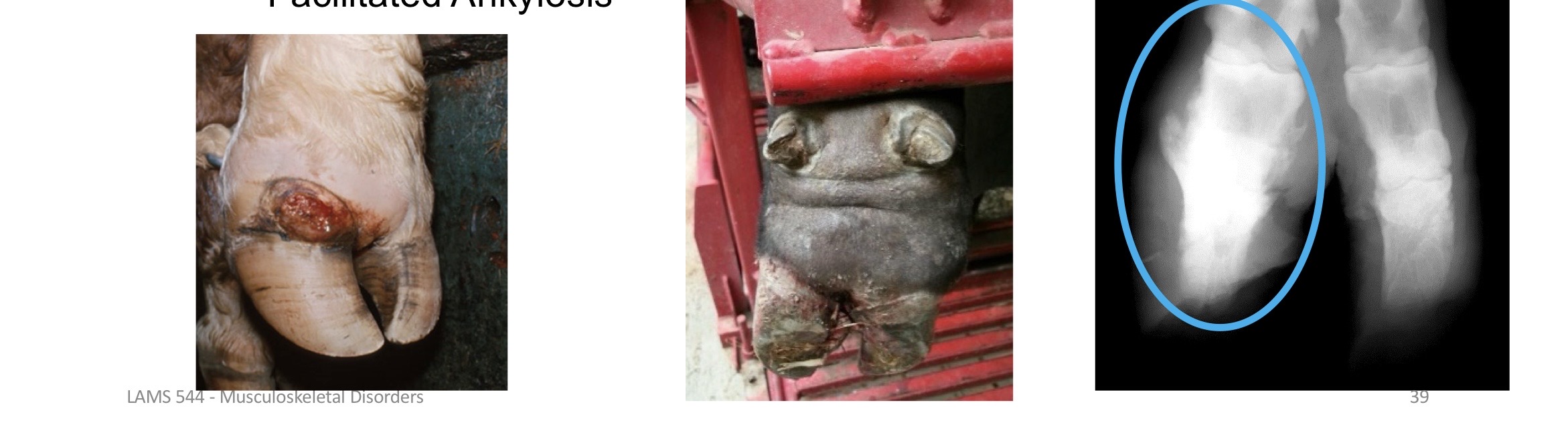
what are these showing?
foot rot and osteomyelitis
treatment for infectious foot diseases
topical antimicrobials → foot bath, topical spray, topical with bandage
parenteral antimicrobials
pain management
treatment for non-infectious foot diseases
corrective trimming
block placement
pain management
bandaging
septic arthritis
more common in neonates → bacteremia, septicemia, or umbilical issue
warm, swollen, painful joint
synovial fluid analysis → increased leukocyte and protein count
most commonly affects hock, stifle, and carpus
more than one joint may be affected
treatment of septic arthritis
joint lavage
regional limb perfusion
sometime nonresponsive
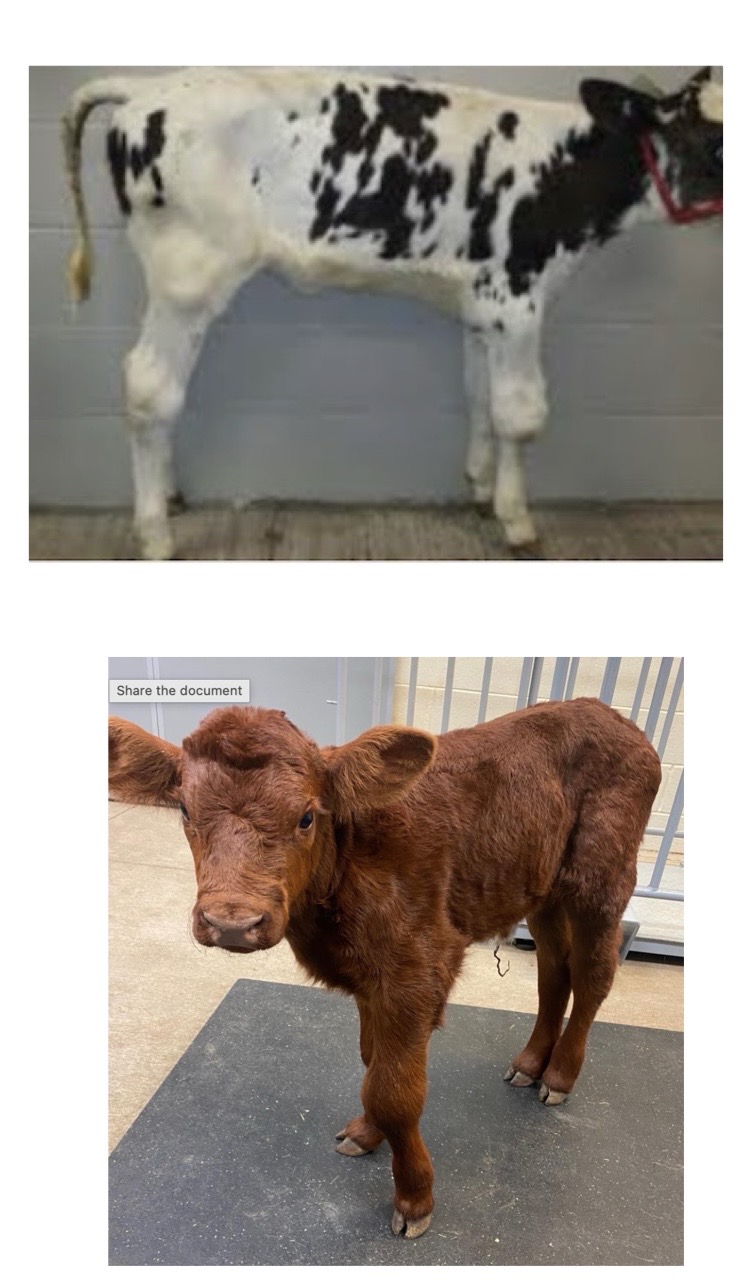
what is this?
septic arthritis
clostridial myonecrosis (blackleg)
Cl. chauvoei, Cl. septicum
any muscle at risk but limbs most common
ubiquitous in soil, GIT, feces
what is the most potent of all clostridial species?
Cl. sordellii
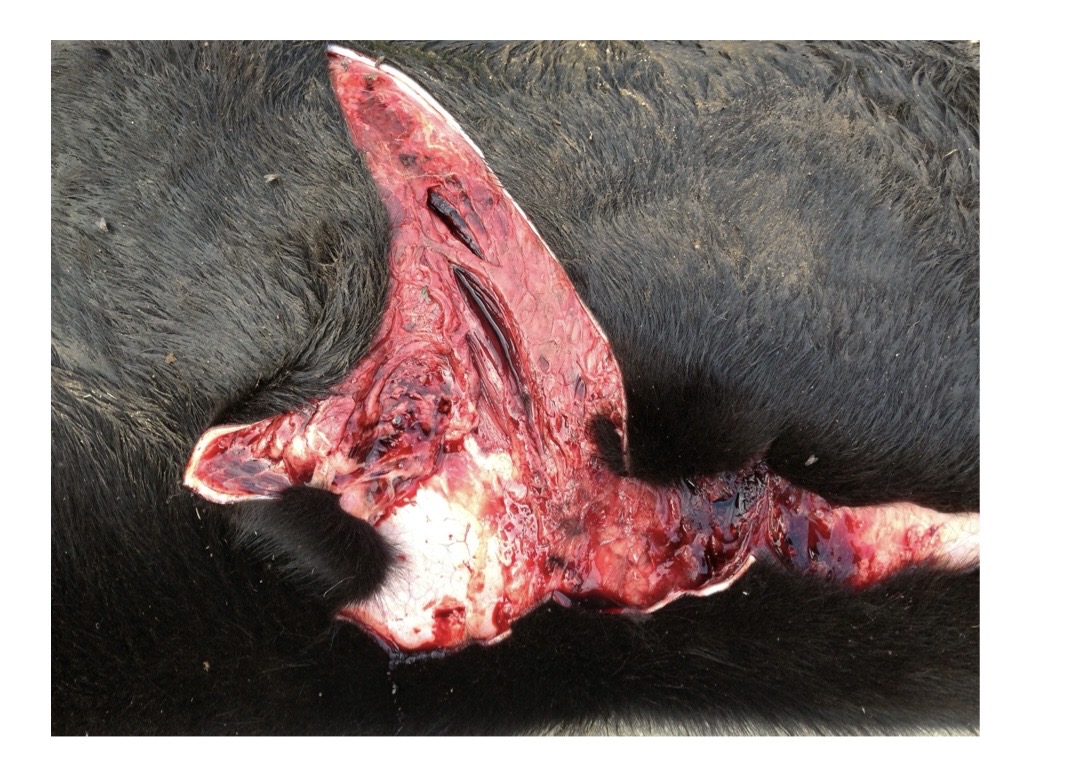
what is this?
clostridial myonecrosis
black leg
C. chauvoei
any site, but most commonly thigh, rump, loin or brisket
if alive, see lameness, depression, anorexia, rumen stasis, fever, reluctant to move
SC emphysema, swollen, initial heat and pain, late cold and painless
rapid prostration, shock, coma, and death
malignant edema
C. septicum
deep wound or traumatized sites such as repro tract or udder
signs like blackleg but more edema
rapidly spreading edema following fascial planes
death in 24-48 hours
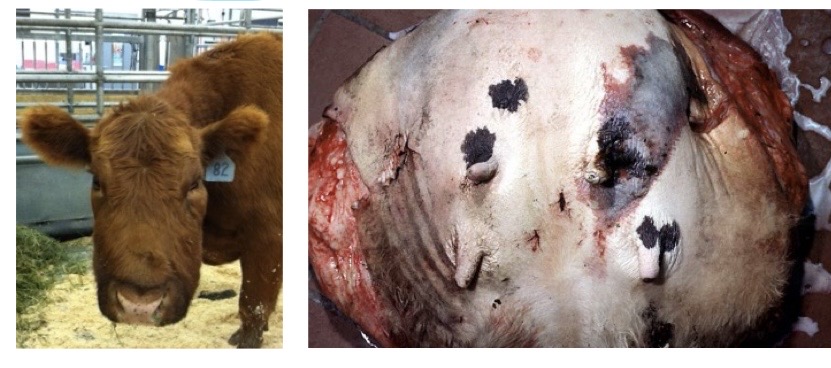
what is this?
malignant edema
black neck
C. sordellii
most in feedlot animals
found dead
massive black hemorrhage and muscle necrosis at base of neck and brisket
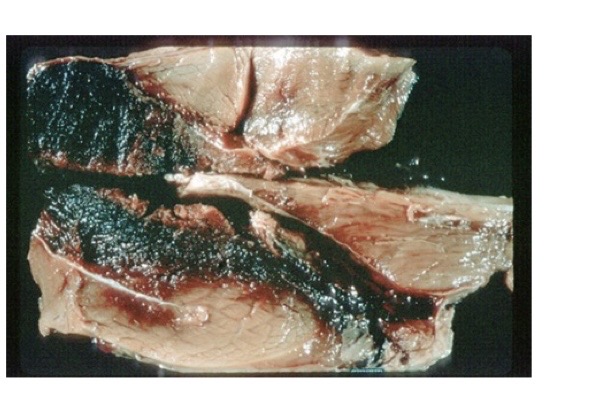
what is this?
black neck
clostridial myonecrosis
cattle
4-24 months, occasional adult
warm seasons, often at pasture
wounds, trauma, bruising, dystocia
clostridial myonecrosis post-mortem
rapid autolysis
odor (rancid butter)
bloody discharge from body orifice
swelling and crepitus
necrotic muscle tissue and edema
signs of systemic toxemia
treatment of clostridial myonecrosis
horses have best prognosis (guarded) with all others grave
antibiotics → penicillin, tetracyclines
anti-inflammatory drugs
IV fluids
aggressive debridement and fasciotomy
prevention of clostridial myonecrosis
sanitation → proper disposal of carcasses, burning, burying
vaccination → at least 2 initial doses, annual booster at minimum
clostridium tetani
wounds, parturition, tail docking, ear tags, dehorning, elastrator bands
exotoxins → clinical disease
clinical signs of early clostridium tetani
prolapse of 3rd eyelid, rigid muscles around head and neck
clinical signs of late clostridium tetani
sawhorse stance, pump handle tail, stiff gait, extended head, bloat
clinical signs of the latest form of clostridium tetani
tonic muscle spasms, death
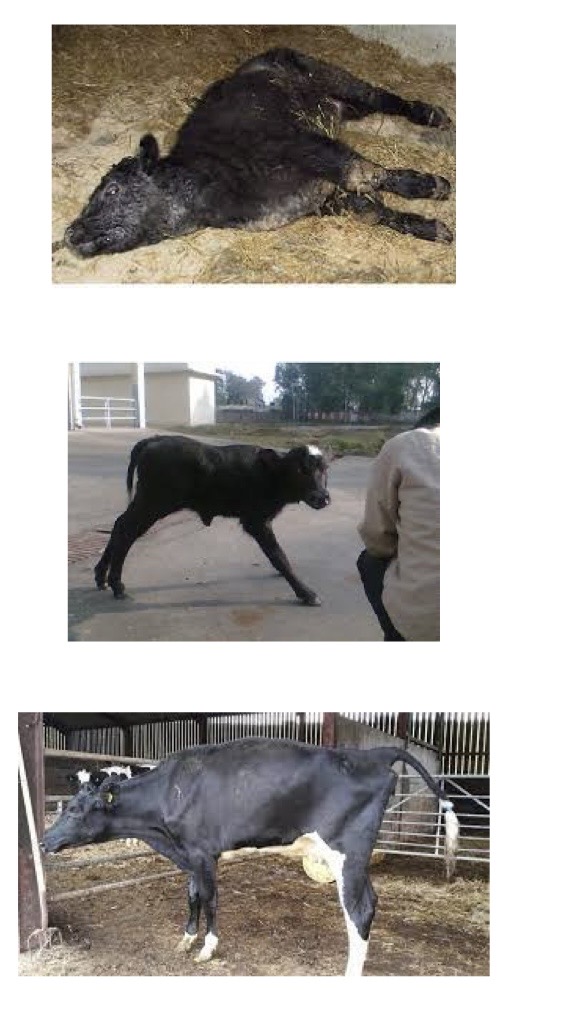
what are these showing?
clostridium tetani
treatment for clostridium tetani
muscle relaxation → sedatives, not stimulus, muscle relaxers, Mg
supportive care → bedding, food, water
infection → penicillin
neutralize → antitoxin
prognosis is 50%
prevention of clostridium tetani
vaccination with toxoid