Ch 1 Study of Body Function - Lecture cards
 Call Kai
 Learn
Learn Practice Test
 Spaced Repetition
 Match
Match Flashcards
 Knowt Play
1/35

There's no tags or description
Looks like no tags are added yet.
Name | Mastery | Learn | Test | Matching | Spaced | Call with Kai | Chat |
|---|
No analytics yet
Send a link to your students to track their progress
36 Terms
Define Anatomy:
The study of structure (morphology) of the body and its parts.
Define Physiology:
The study of the functions of human parts or how they work.
Define Pathophysiology:
How disease or injury alters the normal physiology of a body part.
Define Comparative Physiology
Comparative physiology studies how body functions (physiology) work across different animals. Since mammals are physiologically similar, what's learned from animal studies often applies to humans too.
Define Homeostasis:
This will be seen throughout the ENTIRE semester
Process used by organisms (our body) to maintain a fairly stable internal condition.
The dynamic constancy of the internal environment.
Define a condition
Anything internally that the body regulates or maintains around a target value/set point.
Define a set point/target value,
and define value.
Target value is often used similarly to set point, although “set point” is the more common term in homeostasis.
Set point = the value/range your body is trying to maintain around.
Example: body temperature has a set point around 37°C (98.6°F).
Current value = the actual value your body has right now.
Example: your current body temperature is 38°C (100.4°F).
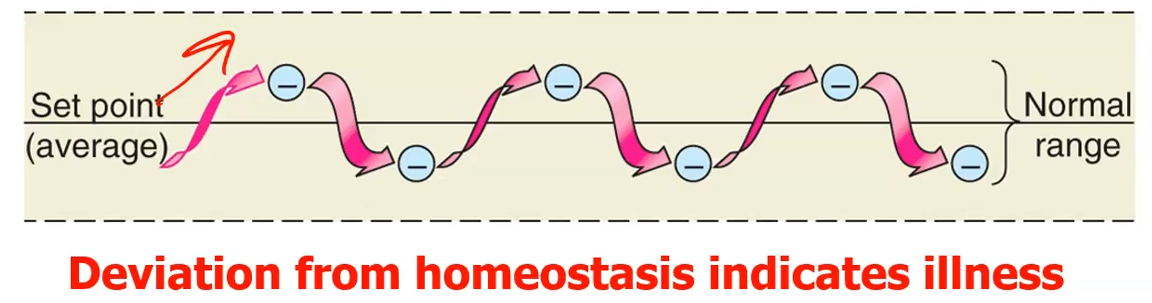
What activates homeostasis?
Deviation from the set point.
What are the 3 homeostatic players?
Sensor = detects.
Integrating center = decides.
Effector = responds.
What is the sensor/receptor?
Detects deviation from set point, each is specific to its stimulus (temperature, pain, blood pressure).
What is the integrating center?
Compares the value to the set point, if there's a deviation it directs a specific effector to respond.
Receives/processes the information and determines what response should occur.
Usually the brain or spinal cord integrate.
What is the effector?
The target cell (muscle or gland) that carries out what integration center says.
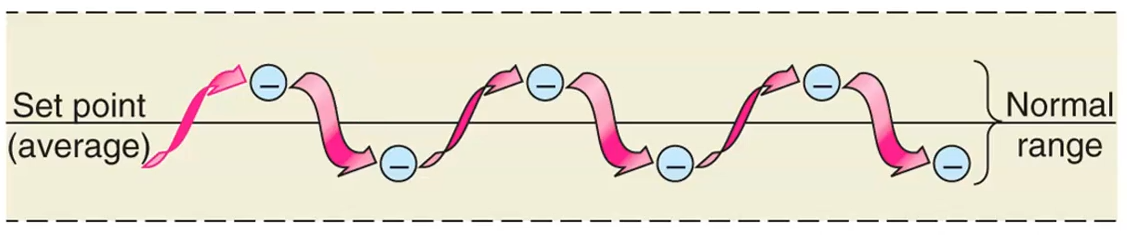
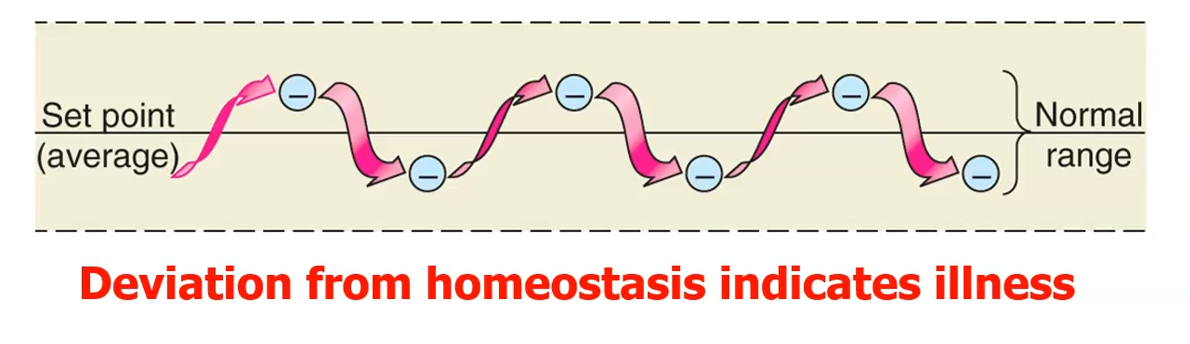
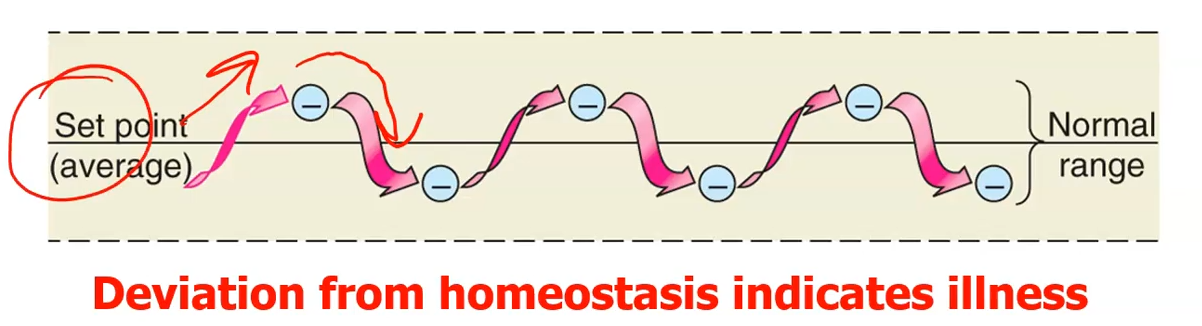
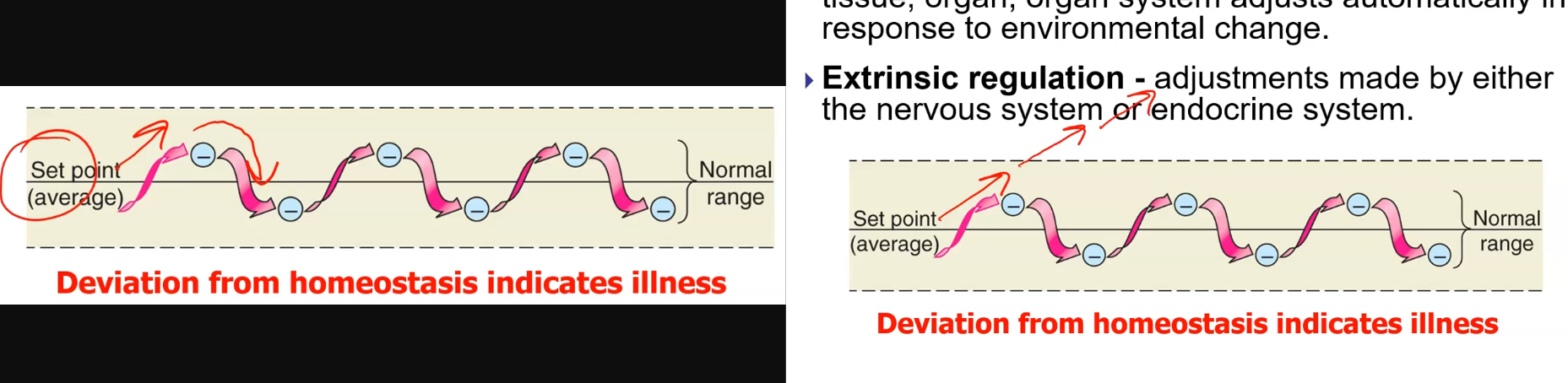
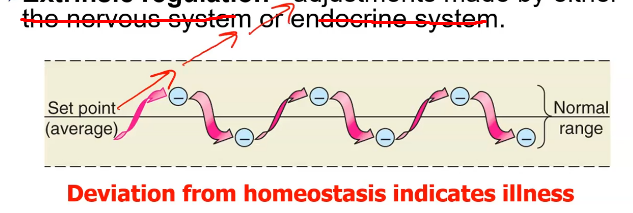
Can you describe this image?
The wave going above the set point:
Sensor detects the value went too high.
Integrating center sees it's above set point, activates an effector.
Effector brings it back down (negative sign = correction).
The wave going below the set point:
Sensor detects it went too low.
Integrating center activates a different effector.
Effector brings it back up (negative sign again = correction).
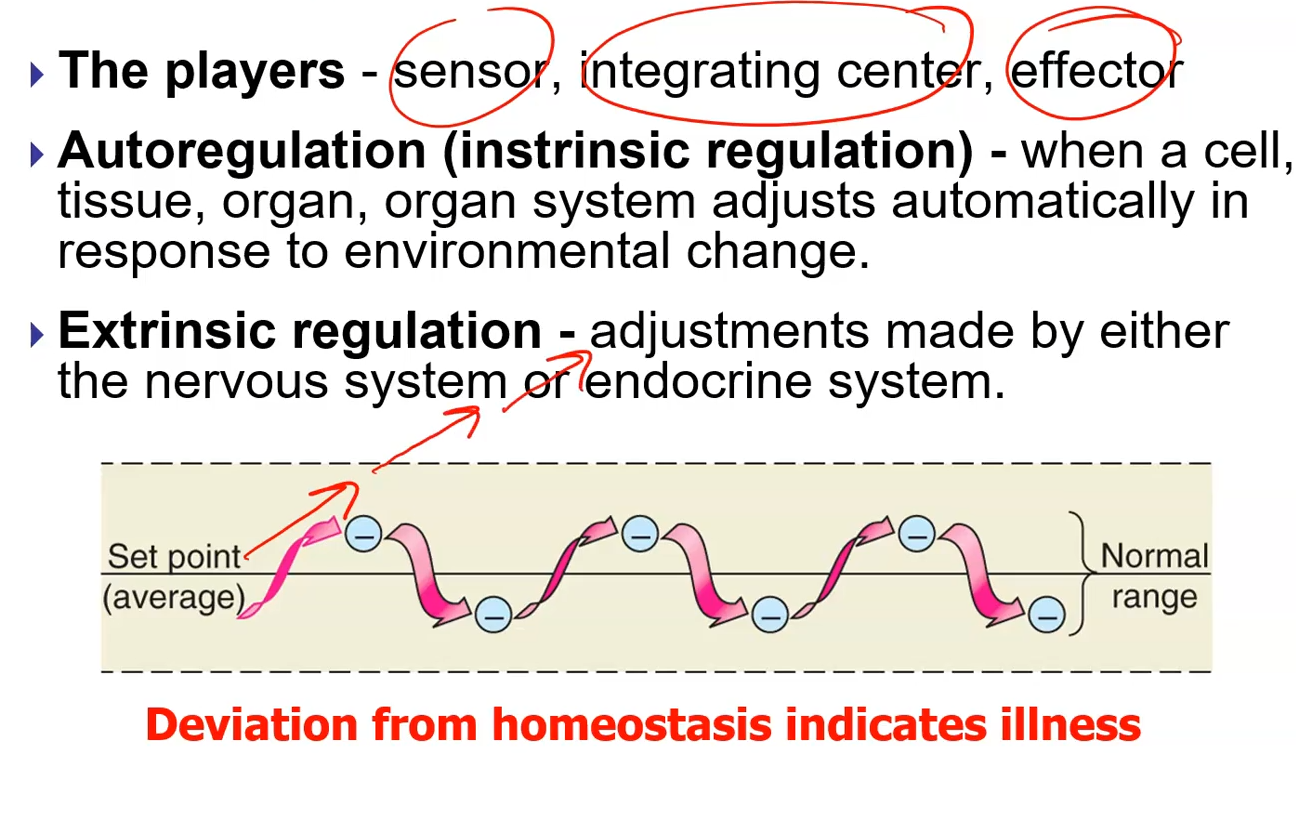
What is Autoregulation (intrinsic regulation)?
When a cell, tissue, organ, organ system adjusts automatically in response to environmental change.
What is extrinsic regulation?
Adjustments made by either the nervous system or endocrine system.
Can you give 2 examples of Positive feedback?
Blood Clotting: When a blood vessel is damaged and blood is being lost, the body initiates the formation of a blood clot. This process involves a positive feedback loop that amplifies the response to quickly plug the damaged vessel.
Uterine Contractions during Childbirth: As labor progresses, the uterus contracts more frequently and with greater strength to help the baby exit the birth canal. This is a destabilizing loop where the contractions continue to amplify until the birth is complete, at which point negative feedback returns the body to its normal state.
Can you give 2 examples of Negative feedback?
Body Temperature Regulation (Shivering): When your internal temperature drops below the 98.6°F set point, thermal receptors send information to the nervous system, which activates skeletal muscles. The muscles begin to shiver, and these rapid contractions release heat that returns your body temperature back to the set point.
Blood Pressure Regulation: When you stand up quickly and your blood pressure falls, the nervous system detects this deviation and causes the heart rate to increase. This increase in heart rate elevates the blood pressure, returning it to its set point and stabilizing the condition.
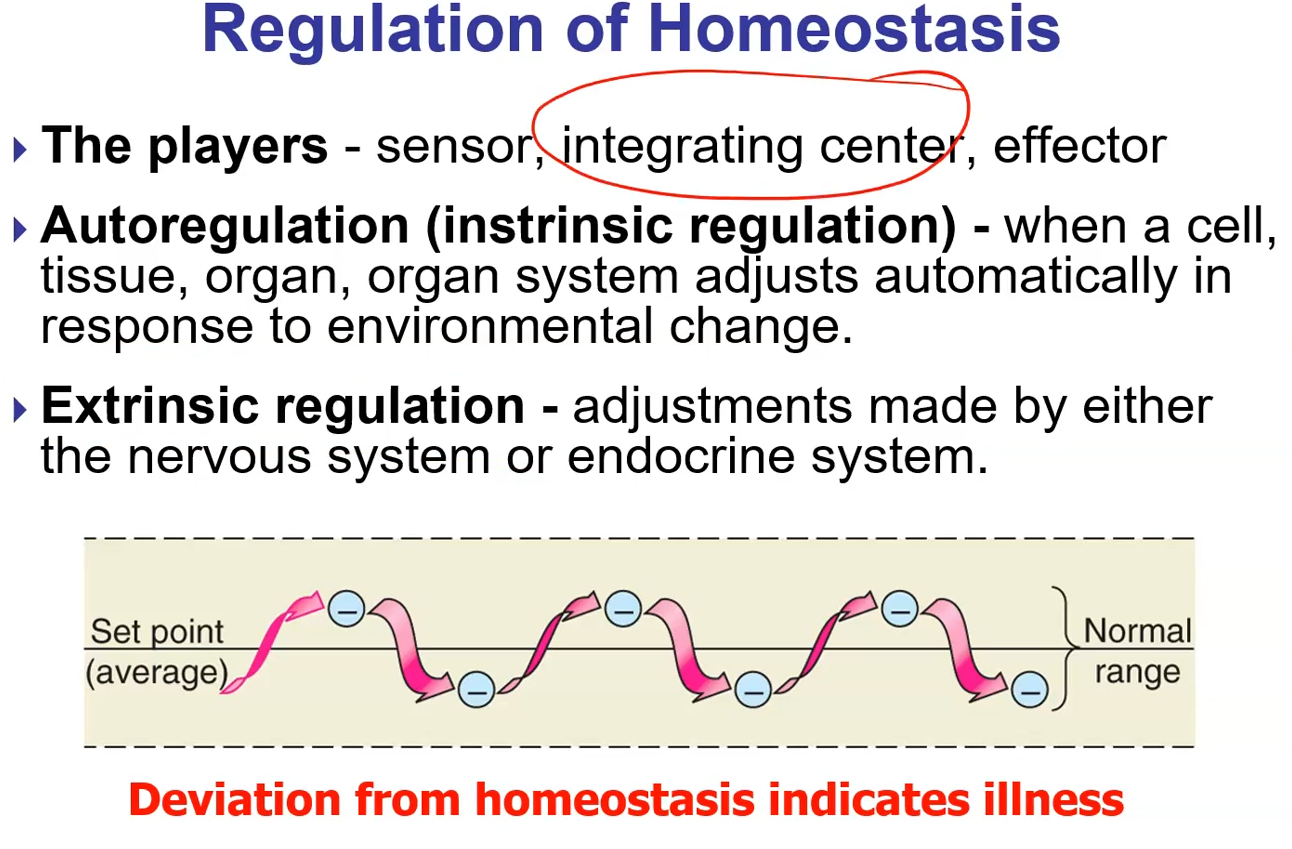
If the organ you regulate is acting as the integration center would that be:
Autoregulation (intrinsic regulation) or Extrinsic regulation?
Autoregulation (intrinsic regulation).
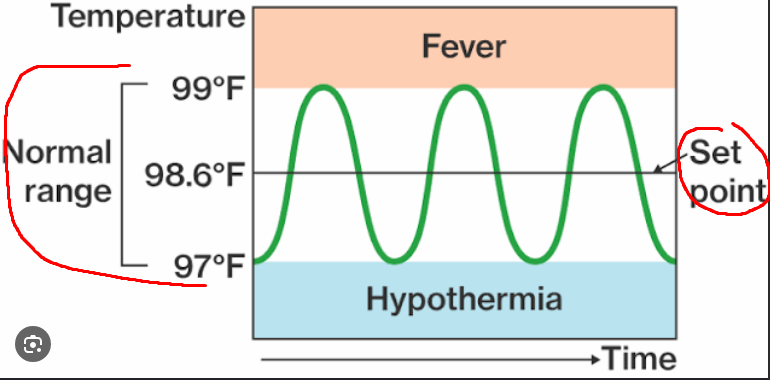
What indicates illness in homeostasis?
Deviation outside of normal range with no return
—
Every time there’s a deviation from the set point homeostasis brings it back.
—
If the deviation is extreme and goes outside the normal range and homeostasis doesn’t stabilize it, that’s an indication of illness, it means homeostasis has failed to correct the deviation.
What is homeostasis maintained in the body through?
Homeostasis is maintained in the body through feedback loops.
What are the two types of feedback loops?
Negative & positive.
Can you define negative feedback?
Action of the effector returns condition to set-point (stabilizing).
Most homeostatic regulation mechanisms involve negative feedback.
Negative loops use antagonistic effectors to stabilize. (not the same for positive)
Can you define positive feedback?
Action of the effector causes condition to deviate further from the set-point (destabilizing).
What’s the best way to remember negative from positive feedback loops?
Negative = effector brings it back to set point (stabilizing).
—
Positive = effector keeps it going away from set point (destabilizing).
—
Positive feedback is rare and always followed by negative feedback.
What are all homeostatic conditions often maintained by?
They are often maintained by opposing effectors (antagonists).
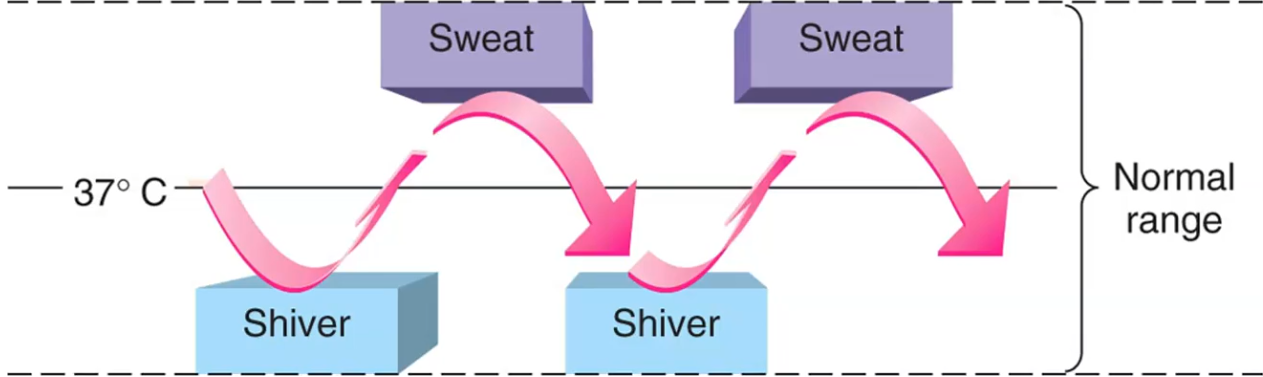
Antagonistic effects (try to explain before you flip):
Example: Set point of temp is 37 deg C or 98.6 deg F
1) ThermoRECEPTORS detect when the temperature goes down from set point.
2) The integrating center realizes “hey the temperature is not at the set point”
3) The body temperature is decreasing so the integration center will find an effector that elevates body temperature.
The integration center will activate skeletal muscle (contractions/shivering) will bring release heat and causes temperature to go back to set point, homeostasis achieved.
This is a negative feedback because the action of the effector caused the deviation to go back to set point.
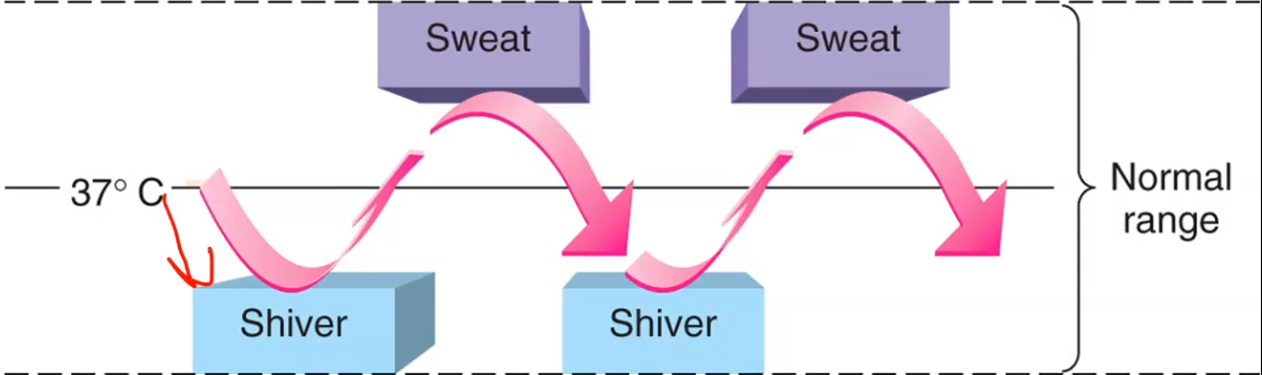
Explain positive feedback (this will be brought up throughout the semester based on chapter)
Positive feedbacks are rare because they amplify changes in internal conditions moving FURHTER from set points.
Positive feedbacks don’t work alone and are always followed by negative feedback loops.
If its not followed by negative feedback this will lead to shock or system failures.
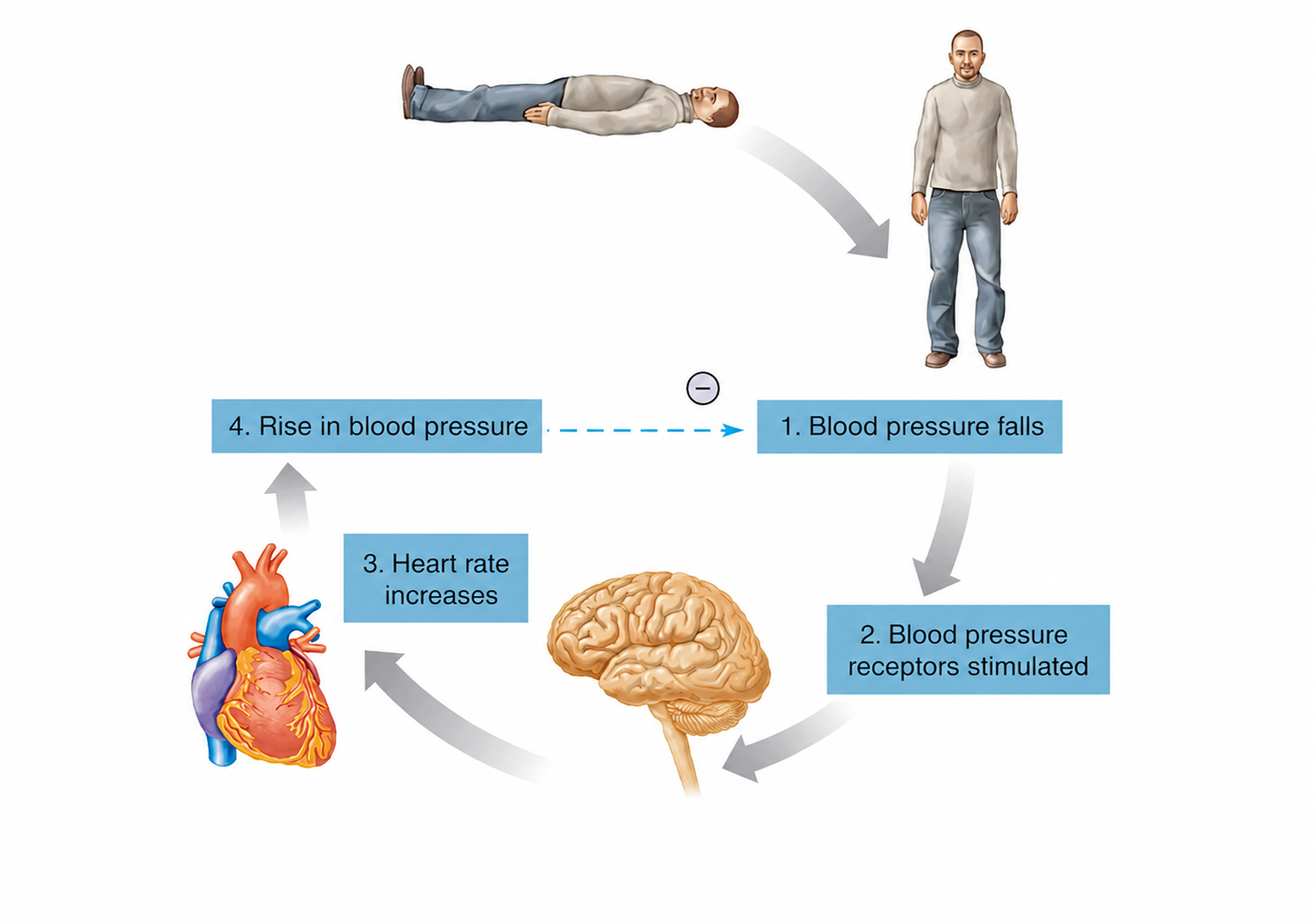
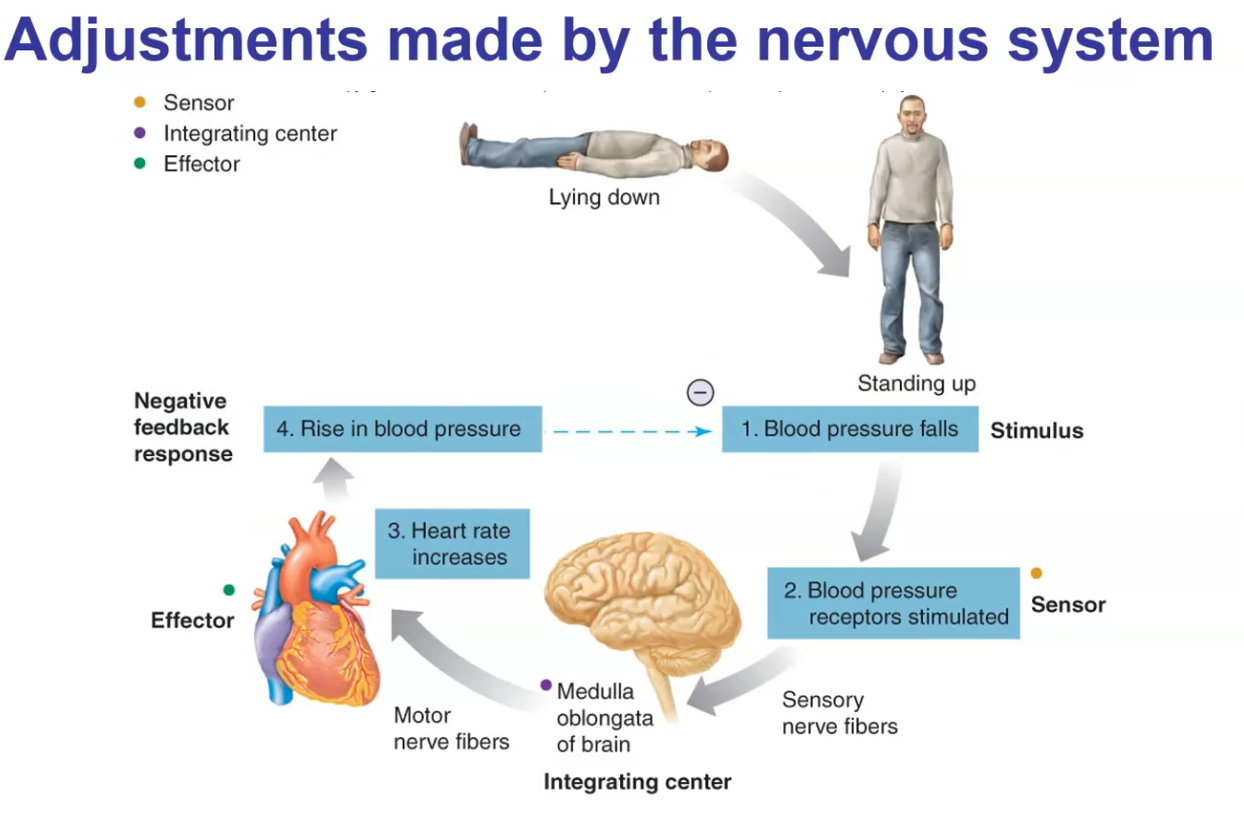
Explain this flowchart step by step
————————————————
Is this a + or - feedback? and why?
Is this extrinsic or autoregulation? and why?
Is this a part of homeostasis? and why?
You stand up fast…
1) Blood pressure falls - Stimulus.
2) Blood pressure receptors stimulated - Sensor (these detect DEVIATION from set point).
The nervous system integrates the information realizing blood pressure is dropping and sends signals through motor nerve fibers to the effector (heart) - (This makes it extrinsic regulation).
3) Heart rate is increased by signals through motor nerve fibers - Effector.
4) Rise in blood pressure.
————————————————
This is a negative feedback, because the effector stabilized BP back to set point.
This is extrinsic because it's a neural (nervous system) reflex using baroreceptors, the medulla, and motor nerve fibers to the heart.
This is a part of homeostasis because it brought the BP back to a fairly stable condition using negative feedback.
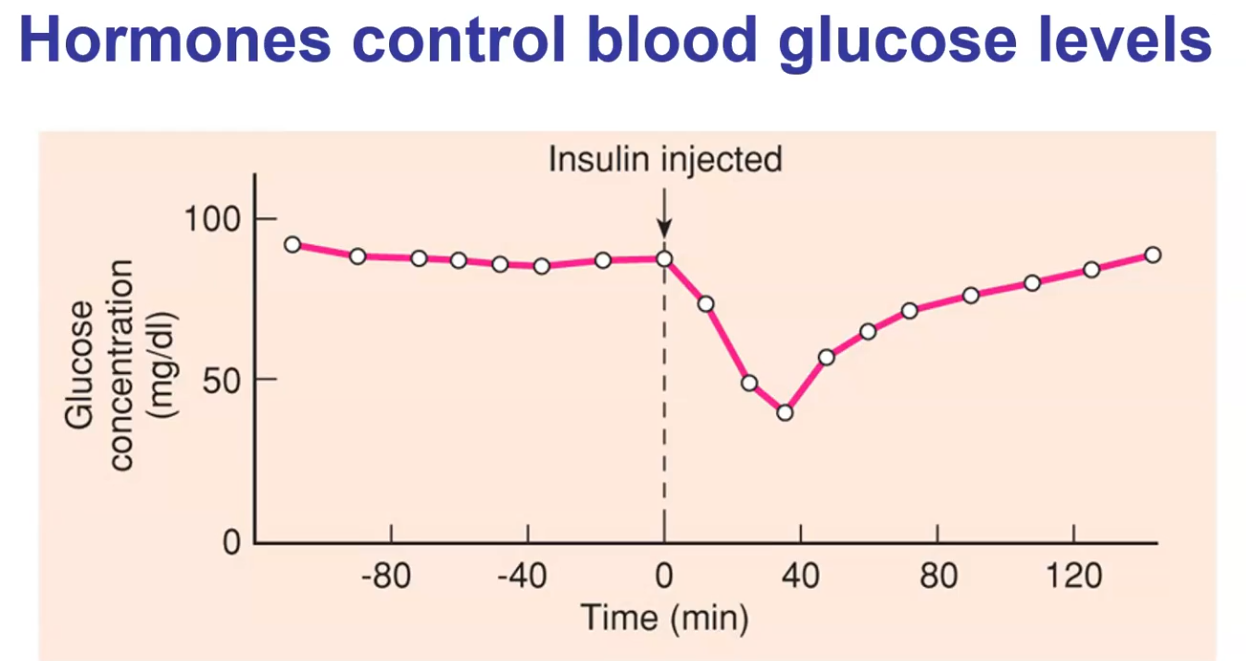
Can you explain on this diagram where the stimulus is?
Is it positive or negative and why?
Is it Autoregulation or Extrinsic regulation and why?
The stimulus is when it deviates from the set point.
This is a negative feedback because it brings Glucose concentration back to set point.
If it was positive it purple line would’ve continued going down.
This is extrinsic regulation (integrated by the endocrine system).
Anything integrated by the nervous/endocrine = extrinsic.
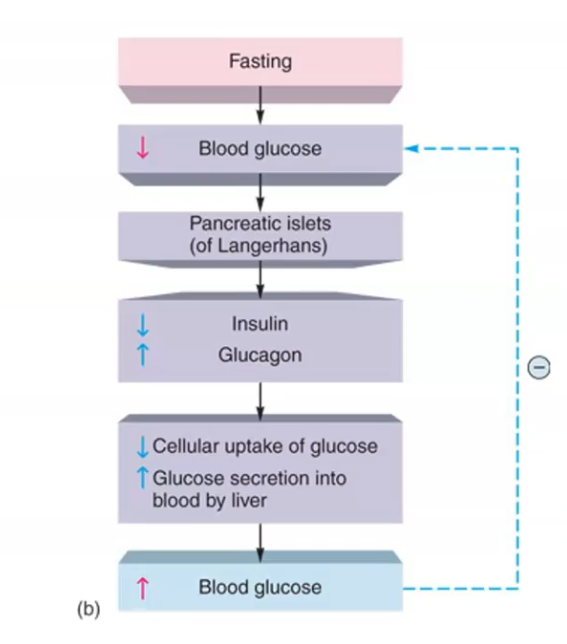
Explain this step by step
When you fast →
Blood glucose decreases (deviation from set point) →
Pancreatic islets (integration center) release insulin and glucagon →
Beta cells = stop releasing insulin.
Alpha cells = release glucagon.
When insulin decreases, glucagon increases (vice versa, these are antagonists) →
When blood glucose is low:
Cellular uptake decreases - cells take in less glucose so it stays in the blood because blood glucose is low.
Liver (effector) secretes more glucose into the blood — liver dumps stored glucose to raise levels back up. →
Blood glucose goes up.
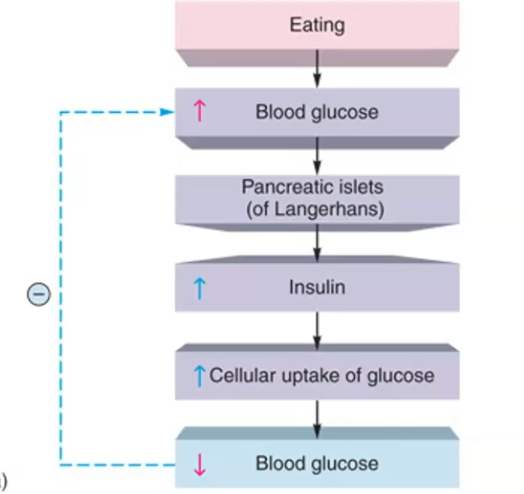
Explain this step by step
When you eat →
Blood glucose increases (deviation from set point) →
Pancreatic islets (integration) realizes we’re moving from set point, blood sugar is too high →
Pancreatic islets release insulin →
Insulin causes cells to absorb glucose →
When cells absorb glucose, it decreases blood glucose.
Summary:
Blood glucose levels are controlled by 2 effectors (insulin & glucagon).
Explain thermoregulation pathway (when temp rises above 37°C)
Stimulus:
Sensor:
Control center:
Effector:
Response:
Thermoregulation (-):
Stimulus: Body temp rises above ~37°C.
Sensor: Thermoreceptors.
Control center: Hypothalamus compares to set point.
Effector: Sweat glands.
Response: Sweat evaporates, cools body back to 98.6°F.
Explain childbirth pathway (Baby’s head pushes against cervix)
Stimulus:
Sensor:
Control center:
Effector:
Response:
Childbirth (+):
Stimulus: Baby's head pushes against cervix.
Sensor: Receptors.
Control center: Hypothalamus.
Effector: Oxytocin released.
Response: Stronger contractions.
Explain blood glucose regulation (when it rises after a meal)
Stimulus:
Receptor:
Control center:
Effector:
Response:
Blood glucose regulation (-):
Stimulus: Blood glucose rises after meal.
Receptor: Pancreatic β cells detect the rise.
Control center: Pancreas releases insulin.
Effector: Organs absorb glucose.
Response: Blood sugar level drops.
Explain blood pressure regulation (when it rises above normal)
Stimulus:
Receptor:
Control center:
Effector:
Response:
Blood pressure regulation (-):
Stimulus: Blood pressure rises above normal.
Receptor: Baroreceptors.
Control center: Cardiovascular center in the medulla.
Effector: Parasympathetic nervous system.
Response: Heart rate and vessel tone decrease.
Describe regulation of BP drop (when lying down)
Stimulus:
Sensor:
Effector:
Response:
BP drop regulation (-):
Stimulus: Blood pressure drops.
Sensor: Receptors stimulated.
Effector: Heart rate increases.
Response: Rise in blood pressure.