PHRM3550 Cancer
 Call Kai
 Learn
Learn Practice Test
 Spaced Repetition
 Match
Match Flashcards
 Knowt Play
1/106

There's no tags or description
Looks like no tags are added yet.
Name | Mastery | Learn | Test | Matching | Spaced | Call with Kai | Chat |
|---|
No analytics yet
Send a link to your students to track their progress
107 Terms
What are the four basic types of tissues?
- epithelial
- connective
- muscular
- nervous
Which types of tissue mainly develop into cancer?
epithelial and connective
What type of tissue is the most abundant?
Connective
What are some examples of connective tissue?
fat, dense fibrous, cartilage, bone, blood and lymph
What is cellular differentiation?
- the process by which cells or tissues become specialized, since they all develop from a single cell
- accomplished by selective gene transcription
Which connective tissues are most likely to develop cancer?
bone, blood, lymph
What is cellular plasticity?
the ability of a cell to originate from the same source and differentiate to perform different functions
What can normal cells do?
adhere or feely circulate, proliferate, migrate, differentiate, survive & resist apoptosis, age & undergo apoptosis
What is contact inhibition?
cells stop dividing when they touch or form a complete single layer
What are traits exhibited by cancer cells?
- divide uncontrollably (no contact inhibition)
- able to invade adjacent tissues
- spread to distant organs via circulation
- telomeres rebuild & cells never die
Lung cancer accounts for what percent of cancer deaths?
20%
What does cancer arise from?
mutation of a normal gene
What is a mutagen?
- factor causing mutation
- is mutagenic
- some are carcinogenic
What is a carcinogen?
- any agent that causes cancer
- not all mutagens are carcinogenic
Hyperplasia
- increased proliferation
- cells appear normal, is reversible
Dysplasia
- cells look abnormal
- reversible, often precancerous
How do normal cells become cancer cells?
normal->hyperplasia->dysplasia->cancer
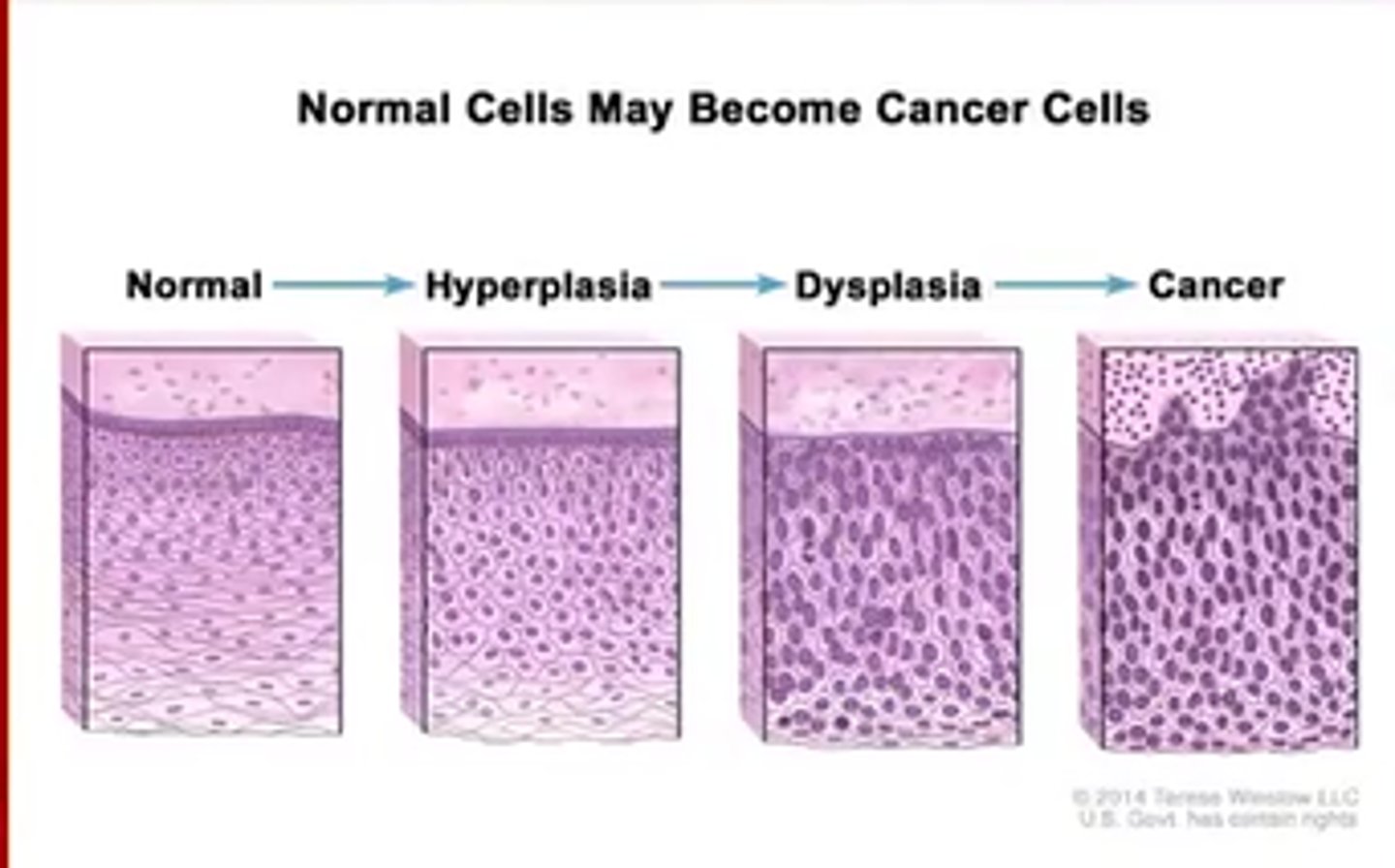
What is neoplasia?
- when genetic mutations cause abnormal cell growth
- cells do not die, they form tumors
- irreversible
What is an example of a cancer that does not form tumors?
leukemia
Describe benign tumors.
- can be removed by surgery
- well differentiated
- often has capsule of fibrous connective tissue
Describe malignant tumors.
- cancerous tumors that undergo metastasis
- grow quickly and invade surrounding areas
What is metastasis?
when malignant tumor cells migrate/break away from a primary site to a secondary site
What is a process that is crucial to metastasis?
- EMT: epithelial to mesenchymal transition
- cancer cells change shape and function
4 principles of carcinogenesis
1. abnormal new growth/invasion of cells
2. abnormal expression of certain genes
3. chromosomal abnormalities/ loss of properties
4. uncontrolled cell division, invasion, metastasis
How is cancer promoted or inhibited by the genes?
- Oncogenes: when activated they promote tumorigenesis
- Tumor suppressor genes: when activated, they inhibit abnormal cell growth
Two-hit model of cancer arising
1. hereditary susceptibility or new genetic mutation
2. mutagen/carcinogen exposure
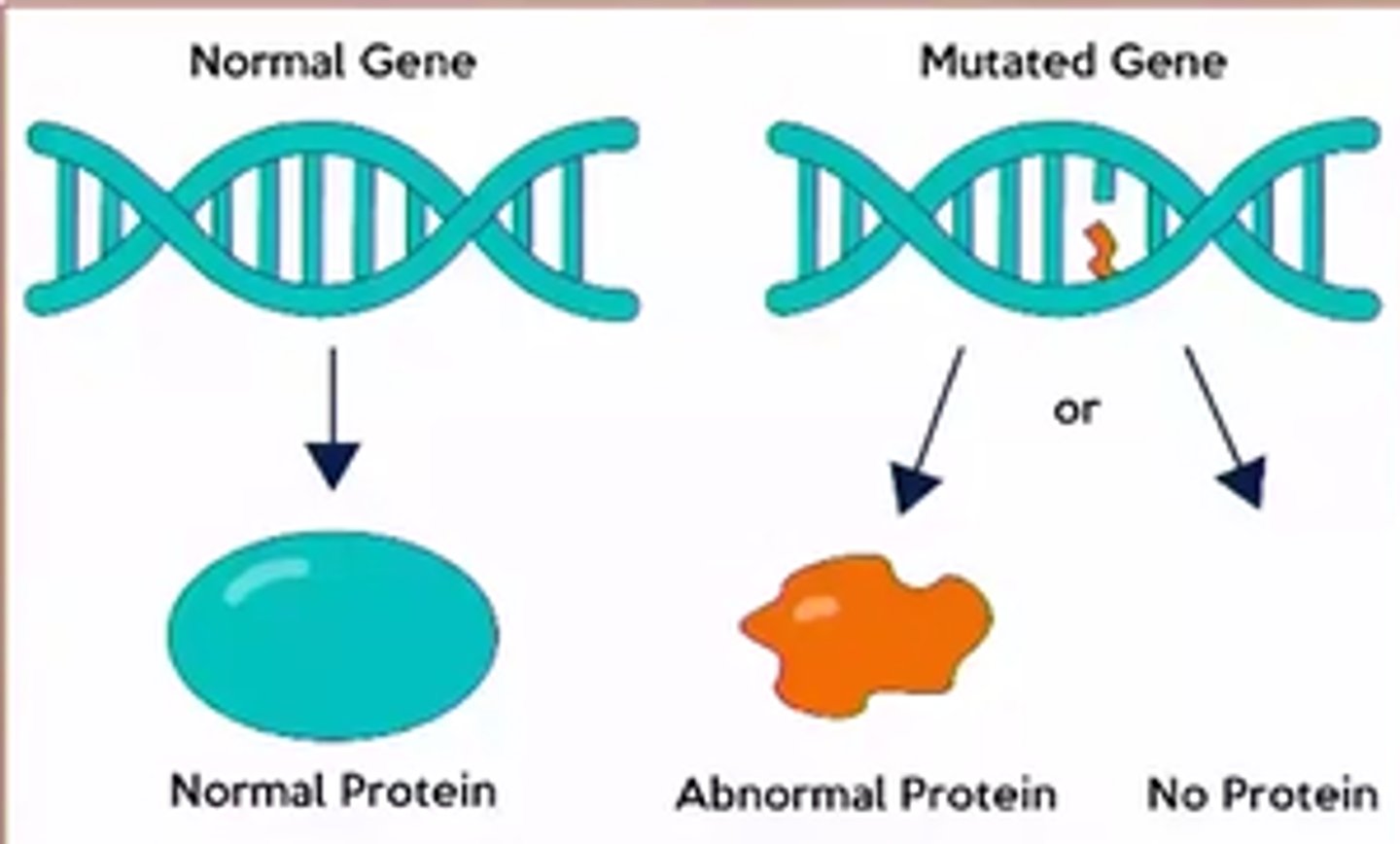
What is the source of oncogenes?
- mutation of a normal gene
- UV light, X rays, natural/synthetic chemicals
- Virus
Chromosomal translocation
- can activate an oncogene
- when piece of chromosome is translocated to a different chromosome which creates a new gene
What are the types of mutations that can cause cancer?
- point mutations
- chromosomal translocations
- gene amplification
What is loss of heterozygosity (LOH) in tumor suppressor genes?
both alleles of the tumor suppressor gene must be inactivated by mutation for hyper-proliferation to occur
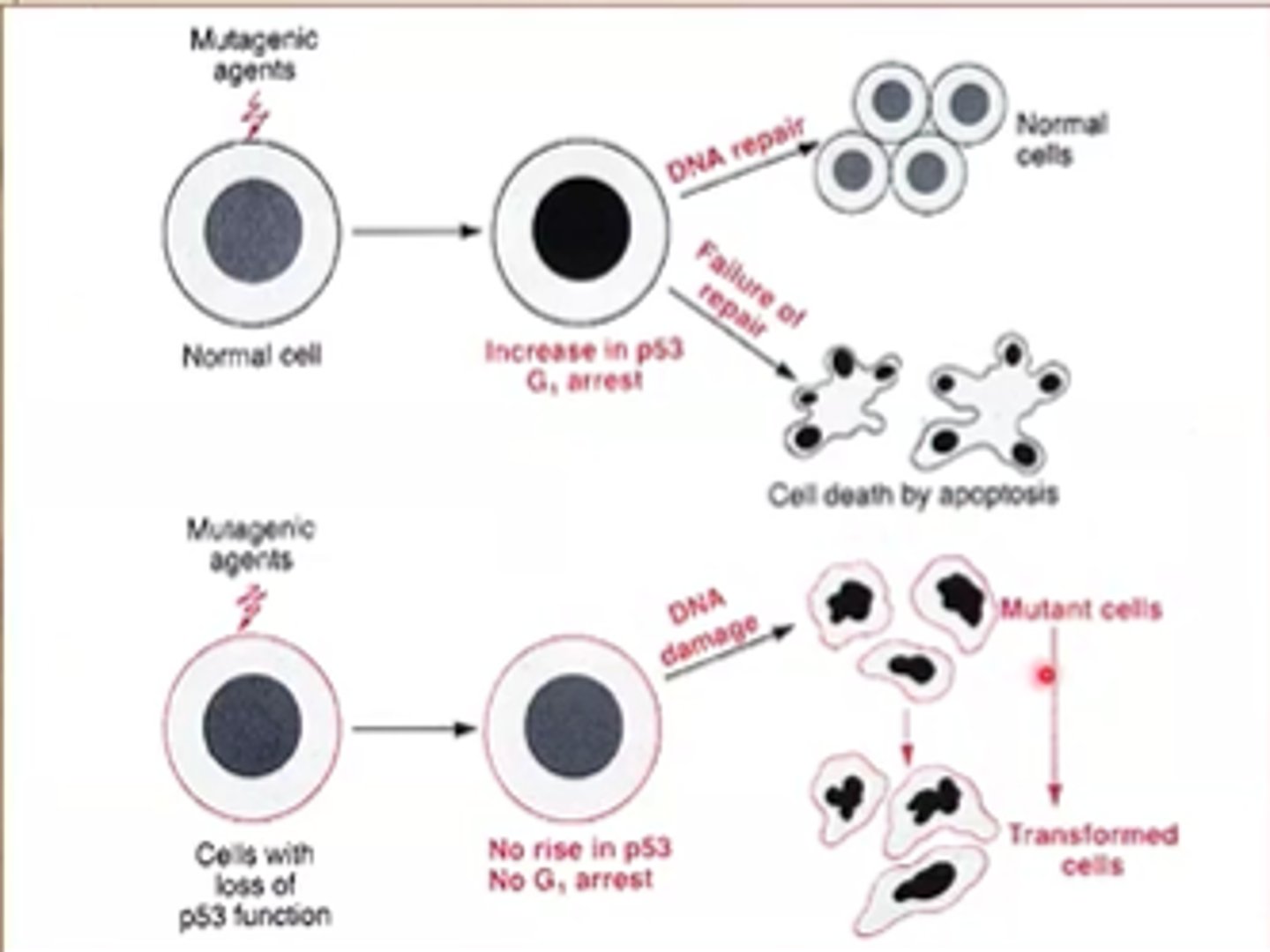
How does p53 prevent cells from becoming cancerous?
- Induces apoptosis or initiates DNA repair
- cells with loss of p53 function are more susceptible to mutagenic agents
What are some examples of carcinogens?
- ionizing radiation (x-rays, UV)
- chemical (cigarettes)
- virus infection
- hereditary predisposition
- physical agents
T/F You can inherit cancer
F
What is lifetime risk?
probability that an individual, over the course of a lifetime will develop cancer or die from it
What is relative risk?
measure of strength of the relationship between risk factors and a particular cancer
How do UV rays lead to cancer?
- forms pyrimidine dimers in DNA leading to mutations
- activates T-suppressor cells (inhibits T-cell immune response)
Who is susceptible to cancer caused by UV rays?
people with defects in the DNA excision-repair enzymes
All forms of ionizing radiation are carcinogenic, but what areas are particularly sensitive to it?
- bone marrow
- thyroid
- lungs
What are the two theories about the mechanism of radiation carcinogenesis?
- direct interaction with the DNA
- indirect damage mediated by free radicals
What factors affect the mutations caused by radiation?
- radiation quality
- dose
- efficiency of host DNA repair
- other host factors such as age, or immune deficiency
How does asbestos (carcinogenic fibrous minerals) affect the lungs?
- thick fibers lodge in the upper respiratory tract
- thin fibers lodge in terminal alveoli
Malignant mesothelioma
- characteristic tumor associated with asbestos
- occurs in pleural and peritoneal cavities
What cancers appear to run in families?
breast, stomach, colon, prostate, uterus, ovaries, and lung
What can increase a woman's risk of breast cancer?
pregnancy
oral contraceptives
What can reduce the risk of breast cancer?
late menarche, early menopause, early first childbirth, having many children
What are some occupational and environmental factors that can increase risk of developing cancer?
asbestos
nickel
chromate
benzene
arsenic
radioactive substances
coal tars
herbicides/pesticides
What viruses are involved in the development of cancer?
- Herpes-related viruses
- Epstein-Barr virus
- HPV
What medical factors could increase risk of cancer?
- old treatments such as DES
- estrogen supplementation
- chemotherapy for one cancer can increase risk for a different one
For most (solid) cancers, what is the primary site?
most important factor for prognosis and choice of treatment
In other cancers like haematological malignancies, what is the most important factor?
morphological classification
How do we diagnose cancer?
- clinical features
- microscopy (size/characteristics)
- specific tests for proteins
- immunophenotyping
- cytogenetics
What is the site of Hodgkin's and follicular lymphoma?
lymph nodes
What is the site of lymphoplasmocytic lymphoma?
bone marrow
Where can DLBCL (diffuse large b-cell lymphoma) occur?
any site including extranodal sites (sites outside of the lymph nodes)
Where does T-ALL/T-LBL occur?
- bone marrow
- thymus/mediastinal nodes
How is surgery used as a treatment for cancer?
remove solid tumors
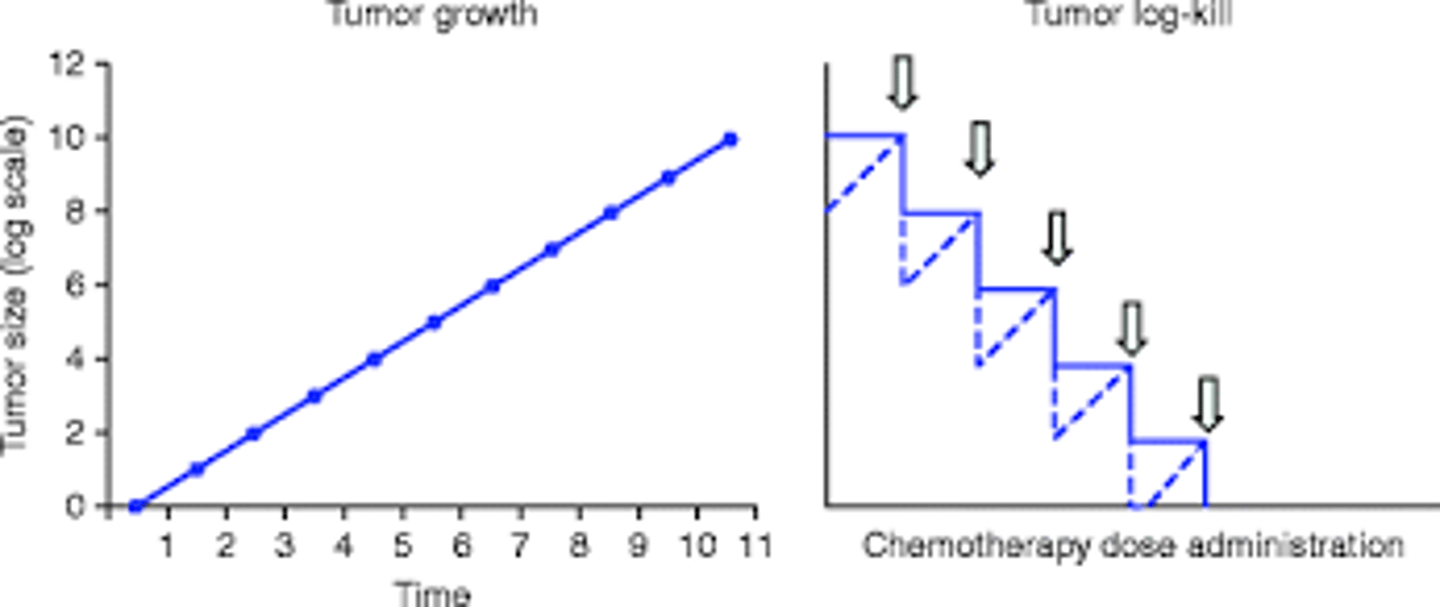
Log-kill hypothesis
- chemotherapeutic agents kill a constant fraction of cells rather than a specific number of cells after each dose
- first order kinetics
Growth Fraction=
proliferating cell group/total tumor cell group
What are the classifications used for anti-cancer drugs?
- by chemical structure/resource
- by biochemistry/MOA
- by the cycle or phase specificity of the drug
What are CCNSA & what does it stand for?
- cell cycle nonspecific agents
- drugs that are active throughout the cell cycle
What are CCSA & what does it stand for?
- cell cycle specific agents
- drugs that act during a specific phase of the cell cycle
What part of protein synthesis does methotrexate inhibit?
folic acid to THF
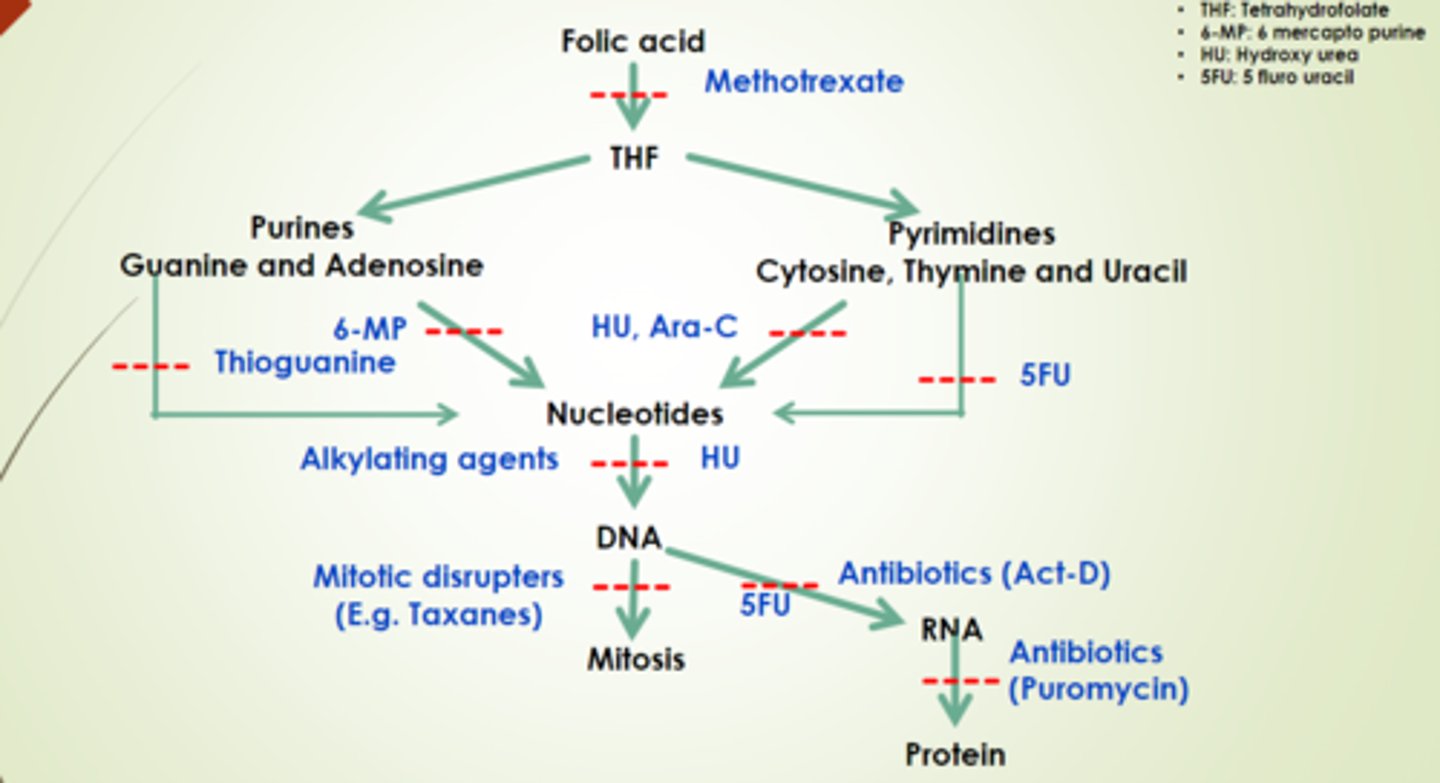
What do 6-MP and thioguanine inhibit?
purines to nucleotides
What do HU, 5FU, and Ara-C inhibit?
pyrimidines to nucleotides
What do alkylating agents and HU inhibit?
nucleotides to DNA
What do mitotic disrupters inhibit?
DNA to mitosis
What do antibiotics and 5FU inhibit?
DNA to RNA
What do antibiotics like puromycin inhibit?
RNA to protein
What is tumor angiogenesis?
- the rapid increase of blood vessels penetrating the cancerous growth for the supply of nutrients and oxygen
- required for tumor growth and metastasis
What is tumor angiogenesis induced by?
- genetic changes
- hypoxia
- glucose deprivation
- oxidative stress
What is anti-angiogenic therapy?
the treatment of tumors by disrupting their blood supply, depriving them of nutrients
What are the 4 essential steps of tumor angiogenesis?
1. tumor cells secrete growth factors and cytokines
2. tumor cells co-opt pre-existing vasculature (hijack existing blood vessels)
3. mobilization of BMDCs (recruit helper cells from bone marrow)
4. vascular mimicry (mimic blood vessels)
How do tumor cells secrete growth factors and cytokines?
activate endothelial cells
BMDCs
bone marrow derived stem cells
such as CD133+
How does tumor vasculature differ from the normal organized structure of the vascular network?
- has leaky permeability
- tumor perfusion (uneven blood flow)
- increased interstitial fluid pressure
- endothelial cells divide up to 40x more than normal
What are the components of a functional tumor unit?
- interaction between tumor cells
- vascular network
- its microenvironment
What is the relationship between the tumor and its microenvironment?
- mutual stimulation occurs between stroma and tumor parenchyma (cells & tissue around them)
- environment sustains growth, progression, and metastasis
Why is normal endothelium a good target for anti-angiogenic therapy?
Normal endothelium is quiescent (inactive), so therapy causes absent or only moderate toxicity to normal blood vessels.
Why is tumor endothelium a good target for anti-angiogenic therapy?
Tumor endothelium expresses specific targets and antigens, allowing selective anti-tumor activity.
How does the accessibility of tumor endothelium help therapy?
Tumor endothelium is readily accessible, making systemic therapy more effective.
How do activated endothelial cells (ECs) contribute to tumor growth?
Activated ECs promote tumor growth by paracrine effects (sending growth signals), and targeting them can work cooperatively with conventional anti-cancer agents.
Direct angiogenic inhibitors
- block endothelial cells directly
- usually present in human body
- ex: angiostatin and endostatin
Indirect angiogenic inhibitors
- disrupts contact between tumor cells and ECs that promote angiogenesis
- ex: bevacizumab and VEGF-Trap
Miscellaneous angiogenic agents
- inhibit indirectly through other pathways
- don't just inhibit ECs; have other effects
- ex: thalidomide, MMP inhibitors, Cox-2 inhibitors
What are some side effects of anti-angiogenic therapy?
Renal side effects
Thrombosis/Hemorrhage
Hypertension
Heart failure
How does anti-angiogenic therapy cause renal side effects?
- Podocytes (special kidney cells) release VEGF, which helps maintain fenestrations (tiny pores) in the glomerular endothelium (which are critical for filtering blood).
- AA therapy blocks VEGF, which damages filtration barrier, reduces permeability, and raises the risk of thrombotic microangiopathy.
How does AA therapy cause thrombosis/hemorrhage?
- endothelial lining is destabilized from the blockage of VEGF --> makes vessels fragile (hemorrhage)
- damaged endothelium exposes molecules that promote clotting (thrombosis)
How does AA cause hypertension?
- inhibits VEGF-P13 kinase-Akt-eNOS pathway
- decreases NO production --> less vasodilation and more constriction --> vasoconstriction leads to hypertension
What is a "class effect" of Anti-VEGF agents?
- hypertension
~ 15% of patients taking bevacizumab develop
What is a side effect of AA therapy reported on use of Sunitinib?
heart failure
What is immune surveillance?
a constant monitoring process aimed at eliminating emerging cancers
How do we know there is an immune response to tumors?
- infiltrate of lymphocytes and macrophages associated with better prognosis
- peripheral blood NK correlates with survival
- peripheral blood lymphocyte count falls as cancer progresses
- some vaccines can stimulate macrophages and improve prognosis
- higher incidence of tumors in immunosuppressed
What are cytotoxic T lymphocytes?
lymphocytes that recognize tumor antigens and directly kill tumor cells
What are helper T lymphocytes?
- "commanders" that give the orders to other cells
- they release IL-2 and IFNy which stimulate CTL, macrophages, NK cells, and B lymphocytes
- also produce TNFa
How can NK cells fight cancer cells?
- they can attack tumor cells directly without antibody help or by antibody dependent cell cytotoxicity (ADCC), utilizing the Fc receptor on NK cells
What are killer macrophages?
- activated by IFNy from Helper T lymphocytes
- participate in ADCC and can lyse tumor cells through release of TNFa
What cells make antibodies against tumor antigens that can kill tumor cells by complement activation (poking holes in tumor cells)?
B lymphocytes/plasma cells
What are LAK cells?
- lymphokine activated killer cells
- super-charged immune cells grown outside the body
- CTL and NK cells taken from tumor and activated by IL-2 and IFNy in vitro
- TILs
What are TILs?
- tumor infiltrating lymphocytes
- can be expanded in vitro and reintroduced to patient
What are some mechanisms of tumor resistance to immune response?
- weak antigens: immune system can't mount strong attack
- antibodies bind TAA to cover them up from immune cells
- tumors can "shed" their antigens into the blood to distract the immune cells
- if there are too many tumor antigens at once, the immune system will give up or "become tolerant"