Med Terms Ch4: Integumentary System
 Call Kai
 Learn
Learn Practice Test
 Spaced Repetition
 Match
Match Flashcards
 Knowt Play
1/152

There's no tags or description
Looks like no tags are added yet.
Name | Mastery | Learn | Test | Matching | Spaced | Call with Kai | Chat |
|---|
No analytics yet
Send a link to your students to track their progress
153 Terms
epidermis
outer layer of the skin
keratin
scleroprotein component of the horny, or cornified, layer of the epidermis. It is also contained in the hair and nails.
melanin
color, or pigmentation, of the skin
dermis
inner layer of skin (also called the true skin)
sudoriferous glands (sweat glands)
tiny, coiled, tubular structures that emerge through pores on the skin's surface and secrete sweat
sebaceous glands
secrete sebum (oil) into the hair follicles where the hair shafts pass through the dermis
hair
compressed, keratinized cells that arise from hair follicles, the sacs that enclose the hair fibers
nails
originate from the epidermis; found on the upper surface of the ends of the fingers and toes; white area at the base of the nail is called the lunula/moon
cutane/o, derm/o, dermat/o
skin (combining form)
hidr/o
sweat (combining form)
kerat/o
horny tissue, hard (combining form)
onych/o, ungu/o
nail (combining form)
seb/o
sebum (oil) (combining form)
trich/o
hair (combining form)
aut/o
self (combining form)
bi/o
life (combining form)
coni/o
dust (combining form)
crypt/o
hidden (combining form)
heter/o
other (combining form)
myc/o
fungus (combining form)
necr/o
death (cells, body) (combining form)
pachy/o
thick (combining form)
rhytid/o
wrinkles (combining form)
staphyl/o
grapelike clusters (combining form)
strept/o
twisted chains (combining form)
xer/o
dry (combining form)
epi-
on, upon, over
intra-
within
para-
beside, beyond, around, abnormal
per-
through
sub-
under, below
trans-
through, across, beyond
-a
noun suffix, no meaning
-coccus (pl. -cocci)
berry-shaped (form of bacterium)
-ectomy
excision or surgical removal
-ia
diseased or abnormal state, condition of
-itis
inflammation
-malacia
softening
-opsy
view of, viewing
-phagia
eating or swallowing
-plasty
surgical repair
-rrhea
flow, discharge
-tome
instrument used to cut
dermatitis
inflammation of the skin
dermatoconiosis
abnormal condition of the skin caused by dust
dermatofibroma
fibrous tumor of the skin
hidradenitis
inflammation of a sweat gland
leiodermia
condition of smooth skin
leukoderma
white skin (white patches caused by depigmentation)
onychocryptosis
abnormal condition of a hidden nail (ingrown nail)
onychomalacia
softening of the nails
onychomycosis
abnormal condition of a fungus in the nails
onychophagia
eating the nails (nail biting)
pachyderma
thickening of the skin
paronychia
diseased state around the nail
seborrhea
discharge of sebum
trichomycosis
abnormal condition of a fungus in the hair
xeroderma
dry skin (a mild form of a cutaneous disorder characterized by keratinization and noninflammatory scaling)
abrasion
scraping away of the skin by mechanical process or injury
abscess
localized collection of pus
acne
inflammatory disease of the skin involving the sebaceous glands and hair follicles
actinic keratosis
precancerous skin condition of horny tissue formation that results from excessive exposure to sunlight; may evolve into squamous cell carcinoma
albinism
congenital hereditary condition characterized by partial or total lack of pigment in the skin, hair, and eyes
basal cell carcinoma (BCC)
epithelial tumor arising from the epidermis. It seldom metastasizes but invades local tissue. Common in individuals who have had excessive sun exposure.
candidiasis
infection of the skin, mouth (also called thrush), or vagina caused by the yeast-type fungus Candida albicans
carbuncle
skin infection composed of a cluster of boils caused by staphylococcal bacteria
cellulitis
inflammation of the skin and subcutaneous tissue caused by infection, characterized by redness, swelling, and fever
contusion
injury with no break in the skin, characterized by pain, swelling, and discoloration (also called a bruise)
eczema
noninfectious, inflammatory skin disease characterized by redness, blisters, scabs, and itching
fissure
slit or cracklike sore in the skin
furuncle
painful skin node caused by staphylococcal bacteria in the hair follicle (also called a boil)
gangrene
death of tissue caused by loss of blood supply followed by bacterial invasion
herpes
inflammatory skin disease caused by herpes virus characterized by small blisters in clusters
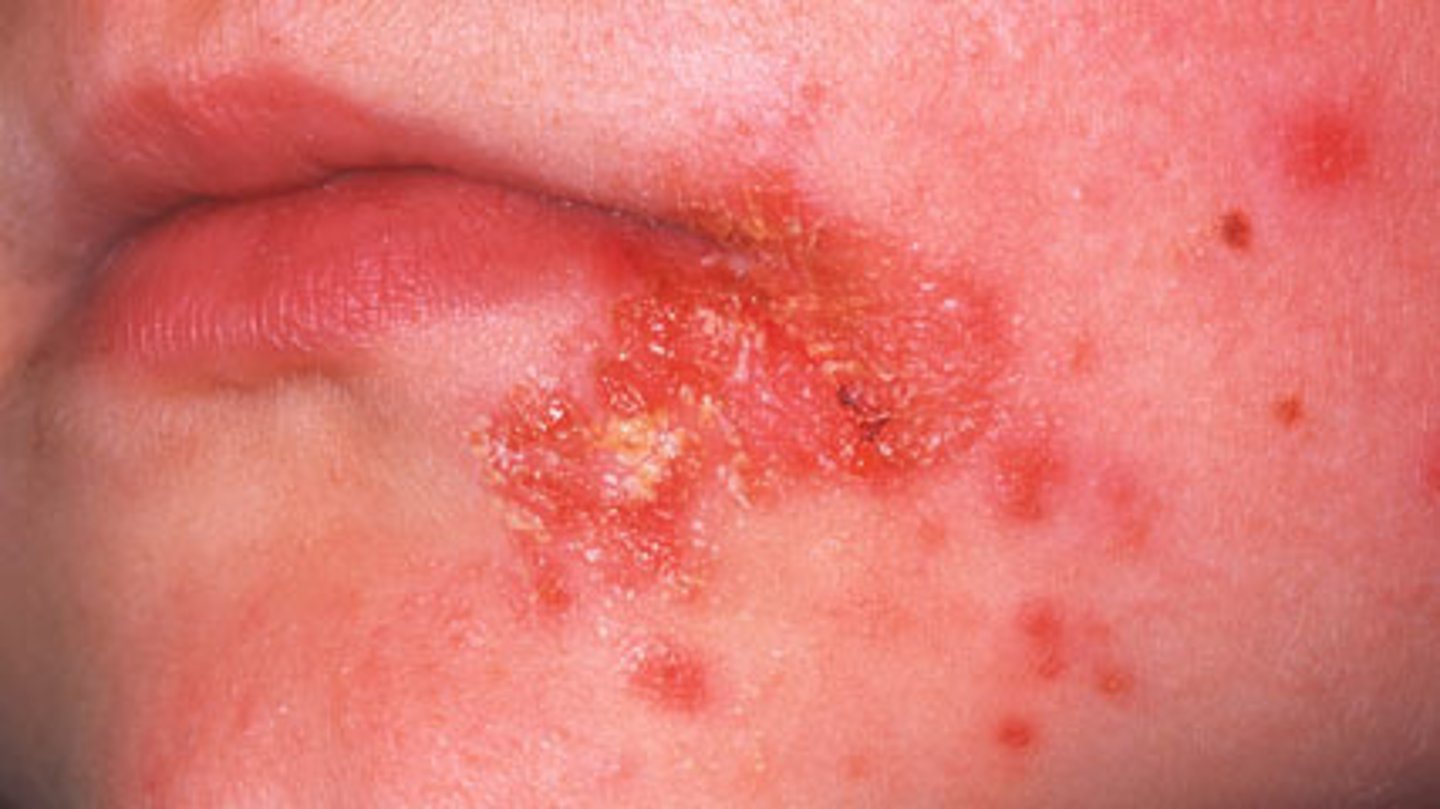
impetigo
superficial skin infection characterized by pustules and caused by either staphylococci or streptococci
infection
invasion of pathogens in body tissue
impetigo
bacterial infection
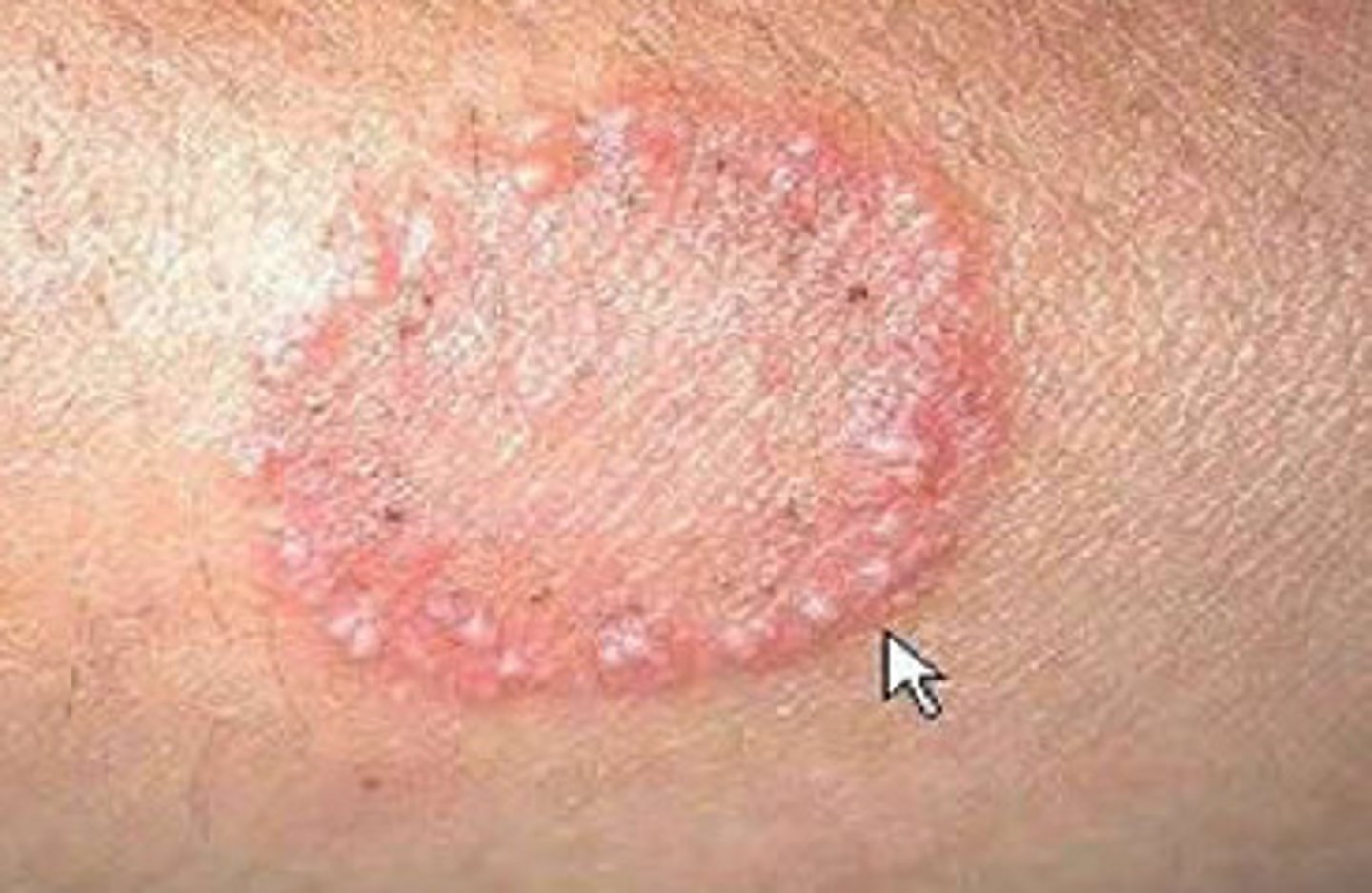
tinea
fungal infection of the skin; may infect keratin of the skin, hair, and nails; infections are classified by body regions such as tinea capitis (scalp), tinea corporis (body), and tinea pedis (foot); ringworm; athlete's foot
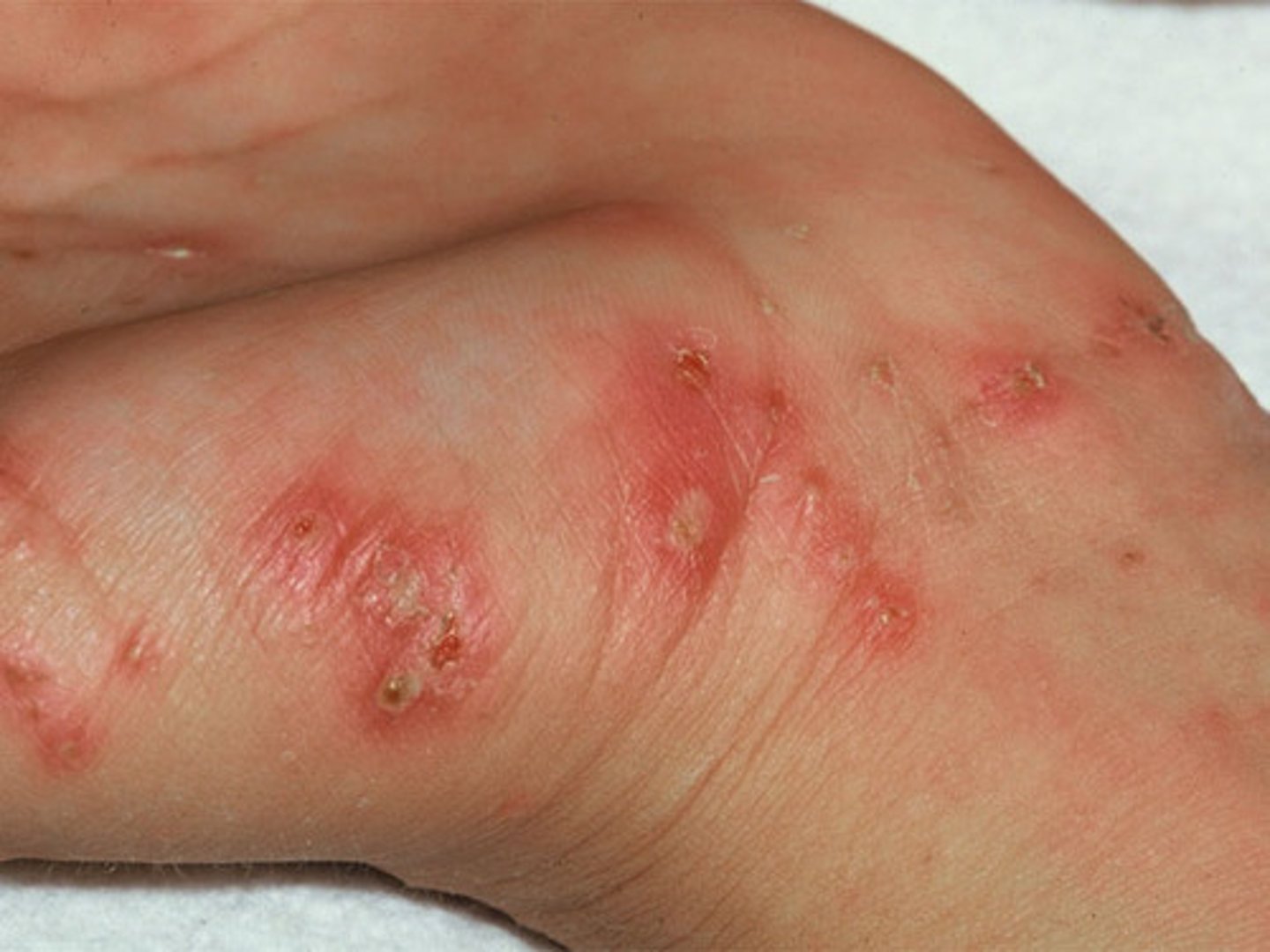
scabies
skin infection caused by the itch mite, characterized by papule eruptions that are caused by the female burrowing into the outer layer of the skin and laying eggs
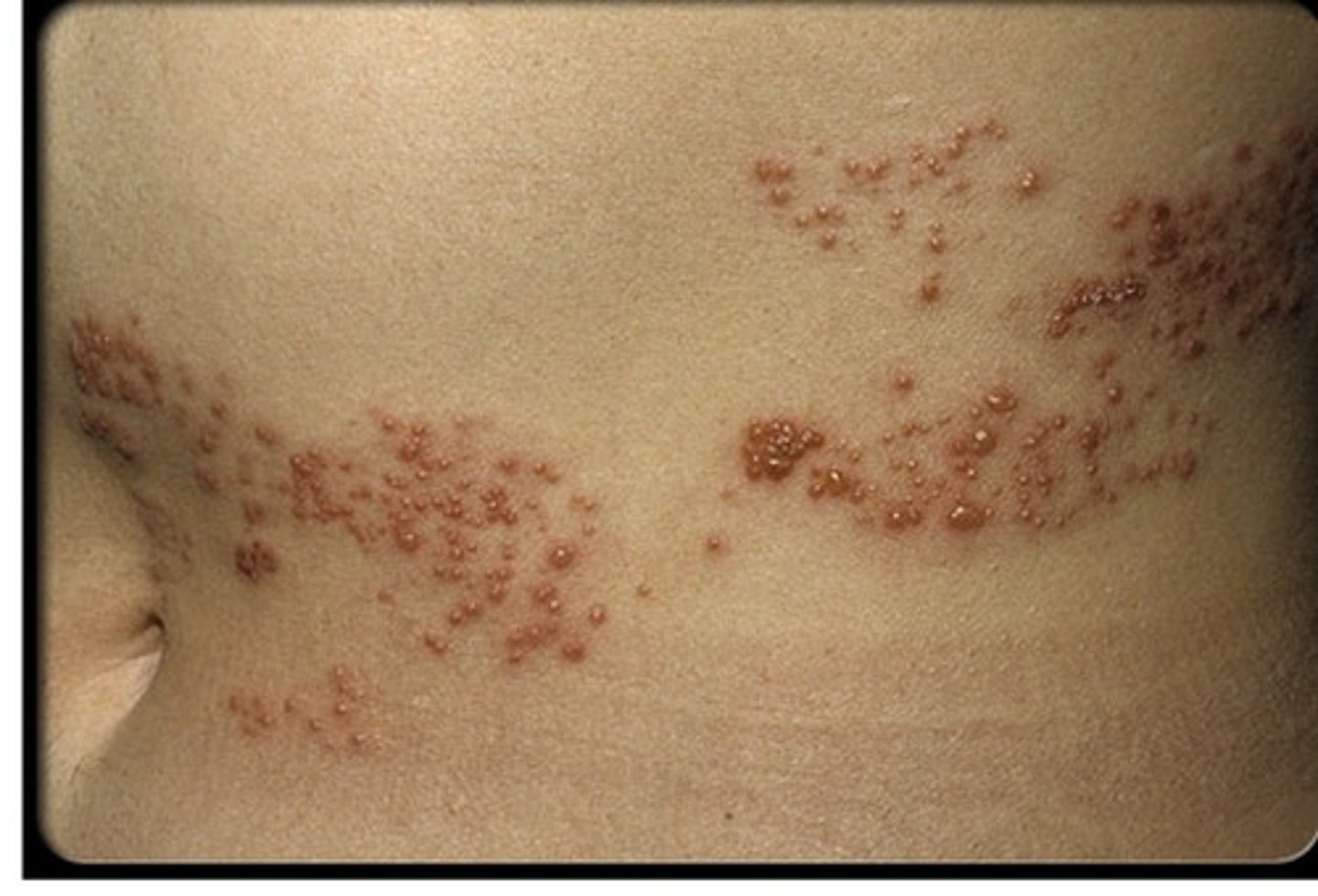
Herpes zoster (shingles)
viral infection
Kaposi sarcoma
cancerous condition starting as purple or brown papules on the lower extremities that spreads through the skin to the lymph nodes and internal organs; frequently seen with AIDS
laceration
torn, ragged-edged wound
lesion
any visible change in tissue resulting from injury or disease
MRSA infection
invasion of the body tissue by methicillin-resistant, a strain of common bacteria that has developed resistance to methicillin and other antibiotics.
pediculosis
invasion into the skin and hair by lice
psoriasis
chronic skin condition producing red lesions covered with silvery scales
rosacea
chronic disorder of the skin that produces erythema, papules, pustules, and broken blood vessels, usually occurring on the central area of the face in people older than 30 years
scleroderma
disease characterized by chronic hardening (induration) of the connective tissue of the skin and other body organs
squamous cell carcinoma (SqCCA)
malignant growth that develops from scalelike epithelial tissue. Unlike basal cell carcinoma, there is a significant potential for metastasis. The most frequent cause is chronic exposure to sunlight
systemic lupus erythematosus (SLE)
chronic inflammatory disease involving the skin, joints, kidneys, and nervous system, characterized by periods of remission and exacerbations, may affect other organs
urticaria
itchy skin eruption composed of wheals (an individual hive) of varying sizes and shapes; hives
vitiligo
white patches on the skin caused by the destruction of melanocytes associated with autoimmune disorders
biopsy (bx)
view of life (the removal of living tissue from the body to be viewed under the microscope)
dermatoautoplasty
surgical repair using one's own skin (skin graft) (also called autograft)
dermatoheteroplasty
surgical repair using skin from others (skin graft) (also called allograft)
dermatome
instrument used to cut skin (in thin slices for skin grafts)
dermatoplasty
surgical repair of the skin
onychectomy
excision of a nail
rhytidectomy
excision of wrinkles (also called facelift)
rhytidoplasty
surgical repair of wrinkles
cauterization
destruction of tissue with a hot or cold instrument, electric current, or caustic substance (also called cautery)