3.4 Materials
 Call Kai
 Learn
Learn Practice Test
 Spaced Repetition
 Match
Match Flashcards
 Knowt Play
1/49

Earn XP
Description and Tags
50 Terms
Define elastic deformation
When a material can return to its original shape and size once any forces on it are removed
Define plastic deformation
When a material remains permanently deformed and does not return to its original shape and size once any forces on it are removed
Define the elastic limit of an object or material
The point where the material becomes permanently deformed and will not return to its original length or shape once any forces are removed
State Hooke’s law
The extension (or compression) of a spring is directly proportional to the force exerted on it (up to its limit of proportionality)
What is the formula for Hooke’s law?
F = kx
State the formula for springs in parallel
k꜀ = k₁ + k₂ + …
State the equation used to calculate the elastic potential energy stored by an elastically deformed object
Eₚ = ½ Fx (Eₚ = ½ kx²)
Define the tensile stress on an object
The force stretching it divided by its cross-sectional area (σ = F / A)
Define the tensile strain on an object
The object’s extension divided by its original length (ε = ∆L / L)
Define the Young’s Modulus of a material
Stress / strain
Define the limit of proportionality on a material
The point up to which its stress and strain are proportional to each other, where Hookes law is obeyed
Define deformation
Change in shape / size of an object
Define elasticity
The ability to return to its og state once deformed when stress is removed
Define plastic
When the object is unable to return to its og shape after stress is removed
Define tension
Pulling force of two opposite and equal forces
Define compression
Squashing force of two opposite and equal forces
Define shear
When two parallel & opposite forces are applied
Define hardness
Ability to resist indentation & abrasion
Define toughness
The ability to absorb energy before breaking
Define ductility
The ability to permanently deform before failure
Define fracture
When a crack or break occurs in the material
Define strength
Ability to resist fracture
Define stiffness
Ability to resist elastic deformation
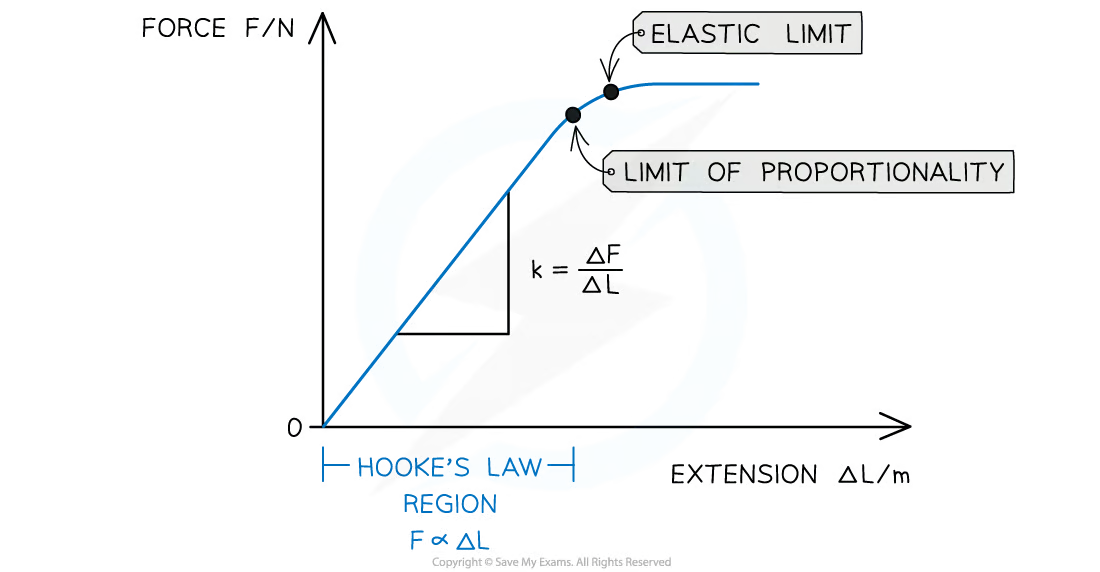
Where on the force-extension graph does elastic behaviour occur?
When the line is straight & the material can return to its og shape
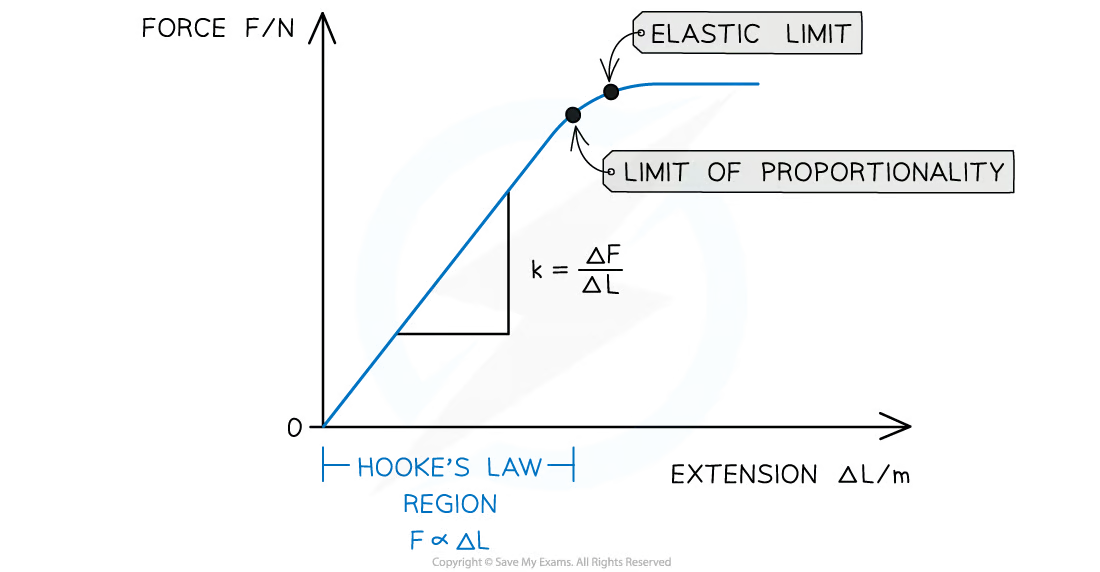
Where on the force-extension graph does plastic behaviour occur?
After the elastic limit (the material cannot return to its og shape)
What is the elastic limit?
Where a material can no longer return to its og shape
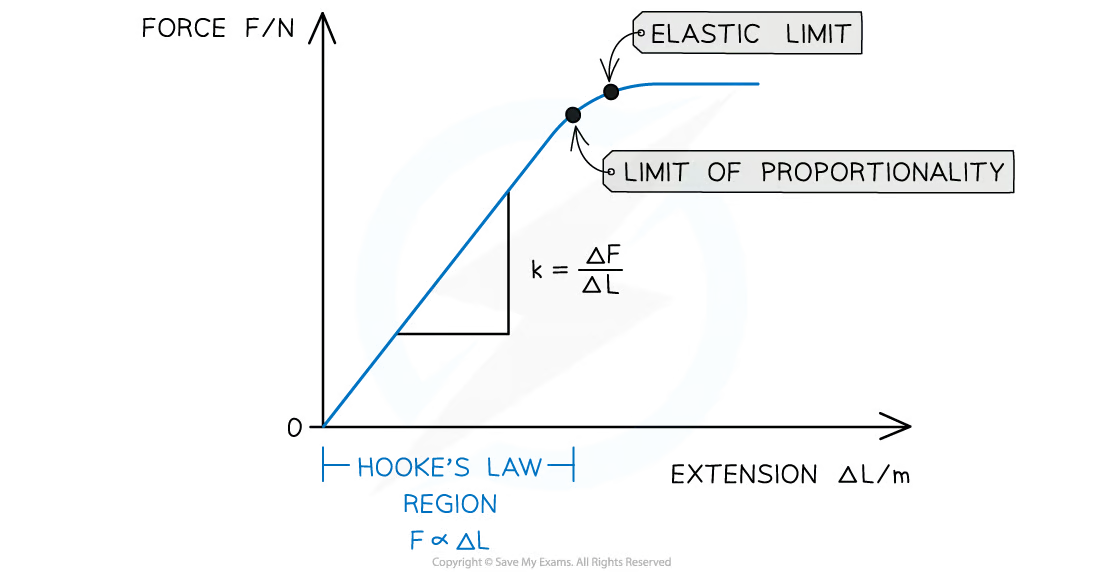
Where on the force-extension graph does the breaking point occur?
When the curve stops, the material breaks
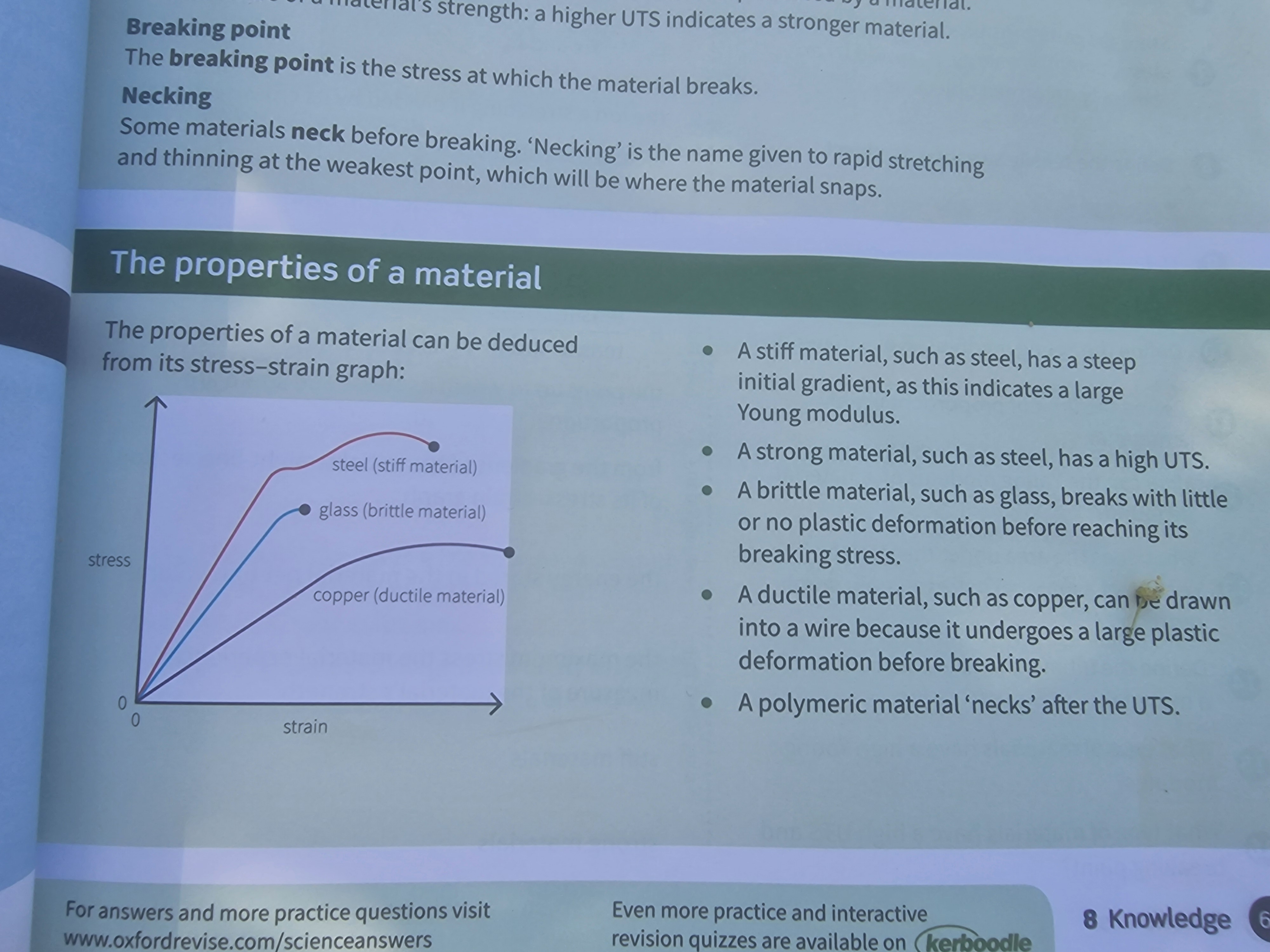
How can Young’s modulus of a material be found on a stress-strain graph?
From the gradient of the the initial straight line section
What does the area under the straight line section of a material’s stress-strain graph represent?
The energy stored
What is the formula for springs in parallel?
kₜ=k₁+k₂+…
What is the formula for springs in series?
1/kₜ=1/k₁+1/k₂+…
What happens to springs in parallel when in combination?
They become stiffer than usual as the springs share the load ∴ the same forced will cause less extension
What happens to springs in series when in combination?
They become less stiff than usual as the springs have the full load ∴ the same forced will cause more extension
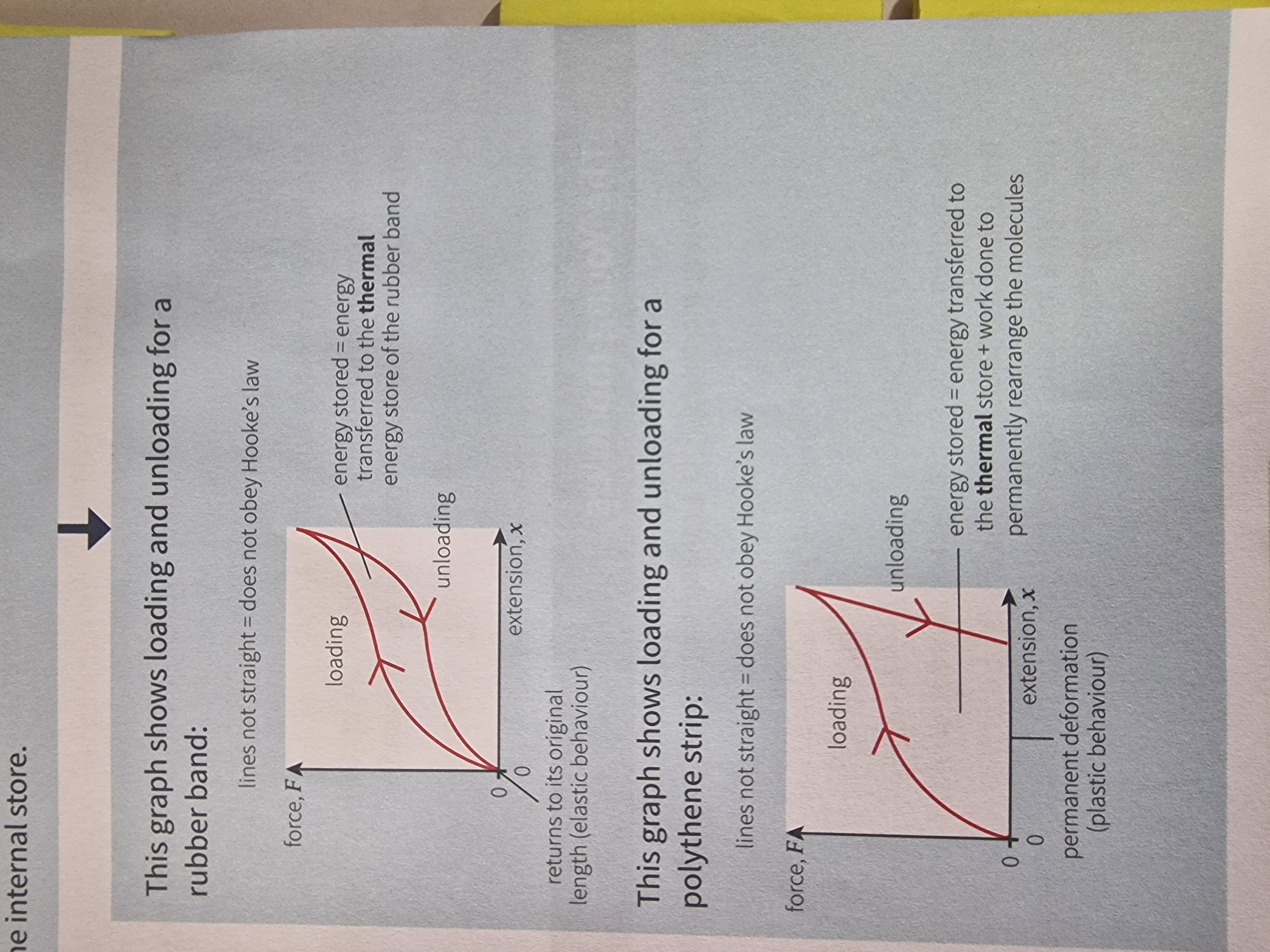
What is the difference between the area under the loading and unloading lines of a force-extension graph?
Loading - energy stored in a material as it is deformed
Unloading - energy transferred back out of the material into external stores as the load is removed
What does it mean when the loading and unloading lines are the same on a force-extension graph?
All the stored elastic potential energy is transferred back into external stores when the force is removed
What does it mean when the loading and unloading lines are not the same on a force-extension graph?
Some energy remains in the internal store of the material, where the area between the lines is the amount of energy in the internal store
What is the equation for Hooke’s law?
Eₚ = ½ Fx
What equation relates force, constant and extension?
F = ½ kx²
Define tension
When the forces acting on the object are stretching it
Define compression
When the forces acting on the object are squashing it
Equation for tensile strength
When the force stretching it divided by its cross-sectional area (σ = F / A)
Define tensile strain
The extension divided by its original length (ε = x / L)
Define youngs modulus
The measure of the stiffness of a material, and it only applies up to the limit of proportionality
Does the Youngs modulus of an object depend on size and shape?
No
What is the limit of proportionality?
The point where after Hooke’s law is not obeyed
What is the elastic limit?
Where the deformation is plastic from that point onwards, and the material will not return to its original size and shape when stress is removed
What is the UTS?
The maximum stress experienced by a material, where the higher the UTS, the stronger the material
What is necking?
The rapid stretching and thinning at the weakest point, where the material will snap