tectonics 1
 Call Kai
 Learn
Learn Practice Test
 Spaced Repetition
 Match
Match Flashcards
 Knowt Play
1/20

There's no tags or description
Looks like no tags are added yet.
Name | Mastery | Learn | Test | Matching | Spaced | Call with Kai | Chat |
|---|
No analytics yet
Send a link to your students to track their progress
21 Terms
What is the plate tectonic theory?
lithosphere
consists of the uppermost part of the mantle + crust
solid parts of the Earth
divided into huge parts called “tectonic plates”
continental (land masses)
oceanic (seafloor; denser than continental)
asthenosphere
semi-solid
lies below the lithosphere
heat from the core causes rocks in this layer to melt
Plate Boundaries
divergent plate boundaries
convergent plate boundaries
transform plate boundaries
2 Forces Responsible for Plate Movement
slab-pull force
convection currents
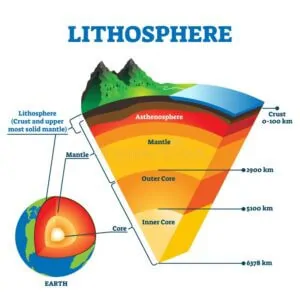
What are the characteristics of the layers of the Earth?
Core
innermost layer (position)
highest temperature
4400°C - 6000°C
thickest layer
3300km
Mantle
in between core and crust
temperature of
1000°C - 3700°C
thickness of
2900km
Crust
outermost layer (position)
lowest temperature
thinnest layer
6-70km
How do convection currents lead to tectonic plate movement?
1) Heat from the Earth’s core causes
mantle magma to become less dense
2) The mantle magma rises towards the surface
3) Rising mantle magma spreads beneath the plate
dragging them apart
→ causing divergent plate movement
4) Mantle magma loses heat
sinking towards the core
5) Convergent plate movement occurs where the
convection currents collide
6) Mantle magma is heated up again
the process repeats
rising and sinking of the magma forms convection currents
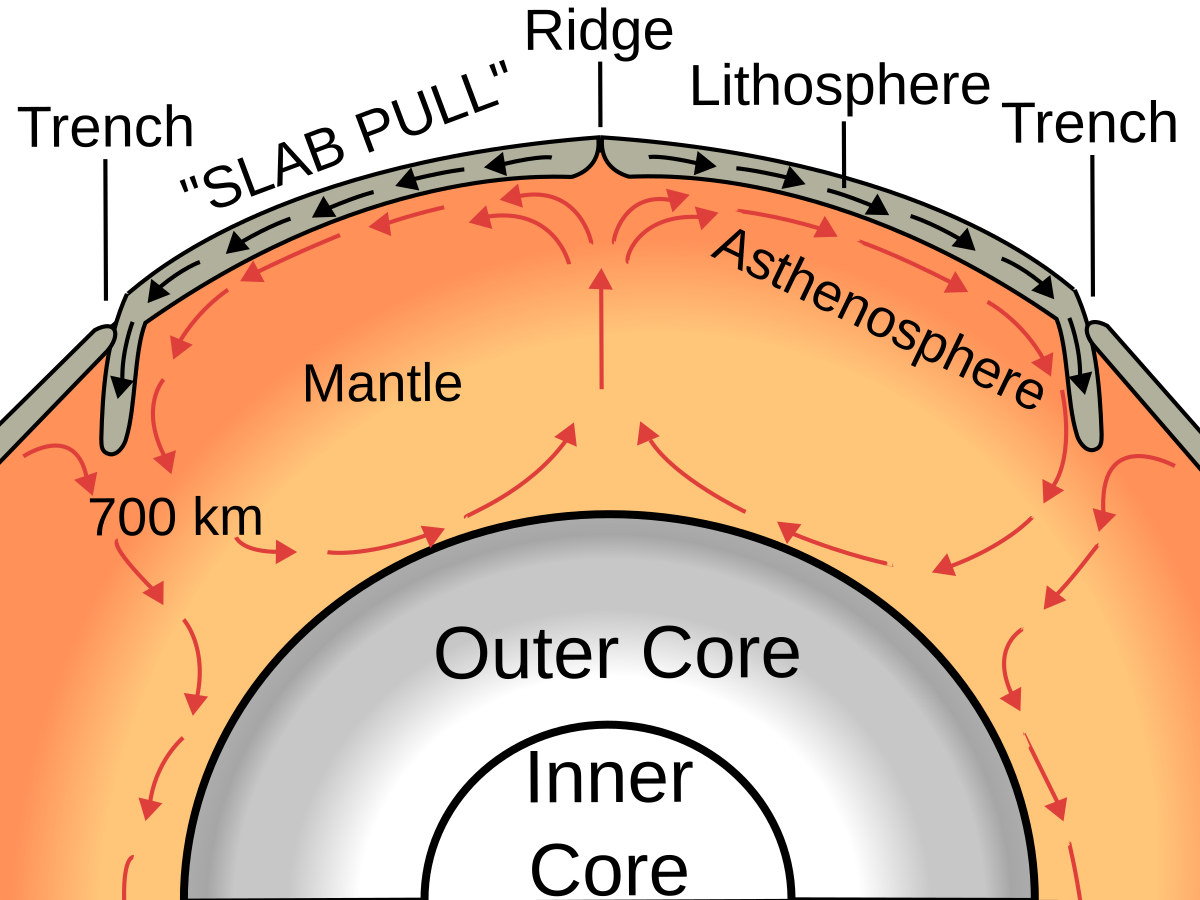
How does slab-pull force lead to tectonic plate movement?
1) when 2 plates converge
the denser oceanic plate is pulled down by gravity
subducting beneath the less dense crust
2) the denser ocean crust sinks deeper into the mantle
under its own weight
then pulling the rest of the plate with it
→ contributing to further convergence
What is the evidence of seafloor spreading?
1) seafloor spreading occurs at
divergent plate boundaries
where 2 plates move away from each other
2) magma from deep within the earth rises through the
mid-ocean ridge
undersea volcanic mountains formed @ divergent plate boundaries, where seafloor is created (fyi)
3) new oceanic crust is formed
How does seafloor spreading support the plate tectonics theory? (i.e., how does this process show that plates move?) (1/2)
1) Ages of Rock (at the seabed)
shows a pattern
rocks nearer to the center of the mid-ocean ridge
→ the youngest
rocks further away from the ridge are
→ progressively older
∴ shows that at divergent plate boundaries
new oceanic crust is continuously formed
crust moves laterally on both sides of the mid-ocean ridge
as seafloor spreading continues
How does seafloor spreading support the plate tectonics theory? (i.e., how does this process show that plates move?) (2/2)
2) Limited Sediment Accumulation
limited sediment accumulation is found at oceanic trenches
as older oceanic crust is being destroyed at oceanic trenches
∴ oceanic crusts are usually younger than continental crusts
this proves that
new crust is continually formed at divergent boundaries
at the mid-ocean ridges
as plates move, older crust is destroyed further away
at oceanic trenches
girl
bitch fuck u
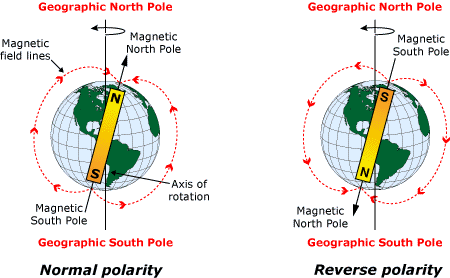
What is normal and reverse polarity?
Normal Polarity
magnetic North points roughly towards the
geographical North
magnetic South points roughly towards the
geographical South
Reverse Polarity
magnetic North points roughly towards the
geographical South
magnetic South points roughly towards the
geographical North
Overtime, Earth’s polarity has flipped multiple times
alternating between normal and reverse polarity
What is magnetic striping?
the zebra-like pattern where
there’s strips of normal polarity rocks
alternating alongside strips of reversed polarity rocks on the seafloor
it’s symmetrical on both sides of the
mid-ocean ridge
∴ stripes of rock on the seafloor with alternating magnetic properties
occurs on
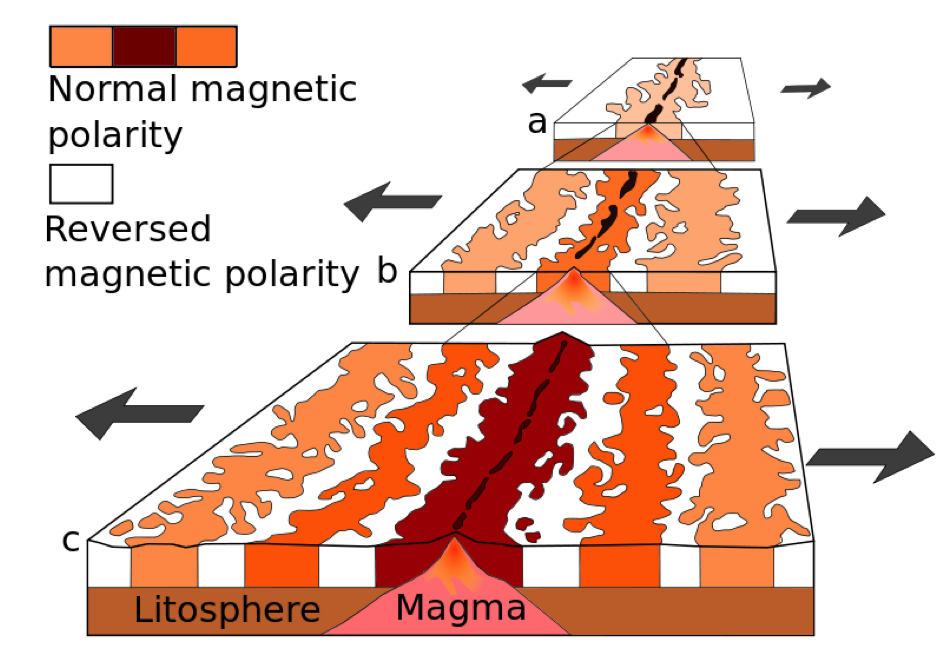
How does evidence of magnetic striping support the plate tectonic theory? (1/2)
1) Presence of Basaltic Rocks
basaltic rocks from the oceanic crust (FYI)
are volcanic rocks formed from iron-rich lava
contains iron-rich magnetic materials
when the iron-rich lava erupts from the centre of the mid-ocean ridge
it cools and solidifies
→ its magnetic materials point towards Earth’s magnetic North
recording evidence of Earth’s polarity at that time
How does evidence of magnetic striping support the plate tectonic theory? (2/2)
2) Symmetrical Zebra-Like Magnetic Pattern on both sides of the Mid-Ocean Ridge
zebra-like pattern is symmetrical on either side of the mid-ocean ridges
shows that this is not a random occurrence
∴ supports the plate tectonic theory as it provides evidence that the plates move
as oceanic plates diverge away from each other
1) iron-rich lava erupts from the centre of the ridge
the lava cools and solidifies
→ forming new oceanic crust
2) the crust is then pushed in both directions away from the centre of the ridge
as the oceanic plates move apart
3) when Earth’s polarity reverses
the rocks record the reversals
4) over time, a symmetrical zebra-like magnetic pattern forms
supporting the fact that plates move during seafloor spreading
What happens at divergent plate boundaries?
tectonic plates move away from each other
mid-ocean ridges
volcanoes, inclusive of
submarine volcanoes
volcanic islands
rift systems
earthquakes
What happens at convergent plate boundaries?
tectonic plates move towards each other
fold mountains
volcanoes, inclusive of
submarine volcanoes
volcanic islands
oceanic trenches
earthquakes
What happens at transform plate boundaries?
tectonic plates slide past each other
no crust created or destroyed
faults
earthquakes
Divergent Plate Boundaries: Oceanic-Oceanic
When 2 oceanic plates move apart
the decrease in overlying pressure causes parts of the underlying mantle to melt
forms magma
magma rises through weak areas in the crust to Earth’s surface
fills gaps caused by the diverging plates
the lava cools and solidifies
forms basaltic rocks
which make up new oceanic crust
the mid-oceanic ridge forms
at the centre
→ there’s a deep rift valley with steep sides
magma rises through weak areas in the crust to Earth’s surface as lava
the lava cools, solidifies + accumulates over time
forms submarine volcanoes
→ after many eruptions, the volcanoes may break the surface of the ocean
forms volcanic islands
earthquakes occur when
the plates move
stress and tension is released
e.g., Oceanic North American Plate + Oceanic Eurasian Plate
move apart to form the mid-atlantic ridge
Iceland, Surtsey
volcanic island
Divergent Plate Boundaries: Continental-Continental
When 2 Continental plates move apart
rocks eventually fracture
forms parallel faults
rock between these faults subsides
forms deep rift valley with steep sides
as plates move apart, the decrease in overlying pressure causes parts of the underlying mantle to melt
forms magma
magma rises through weak areas in the crust to Earth’s surface as lava
lava cools, solidifies, and accumulates over time
→ forms volcanoes
earthquakes occur when
stress and tension are released
→ when the plates move
e.g., Continental Nubian Plate + Continental Somalian Plate
forms the Great Rift Valley
Volcanoes formed
Mount Kenya
Mount Kilimanjaro
Convergent Plate Boundaries: Oceanic-Oceanic
When 2 Oceanic plates collide
the denser plate subducts
beneath the other plate
forms an oceanic trench in the subduction zone
as the subducting plate sinks into the mantle
high pressure forces water out of its oceanic crust
water lowers the melting point of the overlying mantle, causing it to melt
→ magma forms
magma rises through weak areas in the crust to Earth’s surface as lava
the lava cools, solidifies + accumulates over time
→ forms a chain of submarine volcanoes
when they rise above sea level
→ become volcanic islands
earthquakes occur cuz of
friction along the subducting oceanic plate
e.g., Oceanic Pacific Plate (subducts) + Oceanic Phillipine Plate
forms the Mariana Trench
Guam, an island near the trench
→ commonly experiences earthquakes
volcanic islands, the Mariana Island
Convergent Plate Boundaries: Continental-Continental
When 2 low-density Continental plates collide
subduction doesn’t occur
continental plates are too buoyant to subduct
∴ magma doesn’t rise to the surface
no volcanoes formed
enormous pressure causes the rocks on the plates to be
uplifted and
buckled
→ forms fold mountains
earthquakes occur cuz of
friction along the convergent plate boundary
e.g., Continental Indian Plate + Continental Eurasian Plate
forms the Himalayan Mountain Range
this area experiences many earthquakes
→ Nepal 2015 devastating earthquake
Convergent Plate Boundaries: Oceanic-Continental
When an oceanic plate collides with a continental plate
the denser oceanic plate subducts
beneath the continental plate
forms an oceanic trench in the subduction zone
as the subducting plate sinks into the mantle
the high pressure forces water out of its oceanic crust
water lowers the melting point of the overlying mantle, causing it to melt
magma forms
magma rises through weak areas in the crust to Earth’s surface
the lava cools, solidifies, and accumulates over time
→ forms volcanoes on the continental plate
enormous pressure at the plate boundary causes the rocks on the continental plate to be
uplifted and
buckled
→ forms fold mountains
earthquakes occur cuz of
friction along the subducting oceanic plate
e.g., Oceanic Nazca Plate + Continental South America Plate
forms the following;
Peru-Chile trench
Andes Fold mountain range
Nevado del Ruiz volcano
earthquakes are also common here
2010 Chile earthquake
Transform Plate Boundary
When 2 tectonic plates try to slide past each other
friction causes the 2 plates to get locked
stress builds up
stress caused by the plate movement produces a
fault
→ a zone of fractures between 2 plates
no crust is created nor destroyed
magma does not rise to earth’s surface
→ no volcanoes
earthquakes occur as
one plate suddenly slips past another
e.g., the Pacific Plate slides past the North American Plate
forms the San Andreas Fault
in California, USA
earthquakes are common here