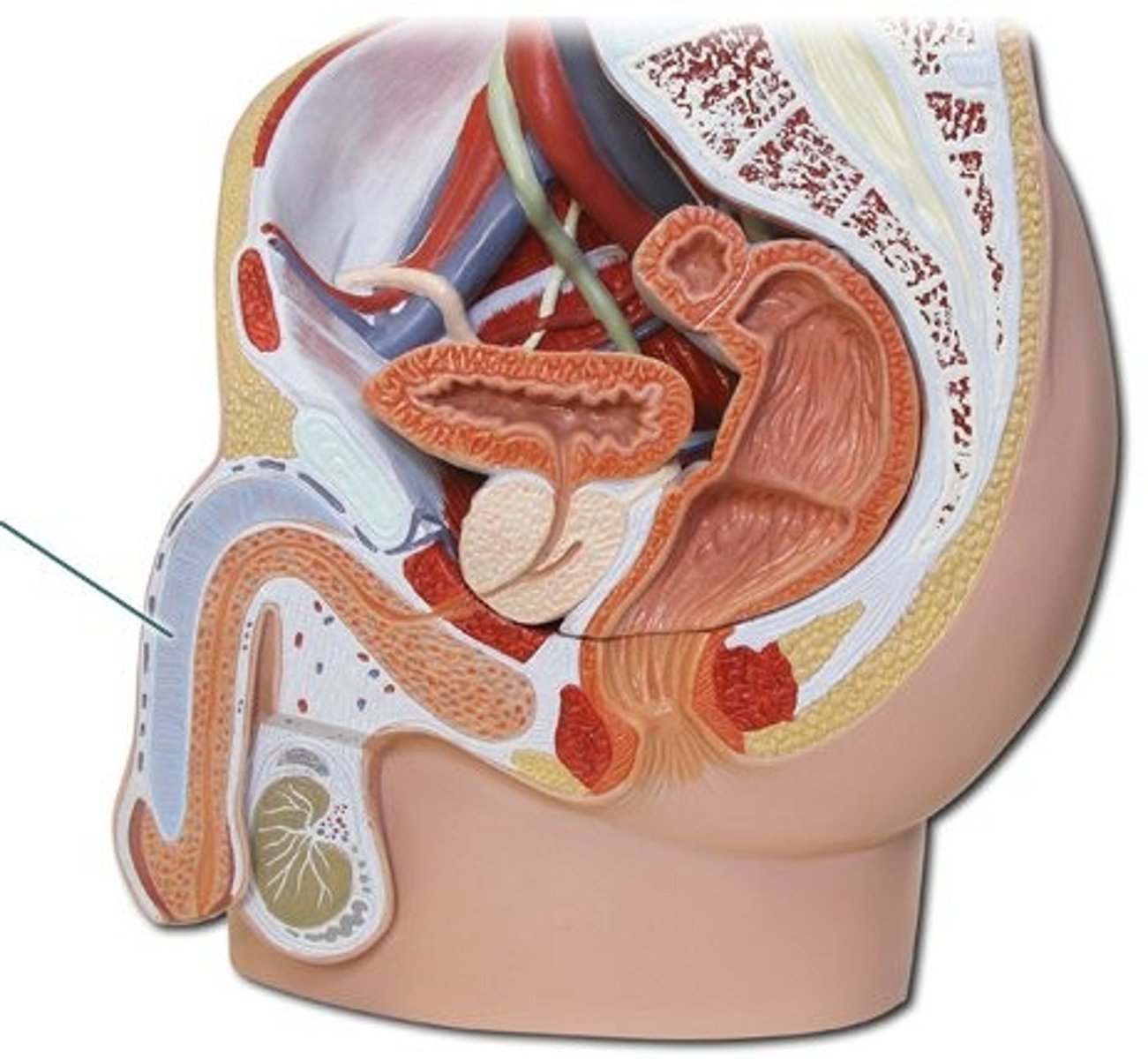
Male Reproductive System
 Call Kai
 Learn
Learn Practice Test
 Spaced Repetition
 Match
Match Flashcards
1/34

There's no tags or description
Looks like no tags are added yet.
Name | Mastery | Learn | Test | Matching | Spaced | Call with Kai | Chat |
|---|

35 Terms
Testes
male gonads, produce sperm & hormones (mostly testosterone)
Gonads
Sex organs: ovaries in females, testes in males.
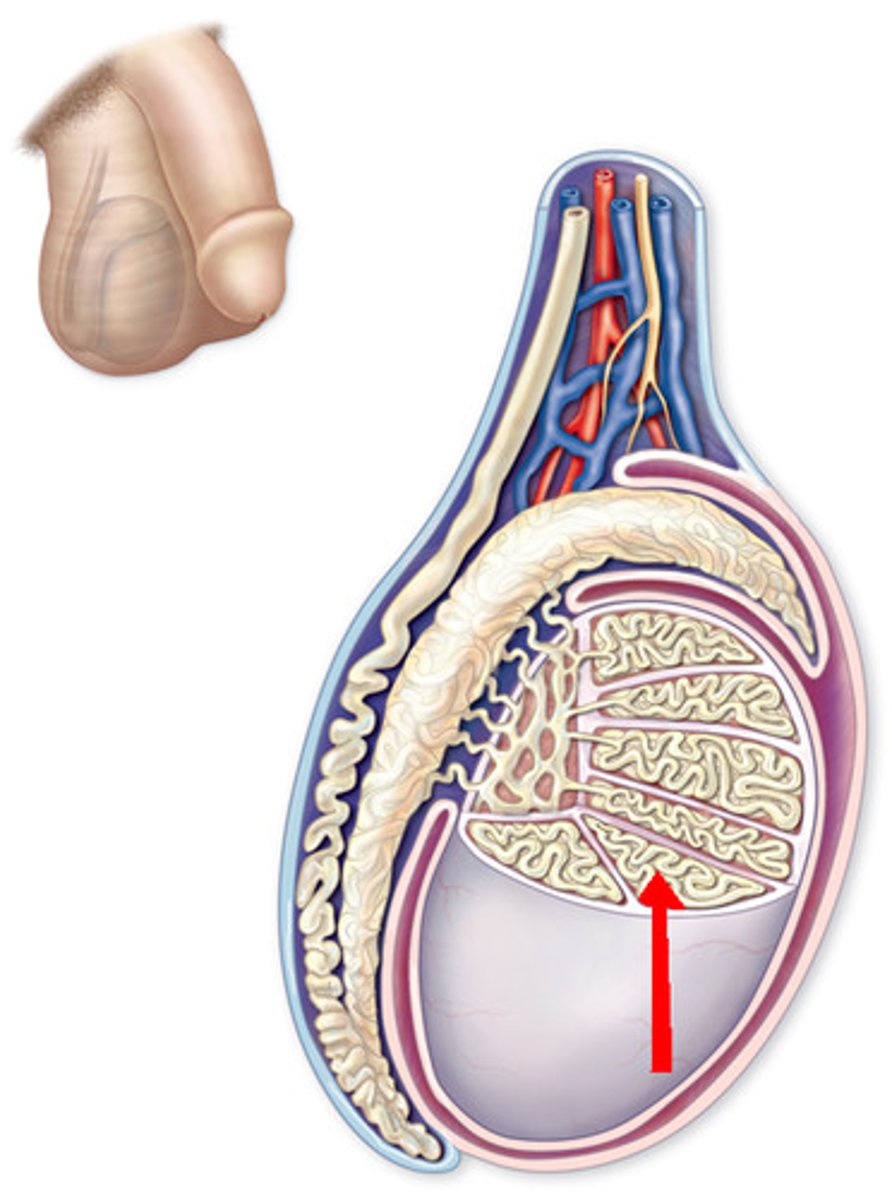
seminiferous tubules
Narrow, coiled tubules that produce sperm in the testes.
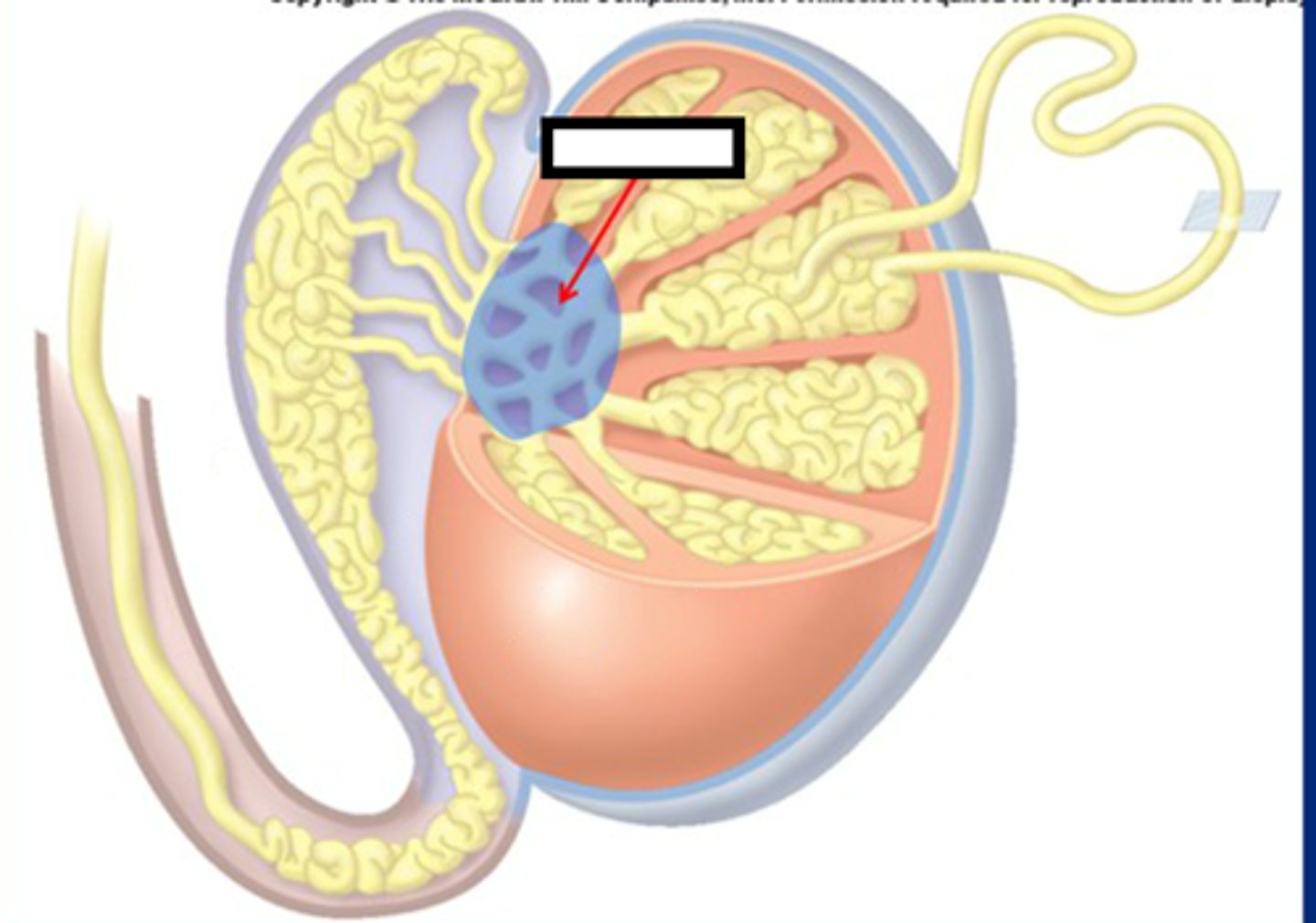
rete testis
network of tubules between the seminiferous tubules and the epididymis, concentrate & mix sperm
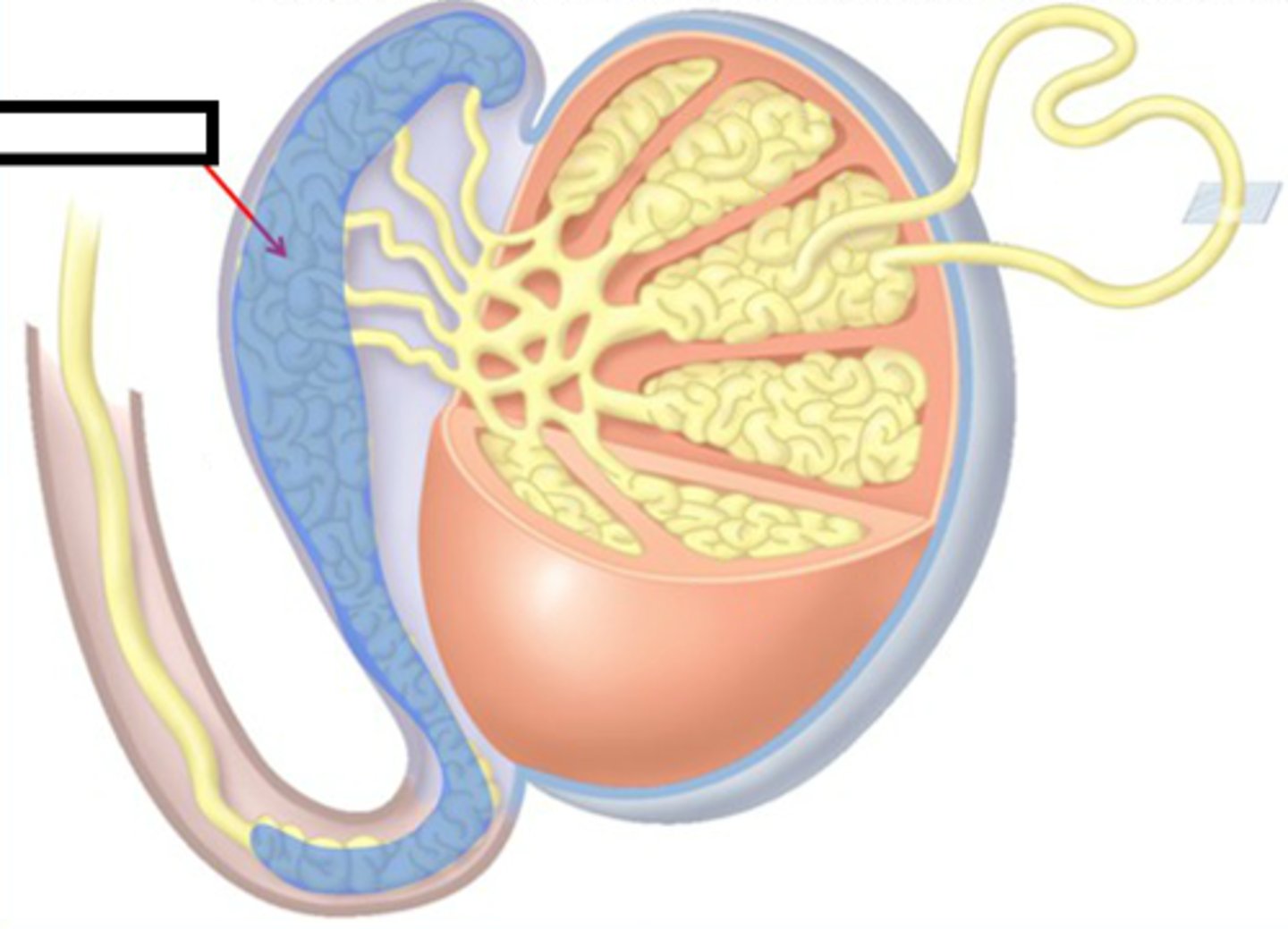
epididymus
structure in the male reproductive system in which sperm are fully matured and are stored (can be 6m long!)
vas deferens
tube that carries sperm from the epididymis to the urethra
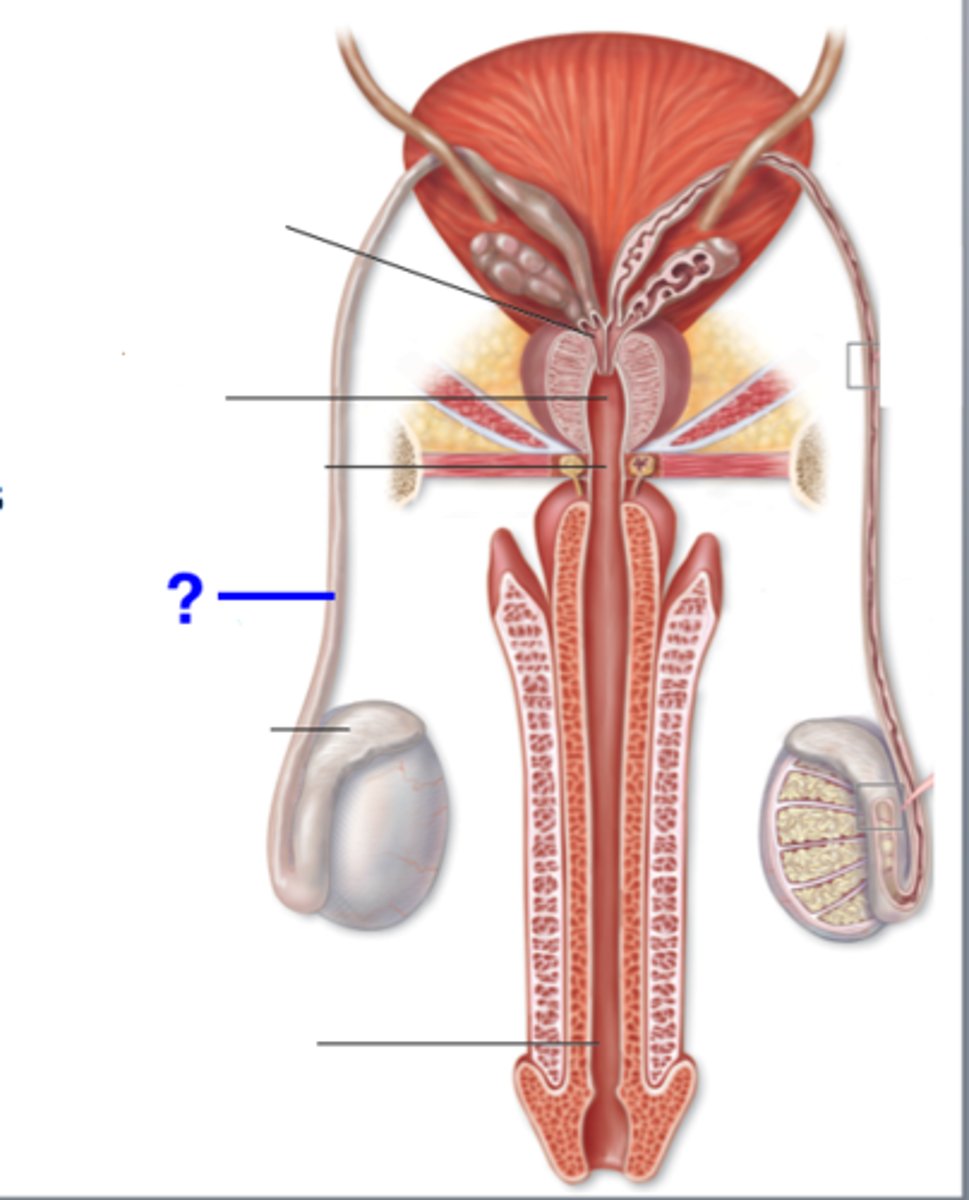
bulbourethral glands
the two glands below the prostate that secrete a sticky fluid that becomes a component of semen
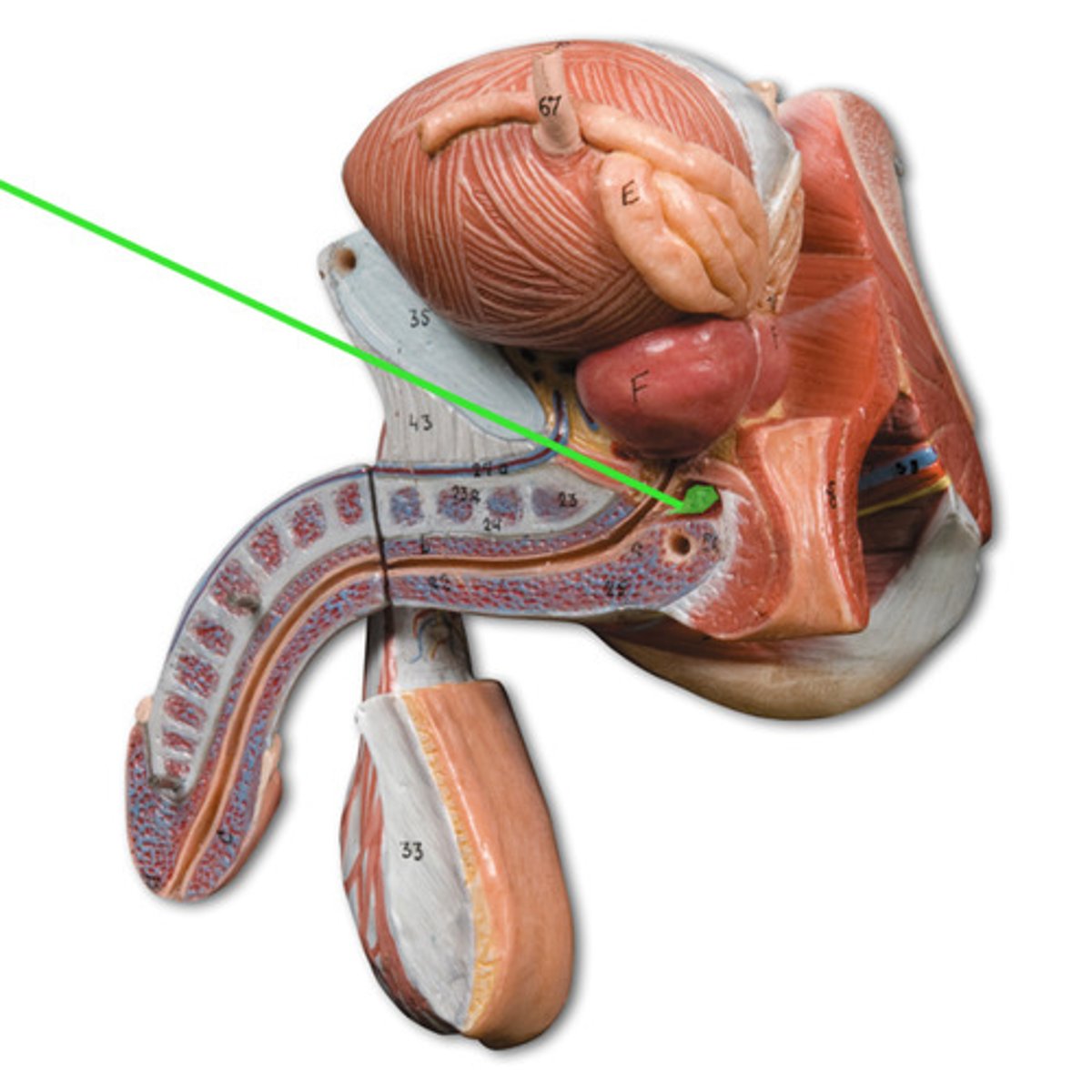
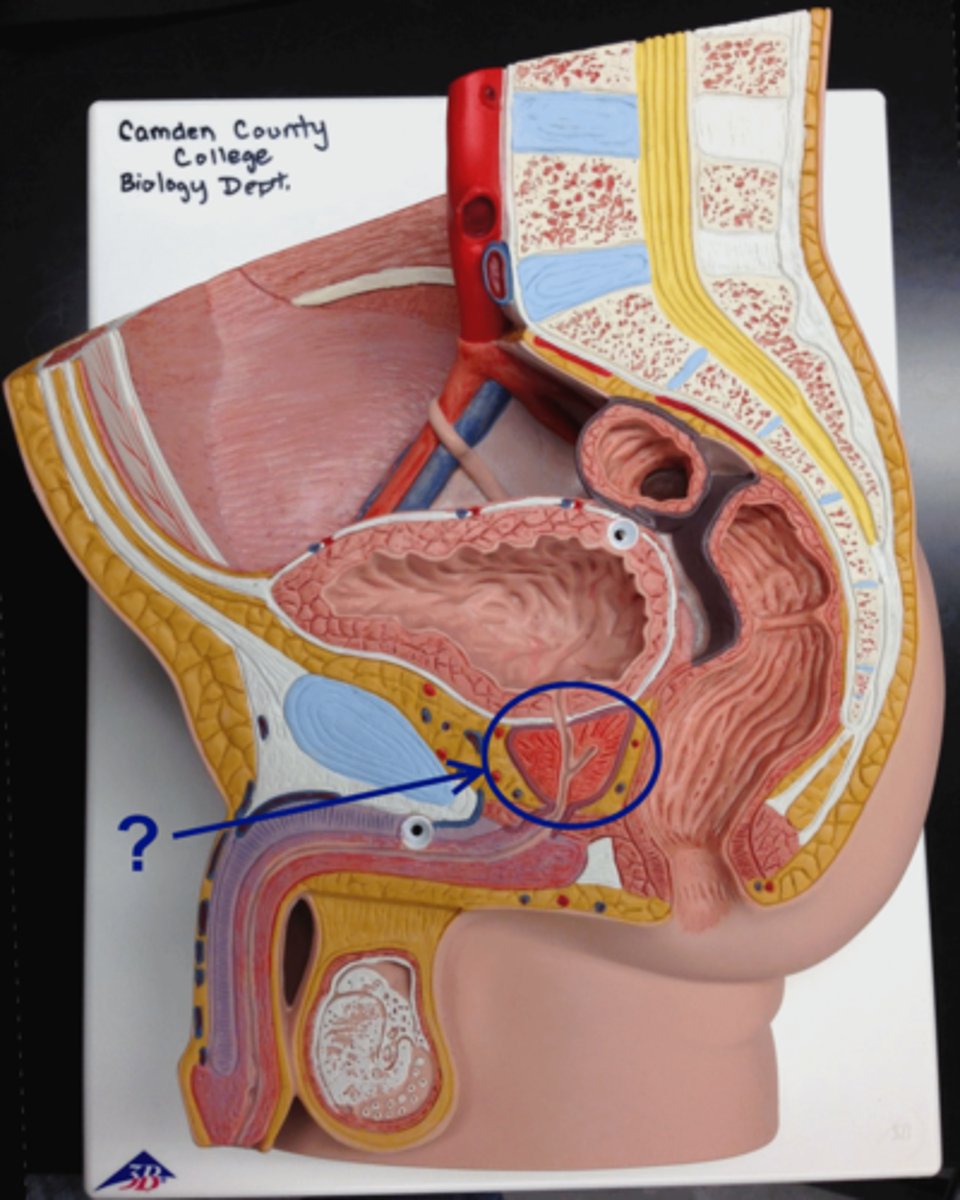
prostate
a gland surrounding the neck of the bladder in male mammals and releasing prostatic fluid.
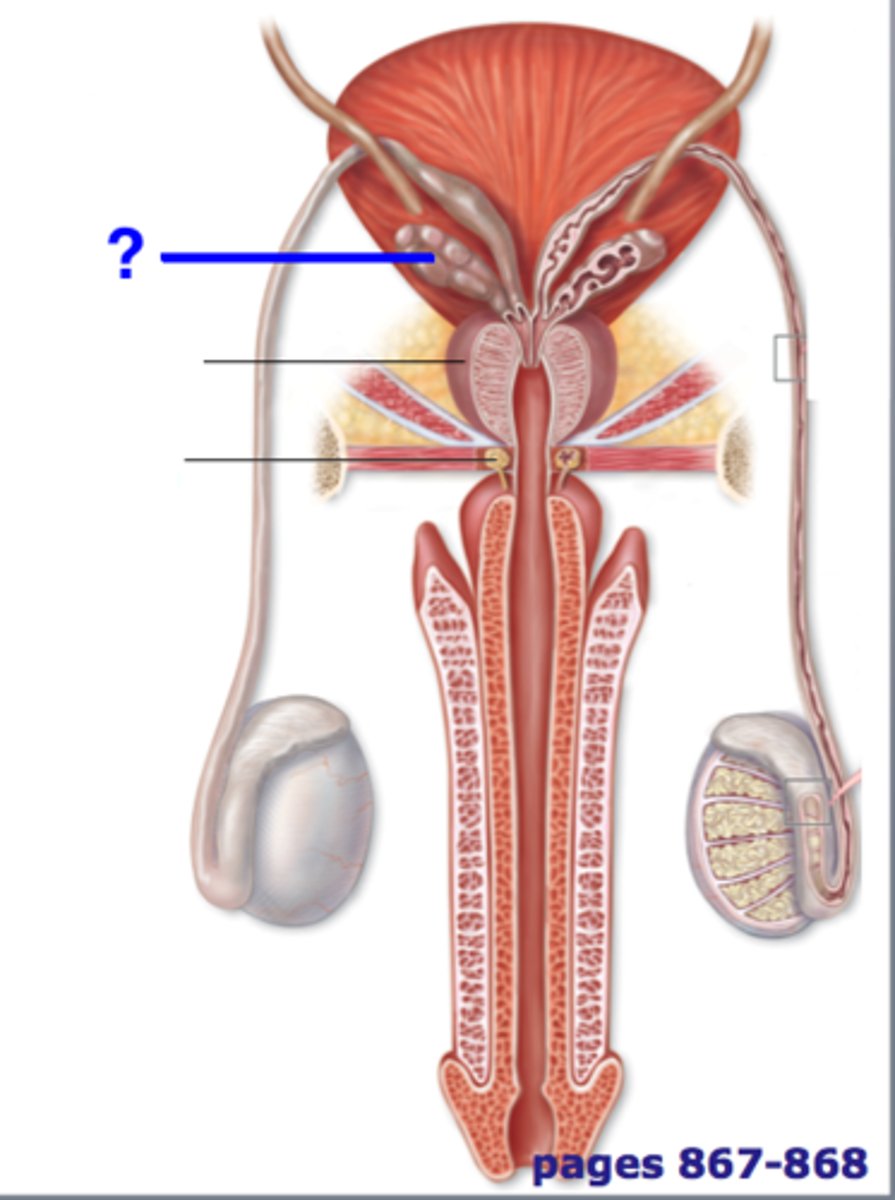
seminal vesicles
two small glands that secrete a fluid rich in sugar that nourishes and helps sperm move
Urethra
tube leading from the urinary bladder to the outside of the body
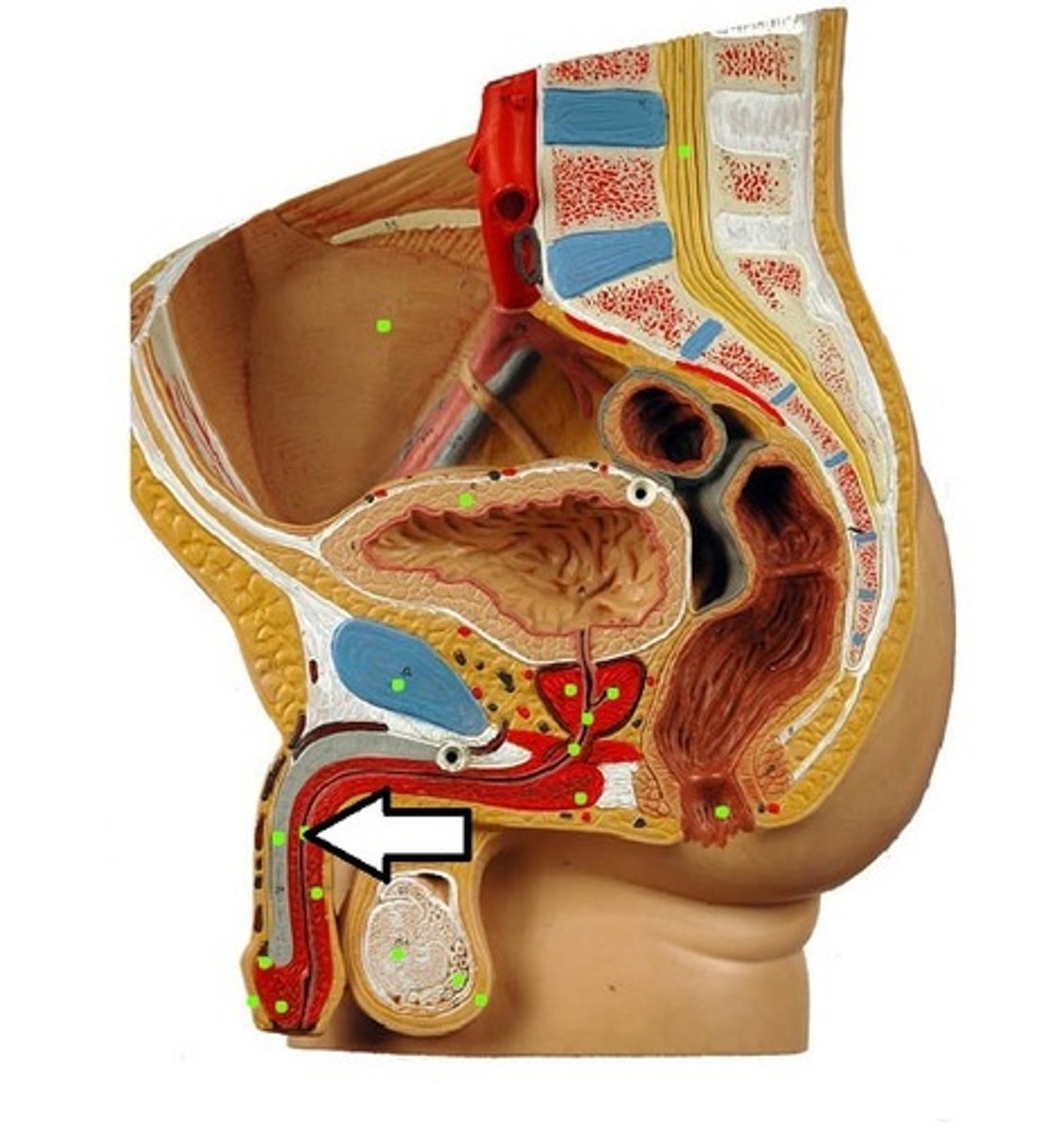
glans
head of the penis
prepuce
foreskin; loose casing that covers the glans penis; removed by circumcision
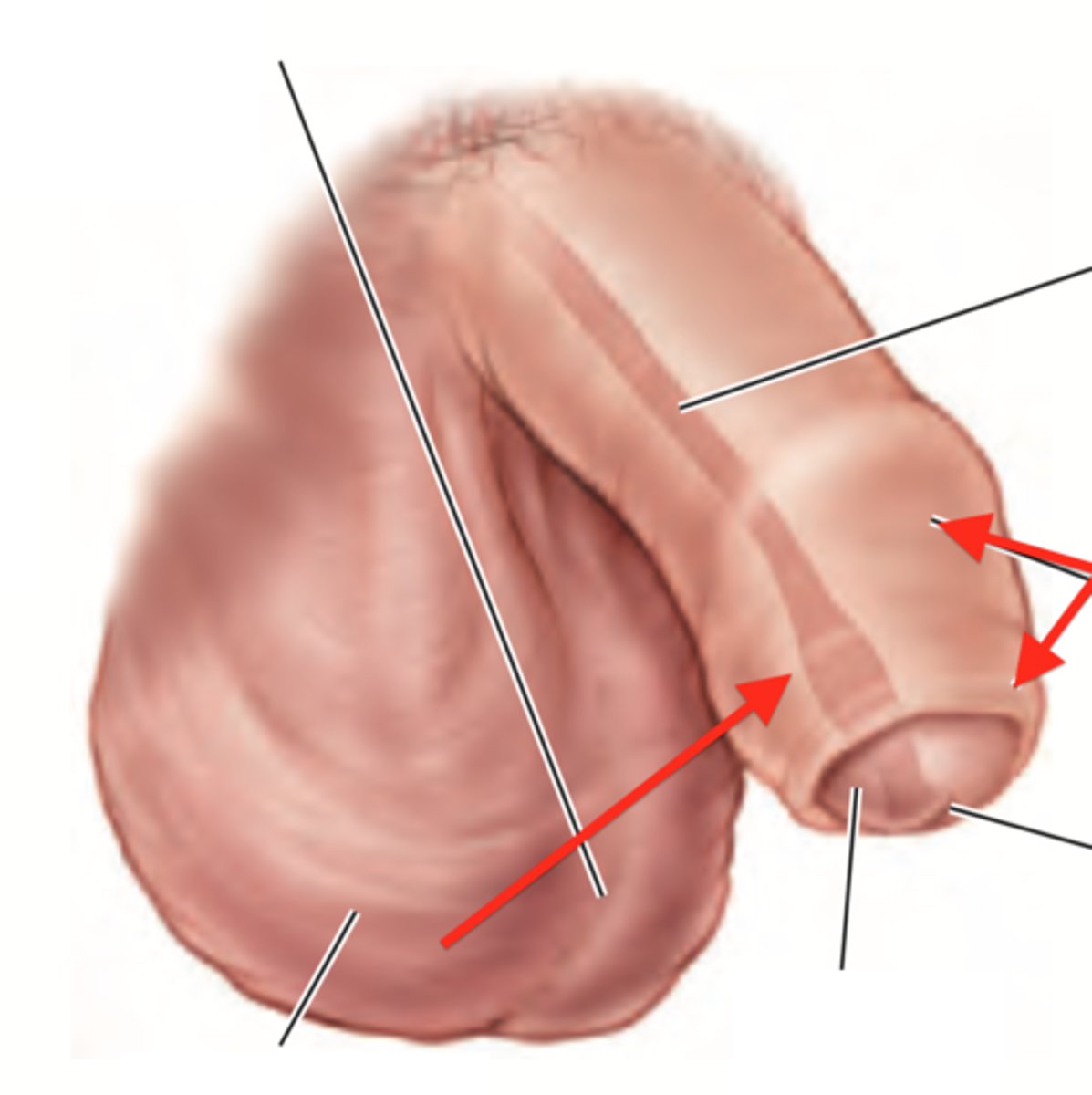
Scrotum
a pouch of skin containing the testicles.
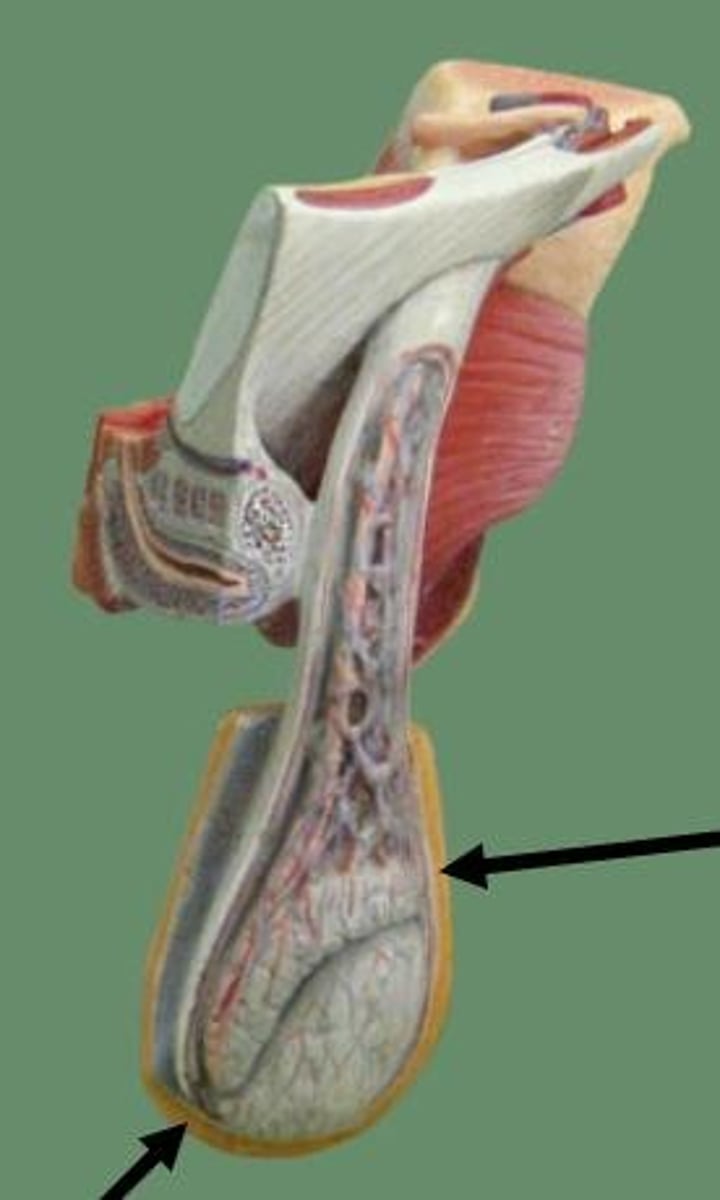
tunica albuginea
white fibrous capsule on testes
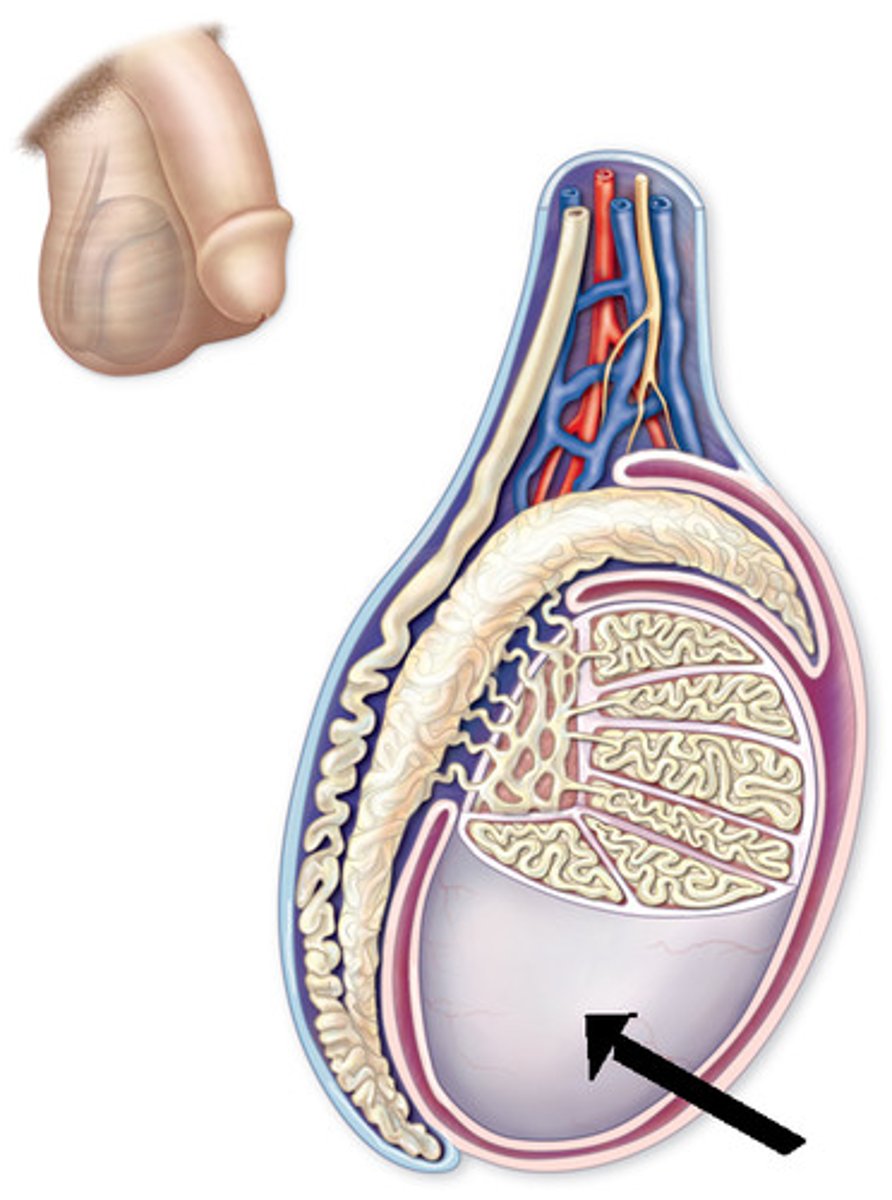
urinary bladder
muscular sac in the pelvis that stores and releases urine through the urethra
Testosterone
the most important of the male sex hormones. Both males and females have it, but the additional testosterone in males stimulates the growth of the male sex organs in the fetus and the development of the male sex characteristics during puberty
luteinizing hormone (LH)
secreted by the pituitary gland to stimulate interstital cells to produce testosterone
Follicle-stimulating hormone (FSH)
secreted by the pituitary gland to stimulate spermatogonia to undergo mitosis
interstitial cells
small specialized cells in the testes (near the seminiferous tubules) that secrete the male sex hormone, testosterone
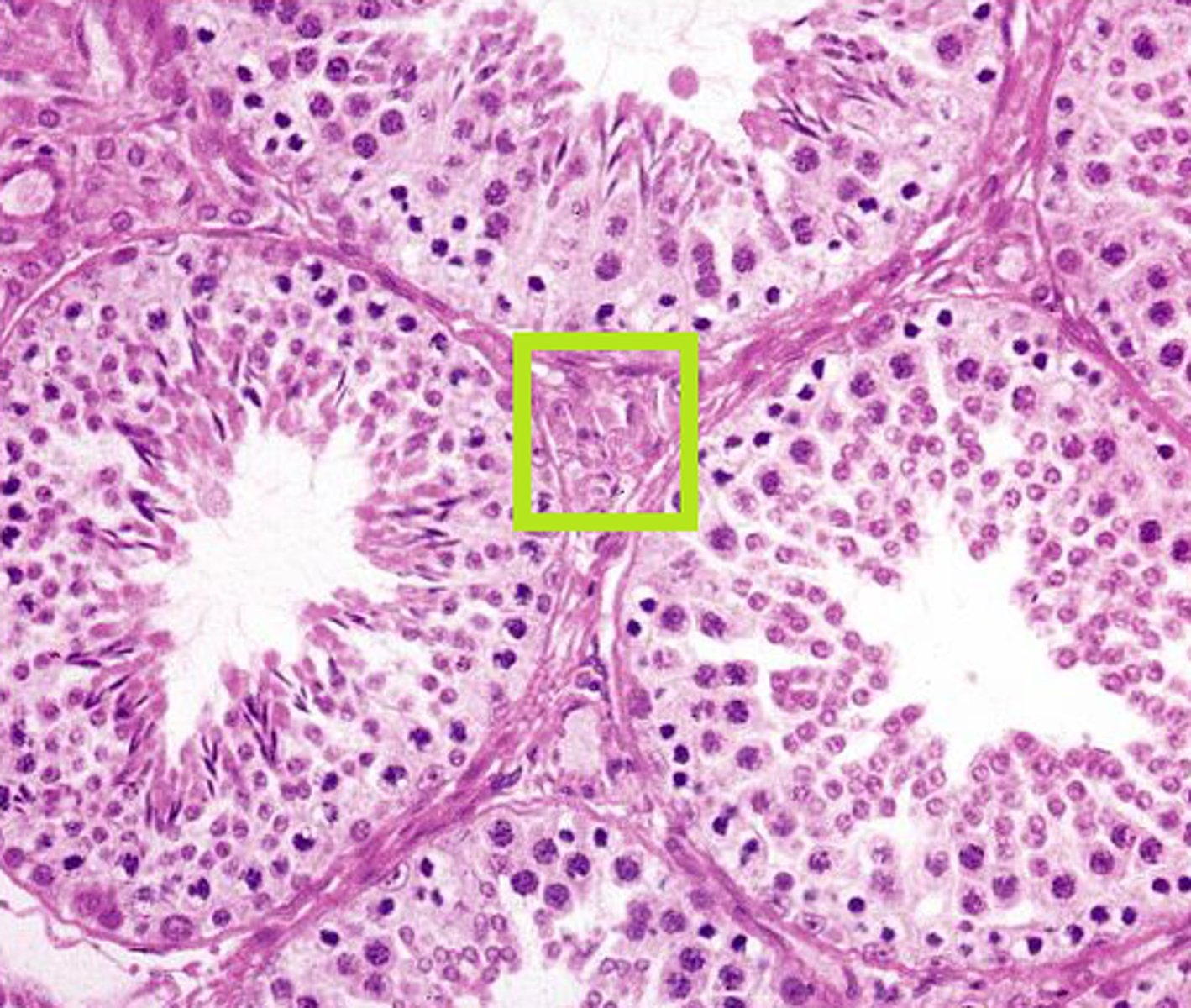
Sperm
the male gametes (reproductive cells)
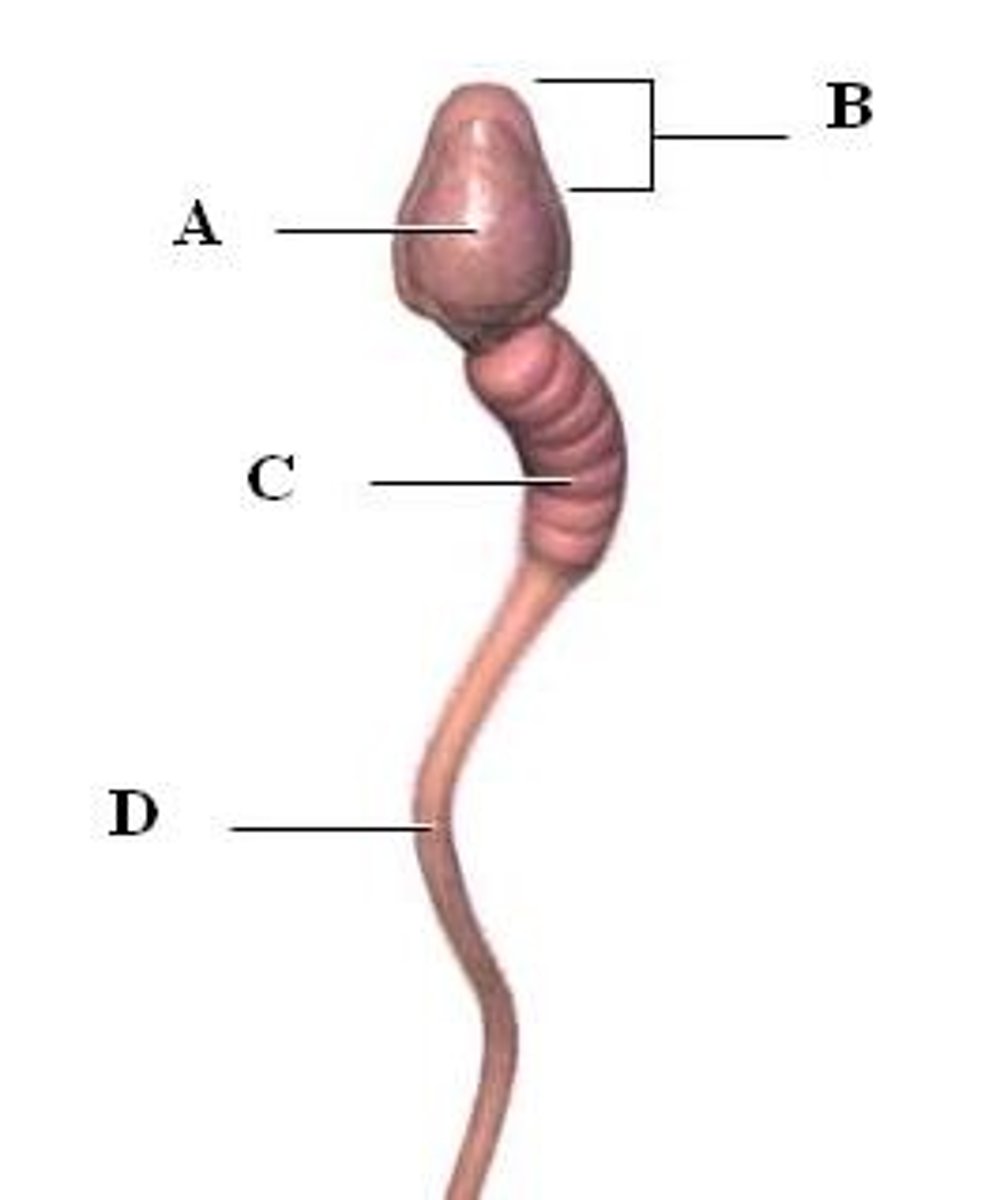
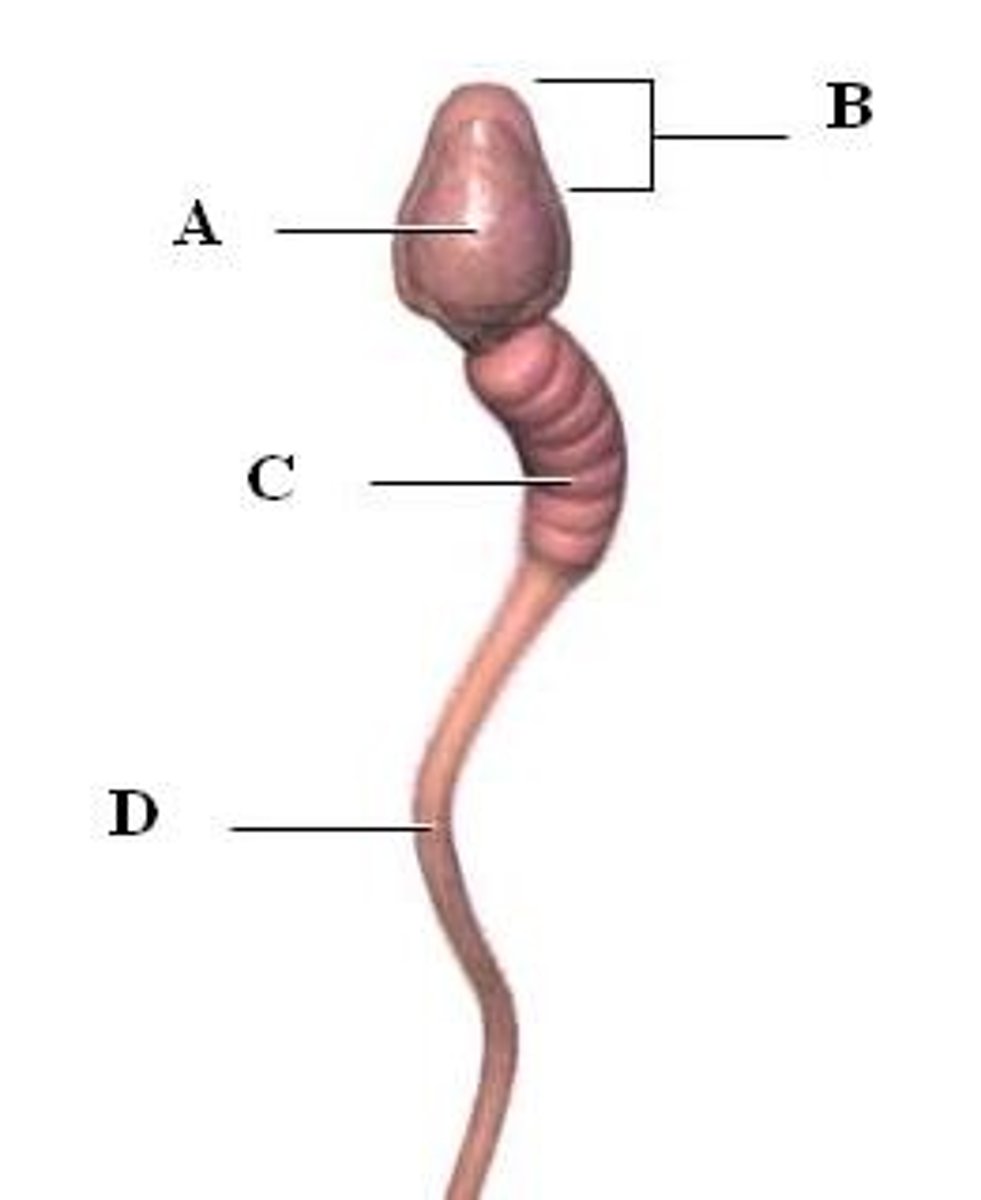
acrosome
A region at the head of a sperm cell that contains digestive enzymes to help the sperm penetrate into the oocyte (within B on the diagram)
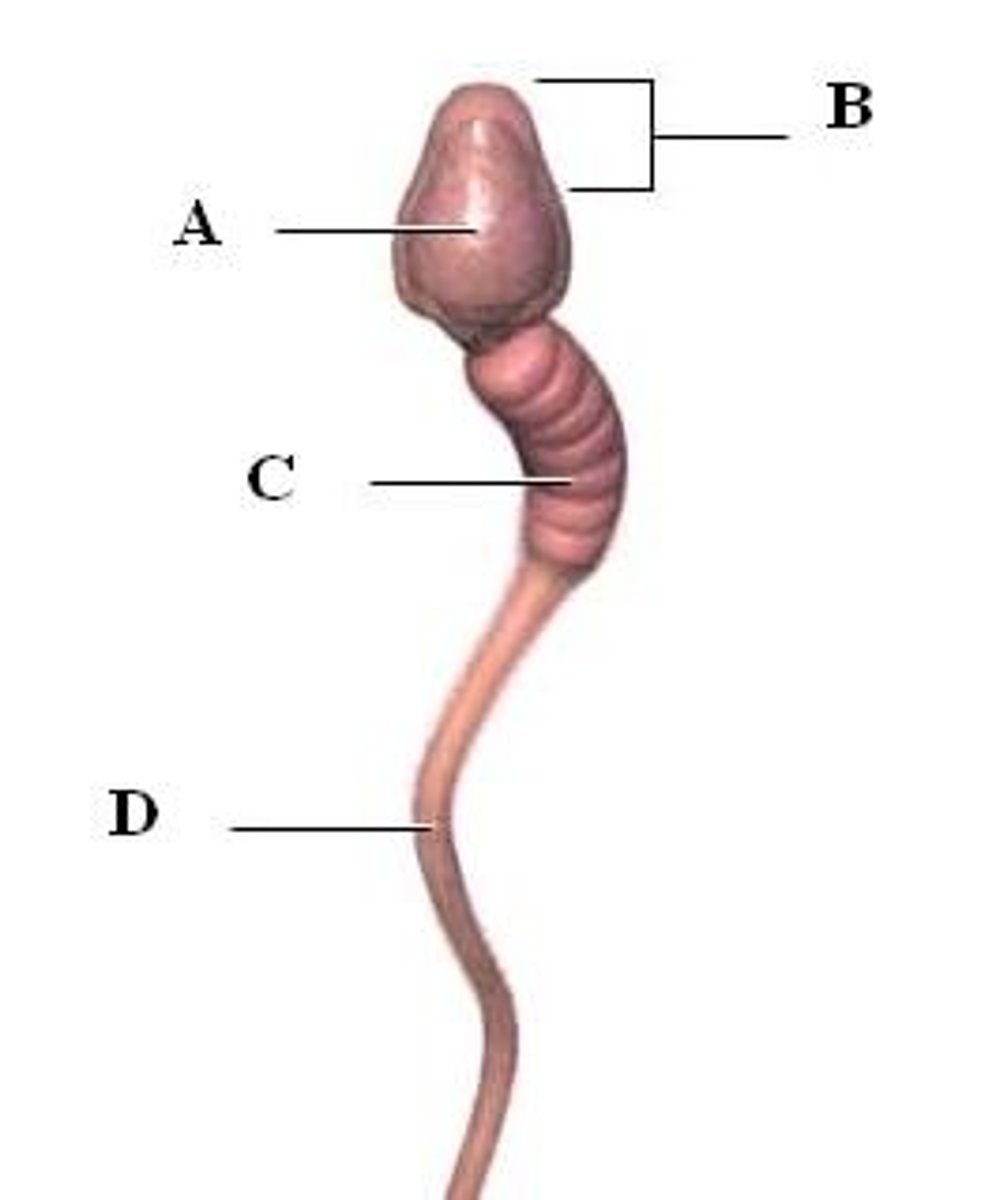
midpiece of sperm
generates ATP from fructose and contains many mitochondria (C on the diagram)
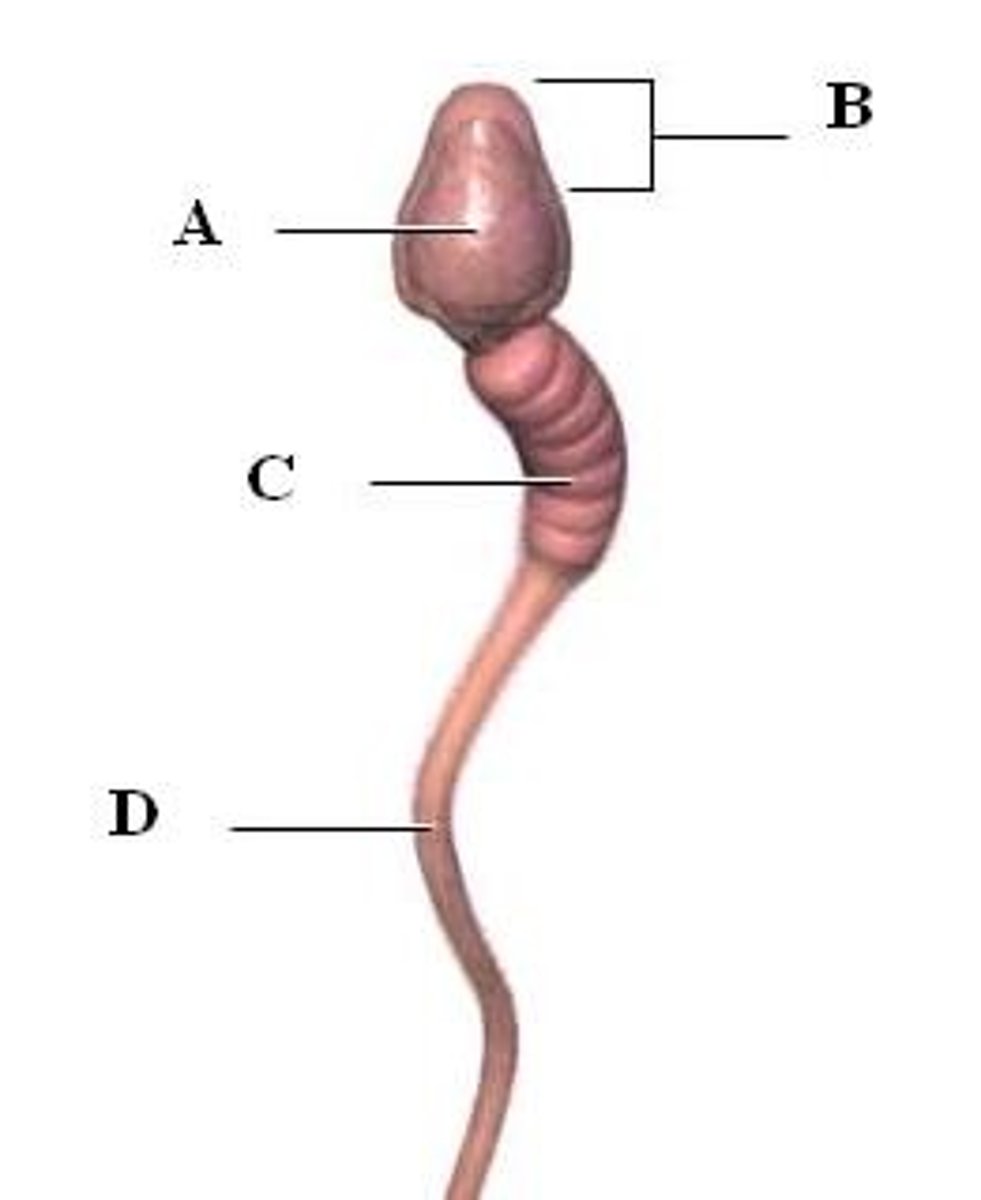
Flagellum
A long, hairlike structure that grows out of a cell and enables the cell to move. (D on the diagram)
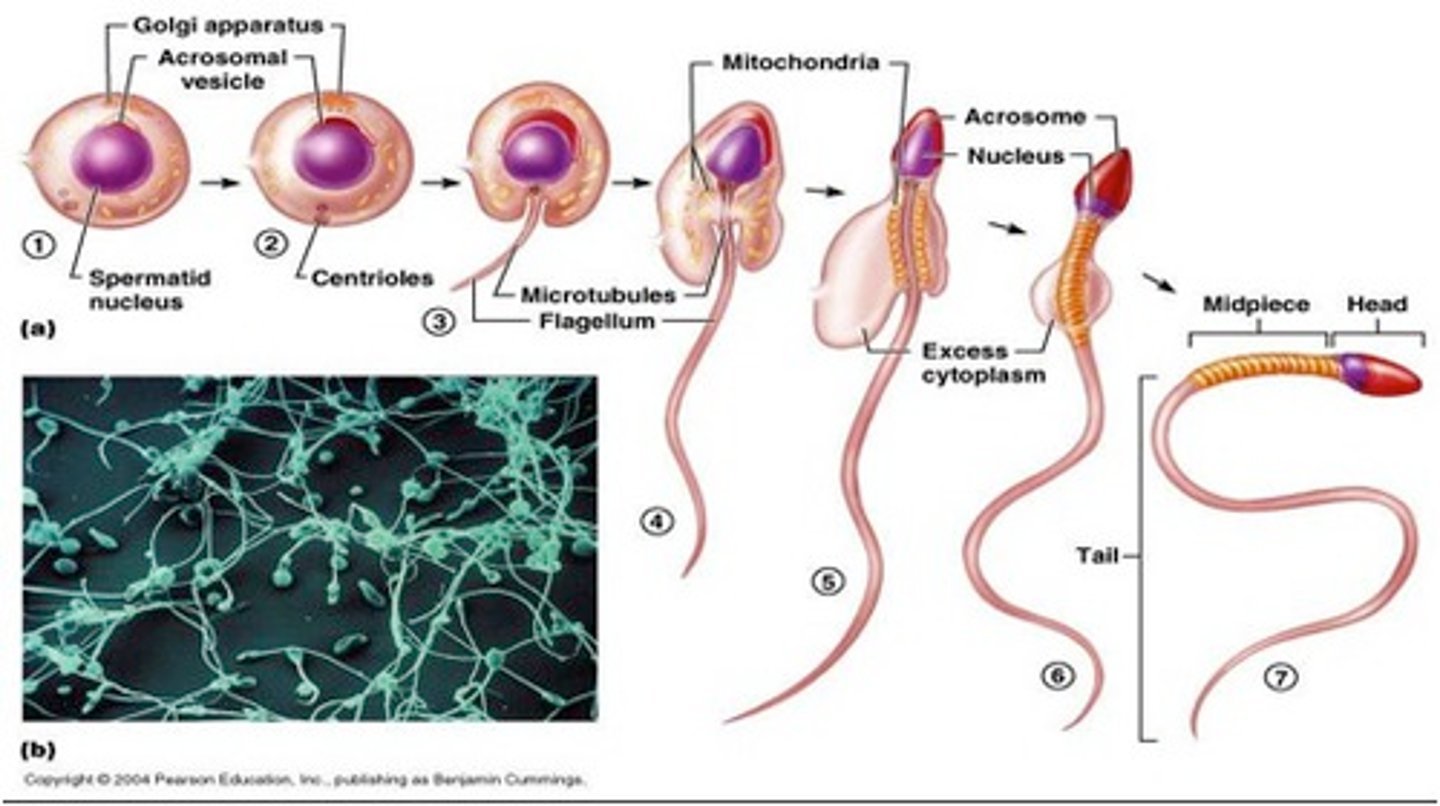
Spermatogenesis
production of sperm
Spermiogenesis
transformation of spermatids to spermatozoa during spermatogenesis
secondary sex characteristics
male voice quality, body hair, enlargement of muscles, increased bone density
vasectomy
ligation of a segment of the vas deferens to produce sterility in the male
Hypothalamus
a neural structure lying below the thalamus; directs eating, drinking, body temperature; helps govern the endocrine system via the pituitary gland, and is linked to emotion
Gonadotropin-releasing hormone (GnRH)
A hormone released from the hypothalamus that triggers the anterior pituitary to secrete FSH and LH.
Mitosis
cell division in which the nucleus divides into nuclei containing the same number of chromosomes
Meiosis
Cell division that produces reproductive cells in sexually reproducing organisms
spermatogonia
Stem cells in a testis that can give rise to primary spermatocytes.
lumen
space within a tubular part or organ, such as the space within the seminiferous tubules (6 on this diagram)
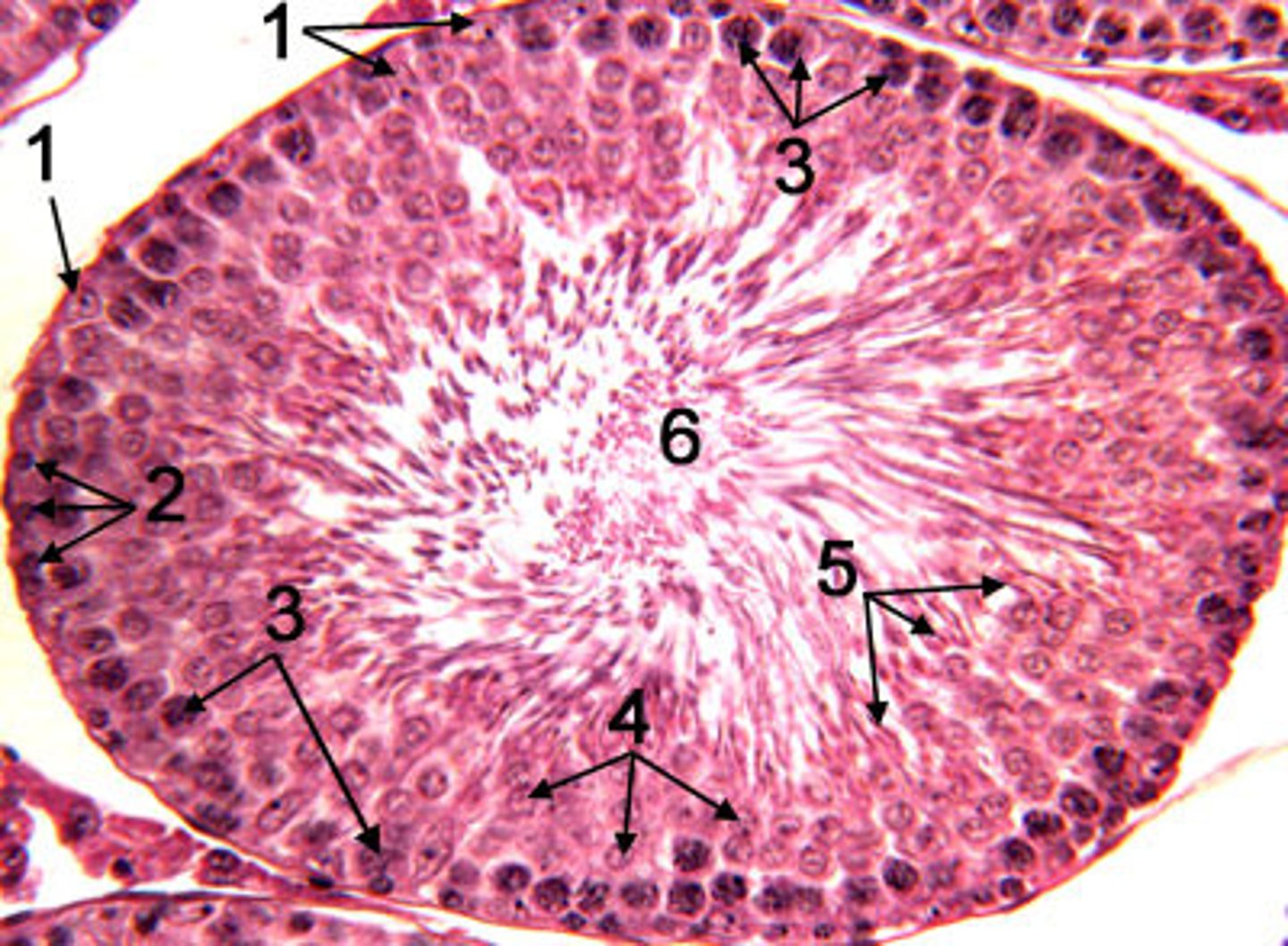
spermatid
an immature male sex cell formed from a spermatocyte that can develop into a spermatozoan without further division.
erectile tissue
Specialized tissue with a lot of space that can fill with blood upon proper stimulation, causing the tissue to become firm. Found in the penis, the clitoris, the labia, and the nipples.