Pressure Volume Loop
 Call Kai
 Learn
Learn Practice Test
 Spaced Repetition
 Match
Match Flashcards
 Knowt Play
1/43

There's no tags or description
Looks like no tags are added yet.
Name | Mastery | Learn | Test | Matching | Spaced | Call with Kai | Chat |
|---|
No analytics yet
Send a link to your students to track their progress
44 Terms
What are the four phases of the pressure-volume loop?
LV filling, isovolumetric contraction, systolic ejection, isovolumetric relaxation.
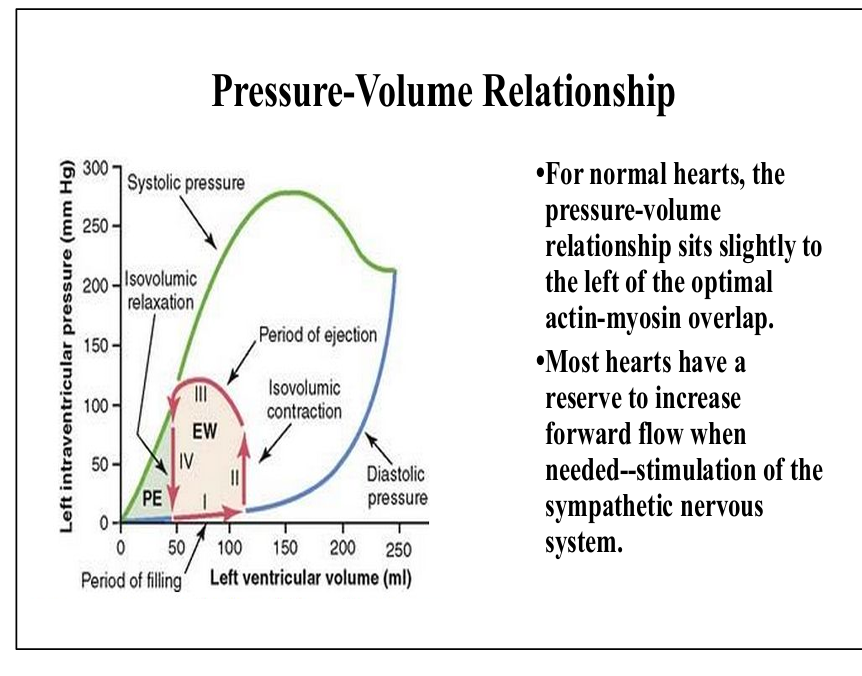
What event marks the start of systole on a PV loop?
Mitral valve closure (S1).
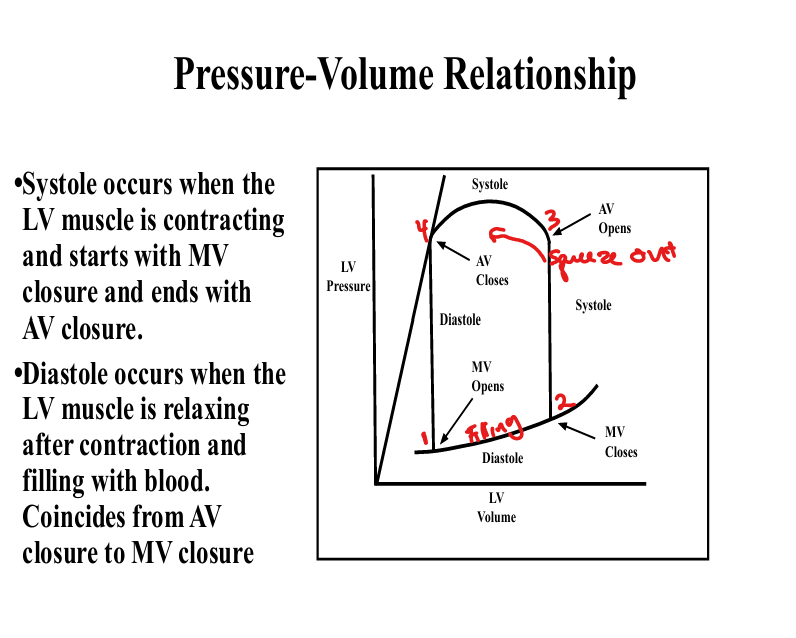
What event marks the end of systole on a PV loop?
Aortic valve closure (S2).
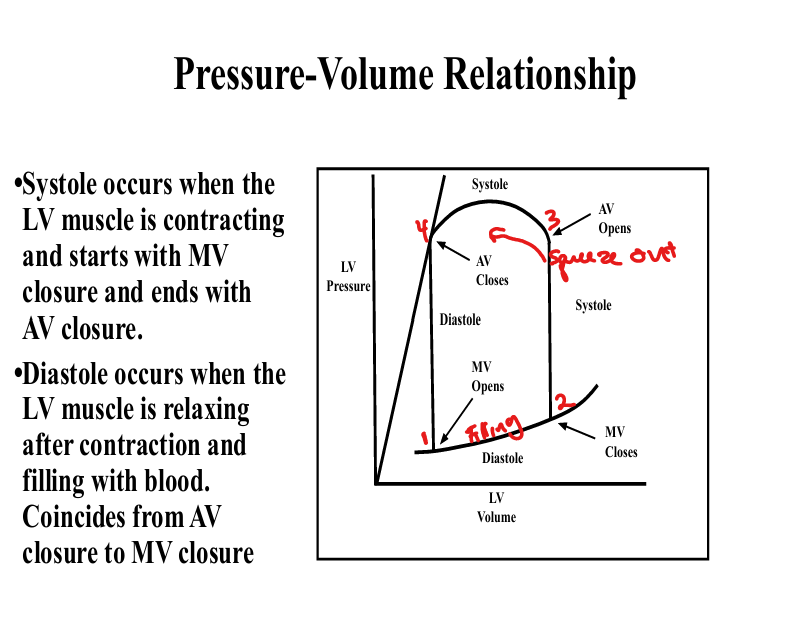
What event marks the start of diastole on a PV loop?
Aortic valve closure (S2).
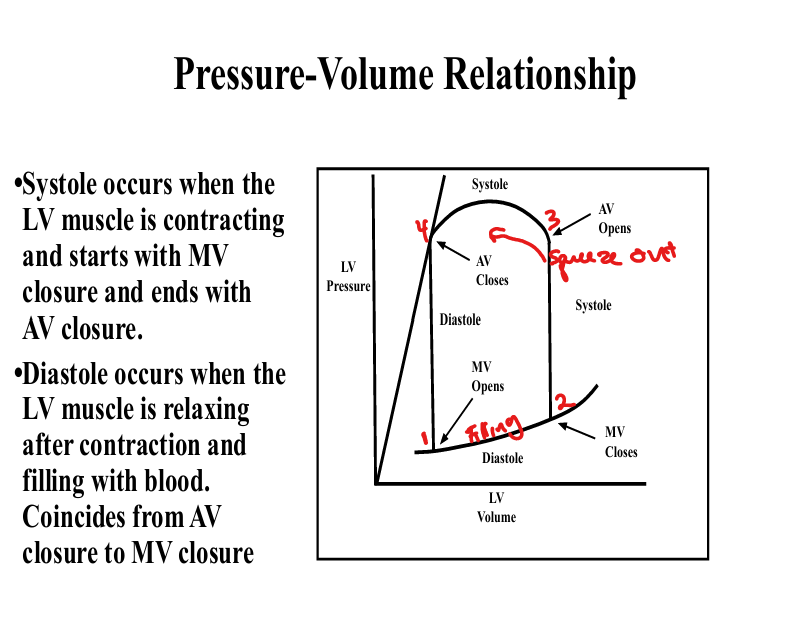
What event marks the end of diastole on a PV loop?
Mitral valve closure (S1).

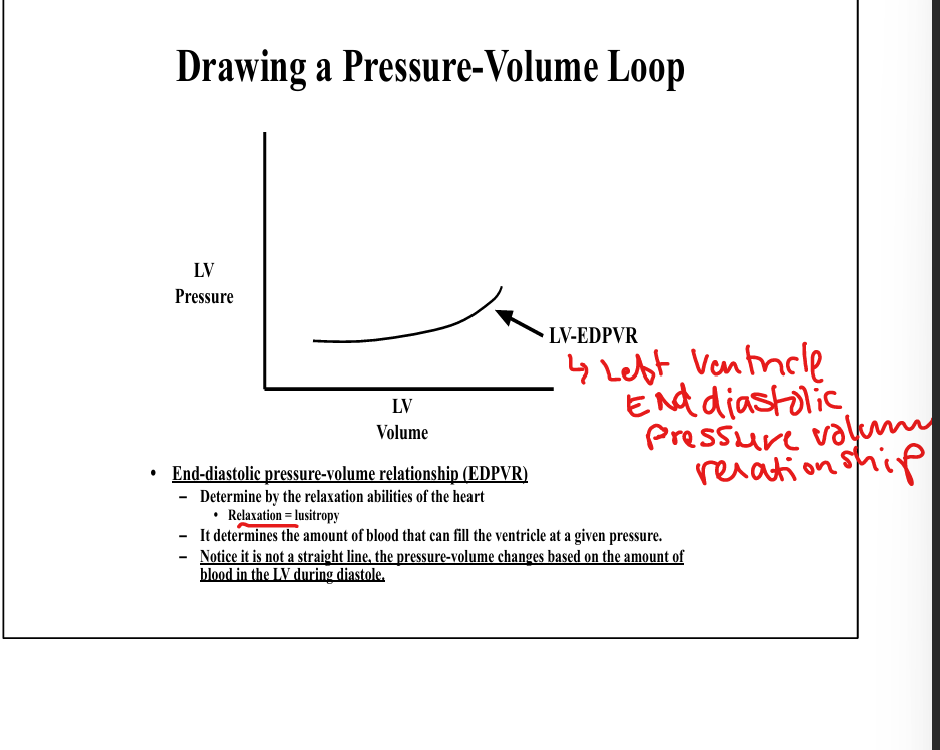
What does movement of the End Diastolic Pressure-Volume Relationship (EDPVR) indicate?
A change in relaxation/lusitropy (LV stiffness/compliance).
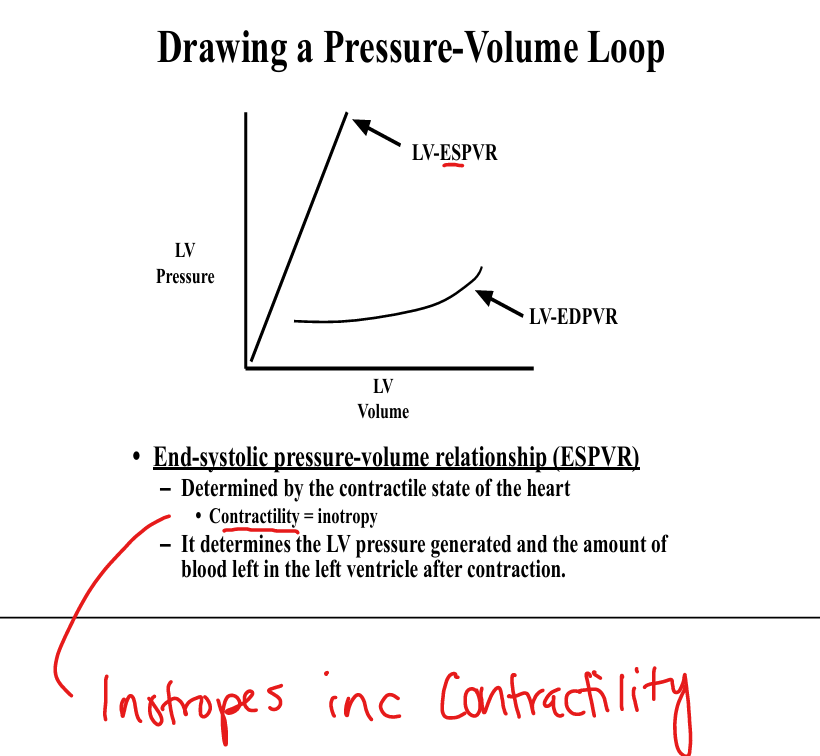
What does movement of the End-systolic pressure-volume relationship (ESPVR) indicate?
A change in contractility.
What is preload on a PV loop?
LV end-diastolic volume or pressure

What is afterload on a PV loop?
LV end-systolic wall stress
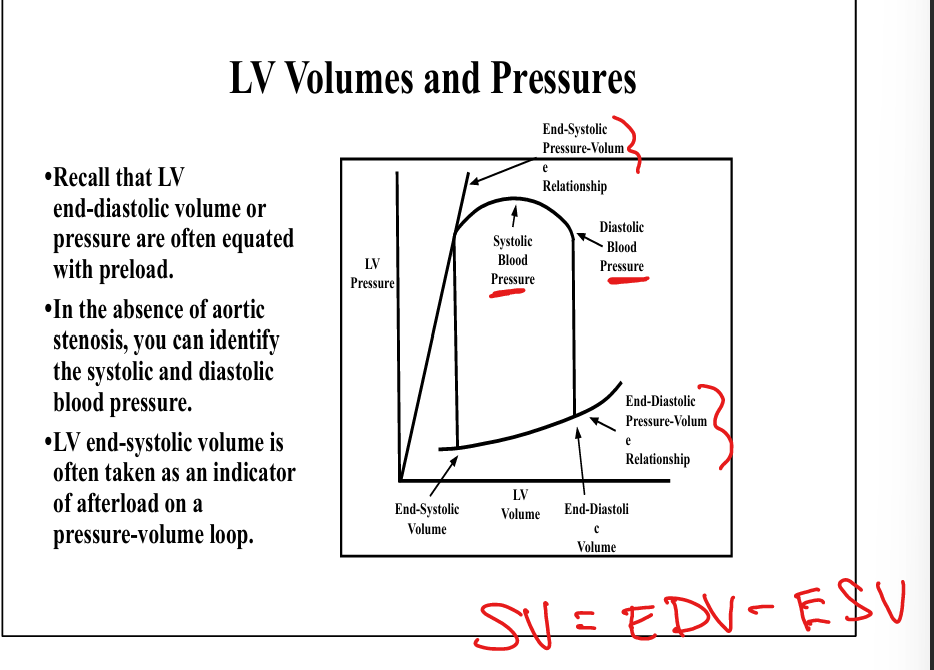
What is stroke volume on a PV loop?
EDV – ESV.
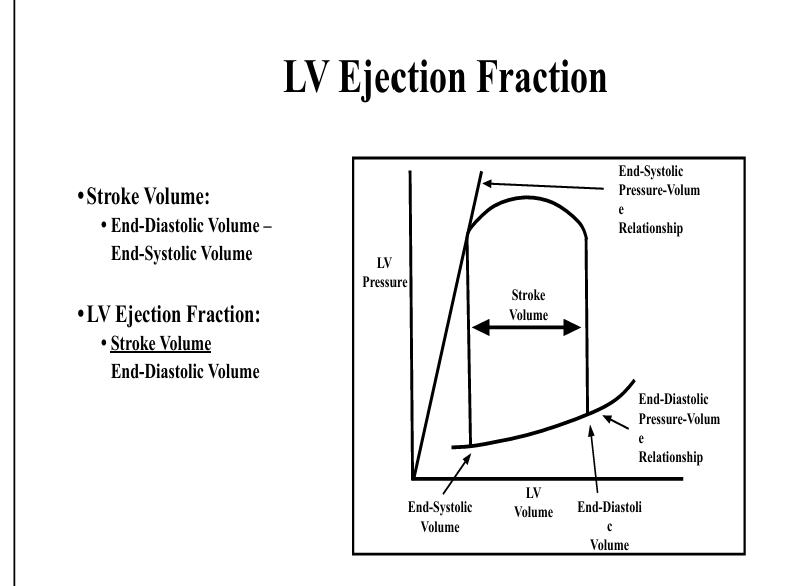
What is ejection fraction?
(EDV-ESV)/EDV

How does increased contractility change the PV loop (primary)?
ESPVR(end systolic pressure-volume relationship) shifts left/up
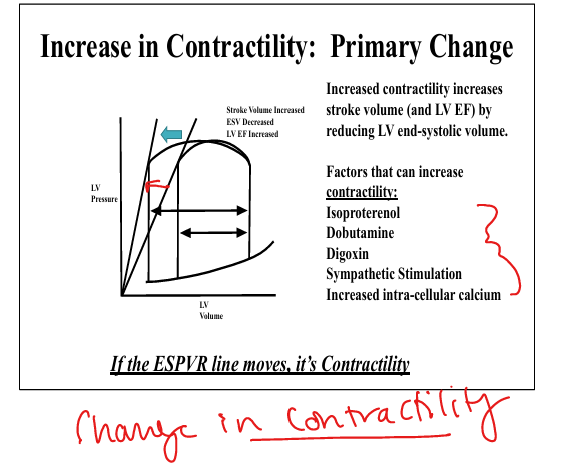
What factors increase contractility? (ex meds)
Isoproterenol, dobutamine, digoxin, sympathetic stimulation, increased intracellular calcium.

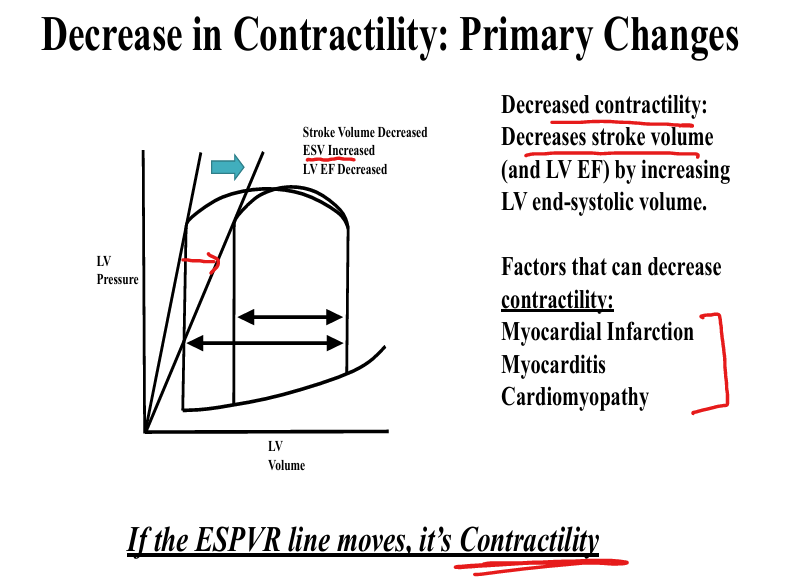
How does decreased contractility change the PV loop (primary)?
ESPVR(end systolic pressure-volume relationship) shifts right/down

What factors decrease contractility?
MI, myocarditis, cardiomyopathy.
How does increased relaxation/lusitropy change the PV loop (primary)?
EDPVR(End diastolic pressure-volume relationship) shifts downward

What factors increase relaxation?
Exercise, short-term sympathetic stimulation.

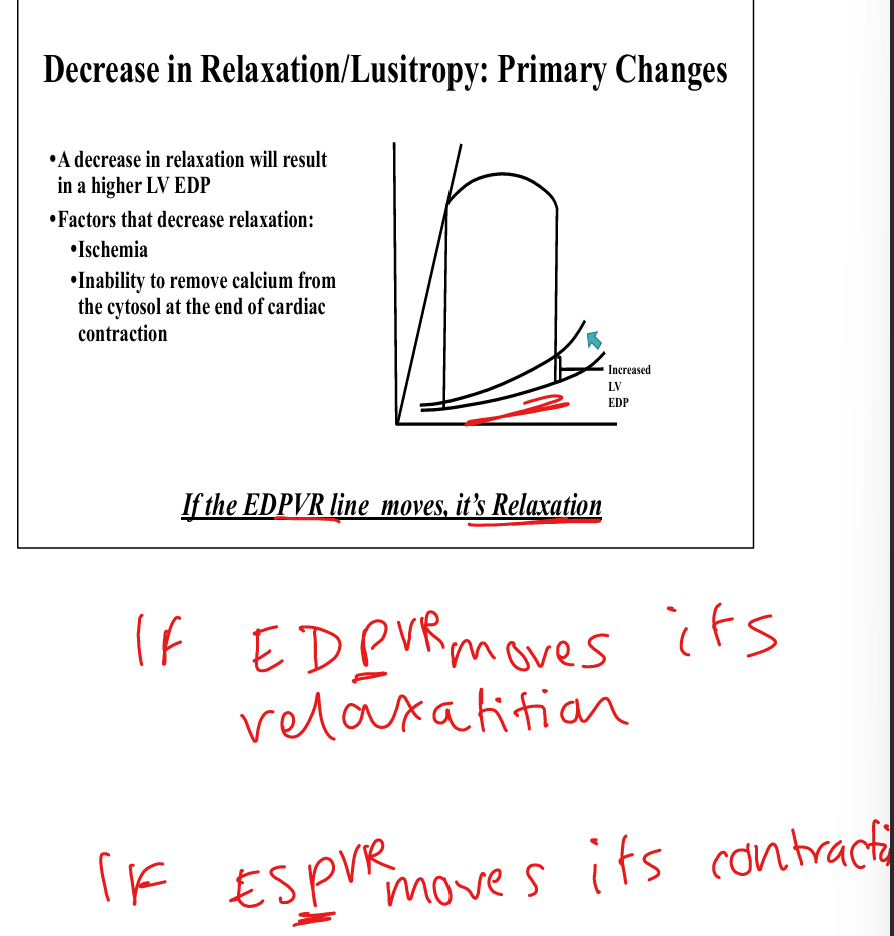
How does decreased relaxation/lusitropy change the PV loop (primary)?
EDPVR(End diastolic pressure-volume relationship) shifts upward

What factors decrease relaxation?
Ischemia (cant remove Ca2+ from cytosol at the end of contraction)
How does increased preload change the PV loop (primary)?
EDV increases


What factors increase preload?
IV fluids, squatting, venoconstriction, exercise.

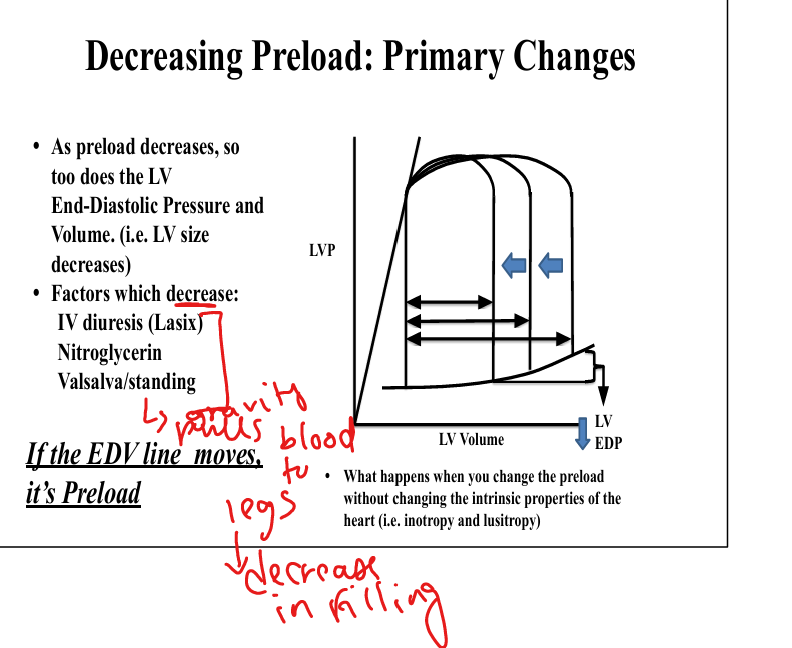
How does decreased preload change the PV loop (primary)?
EDV decreases

What factors decrease preload?
Diuresis (Lasix), nitroglycerin, standing/Valsalva.
How does increased afterload change the PV loop (primary)?
ESV increases
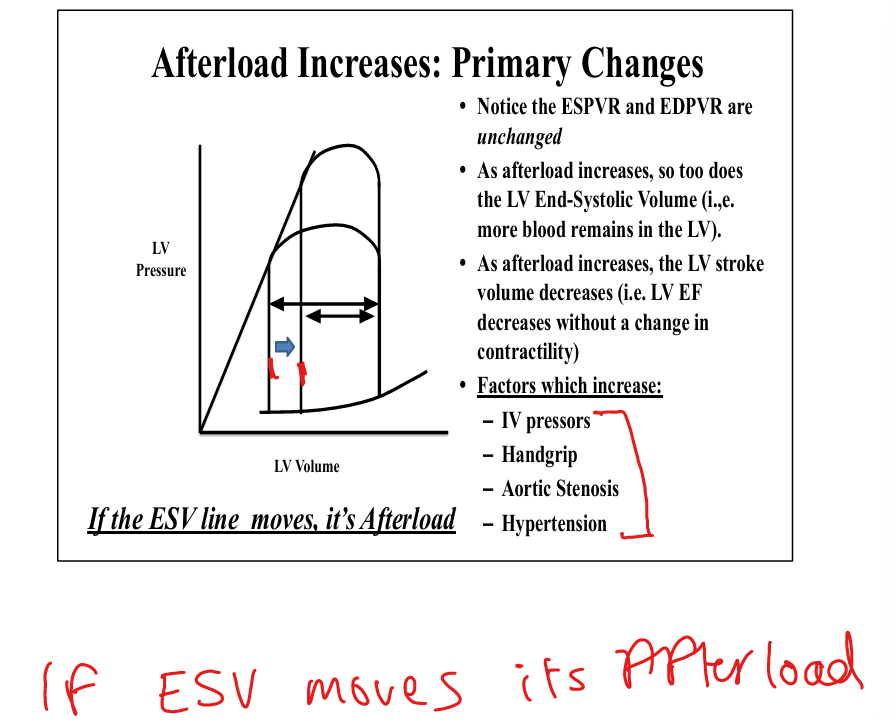
What factors increase afterload?
IV pressors, handgrip, aortic stenosis, hypertension.

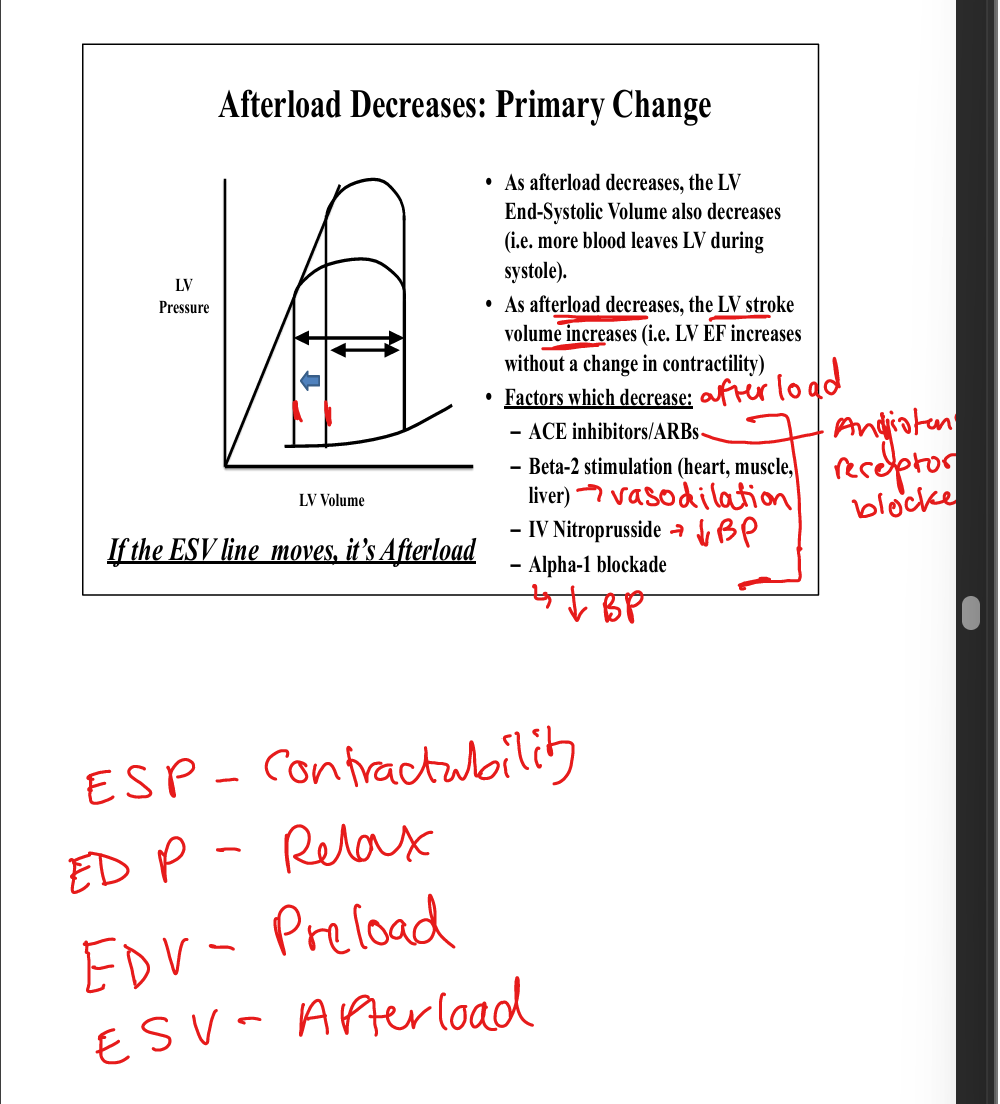
How does decreased afterload change the PV loop (primary)?
ESV decreases
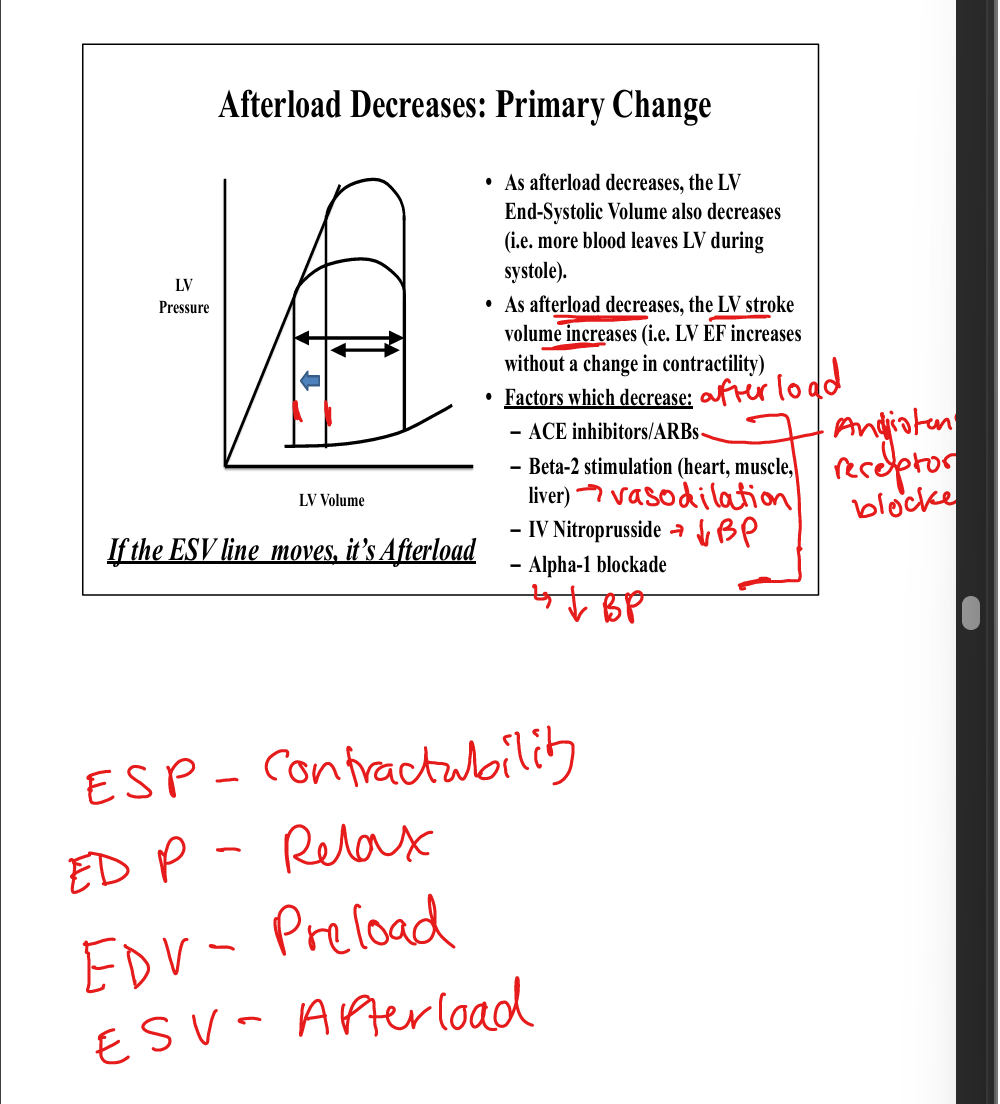
What factors decrease afterload?
ACE inhibitors/ARBs, beta-2 stimulation(vasodilate), nitroprusside(dec BP), alpha-1 blockade(dec BP).
What is the rule for identifying preload vs afterload changes when ESPVR/EDPVR are unchanged?
If EDV moves more → preload change

Why can’t afterload be interpreted when contractility changes?
Because contractility directly alters ESV, masking afterload effects.

Why can’t preload be interpreted when relaxation changes?
Because relaxation directly alters EDV, masking preload effects.

What is the secondary change rule?
Secondary changes always move in the same direction as the primary change (except exercise) and are much smaller than primary changes. Contractility and relaxation cant be secondary changes.

What secondary change occurs with increased contractility?
Small decrease in EDV (heart ejects more, fills slightly less).
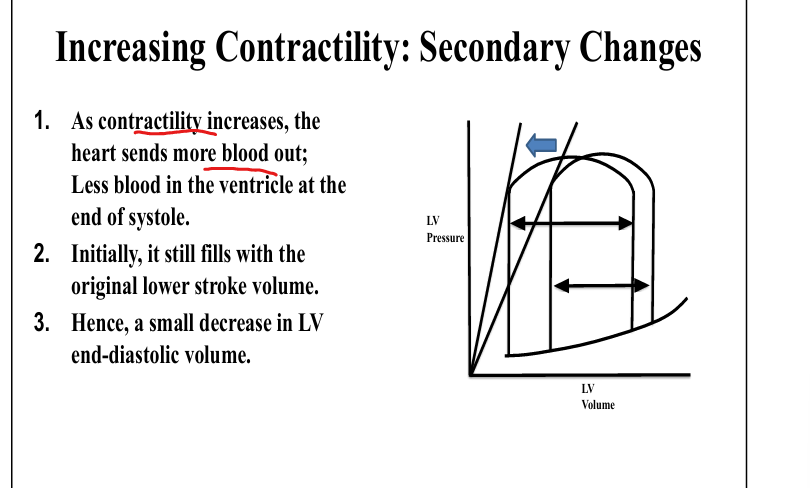

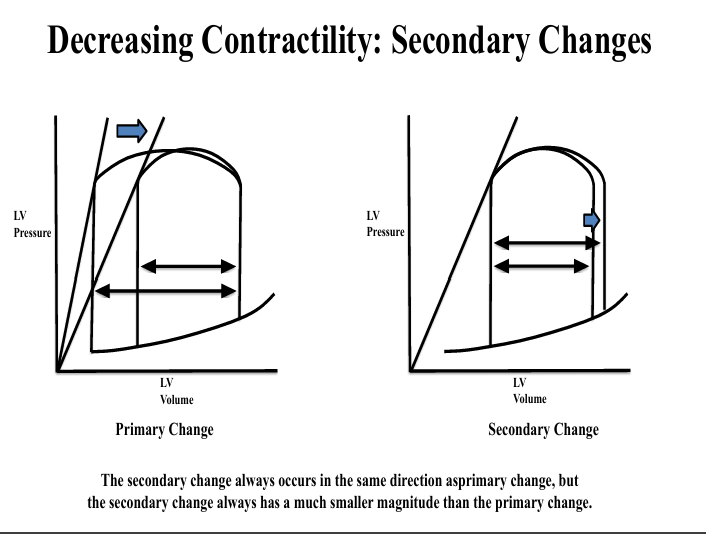
What secondary change occurs with decreased contractility?
Small increase in EDV (heart ejects less, fills slightly more).

What secondary change occurs with increased relaxation?
Small increase in EDV (lower filling pressures → more venous return).


What secondary change occurs with decreased relaxation?
Small decrease in EDV (higher filling pressures → less venous return).


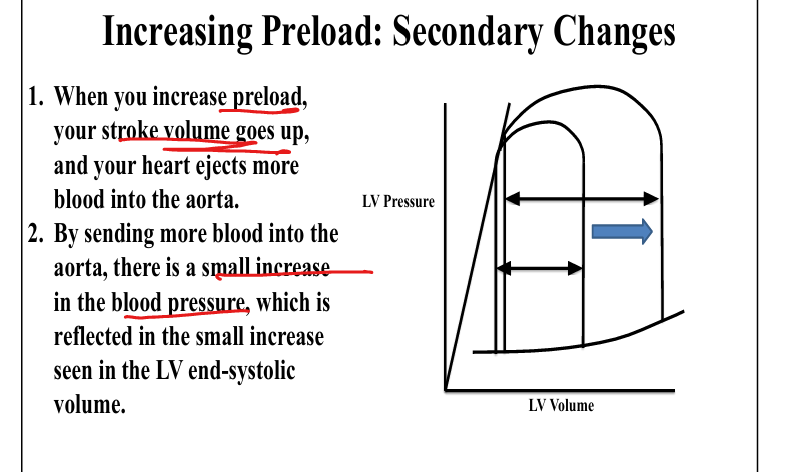
What secondary change occurs with increased preload?
Small increase in ESV (higher stroke volume → slightly higher BP → slightly higher ESV).

What secondary change occurs with decreased preload?
Small decrease in ESV (lower stroke volume → slightly lower BP → slightly lower ESV).


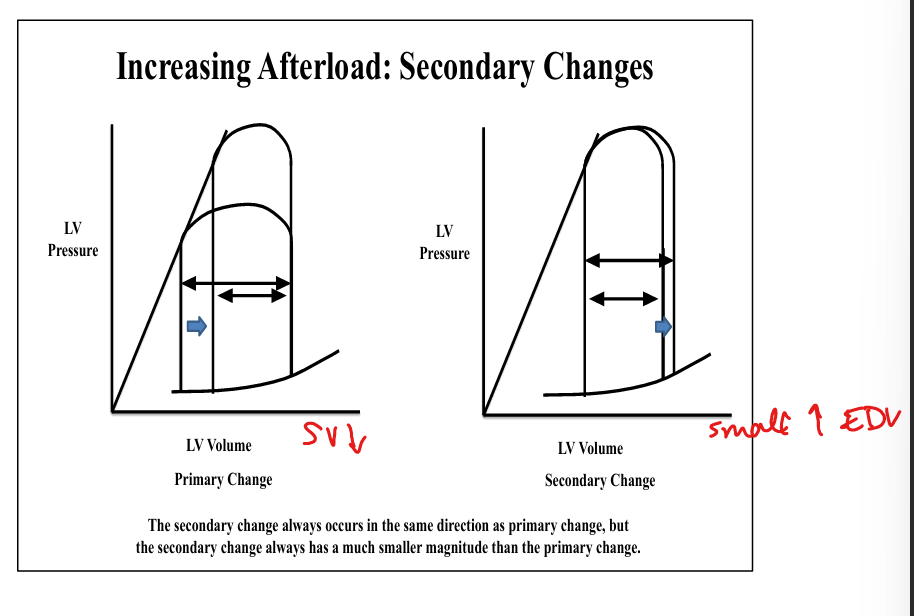
What secondary change occurs with increased afterload?
Small increase in EDV (more blood remains in LV → slightly higher filling volume).

What secondary change occurs with decreased afterload?
Small decrease in EDV (less blood remains in LV → slightly lower filling volume).


If ESPVR line moves, then what has been altered?
Contractility

If EDPVR moves, then what has been altered?
Relaxation

If ESPVR and EDPVR lines are unchanged and ESV moves more significantly than EDV then what is primary change?
Afterload

If ESPVR and EDPVR lines are unchanged and EDV moves more significantly than ESV then what is primary change?
Preload

May be needed chart
