chapter 9: The 19th century III
 Studied by 0 people
 Call Kai
 Learn
Learn Practice Test
 Spaced Repetition
 Match
Match Flashcards
 Knowt Play
1/23

Earn XP
Description and Tags
terms, names and artworks
Name | Mastery | Learn | Test | Matching | Spaced | Call with Kai |
|---|
No study sessions yet.
24 Terms
Neo-Classicism
An 18th–19th century art movement inspired by the art and ideals of ancient Greece and Rome, emphasizing balance, simplicity, and idealized forms
Carving (sculpture)
A subtractive sculptural process in which material (such as stone or wood) is cut away to reveal a form
Modeling (sculpture)
An additive sculptural process where soft material (such as clay or wax) is shaped by hand or tools
Plaster casting
A technique in which liquid plaster is poured into a mould to create a solid replica of an object
Clay model
A preliminary sculptural form made in clay, often used to develop ideas before final execution
Bozzetto
A small, rough preparatory sculpture or sketch model used to plan a larger work
Plaster mould
A hollow form made of plaster used to shape or reproduce a sculpture
Plaster model
Finished or semi-finished sculpture made in plaster, often serving as an intermediate stage before carving or casting in another material
Practician
A skilled studio assistant who executes parts of a sculpture, especially carving, under the direction of the master artist
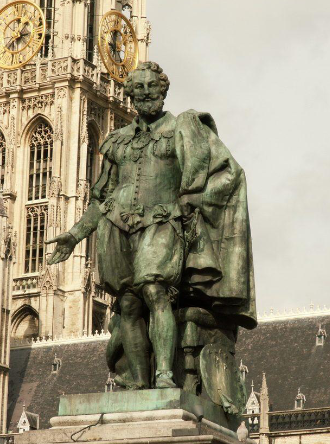
“Monument to Peter Paul Rubens” (Guillaume Geefs, late 19th century)
Constantin Meunier
Belgian sculptor from the 19th century, Realism style, attention for social issues, combines realism and modern figures with classcial principles, emphasis on human dignity
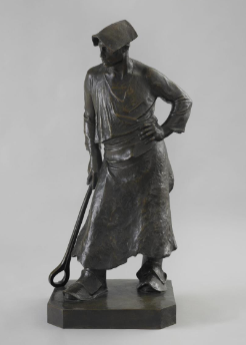
“The Hammerman” (Constantin Meunier, late 19th century)
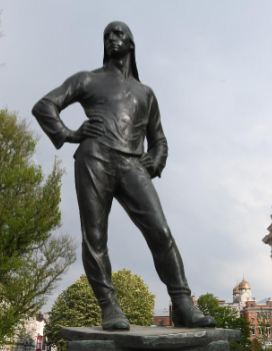
“The Dock Worker” (Constantin Meunier, late 19th century)
Auguste Rodin
French sculptor from the middle 19th - early 20th century, linked to Impressionism and Naturalism, experimentation, artistic process becomes part of work, image of sculptor important for him
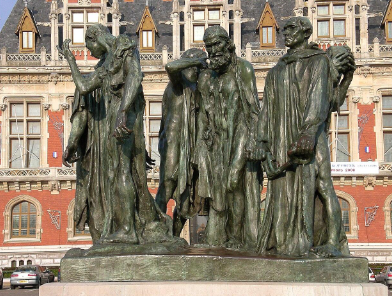
“The Burghers of Calais” (Auguste Rodin, late 19th century)
Camille Claudel
French female sculptor from the middle 19th - middle 20th century, startes as assistant in the studio of Rodin (her teacher and lover), able to study nude figures and anatomy
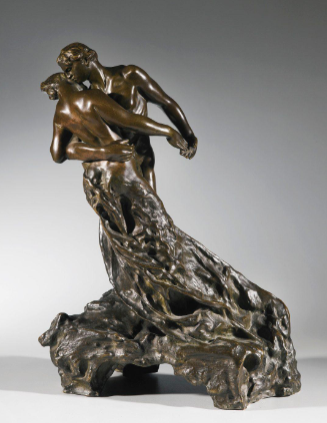
“The Waltz” (Camille Claudel, late 19th century)
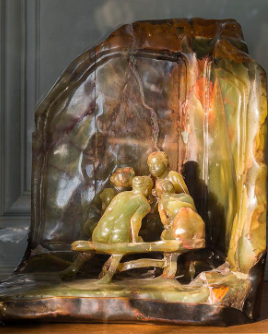
“The gossips or Women chatting” (Camille Claudel, late 19th century)
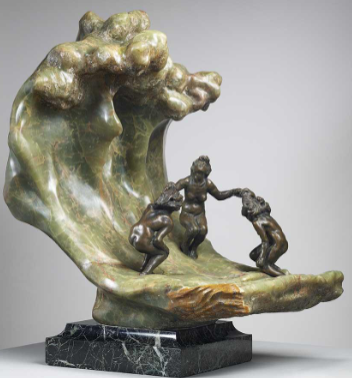
“The Wave or The Bathers” (Camille Claudel, late 19th century)
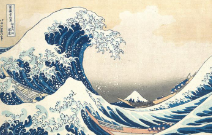
“The Great Wave off Kanagawa” (Hokusai, early 19th century)
Matthias Kessels (1784-1836)
Belgian sculptor, Acquisition in 1836 by the Belgian state of the collection of his models, marked the beginning of sculpture departments
Socialism
Theorists believed that a system based on private ownership and profit created greed and inequality, leading to the exploitation of the working class
(Bronze) casting studio
Specialized business for casting in bronze
Public monuments
Key markers of professional success within the context of cultural nationalism