Full Body Kines
 Call Kai
 Learn
Learn Practice Test
 Spaced Repetition
 Match
Match Flashcards
 Knowt Play
1/675

There's no tags or description
Looks like no tags are added yet.
Name | Mastery | Learn | Test | Matching | Spaced | Call with Kai | Chat |
|---|
No analytics yet
Send a link to your students to track their progress
676 Terms
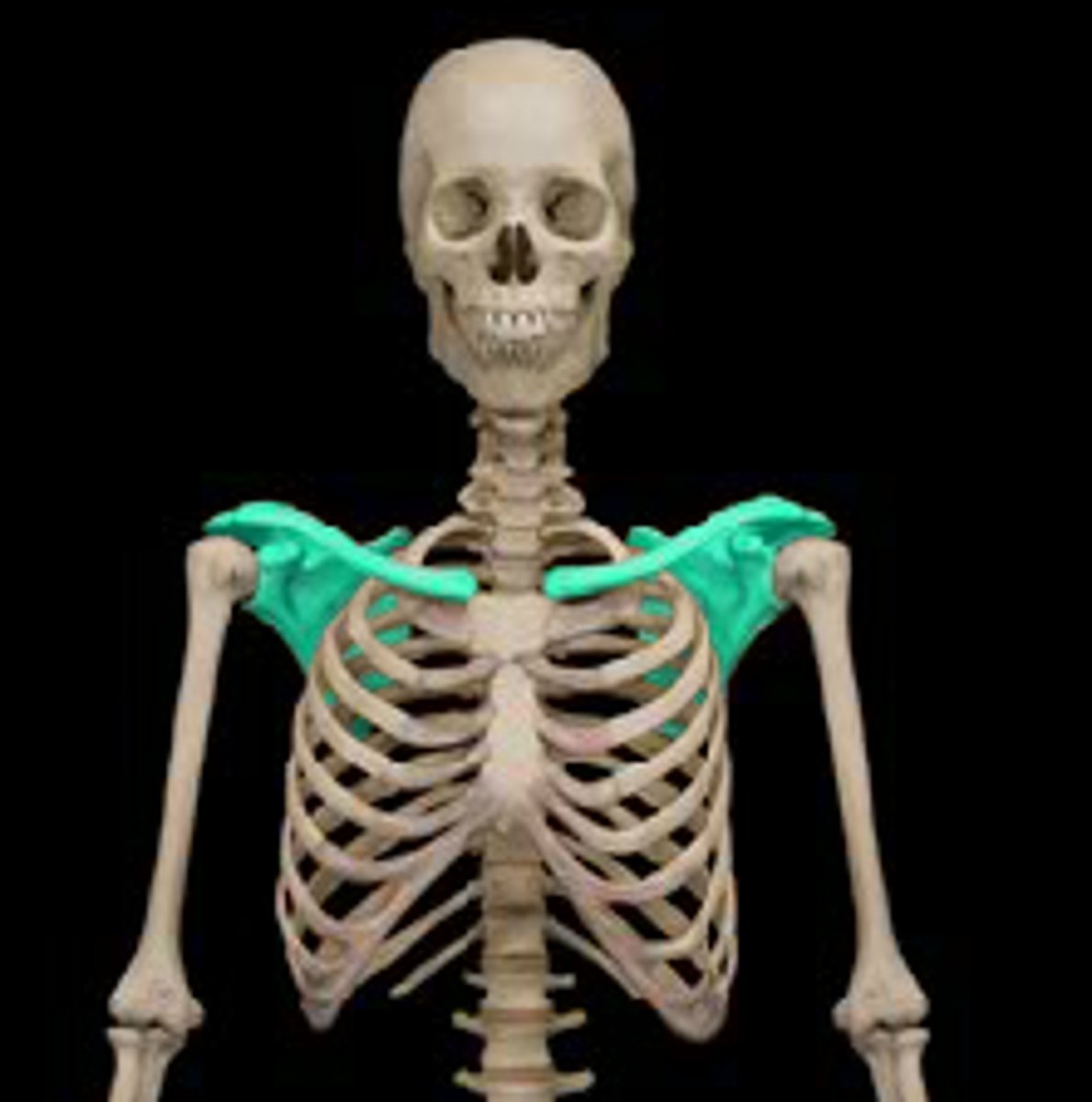
Shoulder Girdle
scapula and clavicle
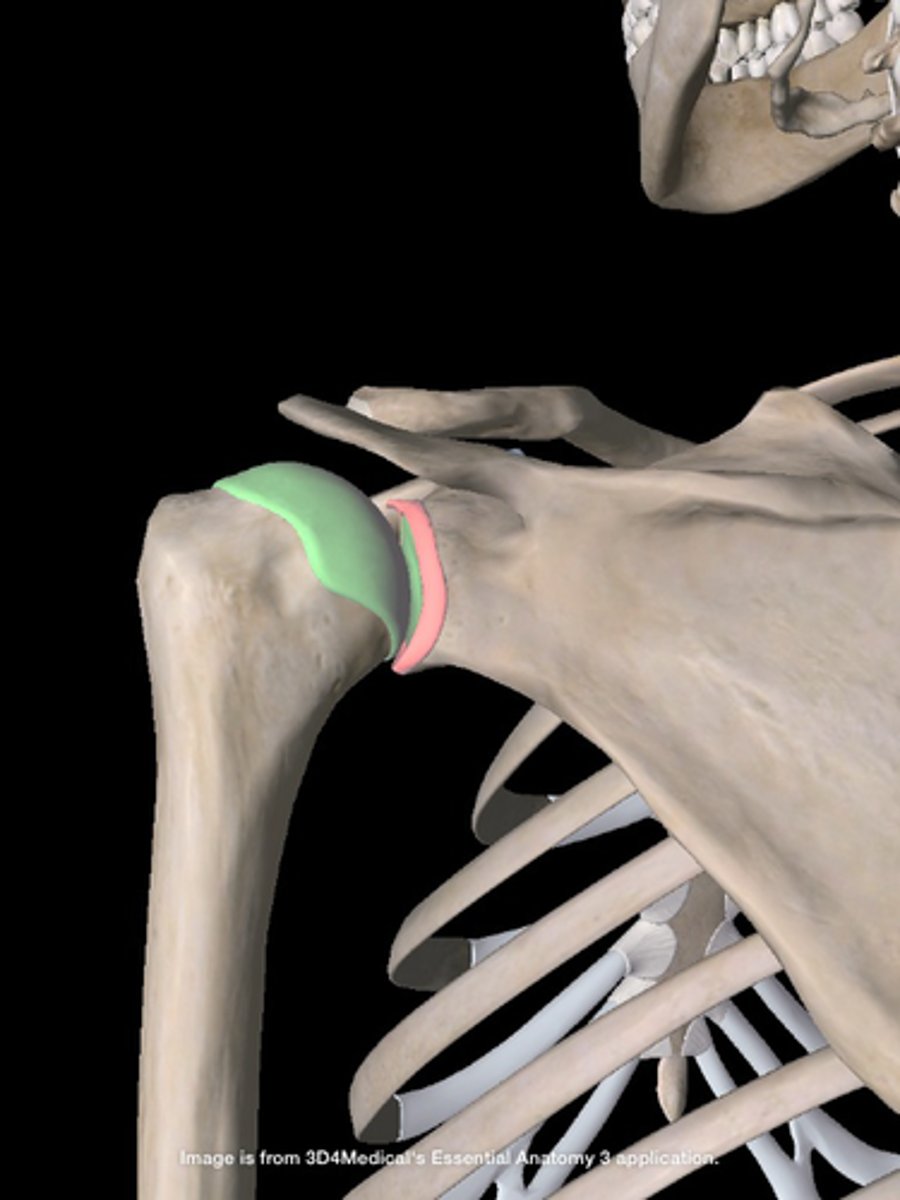
Glenohumeral (GH) Joint
articulation between the glenoid fossa of the scapula and the head of the humerus
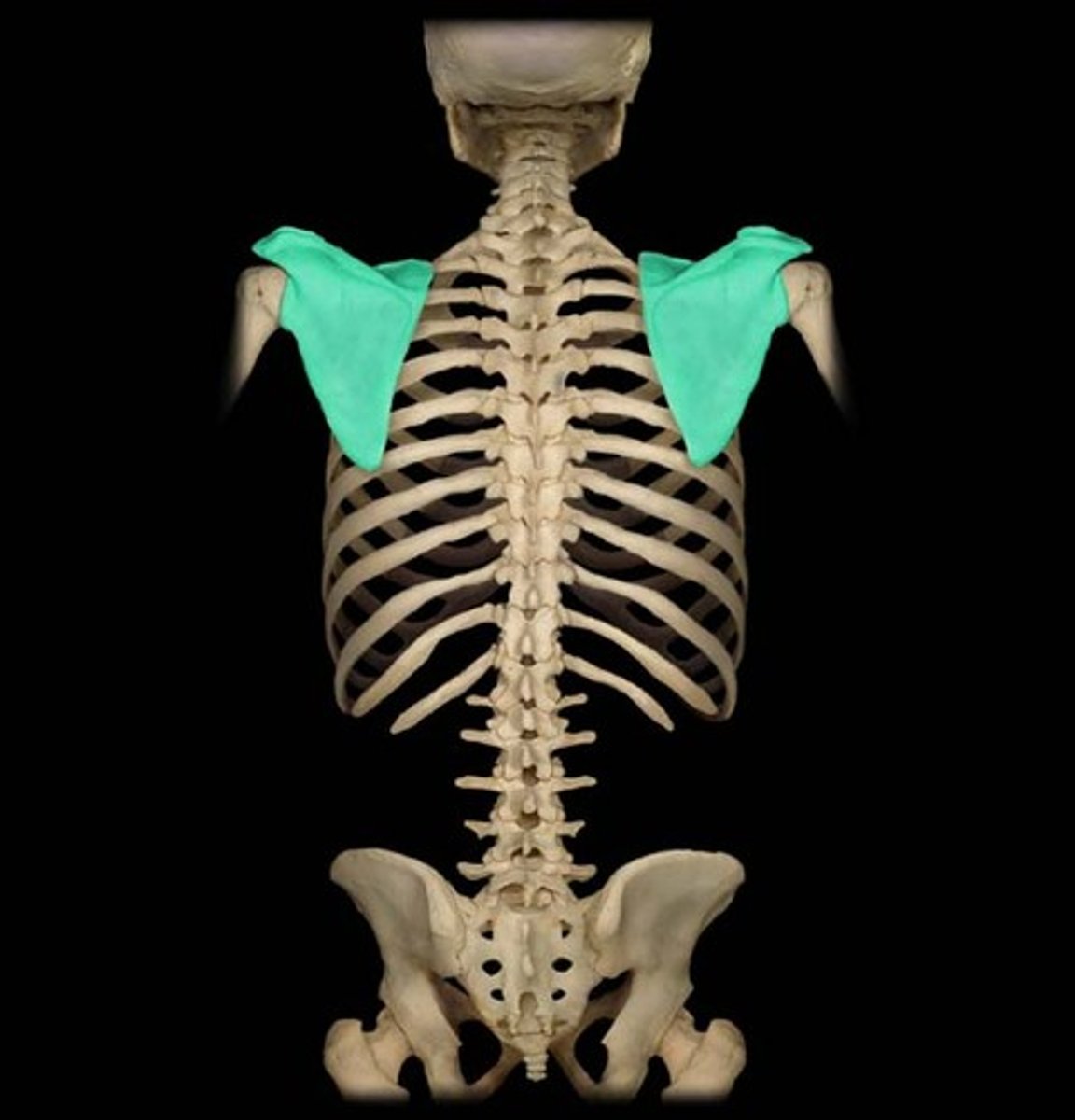
Scapula
Shoulder blade; the large, flat, triangular bone that overlies the posterior thoracic wall
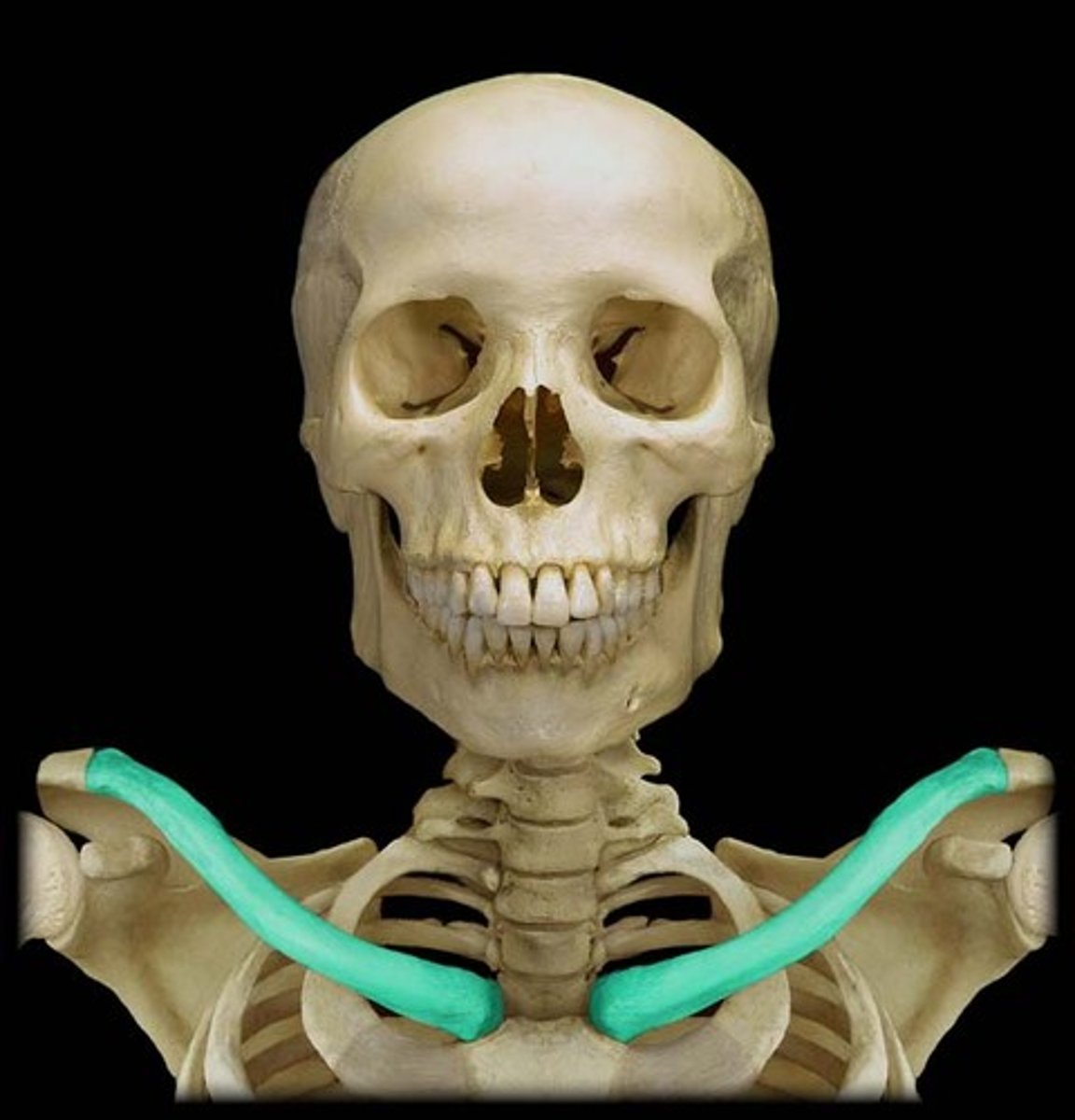
Clavicle
Collar bone; the only bone connecting the upper extremity to the axial spine
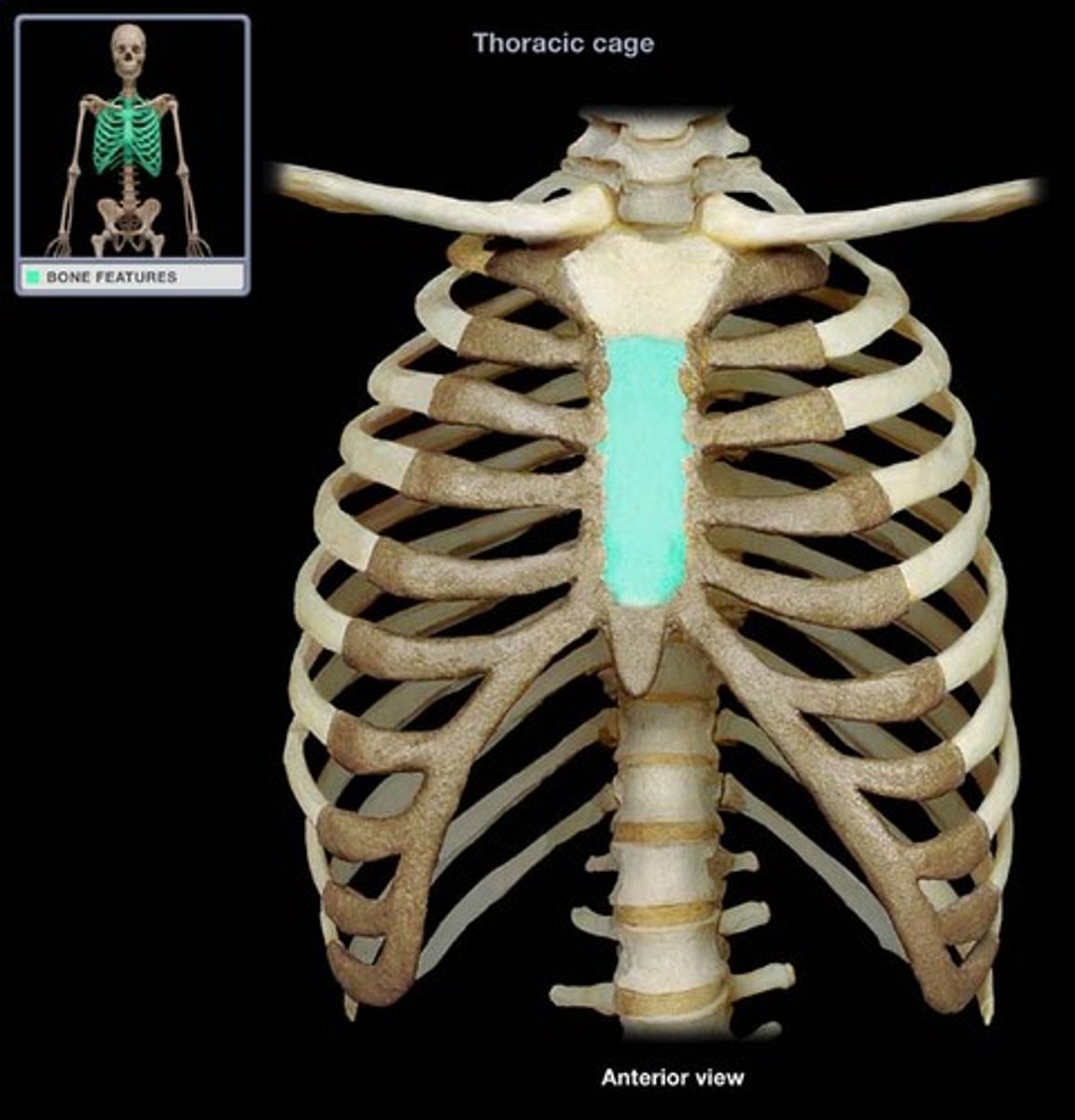
Sternum
Breast bone; a flat bone located in the midline of the anterior thorax
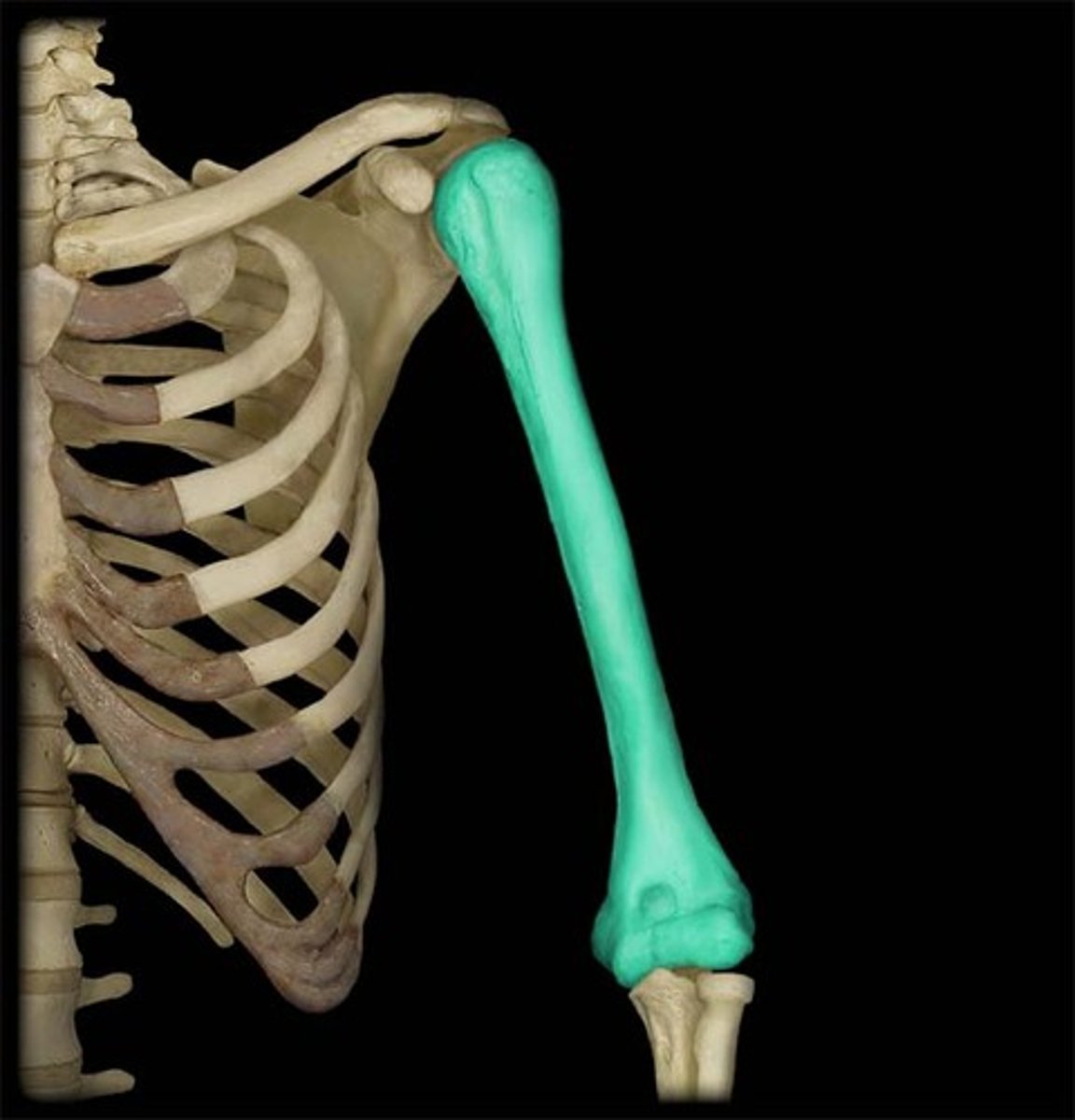
Humerus
Upper arm bone
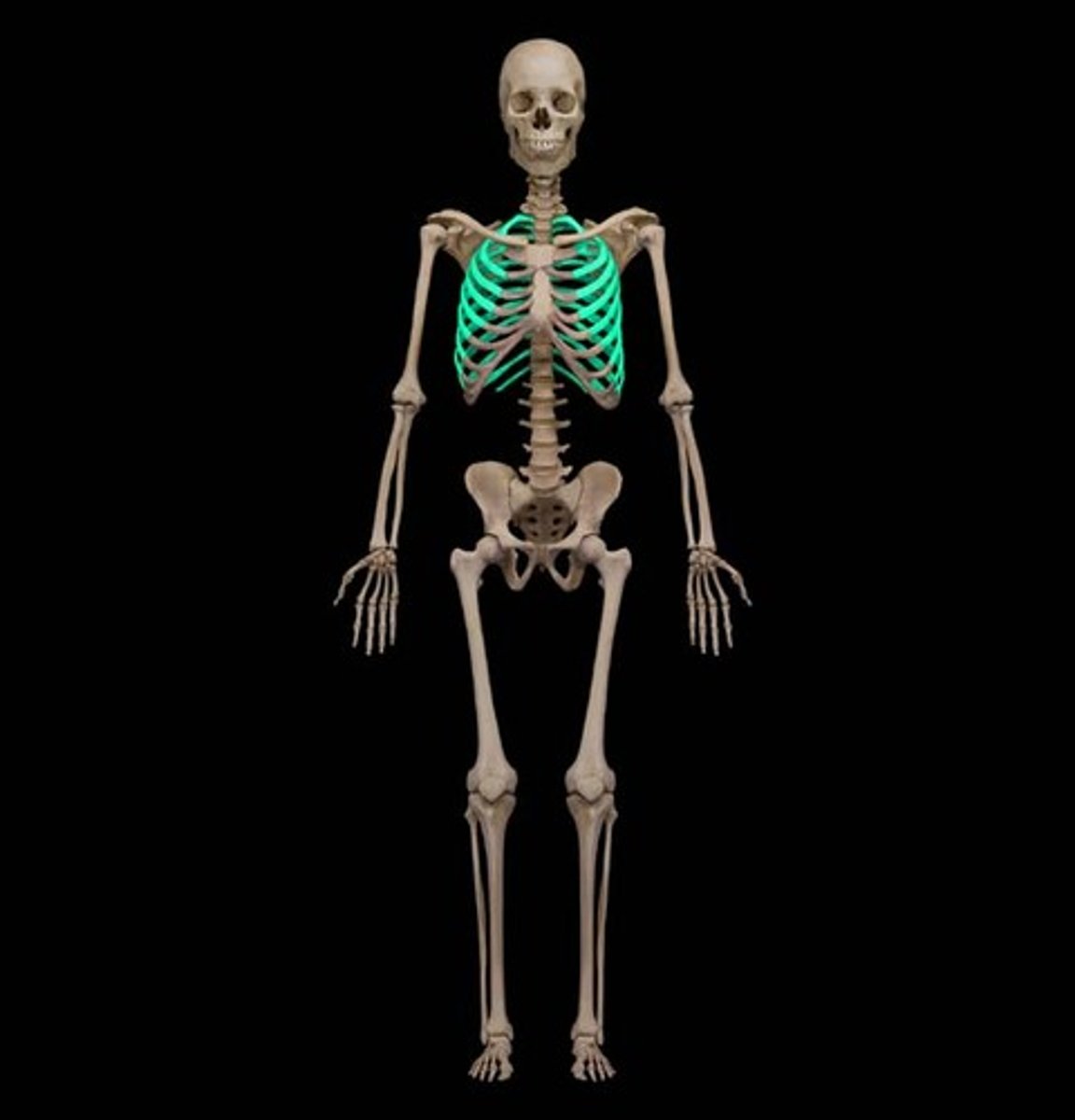
Rib Cage
A structure made out of bones designed to protect the lungs.
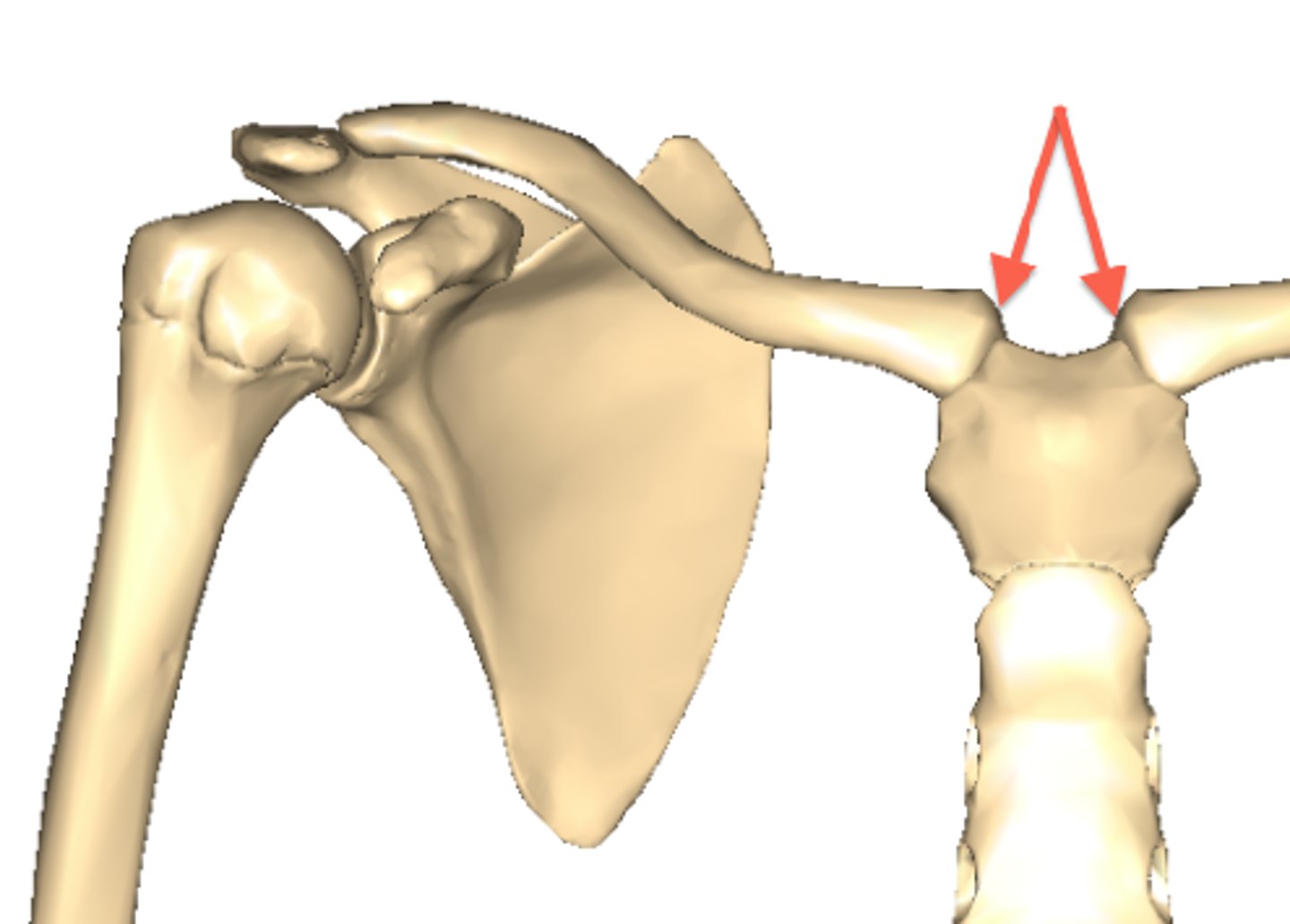
Sternoclavicular (SC) Joint
Articulation between the medial aspect of the clavicle with the sternum
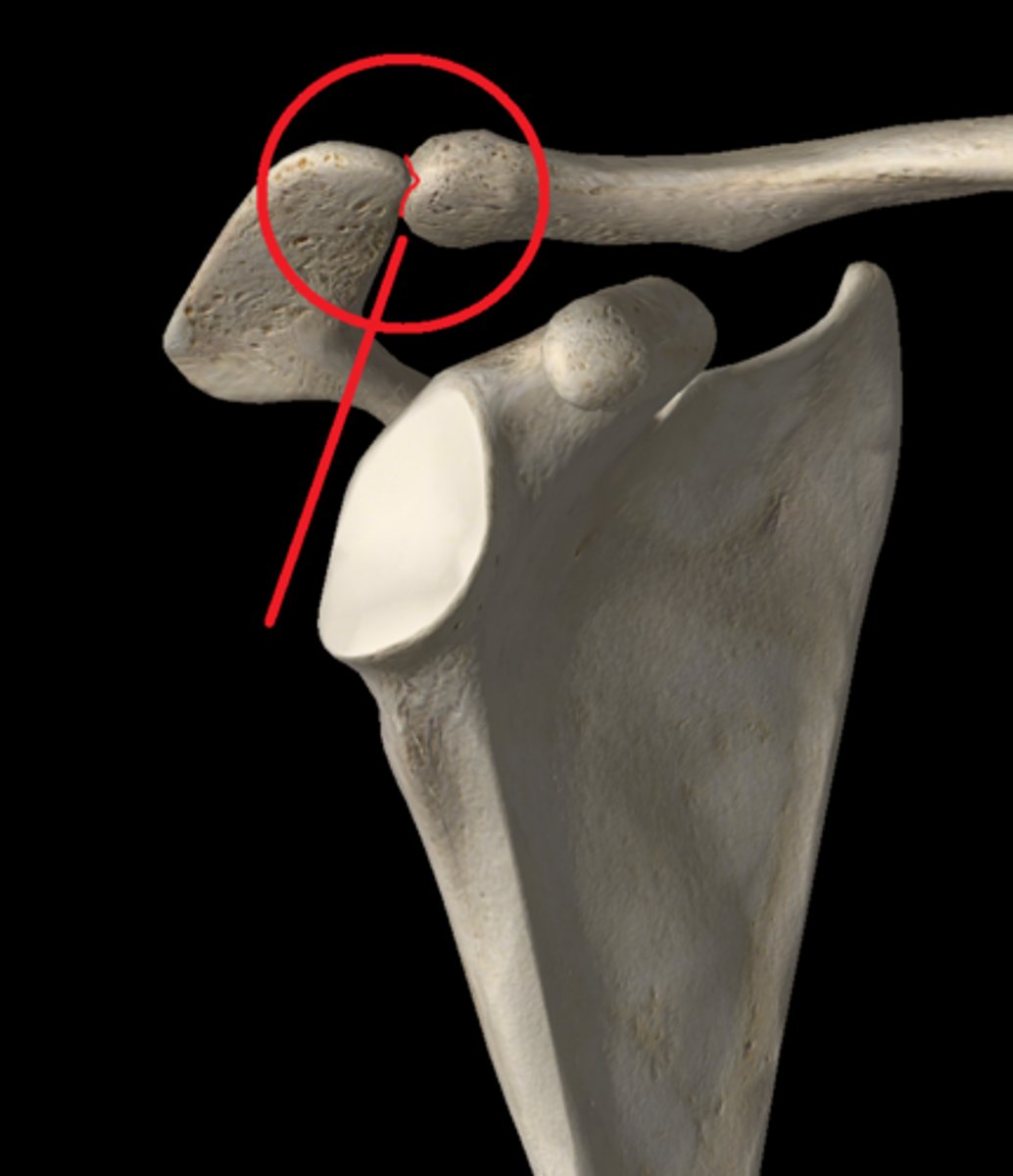
Acromioclavicular (AC) Joint
Articulation between the acromion process of the scapula with the lateral end of the clavicle
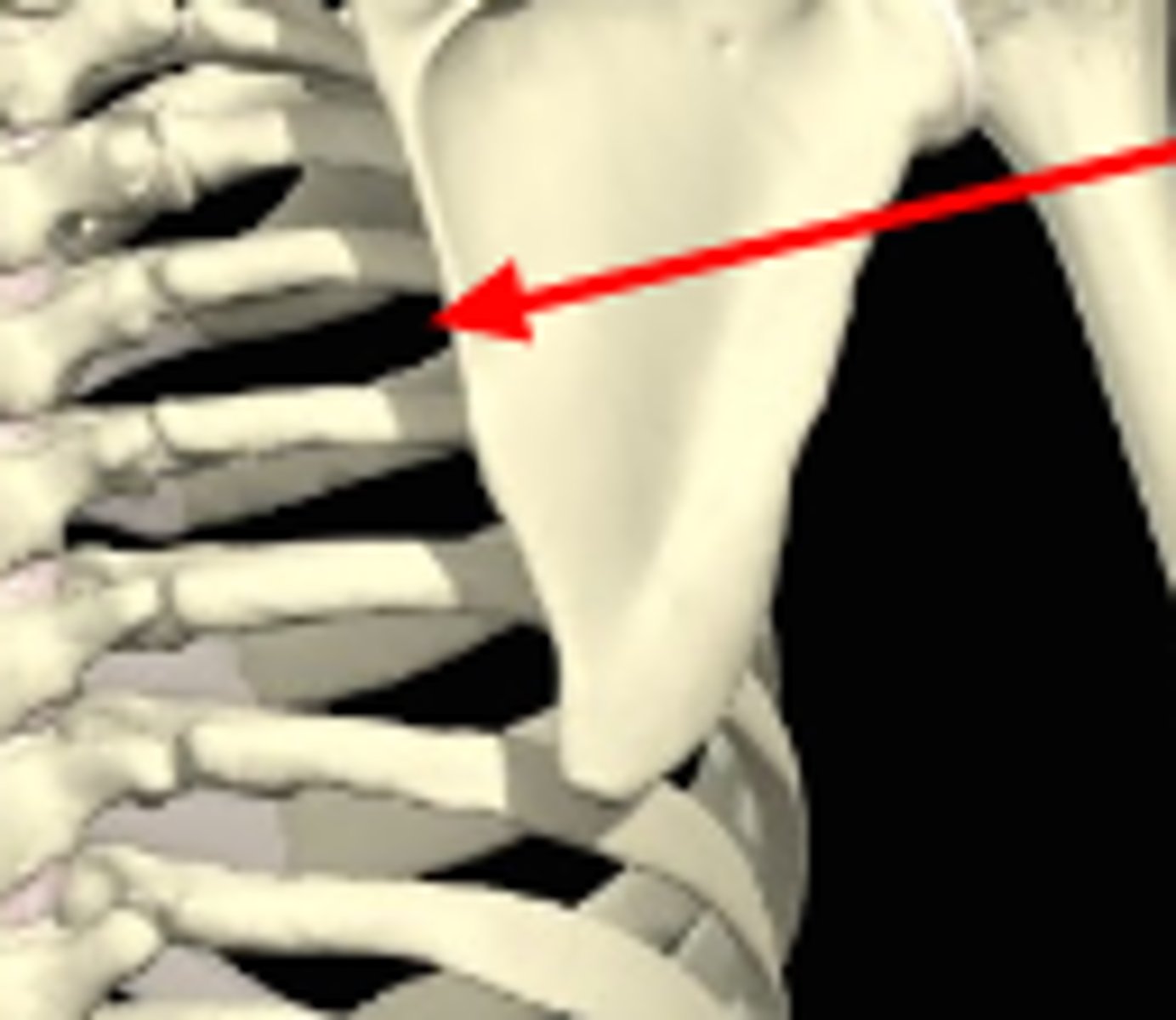
Scapulothoracic Joint
not a joint in the pure sense of the word; the scapula and thorax do not have a point of fixation, but the scapula does move over the rib cage of the thorax
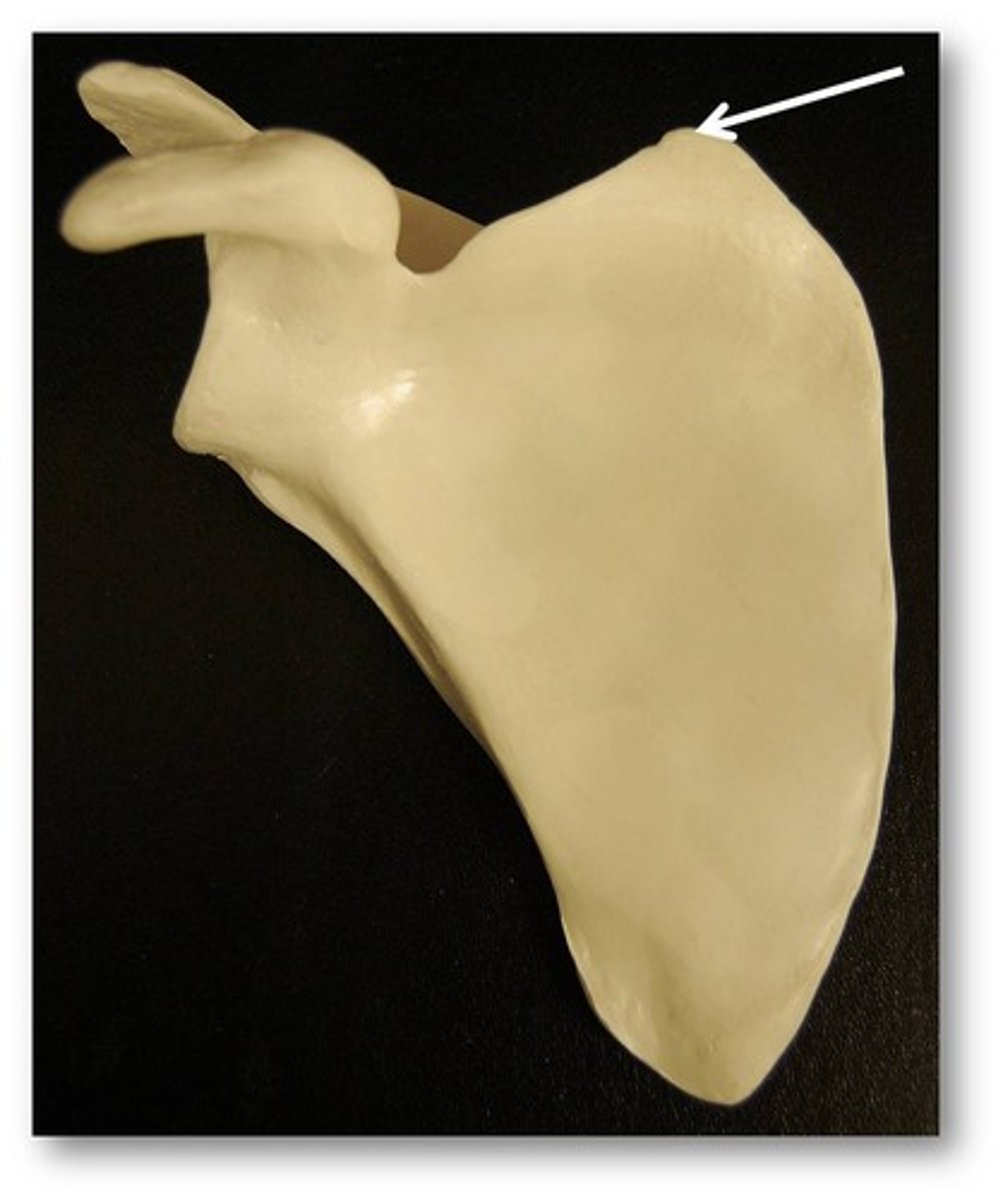
Superior Angle of the Scapula
superior medial aspect, attachment point for levator scapula
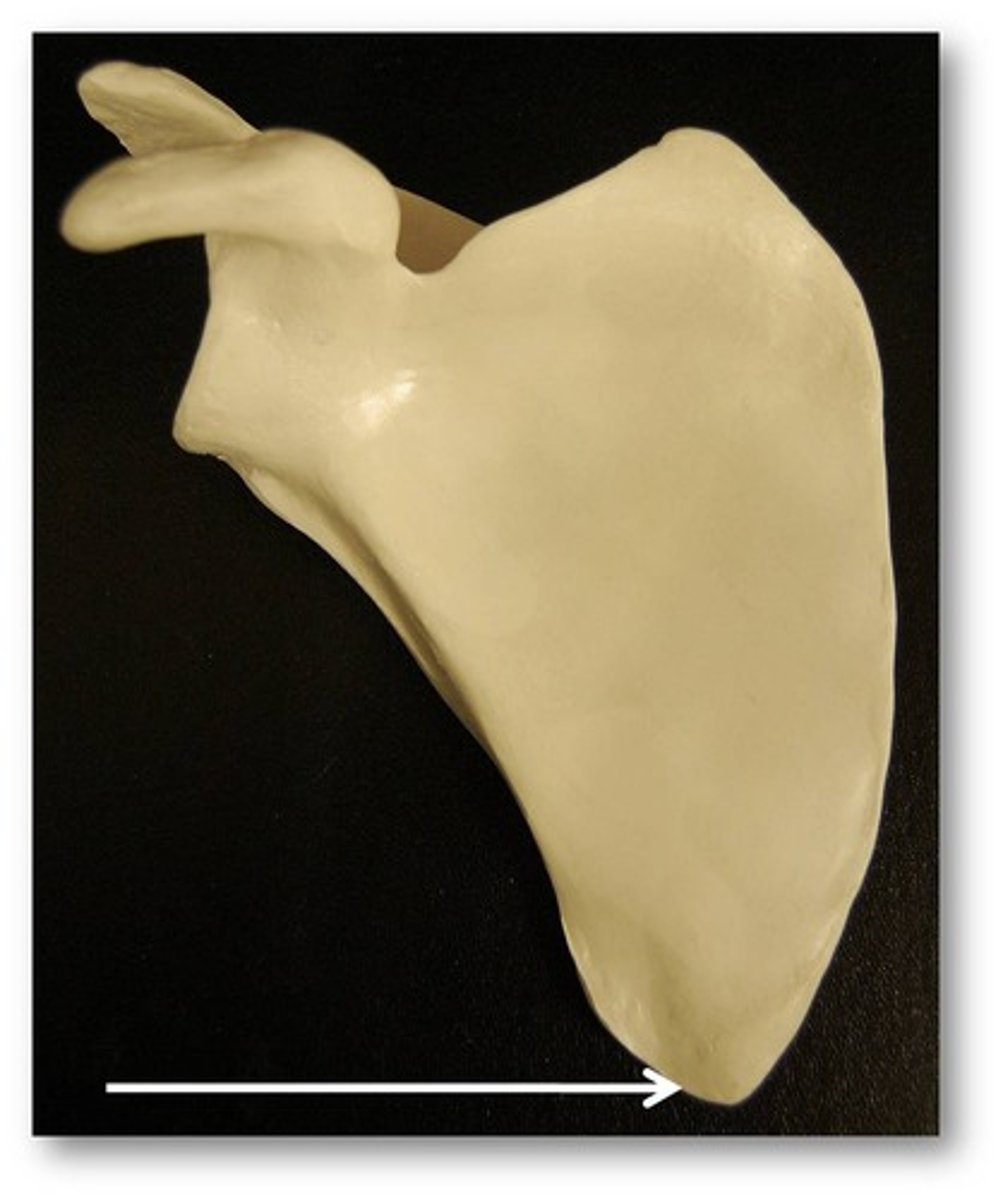
Inferior Angle of the Scapula
most inferior point where the vertebral and axillary borders meet
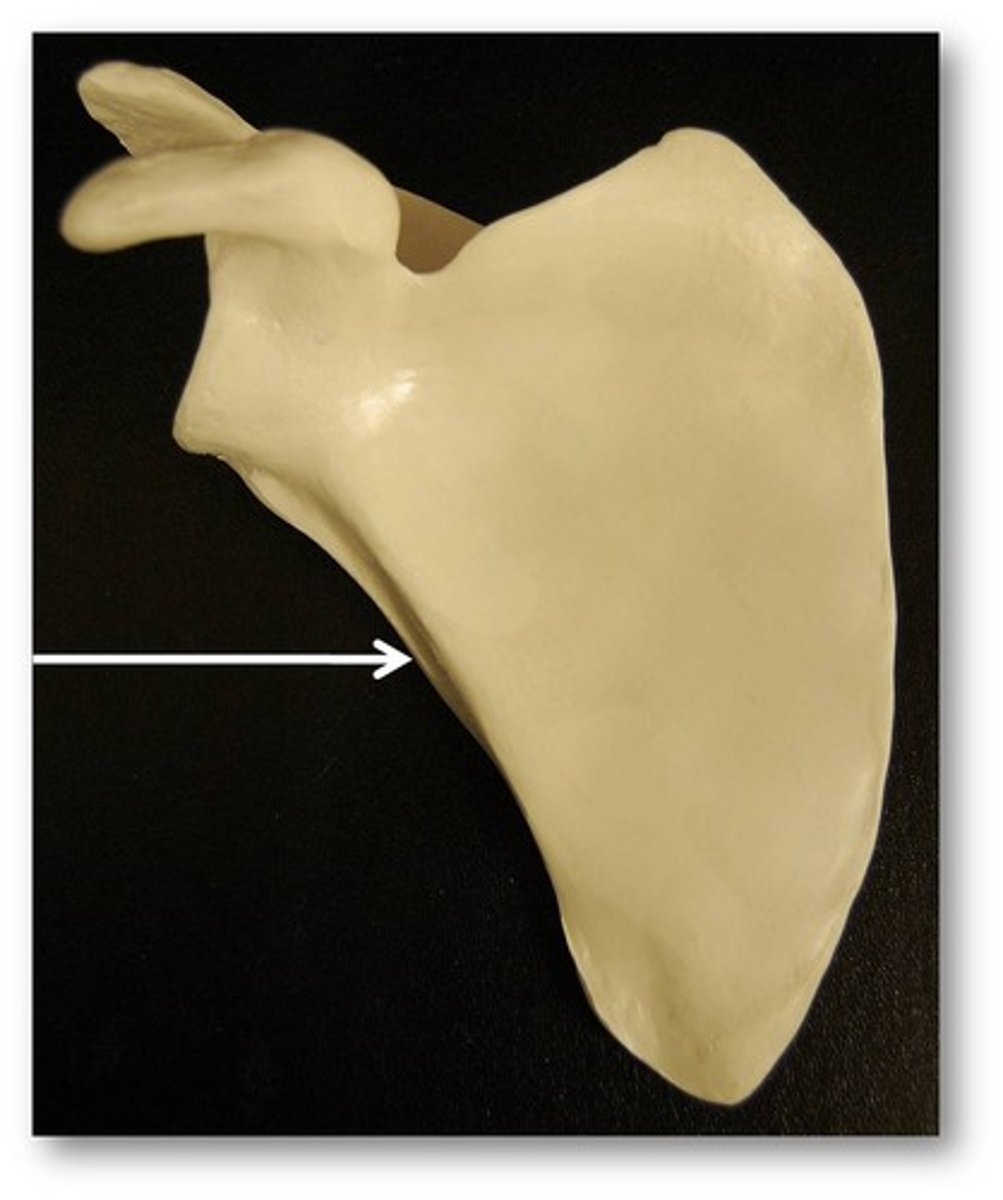
Vertebral border of the Scapula
between the superior and inferior angles medially; attachment points for rhomboid and serratus anterior muscles
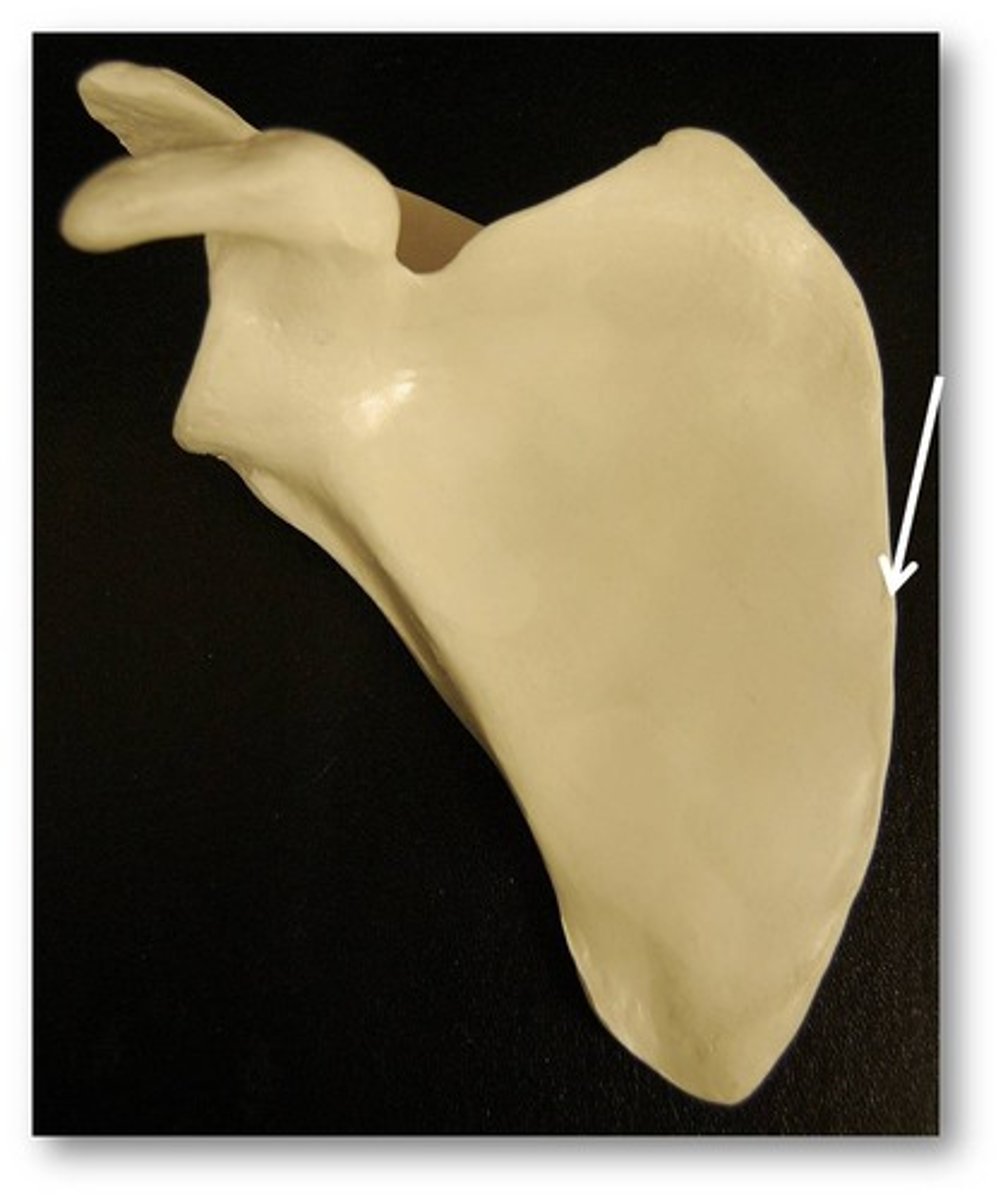
Axillary border of the Scapula
the lateral side between the glenoid fossa and the inferior angle
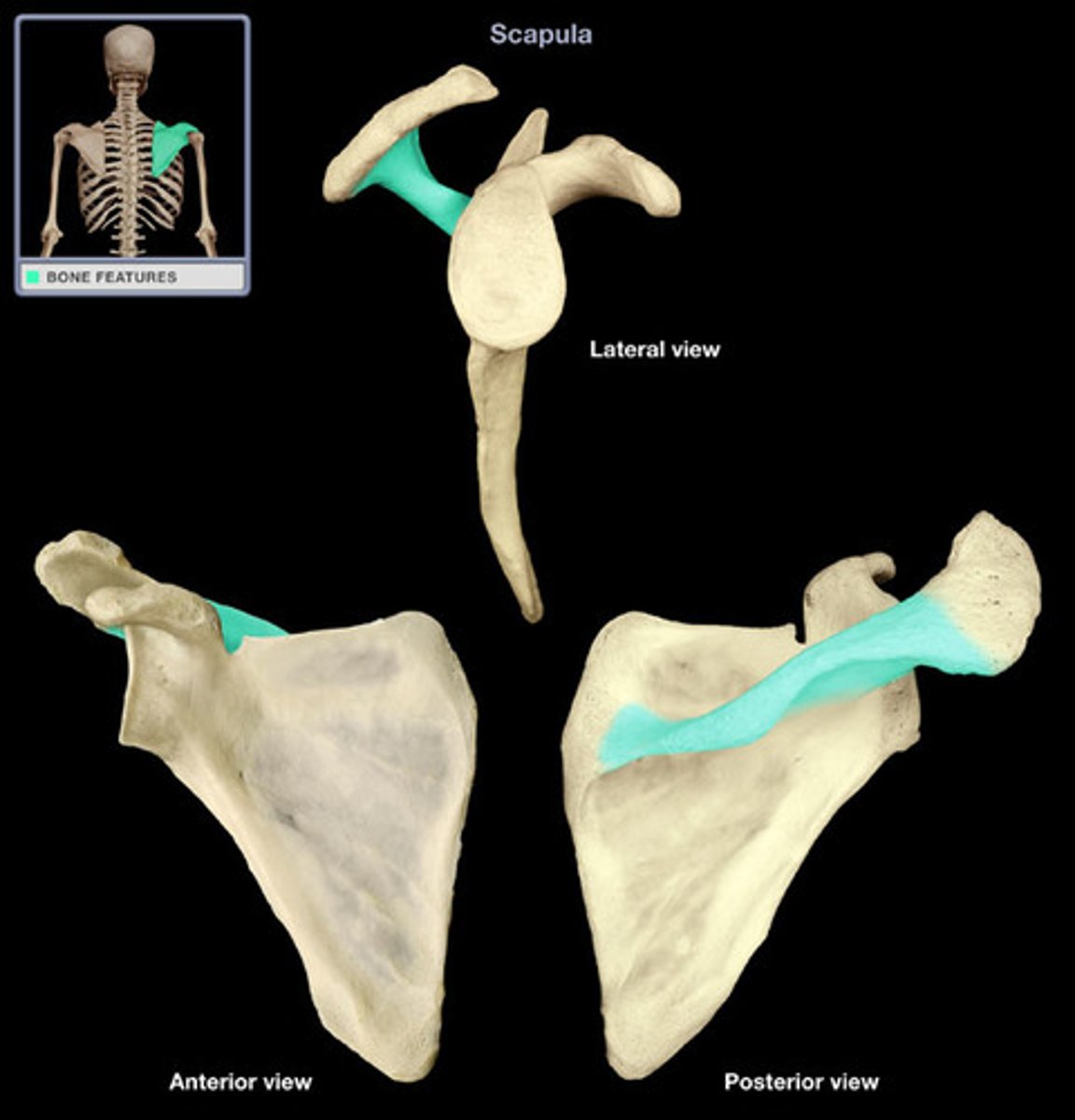
Spine of the Scapula
projection on the posterior surface of the scapula, running from medial border laterally to the acromion process; attachment site for middle and lower trapezius muscles
Base of the Spine of the Scapula
Where the spine of the scapula meets the medial border of the scapula
Coracoid Process
projection on anterior surface, attachment point for pectoralis minor muscle
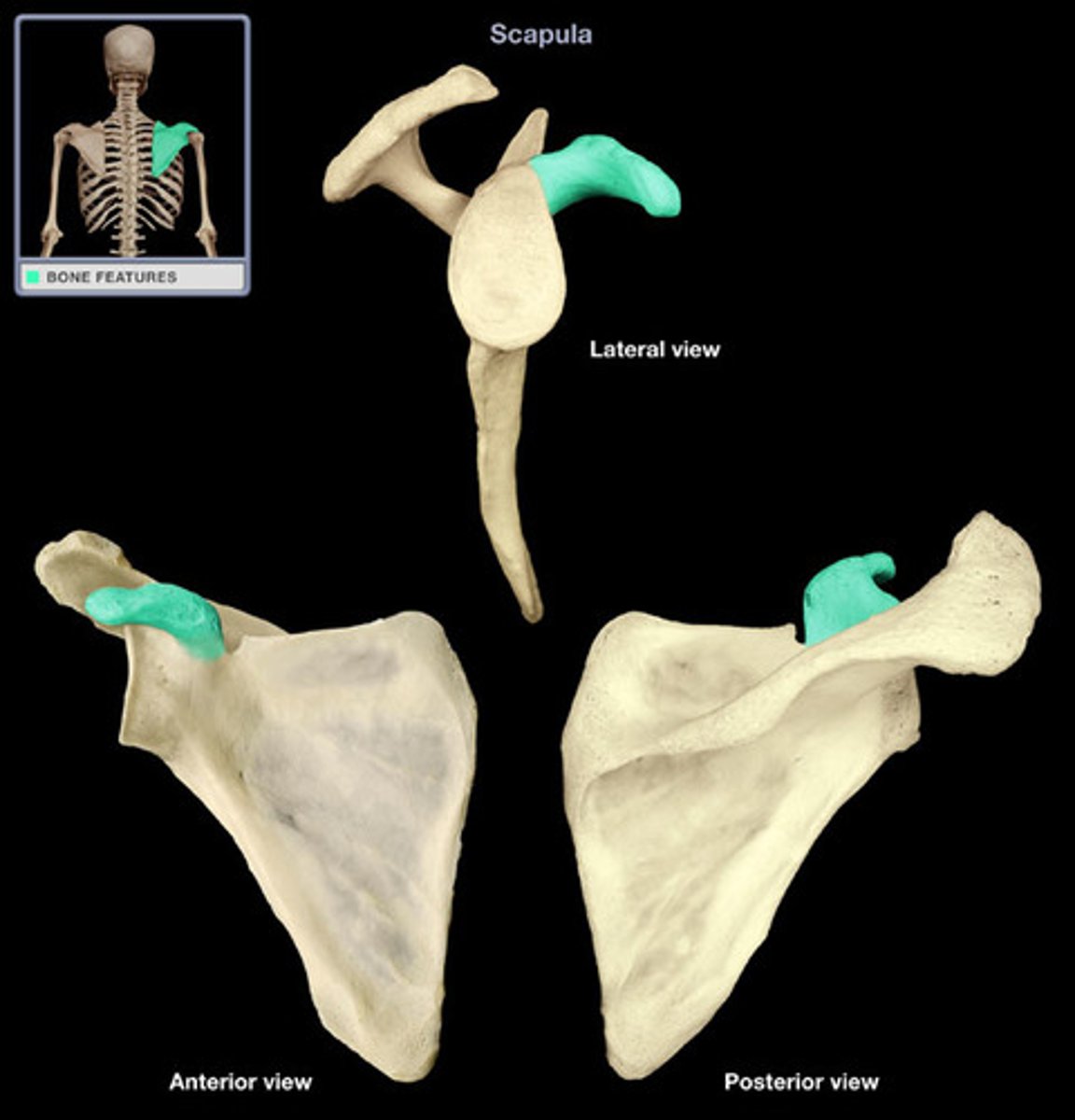
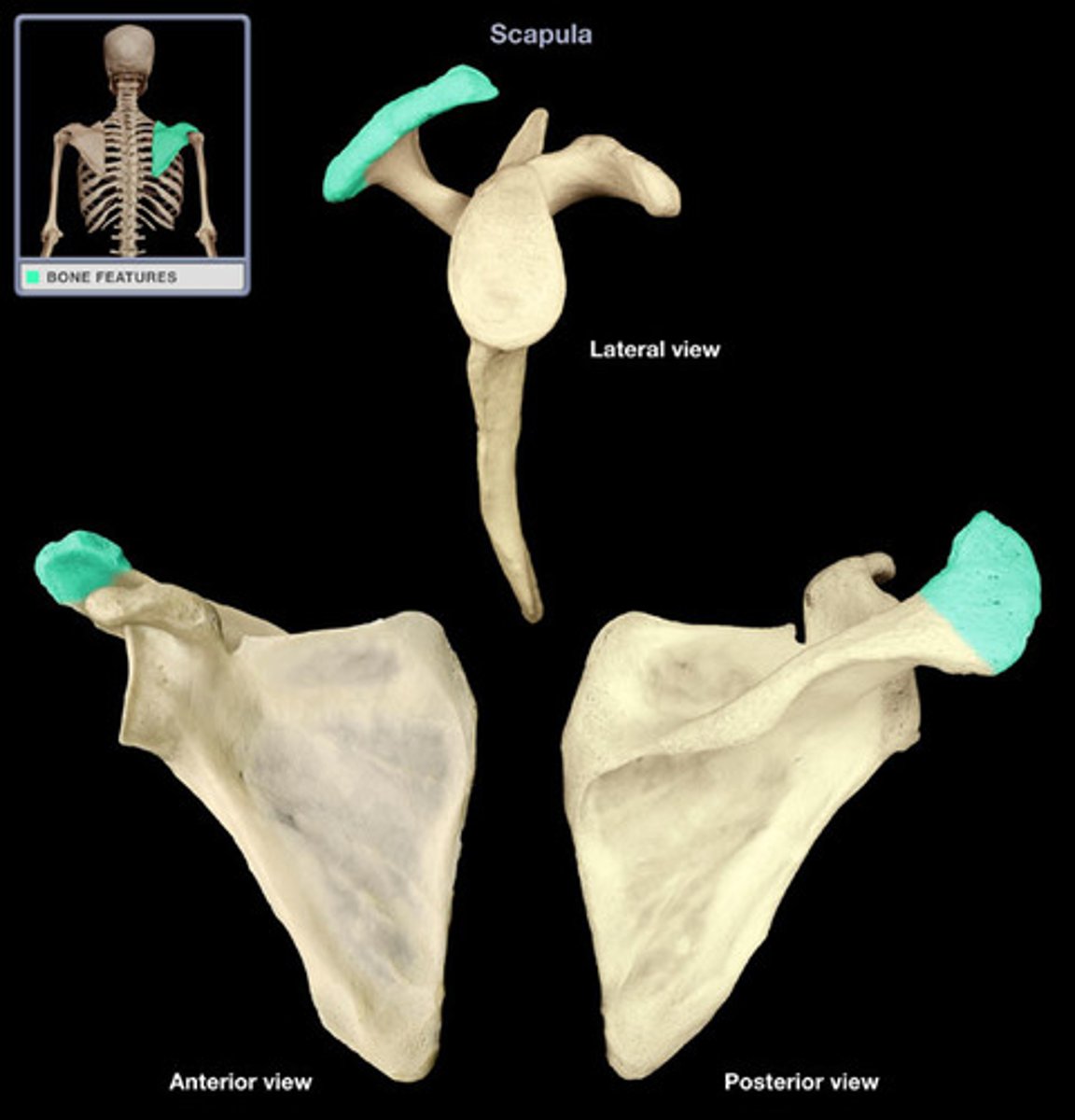
Acromion Process
broad, flat area of superior lateral aspect of scapula; attachment site for upper trapezius
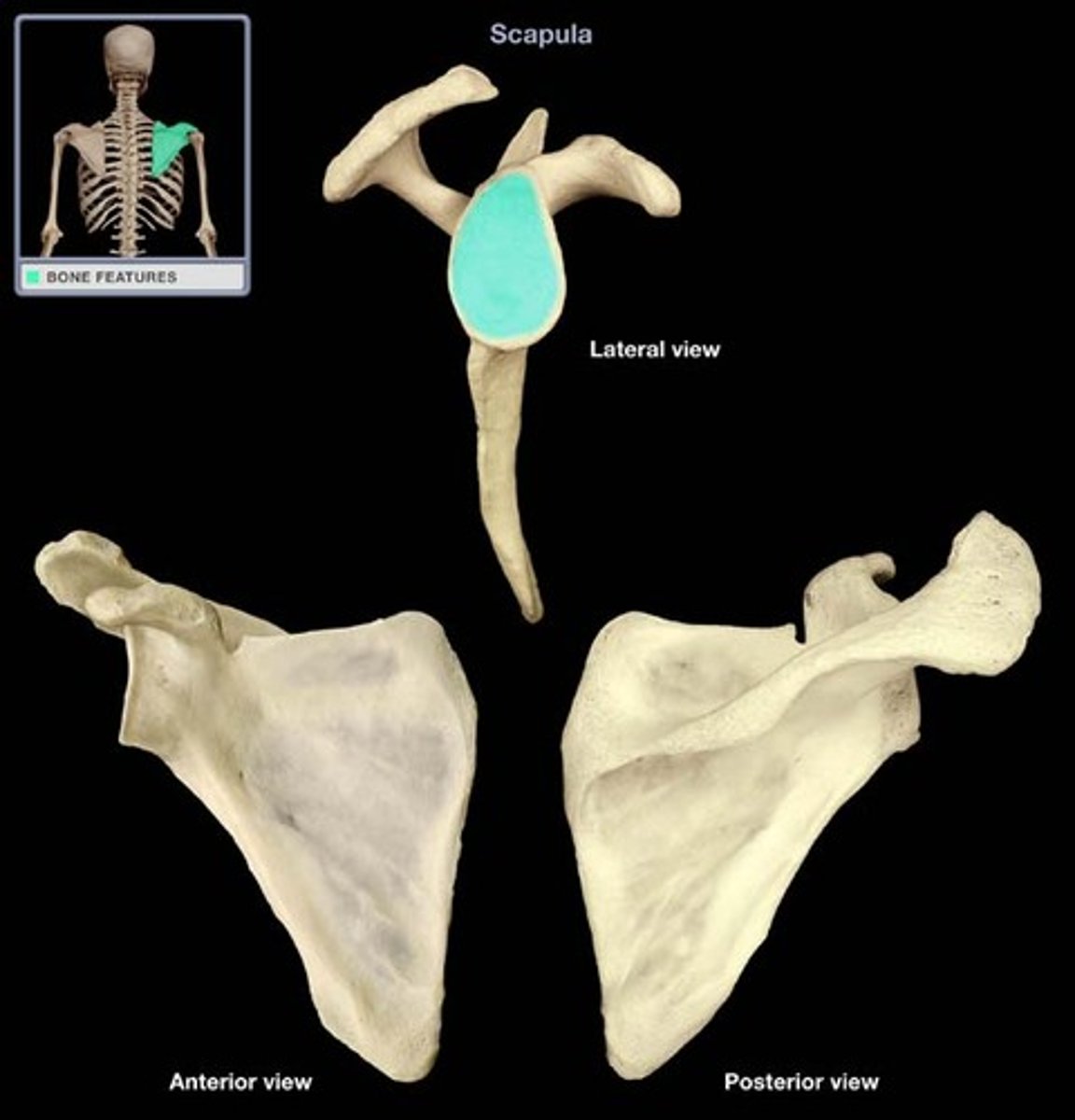
Glenoid Fossa
slightly concave surface that articulates with the head of the humerus on the superior lateral side of the axillary border and below the acromion process
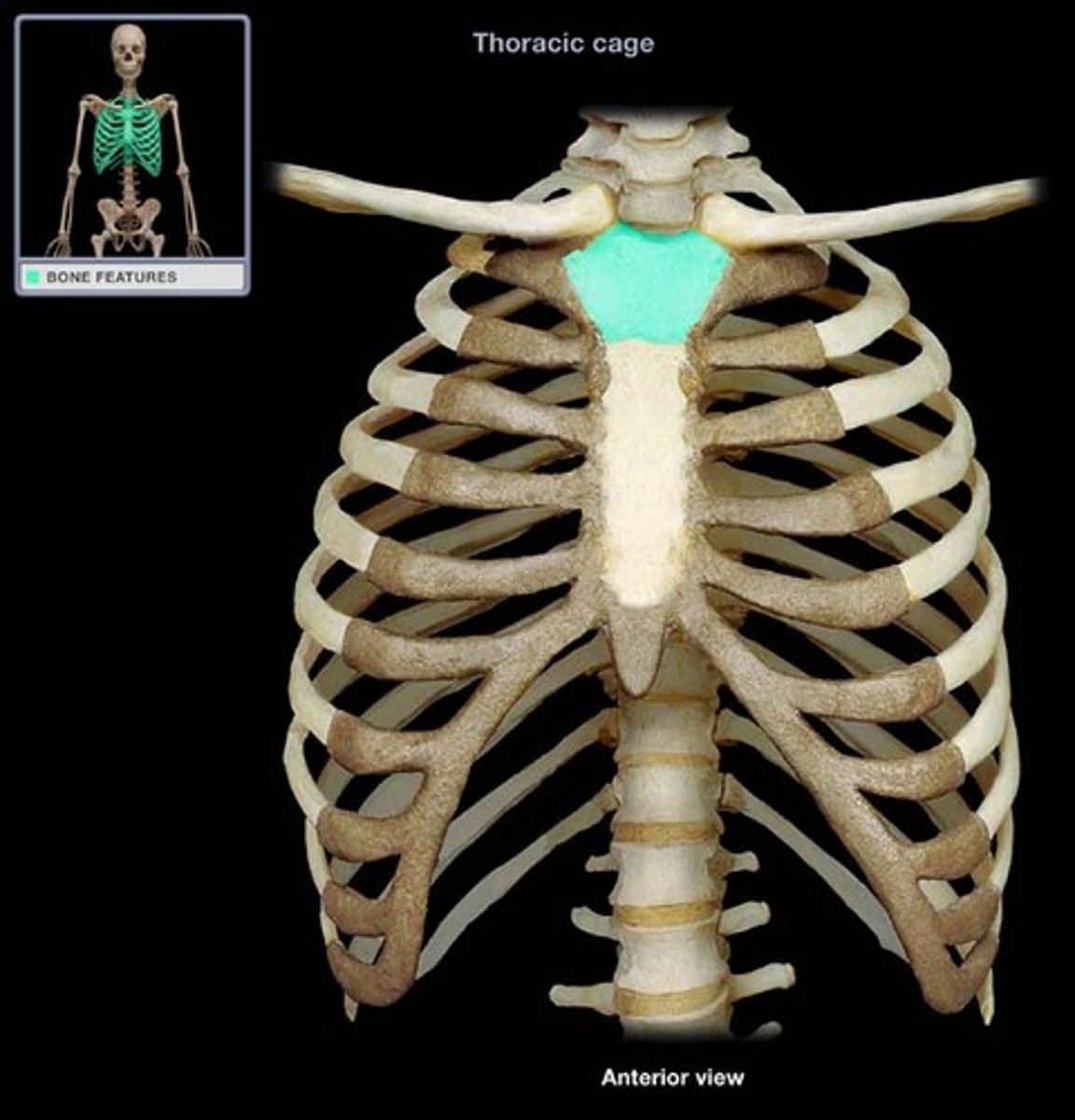
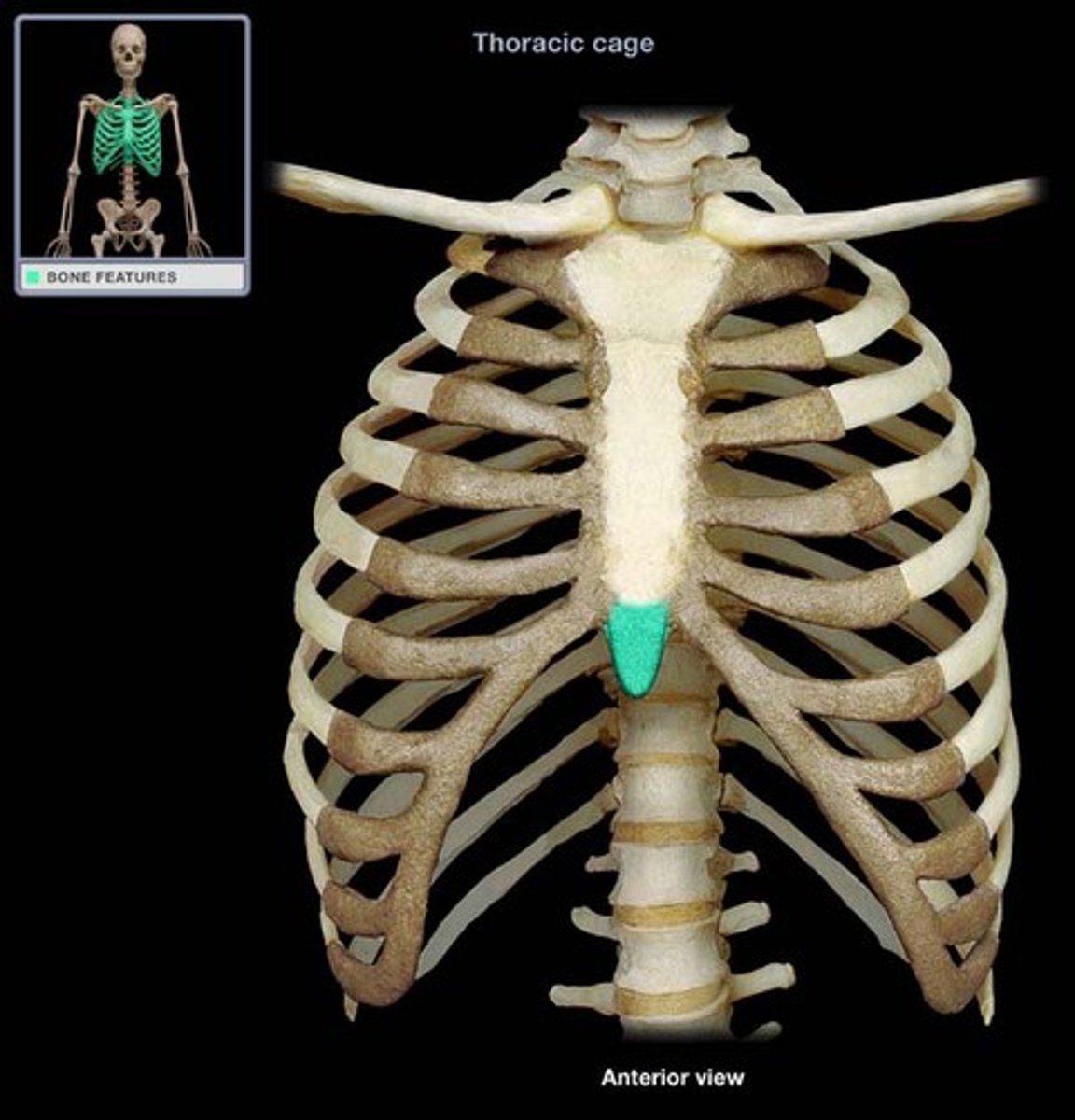
Manubrium
the superior end; attachment site for clavicle and first rib
Xiphoid Process
the inferior tip of the sternum
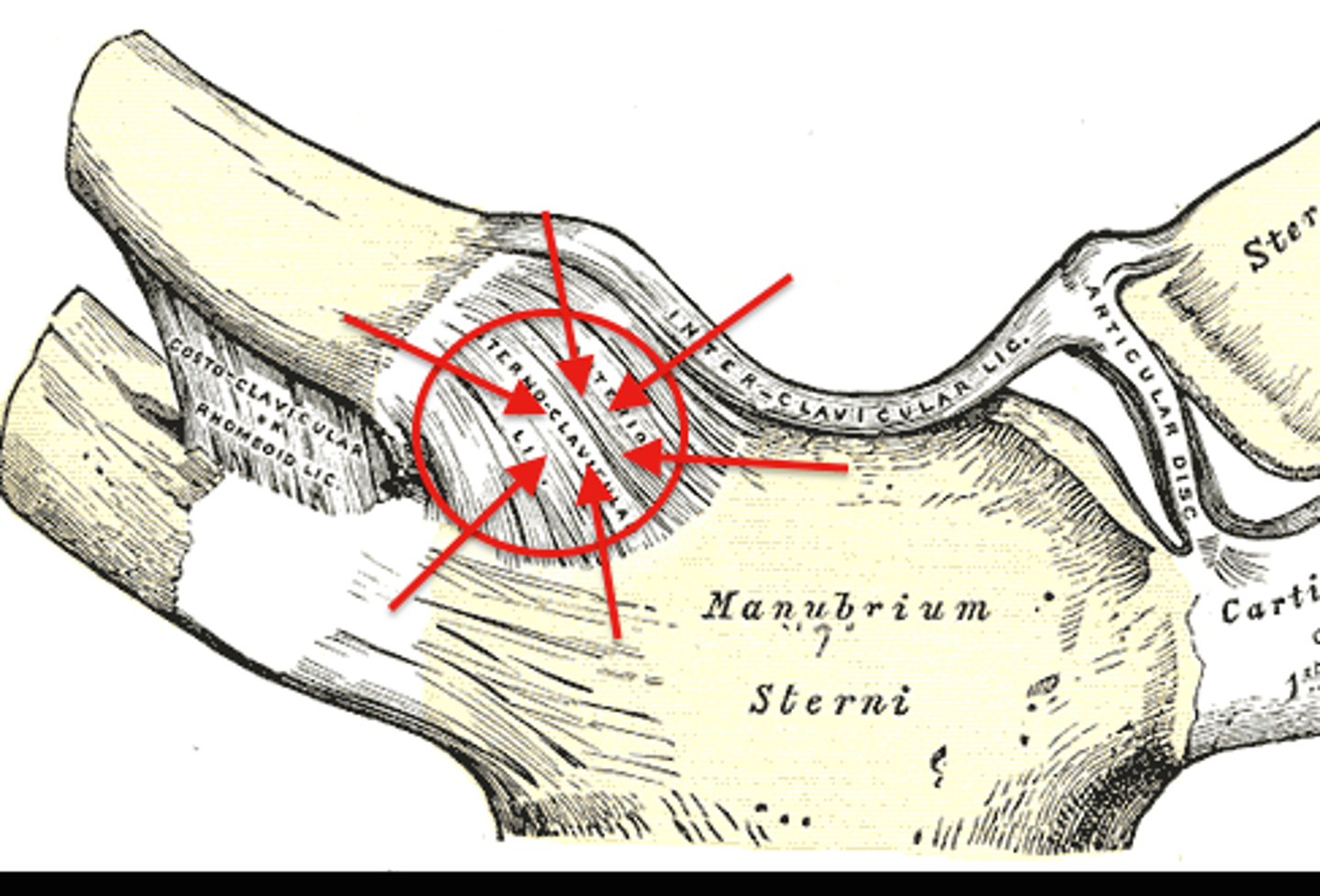
Sternoclavicular Ligament
connects the clavicle to the sternum on both the anterior and posterior surfaces. The posterior ligament limits anterior movement of the medial end of the clavicle. The anterior ligament limits posterior movement of the medial end of the clavicle.
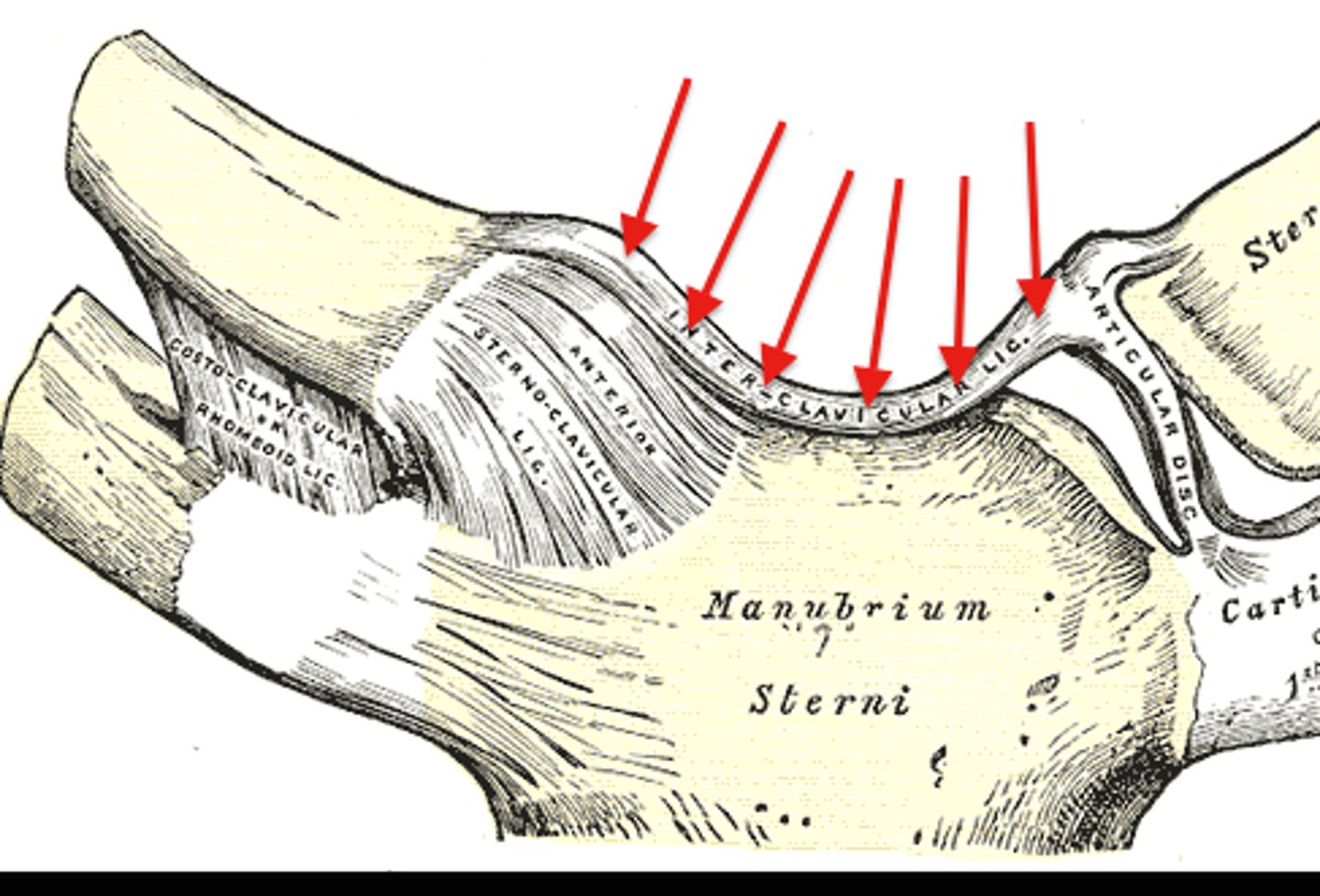
Interclavicular Ligament
located on top of the manubrium; connecting the superior sternal ends of the clavicles; limits the amount of clavicular depression
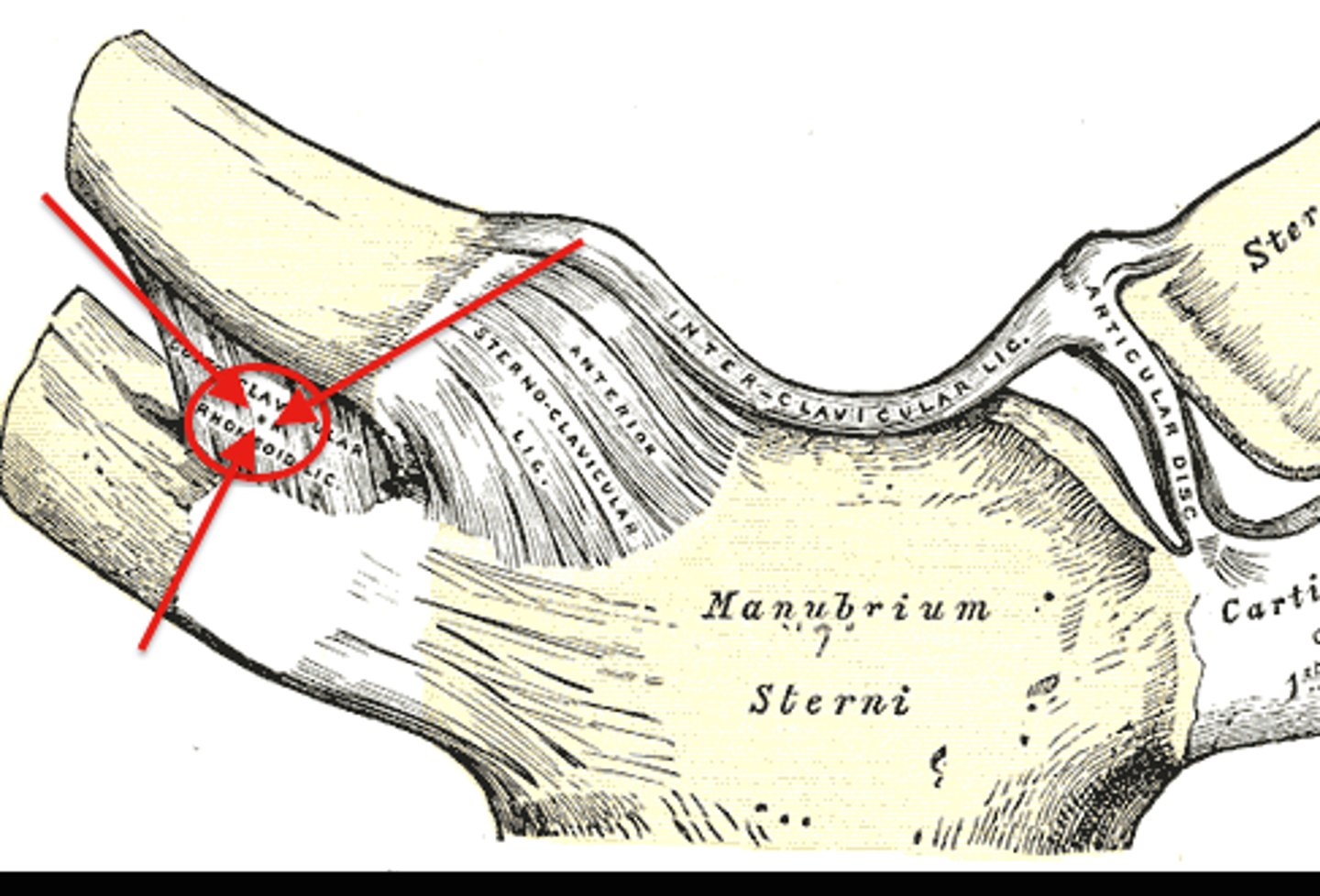
Costoclavicular Ligament
a short, flat ligament that connects the clavicle's inferior surface to the superior surface of the costal cartilage of the first rib; limits the amount of clavicular elevation
Acromioclavicular Ligament
connect the acromion process of the scapula to the lateral end of the clavicle, superiorly and inferiorly
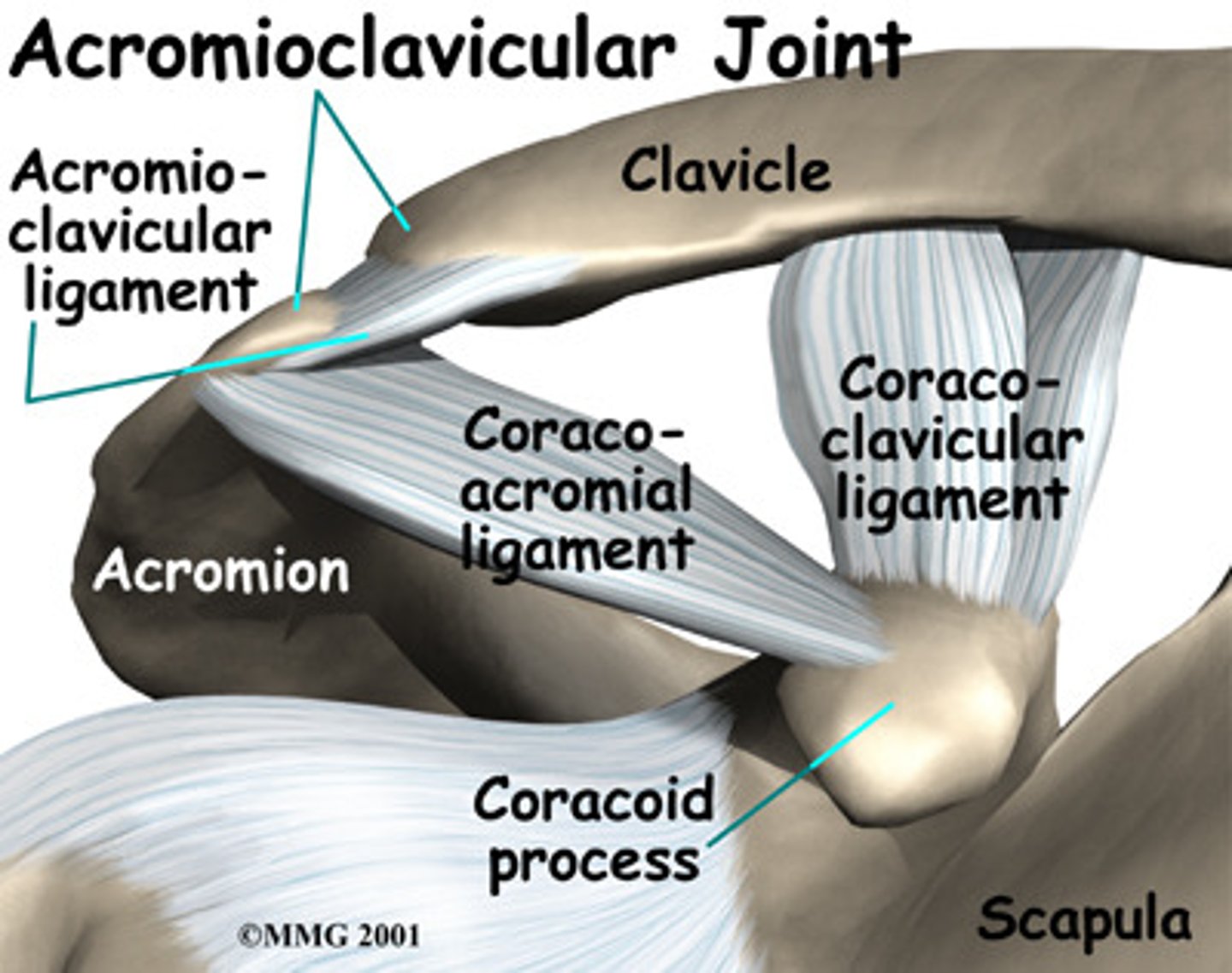
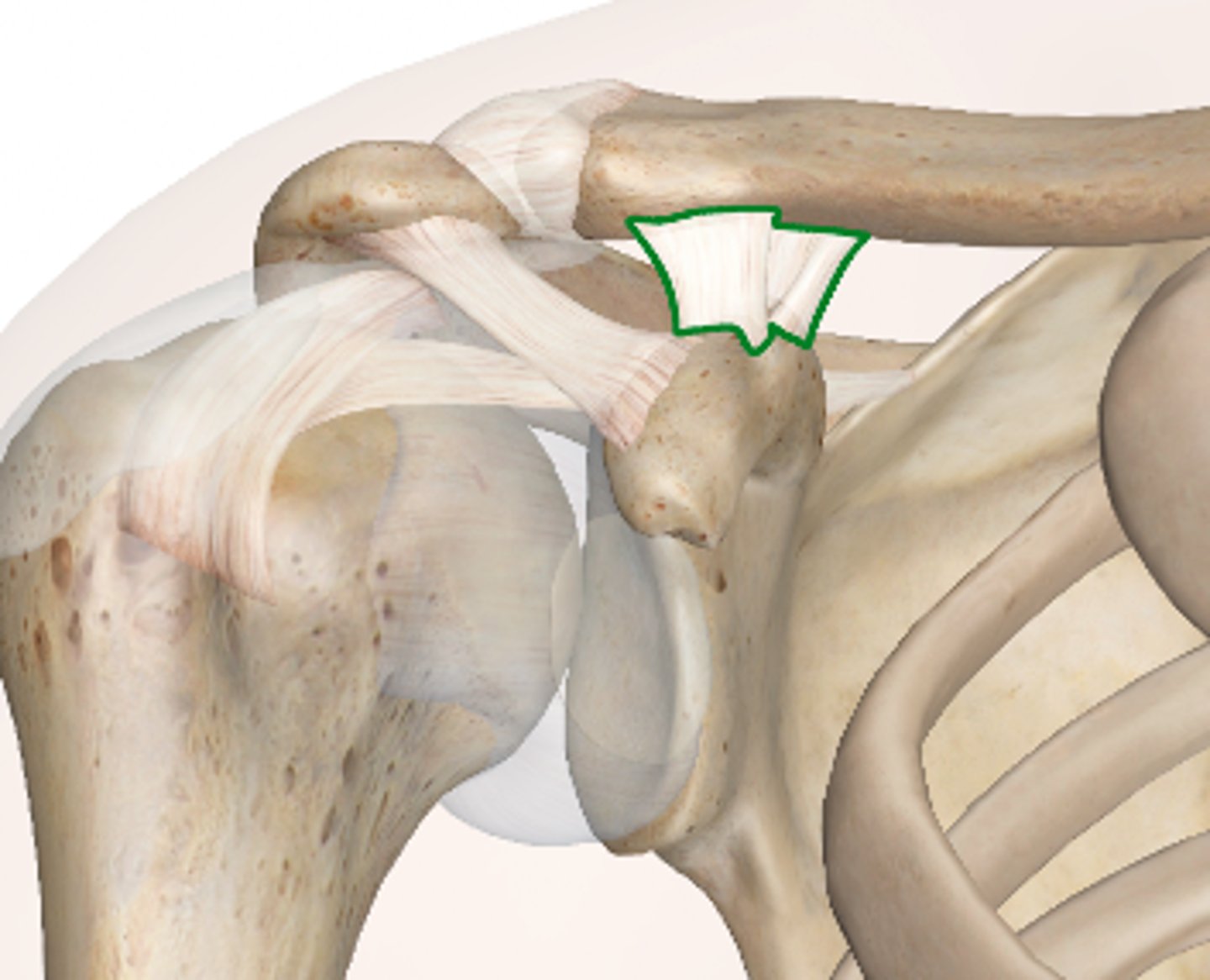
Coracoclavicular Ligament
connects the superior surface of the coracoid process of the scapula to the inferior surface of the clavicle's lateral end
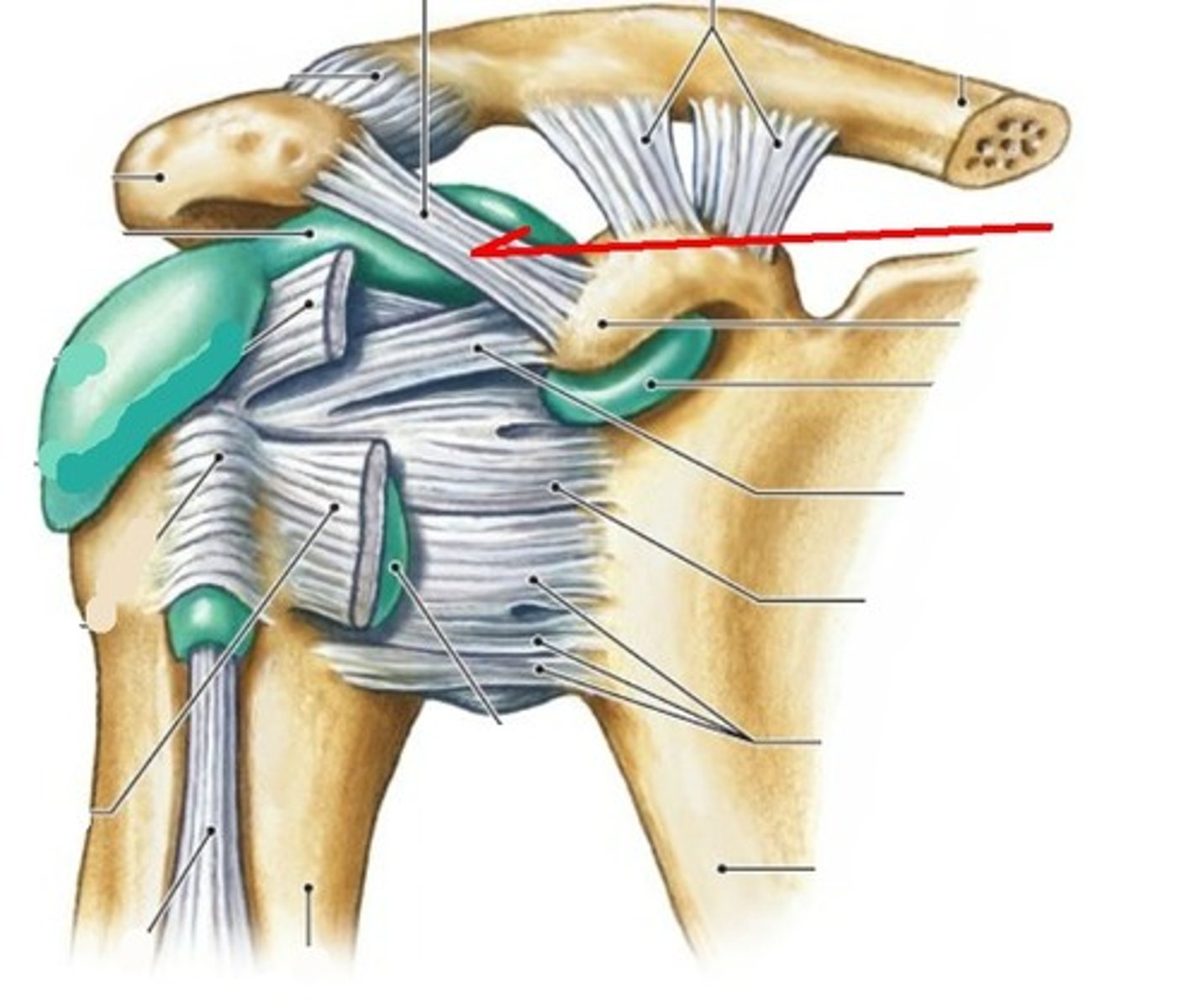
Coracoacromial Ligament
attaches laterally on the superior surface of the coracoid process of the scapula to the inferior surface of the acromion process of the scapula; forming a roof over the head of the humerus
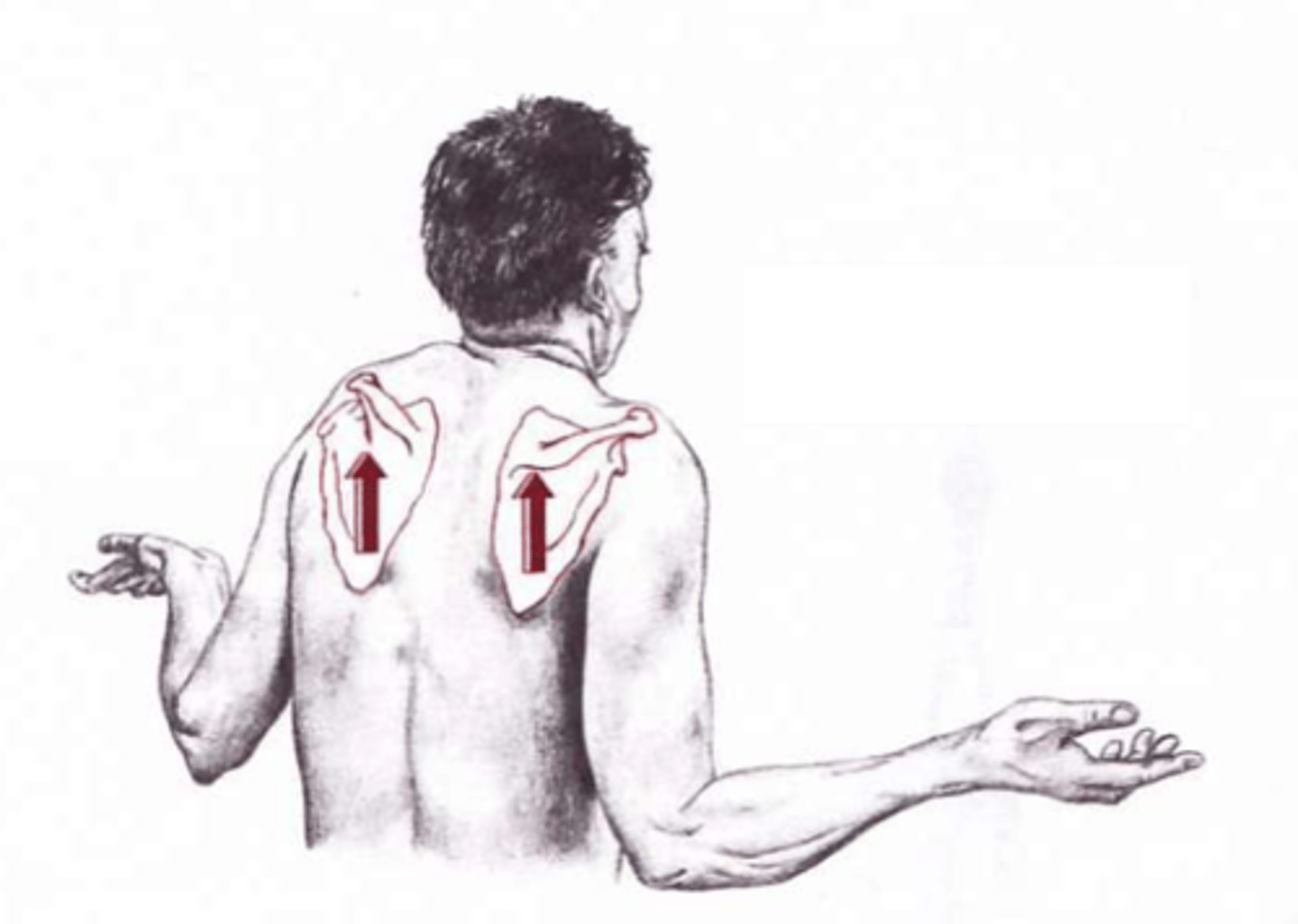
Scapular Elevation
Upward (superior) motion of the scapula
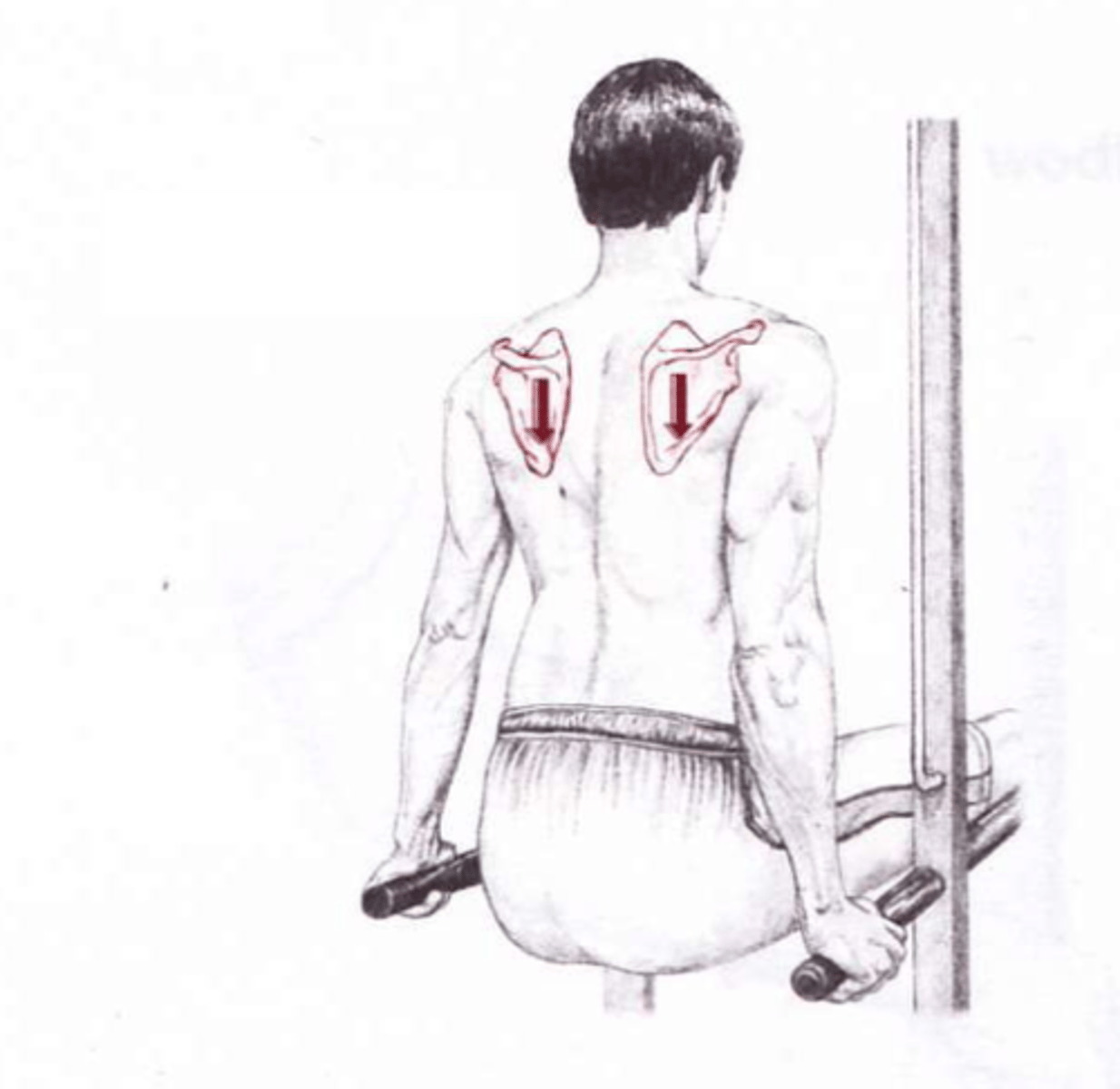
Scapular Depression
Downward (inferior) motion of the scapula
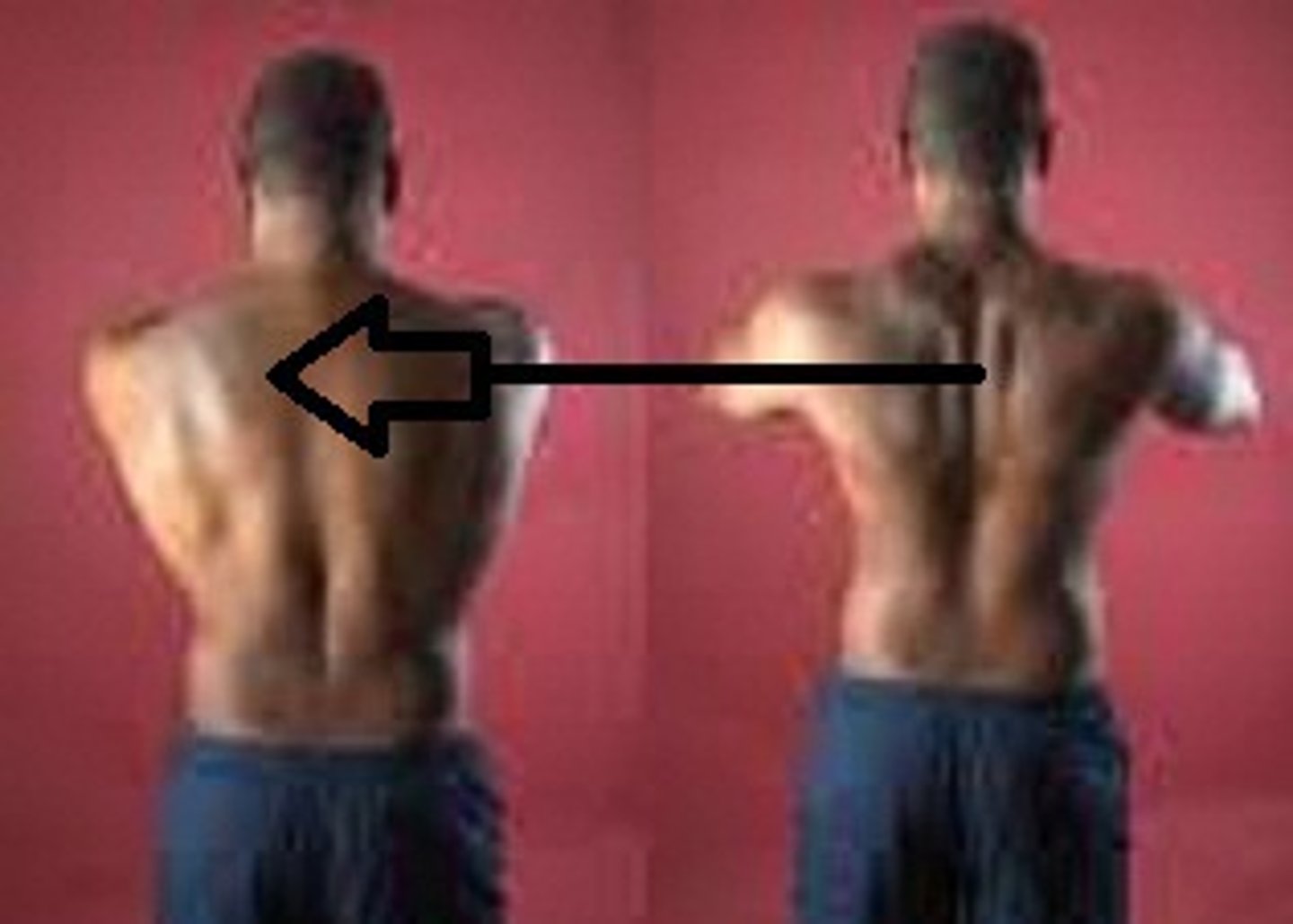
Scapular Protraction
Abduction of scapula; shoulder blades move away from midline. (pictured on the left)
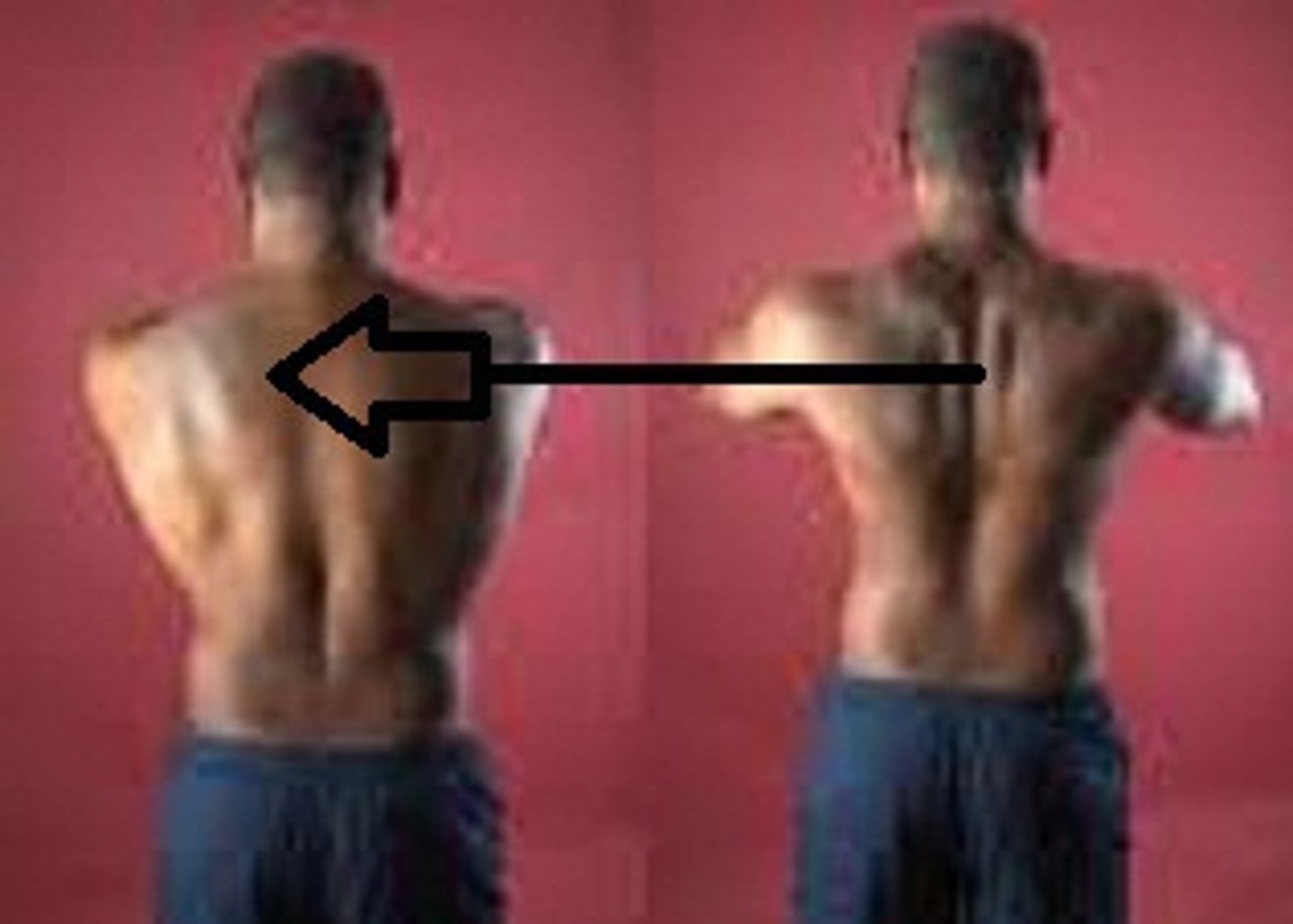
Scapular Retraction
Adduction of scapula; shoulder blades move toward midline. (pictured on the right)
Scapular Upward Rotation
-The inferior angle of the scapula rotates up and away from the vertebral column
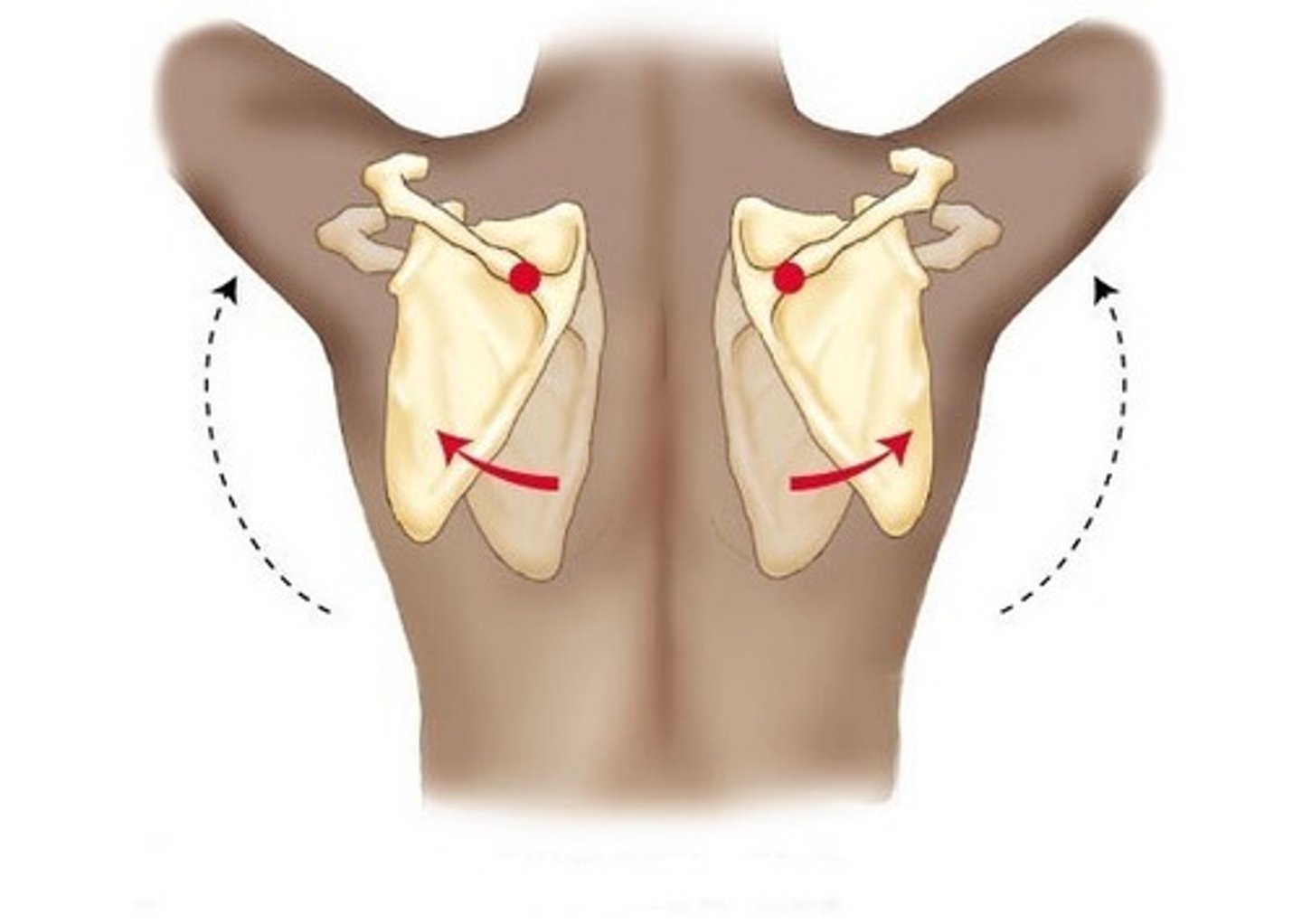
Scapular Downward Rotation
- Returning your scapula to the resting anatomical position (from scapular upward rotation)
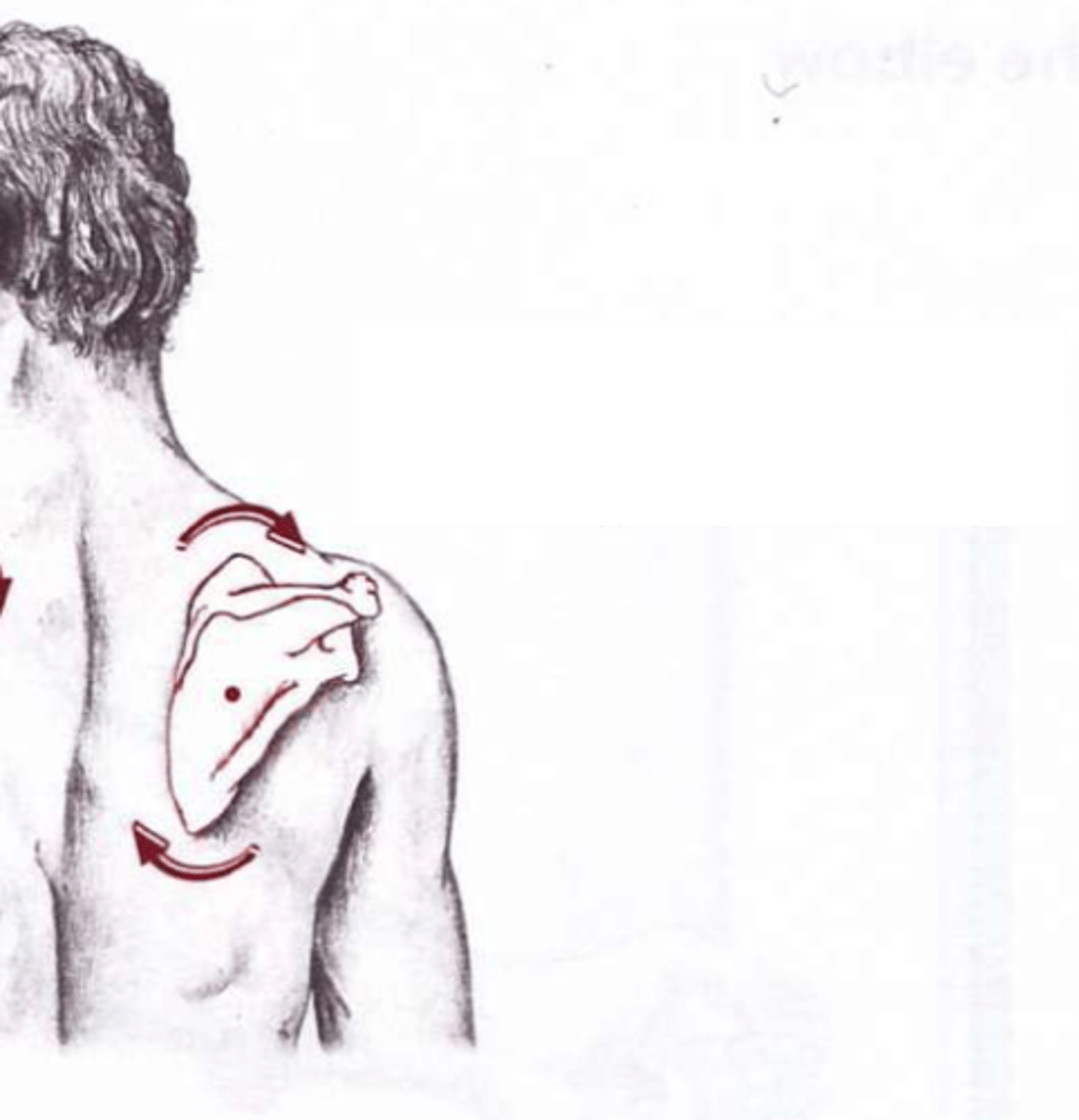
Scapular Tilt
occurs with glenohumeral extension, superior end of scapula tilts forward, inferior ends till posteriorly
GH Flexion and scapular __________________
upward rotation; protraction
GH Extension and scapular __________________
downward rotation; retraction
GH Hyperextension and scapular __________________
scapular tilt
GH Abduction and scapular __________________
upward rotation
GH Adduction and scapular __________________
downward rotation
GH Internal Rotation and scapular __________________
protraction
GH External Rotation and scapular __________________
retraction
GH Horizontal Abduction and scapular _________________
retraction
GH Horizontal Adduction and scapular ________________
protraction
Scapulohumeral Rhythm
The first 30 degrees is purely GH joint motion. After than, for every 2 degrees of shoulder flexion or abduction that occurs, the scapula must upwardly rotate 1 degree; 2:1 ratio
Upper Trapezius action
scapular elevation; scapular upward rotation; scapular retraction
Upper Trapezius location
originates on the occiput and nuchal ligament of the cervical vertebrae; inserts on the lateral third of the clavicle and the acromion process
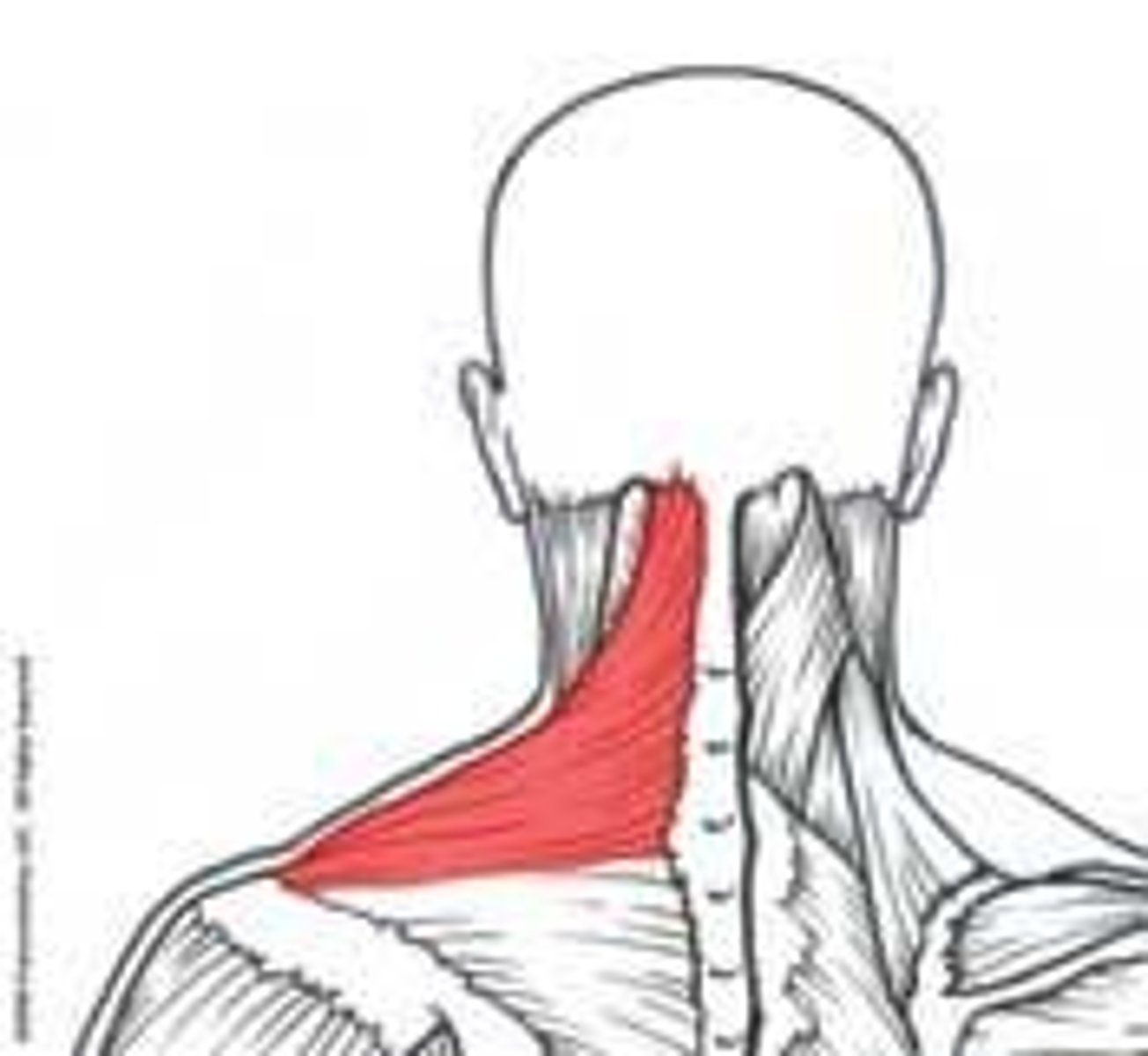
Upper Trapezius innervation
Spinal Accessory Nerve (CN XI)
Middle Trapezius action
scapular retraction
Middle Trapezius location
originates on the nuchal ligament & spinous processes of C7-T5; inserts on the medial aspect of the acromion process and along the scapular spine
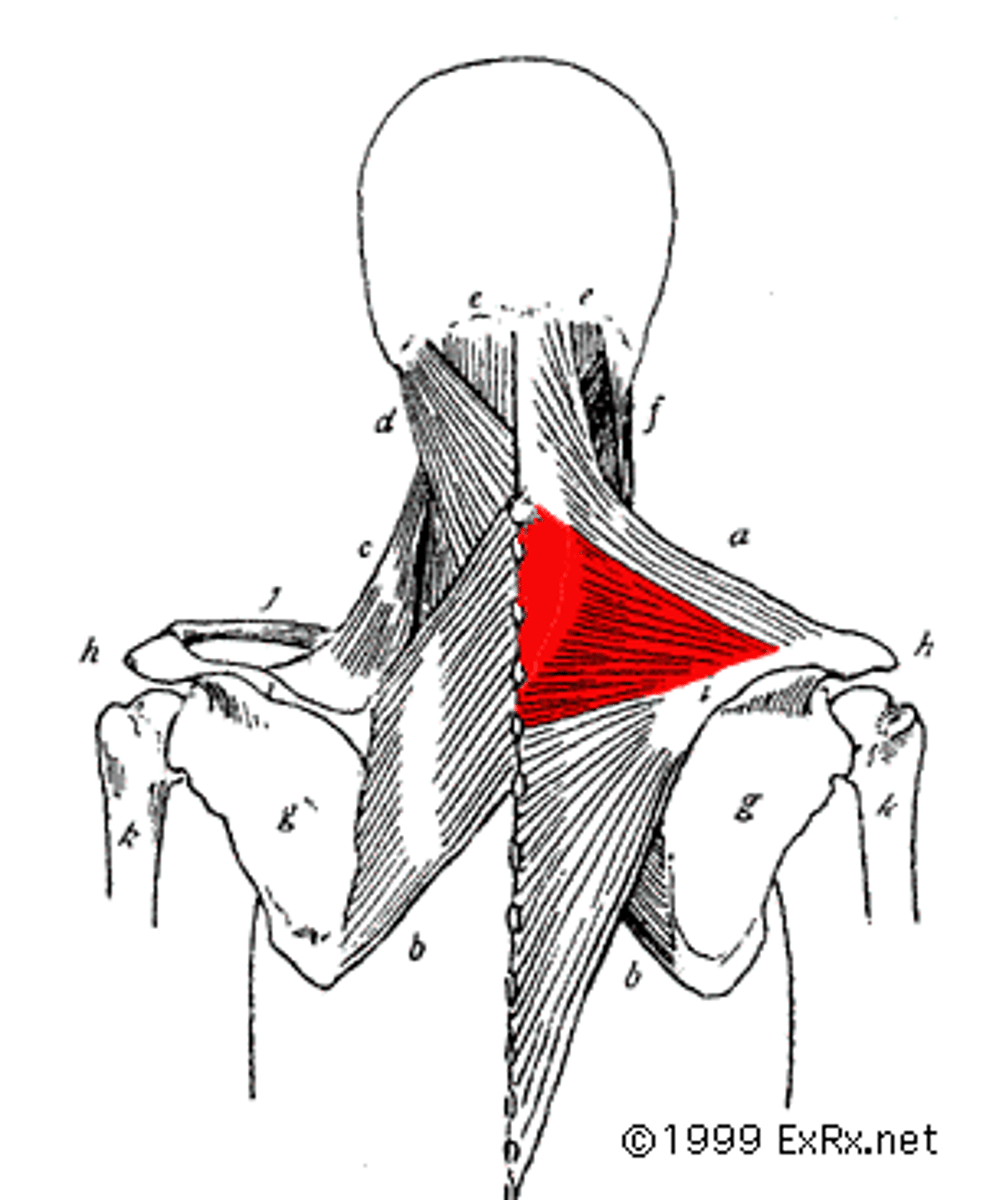
Middle Trapezius innervation
Spinal Accessory Nerve (CN XI)
Lower Trapezius action
scapular depression; scapular upward rotation; scapular retraction
Lower Trapezius location
originates on the spinous processes of T6-T12; inserts on the base of the spine of the scapula
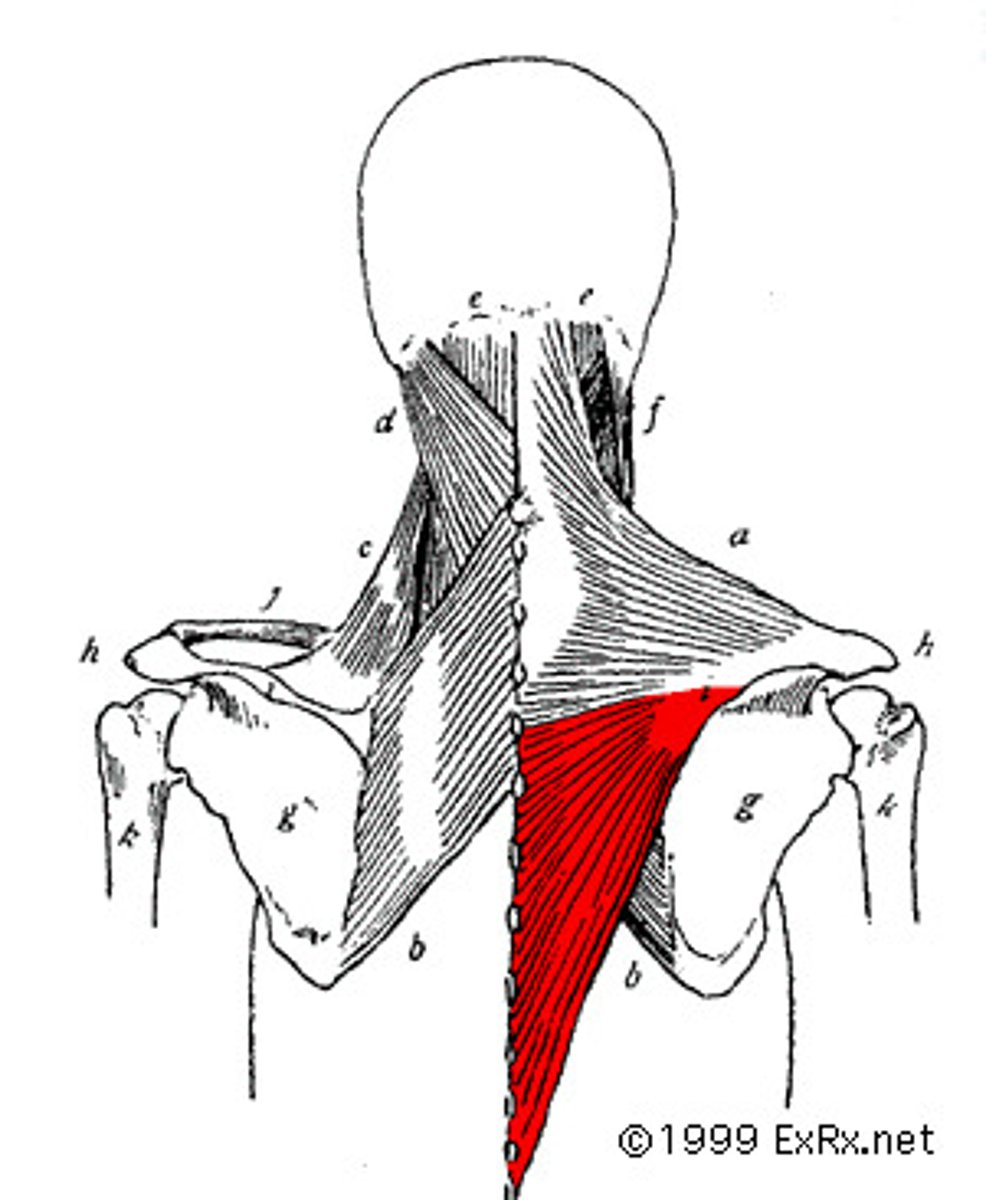
Lower Trapezius innervation
Spinal Accessory Nerve (CN XI)
Levator Scapula action
scapular elevation; scapular downward rotation
Levator Scapula location
originates on the transverse processes of C1-C4; inserts on the vertebral border of the scapula between the superior angle and the base of the spine
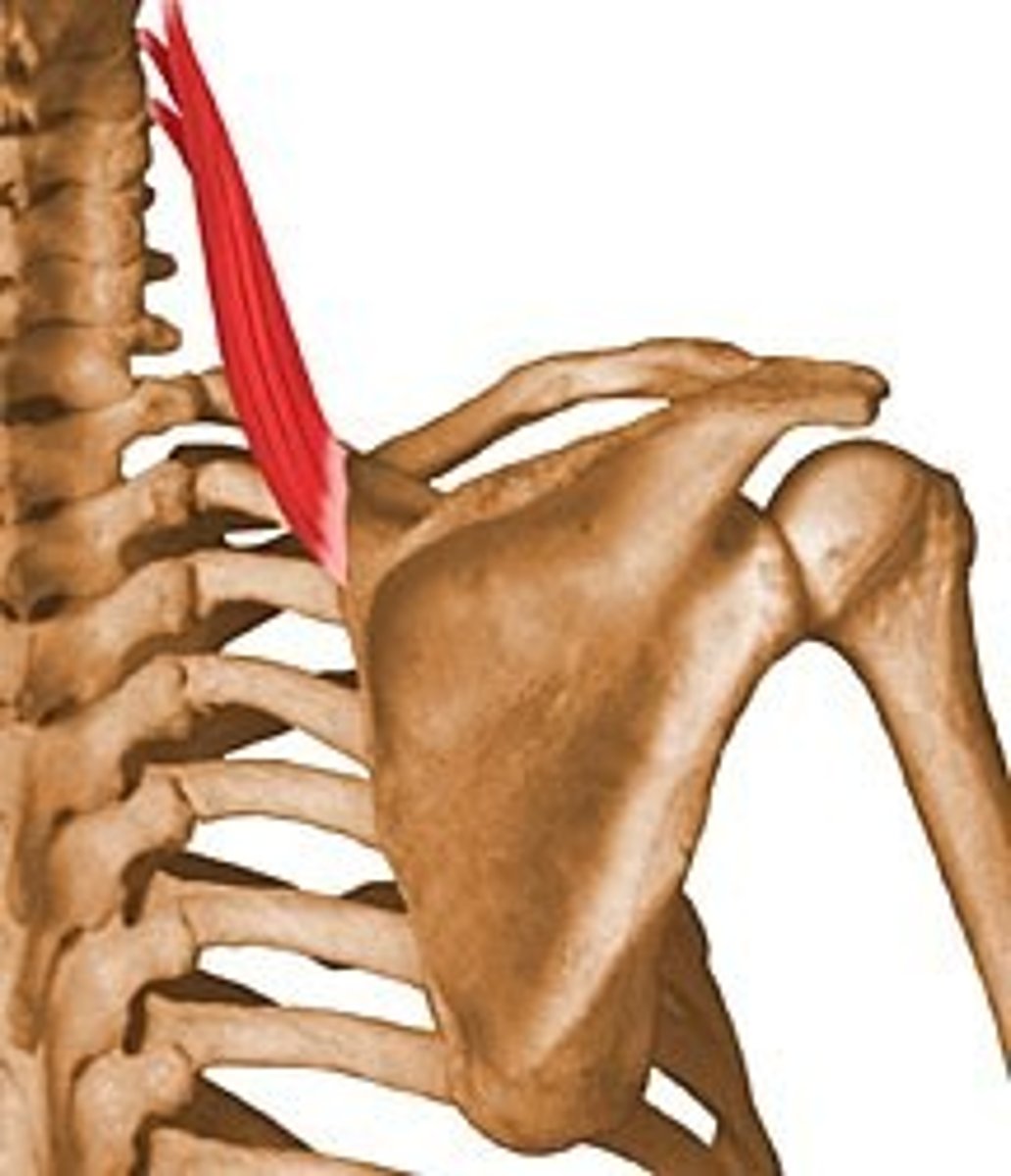
Levator Scapula innervation
dorsal scapular nerve (Spinal nerves C3-C5)
Rhomboids action
scapular retraction; scapular elevation; scapular downward rotation
Rhomboids location
originates on the nuchal ligament and spinous processes of C7-T5; inserts on the vertebral border of the scapula from the base of the spine to the inferior angle
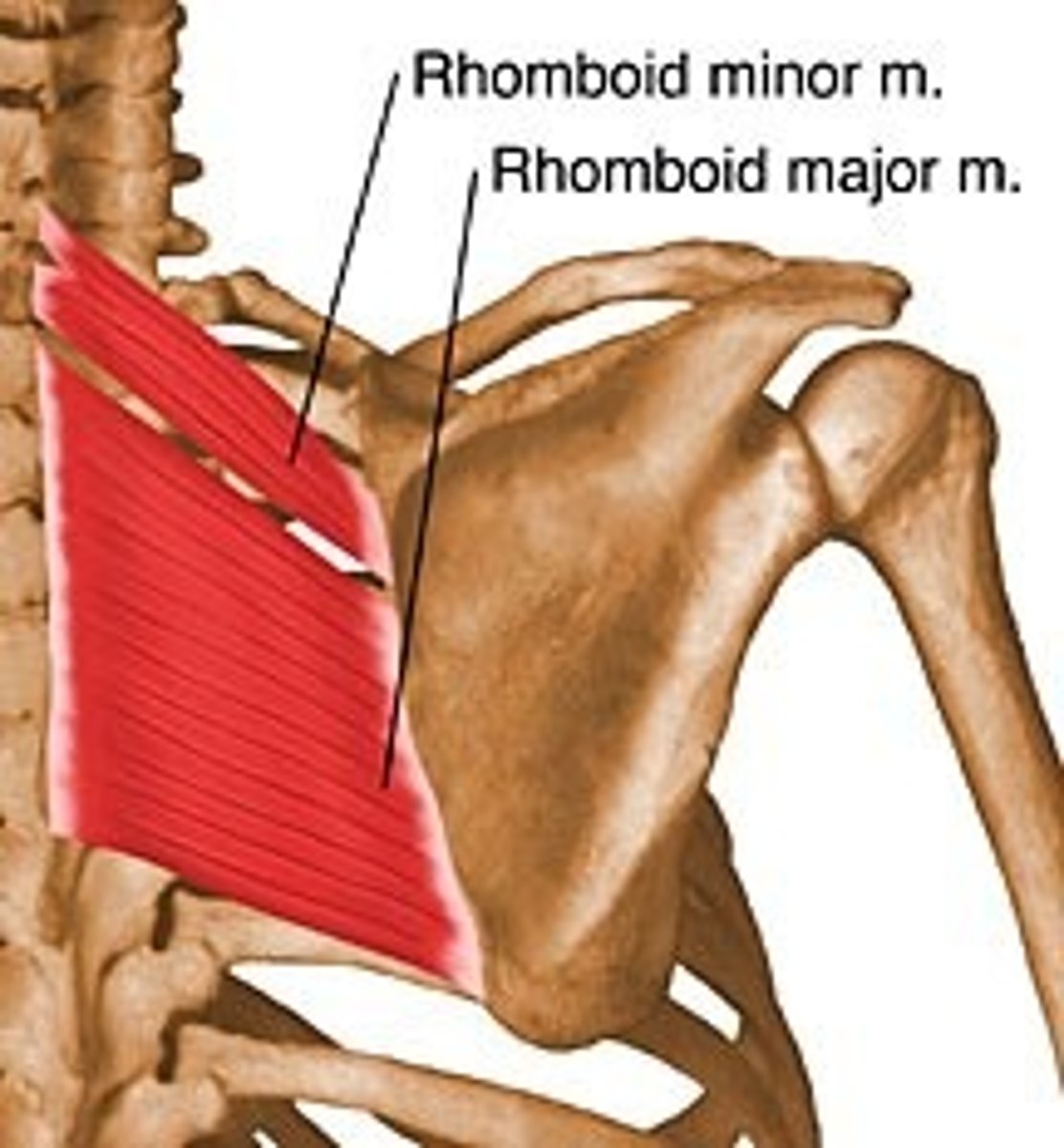
Rhomboids innervation
dorsal scapular nerve
Serratus Anterior action
scapular protraction; scapular upward rotation
Serratus Anterior location
originates on the external surface of the lateral portion of the first 9 ribs; inserts on the vertebral border of the scapula near the inferior angle (on the anterior surface of the scapula)
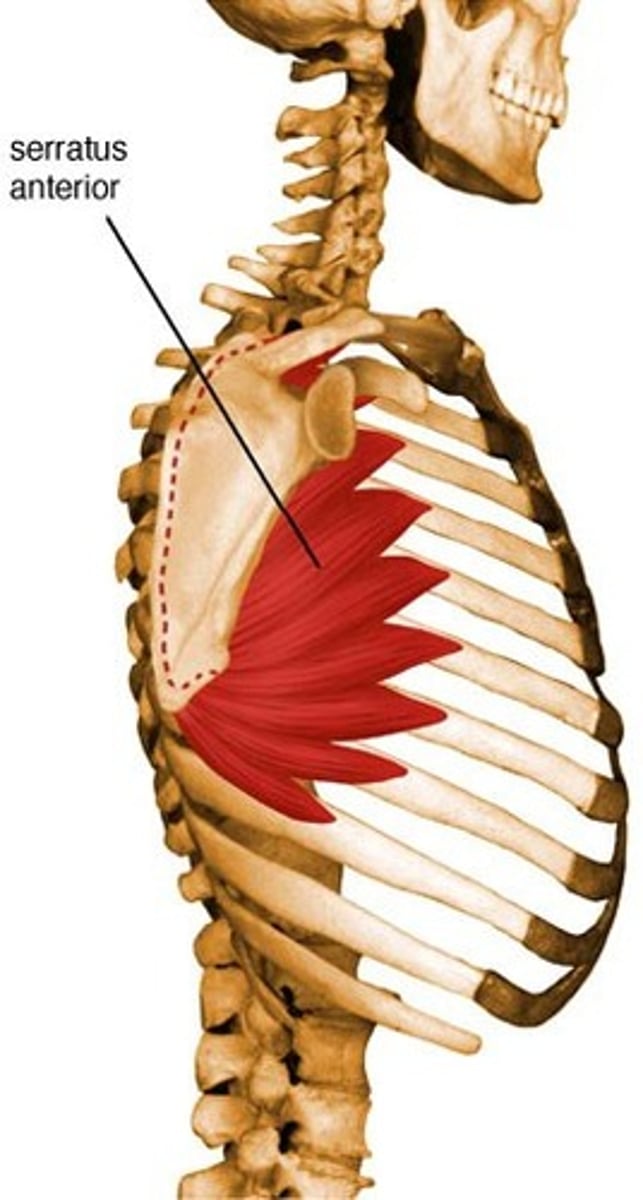
Serratus Anterior innervation
Long thoracic nerve
Pectoralis Minor action
scapular depression; scapular downward rotation; scapular tilt
Pectoralis Minor location
originates on the anterior aspects of ribs 3-5; inserts on the coracoid process of the scapula
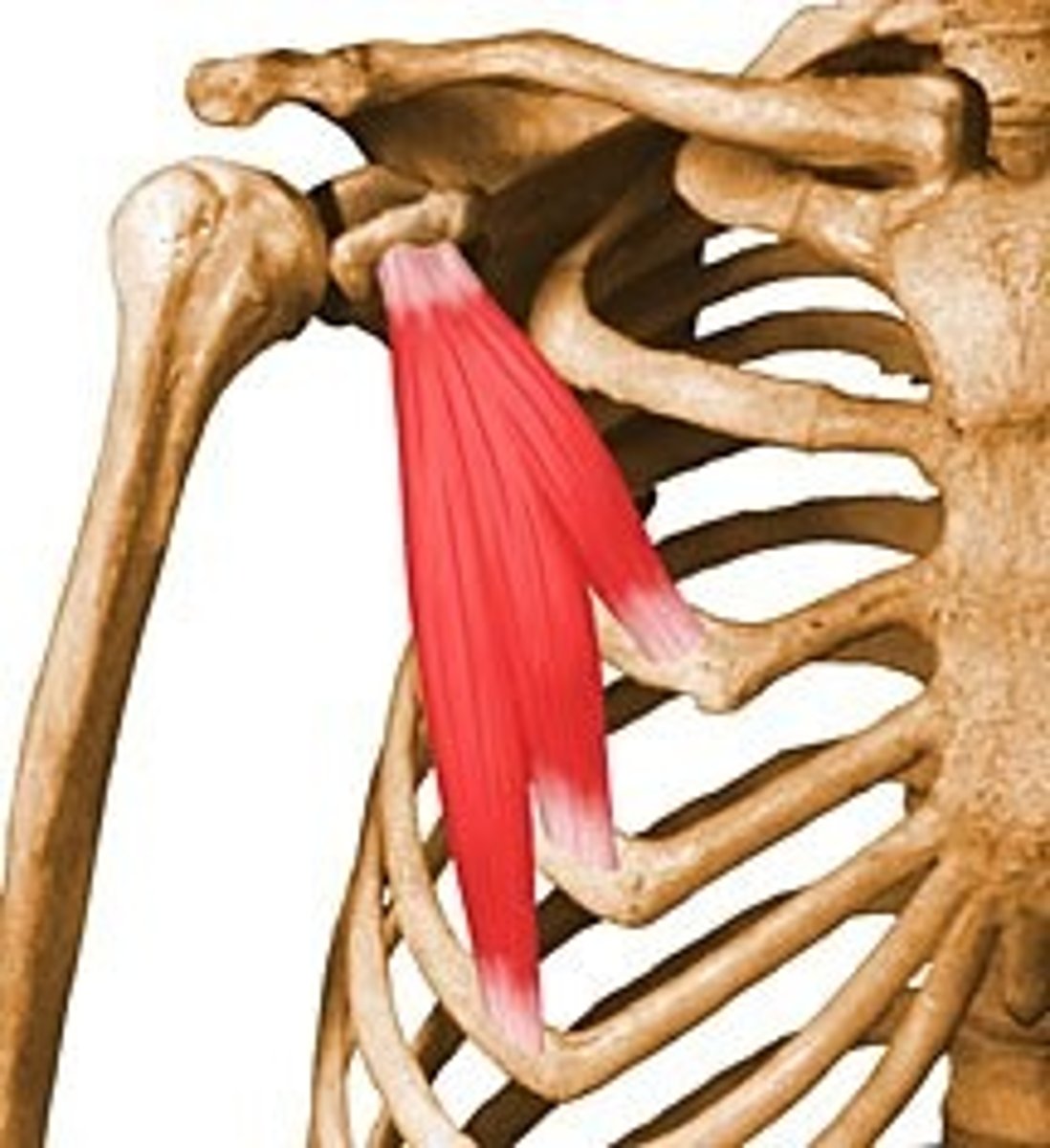
Pectoralis Minor innervation
medial pectoral nerve
Scapular Retractors
middle trapezius, rhomboids
Scapular Protractors
serratus anterior; pectoralis minor
Scapular Elevators
upper trapezius; levator scapula; rhomboids
Scapular Depressors
lower trapezius; pectoralis minor
Scapular Upward Rotators
upper and lower trapezius; serratus anterior
Scapular Downward Rotators
rhomboids; levator scapula, pectoralis minor
Scapular downward rotation
pectoralis minor
Cranial Nerve XI
C3, C4 = Trapezius
Dorsal Scapular Nerve
C3, C4, C5 = Levator Scapula;
C5 = Rhomboids
Long Thoracic Nerve
C5, C6, C7 = Serratus Anterior
Medial Pectoral Nerve
C8, T1 = Pectoralis Minor
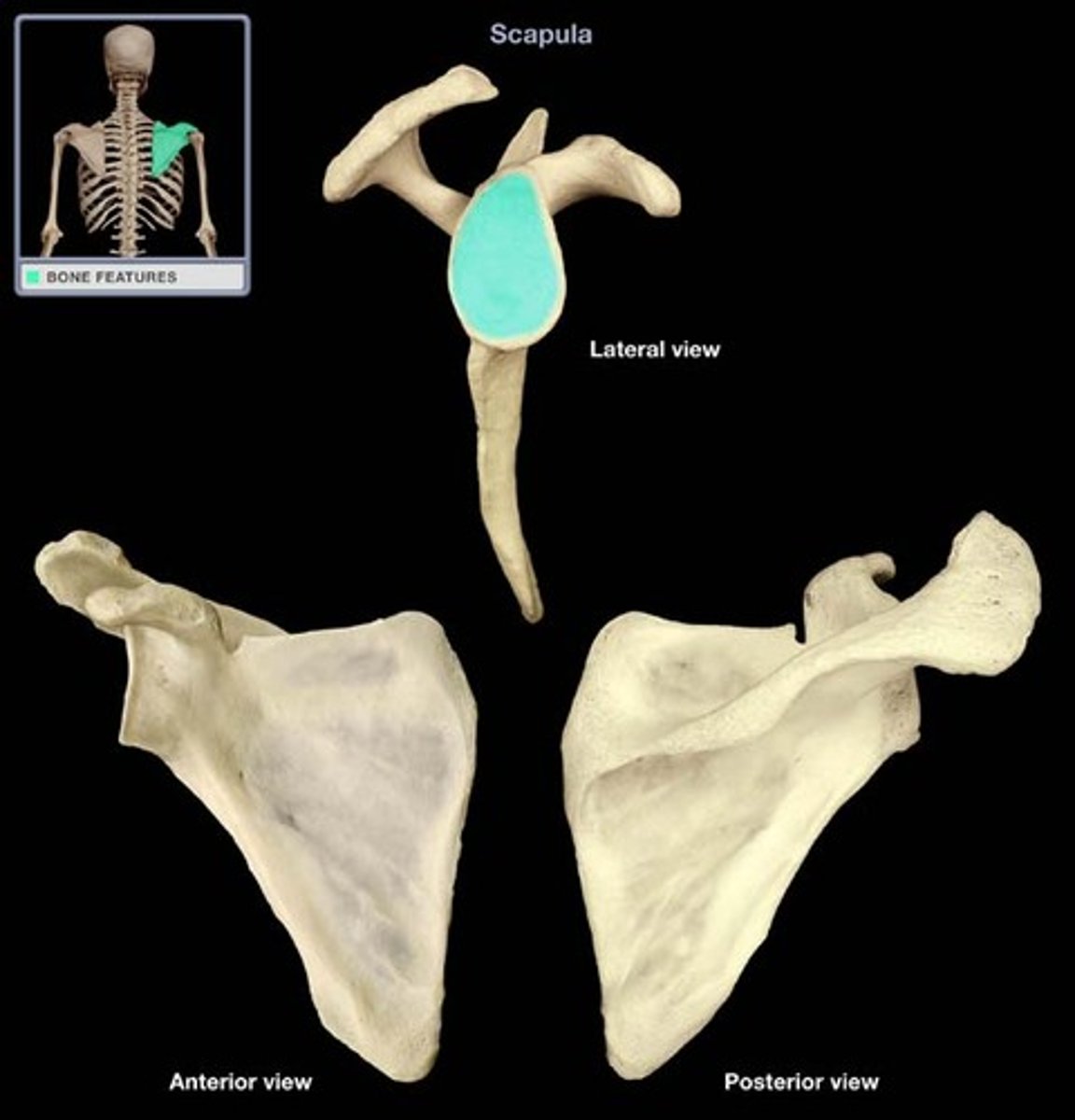
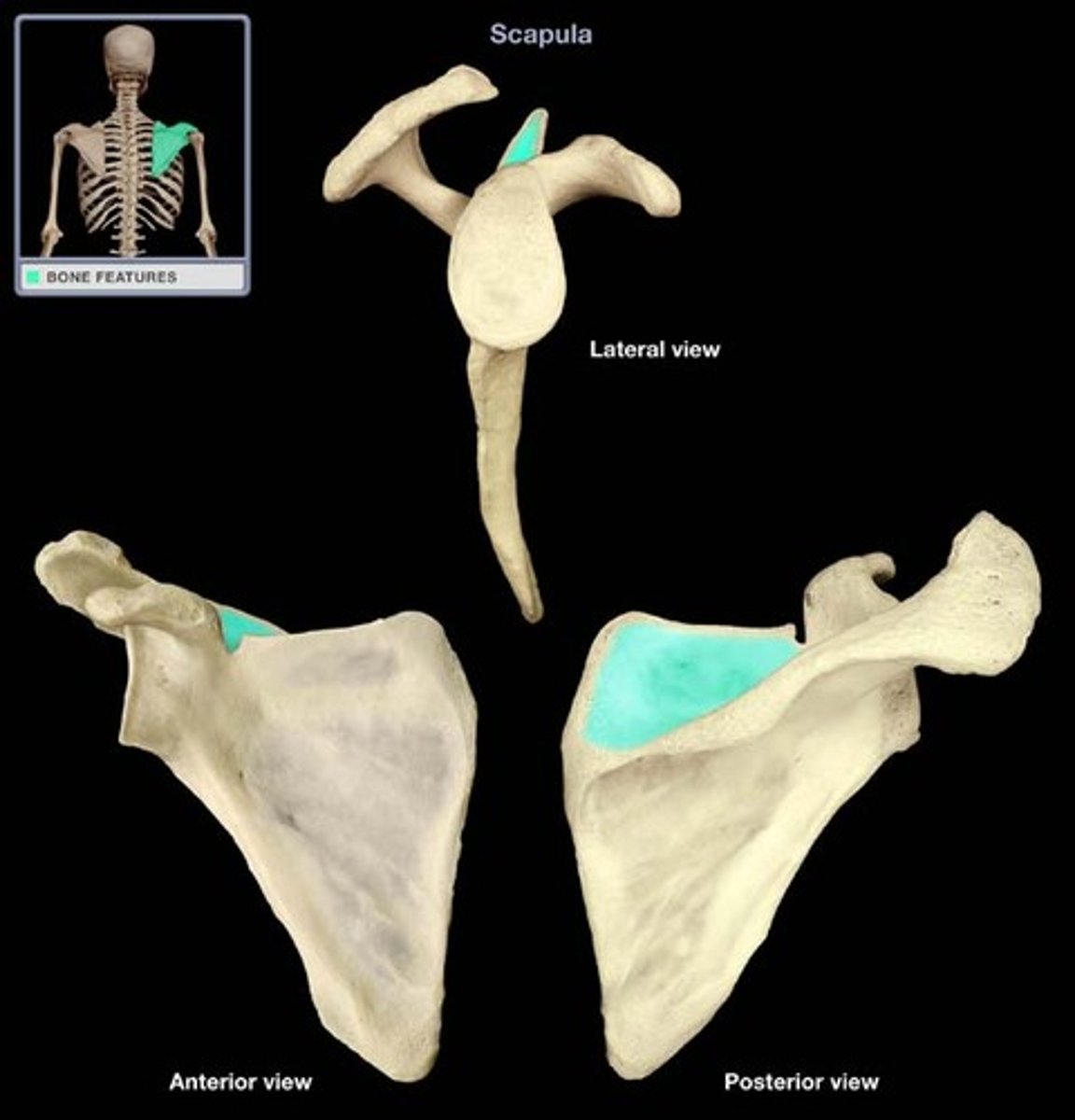
Glenoid fossa
shallow depression on the lateral aspect of the scapula where the head of the humerus articulates with the scapula to make the GH joint
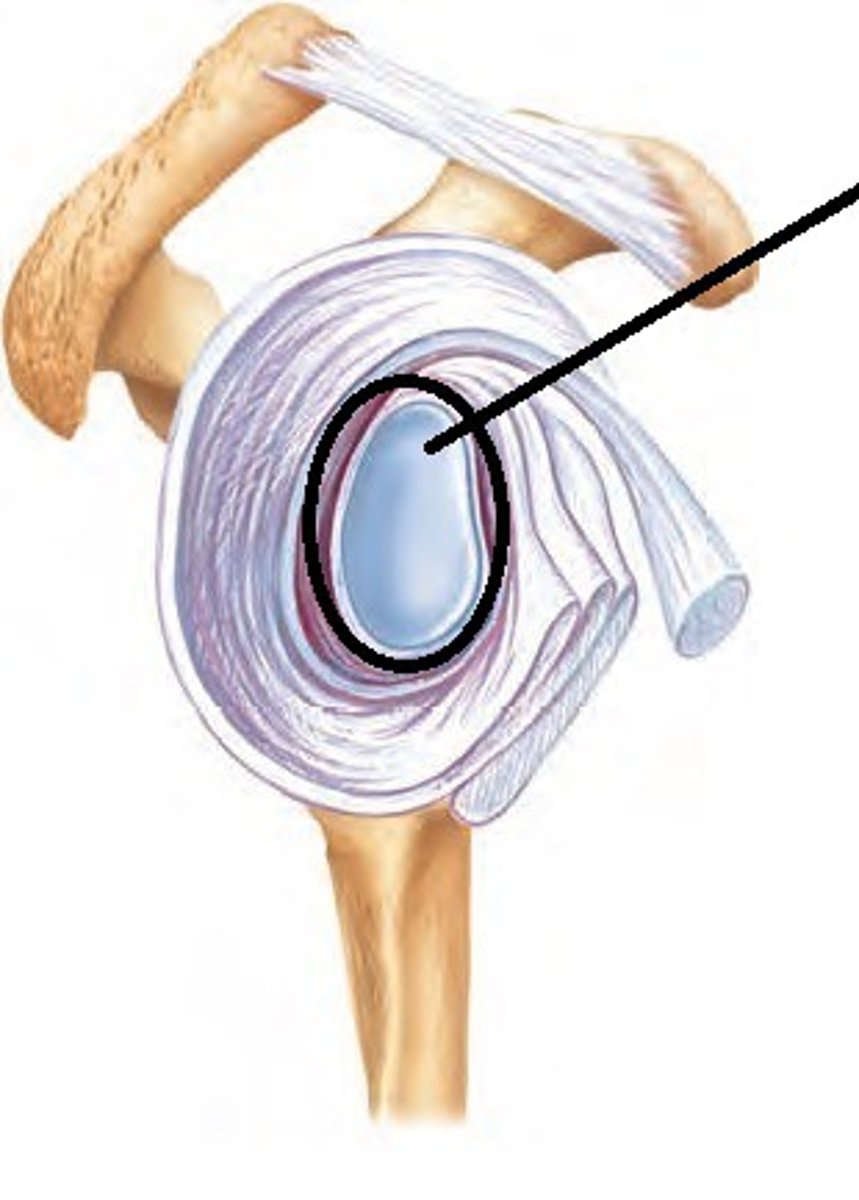
glenoid labrum
fibro-cartilaginous ring attached to outer rim of the glenoid cavity provides additional depth and stability
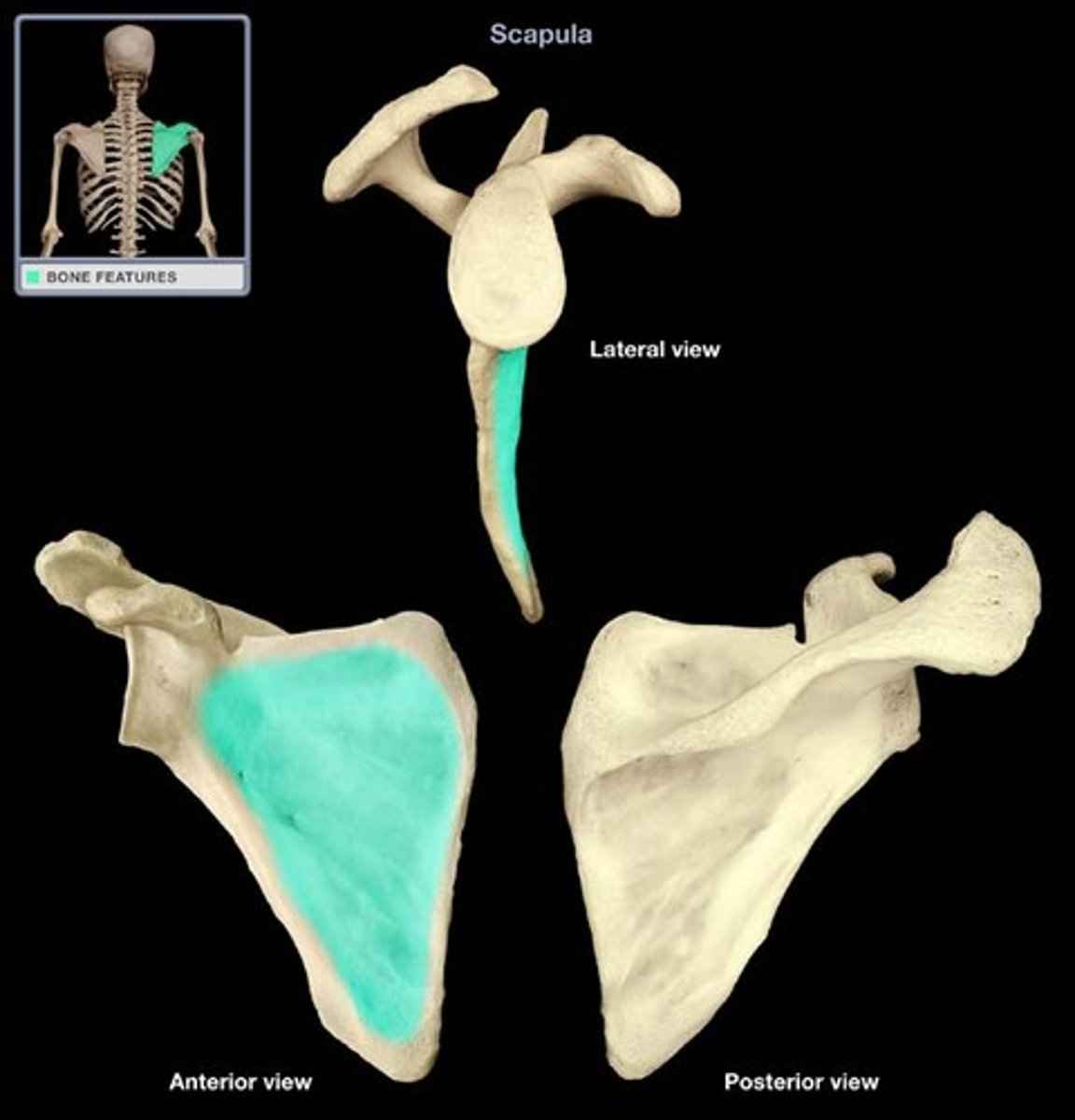
subscapular fossa
concave, anterior surface of scapula; attachment of the subscapularis muscle
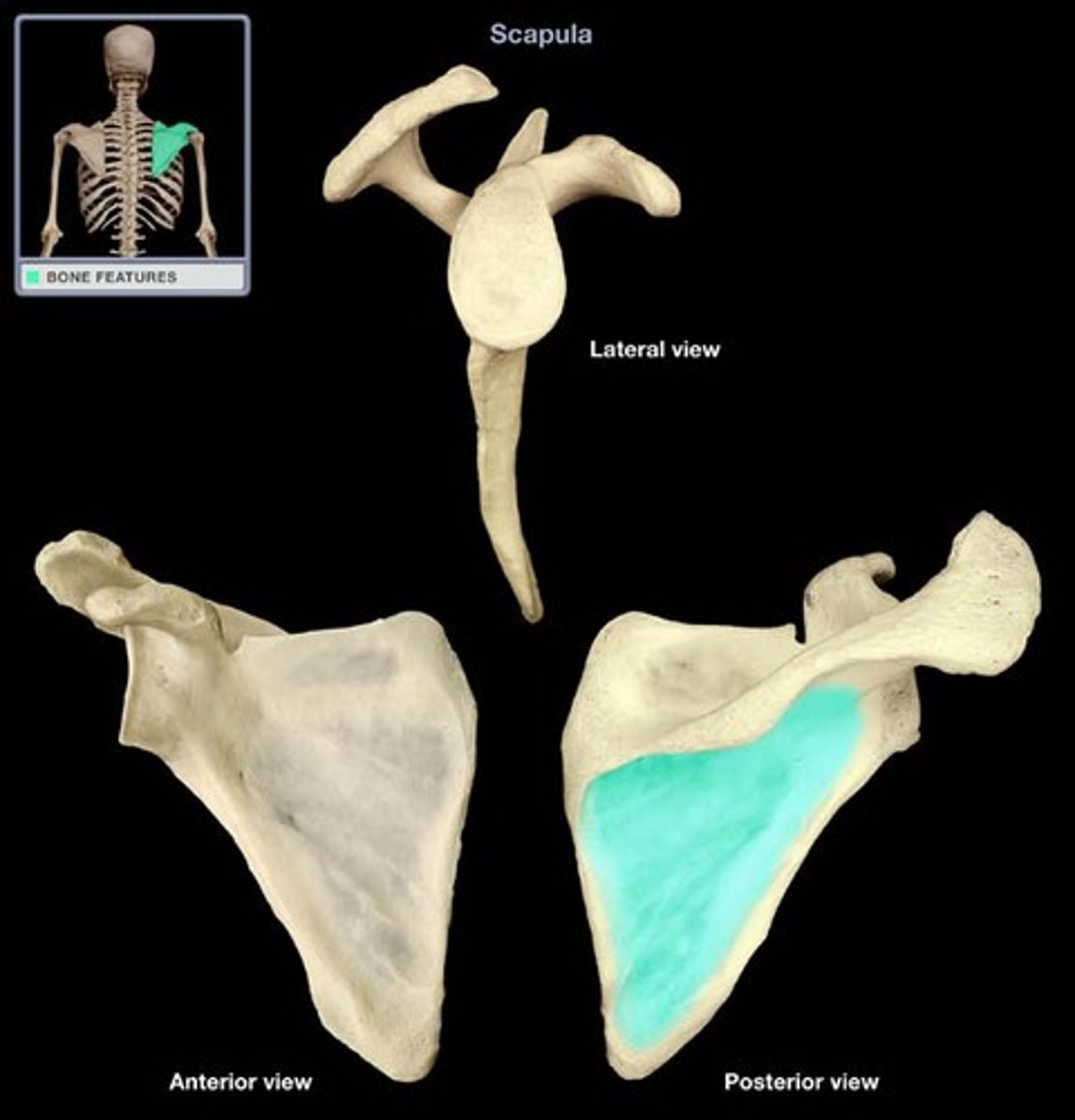
infraspinous fossa
depression located inferior to the spine of the scapula; attachment for the infraspinatus muscle
supraspinous fossa
indentation superior to the spine of the scapula; attachment for supraspinatus muscle
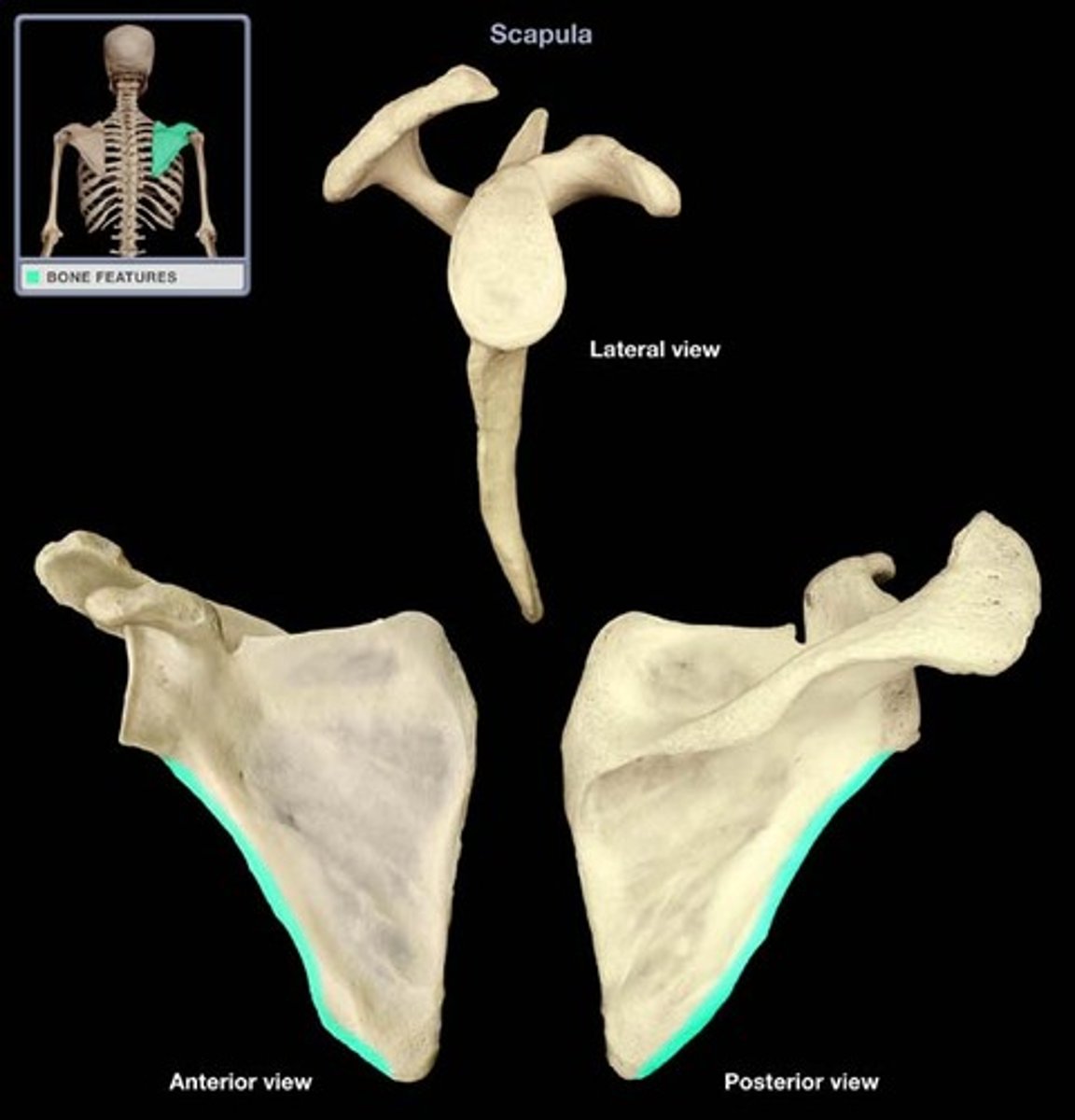
axillary border of scapula
The lateral border, thicker border the Scapula that is located near the axilla; attachment site for teres minor and teres major muscles
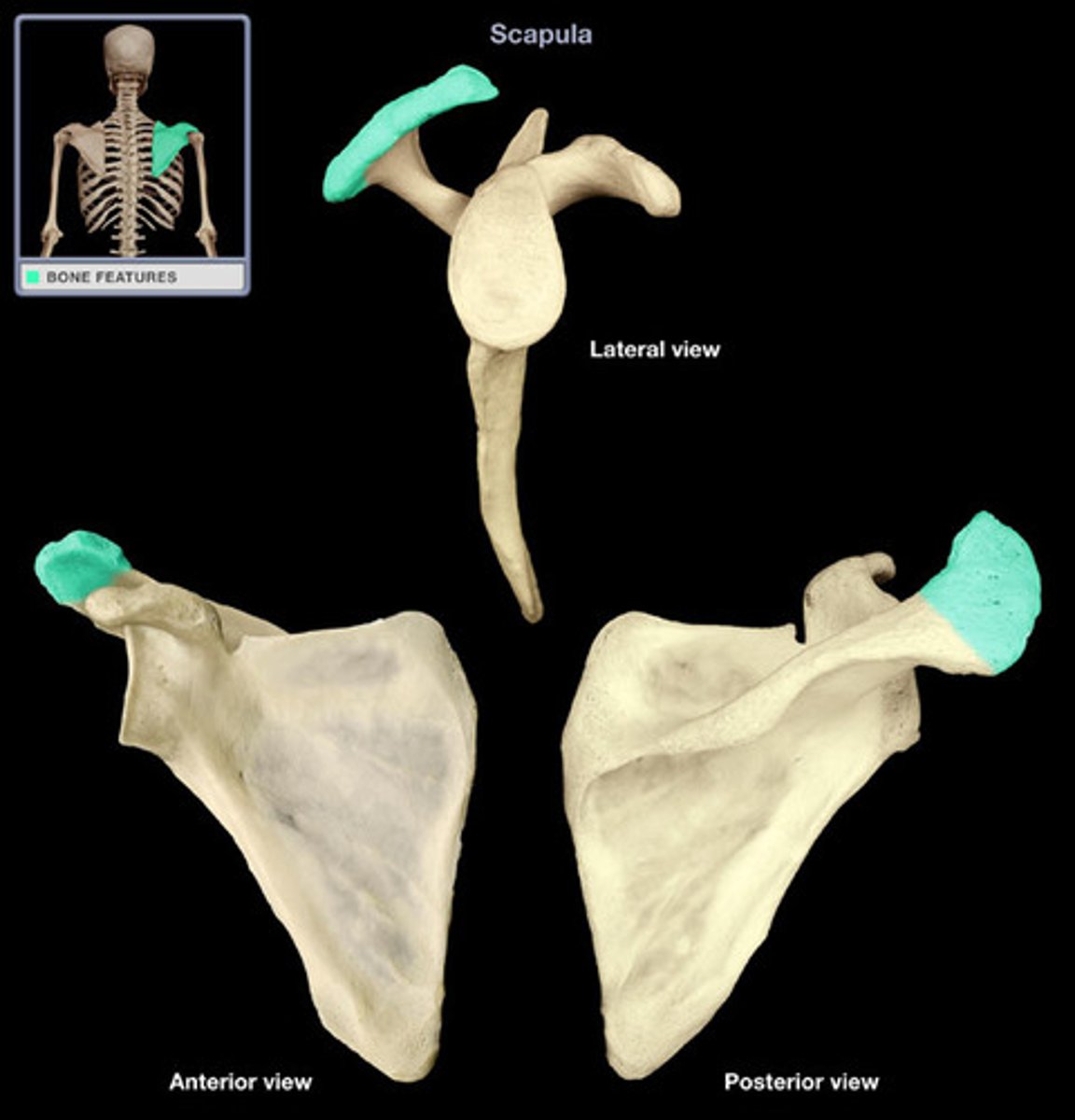
acromion process
broad, flat area on the superior lateral aspect of the scapula; attachment site for the middle deltoid muscle
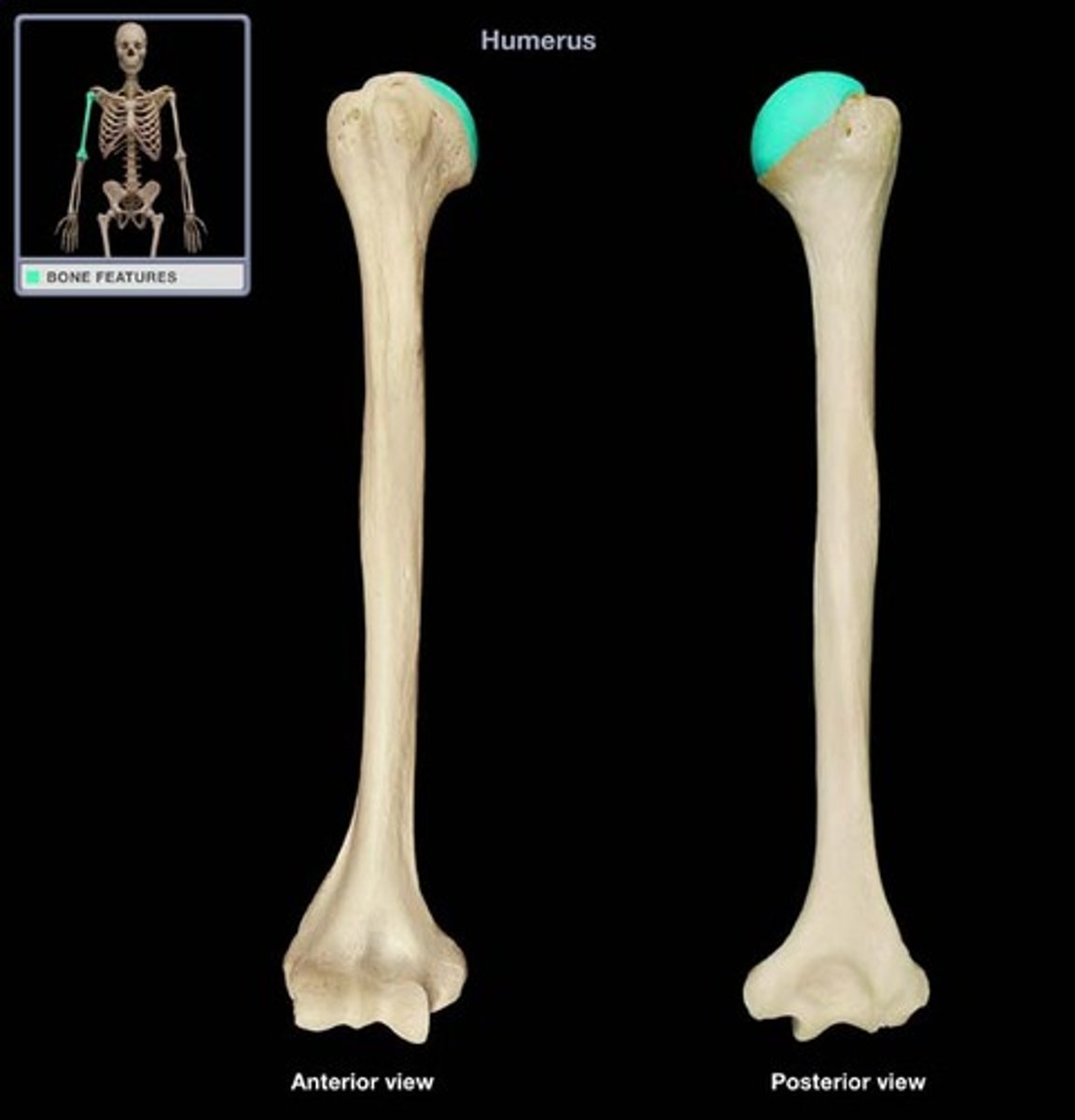
head of the humerus
articulates with the glenoid fossaof the scapula (proximal end of humerus)
surgical neck of the humerus
slightly constricted area just below the tubercles, where the humeral head meets the body
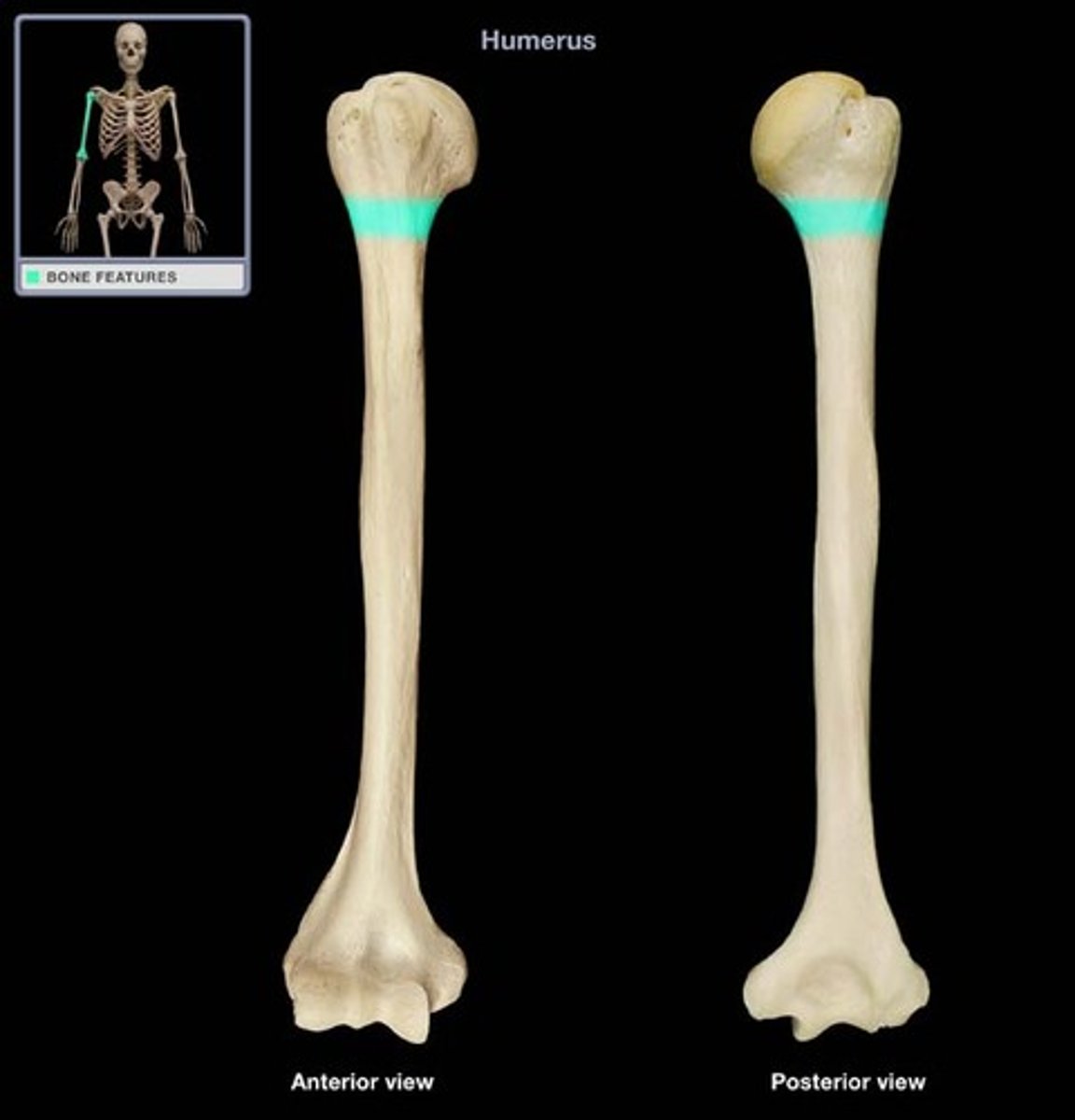
anatomical neck of the humerus
circumferential groove separating the head from the tubercle
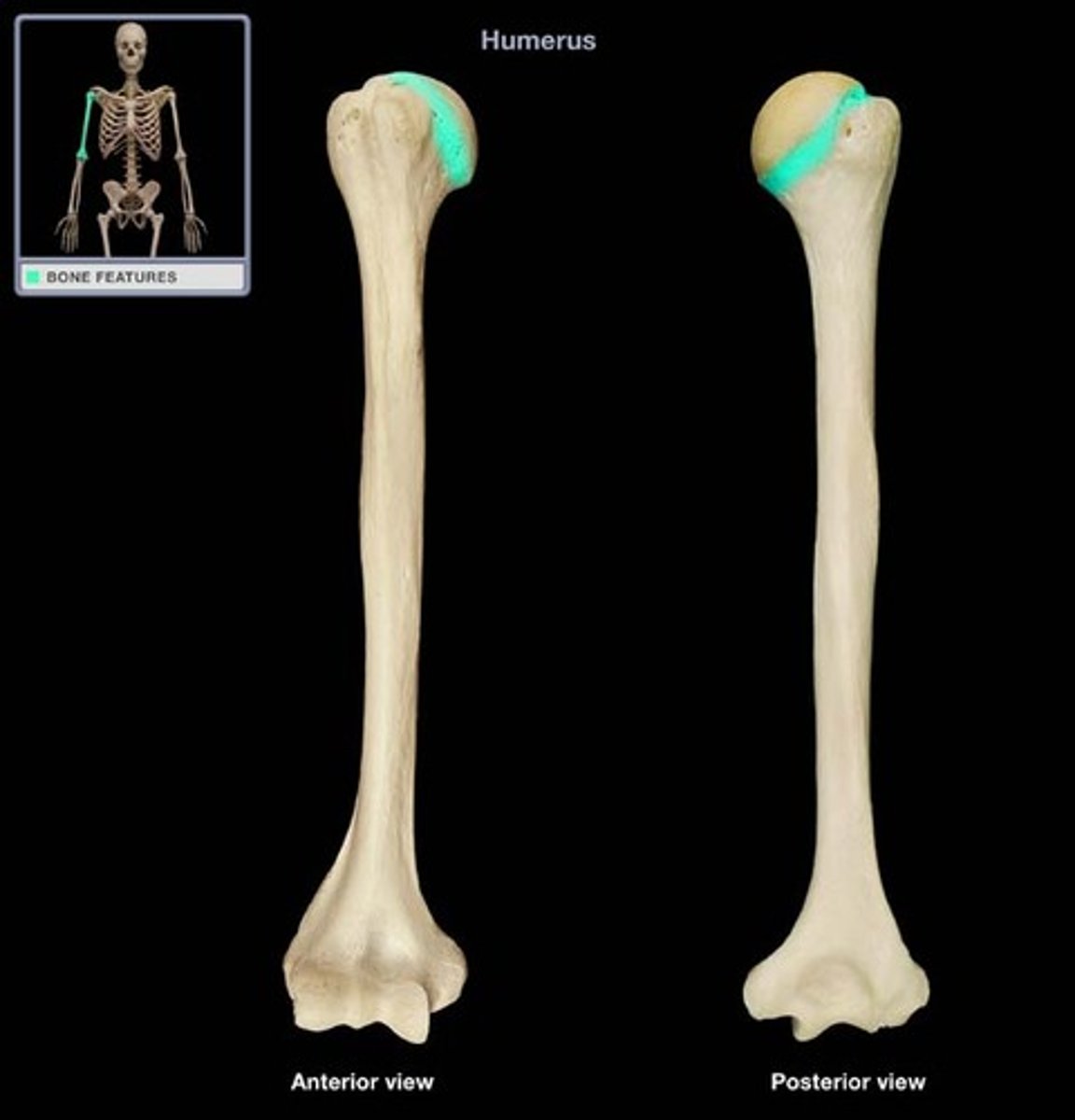
shaft of the humerus
aka Body of the humerus; the area between the surgical neck proximally and the epicondyles distally
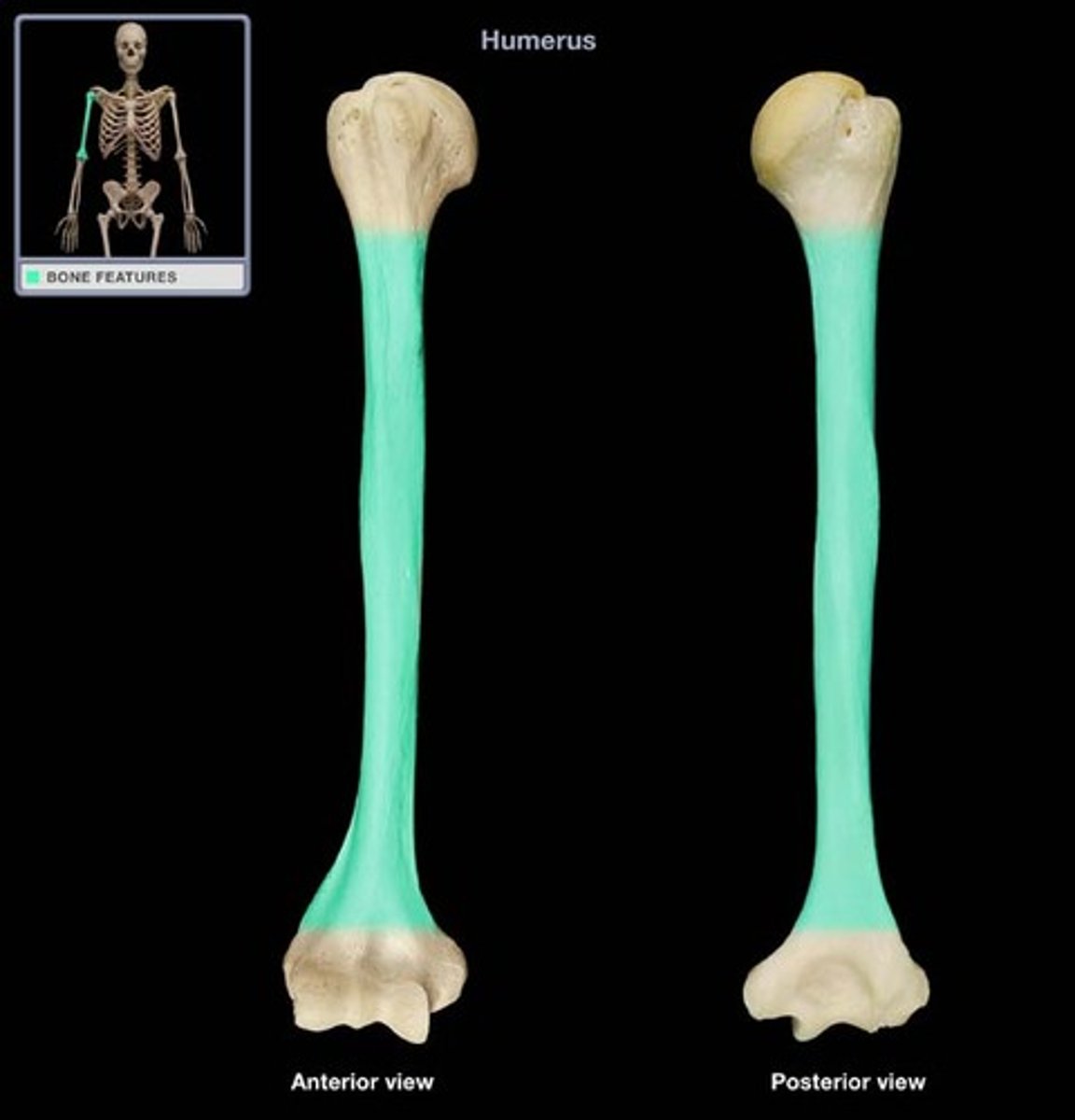
greater tubercle of the humerus
large projection lateral to the head and lesser tubercle; attachment site for supraspinatus, infraspinatus and teres minor muscles
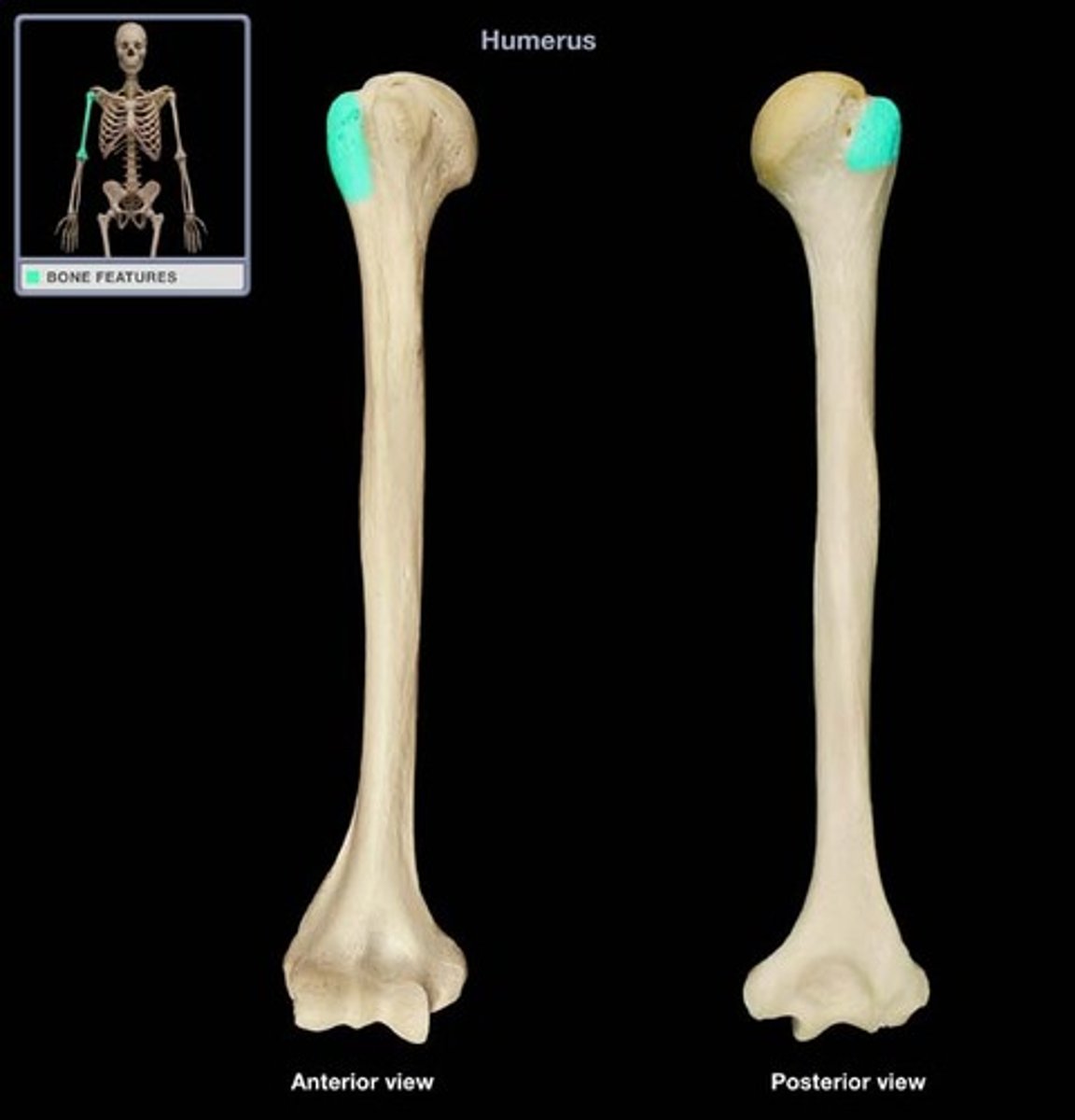
lesser tubercle of the humerus
smaller projection on the anterior surface, medial to the greater tubercle; attachment site for subscapularis muscle
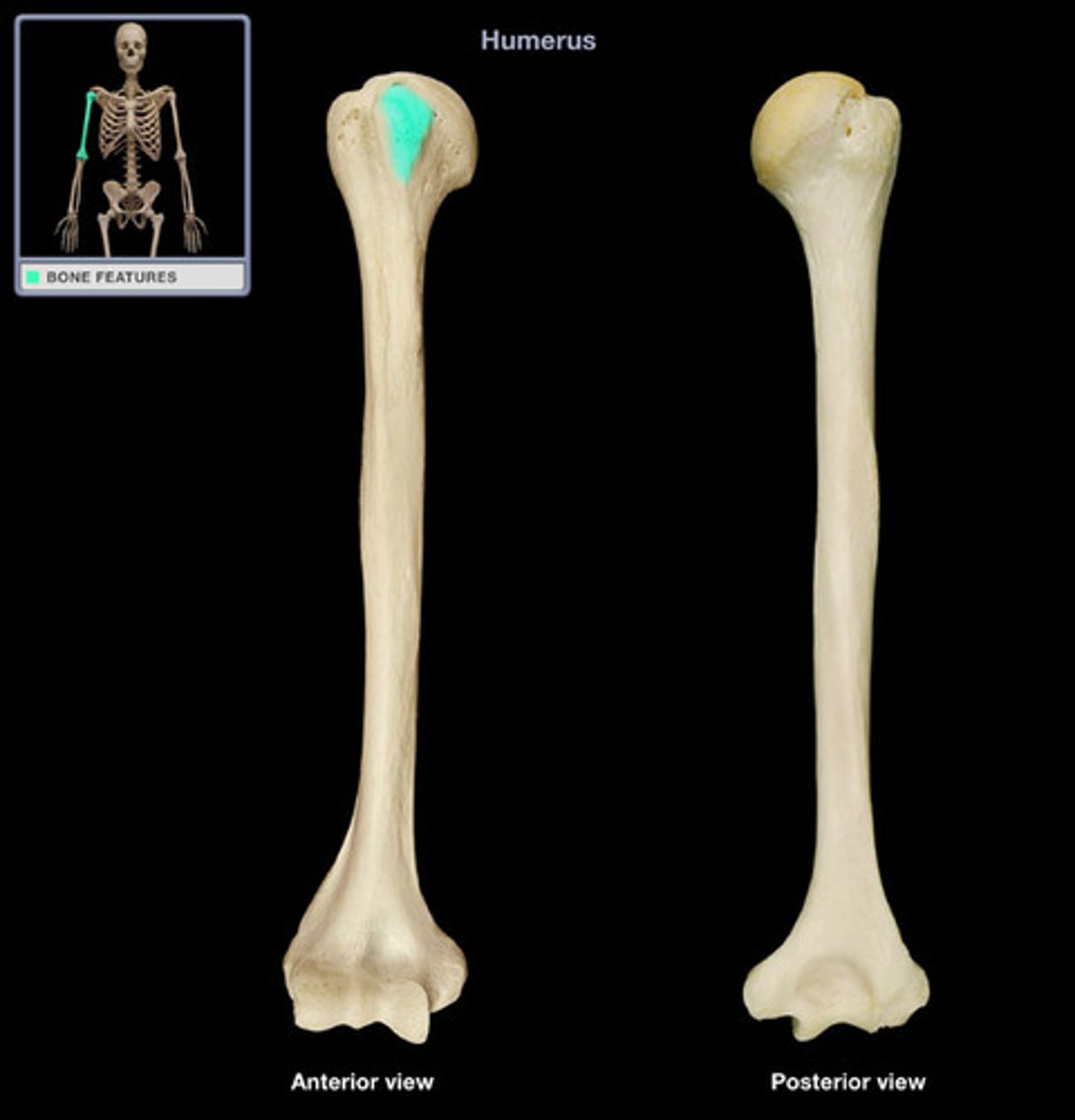
deltoid tuberosity of the humerus
bony protuberance on the lateral side of the humeral shaft, near the midpoint; insertion site for deltoid muscles
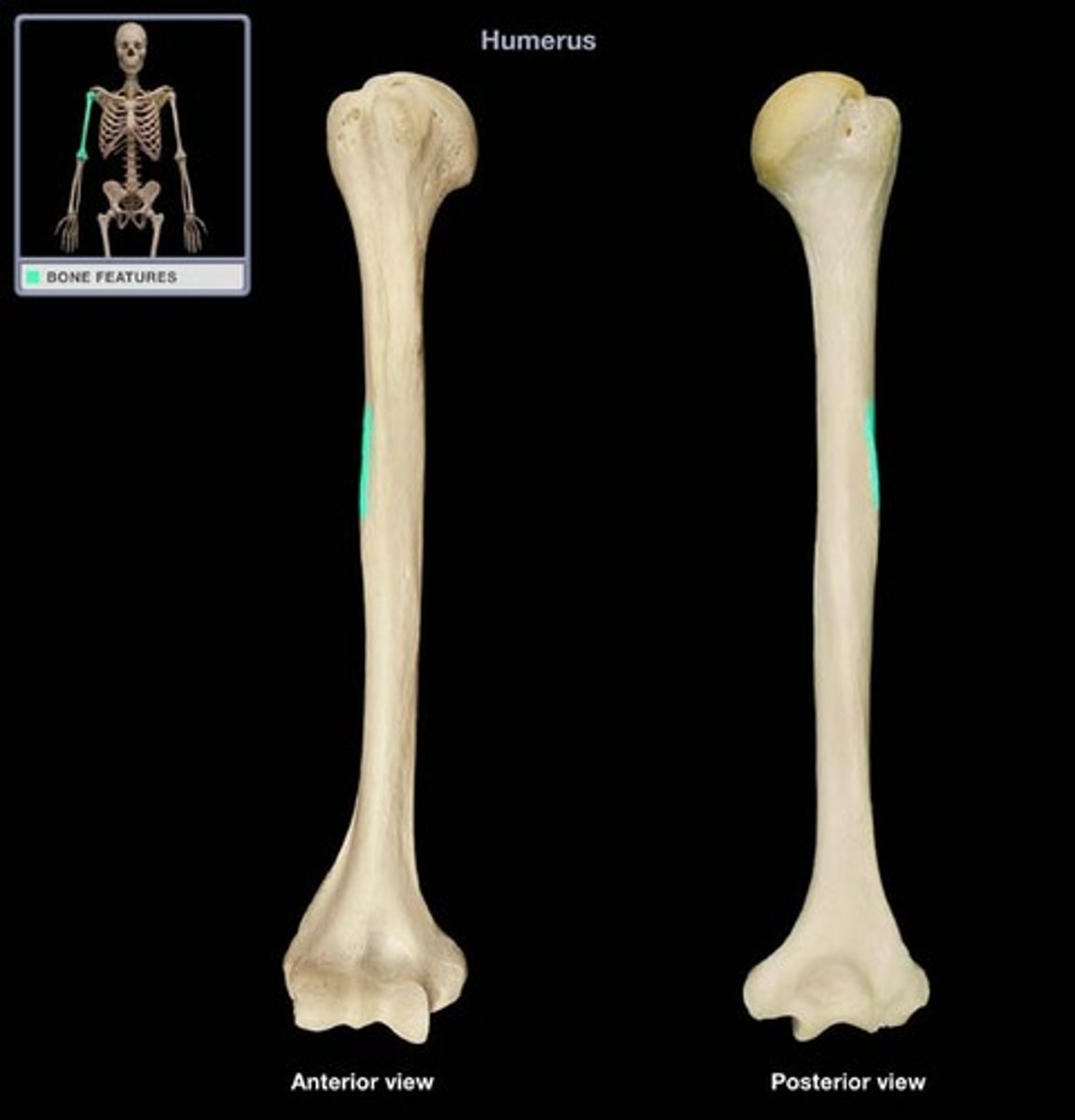
bicipital groove of the humerus
AKA intertubercular groove; a longitudinal groove betweent he tubercles; contains the tendon of the long head of the biceps brachii muscle
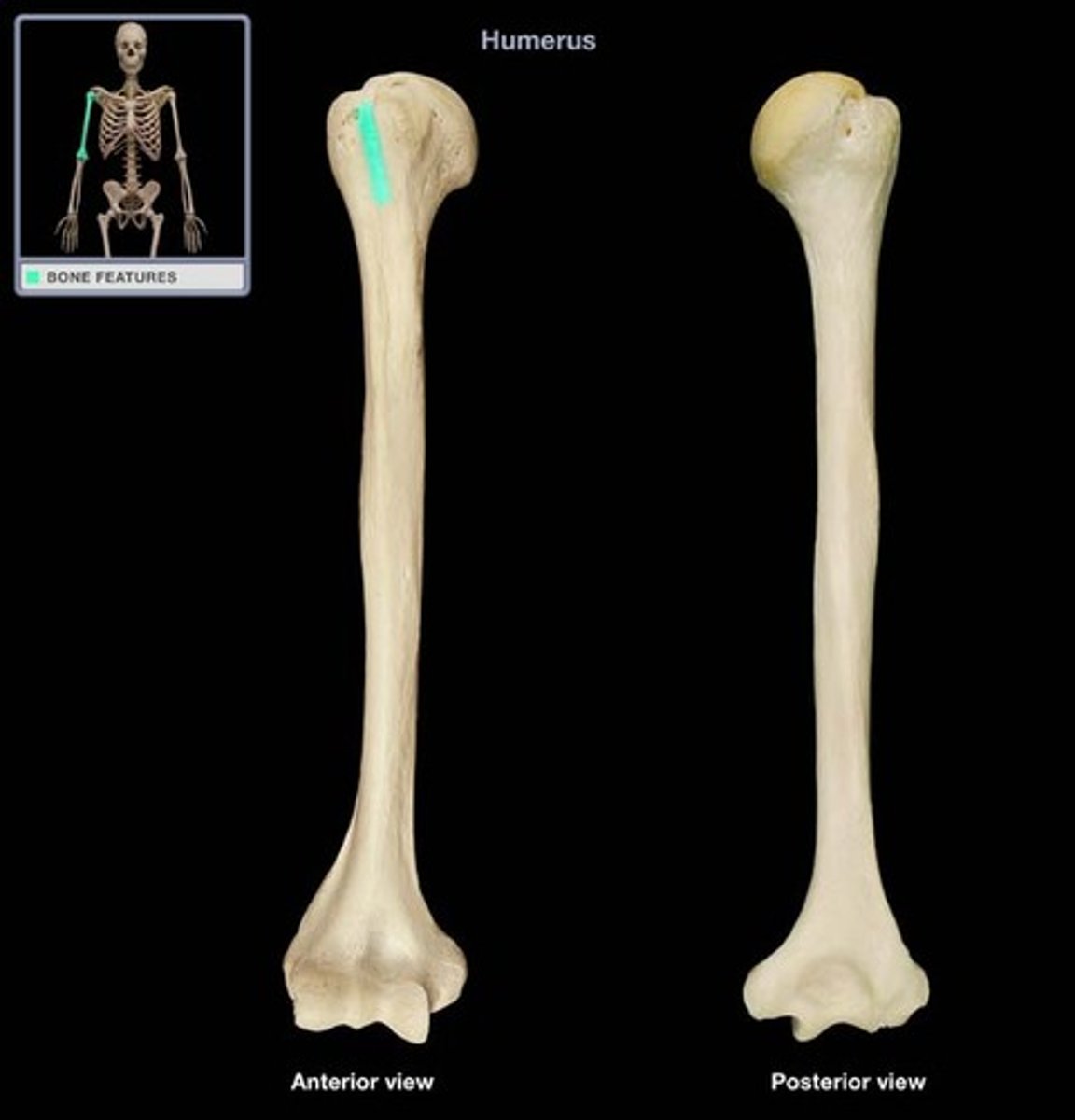
bicipital ridges of the humerus
AKA the medial and lateral lips of the bicipital groove
GH Joint
ball and socket joint; has 3 degrees of freedom; articulation between the humeral head and glenoid fossa
GH Flexion
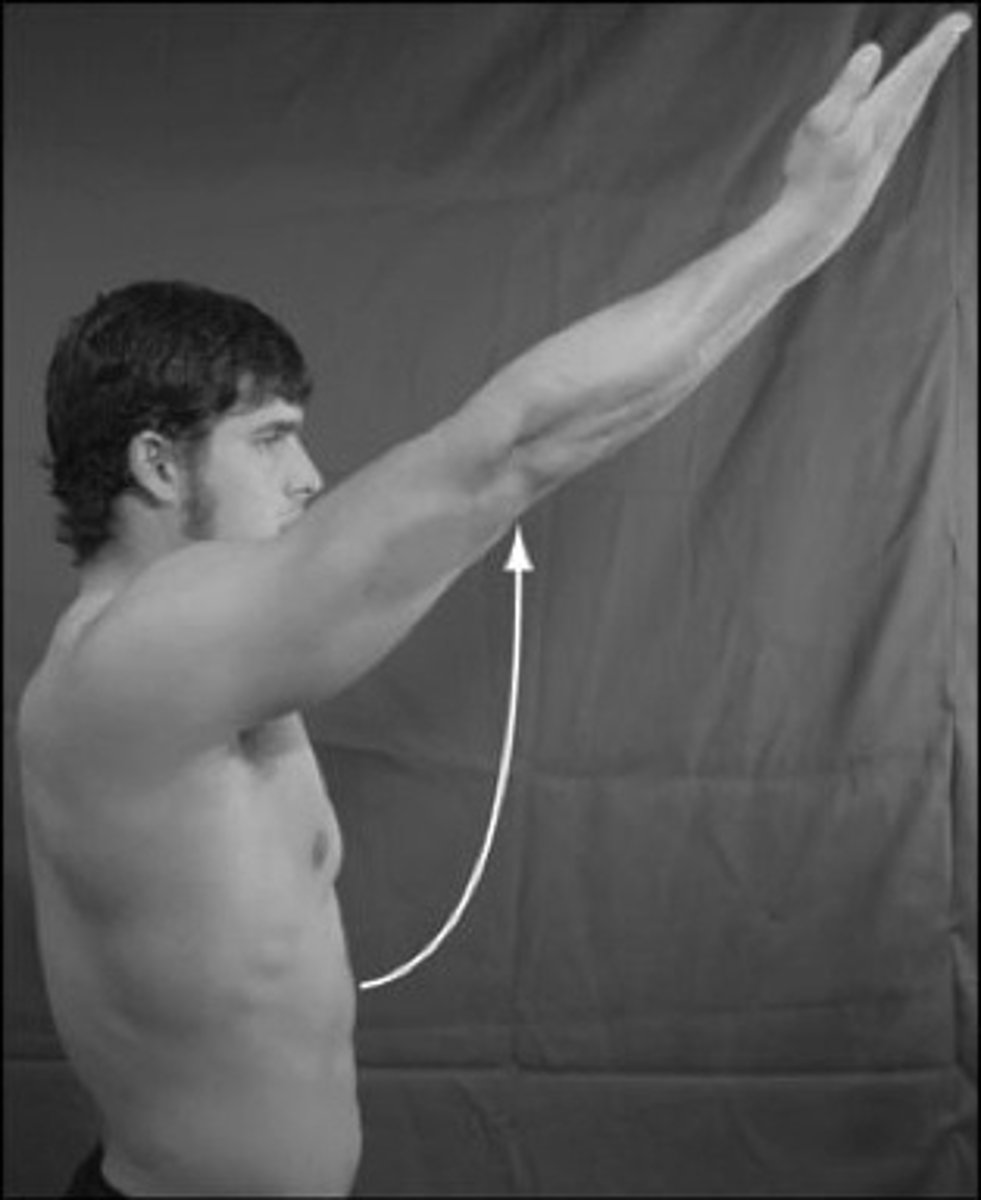
GH extension
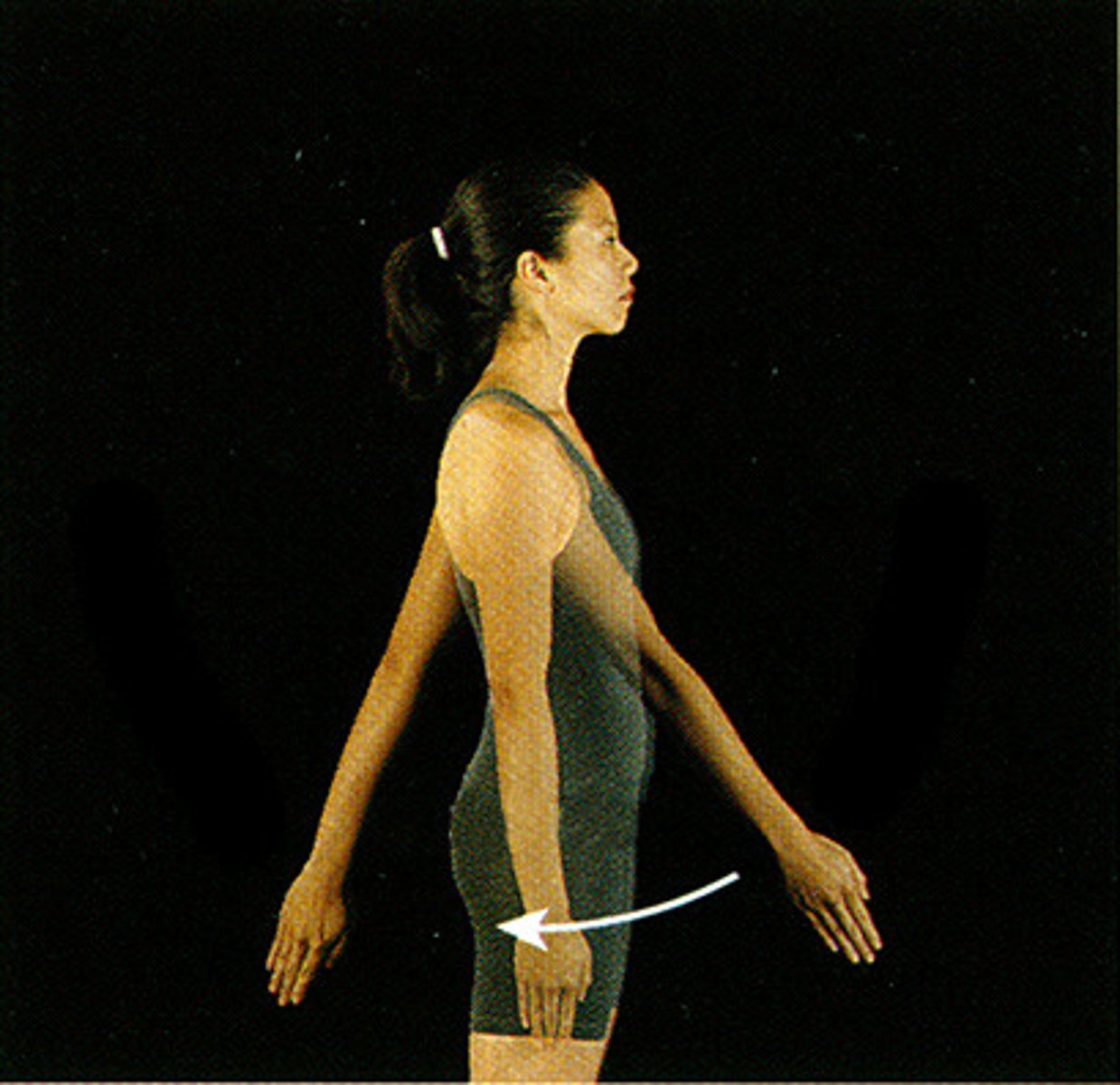
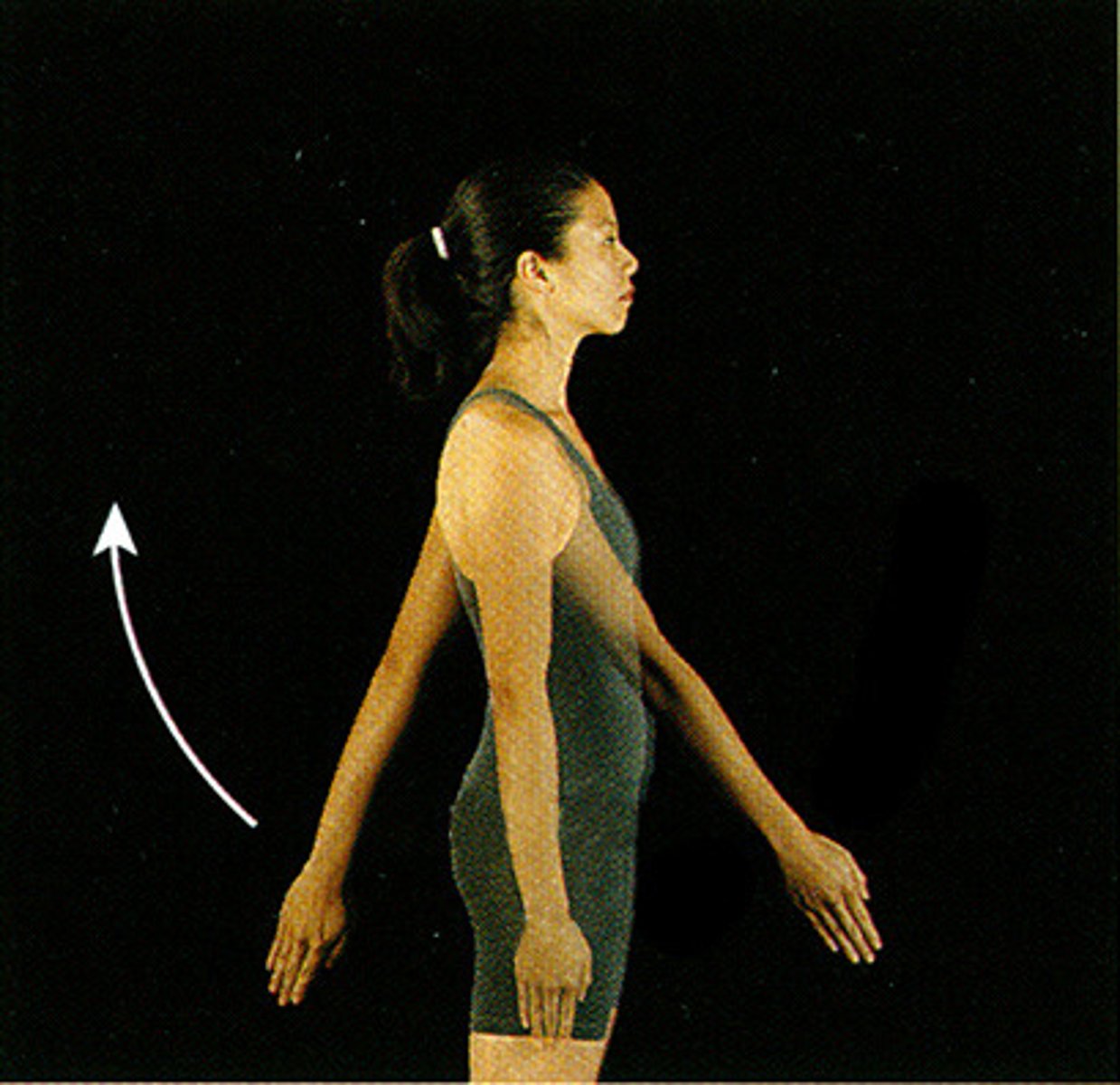
GH hyperextension
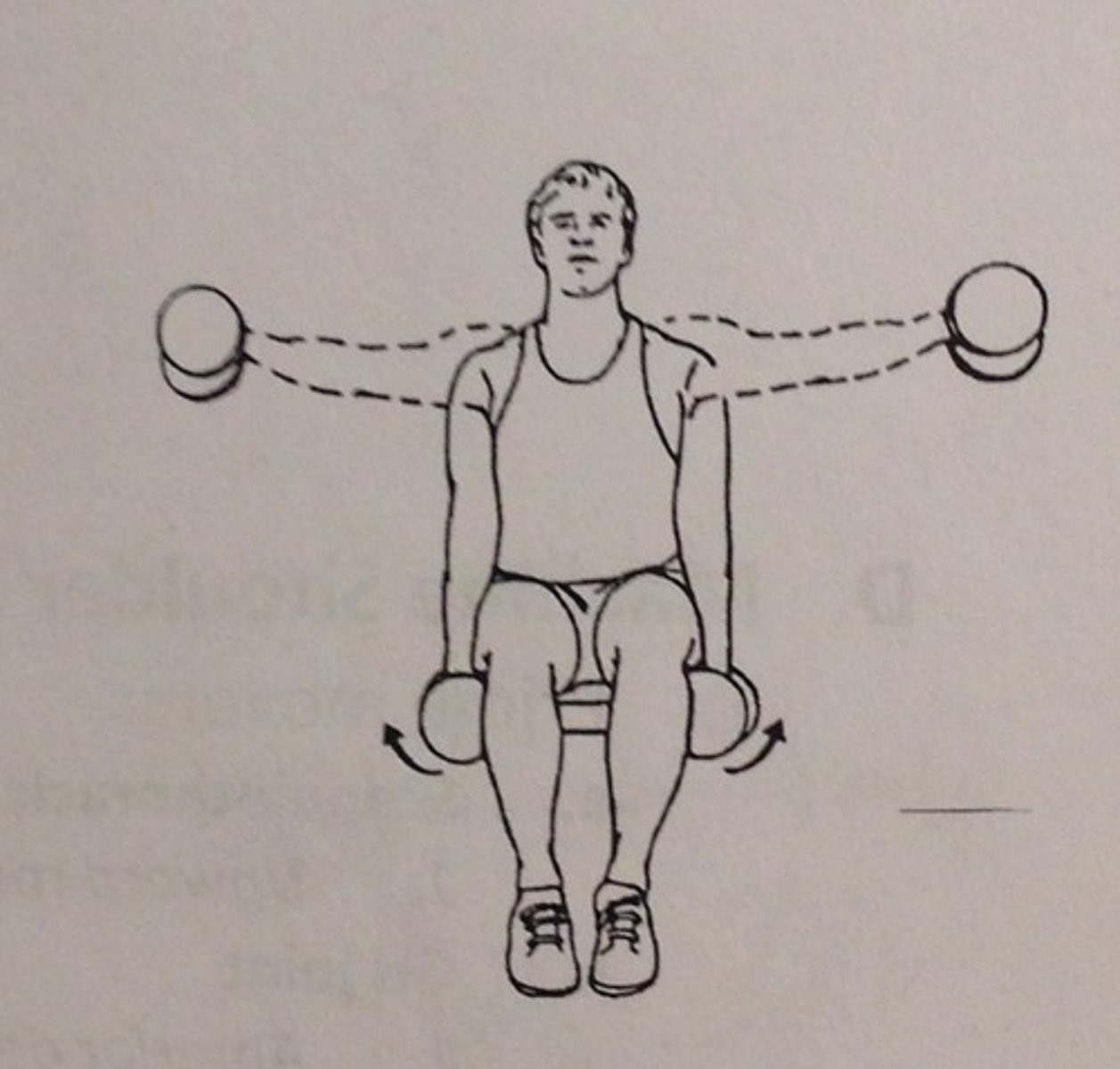
GH abduction
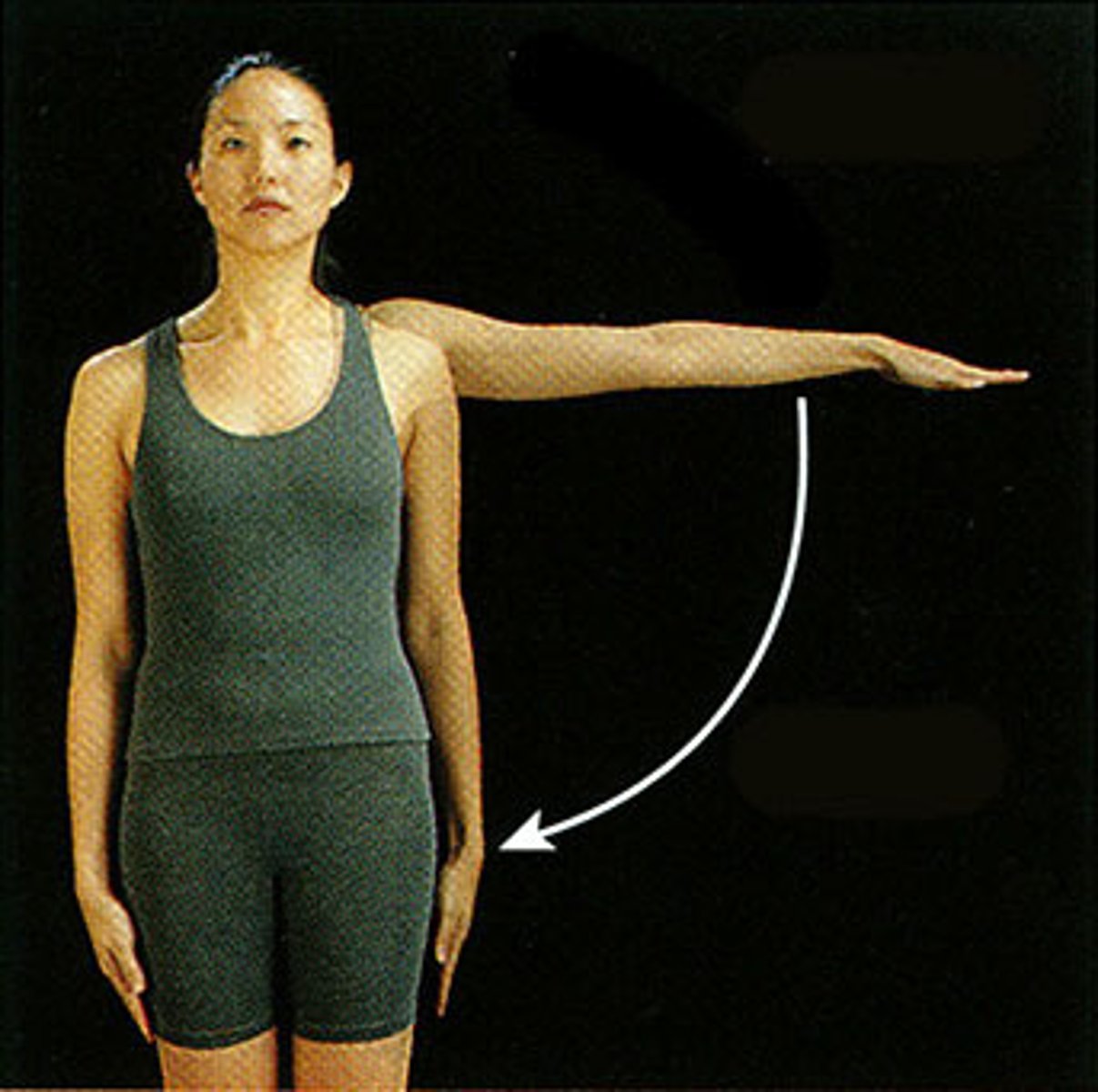
GH adduction
GH Internal (medial) rotation
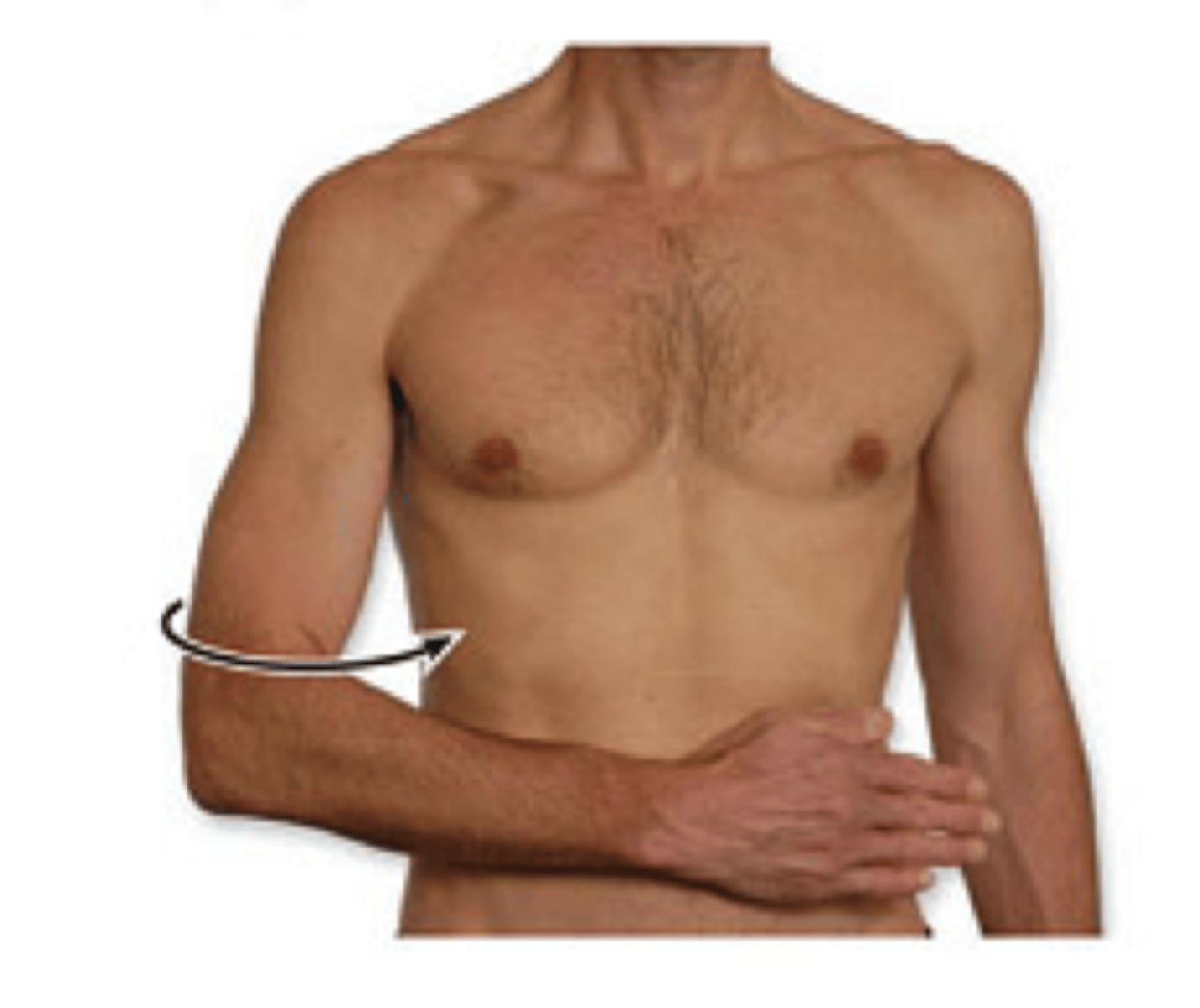
GH External (lateral) rotation