MedChem

0.0(0)
studied byStudied by 0 people
0.0(0)
full-widthCall Kai
learnLearn
examPractice Test
spaced repetitionSpaced Repetition
heart puzzleMatch
flashcardsFlashcards
GameKnowt Play
Card Sorting

1/18

encourage image

There's no tags or description

Looks like no tags are added yet.

Study Analytics
Name
Mastery
Learn
Test
Matching
Spaced

No study sessions yet.

19 Terms

1
New cards

What is type of enzyme is AChE and what are the important parts of the catalytic site?

  • serine hydrolase

    • ACh bind and undergoes hydrolysis mediated by serine to form choline and acetic acid (rapid 1-2 min)

  • catalytic triad

    • glutamic acid

    • histidine

    • serine - covalently binds with the carboxylic acid 
2
New cards
term image

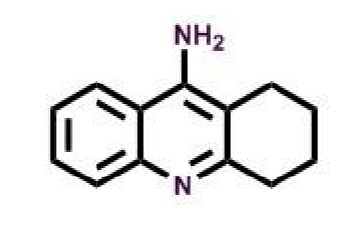
Tacrine

3
New cards

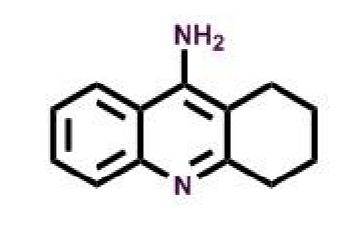
What allows tacrine to act as AChEI? 

  • potent and reversible inhibitor 

  • synthetic amino-acridine derivative 

  • first gen 

  • discontinues → hepatotoxic due to quinone metabolite 
<ul><li><p>potent and reversible inhibitor&nbsp;</p></li><li><p>synthetic amino-acridine derivative&nbsp;</p></li><li><p>first gen&nbsp;</p></li><li><p>discontinues → hepatotoxic due to quinone metabolite&nbsp;</p></li></ul><p></p>
4
New cards
term image

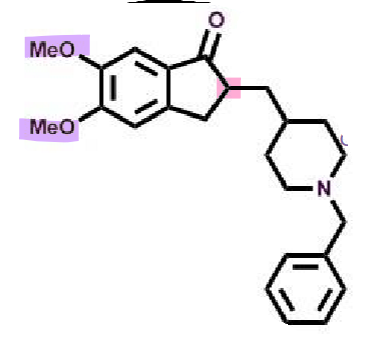
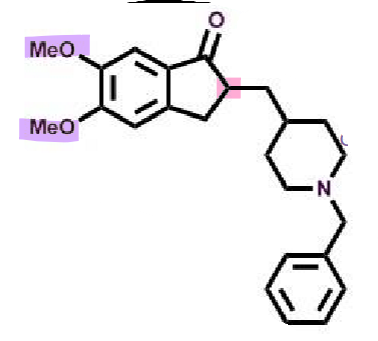
Donepezil 

5
New cards

What makes donepezil an AChEI?

  • pharmacophore: indenone (fused rings) 

    • lipophilic → longer half-life 

  • piperidine → good oral bioavailability 

  • 2x methoxy → improved binding 

  • racemic → both similar activity  

  • potent and reversible 

<ul><li><p>pharmacophore: indenone (fused rings)&nbsp;</p><ul><li><p>lipophilic → longer half-life&nbsp;</p></li></ul></li><li><p>piperidine → good oral bioavailability&nbsp;</p></li><li><p>2x methoxy → improved binding&nbsp;</p></li><li><p>racemic → both similar activity&nbsp;&nbsp;</p></li><li><p>potent and reversible&nbsp;</p></li></ul><p></p>
6
New cards
term image

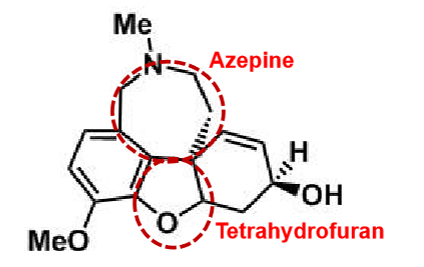
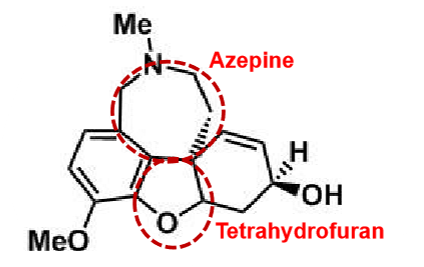
Galantamine

7
New cards

What makes galantamine a AChEI?

  • pharmacophores: azepine and tetrahydrofuran → enhance binding affinity 

  • diasteromer (3 centers) 

  • potent and reversible (less potent than donepezil) 

  • alkaloid derived from plants 

<ul><li><p>pharmacophores: azepine and tetrahydrofuran → enhance binding affinity&nbsp;</p></li><li><p>diasteromer (3 centers)&nbsp;</p></li><li><p>potent and reversible (less potent than donepezil)&nbsp;</p></li><li><p>alkaloid derived from plants&nbsp;</p></li></ul><p></p>
8
New cards
term image

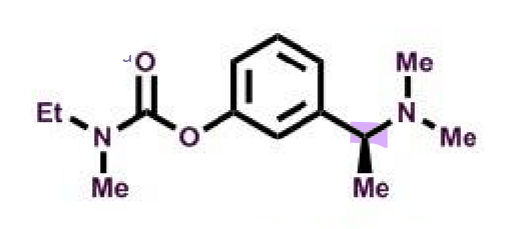
Rivastigmine

9
New cards

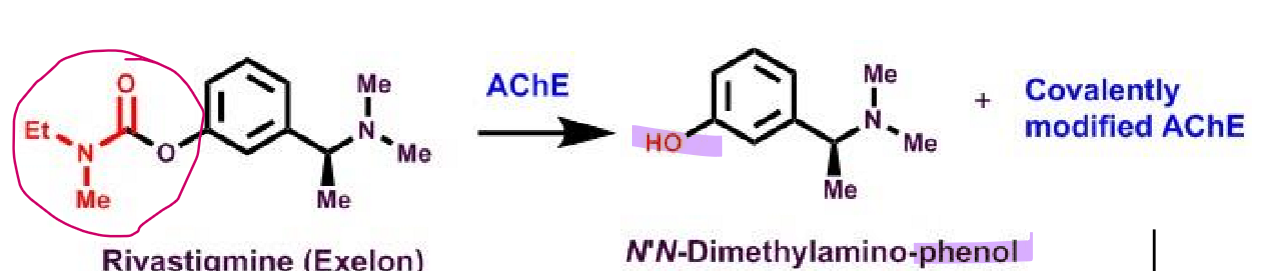
What makes rivastigmine a AChEI?

  • carbamate derivative (oxygen + amide)

    • important is what covalently binds

  • potent and covalent inhibitor

  • S-enantiomer has activity

  • metabolite also some activity

    • N’N-dimethylamino-phenol

<ul><li><p>carbamate derivative (oxygen + amide) </p><ul><li><p>important is what covalently binds </p></li></ul></li><li><p>potent and <strong>covalent</strong> inhibitor </p></li><li><p>S-enantiomer has activity </p></li><li><p>metabolite also some activity</p><ul><li><p>N’N-dimethylamino-phenol</p></li></ul></li></ul><p></p>
10
New cards
11
New cards
12
New cards

What is the relative selectivity of AChE vs BuChE?

  • BuChE is isoform of AChE

    • as AD progresses AChE decreases and BuChE increases 

  • donepezil > galantamine > rivastigmine 

13
New cards

What causes the off target ADEs of AChEIs?

  • bind to muscarinic receptors in GI tract → N/V

  • bind to nicotinic receptors in skeletal muscle → muscle fatigue 
14
New cards
term image

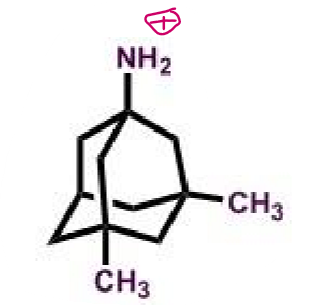
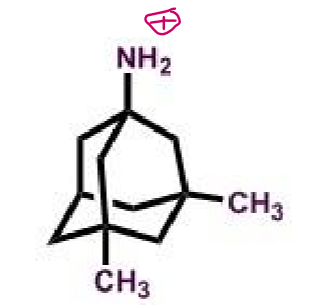
memantine

15
New cards

What makes memantine a NDMA antagonist?

  • pharmacophore: adamantane 

    • lipophilic → gets drug into brain 

  • primary amine protonated for ionic interactions with receptor 

    • if change to secondary or tertiary amine decrease activity 

  • reversible 

<ul><li><p>pharmacophore: adamantane&nbsp;</p><ul><li><p>lipophilic → gets drug into brain&nbsp;</p></li></ul></li><li><p>primary amine protonated for ionic interactions with receptor&nbsp;</p><ul><li><p>if change to secondary or tertiary amine decrease activity&nbsp;</p></li></ul></li><li><p>reversible&nbsp;</p></li></ul><p></p>
16
New cards
term image

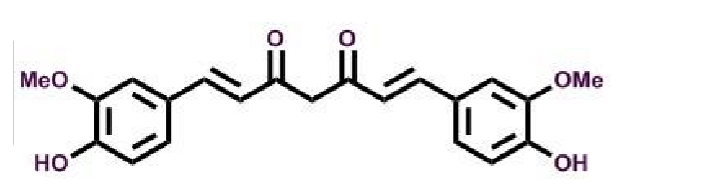
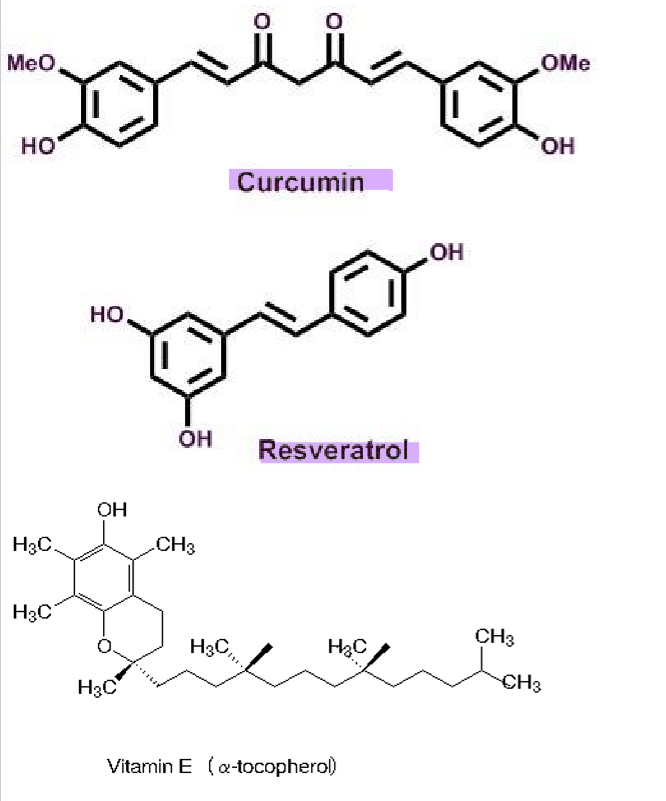
Curcumin

17
New cards
term image

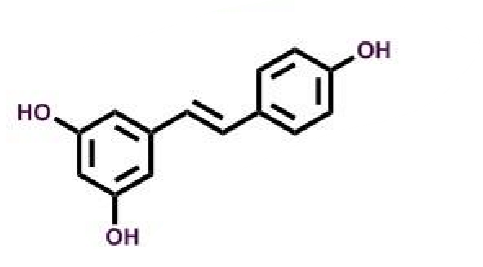
Resveratrol

18
New cards
term image

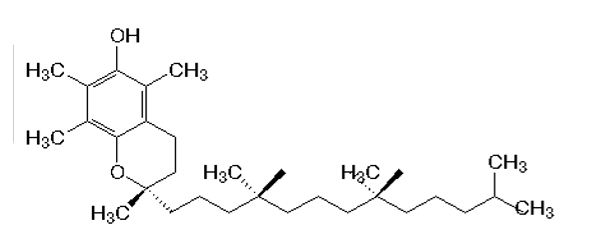
Vitamin E

19
New cards

What makes antioxidants effective in AD? 

  • contain phenolic rings → which interact/quench reactive oxygen species 

  • can chelate metal ions (iron, zinc and copper) which can promote reactive oxygen species 
<ul><li><p>contain phenolic rings → which interact/quench reactive oxygen species&nbsp;</p></li><li><p>can chelate metal ions (iron, zinc and copper) which can promote reactive oxygen species&nbsp;</p></li></ul><p></p>