Lecture 14: Feline Myocardial Diseases
 Call Kai
 Learn
Learn Practice Test
 Spaced Repetition
 Match
Match Flashcards
 Knowt Play
1/42

There's no tags or description
Looks like no tags are added yet.
Name | Mastery | Learn | Test | Matching | Spaced | Call with Kai | Chat |
|---|
No analytics yet
Send a link to your students to track their progress
43 Terms
What is the most common CV disease in the cat and the most common feline cause of CHF, arterial thromboembolism, sudden death, unexpected anesthesia death?
HCM
What effect does HCM have on the heart?
left atrial enlargement
concentric LV hypertrophy → LVFW & IVS thickening, small LV internal cavity, papillar mm. hypertrophy, myocardial fiber disarray/fibrosis, coronary arteriosclerosis
diastolic dysfunction
± right heart enlargment
What causes feline HCM?
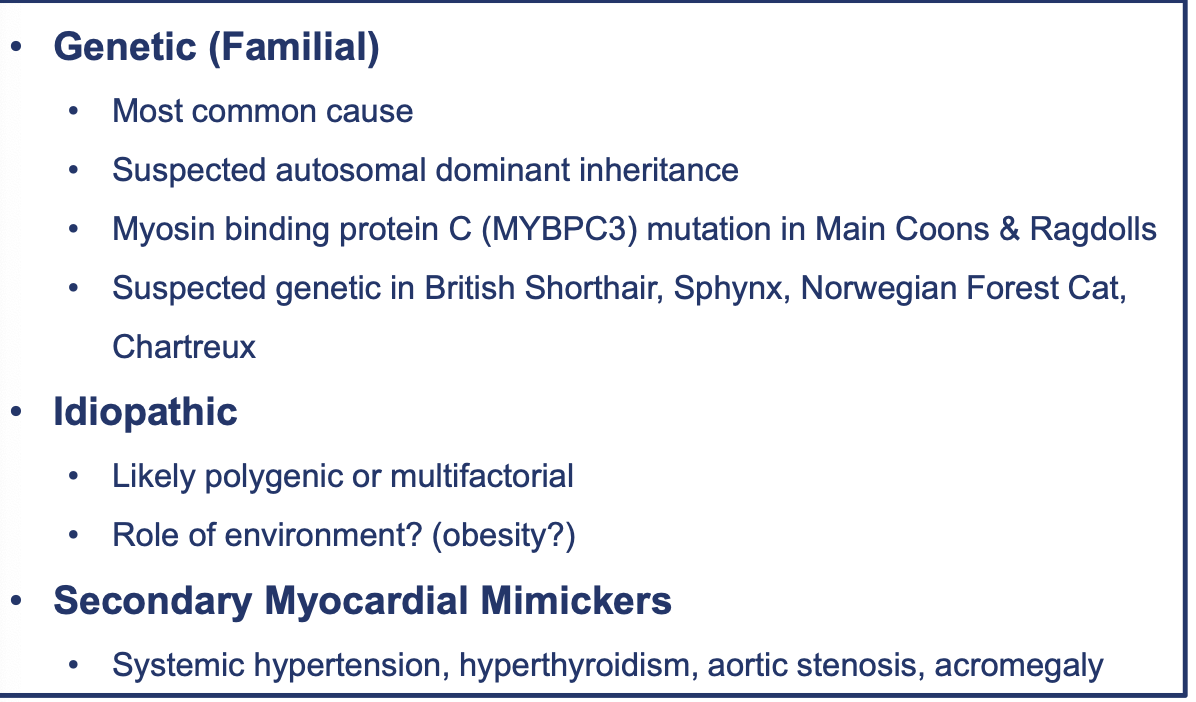
What are the HCM disease manifestations?
• Congestive Heart Failure (CHF)
• Arterial Thromboembolism (ATE)
• Syncope
• Sudden Death
The first clinical manifestation of cardiac disease is usually a “crisis” event
What is the typical presenting history for feline HCM?
• Often asymptomatic initially
• May present with dyspnea, open mouth breathing, lethargy, anorexia, hind limb paralysis (if FATE), collapse
• Any breed: DSH, Maine coon, American shorthair, Persian, Himalayan, Norwegian forest cat, Birman
• Any age , male > female (2:1)
• May have history of prior murmur or gallop
• Cough is typically absent (Ddx - asthma, HW, others)
• Recent stress, anesthesia, fluids, steroids?
What are the typical PE findings of feline HCM?
• Systolic murmur (often left parasternal)
• Gallop rhythm (S4), +/- arrhythmia
• Tachypnea or dyspnea (crackles and/or muffled ventral lung sounds)
• Cold, painful hind limbs (if FATE)
• Jugular vein distension (pleural effusion/hepatomegaly)
• Variable MM and pulses
What diagnostics are typically run in feline HCM cases?
• Thoracic Radiographs: Mild cardiomegaly, pulmonary edema or pleural effusion
• ECG: Non-specific arrhythmia or conduction abnormalities
• NT-proBNP: > 100 pmol/L consistent with heart disease, > 265 pmol/L CHF likely if difficulty breathing
• Genetic testing: Maine Coon & Ragdoll (MYBPC3 mutation)
• CBC/chem/UA: Get baseline pre-tx; monitor liver, kidney, elytes with treatments
• T4 - cats over 6 years of age!
• Blood pressure!
How does the SNAP NT-proBNP test correlate with HCM in cats?
Dyspneic cats:
• The SNAP will be positive in most cases with CHF
• PE, Radiographs, FOCUS Echo compliment Dx
• The darker the test spot, the more confident the Dx of CHF
Asymptomatic cats:
• SNAP will find cats with moderate to severe heart disease
• SNAP BNP will miss some cats with mild heart disease
• SNAP BNP elevated in some cats with normal echo
• Cats with murmur, gallop, arrhythmia, etc.
How do you tell if an asymptomatic cat and a cat with respiratory signs has heart disease based on NT-proBNP?
NT-proBNP < 50-100 pmol/L then low chance of major heart disease
NT-proBNP > 256 pmol/L indicates high chance clinical signs are due to heart disease
What is seen on an echocardiogram of HCM?
LV concentric hypertrophy
LA enlargement
+/- SAM of mitral valve
Why would mitral valve systolic anterior motion be evaluated on an echo in an HCM case?
• Dynamic obstruction that can occur in cats with HCM
• Mitral valve moves toward the interventricular septum
• Partially obstructs the left ventricular outflow tract (LVOT)
• May also cause mitral regurgitation
• Impacts treatment decisions
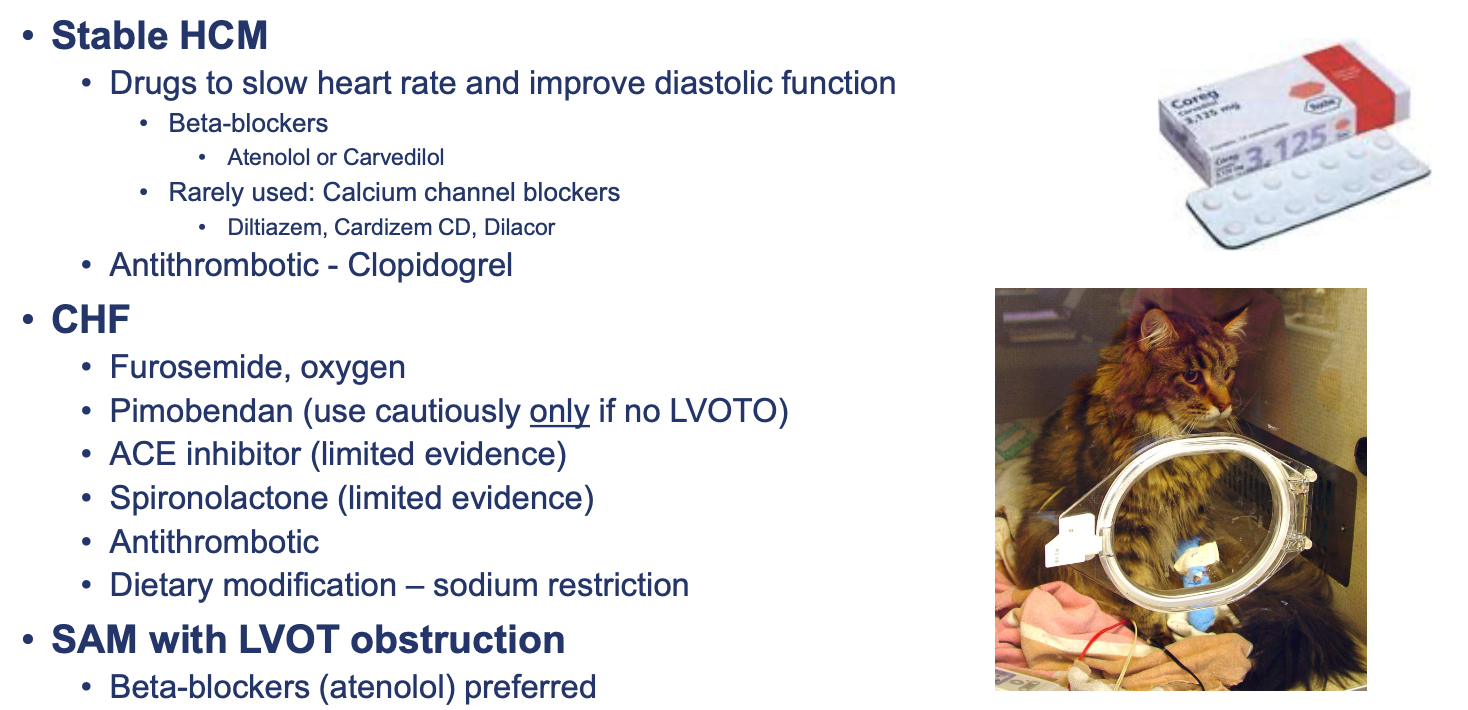
How is HCM treated?
What is a common complication in cats due to LA thrombus, occurring in 10-40% of cats with cardiomyopathy?
feline aortic thromboembolism
What is FATE?
feline aortic thromboembolism originating in LA or LV → increased LA size associated with ATE → affects rear limbs most commonly
What are the clinical signs of FATE (5 Ps)?
• Pain: Vocalization, open mouth breathing, +/- “grimace”
• Paleness (Pallor): Cyanotic nail beds
• Pulselessness: Loss of femoral pulse
• Polar (cold): Cool limb
• Paresis or Paralysis: Posterior paresis, Firm muscles
How is FATE diagnosed?
• Clinical signs & echocardiography
• Diagnosis of FATE is usually evident without extra testing!
• Possible to measure blood glucose and lactate in affected limb if diagnosis is in question based on history & exam
• Echocardiography – search for cardiac disease → LA enlargement, Spontaneous contrast in the LA (“Smoke”), Marked LVH or endocardial thickening
• Thoracic radiographs & more extensive workup if heart is OK
How is fate treated?
• Analgesia (opioids)
• Antithrombotics (heparin/LMWH, clopidogrel)
• Supportive care
• +/- Thrombolytics (streptokinase, tPA) - variable success
• +/- Surgical or catheter thrombolectomy - Variable success, not usually recommended
What anticoagulant drug binds to antithrombin, which inactivates thrombin, factor Xa, and other proteases?
heparin
What antiplatelet drug inhibits ADP receptor on platelet surface, reducing platelet aggregation?
clopidogrel (plavix)
How is FATE prevented?
• Aspirin
• Clopidogrel
• Rivaroxaban or Apixaban
What antiplatelet, irreversible COX inhibitor reduced thromboxane A2 and inhibits platelet aggregation?
aspirin
What drug is the cornerstone of FATE prevention?
clopidogrel
What anticoagulant drug is promising for high-risk or refractory cases of FATE?
rivaroxaban
What is the prognosis of HCM in cats?
• Variable: Asymptomatic cats may live for years
• Poor prognostic indicators: LA enlargement, CHF, FATE
• Survival after CHF: 3-18 months
• After FATE: 30-50% survival to discharge, High recurrence rate, If survive episode, live 2-6 months on average
What is the goal of HCM treatment?
• Slow HR
• Alleviate obstruction / Make SAM go away
• Alter progression of disease
When should you consider treatment in an asymptomatic HCM cat?
• LA enlargement: Clopidogrel may reduce thromboembolism risk
• SAM or LVOTO: Atenolol may improve flow and symptoms
• Arrhythmias
True or false: most asymptomatic HCM cats do not need meds.
true
Which cats should be screened for HCM?
• Cat with cardiac murmur or gallop
• Cat with arrhythmia
• Open mouth breathing/unexplained respiratory distress
• Related cat has cardiac disease
• Breed predisposed to cardiomyopathy
What myocardial disease is characterized by impaired systolic function and ventricular dilation?
DCM
What is the common presenting history for feline DCM cases?
• Lethargy, decreased appetite, weight loss
• Dyspnea, open mouth breatining
• Sudden collapse or hind limb paralysis if thromboembolism
• Acute death
What are the typical PE findings for feline DCM?
• Soft systolic murmur (often left parasternal)
• Gallop rhythm, +/- arrhythmia
• Tachypnea or dyspnea (crackles and/or muffled ventral lung sounds)
• Cold, painful hind limbs (if FATE)
• Jugular vein distension (pleural effusion/hepatomegaly)
• Variable MM and pulses
What are the typical diagnostics run when suspecting feline DCM?
• Thoracic Radiographs: +/- cardiomegaly, pulmonary edema or pleural effusion
• ECG: Non-specific arrhythmia or conduction abnormalities
• NT-proBNP: > 100 pmol/L consistent with heart disease, > 265 pmol/L CHF likely if difficulty breathing
• CBC/chem/UA: Get baseline pre-tx; monitor liver, kidney, elytes with treatments
• T4 - cats over 6 years of age!
• Blood pressure!
• Taurine levels (plasma and whole blood)
What is seen on an echocardiogram of feline DCM?
Dilated Left Ventricle
Poor Contractility
Low Fractional Shortening
How is feline DCM treated?

What is the prognosis of feline DCM?
• Guarded to poor in most cases
• Taurine responsive cases may do better if early diagnosis and treatment
• Prognostic factors: Severity, Response to therapy, Presence of CHF, Presence of thromboembolism
What feline myocardial disease is characterized by impaired diastolic ventricular filling due to myocardial stiffness with preserved systolic function?
restrictive cardiomyopathy
What causes feline RCM?
• Caused by idiopathic fibrosis of the endocardium & myocardium
• Suspected secondary to chronic inflammation or infiltrative disease
• Not associated with taurine deficiency
What is the common presenting history associated with feline RCM?
• Often asymptomatic until advanced
• Lethargy, inappetence, respiratory distress
• Sudden hind limb paralysis (if thromboembolism)
• Syncope or collapse
What is the common PE findings associated with feline RCM?
• Muffled heart or lung sounds (pleural effusion)
• Tachypnea, dyspnea
• Gallop rhythm or systolic murmur
• Weak or absent femoral pulses if FATE
What are the typical diagnostics run in feline RCM cases?
• Thoracic Radiographs: +/- cardiomegaly, pulmonary edema or pleural effusion
• ECG: Non-specific arrhythmia or conduction abnormalities
• NT-proBNP: > 100 pmol/L consistent with heart disease, > 265 pmol/L CHF likely if difficulty breathing
• CBC/chem/UA: Get baseline pre-tx; monitor liver, kidney, elytes with treatments
• T4 - cats over 6 years of age!
• Blood pressure!
What is seen on an echocardiogram of feline RCM?
Biatrial enlargement
Normal LV systolic function
Endocardial bands
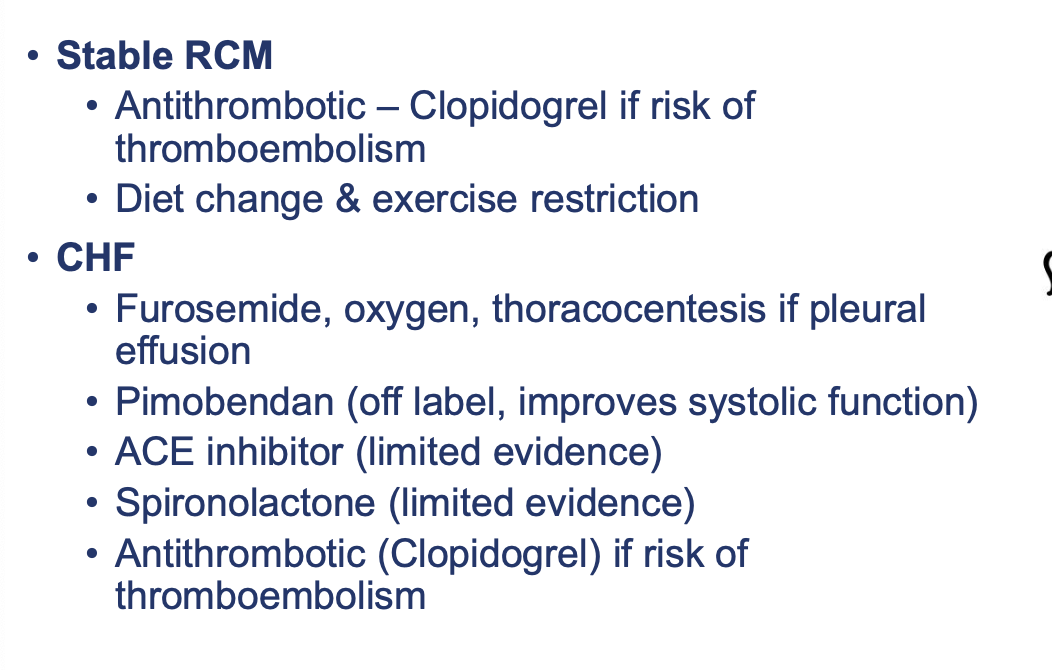
What is the treatment for feline RCM?
What is the prognosis for feline RCM?
• Variable, generally guarded to poor
• Cats may remain stable for months to years with appropriate management
• Early diagnosis, targeted therapy and vigilant monitoring key
• Risk of FATE or sudden death increases with atrial enlargement