Sculpture part of exam
 Call Kai
 Learn
Learn Practice Test
 Spaced Repetition
 Match
Match Flashcards
 Knowt Play
1/24

There's no tags or description
Looks like no tags are added yet.
Name | Mastery | Learn | Test | Matching | Spaced | Call with Kai | Chat |
|---|
No analytics yet
Send a link to your students to track their progress
25 Terms

Women (Venus) of Willendorf
Culture: Paleolithic;
Material: Limestone;
Type: Freestanding sculpture / figurine;
Process: Carving;
Style: Paleolithic / highly stylized.
Exaggerated body features, possibly connected to fertility
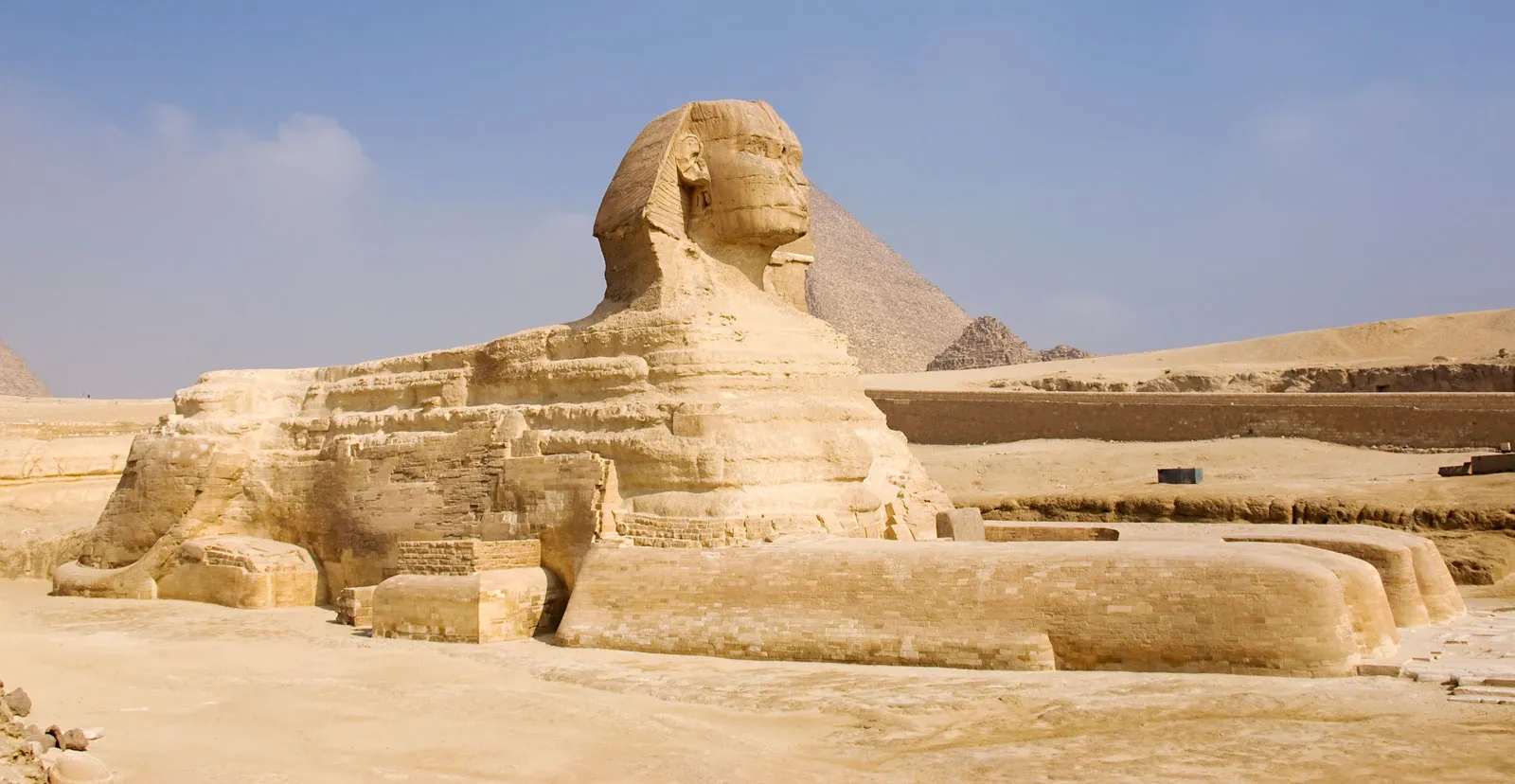
Great Sphinx of Giza
Culture: Ancient Egypt;
Material: Limestone;
Type: Monumental sculpture;
Process: Carving
Style: Egyptian.
Represents royal power

Menkaure with a Queen
Culture: Ancient Egypt
Material: Graywacke
Type: Freestanding sculpture
Process: Carving;
Style: Egyptian.

Akhenaten and His Family
Culture: Ancient Egypt
Material: Limestone
Type: Relief sculpture
Process: Carving
Style: Amarna style.
Shows Akhenaten, Nefertiti, and their children
Shows the royal family in a more natural/relaxed way

Doryphoros (Spear Bearer)
Artist: Polykleitos;
Culture: Ancient Greece;
Material: Originally bronze; famous Roman copies are marble;
Type: Freestanding sculpture;
Process: Originally casting;
Style: Classical Greek.
Uses contrapposto
Shows the ideal Greek male body
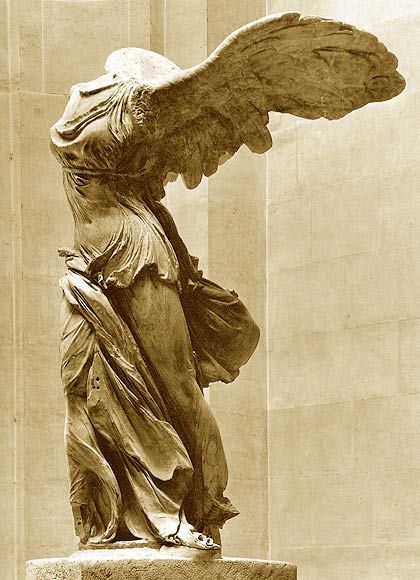
Nike of Samothrace
Culture: Hellenistic Greece;
Material: Parian marble;
Type: Freestanding / monumental sculpture;
Process: Carving;
Style: Hellenistic.
Represents Nike, goddess of victory

Laocoön and His Sons
Culture: Hellenistic / Roman;
Material: Marble;
Type: Freestanding sculpture / group sculpture;
Process: Carving;
Style: Hellenistic.
Shows Laocoön and his sons attacked by sea serpents
Very dramatic and emotional

Head of a Roman Patrician
Culture: Ancient Rome;
Material: Marble;
Type: Bust;
Process: Carving;
Style: Roman Republican realism.
Shows an older Roman man
Very realistic wrinkles and facial features

Augustus of Prima Porta
Culture: Ancient Rome;
Material: Marble;
Type: Freestanding statue;
Process: Carving;
Style: Roman Imperial / Classical influence.
Shows Emperor Augustus
Dressed as a military leader
Used to show Roman power and victories

Gates of Paradise
Artist: Lorenzo Ghiberti;
Culture: Italian Renaissance;
Material: Bronze;
Type: Relief sculpture / doors;
Process: Casting;
Style: Renaissance.
Bronze doors with biblical scenes
Uses perspective to create depth

Donatello's David
Artist: Donatello;
Material: Bronze;
Type: Freestanding sculpture;
Process: Casting;
Style: Early Renaissance.
Shows David after defeating Goliath
One of the first major free-standing nude sculptures since ancient times
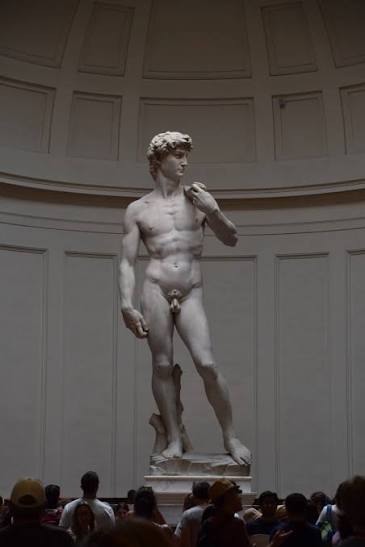
Michelangelo's David
Artist: Michelangelo;
Material: Marble;
Type: Freestanding sculpture;
Process: Carving;
Style: High Renaissance.
Shows David before fighting Goliath
Shows the ideal Renaissance human figure
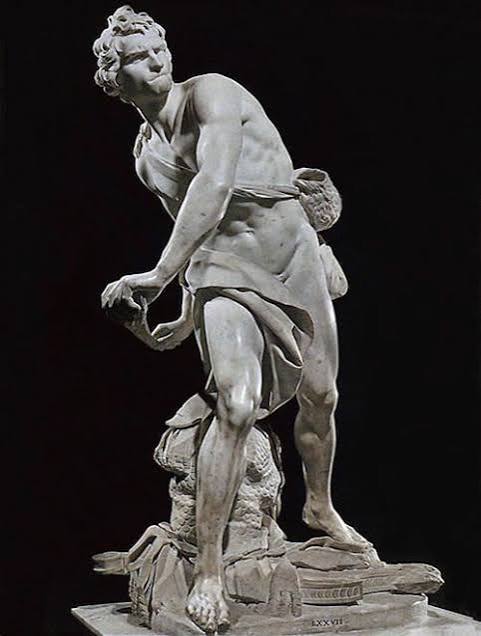
Bernini's David
Artist: Gian Lorenzo Bernini;
Material: Marble;
Type: Freestanding sculpture;
Process: Carving;
Style: Baroque.
Shows David in the middle of action

Statue of Liberty
Artists: Frédéric Auguste Bartholdi; engineered by Gustave Eiffel;
Material: Copper over an iron framework;
Type: Monumental sculpture;
Process: Construction / assembling;
Style: Neoclassical.

Unique Forms of Continuity in Space
Artist: Umberto Boccioni;
Material: Originally bronze;
Type: Freestanding sculpture;
Process: Casting;
Style: Futurism.


modeling
An additive process whereby the sculptor builds up a soft, malleable material (clay, wax, plaster) by adding and shaping it.
Carving
A subtractive process whereby the sculptor starts with a solid block of material (marble, wood) and removes material - cutting, chiseling, or grinding away - until the desired form emerges
Assemblage
A combinative process whereby the sculptor joins together separate, often preexisting objects or materials - wood, metal scraps, found objects - into a single unified work.
Casting
A liquid material (usually molten metal, like bronze) is poured into a mold and allowed to harden, producing a solid copy of a model. This process allows the same sculpture to be reproduced multiple times.
sculpture in the round
(Freestanding) – The sculpture is fully three-dimensional and meant to be viewed from all sides
relief
Sculpture attached to, and projecting from, a backing wall or panel
Bas-relief (low) - slight - barely emerges from the surface
Alto-relief (high) - substantially emerges, sometimes partially in-the-round
Sunken relief - design is carved into the surface rather than projecting from it