physics 1) Electricity and Magnetism
 Call Kai
 Learn
Learn Practice Test
 Spaced Repetition
 Match
Match Flashcards
 Knowt Play
1/64

Earn XP
Description and Tags
a. electric charge static electricity and coulombs law b. electric fields c. electric current, voltage, resistance, and ohm's law d. Series and Parallel circuits e. electrical power
Name | Mastery | Learn | Test | Matching | Spaced | Call with Kai |
|---|
No analytics yet
Send a link to your students to track their progress
65 Terms
What is electric charge?
property of matter that causes it to experience a force when placed in an electromagnetic field
Unit for electric charge
Coulombs, C
Electric charge of protons equation
1.60 × 10^-19 C
Electric charge of electrons equation
-1.60 × 10^-19 C
Like charges ……., unlike charges …….
repel, attract
What is an electrical conductor? and 3 examples
substances which allows the transfer of electrons
water
copper
graphite
gold
metals
what is an insulator? 3 examples
substance which does not allow the transfer of electrons
Plastic
rubber
glass
fabric
what is electricity?
form of energy which occurs because of charge particles
can build up in one place or can flow from one place to another
what are the 2 main forms of electricity?
static and current
static electricity
when electrons gather in one place (Stationary on surface of object)
due to electric charge that builds up on surface of insulator
charge that built up cannot easily flow away from the insulator
can build up when 2 materials rubbed together
electrons are transferred from one material to the other. one material ends up with fewer electrons meaning that one has positive and one has negative charge. (opposites attract)
current electricity
involves electrical energy which travels in a circuit
what is the name of the force between two materials that are rubbed together?
friction
what happens when an insulator made of polythene is rubbed with a cloth'?
electrons move from cloth to insulator
what happens if an insulator made of acetate is rubbed with cloth
electrons move from insulator to cloth
process of rubbing ballon to wall (static electricity)
rub baloon on woolen jumper
transfers electron onto balloon by friction
balloon becomes negatively charged while jumper is left positively charged
balloon placed near wall (neutral wall)
positive charges in wall brought to surface because they are attracted to the neg charge of balloon
balloon sticks to wall
because opposite charges attract
Sticks to wall because of electrostatic attraction
how is sparking or electric shock caused?
caused by build up of electrostatic charge
occurs when
two objects charged by friction become oppositely charged
surplus of eletrons causes electrons to jump actoss to an object that is neutral
static electricity on carpet (shock when you shake hands)
carpets have tendency to have static electricity build up
electrons travel from carpet to person whose shoes are rubbing the carpet
when that person shakes hands with uncharged person, electrons jump to them
This causes a shock
static electricity- lightning
when clouds move over eachother, they become charged when electrons transfer between them
ground is neutral so neg charges from cloud jump to positive charges on ground creating huge spark called lightning
4 uses of static electricity
photocopiers
printers
spray painting
pollutant removers
who found coulomb’s law?
charles augustin de coulomb
what is coulombs law?
measuring the electrostatic force between 2 charges.
proportional & inversely proportional
magnitude of force F between the chargesis proportional to their product (q1xq2)
inversely proportional (one increases, one decreases) to the square of distance between them
Equation for coulombs law
F=. kQ1Q2 / r²
force= coulombs constant x charge 1 x charge 2 / squared distance
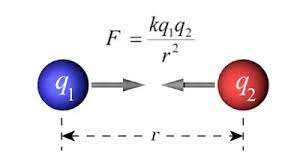
what is coulomb’s constant (k)
9×10^9 Nm/C²
Electric Current (I)
rate of flow of electric charge in a circuit from pos to neg terminal
charge is measured in …
Coulombs C
current is measured in …
amperes A
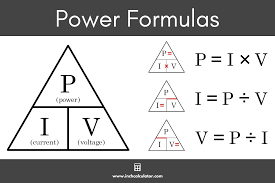
Ohms Law pyramid
Types of current
direct current (dc)
Alternating current (ac)
Direct Current DC
current that is steady, constantly flowing in the same direction in a circuit from pos to neg
VOLTAGE AND CURRENT MAINTAINS IN ONE DIRECTION
everything that runs on a battery and uses a AC adapter while plugging into wall or uses usb cable for power relies on DC
ex: phone batteries, flashlight, television
Alternating current AC
continuously changes its direction going back and forth around a circuit
VOLTAGE AND CURRENT CHANGES DIRECTION ALTERNATIVELY
ac is most commonly used for houshold equipment as it makes transporting AC across long distances is relatively easy
Voltage V
the push or force that makes electric charges move through a wire or a circuit
in electricity voltage makes electrons move and creates flow of electric current
Voltage is also known as potential difference
measured in volts
Electrical resistance R
obstruction/opposition to current
measured in ohms (Omega sign)
who discovered ohms law
german physisist georg ohm
main statement of ohms law
“current is directly proportional to voltage as long as temp remains constant?
Diode
component in circuit that allows current to only flow in one direction
What is an electric circuit
a path for electric charge to flow along
needed for circuit to work: source of energy, component, complete loop
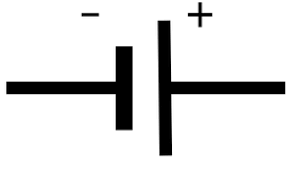
Cell in circuit
provides circuit with source of potential difference (Energy)
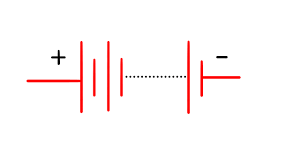
Battery in circuit
2 or more cells
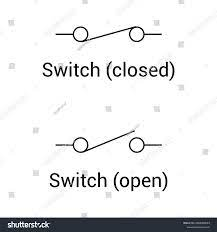
Switch in circuit
used to turn circuit on (closed) or off (open)
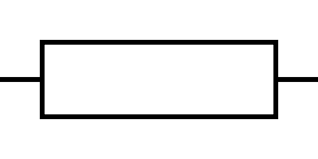
resistor in circuit
limits flow of current
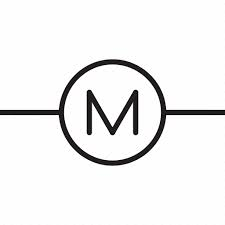
Motor in circuit
converts electrical energy to mechanical energy
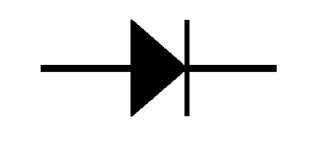
diode in circuit
allows current to flow in one direction only
used to convert AC to DC
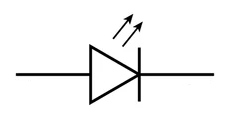
light emmiting diode (LED) in circuit
emits light when current passes thru it
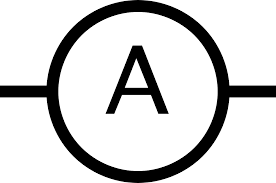
ammeter in circuit
used to measure the current in a circuit. it is connected in series with other components
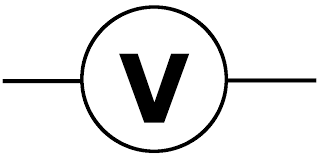
Voltmeter in circuit
used to measure the voltage of an electrical component
it is connected in parallel with relevant component
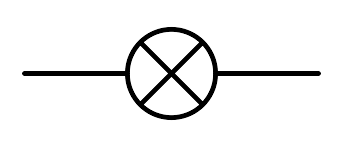
bulb or lamp in circuit
uses electric current to emit light
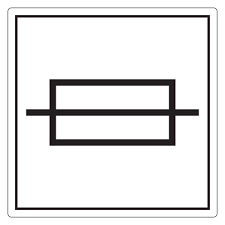
Fuse in circuit
protects expensive components from current surges and act as a safety measure against fire
Main rules of drawing circuits
rectangular shape
straight lines
correct symbols for each components
all lines touch accurately
components in cneter of wire
types of circuits
series and parallel
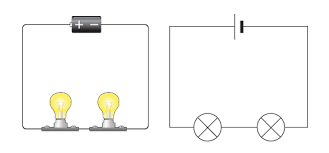
series circuit
a single loop or pathway in which the componenets are connected one after another
Current is same,
Voltage is shared,
resistance adds up
parallel circuit
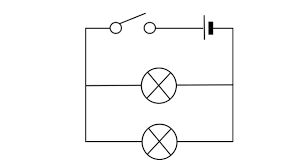
a parallel circuit is one which contains a point (junction) where current can split (point a) or join (point b)
more than one path
CURRENT: Splits at first junction, joins together at second junction
Splits at each strand
A1=(A2+A3)=A4
If bulbs are identical then current will split evenly, but if they are not the current will not split evenly
VOLTAGE: voltage across cell/battery is the same as the voltage across each branch
Voltage stays the same
V1=V2=V3
RESISTANCE: when resistors are connected in parallel, combined resistance decreases and is less than the resistance of any of the individual components
1. = 1. + 1
Rtotal. R1. R2
SUMMARY PARALLEL: current is shared, total voltage is same, total resistance decreases
What is an electric field
a region where a charged particle will experience a force
can be represented by electric field lines
electric field line always point away from ……. charges and towards ………charges
positive, negative
what happens when the charge entering electic field is same ( neg, neg or pos, pos)
they will be repeled and move away from the charge creating the field
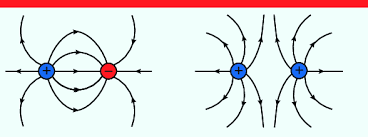
what happens if the charges entering entering an electic field oppose
they will be attracted and will move towoeds the charge creating the field
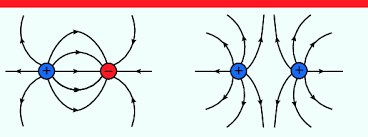
the force becomes ….. as the distance between the 2 charged objects …… and vice versa
stronger, decreases
the strenght of an electric field is determined by ……
a stronger field is represented by lines ….
a weaker field is represented by line …….
spacing, closer. further
Rules of electric field drawing
field lines never intersect
lines are perpendicular to surface of charge
start point of the field lines is at the positive charge and end at neg charge
Electric Field strenght (E)
the force experienced per unit charge of the particle in the field
Equation for electrical field strength
electrical field strenght= force/charge
E=F/Q
electrical power
the rate of energy transfer or the amount of energy tranfered per second
power of a device depends on: voltage & current
equations for electrical power:
Power=current voltage
P=IxV
P=I²xR
P=V²/R
if current or voltage doubles the power will be 4 times as great
I is current, V is voltage, and P is power, R is resistance
power is measured in …
watts (W)
Current is measured in …
Amps (A)