Digestion - Part 3 (Large intestine -> End)
 Call Kai
 Learn
Learn Practice Test
 Spaced Repetition
 Match
Match Flashcards
 Knowt Play
1/5

Name | Mastery | Learn | Test | Matching | Spaced | Call with Kai | Chat |
|---|
No analytics yet
Send a link to your students to track their progress
6 Terms
Intestinal enzymes
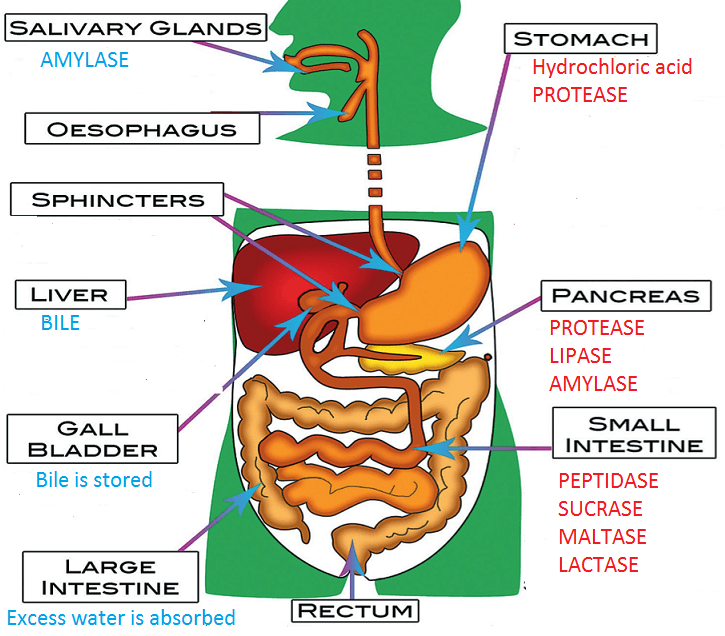
Villi in the small intestine secrete many enzymes to complete digestion:
maltase: maltose → glucose + glucose
sucrase: sucrose → glucose + fructose
lactase: lactose → glucose + galactose
peptidases: di/tri-peptides → amino acids
Intestinal juice includes enzymes and mucus to protect and lubricate the lumen.
Large intestine
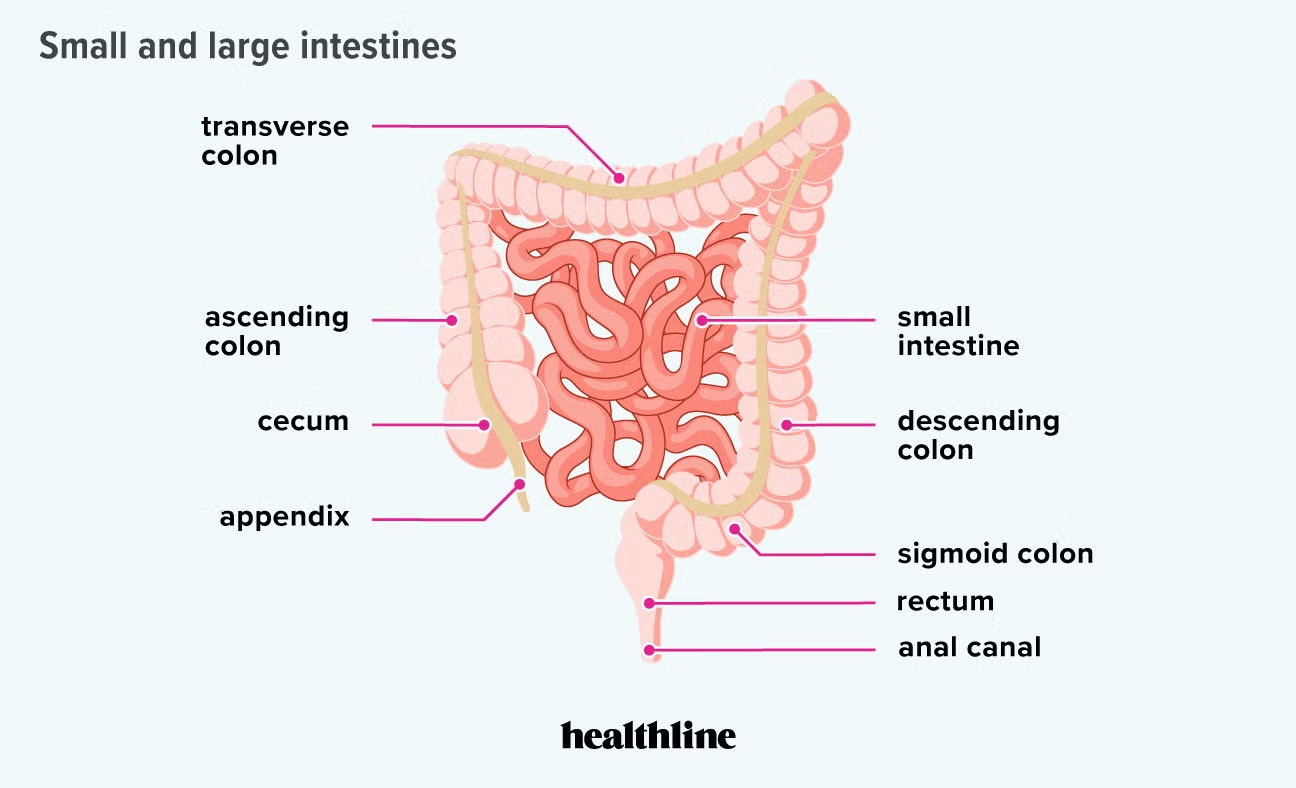
Shorter than the small intestine, but has a larger diameter.
Has 3 parts: ascending colon, transverse colon, and descending colon.
The small intestine joins the large intestine ~7 cm from the bottom of the large intestine.
Forms a “blind end.”
Appendix: a vestigial organ that is easily infected because food can get stuck.
Absorption in large intestine
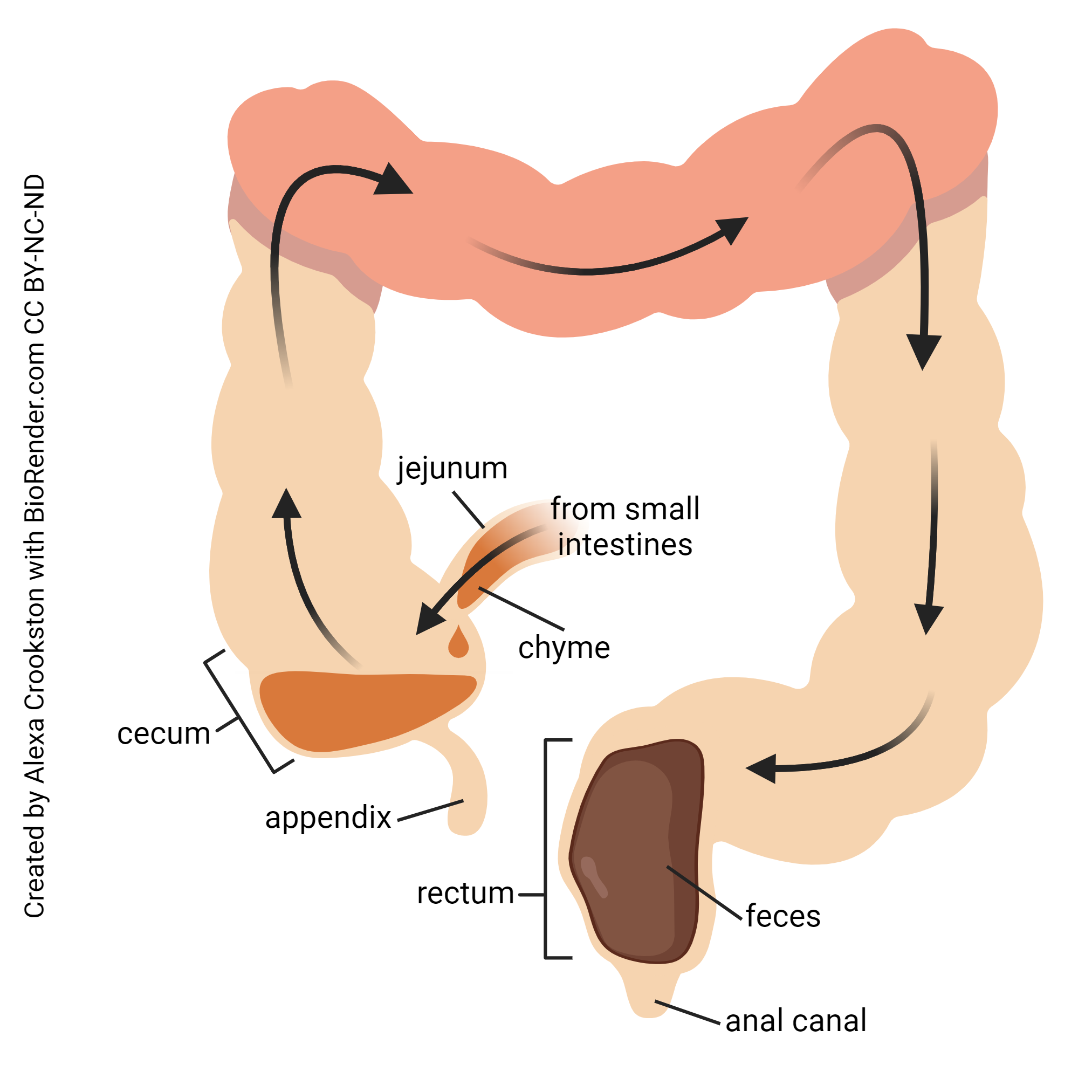
As chyme passes through the large intestine, water and Na+ ions are absorbed back into the blood, along with other ions.
Bacteria (especially E. coli) further break down food and release vitamin K (used in blood clotting) and some B vitamins, as well as some amino acids and various growth factors which are absorbed and used by the body.
→ Symbiotic with humans
Elimination
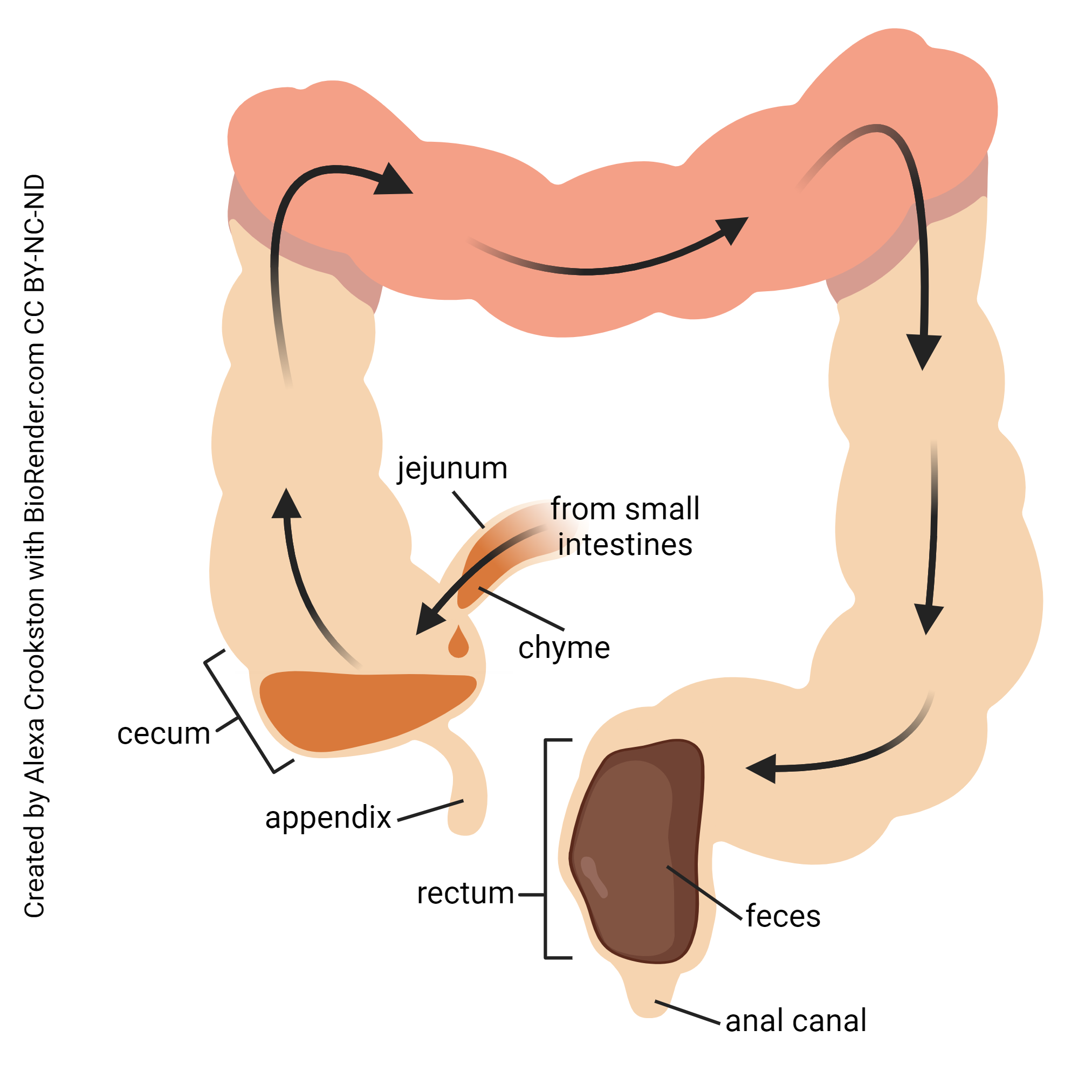
Chyme becomes more dense and is moved into lower part of the descending colon (by peristalsis) called the rectum.
Stretch receptors in the rectum signal the brain when the rectum is full.
Brain causes peristalsis and feces are eliminated through the anal sphincter (anus).
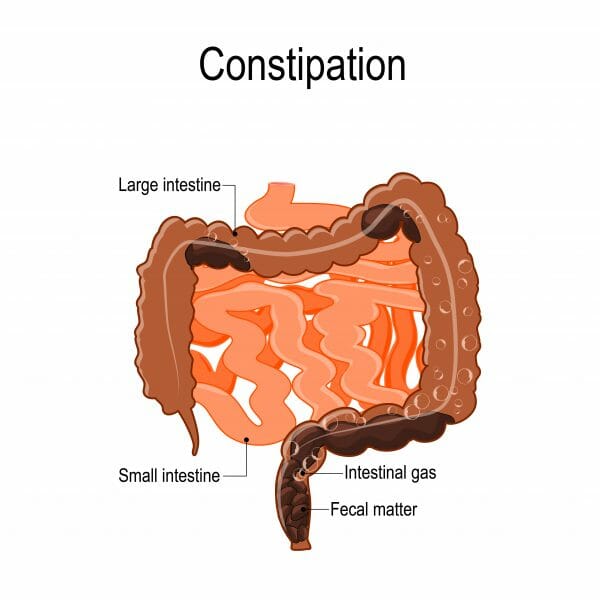
Constipation
Too much water has been removed from the feces.
Occurs when food moves too slowly through the large intestine.
Can be caused by a low fibre (cellulose) diet.
→ Fibre “holds on” to water, preventing its absorption.Colon cancer can result from prolonged contact of carcinogens with the lining of the large intestine.
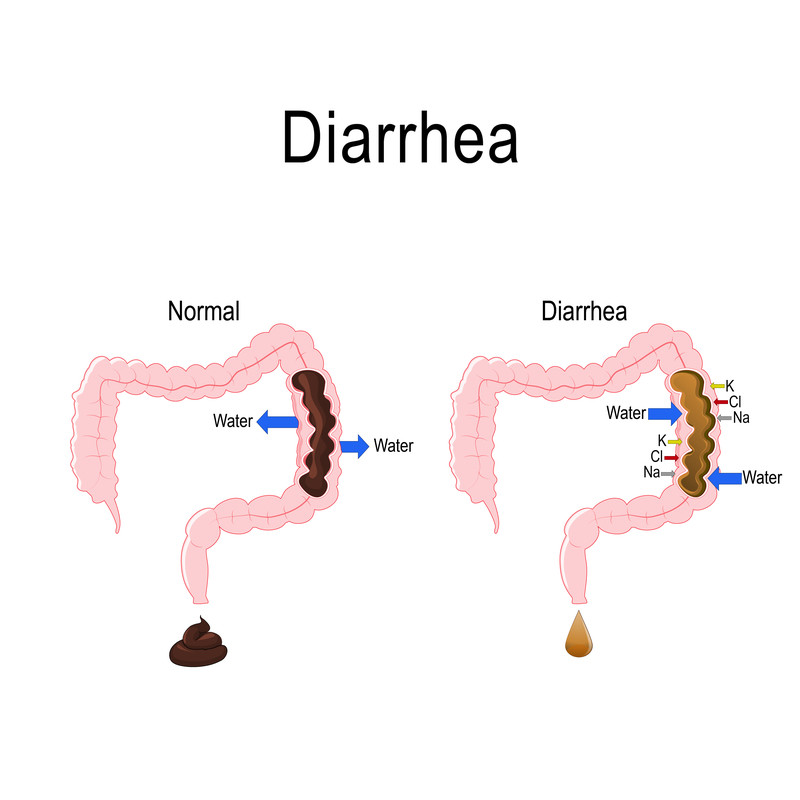
Diarrhea
Too much water in feces.
Causes: too much fibre, anxiety, laxatives, parasites (irritate intestinal lining), toxins, antibiotics (kill off E. coli and reduce solid mass in intestine)
Effects: dehydration, loss of salts, hemorrhoids, loss of vitamins produced by E. coli.