Physics exam 1 , ch.43
 Call Kai
 Learn
Learn Practice Test
 Spaced Repetition
 Match
Match Flashcards
 Knowt Play
1/43

Earn XP
Description and Tags
Ch. 43
Name | Mastery | Learn | Test | Matching | Spaced | Call with Kai | Chat |
|---|
No analytics yet
Send a link to your students to track their progress
44 Terms
IPPB
Intermettient positive pressure breathing
IS
Incentive spirometry
CPAP
Continuous positive airway pressure
PEP
Positive expiratory pressure
Passive atelectasis
“You don’t use it, you lose it”, persistent small tidal volumes caused by general anesthesia, sedatives, bed rest and painful deep breathing
Lobar atelectasis
5% of patients undergoing lung resection will develop atelectasis in one lobe caused by large mucus plugs, found in patients with restrictive chest wall abnormalities, obese, heavy sedatives, bed rest, poor cough, surgery near diaphragm
What makes a high risk for atelectasis?
Surgery near the diaphragm which reduces lung volumes
what makes a postoperative patient more vulnerable for atelectasis?
Smoking history, upper abdominal surgery, abnormal preoperative spirometry, lung disease that cause excess mucus ( COPD, bronchia stasis, cystic fibrosis)
Minimal signs of atelectasis
Subtle, mild dyspnea, low fever, slightly diminished breath sounds
Significant signs of atelectasis
Tachypnea, late inspiratory crackles, diminished breath sounds blocked by secretions, tachycardia, hypoxemia
How to confirm atelectasis
Chest X-ray with increased white and evidence of volume loss, elevation of the diaphragm and narrowed space in between the ribs
Lung expansion physiology
To expand the lung volume, the trans pulmonary pressure gradient must be increased, this makes the alveoli more expanded
What causes increase of transpulmonary pressure
Deep inspiration, positive pressure,
What are the goals of lung expansion therapy
Prevent/ treat atelectasis, open up alveoli, improve gas exchange, mobilize secretions for airway clearance, strengthen respiratory muscles
What device would a high risk of atelectasis patient after a upper abdominal surgery use?
IS , Incentive Spirometry device
What device would a high risk patient use if they are unable to perform the Incentive Spirometry due to not being able to take a deep breath?
Positive pressure therapy with the PEP device
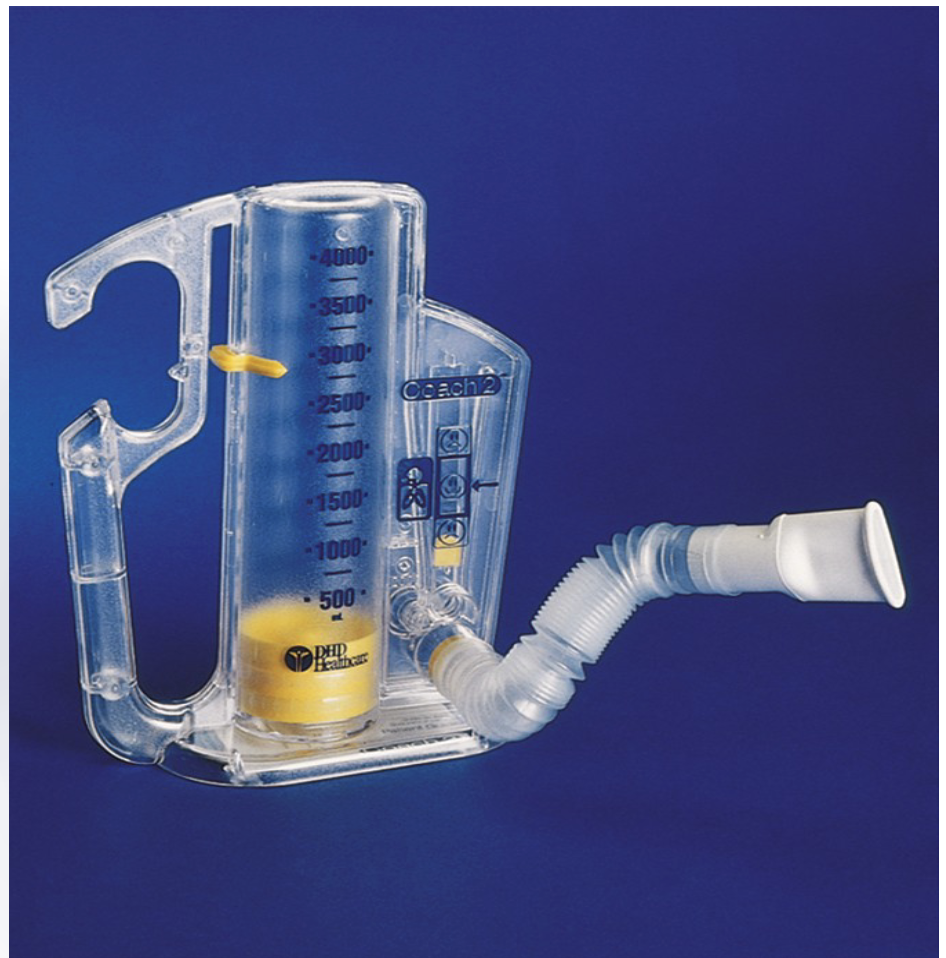
What device is this?
Incentive Spirometry device, a lung expansion device with visual cues when the desired inspiratory flow is reached and is highly effective for preventing atelectasis
Indications for incentive spirometry device IS
Presence of pulmonary atelectasis, upper abdominal surgery, thoracic surgery, COPD post operative patients, restrictive lung defect like scoliosis
Contradictions for incentive spirometry device IS
If the patient can’t be instructed on how to perform, the patient is uncooperative, patient can’t take a deep breath ( VC < 10 mL/kg)
Hazards associated with Incentive Spirometry IS device
Hyperventilate + respiratory alkalosis, discomfort, pulmonary barotrauma, bronchospasm, fatigue
Incentive spirometry device description
Small, portable, cheap, flow or volume orientated
What is IPPB
Intermittent Positive pressure breathing device that uses positive pressure to expand the lungs, treatment typically last 15 to 20 minutes and uses a bag to measure how many breaths it takes to fill the lungs.
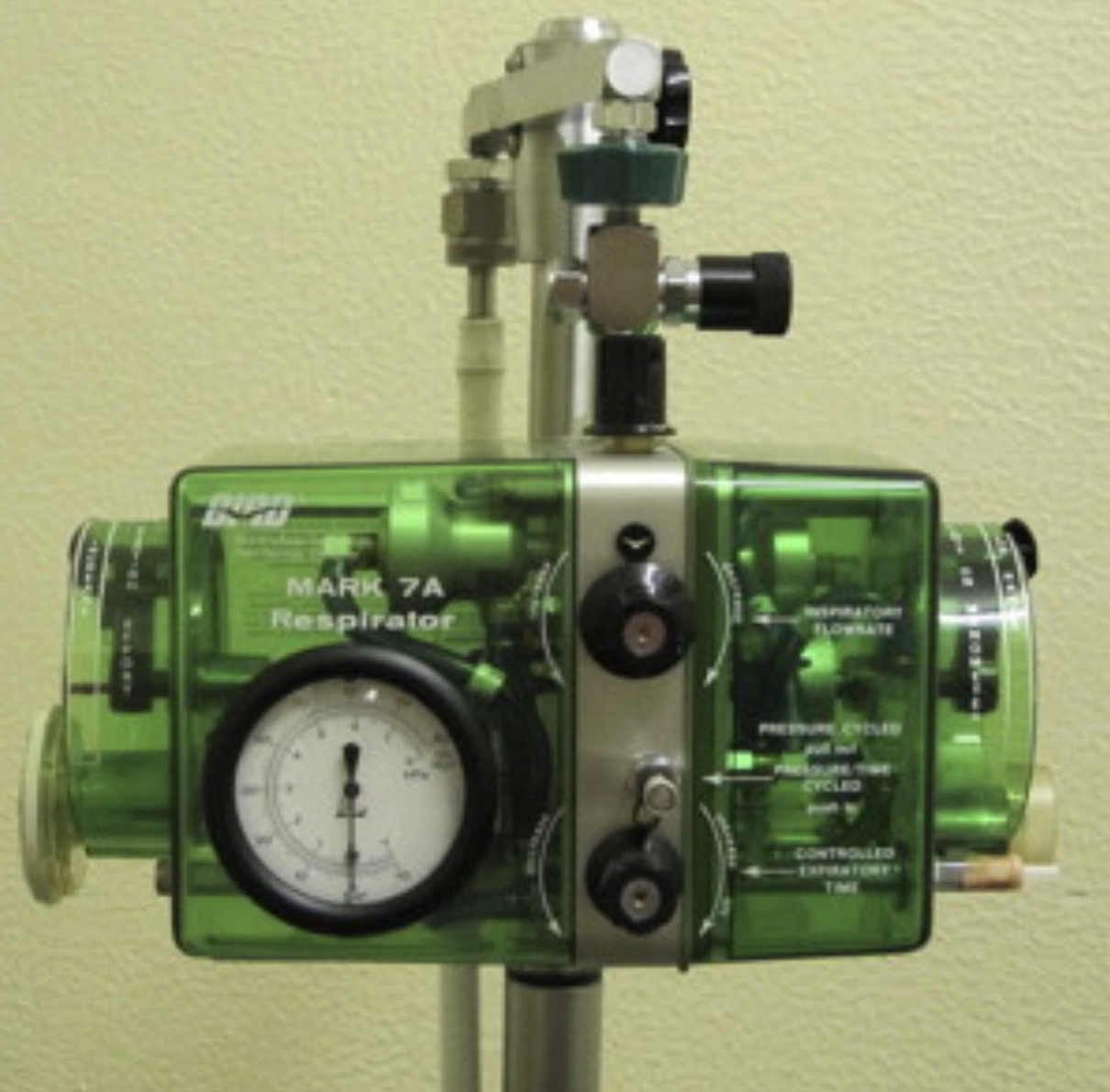
What device is this?
IPPB , intermittent positive pressure breathing
Indications for IPPB, intermittent positive pressure breathing
Patient with atelectasis that is improving from incentive spirometry or can’t perform IS
Contraindications for IPPB, intermittent positive pressure breathing
Tension pneumothorax, intracranial pressure above 15, hemodynamic instability , TB, esophageal surgery , bleb, facial surgery, hiccups, nausea
Hazards associated with IPPB, intermittent positive pressure breathing
increased airway resistance, barotrauma, nosocomial infection from the device not being single use, respiratory acidosis/ alkalosis , air trapping
What is pulmonary barotrauma?
Lung tissue damage due to high pressures and high volumes common with emphysema
What is hypocapnia and how does it relate to respiratory alkalosis?
Low levels of CO2 in the blood, ( PaCO2 is below 35) meaning that the blood looses acidity making the blood alkalotic.
Signs of hypocapnia/ respiatory alkalososi?
Numbness, tingling of extremities
What is hyperoxia?
A condition of excess oxygen causing dizziness, confusion and potential lung damage, causes are scuba diving
What is gastric distension?
Positive pressure applied to the pharynx that causes the esophagus to open allowing the stomach to be pumped full of oxygen instead of the trachea that leads to the lungs
What is air trapping and auto PEEP?
When the pressure remaining in the alveoli at end inspiration is over 0 , air trapping causes lung over distenstion that increased the work of breathing along with pulmonary vascular resistance
How to avoid air trapping?
Allow proper time for exhaling at flow rates of 6 L to 8 L per minute with expiratory times of 4 to 5 seconds
Positive outcomes of IPPB, intermittent positive pressure breathing
Improved inspiratory, improved vital capacity, better cough and secretion movement, improved chest x ray
IPPB, intermittent positive pressure breathing application and parameters
Sit the patient up, tight seal around the mouthpiece, sensitivty set at -1 or -2, pressure set to 10 to 15 cm H2O
Triple - S rule
Stop: the treatment
Stay: with the patient
Stabilize: the patient
What is CPAP ?
Continuous positive airway pressure, a device that ranges from 5 cm to 20 cm H2O that delivers continuous positive and negative pressure that can be used at home, hospital, and the ICU. Intended to keep the airways open, decrease work of breathing and mobilize secretions.
Gas absorption atelectasis
Complete interruption of ventilation to a section of the lung where there is a shift in the ventilation/ perfusion ratio
Compression atelectasis
When the transthoracic pressure exceeds the transalveolar pressure
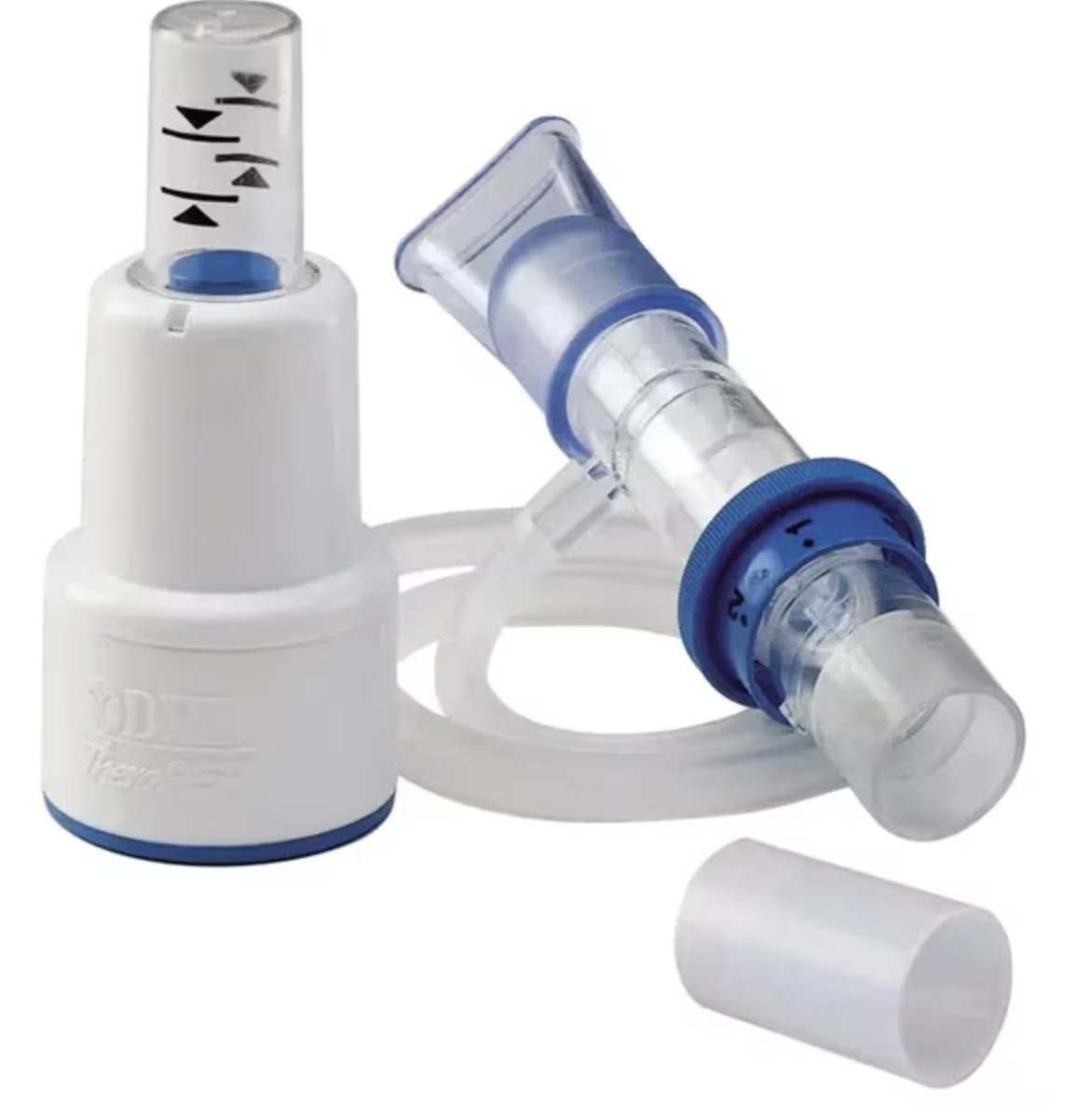
What device is this?
Positive expiratory pressure device, PEP

What device is this?
CPAP, continuous positive airway pressure
Hypocapnia
Primary cause Respiratory alkalosis
Hypercapnia
Primary cause of respiratory acidosis
CPAP risk
hypoventilation, resp alk