RADR 1309: Exam 5
 Call Kai
 Learn
Learn Practice Test
 Spaced Repetition
 Match
Match Flashcards
 Knowt Play
1/187

There's no tags or description
Looks like no tags are added yet.
Name | Mastery | Learn | Test | Matching | Spaced | Call with Kai | Chat |
|---|
No analytics yet
Send a link to your students to track their progress
188 Terms
auscultation
listening to the internal sounds of the body, usually using a stethoscope, such as heart, lungs, and the gastrointestinal system
barium
high atomic number for optimum contrast. bulky, fine white powder, without odor or taste, and free from grittiness; used as a contrast medium in radiography of the digestive tract. bag is usually suspended at a greater distance (up to 30 inches) above the table
nonaseptic technique
requires special procedures for nonsterile procedures; typically involves tubes and lines into the digestive tract; body wastes, enemas and enemas for contrast examination
Nasogastric Tubes
plastic/rubber tubes inserted through the nasopharynx into the stomach; used for administration of medications and gastric decompression/ removal of flatus and fluids from the stomach after intestinal obstruction/major trauma
by air injection and listening over the abdomen for a whooshing sound
how is nasogastric (NG) tube placement verified
Use a piston-like syringe
How can leakage from a double-lumen tube be prevented?
flatus
gas or air evacuated through the anus
levin tube
Most common nasogastric tube
urinal
made of plastic or metal and is shaped so that it can be used by a patient who is supine,lying on his right/left side/fowler's position (mostly for males)
urinal
typically used for ambulatory male patients
bedpan
vessel for receiving the urinary and fecal discharges of a patient unable to leave their bed; standard; 2 inches high
sterilized between uses
Bedpans should be:
Fracture Bedpan
has a unique wedge-shaped design. allows patient to elevate the hips only slightly for placement. convenient handle for placement and removal. shallower and for limited mobility
colitis
inflammation of the lining of the colon
enema
liquid injection or to be injected into the rectum
enemas
used for bowel cleansing and to promote defecation. typically given to outpatients and can be self-administered
cleansing enemas
this technique is a liquid treatment most commonly used to relieve severe constipation
tap water (hypotonic), hypertonic (fleet enema), saline (safest-used on infants), oil retention, soapsuds solution
5 types of enemas
barium enema
administered in an examination used to diagnose pathologic conditions of the colon or lower gastrointestinal tract.
barium enema catheter
May have a plain tip or an inflatable cuff attached to it
Dehydration
what can cause a postural drop in blood pressure after a barium enema
rapid flow, good mucosal adhesion, thick layering
3 desirable characteristics of a barium suspension
double contrast barium enema
-Used for polyps
-History of colorectal cancer
-Rectal bleeding
-Anything where the colon mucosa needs to be visualized
-Barium = Positive agent (white) (radiopaque)
-Air = Negative agent (black) (radiolucent)
better for outlining the bowel
prone position
What position does the patient lie in during the double-contrast enema exam
single contrast enema
Uses a larger volume of barium. Excess barium is drained back into the bag, the tip is removed, and the patient is sent to the toilet to evacuate as much of the barium as possible. Post-evacuation images taken.
Gastrografin
What contrast should be used if there is any risk of perforation in the GI tract
colostomy
the surgical creation of an opening between the colon and the surface of the body; also used to refer to the opening, or stoma, that is created. Typically called a "loopogram," Pt will have a dressing over the stoma
colonoscopy
endoscopic exam of the large bowel and the distal part of the small bowel with a charge -coupled device camera or a fiberoptic camera on a flexible tube passed through the anus. Biopsies can be performed during the procedure. excellent method to identify small polyps or masses.
defecation
evacuation of fecal material from the intestines
virtual colonoscopy
is performed on a multi-slice computed tomography scanner that takes up to 600 two-dimensional/three-dimensional images of the colon in approximately 30 seconds. (performed in CT and takes approximately 5 minutes)
hypertonic solution
used when a patient cannot tolerate large amounts of fluid
1000 mL
How much fluid should an adult patient be able to tolerate from a cleansing enema?
emesis basin
kidney-shaped vessel for the collection of vomitus
enterostomal therapist
health professional (usually a nurse) with special training and certification in the care of ostomies and related concerns
fowler position
position in which head is raised 18/20 inches above the flat position; the knees are also raised
hydration
The term used to indicate that a liquid substance contains water
loopogram
The radiographic evaluation of the small and large bowel that has been connected to the skin surface as a substitute for the urinary bladder with an ostomy
low-residue diet
A diet that gives the least possible fecal residue, such as gelatin, sucrose, dextrose, broth, and rice
lumen
Cavity or channel within a tube or tubular organ (plural, lumina)
ostomate
one who has undergone enterostomy or ureterostomy
perineum
region between the thighs, bound in the male by the scrotum and anus and in the female by the vulva and anus
purgation
catharsis; relief of fecal matter affected by a cathartic
sigmoidoscopy
procedure used to see inside the signmoid colon and rectum with a flexible tube that has a camera on the end (sigmoidoscope) and is placed through the anus
Sims' position
position in which the patient lies on the left side with the right knee and thigh flexed and the left arm parallel along the back
stoma
opening established in the abdominal wall by colostomy, ileostomy, and so forth
virtual colonoscopy
performed on a multi-slice computed tomography scanner that takes up to 600 two-dimensional and three dimensional images of the colon in approximately 30 seconds
viscosity
physical property of liquids that determines the internal resistance to shear forces
stool
what does the proximal stoma deliver with a double-barrel colostomy
mucus
what does the distal stoma produce with a double-barrel colostomy
patient shoud be told to use deep breaths and the enema should be stopped
what should be done if cramping occurs during a barium enema
nasogastric (NG) tube
purpose is medication administration, gastric decompression, and short-term feeding
cantor, keofeed, miller-abbott, sengstaken-blakemore
4 common types of NG tube besides Levin
use of topical anesthetics and patient education
how can patient discomfort during NG tube placement be eased
high fowler's position with head and shoulders supported
patient position for NG tube insertion
ETT tube

Nasogastric (NG) tube
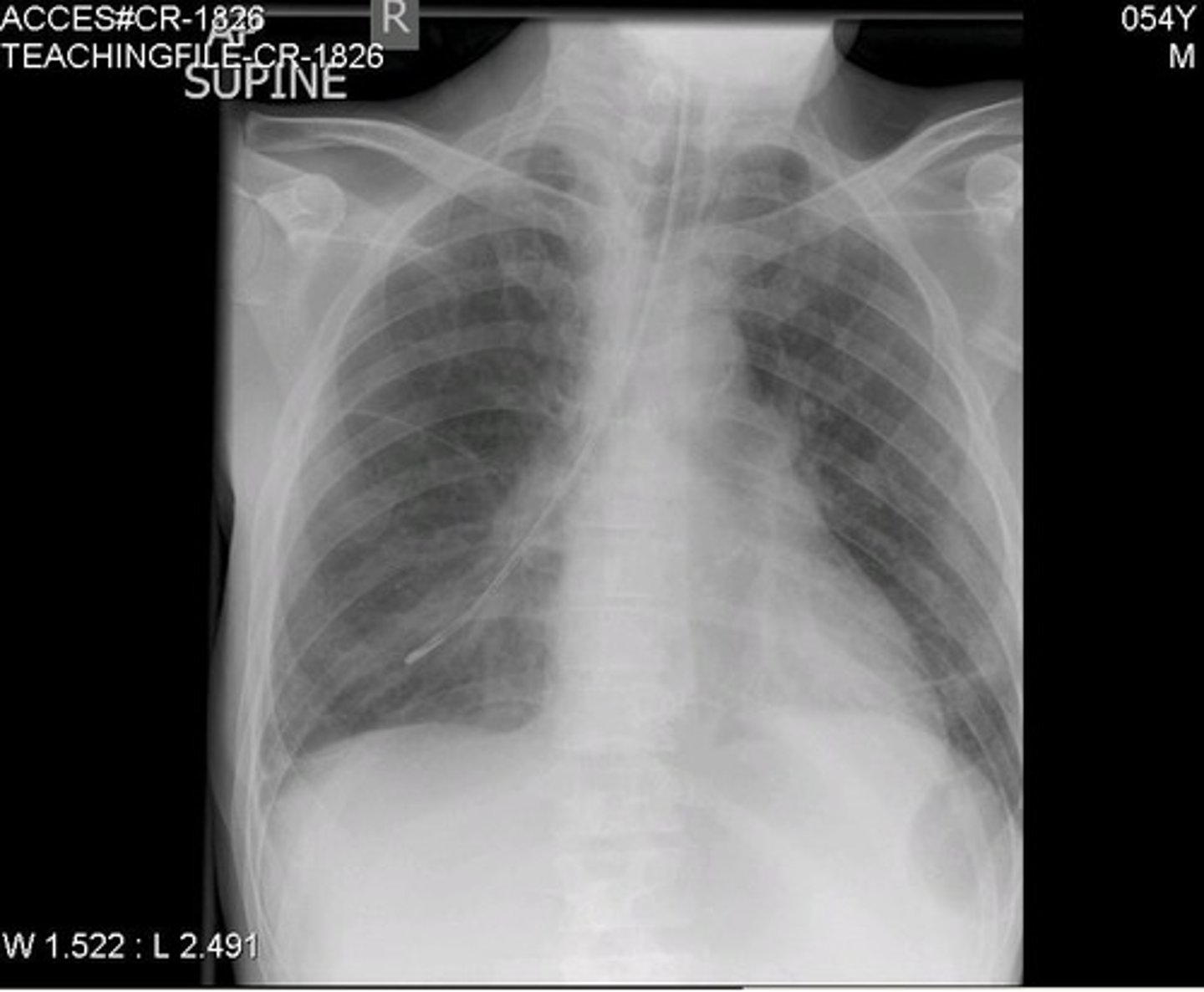
aura
subjective sensation or motor phenomenon that precedes and marks the onset of a paroxysmal attack, such as epileptic attack
medical emergency
sudden change in medical status requiring immediate action
automatic external defibrillator (AED)
device used for application of external electrical shock to restore normal cardiac rhythm and rate
cardiac arrest
sudden stoppage of cardiac output and effective circulation
cardiopulmonary resuscitation (CPR)
artificial substitution of heart and lung action as indicated for cardiac arrest or apparent sudden death resulting from electric shock, drowning, respiratory arrest, and other causes
cerebrovascular accident (stroke or brain attack)
condition with sudden onset caused by acute vascular lesions of the brain; often followed by permanent neurologic damage
claustrophobia
An extreme fear of enclosed or tight spaces
emergency priorities
Ensure open airway
Control bleeding
Take measures to prevent or treat shock
Attend to wounds or fractures
Provide emotional support
Continually reevaluate and follow up appropriately
emergency
unexpected or sudden occasion; an urgent or pressing need
providing an open airway
In working with a patient, what would be the first priority for attention?
lethargy, slow pulse rate, slowing respiratory rate
3 signs/symptoms of a deteriorating head injury
Airway, Breathing, Circulation
ABC's of CPR
epitaxis
nosebleed; hemorrhage from the nose
erythema
Redness of the skin, typically caused by irritation or injury
FAST scan
Acronym for Focused Assessment with Sonography for Trauma; a bedside sonography exam used to assess trauma patients for internal bleeding
emergency cart (crash cart), oxygen, wall-mounted suction, AED (automatic external defibrillator)
emergency equipment
anaphylactic shock
vasogenic; severe allergic reaction (food, insect stings, medications)
effect: immune overreaction - widespread vasodilation and airway constriction, decrease blood pressure and oxygen delivery
signs: low blood pressure, rapid heart rate, swelling (especially of the face, lips, or throat), difficulty breathing/wheezing, hives, rash, or itching.
intial stage, compensatory stage, progressive stage, irreversible (refractory) stage
4 stages of shock
inital stage
tissues are under perfused, decreased CO, increased anaerobic metabolism, lactic acid is building
compensatory stage
reversible. SNS is activated by low CO, attempting to compensate for the decrease tissue perfusion
progessive stage
failing compensatory mechanisms: profound vasoconstriction from the SNS; ISCHEMIA Lactic acid production is high; metabolic acidosis
Irreversible stage
cellular necrosis and multiple organ dysfunction syndrome may occur; death is imminent
assess patient's level of consciousness, clinical symptoms may not manifest right away, hematoma, brain swelling, CT is preferred modality
head injuries
alert and conscious, drowsy, unconscious, comatose
4 levels of consciousness
hemorrhage
escape of blood from the vessels; bleeding
hypoglycemia
abnormally diminished concentration of glucose in the blood
lethargy
abnormal drowsiness or stupor; a condition of indifference
nausea
unpleasant sensation, vaguely referred to the epigastrium and abdomen, and often culminating in vomiting
shock
A failure of the circulatory system to support vital body functions
neurogenic, hypovolemic, cardiogenic, and vasogenic
4 classes of shock
anaphylactic shock
most common type of shock encountered in medical imaging
pallor
paleness; absence of skin coloration
shock
condition of profound hemodynamic and metabolic disturbance characterized by failure of the circulatory system to maintain adequate perfusion of vital organs
spinal cord or nervous system injury
what causes neurogenic shock
key signs are low blood pressure, slow heart rate, warm (dry skin)
hypovolemic shock
caused by major fluid/blood loss (bleeding, burns, dehydration)
low blood pressure, rapid heart rate, cool (clammy) skin
3 key signs of hypovolemic shock
heart failure (often a heart attack)
what causes cardiogenic shock
low blood pressure, weak pulse, cold extremities, chest pain
4 key signs of cadriogenic shock
caused by low blood pressure, warm skin (early), rapid heart rate, confusion or altered mental state
anaphylactic shock
caused by severe reaction (food, stings, meds)
anaphylactic shock
key signs and symptoms include low blood pressure, rapid heart rate, swelling (face, lips, throat), difficulty breathing/wheezing, hives, rash, and itching.
widespread vessel dilation (sepsis/anaphylaxis)
what causes vasogenic (distributive) shock
syncope
temporary suspension of consciousness as a result of generalized cerebral ischemia; faint or swoon; treatment is aimed at increasing blood flow to the head; assist pt into recumbent postion