Muscle (Exam 1)
 Call Kai
 Learn
Learn Practice Test
 Spaced Repetition
 Match
Match Flashcards
 Knowt Play
1/14

There's no tags or description
Looks like no tags are added yet.
Name | Mastery | Learn | Test | Matching | Spaced | Call with Kai | Chat |
|---|
No analytics yet
Send a link to your students to track their progress
15 Terms
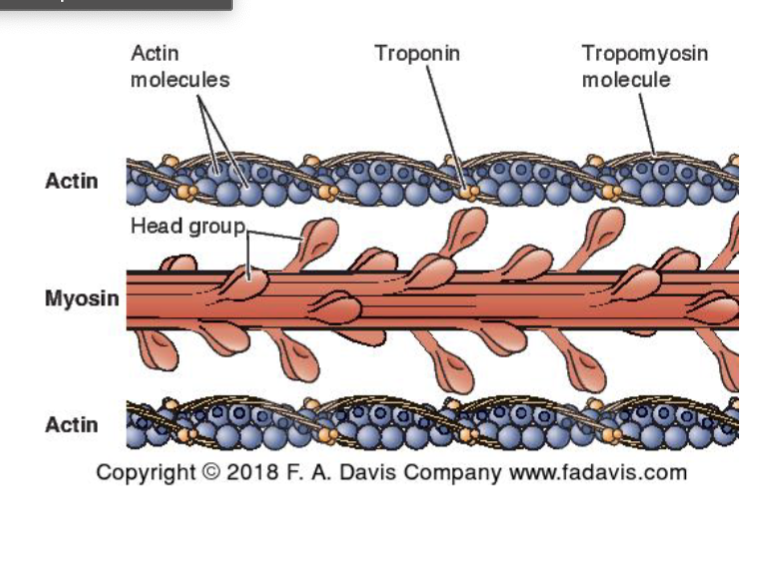
Contractile elements of muscle
Contractile elements:
Actin:
thin filament
binding site for myosin head
has troponin + tropomyosin attached to it
Myosin:
thick filament
head region acts like an enzymatic binding site for ATP hydrolysis
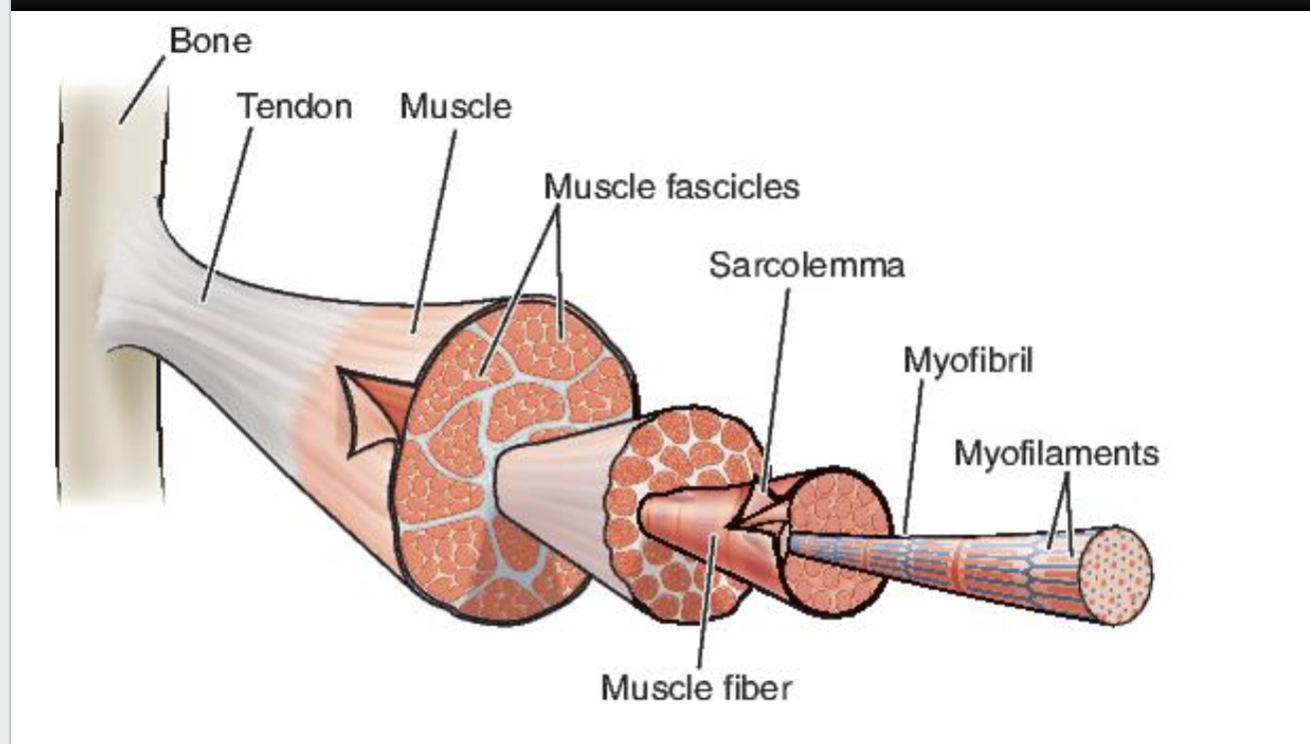
Myofibril = bundles of myofilaments
Non-contractile elements of muscle
sarcolemma = cell membrane
perimysium = CT that binds muscle fibers into fascicles
muscle fascicle = bundles of muscle fibers
(myofibrils + fibers + non-contractile CT = arranged in parallel → producing force)
Structure of the sarcomere
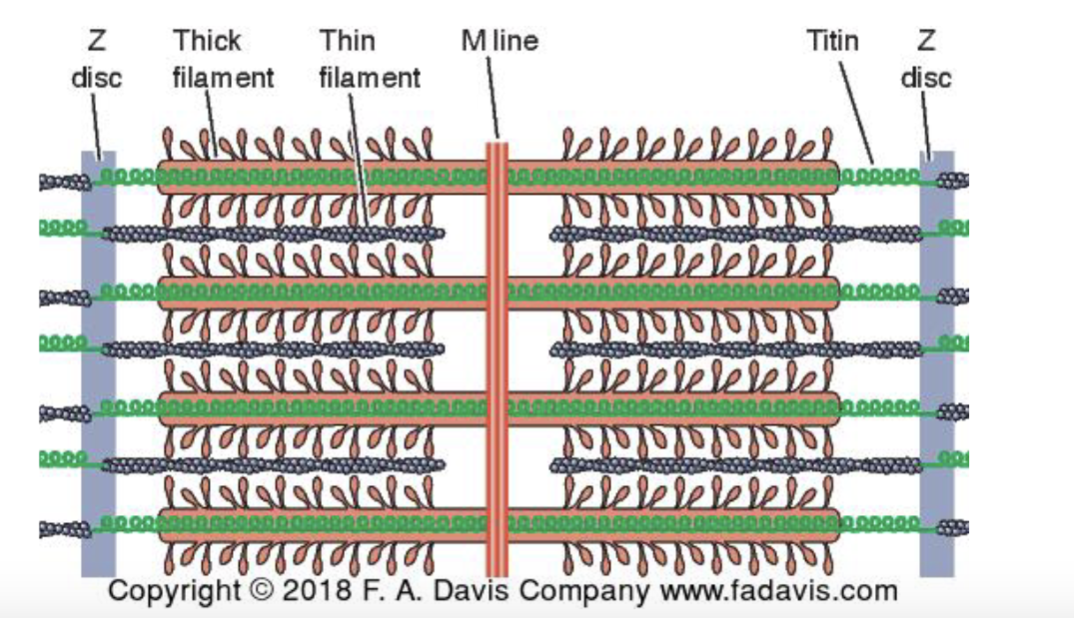
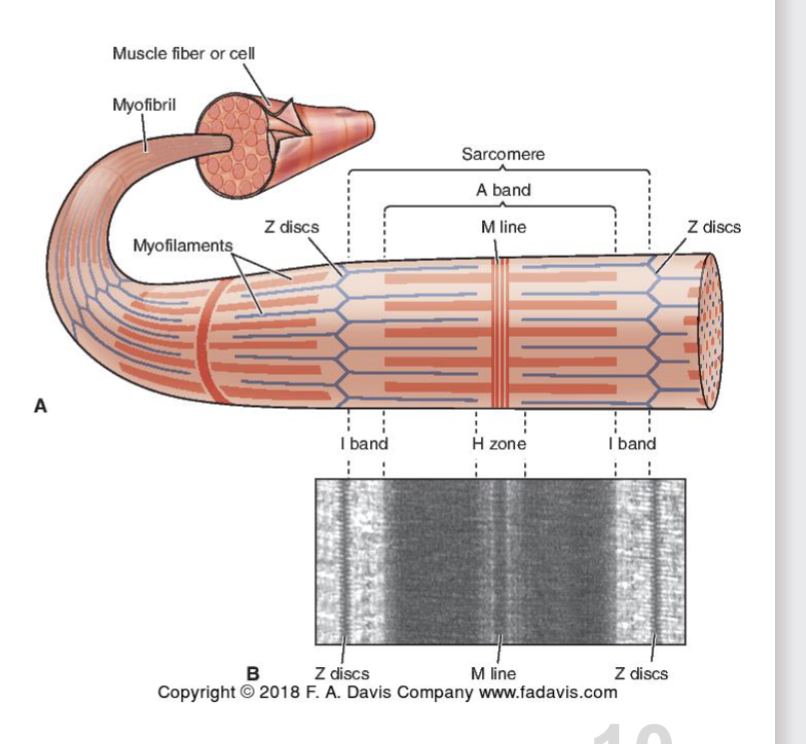
Spans Z-disc → Z-disc
arranged in series along the length of the muscle fiber (allowing for transmit force)
Titin:
structural protein that helps anchor Z-disc to thick filament
NOT contractile (aka active)
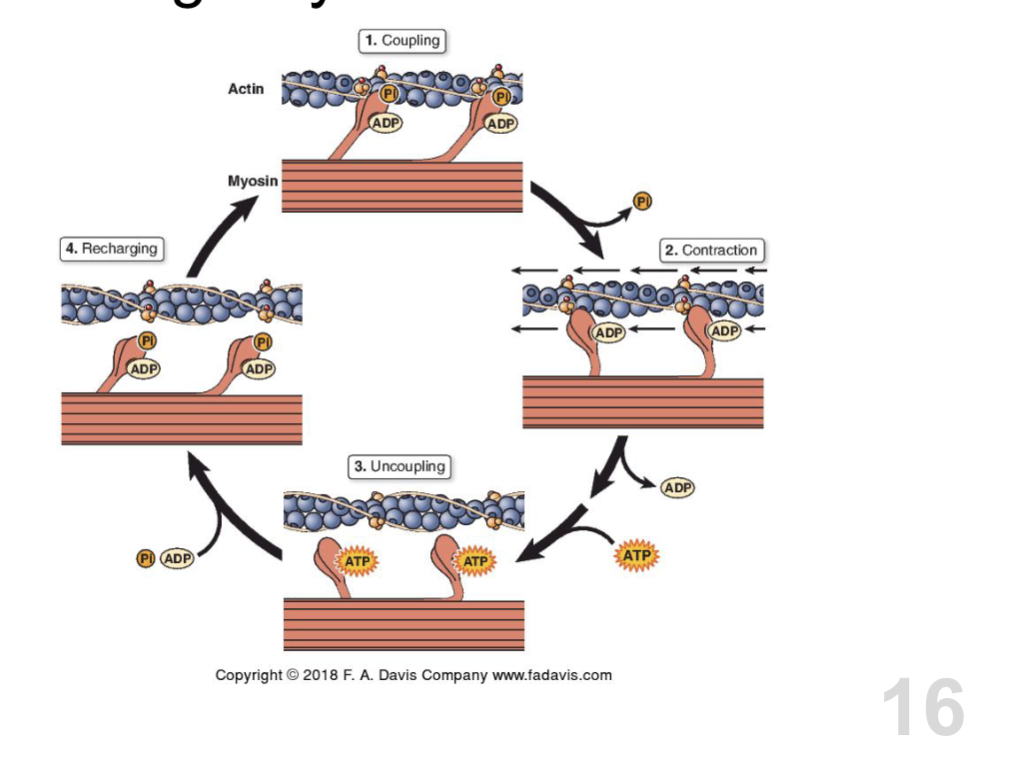
7 steps of Cross-bridging cycle
1) Uncoupling
sacromere @ rest,
ATP bound to myosin head and troponin + tropomyosin block actin binding site
2) Hydrolysis of ATP
3) Recharging
Ca2+ attaches to troponin and tropomyosin releases from actin binding site
4) Coupling
myosin head attaches to actin → cross bridge form
5) Release of Phosphate
helps w/ making energy for powerstroke (sliding of filaments of each other)
6) Contraction
powerstroke occurs
7) Release of ADP
Types of muscle contractions
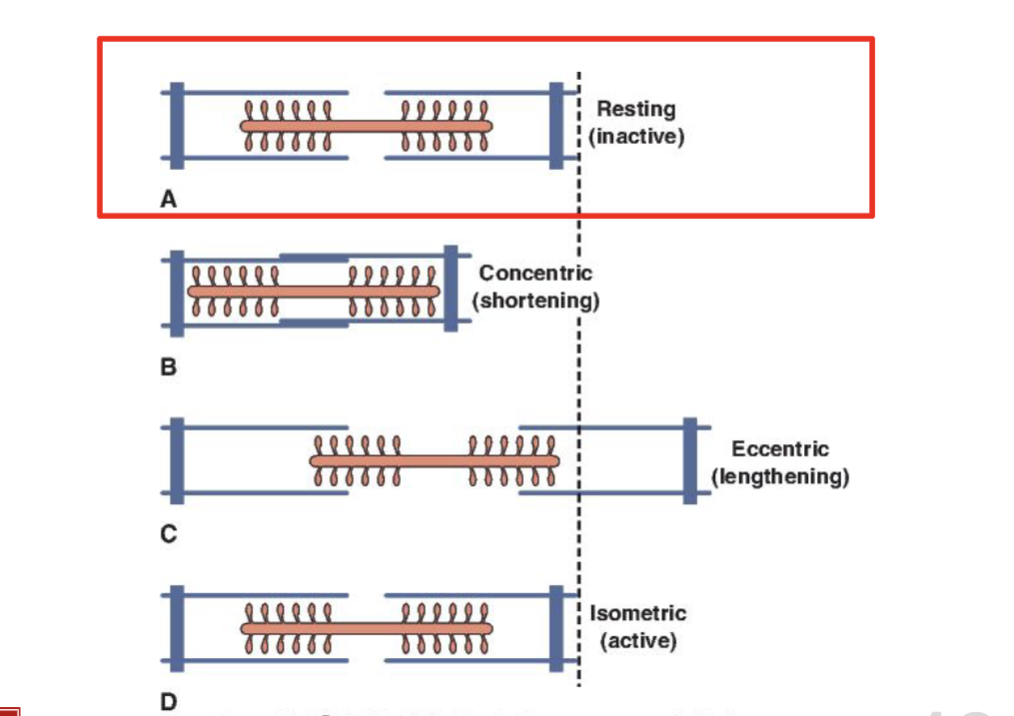
Concentric:
shortening
small Z-disc to Z-disc distance
Eccentric:
Cross bridging still occurs
lengthening
large Z-disc to Z-disc distance
Isometric:
Cross bridging still occurs
Active (most force from it)
NO change in Z-disc to Z-disc distance
Determinants of strength/active force production of muscle
increased # of muscle fibers in a motor unit → increased active force production
increased size in a motor unit → increased active force production
increased # of motor units firing → increased active force production
increased freq of motor units firing → increased active force production
Slow muscle contraction → increased active force
Optimal sarcomere length → increased active force produced
Comprises a motor unit and how are motor units organized to facilitate different functions (i.e. size, speed)?
Motor unit:
alpha motor neuron + all the muscle fibers it innervates
Principle of motor units:
Recruit first: Small MU have small axon, few fibers and are Type 1 —> fine motor
Recruit later: large MU have large axon, many fibers and are Type 2 —> forceful contractions
What are the muscle fiber types and can you predict the role (Endurance vs. Force Production) based on the fiber type?
Types of Muscle fibers
Type 1 (slow oxidative):
slow contraction
slow rate of fatigue
Type 2A (fast oxidative glycolytic)
fast contraction
intermediate rate of fatigue
Type 2X (fast oxidative)
fast contraction
fast rate of fatigue
For endurance → want to use Type 1
For force production (strength improvement) → want to use Type 2
What are examples of muscles with each fiber type?
Vastus (superficial) → mostly type 2B and a little bit of type 2X
Gastroc (superficial) → mostly type 2B and a little bit of type 2X
Vastus (deep) → has all muscle fiber
Gastroc (deep) → has all muscle fibers
Soleus → only type 1
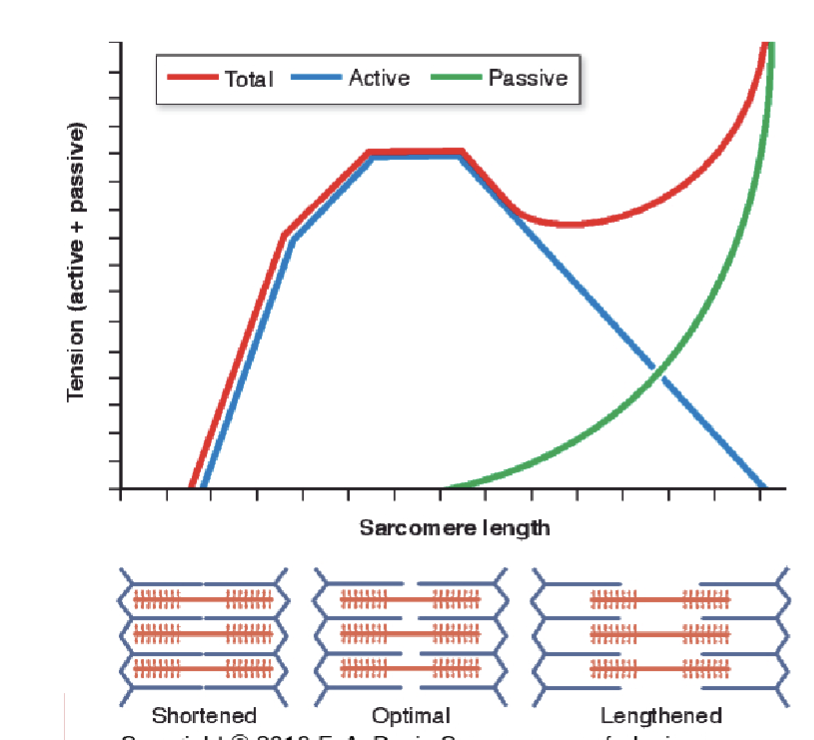
Active, Passive, and Total length tension curves
Active tension is greatest @ mid-position of muscle length
want the optimal actin-myosin overlap
Passive tension occurs only when the muscle is being stretched
Total tension is greatest when the muscle is in a lengthened position
b/c it is non-contractile that is helping produce force
***too shortened —> slack***
Can you describe the force/velocity relationship?
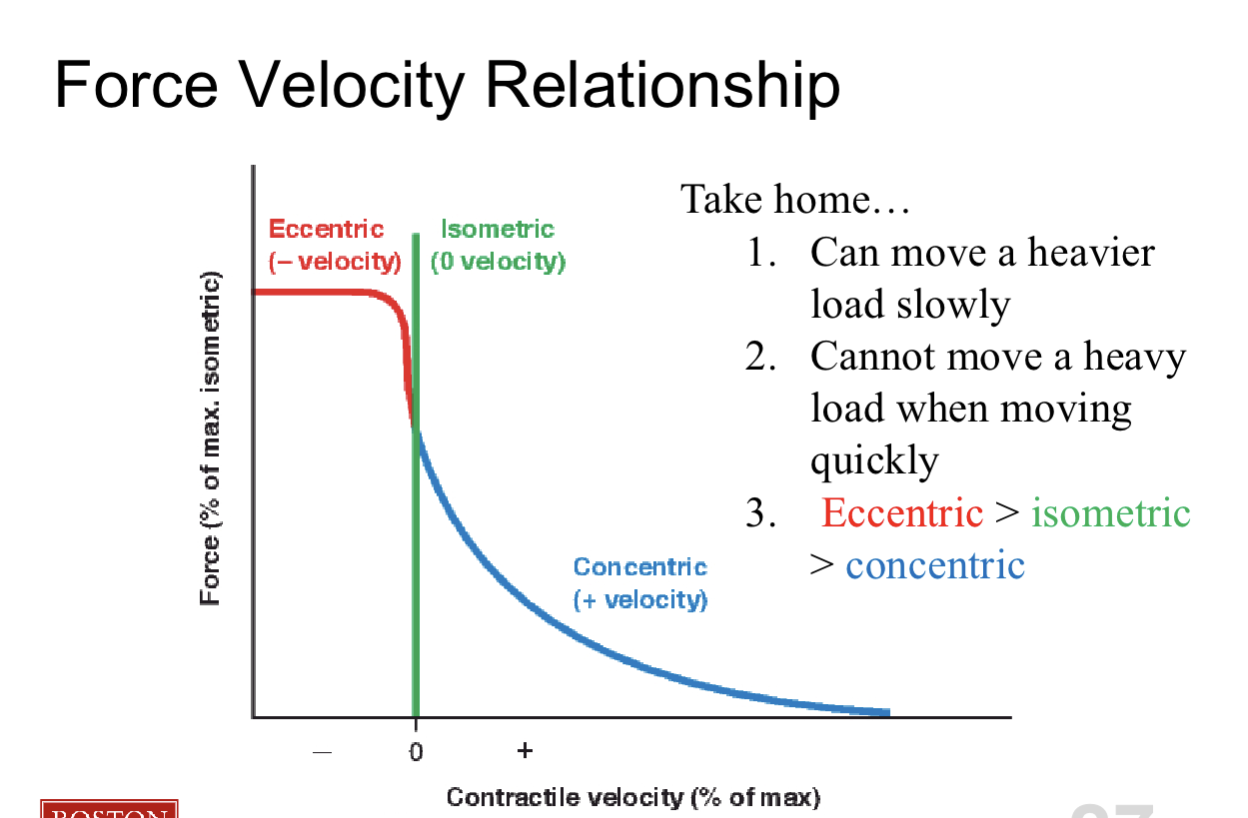
can move heavier load slowly
can NOT move heavier load when moving rapidly
Eccentric >> isometric >> Concentric
***Eccentric = external torque wins meaning highest force cuz you go against gravity**
***Concentric = muscle force has winning torque***
***Isometric: Internal torque = External torque***
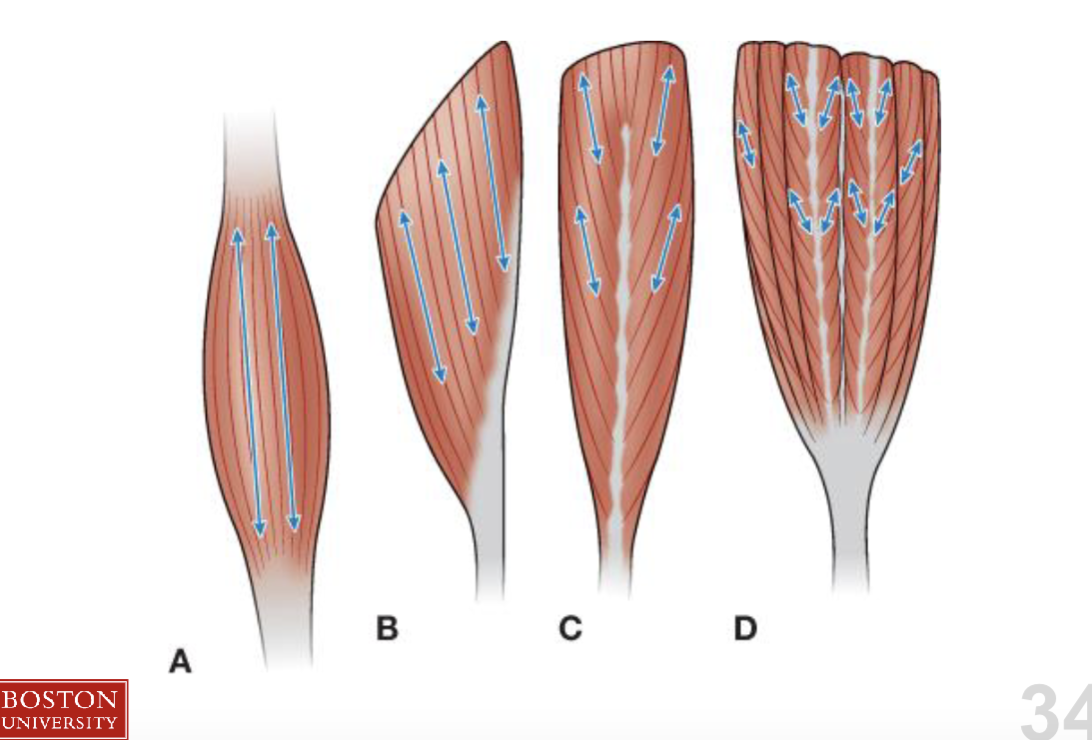
Muscle architecture
Fusiform/strap:
Long + parallel fibers→ good for lengthening + shortening (producing ROM)
PCSA = ACSA
Pennate:
more muscle fibers → good for force production
shorter muscle fibers → less drastic length change
PCSA is larger than ACSA
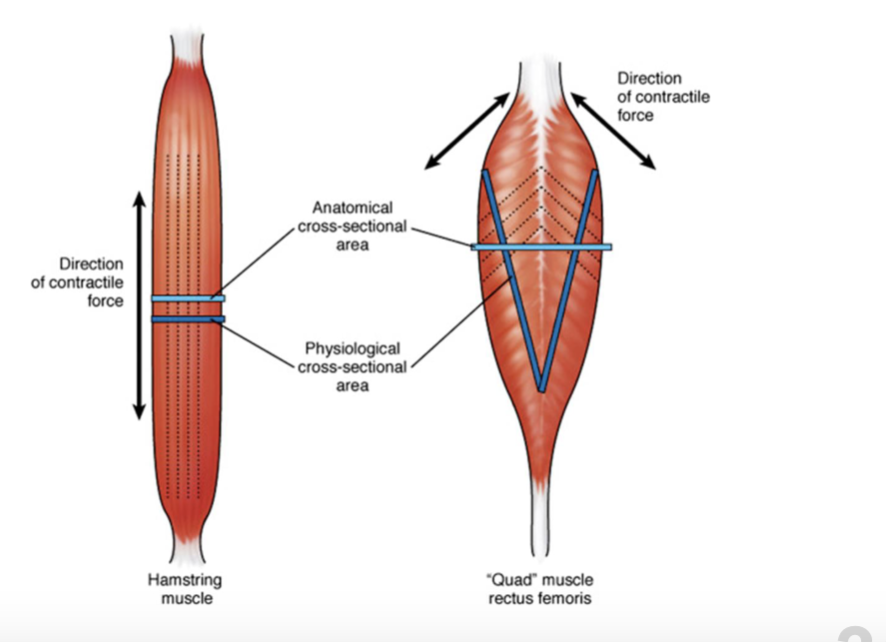
Anatomical Cross-Sectional area vs Physiological Cross-Sectional area
ACSA: measure around muscle
PCSA: measure around muscle @ 90 dg/ perpendicular to the muscle fibers
determines force production
Active Insufficiency vs Passive Insufficiency
Active Insufficiency:
inability for a biarticulate muscle to make enough torque to maximally shorten across all of the joints it crosses
Ex: hamstring fully extends hip but can NOT fully flex the knee → No full shortening of hamstring
avoid for strength training b/c to be stronger there needs to be a lot of force production and this will produce less force
Passive Insufficiency
inability for a biarticulate muscle to make enough torque to maximally stretch across all of the joints it crosses
Ex: Rectus femoris NOT lengthening enough to allow maximal knee flexion