normoblastic maturation
 Call Kai
 Learn
Learn Practice Test
 Spaced Repetition
 Match
Match Flashcards
 Knowt Play
1/6

There's no tags or description
Looks like no tags are added yet.
Name | Mastery | Learn | Test | Matching | Spaced | Call with Kai | Chat |
|---|
No analytics yet
Send a link to your students to track their progress
7 Terms
normoblastic maturation in order
pronormoblast (rubriblast)
basophilic normoblast (prorubricyte)
polychromatophilic normoblast (rubricyte)
orthochromic normoblast (metarubricyte)
reticulocyte (diffusely basophilic erythrocyte)
RBC (erythrocyte)
pronormoblast (rubriblast)
round, primitive nucleus, centrally located with one or more nucleoli. delicate chromatin w/ no clumping. dark blue nucleus. cytoplasm royal blue and abundant. </= 1% in bone marrow.
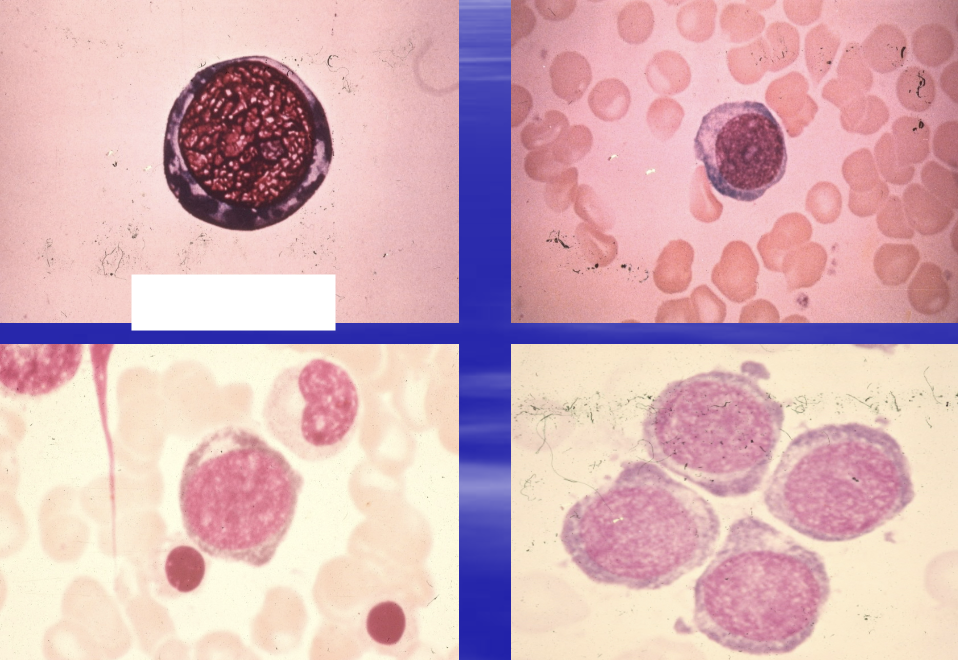
basophilic normoblast (prorubricyte)
chromatin beginning to condense, nucleoli indistinct or not visible. cytoplasm more abundant & deeply basophilic. 1-3% in bone marrow
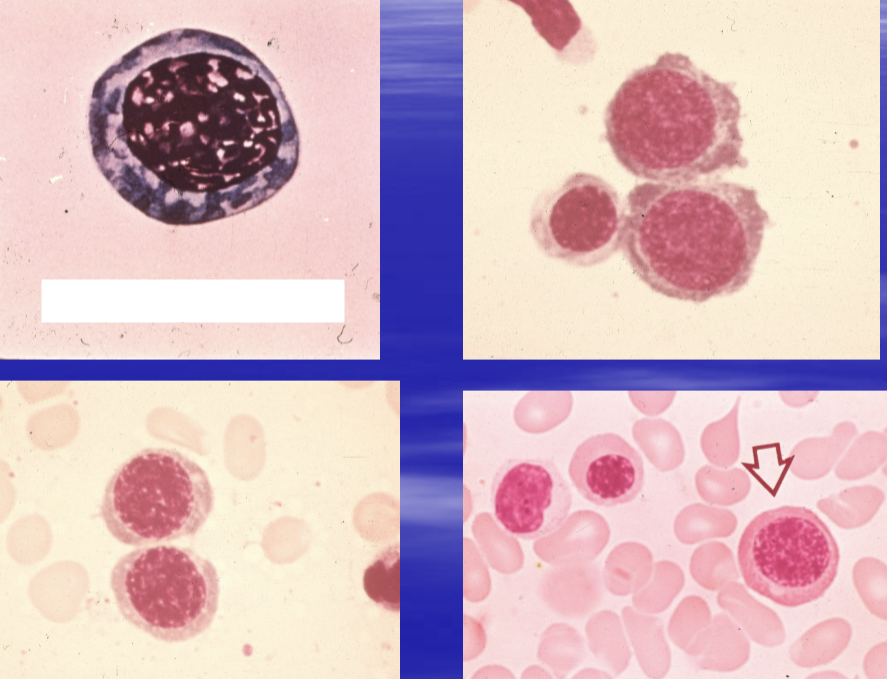
polychromatophilic normoblast (rubricyte)
thickened chromatin that is irregularly condensed, no visible nucleoli. gray-blue cytoplasm with tinge of pink. 13-30% in bone marrow, last stage capable of mitosis.

orthochromic normoblast (metarubricyte)
heavily condensed chromatin that is solid black/blue and degenerated. nucleus ¼ the volume of cell, ready to be extruded from cell. cytoplasm predominantly pink w/ blue background. 1-4% in bone marrow

reticulocyte (diffusely basophilic erythrocyte)
anucleate. red cytoplasm with tinge of blue. 0.5-1.5% in blood of adults, 0.5-4% in blood of children. abundant in bone marrow but not counted b/c no nucleus

RBC (erythrocyte)
orange/red cytoplasm. abundant in bone marrow but not counted b/c anucleate. biconcave disc with central pallor. deformability essential to prevent rupture when navigating microvascular. carries O2, CO2, and H ions.
