Intro to Data Science Flashcard
 Call Kai
 Learn
Learn Practice Test
 Spaced Repetition
 Match
Match Flashcards
 Knowt Play
1/93

There's no tags or description
Looks like no tags are added yet.
Name | Mastery | Learn | Test | Matching | Spaced | Call with Kai | Chat |
|---|
No analytics yet
Send a link to your students to track their progress
94 Terms
Business Intelligence (BI)
Tools and techniques for analyzing and understanding past data to make strategic decisions
Historical Data
Collected past data used for analysis
Dashboard
A user interface that visually summarizes key data and metrics
Strategic Decisions
Long-term planning choices
Tactical Decisions
Short-term, specific actions
Artificial Intelligence (AI)
Enabling machines to perform tasks that typically require human intelligence
Machine Learning (ML)
A branch of artificial intelligence where computers learn from data to improve their performance on tasks.
Data Analytics
The process of examining datasets to draw conclusions and find patterns using statistical techniques.
Real-time Dashboards
Interactive tools that display data and metrics as they are updated in real-time
Third-party Data
Data collected by an external entity; Not your own company's data
Predictive Analytics
The process of using data and statistical algorithms to predict future values or trends based on historical data
Algorithm
A set of rules or instructions designed to solve problems or perform tasks, often used in computing
Data Pattern
A recurring or recognizable element in a dataset, often indicating a trend or relationship.
Client Retention
Businesses aiming to understand and predict customer purchasing behaviors to sell more products to existing clients.
Client Acquisition
The process of gaining new clients or customers for a business, often through marketing and sales strategies.
Fraud Prevention
Methods and systems used to detect and prevent fraudulent activities, such as unauthorized transactions.
Speech Recognition
Technology that recognizes and interprets human speech, converting it into text or commands
Image Recognition
A computer technology that identifies objects, places, people, and other elements in digital images.
Symbolic Reasoning
The process in artificial intelligence where symbols represent concepts or entities to make logical deductions.
Advanced Analytics
Sophisticated data analysis techniques, often involving predictive models, machine learning, and big data.
Data Collection
Gathering information systematically from various sources to analyze and make informed decisions.
Data Analysis
The process of inspecting, cleaning, and modeling data with the goal of discovering useful information.
Forecasting
The use of historical data to predict future events or trends, often used in business, finance, and weather predictions.
Dataset
A collection of related sets of information, usually formatted in a table, used for analysis or processing
Analytical Tools
Software and applications used to analyze, visualize, and interpret data.
Big Data
Extremely large data characterized by volume, variety, and velocity. Often requires cloud storage and processing
Real-time Data Processing
The continuous and immediate processing of data as it's collected or generated.
Data Pre-processing
The initial steps in data analysis involving cleaning and organizing data for further use.
Text Data Mining
Extracting useful information and insights from textual data using analytical methods.
Data Masking
The practice of hiding original data with modified content (e.g., characters or other data) to protect sensitive information.
Price Optimization
A technique to conceal sensitive information in a dataset by replacing it with fictitious but realistic data, ensuring privacy and security while allowing functional analysis and testing
Inventory Management
The practice of overseeing and controlling the ordering, storage, and use of a company's inventory.
Seasonality Patterns
Trends or recurring changes in data observed at regular intervals throughout a year, often influenced by seasons.
Shipment Logistics
The coordination of transporting goods from one place to another, including planning, execution, and tracking.
Metrics
Quantitative measures used to track and assess the status of specific processes.
KPIs
(Key Performance Indicator) Specific metrics used to evaluate the success of an organization or activity in meeting its objectives.
Customer Retention
Strategies and activities aimed at keeping customers engaged and continuing to purchase from a business.
Business Goal Alignment
The process of ensuring that business activities and strategies are focused on achieving the company's primary objectives.
Data Architect
A professional responsible for designing and managing an organization's data architecture to meet business needs.
Data Engineer
A role focused on preparing 'big data' for analytical or operational uses, often involving building and maintaining data systems.
Database Administrator
A specialist responsible for managing and maintaining database systems, ensuring their optimal performance and security.
BI Analyst
(business intelligence Analyst) A professional who analyzes data to provide insights and recommendations for improving business decisions and strategies.
BI Consultant
(business intelligence consultant) An expert who advises businesses on how to use data analytics and BI tools to improve decision-making and performance
BI Developer
(Business Intelligence) A professional who designs, develops, and maintains BI solutions, including data visualization and reporting tools.
Data Scientist
A specialist in extracting insights and knowledge from complex data using various statistical, machine learning, and analytical techniques.
Data Analyst
A professional who collects, processes, and performs statistical analyses on data to help make informed decisions.
Machine Learning Engineer
An engineer specialized in designing and building machine learning models and systems.
Business Analytics
The practice of using data analysis to inform and guide business decisions.
Data Storytelling
The skill of communicating insights from data analyses through compelling narratives and visualizations.
R
A programming language and environment widely used for statistical computing and graphics.
Python
A versatile programming language popular in many fields, including data science, for its readability and vast libraries
Digital Signal Processing
The analysis and manipulation of digital signals, often for improving accuracy and reliability of digital communication
Supervised Learning
A type of machine learning where models are trained on labeled data to predict outcomes or classify data
Fraud Detection
Banks using machine learning to detect fraudulent credit card transactions
Predictive Modeling
Creating, testing, and validating a model to best predict the probability of an outcome..
Data
Information, often in the form of facts or statistics, collected for reference or analysis.
Model
In data science, a representation or abstraction of a real-world process, used for analysis and predictions.
Objective Function
A mathematical formula used in optimization to define the goal of a model or algorithm, often representing the cost, loss, or error which the model seeks to minimize or maximize during training.
Optimization Algorithm
A method or procedure used to make a system or design as effective or functional as possible
Trial-and-Error Process
A problem-solving method involving repeated, varied attempts until success is achieved.
Model Training
The process of feeding data into a machine learning algorithm to help it learn and adapt, improving its ability to make predictions or decisions based on that data.
Generalization
The ability of a model to perform well on new, unseen data after being trained on a dataset
Unsupervised Learning
A type of machine learning that finds patterns in data without pre-existing labels
Reinforcement Learning
A type of machine learning where an agent learns to behave in an environment by performing actions and receiving rewards.
Support Vector Machines
A supervised machine learning model used for classification and regression analysis, effective in high-dimensional spaces.
Neural Networks
Computational models inspired by the human brain, used in machine learning to recognize patterns and make decisions.
Deep Learning
A subset of machine learning involving neural networks with many layers, enabling advanced pattern recognition
Random Forest Models
A machine learning method involving many decision trees to improve predictive accuracy and prevent overfitting.
Bayesian Networks
A type of probabilistic model that uses Bayesian inference for probability computations.
K-Means
A clustering algorithm in machine learning that divides a set of data points into k groups based on feature similarity.
SQL
A programming language used to manage and manipulate relational databases.
MATLAB
A high-level language and interactive environment used for numerical computation, visualization, and programming.
Excel
Microsoft's spreadsheet software for data organization, analysis, and visual representation using formulas and tools.
SPSS
A software package used for statistical analysis, particularly in social sciences.
Hadoop
An open-source framework for storing data and running applications on clusters of commodity hardware
Numerical Data
Data that is quantifiable and measurable, like numbers, which can be used in mathematical calculations
Categorical Data
Data that represents characteristics or descriptors, often grouped into categories or labels. For example data on choices of ice cream flavors like vanilla, vhocolate, and strawberry.
Raw Data
Data in its original form, unprocessed and unfiltered. Example: Sensor readings directly recorded.
Class Labelling
Assigning predefined categories to data points. Example: Tagging emails as 'spam' or 'not spam'.
Handling Missing Values
Techniques to deal with absent data points. Example: Filling missing values with the average of existing data.
Balancing
Adjusting datasets to have an equal number of instances in each category. Example: Ensuring equal cases of positive and negative outcomes in medical data.
Data Shuffling
Randomly rearranging data points to prevent order bias. Example: Shuffling customer data before analysis.
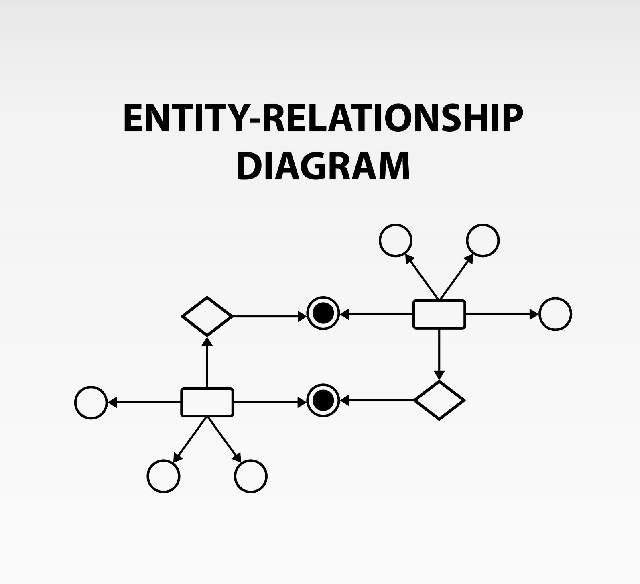
Entity-Relationship Diagram
A graphical representation of entities and their relationships.
Relational Schema
A blueprint of a database structure, showing tables and relationships.
Cluster Analysis
Grouping data points based on similarities. Example: Segmenting customers into groups based on buying habits.
Time Series Analysis
Analyzing data points collected over time. Example: Examining stock prices over several months.
Regression Analysis
Evaluating relationships between variables. Example: Predicting house prices based on size and location.
Factor Analysis
Identifying underlying variables that explain observed patterns. Example: Analyzing survey responses to uncover hidden attitudes.
Data Balancing
The process of ensuring a dataset has an evenly distributed class representation. Example: Balancing the number of fraud and non-fraud cases in a financial dataset.
Traditional Data
Tabular(arranged in rows or columns) data containing numeric or text values, manageable from a single computer.
Data Volume
The size of data, measured in megabytes, gigabytes, terabytes, petabytes, or exabytes
Data Variety
Diversity in data types, including structured, semi-structured, and unstructured formats like images, audio, and mobile data.
Data Velocity
The rapid rate of data generation and processing, aiming for real-time outputs.
Traditional Methods
Classical statistical methods adapted for business applications. Not including advanced statistical analyses.