NBCOT - Cardiopulmonary Rehab Quiz
 Call Kai
 Learn
Learn Practice Test
 Spaced Repetition
 Match
Match Flashcards
 Knowt Play
1/55

There's no tags or description
Looks like no tags are added yet.
Name | Mastery | Learn | Test | Matching | Spaced | Call with Kai | Chat |
|---|
No analytics yet
Send a link to your students to track their progress
56 Terms
c. DO NOT. This would be breaking your pulling precaution.
Which of the following is NOT a sternal precaution?
a. No lifting, pulling or pushing 5-10#
b. Train patient in using only the legs for a sit > stand transfer
c. Use grab bars for pulling oneself off toilet or shower chair
d. No reaching behind back or above shoulder height
true; just not one at a time!!
T or F: You can lift both arms above the head during sternal precautions.
c. Driving can resume once the physical has cleared it. Usually takes 6-8 weeks.
Which of the following is NOT a sternal precaution?
a. Avoid discomfort or crackling/clicking sounds in chest
b. Brace yourself during coughing, laughing or sneezing by using pillow against chest
c. Driving is allowed within the 1st week of recovery
6-8 weeks
How long are sternal precautions usually in place?
Because they require reaching behind the back or lifting arms above head
Why would ADLs like UB dressing, toilet hygiene and bathing break sternal precautions?
MET
Amount of energy it costs to complete a task as indicated by the amount of oxygen it requires.
b
What MET levels are used for Phase 1 of cardiac rehab - IP rehab?
a. 0-1 MET
b. 1-2 MET
c. 3-4 MET
myocardial infarction
the occlusion of one or more coronary arteries caused by plaque buildup.
a. MI
b. CAD
c. CHF
coronary artery disease
- atherosclerosis of the coronary arteries that reduces the blood supply to the heart muscle
- Medical tx: open-heart surgery, CAGB, valve replacement or repair
- OT tx: sternal precautions and home program guidelines
a. MI
b. CAD
c. CHF
congestive heart failure
A condition resulting from the heart's inability to pump out all the blood that returns to it; blood backs up in the veins leading to the heart, causing an accumulation of fluid in various parts of the body
a. MI
b. CAD
c. CHF
a
- Monitoring of ECG, BP and pulse
- Use of clinical pathway; checklist of tx for a particular dx
- ADL in line with 1-2 MET levels
- Monitoring of sings of activity intolerance
- Develop home program: pacing, simplification, temperature precautions, sexual acuity, risk factors and symptoms of activity intolerance
a. Phase 1 - IP
b. Phase 2 - OP
c. Phase 3 - Community
b
- OT 3x/week; 4-8 weeks
- Activities in line with 4-5 MET levels
- Weight training at 2-4 weeks if symptoms are controlled
- Risk factor modification
- Evaluate psychosocial issues
- Work hardening
a. Phase 1 - IP
b. Phase 2 - OP
c. Phase 3 - Community
c
- Physician referral
- Stress test
- Continue with activities and progress as tolerated
- Medicare usually doesn't reimburse since it's a maintenance program
- Community based exercise programs
a. Phase 1 - IP
b. Phase 2 - OP
c. Phase 3 - Community
b
- Can stand while showering
- Have a bowel movement independently
- Can climb stairs
- Avoid isometric activities or those requiring you to hold your breath
a. Phase 1 - IP
b. Phase 2 - OP
c. Phase 3 - Community
a
Condition with damage to the alveolar wall and inflammation of the conducting airways.
a. COPD
b. emphysema
c. chronic bronchitis
b
Condition where alveolar rupture or enlarge, lungs lose elasticity.
- May have a pink-ish tint to skin
a. COPD
b. emphysema
c. chronic bronchitis
c
- Long-term inflammation of the bronchioles with dyspnea (labored breathing).
- Poor oxygenation = bluish tint to skin and lips
- Edema
a. COPD
b. emphysema
c. chronic bronchitis
b.
- ADL assessment: ROM, MMT, sensation, cognition and psychosocial issues
- Monitor HR, BP, and O2 stats
- Daily activity interview
a. cardiac rehab
b. respiratory rehab
false; dress one extremity at a time with frequent rest breaks
T or F: A client with a respiratory syndrome should dress both extremities at a time to reduce the time spent on dressing activity.
90%
You should administer oxygen if levels go below what percentage?
b
How should one position themselves to decrease anxiety, panic and shortness of breath?
a. Hands behind the head
b. leans forearms into thighs
c. Lay flat
a
- Laying down at rest
- Laying in bed, thinking about date night
a. 1 MET
b. 1.5-2 MET
c. 2-3 MET
b
- Transfer training
- Self care in SEATED; sewing, desk work, grooming, etc.
- Putting on makeup while seated at vanity for date night
a. 1 MET
b. 1.5-2 MET
c. 2-3 MET
c
- Can take seated sponge baths or seated WARM showers (not hot)
- NO hot showers!
- Can dress/undress self
- Light woodworking, dusting, washing dishes, playing instrument
- Undressing casual clothes and putting on lingerie for date night
a. 1 MET
b. 1.5-2 MET
c. 2-3 MET
a
- Can take a WARM shower in STANDING now!
- Still no hot showers
- Can do most household chores; sweeping, light gardening
- Can now stand in shower to shave legs for date night
a. 3-4 MET
b. 4-5 MET
c. 5-6 MET
b
- Can now take a hot shower! Yay!
- Golf, tennis, dancing, light carpentry, raking leaves
- Go out dancing with date
a. 3-4 MET
b. 4-5 MET
c. 5-6 MET
c
- Can make own bed, wash dishes, change linens
- Sexual activity can resume
- Go home to make bed for date night...wink
a. 3-4 MET
b. 4-5 MET
c. 5-6 MET
a
Walking briskly ~5 mph
- Breast strokes, skiing, basketball
a. 6-7
b. 7-8
c. 8-9
d. 9-10
b
Jog ~5 MPH
a. 6-7
b. 7-8
c. 8-9
d. 9-10
c
Running
a. 6-7
b. 7-8
c. 8-9
d. 9-10
d
Fast running; can compete in recreational activities.
a. 6-7
b. 7-8
c. 8-9
c. 9-10
MET levels 4-5
At what MET levels can a person now take a hot shower?
true
T or F: UE movements like overhead movements expend more energy than LE movements.
true
T or F: Temperature regulation is important for cardiac rehab because excessive heat or cold will cause the body to expend more energy.
3.5 MET
At what MET level is a patient discharged from IP phase to OP phase?
DVT
What is the most common cause of a pulmonary embolism?
c. This could trigger cardiac arrest if further activity is engaged
What is the best response for an OT to make if a pt with ventricular tachycardia exceeds 100 BPM during a session?
a. allow 10 min of rest time and resume ax
b. lay in supine with feet elevated
c. discontinue today's therapy session
d
An OTR® is interviewing a new client who physically presents with a "barrel chest." This appearance is most often associated with what condition?
A. Cystic fibrosis
B. Asthma
C. Collapsed lung
D. Emphysema
true
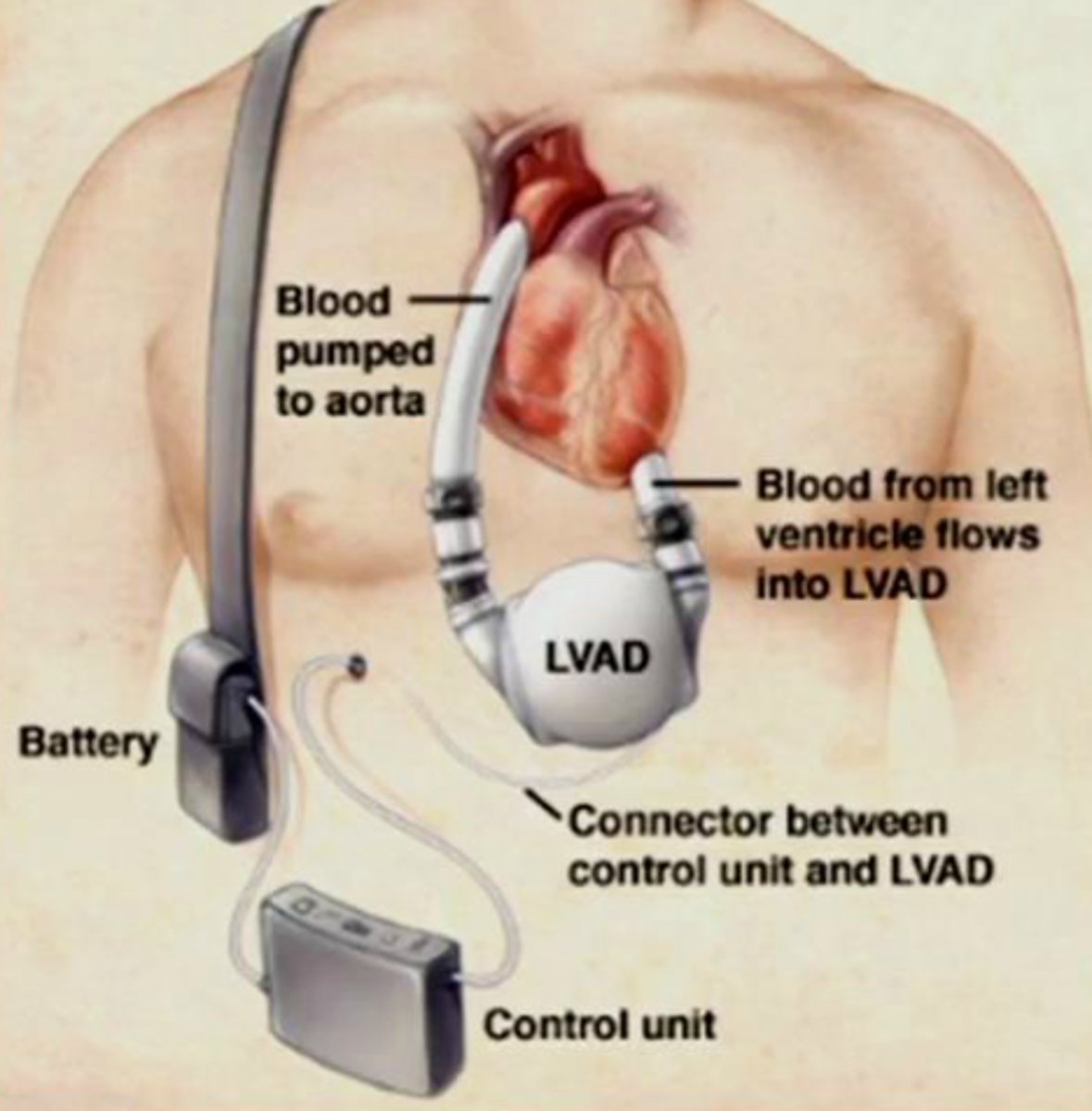
T or F: A ventricular assist device requires a power source to function properly. The drive line connects to the power source. If the OTR is not careful, the drive line can become disconnected during activity.
supine
Postprandial orthostatic hypotension occurs when a person goes from ______ to standing shortly after eating a meal. It generally affects older adults, people with hypertension, and people with Parkinson's disease.
a
Avoid a positional change from lying down to standing within 30 minutes of eating a meal.
This is a precaution for which diagnosis?
a. postprandial orthostatic hypotension
b. postural hypotension
c. stable angina
wrist
An arterial line catheter is inserted in the radial artery at the _____ to continuously monitor arterial pressure. When the ______ is moved, it can disrupt the catheter and affect the blood pressure reading.
pacemaker
_________ precautions include no shoulder flexion or abduction greater than 90° on the side on which the pacemaker was implanted for the first 4 weeks.
true
T or F: Shoulder abduction or flexion greater than 90° on the side opposite pacemaker placement is acceptable movement. Clients' shoulder movement is restricted only on the OPERATED side.
a.
If a patient has a DVT and is treated with anticoagulation therapy, they may begin walking 2-3 days after treatment.
Recent literature has indicated that ambulation may be permitted on the ____-____ day after anticoagulation therapy has been initiated.
a. 2-3
b. 5-6
c. 9-10
a
- Cyanotic/blue nail beds
- LE edema
- Jaundice
a. R-side CHF
b. L-side CHF
b
- Blood backs into lungs making it difficult to breath
- Anxiety
- Cerebral hypoxia
a. R-side CHF
b. L-side CHF
lung
A client with a _______ transplant is the most susceptible to infection because the transplanted organ is exposed to bacteria and germs on inhalation.
b.
Supine position requires too much weight for breathing
What is the best sleeping position for an obese patient with obstructive sleep apnea?
a. supine with head of bed elevated
b. SL with head of bed elevated
d. To ease breathing, lean partially forward, propping the forearms on the upper thighs.
An OTR® is working with a client who is experiencing dyspnea while performing a daily occupation in sitting. What sitting position would BEST minimize the client's dyspnea while performing the occupational task?
A. Sitting with trunk erect and rigidly in midline
B. Sitting with trunk extended and slightly to one side in a more relaxed posture
C. Slouching to one side and leaning on one arm for improved trunk support
D. Slouching forward while avoiding maximum forward trunk bending
true
T or F: People with a history of endocarditis generally take antibiotics before any dental procedures to prevent an infection from migrating to the heart.
a
Cramping and pain when walking—also known as intermittent claudication—are caused by decreased blood flow when exercising and are common symptoms of
a. peripheral artery disease
b. emphysema
c. chronic bronchitis
true
T or F: Raynaud's syndrome disrupts blood flow to the digits in vasospastic attacks. The client needs to be educated to wear gloves when exposing hands to the cold, such as reaching into a freezer.
Stable can be treated with rest and a nitroglycerin tablet. Unstable angina requires immediate medical attention and does not respond to nitroglycerin.
What is the difference in treatment between stable and unstable angina?
b
Healing of the heart muscle takes 4 to 8 weeks following an MI. During this time, activities are limited to:
a. 1-2 METS
b. 2-4 METS
c. 4-6 METS
b
What psychiatric condition is a client with a long-term transplantation MOST likely to experience?
A. Depression
B. Anxiety
C. Dementia
D. Personality disorder