Electrostatics and Circuits
 Call Kai
 Learn
Learn Practice Test
 Spaced Repetition
 Match
Match Flashcards
 Knowt Play
1/90

There's no tags or description
Looks like no tags are added yet.
Name | Mastery | Learn | Test | Matching | Spaced | Call with Kai | Chat |
|---|
No analytics yet
Send a link to your students to track their progress
91 Terms
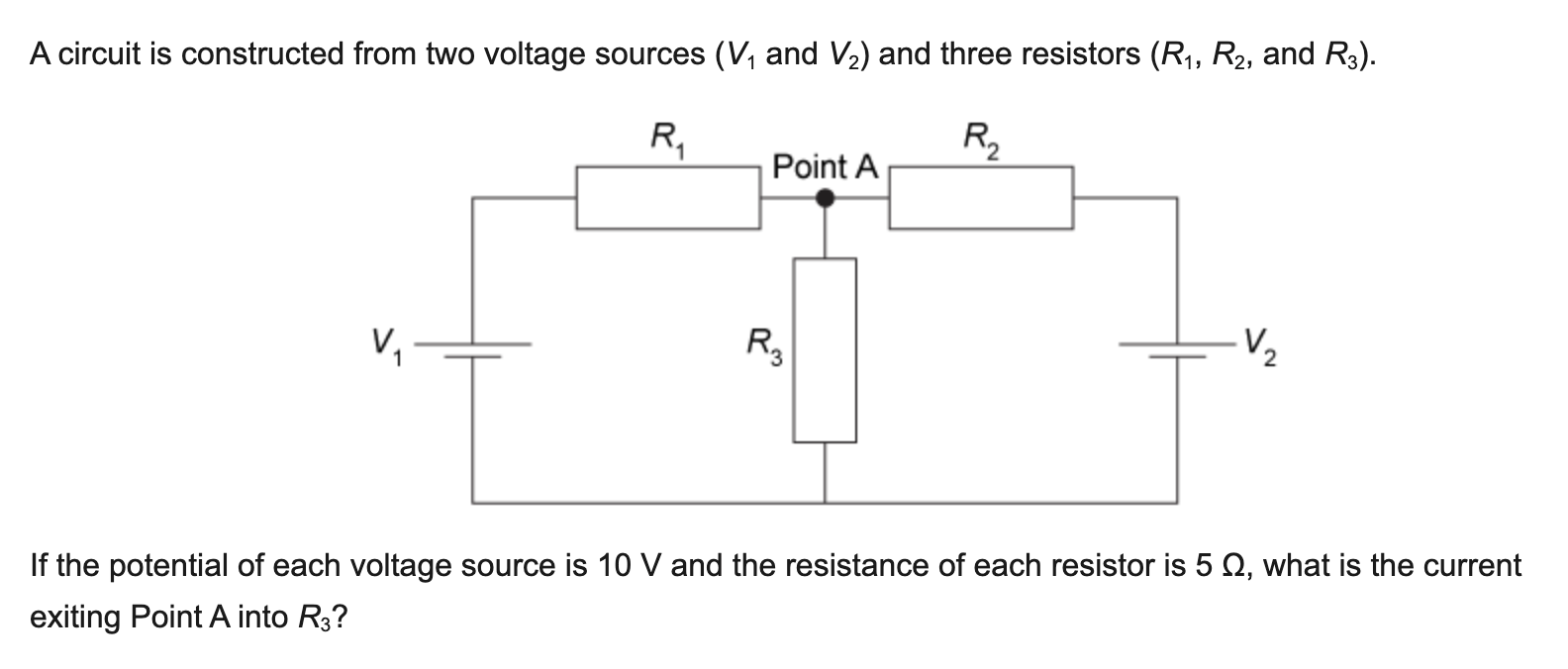
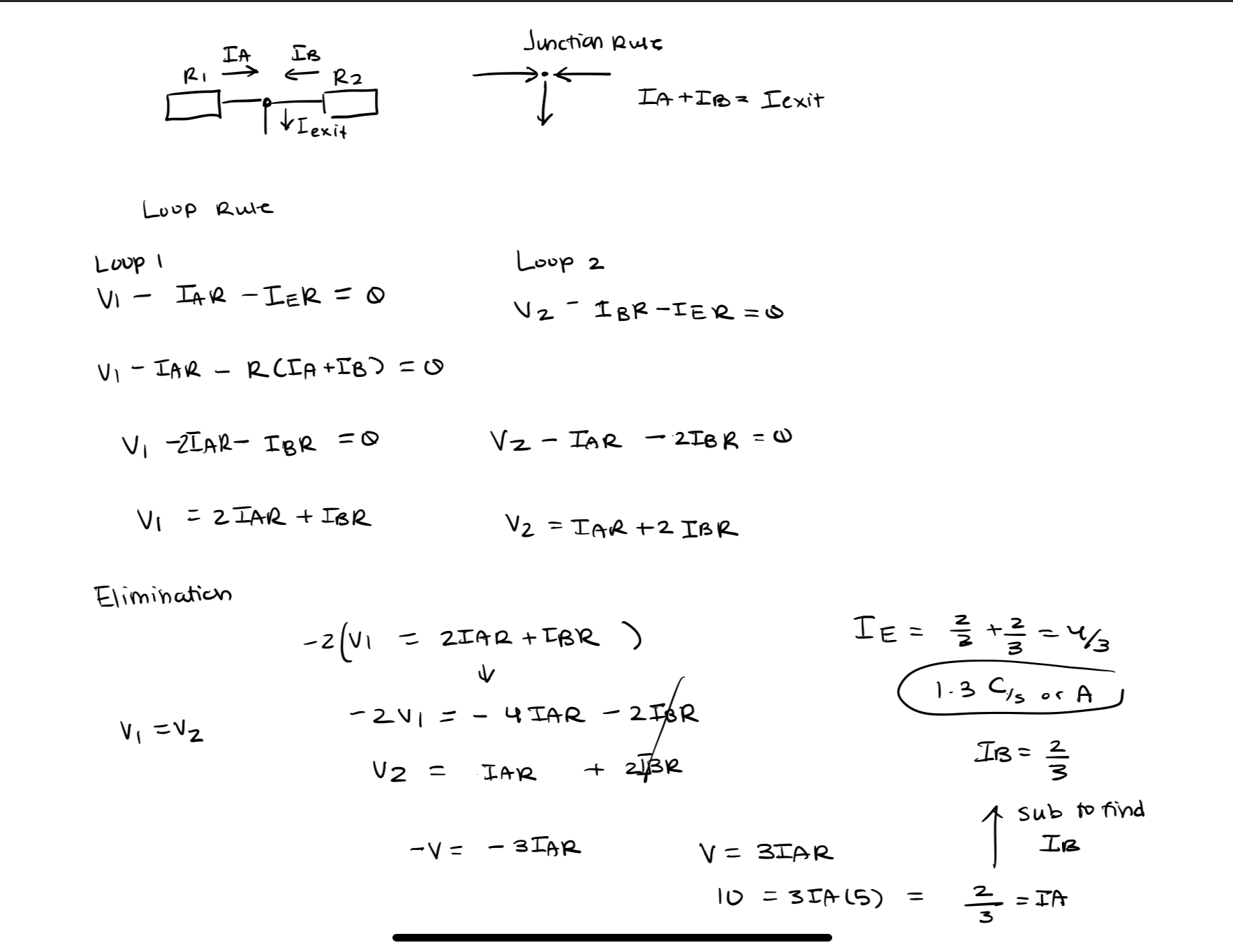
1.3 C/s or A

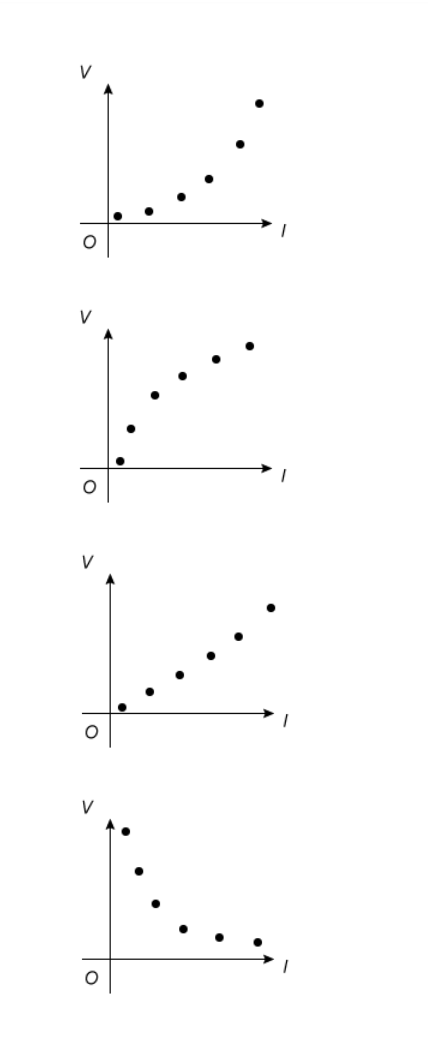
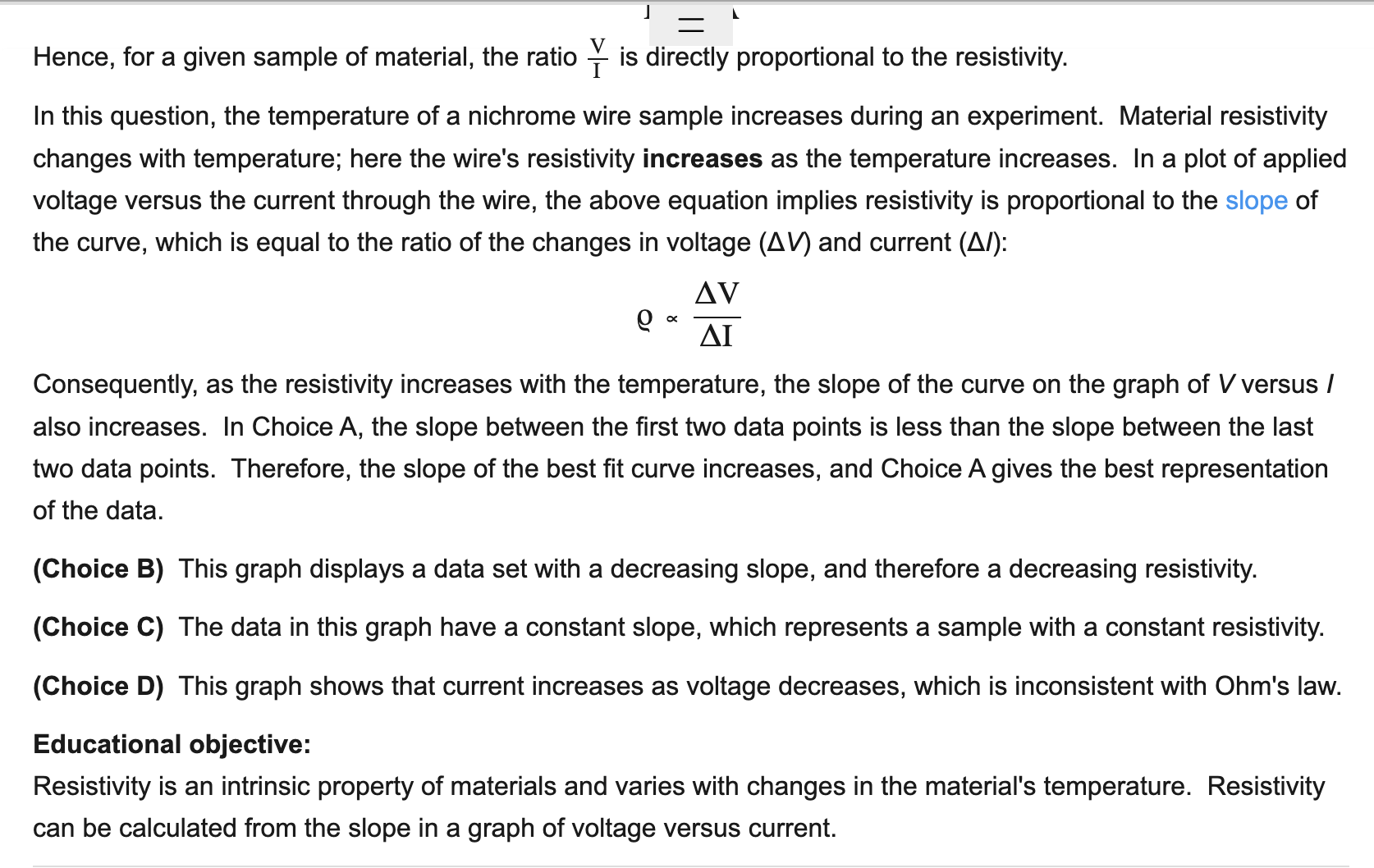
Answer: A
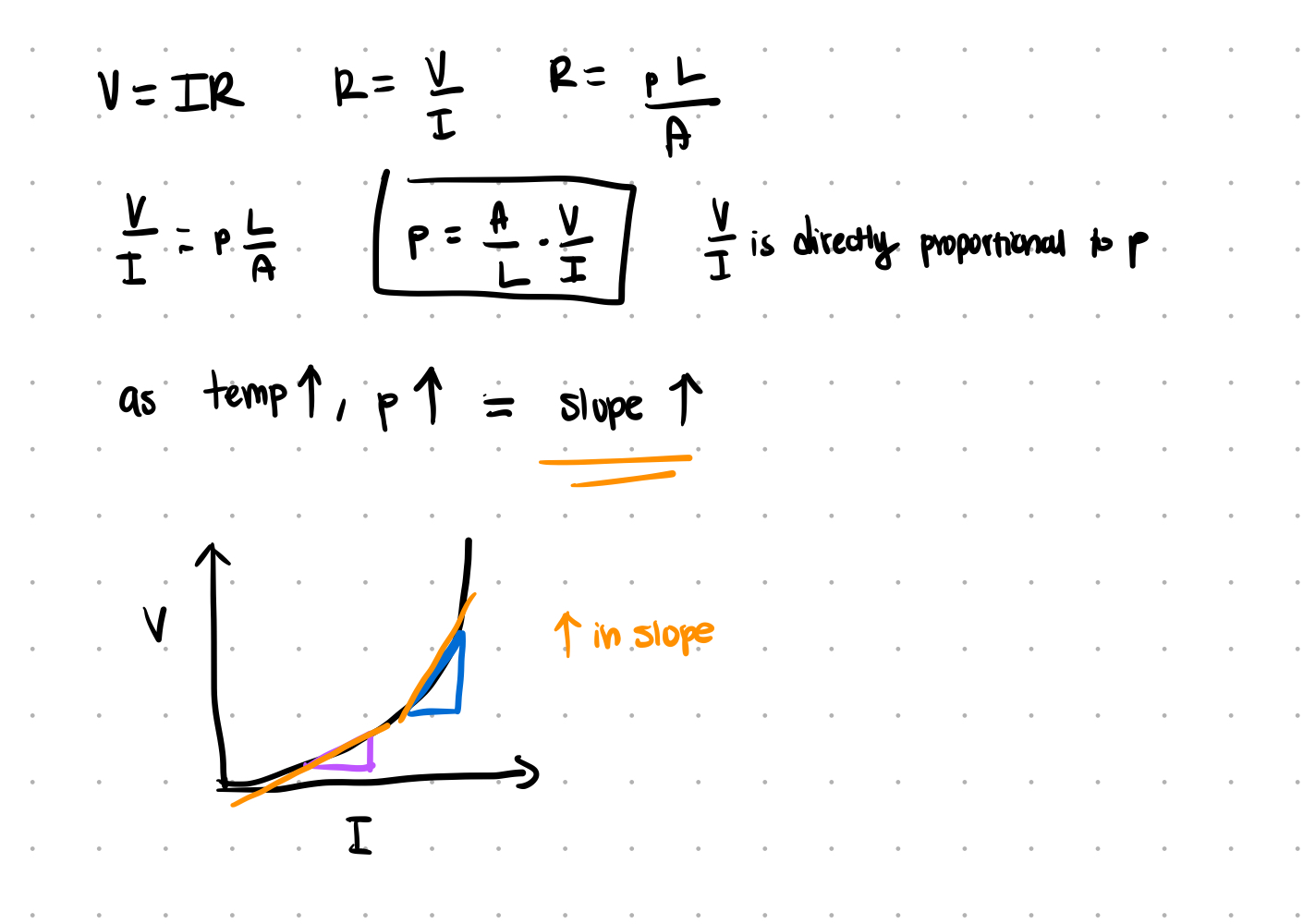
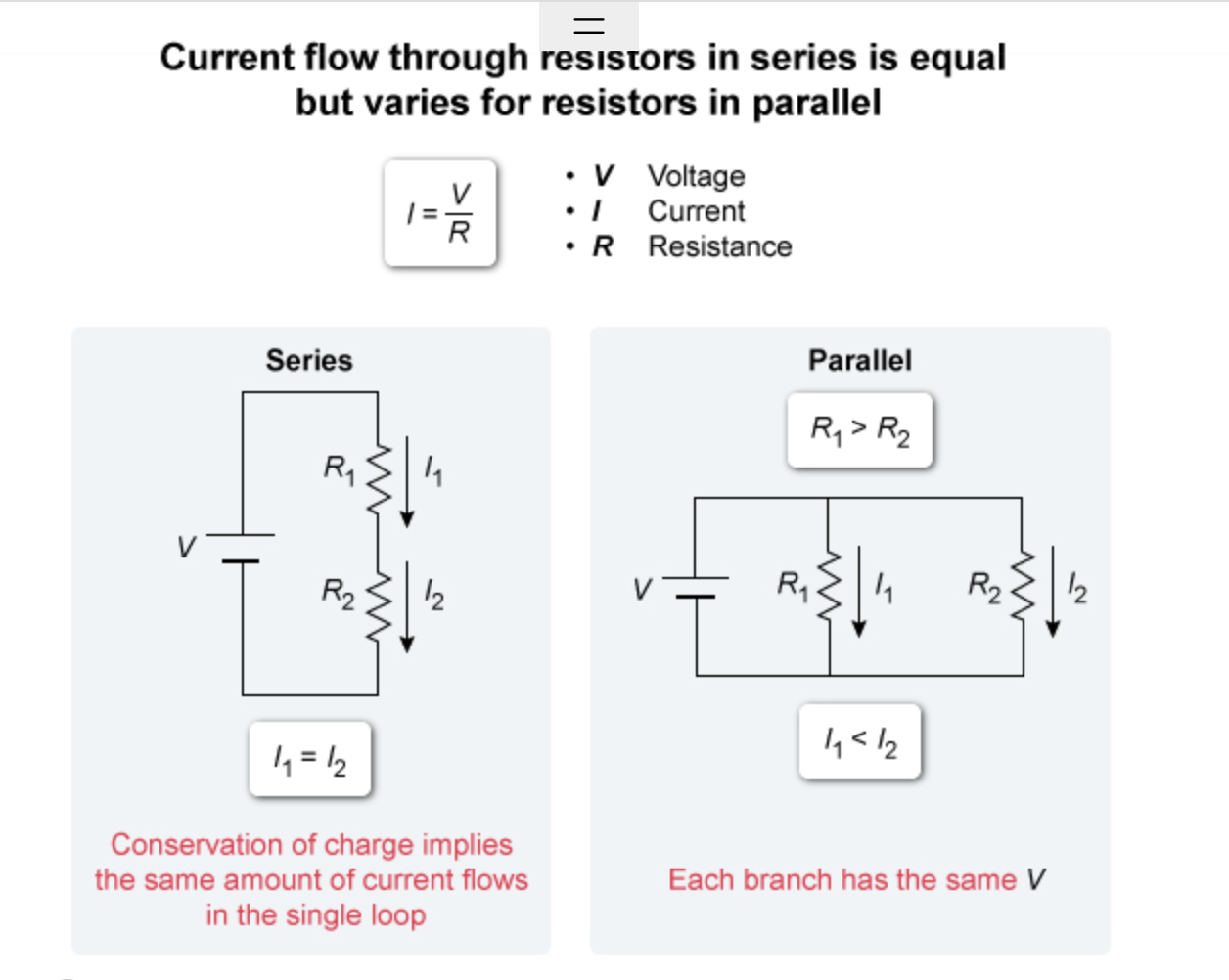
Note on Current flow through series and parallel circuits
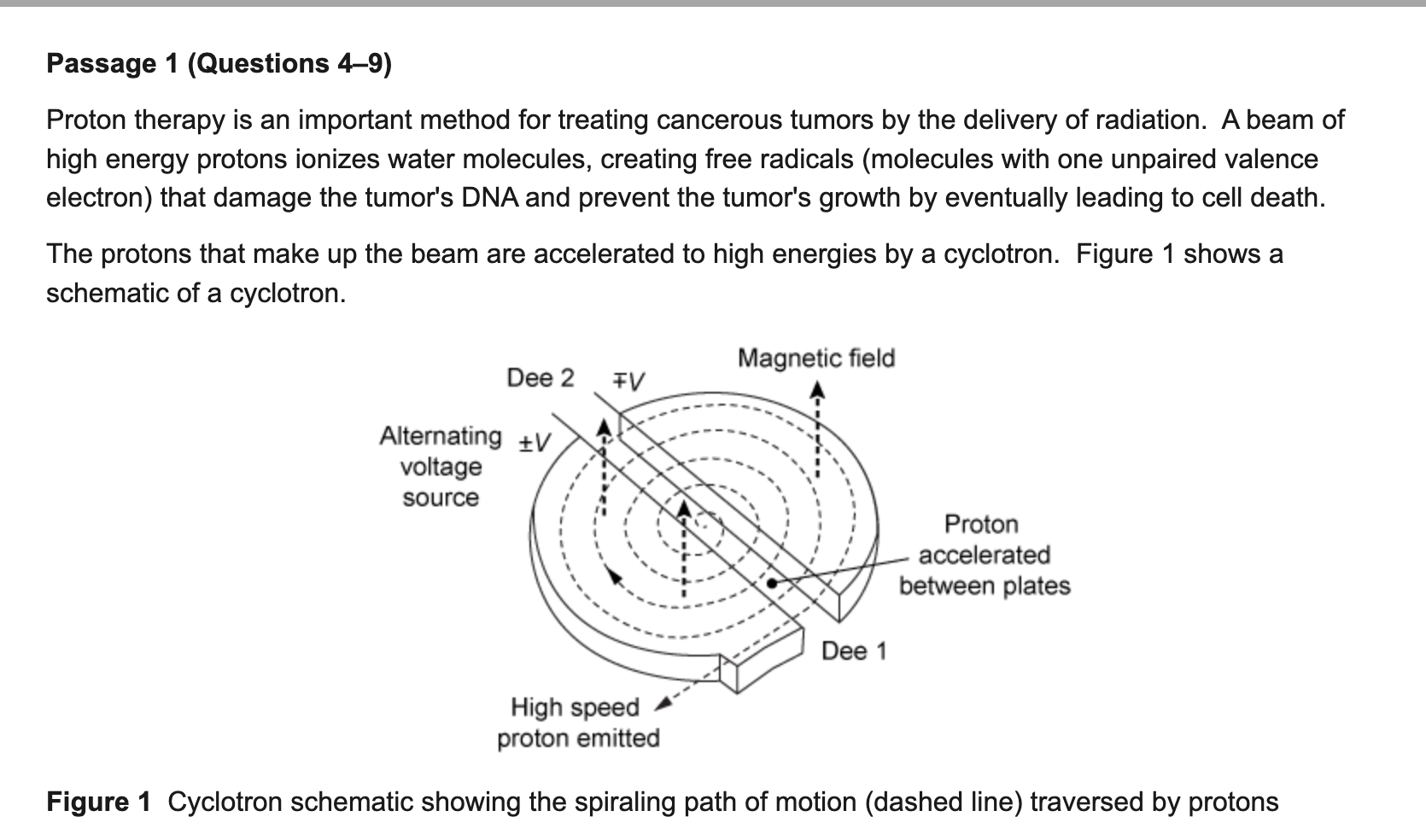
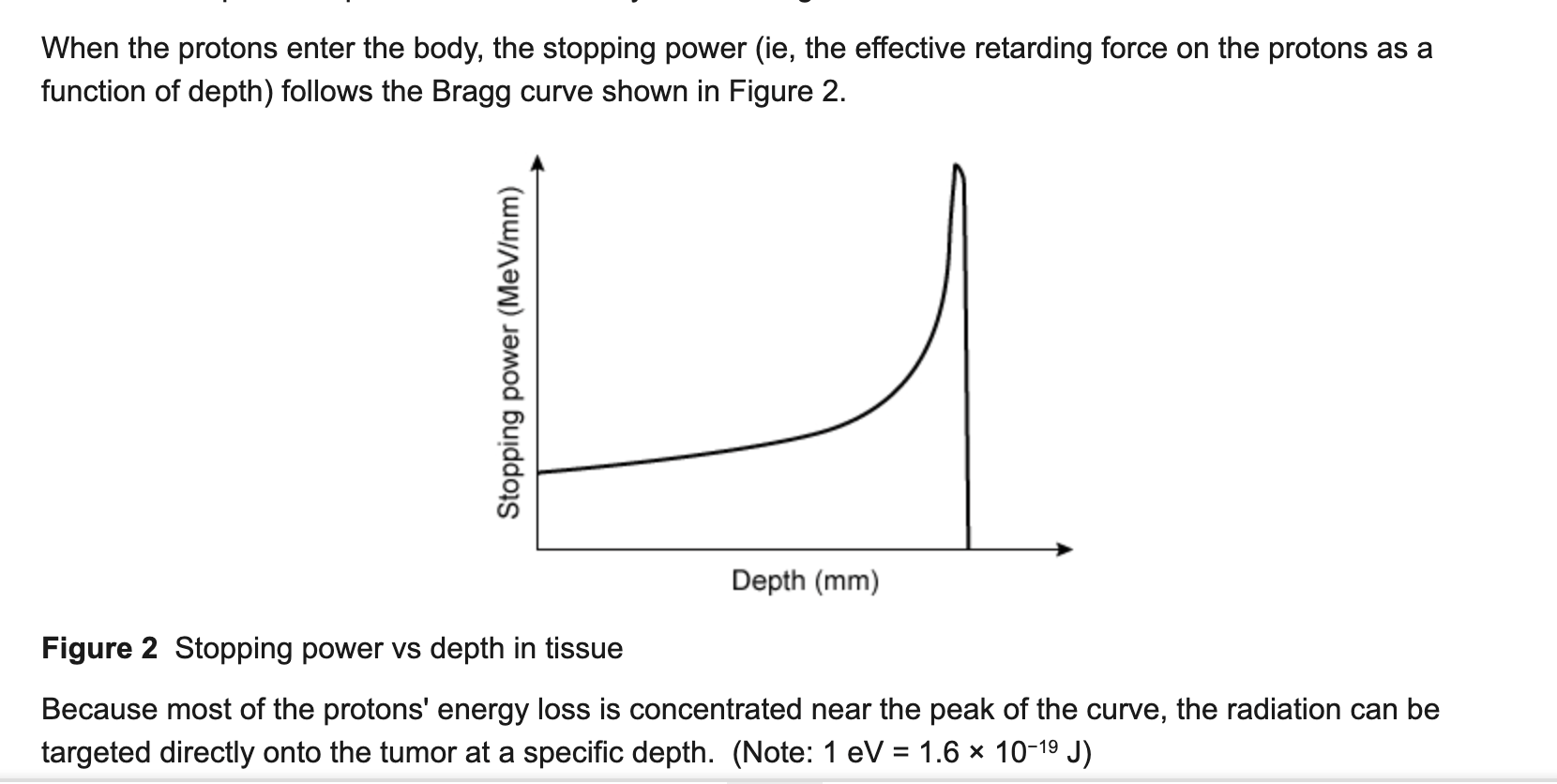
Passage A

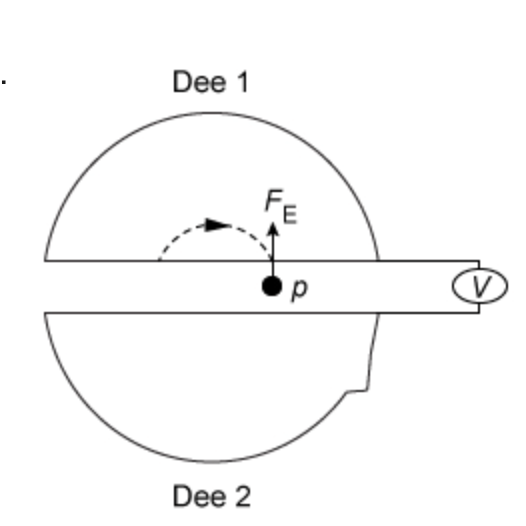
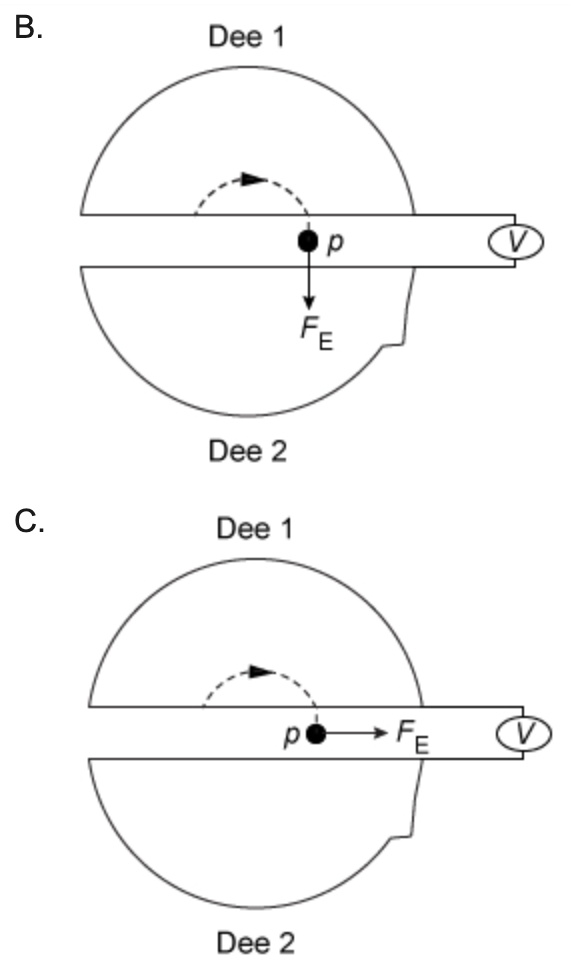
Answer: B
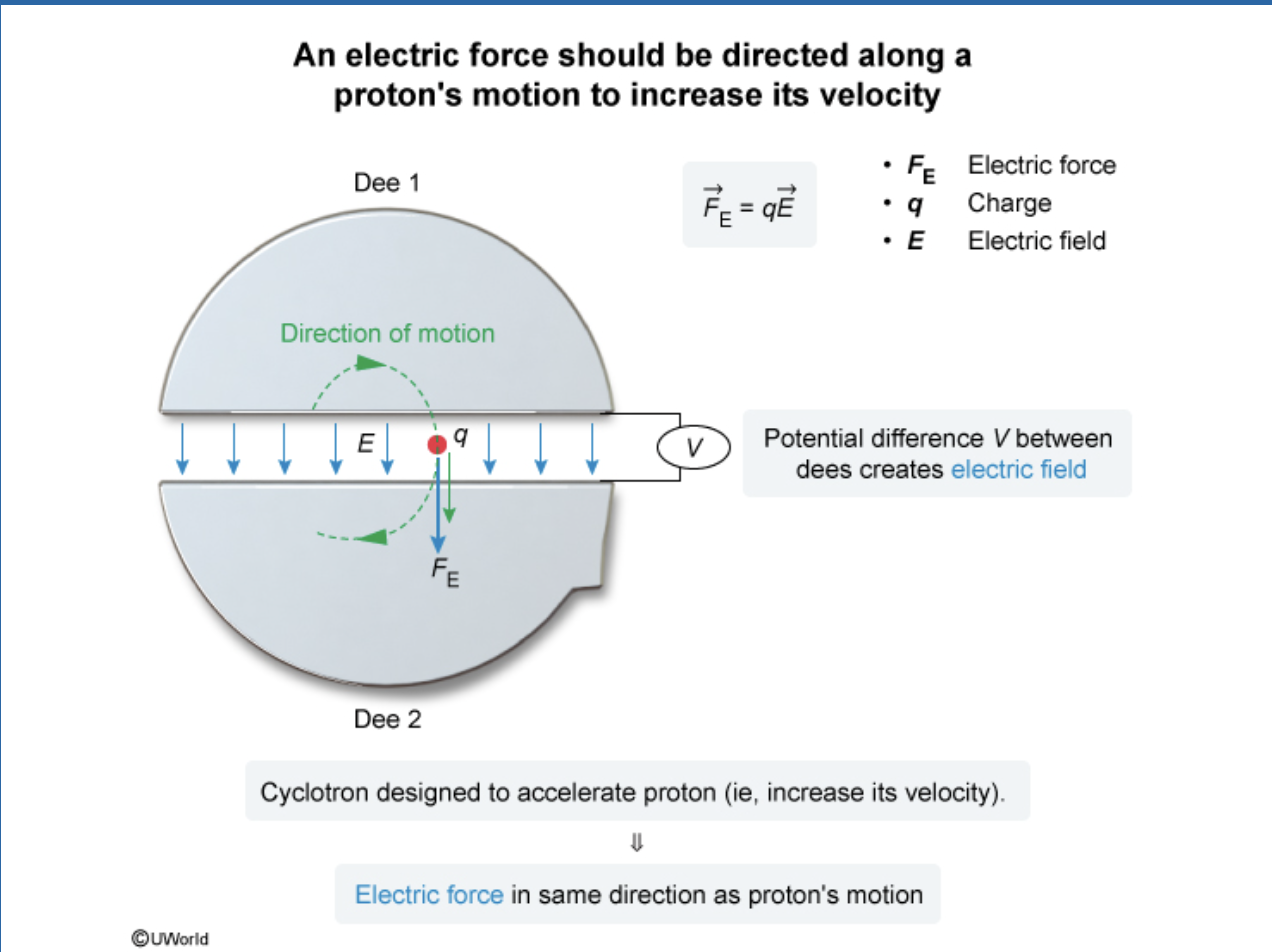

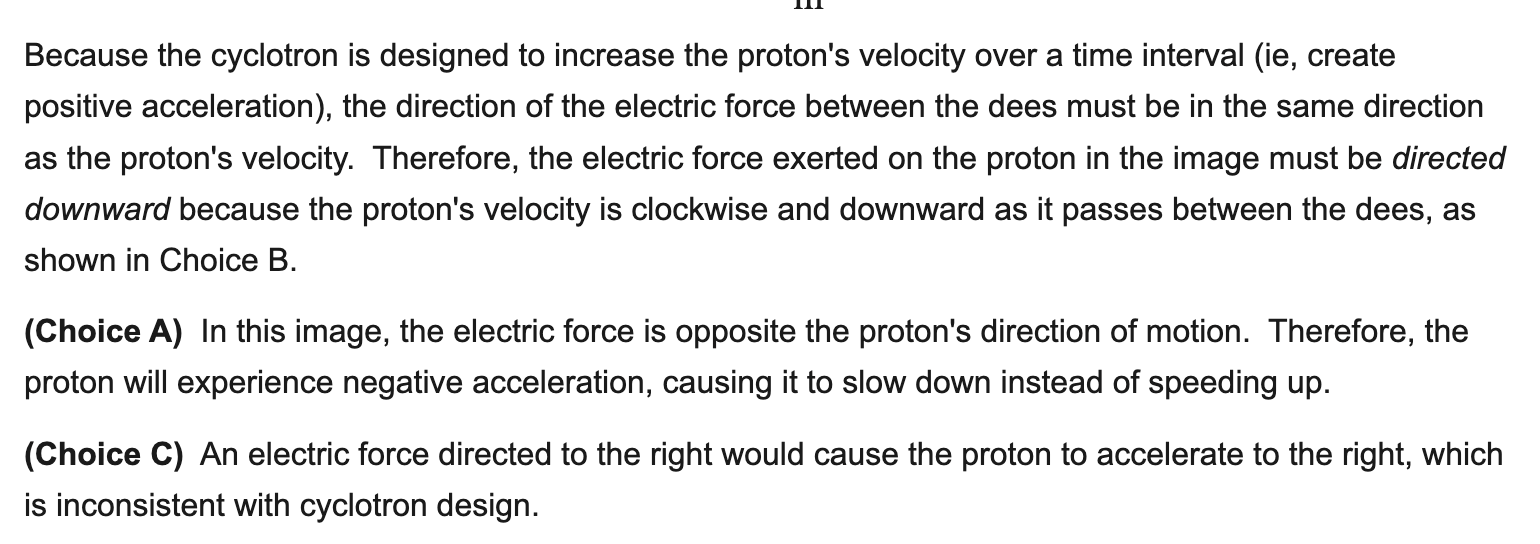

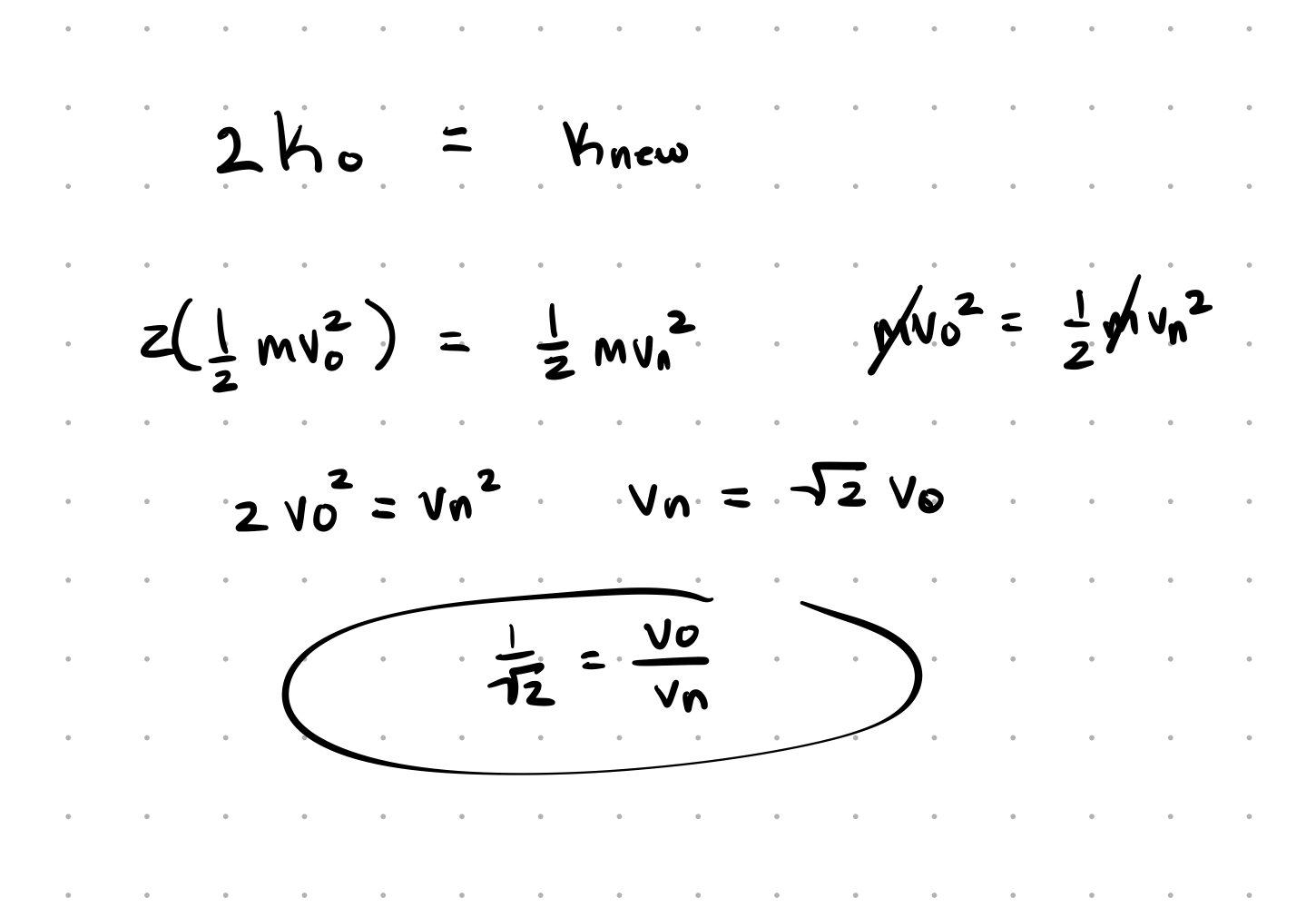
1:√2

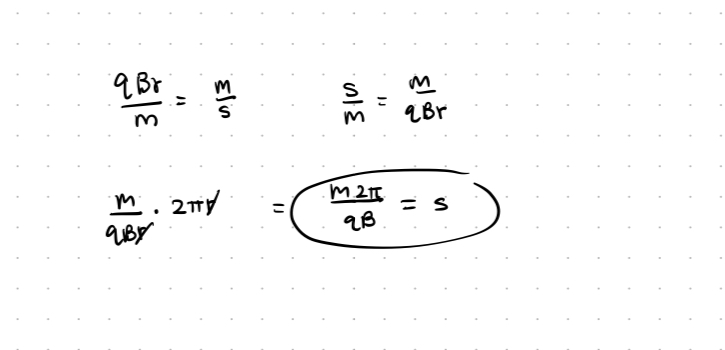
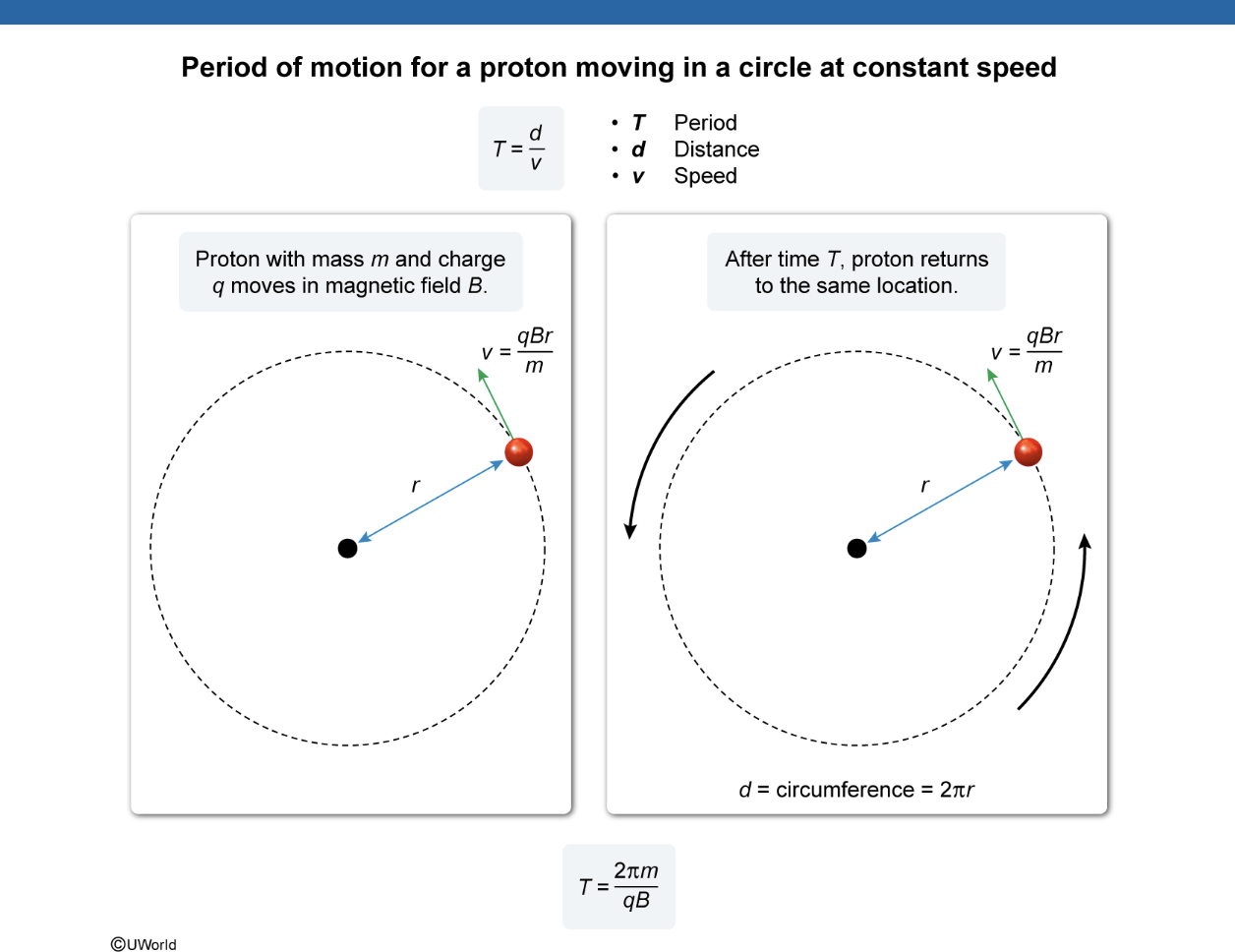
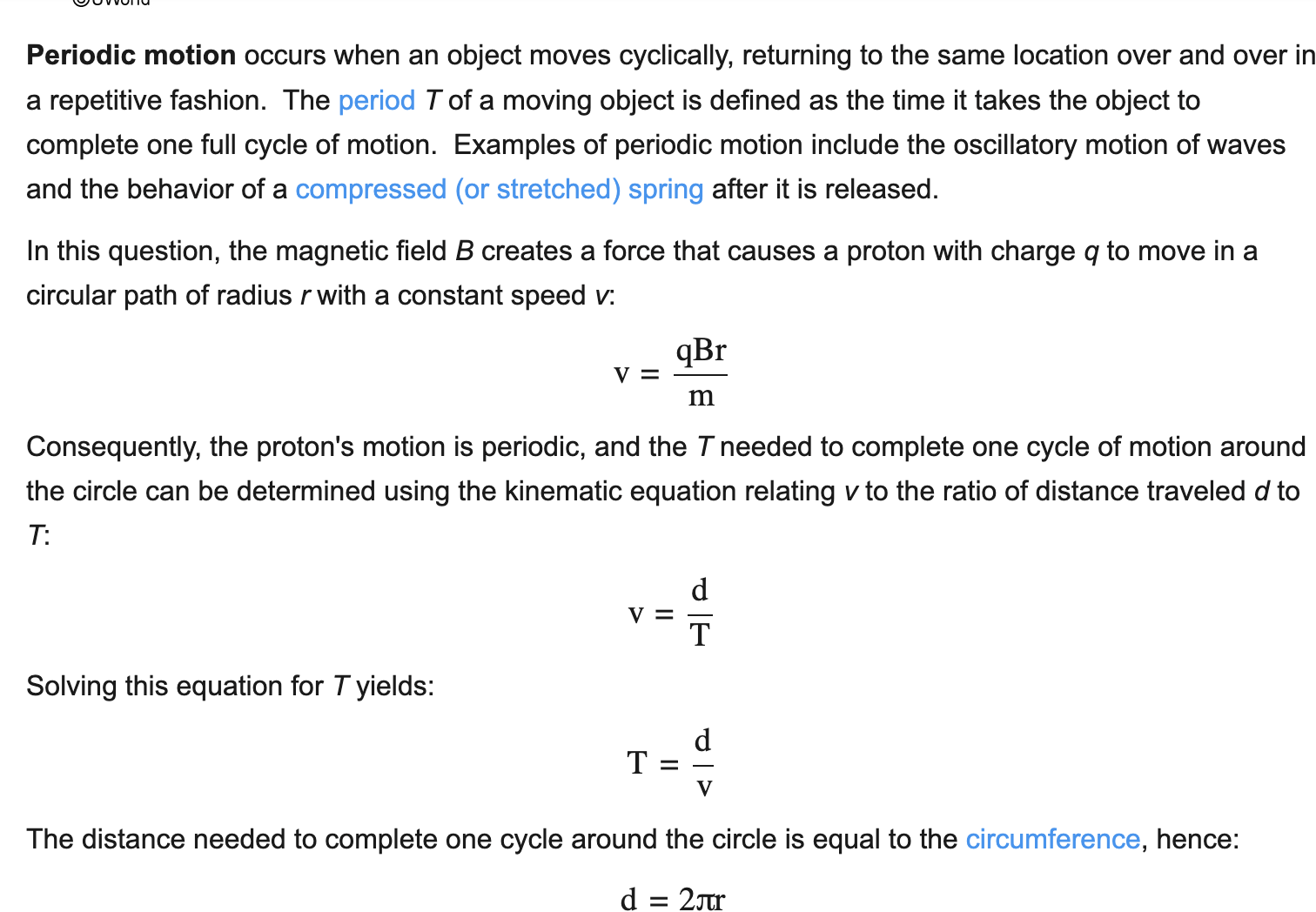
Passage A

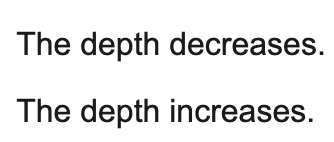


The depth increases
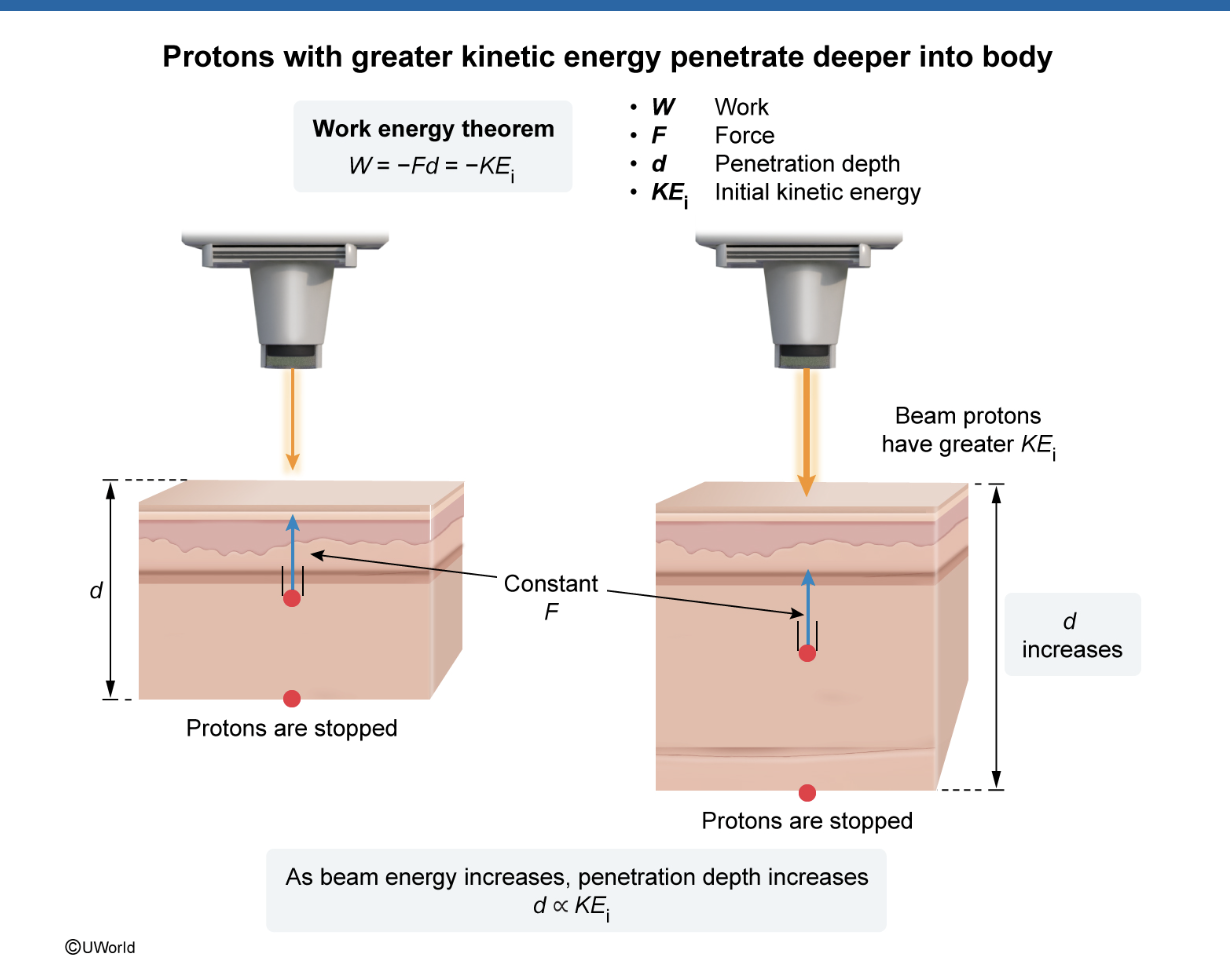
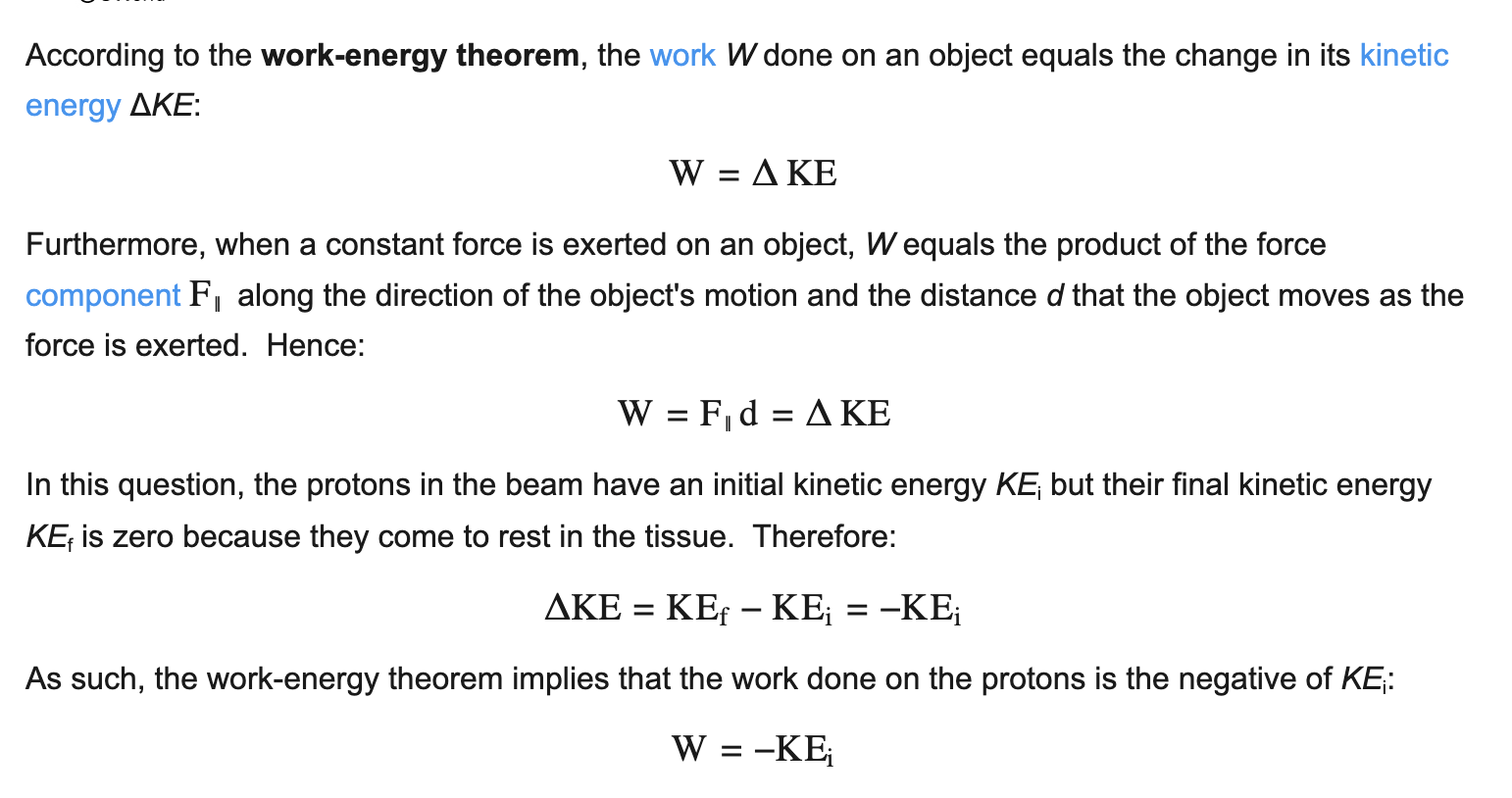
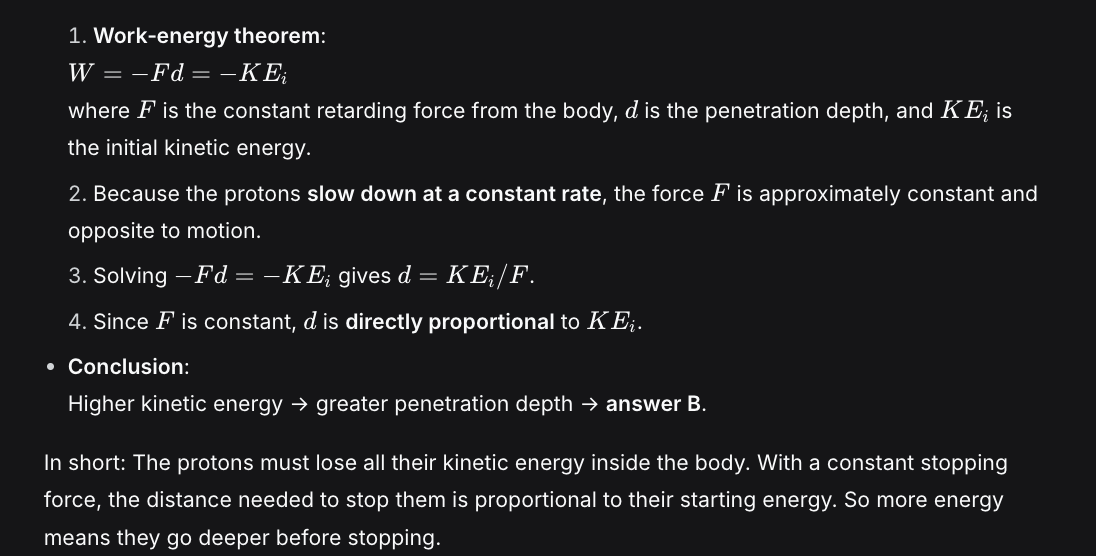

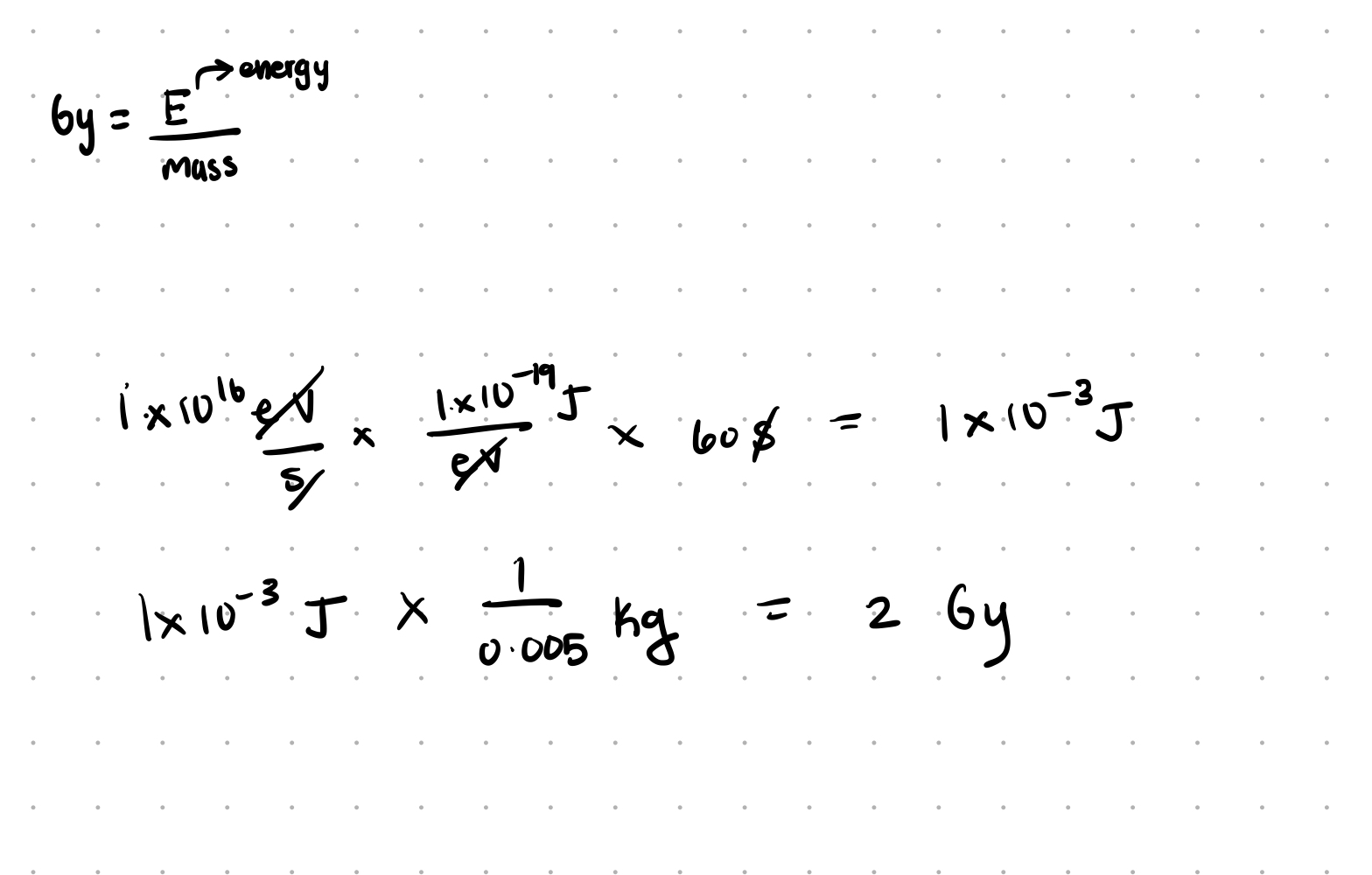
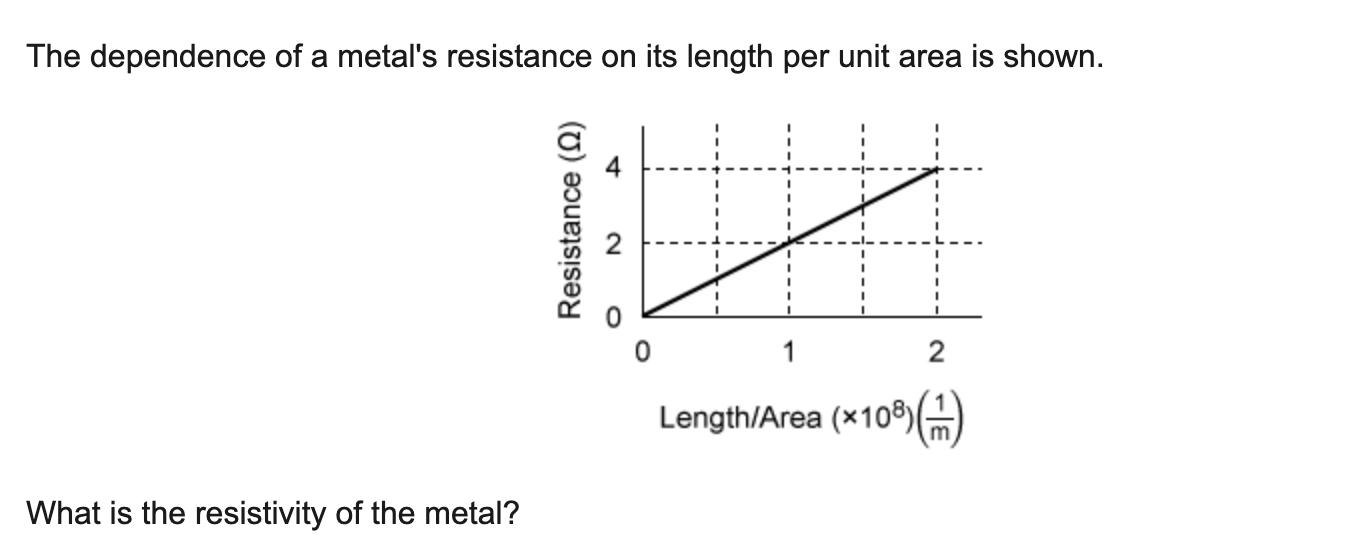
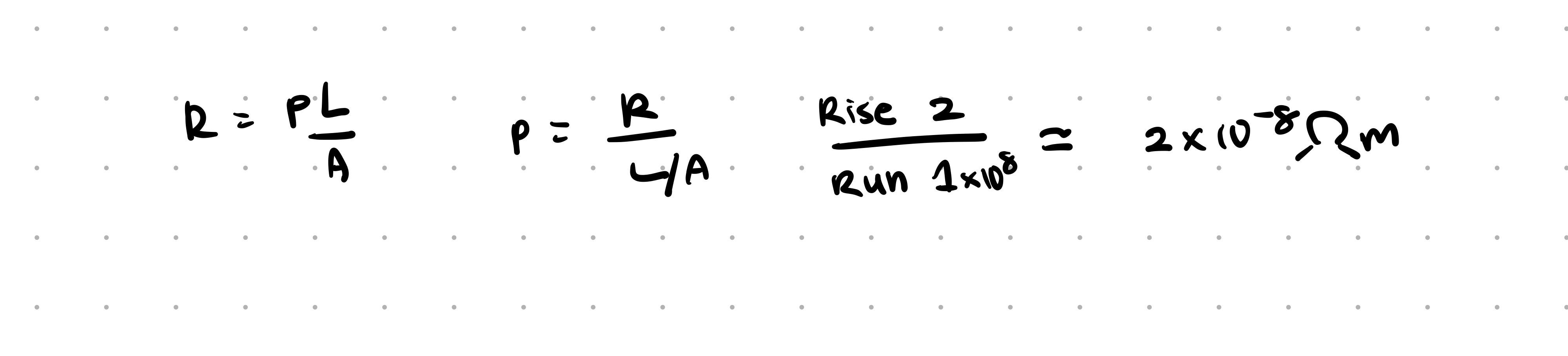

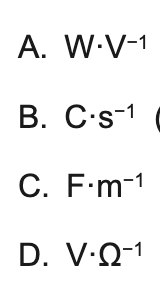
Answer C
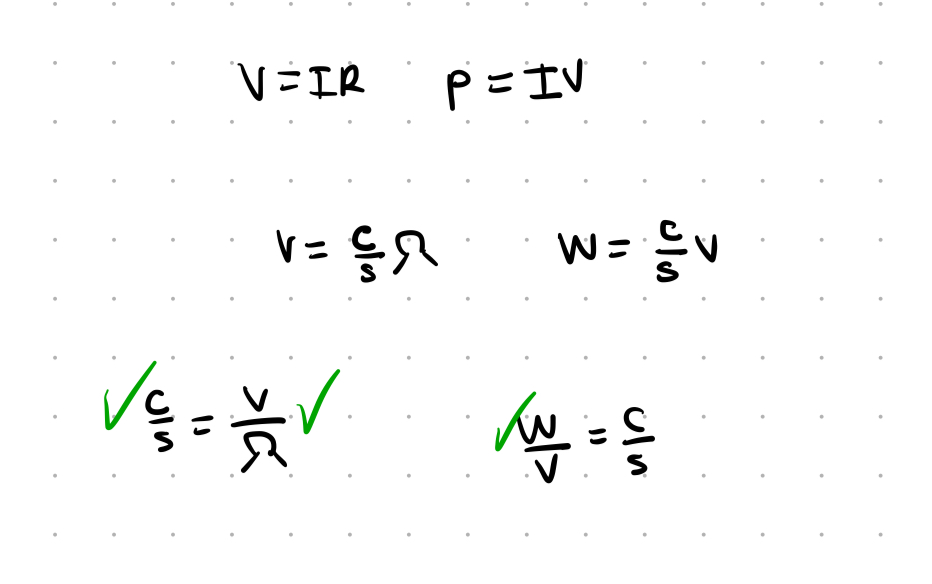
Passage B
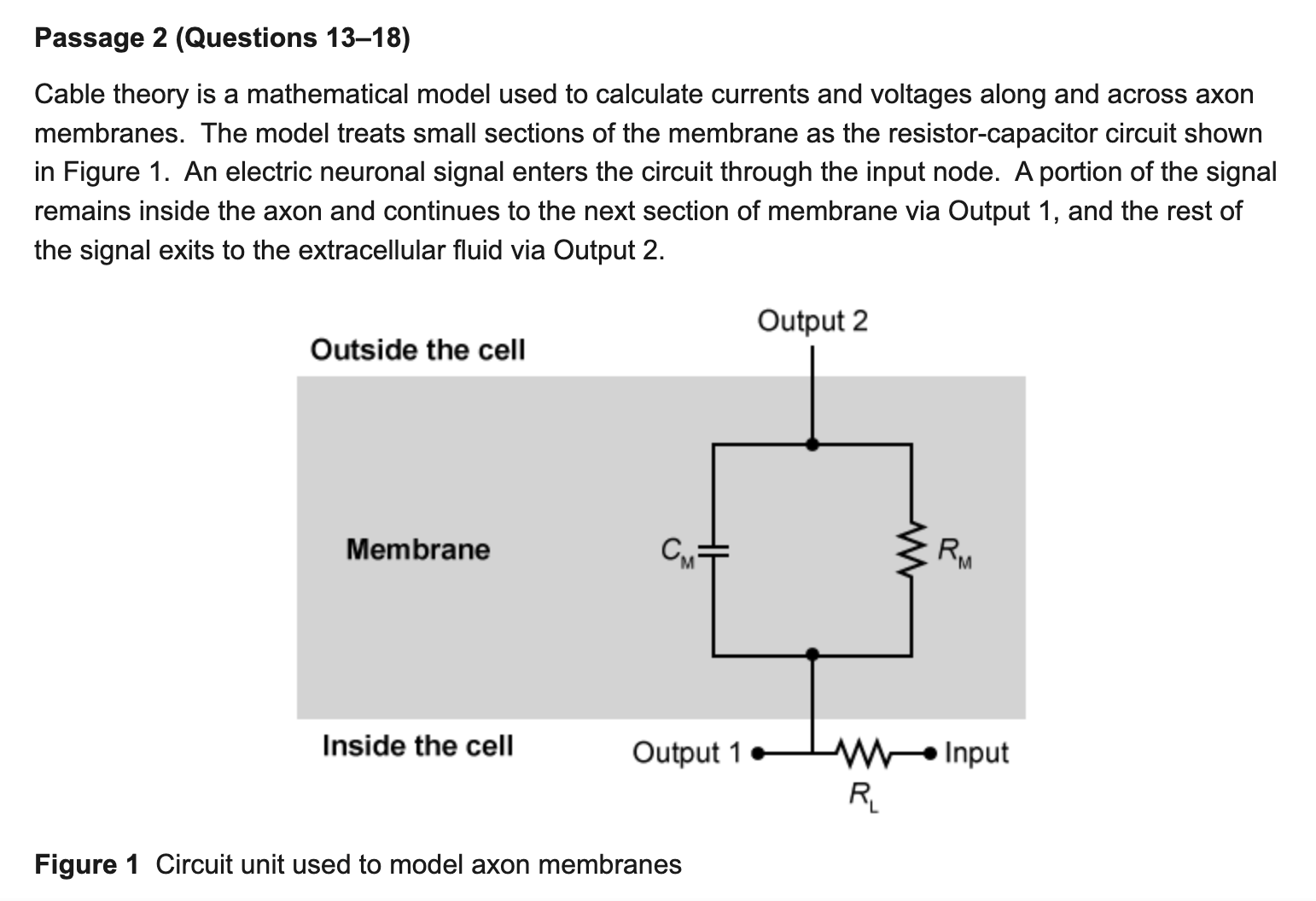
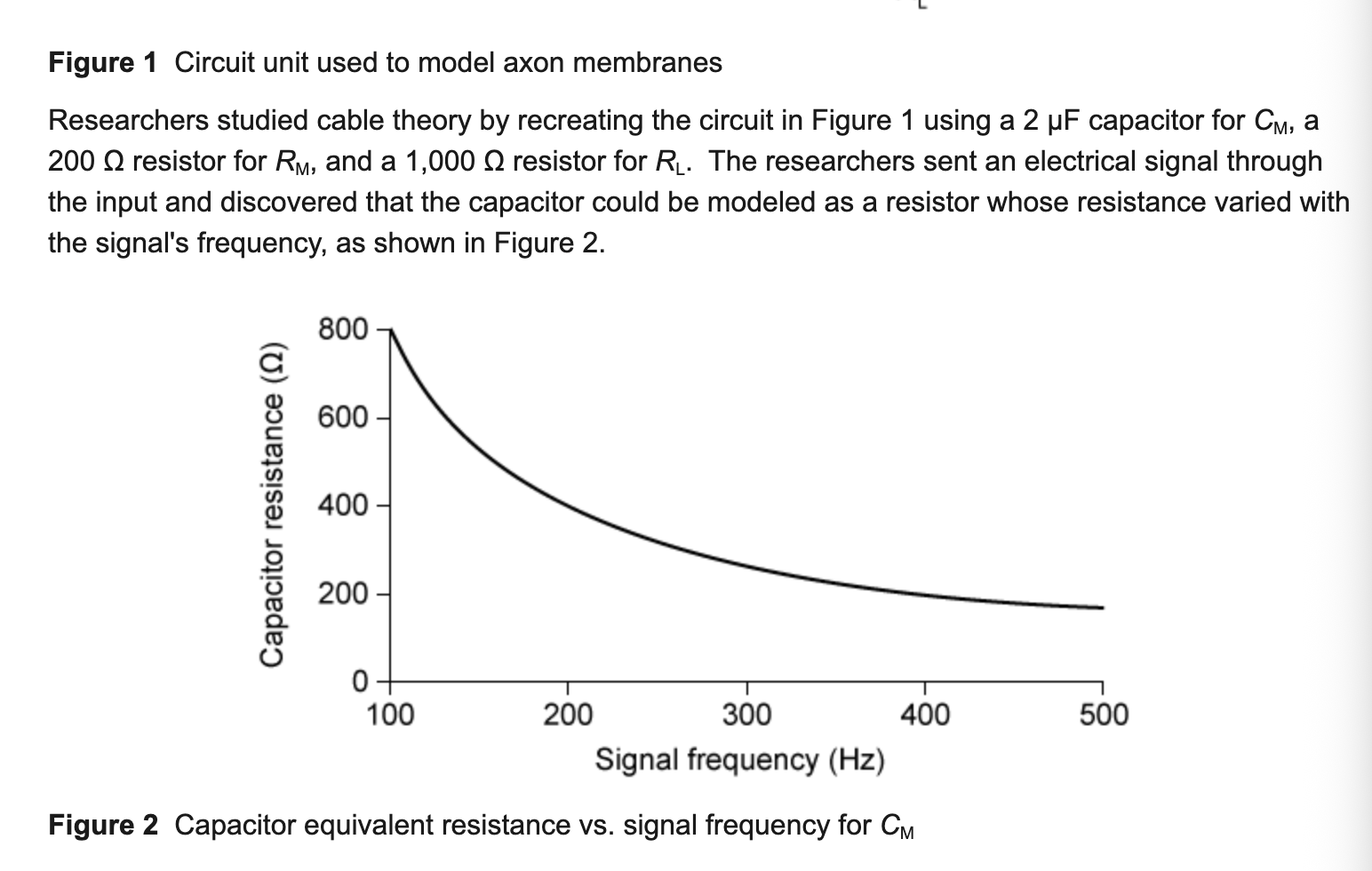
Passage B

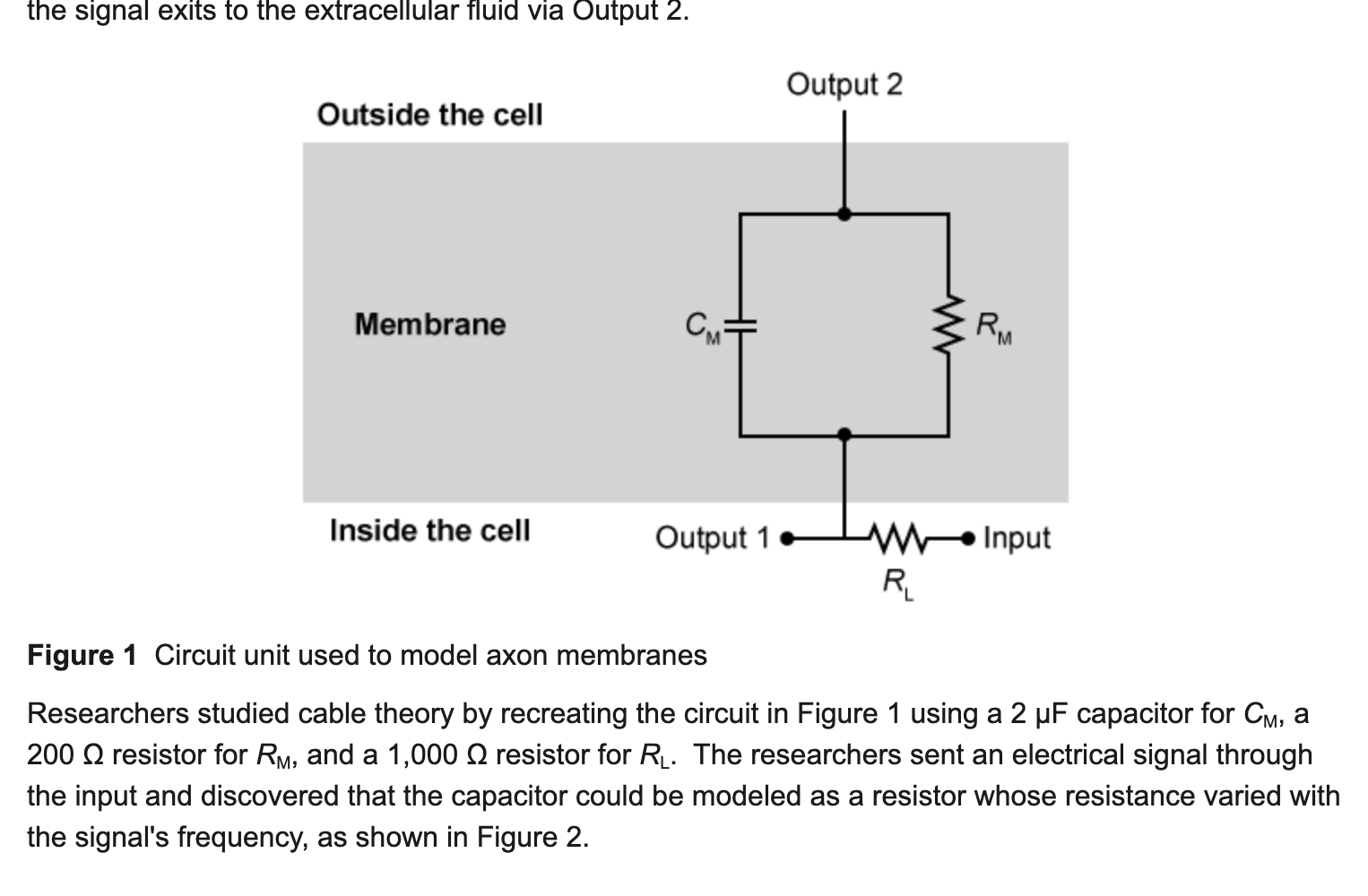

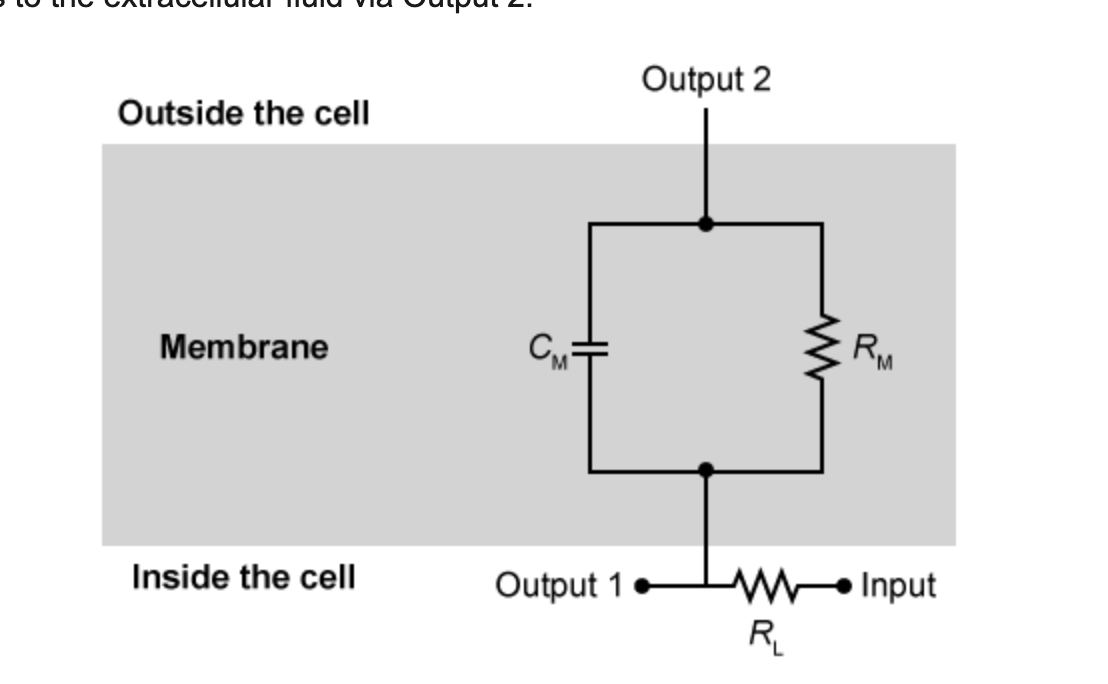
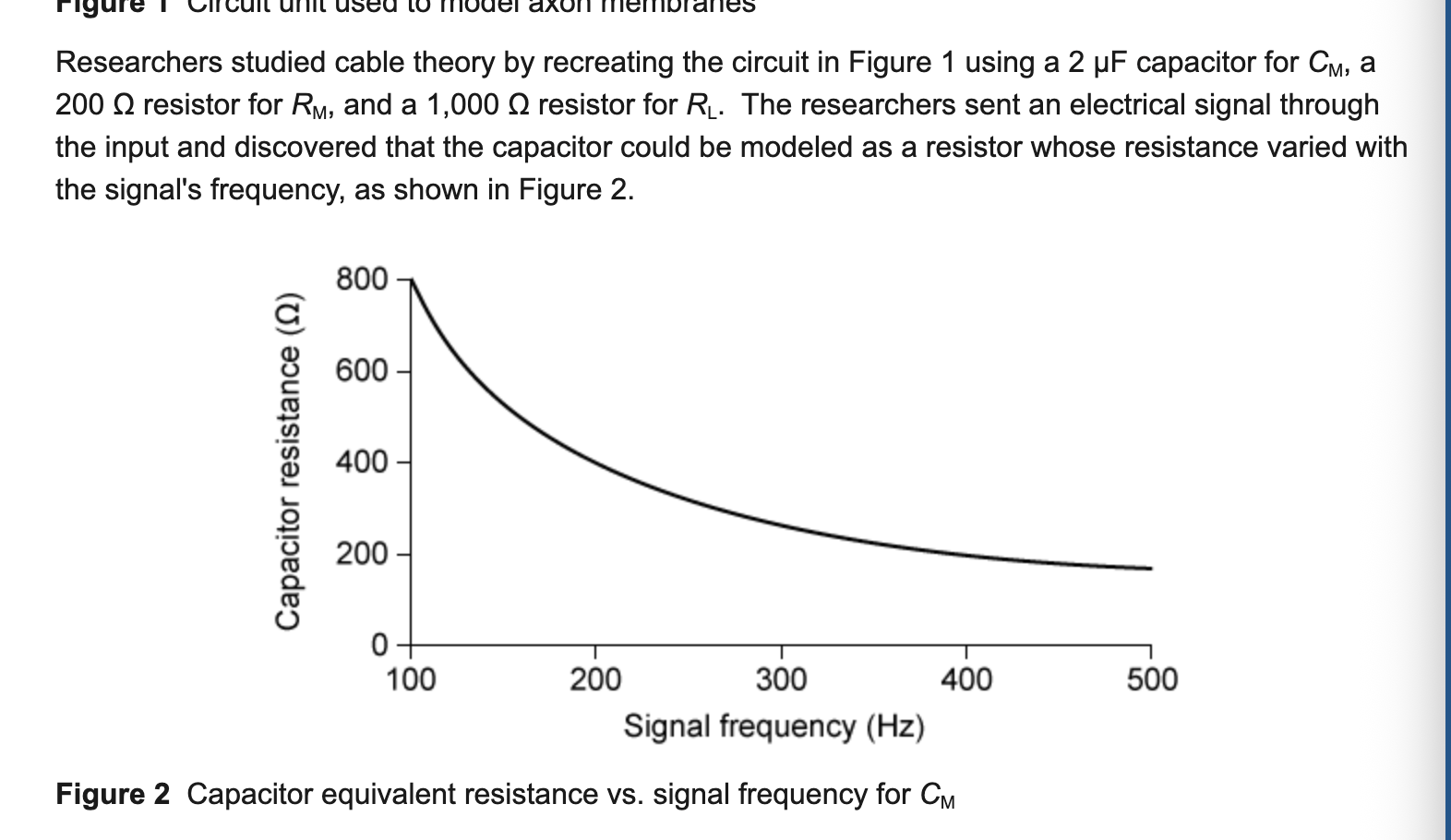
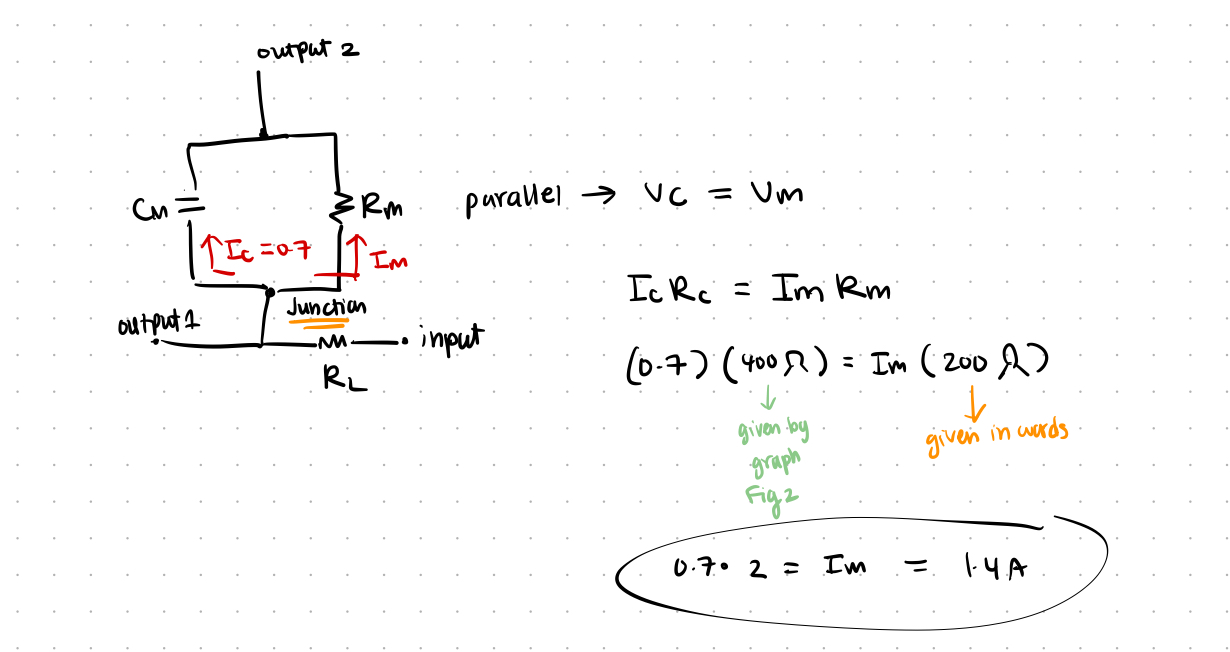
Loop rule
Passage B

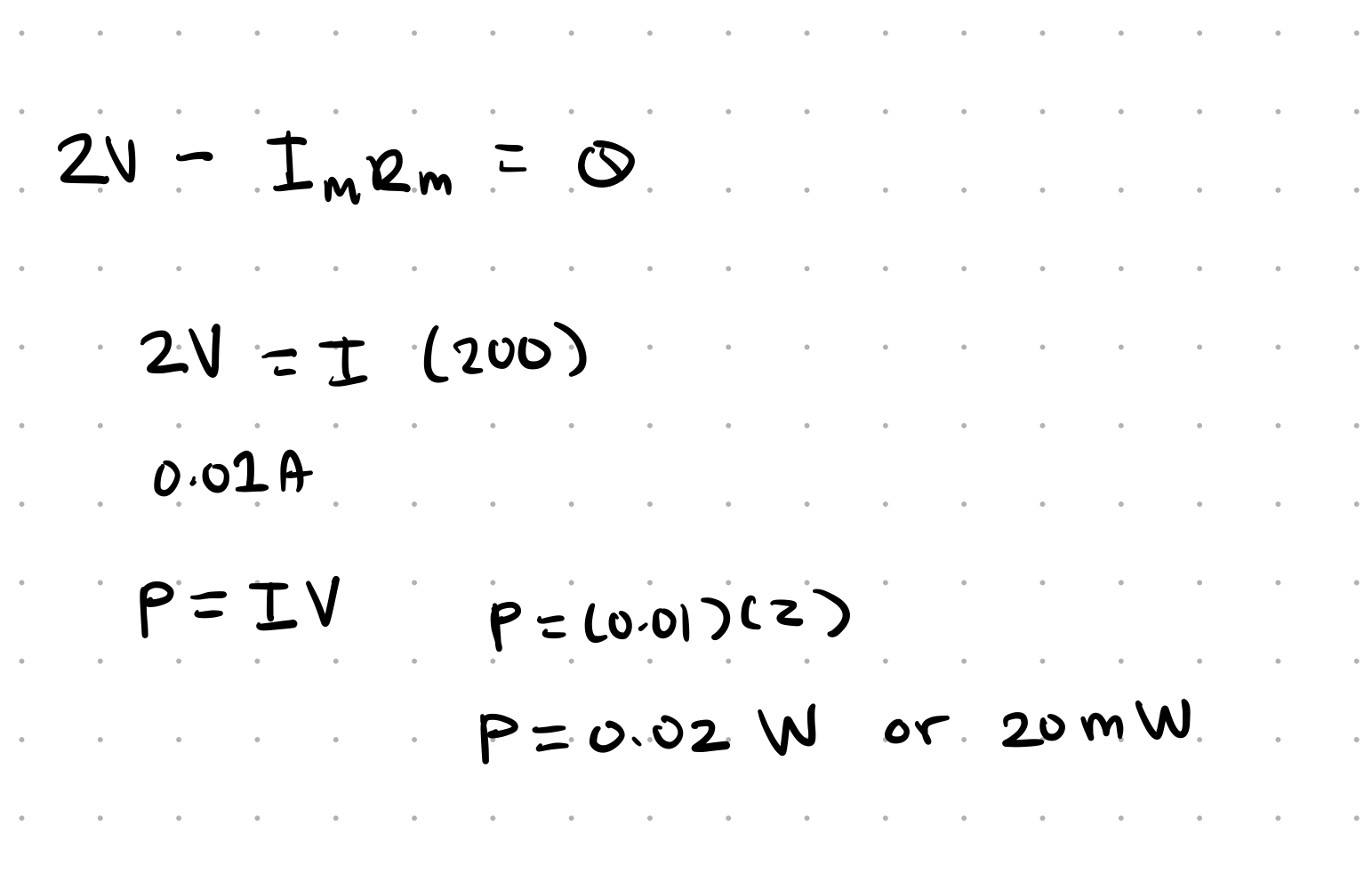

0.1C/2s —→ 0.05 A
V=IR V= 0.05A (1000 ohms) = 50V
Answer= 50V
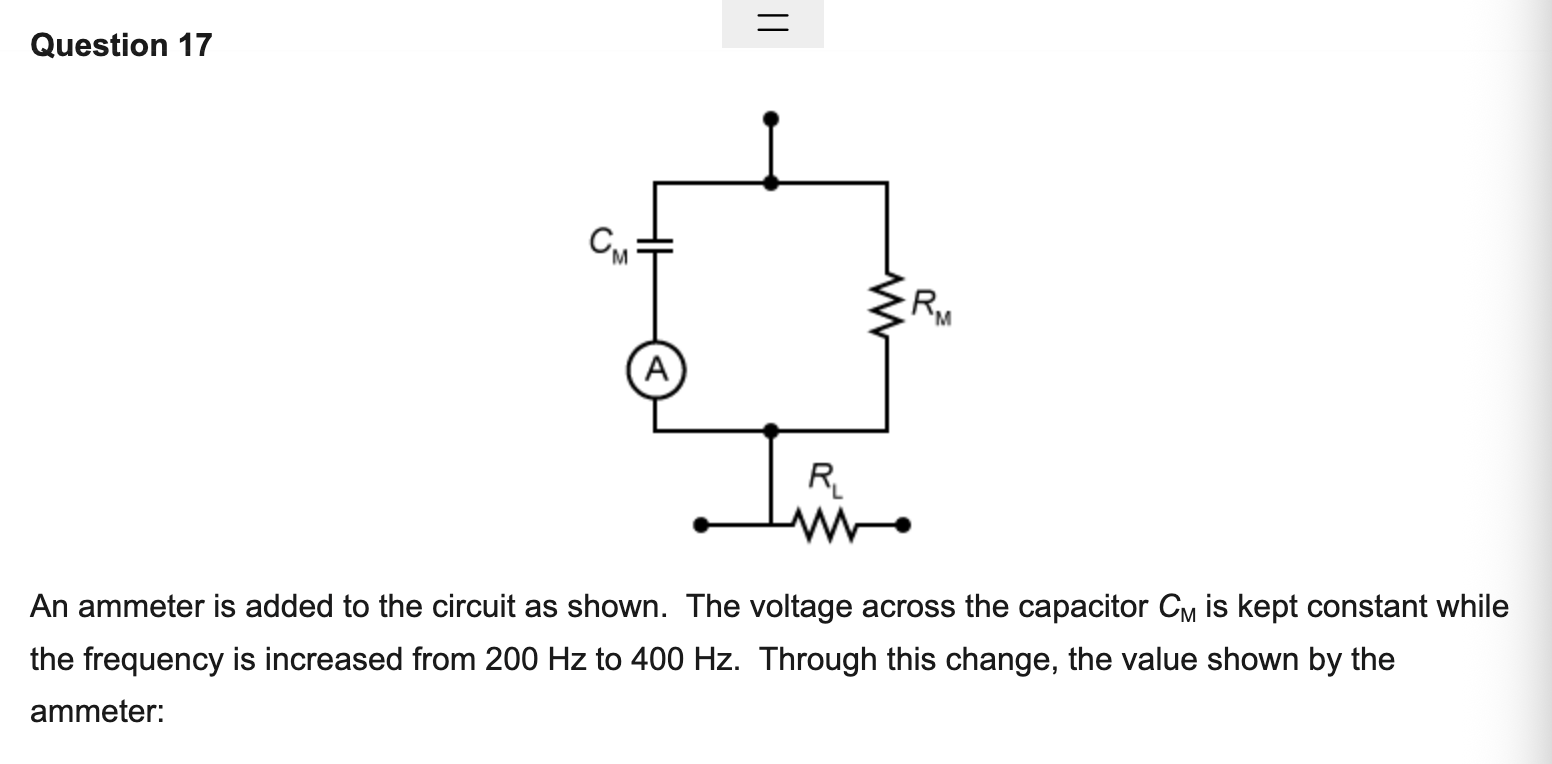
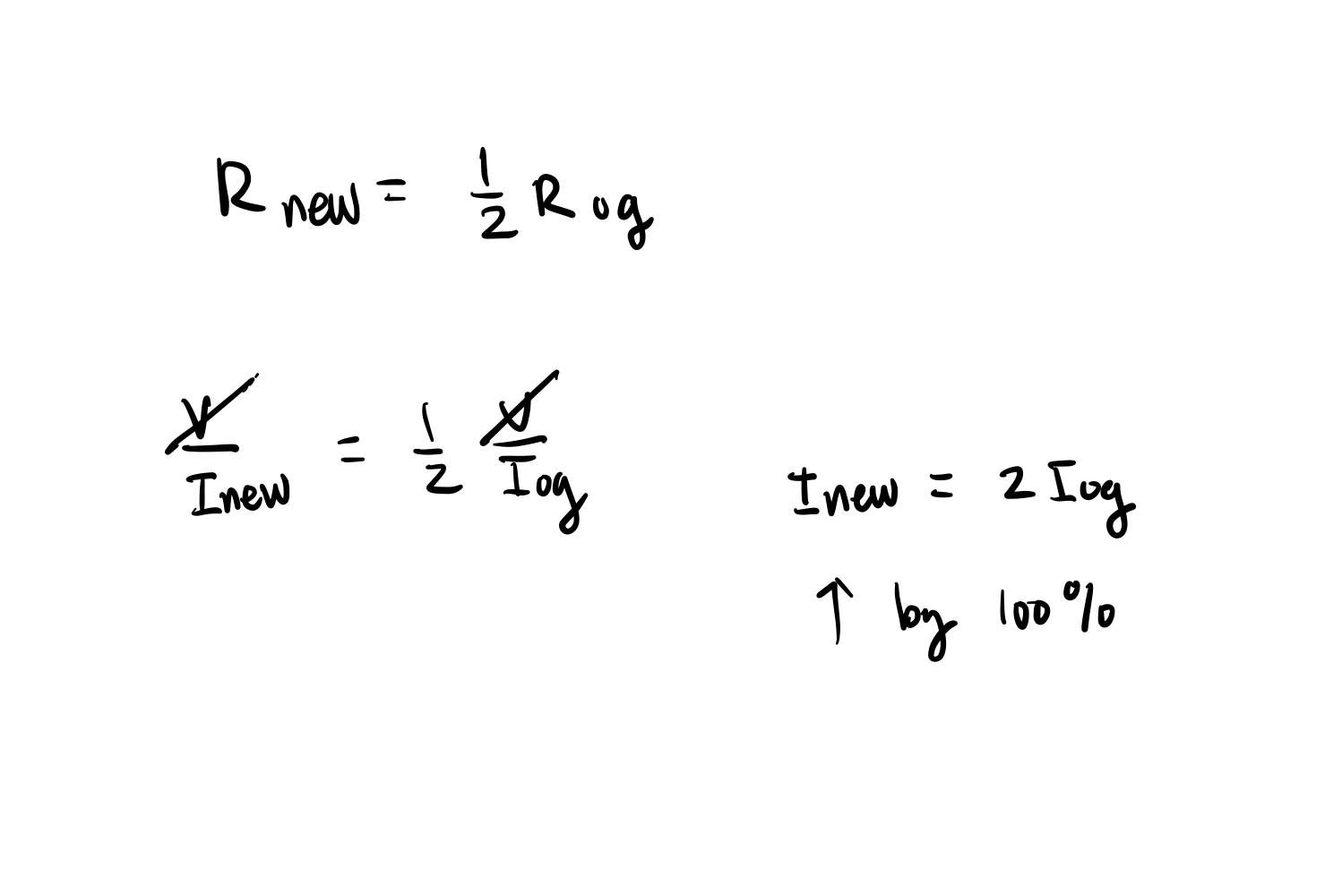

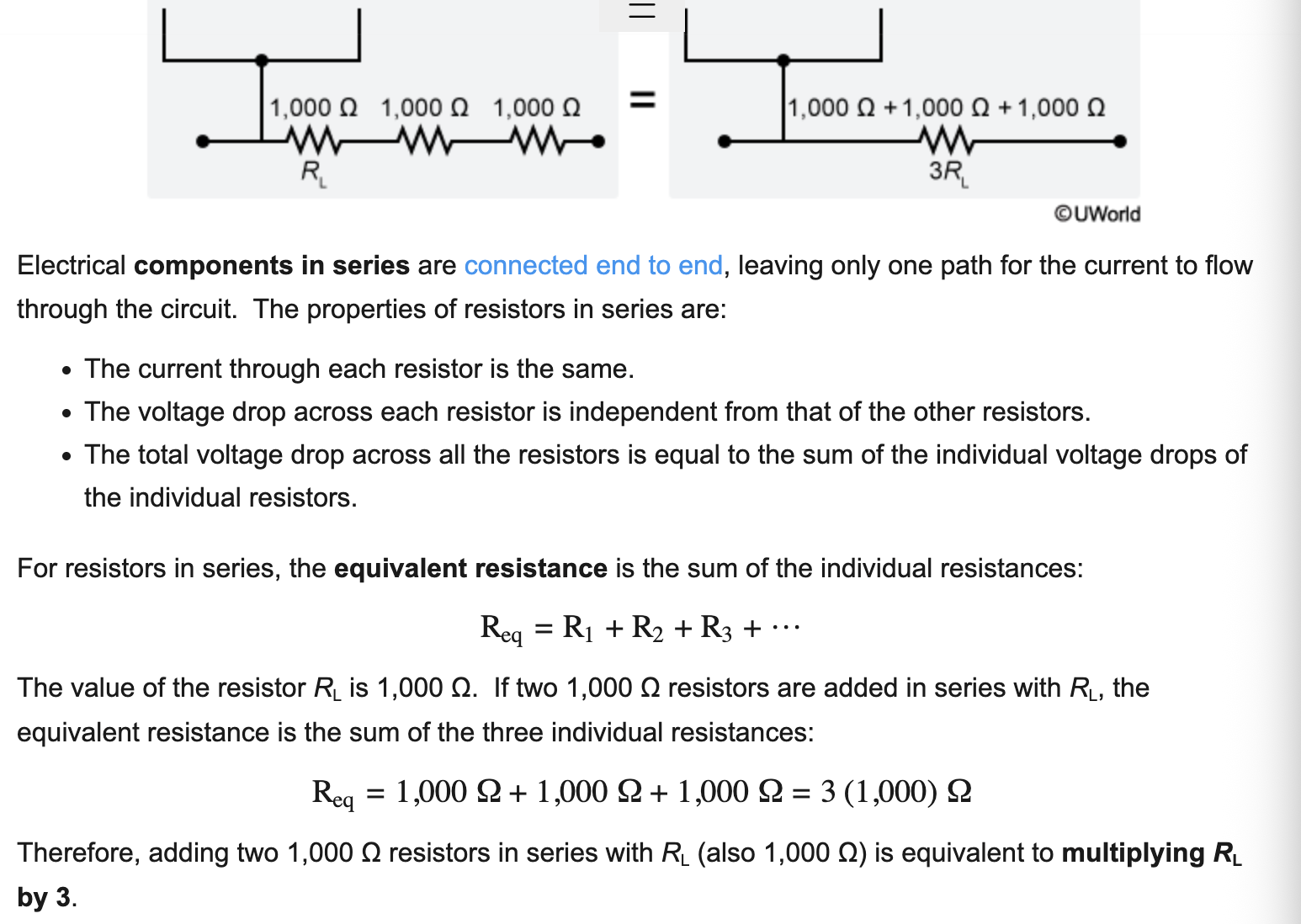
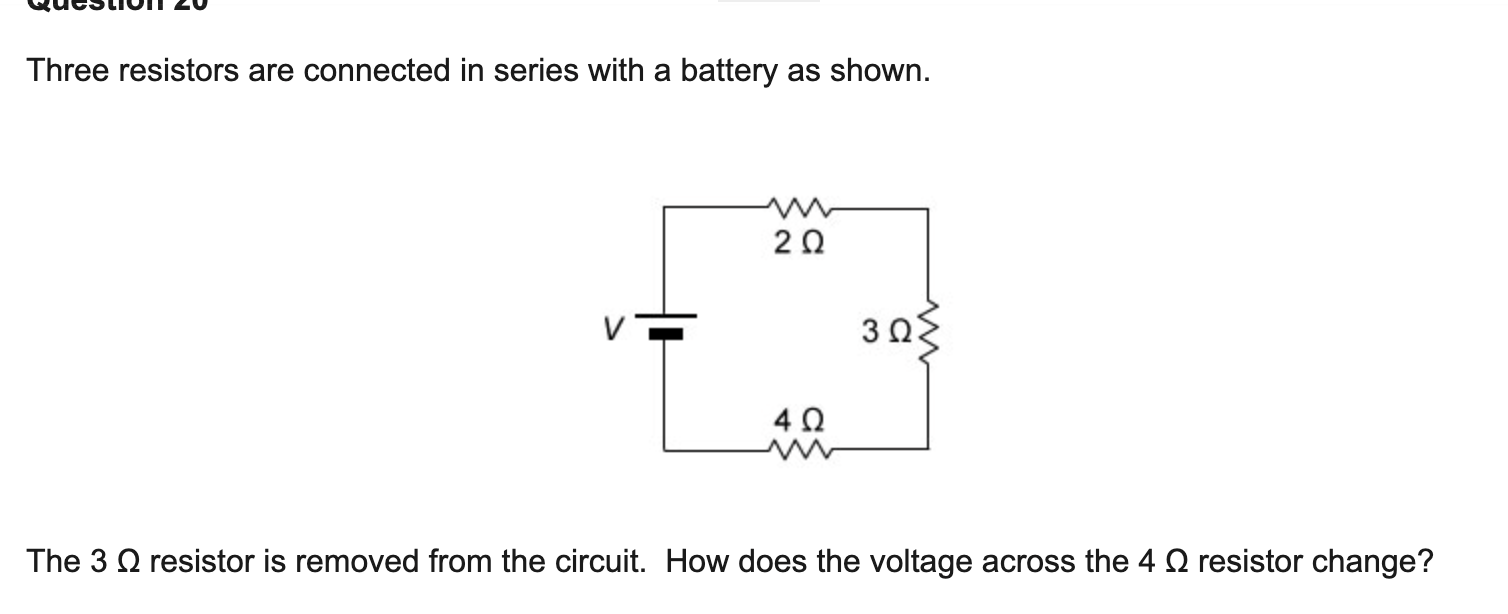
Increase in voltage because theres a decrease in resistance in series
Conductivity
indicates the ease with which electrons flow within the molecular strcuture of a material.
Conductivity is _______ proportional to resistivity
inversely
Suppose that a simple circuit ocmprising one voltage source and one metallic resistor yields current I. If the resistor were replaced with another resistor that is identical except that it has 75% lower conductivity, then I would……..
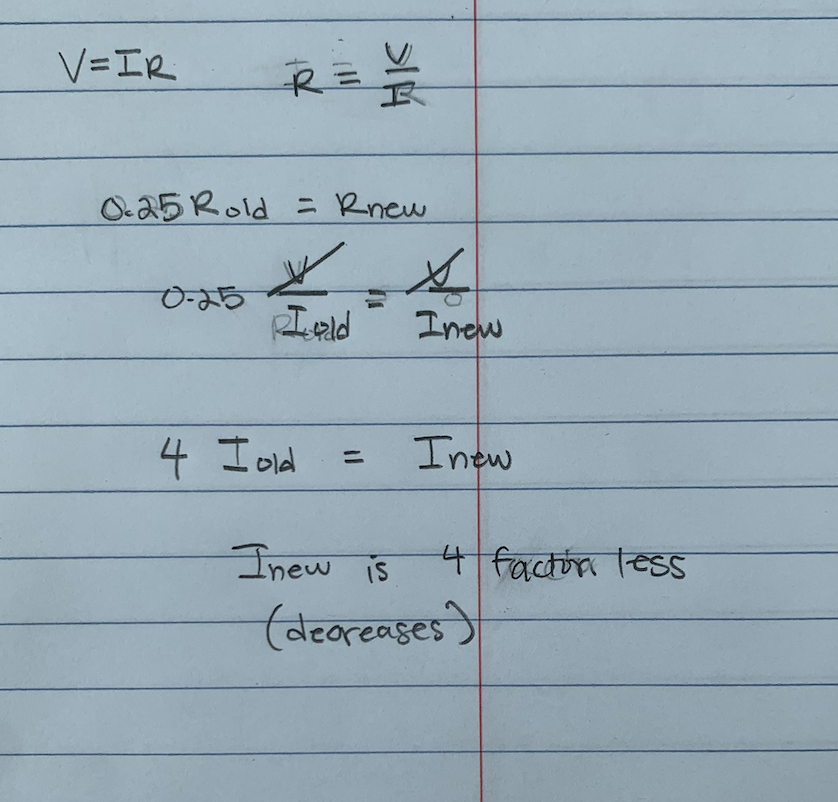
decrease in conductivity is increase in resistivity (increase R -resistance new) which means that R old is 25 percent of Rnew

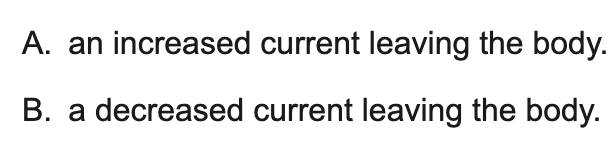

Answer: D
increase in resistivity (due to decrease in conductivity)
V=IR
increase in Resistance increases the voltage
(note: it said current is conserved, so “I” can’t decrease as R increases (choice B)

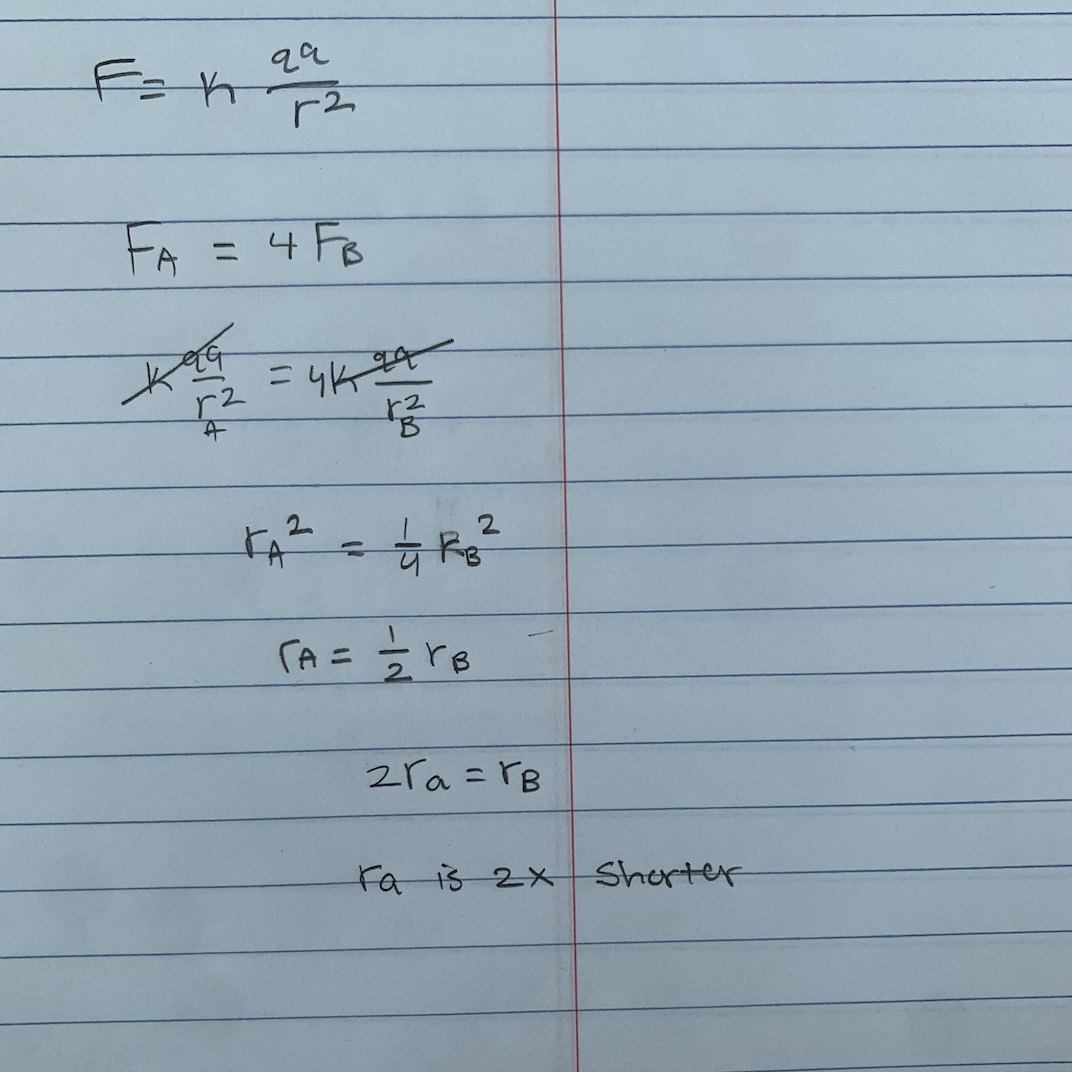
Passage C
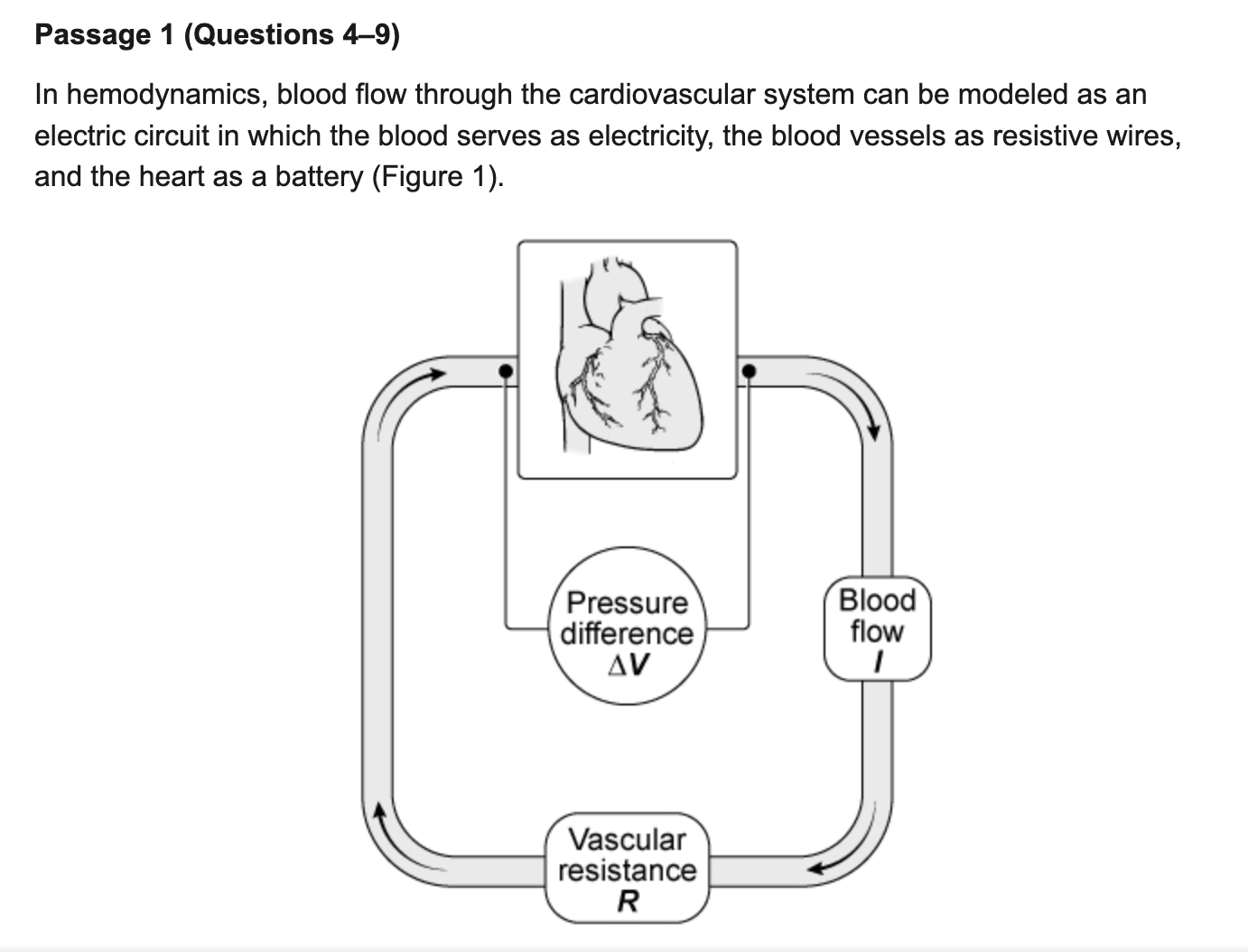
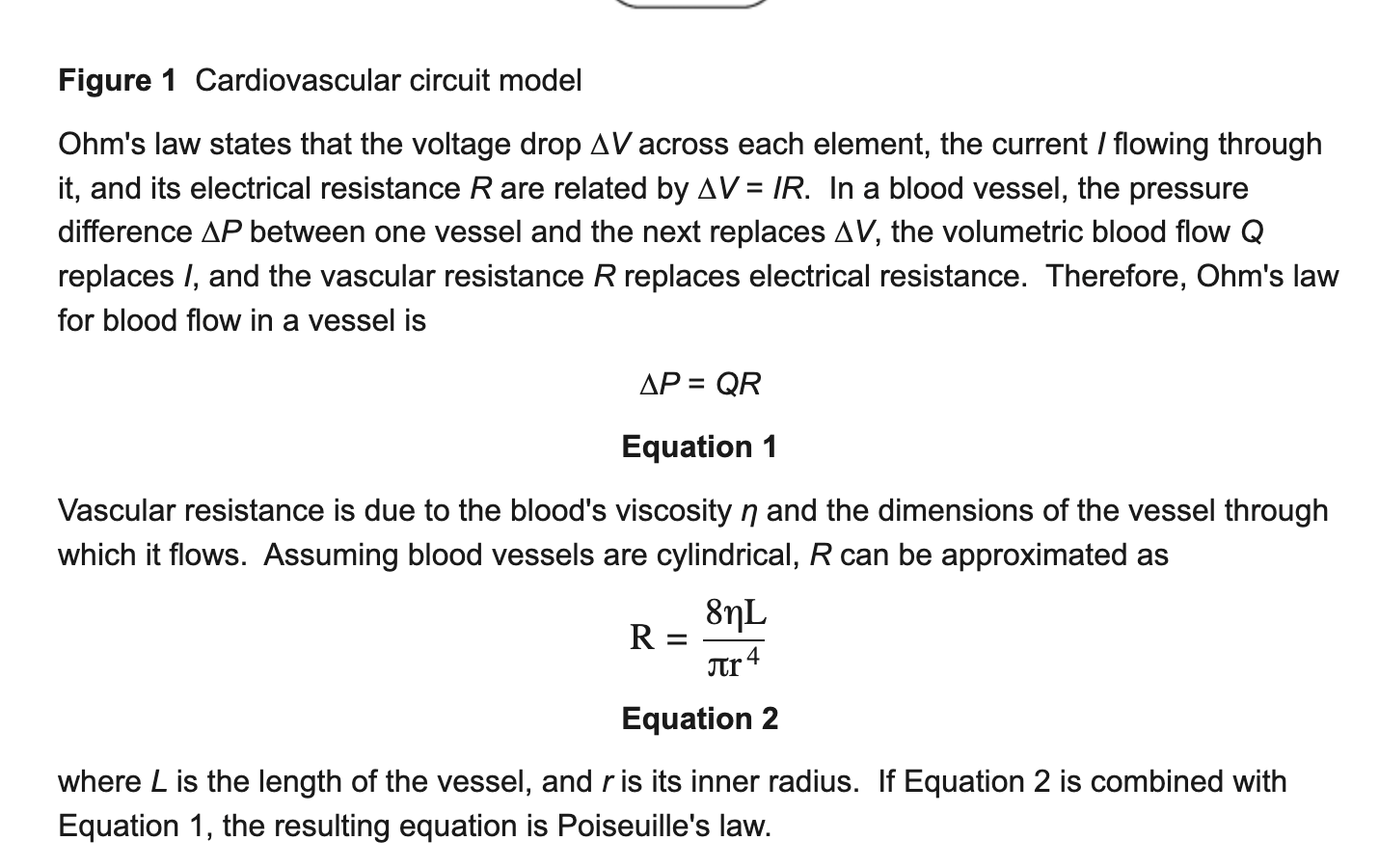
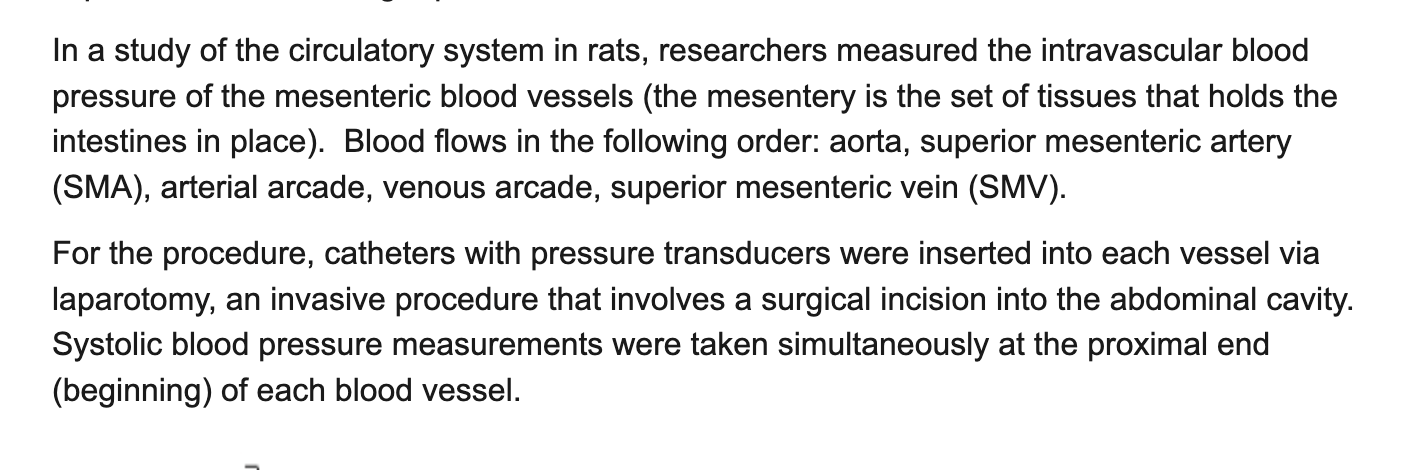
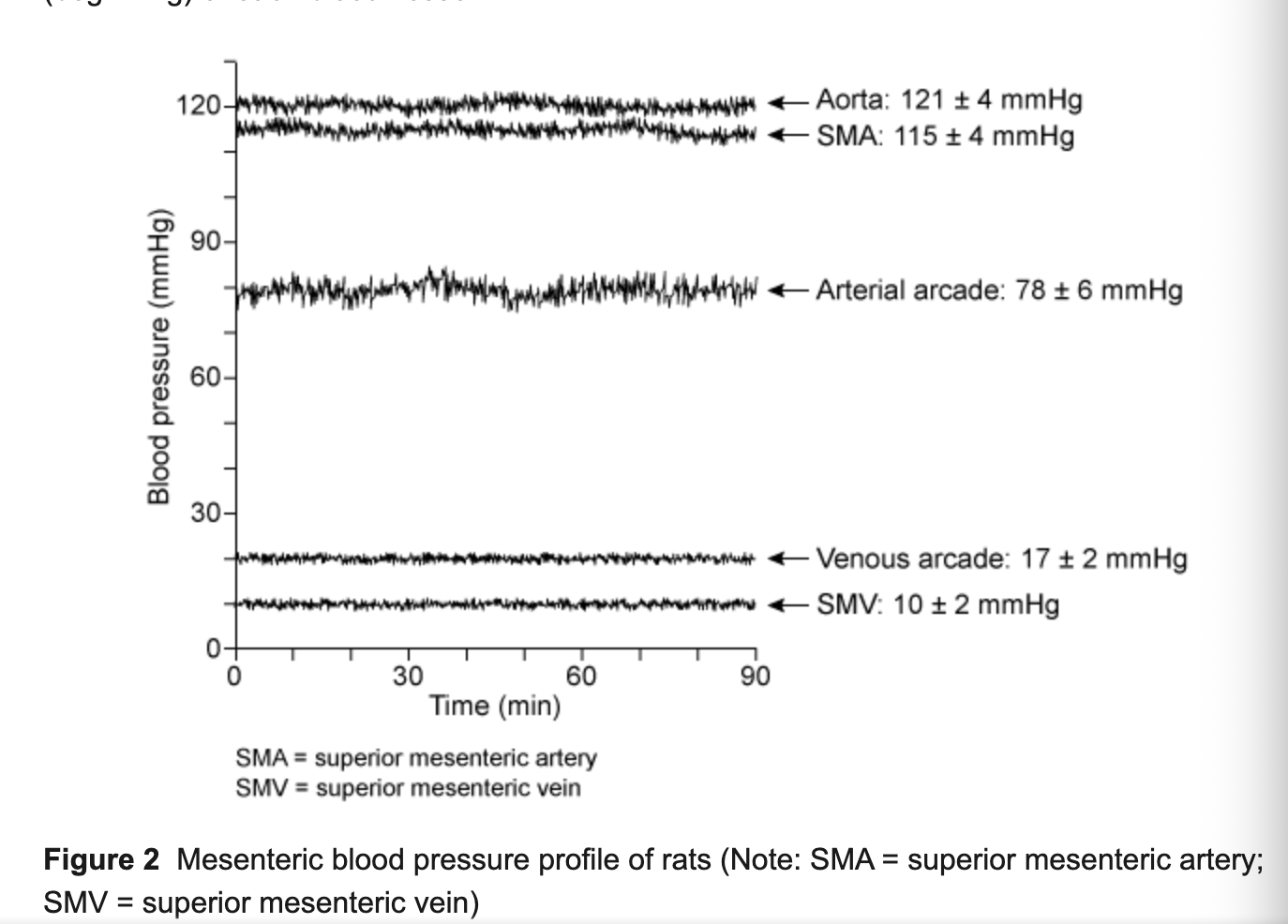
Passage C
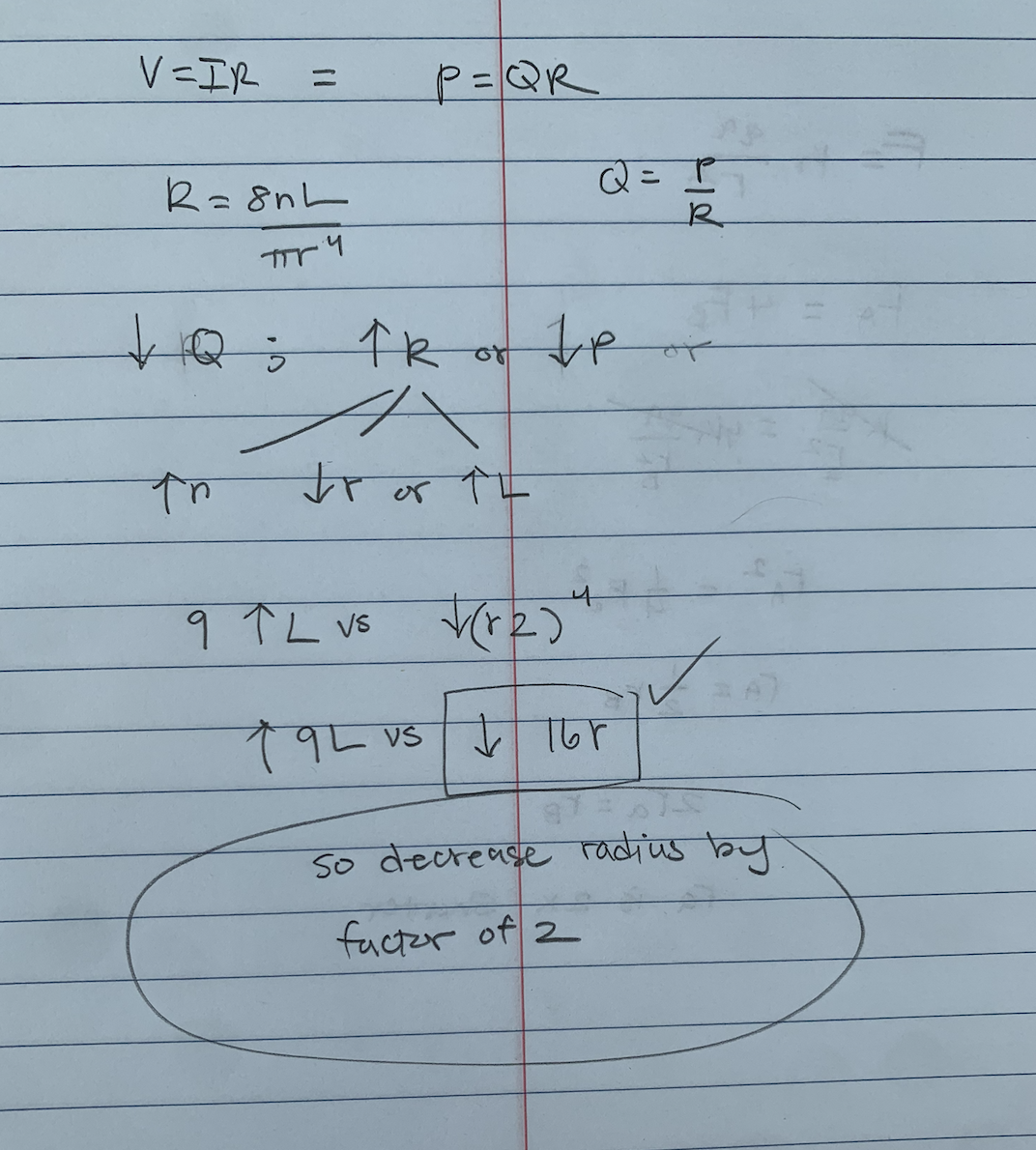
Which change would result in the greatest decrease in the volumetric blood flow rate within a mesenteric vessel?
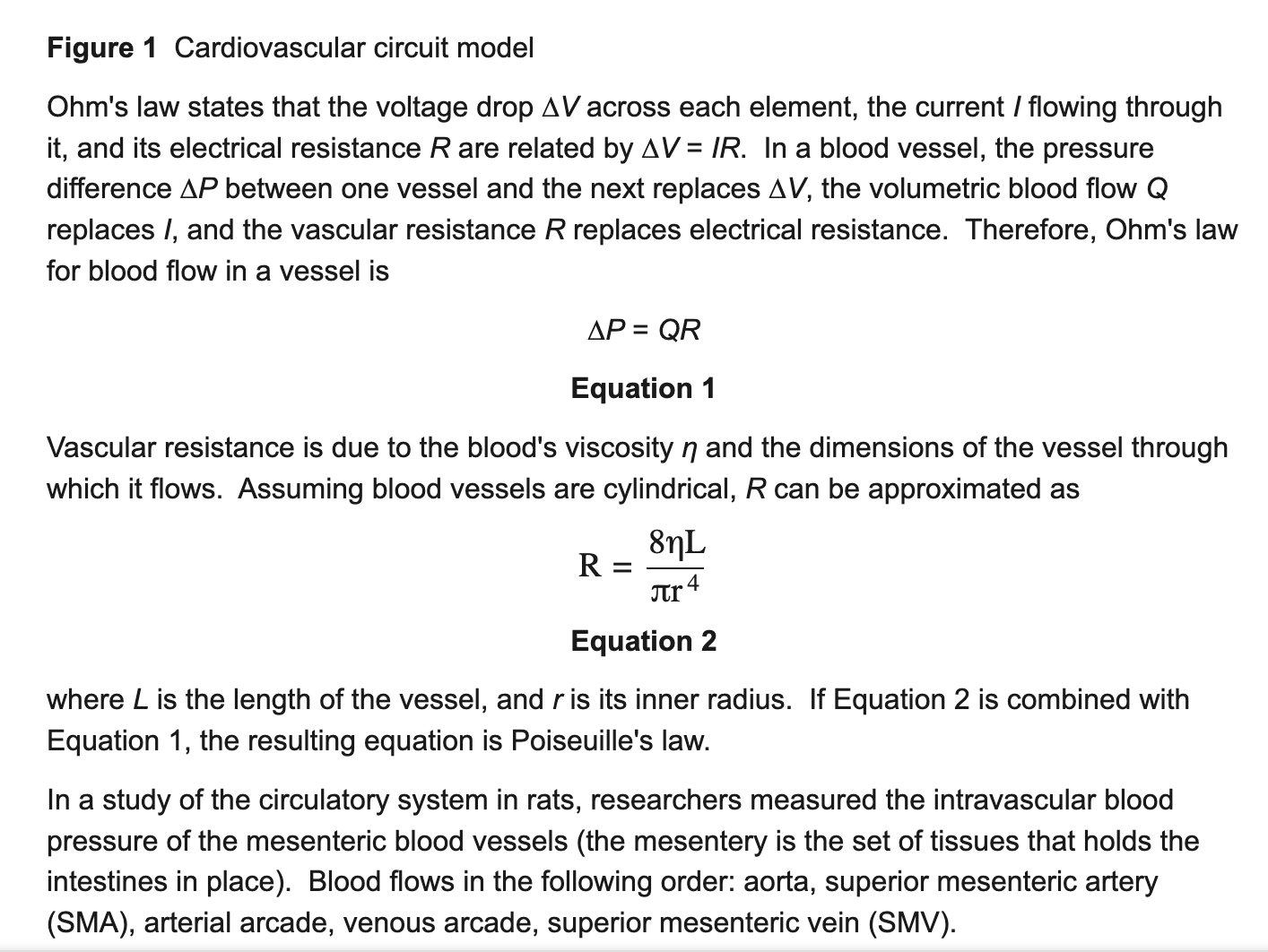
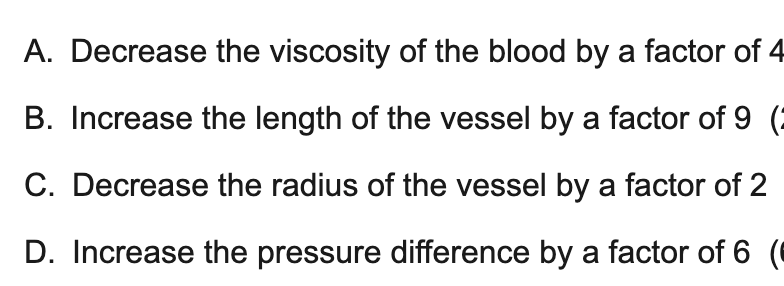
Answer: C
Passage C
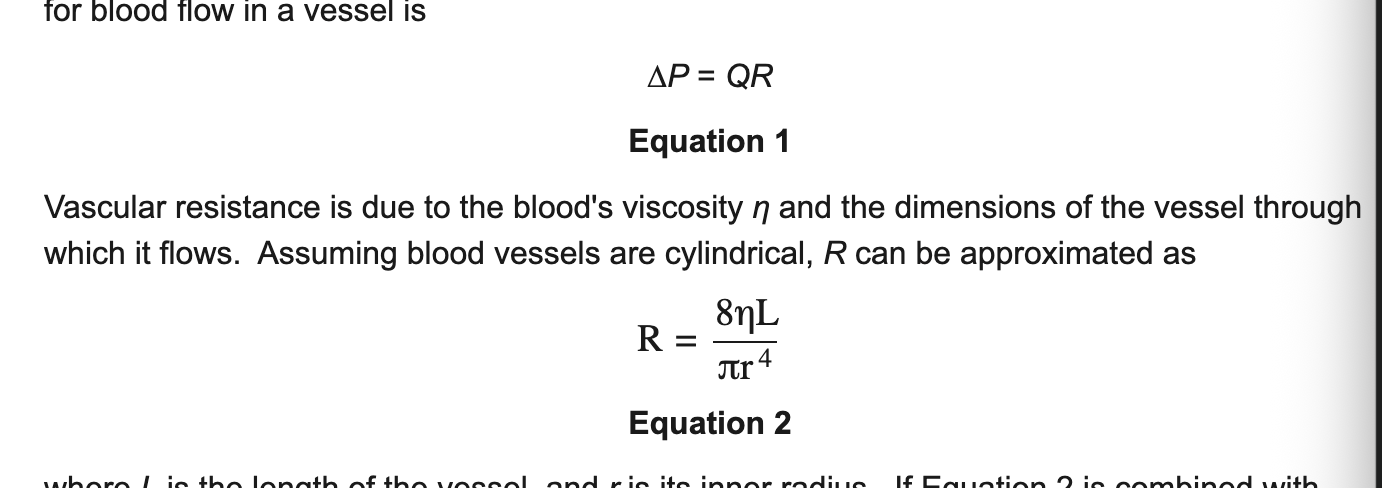
What could be the units for “n” in equation 2?
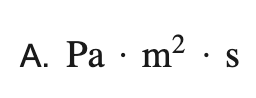
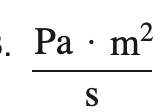
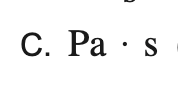
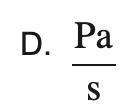
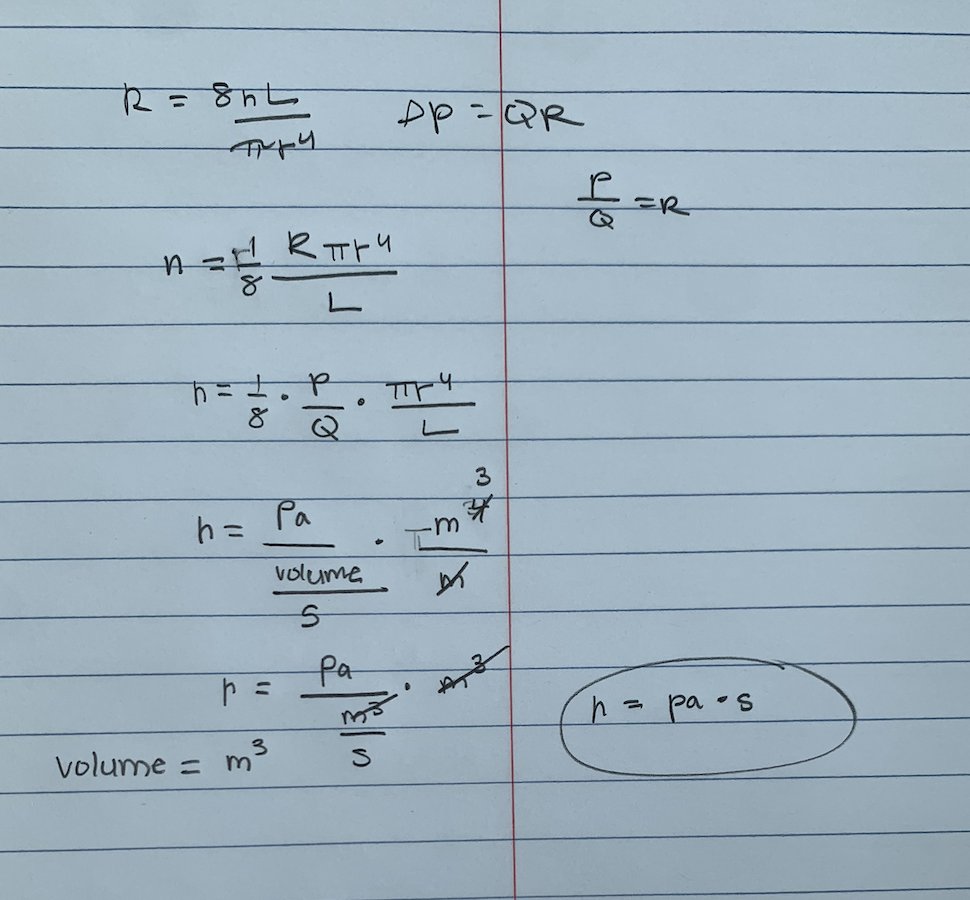
Answer: C
Passage C:

A. Aorta
B. Arterial arcade
C. Venous arcade
D. Superior mesenteric artery
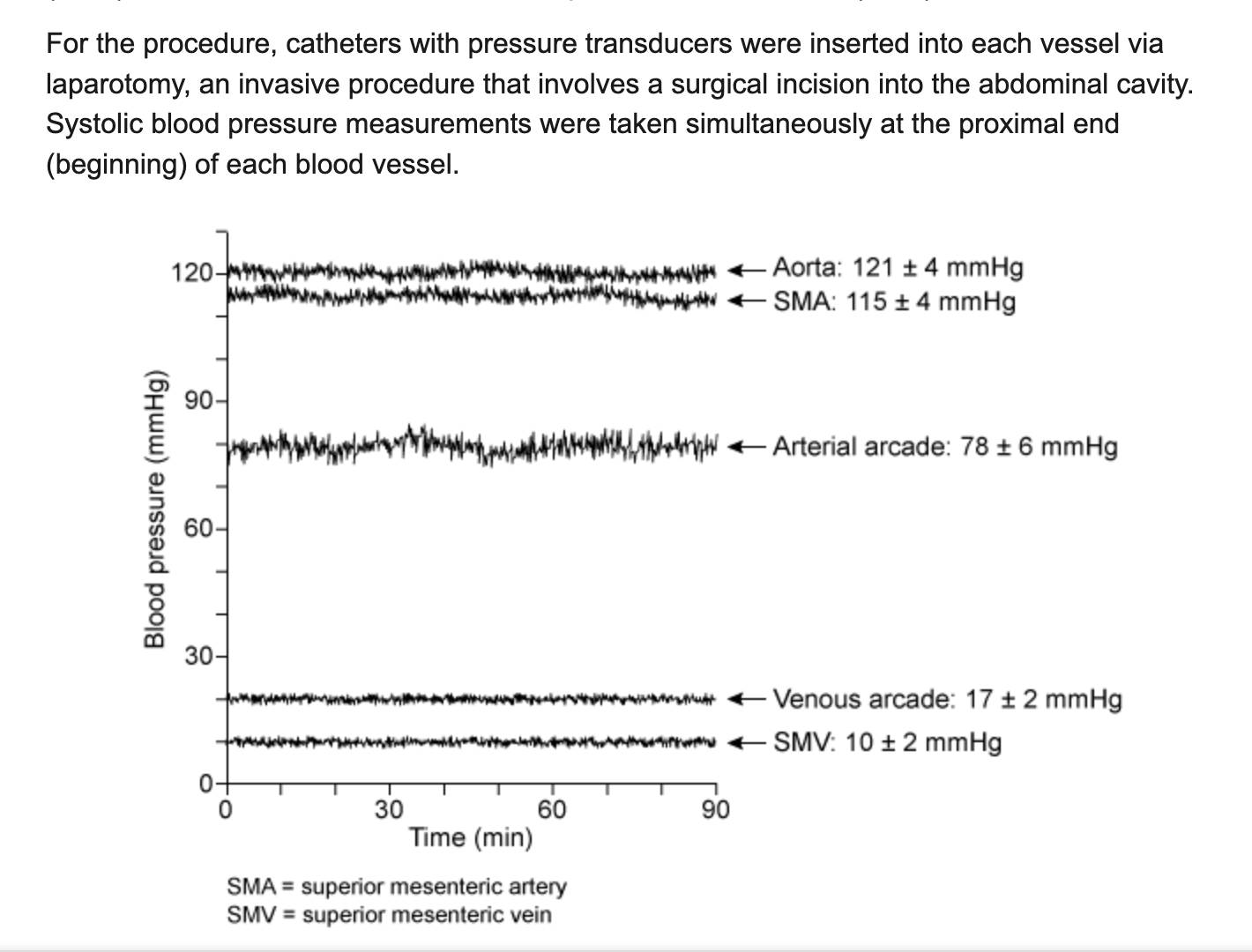
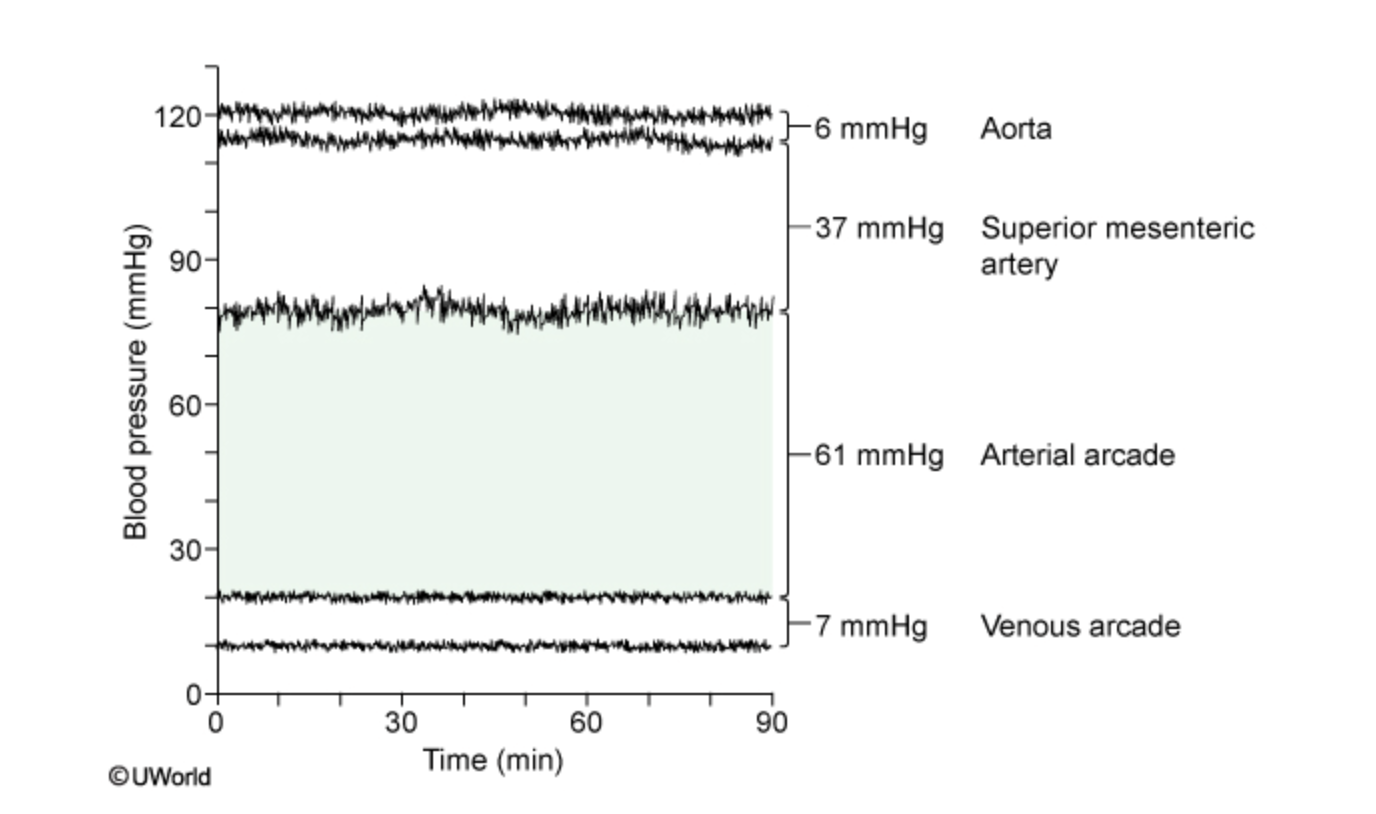
B. Arterial Arcade
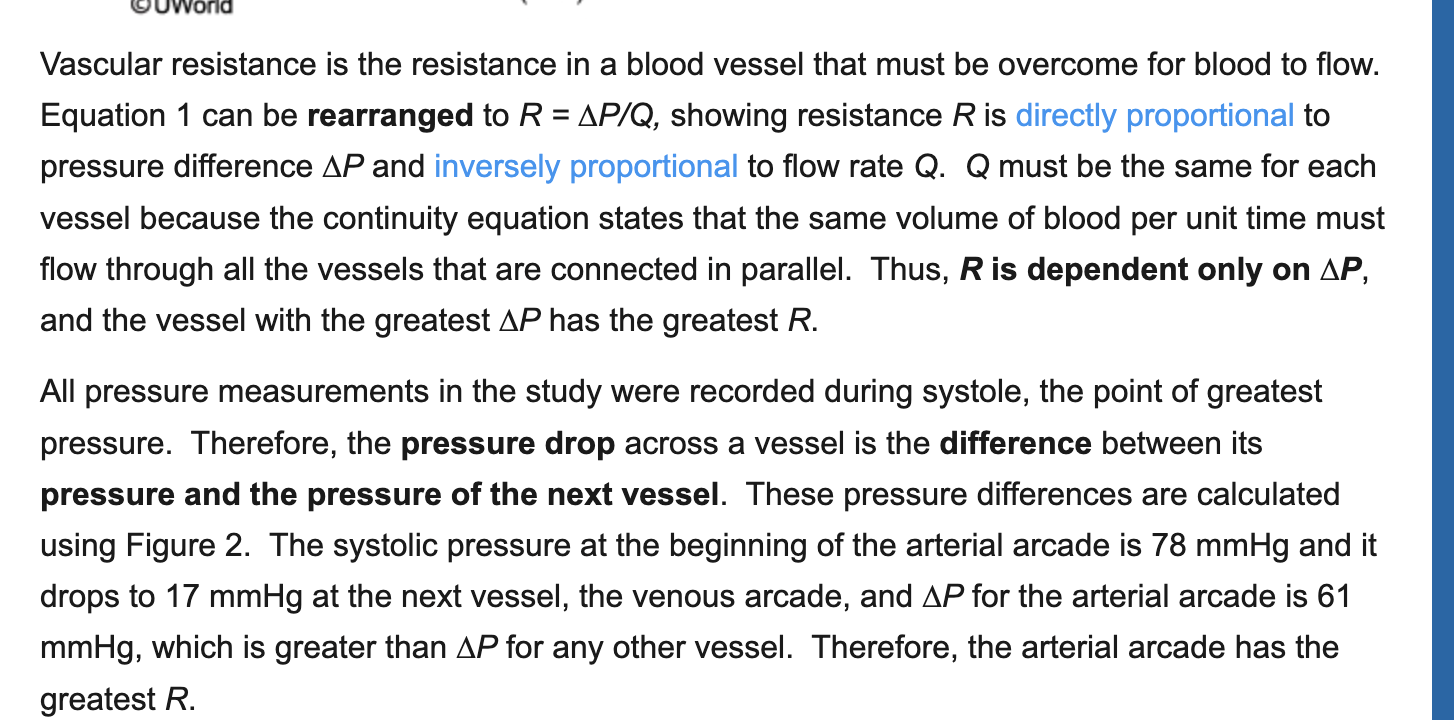
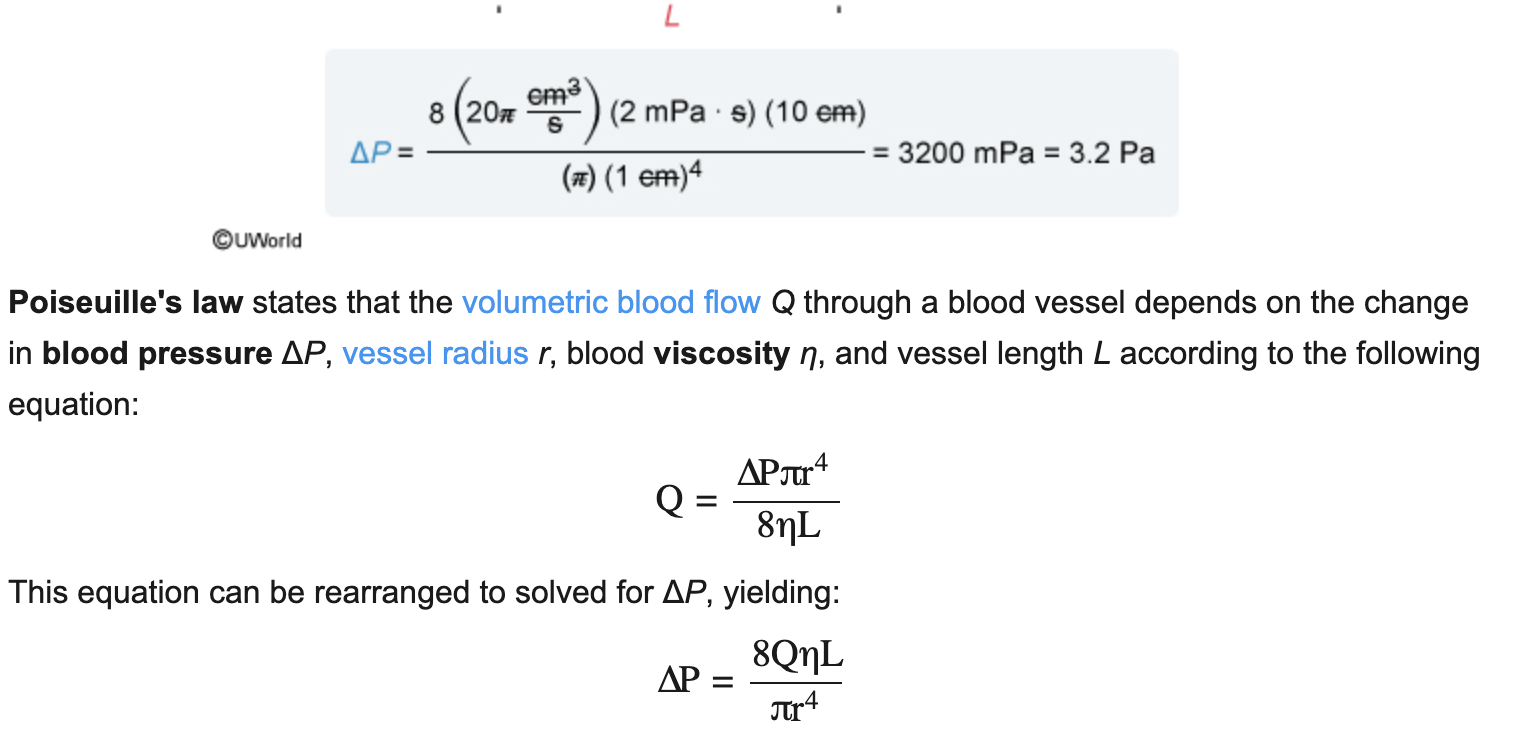
Basically, the Q volumetric blood flow is conserved in series or parallels (like currents in sereis only) so the only thing that can change it is the P.
Increase in P increases R. Based on the image of graph,Arterial arcade has greatest blood pressure difference
.
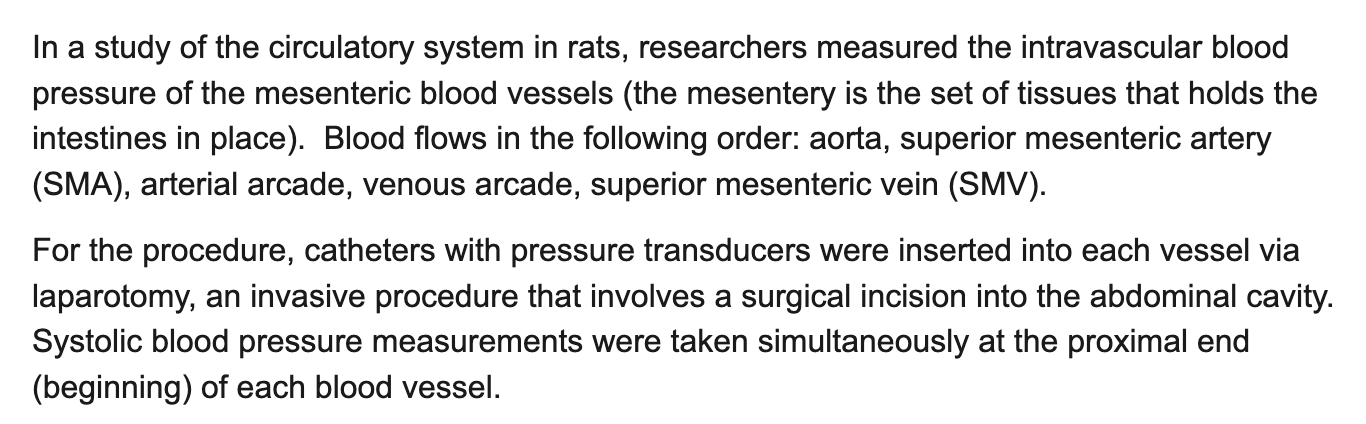
Cofounding variable
uncontrolled variables that affect the dependent variable


B. Group with minimally invasive aortic catheterization to measure mesenteric blood rpessure
C. group fitted with noninvasive tail cuffs to measure systolic blood pressure
D. Group with laparotomy to measure renovascular blood pressure.
Passage C
Answer: B
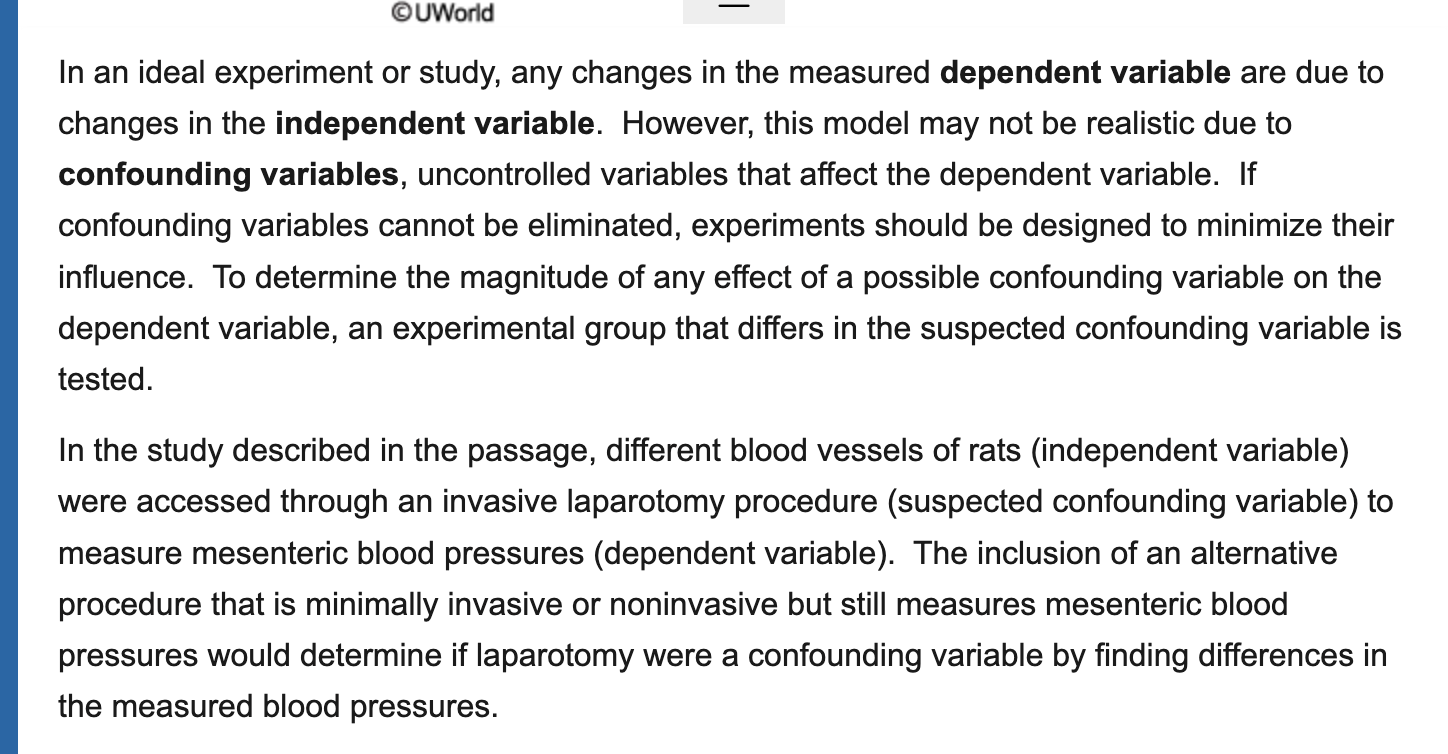
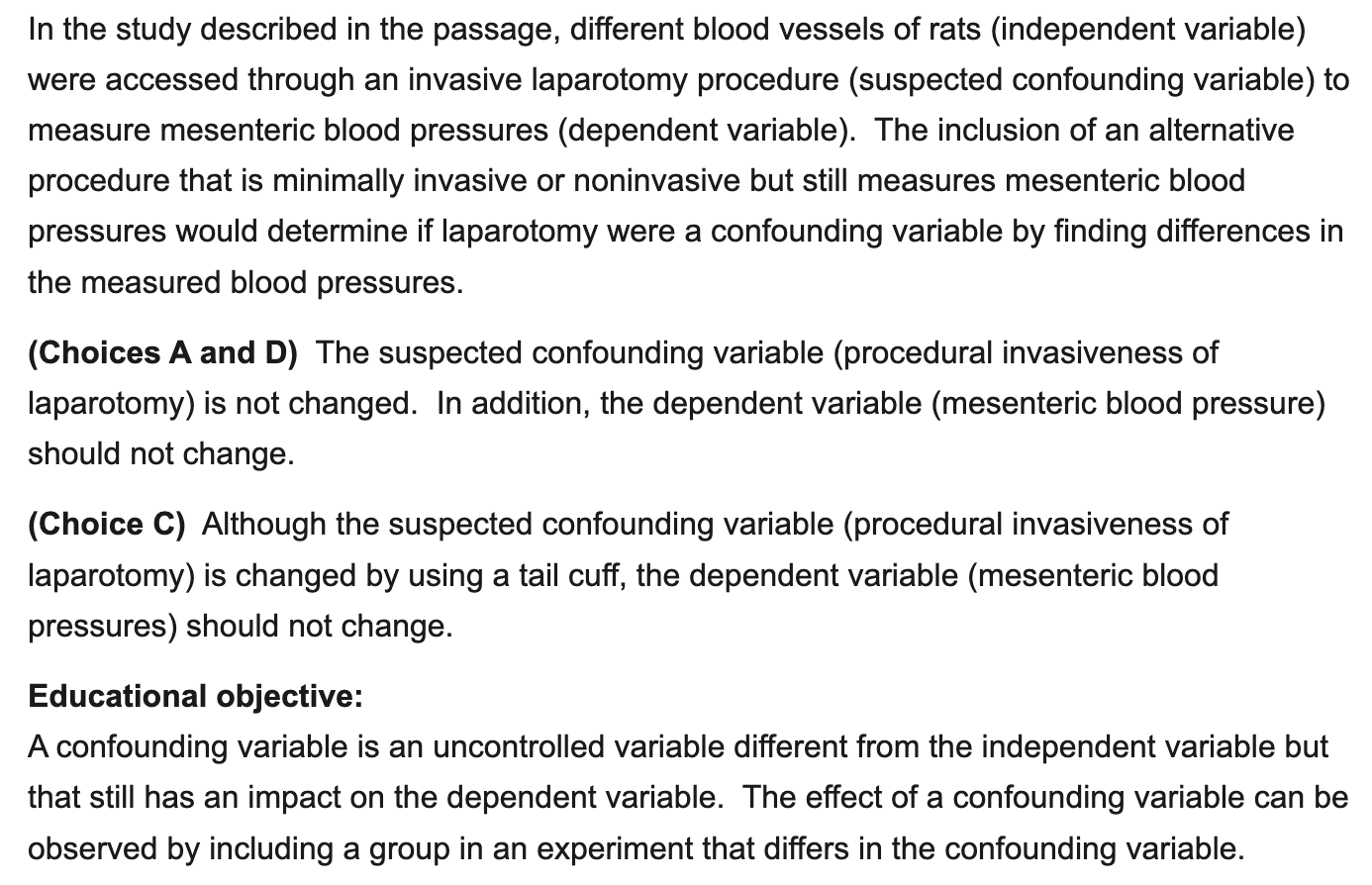
in the original study, they’re measuring systolic blood pressure specifically in the mesenteric vessels (aorta, SMA, arterial arcade, venous arcade) using an invasive laparotomy.
So the dependent variable isn’t just “systolic blood pressure” in a general sense (e.g., brachial artery pressure via cuff). It’s mesenteric systolic blood pressure — a very specific measurement in a specific vascular bed.
That’s why:
Choice C (tail cuffs) measures systemic systolic BP — different dependent variable → can’t isolate the effect of laparotomy on mesenteric pressures.
Choice B (minimally invasive aortic catheter) measures mesenteric systolic BP without the laparotomy — same dependent variable, different level of the confounding variable → correct control.
So yes: same specific dependent variable, different procedure → that’s how you test if the procedure is a confounder.





Passage C
Answer: D
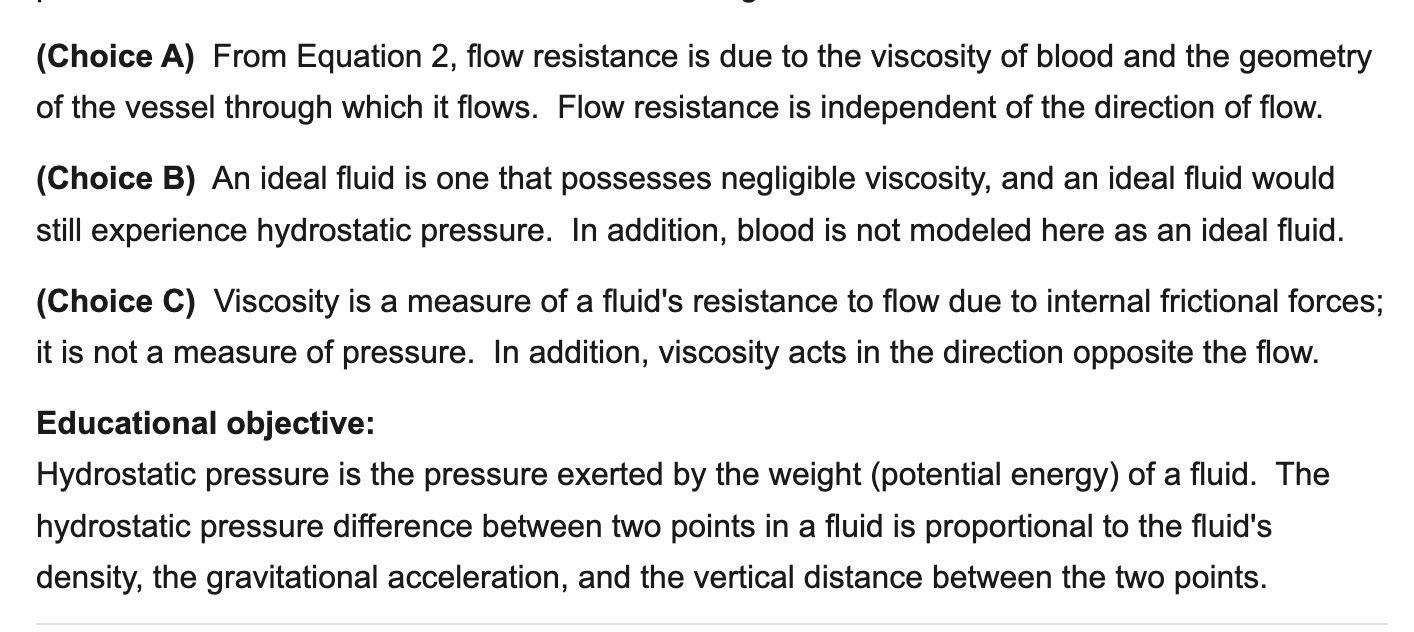
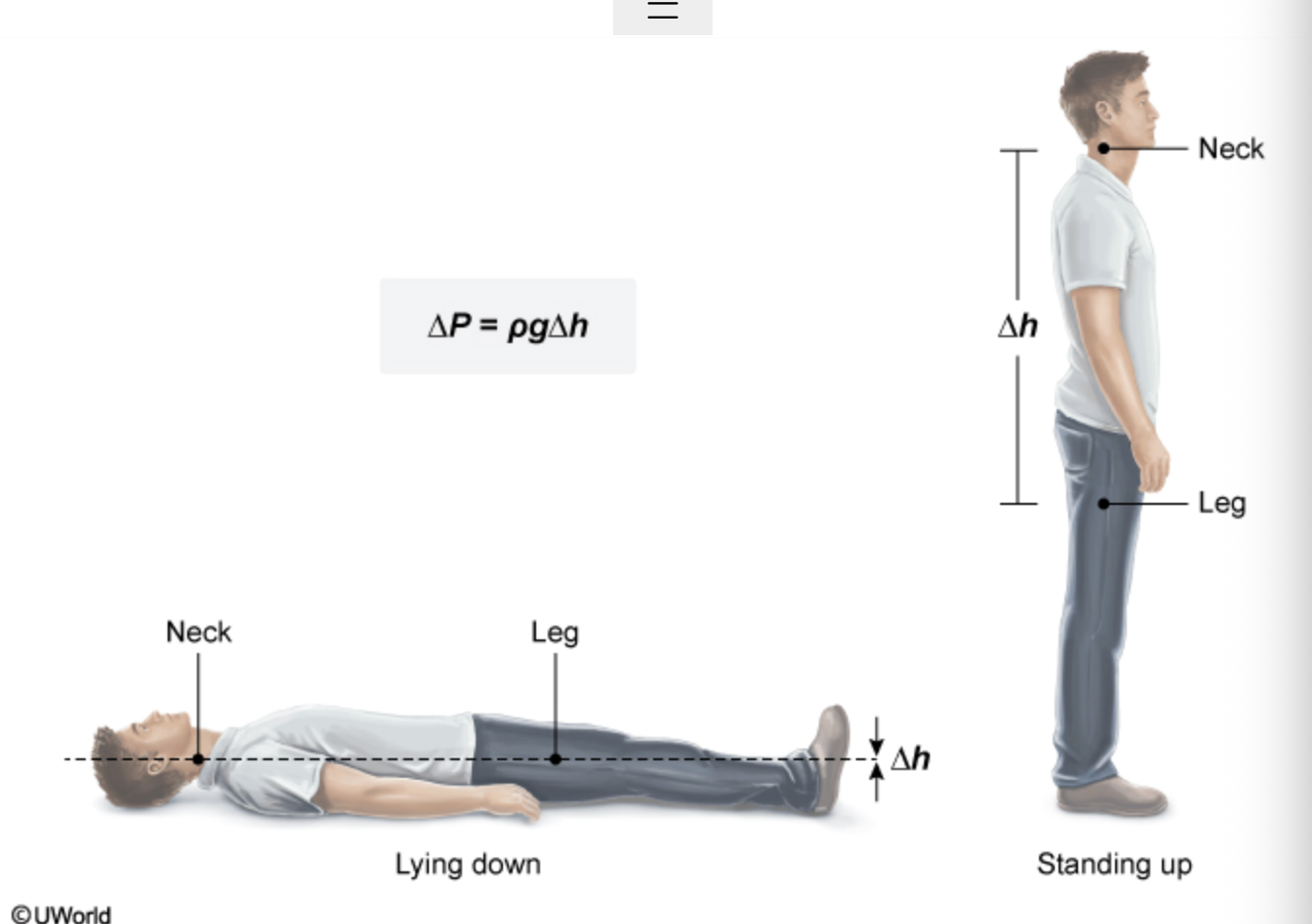
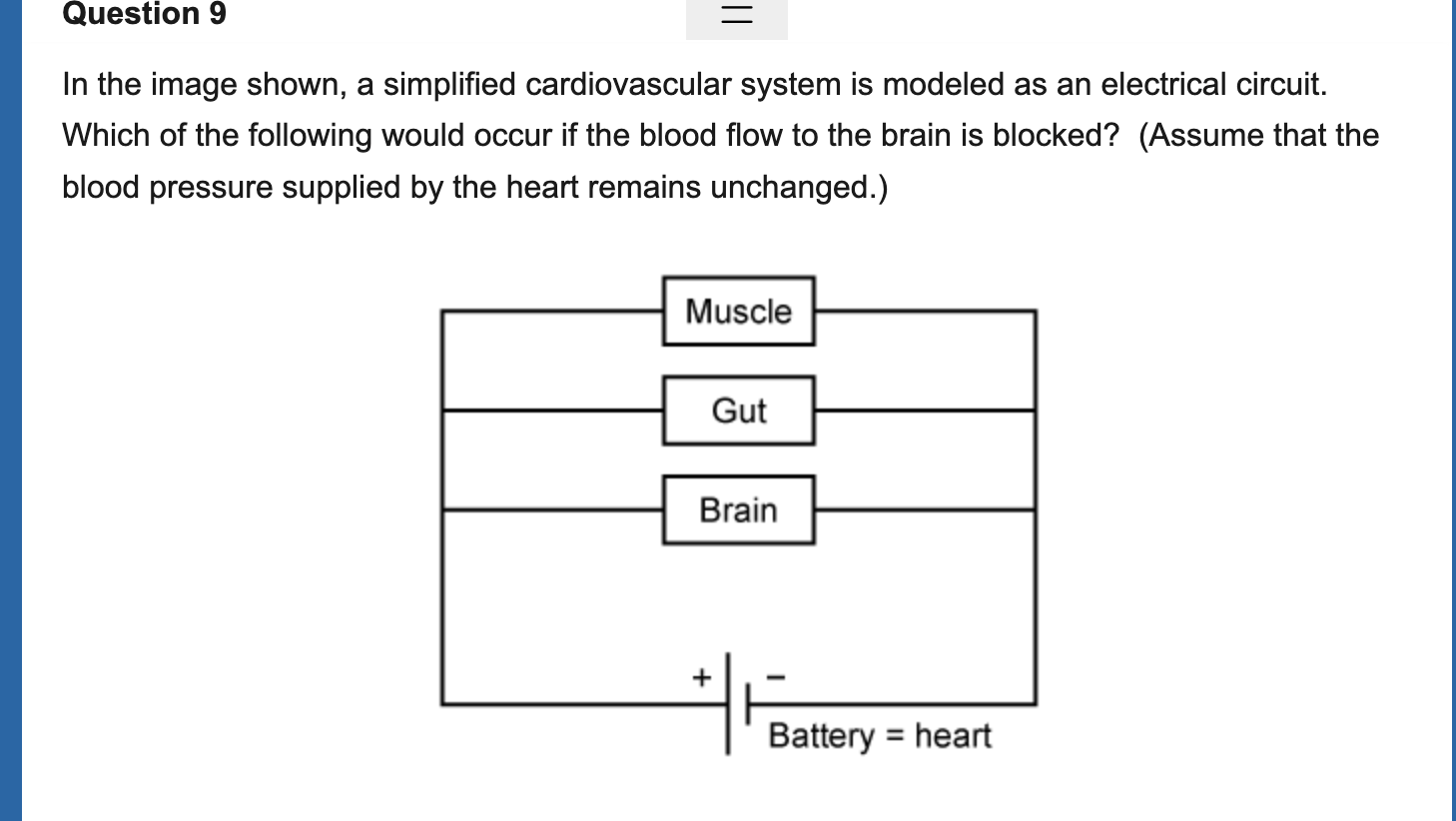
Passage C
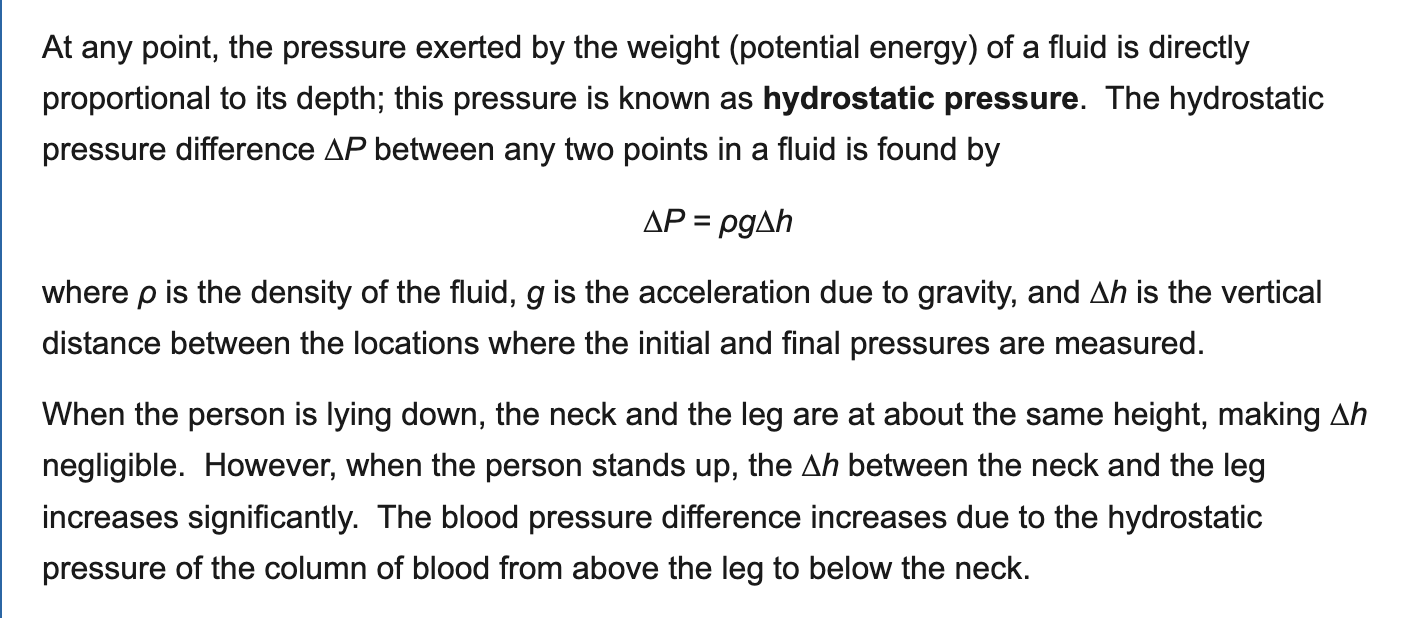
Increase vascular flow resistance
Pressure drop across the msucle will increase
Blood flow trhough the gut will icnrease
Blood flow throughout the cardiovascular system will stop
Total vascular flow resistance will increase
Note: blood flow (Q) is conserved
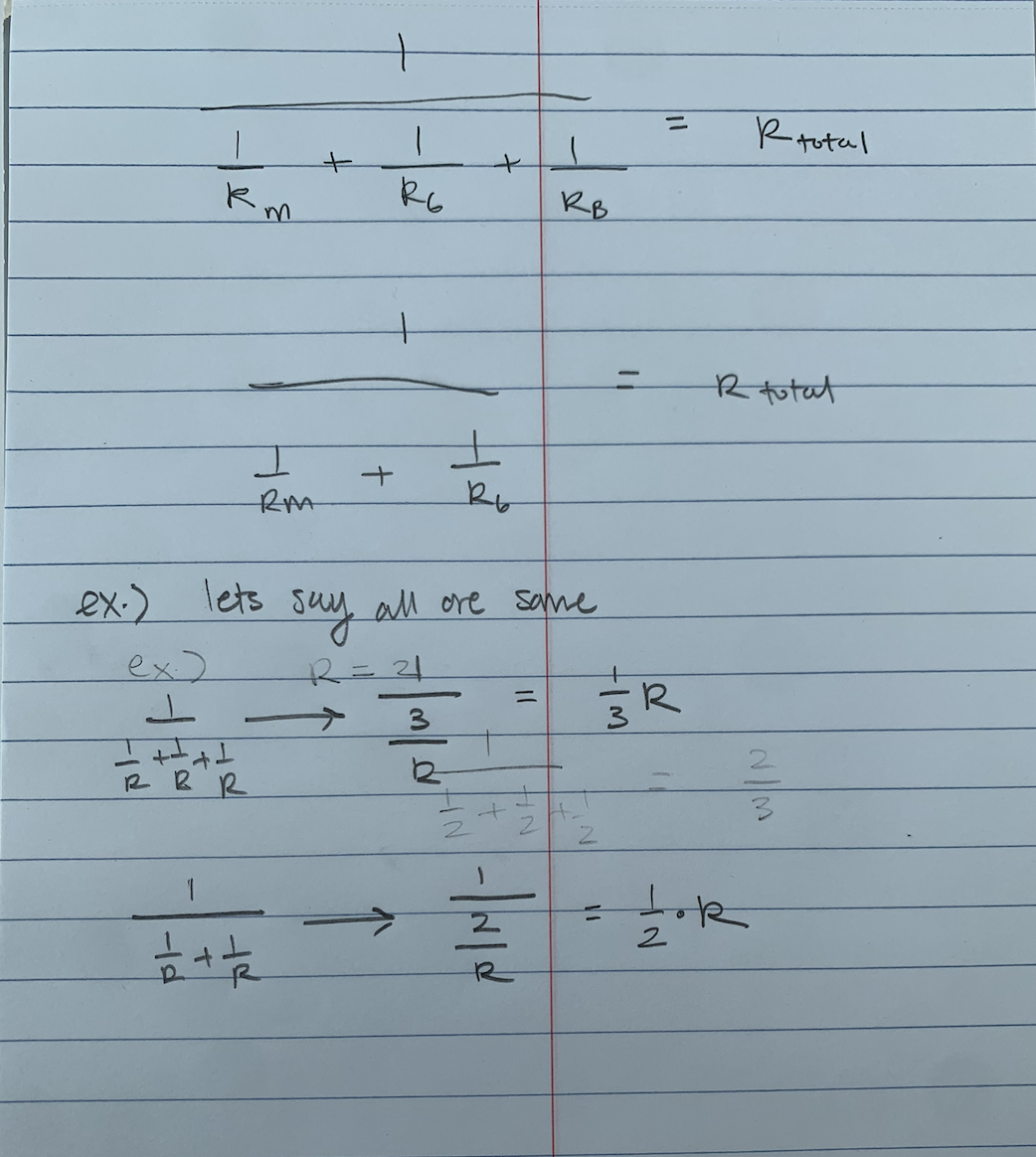

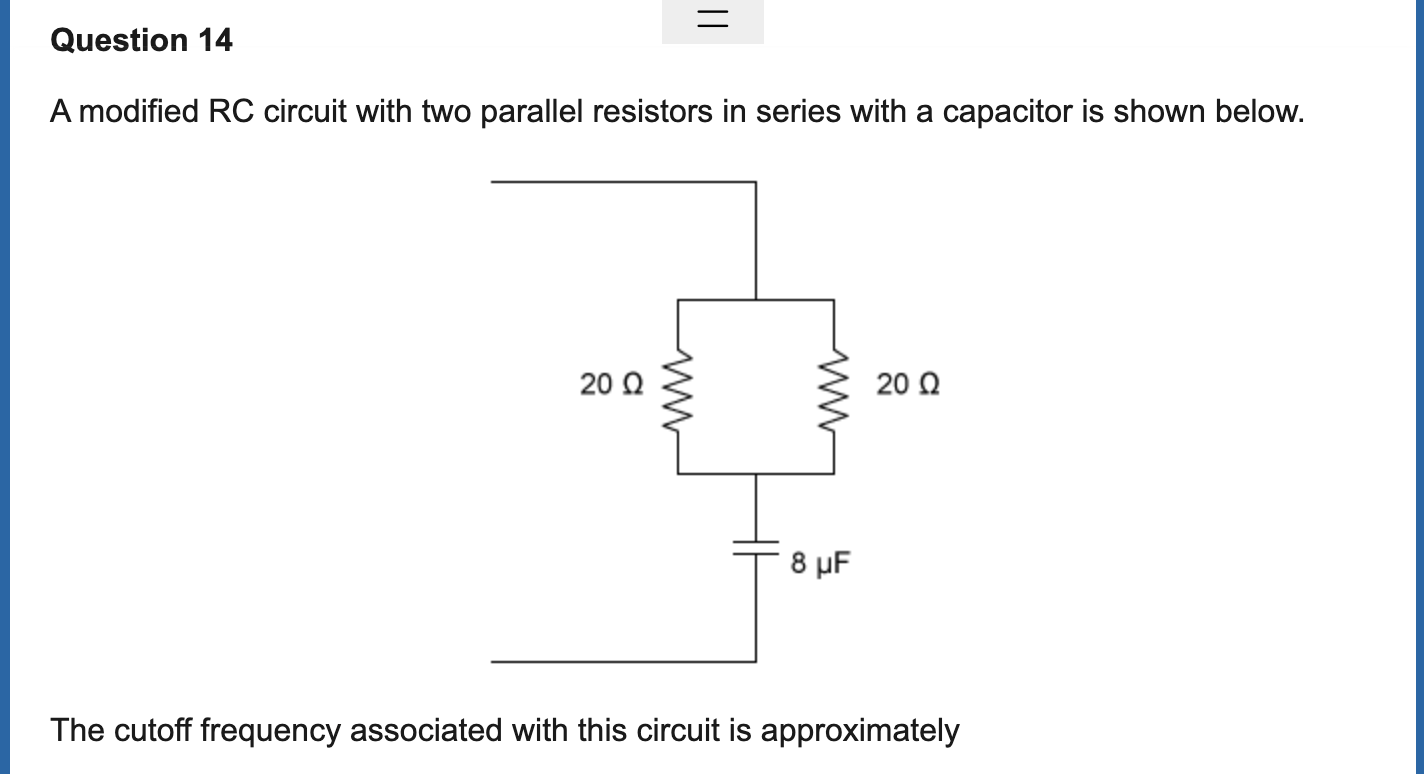
Note: in capacitence series, resistance is added based on ex. ) 1/ (1/R1 +1/R2) while parallel you can directly add R1 + R2
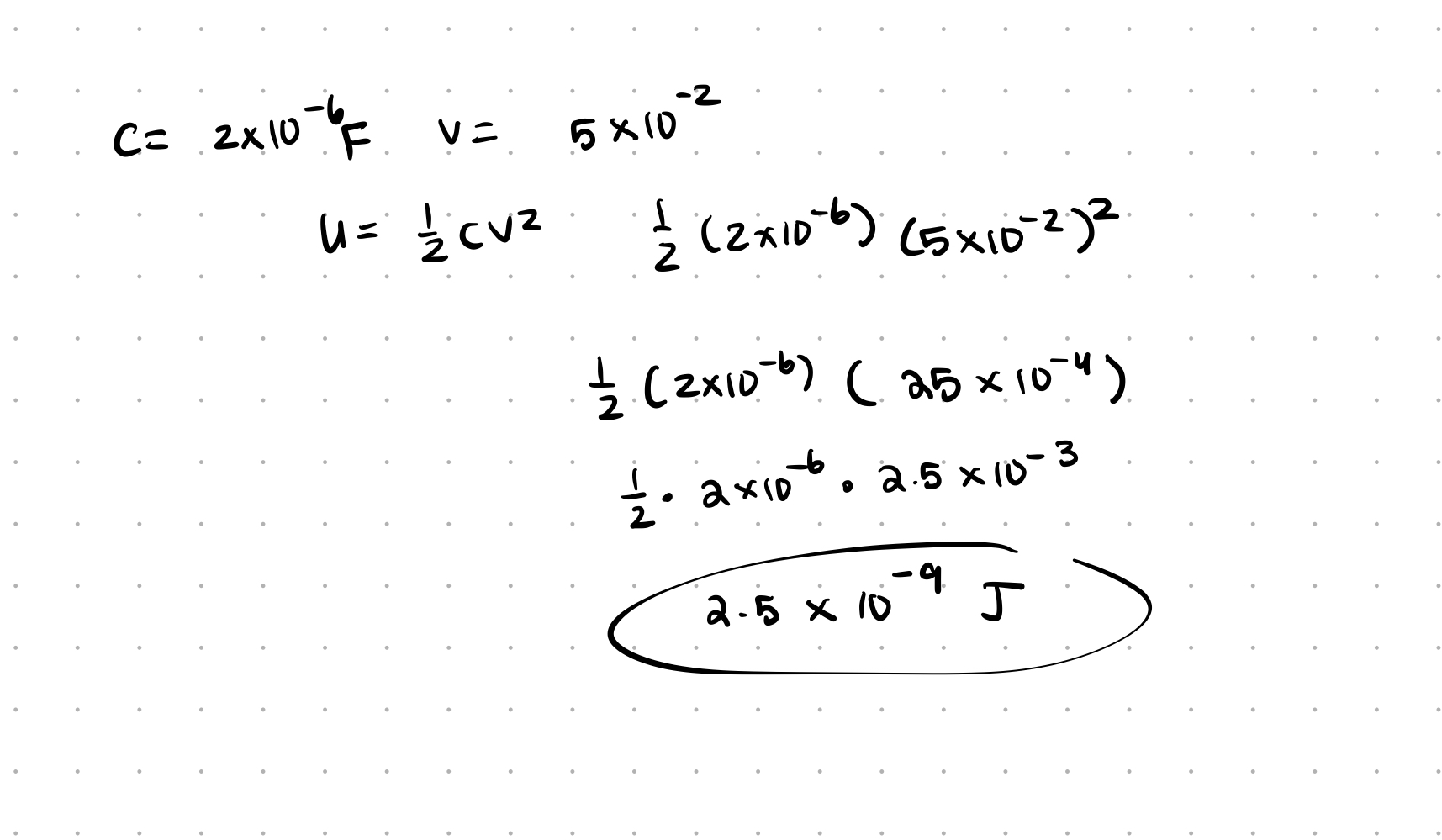
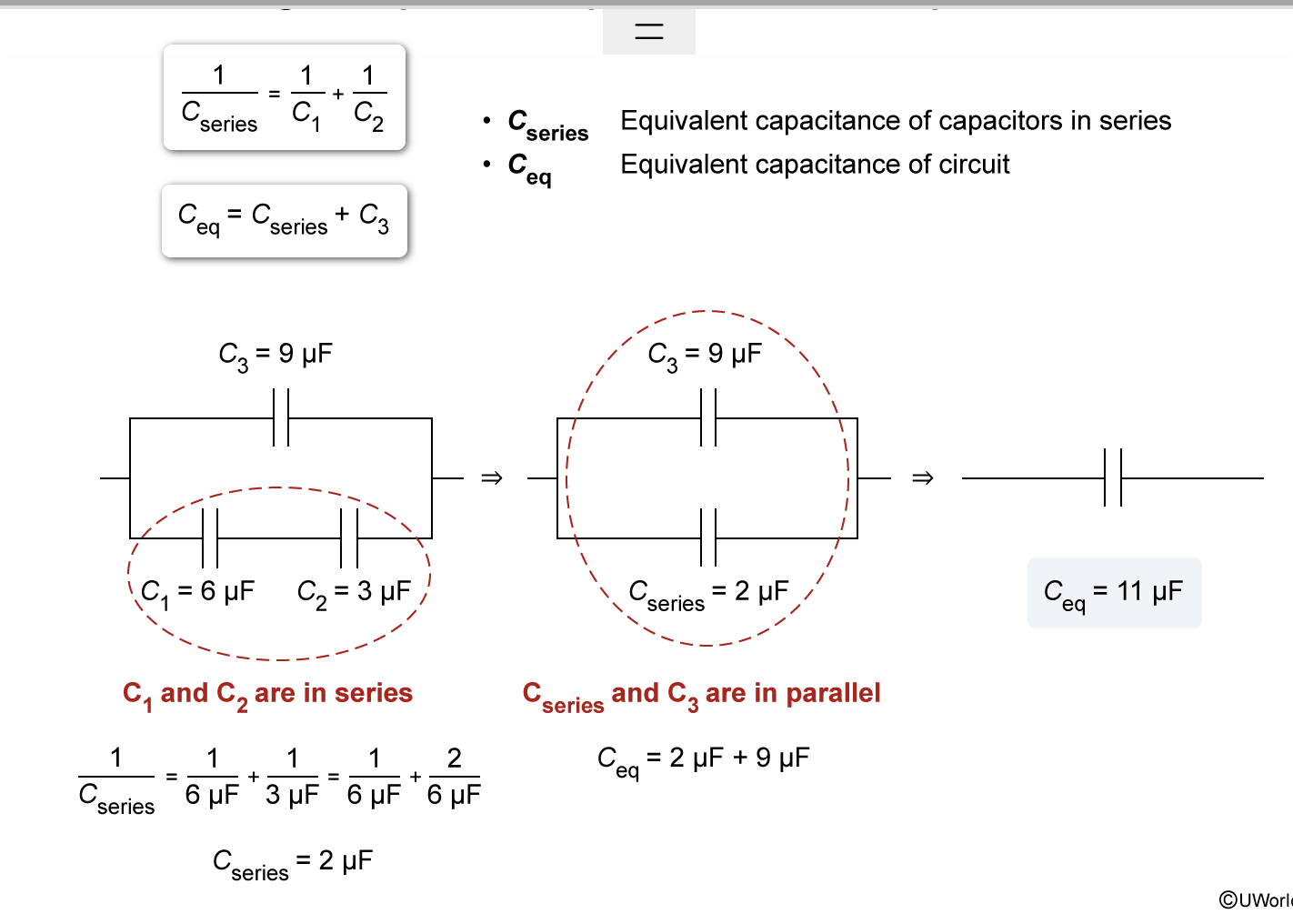
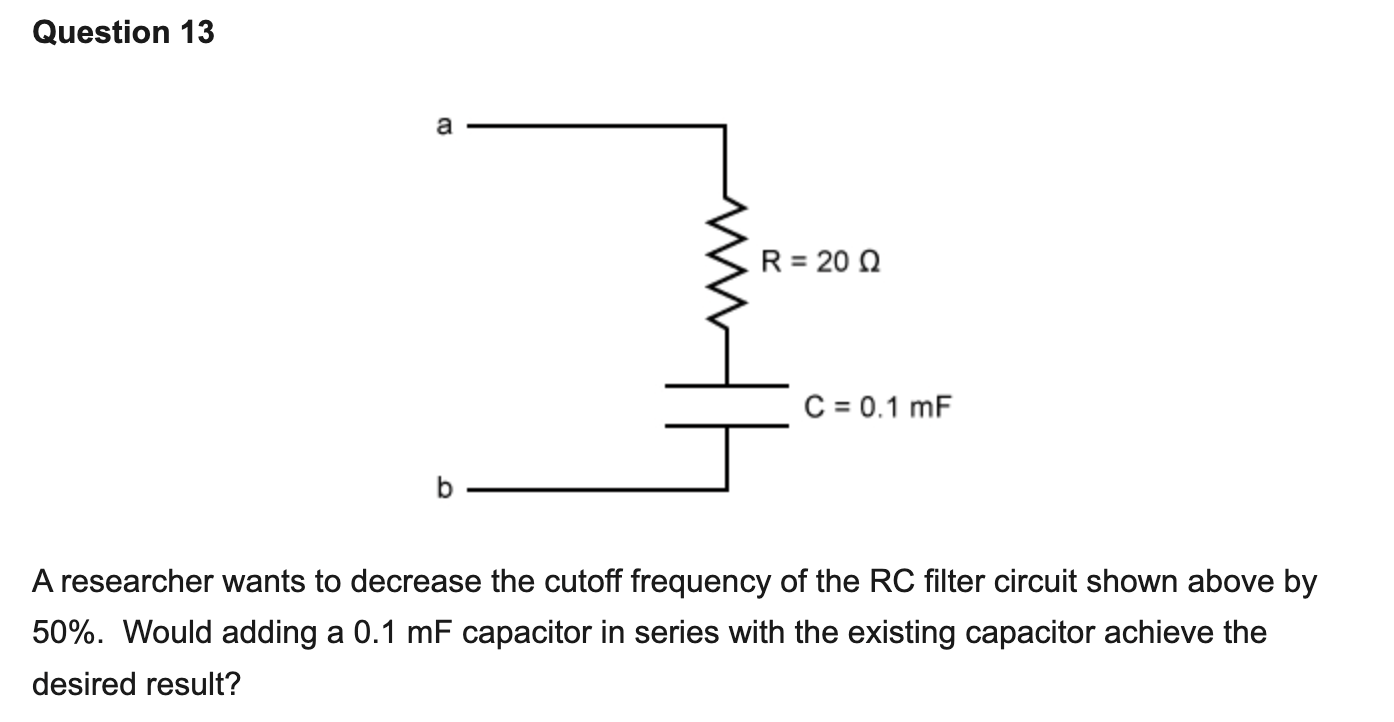
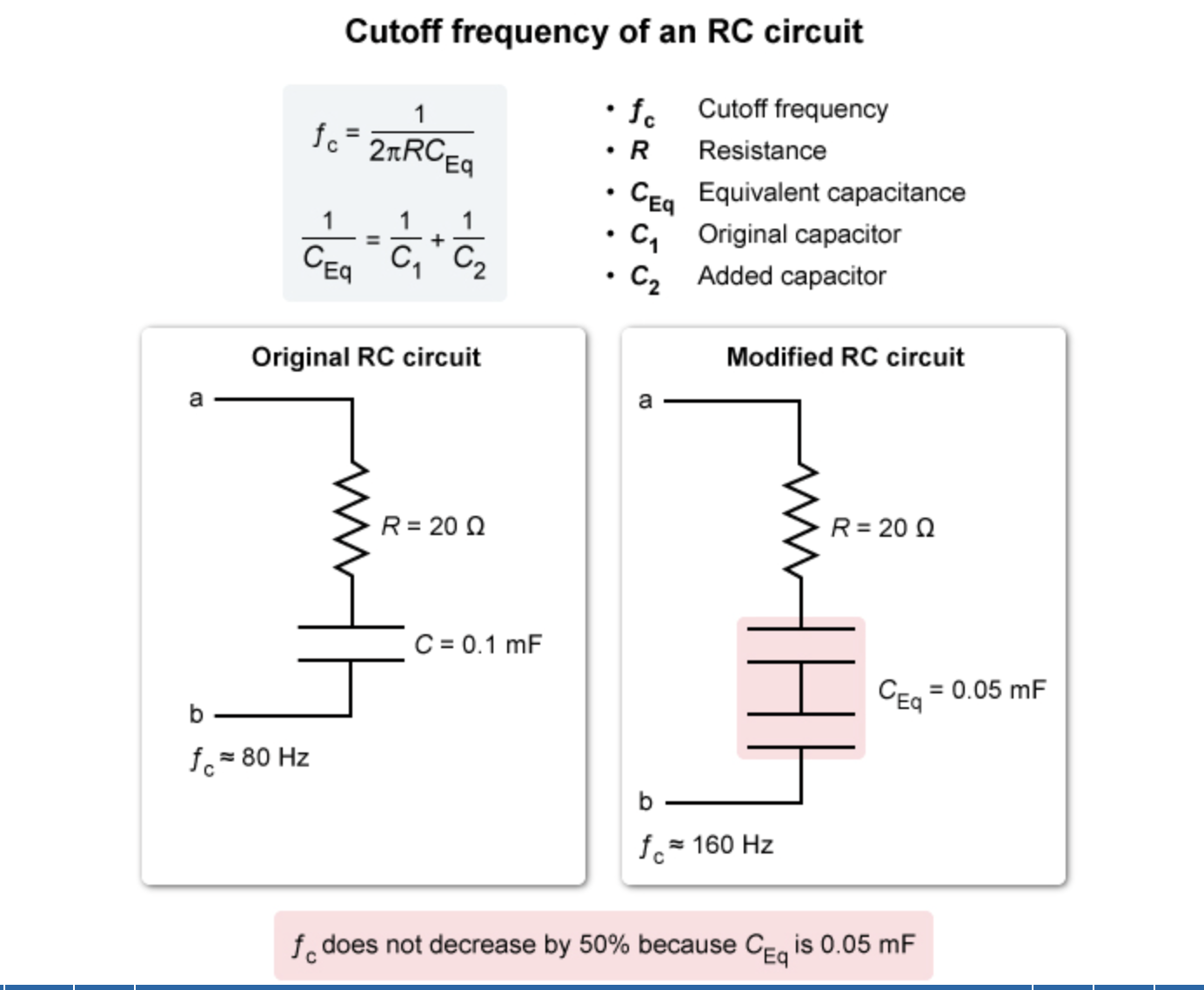
1/C1 + 1/C2 (1/6 + 1/3) = 9/18 or ½—> 1/ (1/2) = 2 ——> C3 (9) + 2 = 11
Answer: 11 µF
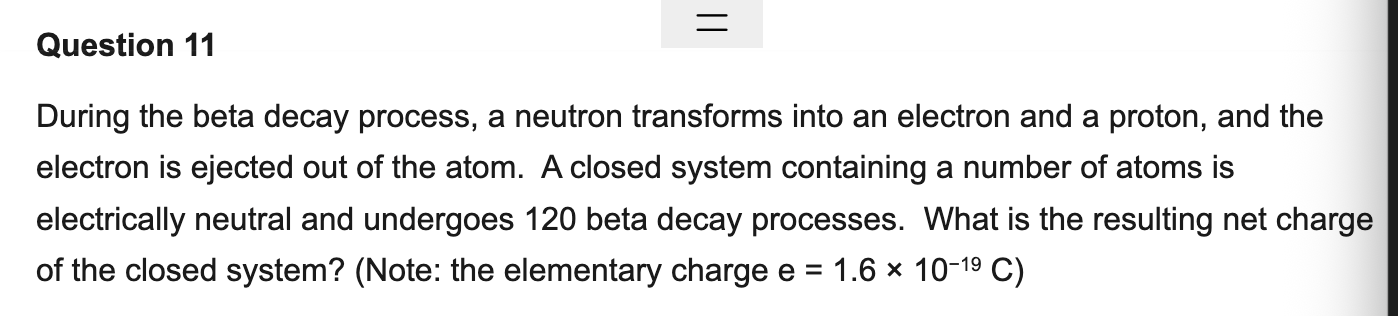
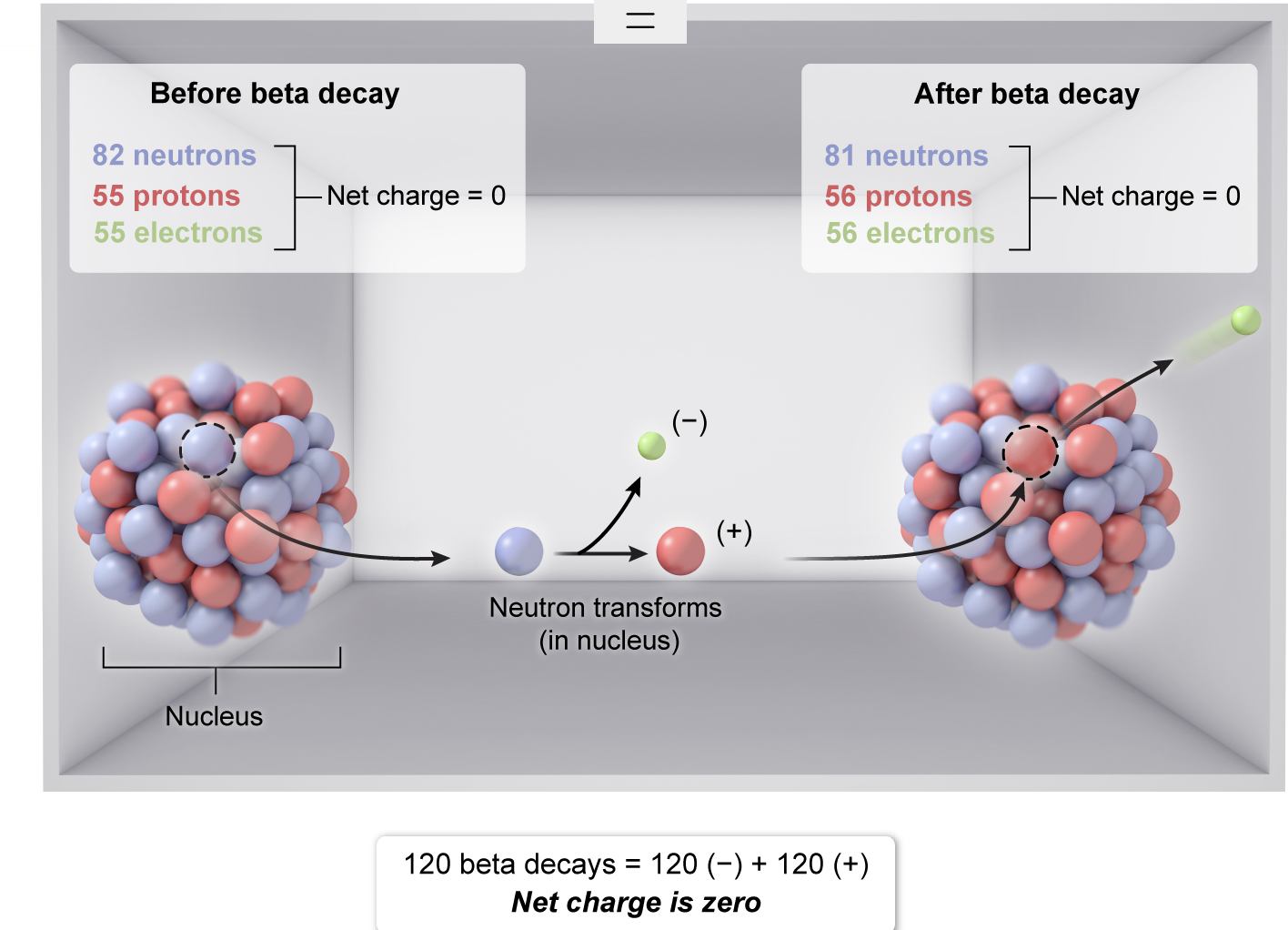
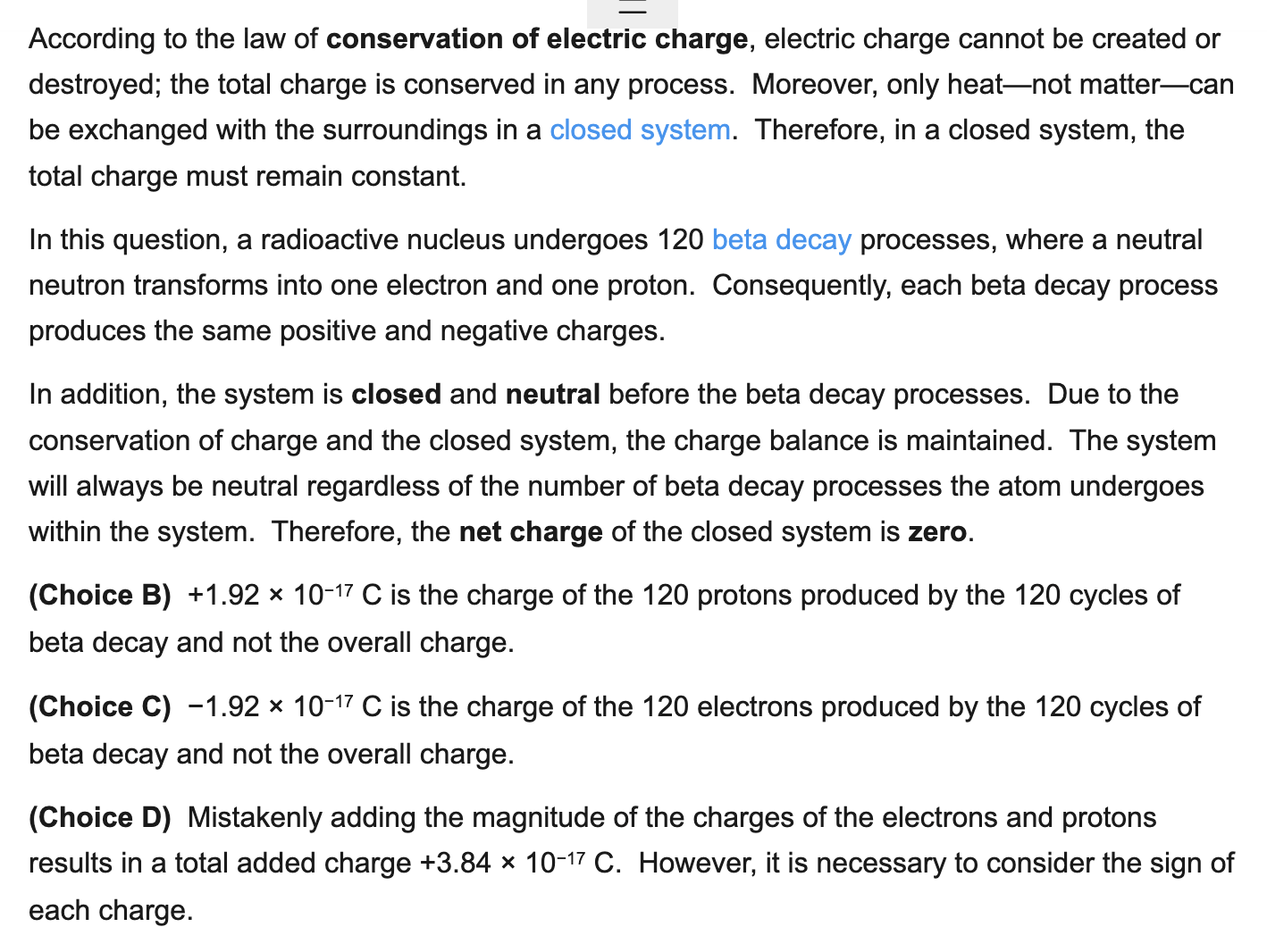
Answer: 0C
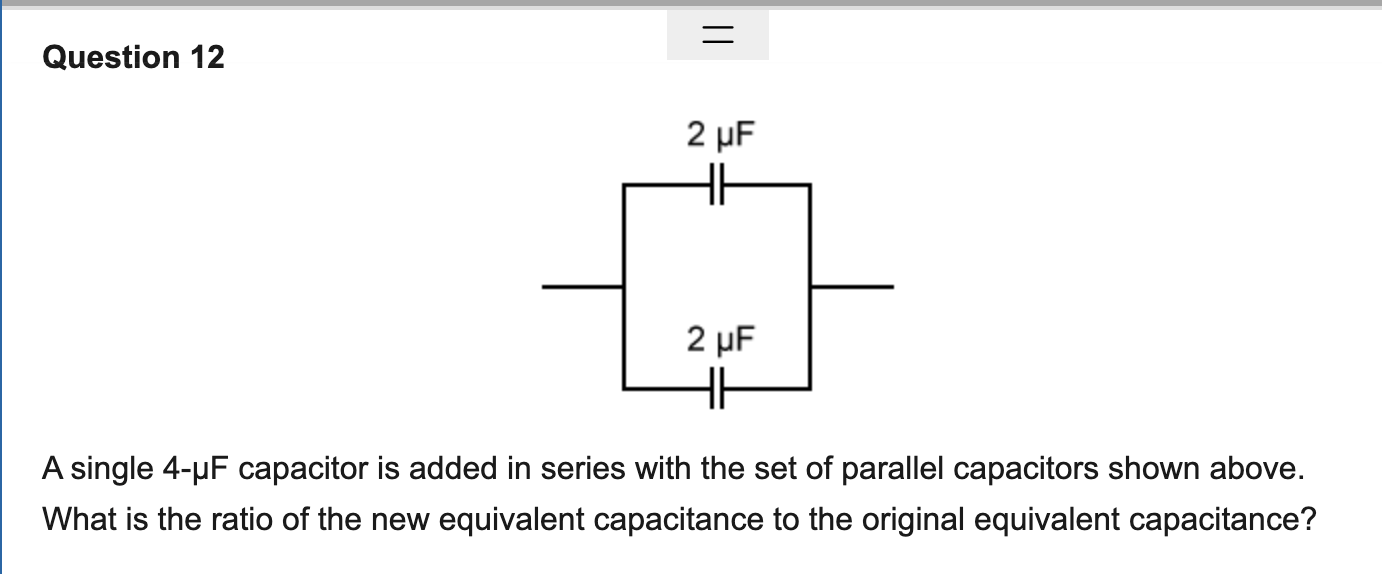
original 2+2 = 4
Series 1/og or ¼ + ¼ ——> ½ —→ 1/(1/2) = 2 (new) so new: OG = 1:2
Passage D
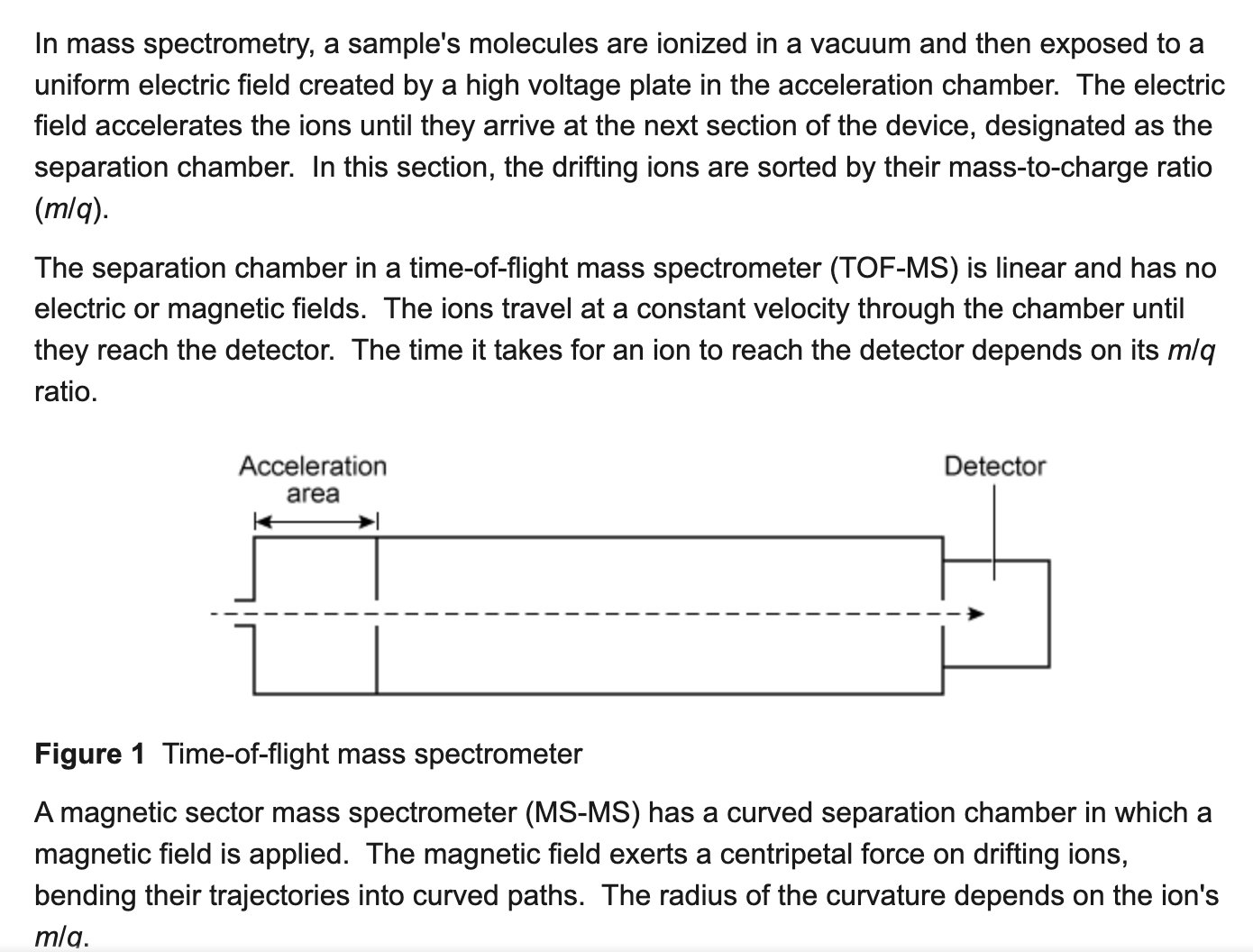
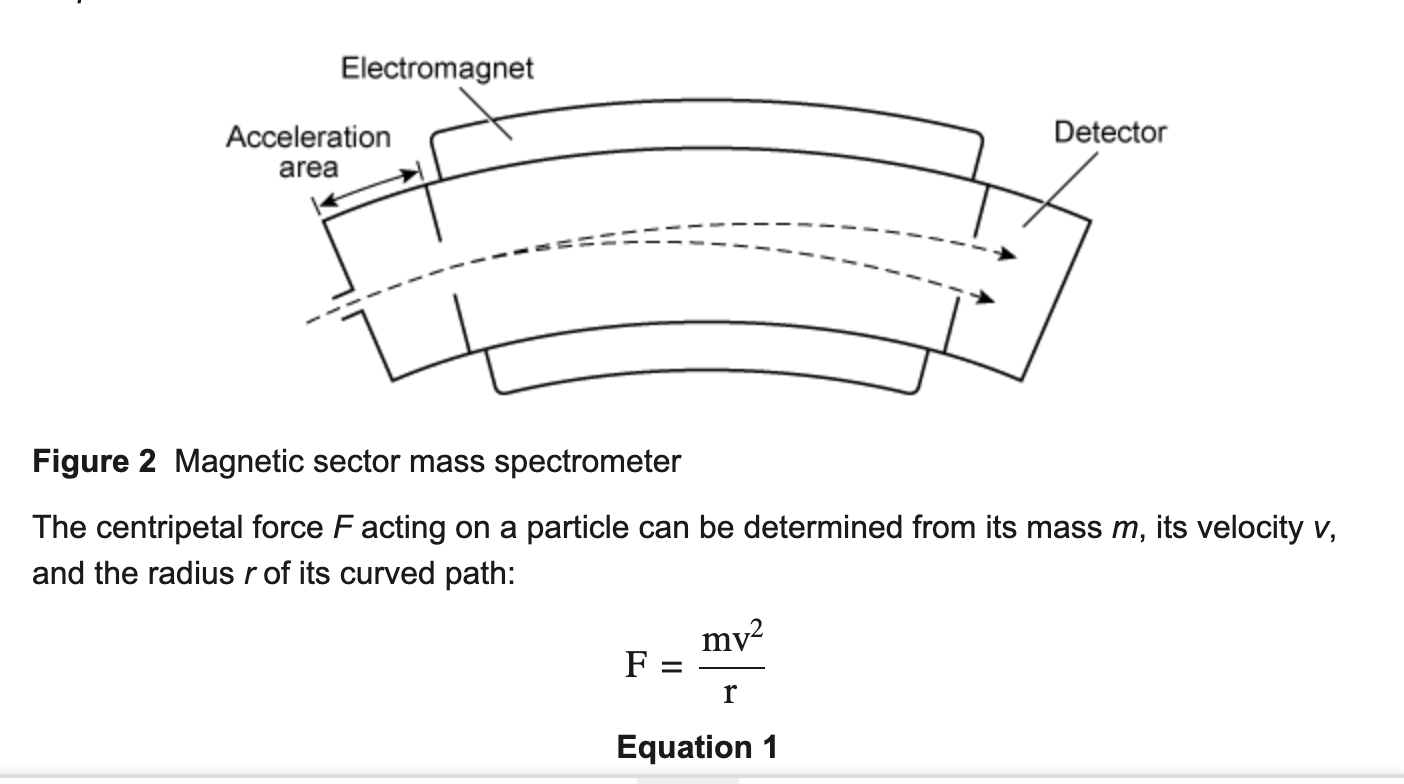
Passage D

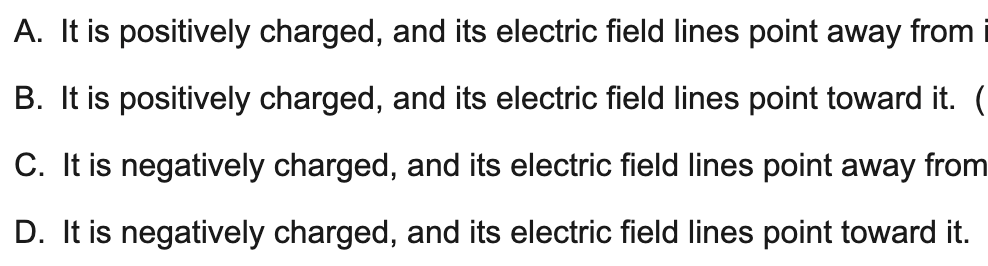
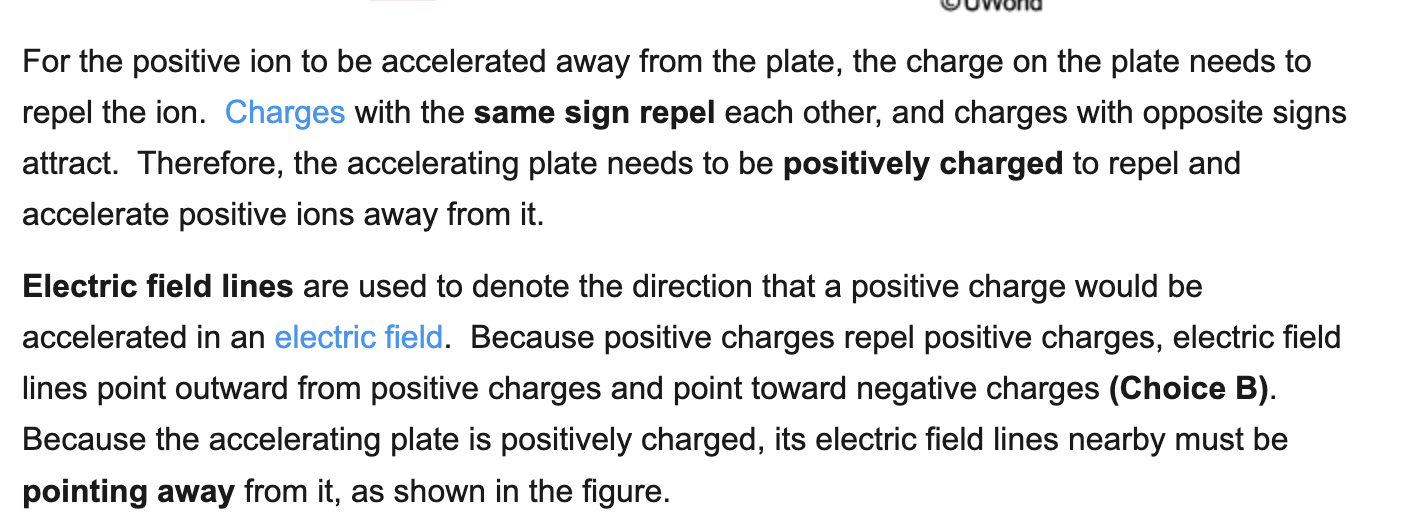
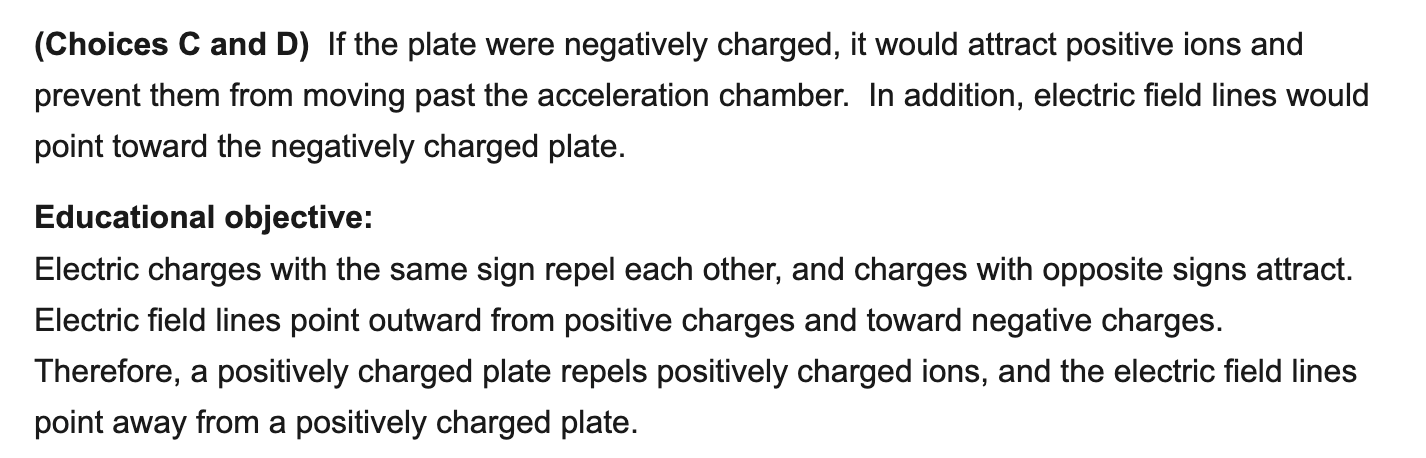

Passage D
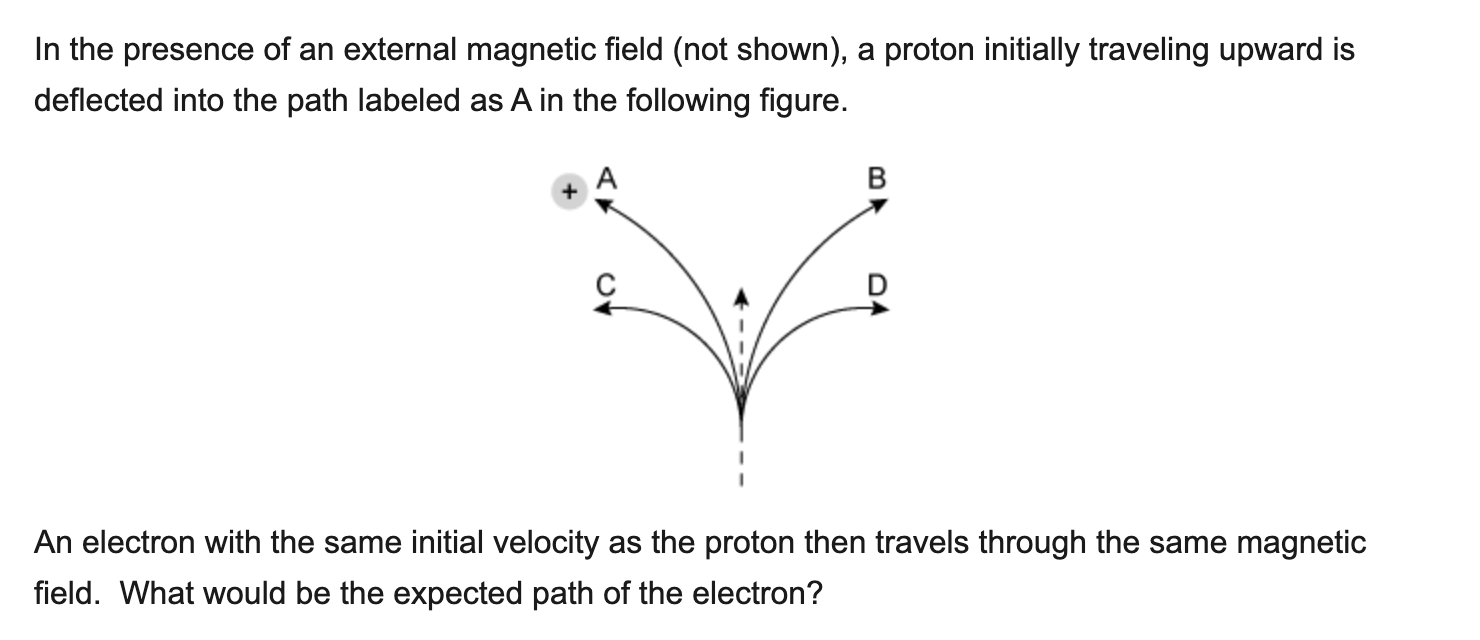
X or Y?
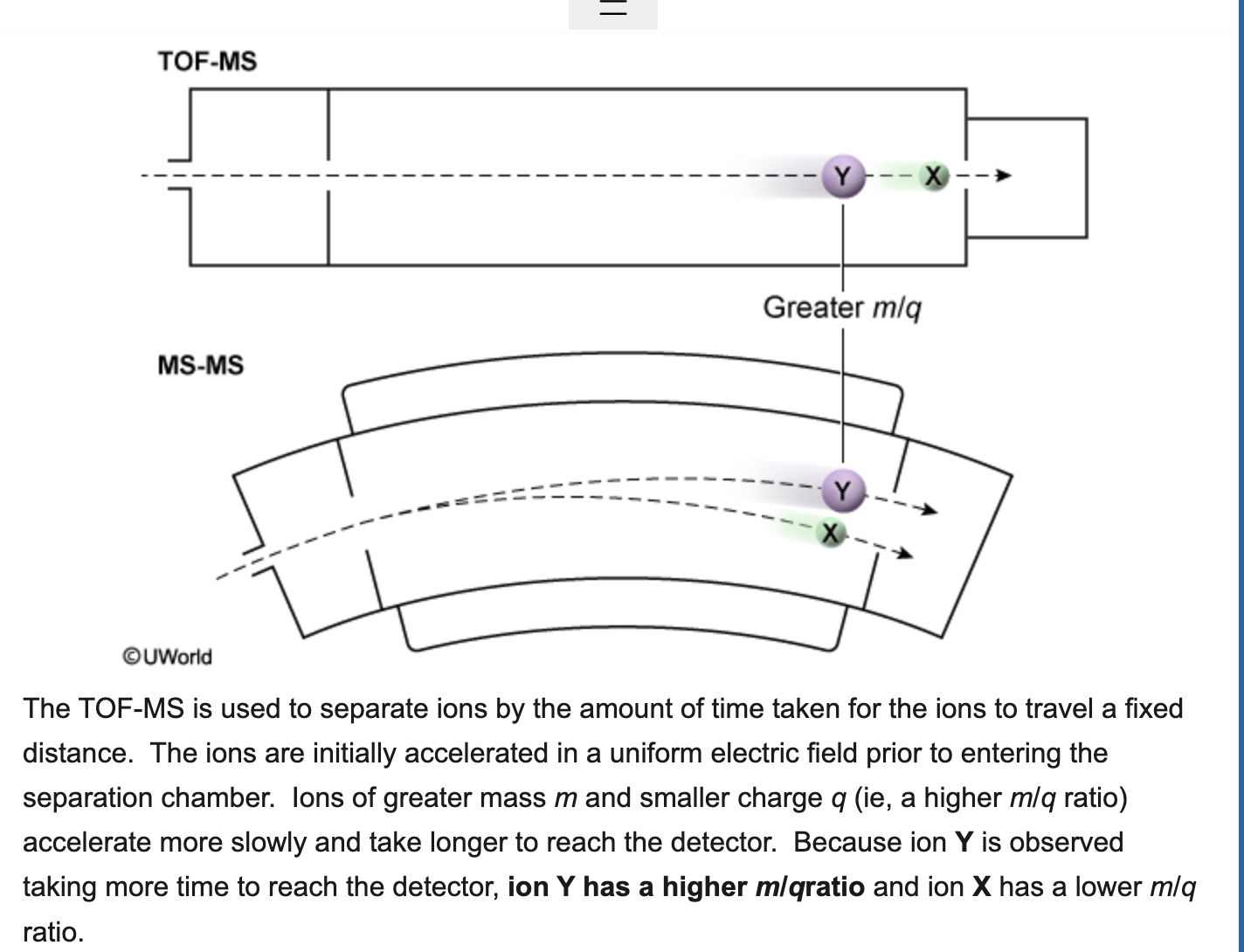
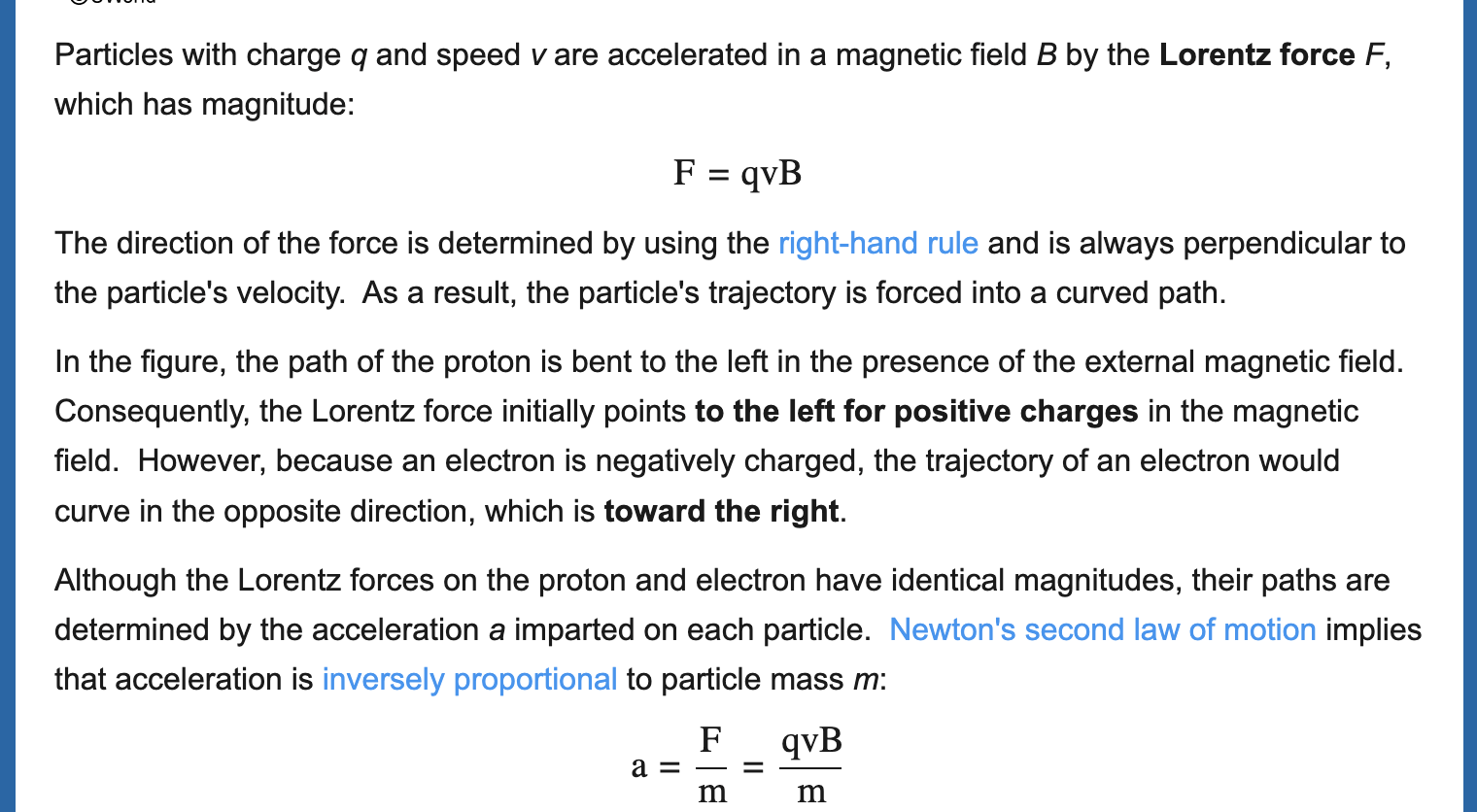
Note: charge is directly proportional to force
so q =F= am a=v²/r
F=v²m/r =Q
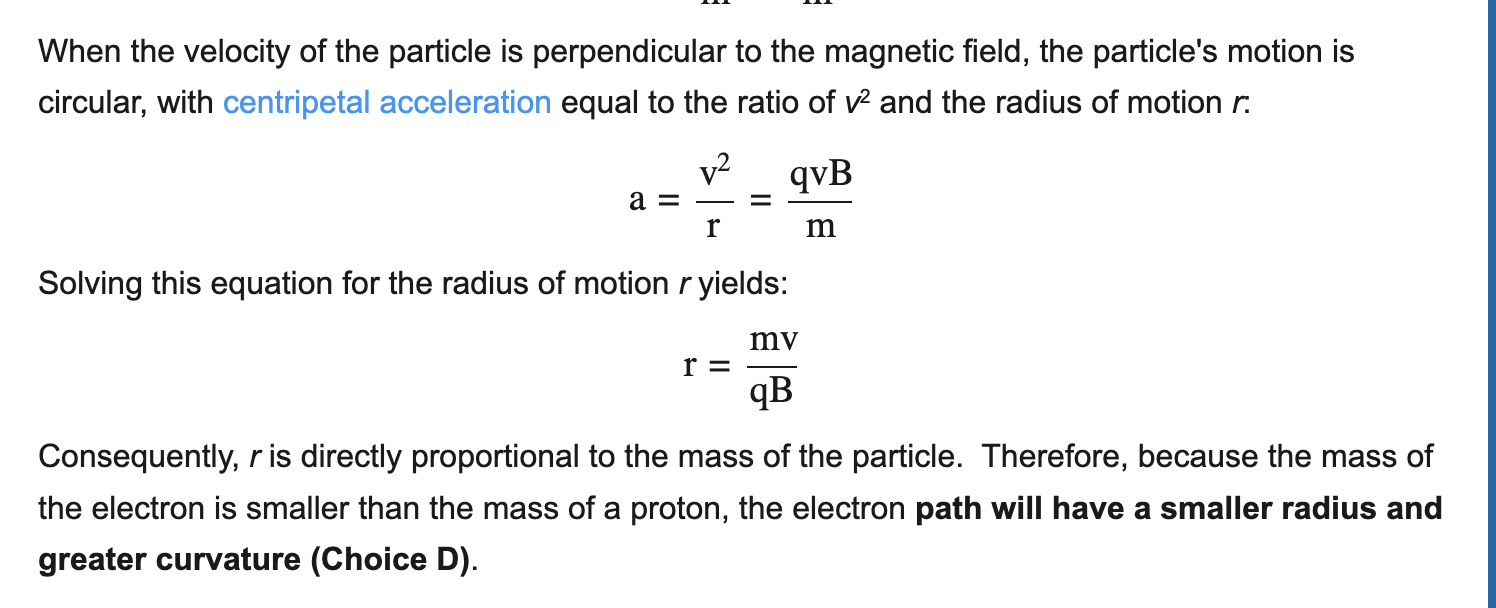
decrease r increases F which increases Q which decreases m/q ratios and so its X

V= Ed
3000V = E (0.5m)
E= 6000V/m
or 6kN/C

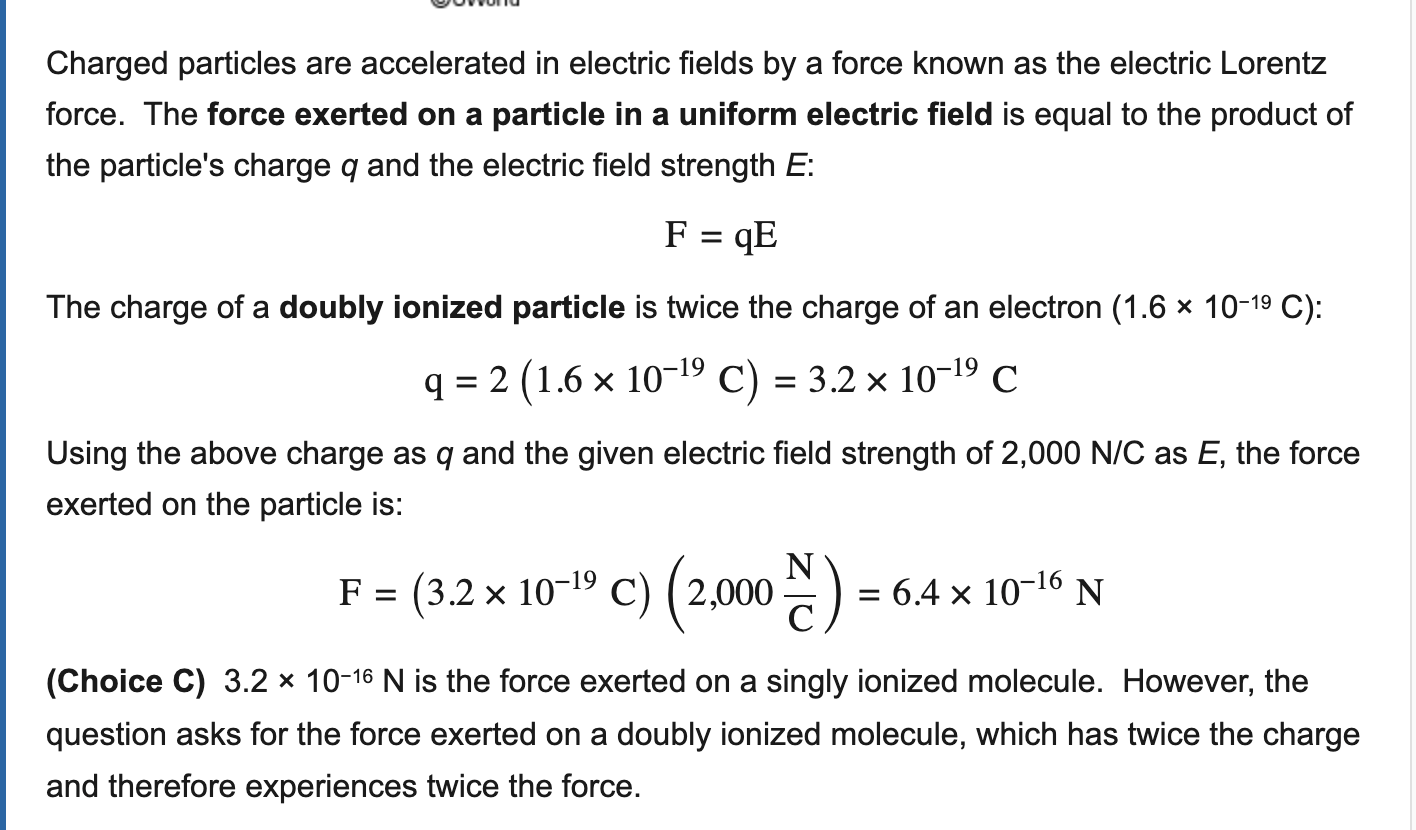
V=Ed F=qE
F=qV/d
2000N/C * (2 1.6 ×10^-19) = 6.4 × 10^-16 N


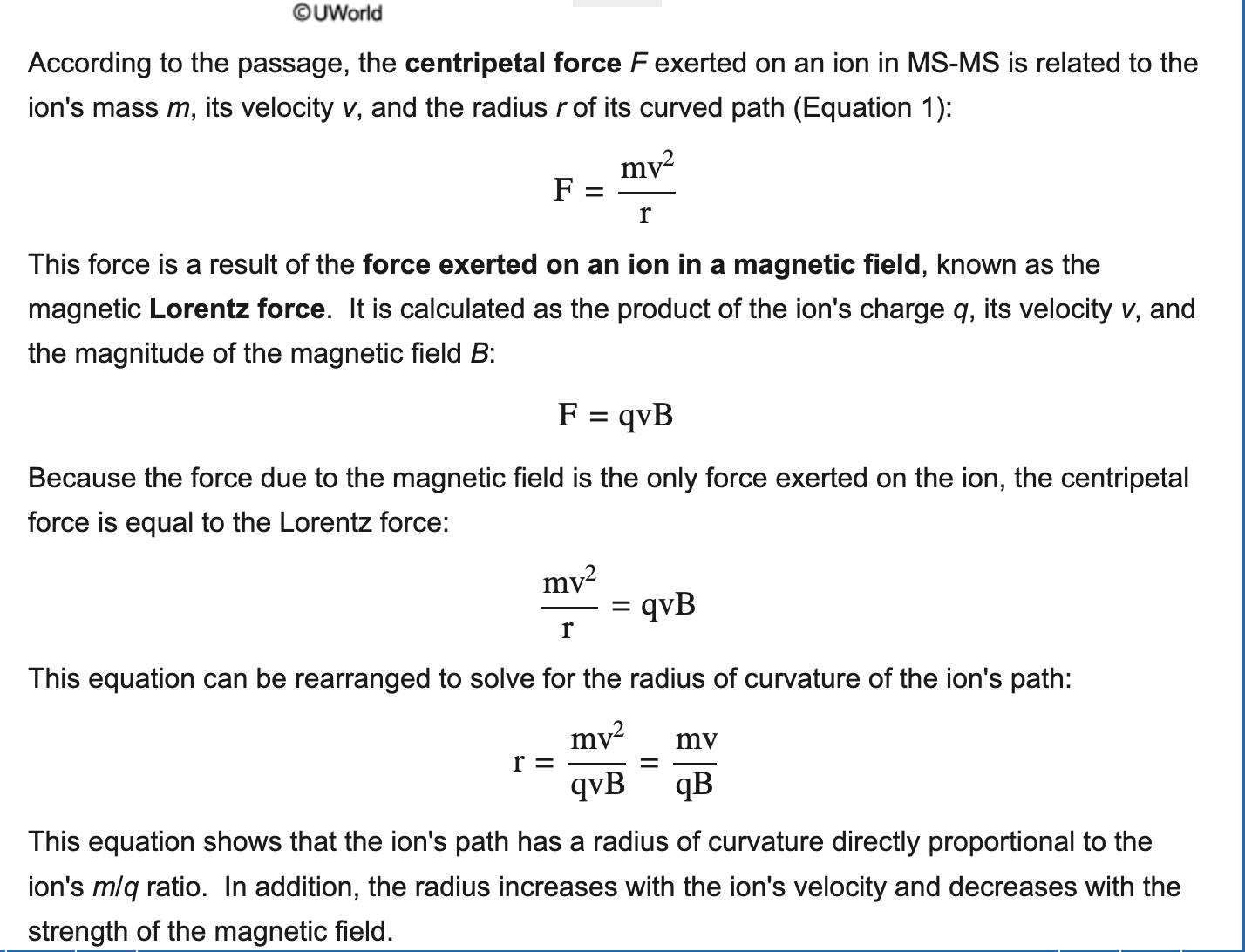
Passage D





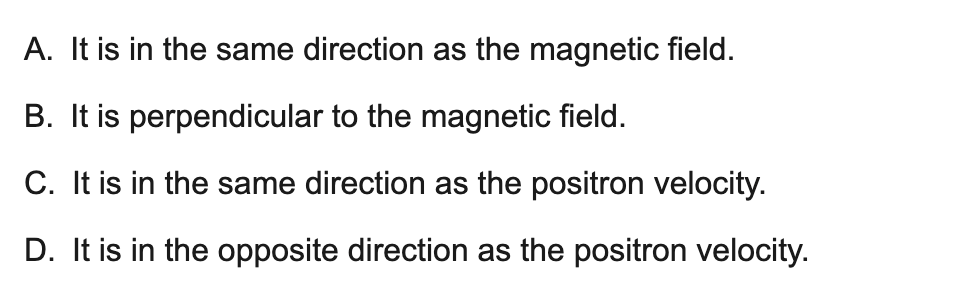
Answer: A
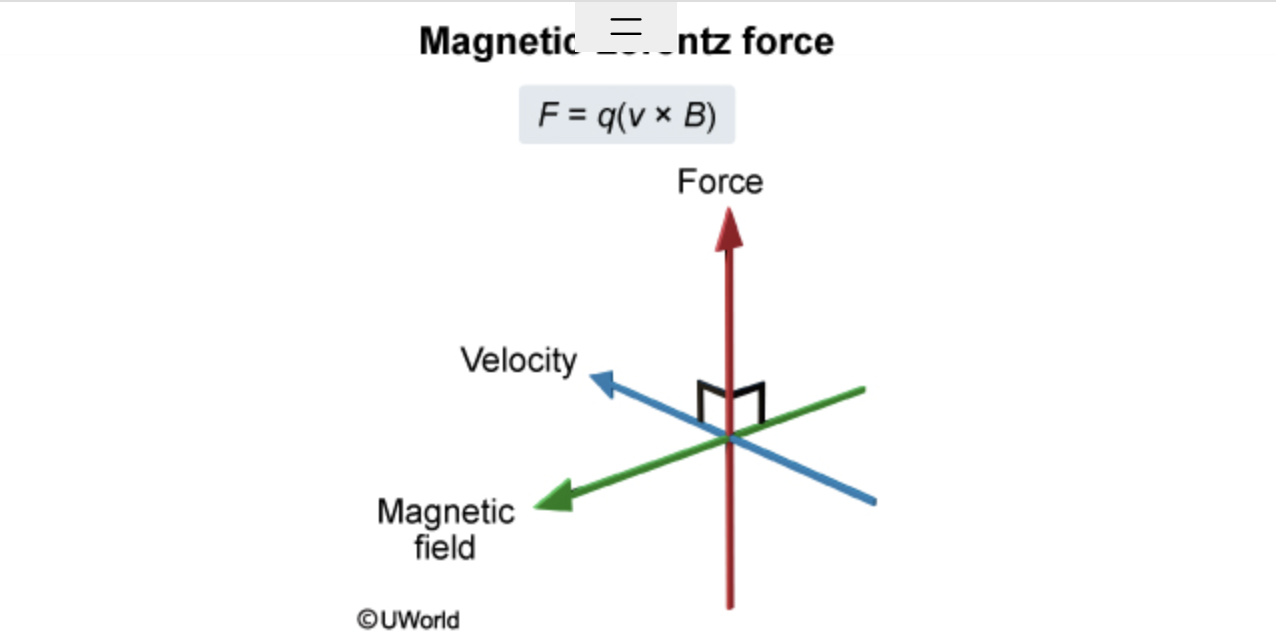
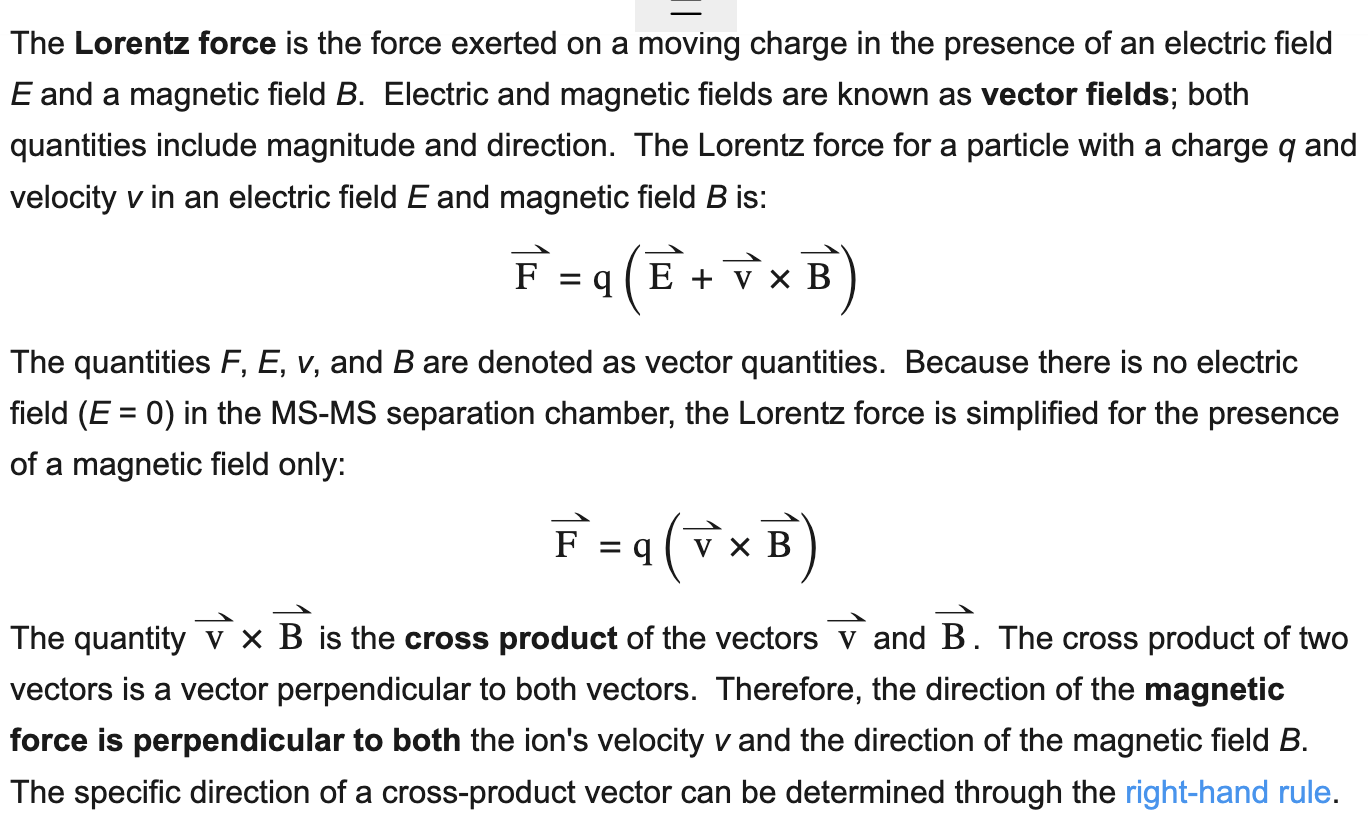
Why B is wrong
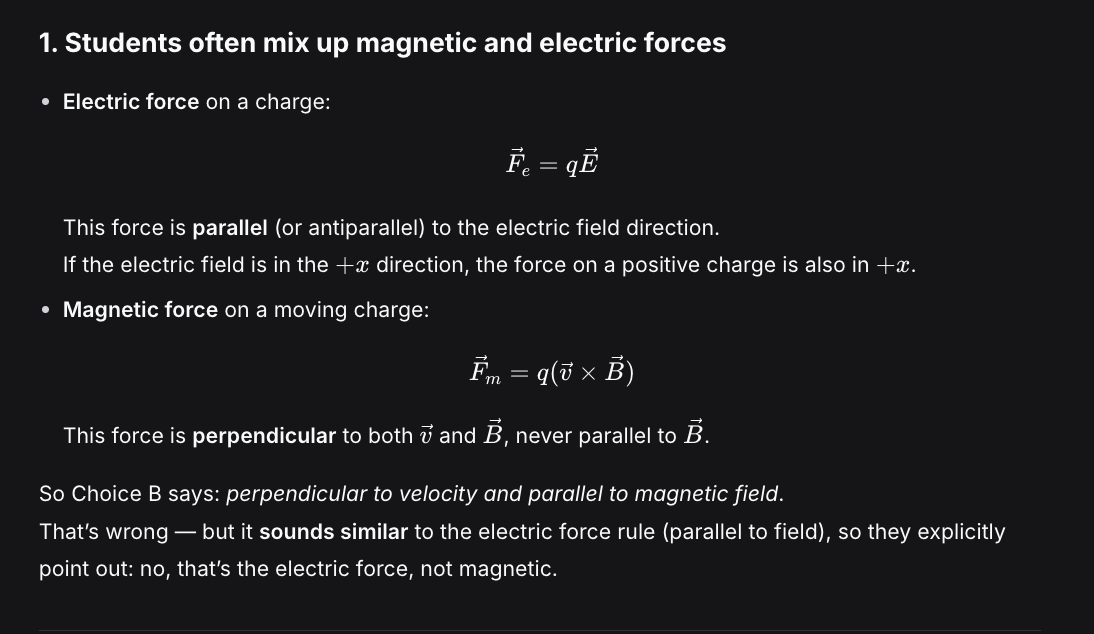
perpendicular to the ion’s velocity and parallel to the direction of the magnetic field
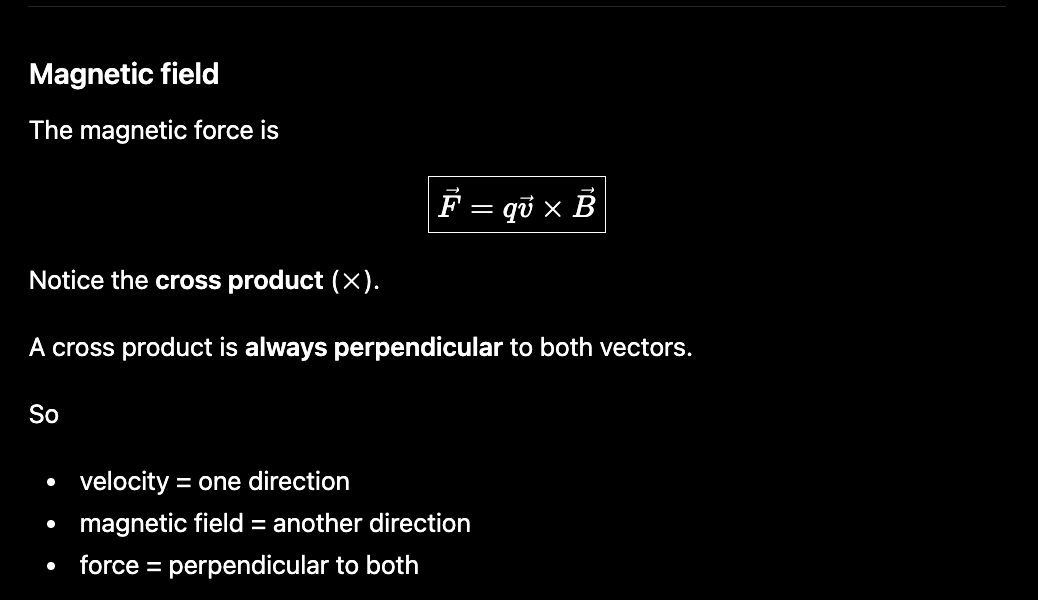
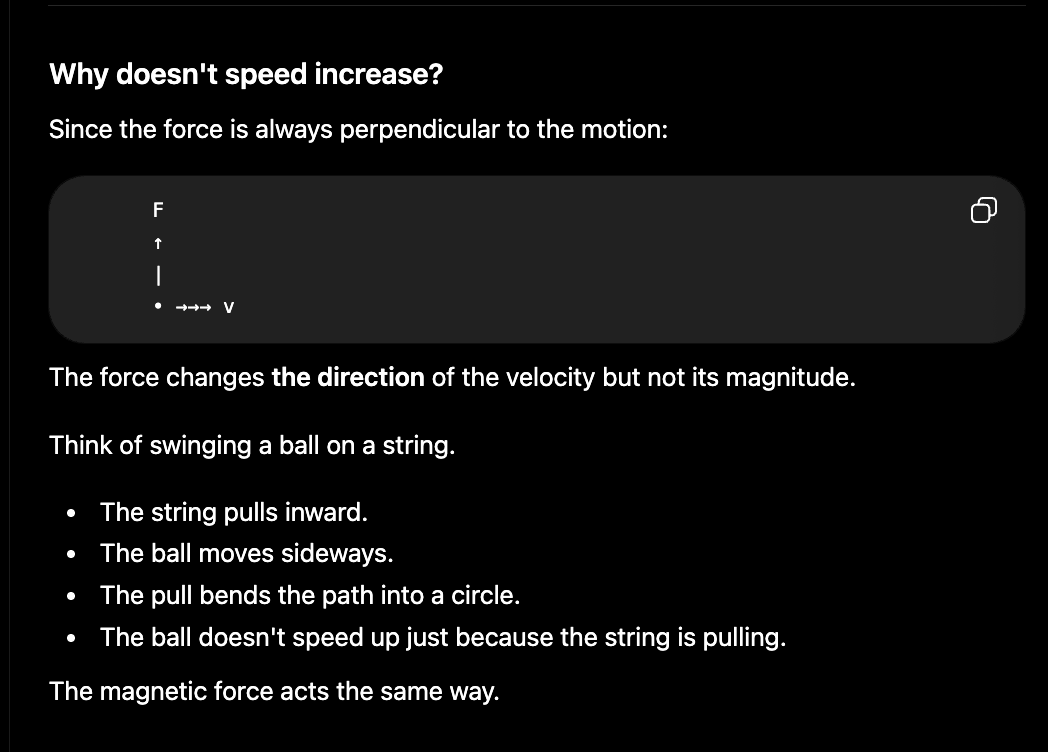

“Perpendicular to velocity” is correct for magnetic force.
“Parallel to magnetic field” is wrong — if force were parallel to B⃗B, then F⃗⋅B⃗≠0F⋅B=0, but from v⃗×B⃗v×B, the result is always perpendicular to B⃗B (so F⃗⋅B⃗=0F⋅B=0).
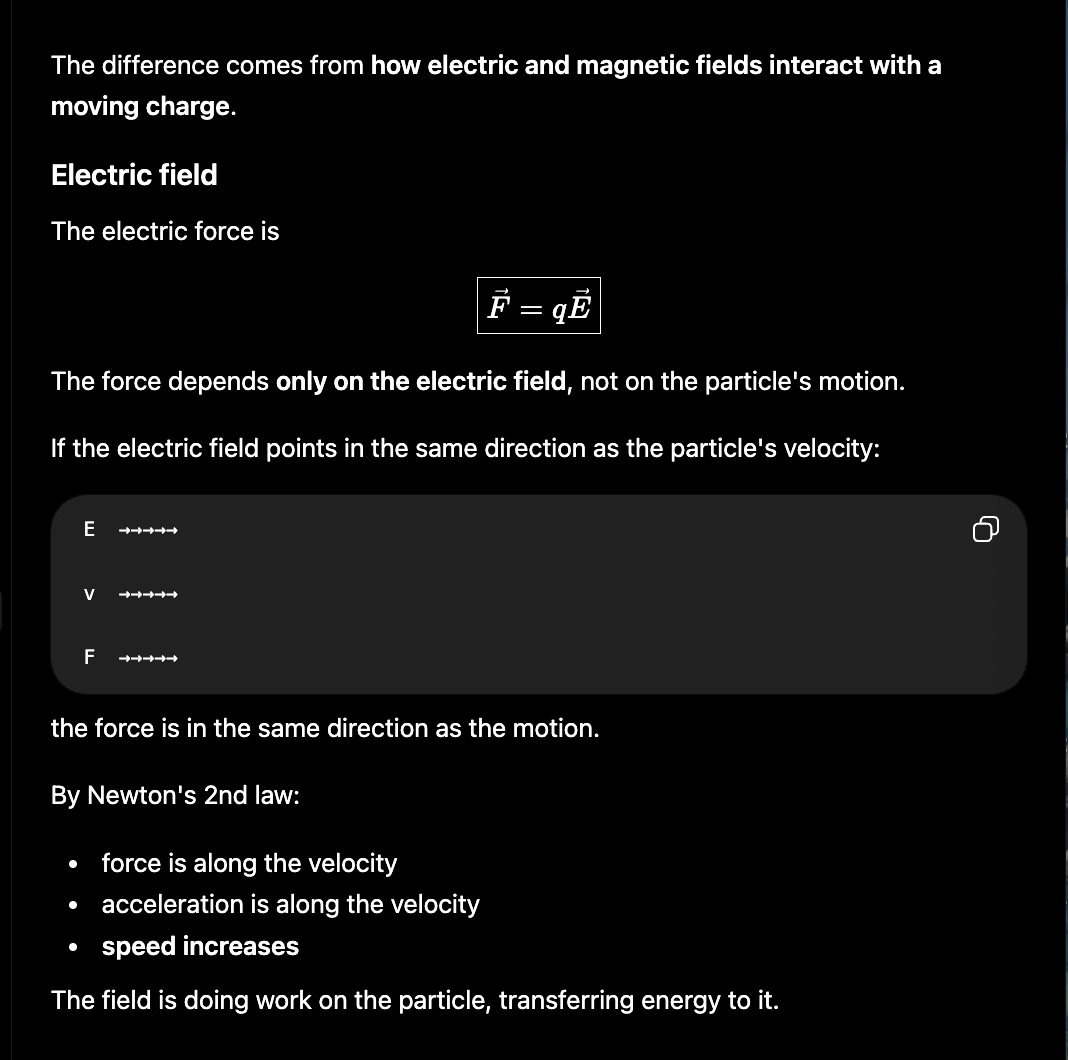
This describes the electric force in some configurations, not magnetic.
Why C is wrong
parallel to both the ion’s velocity and the direction of the magnetic field
Magnetic force is never parallel to velocity — if it were, it would do work and change speed, but magnetic force only changes direction, not speed (since F⃗⊥v⃗F⊥v).
Being parallel to both v⃗v and B⃗B would require v⃗v and B⃗B to be parallel, but then v⃗×B⃗=0v×B=0, so no force.
A force parallel to velocity means linear acceleration — particles would not curve in MS-MS chamber.
Why D is wrong
parallel to the ion’s velocity and perpendicular to the magnetic field
Parallel to velocity → violates F⃗⊥v⃗F⊥v rule for magnetic fields.
If a force were perpendicular to B⃗B but parallel to v⃗v, that would mean v⃗v is perpendicular to B⃗B (possible), but the force direction would still be perpendicular to both (v⃗×B⃗v×B), not parallel to v⃗v.
Example: if v⃗v is along +x+x, B⃗B along +y+y, then F⃗F along +z+z (perpendicular to both, not parallel to v⃗v).
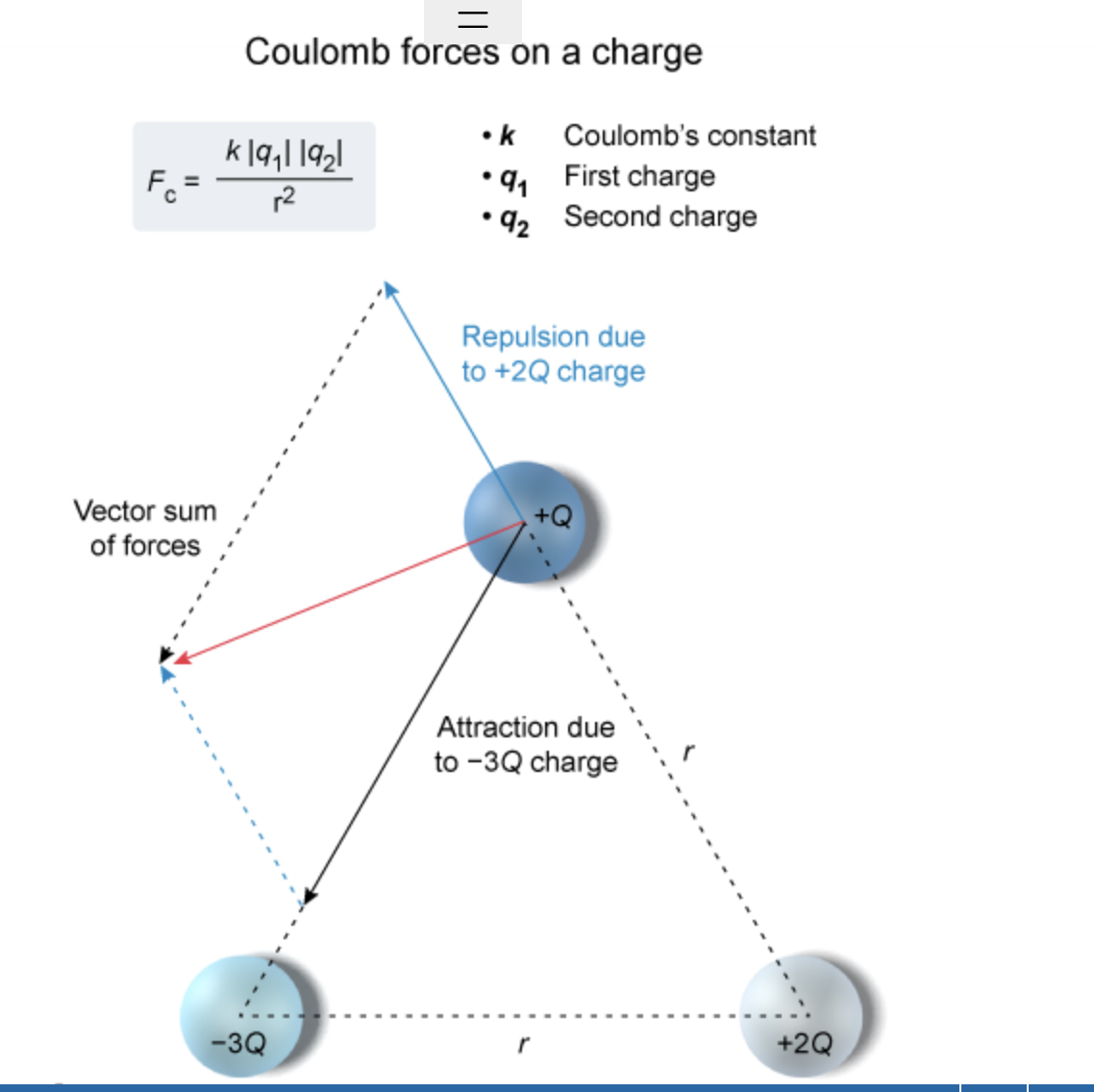
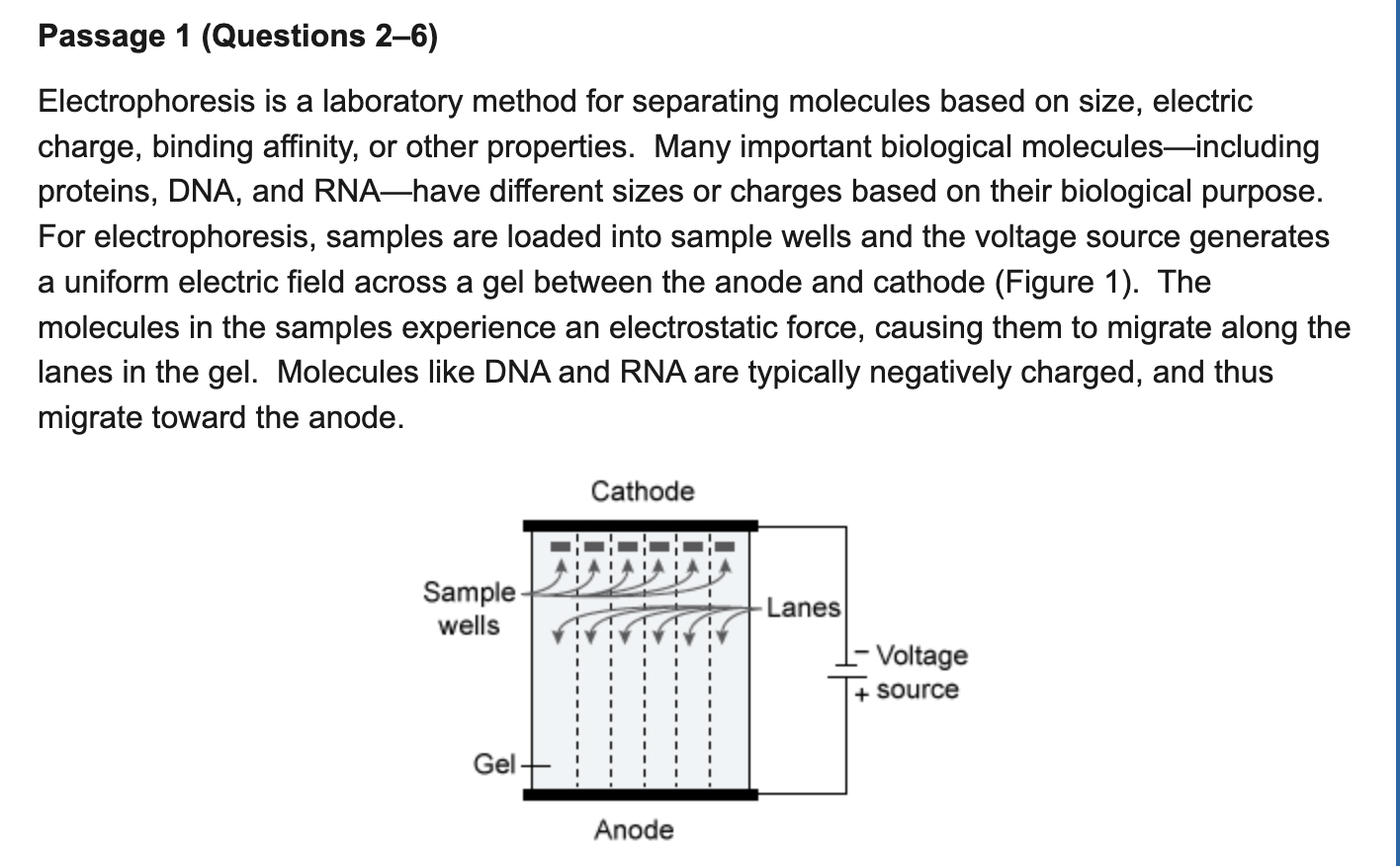
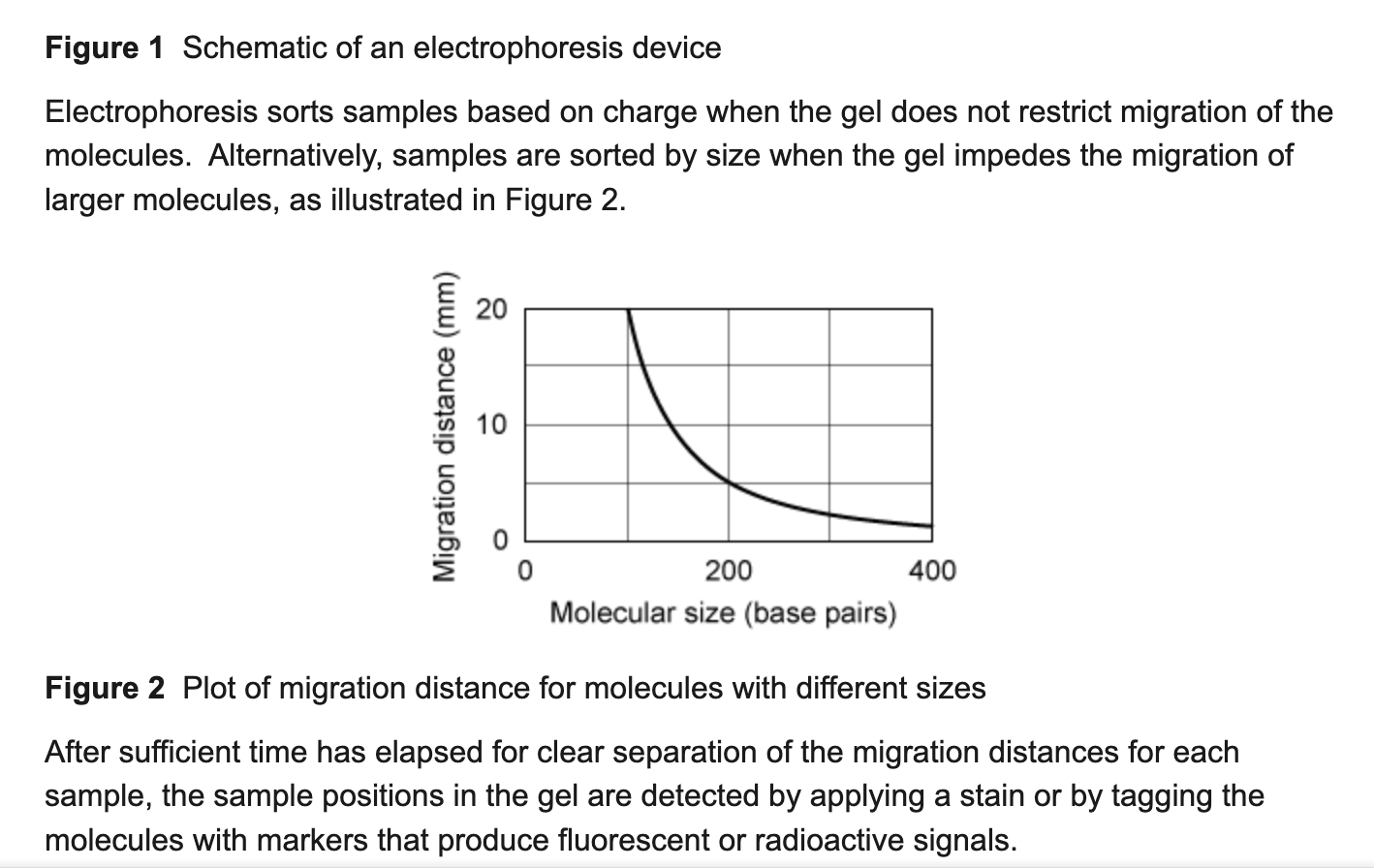
Passage E

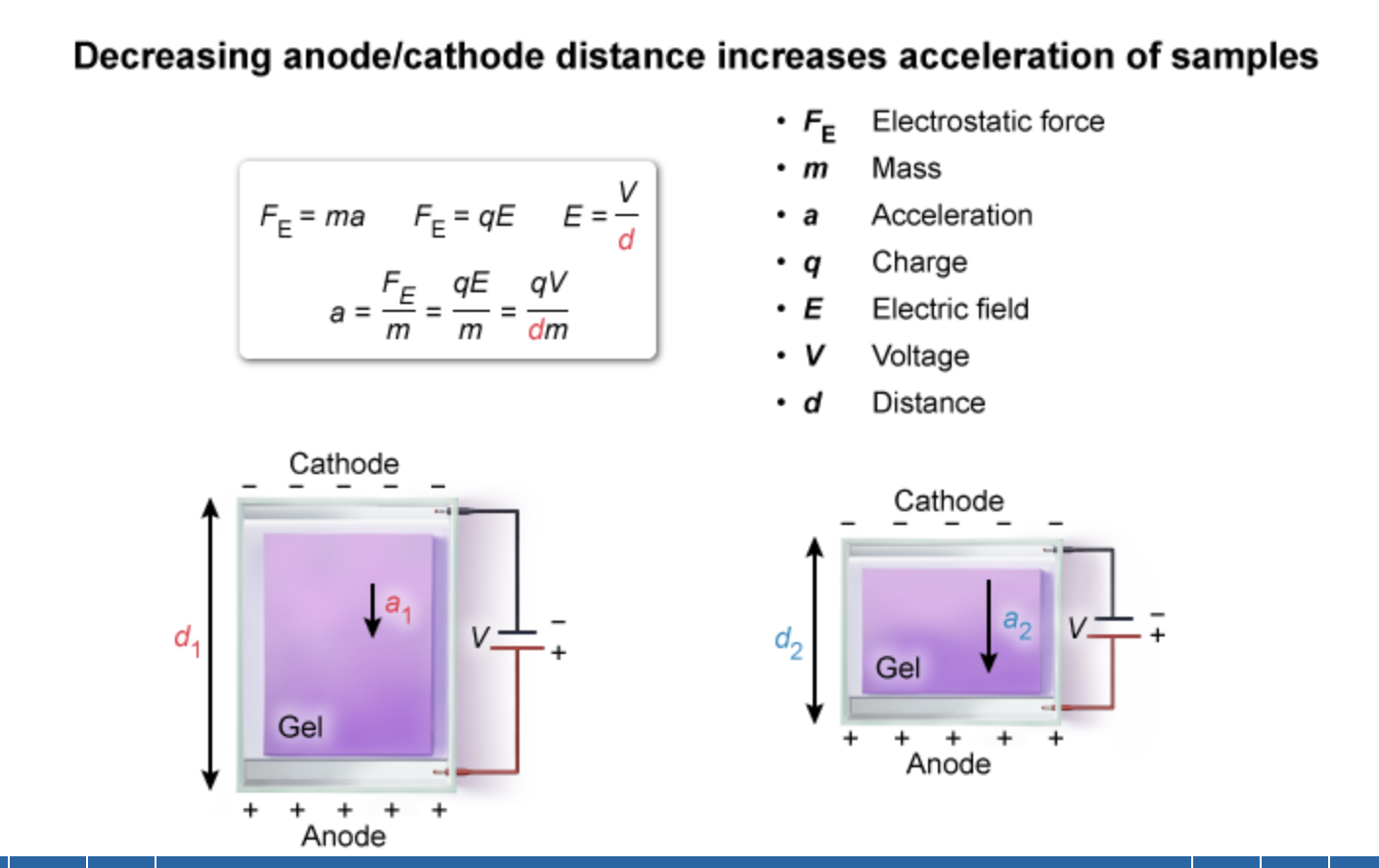
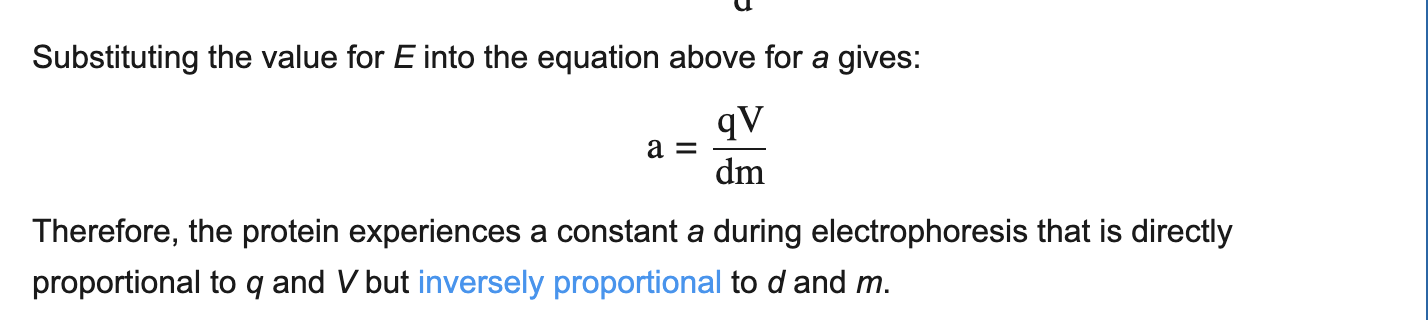
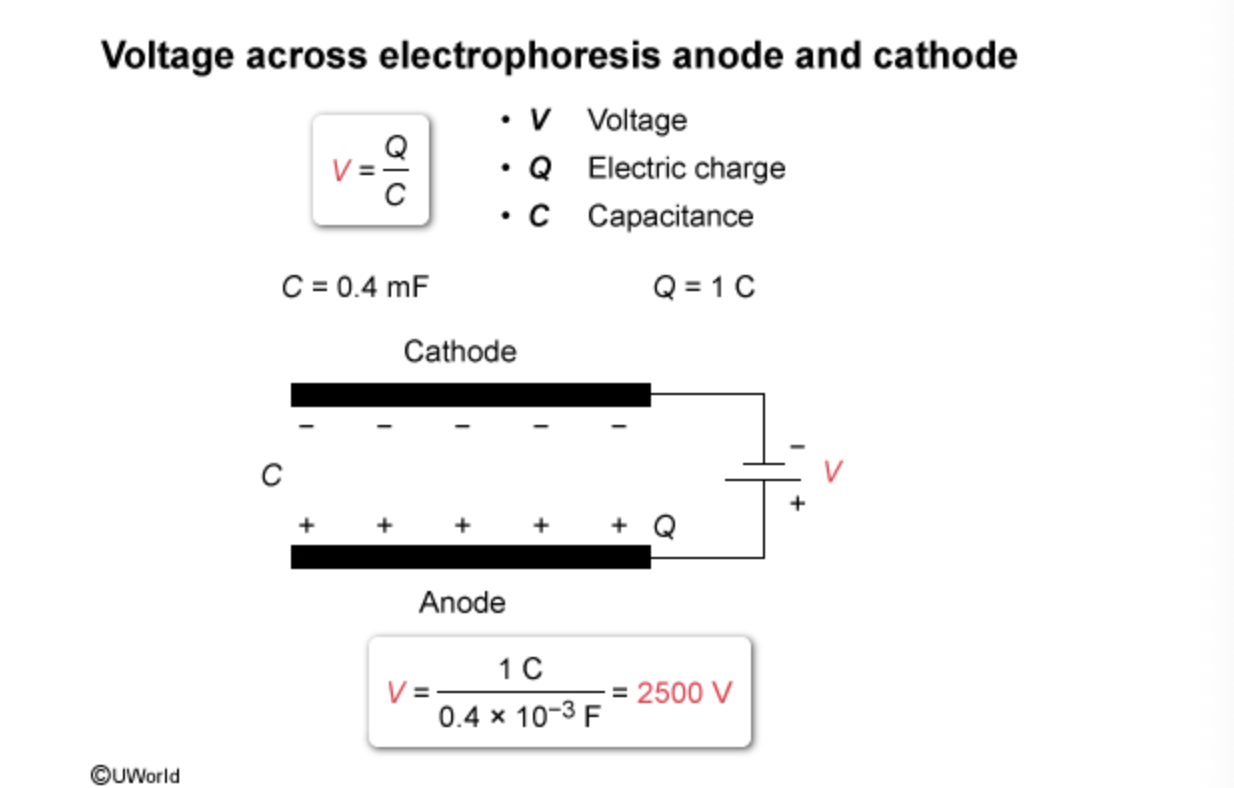
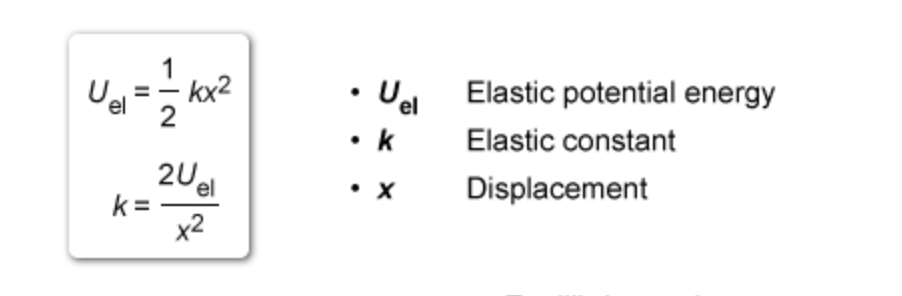
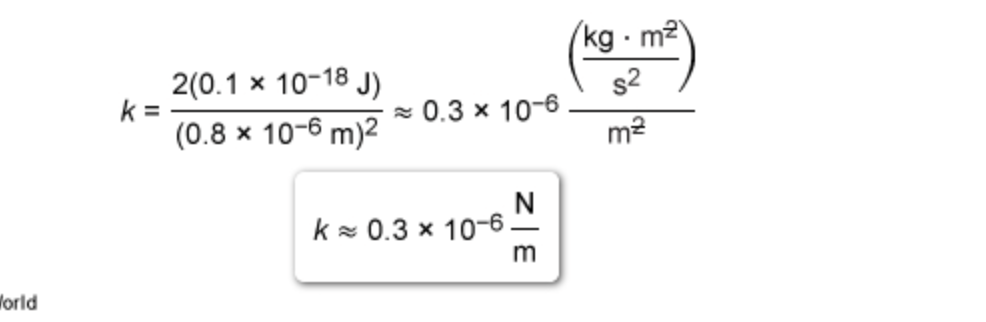
Answer: Decreasing distance between the anode and cathode


Passage E

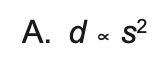
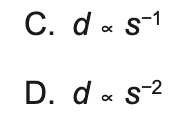
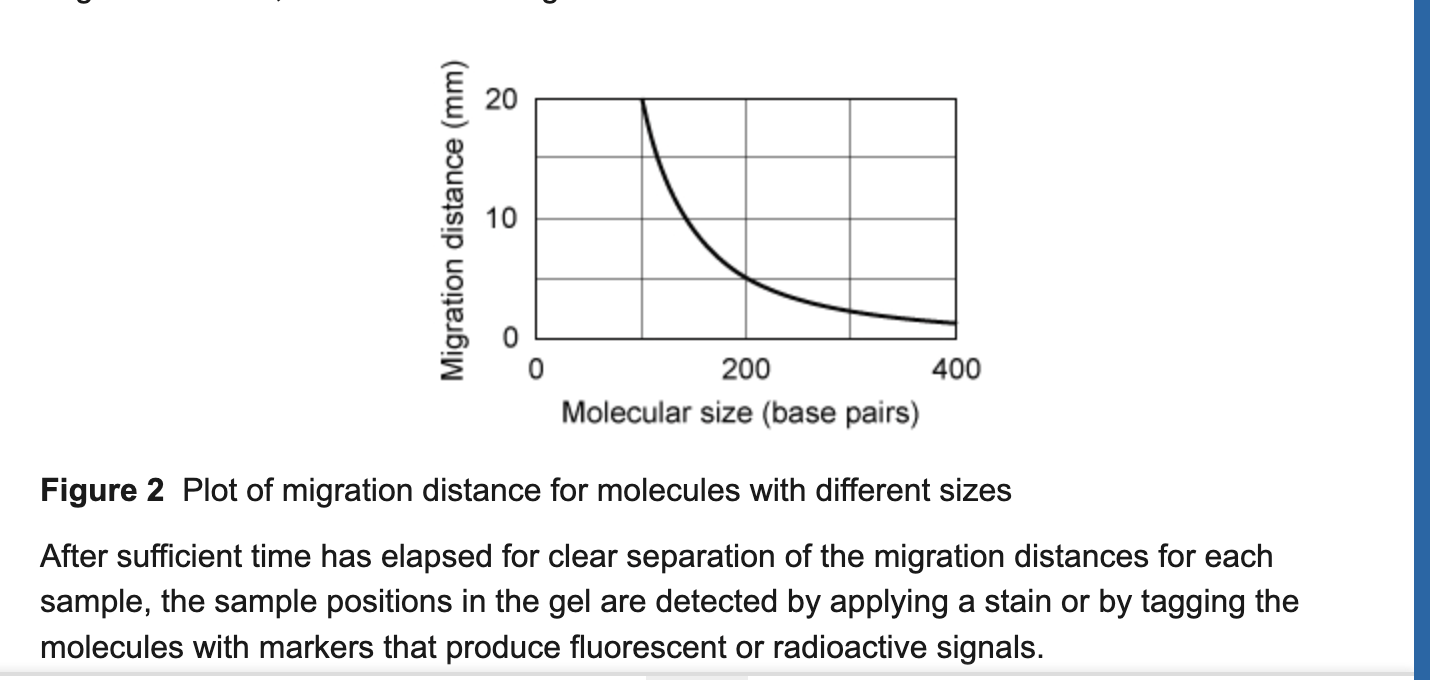
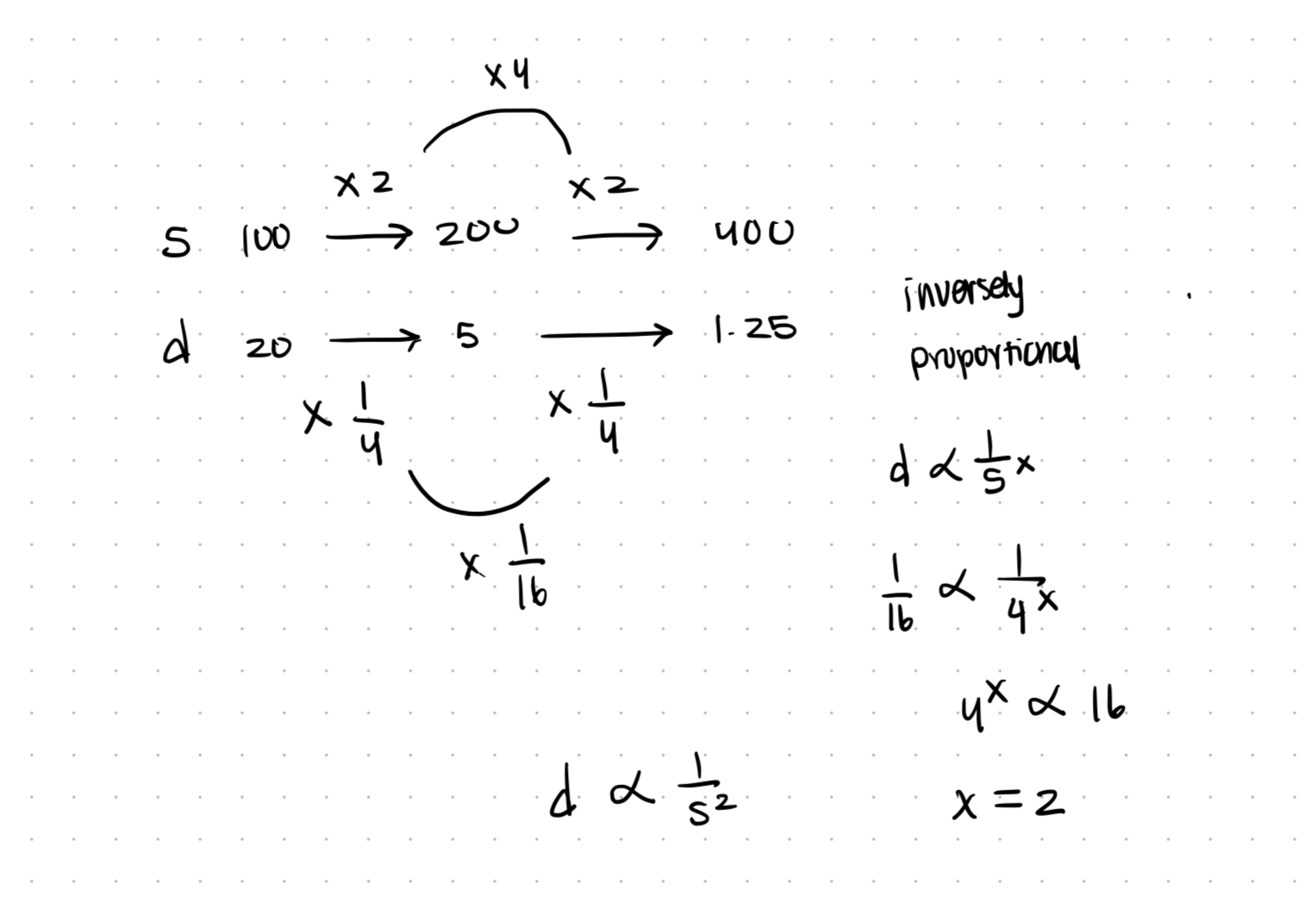
Answer: D
Passage F

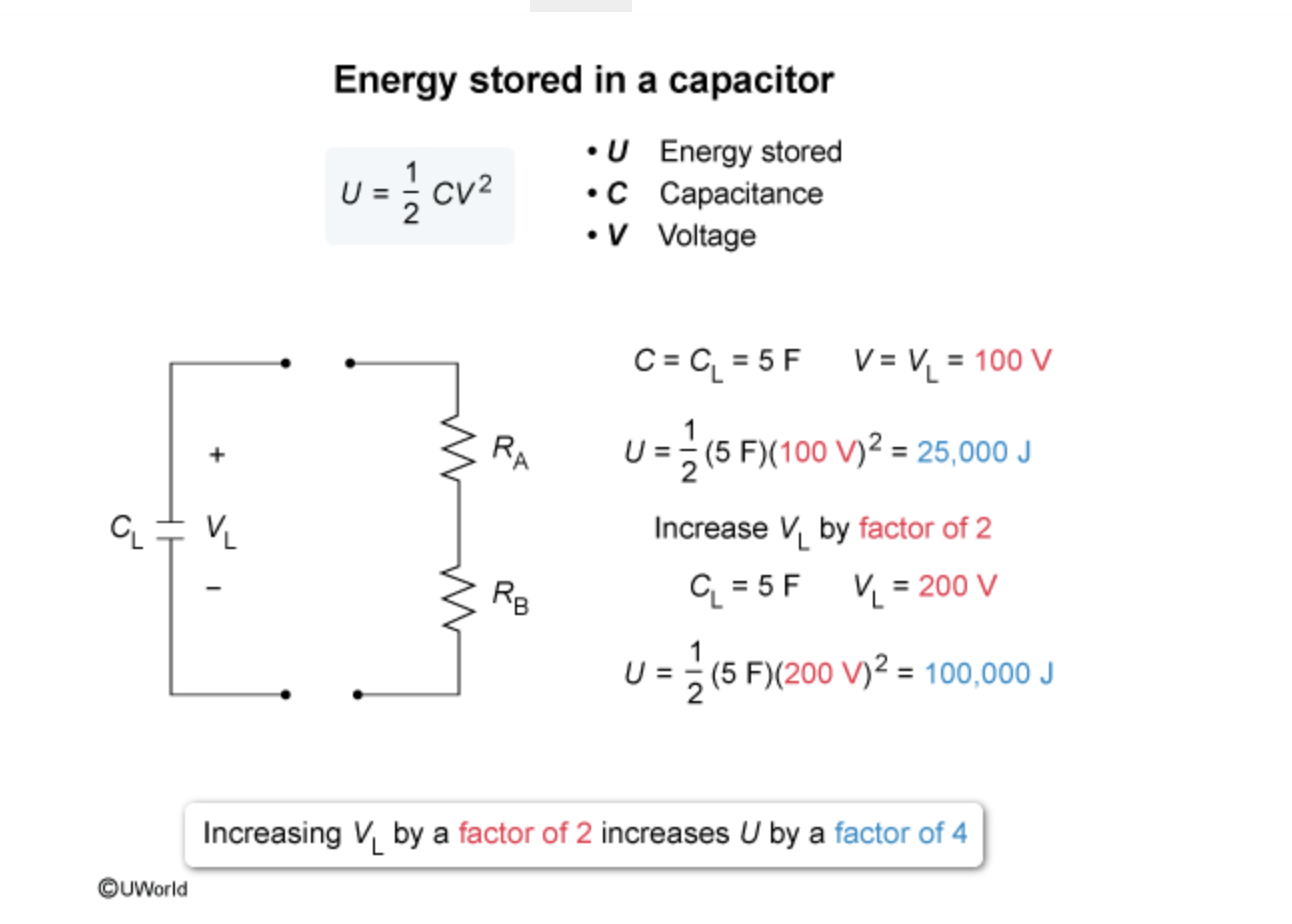
Passage F

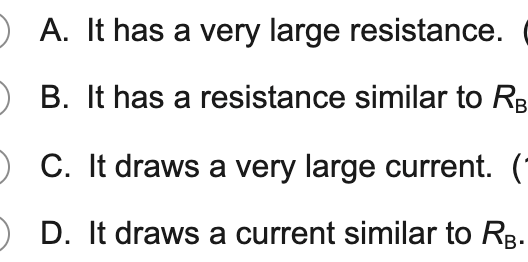
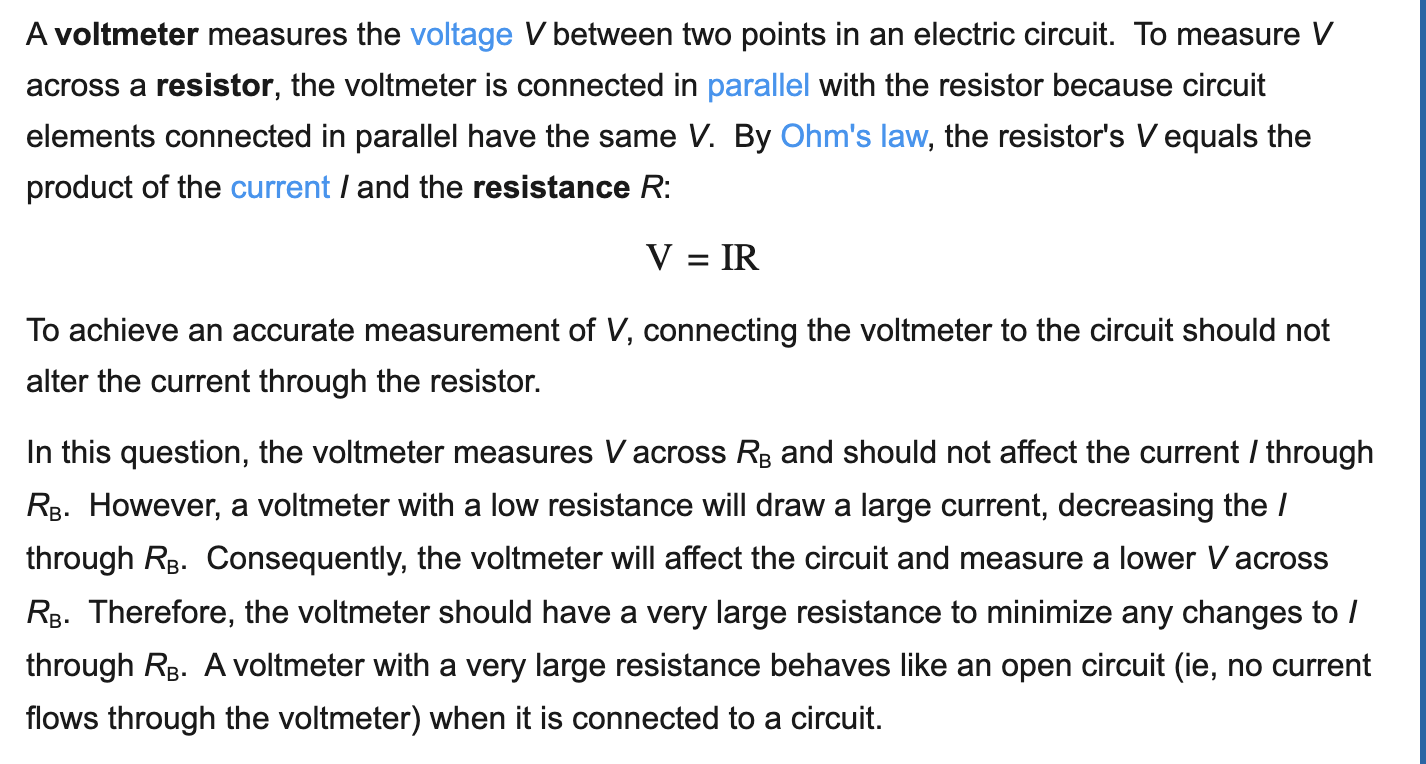
Answer A

Passage F
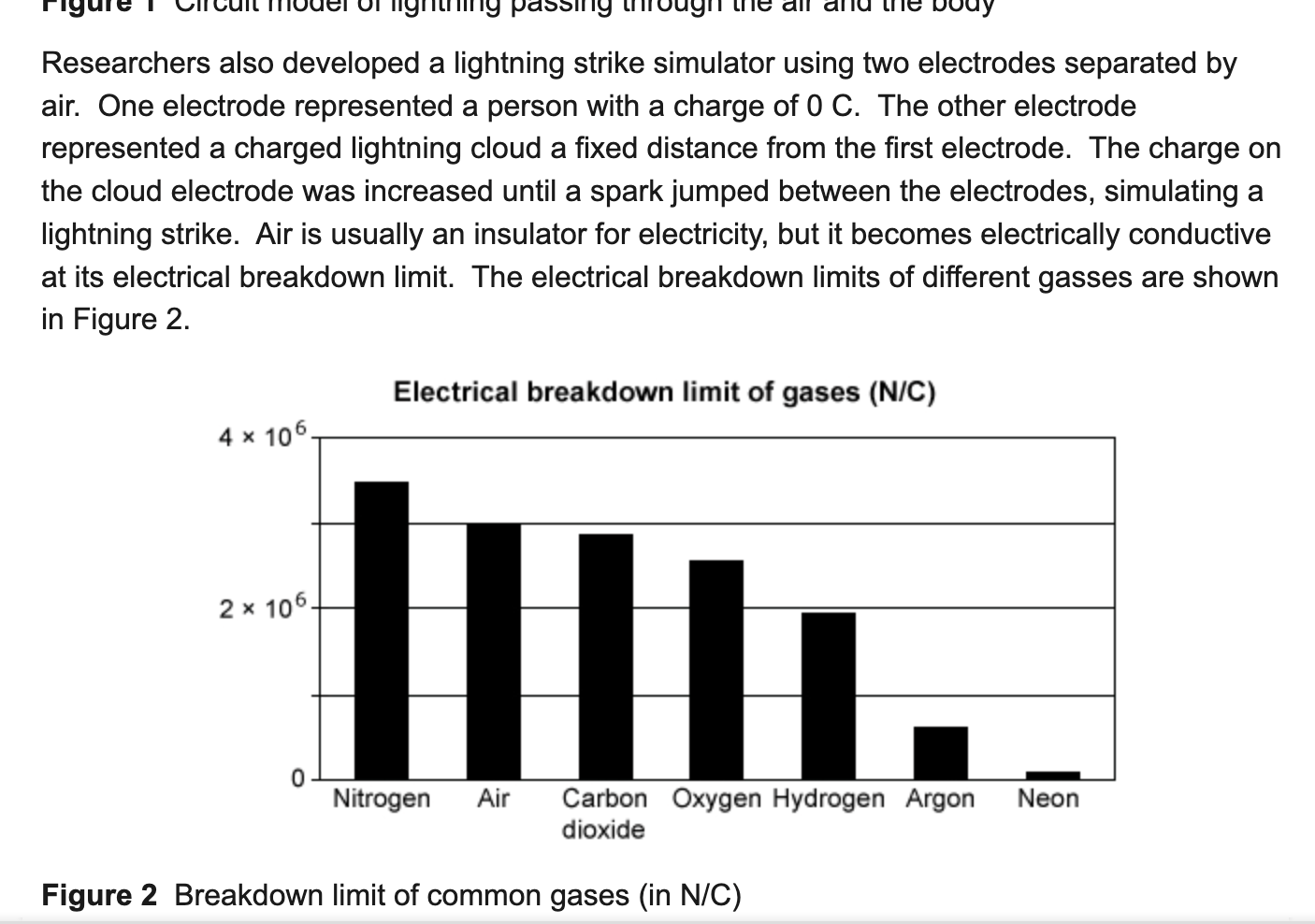
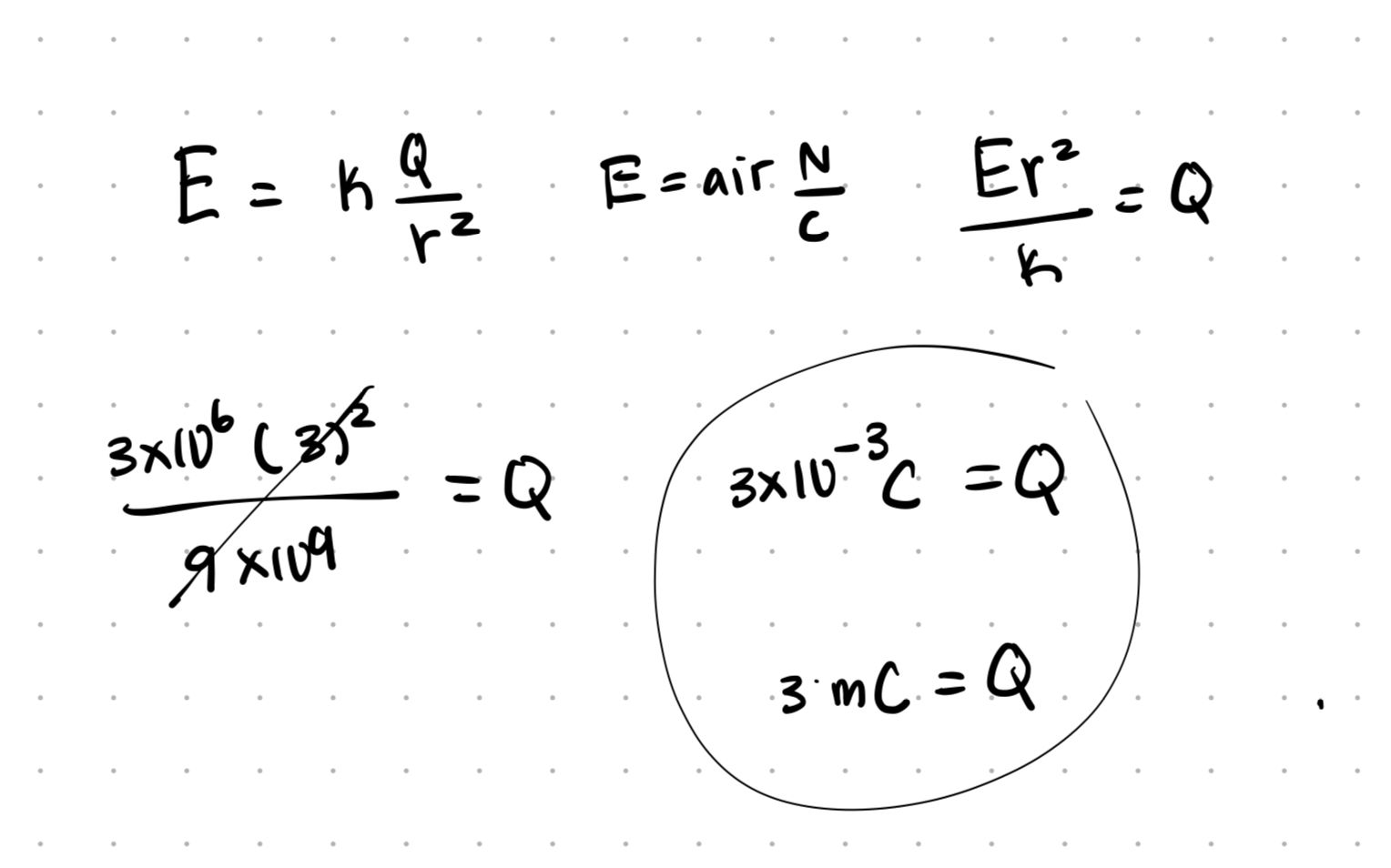

Passage F
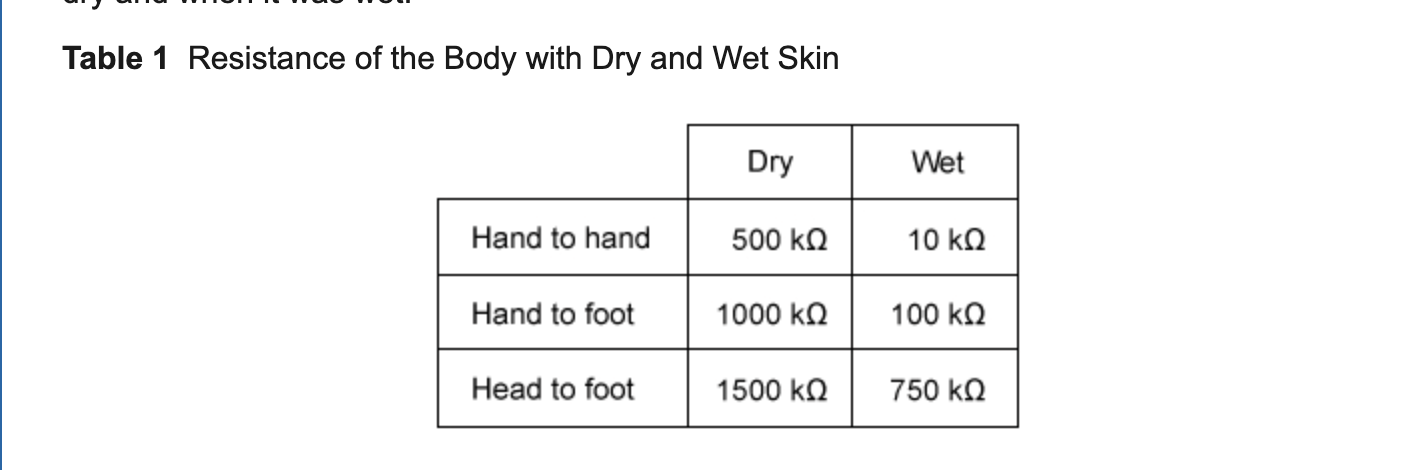
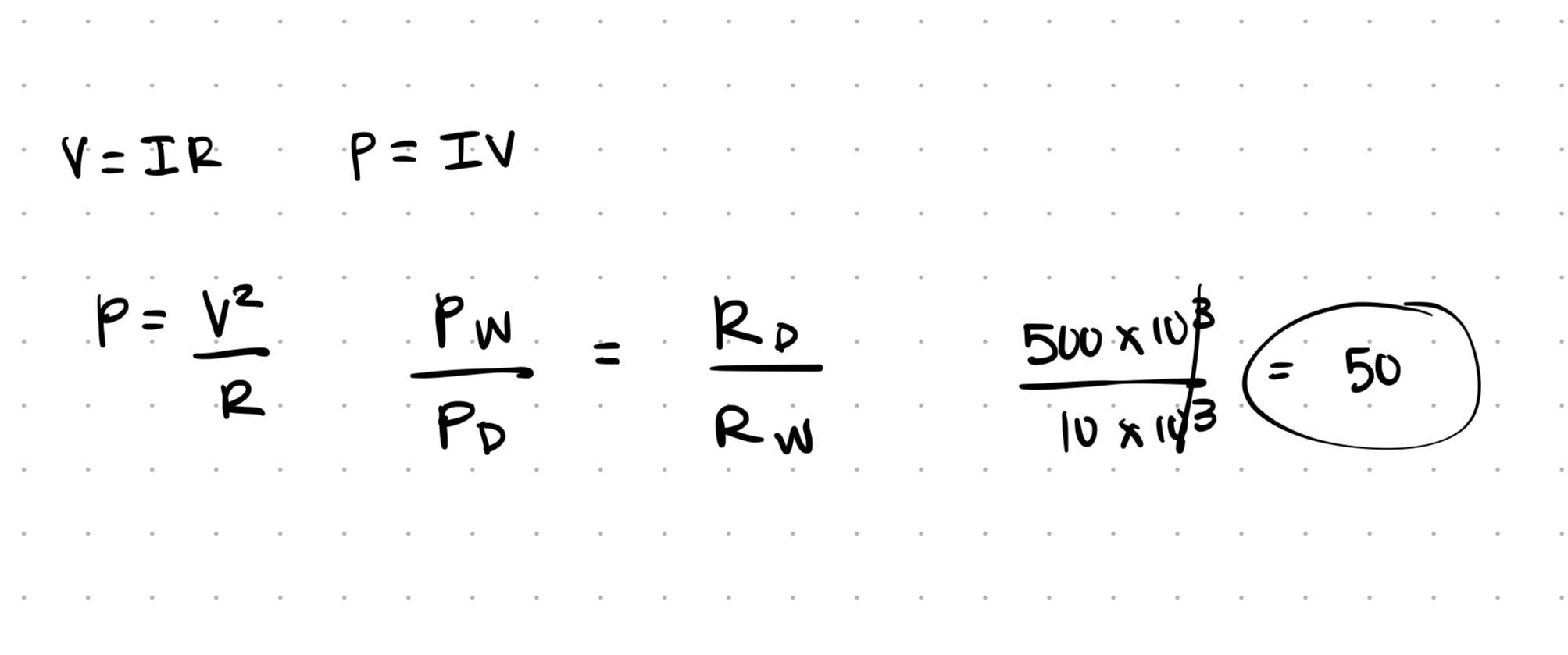

Passage F
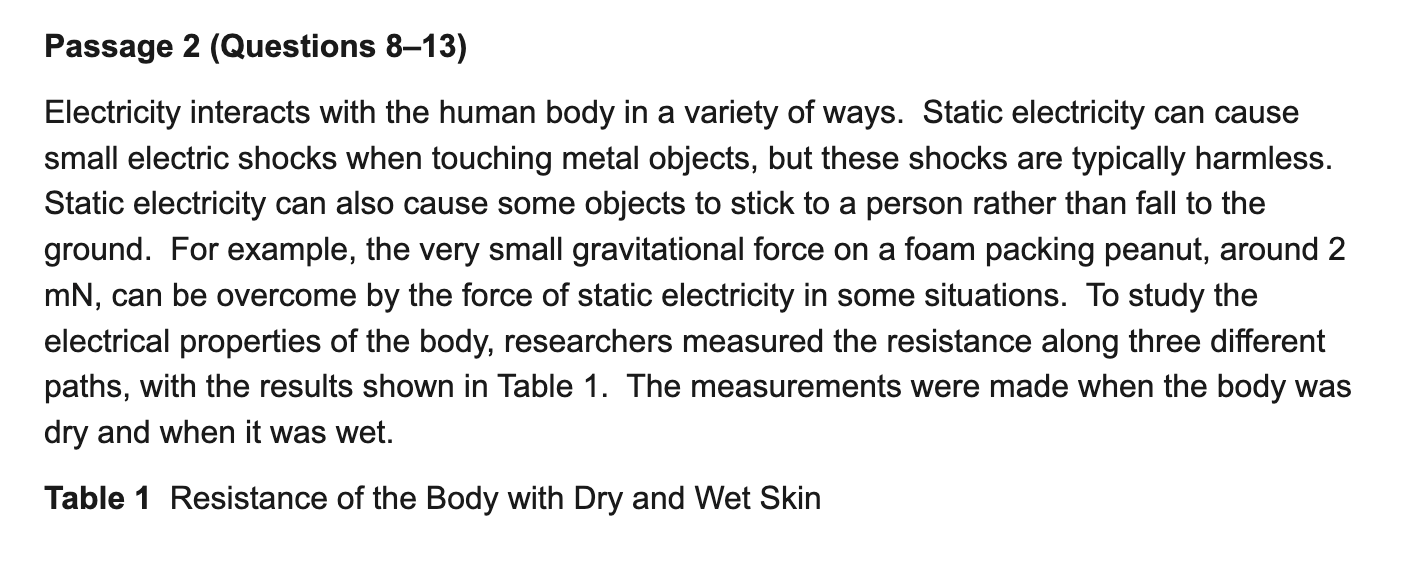

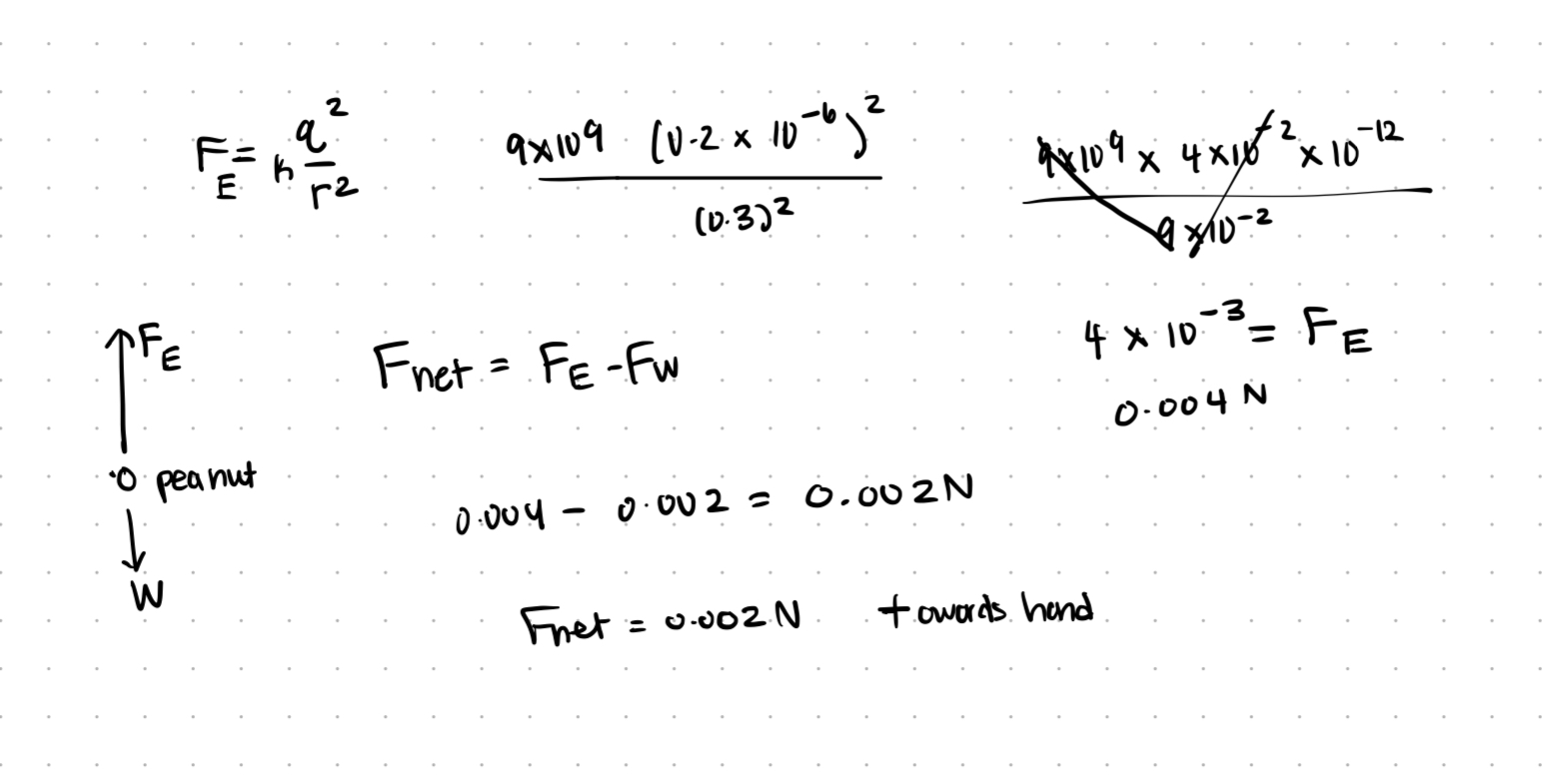
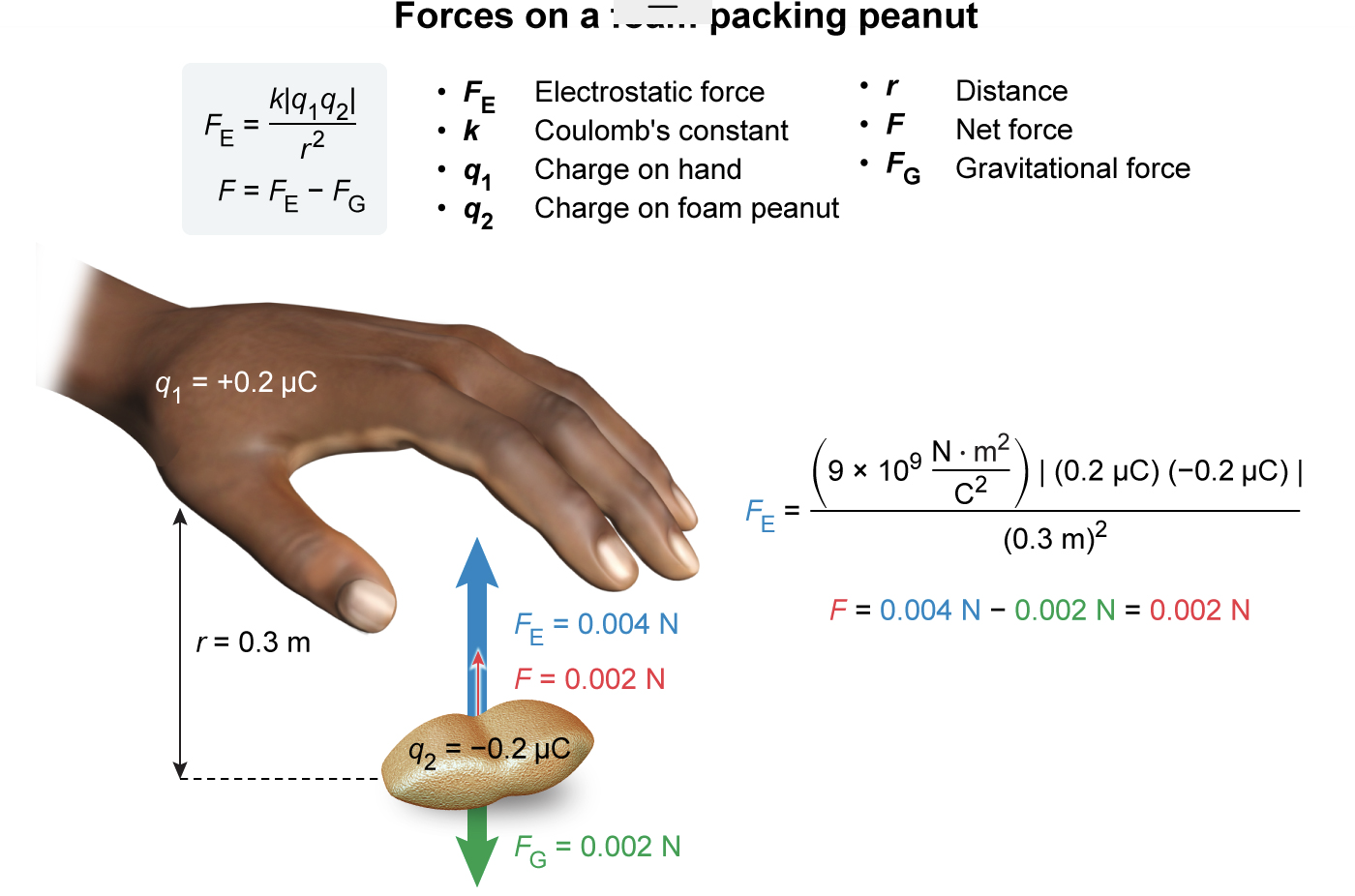
solve for F and direction
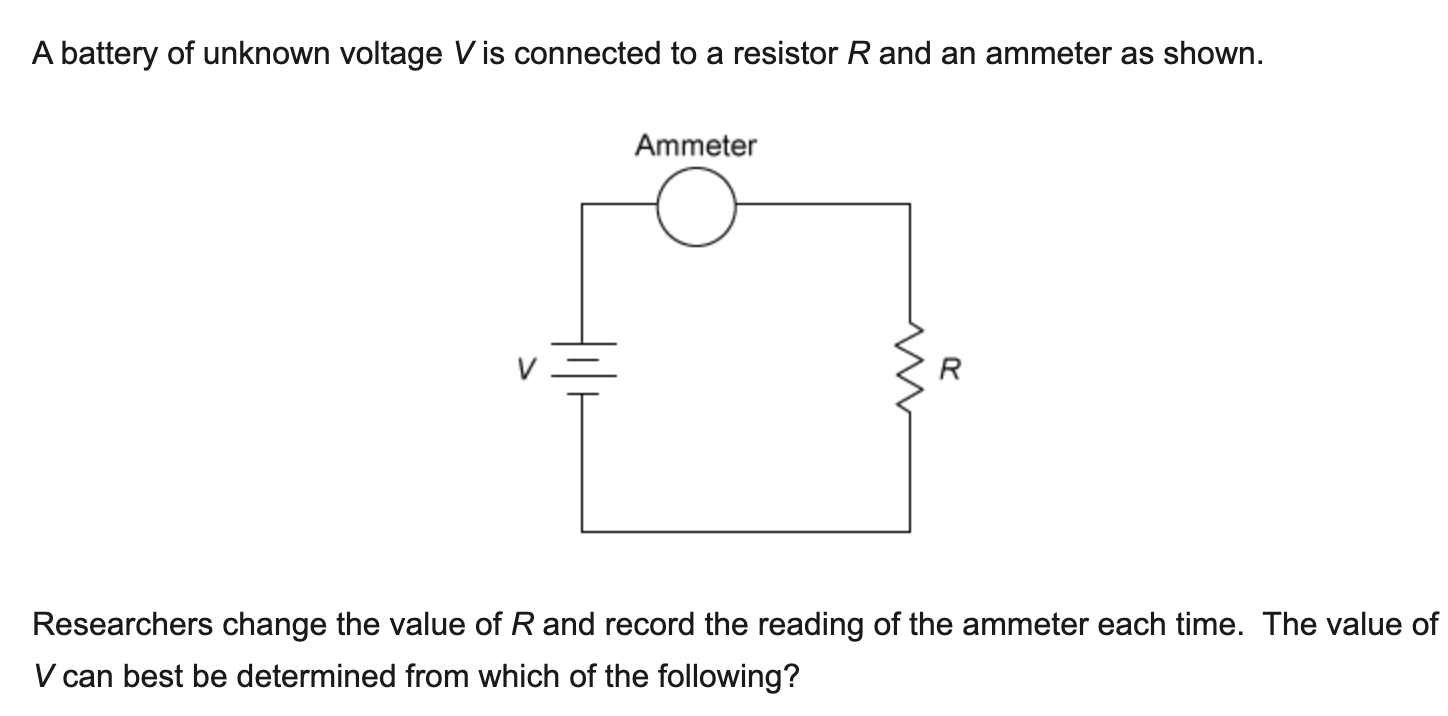
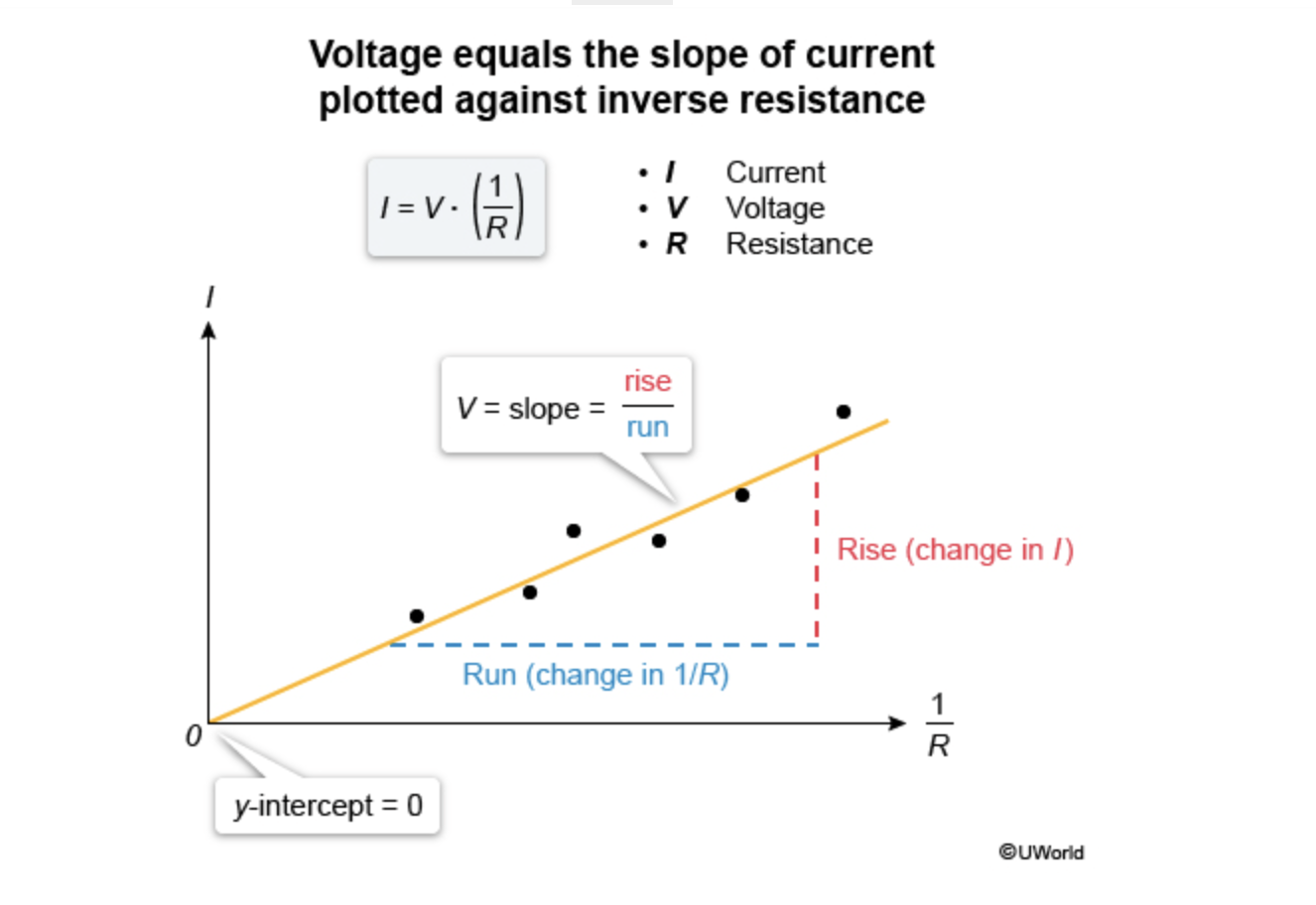
How is R shown on graph?

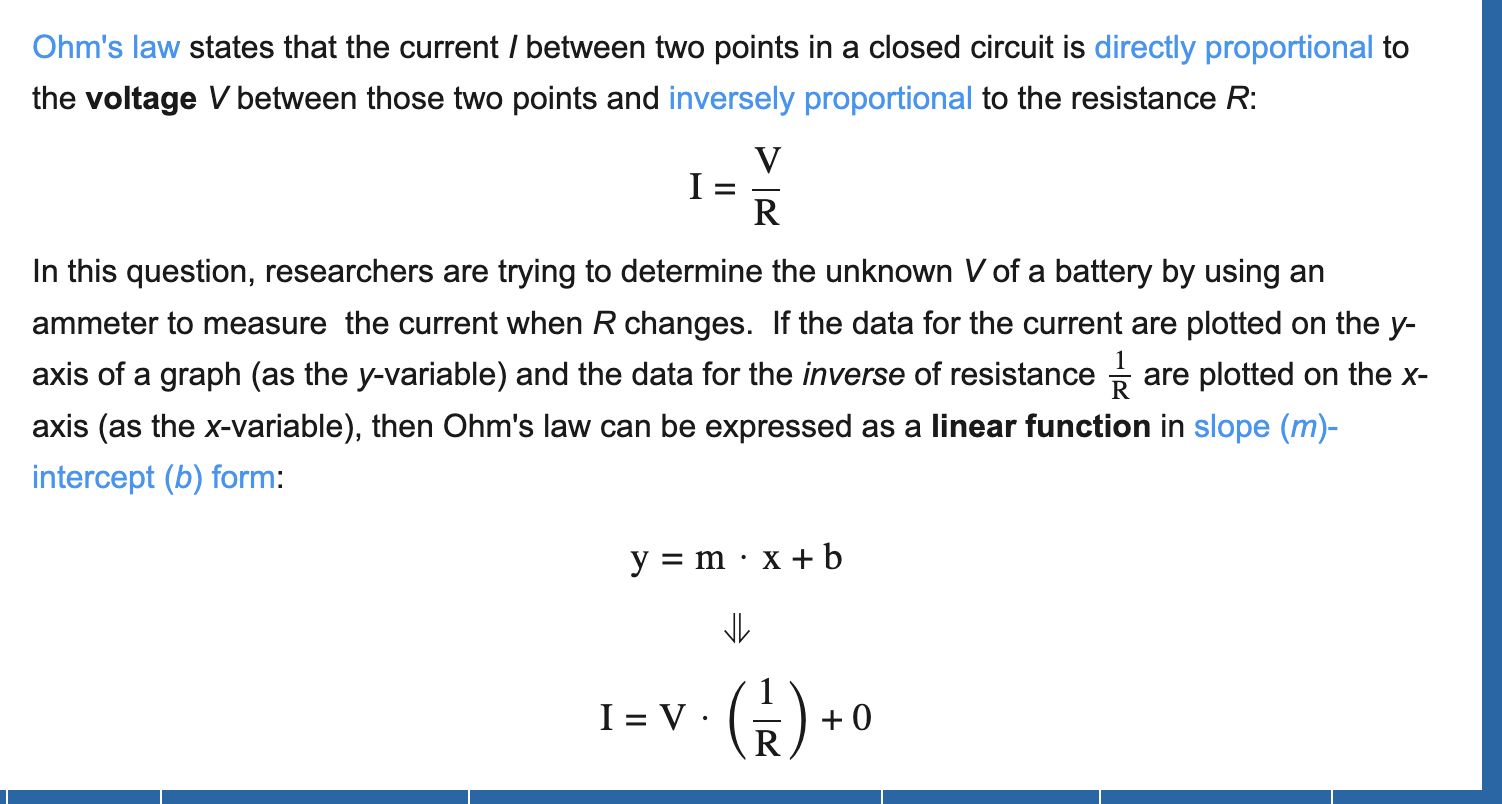

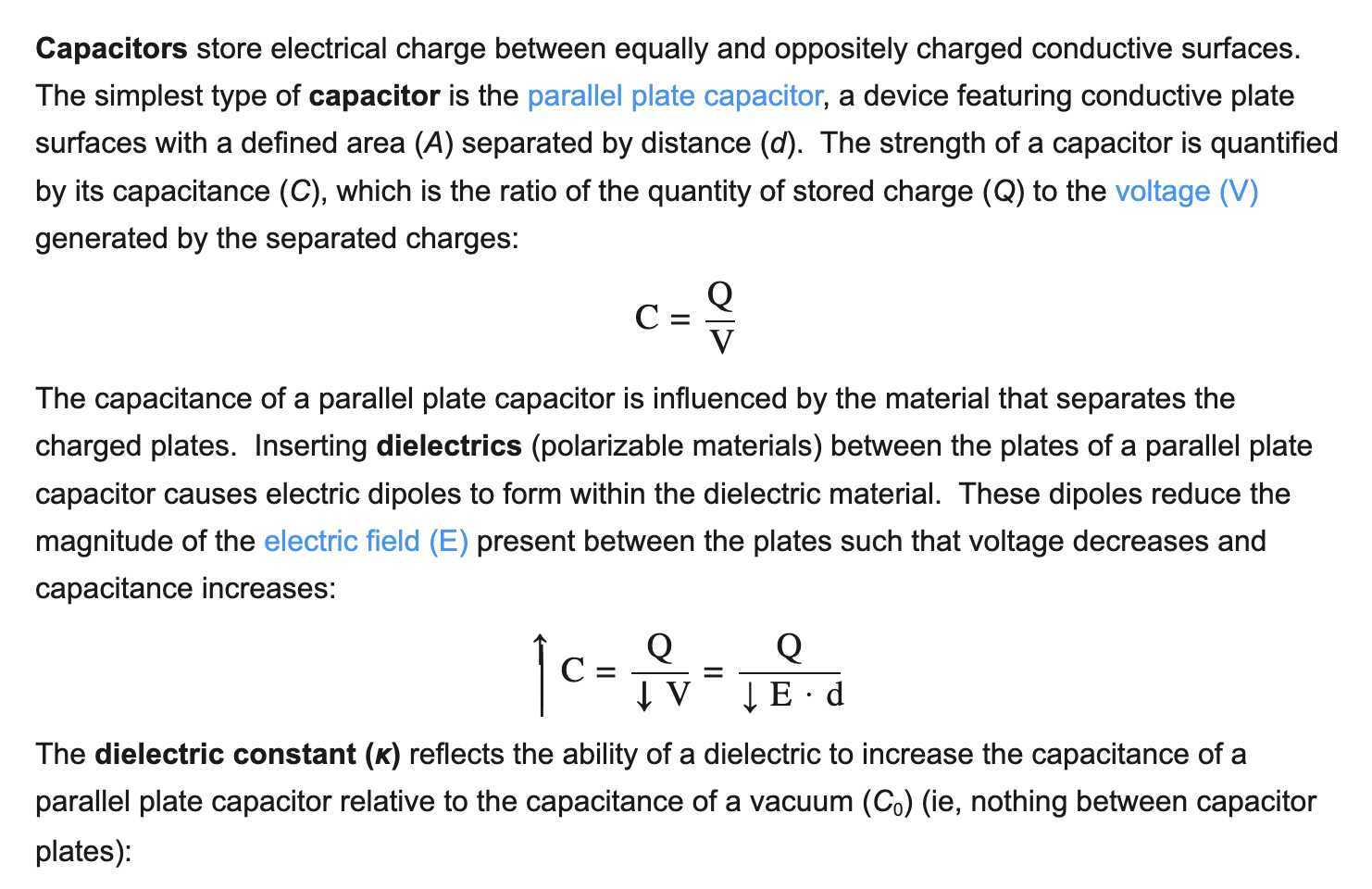
Note: circuit is parallel plate capacitor
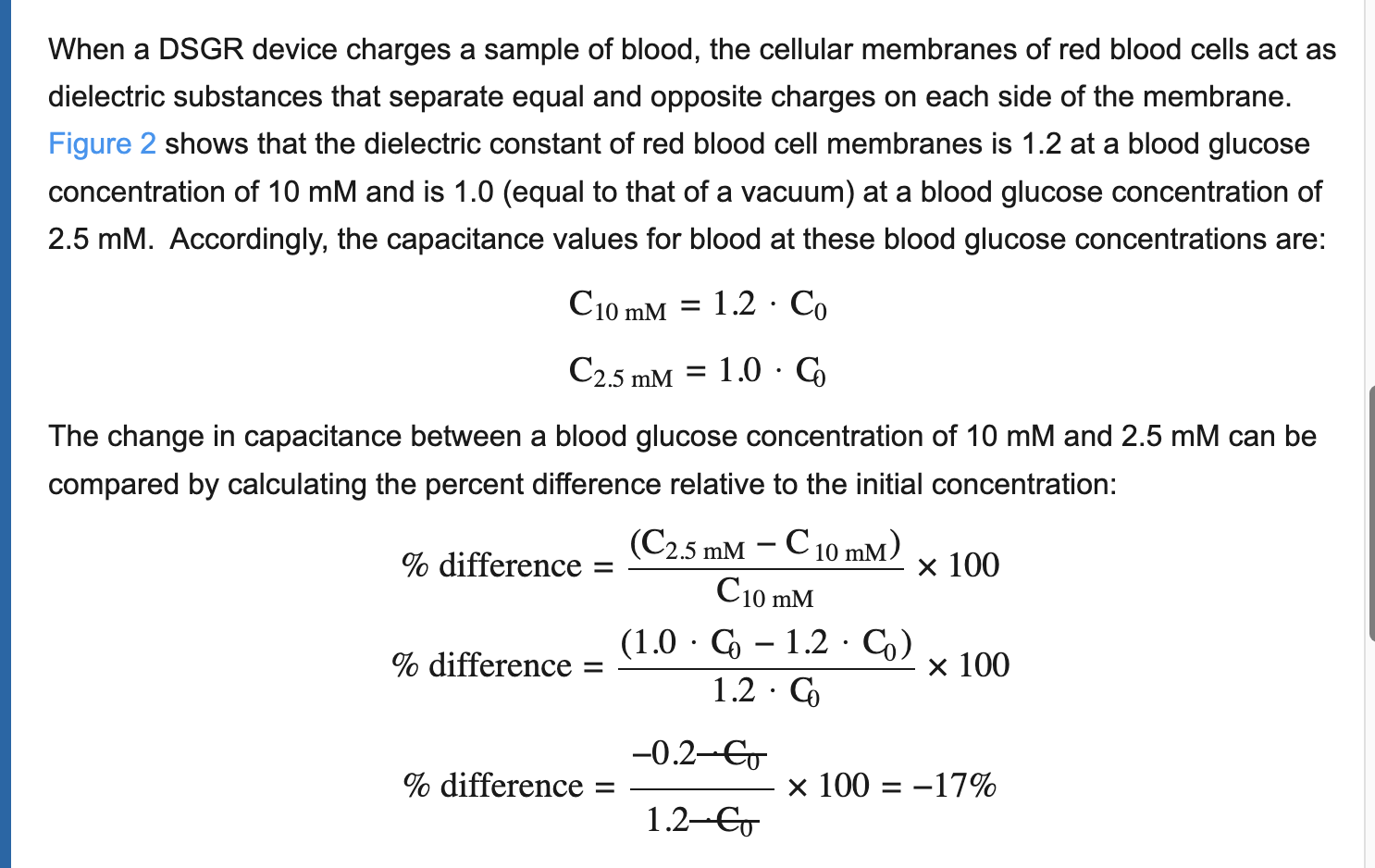

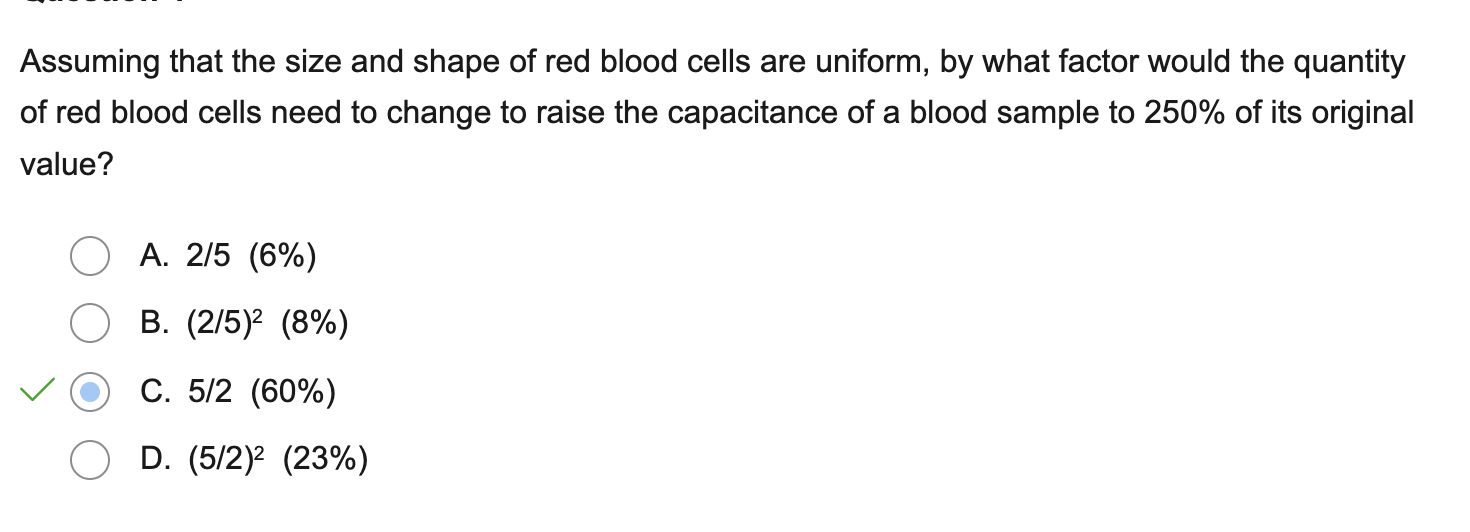
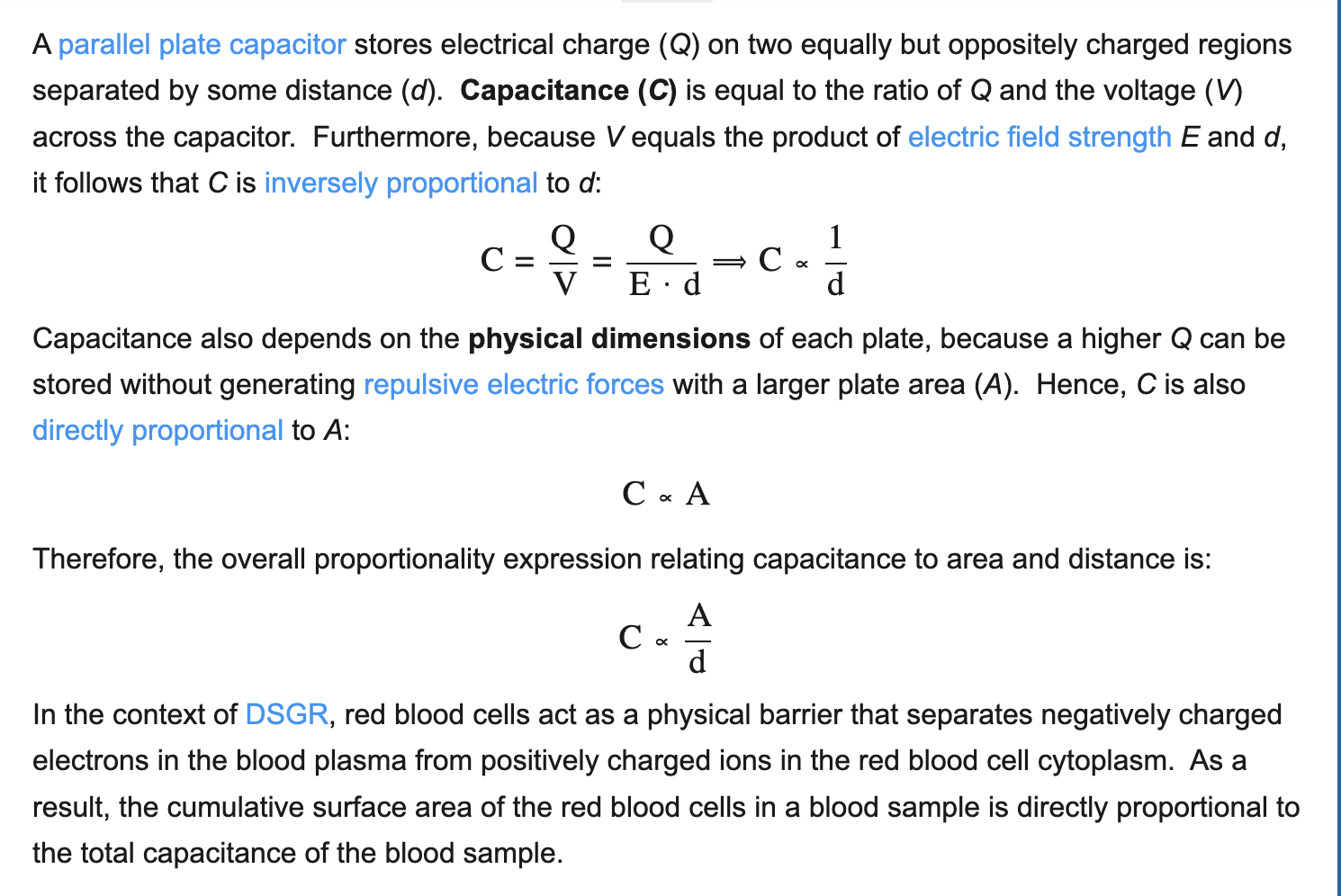
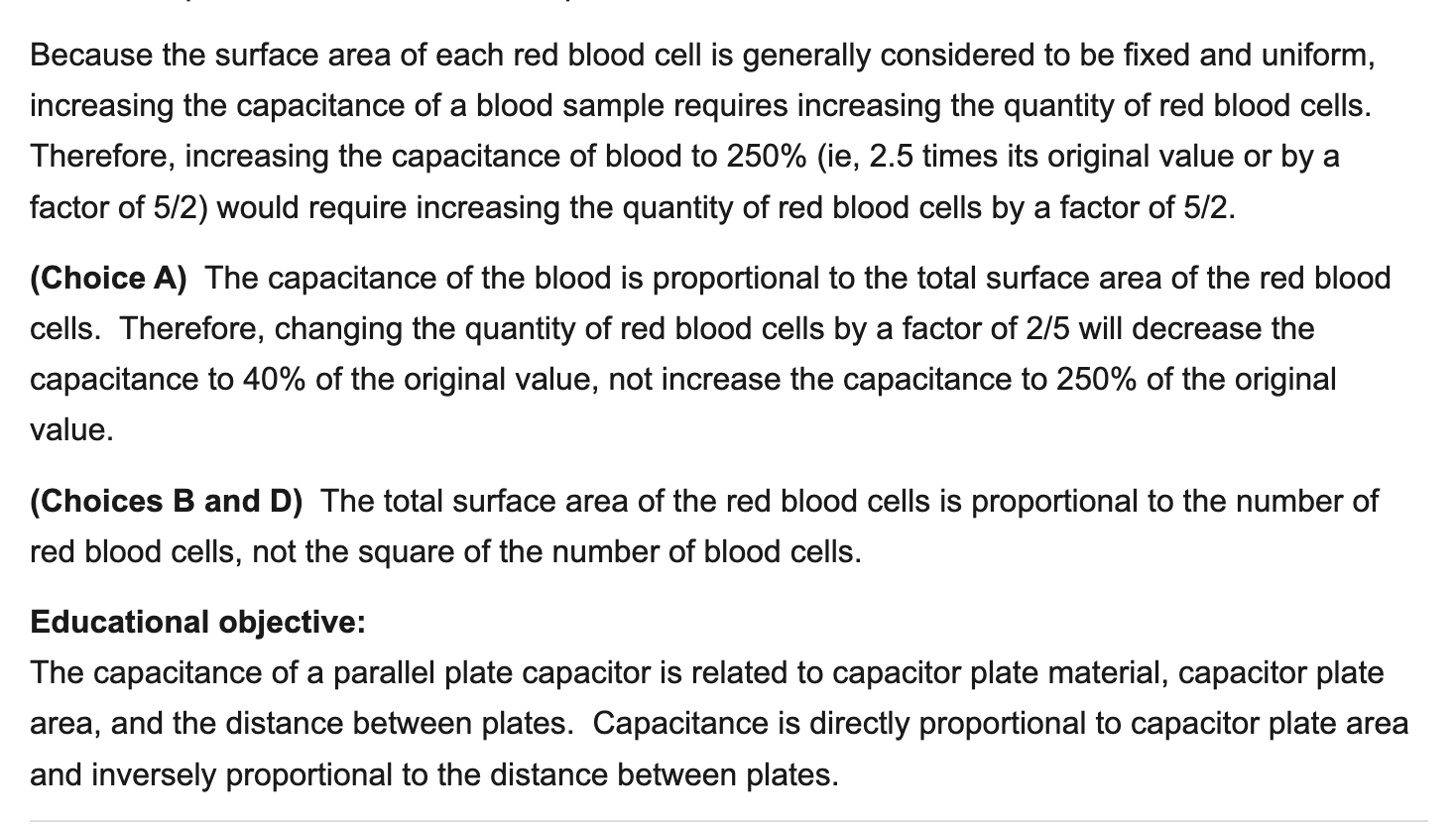

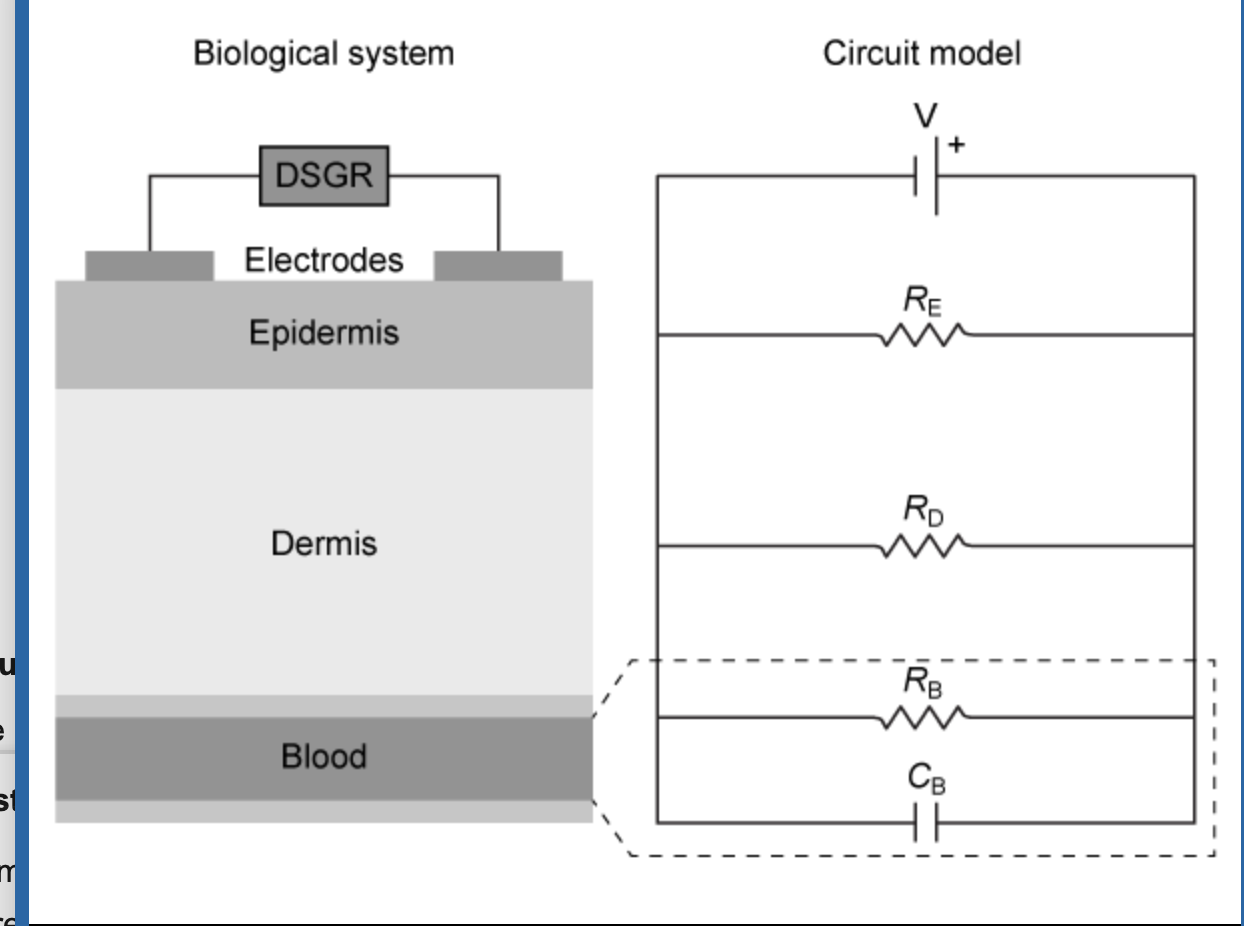
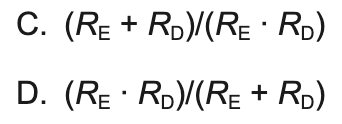
Answer D
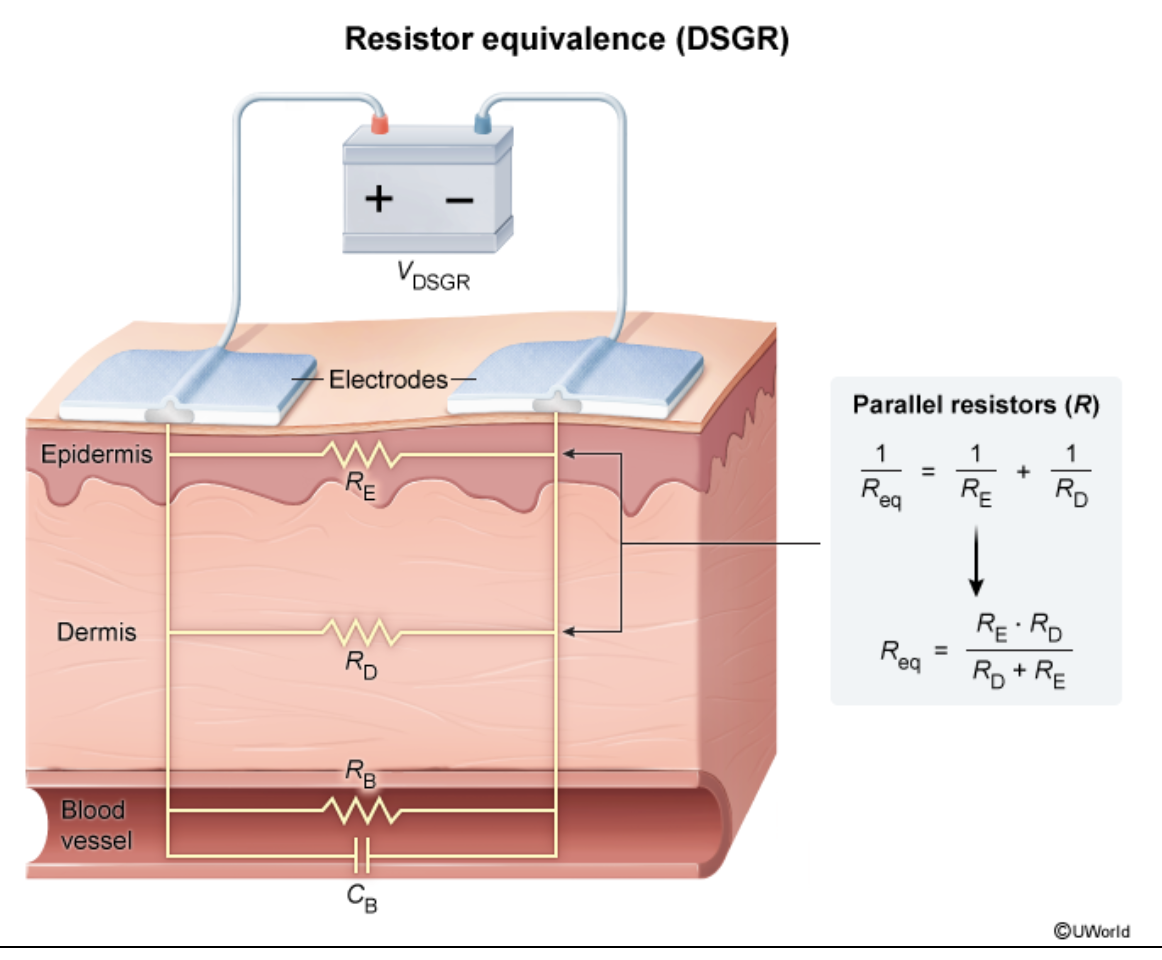
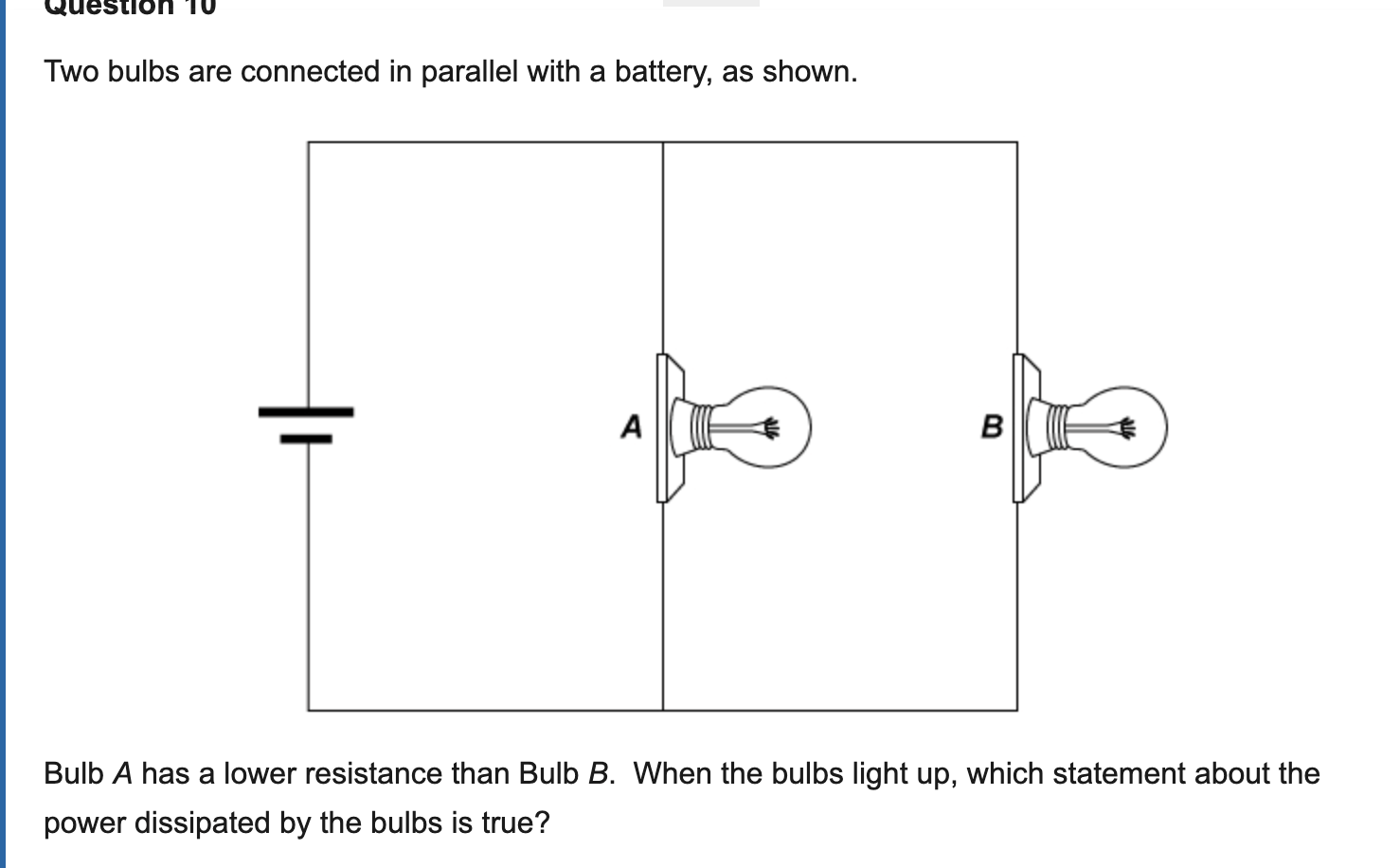
Power disipatted is greater in A or B? Reason?
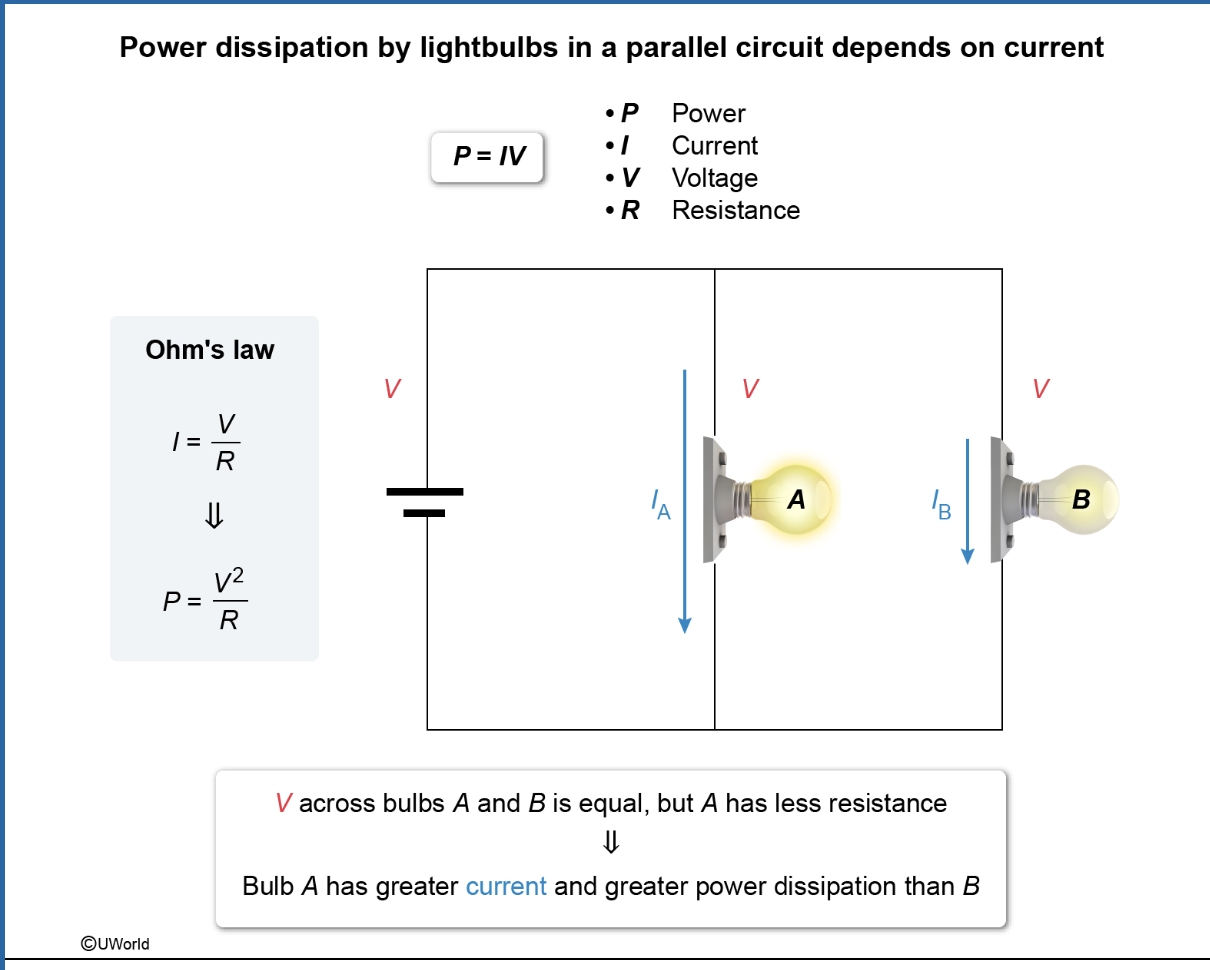
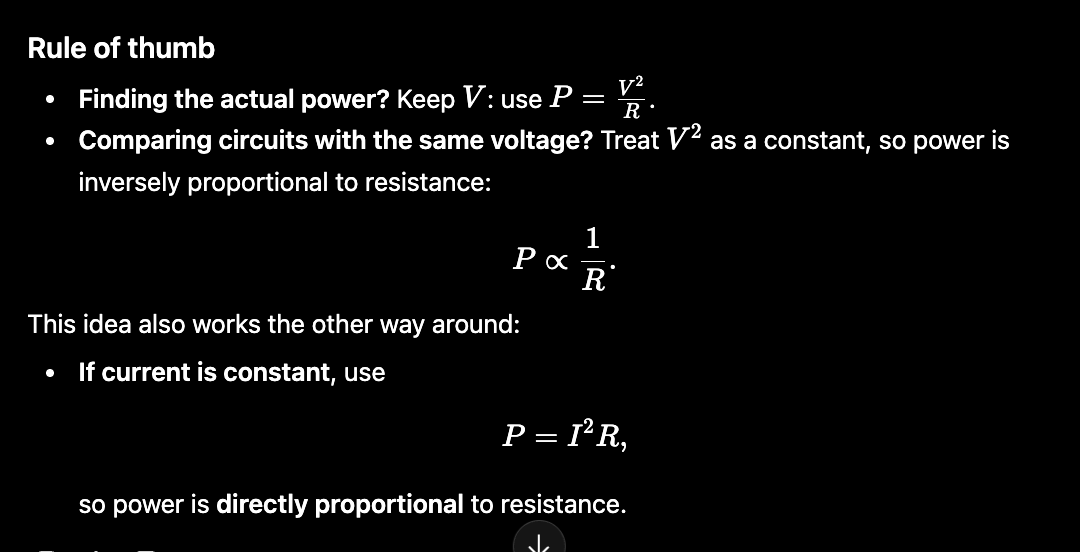


Answer A


Passage G


Passage G



Passage G

Use table 1
110-70= 40
40= 10log (ratio)
4=logratio
10^4= ratio—→ 1000

Passage G


Answer A

Passage G


Answer C


Answer C
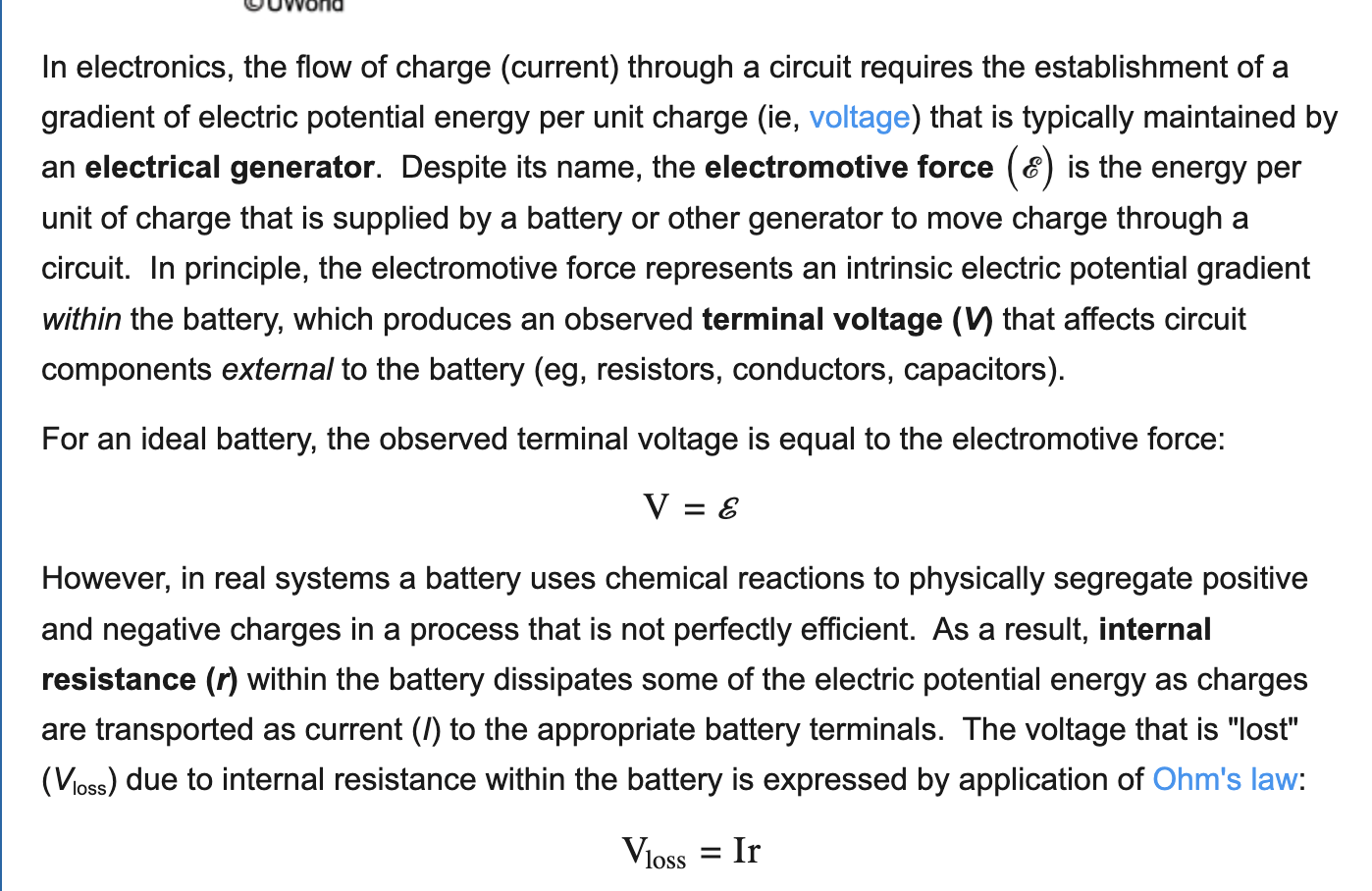



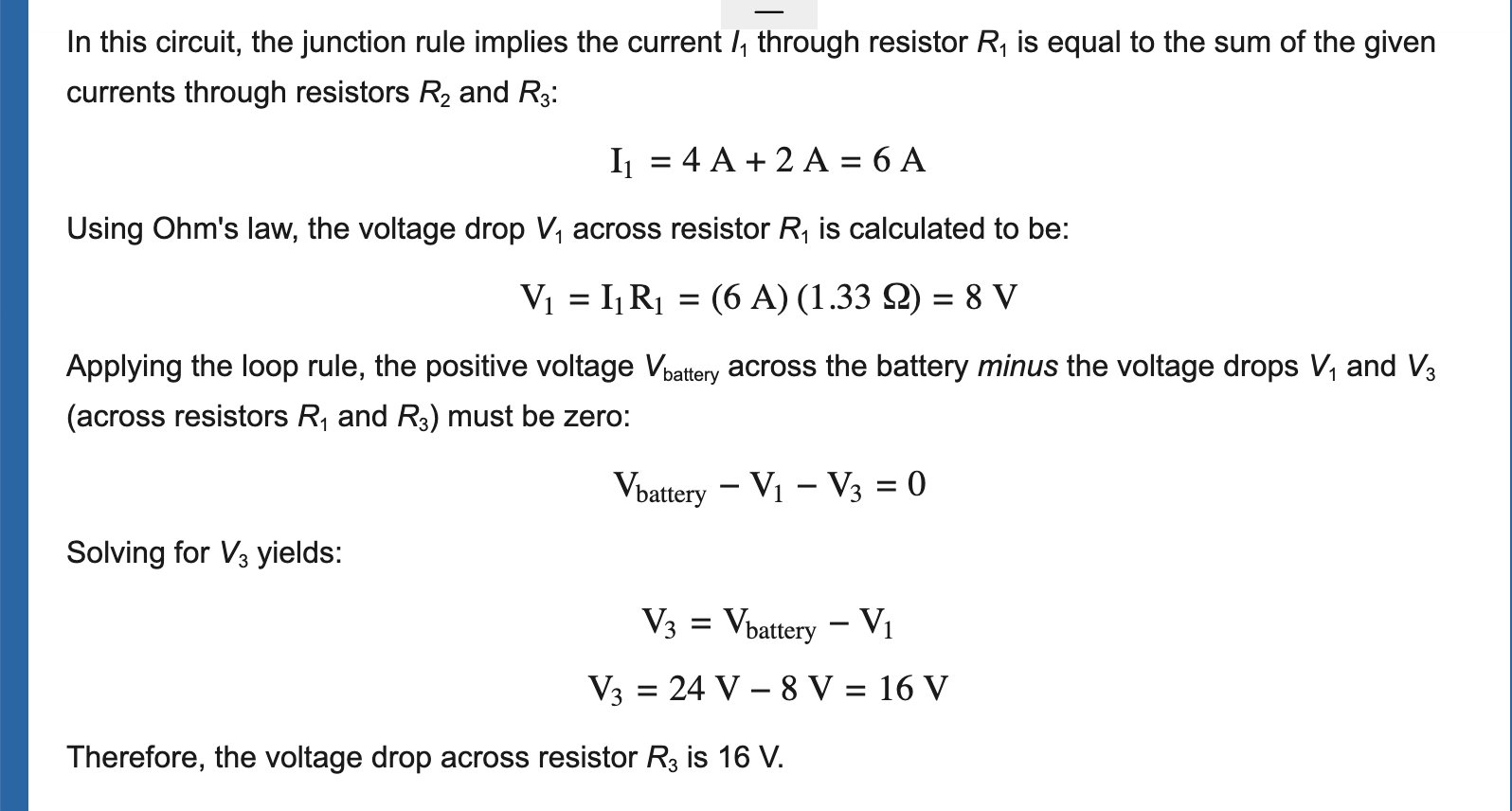
Loop rule: V- 1-3
Junction I1=I2+I3

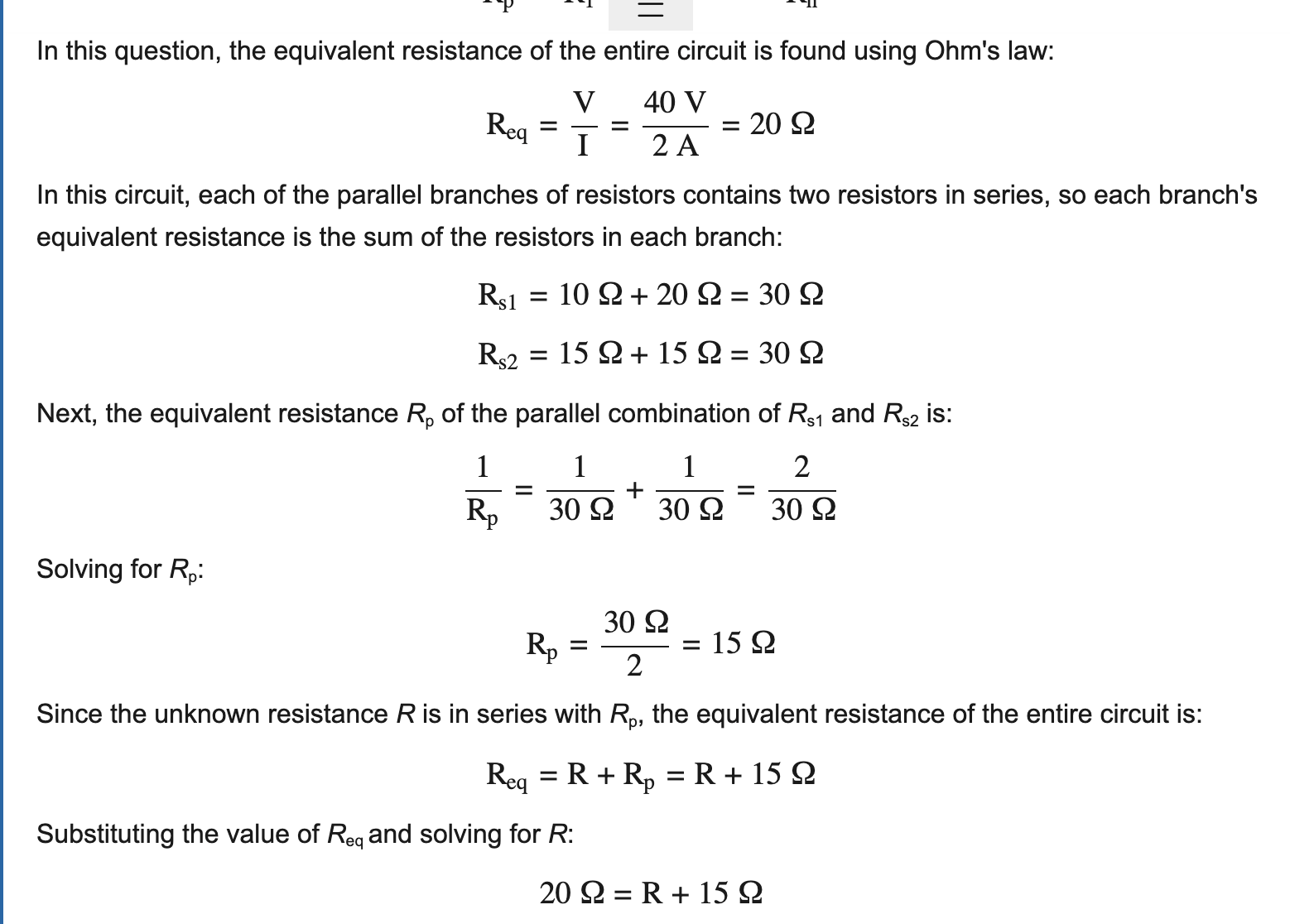
V= IR
V=40
I=2
and solve for R total
then use R total to solve for R
R= 5


note: there are a few after that are not from electrostatic, accidentally put here
note


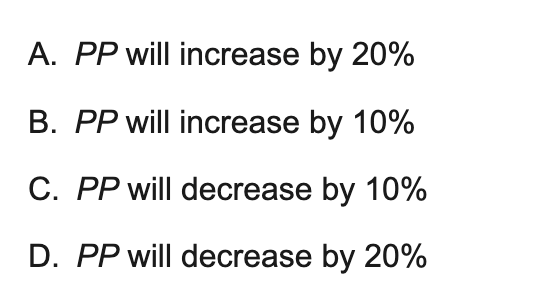
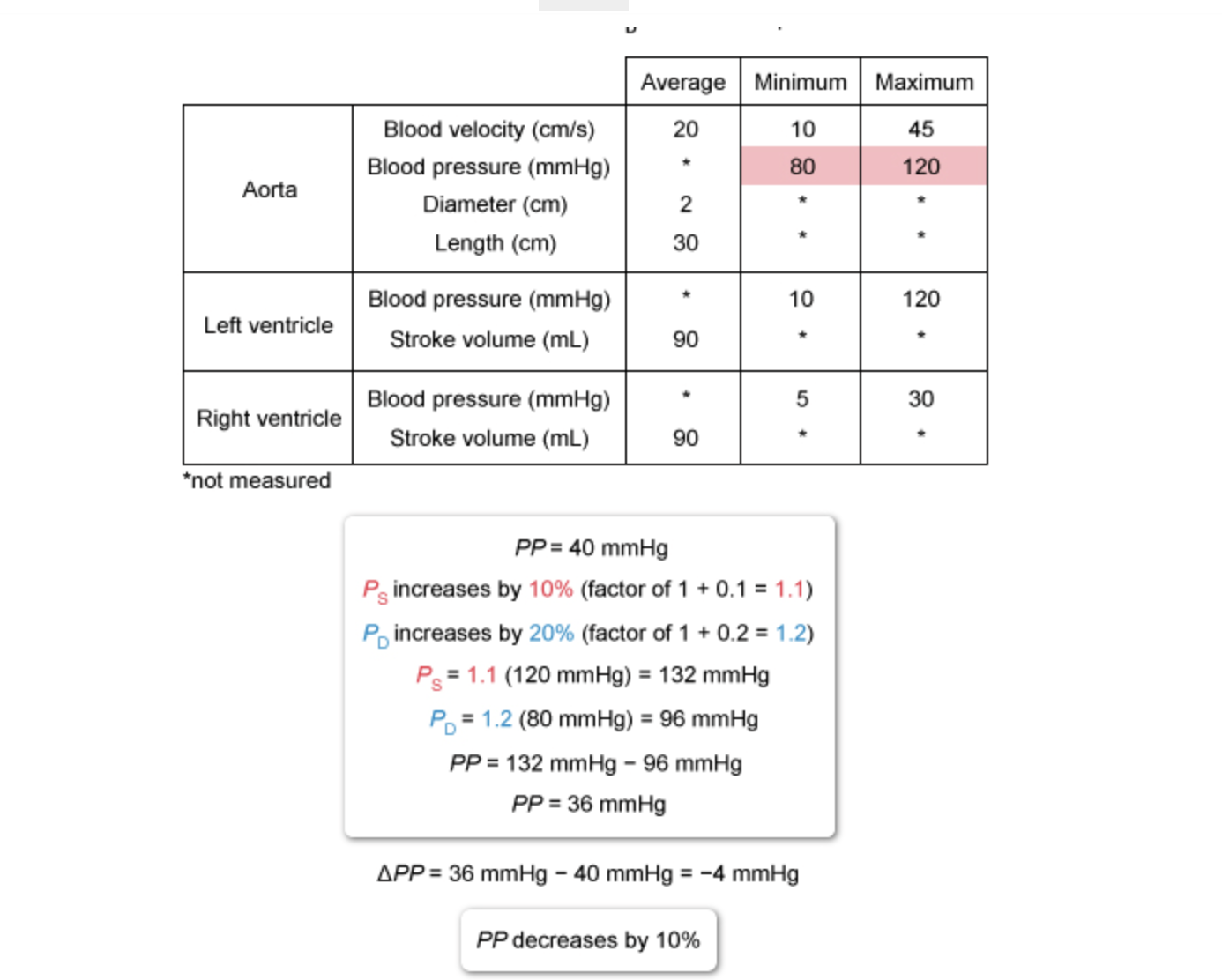
Answer C




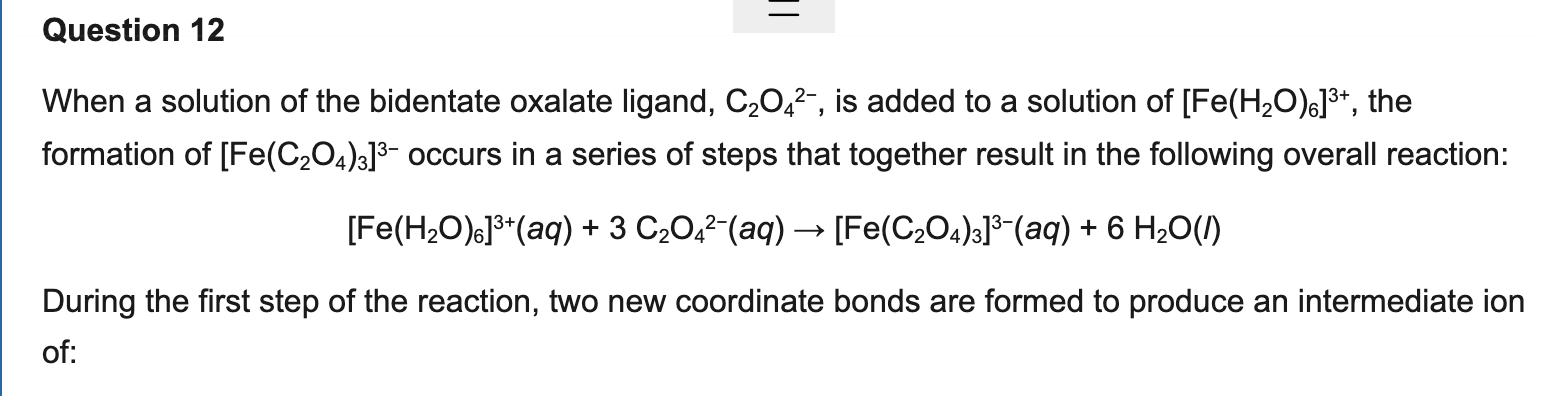


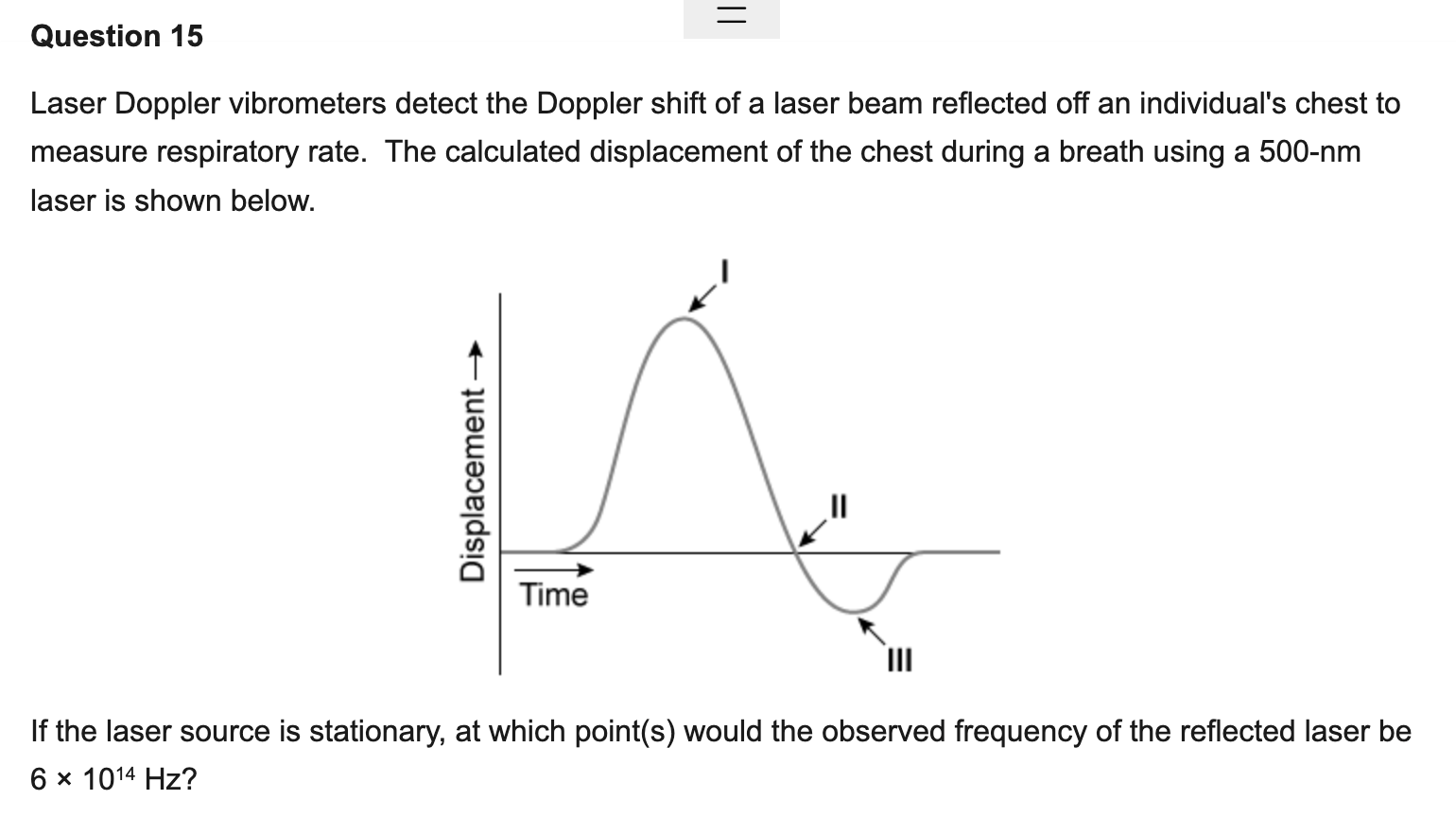





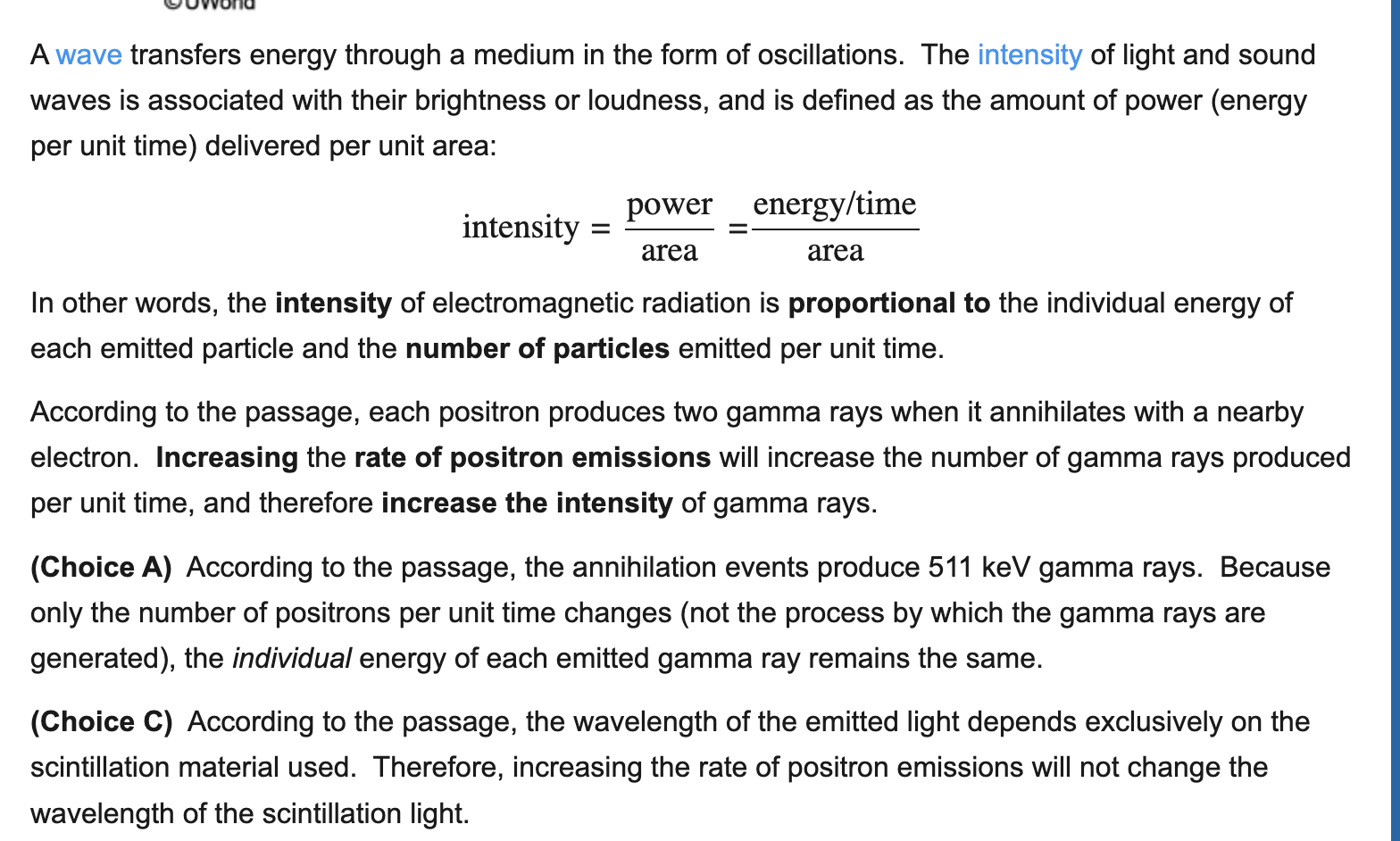

visible spectrum
400 to 750nm


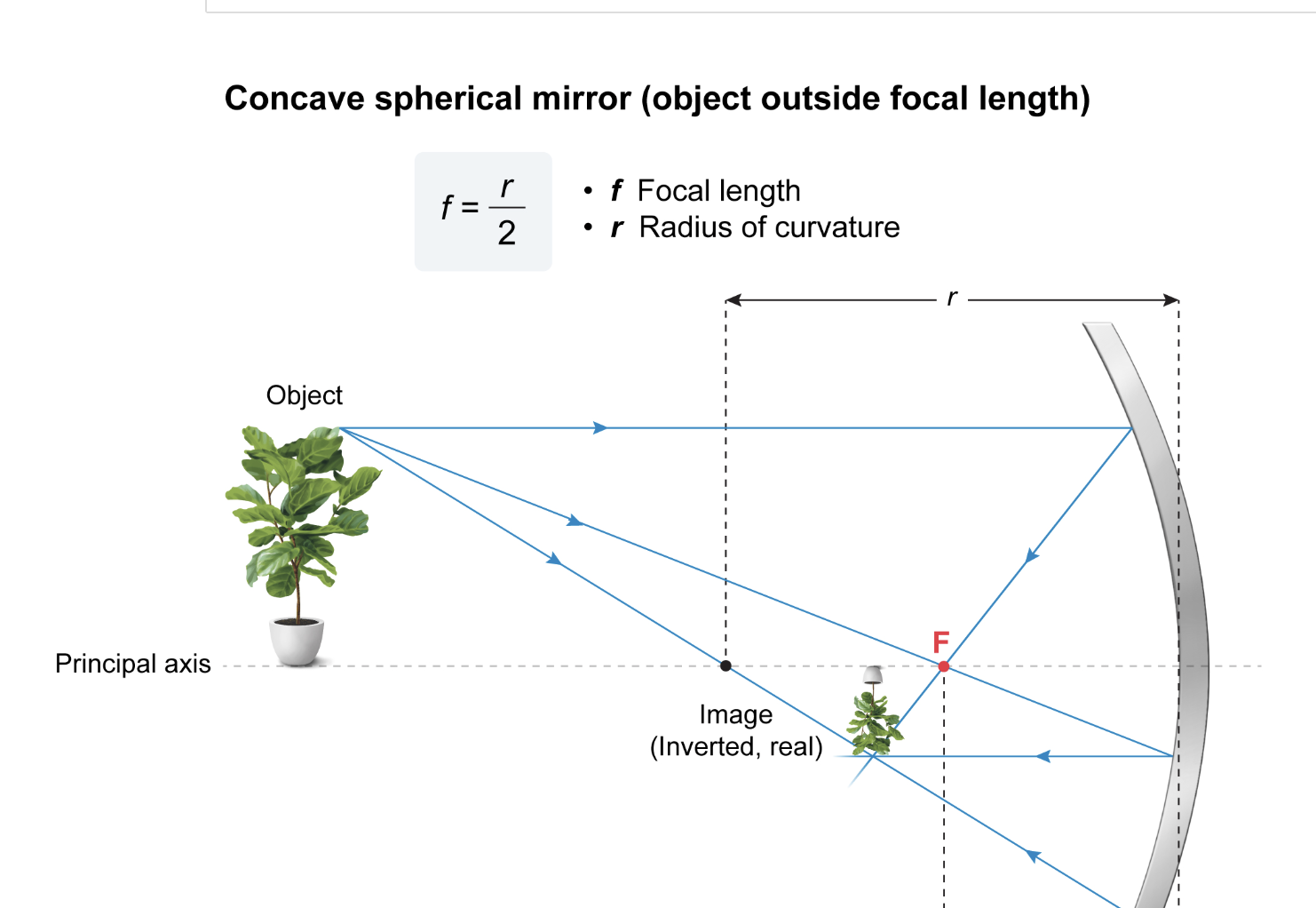
C is answer



isothermal thermodynamc process

adiabatic process

environment
isochoric process

isobaric process


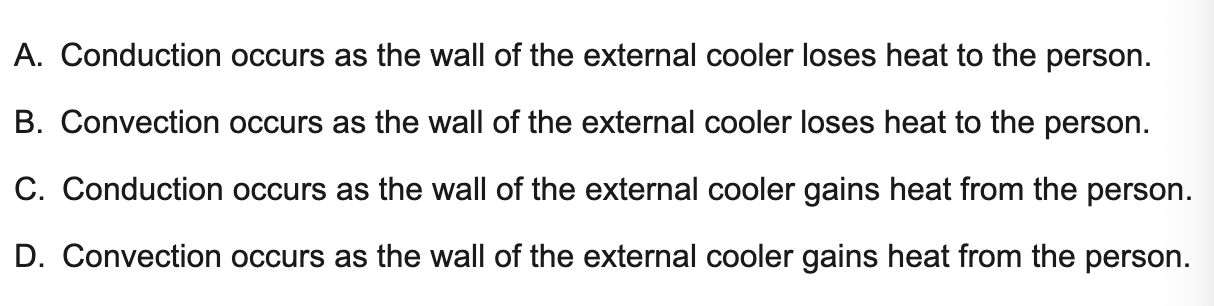

answer c


use q=mcat with temp of nitrogen first to solve q then q=cat to find c with temp of sample

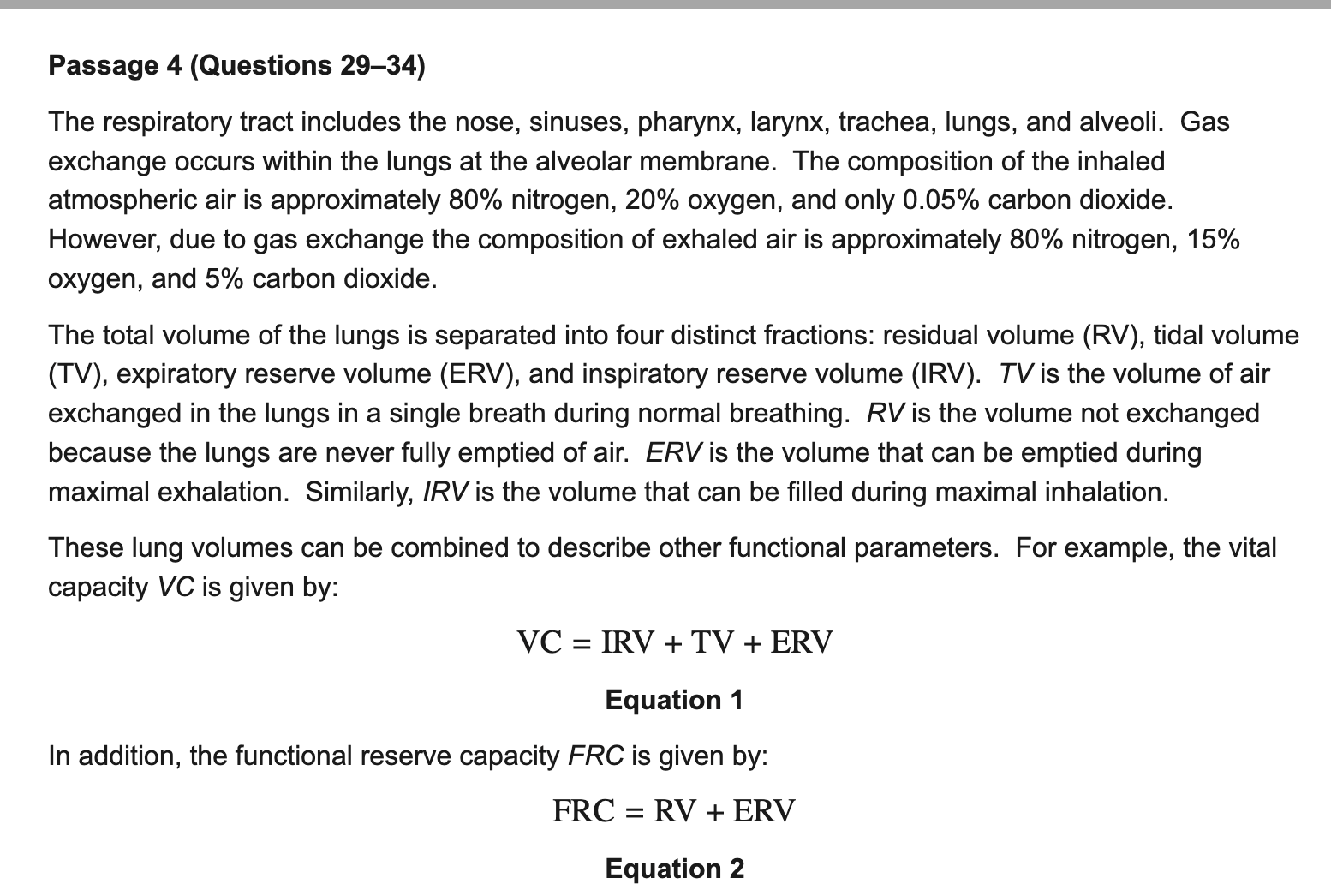
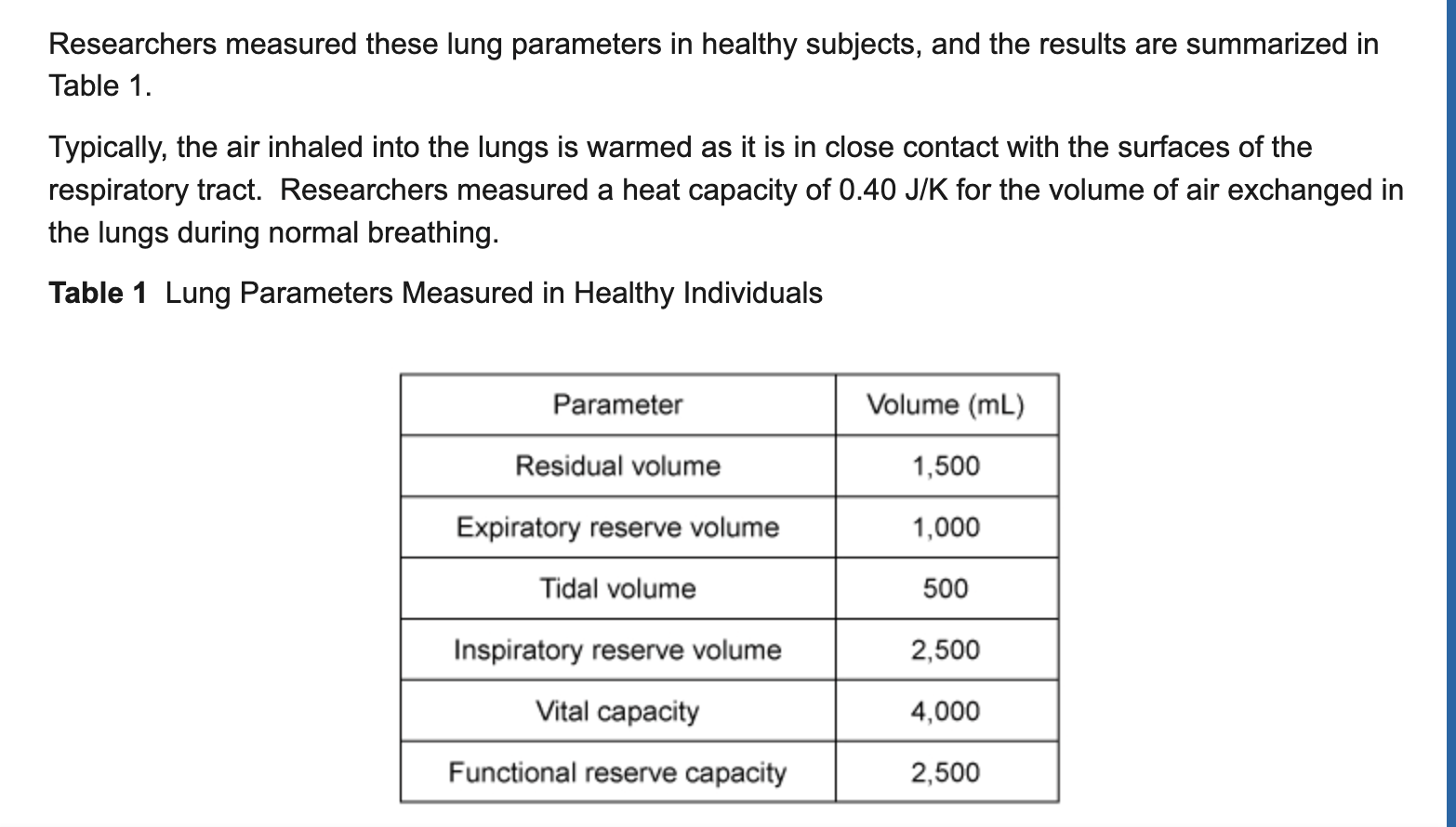

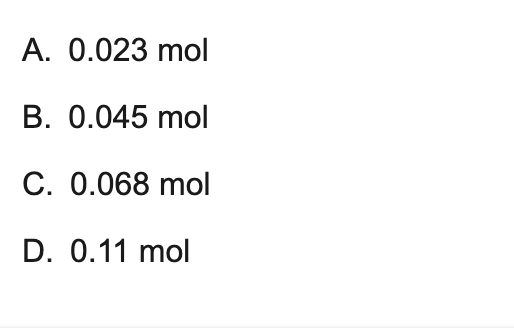
use tidal volume to solve
0.5L *1mol per 22.4L = 0.023 mol

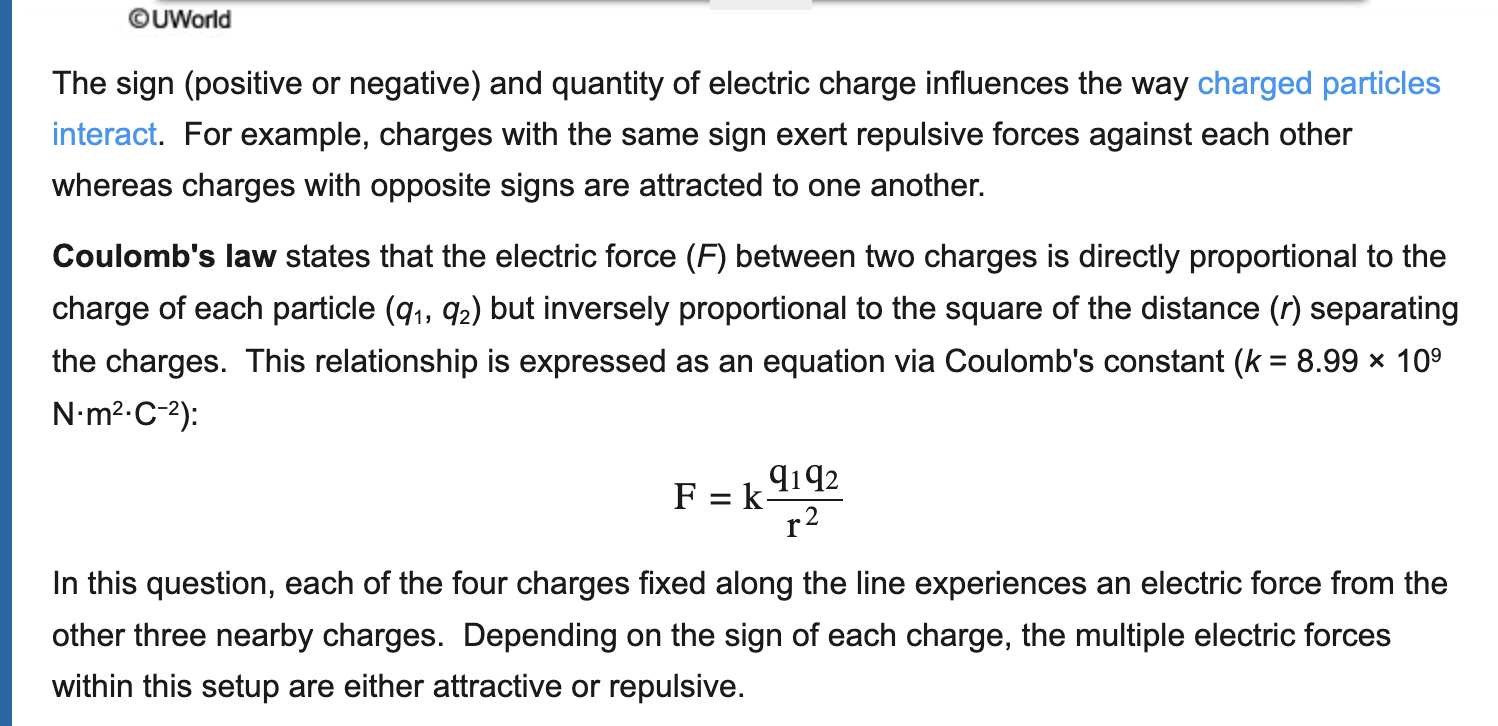
particle B

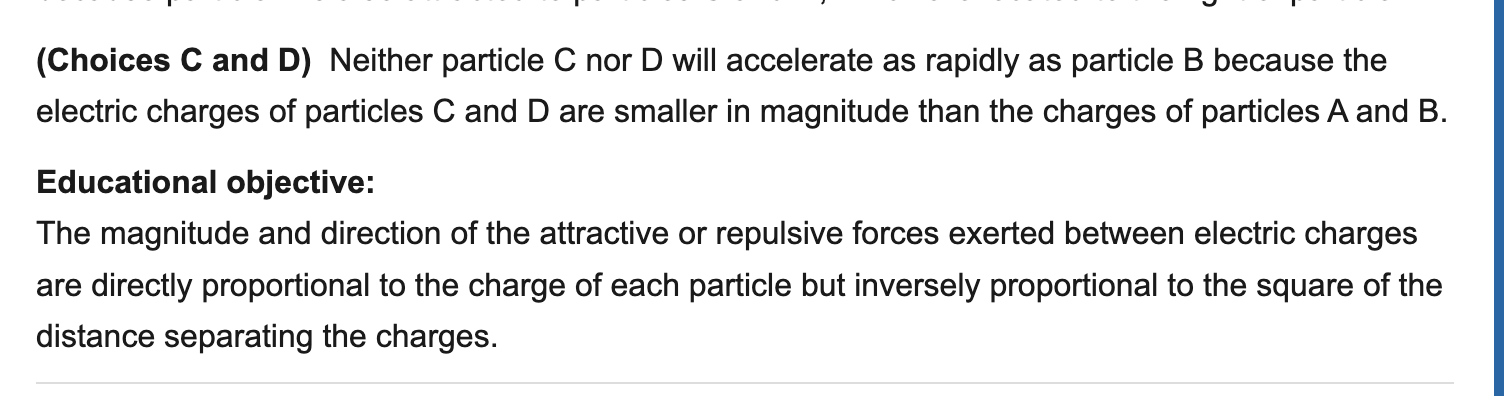


Answer C

