Lab 3 Concepts + Vocab
 Call Kai
 Learn
Learn Practice Test
 Spaced Repetition
 Match
Match Flashcards
 Knowt Play
1/21

There's no tags or description
Looks like no tags are added yet.
Name | Mastery | Learn | Test | Matching | Spaced | Call with Kai |
|---|
No analytics yet
Send a link to your students to track their progress
22 Terms
Structural proteins
their primary role is to form and maintain the shape of cells or cell structures
Membrane transport
this type of protein is required to move certain substances from one side of a cell membrane to another
Regulatory protein/transcription factor
genes are turned on or off by these proteins
Immunoglobulin (antibodies)
some immune system cells produce these proteins that bind to pathogens and mark them for destruction
Signal molecules
this type of protein, secreted by one cell and binding to another, serves an important role in cell-to-cell communication
Receptors
These proteins bind signal molecules and begin the process that leads to a cellular response
Binding protein
this type of protein specifically attaches a ligand and moves it from one location in the body to another
Enzyme
This type of protein speeds up the rate of chemical reactions
Binding site/Active site
specific area where the ligand and protein bind
→ Ex: receptors must have a specific _____ for a signal molecule, regulatory proteins must bind to a specific DNA sequence in the nucleus, binding proteins must have a specific _____ for what they are transporting around the body, etc
Modulation
something that stimulates an increase or decrease in the activity of a protein
→ there are chemical and environmental modulators
Chemical modulators
bind to or alter the make up or shape of the protein to change its activity level
→ Proteolytic activators and inhibitors
→ Allosteric activators and inhibitors
→ Covalent activators and inhibitors (Phosphate or other functional groups added or removed)
→ Competitive inhibitors
→ Co-factor activators (also called co-enzymes): derived from vitamins and minerals
Environmental modulators
include pH and temperature, which alter the shape and therefore the activity of proteins
Optimum pH and temperature
each protein has this, at which it achieves its highest rate of activity and performs the most work
Ligand/Substrate
enzymes like amylase bind to and act on this
An enzyme and its substrate fit together in a lock and key fashion….
they must fit together perfectly in order for the interaction to take place
Starch (amylase) → Maltose + Maltotriose
Chemical reaction catalyzed by amylase
Starch (carbohydrate, polysaccharide)
What are the substrates in the chemical reaction?
Maltose (disaccharide, glucose) and Maltotriose (oligosaccharide)
What are the products in the chemical reaction
Salivary Amylase
Enzyme used in the chemical rxn
Starch activity is high, amylase activity is low
Dark blue color indicates…
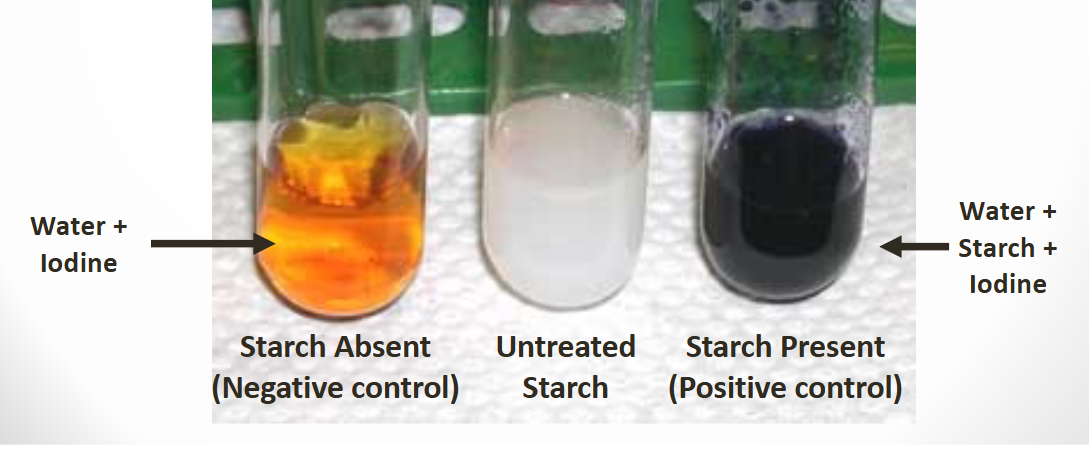
Starch activity is low, amylase activity is high
What does an orange color indicate?
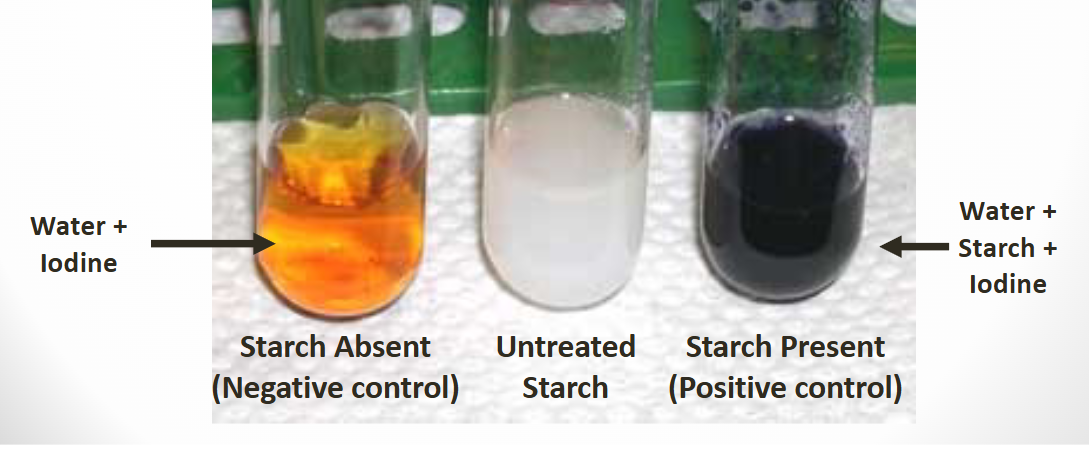
Names end in “ase” (most)
Speed up chemical reactions by lowering the activation energy
Are proteins
Can be modulated
Can be re-used
Act on specific substrates
Names often reflect what they do and what they act on
Not changed by the chemical reaction
Facts about enzymes

