PSYC 102 Textbook (Ch 13, 14)
 Call Kai
 Learn
Learn Practice Test
 Spaced Repetition
 Match
Match Flashcards
 Knowt Play
1/203

Earn XP
Description and Tags
Ch 13, 14
Name | Mastery | Learn | Test | Matching | Spaced | Call with Kai |
|---|
No analytics yet
Send a link to your students to track their progress
204 Terms
psychological disorder

syndromes & symptoms
Syndromes = cluster of physical or mental symptoms that are typical of a particular psychological disorder and tend to occur simultaneously
Symptom = physical or mental feature that may be regarded as an indication of a particular condition or psychological disorder
psychopathology
scientific study of psychological disorders or to the disorders themselves
abnormal psychology & clinical psychology
Abnormal psychology: Seeks to characterize the nature and origins of psychological disorders
Clinical psychology: Assessment & treatment of psychological disorders
DSM-5-TR’s qualifications for a psychological disorder (3)
Syndrome must:
not be an expectable response to common stressors & losses (e.g. loss of loved one)
not be a culturally approved response to a particular event (e.g. trance states in religious rituals)
not be a simple deviance from social norms
point prevalence & lifetime prevalence
Point prevalence: percentage of people in a given population who have a given psychological disorder at a particular point in time
Lifetime prevalence: percentage of people in a certain population who will have a given psychological disorder at any point in their lives
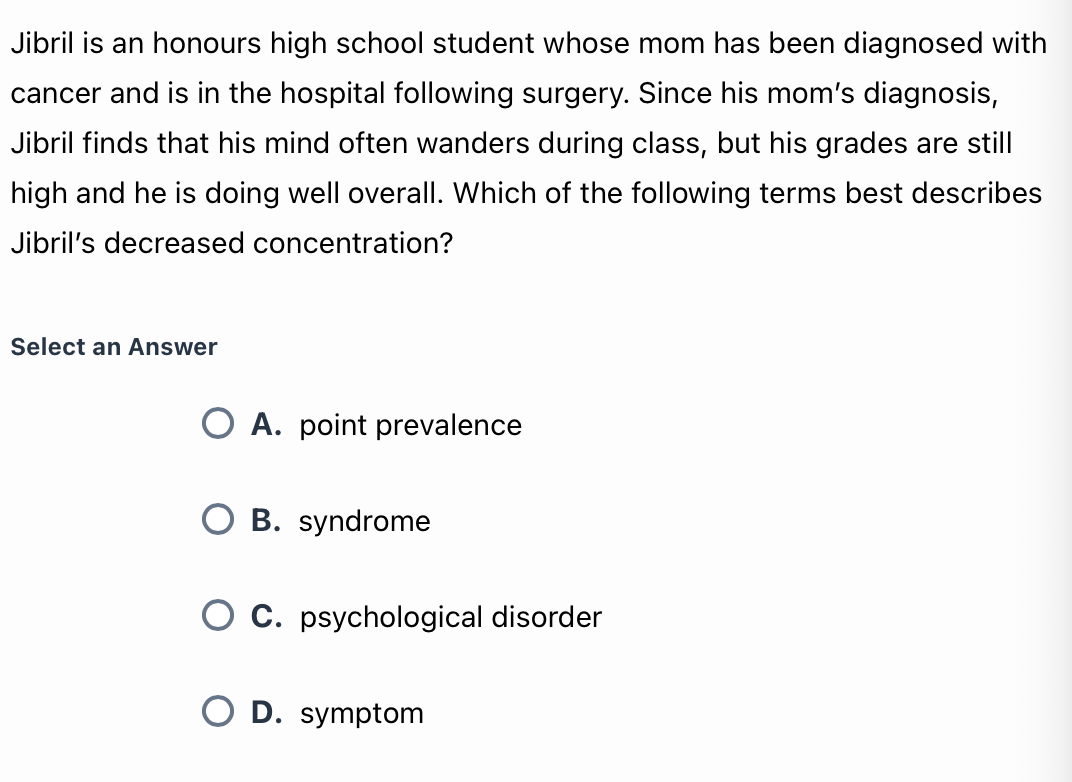
D) symptom
Because what Jibril is experiencing is not unexpected given his mom’s cancer, it would not necessarily be considered indicative of a psychological disorder. In addition, Jibril must exhibit additional symptoms before he can be diagnosed with a psychological disorder
clinical assessment & clinical interview
Clinical assessment: procedure for gathering the information that is needed to evaluate a client’s psychological functioning and to determine whether a diagnosis is warranted
Clinical interview: interview where clinician asks the client to describe their problems & concerns
what do clinicians look for in clinical interviews
pay attention to what clients say are concerns
look for behaviours that may hint at difficulties that clients are not reporting
identify discrepencies between what they observe and problems that clients report
self-report measures
standardized clinical assessment tool that consists of a fixed set of questions that the client answers
projective tests
form of clinical assessment where person responds to unstructured or ambiguous stimuli (typically, pictures)
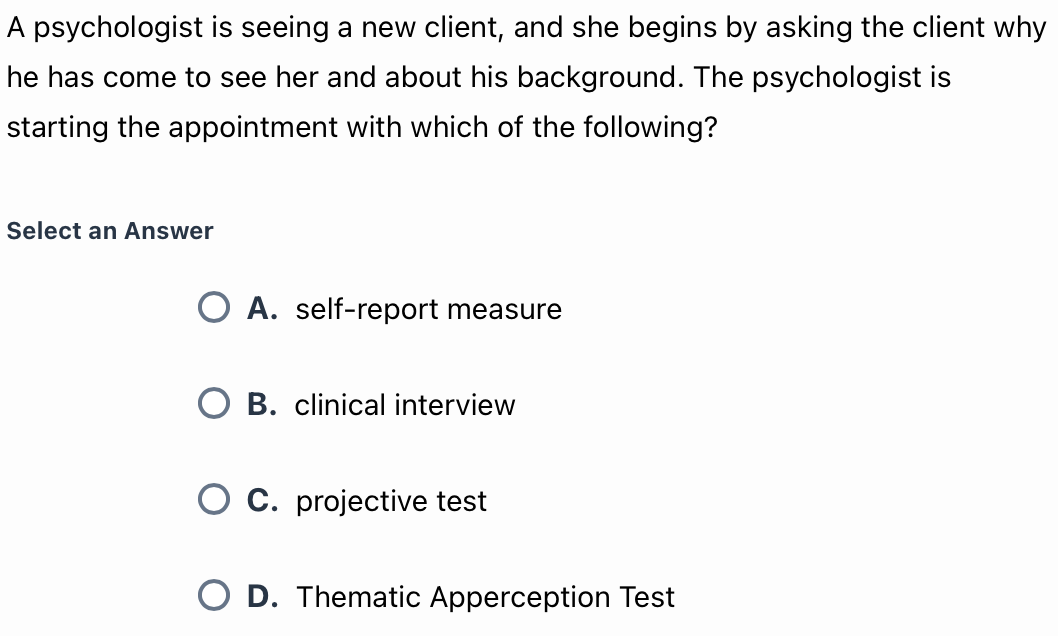
B)
The questions that the psychologist is asking are typical of a clinical interview.
Psychological disorders are defined in 2 major closely related classification schemes. name them
International classification of diseases (ICD-11): used to classify the diseases and heath problems recorded in health records and death certificates
DSM: used as standard guide in USA and Canada; guides most research on psychological disorders
culture specific disorders
Dhat syndrome - South Asia - severe anxiety about the discharge of semen
Shenjing shuairuo - China - characterized by fatigue, dizziness, and headaches
Ataque de nervios - Latino - feeling out of control, including anxiety, anger, or aggression
DSM-5-TR disorders
neurodevelopment disorders
autism spectrum disorder
schizophrenia spectrum & other psychotic disorders
schizophrenia
bipolar & related disorders
biopolar I disorder
depressive disorders
major depressive disorder
anxiety disorders
social anxiety disorder
obsessive-compulsive & related disorders
OCD
trauma and stress related disorders
PTSD
dissociative disorders
dissociative identity disorder
somatic symptom & related
functional neurological symptom disorder (conversion disorder)
feeding & eating disorder
anorexia nervosa
elimination disorders
enuresis (bed wetting)
sleep wake disorders
insomnia
sexual dysfunctions
erectile disorder
gender dysphoria
gender dysphoria
disruptive, impulse control and conduct disorders
conduct disorder
substance-related and addictive disorder
substance use disorder
neurocognitive disorders
delirium
personality disorder
borderline personality disorder
paraphilic disorders
exhibitionist disorder
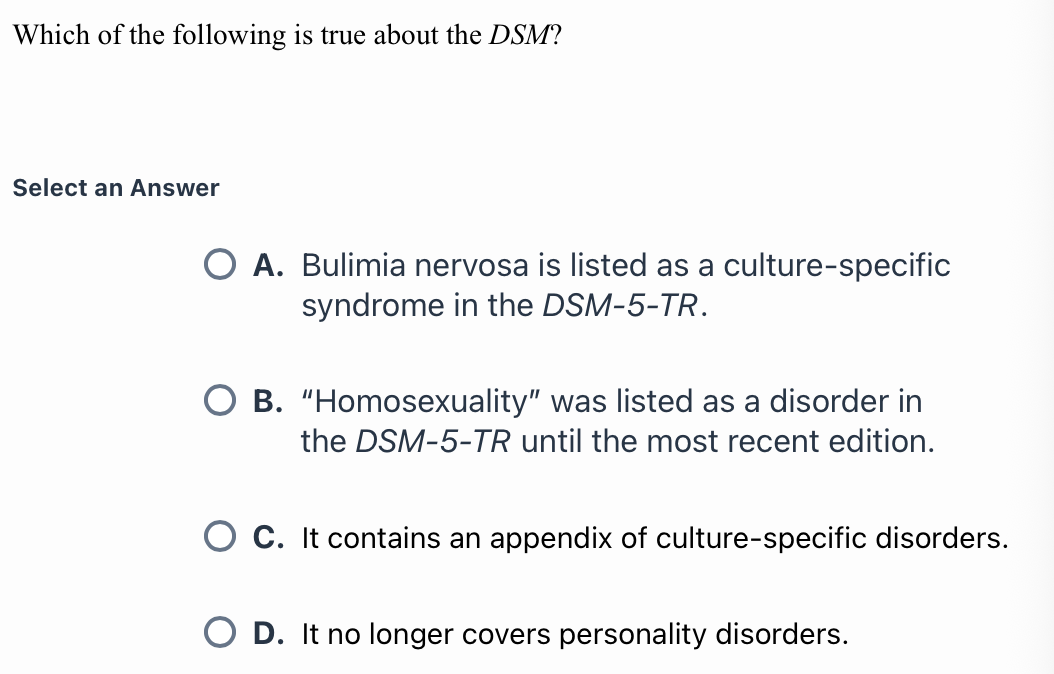
C)
The DSM-5-TR includes an appendix listing disorders that seem to appear only in some cultures.
diagnostic labels benefits & drawbacks
PROS:
improves treatment of psychological disorders (ensures appropriate treatment for patients)
create uniform framework for health care providers
facilitate research on psychological disorders
CONS:
stigma attached to psychological disorders
ways that psychologists combat negative stereotypes about psychological disorders
be thoughtful with how we refer to people diagnosed with them
some individuals prefer person-first language (referring to as a “person diagnosed with autism”) whereas some prefer identity-first language (referring as “an autistic person”)
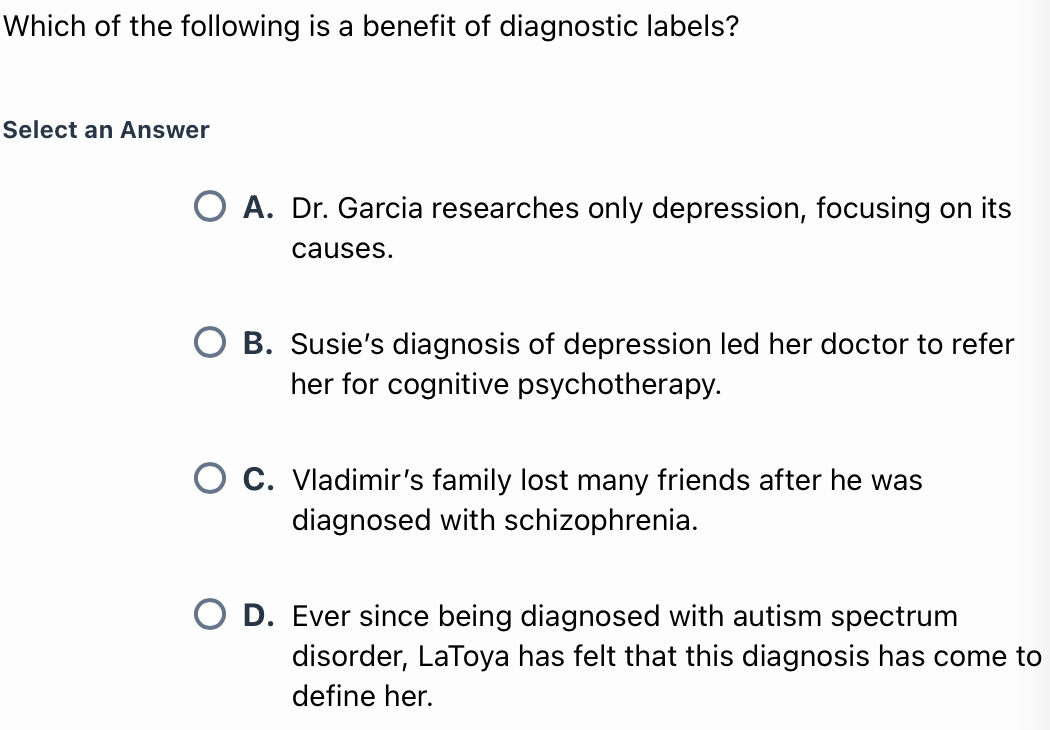
B)
One important benefit of diagnostic labels is improved treatment of psychological disorders. Having specific labels for different disorders helps to ensure that clients get the appropriate treatment.
factors of developing psychological disorders
early life experience
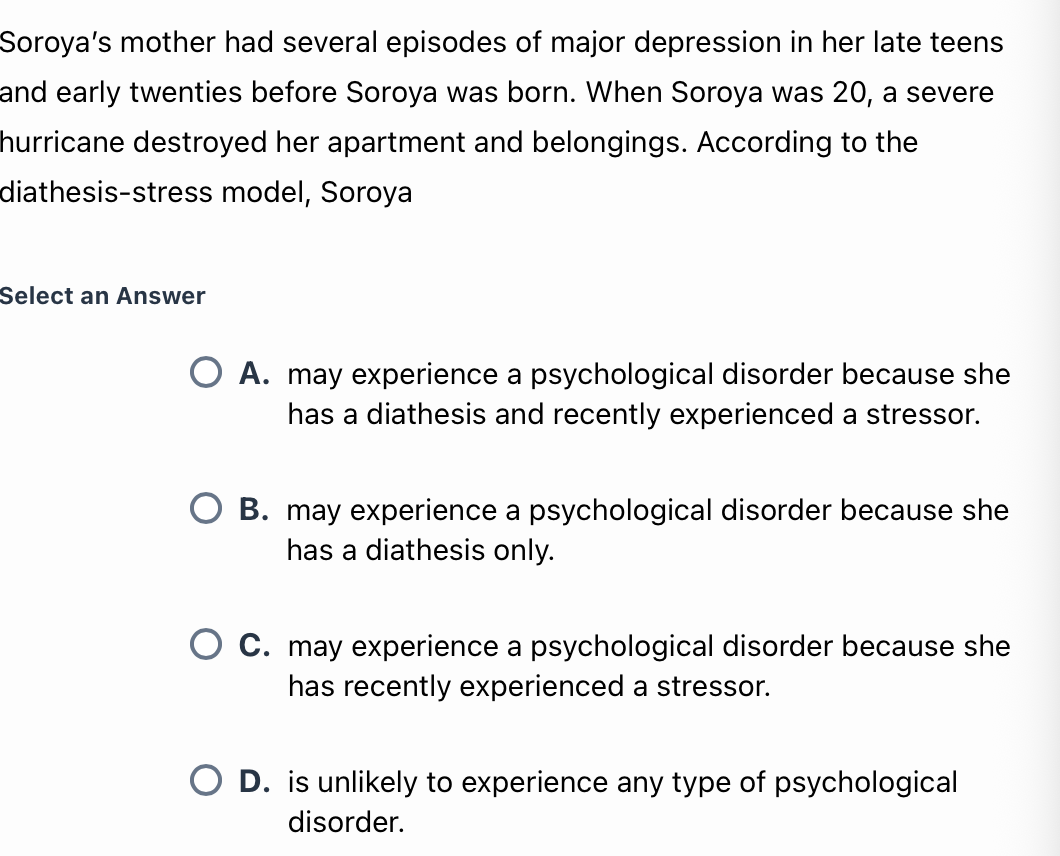
Diathesis-stress model
disorder results when an individual has both a risk factor AND a high level of stress

learned helplessness
hopeless and passive acceptance of events as beyond an individual’s control
neuroticism
personality trait associated with heightened levels of negative affect
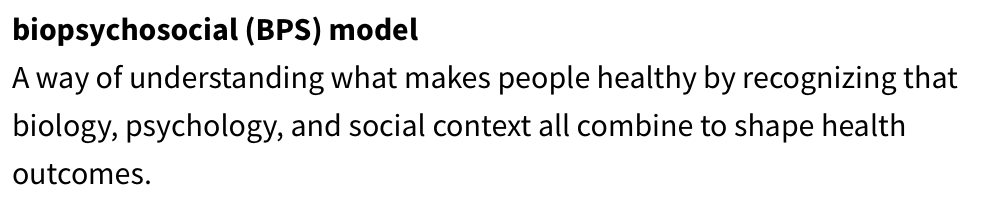
bipsychosocial (BPS) model
A)
Soroya likely inherited a genetic predisposition to mental illness from her mother (the diathesis) and has recently experienced a stressor (the hurricane and the loss of her apartment and belongings).
anxiety
feeling of intense worry, nervousness, or unease
sort the psychological disorders from order of MOST common to LEAST
<dissociative spectrum, anxiety spectrum, schizophrenia>
anxiety spectrum, schizophrenia, dissociative spectrum
2 common types of anxiety related disorders
specific phobias
marked fear of particular objects or situations (e.g. snakes, bridges, lightning, etc.)
social anxiety disorder
intense fear of being watched, evaluated, and judged by others
are women or men more likely to have specific phobias?
women are more likely to have specific phobias
women are more likely to have animal phobia
men & women equally likely to have a mutilation phobia
are men or women more likely to have social anxiety disorder?
all genders are equally affected by social anxiety disorder
when does social anxiety disorder emerge and puts individuals at risk for what?
childhood or adolescence
place at elevated risk for depression
panic disorder & panic attacks
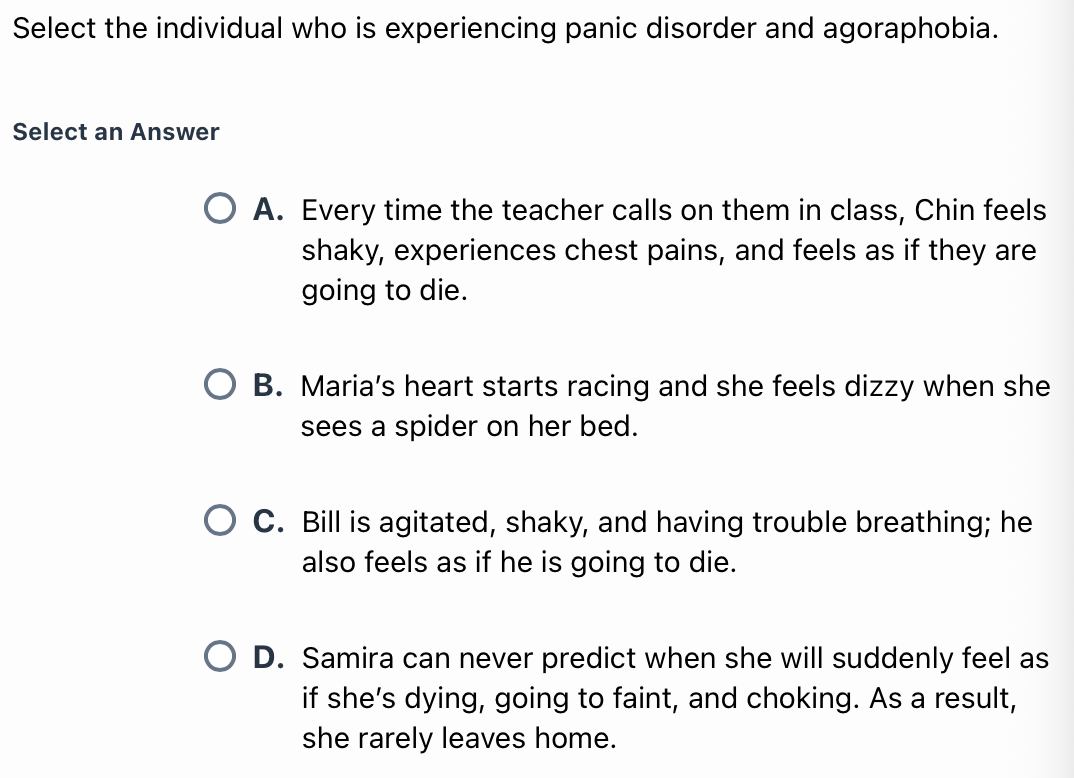
Panic disorder - common type of anxiety-related disorder, characterized by occurrence of unexpected panic attacks
out of the blue, no trigger
Panic attacks - sudden episodes of uncontrollable fear or anxiety accompanied by physical symptoms (heavy breathing, choking, dizziness, tingling hands and feet, sweating, heart palpitations, chest pain)
people with specific phobias (e.g. fear of snakes) can experience panic attacks upon seeing the phobia stimulus
are men or women more likely to have panic disorders
women are more likely to have panic disorders than men
agoraphobia
fear of being in situations in which help might not be available or escape might be difficult or embarrassing
often accompanies panic disorders
D)
Because Samira’s panic symptoms have no clear trigger, they are of the type associated with panic disorder. Furthermore, they have led to agoraphobia.
generalized anxiety disorder (GAD)
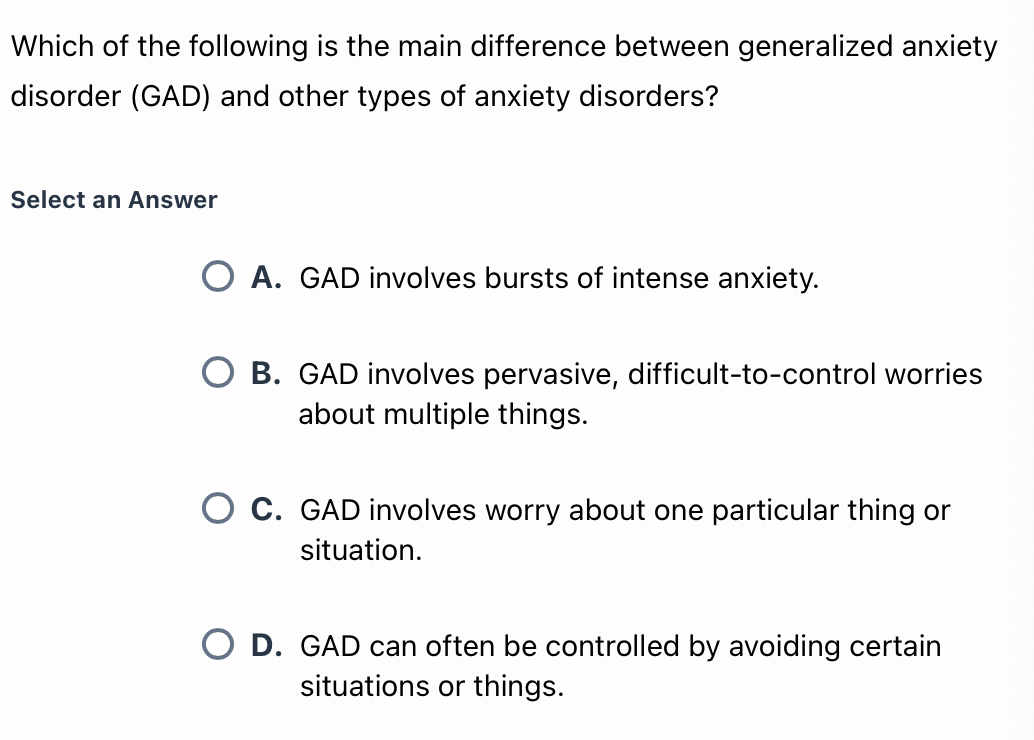
excessive anxiety that isn’t related to any one specific object or situation (unlike specific phobias), and it related to a number of different events or activities
it is continuous, pervasive, and very difficult to control
relatively common
more common in women than men
symptoms (most common to least): unable to relax, difficulty concentrating, tense, frightened, fear of losing control, jumpy, unable to control thoughts, confused, weakness, terrified, hands sweating, heart racing, wobbly, speech blocked, sweating all over, fear of dying, difficulty breathing, hands tremble, nausea, diarrhea, feel like choking, fainting
bodily symptoms: muscle tension, excessive sweating, racing heart, difficulty breathing, diarrhea
pervasive worrying
type of avoidance behaviour
unlike avoidance responses associated with other anxiety disorders, which are behavioural, worry may be a cognitive form of avoidance (where one limits emotional reactivity by jumping from one worry to the next)
B)
This defines the key difference between GAD and other anxiety disorders: It involves worrying about multiple things versus fixating on just one thing.
Obsessive-compulsive disorder (OCD)
Definition: anxiety disorder that manifest itself through obsessions and/or compulsions
Obsessions = unwanted and disturbing thoughts
Compulsions - ritualistic actions performed to control the obsessions (e.g. counting to 100 before walking out the door)
affects genders equally
if untreated, can worsen over time and accompanied by recurrent bouts of depression
emerges early in life
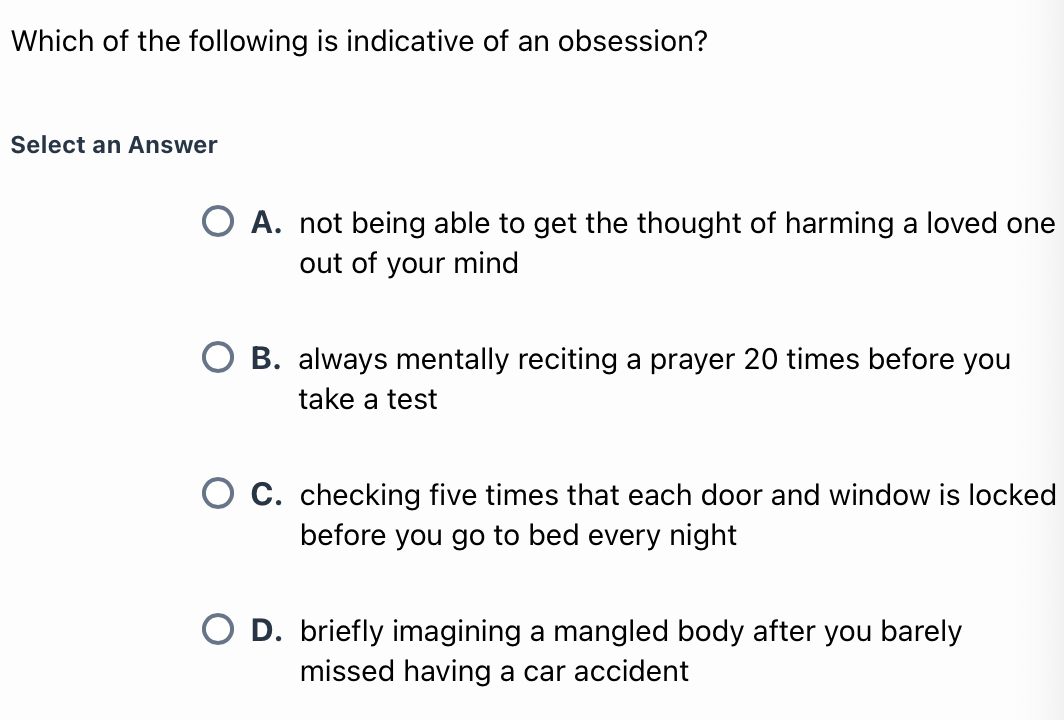
A)
This is a disturbing and unwanted thought and so would be considered an obsession.
comorbidity
occurrence of 2 or more disorders in a single individual at a given point in time
what are 2 types of risk factors that are suggested by the high rate of comorbidity
General risk factors: make someone vulnerable to more than one of these disorders
Specific risk factors: make someone vulnerable to one of the disorders but not the others
concordance rate
probability that a person with a particular familial relationship to a patient (e.g. identical twin) has the same disorder as the patient
biological risk factors for behavioural disorders
genetics
differences in brain regions
vicarious learning
learning from others’ experiences
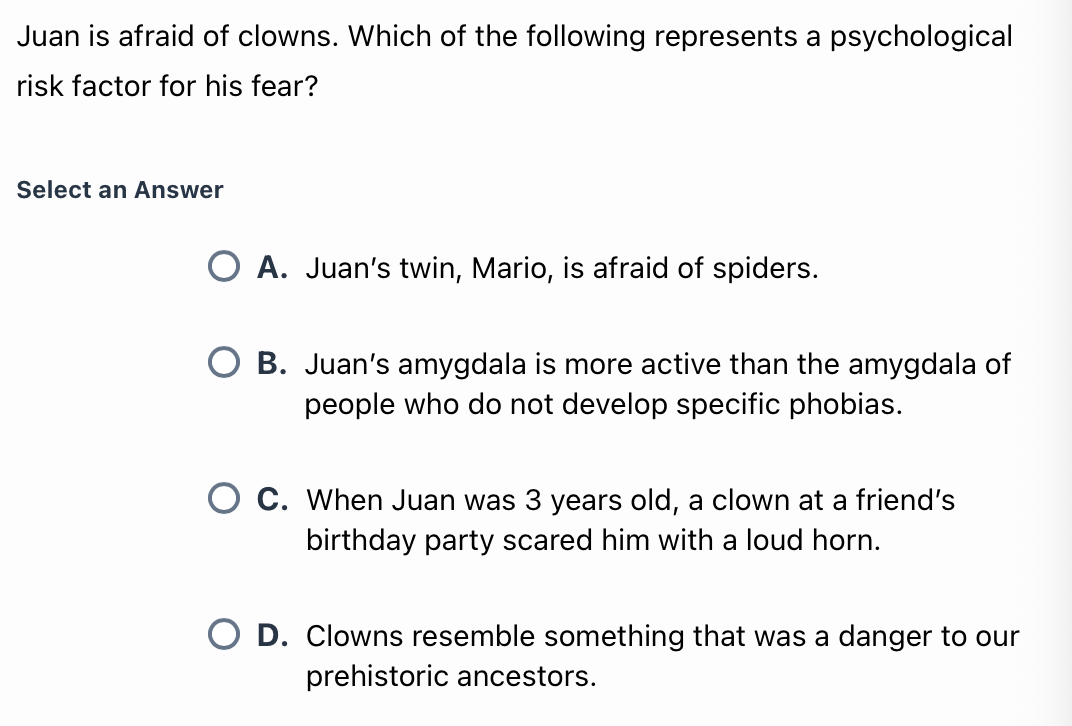
C)
Many phobias result from a frightening experience with the feared stimulus.
trauma- and stressor-related disorders
Definition: psychological disorders triggered by events that involve actual or threatened death, serious injury, or sexual violation
women are more likely to experience than men (due to women’s greater exposure to interpersonal violence like sexual assault)
dissociation & intrusive symptoms & arousal symptoms & avoidance symptoms (from trauma- or stress-related disorder)
Dissociation: period of numbness immediately after the trauma - sufferer feels wholly alienated, socially unresponsive, and oddly unaffected by the event
Intrusive symptoms: after dissociation - recurrent nightmares, flashbacks of the traumatic event
Arousal symptoms: show that they are maintaining a high state of readiness to guard against harm - e.g. sleep disturbance, agitation, restlessness, pervasive hypervigilance
Avoidance symptoms: avoid thoughts, activities, people, objects, or locations that related to the traumatic event
acute stress disorder & post-traumatic stress disorder (PTSD)
Acute stress disorder: trauma- or stressor-related disorder that lasts less than one month
PTSD: if symptoms in response to traumatic event persists for one month or more
women are more likely to develop PTSD than men
T or F: traumatic event always leads to PTSD
False
how do certain individuals with jobs like paramedics, cops, etc. who witness horrific scenes not develop PTSD?
individuals who have high levels of confidence, strong sense of control over situations, and lower feelings of alienation from others at work cope best with traumatic events at work
mood-related disorders (aka affective disorders)
disorders that involve prominent disturbances in a person’s positive and negative feeling states
one common mood-related disorder: major depressive disorder (aka depression)
mood disorder characterized by feelings of sadness or emptiness, as well as anhedonia (= diminished interest in things that usually provide pleasure)
most common in adolescence through middle adulthood, but can also emerge in children and older adults
how does DSM-5-TR suggest diagnosis of depression
only when client experiences depressed mood and/or markedly diminished interest most of the day, nearly every day, for AT LEAST two weeks. . . along with other symptoms, such as significant weight gain or loss, changes in sleep (more or less sleep than usual), feeling restless or slowed down, excessive fatigue, worthlessness, difficulty thinking, recurrent suicidal thoughts → to qualify as depression, symptoms must cause clinically significant distress or impairment
why might women experience more depression (more likely to have major depressive disorder) than men?
women use maladaptive forms of rumination more
rumination = receptively turning emotional difficulties over and over in the mind
gender gap does not emerge until early teenage years for the difference in depression
psychotic delusions
a symptom of major depressive disorder
= unshakable false beliefs
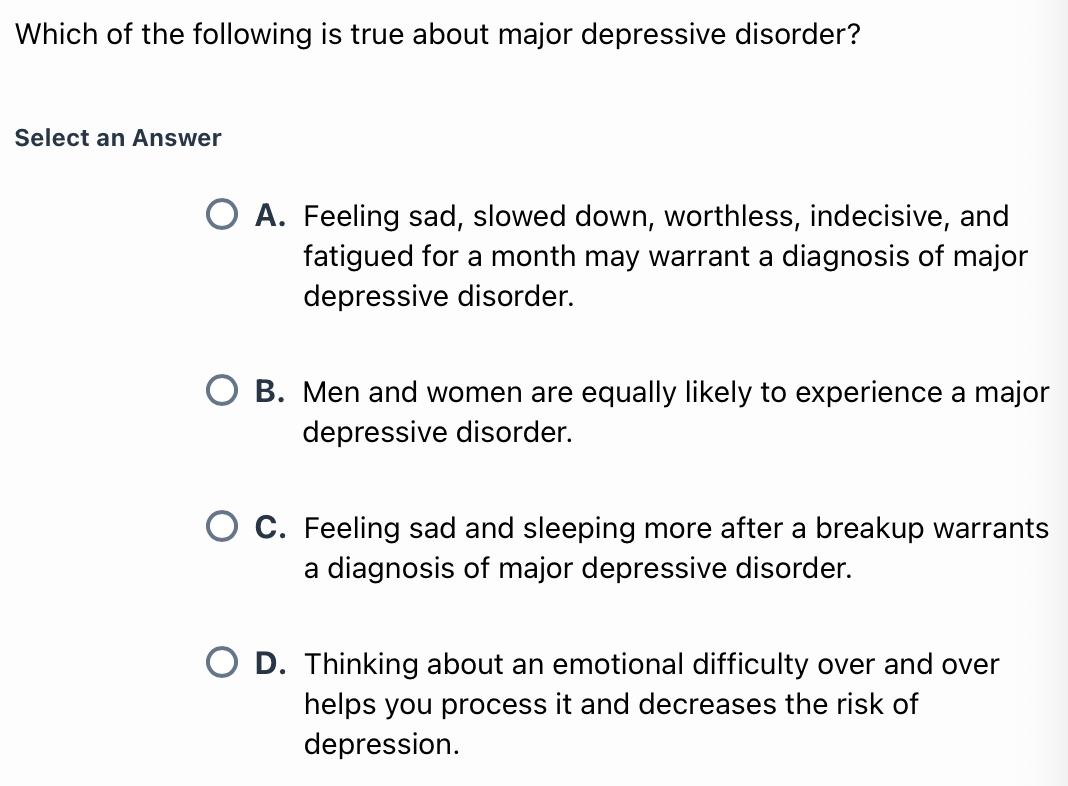
A)
These are all symptoms of depression that have lasted over two weeks and thus indicate a major depressive disorder.
bipolar disorder (formerly called manic-depressive illness)
characterized by manic (excited & energetic) episodes, often in addition to depressive episodes, with normal periods in between
recurrent, not limited to adults (children can also)
episodes may be as short as a few hours or long as several months, and do not need to alternate
depression and mania are NOT mutually exclusive → can occur simultaneously (= mixed states)
hypomania & acute mania
Hypomania: mild level of mania; marked by high spirits, happiness, self-confidence and high level of nervous energy
can develop into mania
Acute mania: feelings of invincibility are replaced by terror as person loses grip on reality, may burst into song, smash furniture, exercise endlessly, rarely sleep, engage in reckless sexual escapades, gamble all their money away
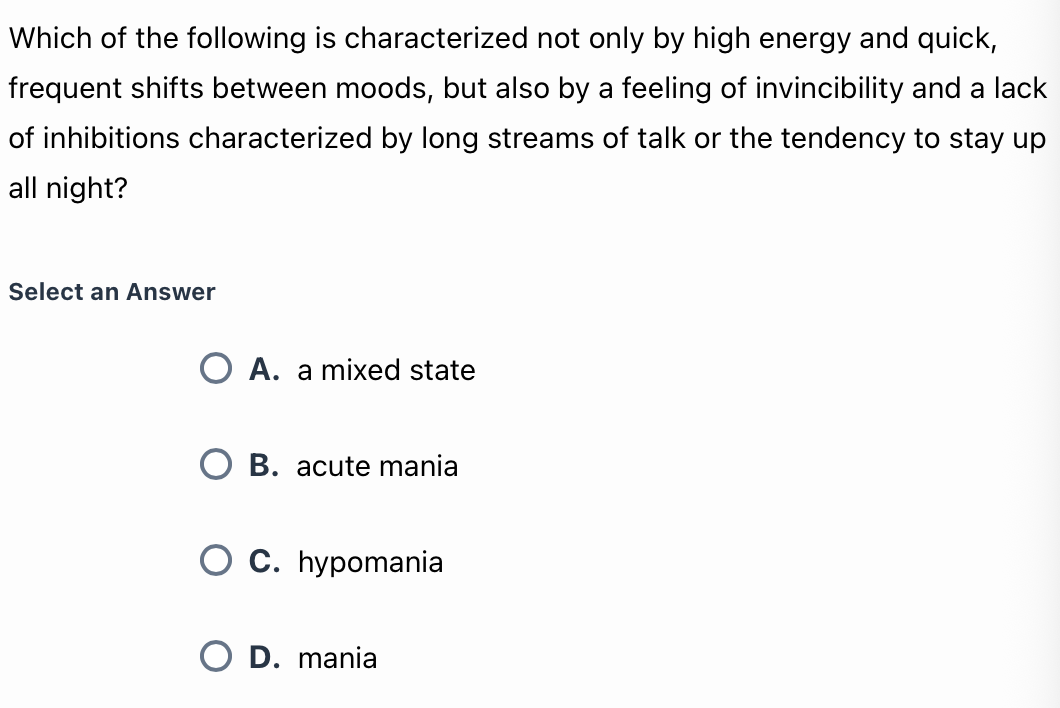
D)
Mania is a step beyond hypomania; while people who suffer from hypomania are likely to feel high energy and excitement, only those who suffer from mania experience feelings of invincibility and a lack of inhibitions.
hypomania → mania → acute mania
who is most at risk for death by suicide in Canada
men, people facing federal prison sentences, Indigenous people
but men are not more likely to die by suicide than women in china and Indonesia
who is most at risk for attempting suicide in Canada
young, unmarried, unemployed women
women are more likely to attempt suicide than men, but when attempt suicide, men are more likely to die (women use methods that offer chance of rescue like swallowing sleeping pills, while men use irreversible methods like shooting themselves)
the risk of suicide is greater among those with _______ than any other psychiatric disorder, even major depressive disorder
bipolar disorder
what neurotransmitter contributes to heightened impulsivity that increases suicide risk
serotonin; people who die by suicide have low levels of neurotransmitter serotonin
neurotransmitters involved in mood-related disorders
norepinephrine
dopamine
serotonin
negative cognitive schema
mental framework where person consistently interprets events negatively
biological, psychological, and social risk factors for mood disorders
Biological:
genetics
neurotransmitter excess or shortage
Psychological:
how a person thinks (e.g negative cognitive schemas)
explanatory style (how a person explains why bad things happen to them)
Social:
interpersonal stress
e.g. losing a parent as a child increases interpersonal stress
having a depressed & non responsive caretaker as an infant
experiencing racism & racial discrimination
major depressive disorder is more common among what economic group
low SES groups → perhaps because they experience more stress
post-partum depression is worse for women who ___________
struggle with low self-esteem and have unrealistic expectations of motherhood
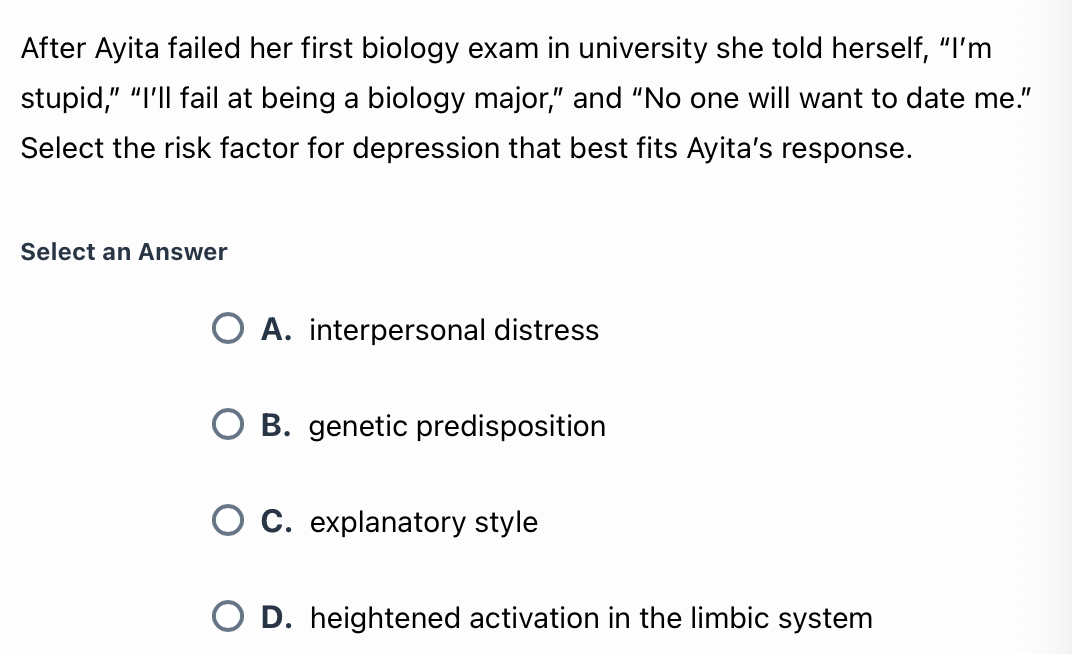
c)
Ayita’s internal (stupid), stable (will fail at being a biology major), and global (no one will want to date me) responses to failing her exam all fit a depressive explanatory style.
schizophrenia
psychological disorder characterized by loss of contact with reality and a breakdown of the normal functions within the mind, leading to bizarre perceptions
does not involve having multiple personalties (which is a feature of dissociative identity disorder)
not common
typically diagnosed in late adolescence or early adulthood
begins earlier in men than women
Symptoms: positive symptoms (thoughts or behaviour not evident in healthy people), delusions (false beliefs that are rigidly maintained despite contradictory evidence), negative symptoms (absence of behaviours usually seen in healthy people)
positive symptoms:
hallucinations (sensory experiences in the absence of any sensory input) -→ hearing the voice of God or the devil
disorganized behaviour - unusual actions not seen in healthy individuals → e.g. wearing layers of warm clothing on a hot day
common delusions:
grandiosity → clients believe that they are greatly important, perhaps like a special messenger from God or a prime minister
persecution → convinced they are being singled out for punishment or death
delusions of reference → convinced a neutral environmental event is somehow directed at them
negative symptoms:
flattening or cessation of behavioural response → e.g. express little emotion, say relatively little
catatonic behaviour → standing or sitting frozen for hours on end, sometimes in unusual postures
anhedonia → loss of interest in activities expected to be pleasurable
withdrawal from other people
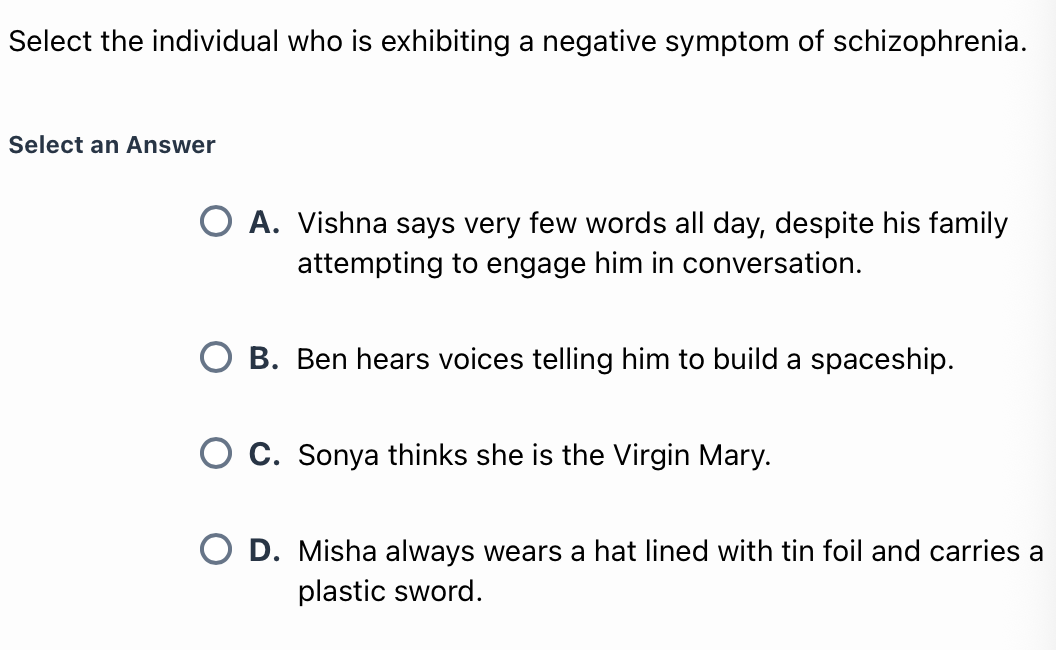
A)
One negative symptom of schizophrenia is limited behavioural responses, including speech.
dopamine hypothesis
schizophrenia is associated with abnormally high levels of activity in brain circuits that are sensitive to the neurotransmitter, dopamine
BUT. . . turns out rather than high dopamine, it’s likely because of dopamine imbalances
evidence for dopamine hypothesis
effects of a number of drugs known as classical antipsychotics - drugs that block dopamine receptor
as the dopamine hypothesis predicts, these drugs relieve many schizophrenia associated symptoms
also, people who don’t have schizophrenia but have taken overdoses of amphetamines (= stimulants whose effects include enhancement of dopamine activity) → when taken in large enough doses, the drugs induce a temporary psychosis similar to schizophrenia
structural abnormalities and neurotransmitter abnomalities related to schizophrenia
neurotransmitter:
excessive dopamine stimulation in limbic circuits
insufficient dopamine stimulation in cortical circuits
dysfunction in glutamate transmission in brains
structural:
enlarged ventricles
loss of grey matter in prefrontal brain regions
abnormalities in frontal & temporal lobes
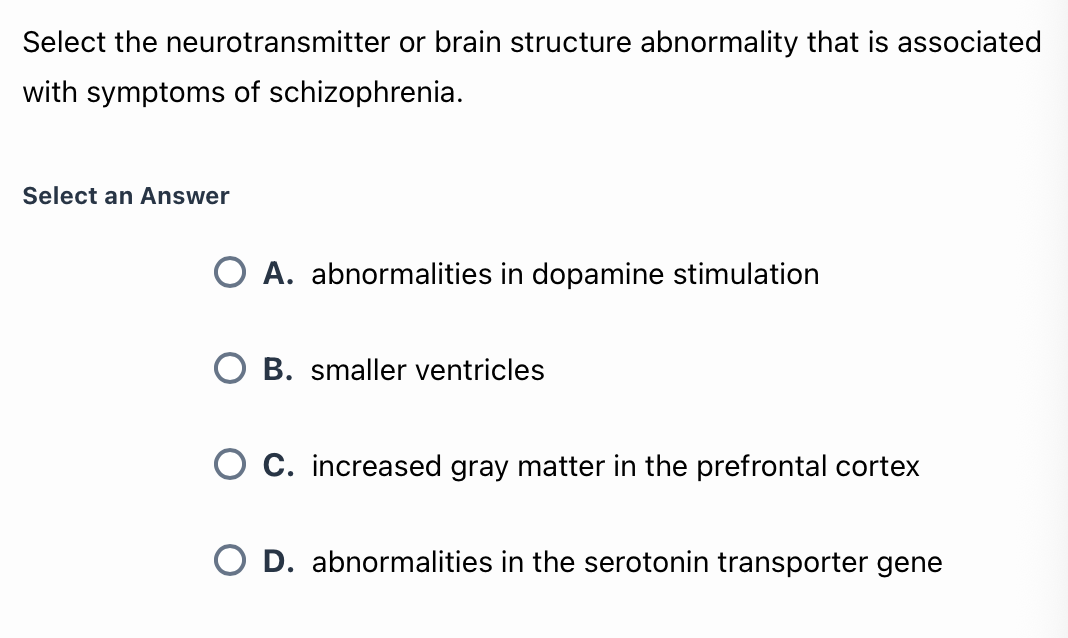
A) abnormalities in dopamine stimulation
Both excessive dopamine stimulation and insufficient dopamine stimulation have been observed in people with schizophrenia.
schizophrenia causes
genetic, prenatal, and psychological risk factors
genetic
prenatal:
prenatal exposure to influenza
maternal malnutrition
birth complications (e.g. diminished oxygen supply to newborn)
psychological:
low SES
neurodevelopmental disorder
disorder that stems from early brain abnormalities
various risk factors suggest schizophrenia is a neurodvelopmental disorder
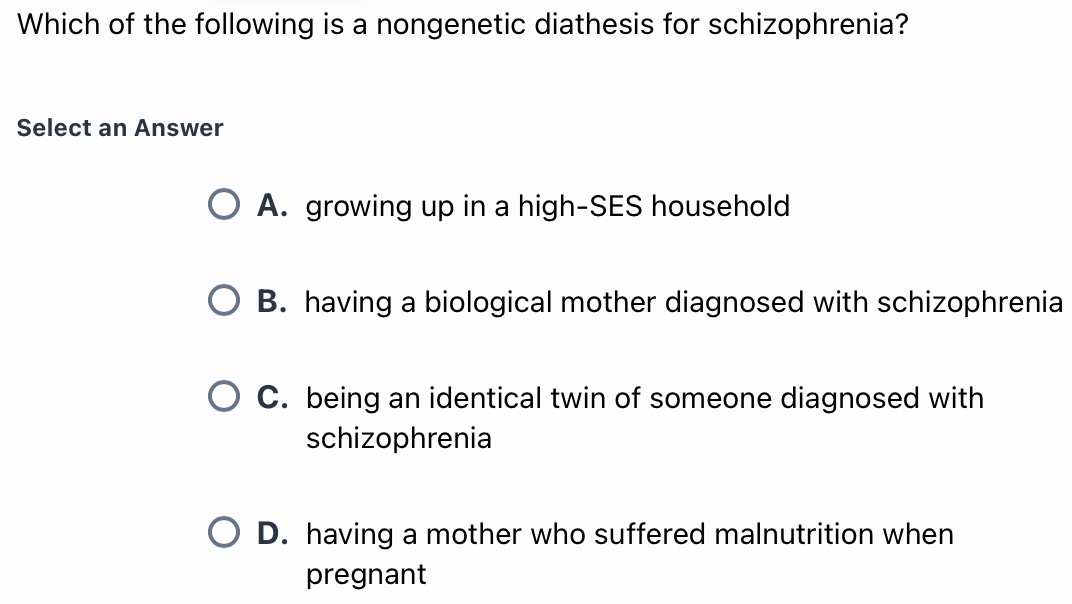
D)
A mother’s malnutrition when pregnant has been found to increase risk for schizophrenia and is not a genetic diathesis.
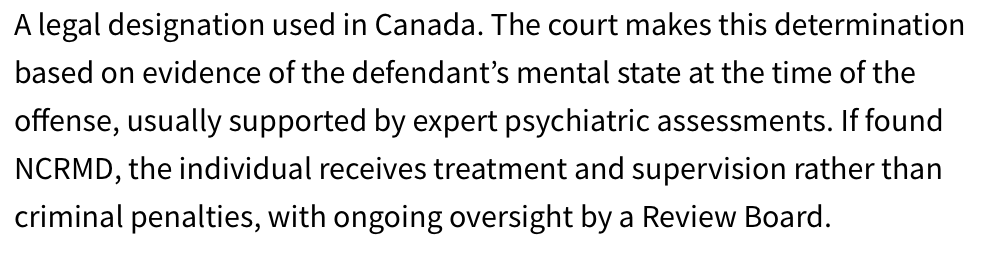
not criminally responsible on account of mental disorder (NCRMD)
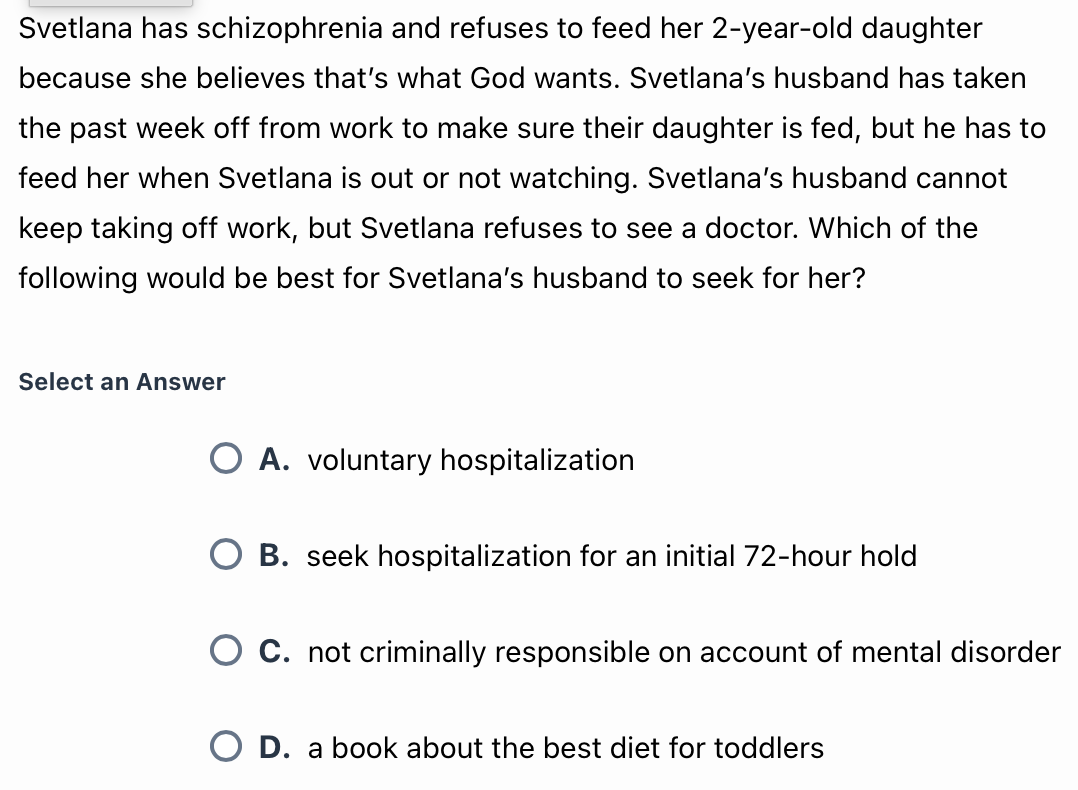
B)
Svetlana’s symptoms pose a danger to her daughter. Seeking a 72-hour hold in a psychiatric department of a hospital for her is likely the best option.
not A) since Svetlana is unwilling to see a doctor, she is also probably going to be unwilling to agree to hospitalization and may need an involuntary 72-hour hold or longer, depending on the physician’s assessment.
not C) since Svetlana has not been charged with a crime; thus, a not criminally responsible on account of mental disorder is not relevant.
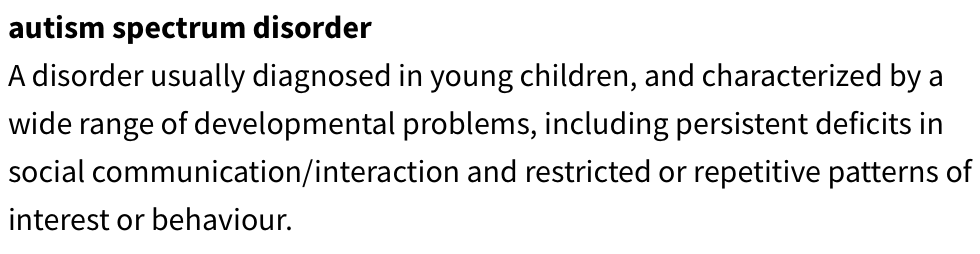
autism spectrum disorder
Developmental problems:
persistent deficits in social communication and interaction
struggle to understand how to interact socially
deficit in motivation to socially engage with others
impairment of Theory of Mind
restricted or repetitive patterns of interest or behaviour
boys are more likely to have it than girls
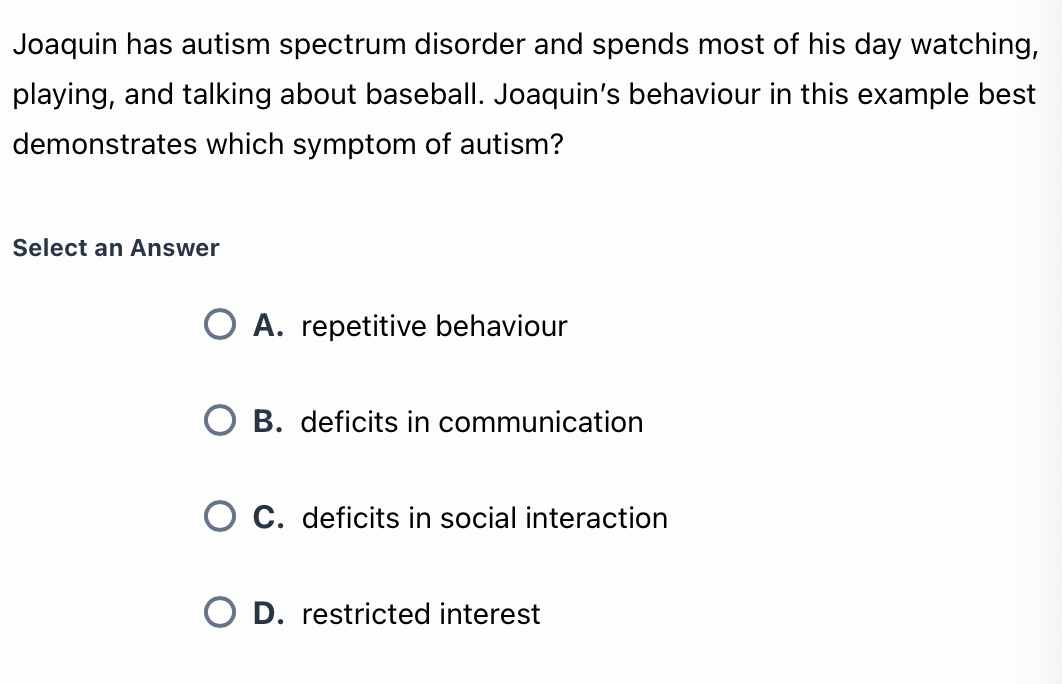
D)
People with autism often have a favorite interest to which they devote an unusual amount of time.
Attention deficit hyperactivity disorder (ADHD)
most common psychological disorder in childhood
boys are more likely to have than girls
can persist into adulthood
Symptoms: impulsive, interrupting conversions, fidget, tap pencils, etc.
difficulty shifting their attention to where it needs to be (rather than focusing in itself)
Treatment: stimulant methylphenidate - enhances dopamine & norepinephrine release
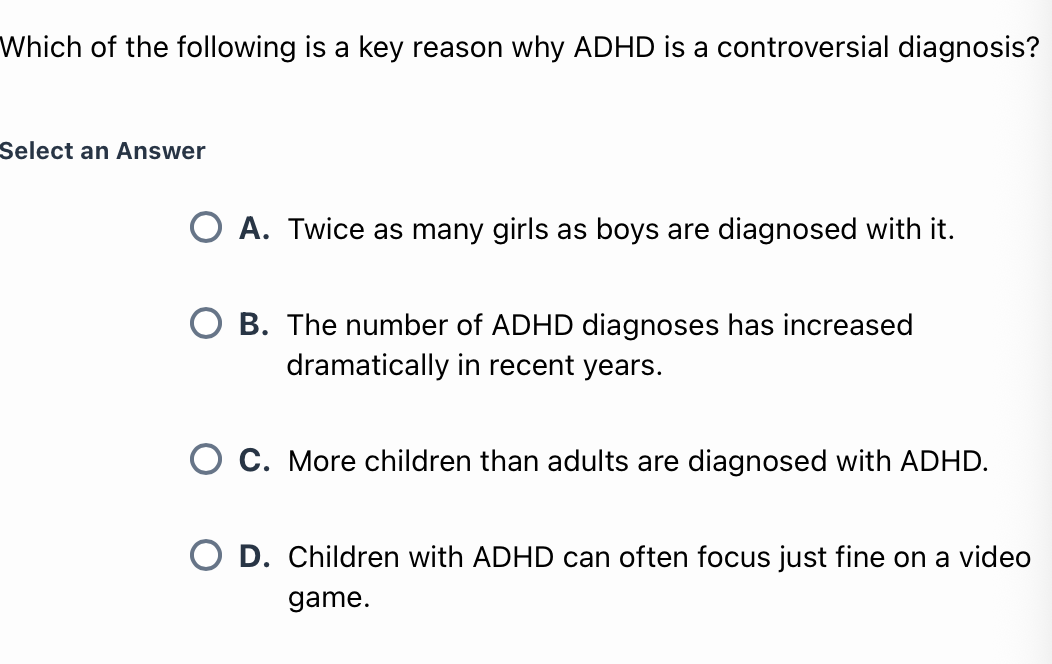
B)
The recent increase in ADHD diagnoses has added to the controversy surrounding its legitimacy.
Dissociative identity disorder (DID) (formerly known as multiple personality disorder)
presence of two or more identities, or distinct personality states within a single person, even with its own style, habits, beliefs, and memories
identifies often differ in interests, their age, sexual orientation, and even morals
interidentity amnesia
led to by the partitioning of memory in each of the identities of DID
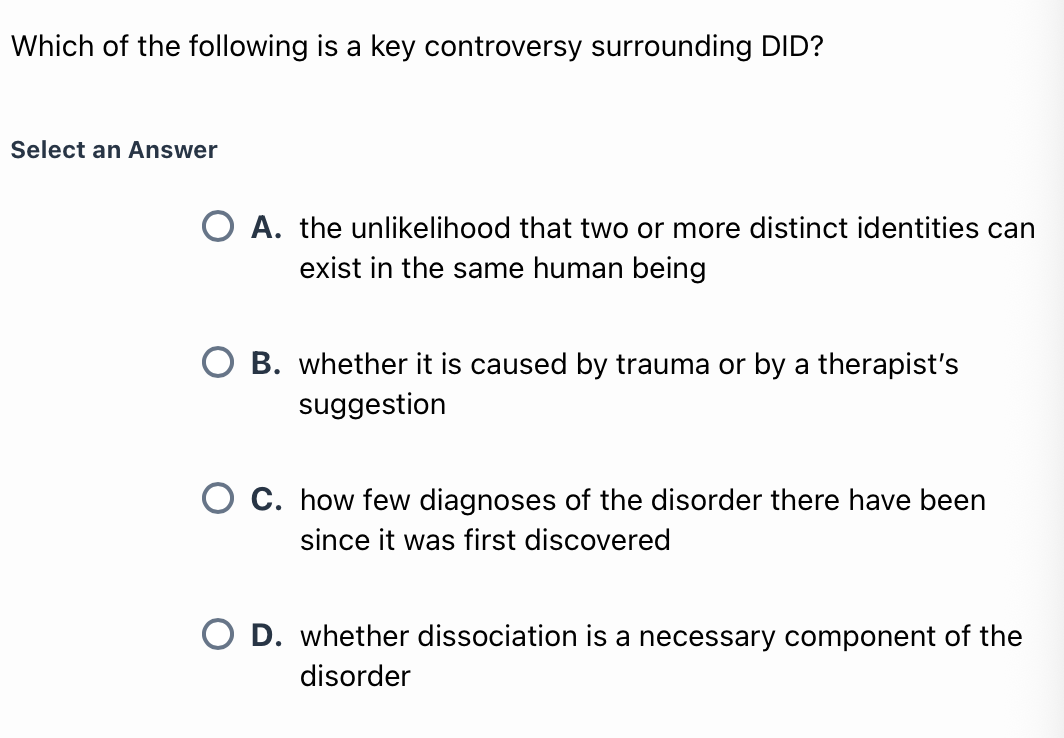
B) whether it’s caused by trauma or therapist’s suggestion
There is significant controversy as to the primary cause of DID, as indicated by the distinct causal mechanisms proposed by the post-traumatic and sociocognitive models.
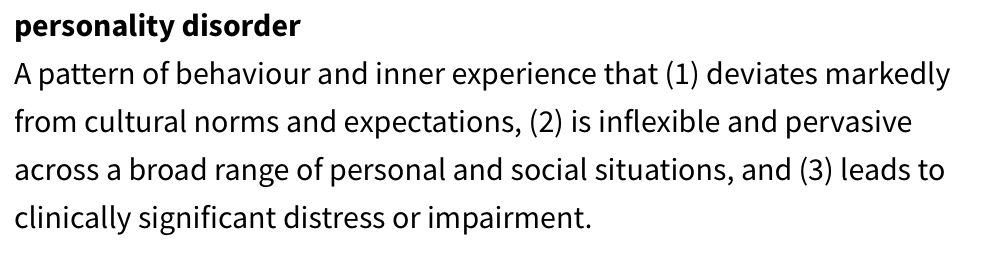
personality disorder (3 criteria)
personality disorders recognized by DSM-5-TR
Cluster A: Odd or eccentric behaviour
Paranoid - widespread suspiciousness and mistrust of others
Schizoid - striking detachment from others
Schizotypal - discomfort with close relationships, cognitive or perceptual distortions, and odd behaviour
Cluster B: Dramatic or emotional behaviour
Antisocial - consistent disregard and violation of others’ rights
Borderline - impulsive behaviour & marked instability in relationships, self concept, and affect
Histrionic - unusual degree of attention seeking and emotionality
Narcissistic - grandiosity, lack of empathy, need for attention and admiration from others
Cluster C: Anxious or fearful behaviour
Avoidant - social inhibition & insecurity
Dependent - excessive need to be taken care of by others
Obsessive-compulsive - preoccupation with orderliness, perfection, and control
why are personality disorders difficult to diagnose
client traits are likely to only approximate the prototype, and many clients have traits that are characteristic of more than one of the prototypes
personality disorders are often comorbid
can be thought of as merely the extreme of some ordinary pattern
e.g. many people are vain, and it is therefore a judgement call whether their vanity is so powerful that it signals narcissism
is antisocial personality disorder more common in men or women
men
what makes people with antisocial personality disorder behave as they do?
they profoundly lack empathy for the suffering of others → genetic & environmental factors
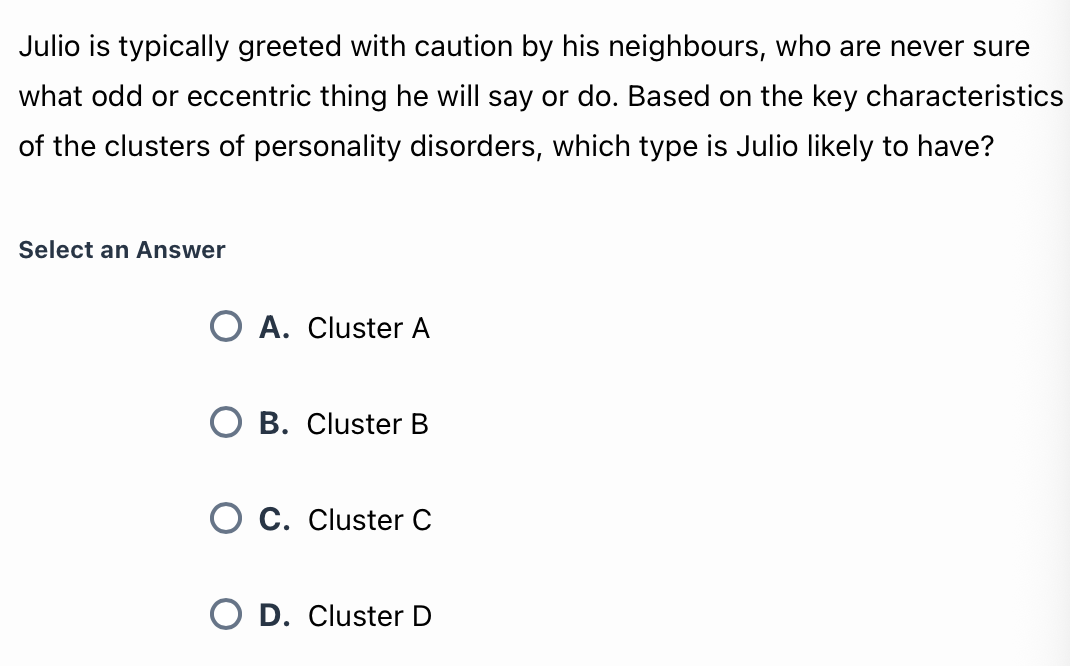
A)
Julio’s odd and eccentric words and behaviours fit the description for Cluster A personality disorders.
trephination
early therapy for mental disorders that involved cutting a hole in the skull, so that demons could be driven out through this “exit”
early treatment methods for psychological disorders
centrifugal-force bed
crib for violent patients
swinging device
trephination (hole drilling)
general paresis
disorder characterized by broad decline in physical & psychological functioning, culminating in marked personality abnormalities that include delusions concerning one’s own importance or imminent demise → could lead to paralysis without treatment
Important figures in early treatment of psychological disorders: what did they do?
Freud, Dix, Pinel, Kraft-Ebing
Freud: popularized & innovated use talk therapy as psychological treatment
Dix: better treatment for those with psychological disorders, leading to expansion of government supported institutions
Pinel: Lobbied to remove shackles from patients in psychiatric hospitals and given them fresh air and exercise
Kraft-Ebing: discovered biological bases for some psychological syndromes
who can offer psychological therapies
clinical psychologists, psychiatrists, psychiatric nurses, marriage, family, and child counsellors, school counsellors, mental health counsellors
*some “therapists” practice without a license because titles like “therapist” or “counsellor” are not protected in most jurisdictions
are professional credentials or years of experience good predictors of person’s success in providing psychological therapy
no; findings suggest that who the therapists are, what they do, and how well therapies match clients’ needs may be more important