Thermodynamics & Gas Law
 Call Kai
 Learn
Learn Practice Test
 Spaced Repetition
 Match
Match Flashcards
 Knowt Play
1/102

There's no tags or description
Looks like no tags are added yet.
Name | Mastery | Learn | Test | Matching | Spaced | Call with Kai | Chat |
|---|
No analytics yet
Send a link to your students to track their progress
103 Terms

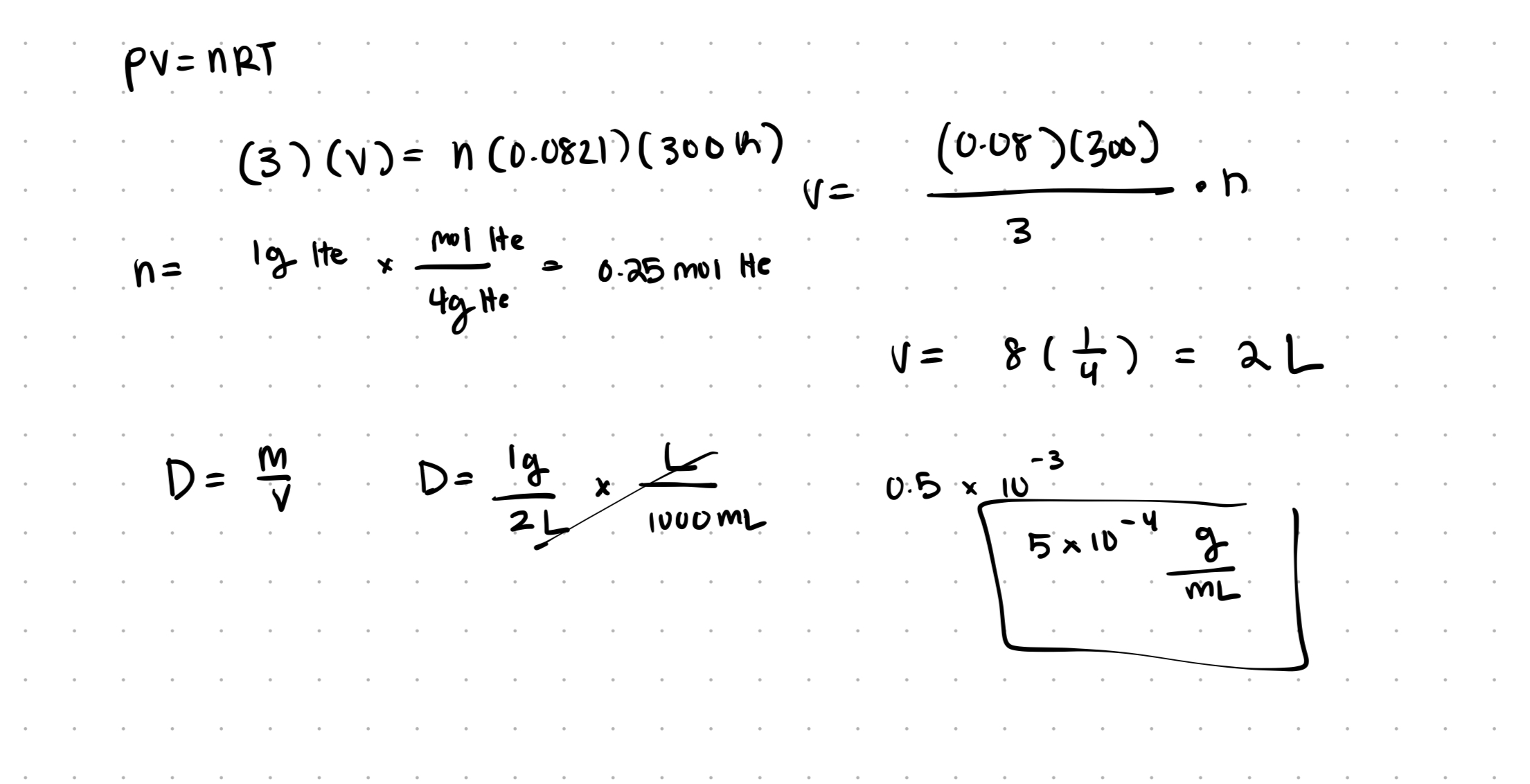
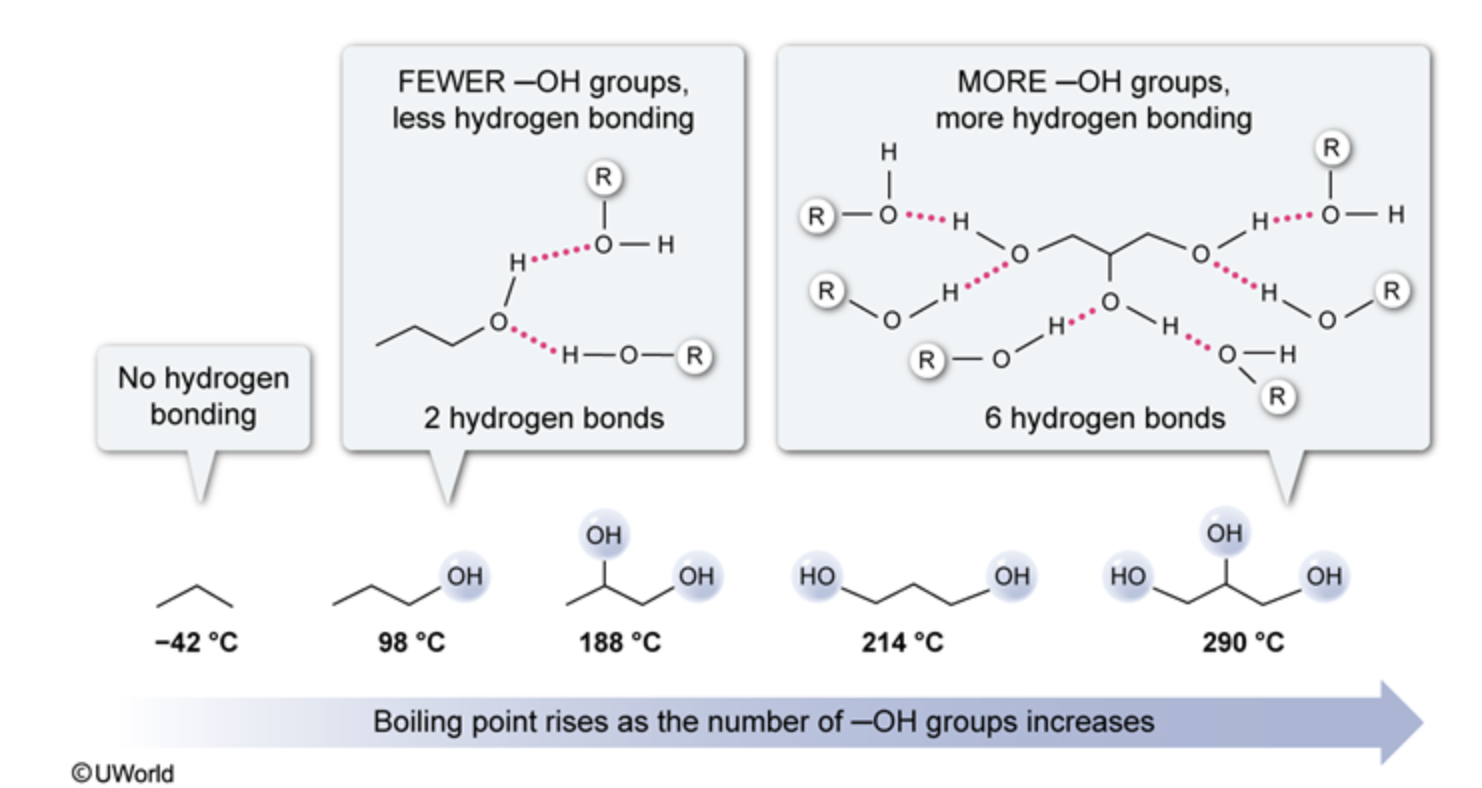
Structure with a greater extent of intermolecular forces have ______ boiling points because more energy is required to overcoem the attractions between molecuels during ______ from a liquid state to a gas state.
Hydrogen atoms bonded with N,O, or F form polar bonds with partial charge producing dipoles which ______ boiling point
higher
phase change
increases
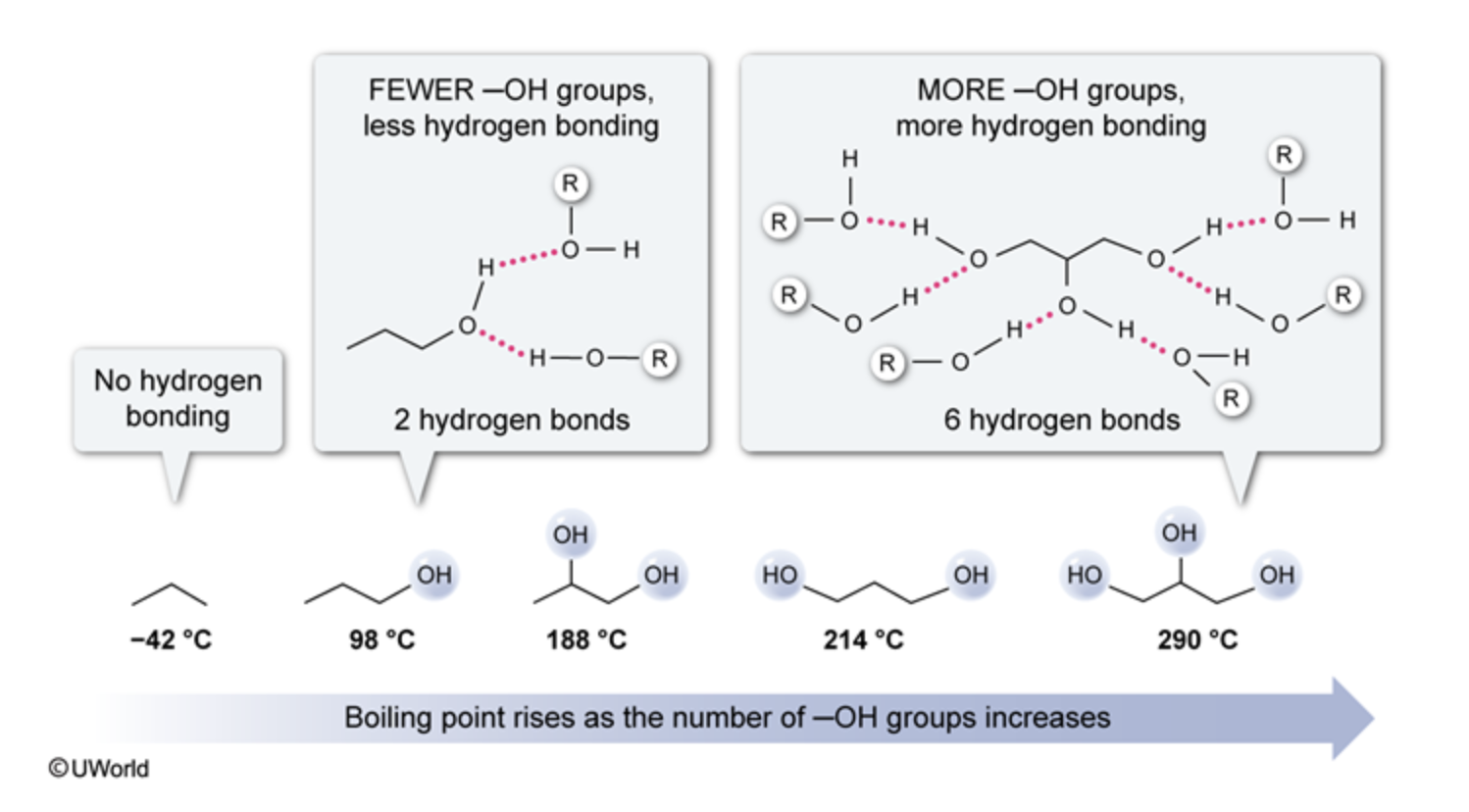
Branched structures experience fewer london forces comparable to straight chain molecules, which ____ boiling point
decreases

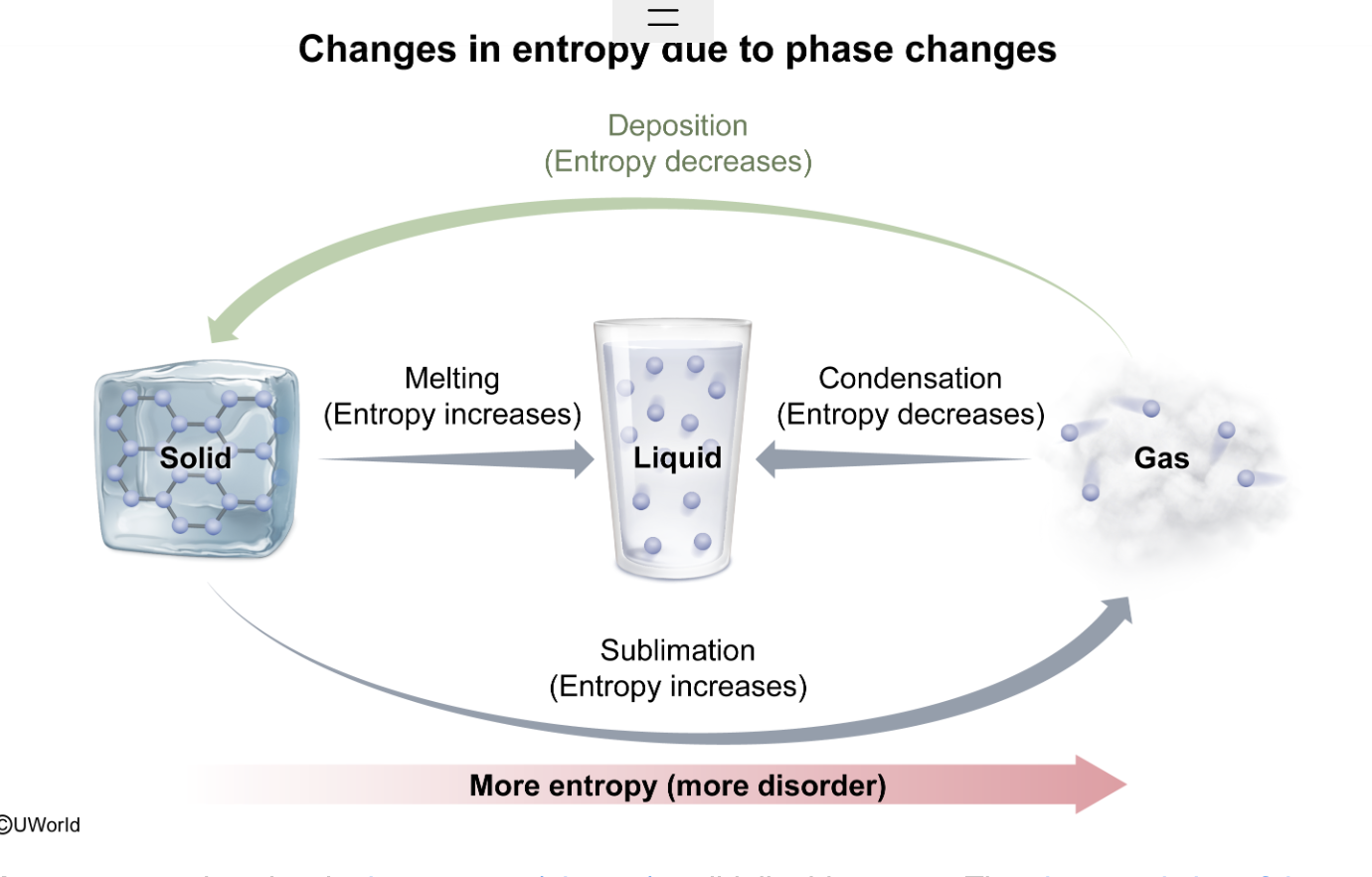
A. deposition
B. Melting
C. condensation
D. Sublimation
Answer: A
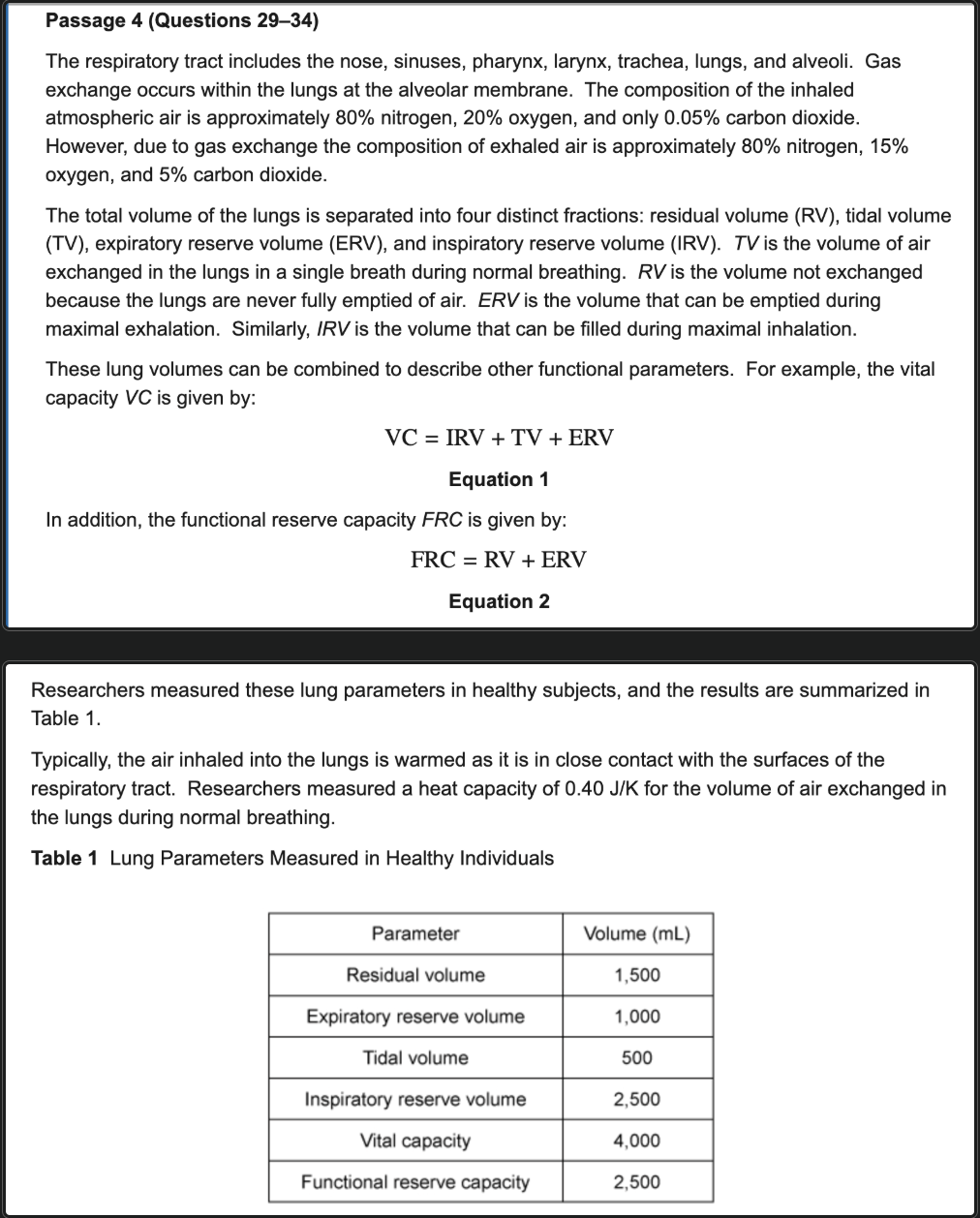
Passage A
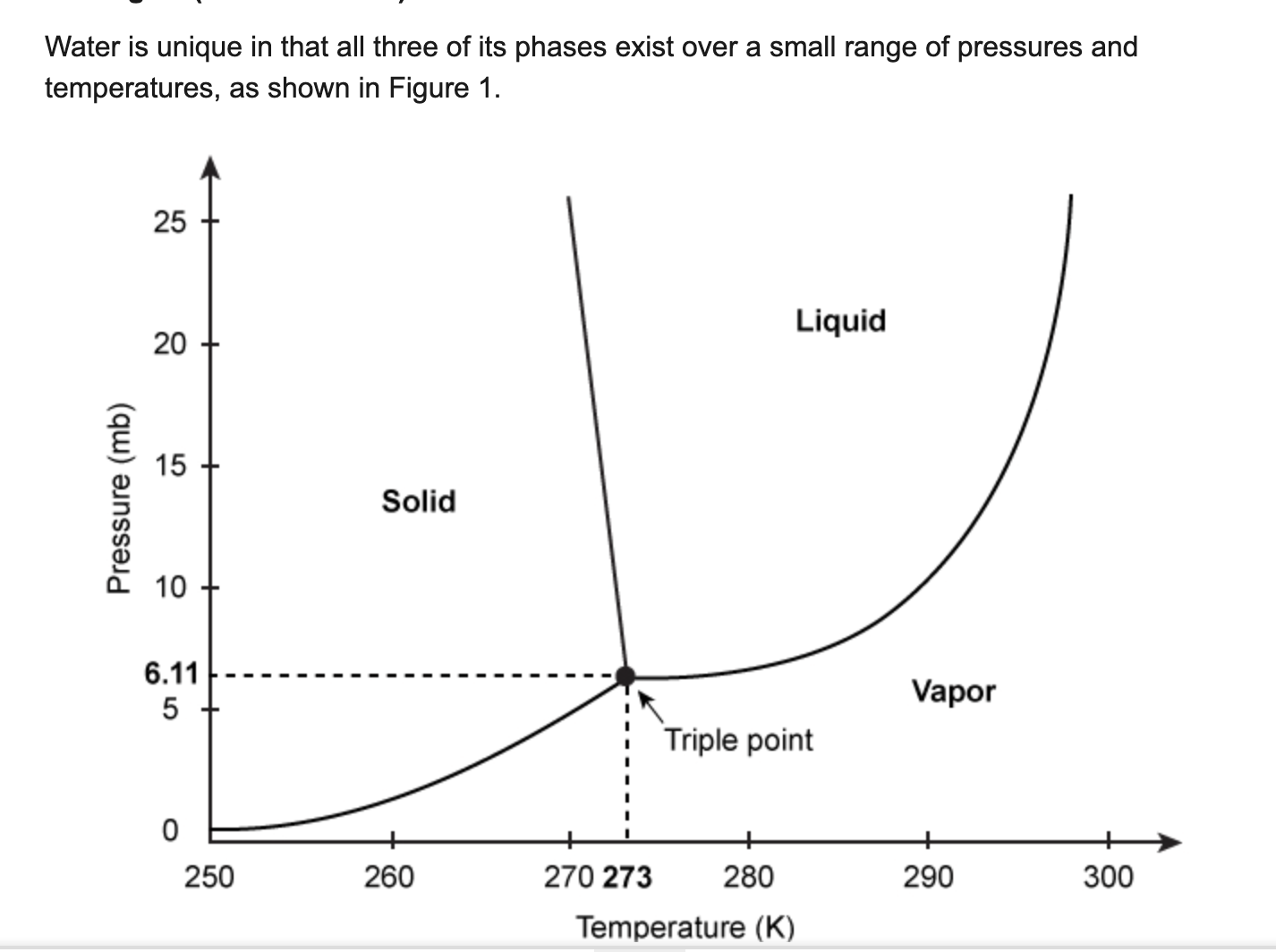
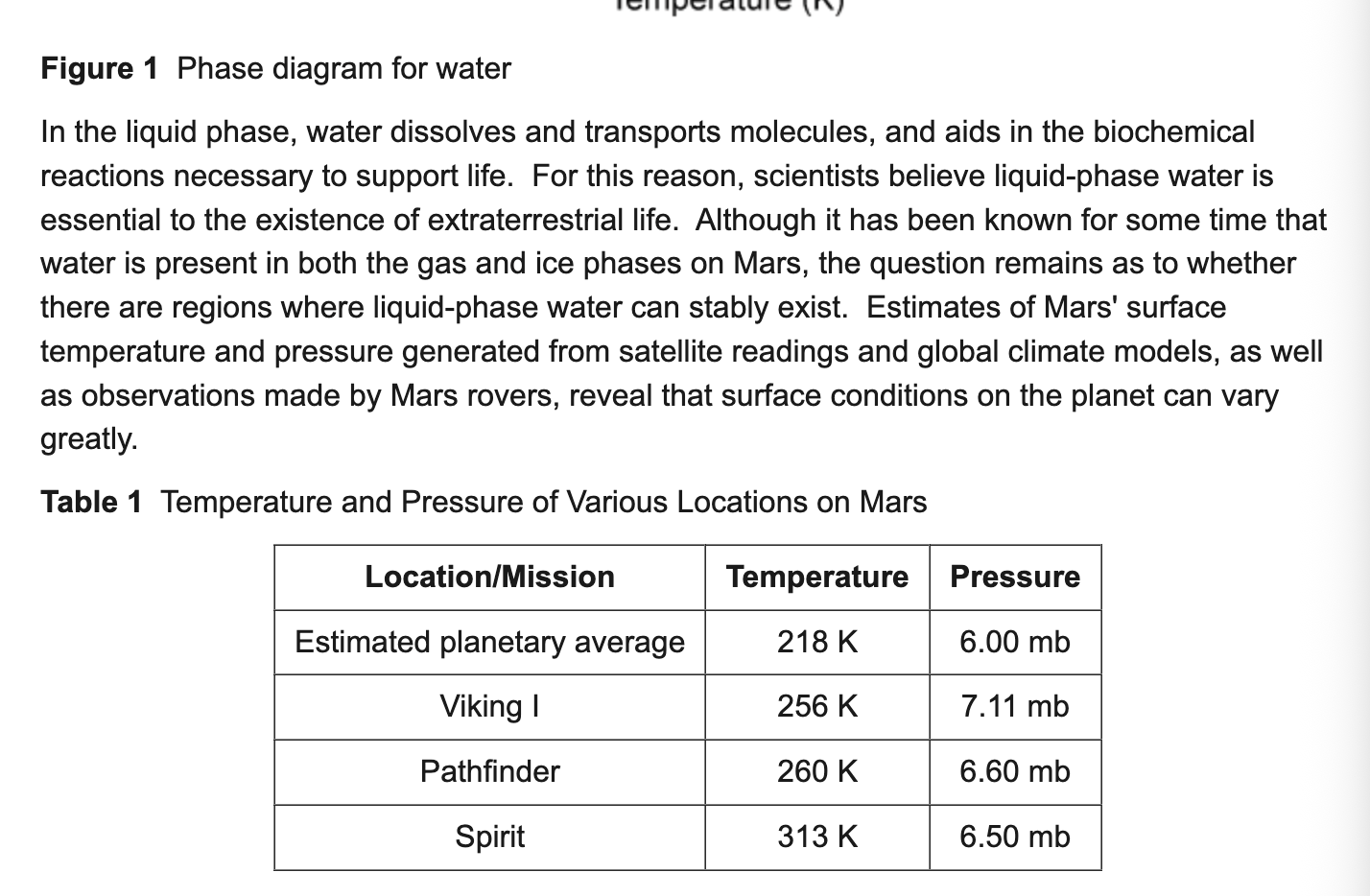
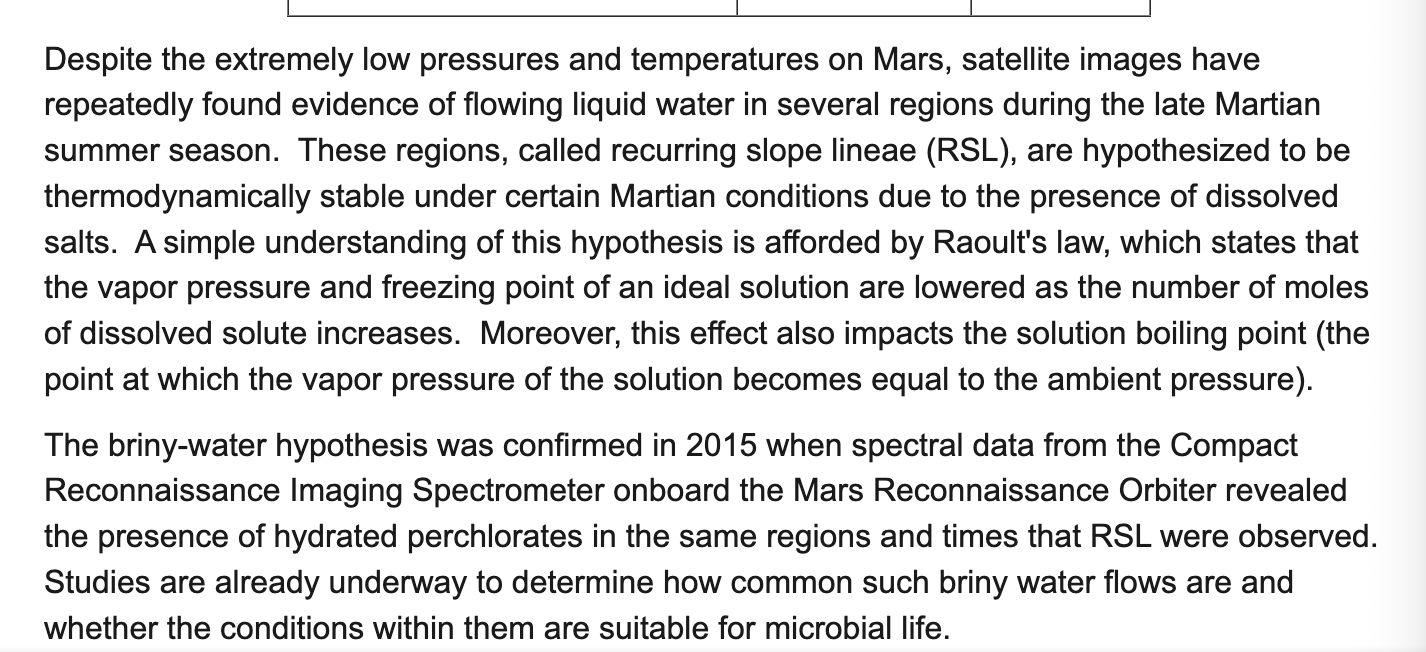
Passage A
Which of the following conclusions can be made based on figure 1 and data in table 1




Answer: D
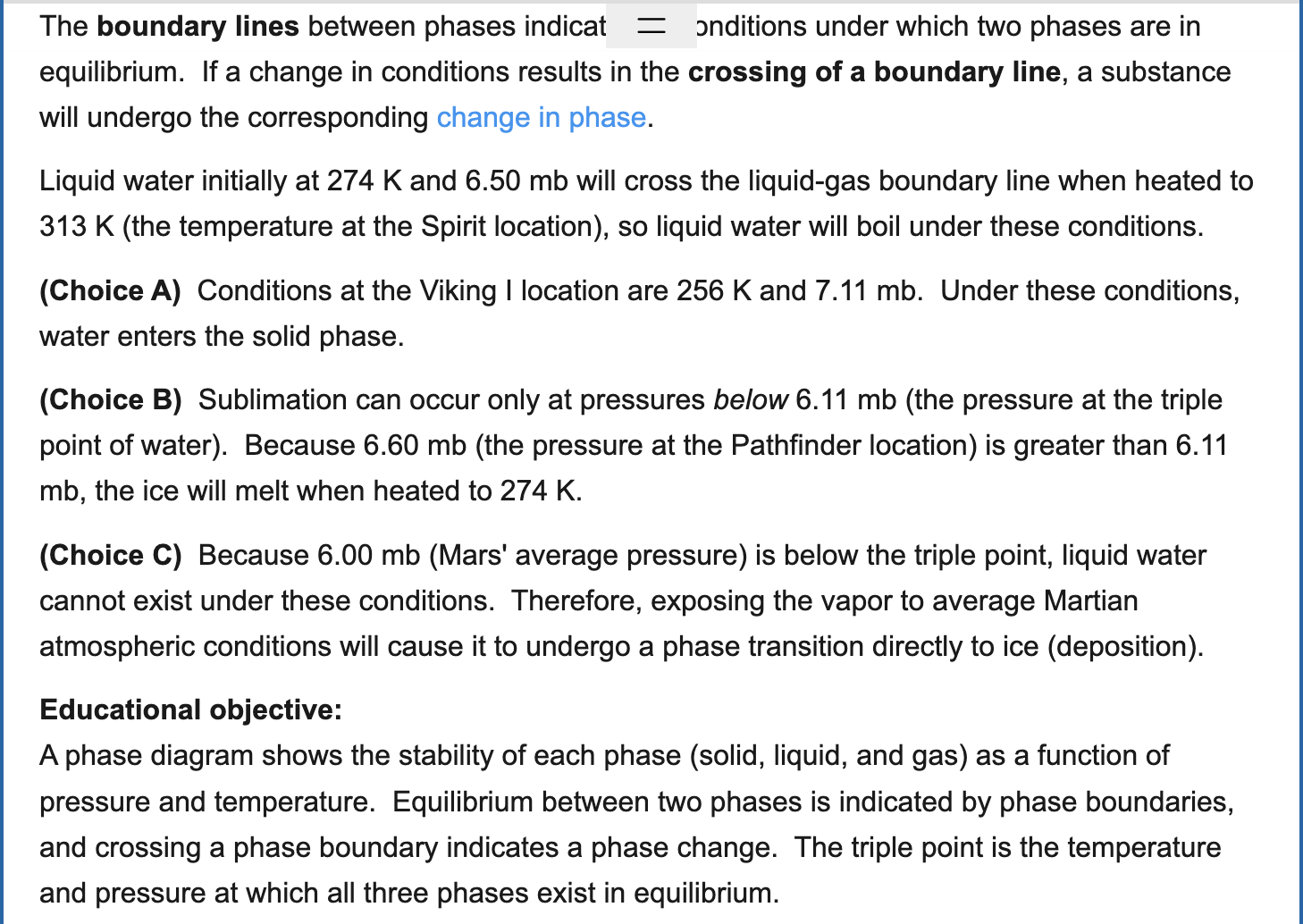

Passage A
Answer: C
Freezing occurs when the _____ energy of the molecules can no longer overcome the _________ forces attracting nearby molecule together. As this happens, the molecules are pulled together and held as a solid.
Pure water molecuels strongly itneract rhough hydrogen bonding, which greatly assists freezing as the temperature reaches freezing point. As pure water molecules begin to freeze, molcules transition from _____ entropy (liquid0 to ____entropy (solid).
Add a salt solute disrupts some of these intermolecular interactions between the water molecules and forms new _______ interactions with salt ions. This inclusion of a salt also ____ the entropy (disrupts the usual order)
kinetic
intermolecular
High (liquid) to lower entropy (solid)
ion dipole interactions
increases the entropy

Passage A
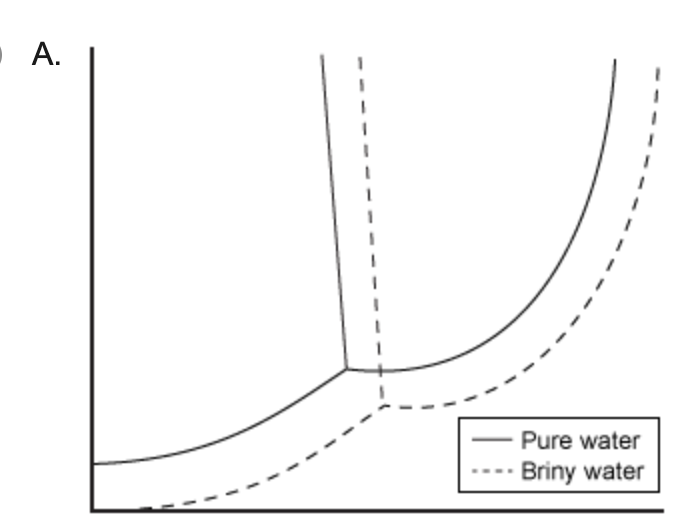
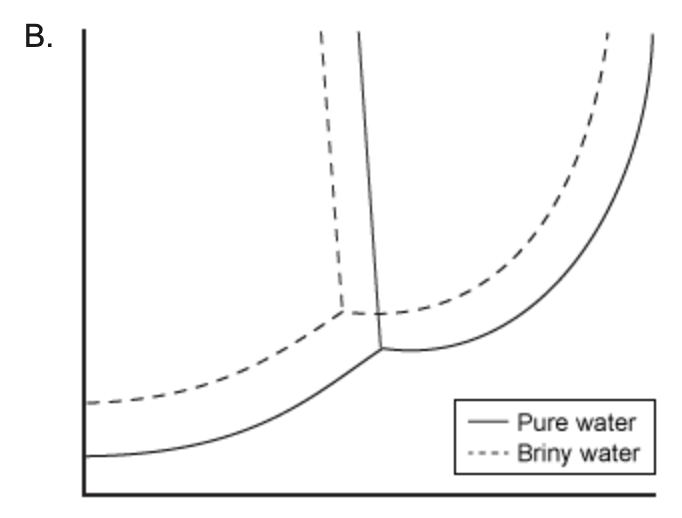
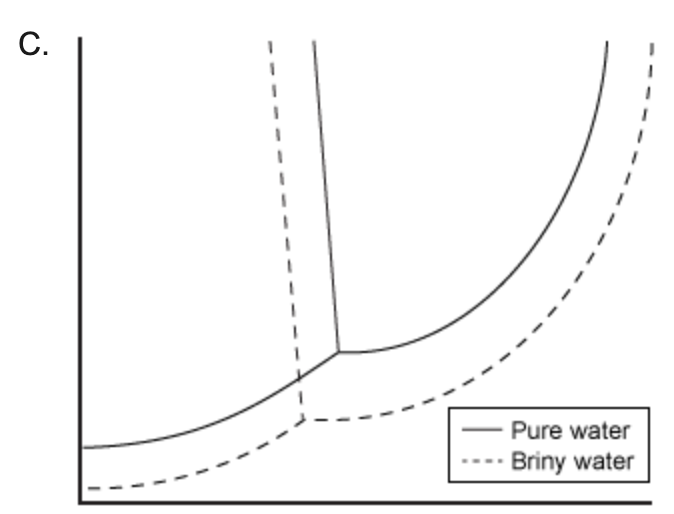
A. lower, because vapor pressure of briny water is higher than the vapor pressure of pure water
B. Higer, because the vapor pressure of briny water is lower than vapor pressure of pure water
C. lower, because the vapor pressure of briny water is lower than the vapor pressure of prue water
D. higher, because the vapor pressure of briny water is higher than vapor pressure of pure water.
Answer: B

equillibrium partial pressure formula
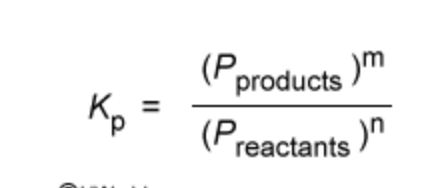
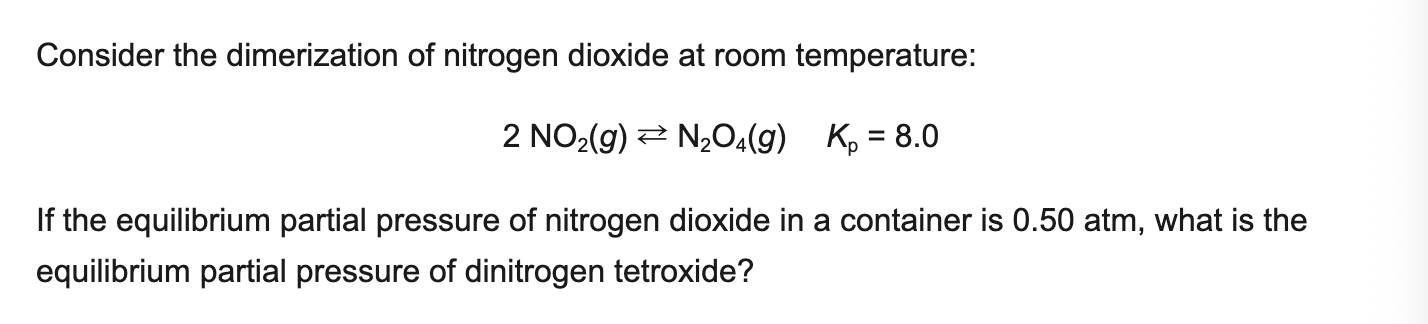
Kp= (product)^m/(reactant)^n
8= x/(0.5)²
x= 2 atm
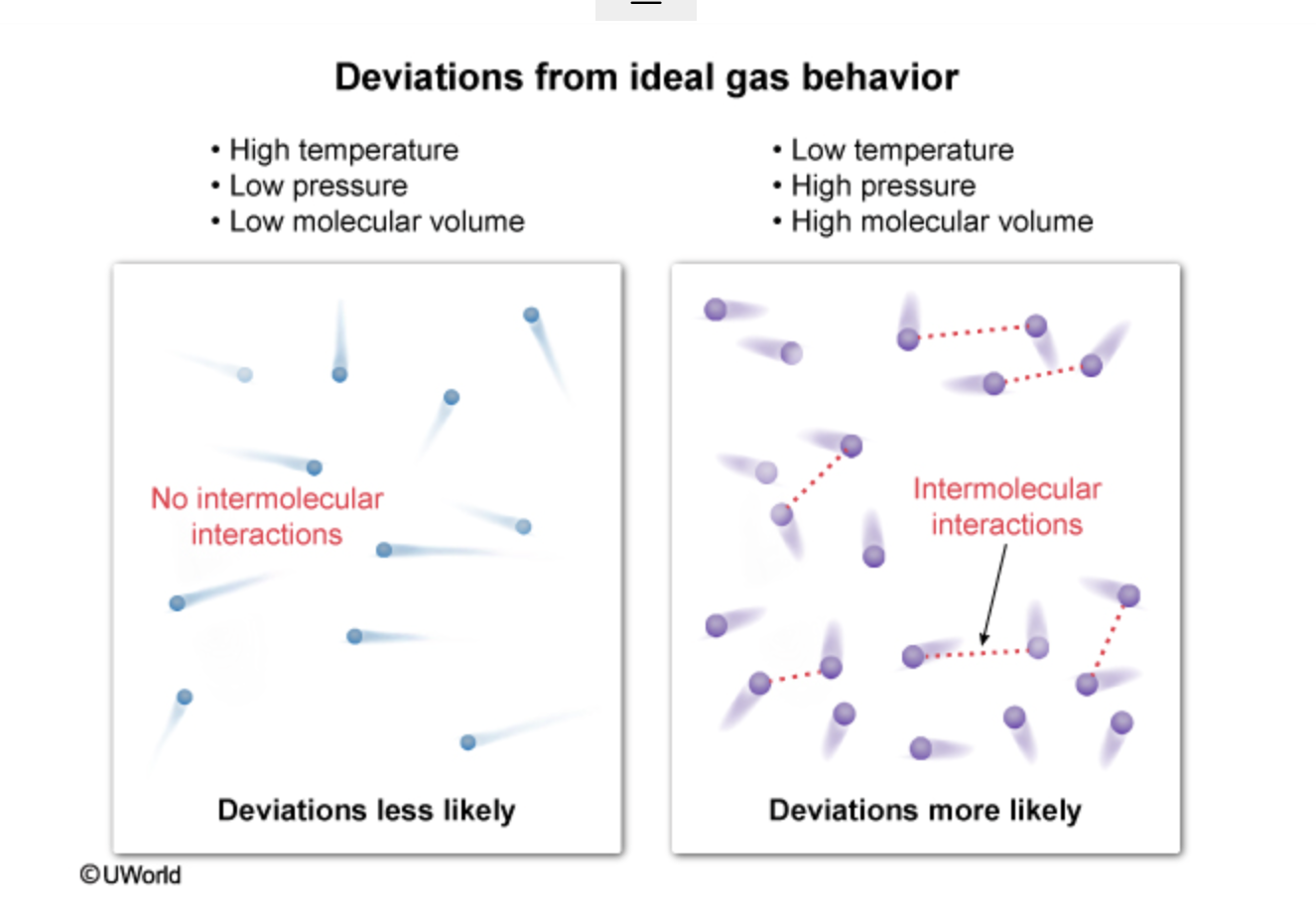
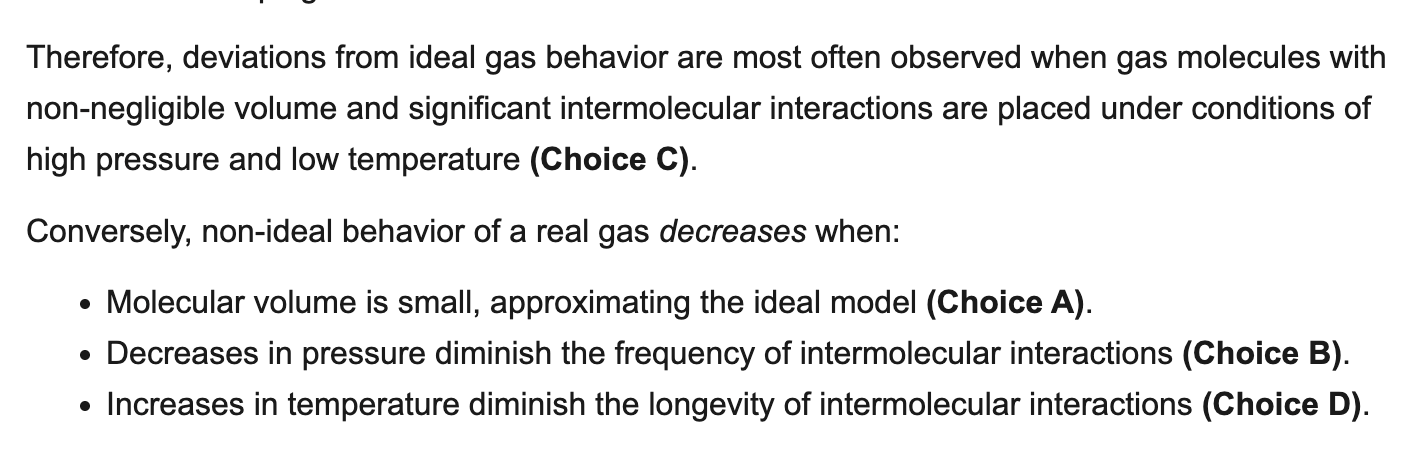
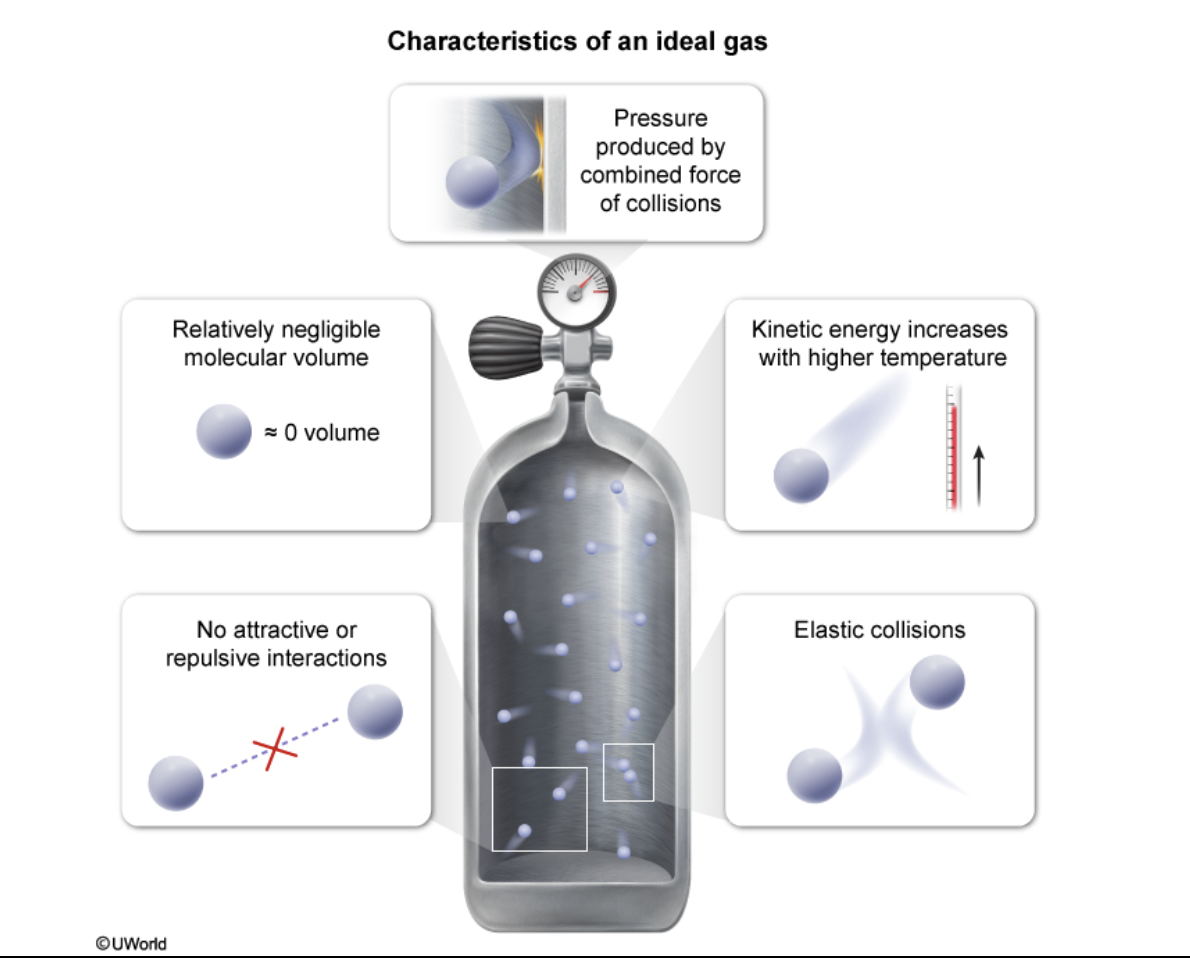
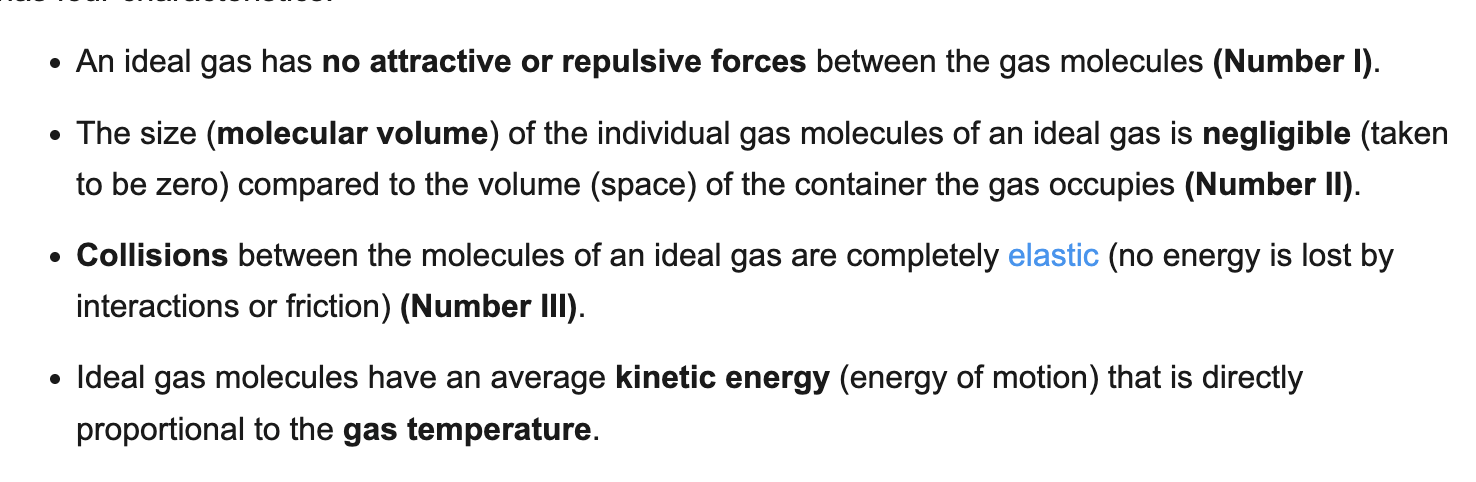
Ideal gas vs deviation (conditions)
Ideal gas
High temp
low pressure
low molecular volume




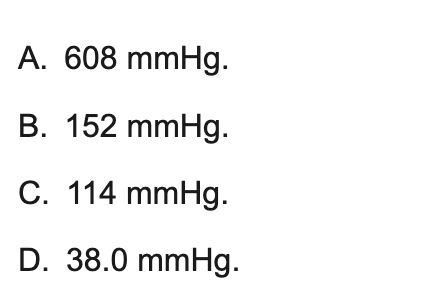
Answer: C
Charles law
direct relationship exists between Temp (in kelvin) and volume
V1/T1=V2/T2
Boyle’s law
inverse relationship between volume and pressure
P1V1=P2V2

is it greater or less than 500ml? and which law says so
Charles’s law
V1/T1=V2/T2
500/293=V2/310
so increasing T2 increases V2, V2 is greater than 500 mL
Passage B
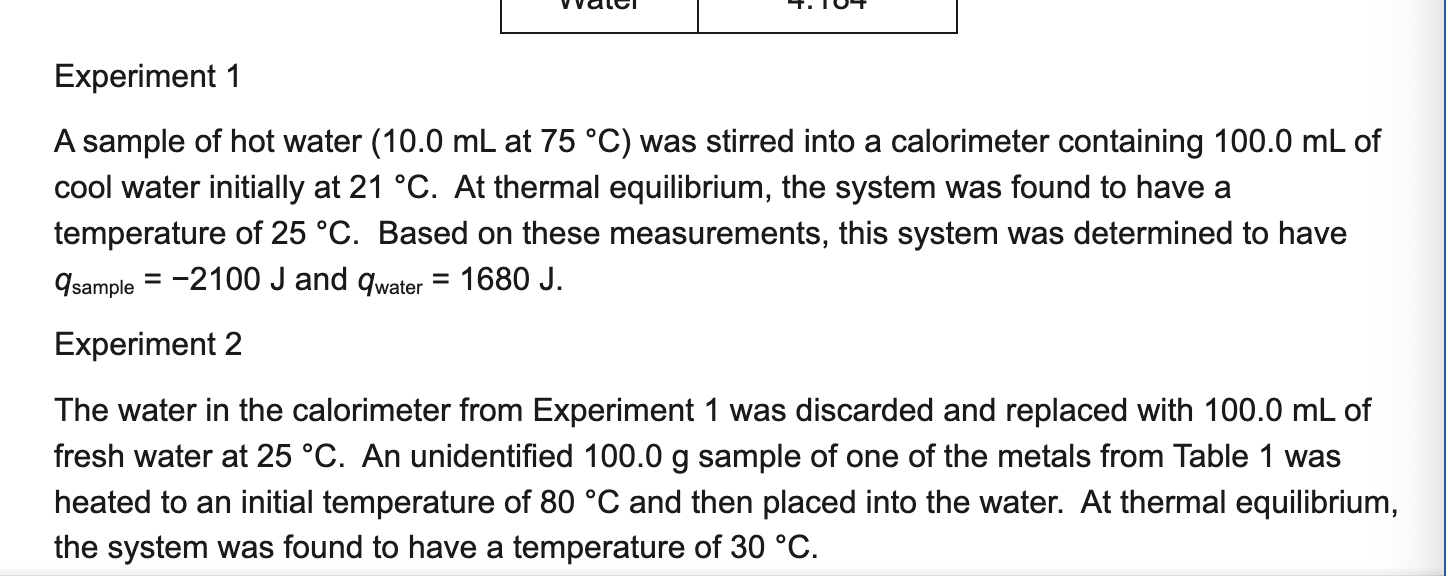
Passage B

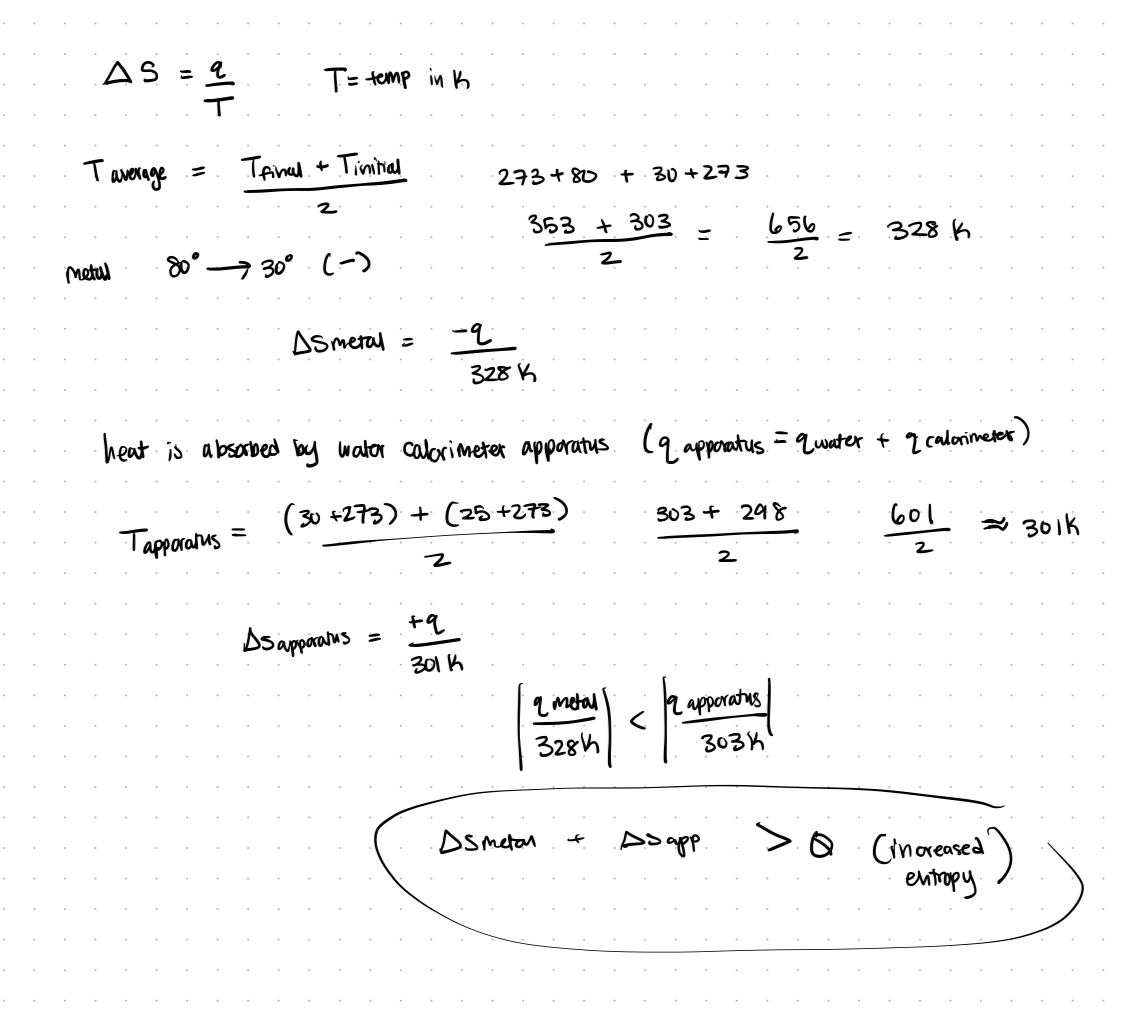
A. Both metal sample and apparatus experience an increase in entropy, resulting in an overal increase in entropy within the system
B. The entropy of the metal sampel decreases, but the entropu of the apparatus icnreases by greater amount, resulting in an overal increase in entropy within the system
C. The entropy of the mettal sample icnreases but the entropy of the apparatus decreases by a greater amount, resulting in an overal decrease in entropy within the system
Answer:B
Passage B

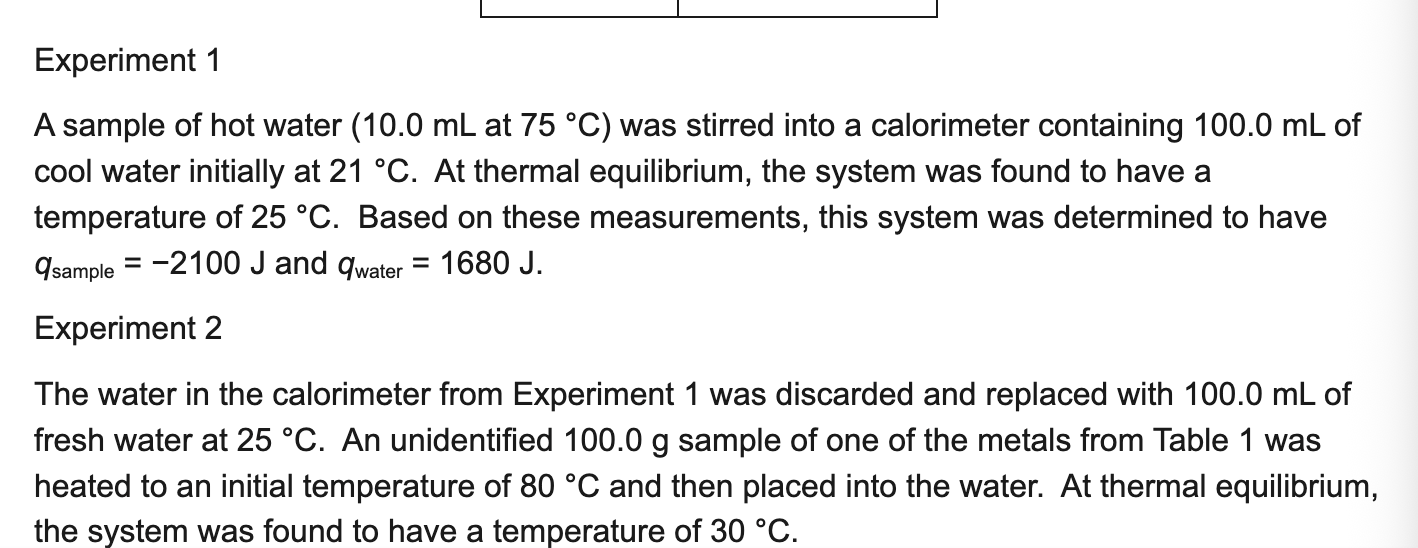
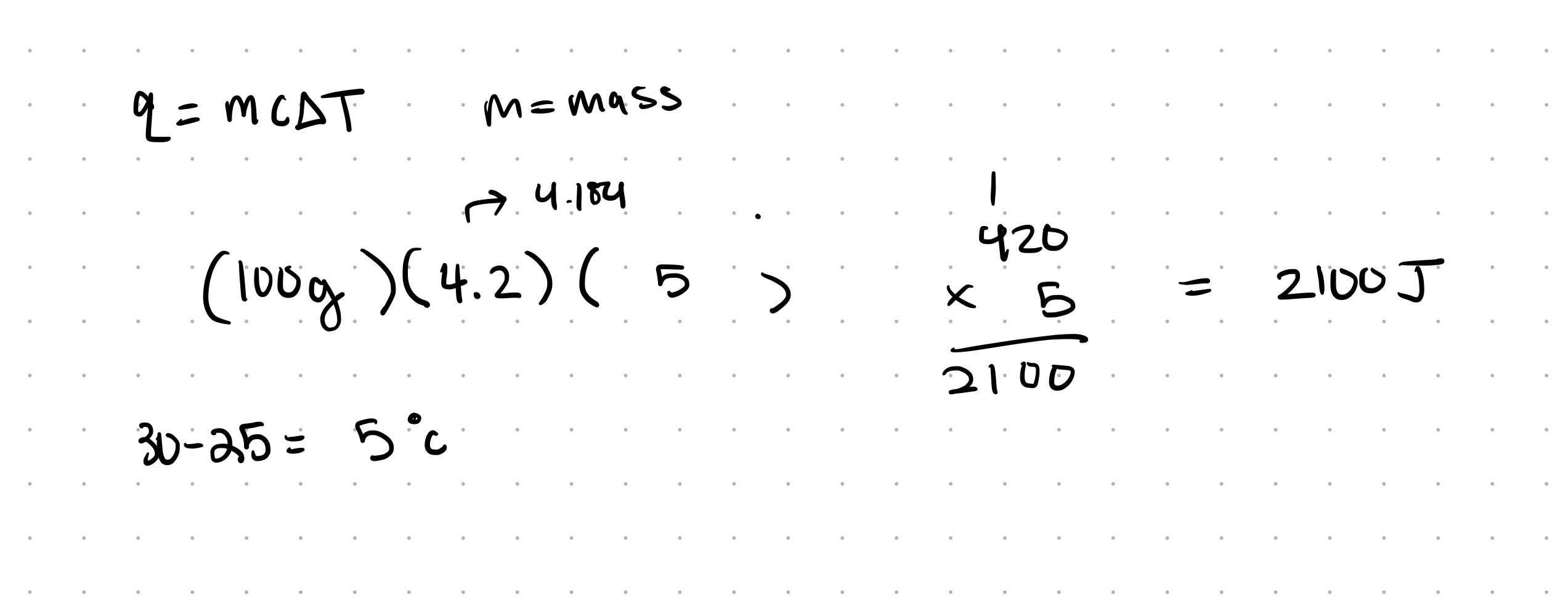
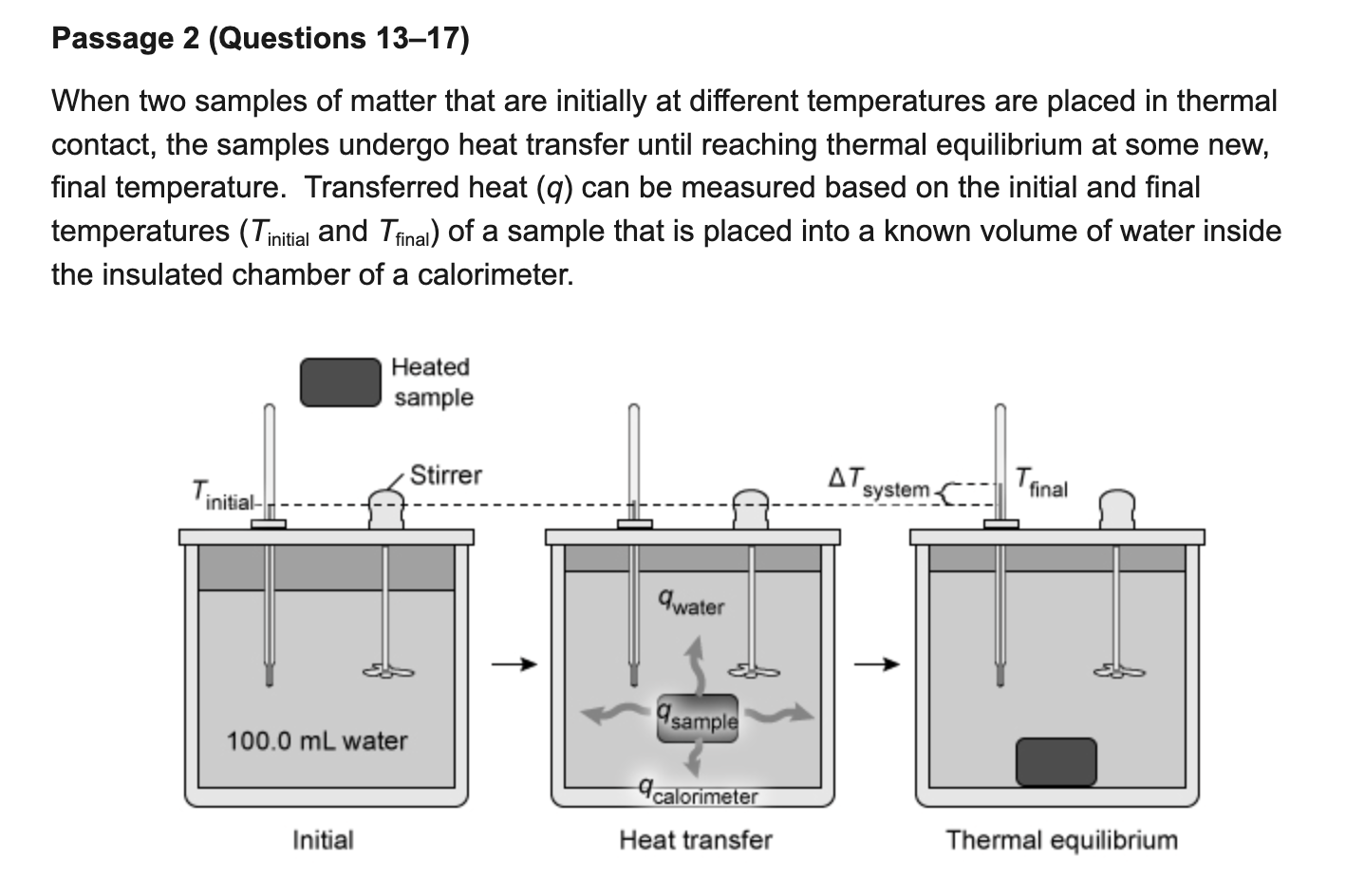
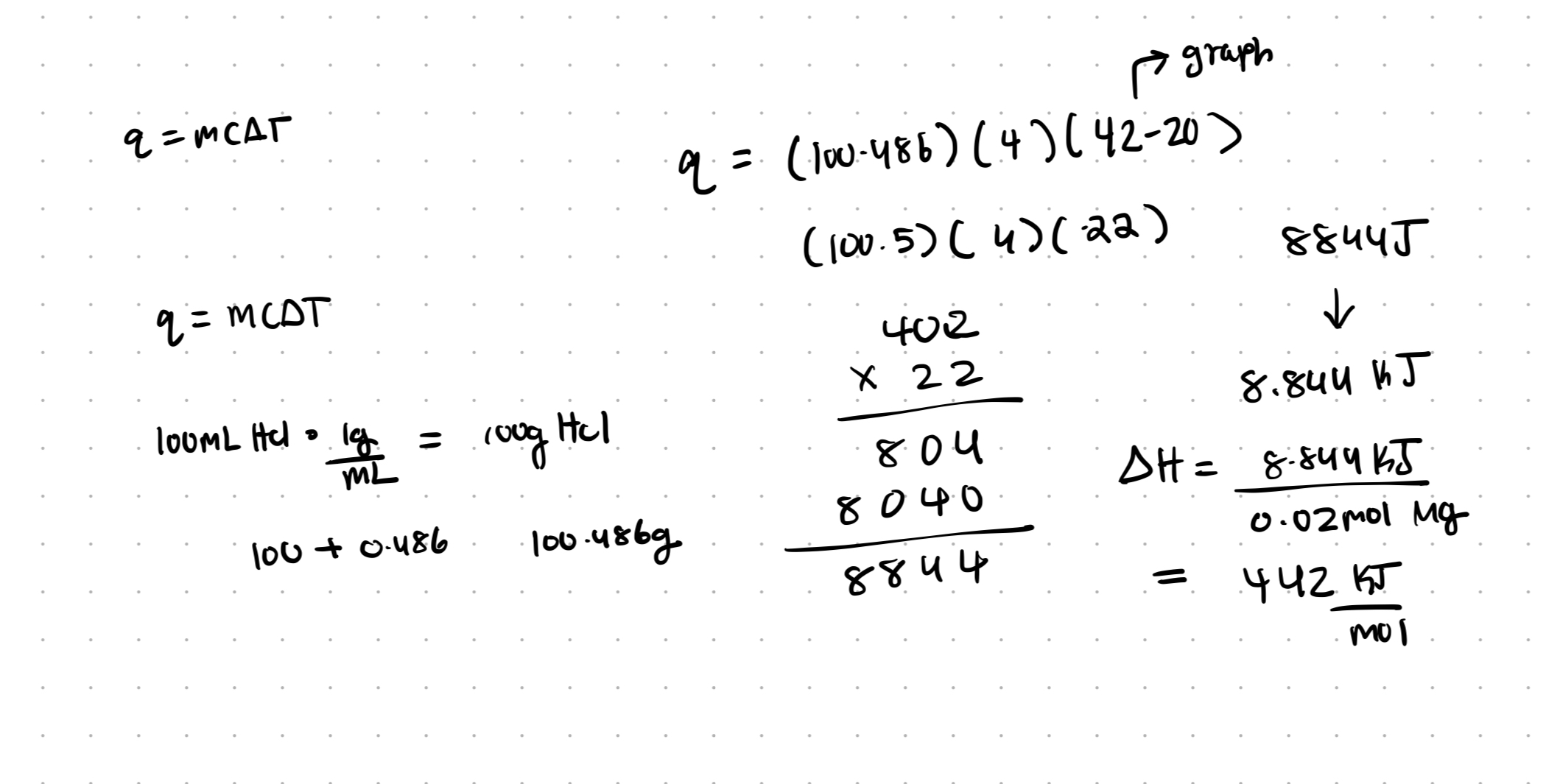
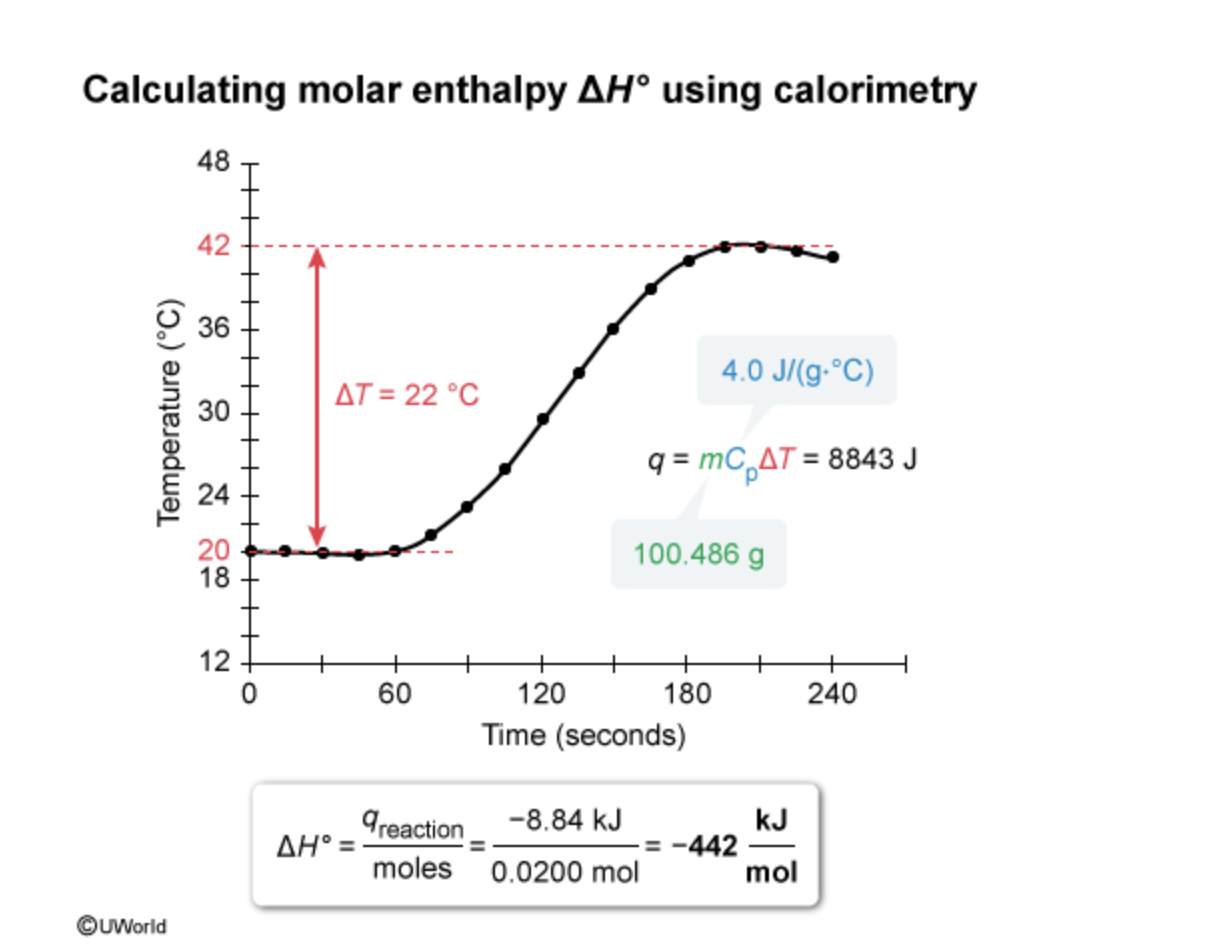
100ml = 100 g
heat capacity
amount of heat required to raise the temp of the entire smaple by 1ºC
context formula: q= CT (q=CAT)
specific heat capcity
amount of heat required to raise the temp of 1 gram of substance by 1ºC
q=mCT (q=mCAT)

Passage B
fomula q= CT for heat capacity (not q=MCAT— which is for specific heat capacity)
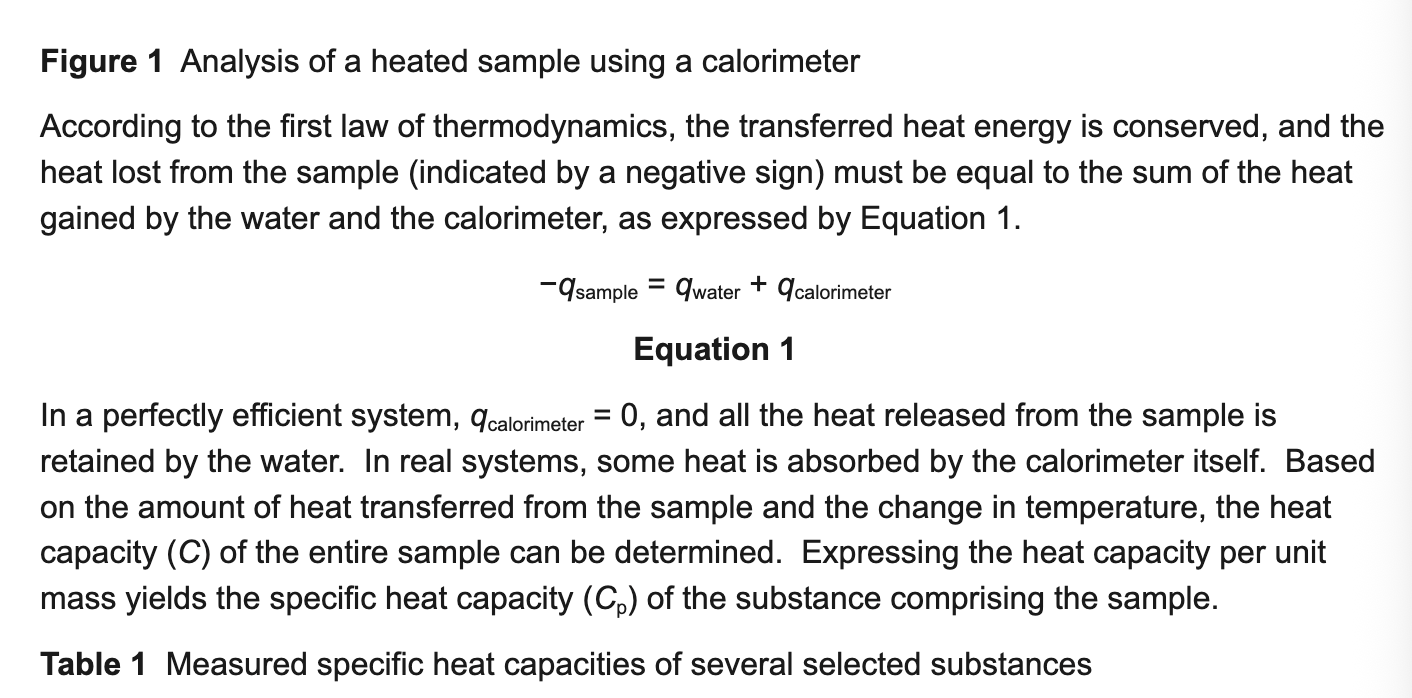
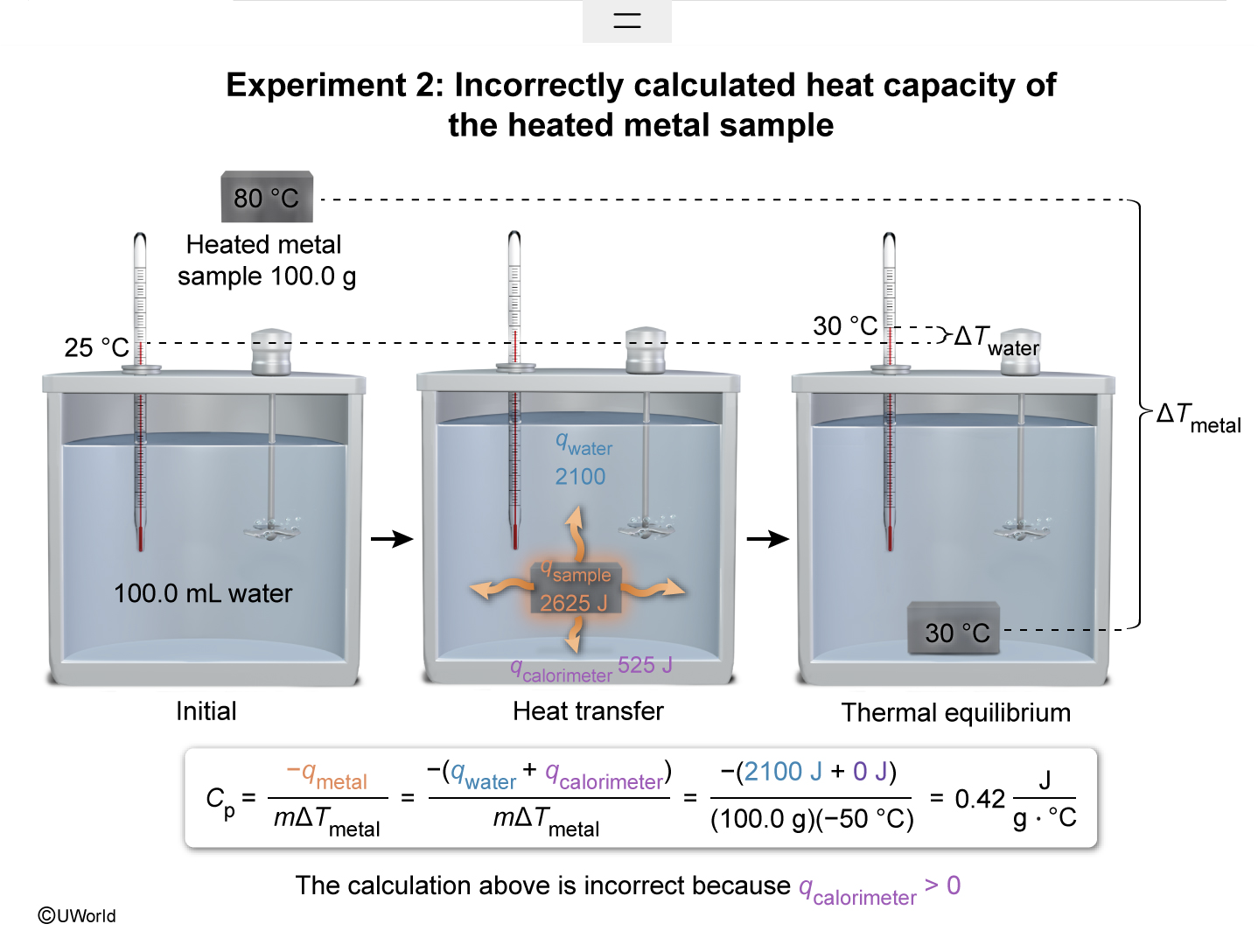
Note: -qsample = qwater + qcalorimeter
rearrange: qcal= -qwater-qsample
q/T= C
-qwater-qsample/ (change in Temp of the system) = Ccal

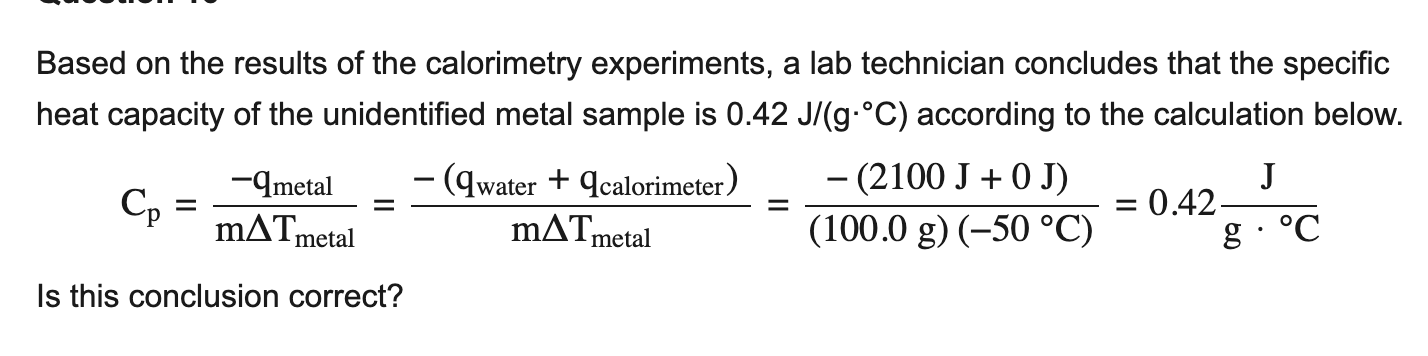
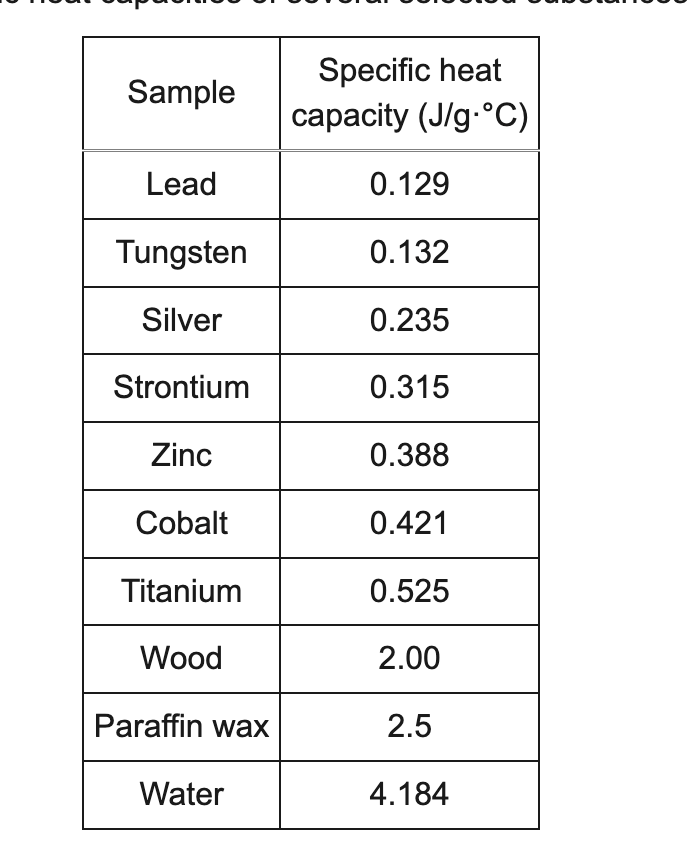
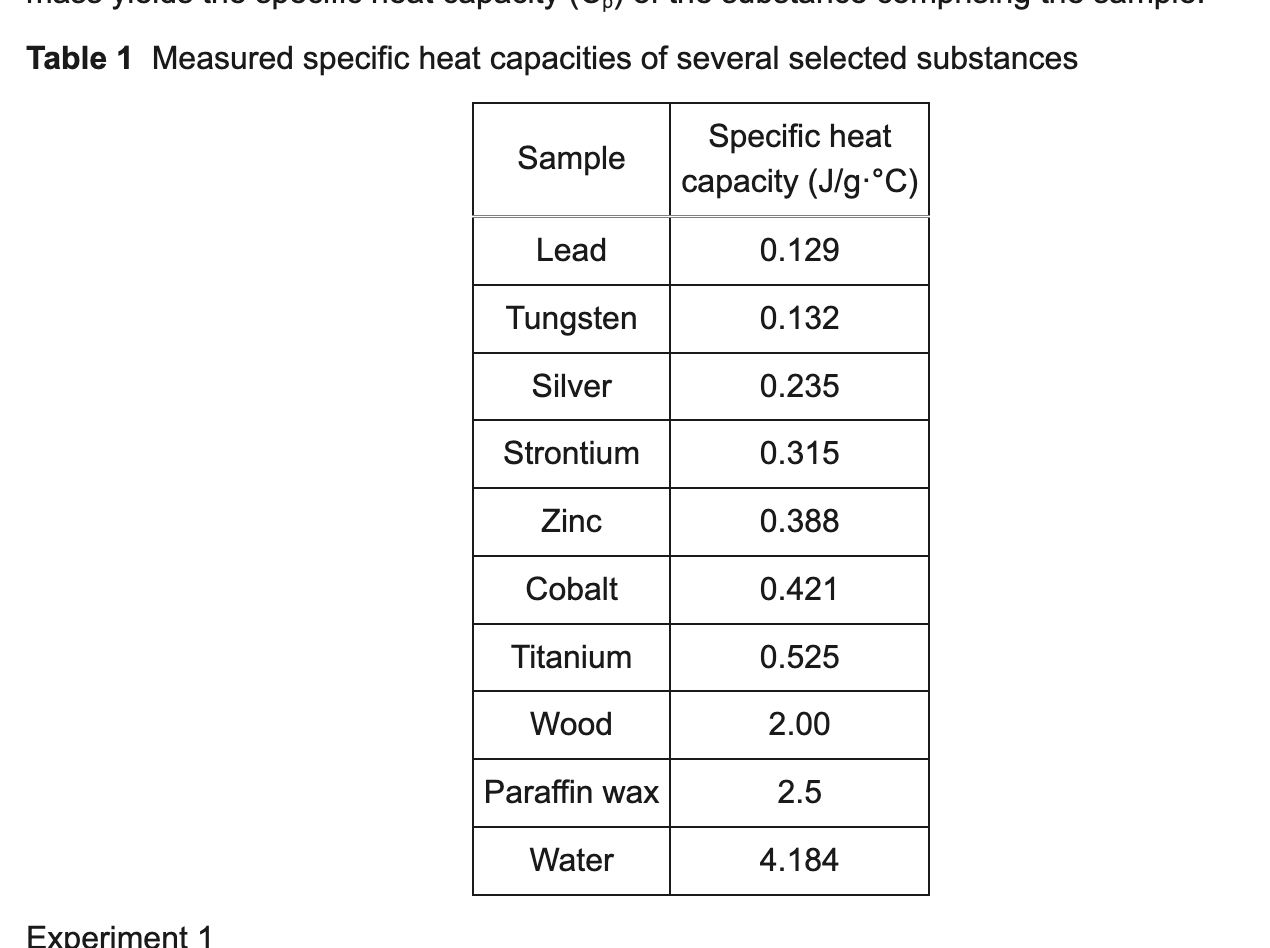
And based on this conclusion, what is the unknown metal?
Passage B
No, because the calorimeter is greater than 0 in experiment 2,this is shown in experiment 1 when the calorimetet absorbs a significant amount of heat. This means that the Cp is wrong.
Because of this, the unknown sample is Ti, because caloeimeter is >0, more than 2100 J of heat is released by the metal, this means the specific heat capacity is greater than the 0.42
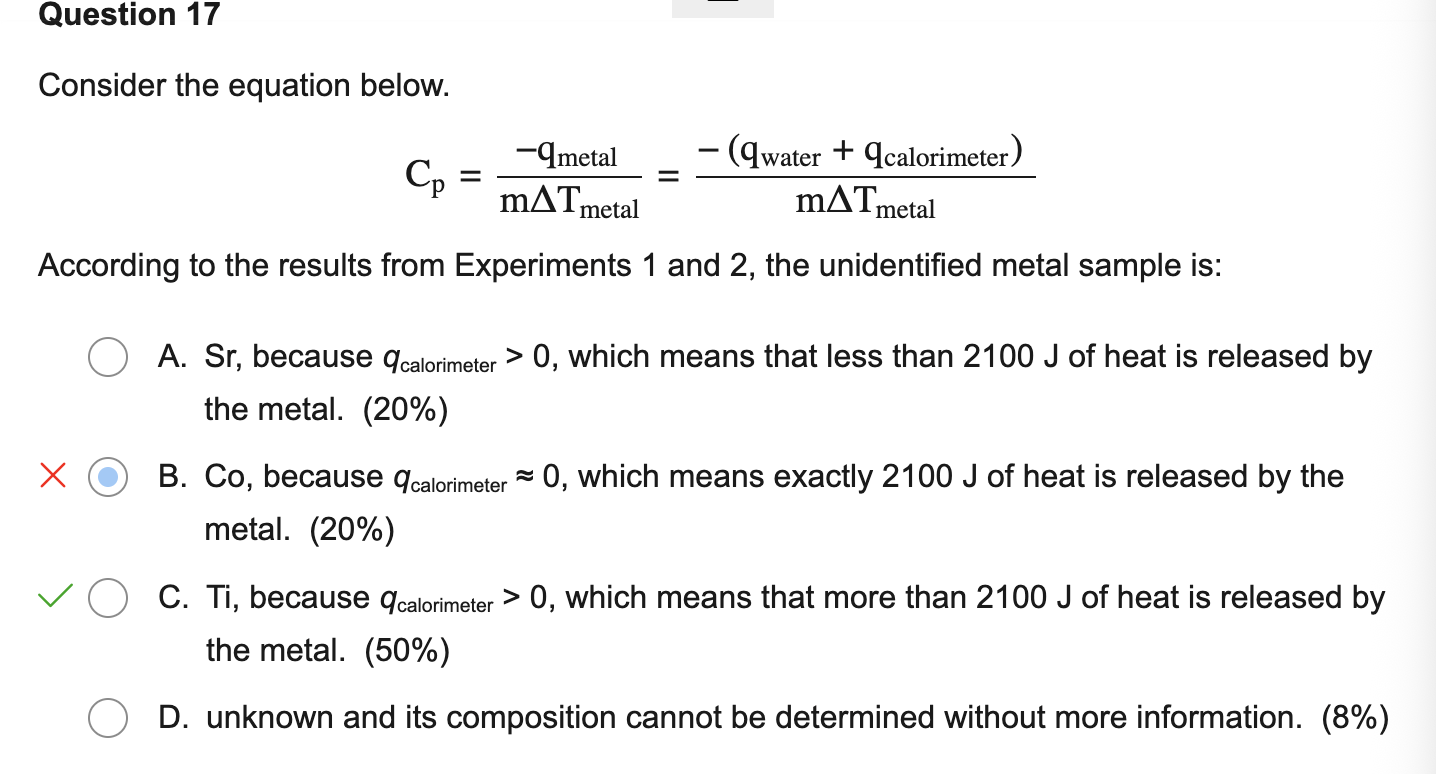
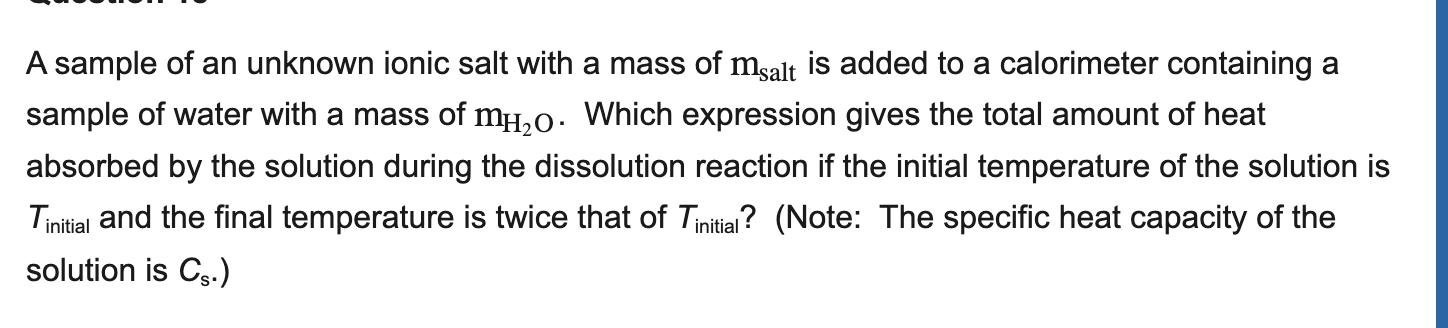

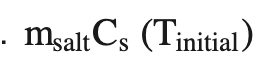

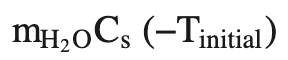
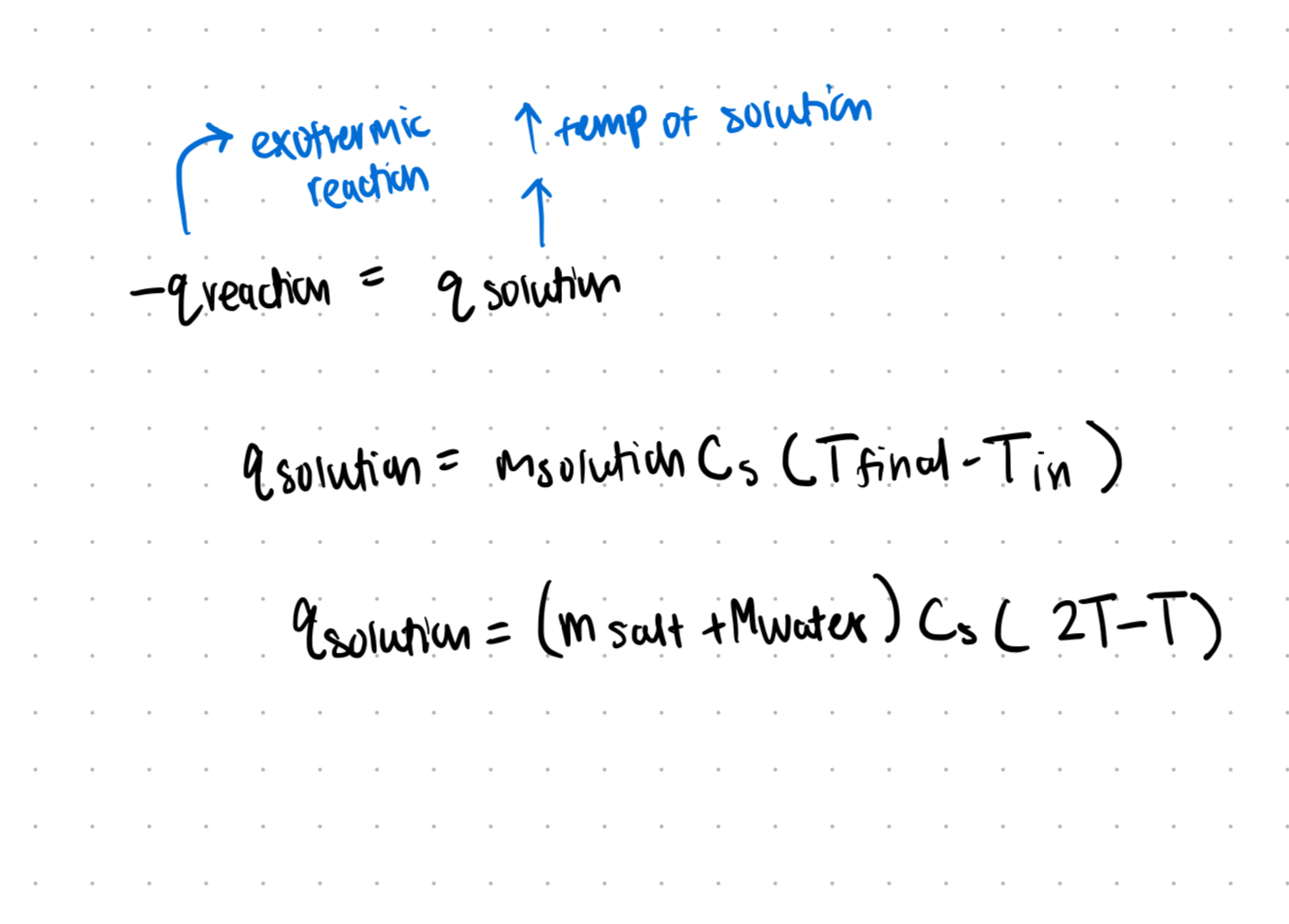
Answer: A
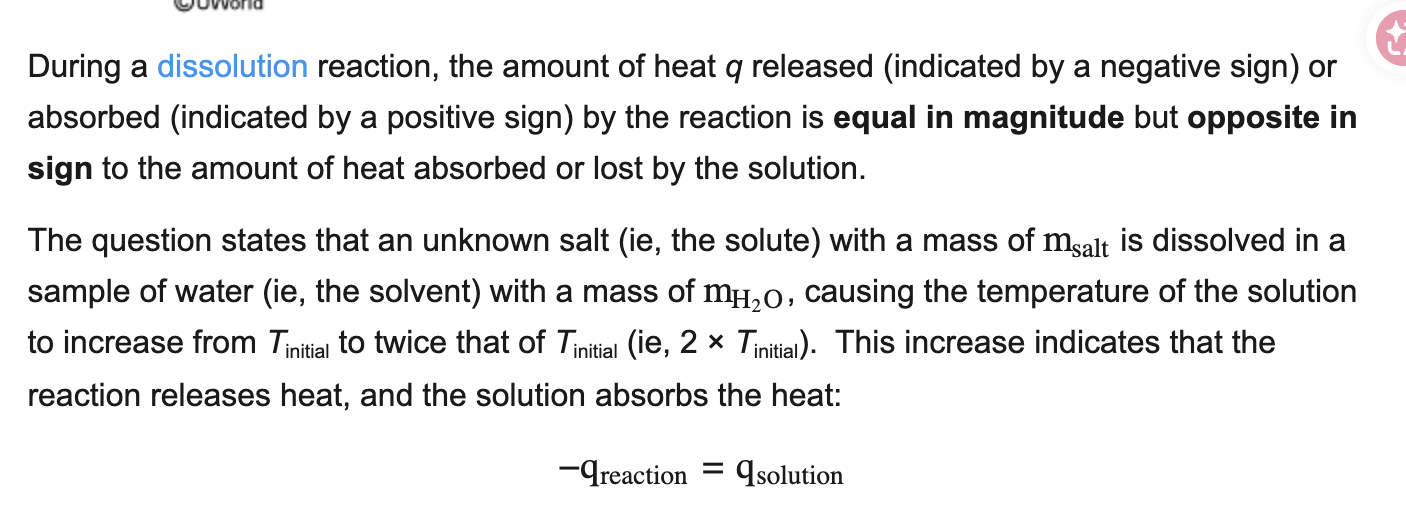
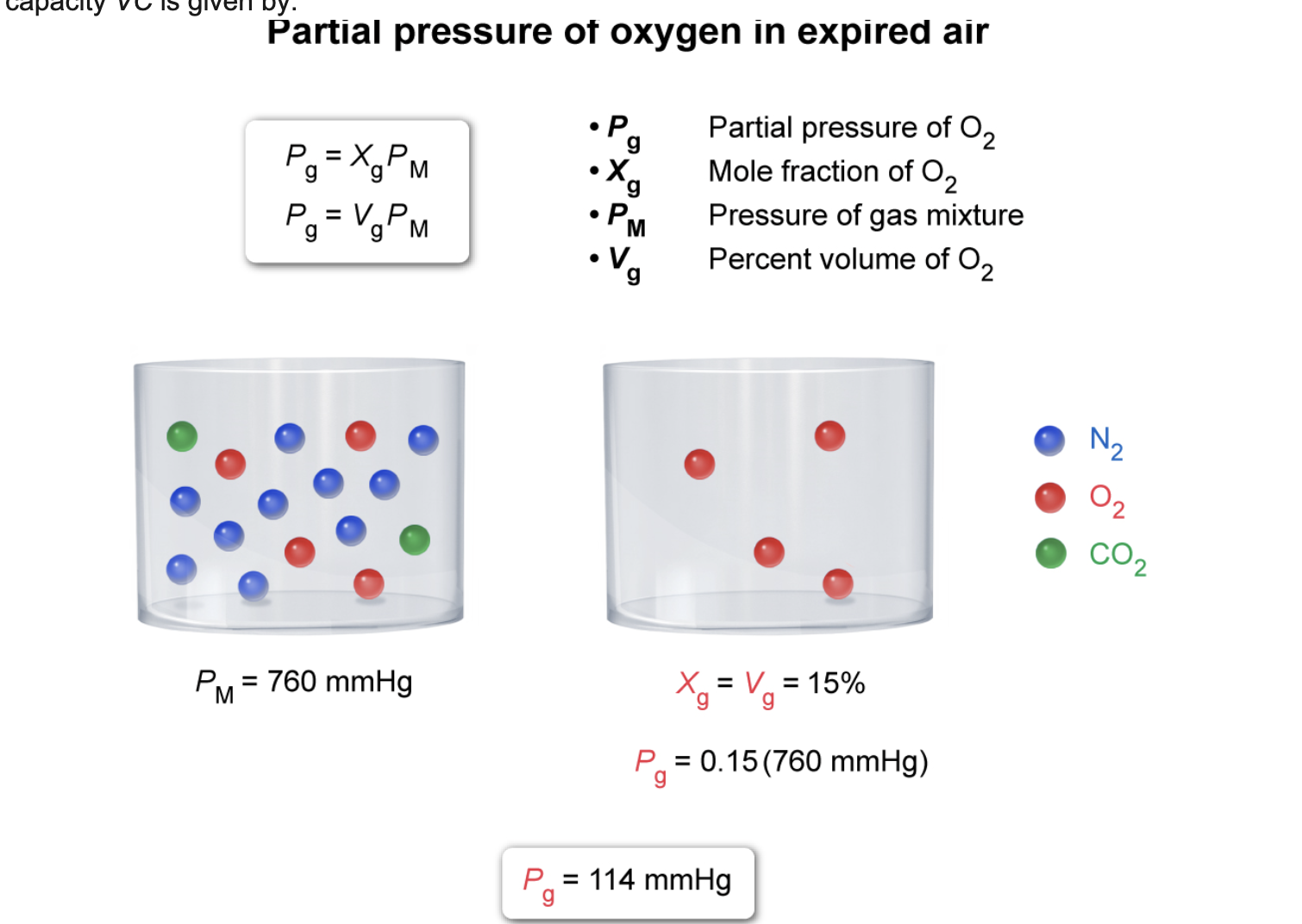
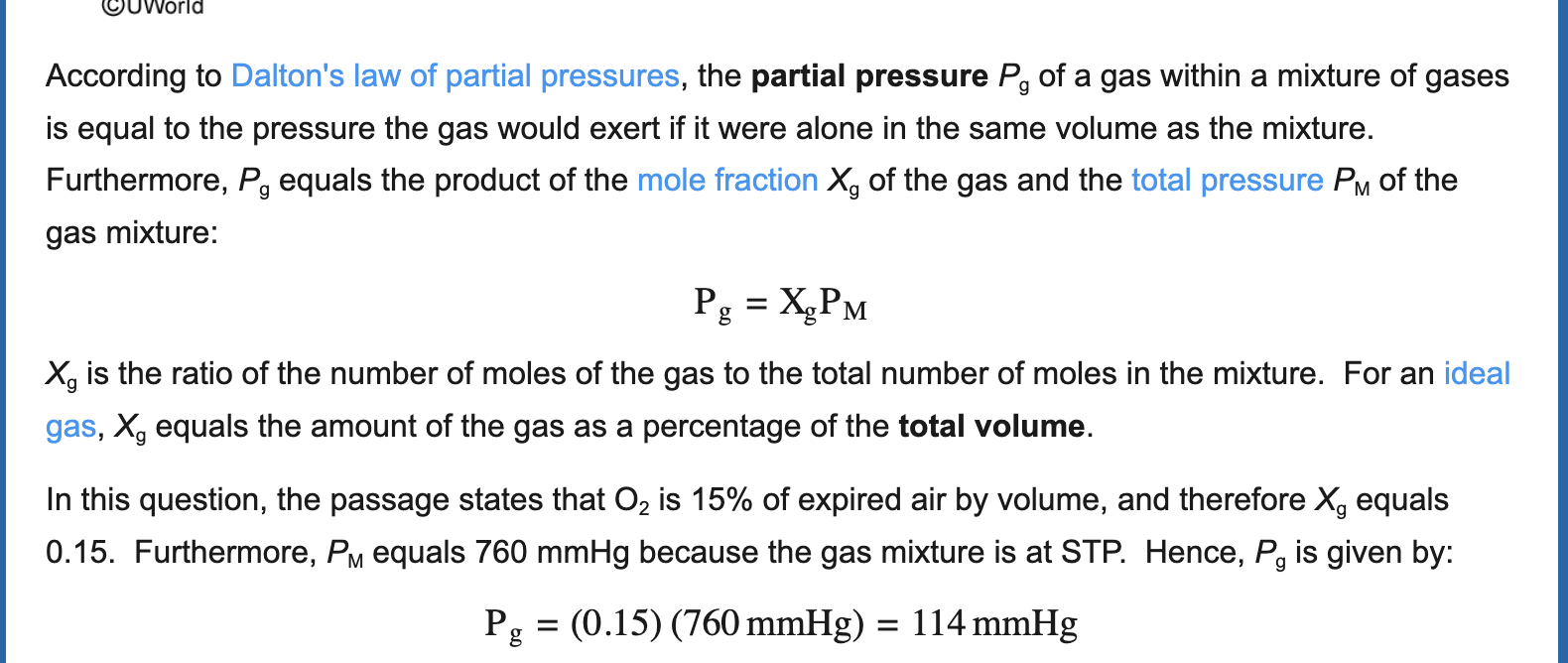
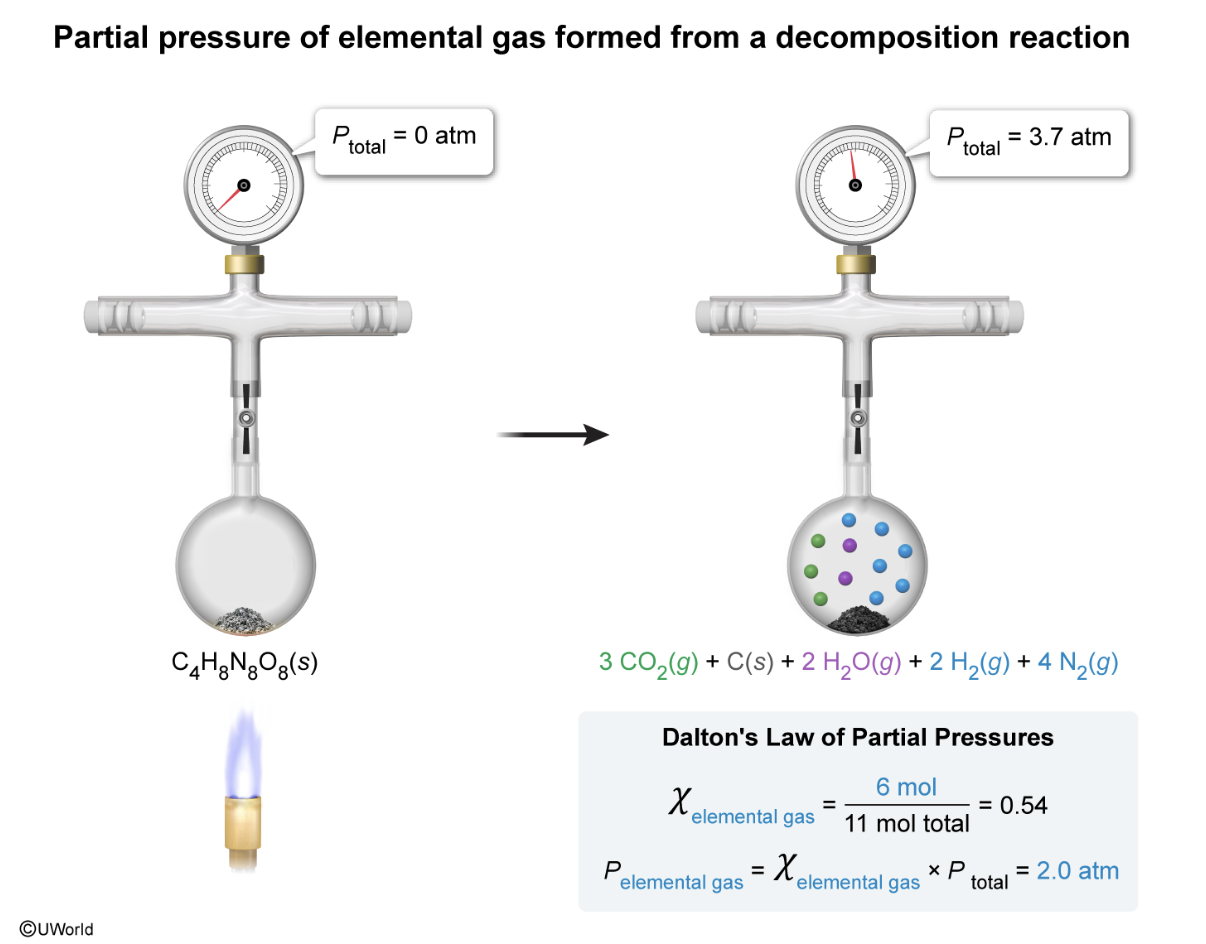
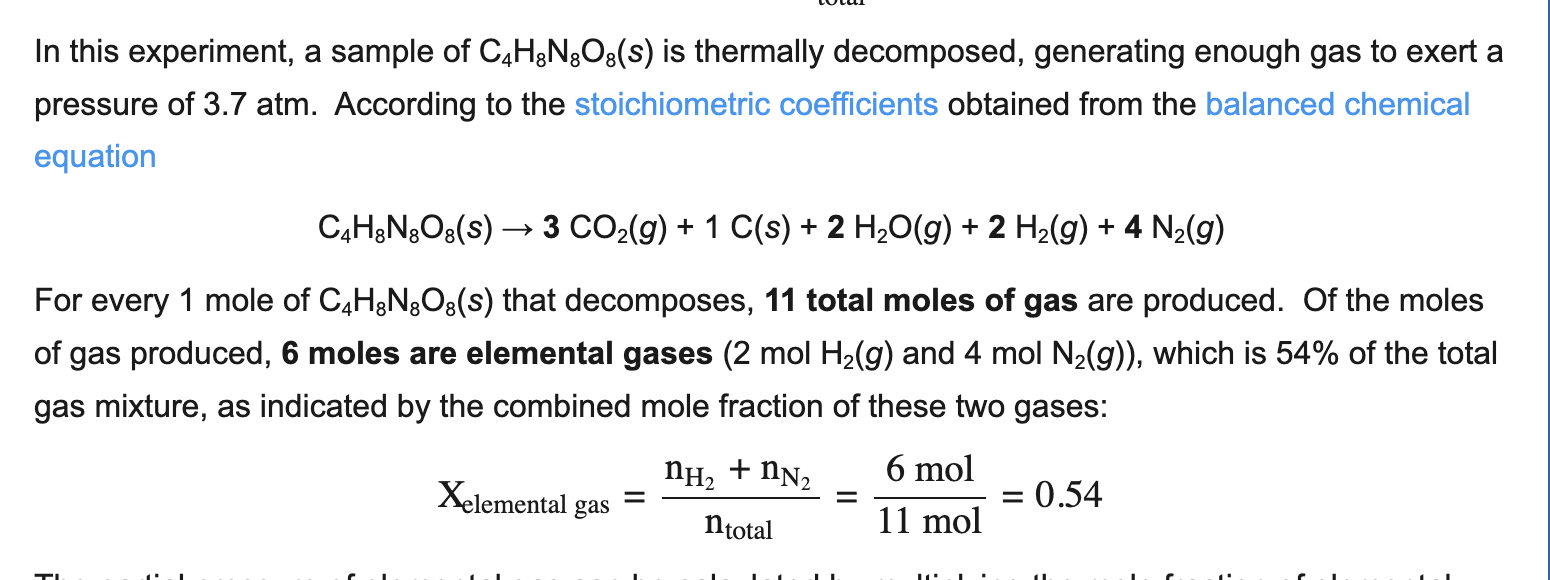
Dalton’s law of partial pressure


dimensional analysis to figure out the torr of other gas and add them the sum
0.4 (Co2) + 0.2 + 0.2 ( N2 and H2O)= 0.8 torr
effect of temperature on the quilibrium constant
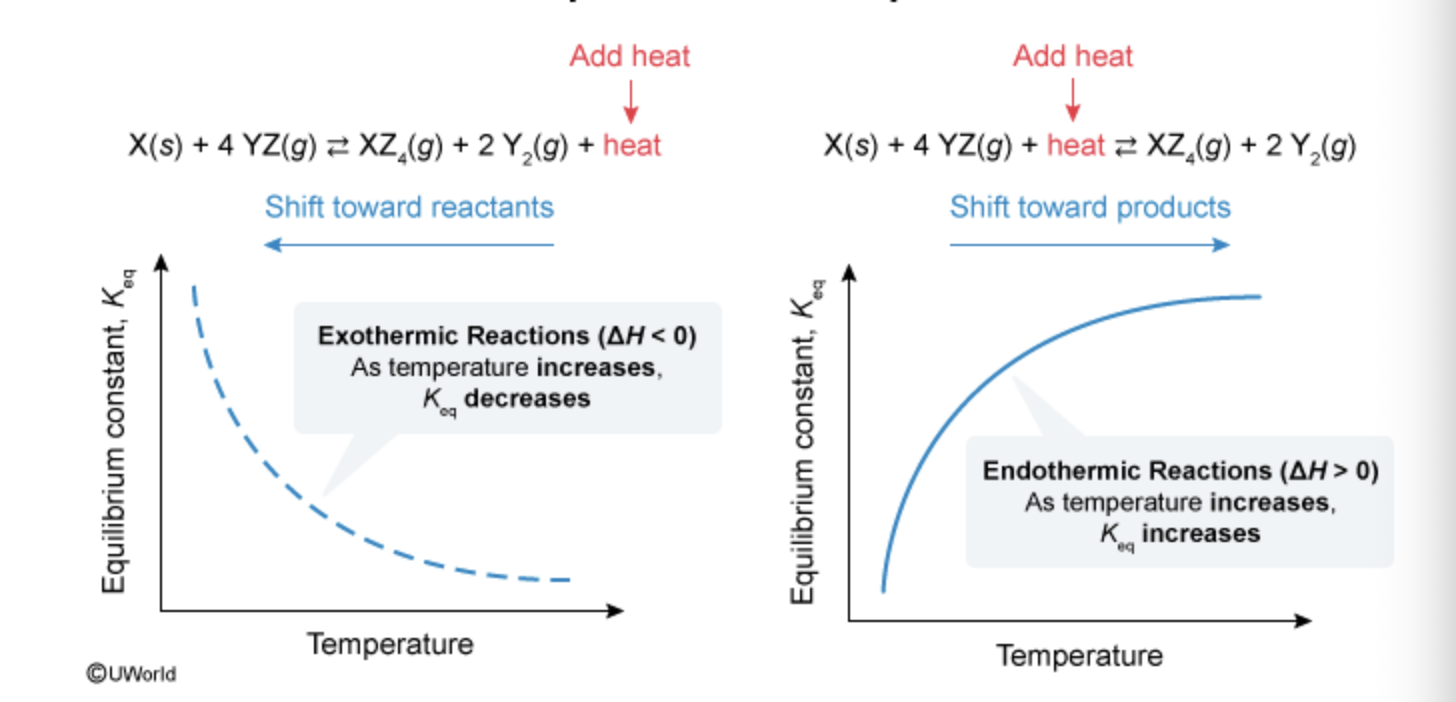
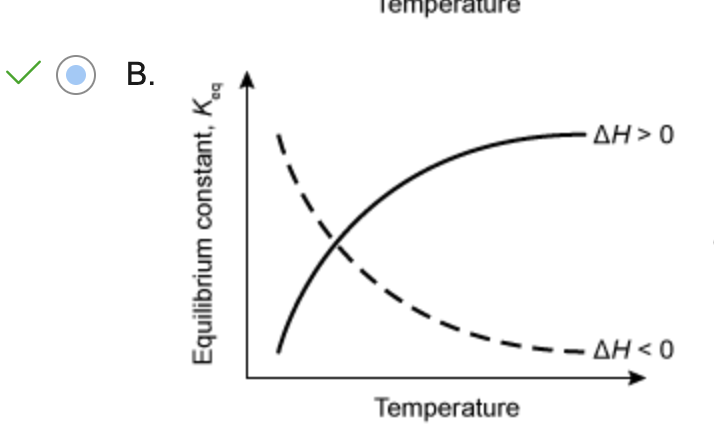
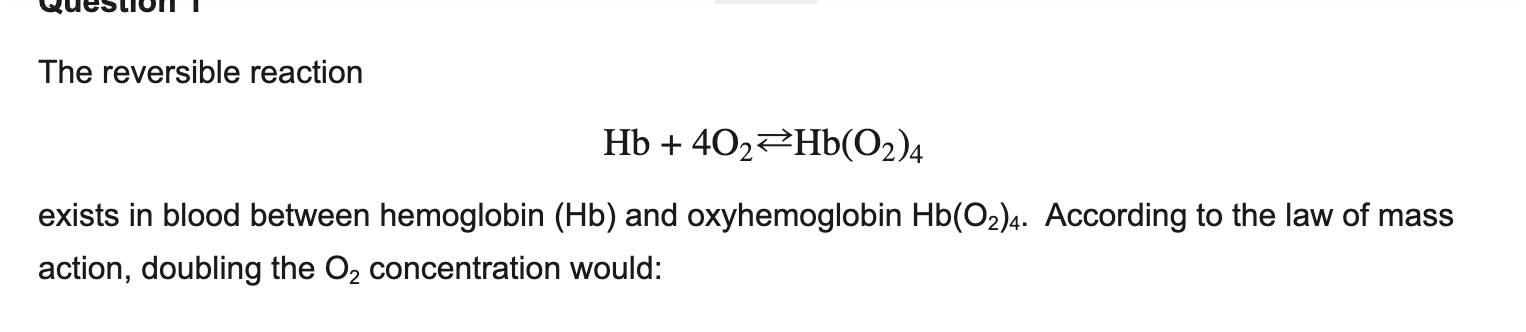
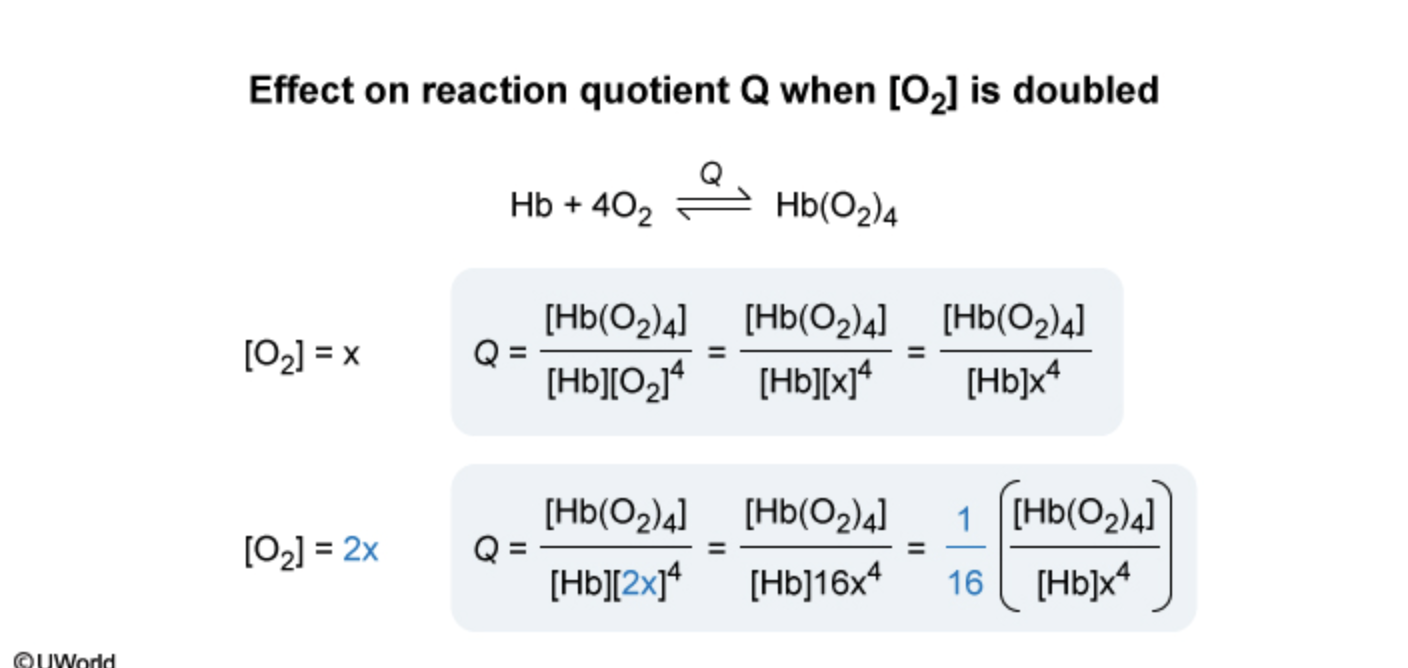
decrease
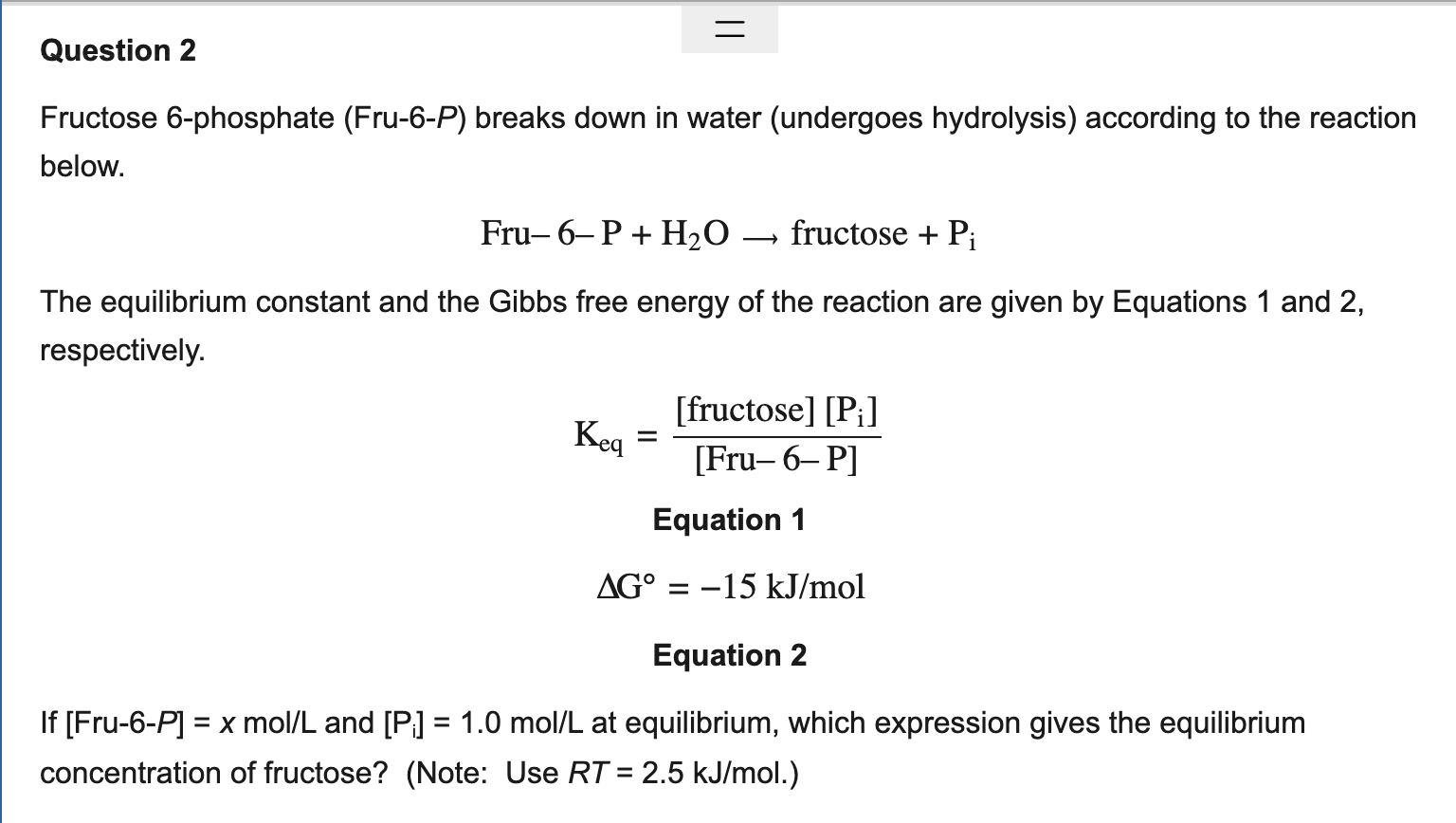
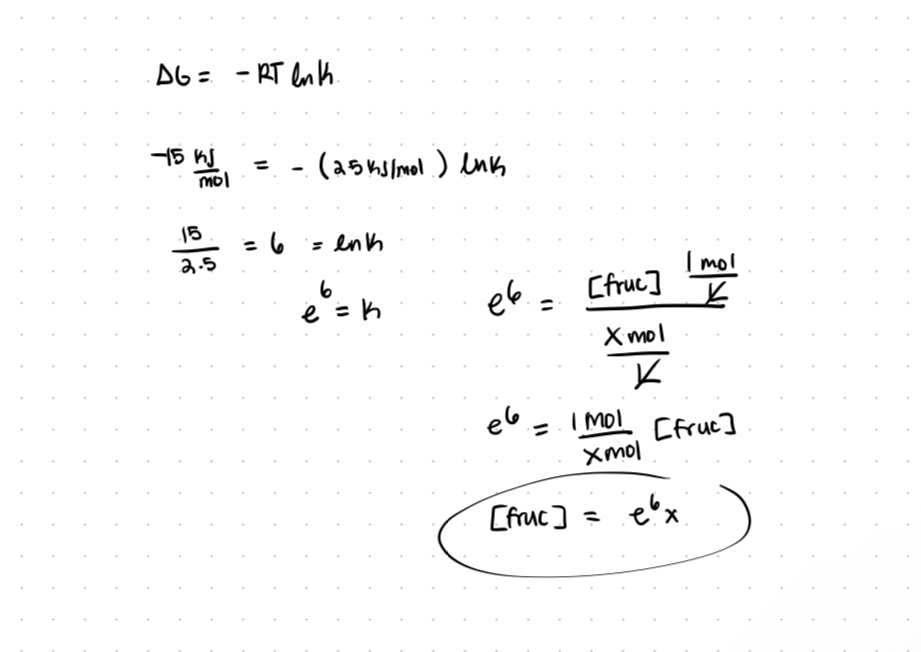
Note: T is in kelvin
Passage C
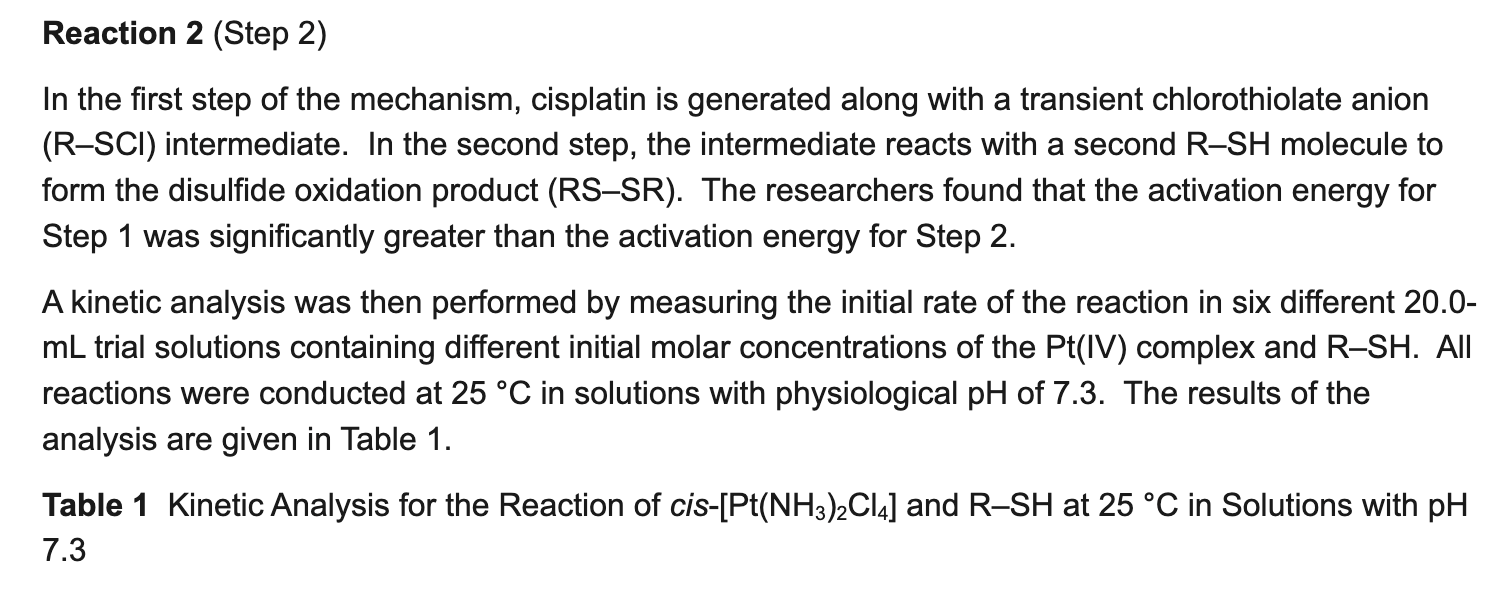
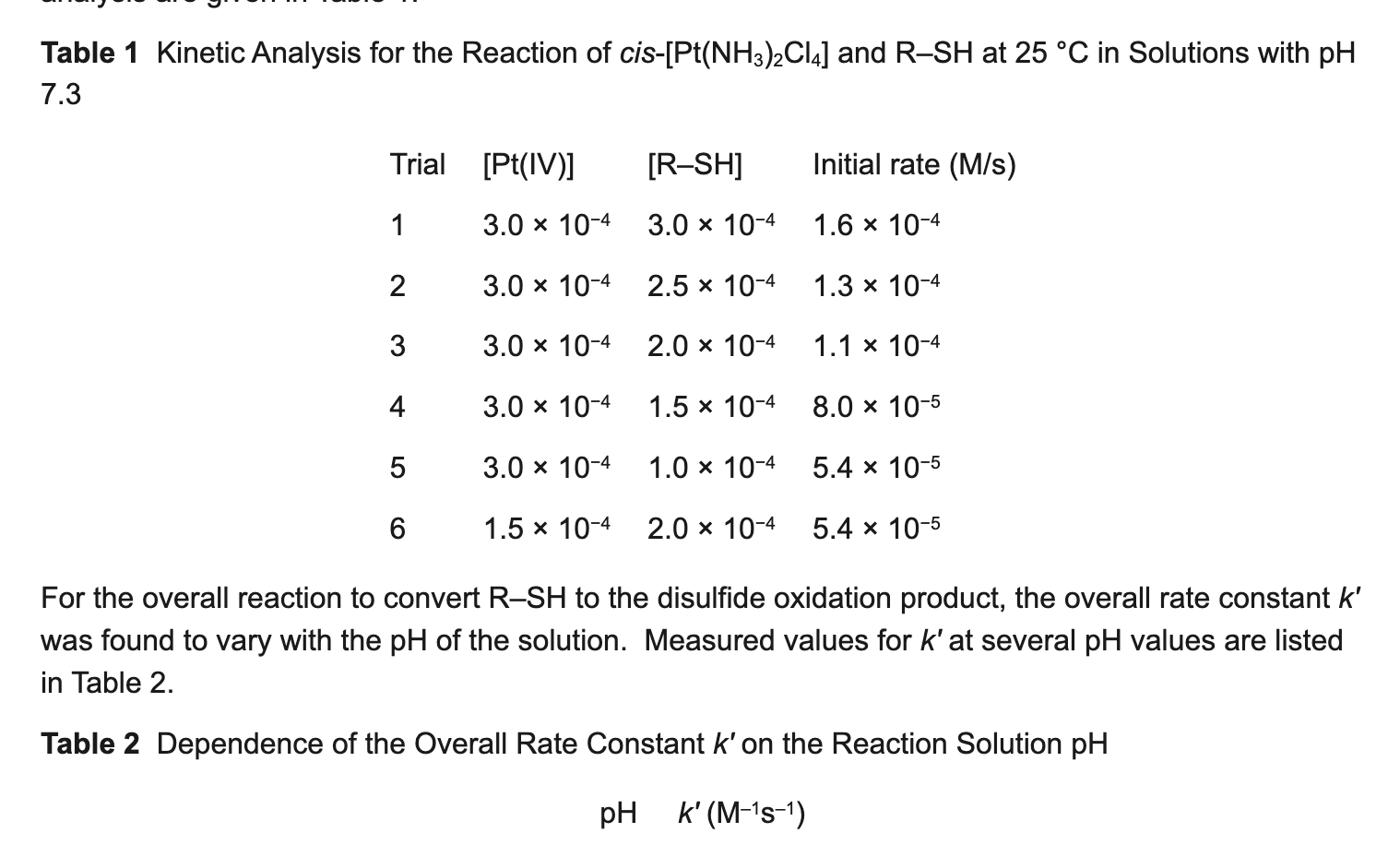
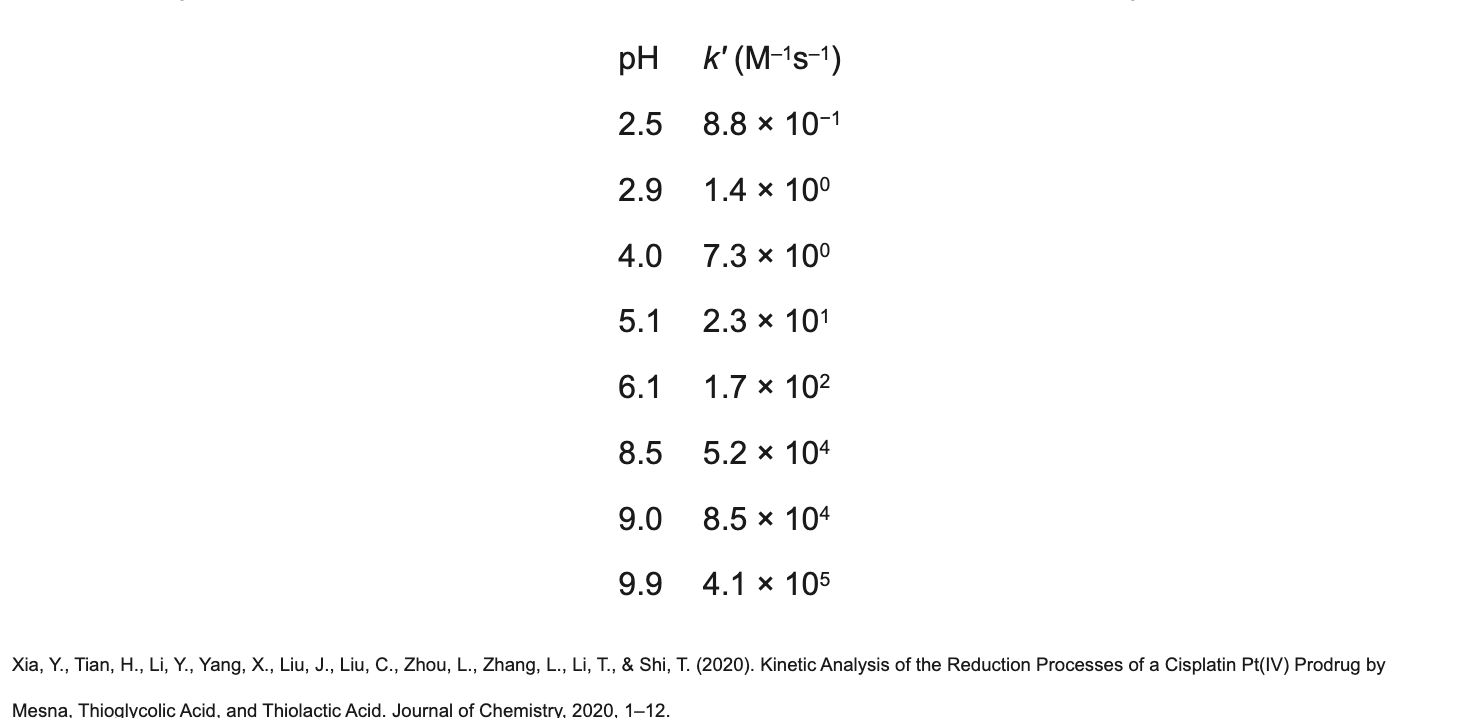
Passage C

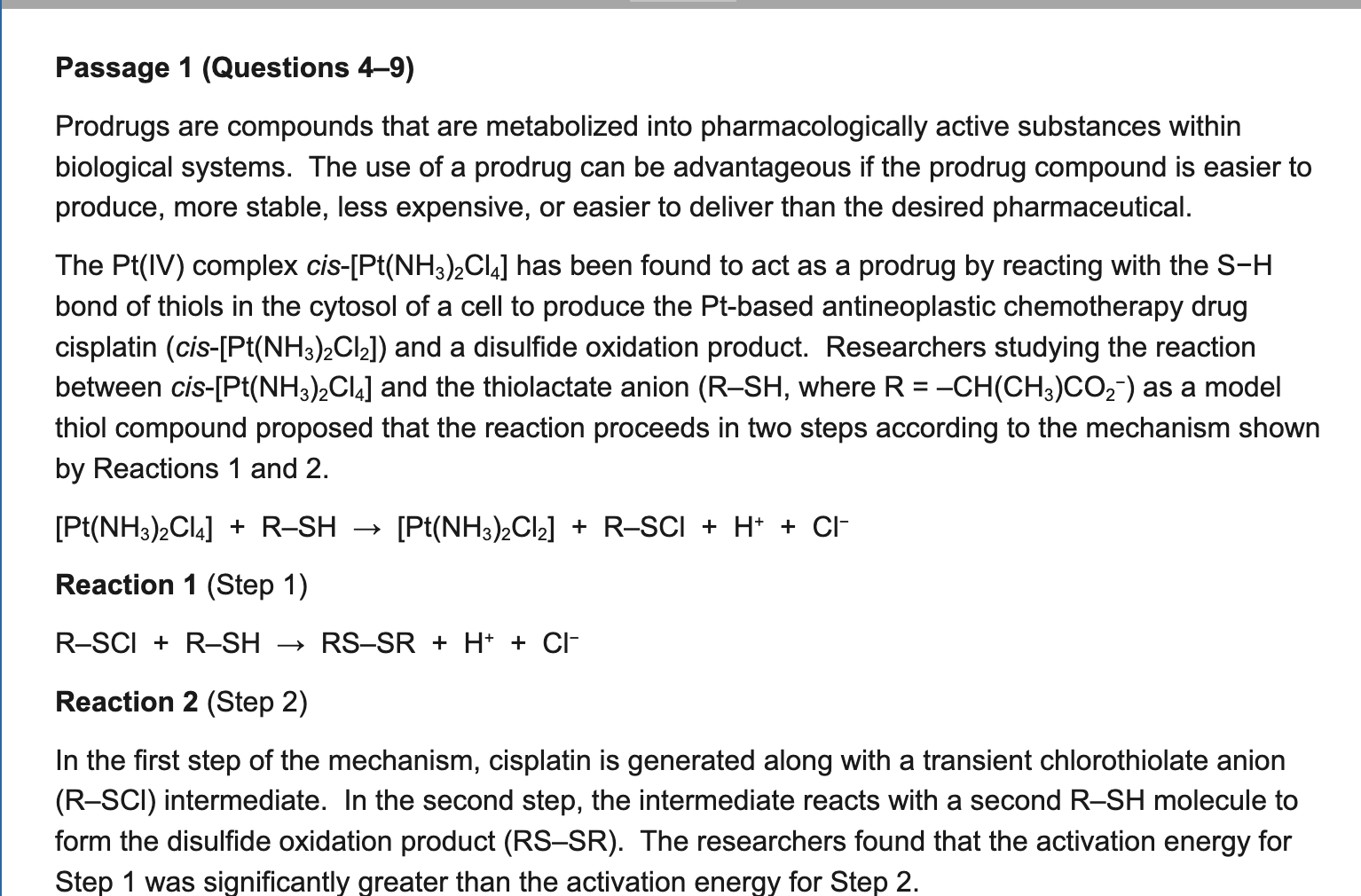
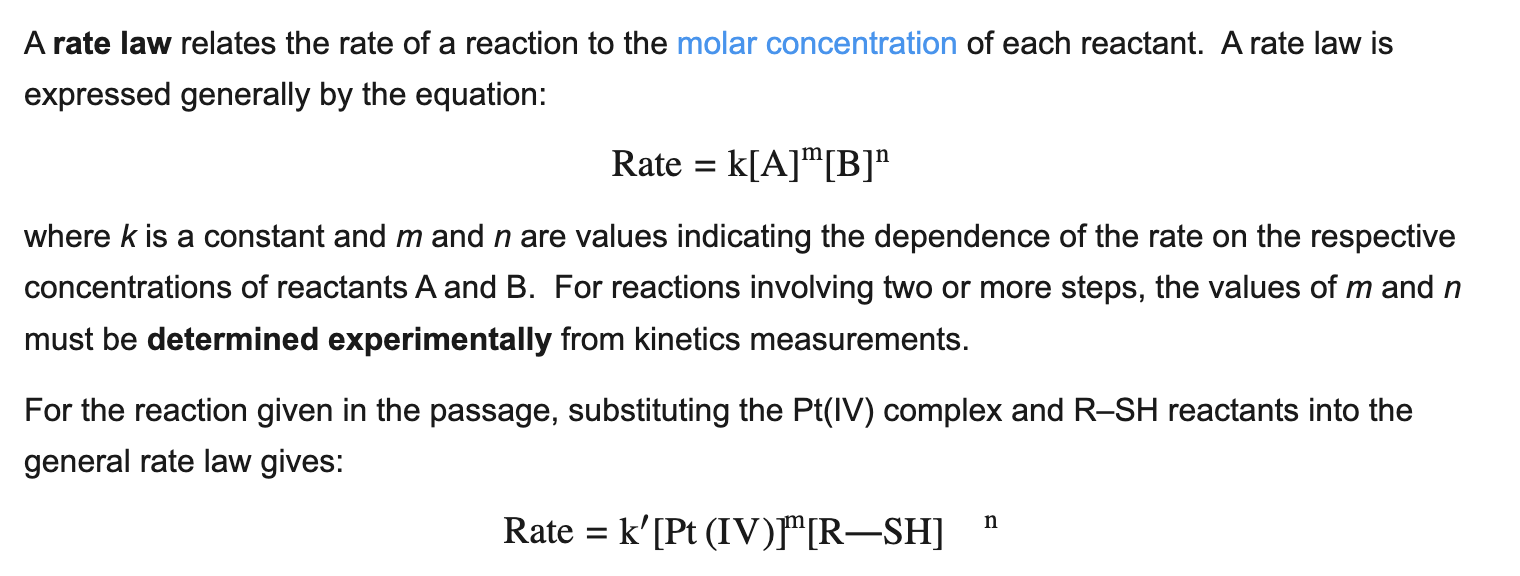
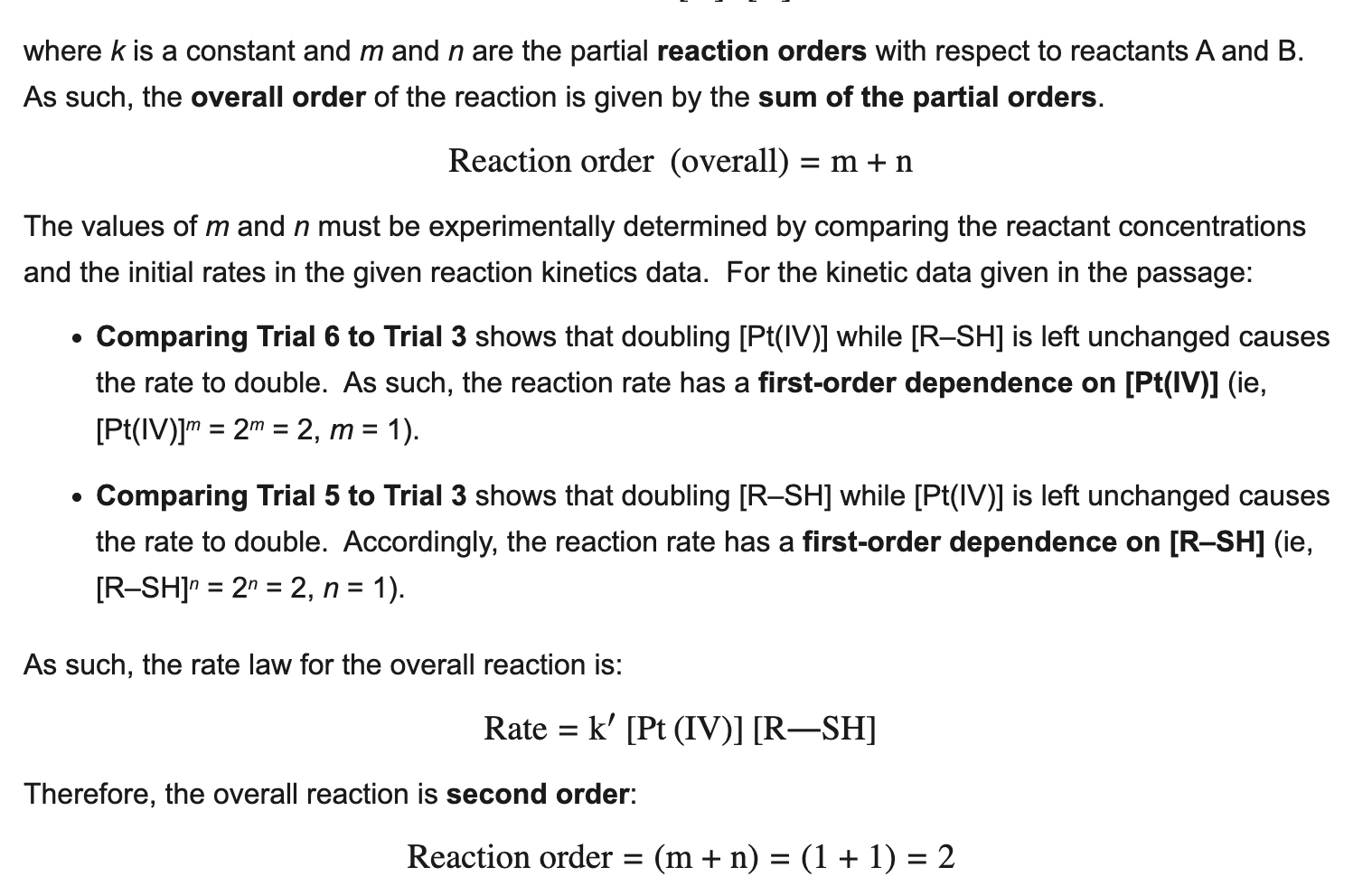
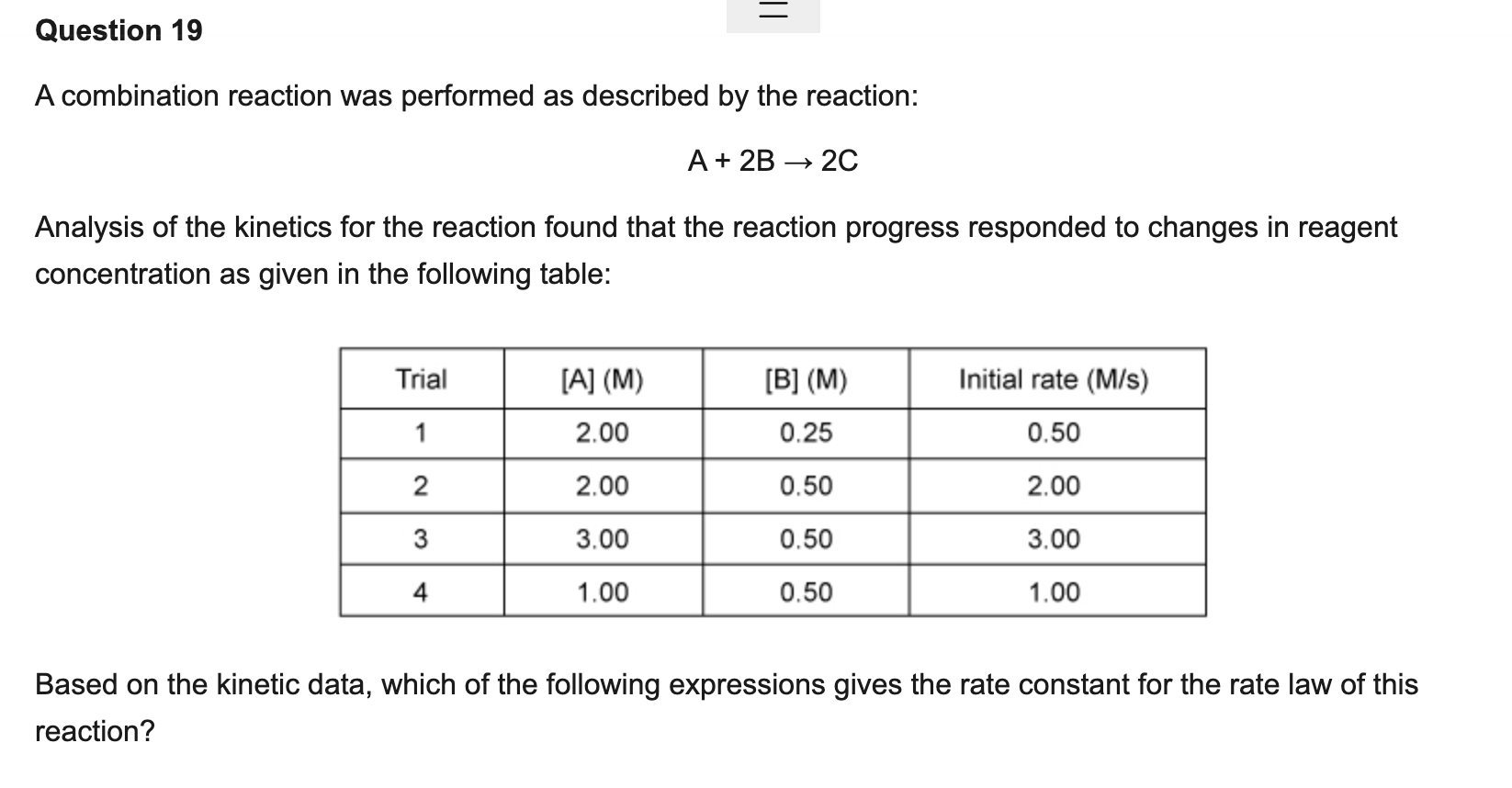
(just solve) + what order of reaction?
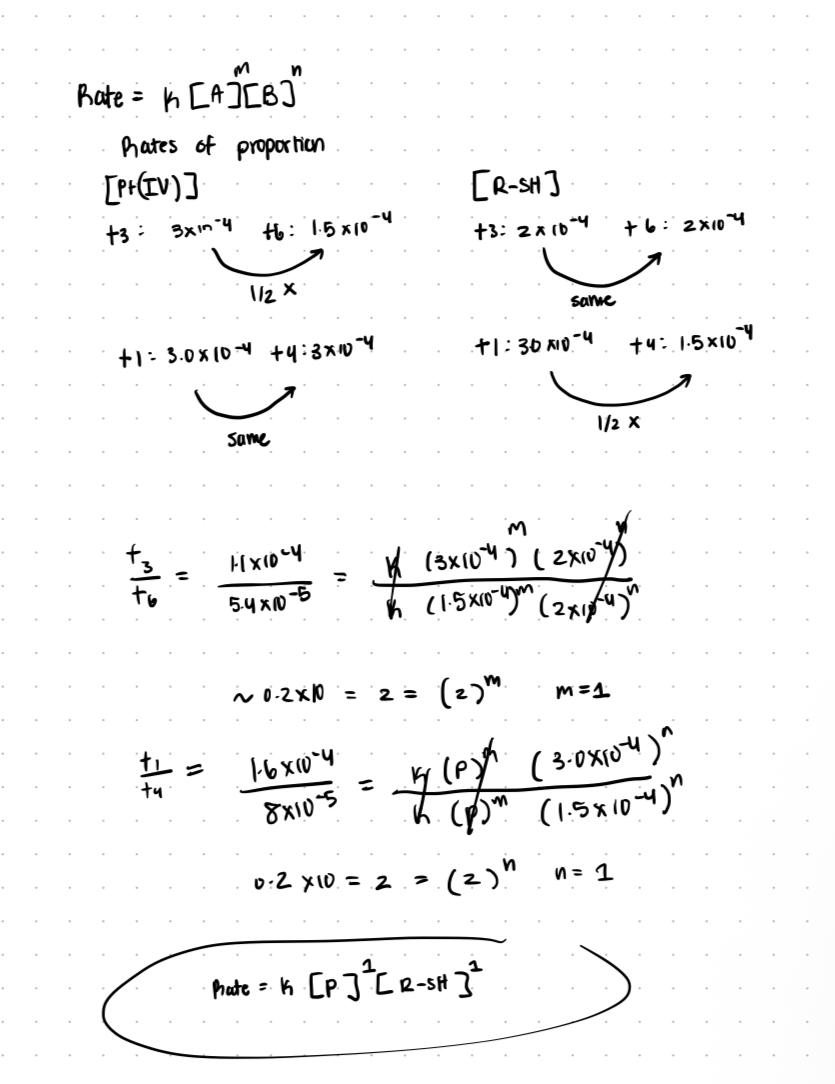

Passage C
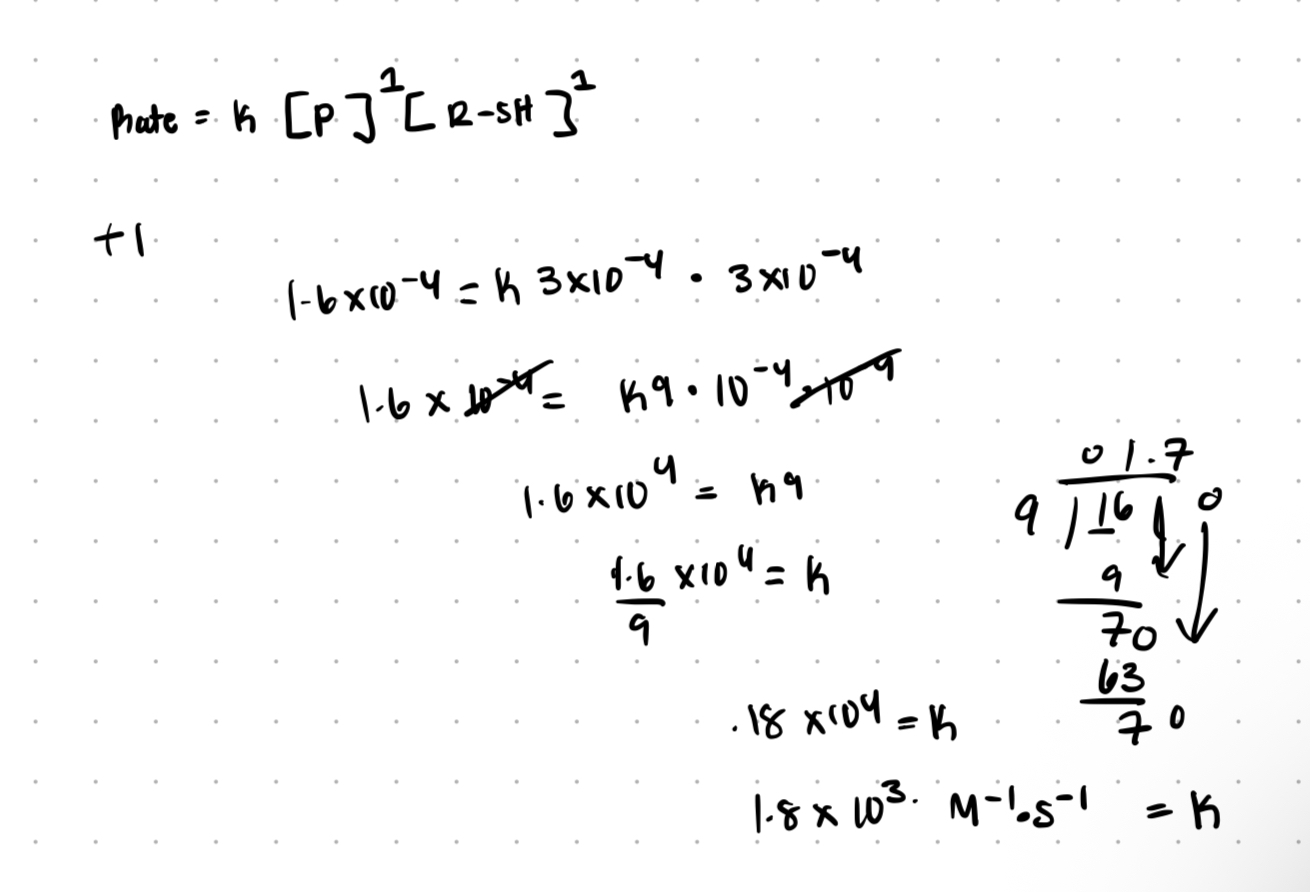
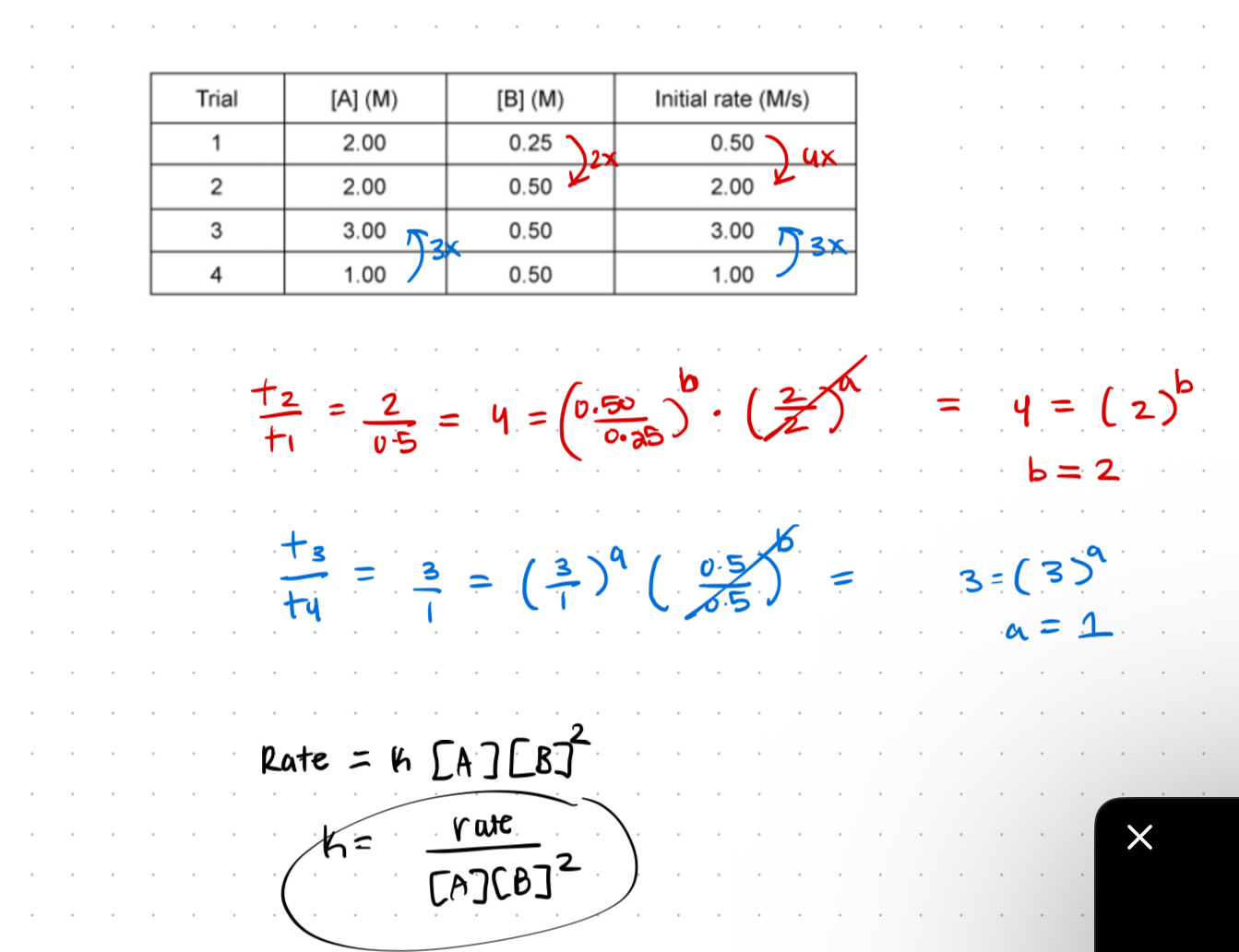
solve for the rate question first to get (rate = k [P][RSH] (2nd order)

Passage C
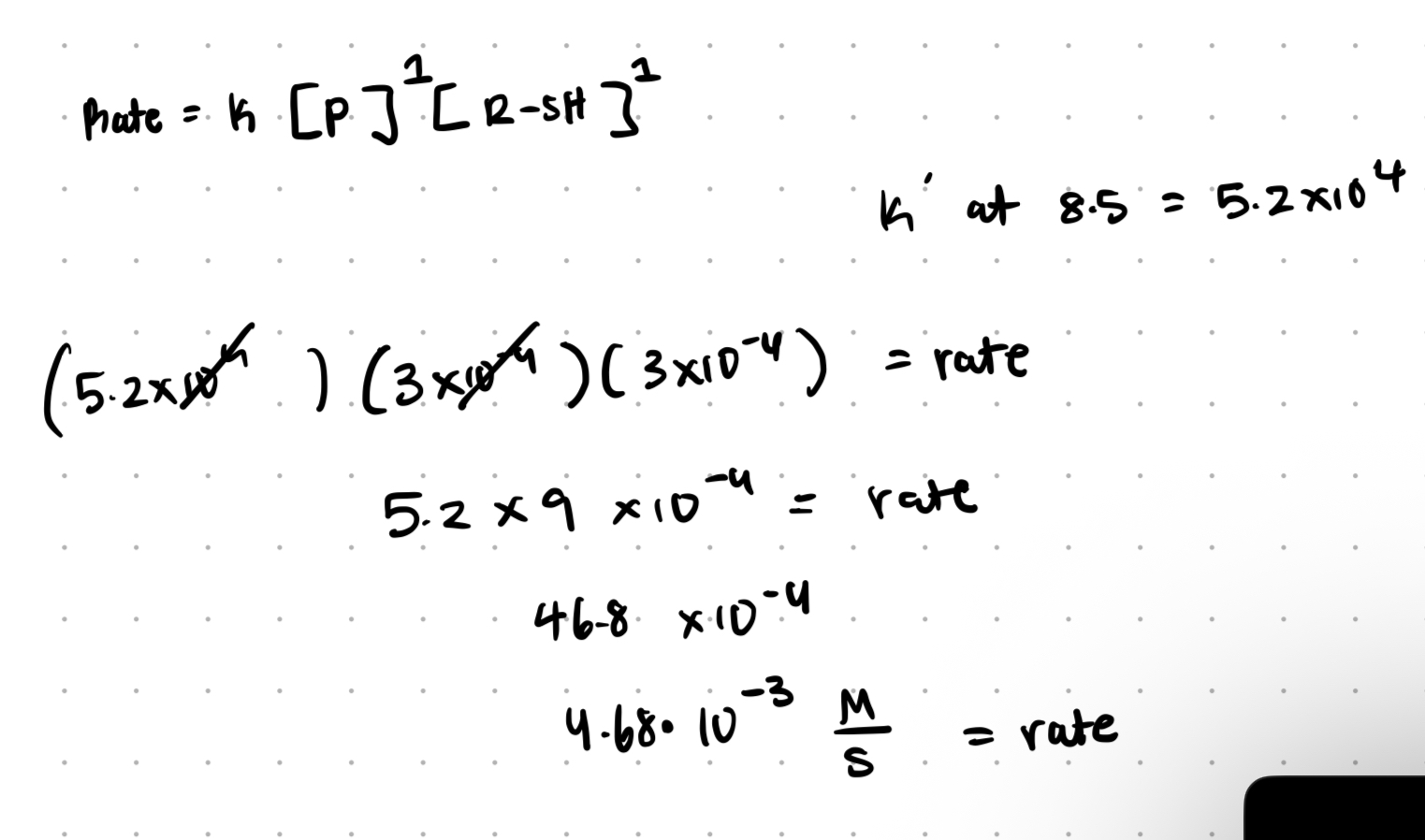
solve for the rate question first to get (rate = k [P][RSH] (2nd order)
Passage C
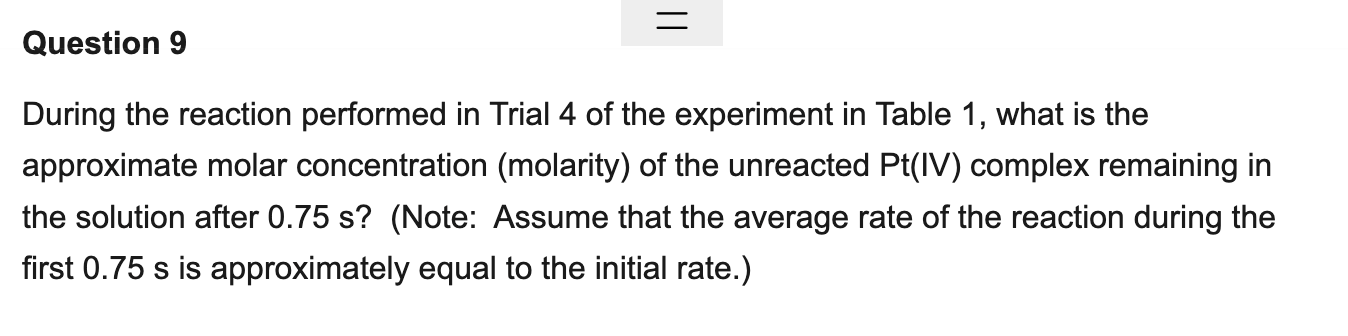
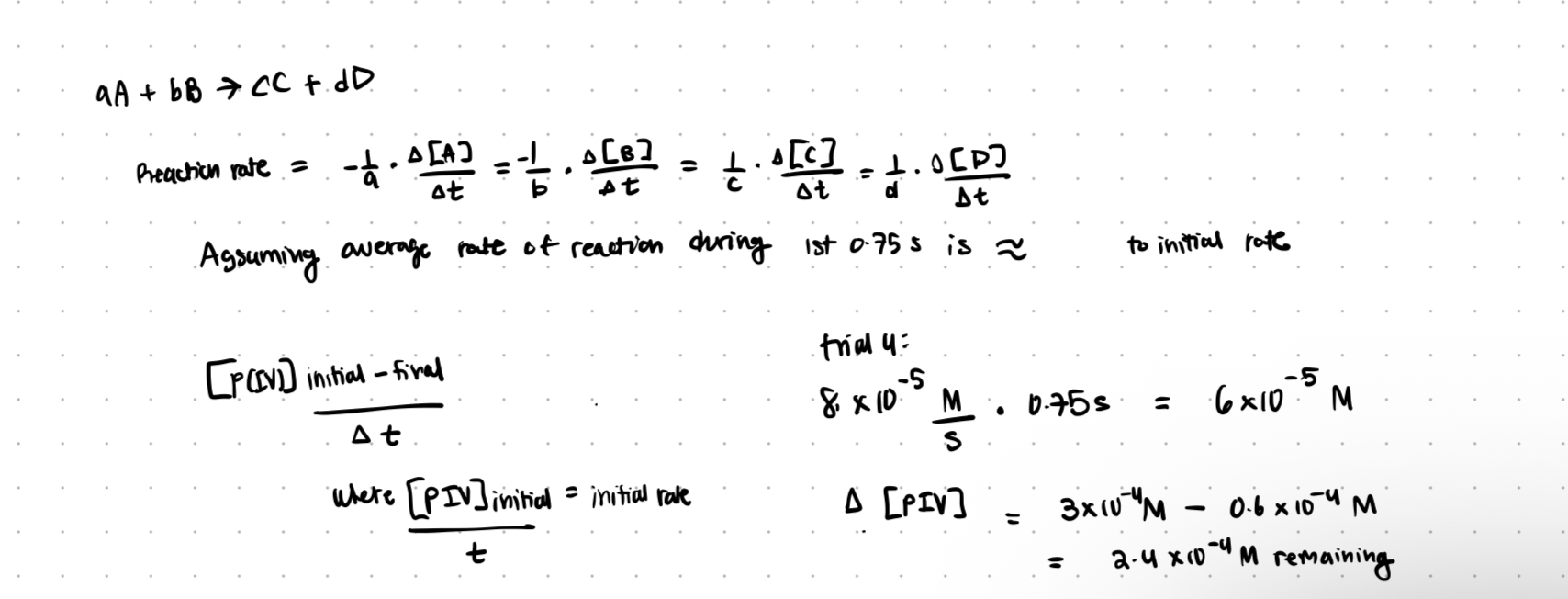
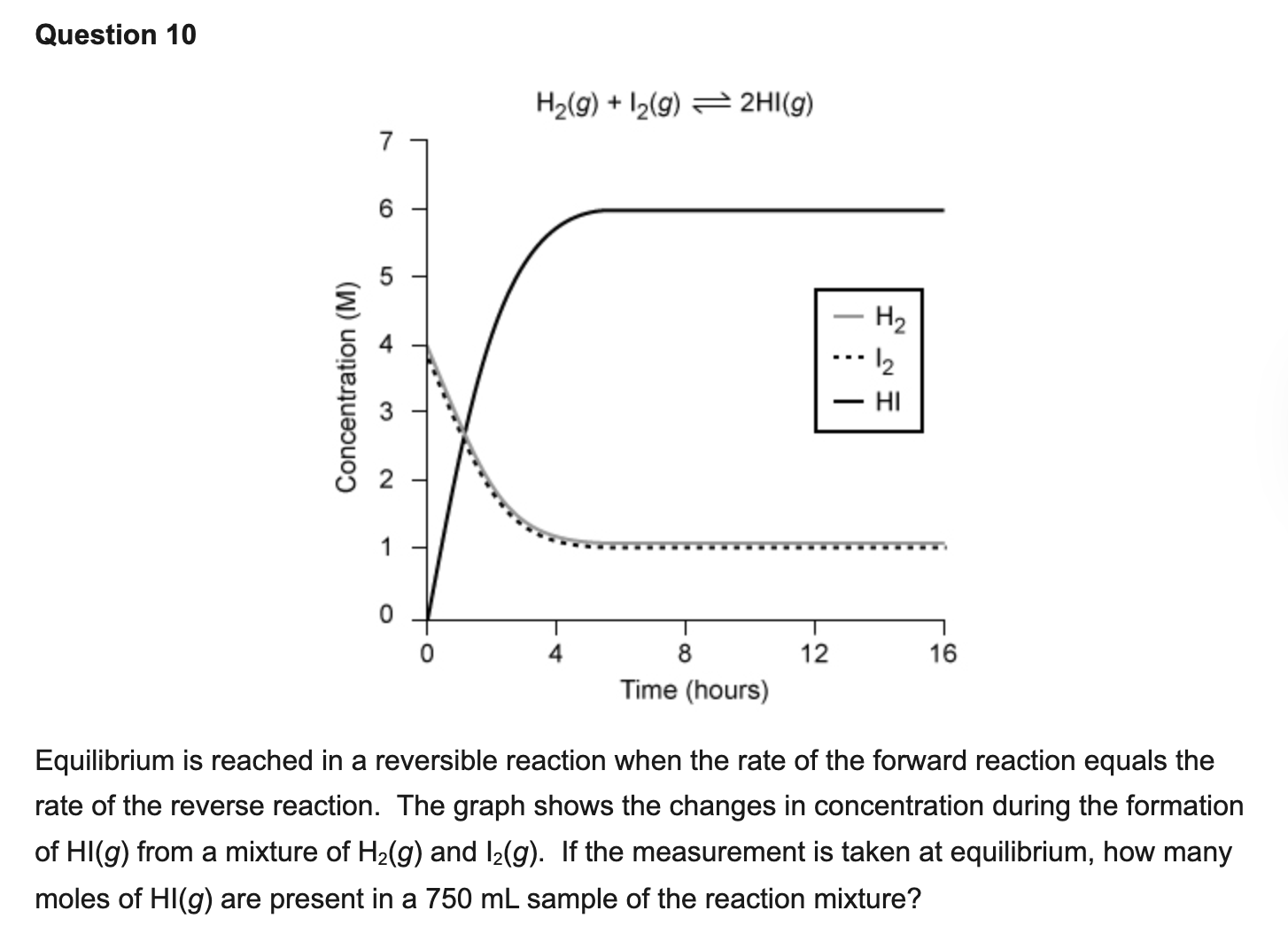
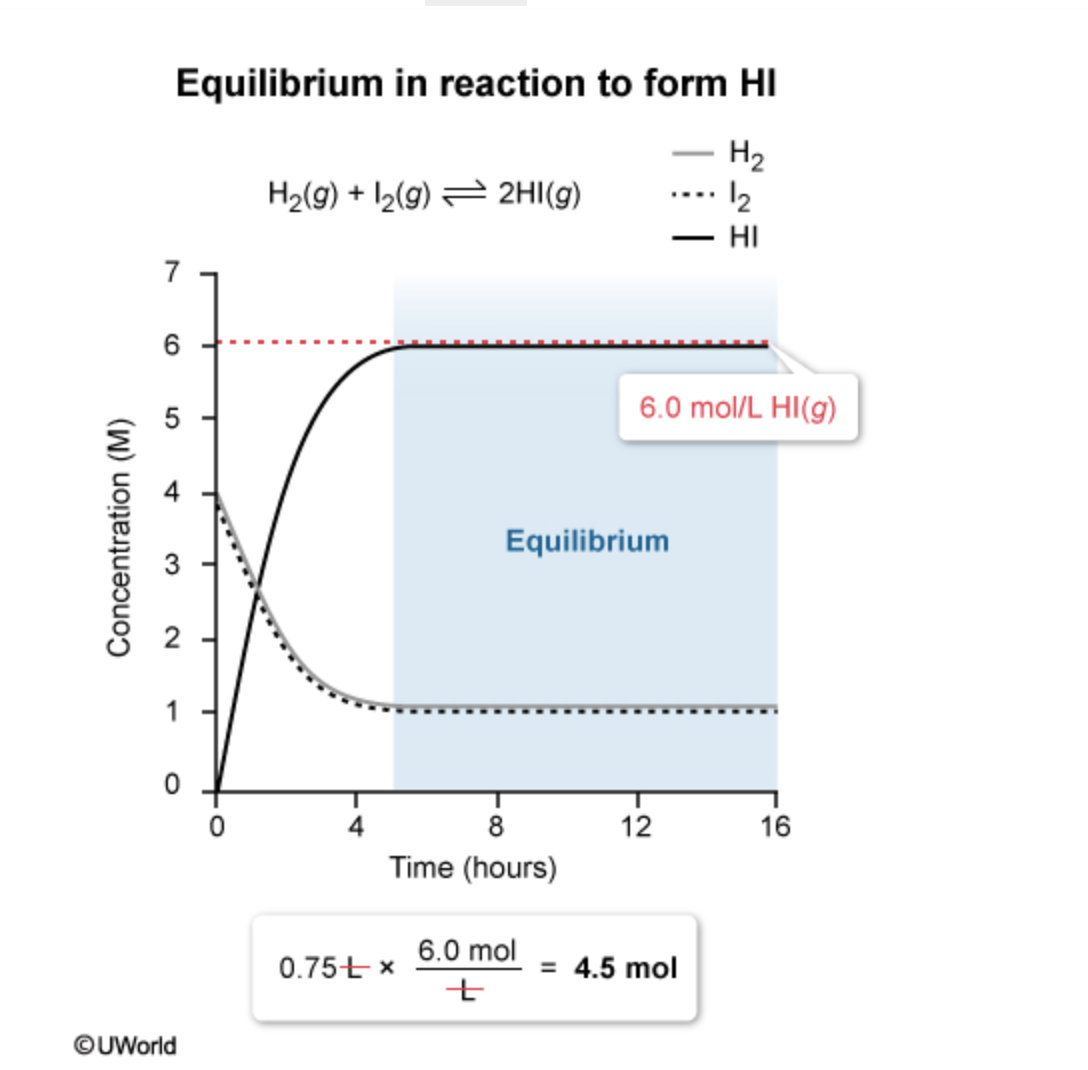

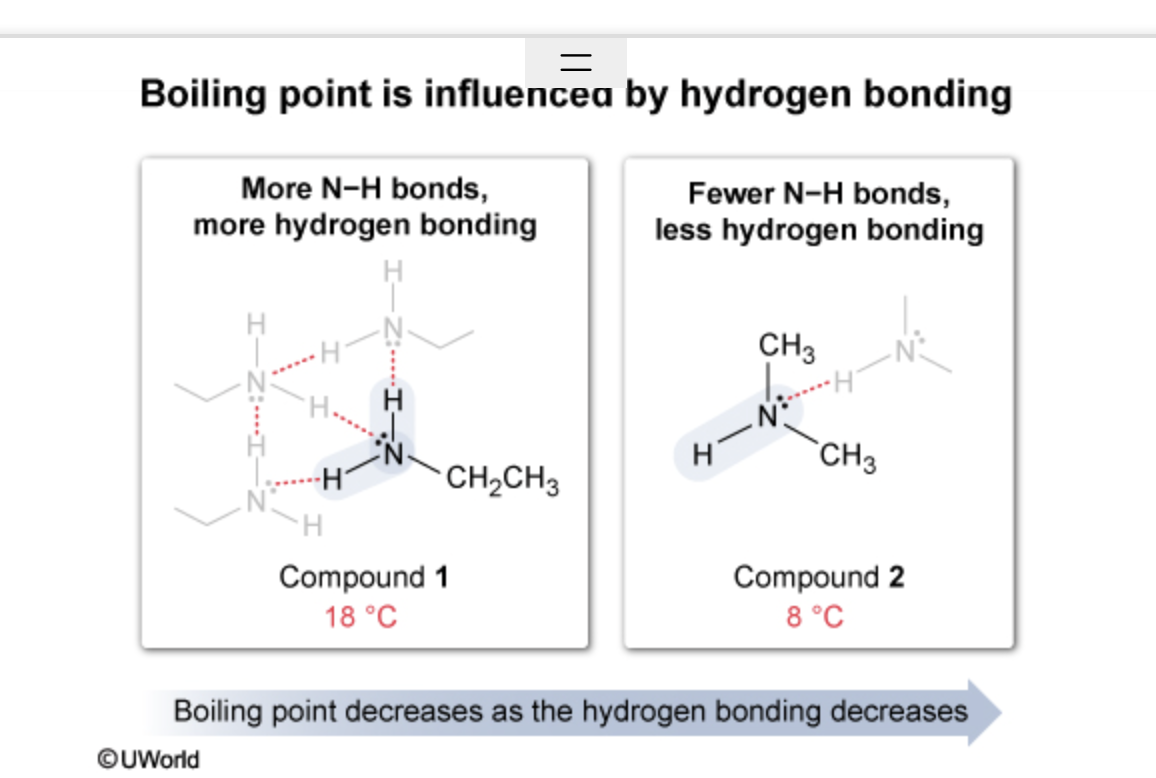
passage D
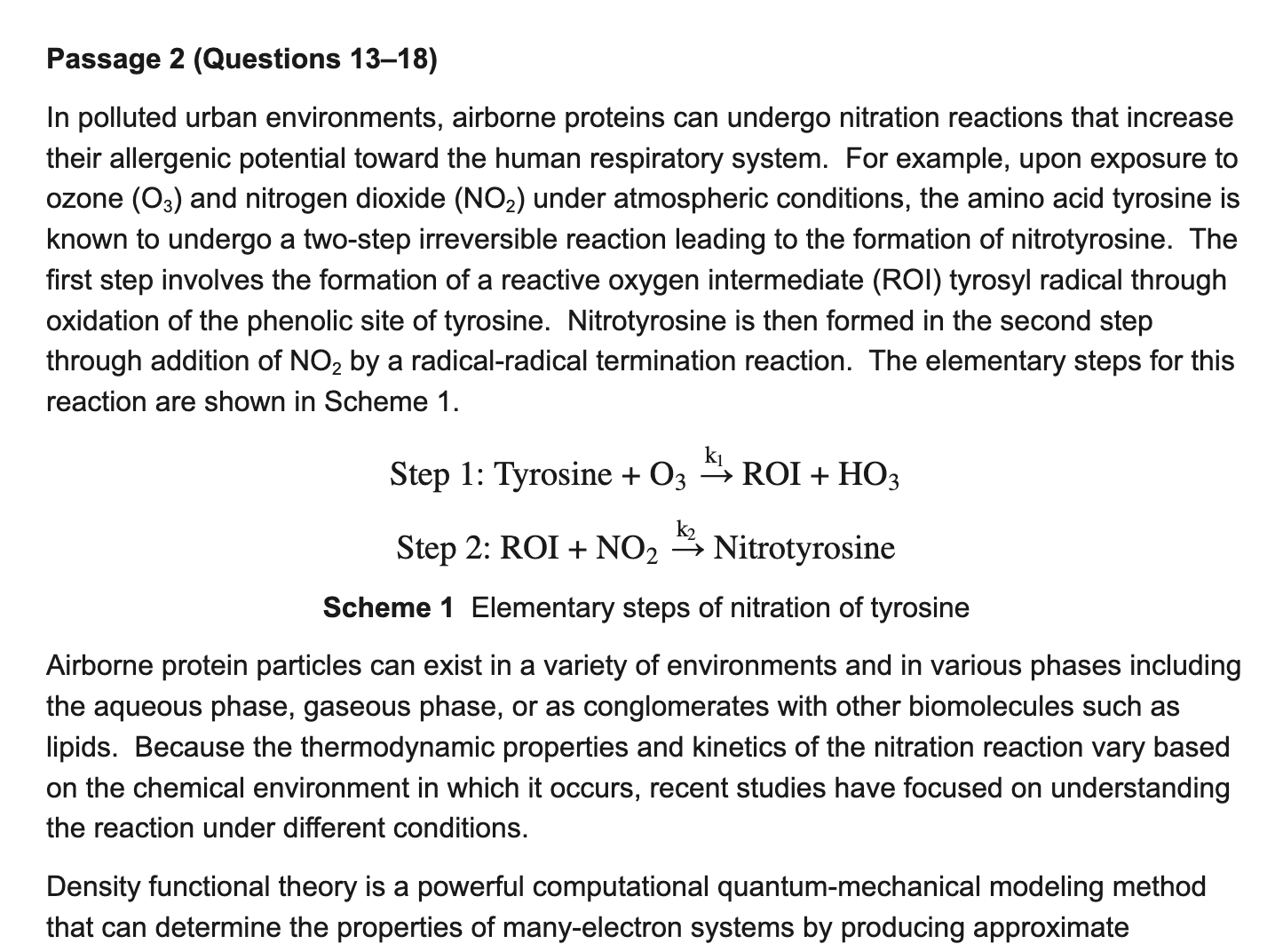
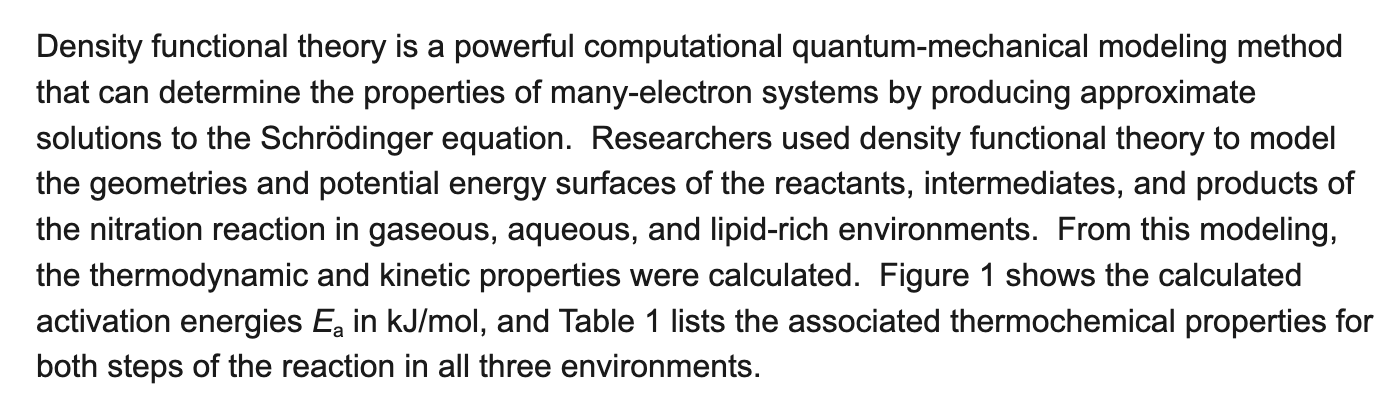
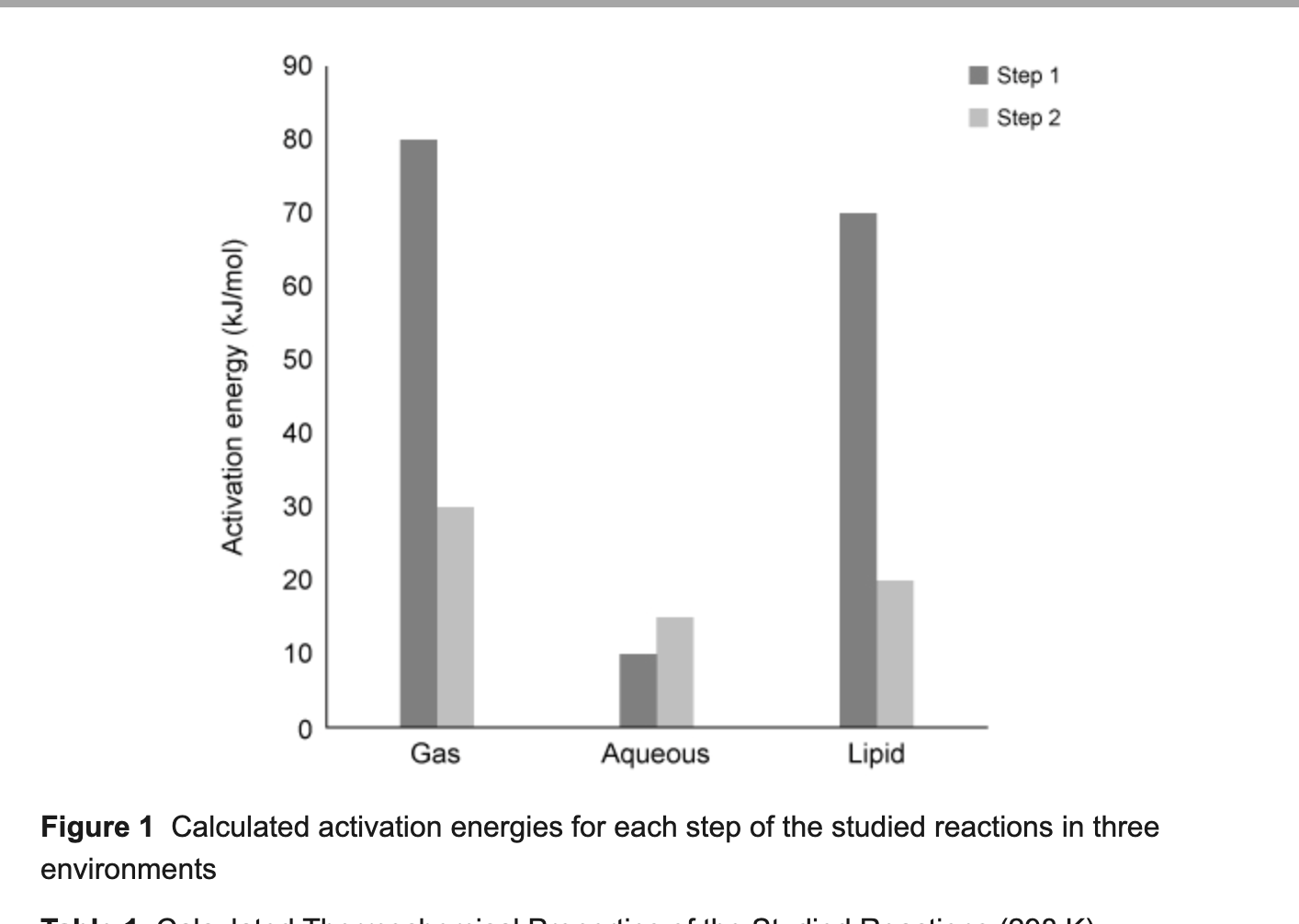
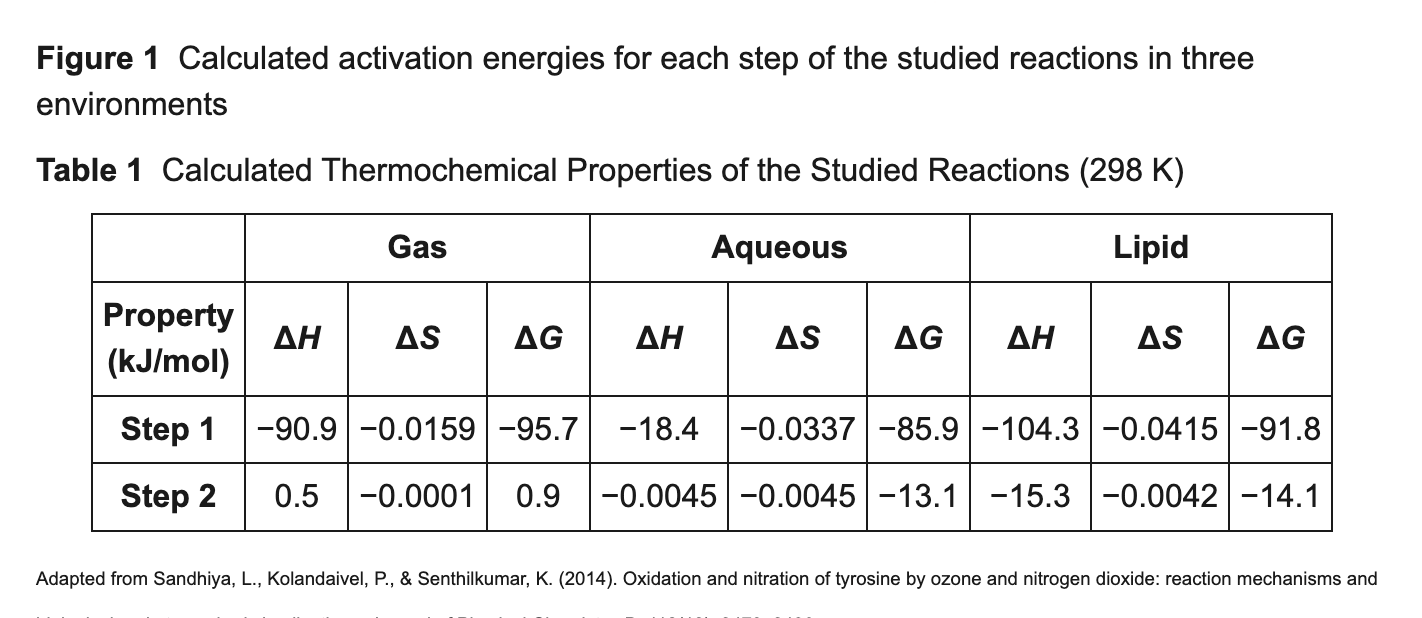

Passage D
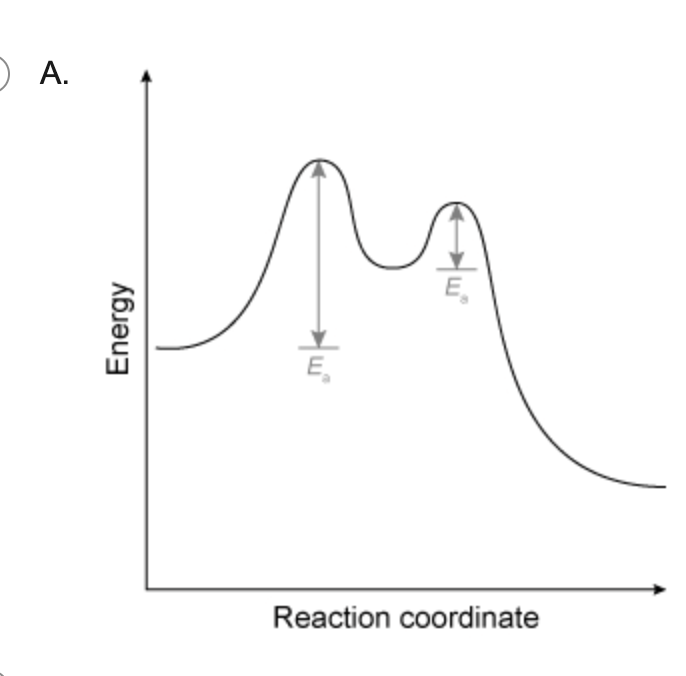
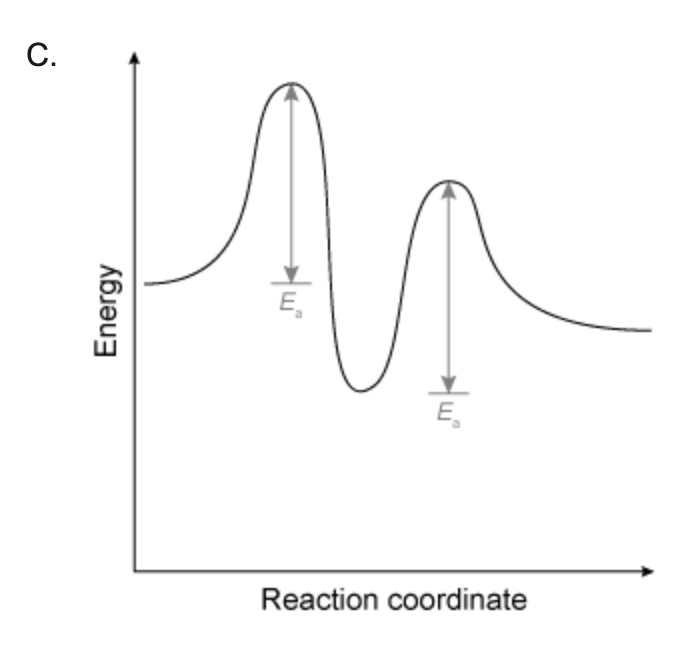
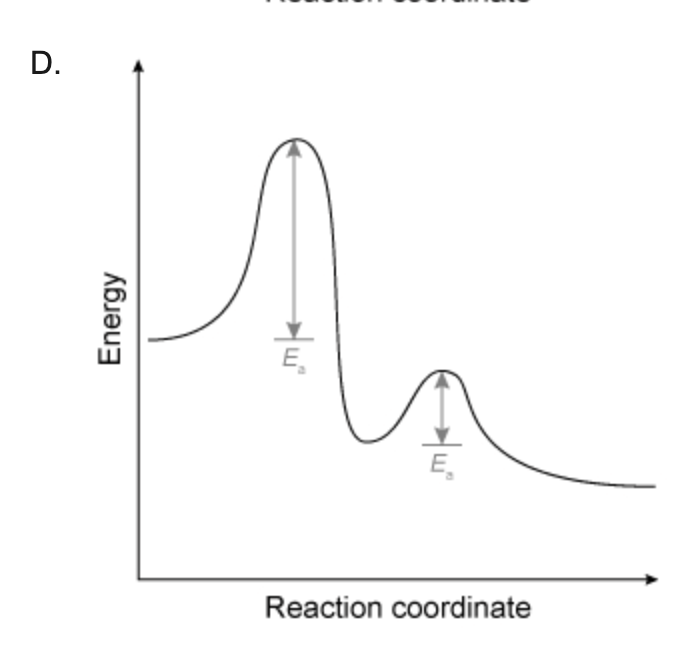
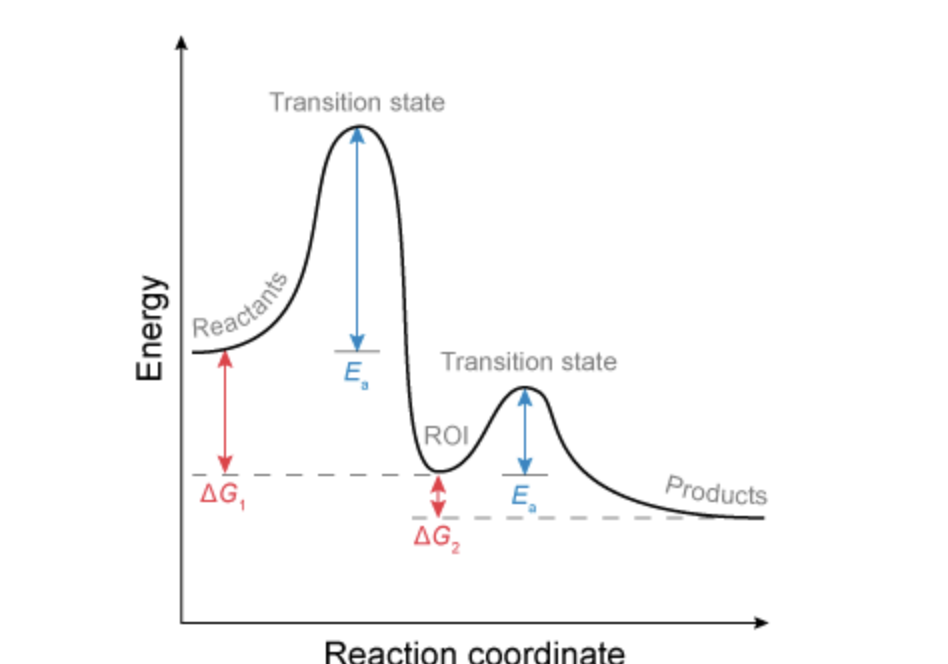
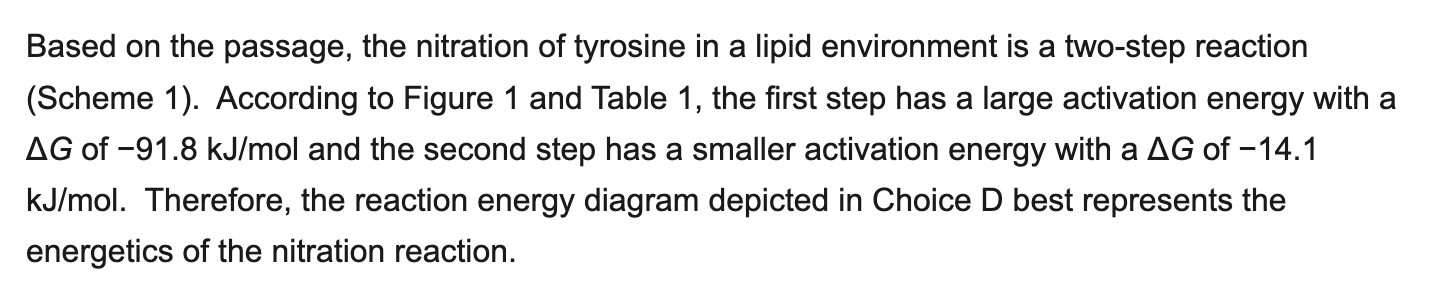
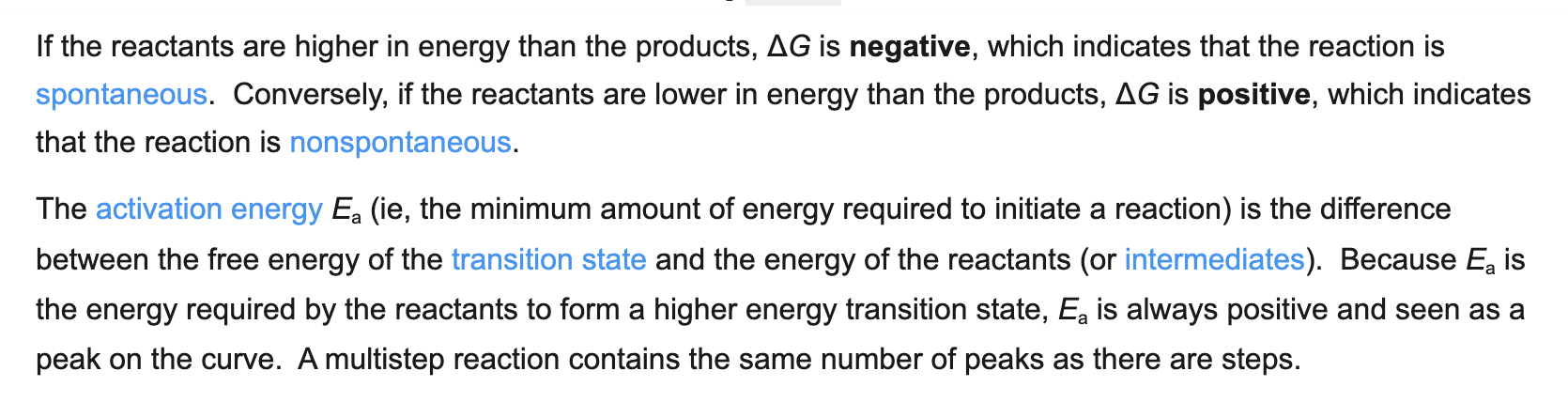
Passage D

in lipid, aqueous, or gaseous environemnt?
Aqueous
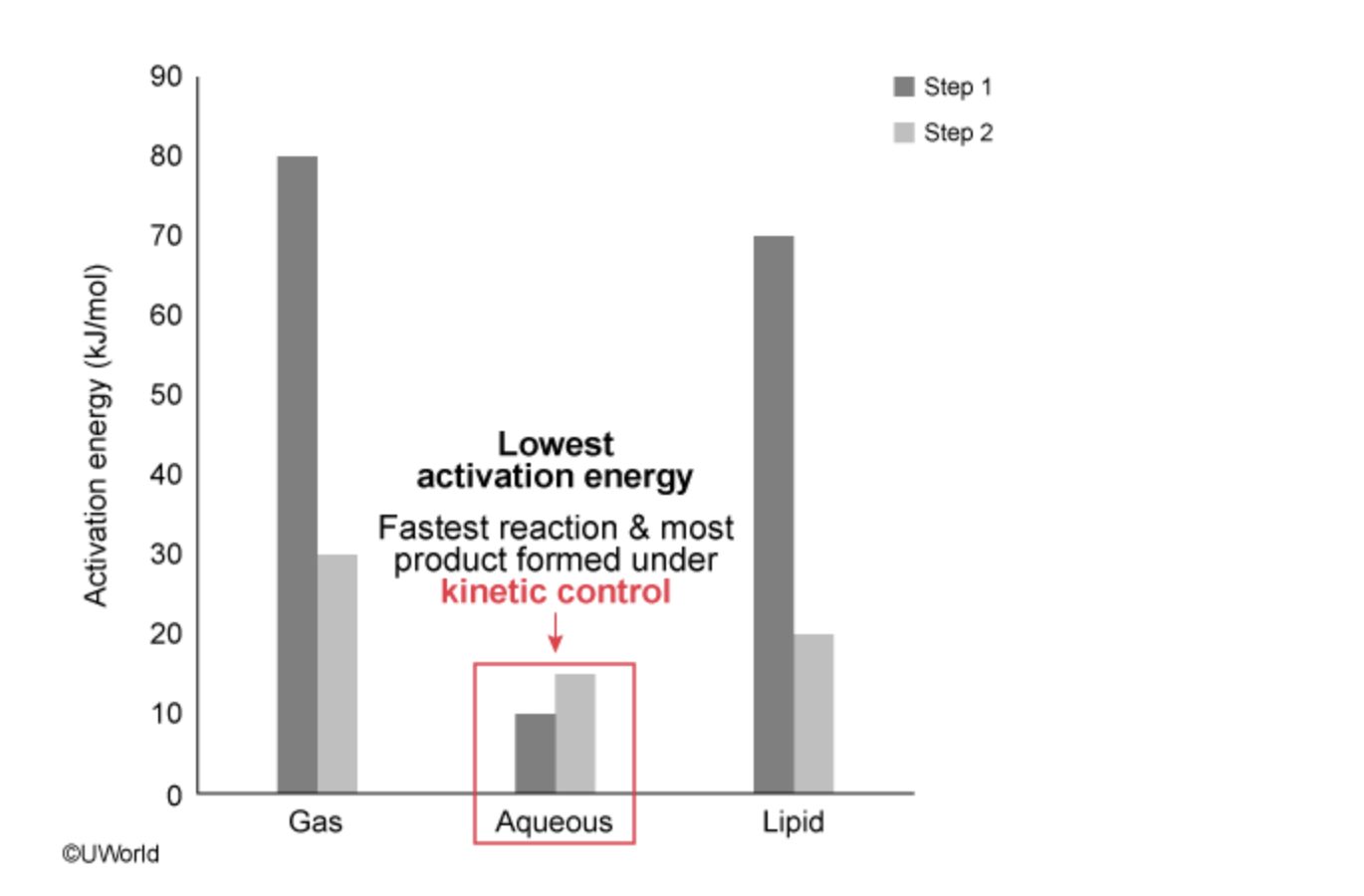

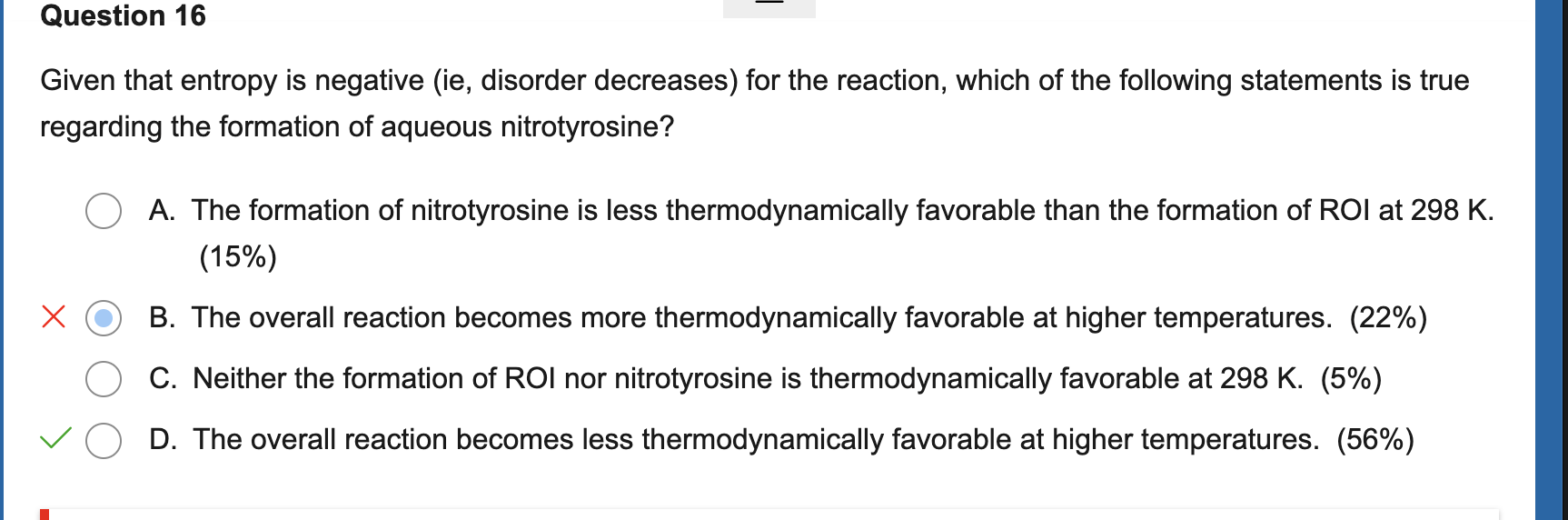
regarding formation, is it thermodynamically favorable under what temp?
Passage D
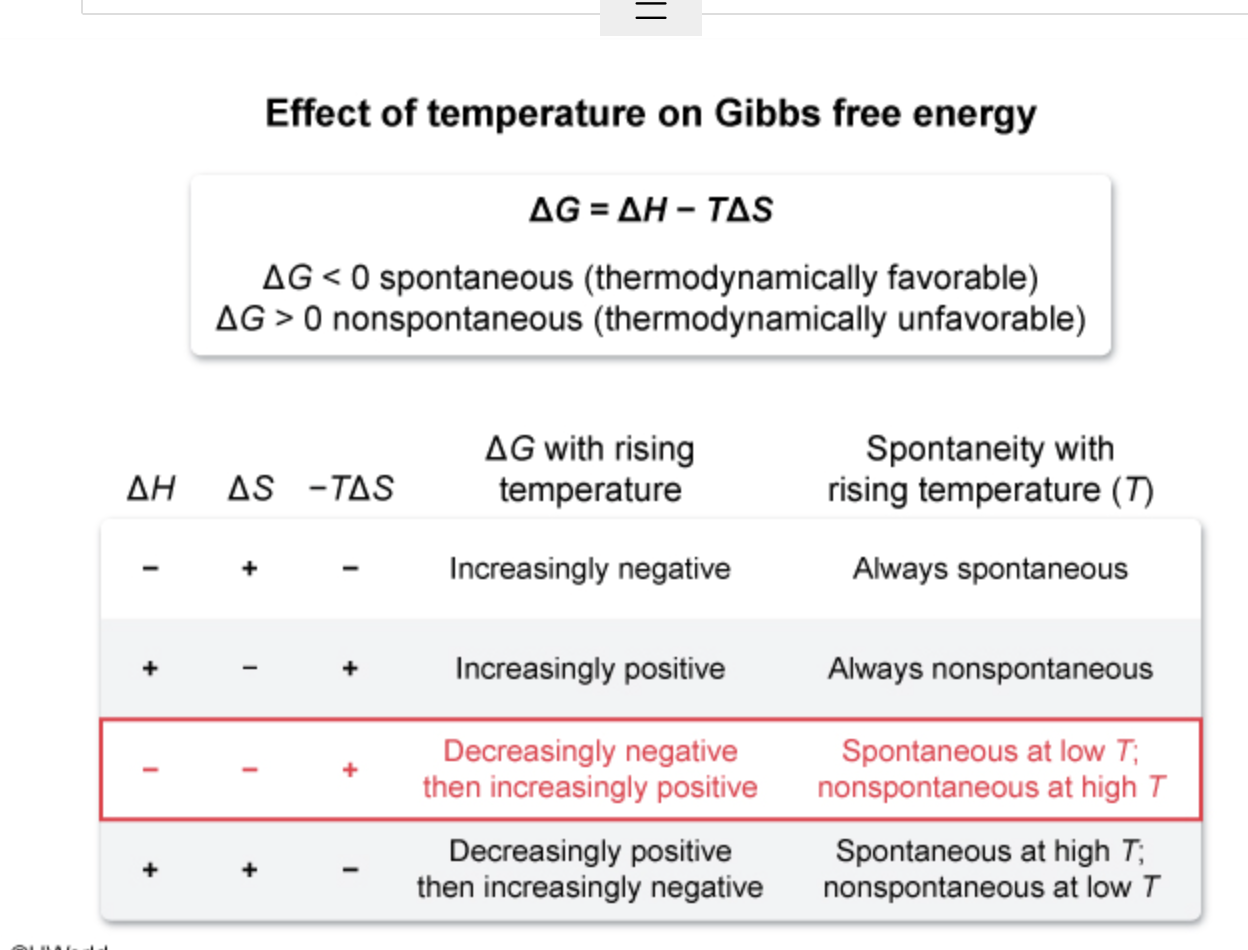
becomes more favorable at lower temps
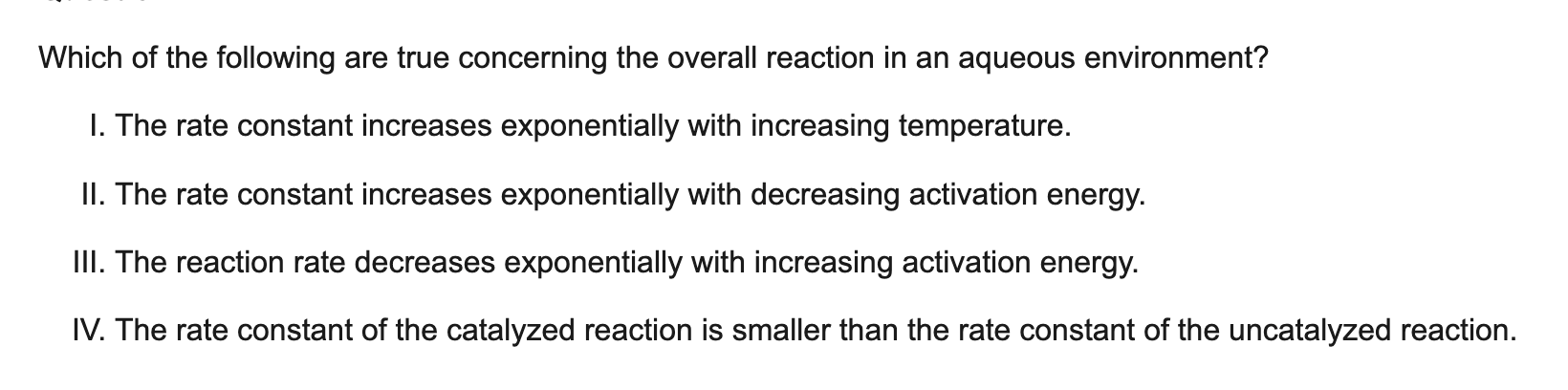
Passage D
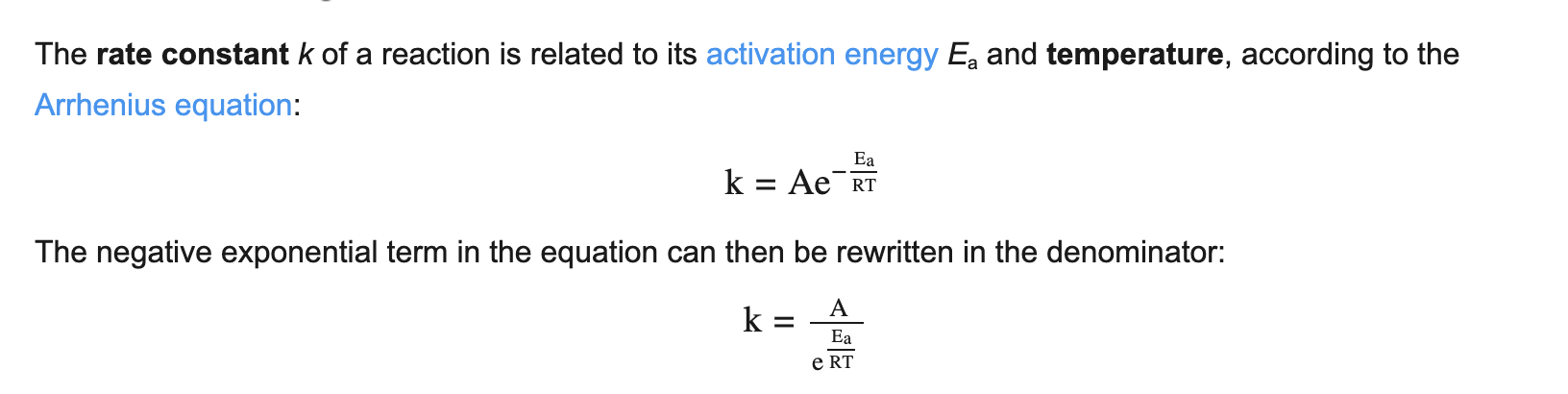
so its 1,2 and 3

regarding Keq…. what happens to it?
it will decrease
the reaction is exothermic based on the figures (change in H is negative) so heat is a product, adding heat shifts the reaction to the left (reactants)

N2
because there are mroe moles of N2(g)
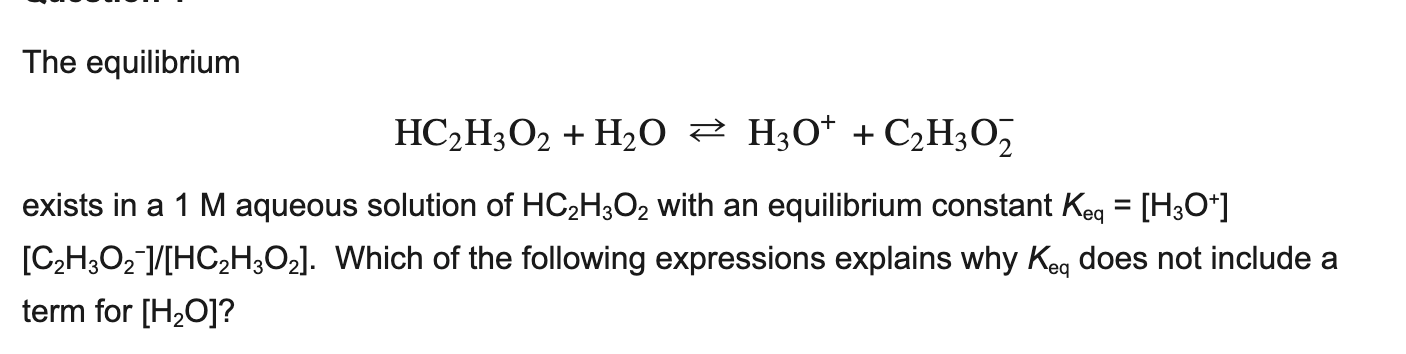
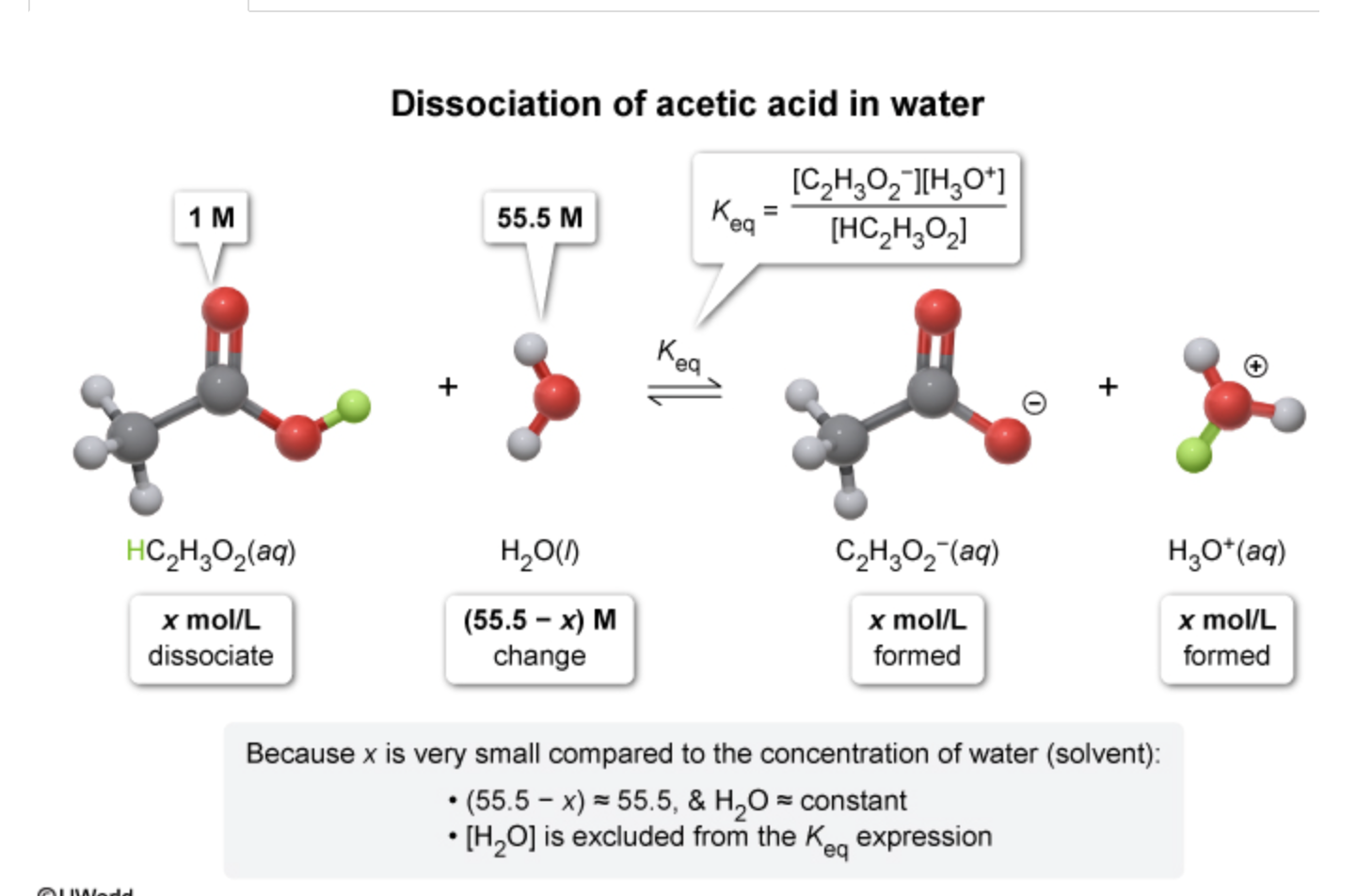
Water is a constant

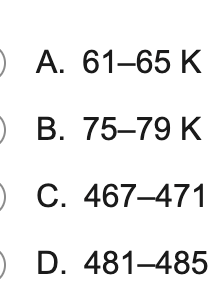
273+ (-196) = 77
so 75-79K
Passage E
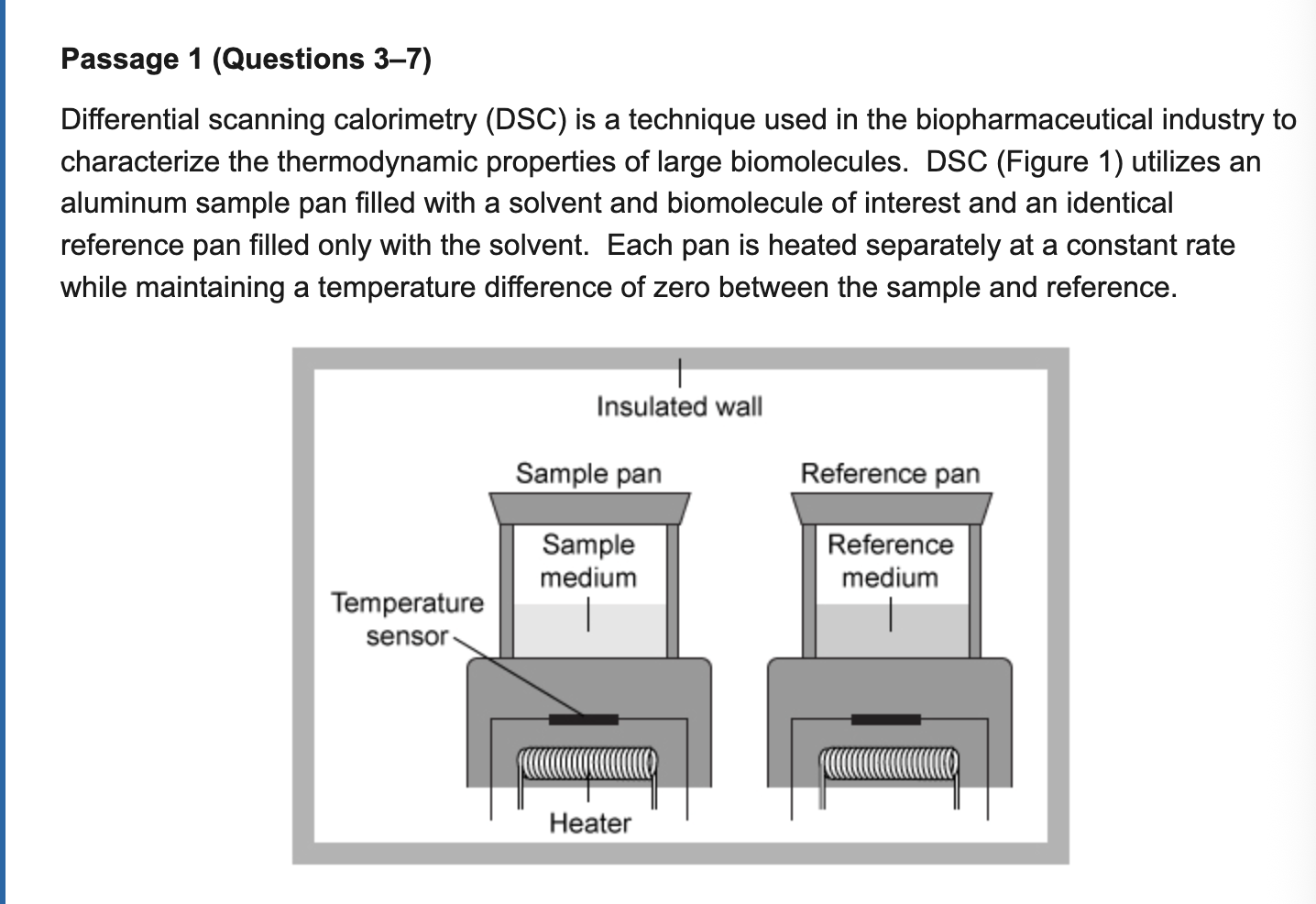
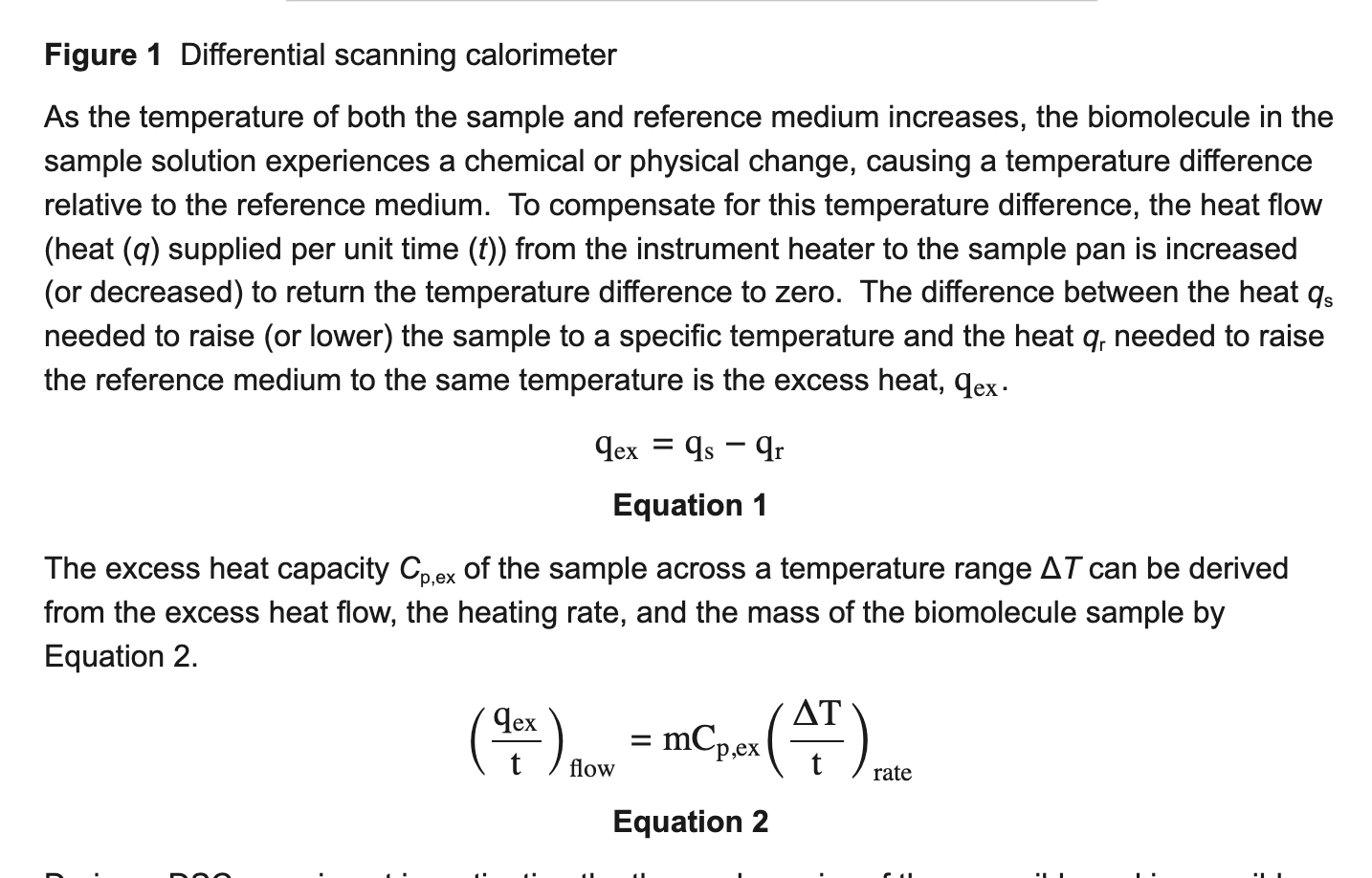
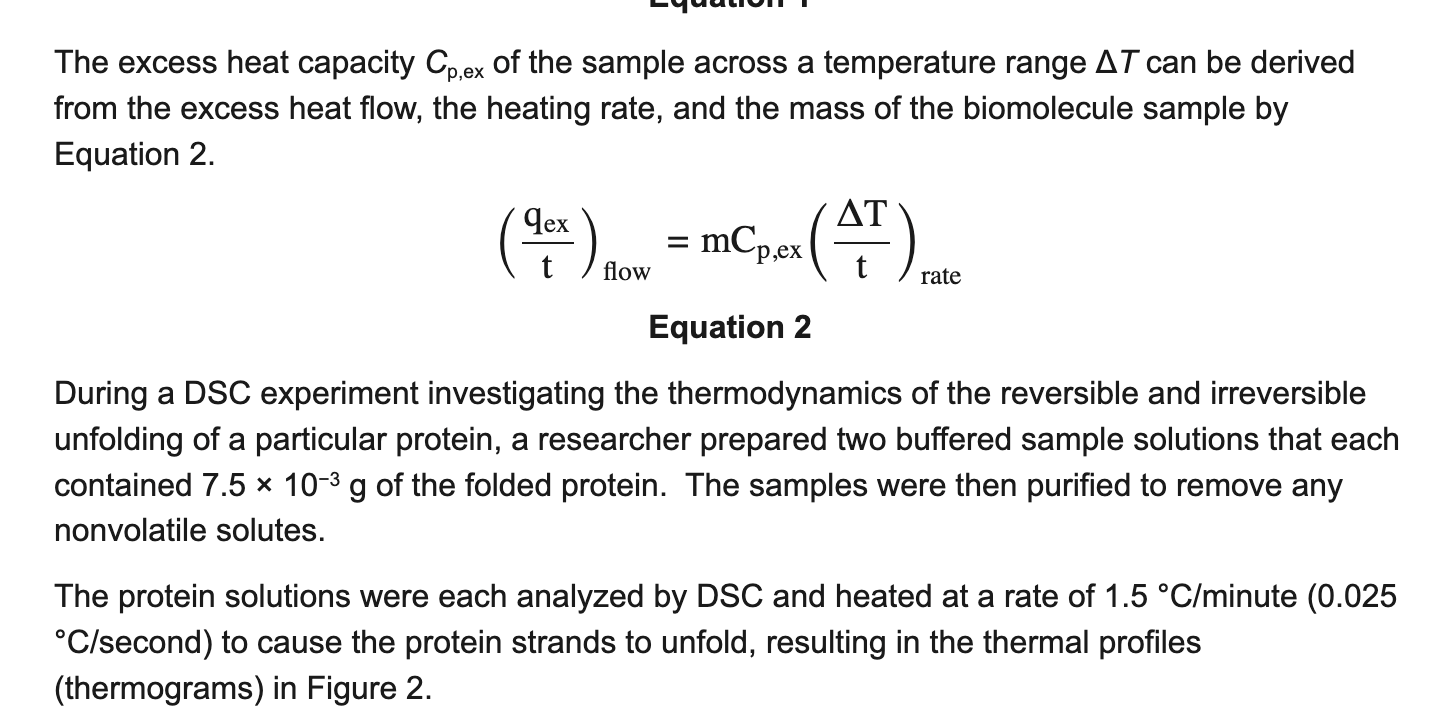
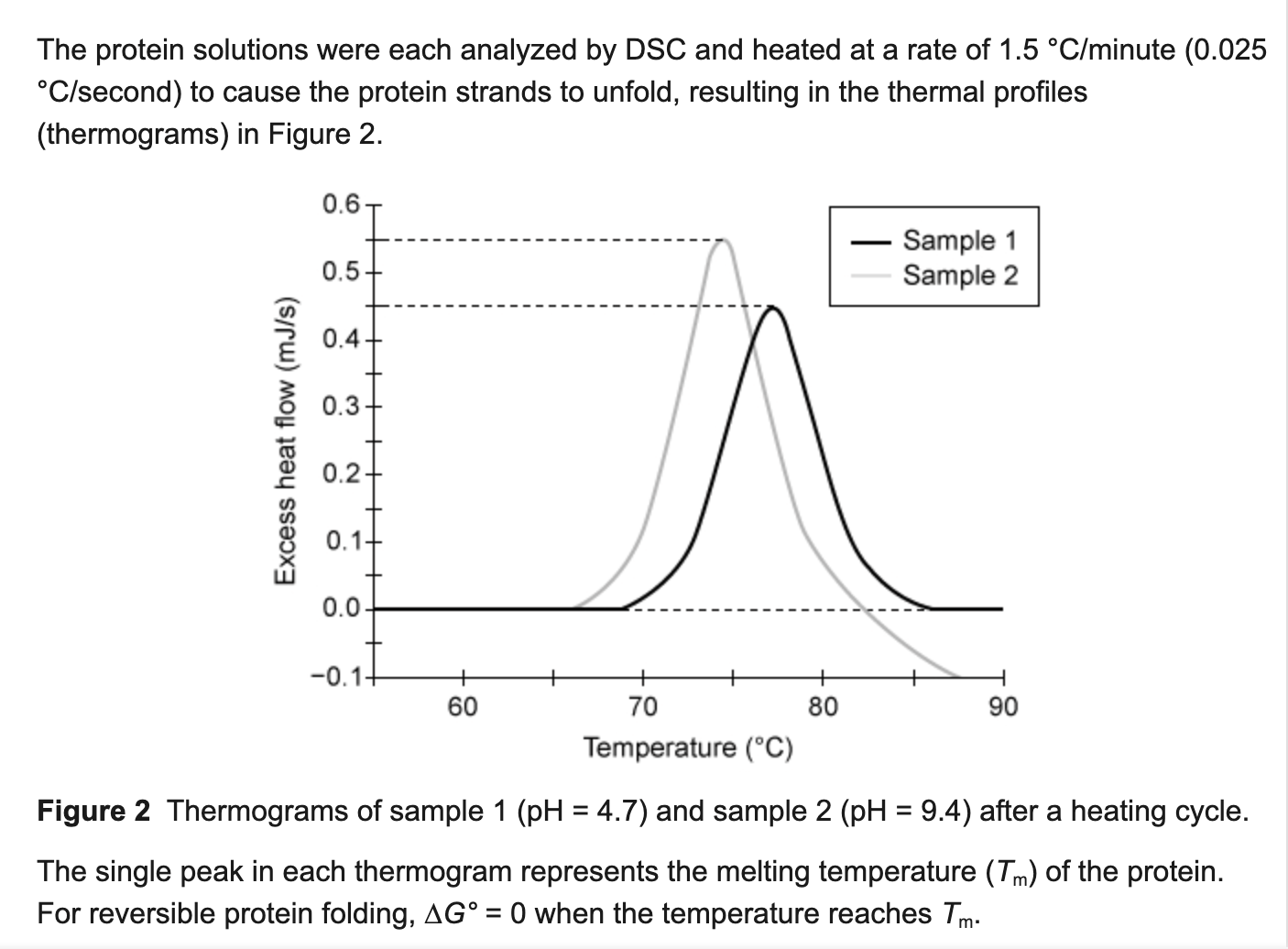
Passage E
1,3 only
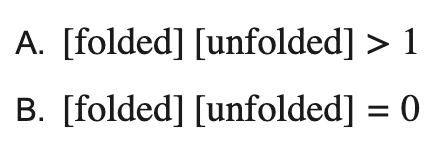
Passage E

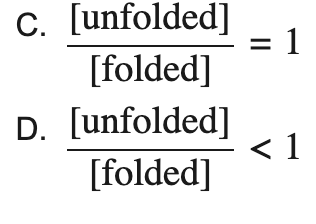
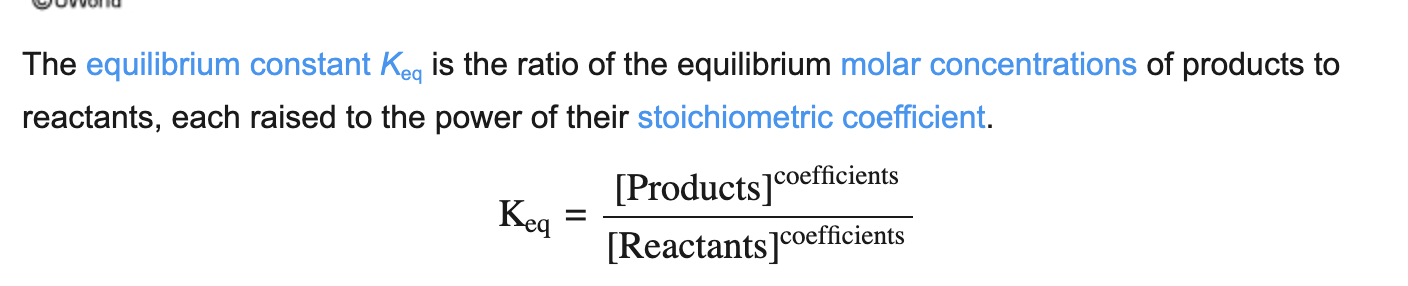
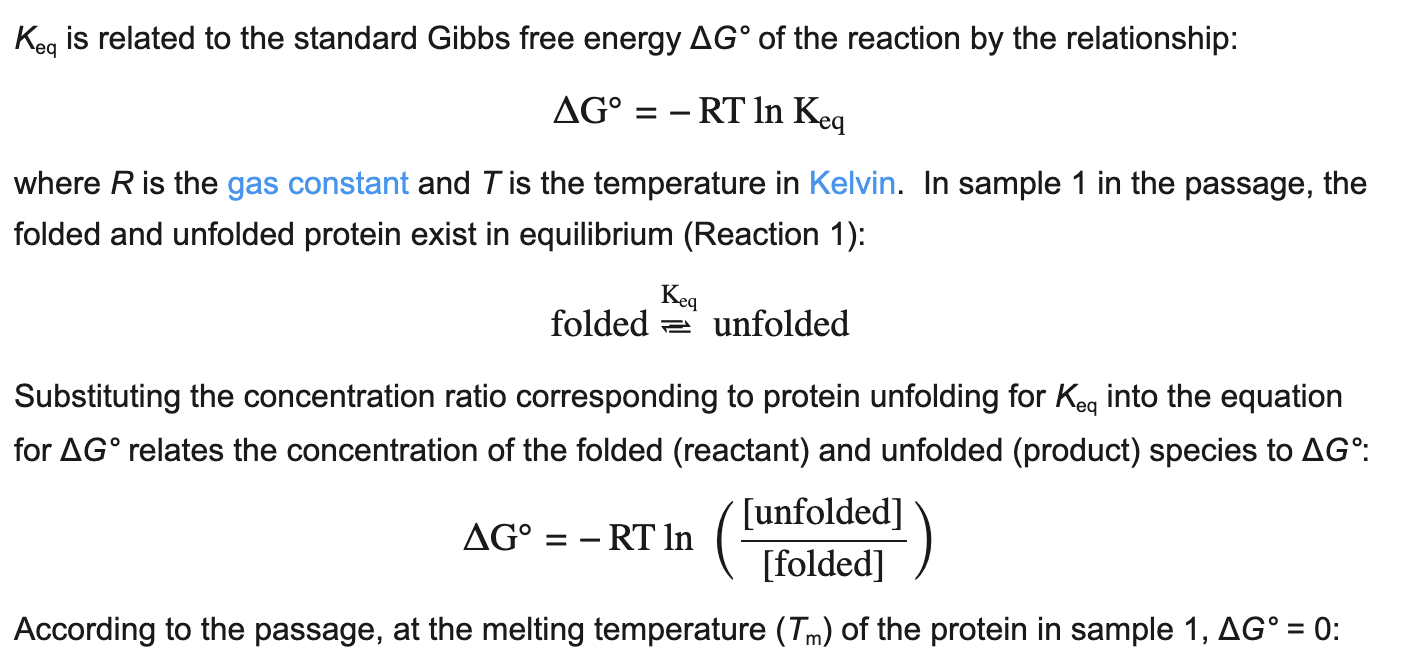
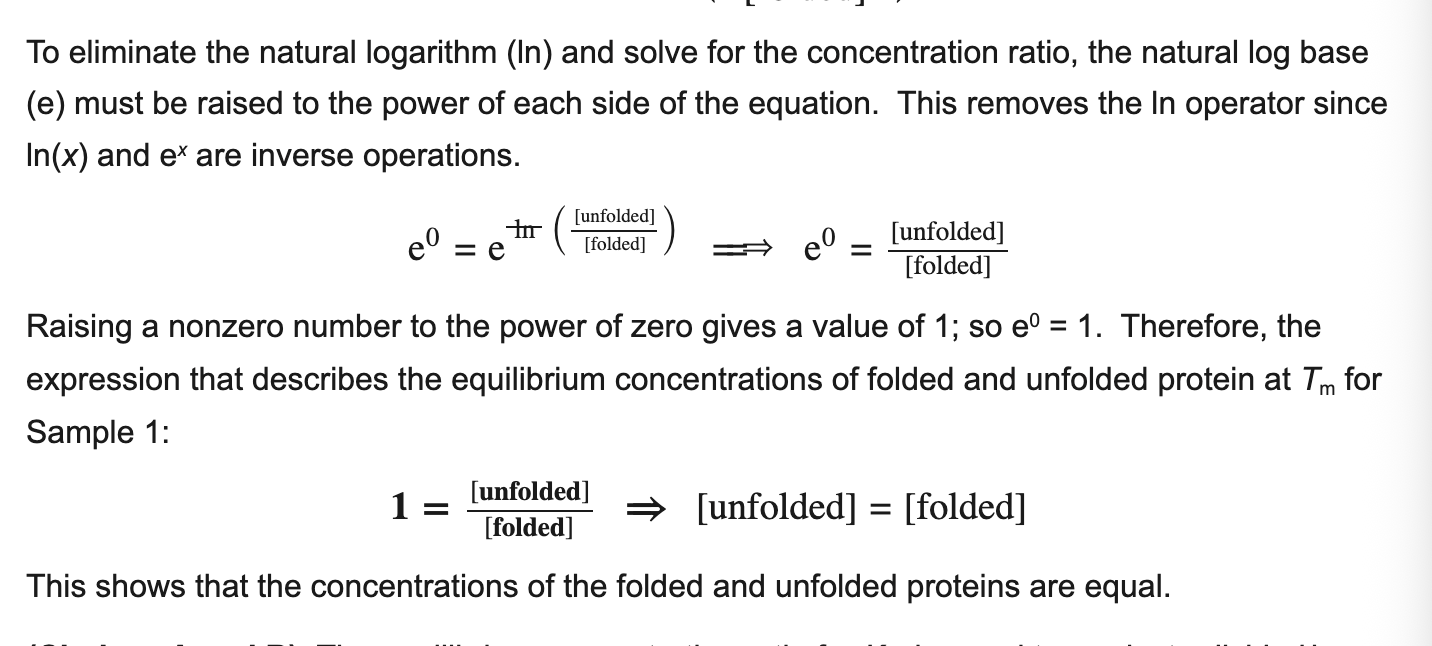

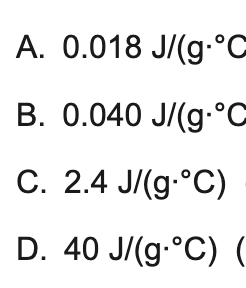
Passage E
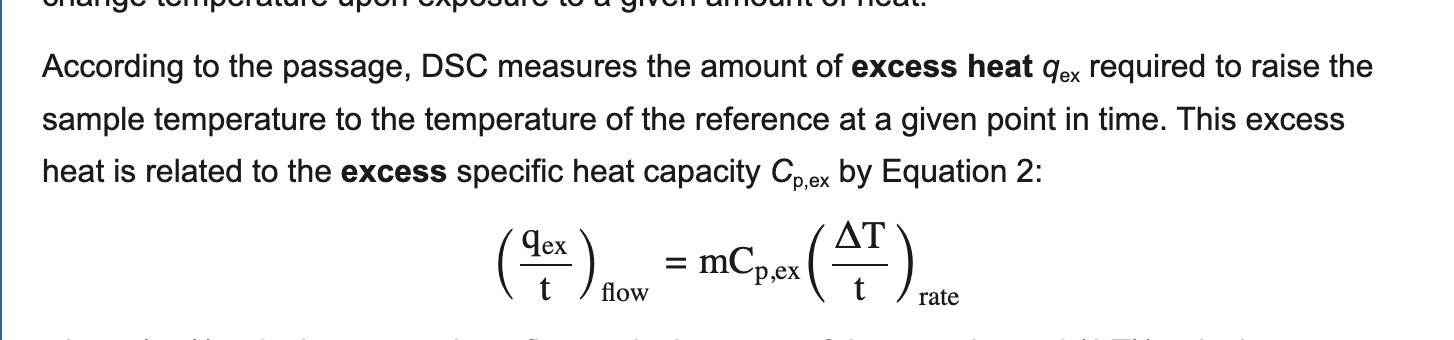
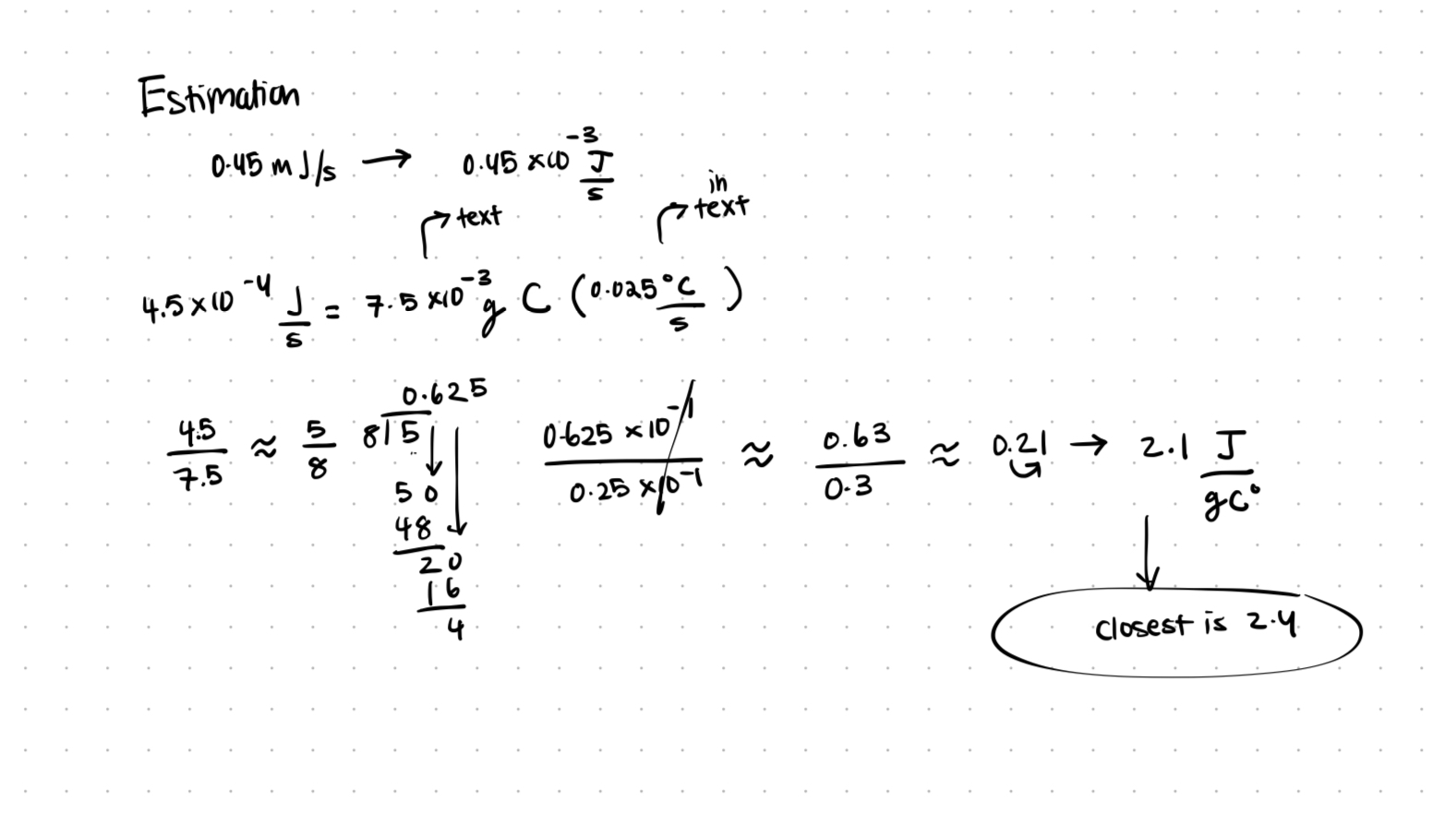

Volatlity
how easily a substance tansitions from liquid or solid into a vapor or gas
Volatile substances
easily evaporate or sublime
Properties: high vapro pressure, low boiling points, weak IMF
nonvolatile substances
do not readily evaporate
negligible vapor pressure (no pressure), high boiling points, strong IMF
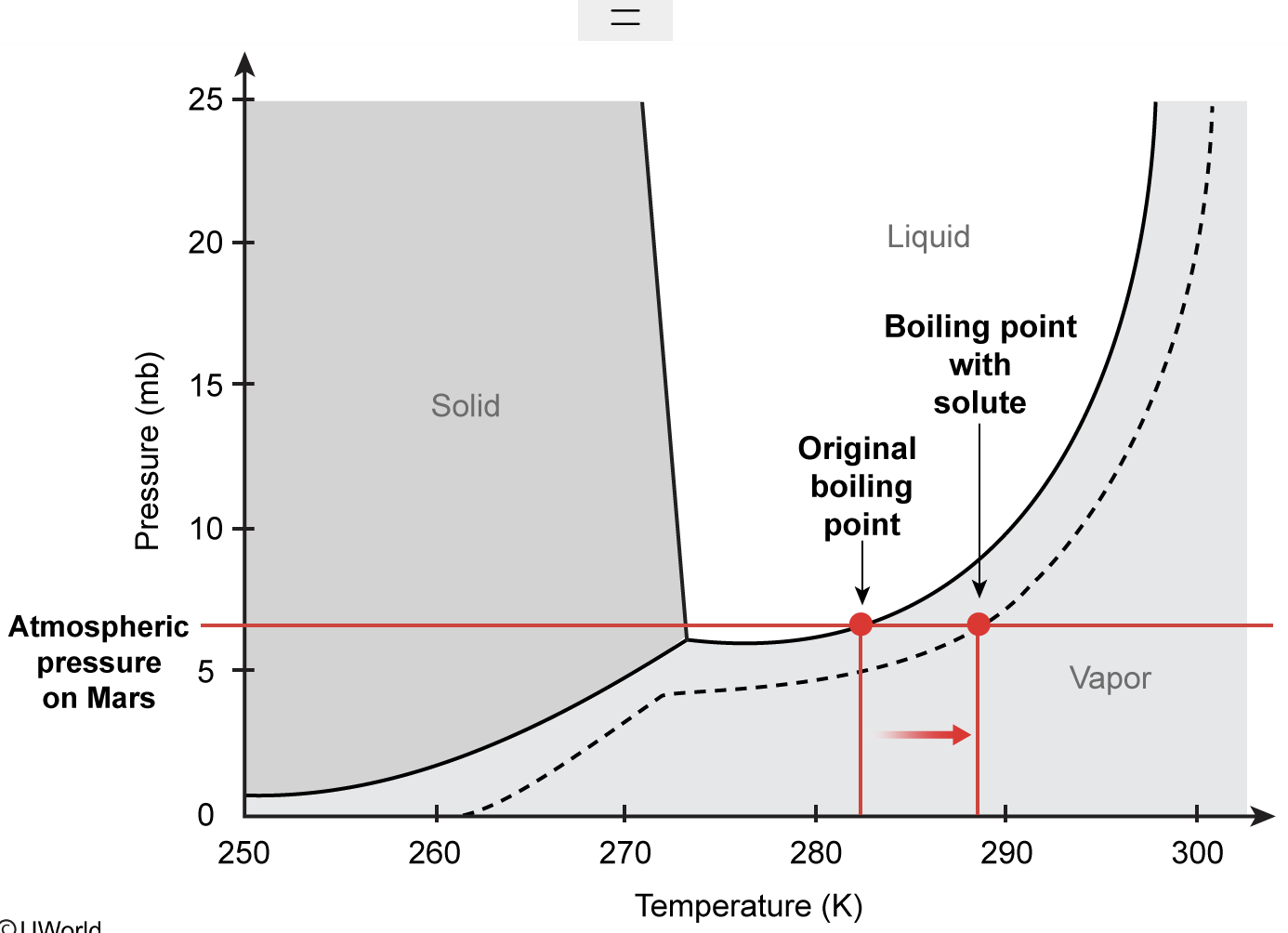
At any given temp, there is enough energy for some molcules in a liquid to overcome the IMF between molecules and escape into gas phase as vapors that are in equilibrium with liquid phase. The pressure resulting from these is called ______ pressure. When the temp is high enough for that specific pressure to equal the external pressure exerted by surroundings, the liiquid boils.
Vapor
Passage E


Nonvolatile solutes dissolved in the liquid reduce the amount of surface area availbale for liquid molecules to occupy and escape into gas phase. Nonvolatile solute also increases the boiling temp
So removing and purification of the proteins would decrease the boiling point.
mmHg and kPA and atm equivalence
101.3 kPa= 760 mmHg = 1 atm
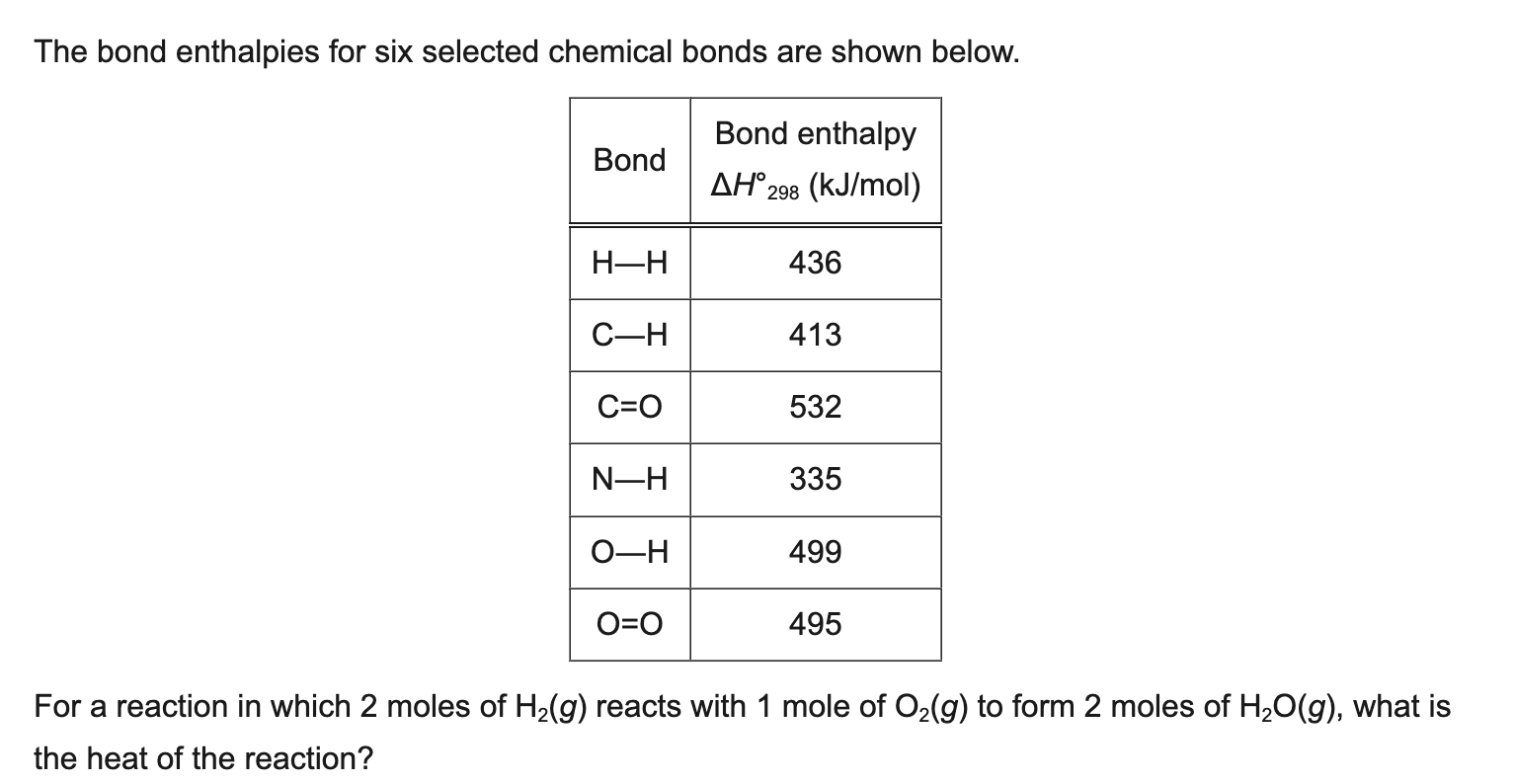
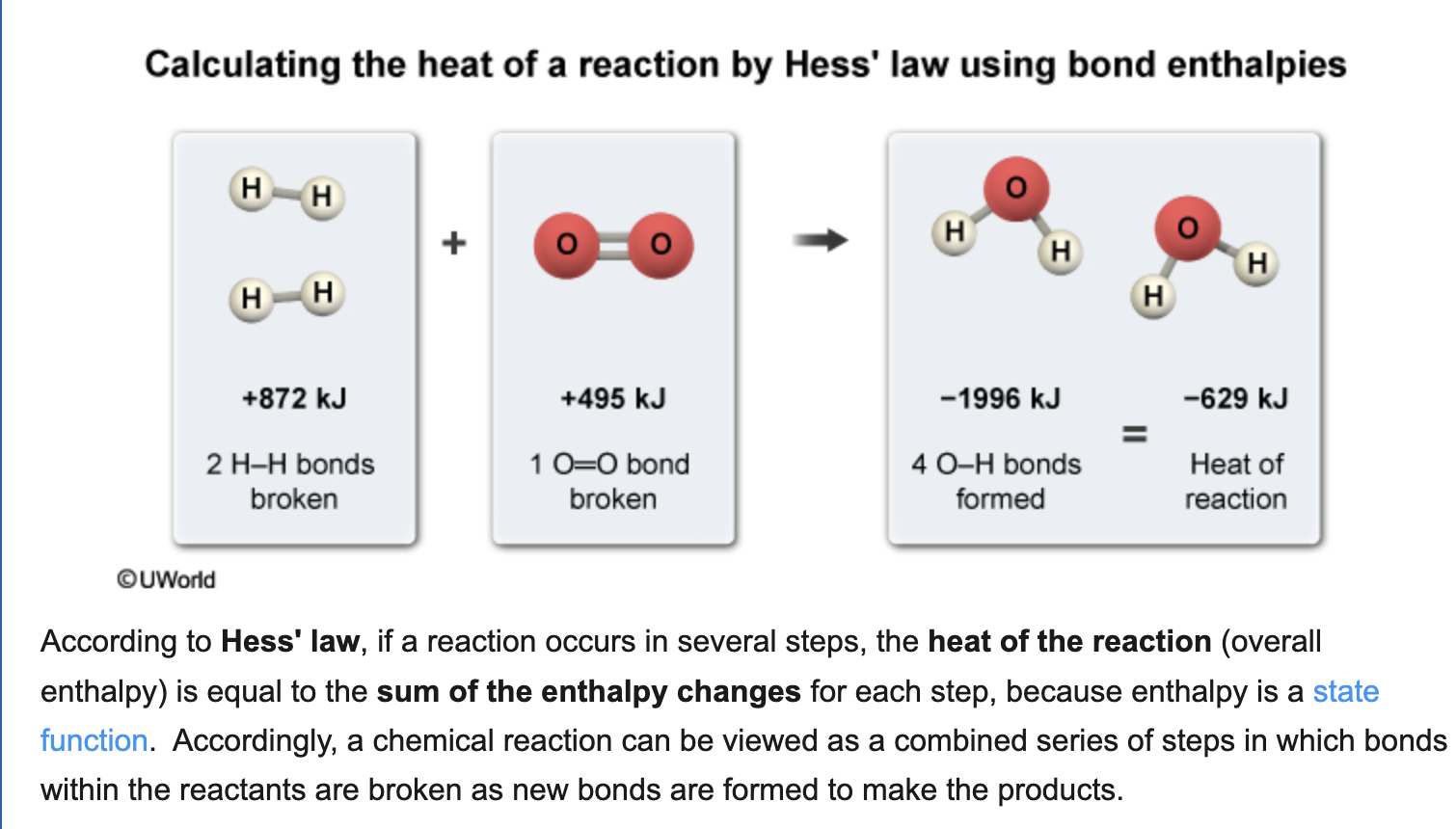
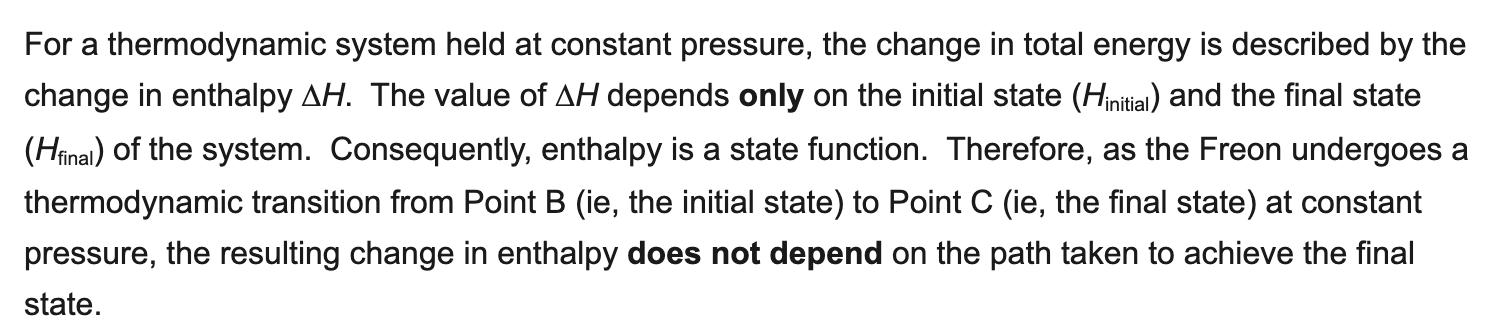
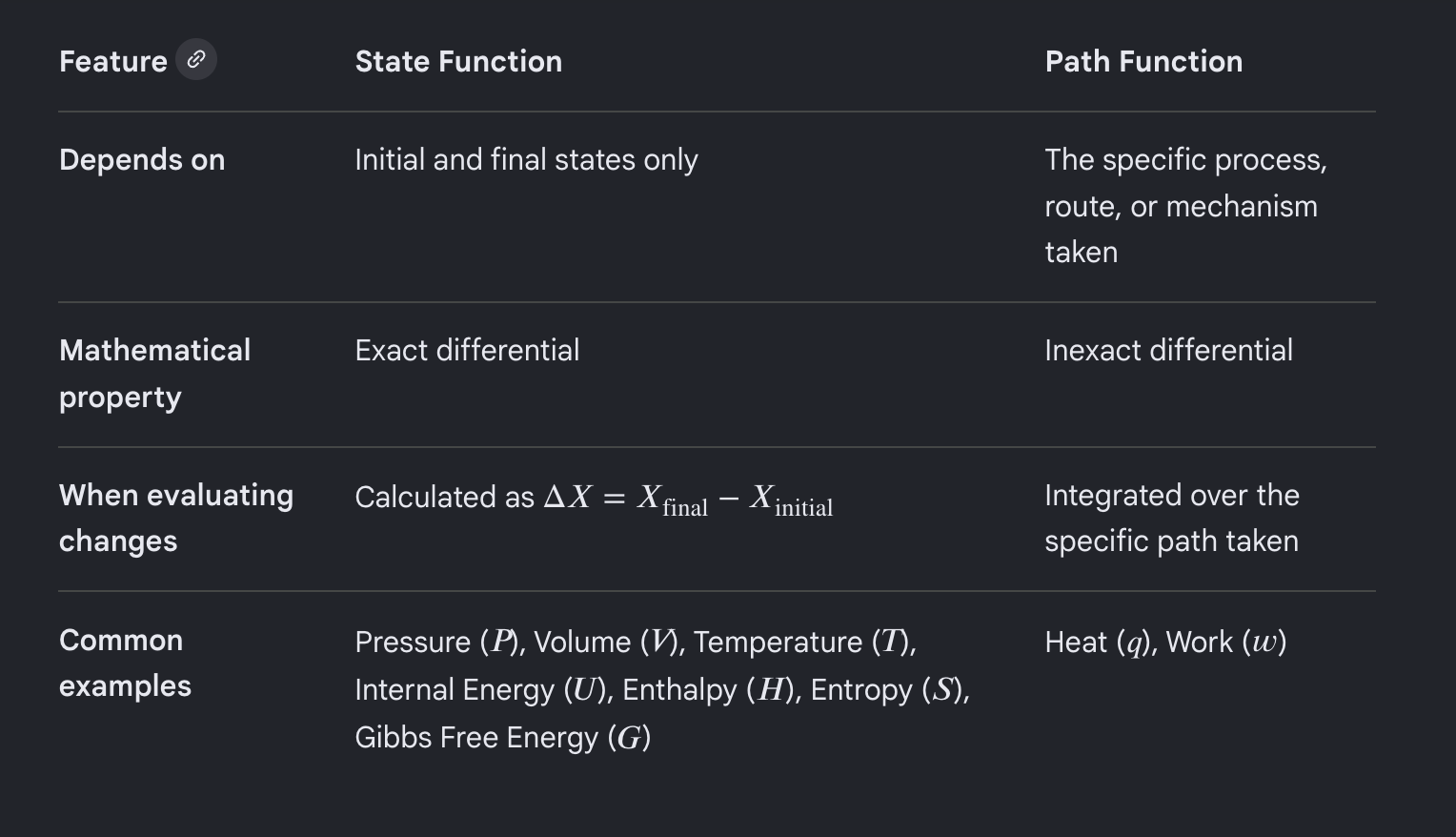
state function
thermodynamic system whose value depends only on the state of the system. As such, it is independent of the path taken
Passage F
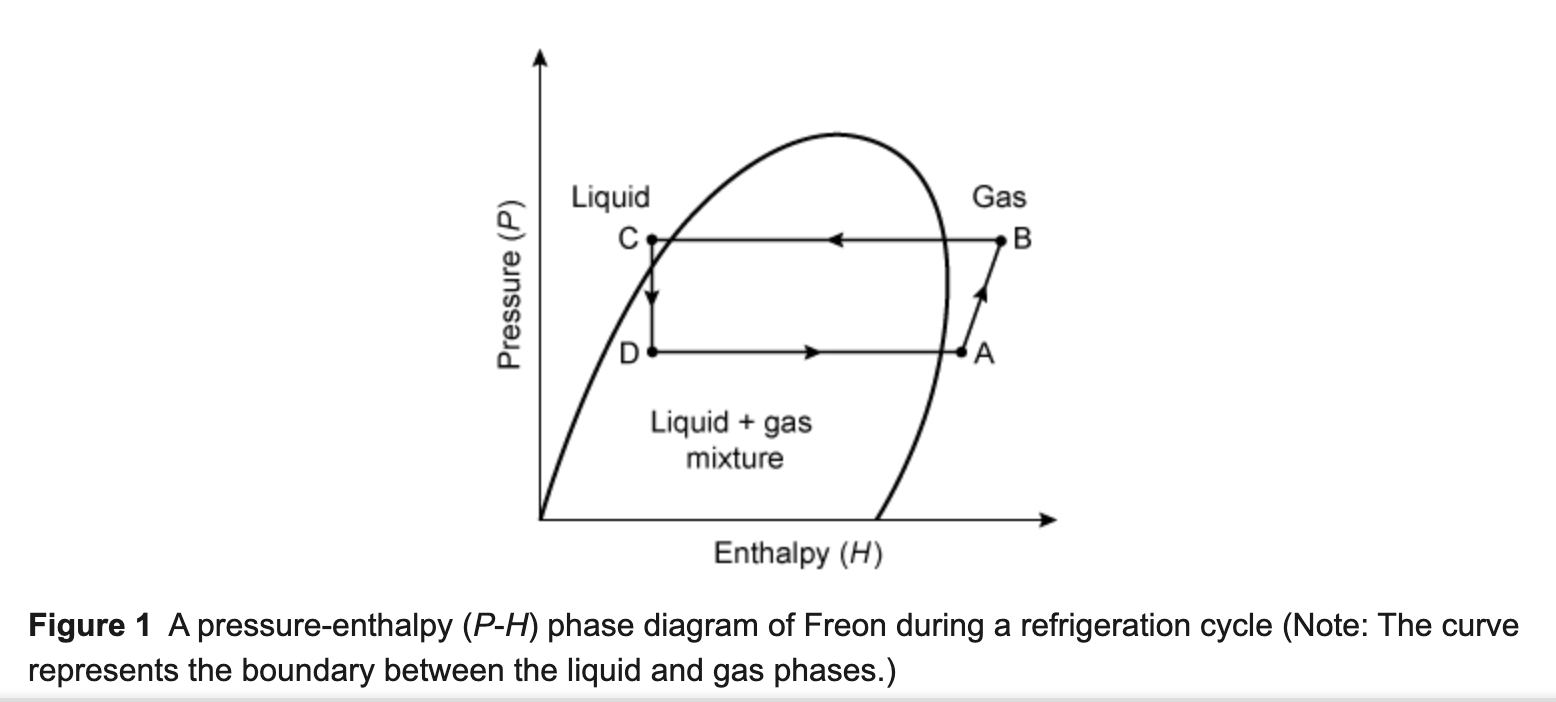
Passage F

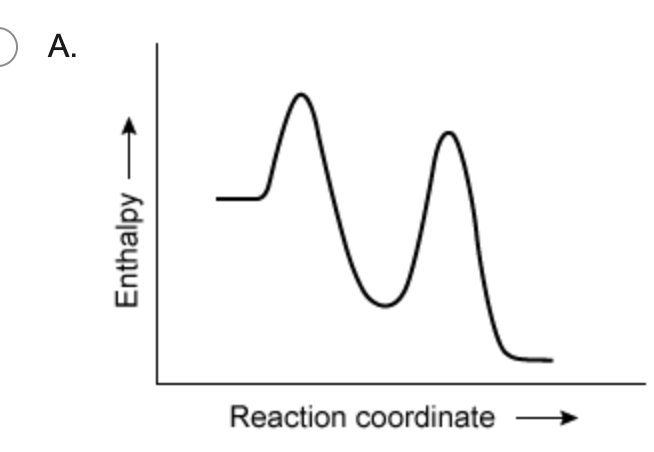
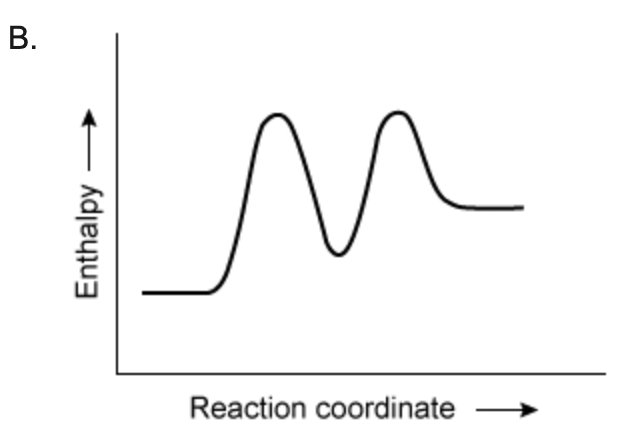
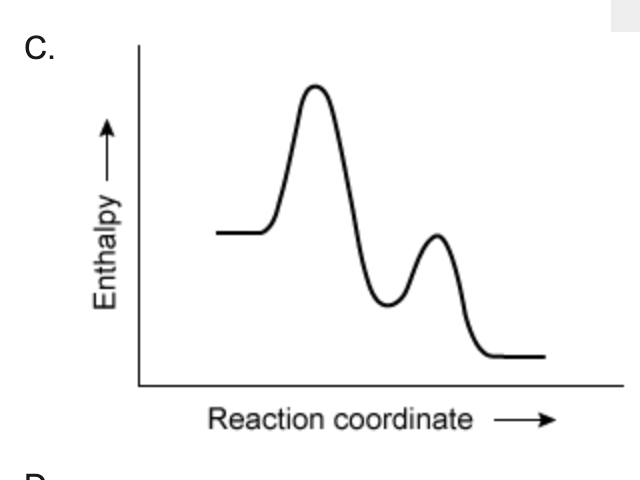
C
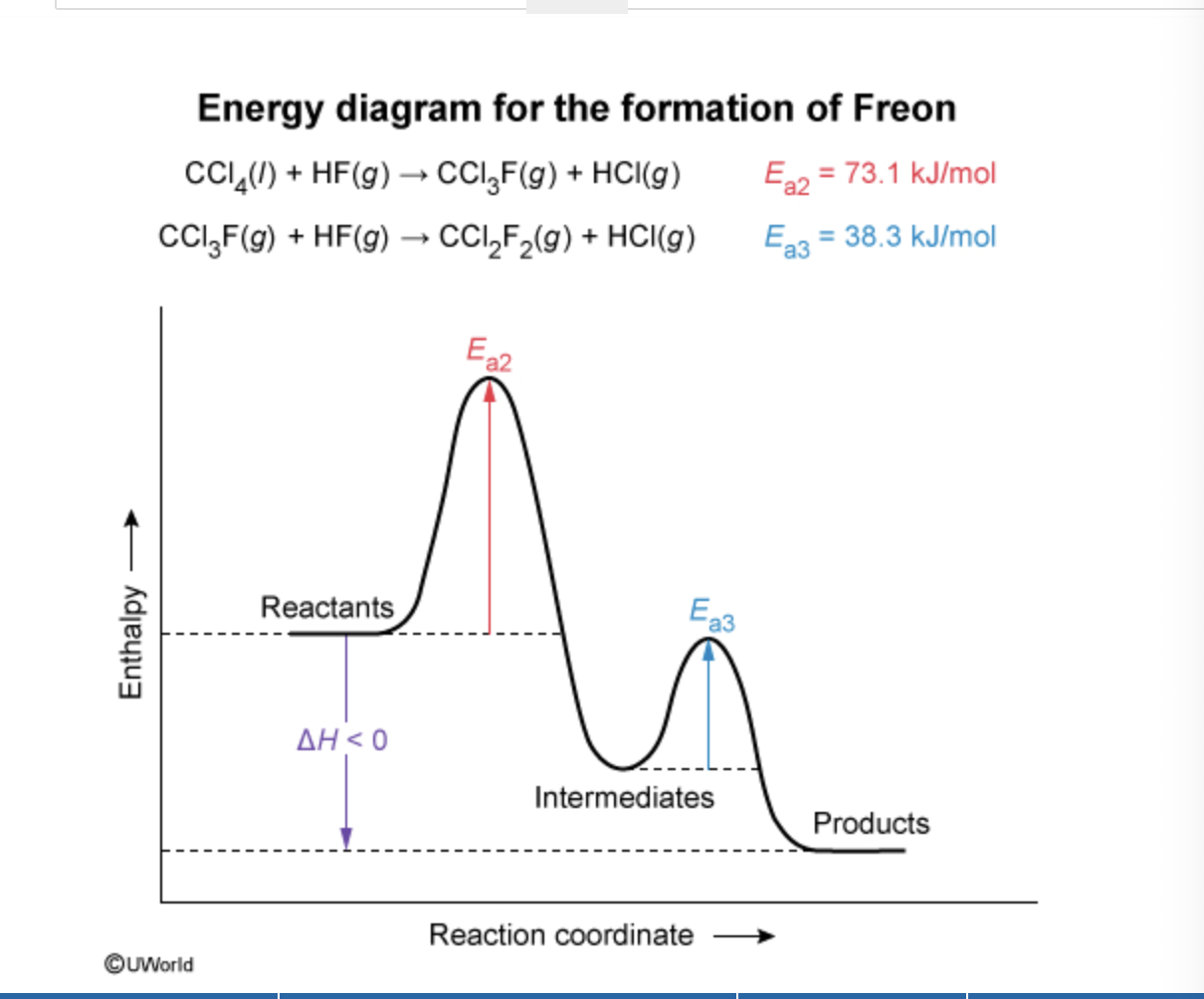
Passage F
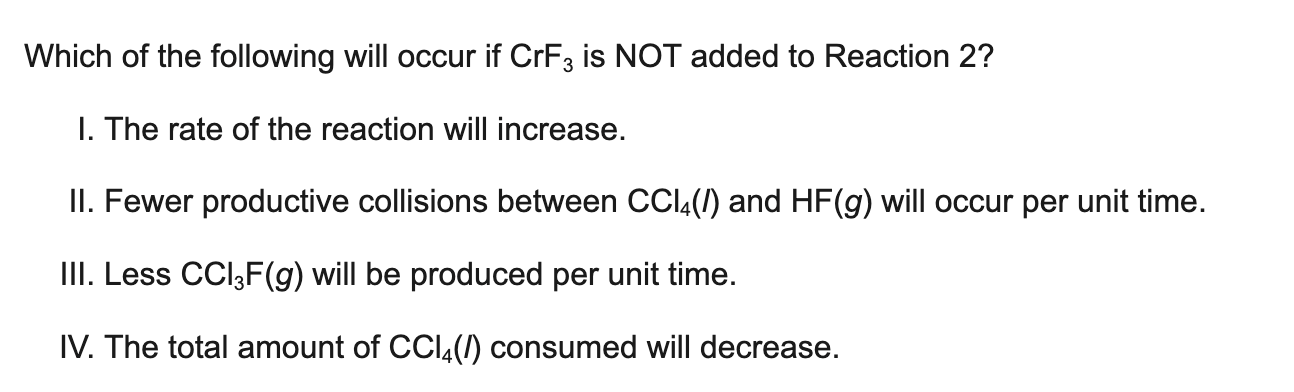
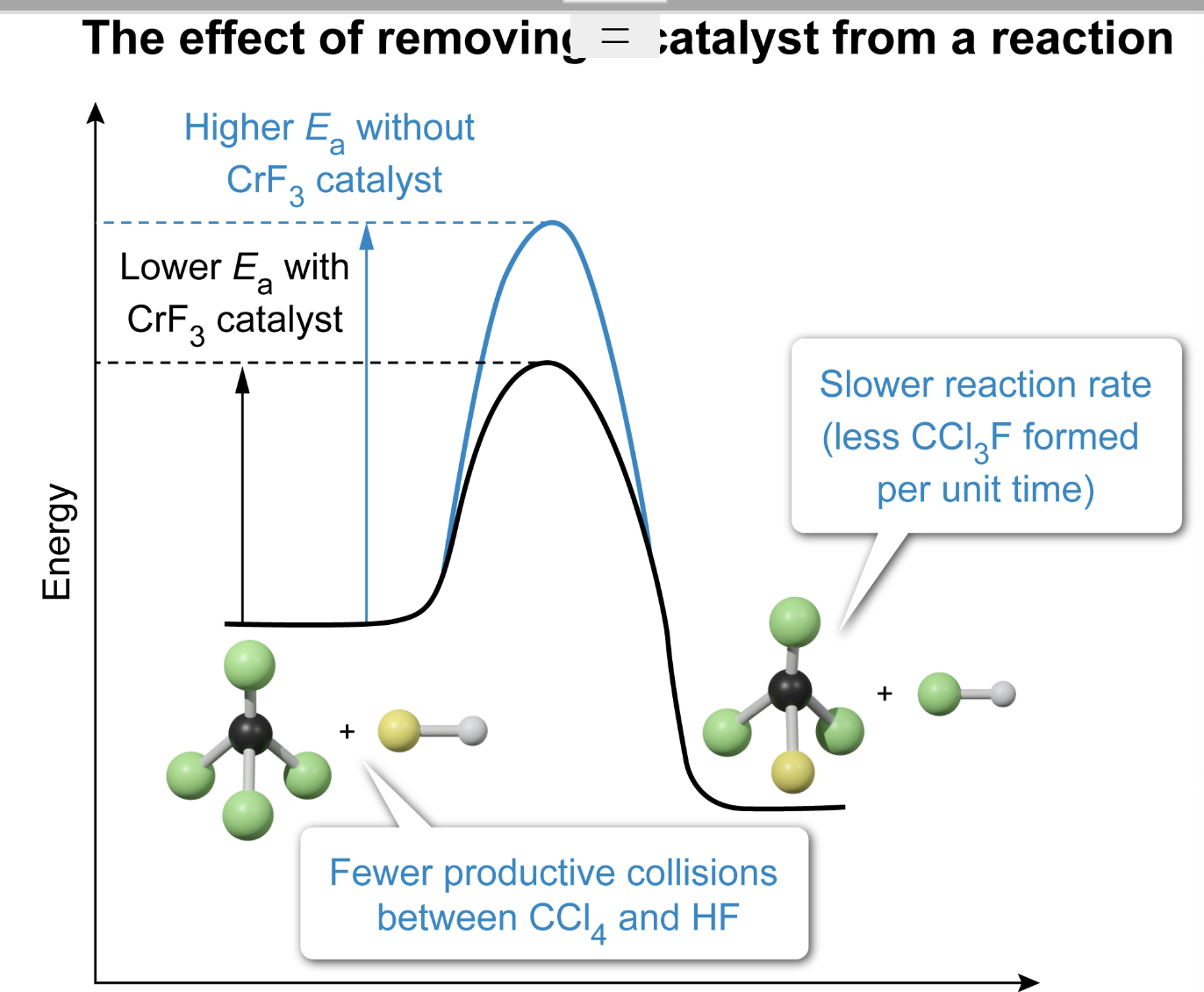
2 and 3 only

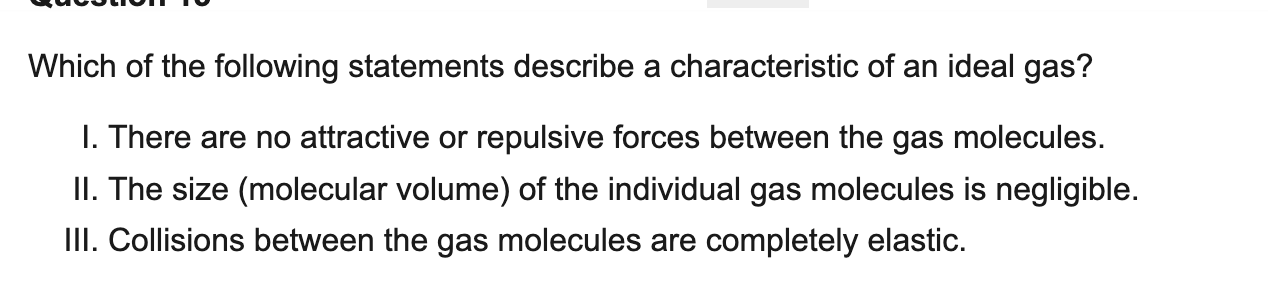
1,2,3

Passage G
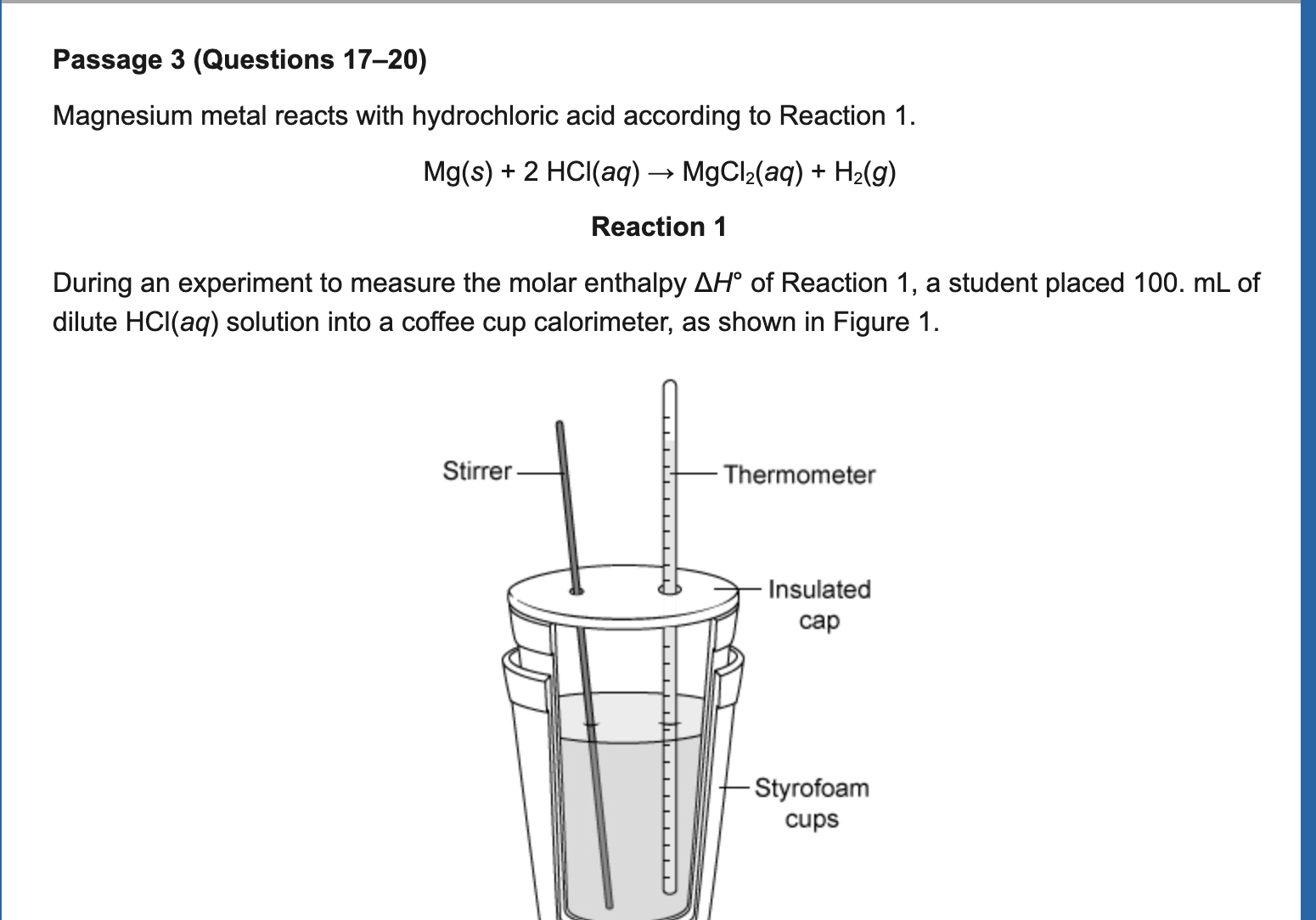
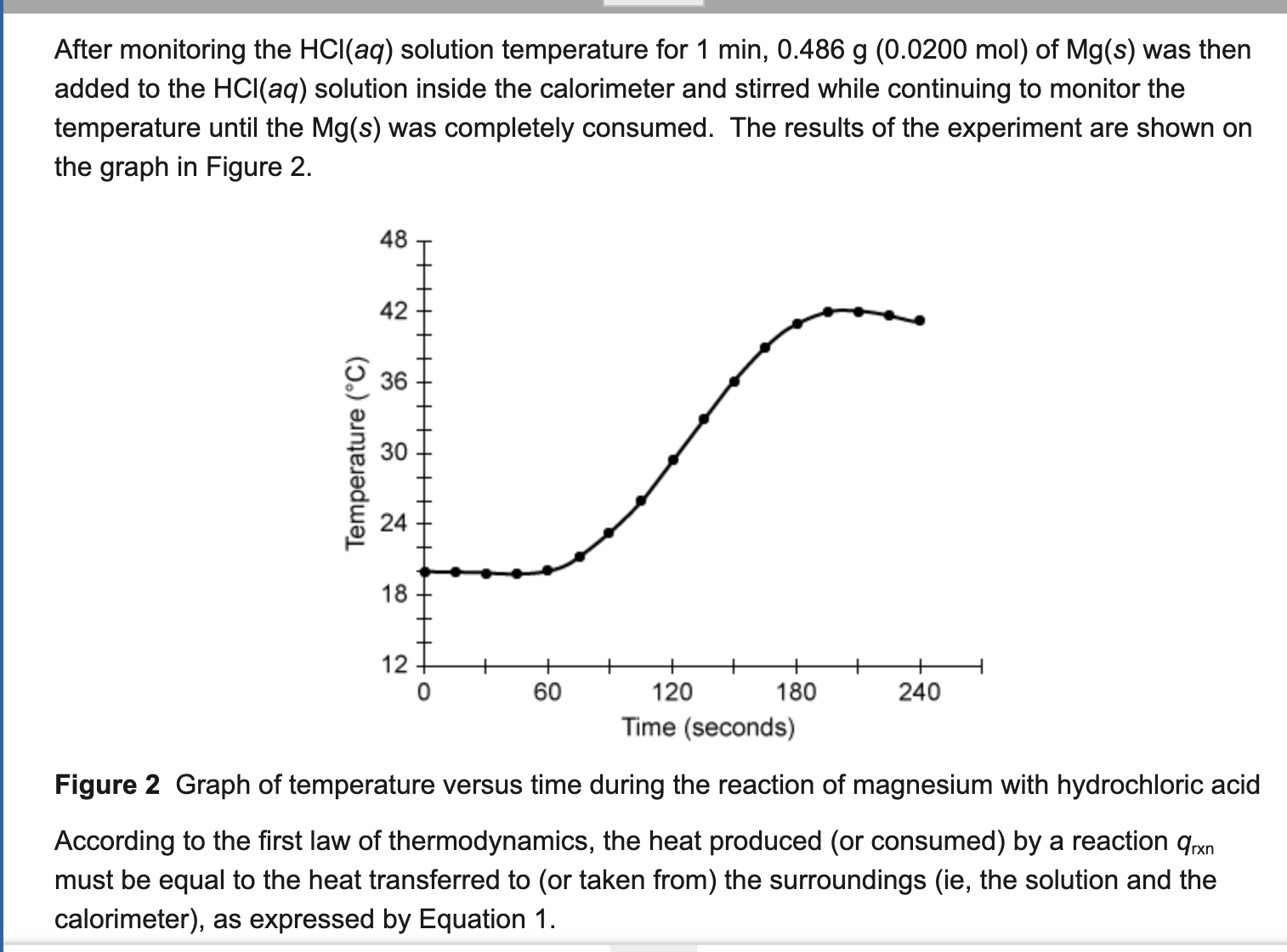

Passage G
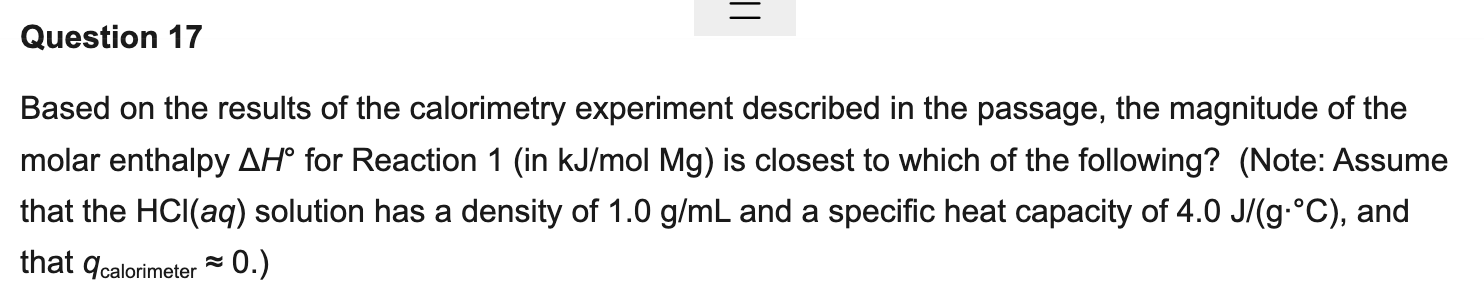
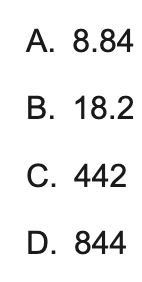
Answer A
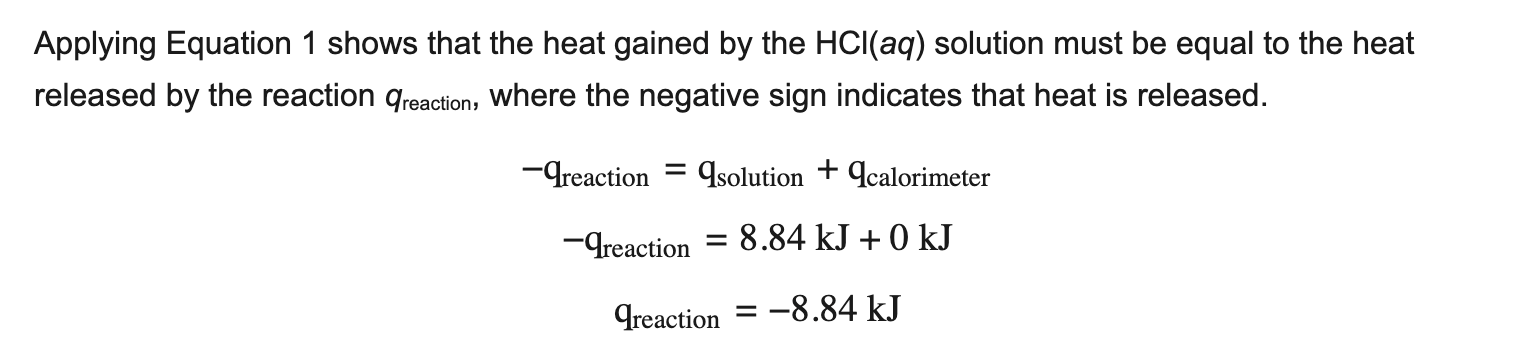
passage G

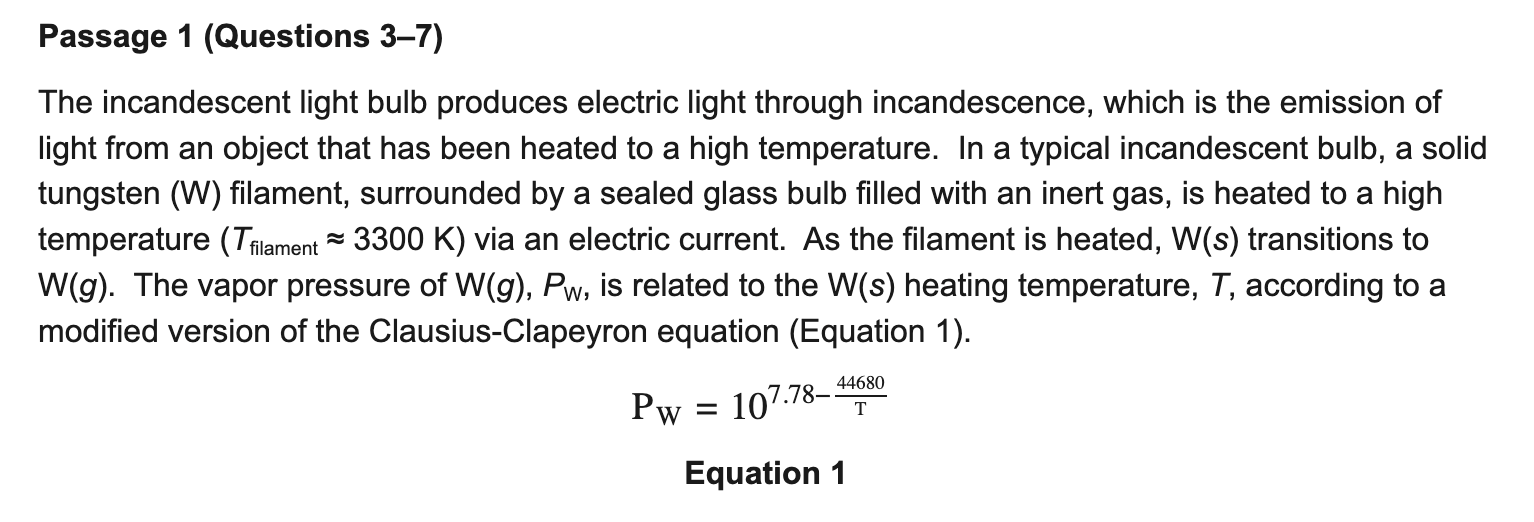

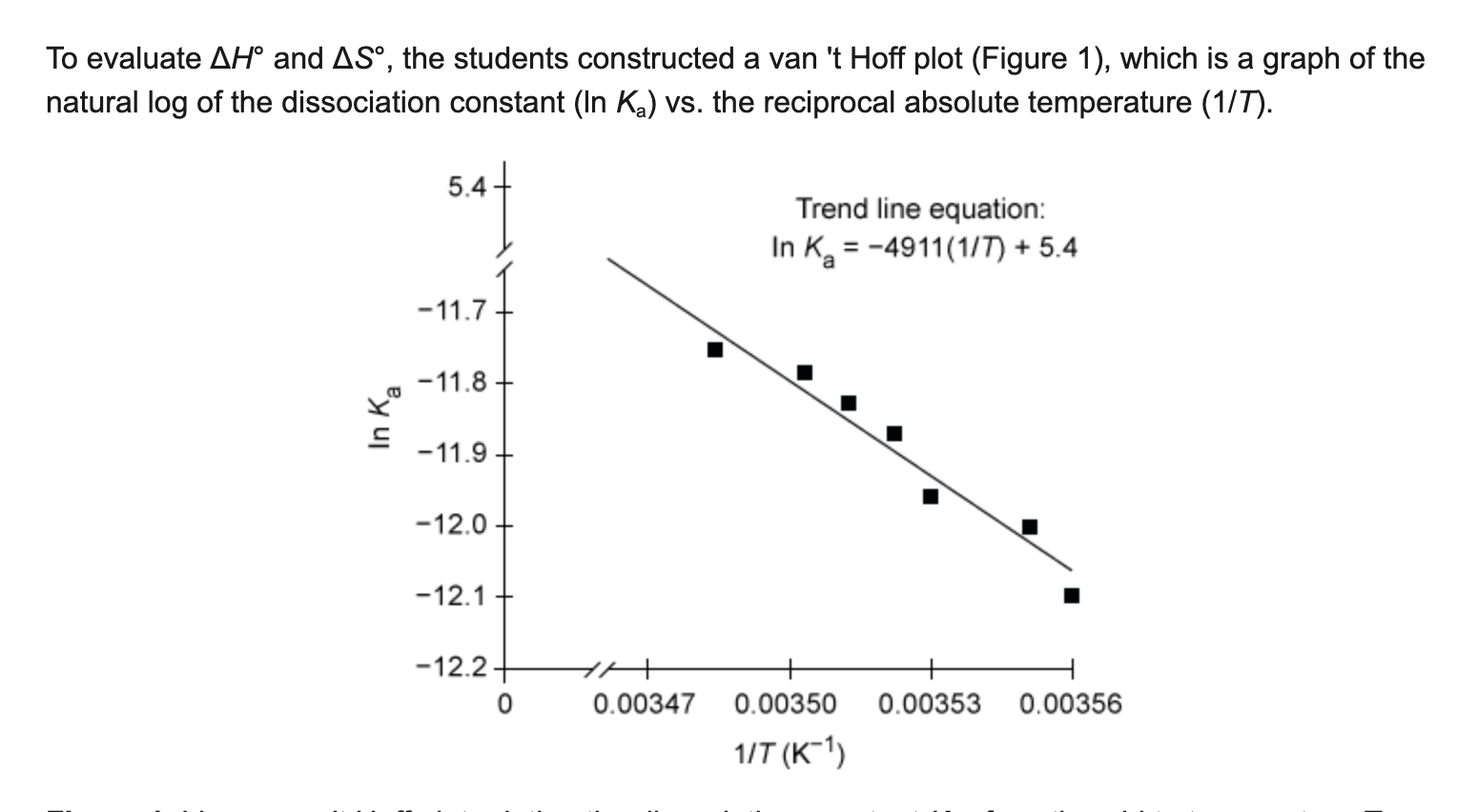
Describe what the graph would look like
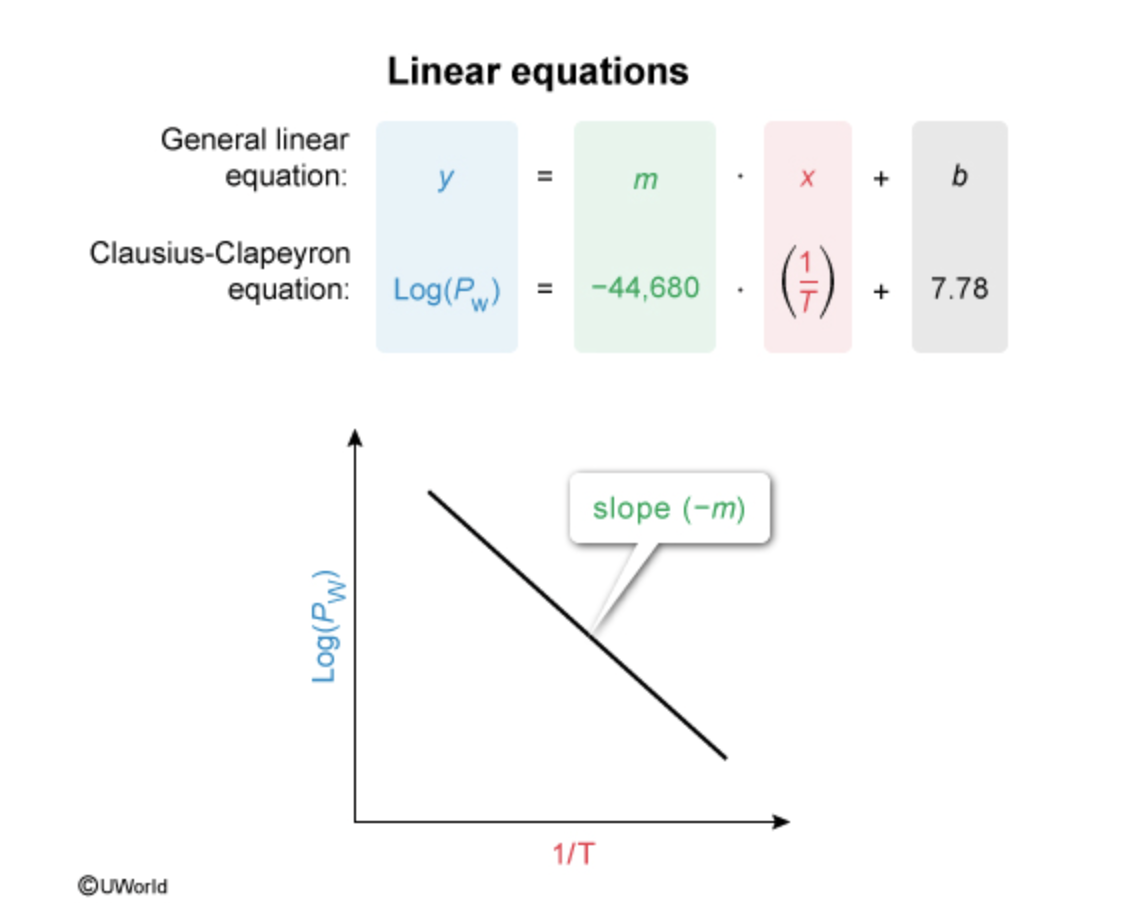
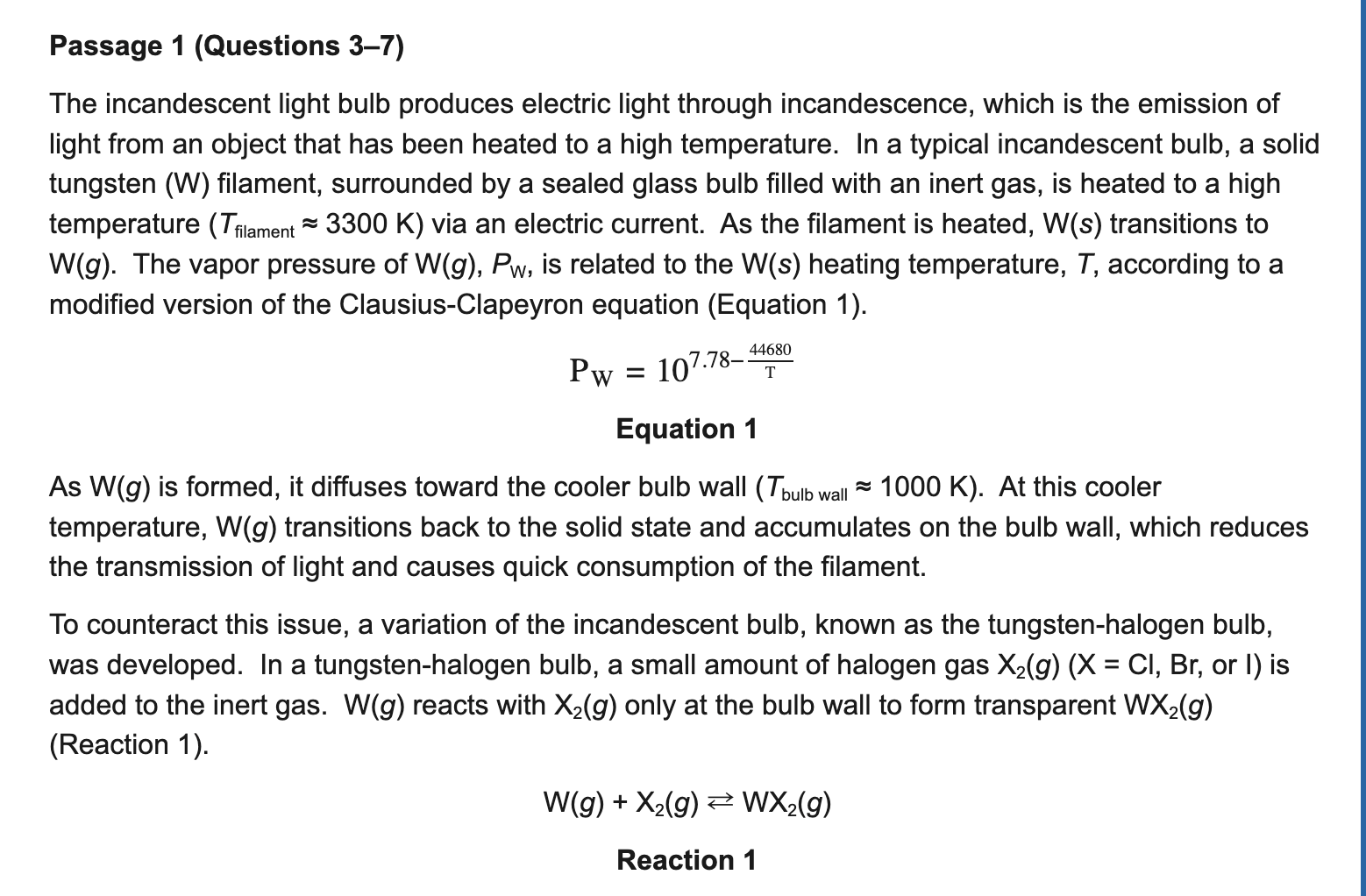
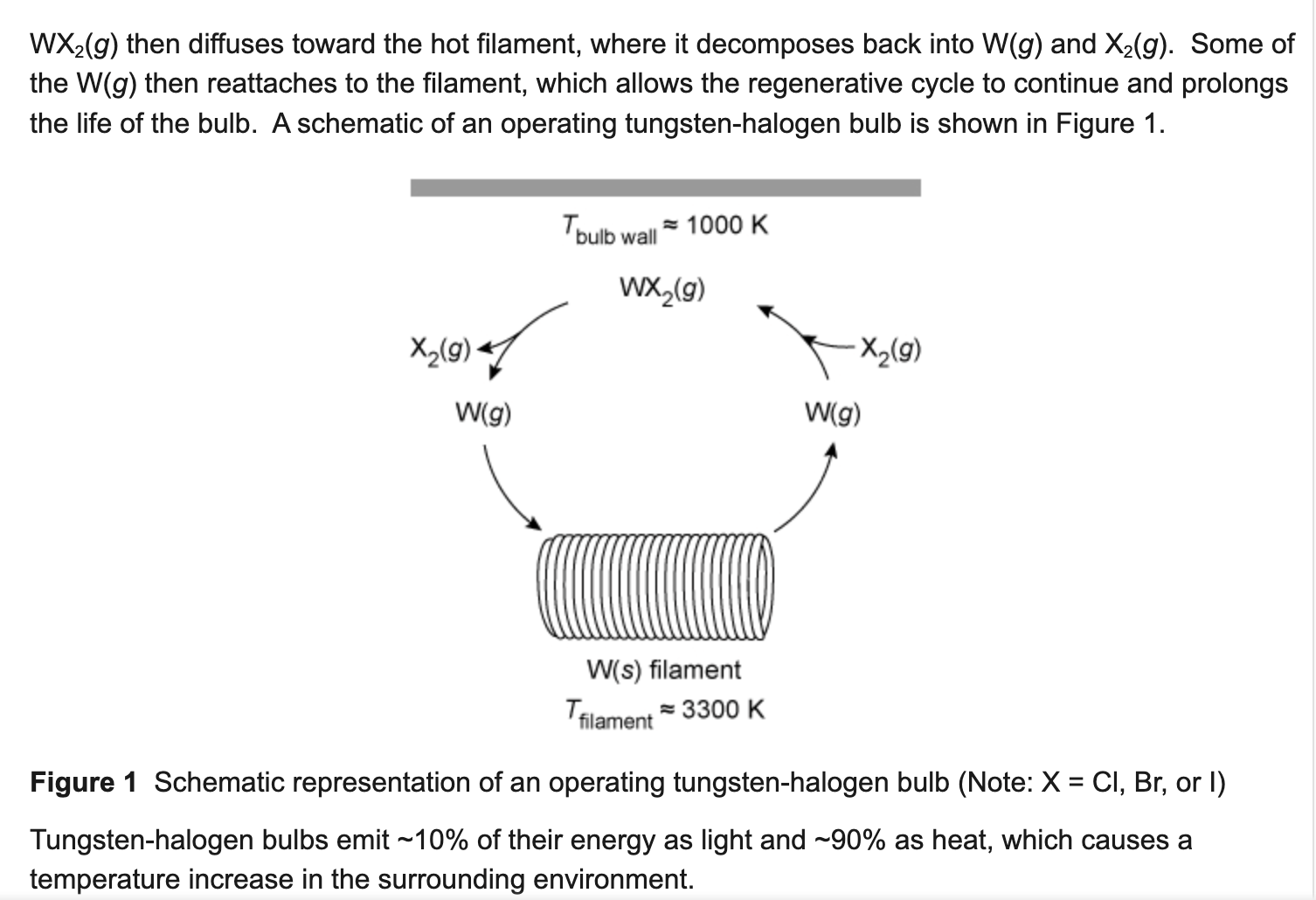
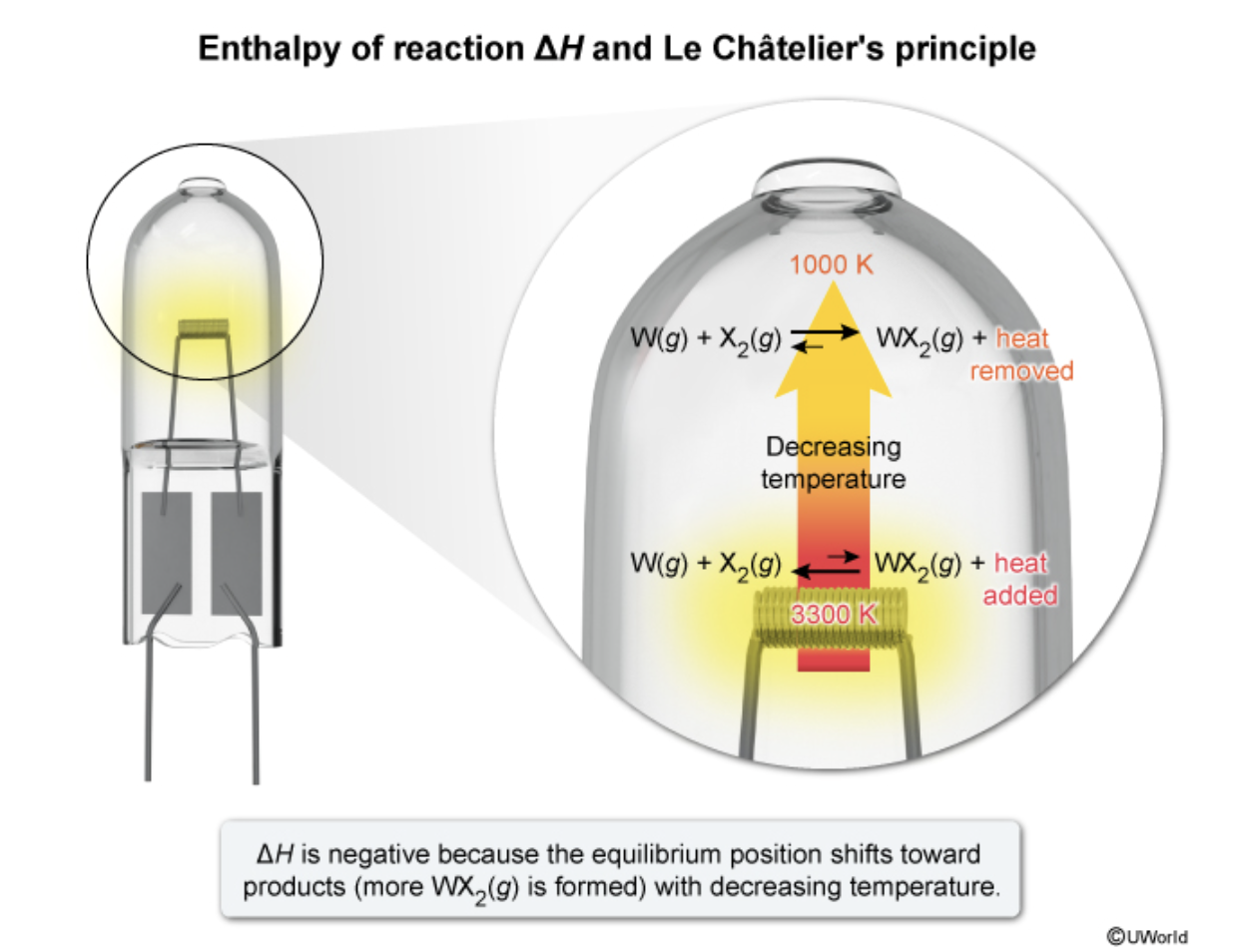
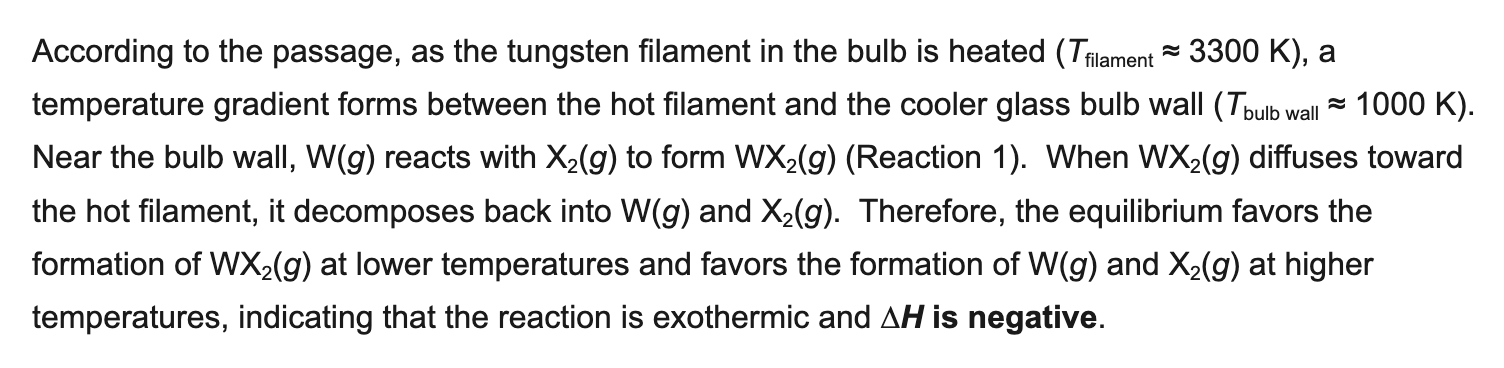
Is the enthalpy formation positive or negative, bc the WX2 formation is favored with……
Negative, because its favored with decreasing tmeperature.
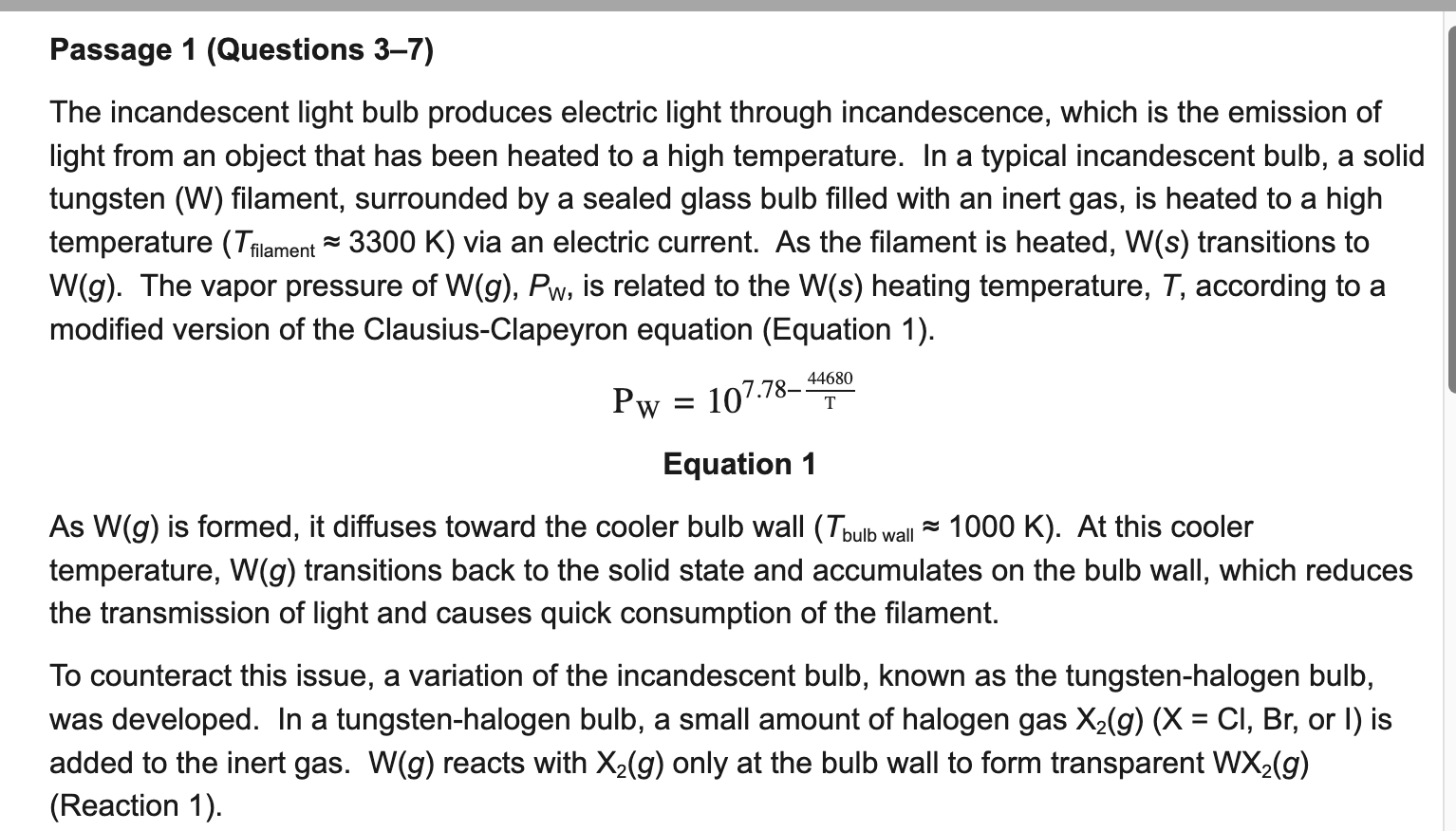
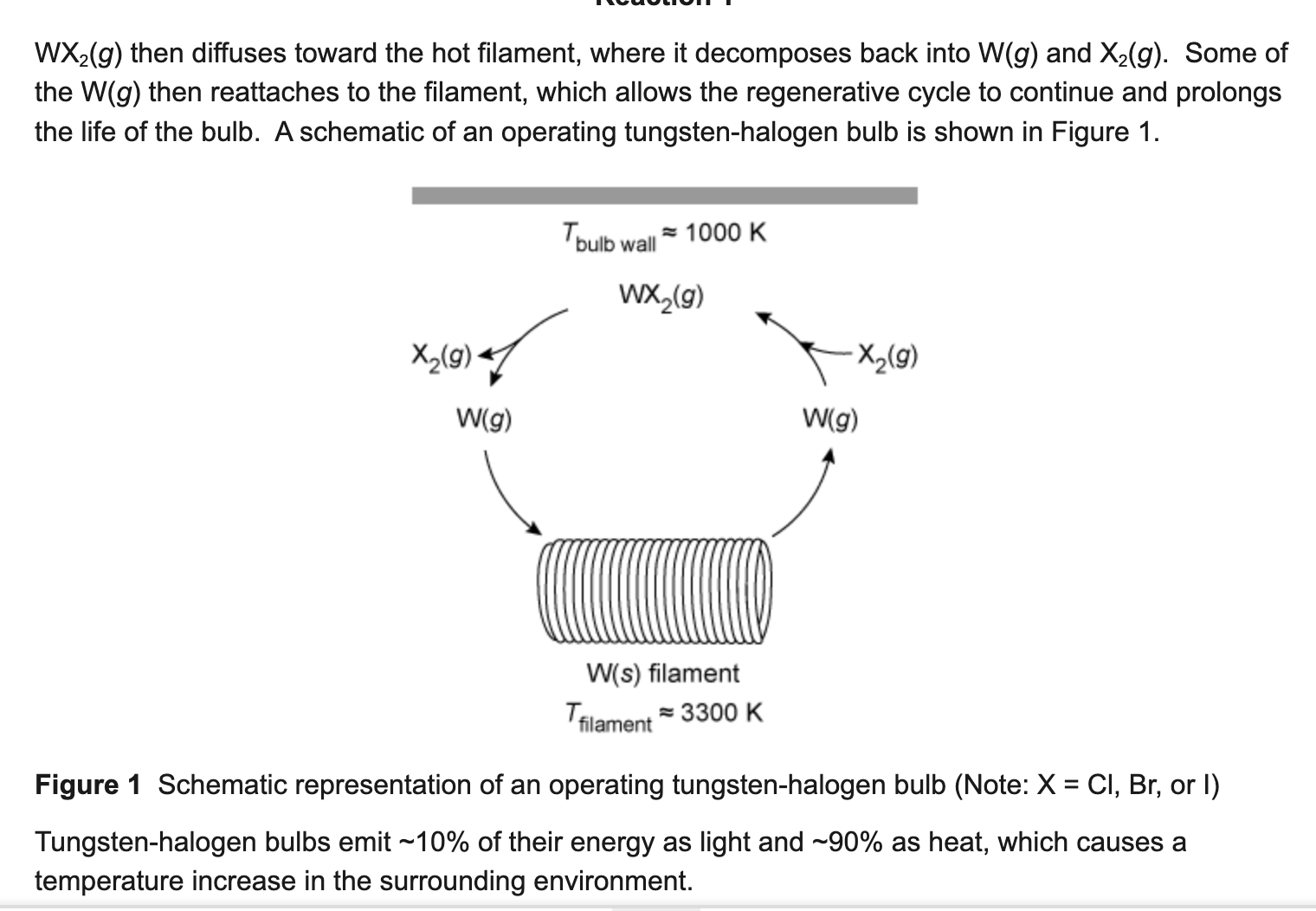
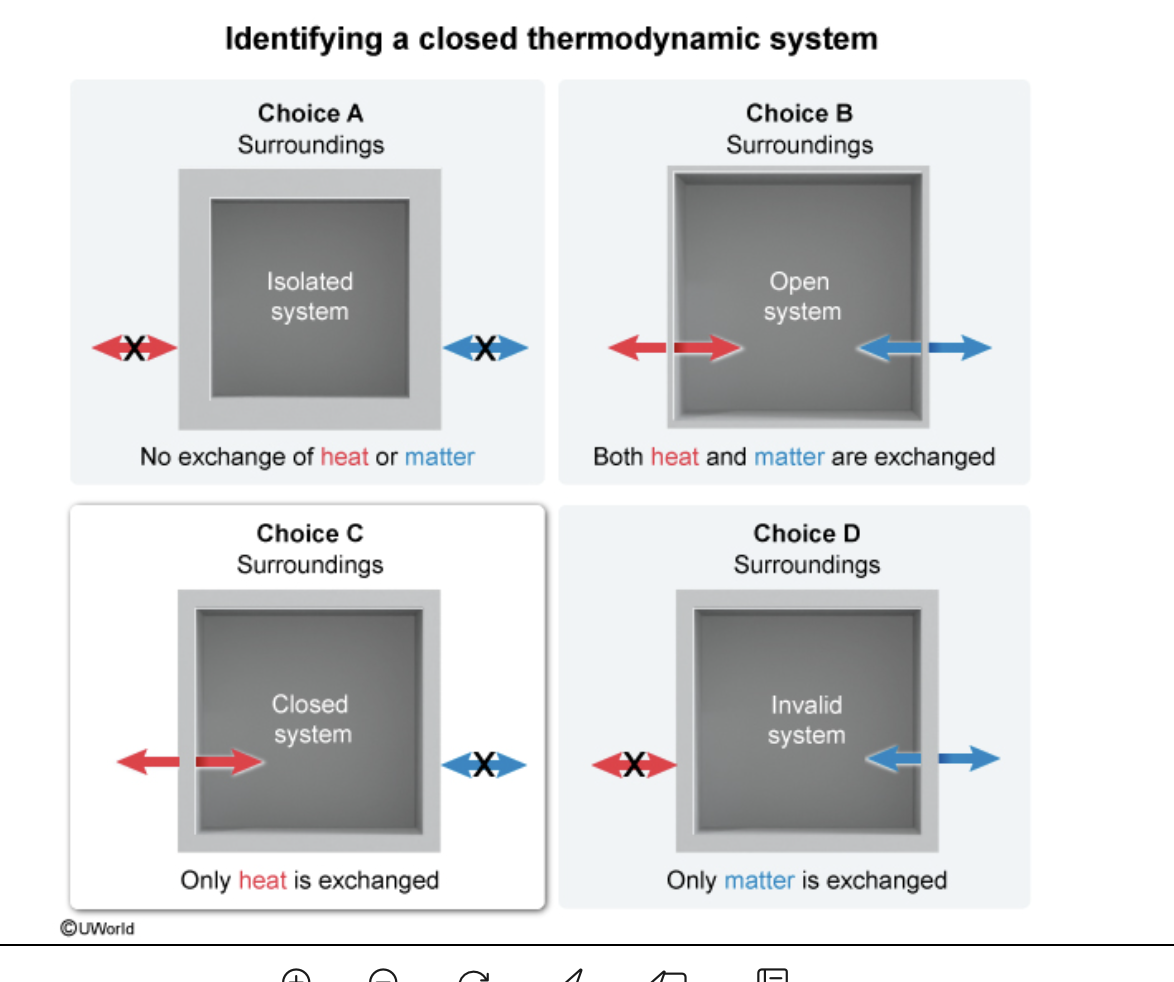
Is it a closed, open, or isolated system?
Closed system, because only the heat adiated form the filament is echanged with the surroundings
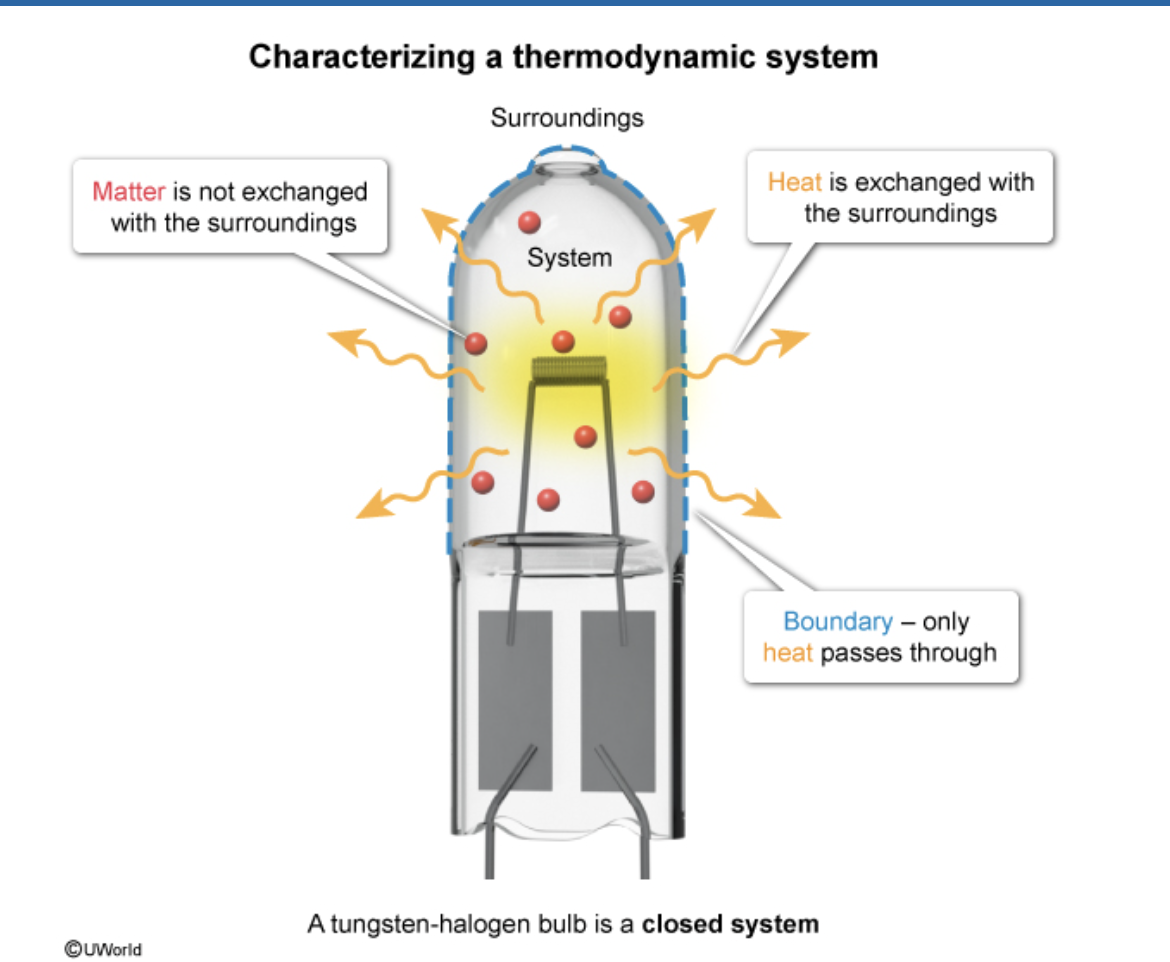
Open system
both heat and matter are freely exchanged with the surroundings
Closed system
only heat is exchanged with surroundigns
Isolated
neither heat nor matter can be exchanged with the surroundings.

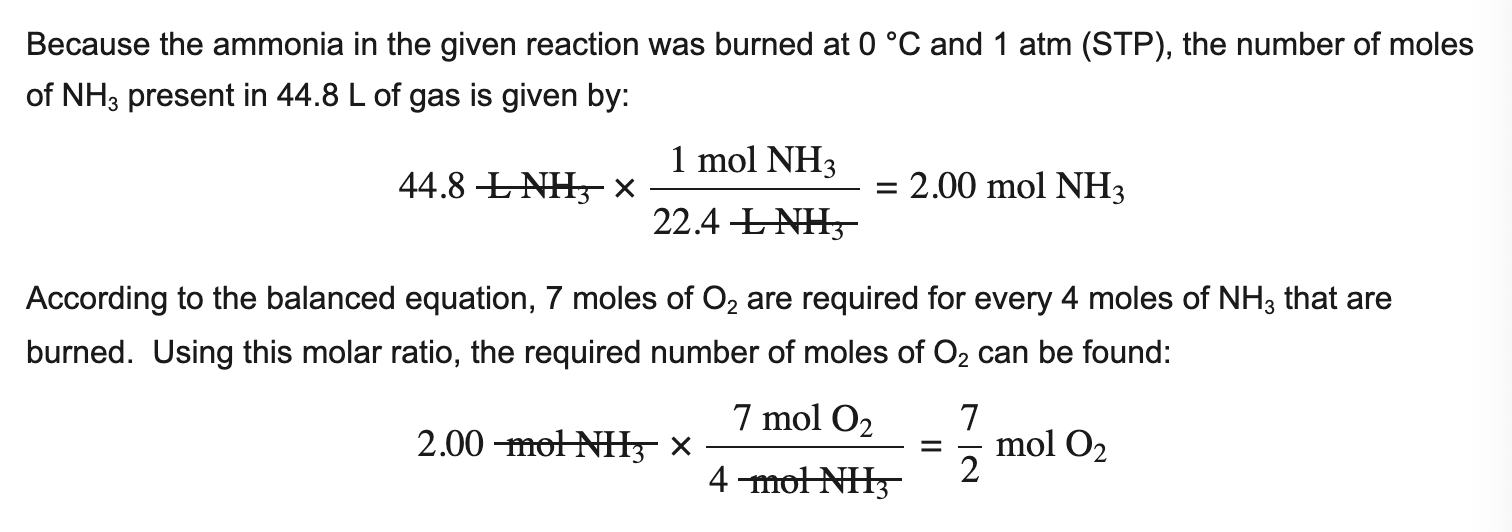
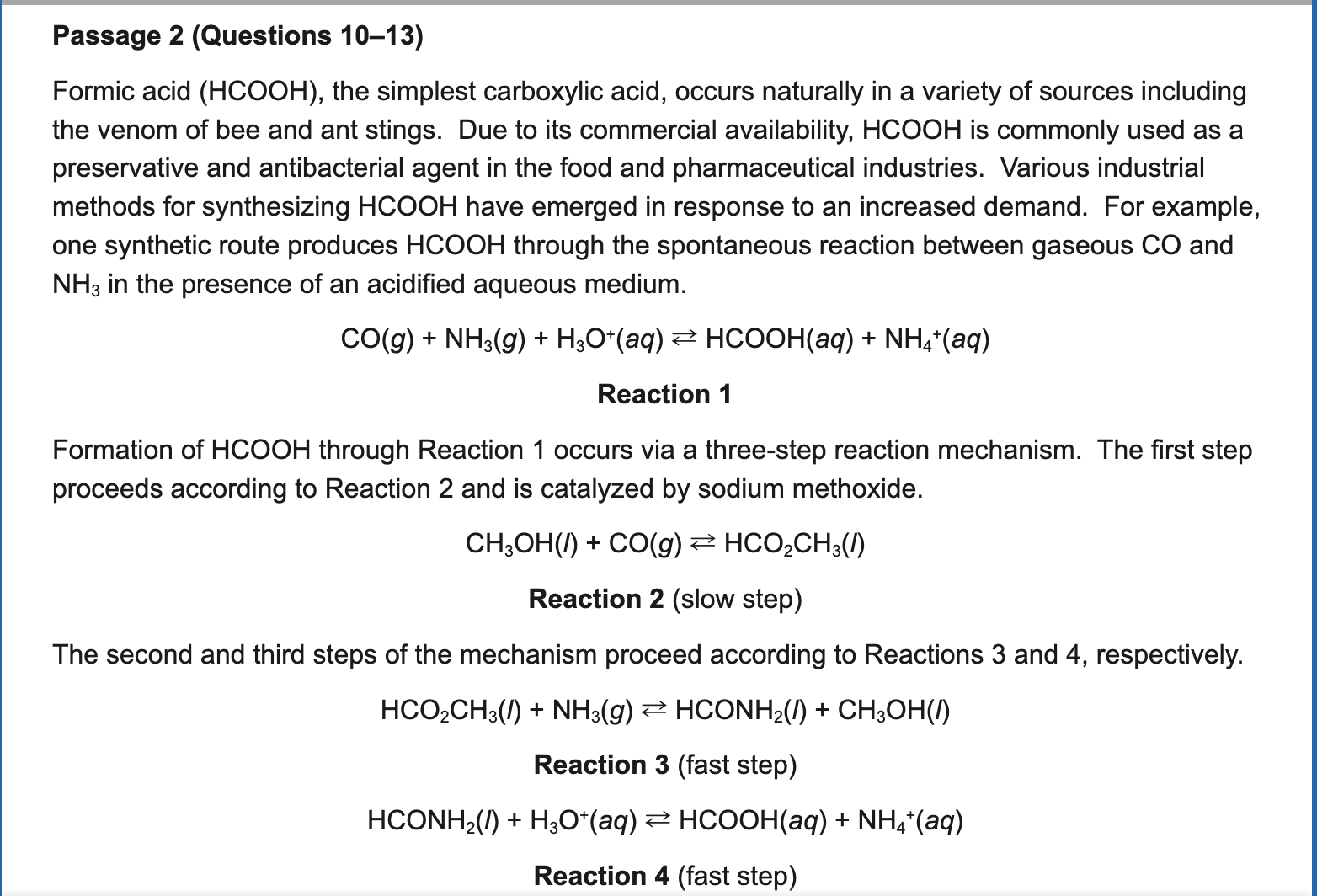

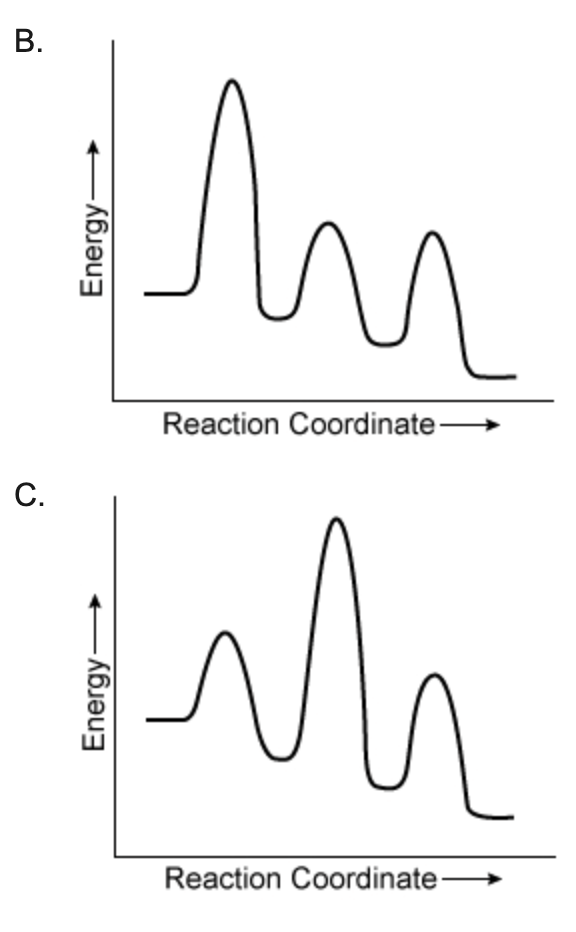
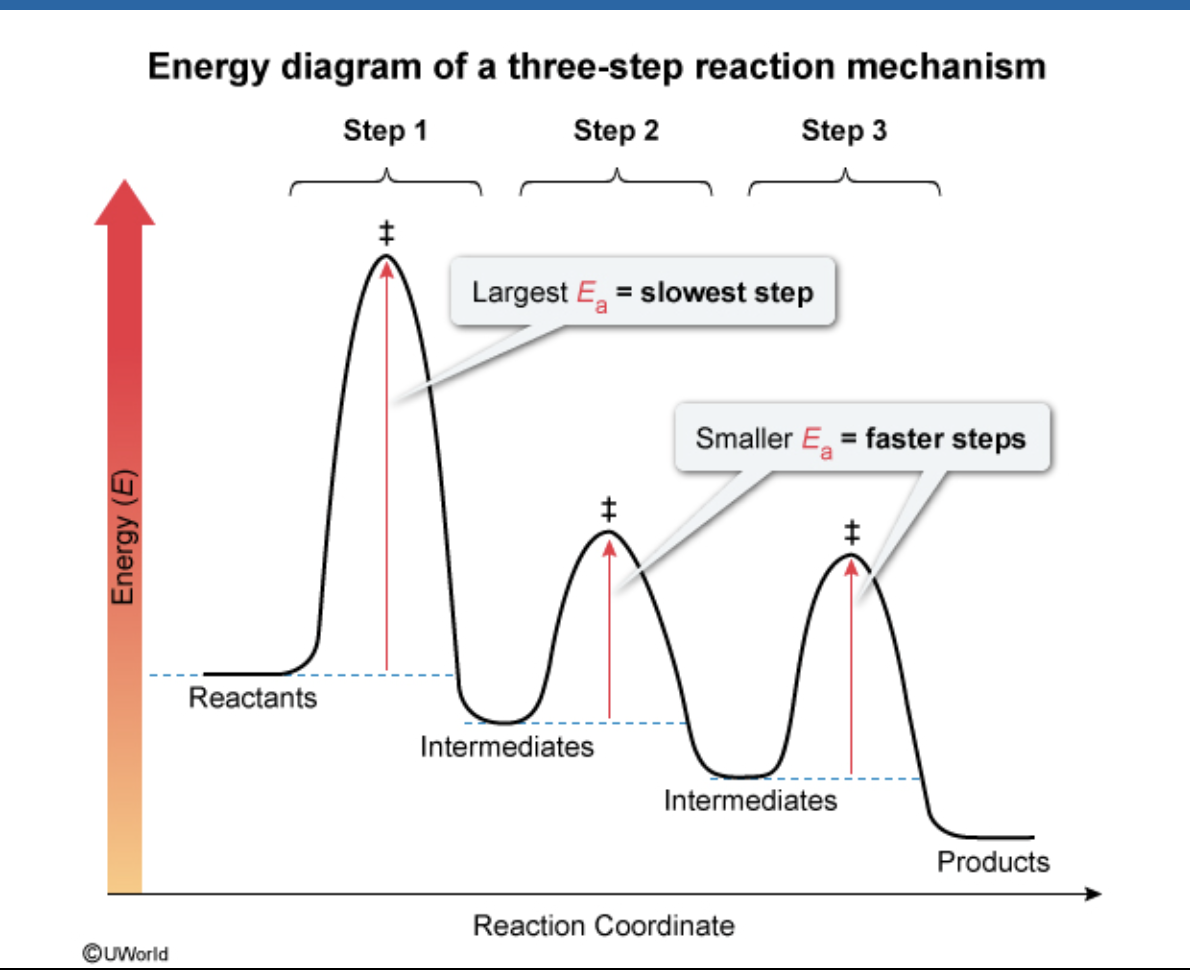
Answer: B

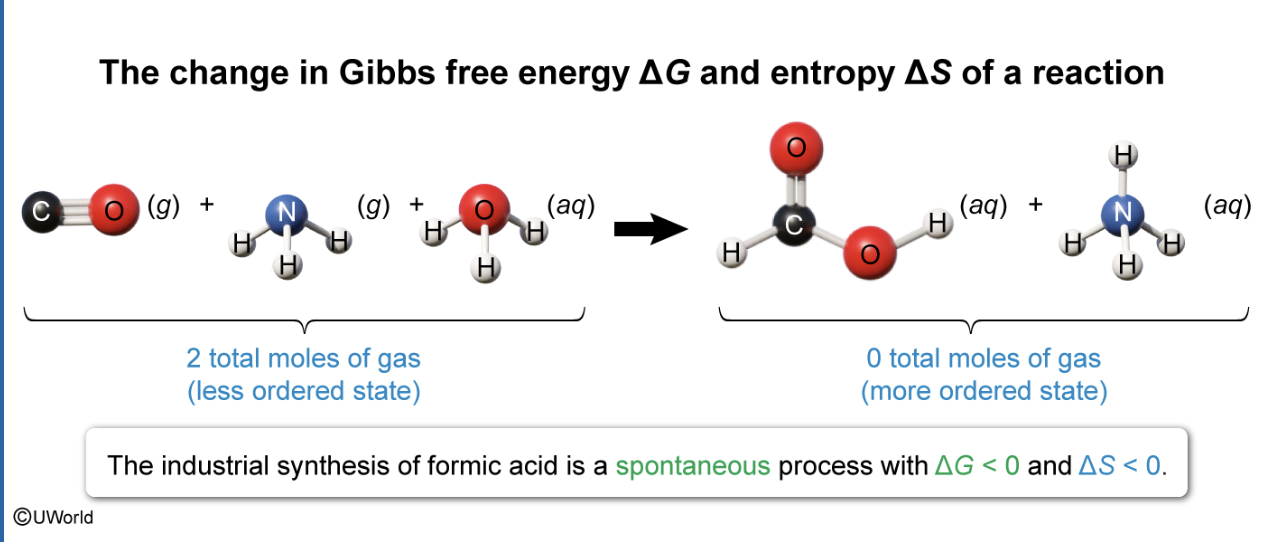
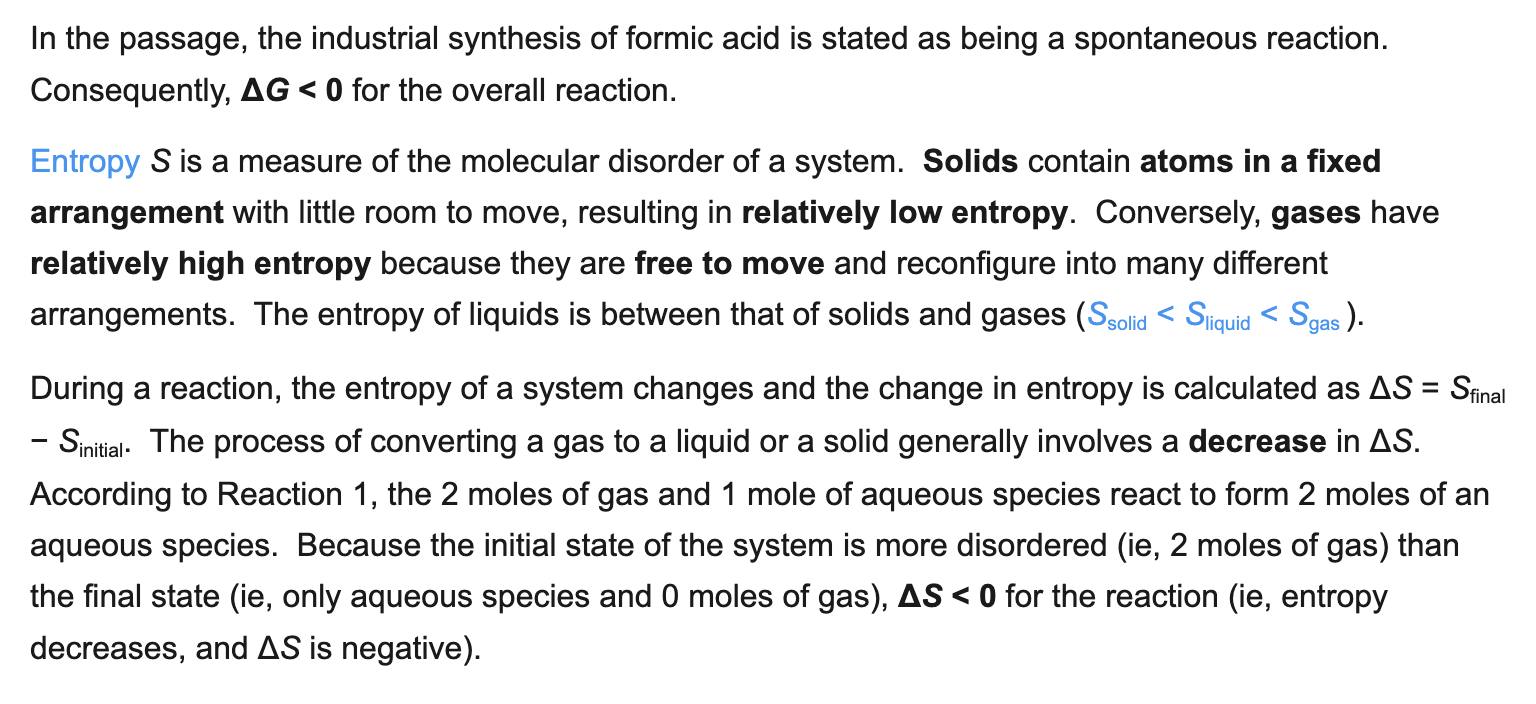
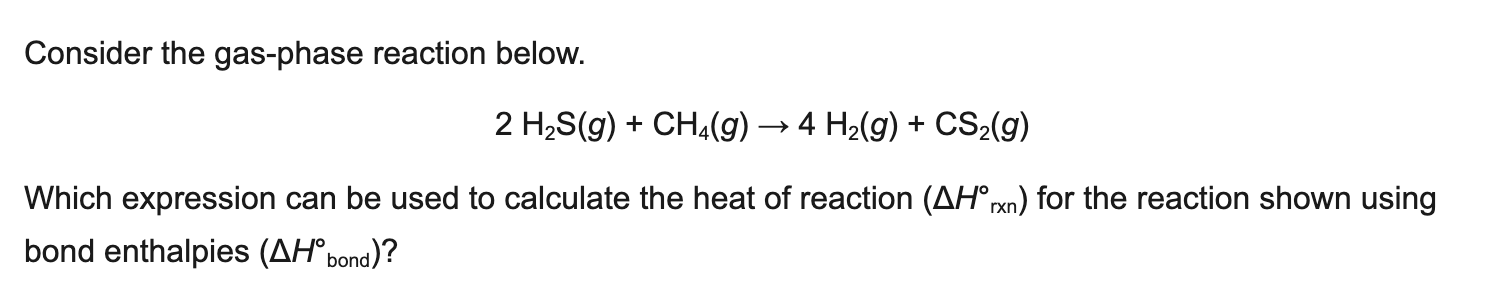

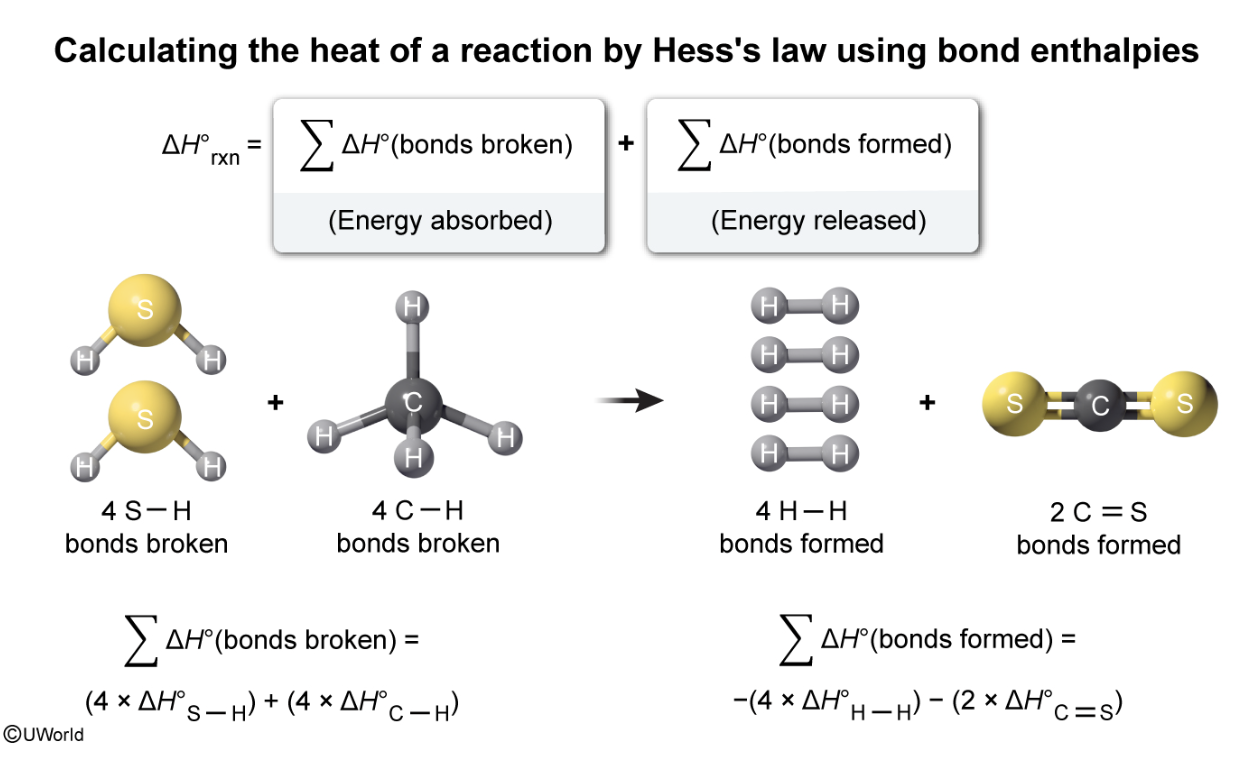
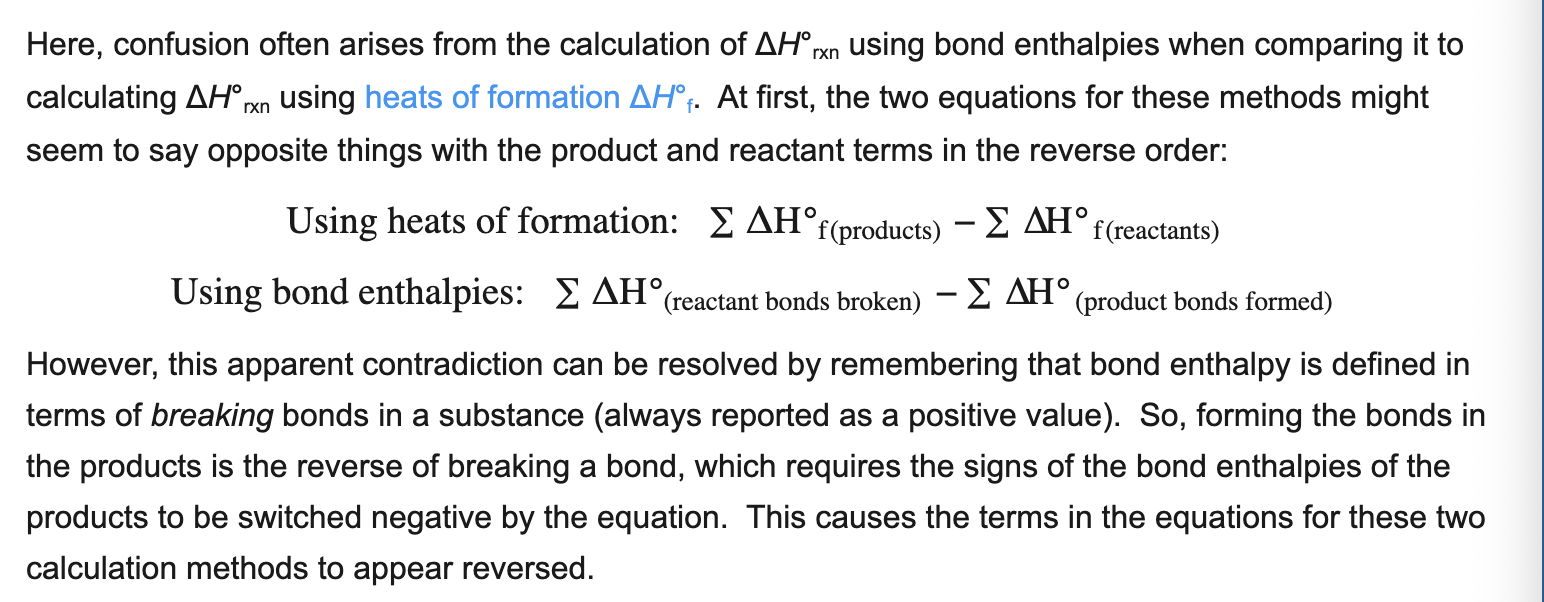
Heat of formation vs bond enthalpies
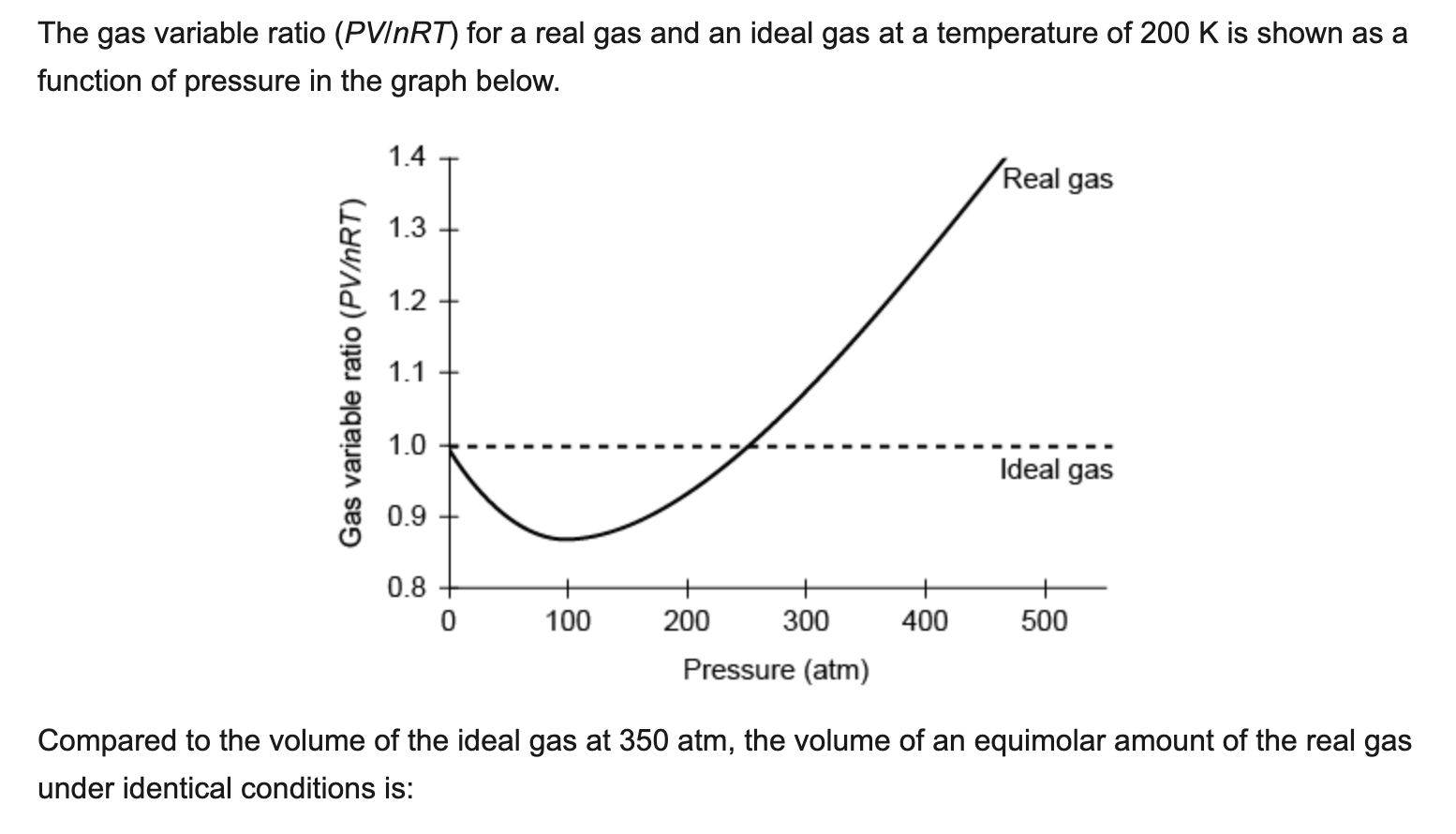
Larger, smaller, or same?
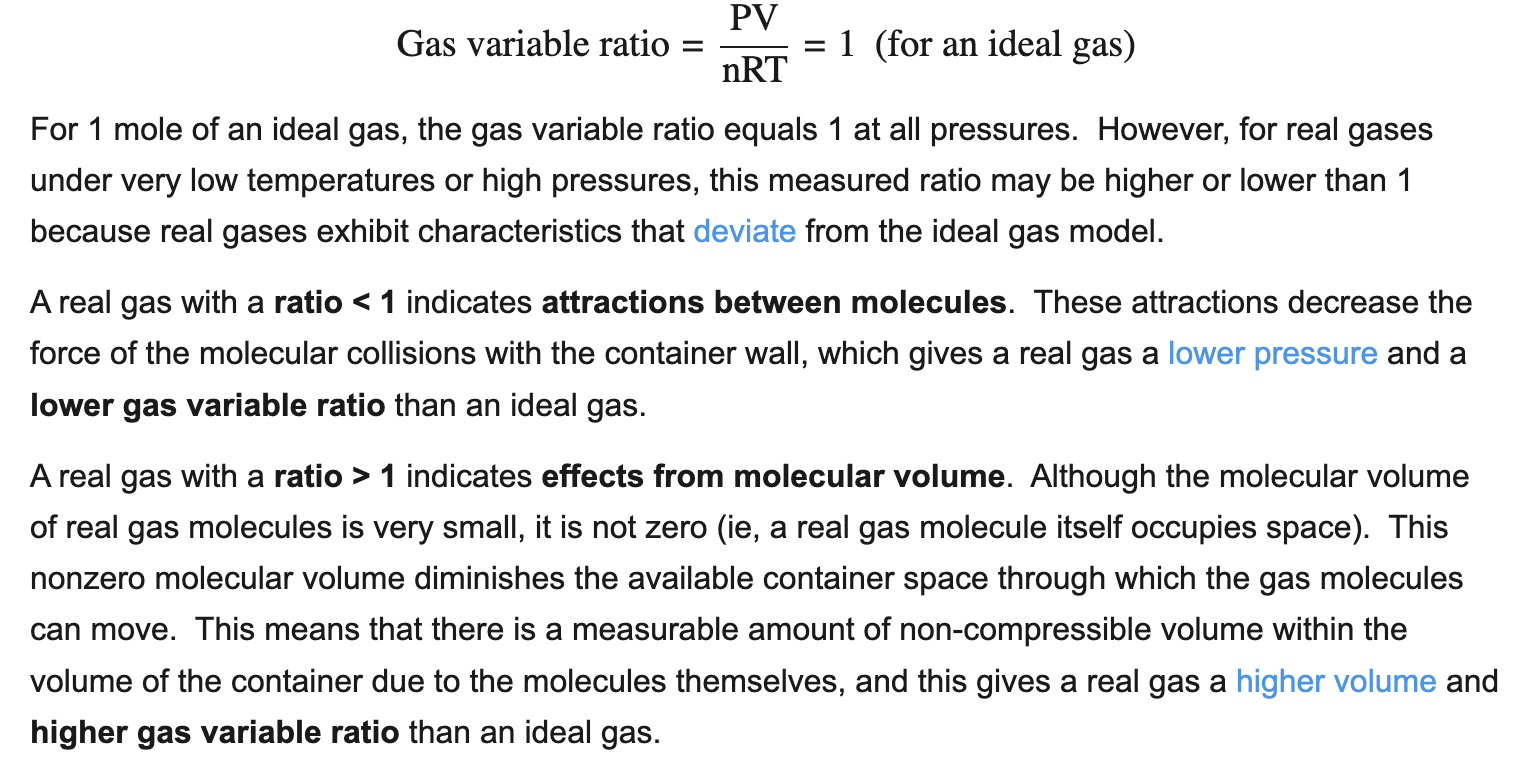
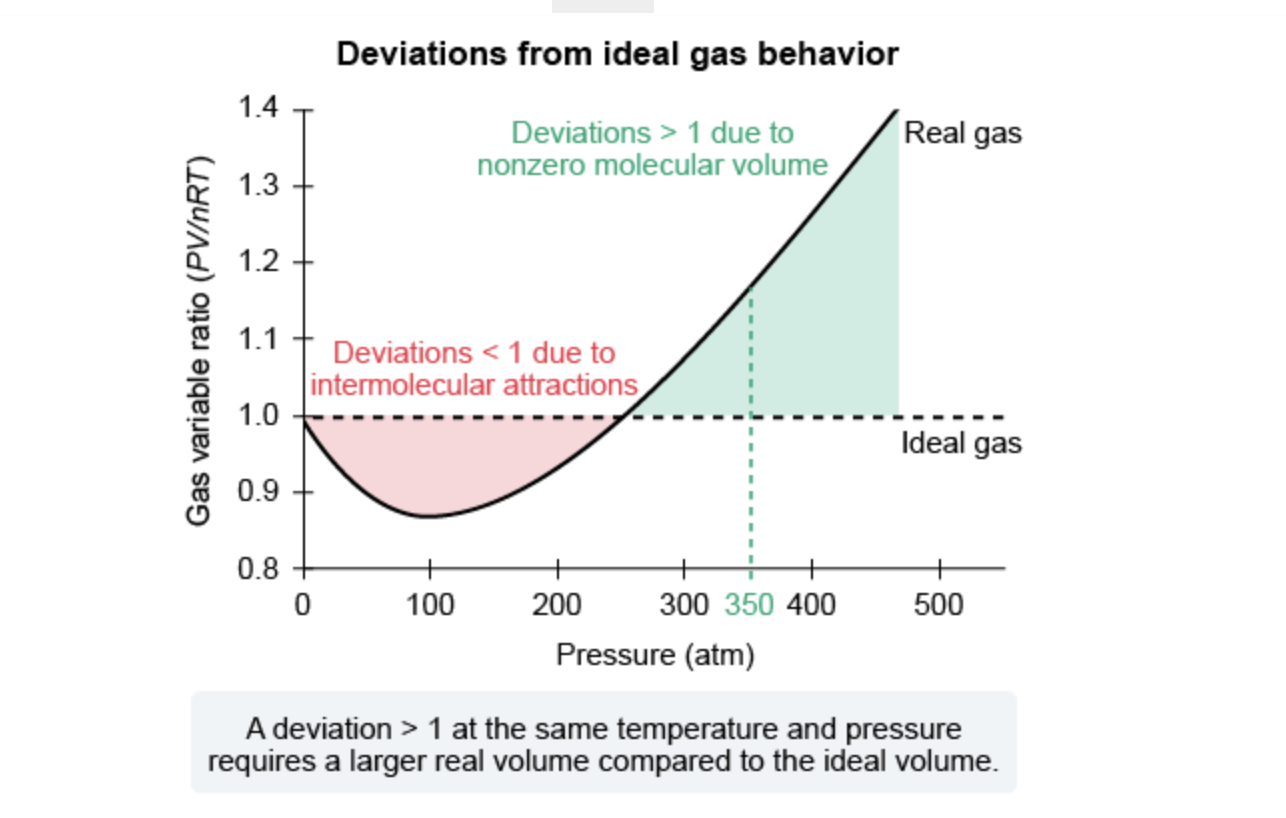
Larger

Passage H
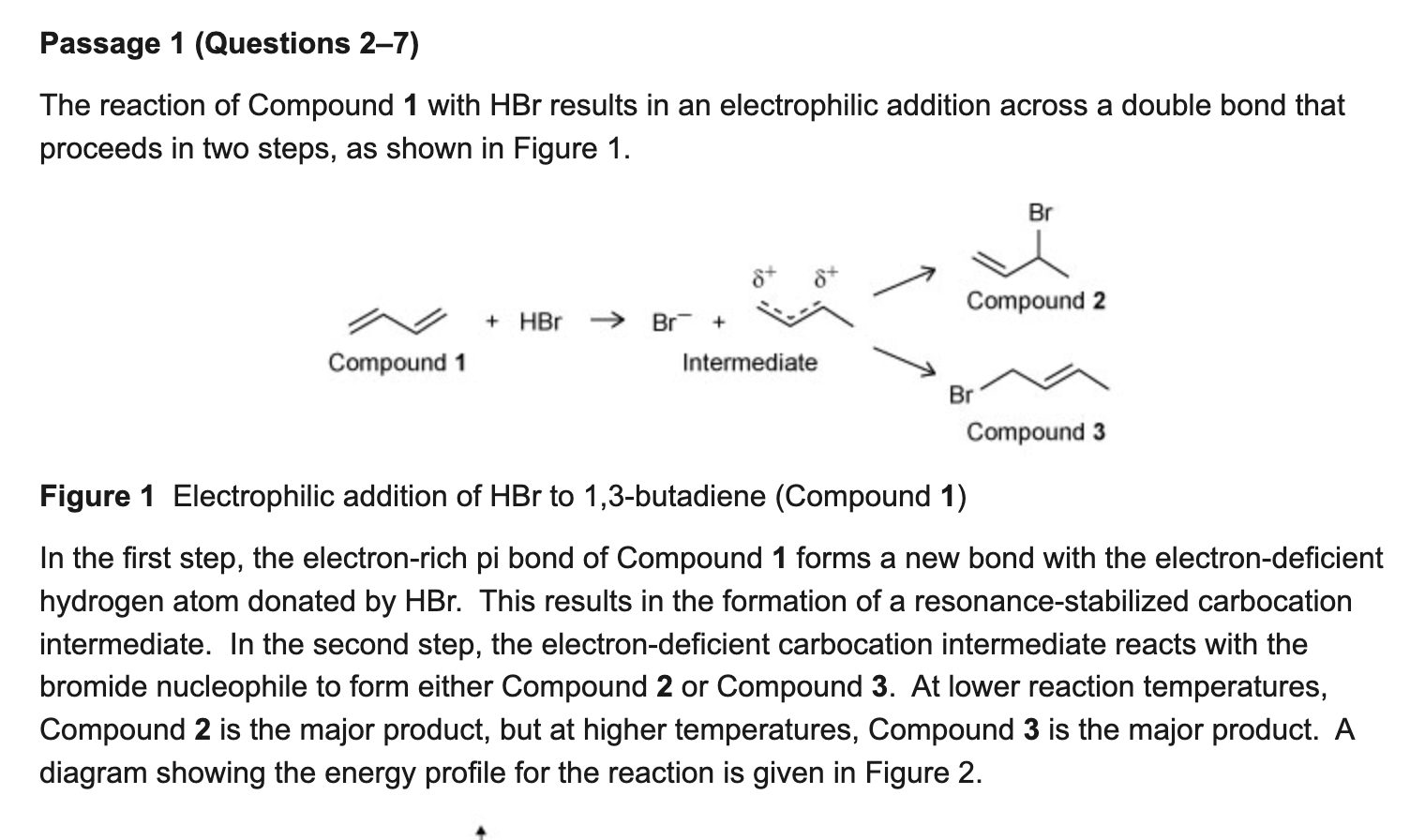
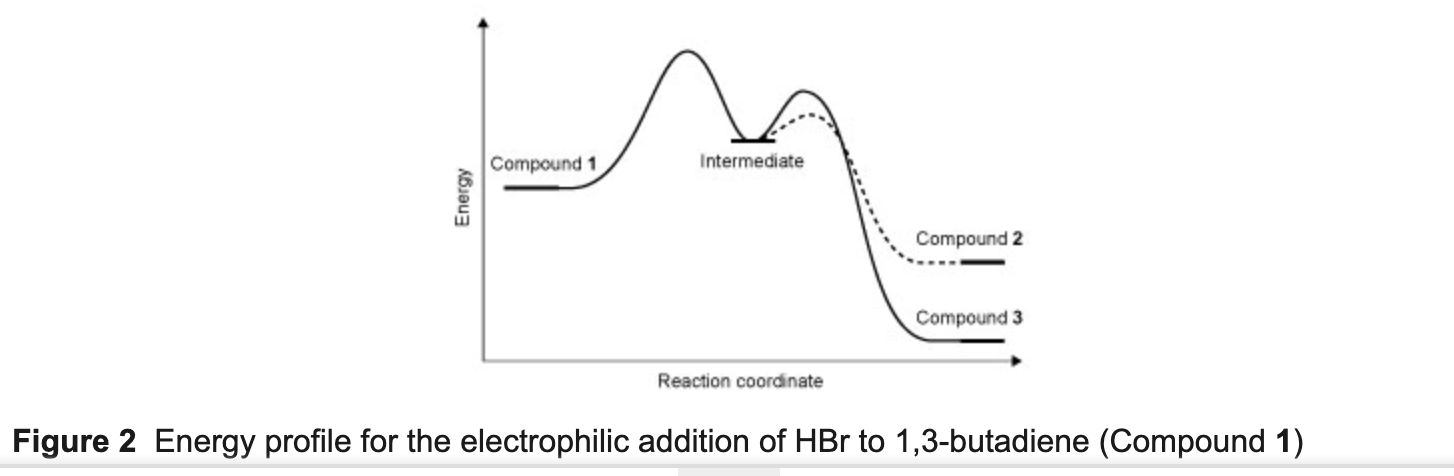

Passage H
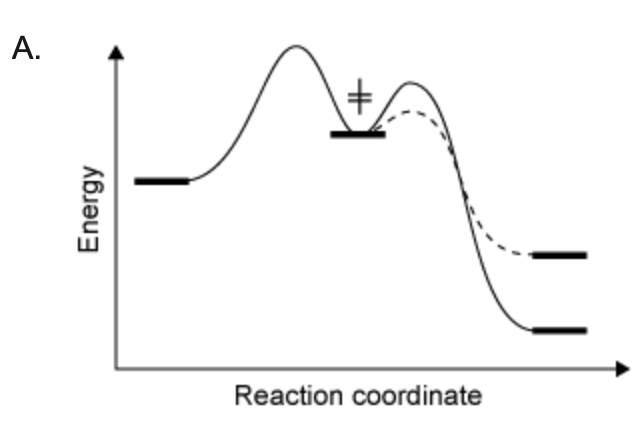
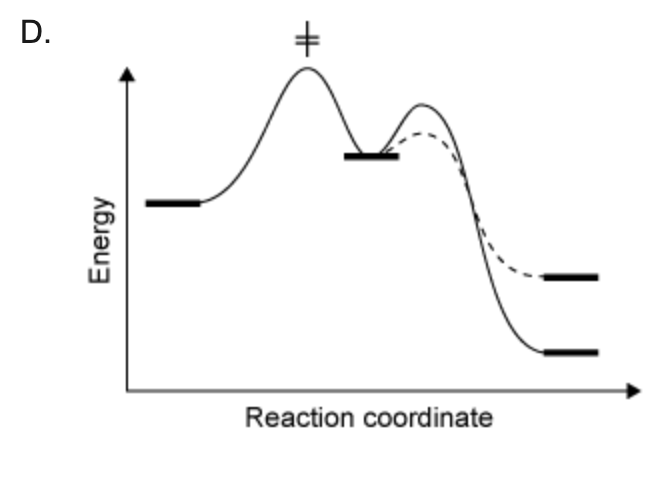
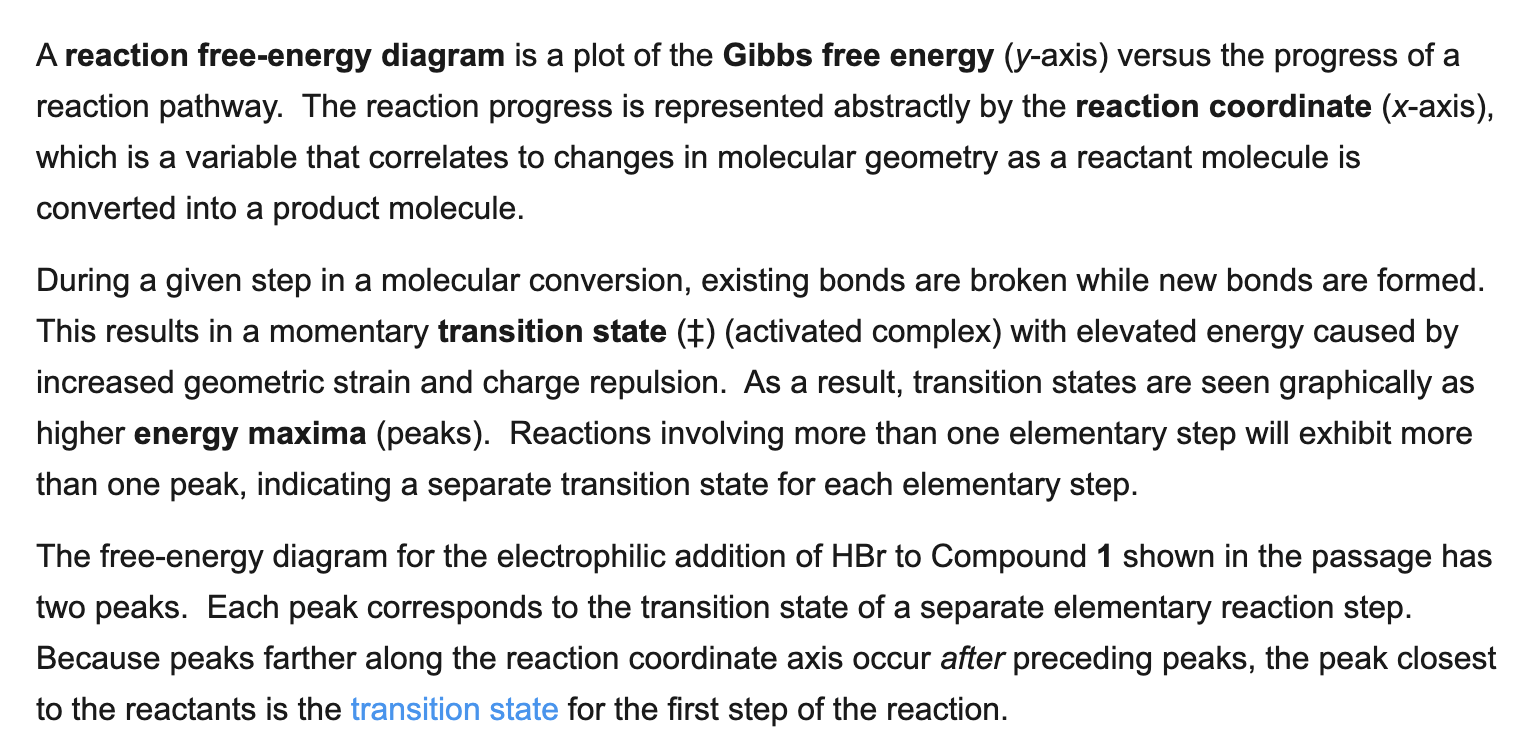
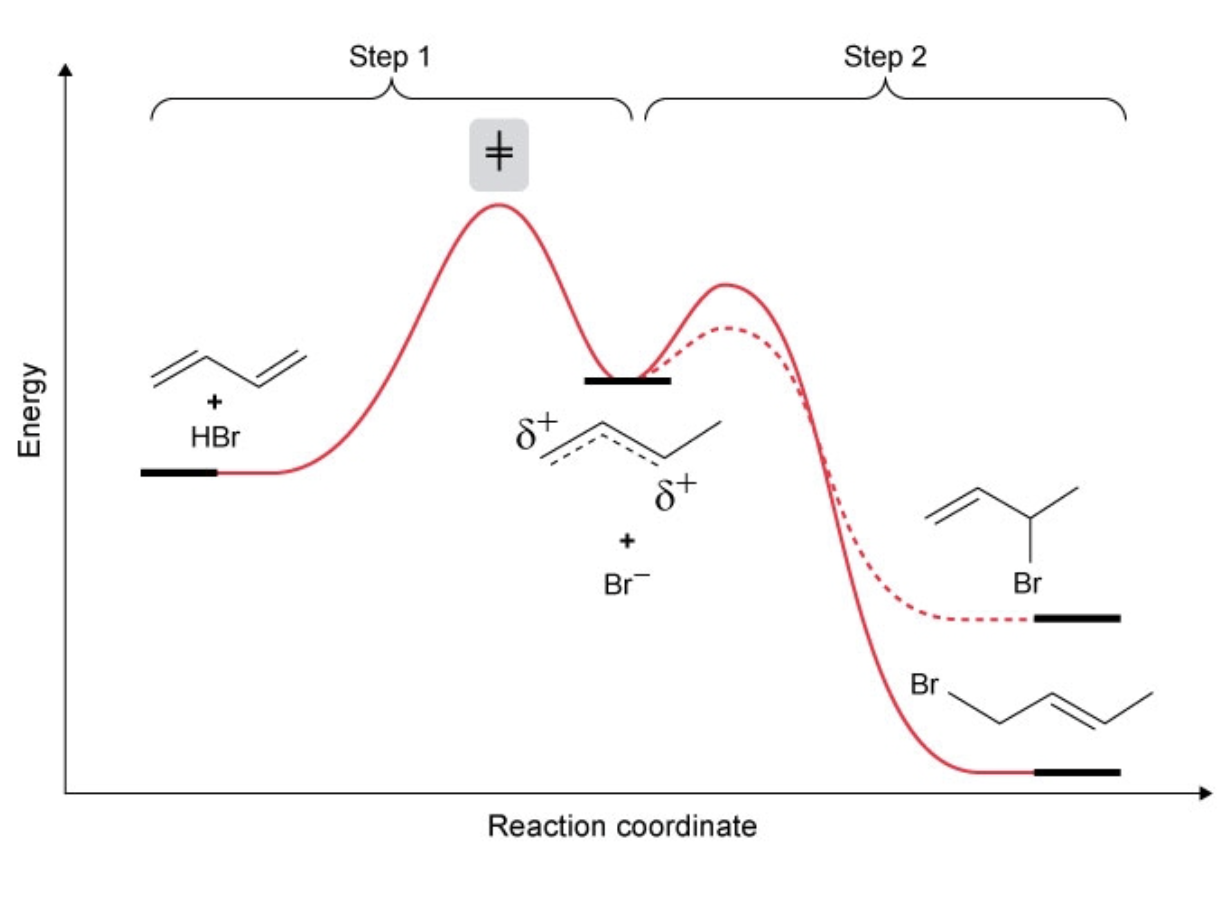
Passage H

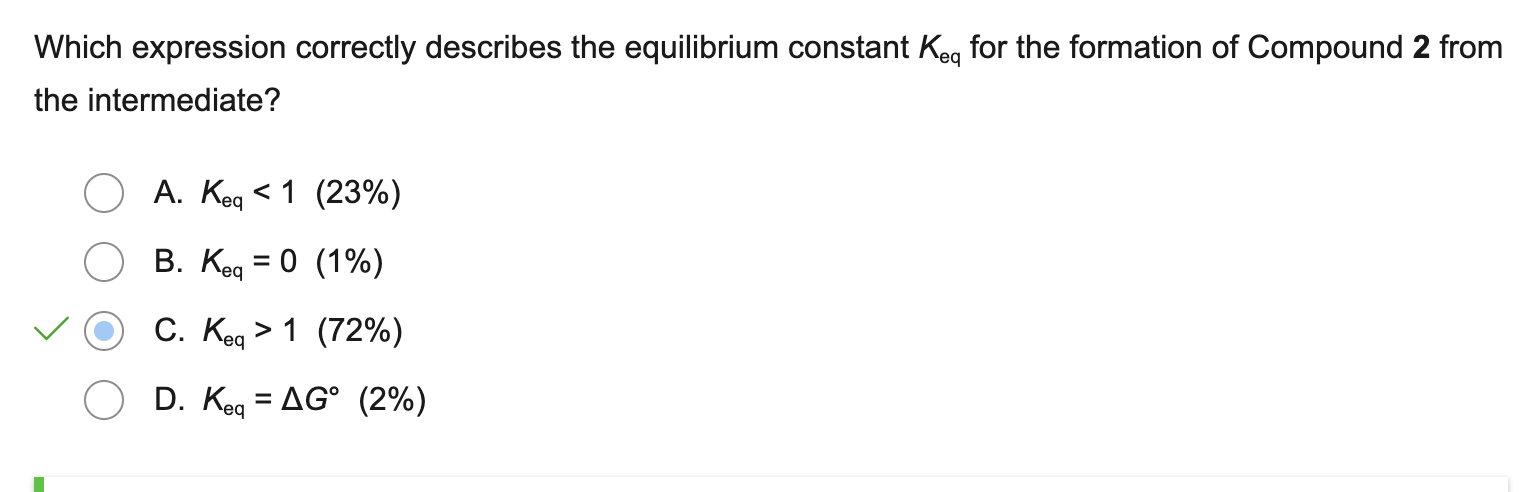
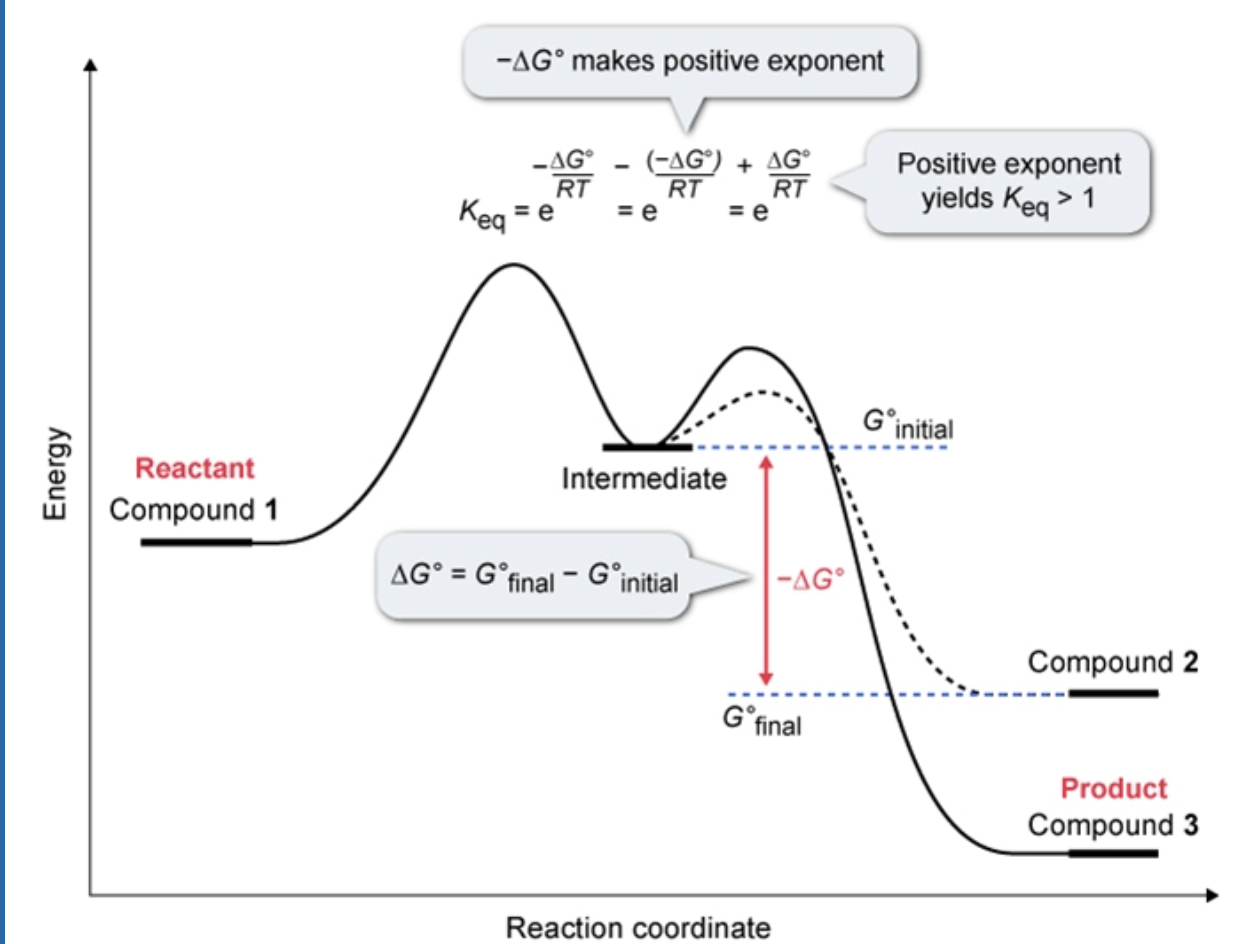
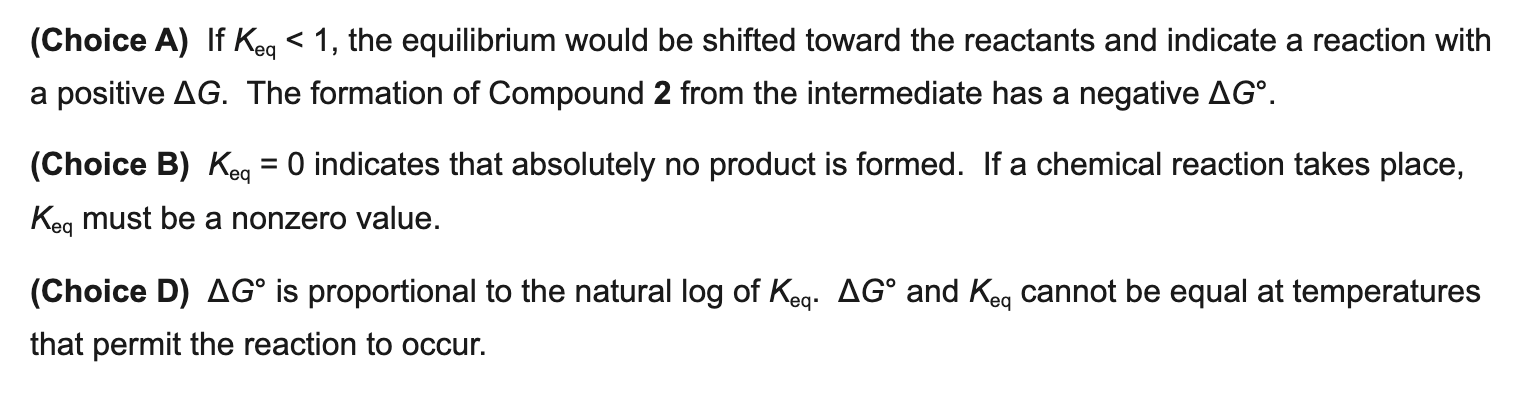
Endergonic or exergonic?
Exergonic
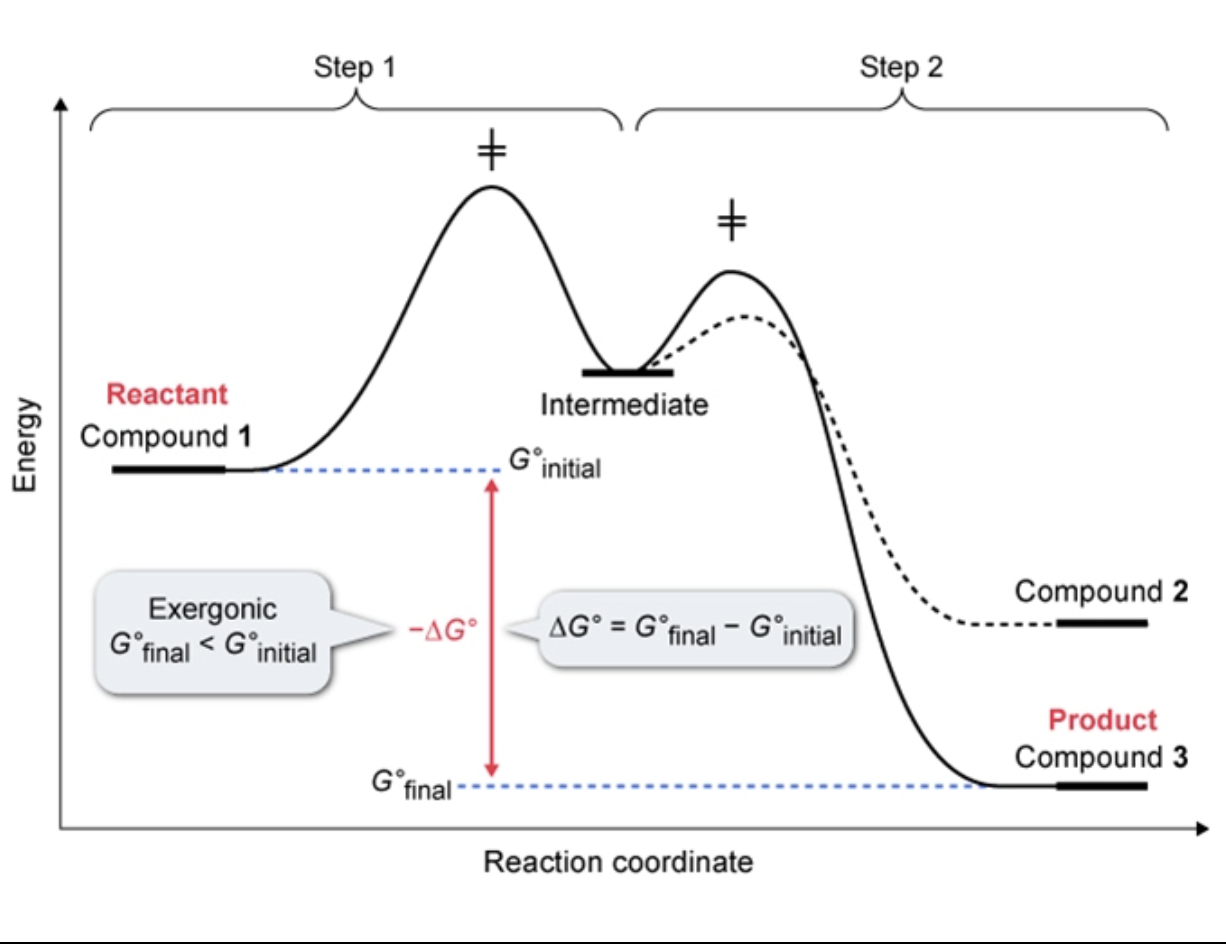
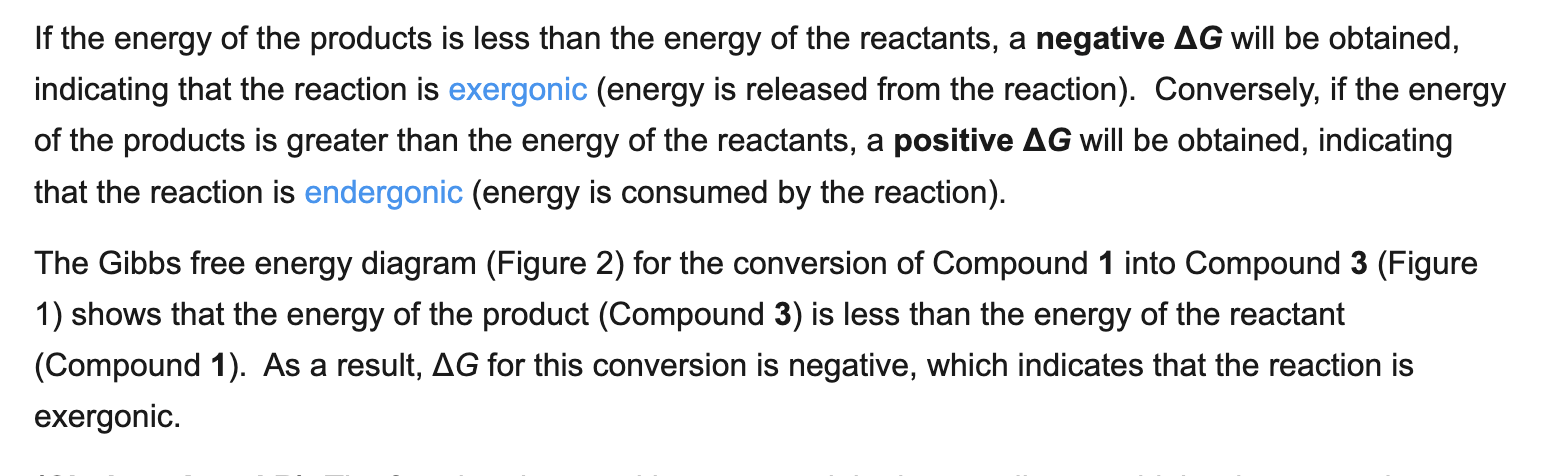
Passage H

Passage H
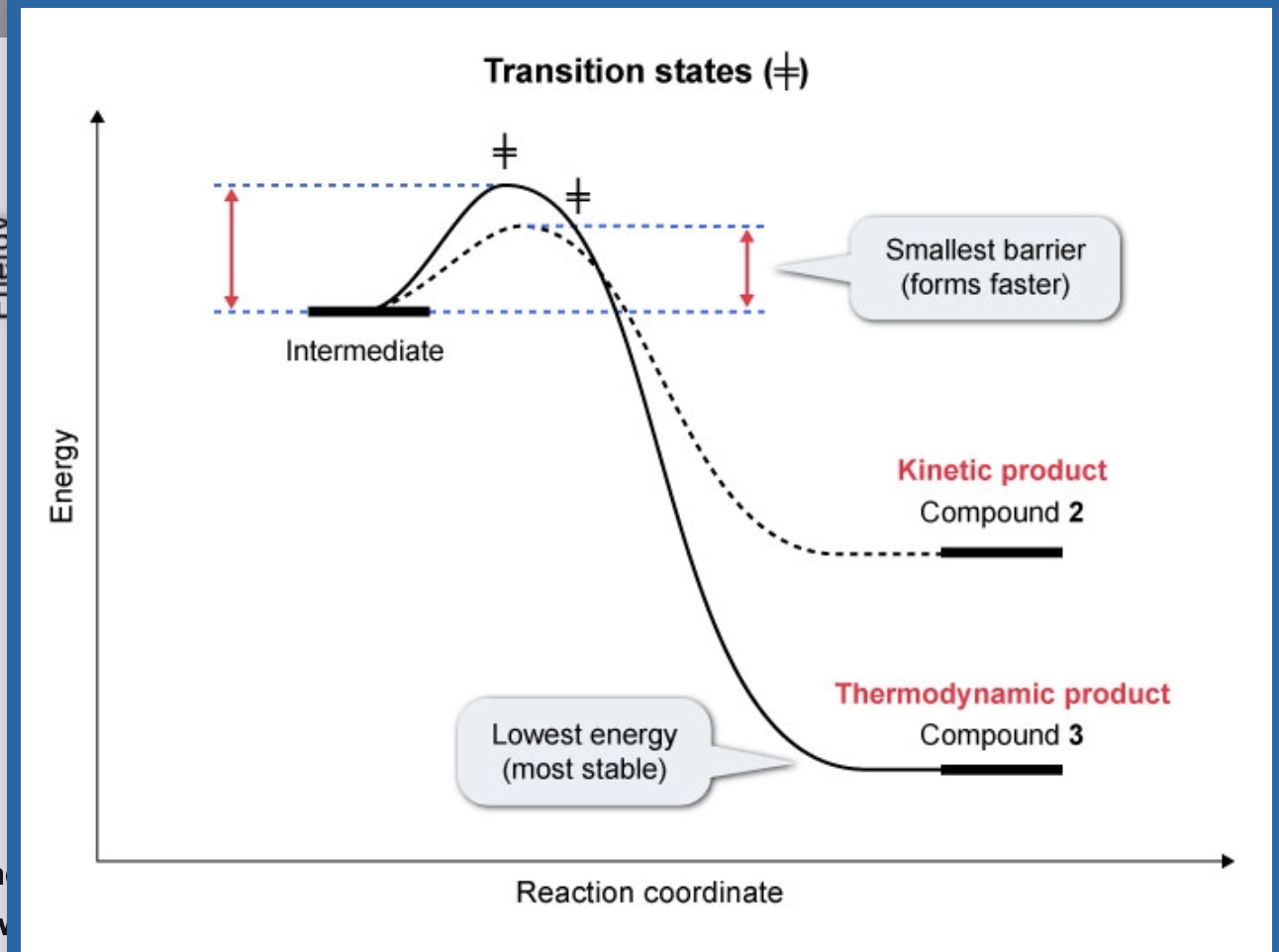
Which compound is kinetic and which is thermodynamic product?
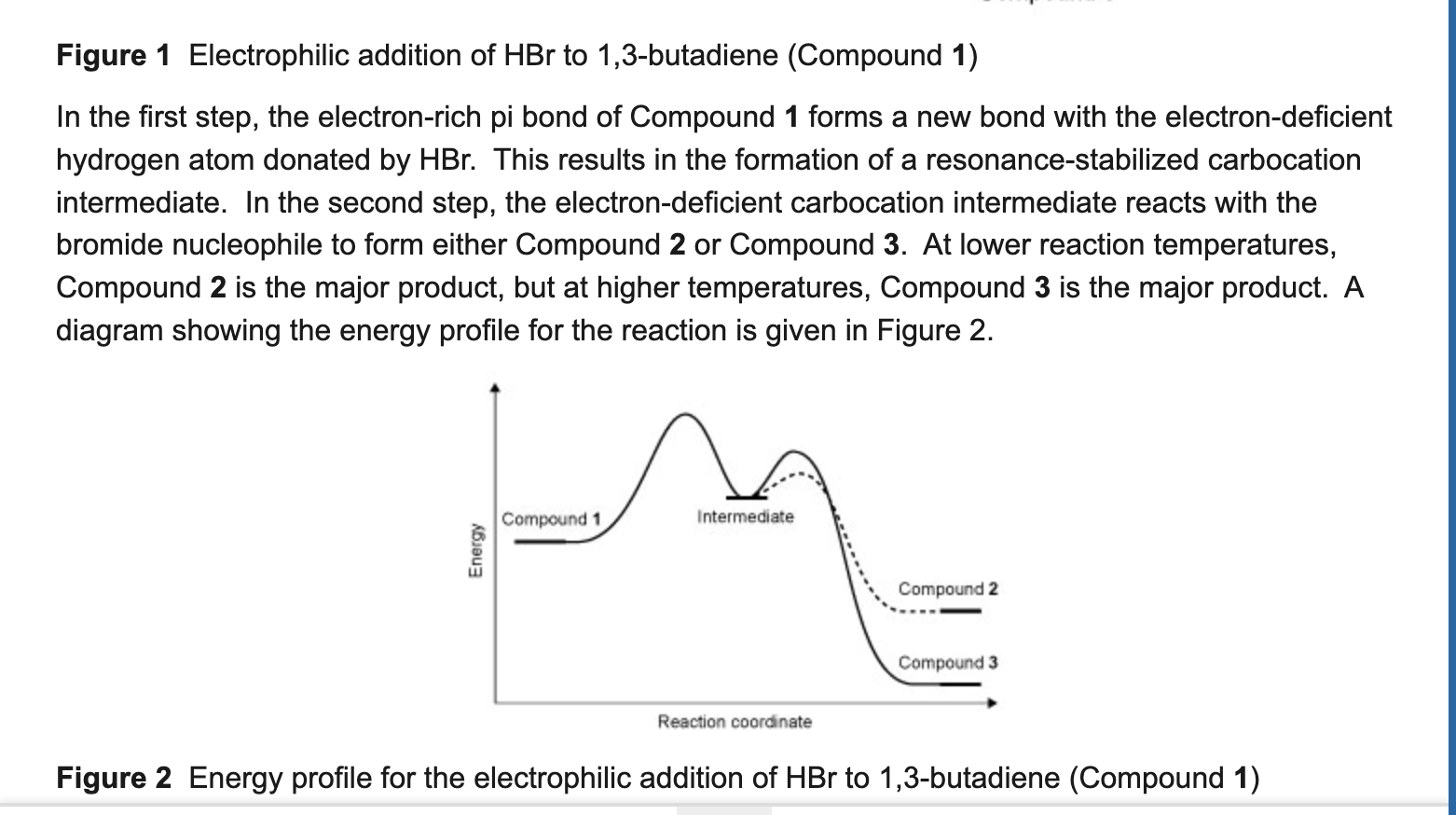
2- kinetic (lower Ea), 3- thermodynamic (most stable-lowest energy)
Passage I
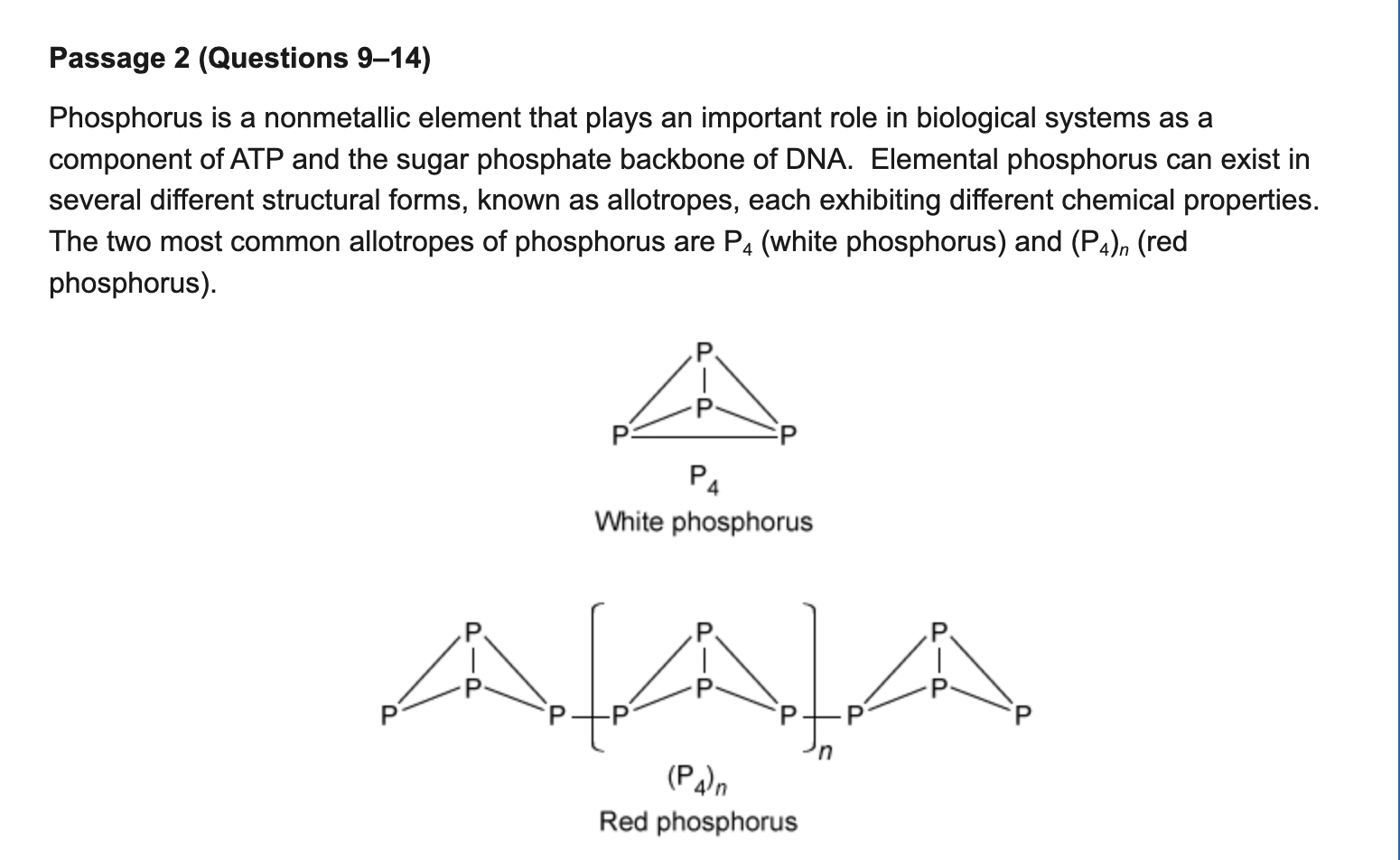
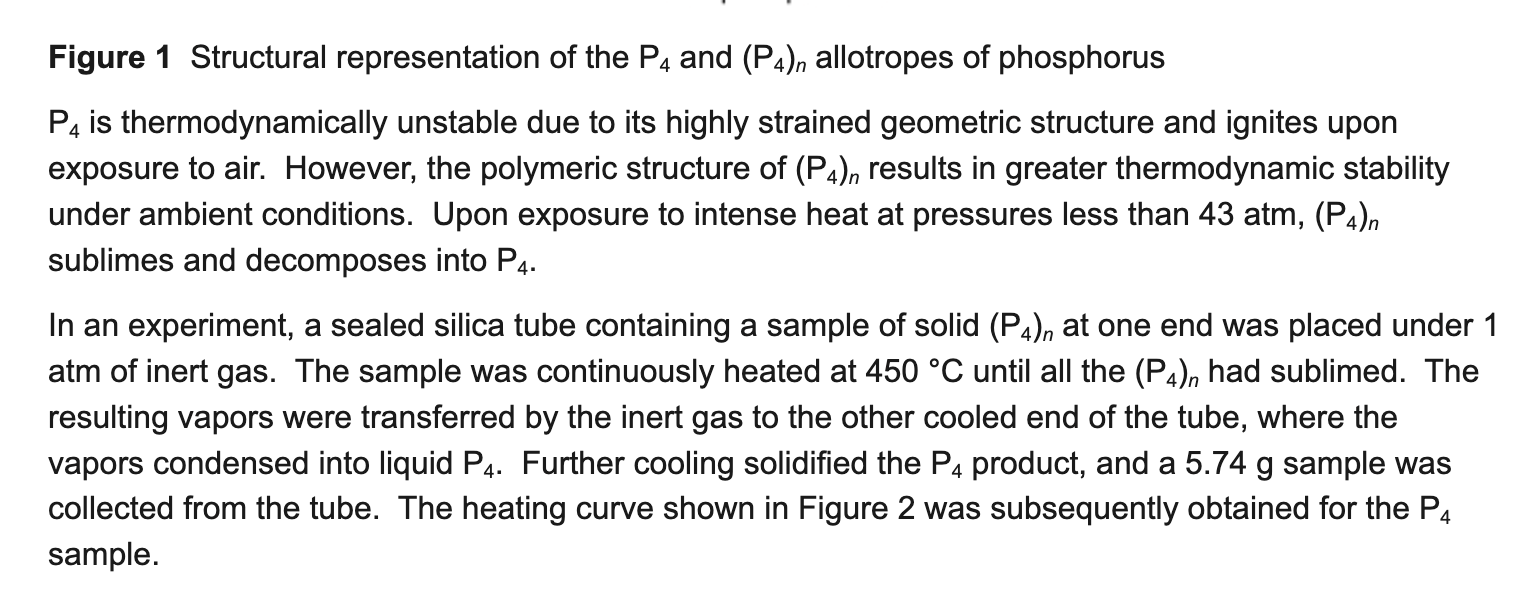
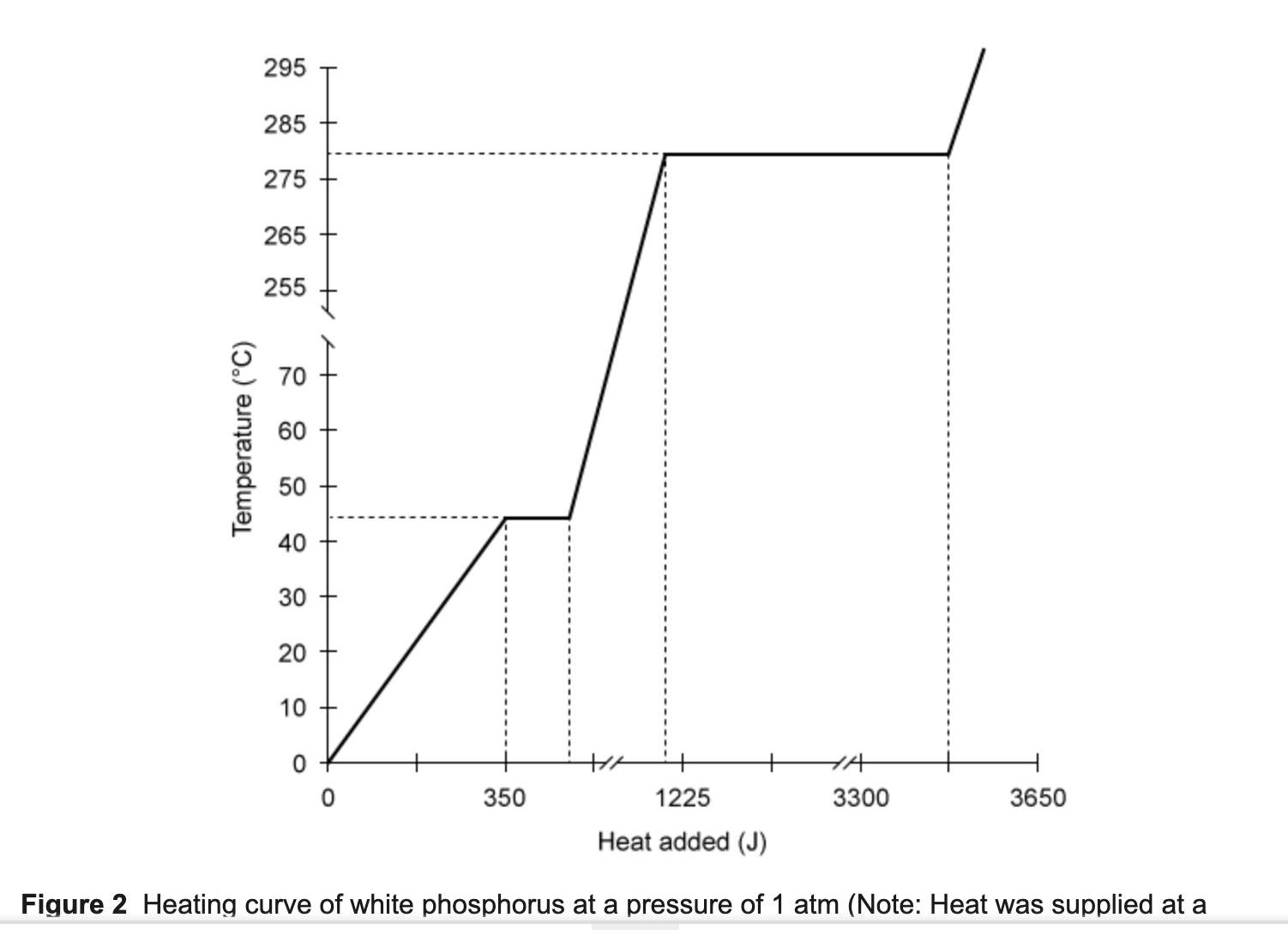

Passage I

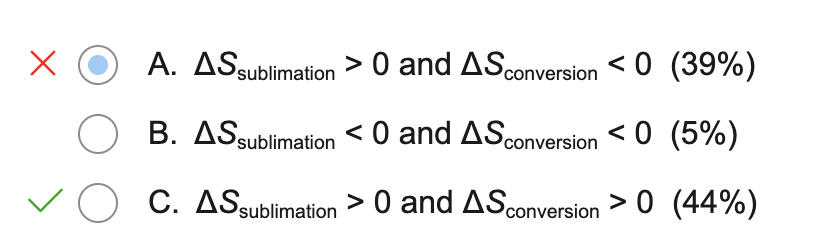
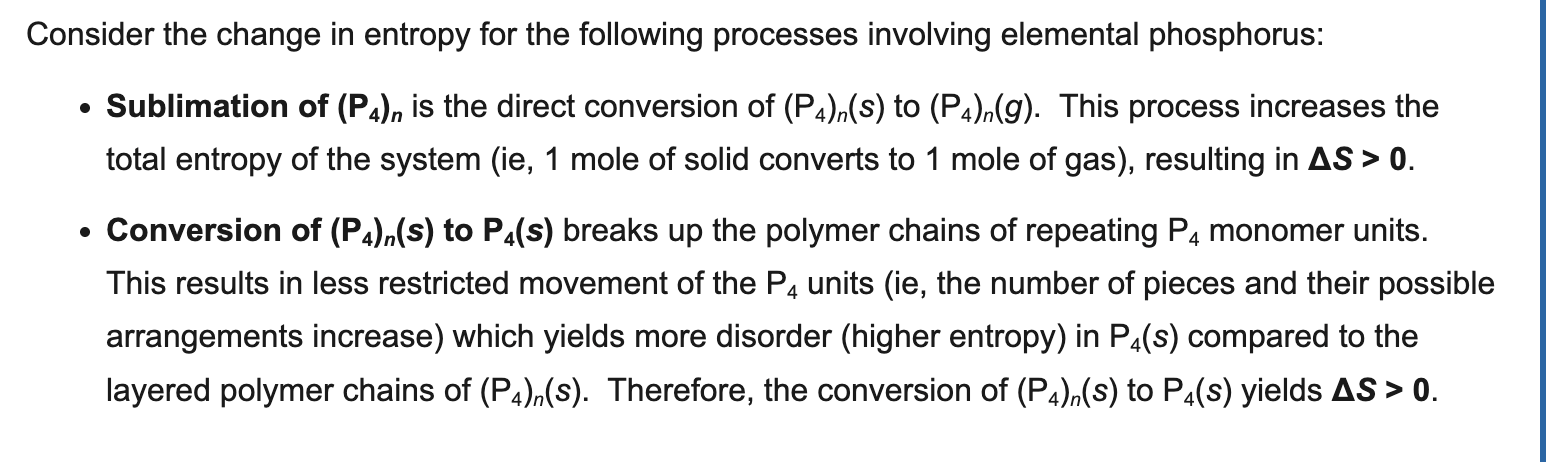
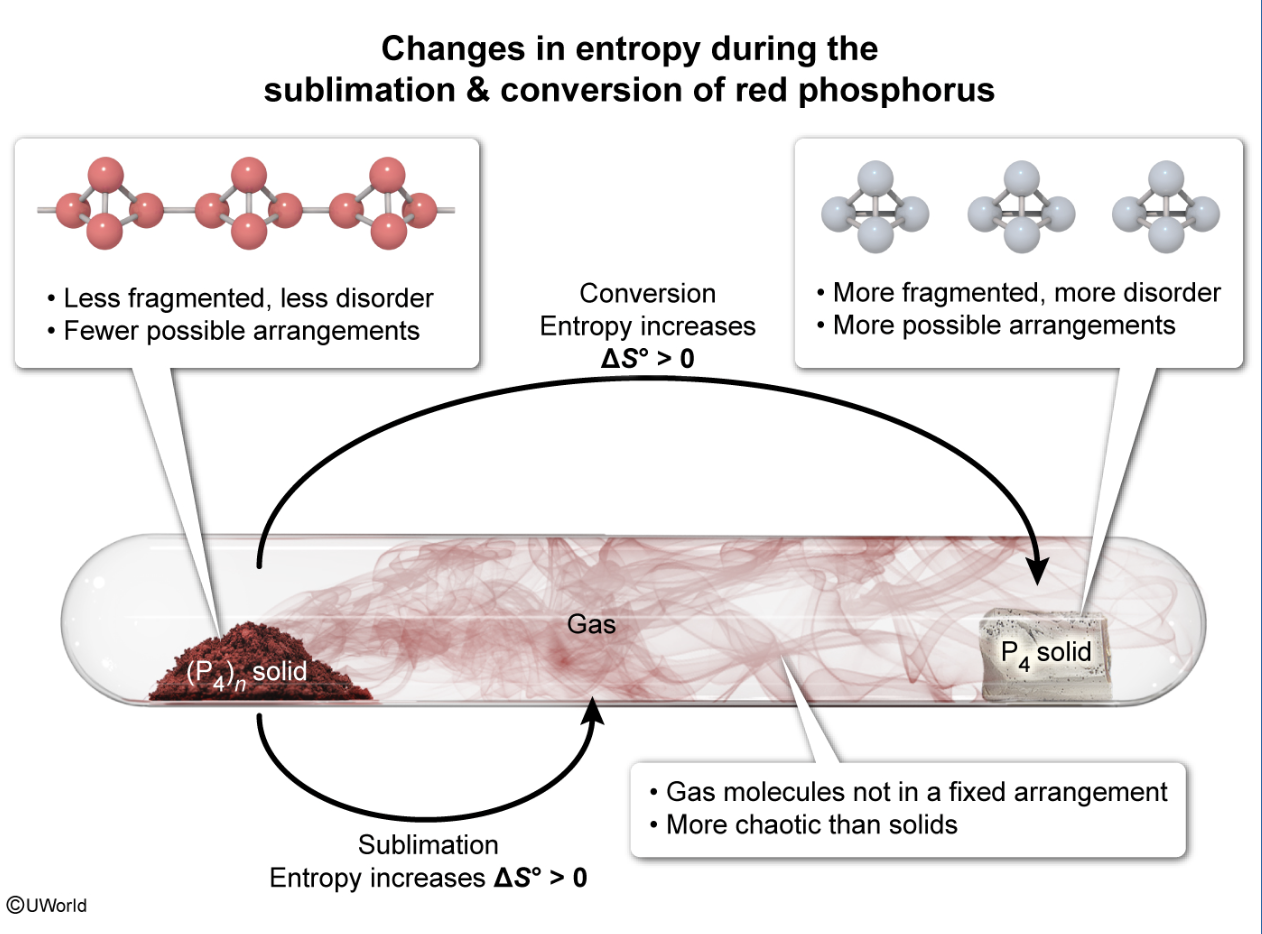
state whether each entropy is less than or greater than 0
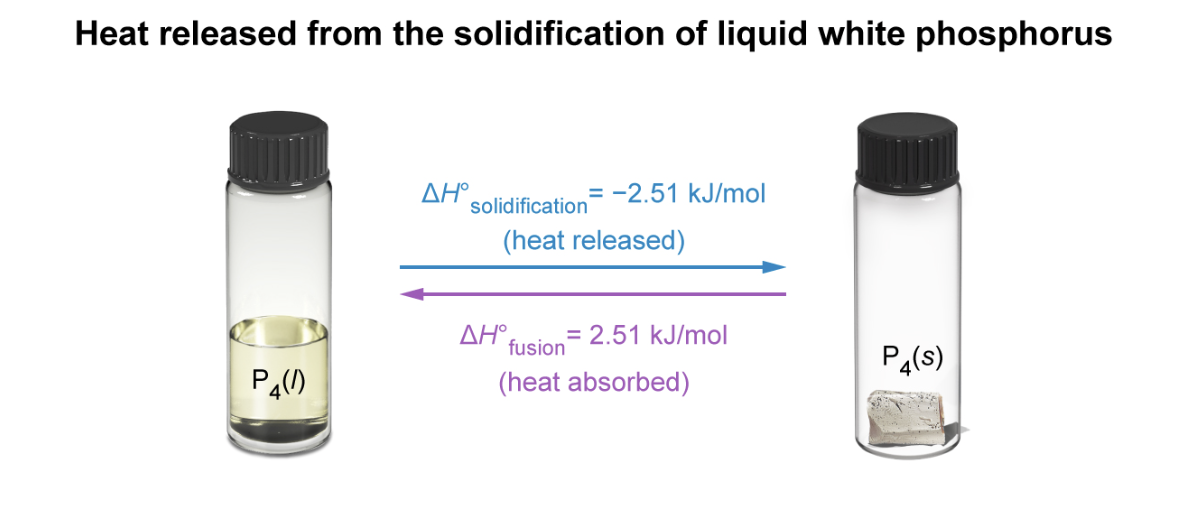
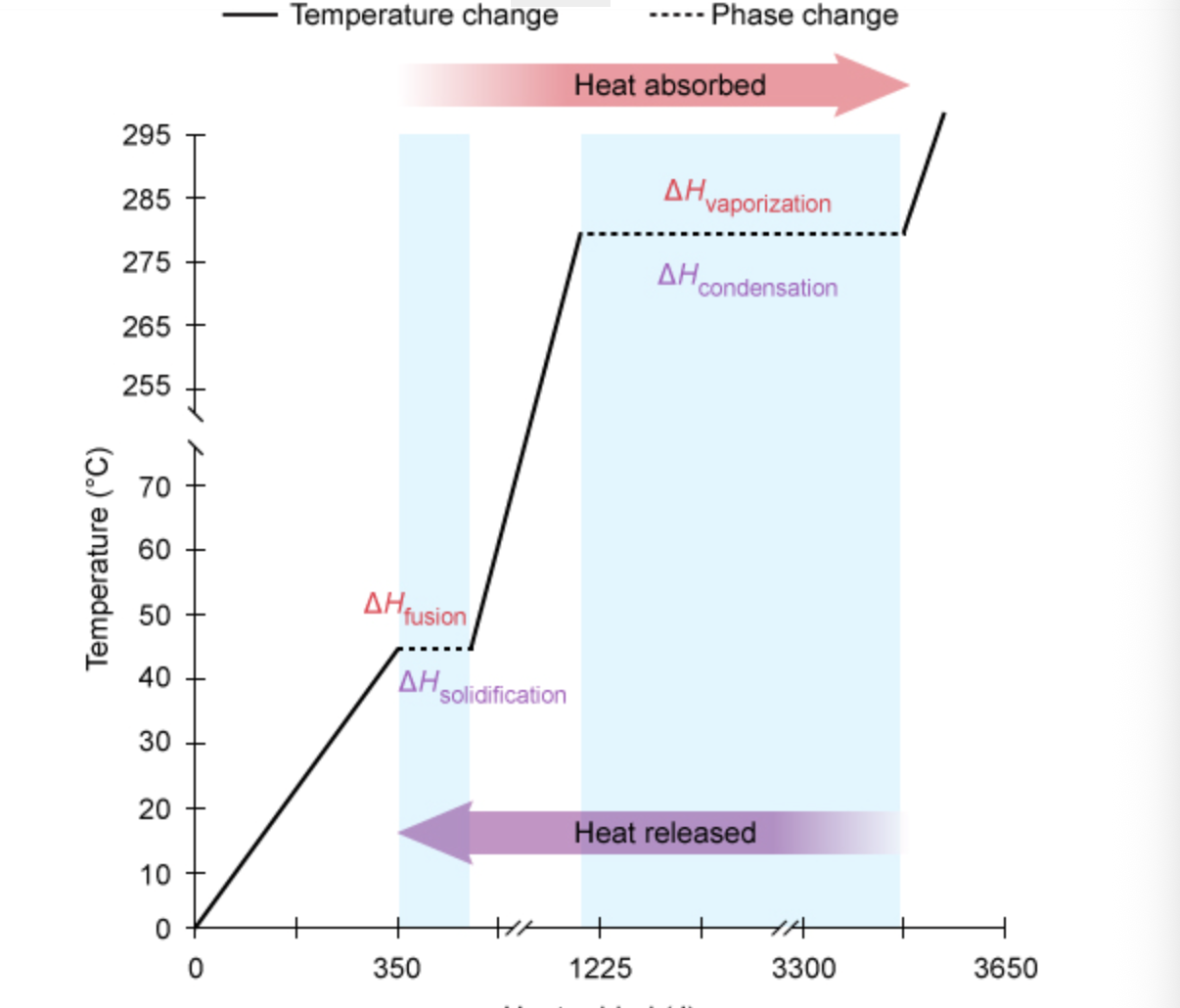
Heat of fusion = to?
Heat of solidification
Heat of vaporization =?
Heat of condensation


open system vs isolated system, vs closed vs invalid image
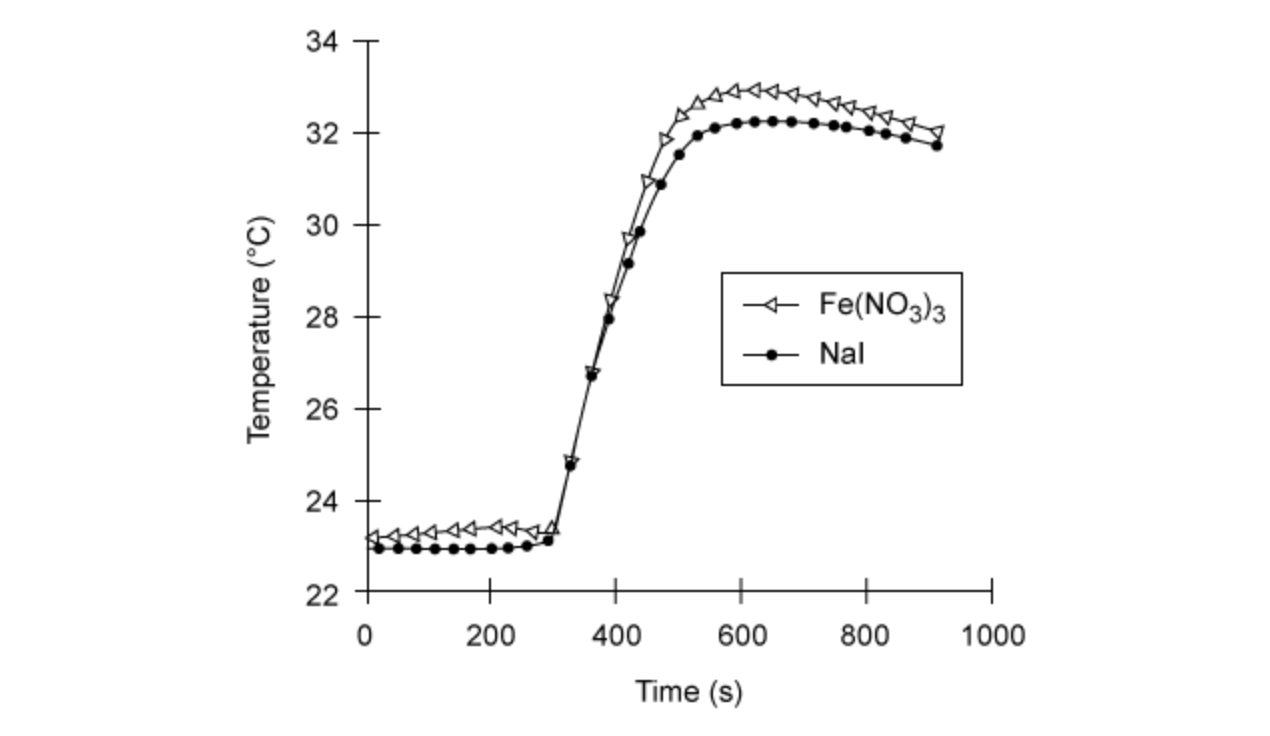

Answer B
33-23= 10
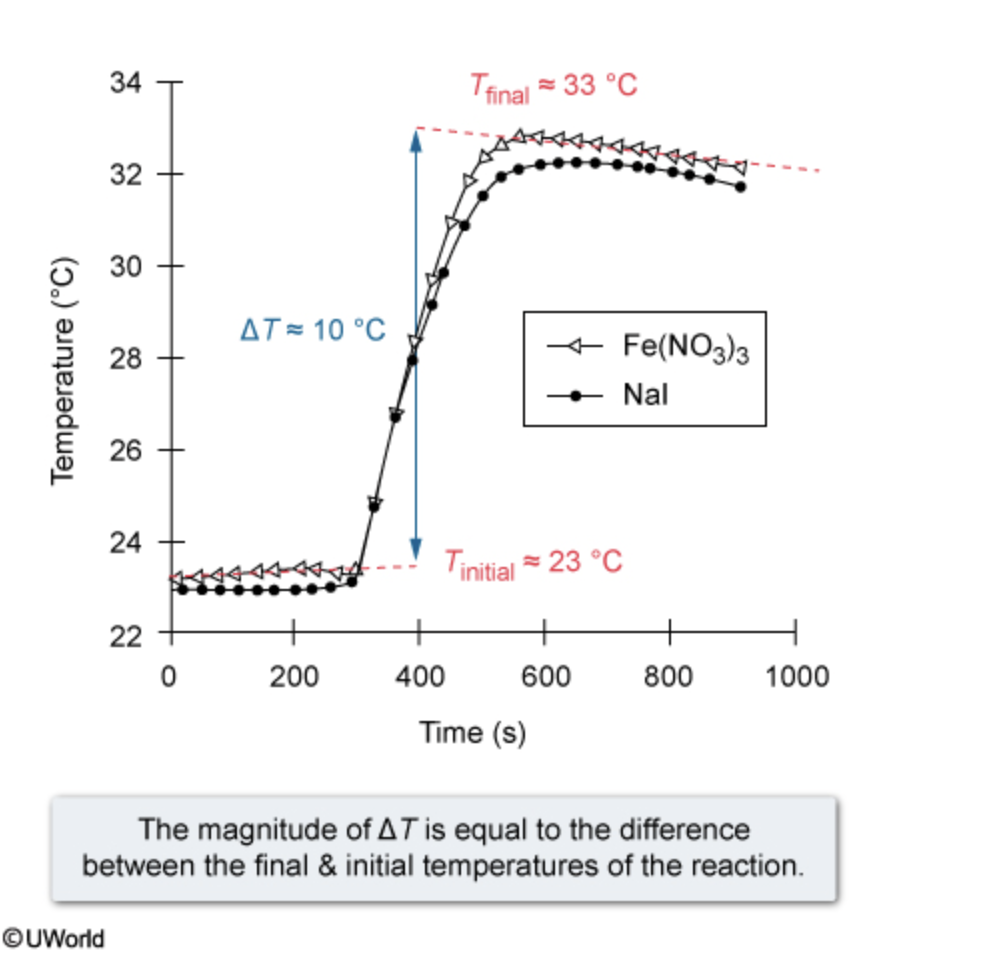

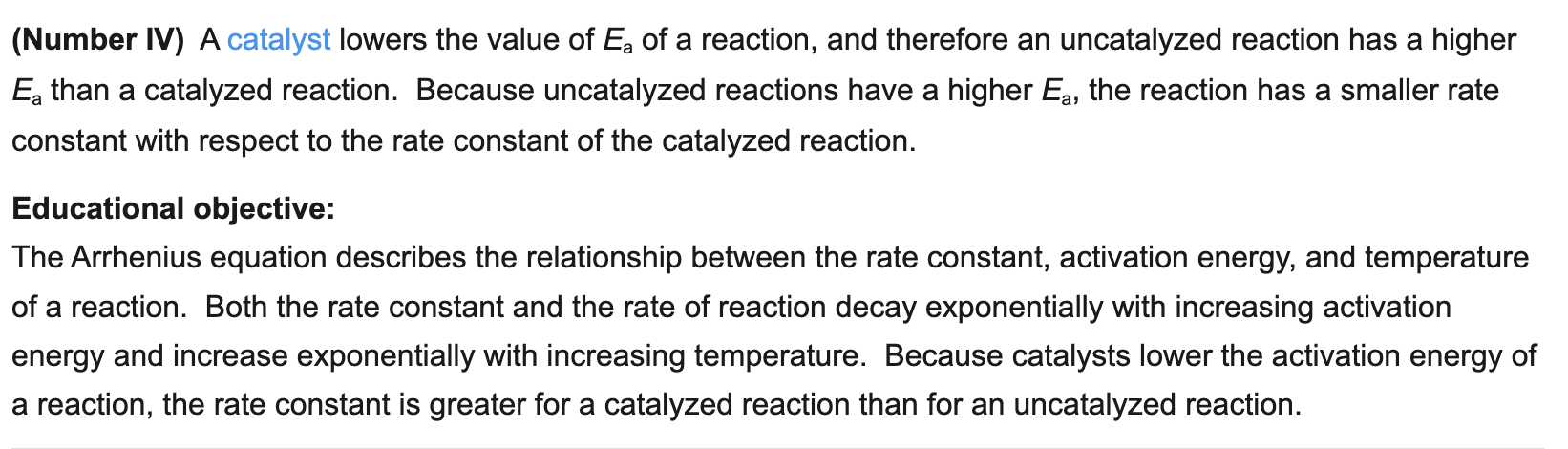
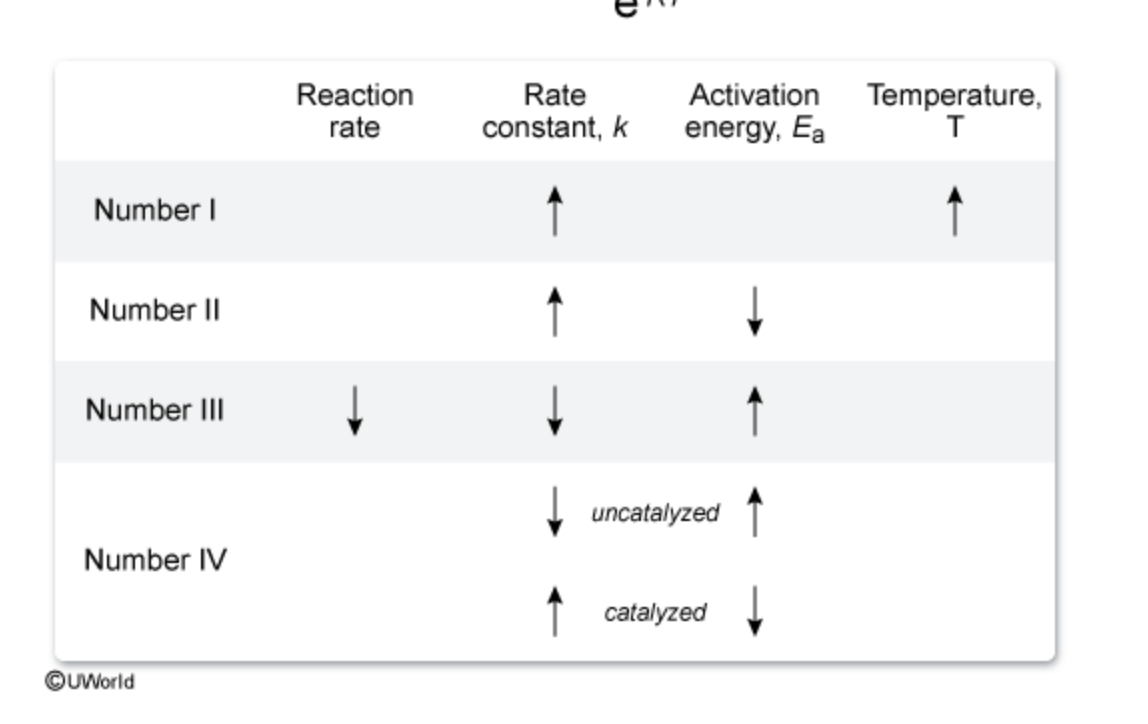
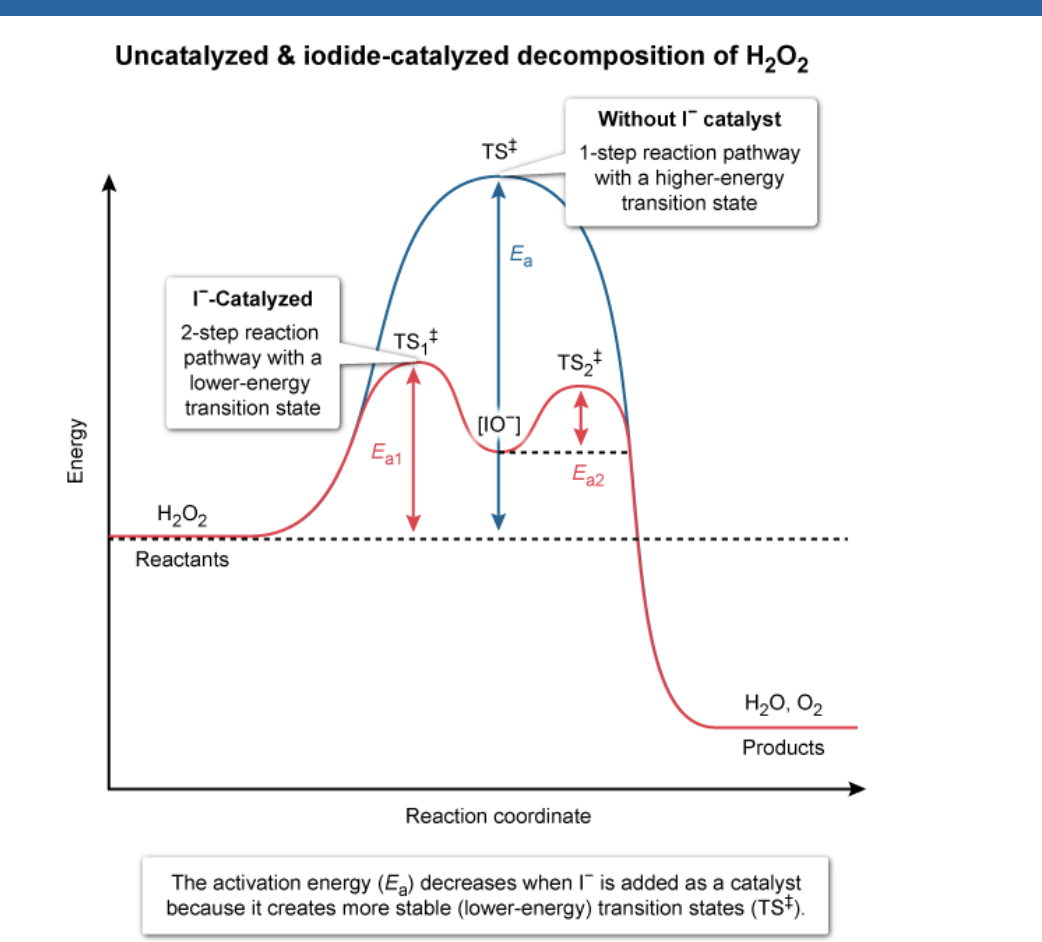
Fe3+ and I- (catalysts in general) do not affec thte heat of reaction
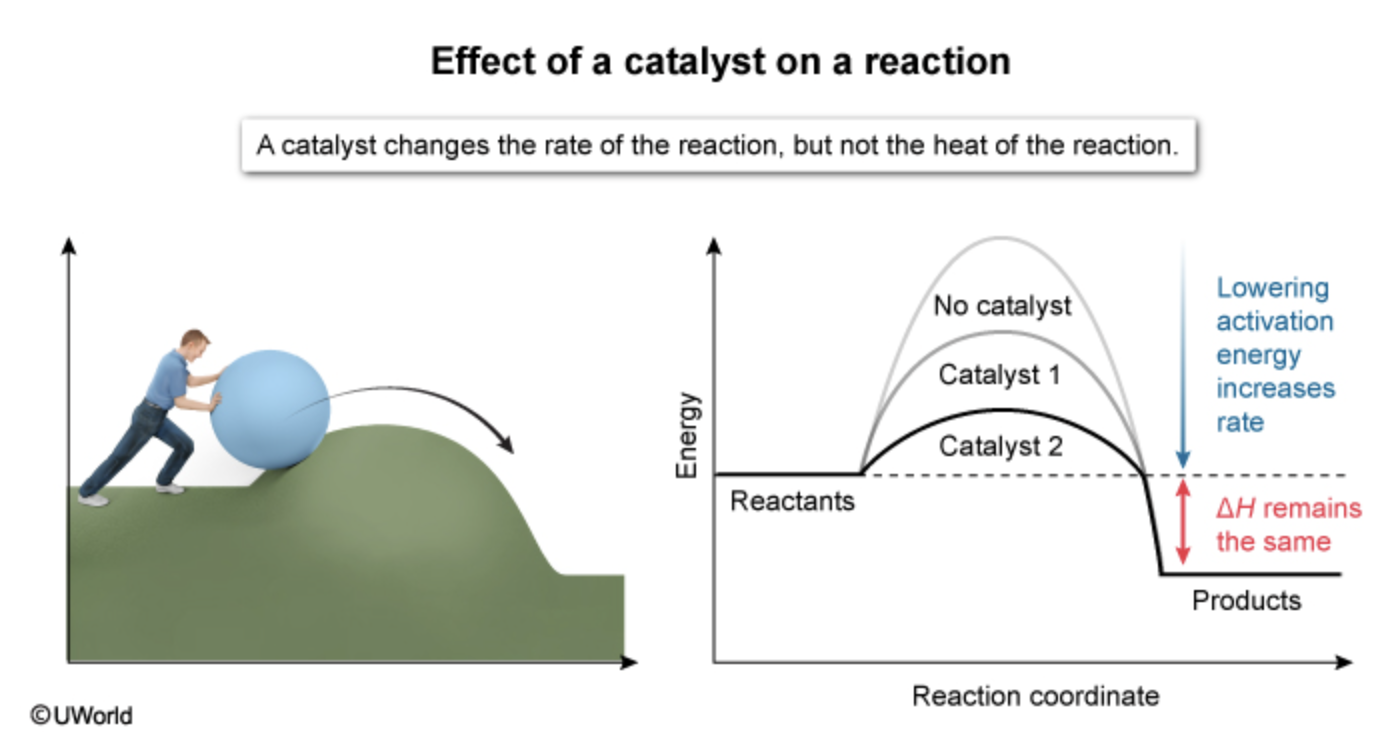
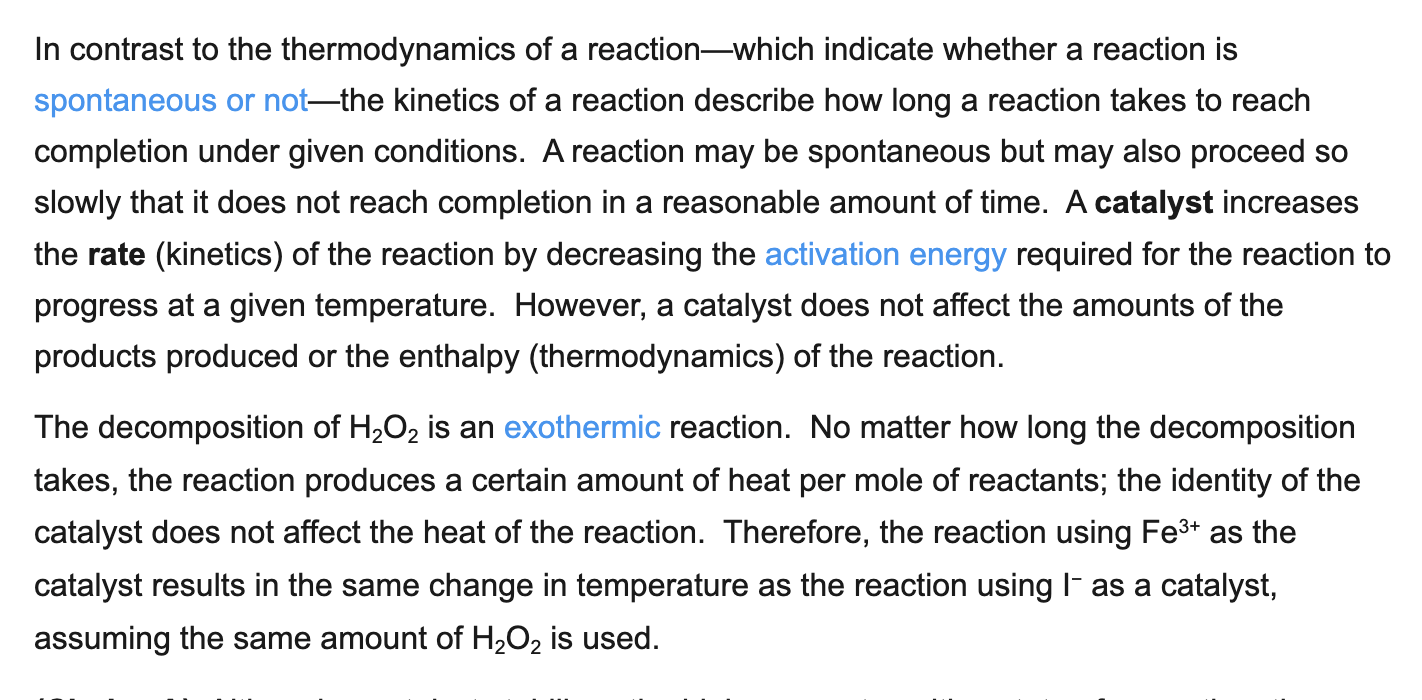
With and without catalyst image

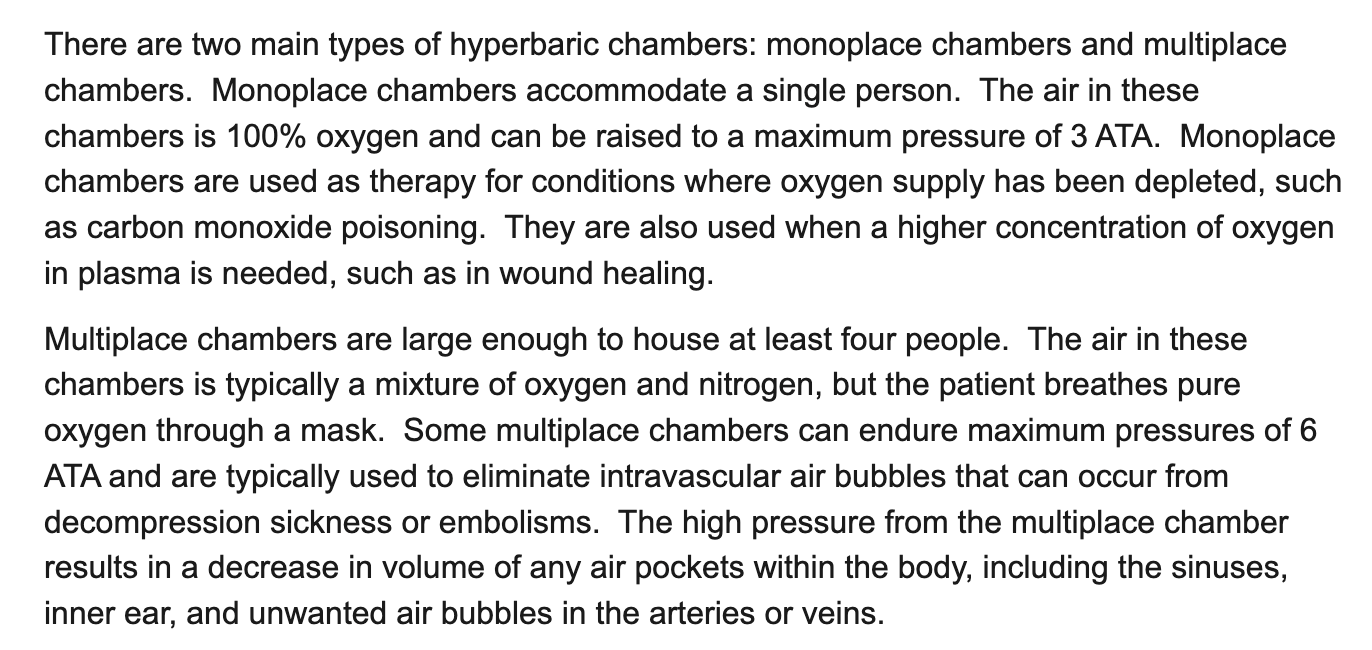
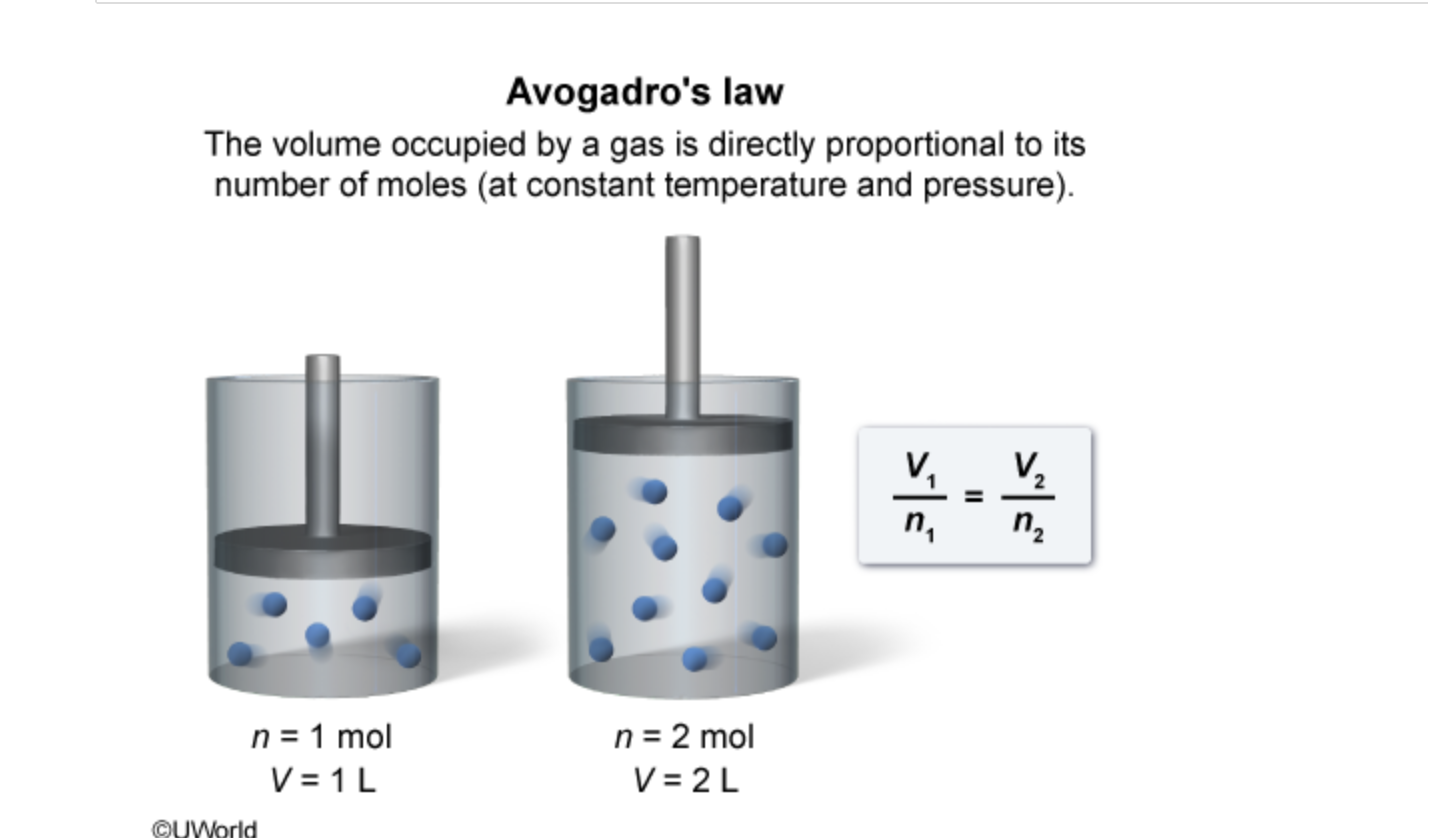
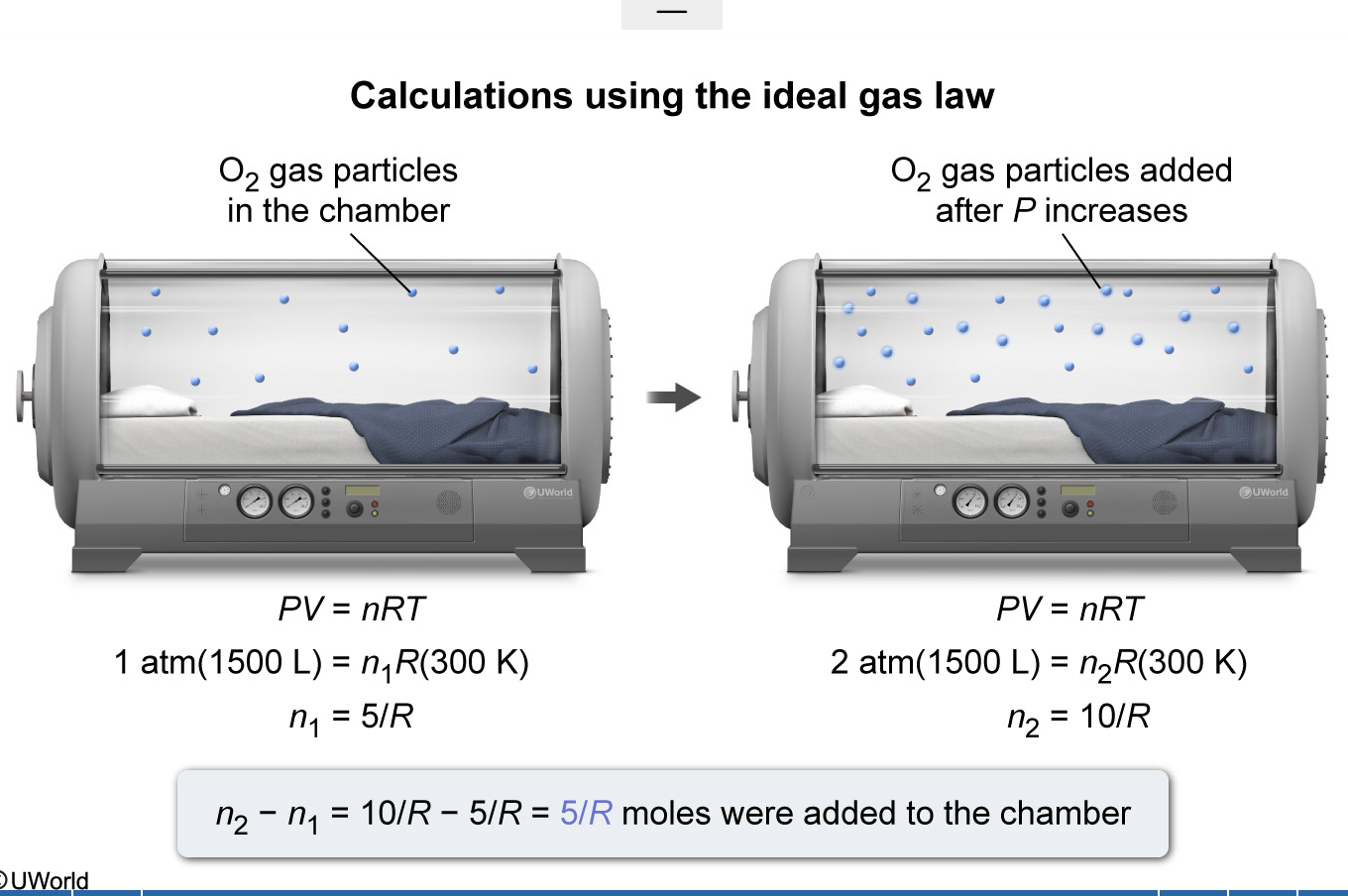
V1/n = V1/n
V2=3V1
n2 is 3 times greater

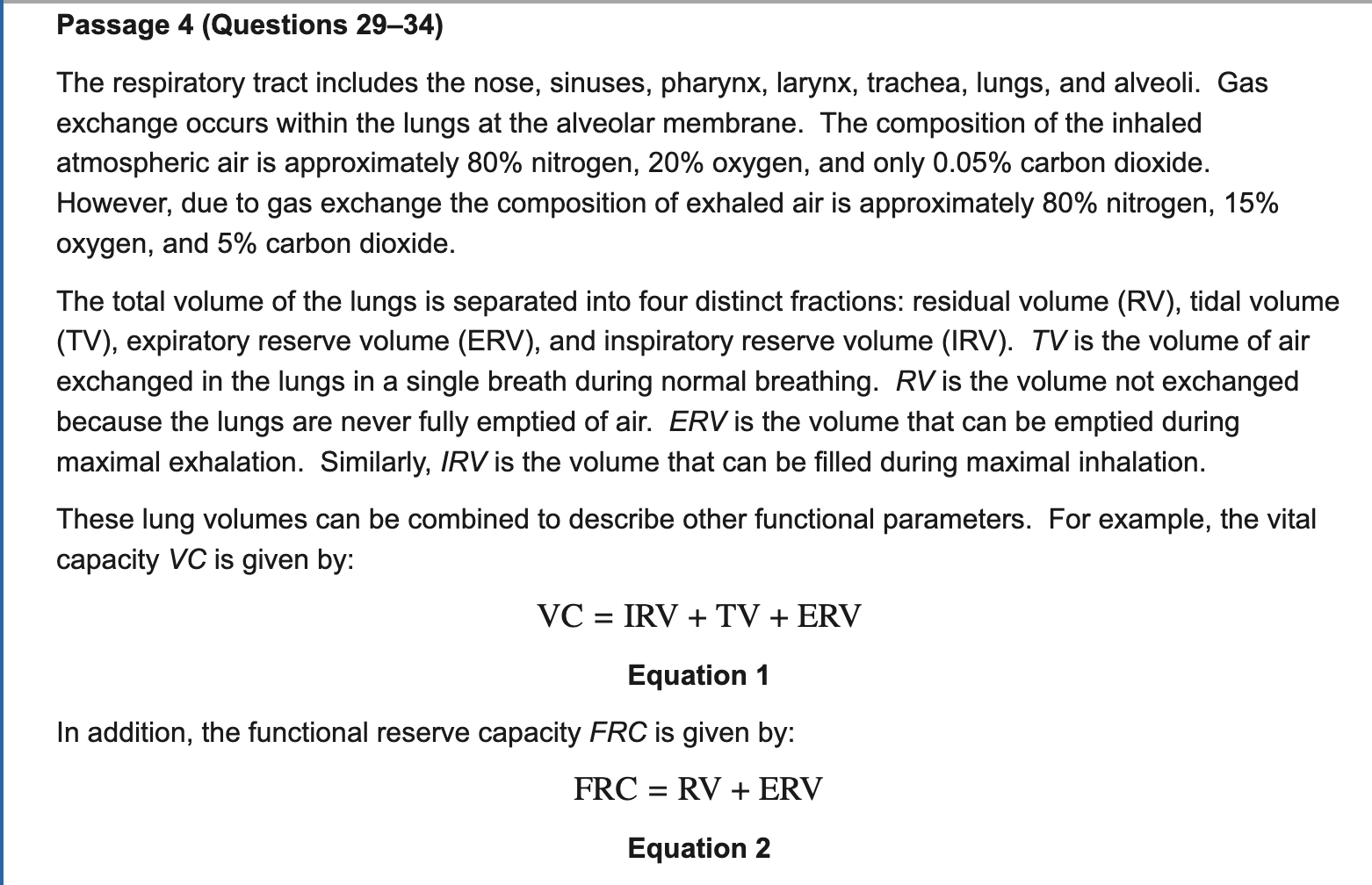
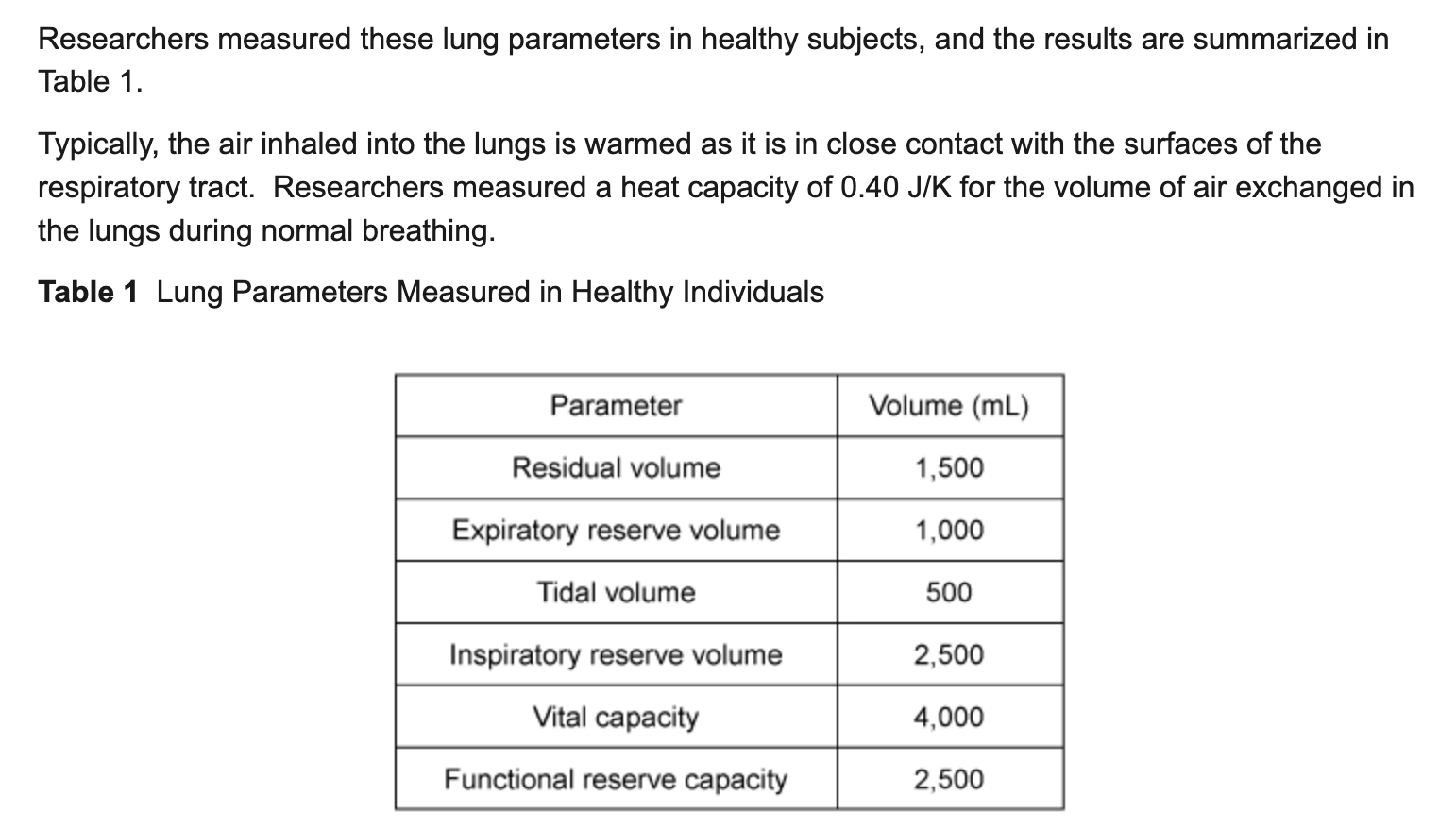

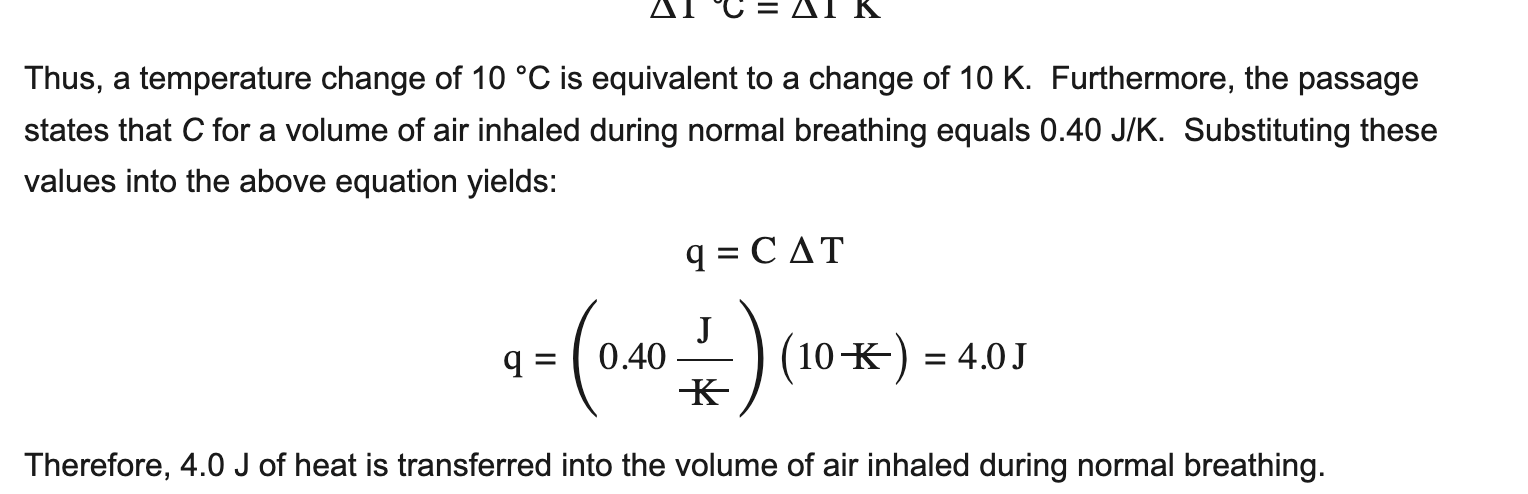
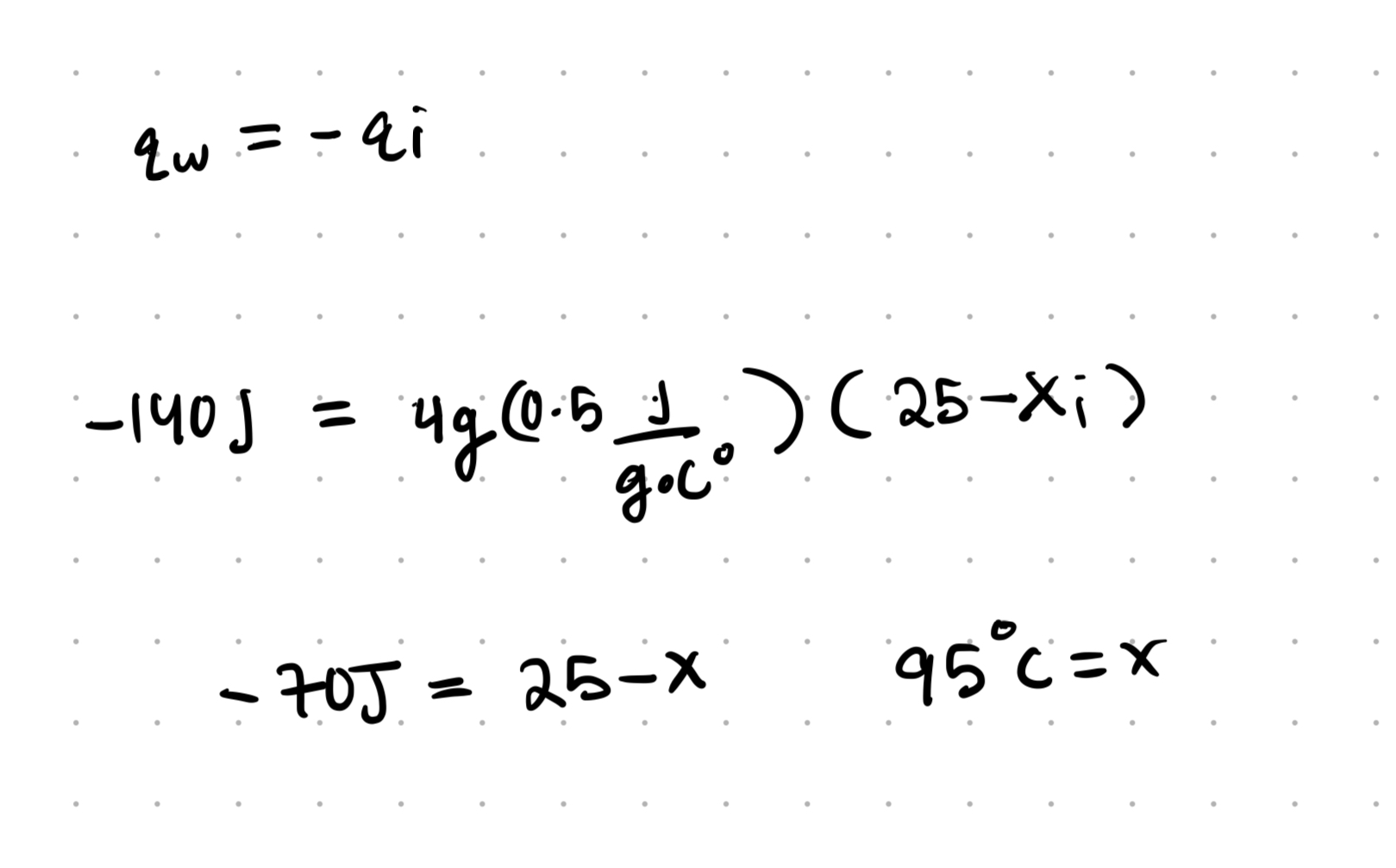
heat capcity is given, use q=cat
note= b/c it says increase by 10ºC, it is the change in temp so it is the same as 10Kelvin