Anxiety and Insomnia RAT NT
 Call Kai
 Learn
Learn Practice Test
 Spaced Repetition
 Match
Match Flashcards
 Knowt Play
1/53

There's no tags or description
Looks like no tags are added yet.
Name | Mastery | Learn | Test | Matching | Spaced | Call with Kai | Chat |
|---|
No analytics yet
Send a link to your students to track their progress
54 Terms
ANXIETY
Lifetime prevalence of anxiety related disorders in adults ages 18-64
~33%
Median age of onset of GAD
31
Most frequent psychiatric comorbidities with anxiety disorders
Depression
Alcohol and substance use disorders
What causes anxiety
Environmental factors (stressful life events, illness, parental relationships, trauma)
Female, loneliness, adverse parenting, and chronic somatic illness (cardiovascular disease, diabetes, asthma, obesity)
Symptoms of GAD
Feeling nervous, anxious, frightened, worried, on edge
Feeling panic or being frightened
Avoiding situations that make you anxious
Medical conditions that contribute to symptoms
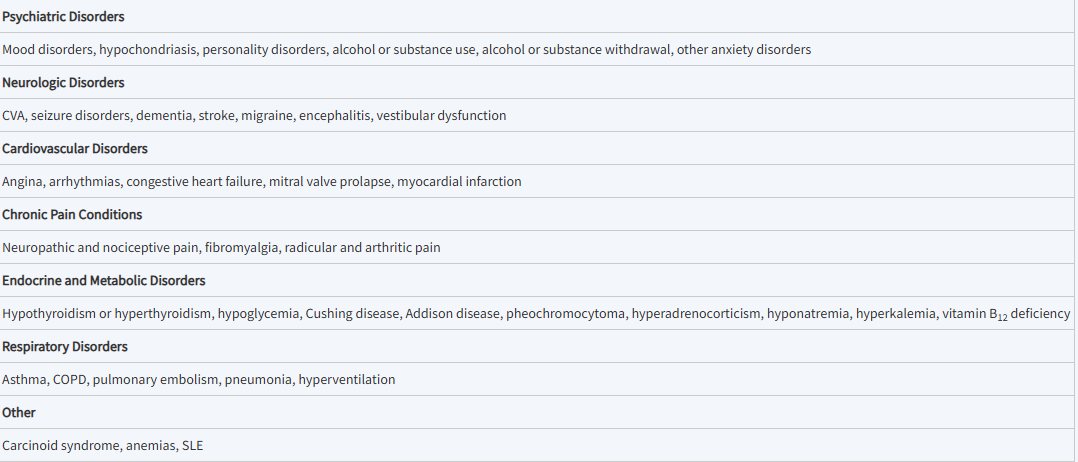
Medications associated with symptoms

Goals of therapy for GAD
Acutely reduce severity and duration of symptoms and restore overall functioning
Long-term → achieve and maintain remission
Nonpharmacologic therapies for GAD
Exercise, stress management, psychosocial therapies (cognitive behavioral therapy)
Avoid agents that may potentiate anxiety, including caffeine, decongestants, diet pills, and excessive alcohol use
Why are antidepressants the drugs of choice for GAD
Tolerable side effect profiles, no risk for dependency, and efficacy in common comorbid conditions
Which symptoms do antidepressants reduce
Cognitive symptoms (worry and apprehension)
Onset of antianxiety effect with antidepressants
2 to 4 weeks
Treatment algorithm for GAD

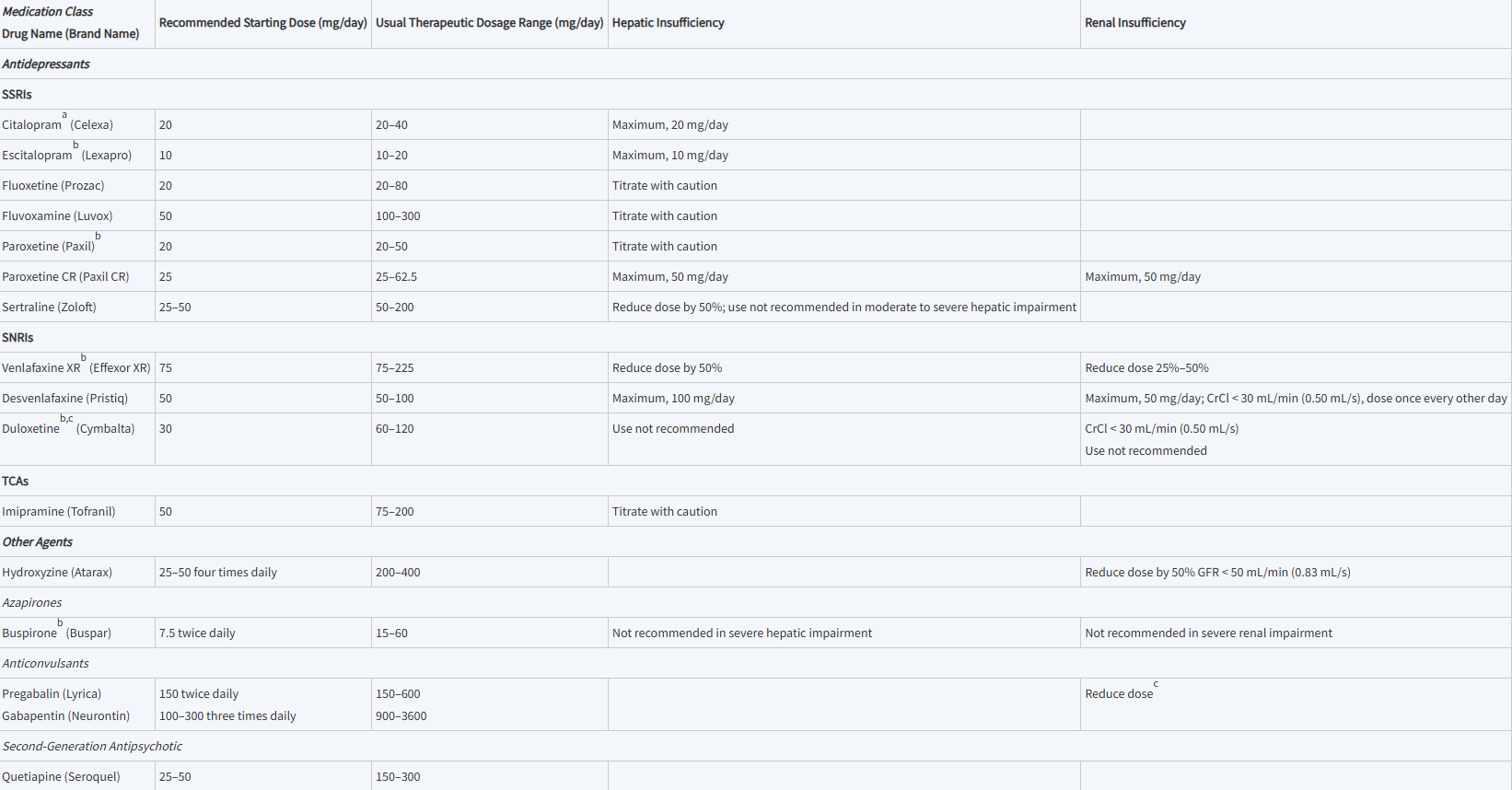
Antidepressants used in the management of GAD
Benzodiazepine duration in GAD treatment
2-3 weeks
Symptoms benzos are most effective for
Somatic symptoms (pain, fatigue, muscle tension)
Disadvantages of benzos
Risk for withdrawal and potential need for taper, as well as potential interdose rebound anxiety, especially with short-acting benzodiazepines (alprazolam)
Benzodiazepines - MOA
Enhance transmission of the inhibitory neurotransmitter GABA through interaction with the GABAA-receptor complex
Benzos preferred in reduced hepatic function secondary to aging or disease
Lorazepam
Oxazepam
Benzodiazepines - side effects
Central nervous system depressant effects (drowsiness, sedation, psychomotor impairment, and ataxia)
Cognitive effects (poor recall and anterograde amnesia)
Gabapentinoids - MOA
Calcium channel modulators with anxiolytic properties due to the selective binding to the α2-delta subunit of voltage-gated calcium channels
How do the gabapentinoids differ in GAD efficacy
Gabapentin - strong efficacy
Pregabalin - Limited/mixed efficacy
Buspirone - MOA
5-HT1A partial agonist
How does buspirone differ from benzos
Does not have abuse potential, cause withdrawal symptoms, or potentiate alcohol and sedative-hypnotic effects
Buspirone - onset of action
2 weeks (no immediate anxiety relief)
Buspirone - adverse effects
Dizziness, drowsiness, nausea, and headaches
May increase BP when co-administered with MAOI
INSOMNIA
How many adults report symptoms of insomnia
1/3
How many (%) meet DSM-5 criteria
10%
Conditions that coexist with insomnia
Psychiatric (depression, anxiety)
Chronic pain disorders
How is insomnia characterized
Difficulty falling asleep, frequent nocturnal awakenings, and early morning awakenings
Treatment goals of sleep disorders
Restoration of normal sleep patterns
Elimination of daytime sequelae
Improved quality of life
Prevention of complications and adverse effects from therapy
How to improve sleep hygiene and stimulus control

Agents recommended for complaints of sleep onset difficulty and sleep maintenance
Eszopiclone or zolpidem
Agents recommended for complaints of sleep onset difficulty only
Zaleplon, ramelteon, or triazolam
Agents recommended for complaints of difficulty maintaining sleep only
Doxepin or suvorexant
Difference between nonbenzodiazepine receptor agonists and benzodiazepines
NBRAs are highly selective for GABAA receptors containing the specific α1 subtype of the α subunit known to produce sedation and promote sleep
Nonbenzo and benzo adverse effects
Residual sedation, grogginess, and psychomotor impairment into the waking hours after sleep
Antidepressants used in management of insomnia
Sedating antidepressants (trazodone, amitriptyline, mirtazapine, doxepin)
Why are sedating antidepressants appealing for insomnia
Appealing option in patients with concomitant depression
What are the drawbacks of sedating antidepressants
Quality clinical studies demonstrating efficacy for insomnia are lacking
Adverse effects from antidepressants can be frequent, including next-day sedation, grogginess, anticholinergic effects, and weight gain
Ramelteon - MOA
Melatonin receptor agonist
Orexin Receptor Antagonists (suvorexant, lemborexant, and daridorexent) - MOA
Inhibits brains orexin neuropeptide signals
Eszopiclone - half life
6 hours
Eszopiclone - daily dose range
2-3 mg
Temazepam - half life
10-15 hours
Temazepam - daily dose range
7.5-30 mg
Zaleplon - half life
1 hour
Zaleplon - daily dose range
5-10 mg
Zolpidem - half life
2-2.6 hours
Zolpidem - daily dose range
5-10 mg
Zolpidem CR - half life
2.8 hours
Zolpidem CR - daily dose range
6.25 - 12.5 mg