Lewis Medical Surgical Nursing CH: 14, 43, 45, 46, 47, 48, 49, 50, 51, 56, 58, 59, 66, 67, 68, 69
 Call Kai
 Learn
Learn Practice Test
 Spaced Repetition
 Match
Match Flashcards
 Knowt Play
1/345

There's no tags or description
Looks like no tags are added yet.
Name | Mastery | Learn | Test | Matching | Spaced | Call with Kai |
|---|
No analytics yet
Send a link to your students to track their progress
346 Terms
A patient being admitted with an acute exacerbation of ulcerative colitis reports crampy abdominal pain and passing 15 bloody stools a day. Which intervention would the nurse include in the patient's plan of care?
a. Administer oral metoclopramide.
b. Instruct the patient not to eat or drink.
c. Administer cobalamin (vitamin B12) injections.
d. Teach the patient about total colectomy surgery.
ANS: B An initial therapy for an acute exacerbation of inflammatory bowel disease (IBD) is to rest the bowel by making the patient NPO. Metoclopramide increases peristalsis and will worsen symptoms. Cobalamin (vitamin B12) is absorbed in the ileum, which is not affected by ulcerative colitis. Although total colectomy is needed for some patients, there is no indication that this patient is a candidate during this acute phase
The nurse assesses a 78-yr-old who uses naproxen (Aleve) daily for hand and knee osteoarthritis management. Which information would the nurse discuss with the health care provider for an urgent change in the treatment plan?
a. Knee crepitation is noted with normal knee range of motion.
b. Patient reports embarrassment about having Heberden's nodes.
c. Patient's knee pain while golfing has increased over the last year.
d. Laboratory results indicate blood urea nitrogen (BUN) is elevated
ANS: D Older patients are at increased risk for renal toxicity caused by nonsteroidal antiinflammatory drugs (NSAIDs) such as naproxen. The other information will be reported to the health care provider but is consistent with the patient's diagnosis of osteoarthritis and will not require an immediate change in the patient's treatment plan
During assessment of the patient with fibromyalgia, the nurse would expect the patient to report which of the following? (Select all that apply.)
a. Sleep disturbances
b. Multiple tender points
c. Cardiac palpitations and dizziness
d. Multijoint inflammation and swelling
e. Widespread bilateral, burning musculoskeletal pain
ANS: A, B, E These symptoms are commonly described by patients with fibromyalgia. Cardiac involvement and joint inflammation are not typical of fibromyalgia
Which assessment finding for a 55-yr-old patient would alert the nurse to the presence of osteoporosis?
a. Bowed legs
b. Loss of height
c. Report of frequent falls
d. Aversion to dairy products
ANS: B Osteoporosis occurring in the vertebrae produces a gradual loss of height. Bowed legs are associated with osteomalacia and osteoarthritis. Low intake of dairy products is a risk factor for osteoporosis, but it does not indicate osteoporosis is present. Frequent falls increase the risk for fractures but are not an indicator of osteoporosis.
After a transurethral resection of the prostate (TURP), a patient with continuous bladder irrigation reports painful bladder spasms. The nurse observes clots in the urine. Which action would the nurse take first?
a. Increase the flowrate of the bladder irrigation.
b. Collect a urine specimen for culture and sensitivity testing.
c. Give the patient the prescribed belladonna and opium suppository.
d. Manually instill and withdraw 50 mL of saline through the catheter.
d. Manually instill and withdraw 50 mL of saline through the catheter.
Rationale; The assessment suggests that obstruction by a clot is causing the bladder spasms, and the nurse's first action would be to irrigate the catheter manually and to try to remove the clots. There is no reason to suspect infection and no need to culture the urine base on the presence of clots. Increasing the flowrate of the irrigation will further distend the bladder and may increase spasms. The belladonna and opium suppository will decrease bladder spasms but will not remove the obstructing blood clot.
The health care provider prescribes the following interventions for a patient with acute prostatitis caused by Escherichia coli. Which intervention would the nurse question?
a. Give trimethoprim/sulfamethoxazole 1 tablet daily for 28 days.
b. Administer ibuprofen 400 mg every 8 hours as needed for pain.
c. Instruct patient to avoid sexual intercourse until treatment is complete.
d. Catheterize the patient as needed if symptoms of urinary retention develop.
d. Catheterize the patient as needed if symptoms of urinary retention develop.
Rationale: Although acute urinary retention may occur, insertion of a catheter through an inflamed urethra is contraindicated, and the nurse will anticipate that the health care provider will need to insert a suprapubic catheter. The other actions are appropriate.
A patient admitted to the hospital with pneumonia has a history of functional urinary incontinence. Which nursing action will be included in the plan of care?
a. Demonstrate the use of the Credé maneuver.
b. Teach exercises to strengthen the pelvic floor.
c. Place a bedside commode close to the patient's bed.
d. Use an ultrasound scanner to check postvoiding residuals.
ANS: C Modifications in the environment make it easier to avoid functional incontinence. Checking for residual urine and performing the Credé maneuver are interventions for overflow incontinence. Kegel exercises are useful for stress incontinence.
Which finding for a patient who has just been admitted with acute pyelonephritis is most important for the nurse to report to the health care provider?
a. Flank tenderness to palpation
b. Blood pressure 90/48 mm Hg
c. Cloudy and foul-smelling urine
d. Temperature 100.1F (57.8C)
ANS: B The low blood pressure indicates that urosepsis and septic shock may be occurring and would be immediately reported. The other findings are typical of pyelonephritis
A patient who has nephrotic syndrome develops flank pain. Which treatment will the nurse plan to explain to this patient?
a. Antifungals
b. Antibacterials
c. Anticoagulants
d. Antihypertensives
ANS: C Flank pain in a patient with nephrotic syndrome suggests a renal vein thrombosis and anticoagulation is needed. Antibiotics are used to treat a patient with flank pain caused by pyelonephritis. Fungal pyelonephritis is uncommon and is treated with antifungals. Antihypertensives are used if the patient has high blood pressure.
After an unimmunized person is exposed to hepatitis B through a needle-stick injury, which actions will the nurse plan to take? (Select all that apply.)
a. Administer hepatitis B vaccine.
b. Test for antibodies to hepatitis B.
c. Teach about a-interferon therapy.
d. Give hepatitis B immune globulin.
e. Explain options for oral antiviral therapy.
ANS: A, B, D The recommendations for hepatitis B exposure include both vaccination and immune globulin administration. In addition, baseline testing for hepatitis B antibodies will be needed. Interferon and oral antivirals are not used for hepatitis B prophylaxis.
Which action would the nurse in the emergency department anticipate for a young adultpatient who has had several acute episodes of bloody diarrhea?
a. Obtain a stool specimen for culture.
b. Administer antidiarrheal medication.
c. Provide teaching about antibiotic therapy.
d. Teach the adverse effects of acetaminophen (Tylenol).
ANS: APatients with bloody diarrhea should have a stool culture for Escherichia coli O157:H7.Antidiarrheal medications are usually avoided for possible infectious diarrhea to avoidprolonging the infection. Antibiotic therapy in the treatment of infectious diarrhea iscontroversial because it may precipitate kidney complications. Acetaminophen does not causebloody diarrhea.
The nurse is administering IV fluid boluses and nasogastric irrigation to a patient with acute
gastrointestinal (GI) bleeding. Which assessment finding is most important for the nurse to
communicate to the health care provider?
a. The bowel sounds are hyperactive in all four quadrants.
b. The patient's lungs have crackles audible to the midchest.
c. The nasogastric (NG) suction is returning coffee-ground material.
d. The patient's blood pressure (BP) has increased to 142/84 mm Hg.
ANS: B
The patient's lung sounds indicate that pulmonary edema may be developing because of the
rapid infusion of IV fluid and that the fluid infusion rate would be slowed. The return of
coffee-ground material in an NG tube is expected for a patient with upper GI bleeding. The
BP is slightly elevated but would not be an indication to contact the health care provider
immediately. Hyperactive bowel sounds are common when a patient has GI bleeding.
(book questions) 2. Newborns are protected for the first 3 months of life from bacterial infections because of the maternal transmission of
a. IgA.
b. IgE.
c. IgG.
d. IgM.
2. c;
(book questions) 3. In a type I hypersensitivity reaction the primary immunologic disorder appears to be
a. binding of IgG to an antigen on a cell surface.
b. deposit of antigen-antibody complexes in small vessels.
c. release of cytokines used to interact with specific antigens.
d. release of chemical mediators from IgE-bound mast cells and basophils.
3.d
8. Association between HLA antigens and diseases is most often found in what disease conditions?
a. Cancers
b. Infectious diseases
c. Neurologic diseases
d. Autoimmune disorders
8. d
The nurse is caring for a patient on the first postoperative day after a Roux-en-Y gastric bypass procedure. Which assessment finding should be reported immediately to the provider?
a. Bilateral crackles audible at both lung bases
b. Redness, irritation, and skin breakdown in skinfolds
c. Emesis of bile-colored fluid past the nasogastric (NG) tube
d. Use of patient-controlled analgesia (PCA) several times an hour for pain
c. Emesis of bile-colored fluid past the nasogastric (NG) tube
While having his height measured during a routine health examination, a 79-year-old man asks the nurse why he is "shrinking." How should the nurse explain the decreased height that occurs with aging?
A. Decreased muscle mass results in stooped posture
B. Loss of cartilage in the knees and hip joints causes a loss of height
C. Long bones become less dense and shorten as the bone tissue compacts
D. Vertebrae become more compressed with thinning of intervertebral discs
Answer: D. Vertebrae become more compressed with thinning of intervertebral discs
Rationale: Loss of water from discs between vertebrae, vertebral disc compression, and narrowing of intervertebral spaces all contribute to a loss of height in older adults. Although bone density decreases and cartilage is lost from the joints, these do not affect the long bones or the height of the person.
The nurse is completing a neurovascular assessment on the patient with a tibial fracture and a cast. The feet are pulseless, pale, and cool. The patient says they are numb. What should the nurse suspect is occurring?
A Paresthesia
B Pitting edema
C Poor venous return
D Compartment syndrome
D Compartment syndrome
The nurse should suspect compartment syndrome with one or more of the following six Ps: paresthesia, pallor, pulselessness, pain distal to the injury and unrelieved with opioids, pressure increases in the compartment, and paralysis. Although paresthesia and poor venous return are evident, these are just some of the manifestations of compartment syndrome.
The nurse admits a patient to the emergency department with a left femur fracture. Which assessment finding is most important to report to the health care provider?
a. Bruising of the left thigh
b. Reports of severe thigh pain
c. Slow capillary refill of the left foot
d. Outward pointing toes on the left foot
c. Slow capillary refill of the left foot
Prolonged capillary refill may indicate complications such as compartment syndrome. Bruising, pain, and rotation are typical with a femur fracture.
A patient is being evaluated for the treatment of osteoporotic vertebral fractures. Which invasive procedure does the nurse prepare the patient for?
A. Diskectomy
B. Kyphoplasty
C. Spinal fusion
D. Laminectomy
B. Invasive procedures in the treatment of osteoporotic vertebral fractures include kyphoplasty and vertebroplasty. Diskectomy, spinal fusion, and laminectomy focus on the correction of intervertebral disc disease.
Which assessment information will be most important for the nurse to report to the health care provider about a patient who has acute cholecystitis?
a. The patient's urine is bright yellow.
b. The patient's stools are tan colored.
c. The patient reports chronic heartburn.
d. The patient has increased pain after eating.
ANS: B Tan or gray stools indicate biliary obstruction, which requires rapid intervention to resolve. The other data are not unusual for a patient with this diagnosis, and would be reported but do not require urgent intervention.
Which patient statement would indicate to the nurse that teaching after a laparoscopic cholecystectomy was effective?
a. ―I can take a shower and walk around the house tomorrow.‖
b. ―I need to limit my activities and not return to work for 4 weeks.‖
c. ―I can expect yellowish drainage from the incision for a few days.‖
d. ―I will follow a low-fat diet for life because I do not have a gallbladder.‖
ANS: A After a laparoscopic cholecystectomy, patients are discharged the same (or next) day and have few restrictions on activities of daily living. Drainage from the incisions would be abnormal, and the patient should be instructed to call the health care provider if this occurs. A low-fat diet may be recommended for a few weeks after surgery but will not be a lifelong requirement.
A patient had an incisional cholecystectomy 6 hours ago. Which action would the nurse identify as the highest priority for the patient to accomplish?
a. Perform leg exercises hourly while awake.
b. Ambulate the evening of the operative day.
c. Turn, cough, and deep breathe every 2 hours.
d. Choose preferred low-fat foods from the menu.
ANS: C Postoperative nursing care after a cholecystectomy focuses on prevention of respiratory complications because the surgical incision is high in the abdomen and impairs coughing and deep breathing. The other nursing actions are also important to implement but are not as high a priority as ensuring adequate ventilation.
A 53-year-old man is scheduled for an annual physical exam. The nurse will plan to teach the patient about the purpose of
a. urinalysis collection.
b. uroflowmetry studies.
c. prostate specific antigen (PSA) testing.
d. transrectal ultrasound scanning (TRUS).
c. prostate specific antigen (PSA) testing.
An annual digital rectal exam (DRE) and PSA are usually recommended starting at age 50 for men who have an average risk for prostate cancer. Urinalysis and uroflowmetry studies are done if patients have symptoms of urinary tract infection or changes in the urinary stream. TRUS may be ordered if the DRE or PSA is abnormal.
The nurse in the clinic notes elevated prostate specific antigen (PSA) levels in the laboratory results of these patients. Which patients PSA result is most important to report to the health care provider?
a. A 38-year-old who is being treated for acute prostatitis
b. A 48-year-old whose father died of metastatic prostate cancer
c. A 52-year-old who goes on long bicycle rides every weekend
d. A 75-year-old who uses saw palmetto to treat benign prostatic hyperplasia (BPH)
b. A 48-year-old whose father died of metastatic prostate cancer
The family history of prostate cancer and elevation of PSA indicate that further evaluation of the patient for prostate cancer is needed. Elevations in PSA for the other patients are not unusual.
A 76-year-old patient who has been diagnosed with stage 2 prostate cancer chooses the option of active surveillance. The nurse will plan to
a. vaccinate the patient with sipuleucel-T ( Provenge).
b. provide the patient with information about cryotherapy.
c. teach the patient about placement of intraurethral stents.
d. schedule the patient for annual prostate-specific antigen testing
d. schedule the patient for annual prostate-specific antigen testing
Patients who opt for active surveillance need to have annual digital rectal exams and prostate-specific antigen testing. Vaccination with sipuleucel-T, cryotherapy, and stent placement are options for patients who choose to have active treatment for prostate cancer.
Which medication that helps to reduce the size of the prostate gland would the nurse expect to include in the plan of care for a patient with BPH?
a. Goserelin
b. Degarelix
c. Acetonide
d. Dutasteride
d. Dutasteride
Dutasteride reduces the size of the prostate gland by blocking 5a-reductive inhibitors, which are necessary for the conversion of testosterone to dihydroxytryptamine (DHT). Goserelin and degarelix are used in the treatment of prostate cancer. Acetonide is prescribed to increase serum testosterone levels. Pg 1437
9. Which nursing action would be included in the plan of care for a patient returning to the surgical unit after a left modified radical mastectomy with dissection of axillary lymph nodes?
a. Teach the patient to use the ordered patient-controlled analgesia every 10 minutes.
b. Obtain a permanent breast prosthesis before the patient is discharged from the hospital.
c. Post a sign at the bedside warning against venipunctures or blood pressures in the left arm.
d. Insist that the patient examine the surgical incision when the initial dressings are removed.
ANS: C
The patient is at risk for lymphedema and infection if blood pressures or venipuncture are done on the left arm. The patient is taught to use the PCA as needed for pain control rather than at a set time. The nurse allows the patient to examine the incision and participate in care when the patient feels ready. Permanent breast prostheses are usually obtained about 6 weeks after surgery.
A 19-yr-old woman is brought to the emergency department with a knife handle protruding from her abdomen. Which action would the nurse take during the initial assessment of the patient?
a. Remove the knife and assess the wound.
b. Determine the presence of Rovsing sign.
c. Check for circulation and tissue perfusion.
d. Insert a urinary catheter and assess for hematuria.
ANS: C The initial assessment is focused on determining whether the patient has hypovolemic shock. The knife should not be removed until the patient is in surgery, where bleeding can be controlled. Rovsing sign is assessed in the patient with suspected appendicitis. Assessment for bladder trauma is not part of the initial assessment.
The nurse is caring for a patient who has cirrhosis. Which data obtained by the nurse during the assessment will be of most concern?
a. The patient reports right upper-quadrant pain with palpation.
b. The patient's hands flap back and forth when the arms are extended.
c. The patient has ascites and a 2-kg weight gain from the previous day.
d. The patient's abdominal skin has multiple spider-shaped blood vessels.
ANS: B Asterixis indicates that the patient has hepatic encephalopathy, and hepatic coma may occur. The spider angiomas and right upper quadrant abdominal pain are not unusual for the patient with cirrhosis and do not require a change in treatment. The ascites and weight gain indicate the need for treatment but not as urgently as the changes in neurologic status.
A patient has been admitted with acute liver failure. Which assessment data are most important for the nurse to communicate to the health care provider?
a. Asterixis and lethargy
b. Jaundiced sclera and skin
c. Elevated total bilirubin level
d. Liver 3 cm below costal margin
ANS: A The patient's findings of asterixis and lethargy are consistent with grade 2 hepatic encephalopathy. Patients with acute liver failure can deteriorate rapidly from grade 1 or 2 to grade 3 or 4 hepatic encephalopathy and need early transfer to a transplant center. The other findings are typical of patients with hepatic failure and would be reported but would not indicate a need for an immediate change in the therapeutic plan
Which finding indicates to the nurse that a patient's transjugular intrahepatic portosystemic shunt (TIPS) placed 3 months ago has been effective?
a. Increased serum albumin level
b. Decreased indirect bilirubin level
c. Improved alertness and orientation
d. Fewer episodes of bleeding varices
ANS: D TIPS is used to lower pressure in the portal venous system and decrease the risk of bleeding from esophageal varices. Indirect bilirubin level and serum albumin levels are not affected by shunting procedures. TIPS will increase the risk for hepatic encephalopathy.
The nurse is planning care for a patient with acute severe pancreatitis. Which outcome would the nurse identify as the highest priority?
a. Achieving fluid and electrolyte balance
b. Maintaining normal respiratory function
c. Expressing satisfaction with pain control
d. Developing no ongoing pancreatic disease
ANS: B Respiratory failure can occur as a complication of acute pancreatitis and maintenance of adequate respiratory function is the priority goal. The other outcomes would also be appropriate for the patient.
After change-of-shift report, which patient would the nurse assess first?
a. Patient with a repaired mandibular fracture who is reporting facial pain
b. Patient with repaired right femoral shaft fracture who reports tightness in the calf
c. Patient with an unrepaired Colles‘ fracture who has right wrist swelling and deformity
d. Patient with an unrepaired intracapsular left hip fracture whose leg is externally rotated
ANS: B
Calf swelling after a femoral shaft fracture suggests possible DVT or compartment syndrome that could lead to limb loss. The nurse should assess the patient rapidly and then notify the health care provider. The other patients have symptoms that are typical for their injuries but do not require immediate intervention
A patient is being discharged 4 days after hip arthroplasty using the posterior approach. Which patient action requires intervention by the nurse?
a. Using crutches with a swing-to gait
b. Sitting upright on the edge of the bed
c. Leaning over to pull on shoes and socks
d. Bending over the sink while brushing teeth
ANS: C
Leaning over to reach the feet would flex the hip at greater than 90 degrees and predispose the patient to hip dislocation. The other patient actions do not require any immediate action by the nurse to protect the patient.
The nurse is assessing a patient with osteoarthritis who uses naproxen (Naprosyn) for pain management. Which assessment finding would the nurse recognize as likely to require a change in medication?
a. The patient has gained 3 pounds.
b. The patient has dark-colored stools.
c. The patient's pain affects multiple joints.
d. The patient uses capsaicin cream (Zostrix).
ANS: B Dark-colored stools may indicate the patient is experiencing gastrointestinal bleeding caused by the naproxen. The patient's ongoing pain and weight gain will also be reported and may indicate a need for a different treatment and/or counseling about avoiding weight gain, but these are not as large a concern as the possibility of gastrointestinal bleeding. Capsaicin cream is often used along with oral medications.
The nurse teaches a patient with osteoarthritis (OA) of the hip about how to manage the OA. Which patient statement a need for additional teaching?
a. ―A shower in the morning will help relieve stiffness.‖
b. ―I can exercise every day to help maintain joint mobility.‖
c. ―I will take 1 gram of acetaminophen (Tylenol) every 4 hours.‖
d. ―I can use a cane to decrease the pressure and pain in my hip joint.‖
ANS: C No more than 4 g of acetaminophen (1 g every 6 hours) should be taken daily to decrease the risk for liver damage. Regular exercise, moist heat, and supportive equipment are recommended for OA management.
The nurse would anticipate the need to teach a patient who has osteoarthritis (OA) about which medication?
a. Prednisone
b. Adalimumab (Humira)
c. Capsaicin cream (Zostrix)
d. Sulfasalazine (Azulfidine)
ANS: C Capsaicin cream blocks the transmission of pain impulses and is helpful for some patients in treating OA. The other medications would be used for patients with rheumatoid arthritis.
A patient being seen in the clinic has rheumatoid nodules on the elbows. Which action would the nurse take?
a. Draw blood for rheumatoid factor analysis.
b. Teach the patient about injections for the nodules.
c. Assess the nodules for skin breakdown or infection.
d. Discuss the need for surgical removal of the nodules.
ANS: C Rheumatoid nodules can break down or become infected. They are not associated with changes in rheumatoid factor, and injection is not needed. Rheumatoid nodules are usually not removed surgically because of a high probability of recurrence.
Which action would the nurse include in the plan of care for a patient with a new diagnosis of rheumatoid arthritis (RA)?
a. Instruct the patient to purchase a soft mattress.
b. Teach the patient to use cool water when bathing.
c. Encourage the patient to take a nap in the afternoon.
d. Suggest exercise with light weights several times daily.
ANS: C Adequate rest helps decrease the fatigue and pain associated with RA. Patients are taught to avoid stressing joints, use warm baths to relieve stiffness, and use a firm mattress. When the disease is stabilized, a physical therapist usually develops a therapeutic exercise program that includes exercises that improve flexibility and strength of affected joints, as well as the patient's general endurance
A patient with rheumatoid arthritis (RA) tells the clinic nurse about having chronically dry eyes. Which action would the nurse take?
a. Ask the HCP about discontinuing methotrexate.
b. Suggest the patient use preservative free artificial tears.
c. Remind the patient that RA is a chronic health condition.
d. Teach the patient about adverse effects of the RA medications.
ANS: B The patient's dry eyes are consistent with Sjögren's syndrome, a common manifestation of RA. Symptomatic therapy such as artificial tears eyedrops is recommended. Dry eyes are not a side effect of methotrexate. A focus on the prognosis for RA is not helpful. The dry eyes are not caused by RA treatment but by the disease itself.
Which information would the nurse include when teaching a patient who has an exacerbation of rheumatoid arthritis?
a. Affected joints should not be exercised when pain is present.
b. Applying cold packs before exercise may decrease joint pain.
c. Exercises should be performed passively by someone other than the patient.
d. Walking may substitute for range-of-motion (ROM) exercises on some days.
ANS: B Cold application is helpful in reducing pain during periods of RA exacerbation. Because the joint pain is chronic, patients are instructed to exercise even when joints are painful. ROM exercises are intended to strengthen joints and improve flexibility, so passive ROM alone is not sufficient. Recreational exercise is encouraged but is not a replacement for ROM exercises.
Which laboratory result would the nurse monitor to determine if prednisone has been effective for a patient who has an acute exacerbation of rheumatoid arthritis?
a. Blood glucose
b. C-reactive protein
c. Serum electrolytes
d. Liver function tests
ANS: B C-reactive protein is a serum marker for inflammation, and a decrease would indicate the corticosteroid therapy was effective. Blood glucose and serum electrolytes will also be monitored to assess for side effects of prednisone. Liver function is not routinely monitored in patients receiving corticosteroids.
Which suggestion would the nurse make to a group of women with rheumatoid arthritis (RA) about managing activities of daily living?
a. Strengthen small hand muscles by wringing out sponges or washcloths.
b. Protect the knee joints by sleeping with a small pillow under both knees.
c. Stand rather than sit when performing daily household and yard chores.
d. Limit the number of exercise repetitions during periods of acute inflammation.
ANS: D Patients are advised to avoid repetitious movements and exercises during periods of acute inflammation. Sitting during household chores is recommended to decrease stress on joints. Wringing water out of sponges would increase joint stress. Patients are encouraged to position joints in the extended (neutral) position; sleeping with a pillow behind the knees would decrease the ability of the knee to extend.
How would the nurse suggest that a patient recently diagnosed with rheumatoid arthritis (RA) plan to start each day?
a. A brief routine of isometric exercises
b. A warm shower followed by a short rest
c. Active range-of-motion (ROM) exercises
d. Stretching exercises to relieve joint stiffness
ANS: B Taking a warm shower or bath is recommended to relieve joint stiffness, which is worse in the morning. Isometric exercises would place stress on joints and would not be recommended. Stretching and ROM should be done later in the day when joint stiffness is decreased.
Anakinra (Kineret) is prescribed for a patient with rheumatoid arthritis (RA). What information would the nurse include in teaching the patient about this drug?
a. Avoiding aspirin use
b. Giving subcutaneous injections
c. Taking the medication with water
d. Recognizing gastrointestinal bleeding
ANS: B Anakinra is administered by subcutaneous injection. GI bleeding is not a side effect of this medication. Because the medication is injected, instructions to take it with fluid would not be appropriate. The patient is likely to be concurrently taking aspirin or nonsteroidal antiinflammatory drugs (NSAIDs), and these would not be discontinued.
A patient has recently been diagnosed with rheumatoid arthritis (RA) The patient, who has two school-age children, tells the nurse that home life is very stressful. Which initial response would the nurse make?
a. ―You need to see a family therapist for some help with stress.‖
b. ―Tell me more about the situations that are causing you stress.‖
c. ―Perhaps it would be helpful for your family to be in a support group.‖
d. ―Your family should understand the impact of your rheumatoid arthritis.‖
ANS: B The initial action by the nurse would be further assessment. The other three responses might be appropriate based on the information the nurse obtains with further assessment.
The nurse notices a circular lesion with a red border and clear center on the arm of a patient who is in the clinic reporting chills and muscle aches. Which action would the nurse take to follow up on that finding?
a. Auscultate the heart sounds.
b. Palpate the abdomen for masses.
c. Ask the patient about recent outdoor activities.
d. Question the patient about immunization history
ANS: C The patient's clinical manifestations suggest possible Lyme disease. A history of recent outdoor activities such as hikes will help confirm the diagnosis. The patient's symptoms do not suggest cardiac or abdominal problems or lack of immunization.
Which finding would indicate to the nurse that colchicine has been effective for a patient with an acute attack of gout?
a. Reduced joint pain
b. Increased urine output
c. Elevated serum uric acid
d. Increased white blood cells
ANS: A Colchicine reduces joint pain in 24 to 48 hours by decreasing inflammation. The recommended increase in fluid intake of 2 to 3 L/day during acute gout would increase urine output but would not indicate the effectiveness of colchicine. Elevated serum uric acid would be associated with increased symptoms. The WBC count might decrease with decreased inflammation but would not increase.
A patient with gout has a new prescription for losartan (Cozaar). What would the nurse plan to monitor?
a. Blood glucose
b. Blood pressure
c. Erythrocyte count
d. Lymphocyte count
ANS: B Losartan may be effective for treating older patients with gout and hypertension. Losartan promotes urate excretion and may normalize serum urate. Losartan, an angiotensin II receptor antagonist, should lower blood pressure. It does not affect blood glucose, red blood cells, or lymphocytes.
A patient who takes multiple medications develops acute gout arthritis. Which medication would the nurse discuss with the health care provider before administering?
a. sertraline (Zoloft)
b. famotidine (Pepcid)
c. hydrochlorothiazide
d. oxycodone (Roxicodone)
ANS: C Diuretic use increases uric acid levels and can precipitate gout attacks. The other medications are safe to administer.
A patient with hypertension and gout has a red, painful right great toe. Which action would the nurse include in the plan of care for this patient?
a. Use a footboard to hold up the bedding.
b. Gently palpate the toe to assess swelling.
c. Use pillows to keep the right foot elevated.
d. Teach the patient to avoid acetaminophen (Tylenol).
ANS: A Because any touch on the area of inflammation may increase pain, bedding should be held away from the toe, and touching the toe should be avoided. Elevation of the foot will not reduce the pain, which is caused by urate crystals. Acetaminophen can be used for pain management.
When the nurse brings medications to a patient with rheumatoid arthritis, the patient refuses the prescribed methotrexate. The patient tells the nurse, ―My arthritis isn't that bad yet. The side effects of methotrexate are worse than the arthritis.‖ Which information would be most important for the nurse to provide?
a. ―Methotrexate is less expensive than some of the newer drugs.‖
b. ―It will take 4-6 weeks to see the therapeutic effects of the methotrexate.‖
c. ―It is important to start methotrexate early to decrease the extent of joint damage.‖
d. ―Methotrexate is effective and has fewer side effects than some of the other drugs.‖
ANS: C Disease-modifying antirheumatic drugs (DMARDs) are prescribed early to prevent the joint degeneration that occurs as soon as the first year with RA. The other statements are accurate, but the most important point for the patient to understand is that it is important to start DMARDs as quickly as possible.
Which assessment information would indicate to the nurse that a patient with an exacerbation of rheumatoid arthritis (RA) is experiencing a side effect of prednisone?
a. The patient has joint pain and stiffness.
b. The patient's fasting blood glucose is 90 mg/dL.
c. The patient has experienced a recent 5-pound weight gain.
d. The patient's erythrocyte sedimentation rate (ESR) has increased.
ANS: B Corticosteroids increase appetite and lead to weight gain. An elevated ESR with no improvement in symptoms would indicate the prednisone was not effective but would not be side effects of the medication. An elevated blood glucose is a side effect of prednisone.
The home health nurse is making a follow-up visit to a patient recently diagnosed with rheumatoid arthritis (RA). Which finding indicates to the nurse that additional patient teaching is needed?
a. The patient takes a 2-hour nap each day.
b. The patient has been taking 16 aspirins each day.
c. The patient sits on a stool while preparing meals.
d. The patient sleeps with two pillows under the head.
ANS: D The joints should be maintained in an extended position to avoid contractures, so patients should use a small, flat pillow for sleeping. Rest, aspirin, and energy management are appropriate for a patient with RA and indicate teaching has been effective.
A patient with an acute attack of gout in the right great toe has a new prescription for probenecid. Which information about the patient's home routine would the nurse understand indicates a need for teaching regarding gout management?
a. The patient sleeps 8-10 hours each night.
b. The patient usually eats beef once a week.
c. The patient takes one aspirin a day to prevent angina.
d. The patient usually drinks about 3 quarts water each day
ANS: C Aspirin interferes with the effectiveness of probenecid and should not be taken when the patient is taking probenecid. The patient's sleep pattern will not affect gout management. Drinking 3 quarts of water and eating beef only once or twice a week are appropriate for the patient with gout
Which finding for a patient who is taking hydroxychloroquine (Plaquenil) to treat rheumatoid arthritis would the nurse identify as a likely adverse effect of the medication?
a. Blurred vision
b. Joint tenderness
c. Abdominal cramping
d. Elevated blood pressure
ANS: A Plaquenil can cause retinopathy. The medication should be stopped. Other findings are not related to the medication although they will also be reported.
A 29-yr-old woman is taking methotrexate to treat rheumatoid arthritis. Considering this treatment, which information would the nurse report to the health care provider?
a. The patient had a history of infectious mononucleosis as a teenager.
b. The patient is trying to get pregnant before her disease becomes more severe.
c. The patient has a family history of age-related macular degeneration of the retina.
d. The patient has been using large doses of vitamins and health foods to treat the
ANS: B Methotrexate is teratogenic, and the patient should be taking contraceptives during methotrexate therapy. The other information will not impact the choice of methotrexate as therapy.
A patient is taking methotrexate to treat rheumatoid arthritis (RA). Which laboratory result is important for the nurse to communicate to the health care provider?
a. Rheumatoid factor is positive.
b. Fasting blood glucose is 90 mg/dL.
c. The white blood cell count is 1500/L.
d. The erythrocyte sedimentation rate is increased.
ANS: C Bone marrow suppression is a possible side effect of methotrexate, and the patient's low WBC count places the patient at high risk for infection. The elevated erythrocyte sedimentation rate and positive rheumatoid factor are expected in RA. The blood glucose is normal.
Which patient seen by the nurse in the outpatient clinic is most likely to need teaching about ways to reduce the risk for osteoarthritis (OA)?
a. A 56-yr-old man who has a sedentary office job
b. A 38-yr-old man who plays on a summer softball team
c. A 38-yr-old woman who is newly diagnosed with diabetes
d. A 56-yr-old woman who works on an automotive assembly line
ANS: D OA is more likely to occur in women as a result of estrogen reduction at menopause and in persons whose work involves repetitive movements and lifting. Moderate exercise, such as softball, reduces the risk for OA. Diabetes is not a risk factor for OA. Sedentary work is not a risk factor for OA.
After the nurse teaches a 28-yr-old about fibromyalgia, which patient statement indicates a good understanding of effective self-management?
a. ―I will need to stop drinking so much coffee and soda.‖
b. ―I am going to join a soccer team to get more exercise.‖
c. ―I will call the doctor every time my symptoms get worse.‖
d. ―I should avoid using over-the-counter medications for pain.‖
ANS: A Dietitians often suggest patients with fibromyalgia limit their intake of caffeine and sugar because these substances are muscle irritants. Mild exercise such as walking is recommended for patients with fibromyalgia, but vigorous exercise is likely to make symptoms worse. Because symptoms may fluctuate from day to day, the patient should be able to adapt the regimen independently rather than calling the provider whenever symptoms get worse. Over-the-counter medications such as ibuprofen and acetaminophen are frequently used for symptom management.
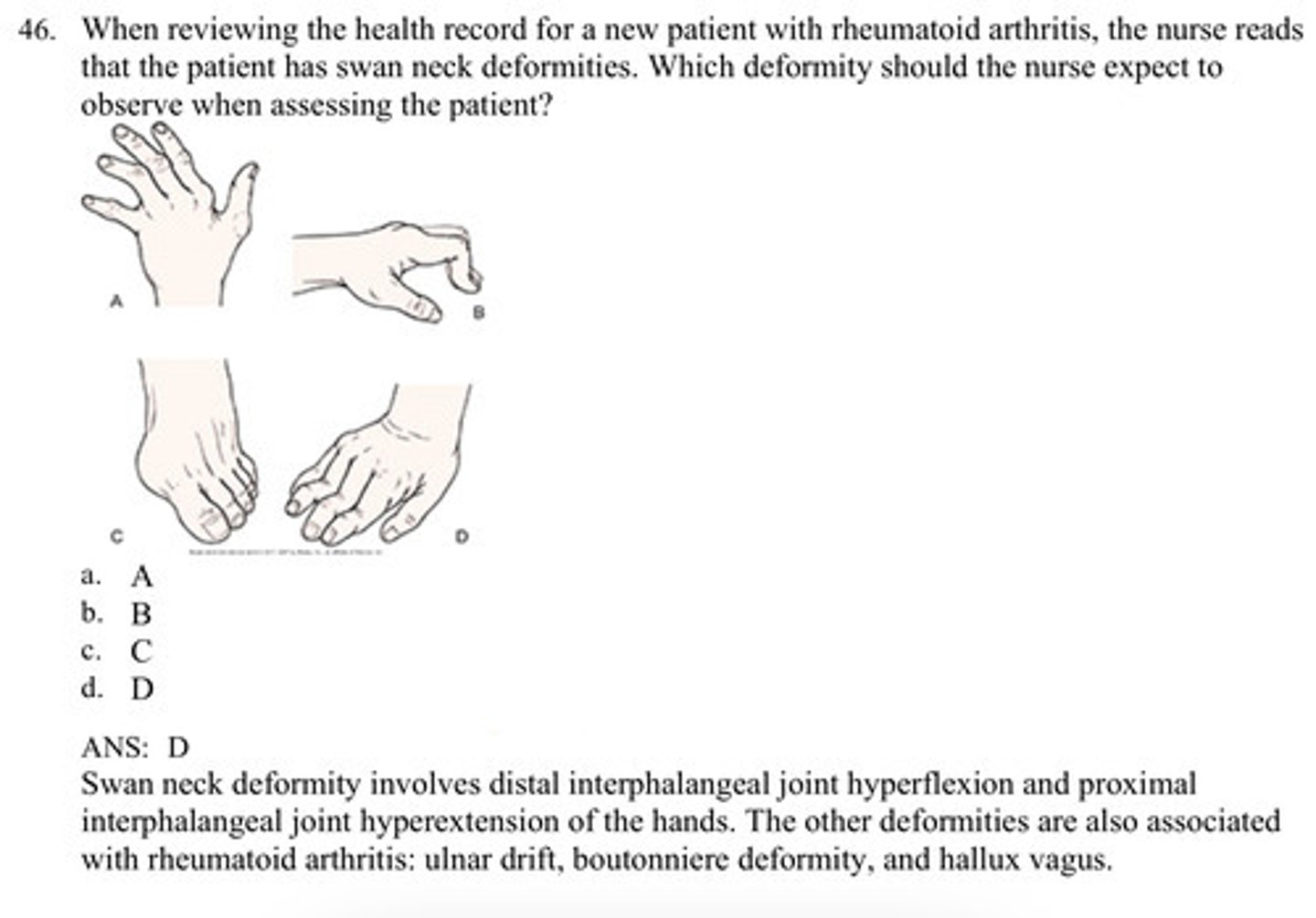
When reviewing the health record for a new patient with rheumatoid arthritis, the nurse reads that the patient has swan neck deformities. Which deformity would the nurse expect to observe when assessing the patient?
a. A
b. B
c. C
d. D
ANS: D Swan neck deformity involves distal interphalangeal joint hyperflexion and proximal interphalangeal joint hyperextension of the hands. The other deformities are also associated with rheumatoid arthritis: ulnar drift, boutonniere deformity, and hallux vagus
A patient with acute osteomyelitis of the left femur is hospitalized for regional antibiotic irrigation. Which intervention would the nurse include in the initial plan of care?
a. Quadriceps-setting exercises
b. Immobilization of the left leg
c. Positioning the left leg in flexion
d. Assisted weight-bearing ambulation
ANS: B Immobilization of the affected leg helps to decrease pain and reduce the risk for pathologic fracture. Weight-bearing exercise increases the risk for pathologic fractures and is not recommended until the infection is treated. Muscle contractions with exercises may lead to muscle spasms, causing pain, but will be used after the infection is resolved. Flexion of the affected limb is avoided to prevent contractures.
A patient is being discharged after 1 week of IV antibiotic therapy for osteomyelitis in the right leg. Which information would the nurse include in the discharge teaching?
a. How to administer prescribed antibiotics at home
b. How to apply warm packs to the leg to reduce pain
c. The need for daily aerobic exercise to maintain muscle strength
d. The need to stop taking the antibiotics when the leg pain decreases
ANS: A Most patients start on IV antibiotics then switch to oral therapy; the patient will be taking antibiotics for several months and should not stop when the pain decreases. Patients are instructed to avoid exercise and heat application because these will increase swelling and the risk for spreading infection.
A patient is receiving IV antibiotics at home to treat chronic osteomyelitis of the left femur. Which statement by the patient would indicate to the nurse the need for additional teaching related to health maintenance?
a. ―I take my oral temperature twice a day.‖
b. ―I'm frustrated with this endless treatment!‖
c. ―I think my left foot is starting to droop down.‖
d. ―I use crutches to avoid bearing weight on the left leg.‖
ANS: C Footdrop is an indication that the foot is not being supported in a neutral position by a splint. Using crutches and monitoring the oral temperature are appropriate self-care activities. Frustration with the length of treatment is not an indicator of ineffective health maintenance of the osteomyelitis.
A 54-yr-old woman who recently reached menopause and has a family history of osteoporosis is diagnosed with osteopenia. Which information would the nurse explain to the patient?
a. With a family history of osteoporosis, there is no way to prevent or slow bone resorption.
b. Estrogen replacement therapy must be started to prevent rapid progression to osteoporosis.
c. Continuous, low-dose corticosteroid treatment is effective in stopping the course of osteoporosis.
d. Calcium loss from bones can be slowed by increasing calcium intake and weight-bearing exercise
ANS: D Progression of osteoporosis can be slowed by increasing calcium intake and weight-bearing exercise. Estrogen replacement therapy is not routinely given to prevent osteoporosis because of increased risk of heart disease as well as breast and uterine cancer. Corticosteroid therapy increases the risk for osteoporosis.
Which menu choice by a patient with osteoporosis indicates the nurse's teaching about appropriate diet has been effective?
a. Pancakes with syrup and bacon
b. Whole wheat toast and fresh fruit
c. Egg-white omelet and a half grapefruit
d. Oatmeal with skim milk and fruit yogurt
ANS: D Skim milk and yogurt are high in calcium. The other choices do not contain any high-calcium foods.
Which action would the nurse complete before administering alendronate (Fosamax) to a patient with osteoporosis?
a. Ask about any leg cramps or hot flashes.
b. Assist the patient to sit up at the bedside.
c. Be sure that the patient has recently eaten.
d. Administer the ordered calcium carbonate.
ANS: B To avoid esophageal erosions, the patient taking bisphosphonates should be upright for at least 30 minutes after taking the medication. Fosamax should be taken on an empty stomach, not after taking other medications or eating. Leg cramps and hot flashes are not side effects of bisphosphonates
A nurse who works on the orthopedic unit has just received change-of-shift report. Which patient would the nurse assess first?
a. Patient who reports foot pain after hammertoe surgery
b. Patient who has not voided 8 hours after a laminectomy
c. Patient with low back pain and a positive straight-leg-raise test
d. Patient with osteomyelitis who has a temperature of 100.5F (38.1C)
ANS: B Difficulty in voiding may indicate damage to the spinal nerves and would be assessed and reported to the surgeon immediately. The information about the other patients is consistent with their diagnoses. The nurse will need to assess them as quickly as possible, but the information about them does not indicate a need for immediate intervention.
Which information would the nurse include when teaching a patient with acute low back pain? (Select all that apply.)
a. Sleep in a prone position with the legs extended.
b. Keep the knees straight when leaning forward to pick something up.
c. Expect symptoms of acute low back pain to improve in a few weeks.
d. Avoid activities that require twisting of the back or prolonged sitting.
e. Use ibuprofen (Motrin, Advil) or acetaminophen (Tylenol) to relieve pain.
ANS: C, D, E Acute back pain usually starts to improve within 2 weeks. In the meantime, the patient should use medications such as nonsteroidal antiinflammatory drugs (NSAIDs) or acetaminophen to manage pain and avoid activities that stress the back. Sleeping in a prone position and keeping the knees straight when leaning forward will place stress on the back and should be avoided.
A patient reports shoulder pain when the nurse moves the patient's arm behind the back. Which question would the nurse ask? a. "Are you able to feed yourself without difficulty?"
b. "Do you have difficulty when you are putting on a shirt?"
c. "Are you able to sleep through the night without waking?"
d. "Do you ever have trouble lowering yourself to the toilet?"
ANS: B
The patient‘s pain will make it more difficult to accomplish tasks such as putting on a shirt or jacket. This pain should not affect the patient‘s ability to feed himself or use the toilet because these tasks do not involve moving the arm behind the patient. The arm will not usually be positioned behind the patient during sleeping.
A patient with left knee pain is diagnosed with bursitis. Which location would the nurse identify as being the site of inflammation?
a. A fluid-filled sac found at the joint
b. A synovial membrane that lines the joint
c. The connective tissue fastening bones within a joint d. The fibrocartilage that acts as a shock absorber in the joint
ANS: A
Bursae are fluid-filled sacs that cushion joints and bony prominences. Fibrocartilage is a solid tissue that cushions some joints. Ligaments are connective tissue joining bones within a joint. The synovial membrane lines many joints but is not affected in bursitis
The nurse notes that a 59-yr-old female patient has lost 1 inch in height over the past 2 years. Which diagnostic test would the nurse plan to discuss with the patient?
a. Discography studies
b. Myelographic testing
c. Magnetic resonance imaging (MRI)
d. Dual-energy x-ray absorptiometry (DXA)
ANS: D
The decreased height and the patient‘s age suggest that the patient may have osteoporosis, and bone density testing is needed. Discography, MRI, and myelography are typically done for patients with current symptoms caused by musculoskeletal dysfunction and are not the initial diagnostic tests for osteoporosis.
Which information in a 67-yr-old woman's health history would alert the nurse to the need for a focused assessment of the musculoskeletal system? a. The patient sprained an ankle at age 13.
b. The patient's father died of tuberculosis.
c. The patient's mother became shorter with aging.
d. The patient takes ibuprofen for occasional headaches.
ANS: C
A family history of height loss with aging may indicate osteoporosis, and the nurse should perform a more thorough assessment of the patient‘s current height and other risk factors for osteoporosis. A sprained ankle during adolescence does not place the patient at increased current risk for musculoskeletal problems. A family history of tuberculosis is not a risk factor. Occasional nonsteroidal antiinflammatory drug (NSAID) use does not indicate any increased musculoskeletal risk.
Which information obtained during the nurse's assessment may indicate a patient's increased risk for musculoskeletal problems?
a. The patient takes a multivitamin daily.
b. The patient dislikes fruits and vegetables.
c. The patient is 5 ft, 2 in tall and weighs 180 lb.
d. The patient prefers whole milk to nonfat milk.
ANS: C
The patient‘s height and weight indicate obesity, which places stress on weight-bearing joints and predisposes the patient to osteoarthritis. The use of whole milk, avoidance of fruits and vegetables, and use of a daily multivitamin are not risk factors for musculoskeletal problems.
Which medication information would the nurse identify as a potential risk to a patient's musculoskeletal system?
a. The patient takes a daily multivitamin and calcium supplement.
b. The patient has asthma requiring frequent therapy with oral corticosteroids.
c. The patient takes hormone replacement therapy (HRT) to prevent "hot flashes."
d. The patient has headaches treated with nonsteroidal antiinflammatory drugs (NSAIDs)
ANS: B
Frequent or chronic corticosteroid use may lead to skeletal problems such as avascular necrosis and osteoporosis. The use of HRT and calcium supplements will help prevent osteoporosis. NSAID use does not increase the risk for musculoskeletal problems.
The nurse finds that a patient can flex the arms when no resistance is applied but is unable to flex against light resistance. How would the nurse document the patient's muscle strength level?
a. 0
b. 1
c. 2
d. 3
ANS: D
Muscle strength of 3 indicates the patient is unable to move against resistance but can move against gravity. Level 1 indicates minimal muscle contraction, level 2 indicates the arm can move when gravity is eliminated, and level 4 indicates active movement with some resistance.
After completing the health history, how would the nurse begin to assess the musculoskeletal system?
a. Feel for the presence of crepitus during joint movement.
b. Have the patient move the extremities against resistance.
c. Observe the patient's body build and muscle configuration.
d. Check active and passive range of motion for the extremities.
ANS: C
The usual technique in the physical assessment is to begin with inspection. Abnormalities in muscle mass or configuration will allow the nurse to perform a more focused assessment of affected areas. The other assessments are included but are usually done after inspection.
Which action would the nurse include when performing the straight-leg raising test for an ambulatory patient with back pain?
a. Lift the patient's leg to a 60-degree angle from the bed.
b. Place the patient in the prone position on the exam table.
c. Ask the patient to dangle both legs over the edge of the exam table.
d. Instruct the patient to elevate the legs and tense the abdominal muscles.
ANS: A
When performing the straight leg-raising test, nurse passively lifts the patient‘s legs to a 60-degree angle while the patient is in the supine position. The other actions would not be correct for this test
A patient has a new order for magnetic resonance imaging (MRI) without contrast to evaluate possible left femur osteomyelitis after hip arthroplasty surgery. Which information indicates the nurse would consult with the health care provider before scheduling the MRI?
a. The patient has a pacemaker. b. The patient wears a hearing aid.
c. The patient is allergic to shellfish.
d. The patient uses supplemental oxygen.
ANS: A
Patients with most permanent pacemakers cannot have an MRI because of the force exerted by the magnetic field on metal objects. Supplemental oxygen can be delivered during the MRI. The patient will need to be instructed to remove the hearing aid before the MRI, but this does not require consultation with the health care provider. Because contrast medium will not be used, shellfish allergy is not a contraindication to MRI.
The nurse notes crackling sounds and a grating sensation with palpation of an older patient's elbow. How would this finding be documented?
a. Torticollis
b. Crepitation
c. Subluxation
d. Epicondylitis
ANS: B
Crackling sounds and a grating sensation that accompany movement are described as crepitus or crepitation. Torticollis is a twisting of the neck to one side, subluxation is a partial dislocation of the joint, and epicondylitis is an inflammation of the elbow causing a dull ache that increases with movement.
Which finding for a 77-yr-old patient seen in the outpatient clinic is the highest priority for further nursing assessment and intervention?
a. Symmetric joint swelling of fingers
b. Decreased right knee range of motion
c. Report of left hip aching when jogging
d. History of recent loss of balance and fall
ANS: D
A history of falls is a safety issue that requires further assessment and development of fall prevention strategies. The other changes may require additional attention but are less urgent.
Which task can the nurse assign to assistive personnel (AP) who are working in the orthopedic clinic?
a. Grade leg muscle strength for a patient with back pain.
b. Obtain blood sample for uric acid from a patient with gout.
c. Perform straight-leg-raise testing for a patient with sciatica.
d. Check for knee joint crepitation before arthroscopic surgery.
ANS: B
In a clinic setting, drawing blood specimens is a common skill performed by AP who are trained. The other actions are assessments and require registered nurse (RN)–level judgment and critical thinking.
A tennis player has an arthroscopic repair of a rotator cuff injury performed in same-day surgery. Which information will the nurse include in postoperative teaching?
a. "You will not be able to serve a tennis ball again."
b. "You will begin exercises with a physical therapist tomorrow."
c. "Keep the shoulder immobilizer on for the first 6 months to minimize pain."
d. "The surgeon will use the drop arm test to determine the success of surgery."
ANS: B
Physical therapy exercises to prevent ―frozen shoulder‖ begin on the first postoperative day after a rotator cuff repair. A shoulder immobilizer is used immediately after the surgery, but leaving the arm immobilized for months would lead to loss of range of motion. The drop arm test is used to test for rotator cuff injury but not after surgery. The patient may be able to return to tennis after rehabilitation.
A patient who had open reduction and internal fixation (ORIF) of left lower leg fractures continues to report severe pain in the leg 15 minutes after receiving the prescribed IV morphine. The nurse determines pulses are faintly palpable and the foot is cool to the touch. Which action would the nurse take next?
a. Notify the health care provider.
b. Assess the incision for redness.
c. Reposition the left leg on pillows.
d. Check the patient's blood pressure.
ANS: A
The patient‘s clinical manifestations suggest possible compartment syndrome and delay in diagnosis and treatment may lead to severe functional impairment. The data do not suggest problems with blood pressure or infection. Elevation of the leg will decrease arterial flow and further reduce perfusion.
Which action would the nurse take to evaluate the effectiveness of Buck's traction for a patient who has a fracture of the right femur?
a. Assess for hip pain.
b. Check for contractures.
c. Palpate peripheral pulses.
d. Monitor for hip dislocation.
ANS: A
Buck‘s traction is used to reduce painful muscle spasm. Hip contractures and dislocation are unlikely to occur in this situation. The peripheral pulses will be assessed, but this does not help in evaluating the effectiveness of Buck‘s traction.
A patient who has had open reduction and internal fixation (ORIF) of a hip fracture tells the nurse he is ready to get out of bed for the first time. Which action would the nurse take?
a. Check the patient's prescribed weight-bearing status.
b. Use a mechanical lift to transfer the patient to the chair.
c. Wean down the pain medication before getting the patient up.
d. Have the assistive personnel (AP) transfer the patient to a chair.
ANS: A
The nurse should be familiar with the weight-bearing orders for the patient before attempting the transfer. Mechanical lifts are not typically needed after this surgery. Pain medications should be given but not decreased because the movement is likely to increase the patient‘s pain. The registered nurse (RN) should supervise the patient during the initial transfer to evaluate how well the patient is able to accomplish the transfer.
A patient is to be discharged from the hospital 4 days after insertion of a femoral head prosthesis using a posterior approach. Which patient statement to the nurse indicates that additional teaching is needed? a. "I should not cross my legs while sitting."
b. "I will use an elevated toilet seat."
c. "I will have someone else put on my shoes and socks."
d. "I can sleep in any position that is comfortable for me."
ANS: D
The patient needs to sleep in a position that prevents excessive internal rotation or flexion of the hip. The other patient statements indicate the patient has understood the teaching.
Which action would the nurse include in the plan of care for a patient who had a cemented right total knee arthroplasty?
a. Avoid extension of the right knee beyond 120 degrees.
b. Use a compression bandage to keep the right knee flexed.
c. Teach about the need to avoid weight bearing for 4 weeks.
d. Start progressive knee exercises to obtain 90-degree flexion.
ANS: D
After knee arthroplasty, active or passive flexion exercises are used to obtain a 90-degree flexion of the knee. The goal for extension of the knee will be 180 degrees. A compression bandage is used to hold the knee in an extended position after surgery. Protected weight bearing is typically not ordered after this procedure.
Which information would the nurse include in discharge instructions for a patient with comminuted left forearm fractures and a long-arm cast? a. Keep the left shoulder elevated on a pillow or cushion.
b. Avoid nonsteroidal antiinflammatory drugs (NSAIDs).
c. Call the health care provider for numbness of the hand.
d. Keep the hand immobile to prevent soft tissue swelling.
ANS: C
Increased swelling or numbness may indicate increased pressure at the injury, and the health care provider should be notified immediately to avoid damage to nerves and other tissues. The patient should be encouraged to move the joints above and below the cast to avoid stiffness. There is no need to elevate the shoulder, although the forearm should be elevated to reduce swelling. NSAIDs are appropriate to treat mild to moderate pain after a fracture.
A patient who slipped and fell in the shower at home has a proximal left humerus fracture immobilized with a sling. Which intervention would the nurse include in the plan of care?
a. Use surgical net dressing to hang the arm from an IV pole.
b. Immobilize the fingers of the left hand with gauze dressings.
c. Assess the left axilla and change absorbent dressings as needed.
d. Assist the patient in passive range of motion (ROM) for the right arm
ANS: C
The axilla can become excoriated when a sling is used to support the arm, and the nurse should check the axilla and apply absorbent dressings to prevent this. A patient with a sling would not have traction applied by hanging. The patient will be encouraged to move the fingers on the injured arm to maintain function and to help decrease swelling. The patient can do active ROM on the uninjured side
A patient arrived at the emergency department after tripping over a rug and falling at home. Which finding would the nurse identify as most important to communicate to the health care provider?
a. There is bruising at the shoulder area.
b. The patient reports arm and shoulder pain.
c. The right arm appears shorter than the left.
d. There is decreased shoulder range of motion.
ANS: C
A shorter limb after a fall indicates a possible dislocation, which is an orthopedic emergency. Bruising, pain, and decreased range of motion should also be reported, but these do not indicate emergent treatment is needed to preserve function.
For a patient who has had right hip arthroplasty, which nursing action can the nurse delegate to experienced assistive personnel (AP)?
a. Reposition the patient every 1 to 2 hours.
b. Assess for skin irritation on the patient's back.
c. Teach the patient quadriceps-setting exercises. d. Determine the patient's pain intensity and tolerance.
ANS: A Repositioning of orthopedic patients is within the scope of practice of AP after they have been trained and evaluated in this skill. The other actions should be done by licensed nursing staff members.
A patient who arrives at the emergency department with severe left knee pain is diagnosed with a patellar dislocation. Which information would the nurse plan to teach the patient first?
a. Use of a knee immobilizer
b. Monitored anesthesia care
c. Physical activity restrictions
d. Performance of gentle knee flexion
ANS: B
The first goal of interprofessional management is realignment of the knee to its original anatomic position, which will require anesthesia or monitored anesthesia care, formerly called conscious sedation. Immobilization, gentle range-of-motion exercises, and discussion about activity restrictions will be implemented after the patella is realigned.
After a motorcycle accident, a patient arrives in the emergency department with severe swelling of the left lower leg. Which action would the nurse take first?
a. Elevate the leg on 2 pillows. b. Apply a compression bandage.
c. Assess leg pulses and sensation.
d. Place ice packs on the lower leg.
ANS: C
The initial action by the nurse will be to assess circulation to the leg and observe for any evidence of injury such as fractures or dislocations. After the initial assessment, the other actions may be appropriate based on what is observed during the assessment.
A 60-yr-old patient had open reduction and internal fixation (ORIF) for an open, displaced tibial fracture. Which patient problem would the nurse identify?
a. Fatigue
b. Risk for infection
c. Activity intolerance
d. Impaired bowel elimination
ANS: B
A patient having ORIF after an open fracture is at risk for problems such as wound infection and osteomyelitis. After ORIF, patients typically are mobilized starting the first postoperative day, so risks of immobility such as fatigue, deconditioning, and constipation are not as likely.
The nurse is preparing to assist a patient with ambulation 2 days after total hip arthroplasty. Which action is most important for the nurse to take?
a. Observe output from the surgical drain.
b. Administer prescribed pain medication.
c. Instruct the patient about benefits of early ambulation.
d. Change the dressing and document the wound appearance.
ANS: B
The patient should be adequately medicated for pain before any attempt to ambulate. Instructions about the benefits of ambulation may increase the patient‘s willingness to ambulate but decreasing pain with ambulation is more important. The presence of an incisional drain or timing of dressing change will not affect ambulation.
The nurse is caring for a patient who is using Buck's traction after a hip fracture. Which action can the nurse delegate to experienced assistive personnel (AP)?
a. Remove and reapply traction periodically.
b. Ensure the weight for the traction is hanging freely.
c. Monitor the skin under the traction boot for redness.
d. Check for intact sensation and movement in the affected leg.
ANS: B
AP can be responsible for maintaining the integrity of the traction after it has been established. The RN should assess the extremity and assure manual traction is maintained if the traction device has to be removed and reapplied. Assessment of skin integrity and circulation should be done by the registered nurse (RN).
Based on the information in the accompanying figure obtained for a patient in the emergency room, which action would the nurse take first?
History;
- Age 23yrs
- Right lower leg
Physical Assessment
- Reports severe right lower leg pain
-Reports feeling short of breath
- Bone protruding from right lower leg
Diagnostic Exams
-CBC; WBC 9400/uL Hgb 11.6g/dL
- Right tibial fracture
a. Administer the prescribed morphine 4 mg IV
b. Contact the operating room to schedule surgery.
c. Check the patient‘s O2 saturation using pulse oximetry.
d. Ask the patient the date of the last tetanus immunization.
ANS: C
Because fat embolism can occur with tibial fracture, the nurse‘s first action should be to check the patient‘s O2 saturation. The other actions are also appropriate but not as important at this time as obtaining the patient‘s O2 saturation.
1. What will the nurse ask the patient about to determine the severity of benign prostatic hyperplasia (BPH) symptoms?
a. Blood in the urine
b. Lower back or hip pain
c. Force of urinary stream
d. Erectile dysfunction (ED)
c. Force of urinary stream
Rationale; The American Urological Association Symptom Index for a patient with BPH asks questions such as the force and frequency of urination and nocturia. Blood in the urine, ED, and back or hip pain are not typical symptoms of BPH.