Cell Biology and Transport Flashcards
 Call Kai
 Learn
Learn Practice Test
 Spaced Repetition
 Match
Match Flashcards
 Knowt Play
1/44

Earn XP
Description and Tags
Vocabulary flashcards covering cell theory history, cell types, organelles, membrane structure, passive and active transport mechanisms, and specialized cells.
Name | Mastery | Learn | Test | Matching | Spaced | Call with Kai | Chat |
|---|
No analytics yet
Send a link to your students to track their progress
45 Terms
Jansen
Created the first compound microscope in 1590.
Hooke
Viewed a piece of cork under a microscope and named the structures he saw 'cells' in 1665.
Leiwenhoek
Invented a more powerful microscope and used it to observe living cells he called 'animalcules'.
Schlieden
Concluded that all plants were made of cells.
Schwann
Concluded that all animals were made of cells.
Virchow
Confirmed in 1855 that all cells come from preexisting cells.
Cell Theory
The core biological theory stating that: 1) All living things are composed of 1 or more cells, 2) The cell is the basic unit of life, and 3) All cells come from preexisting cells.
Prokaryotic Cells
Unicellular organisms, such as bacterial cells, that have no nucleus and no membrane-bound organelles, but contain DNA, a cell membrane, ribosomes, and cytoplasm.
Eukaryotic Cells
Unicellular or multicellular organisms, such as plant and animal cells, that contain a nucleus and membrane-bound organelles.
Mitochondrion
Organelle that provides energy to cells and serves as the location where ATP is synthesized during cellular respiration.
Ribosomes
Cellular components that link amino acids to make proteins.
Nucleus
Organelle that contains DNA and controls the cell's activities.
Chloroplast
Plant cell organelle that carries out photosynthesis to store energy.
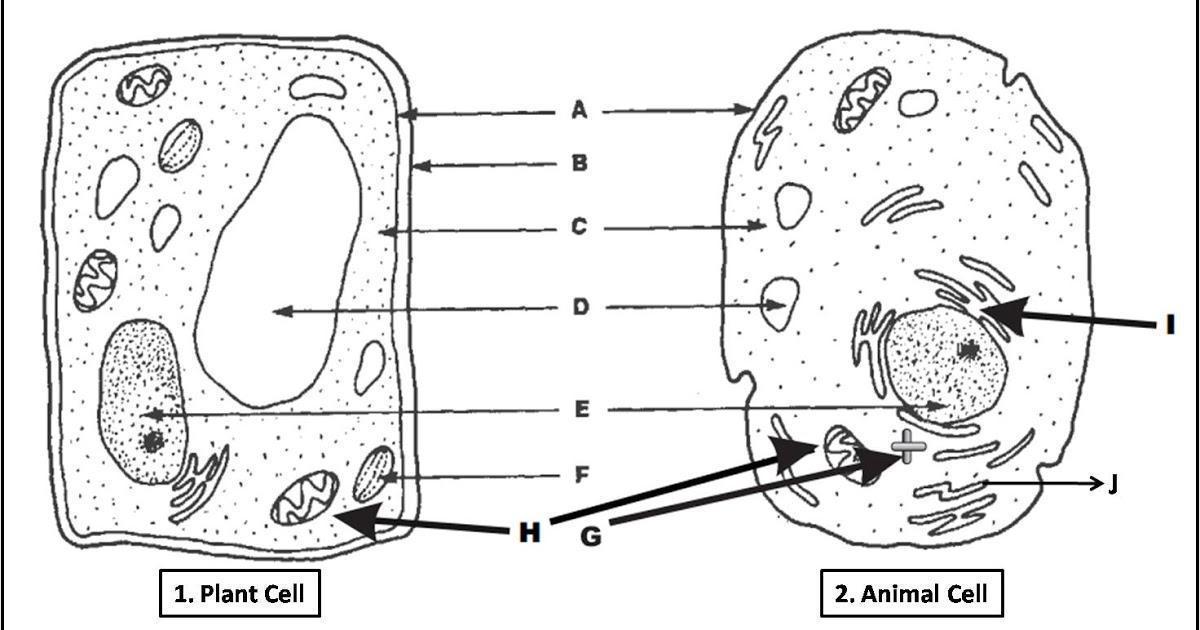
Cell (plasma) membrane
Flexible layer that controls what can enter and exit the cell.
Rough ER
Endoplasmic reticulum studded with ribosomes to produce proteins.
Smooth ER
Endoplasmic reticulum that creates, stores, and transports lipids and carbohydrates.
Golgi body
Organelle that modifies proteins and lipids, preparing them to leave the cell.
Cell Wall
Structure found outside the cell membrane in plant cells that supports the cell and prevents it from bursting when water enters.
Permanent Vacuole
Large vacuole in plant cells containing cell sap that helps keep the cell turgid.
Phospholipid
Molecule composed of a hydrophilic phosphate head and two hydrophobic fatty acid tails, forming a bilayer that makes up the cell membrane.
Hydrophilic
Property of the phosphate head of a phospholipid, meaning it is attracted to water.
Hydrophobic
Property of the fatty acid tails of a phospholipid, meaning they repel water.
Selectively Permeable
Characteristic of the cell membrane that allows only certain materials to pass through.
Cholesterol
Molecule in the cell membrane that regulates fluidity while strengthening and stabilizing the cell membrane.
Glycolipids and Glycoproteins
Molecules acting as markers on cell surfaces, allowing white blood cells to recognize body cells as 'self'.
Fluid Mosaic Model
Model stating that phospholipids can move around like a fluid, and different proteins and molecules are embedded within the bilayer.
Passive Transport
Cellular transport that does not require energy, moving molecules from an area of high concentration to low concentration.
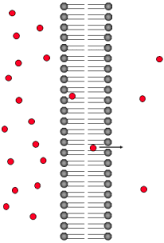
Simple Diffusion
Movement of molecules from an area of high concentration to an area of low concentration directly across the membrane.

Facilitated Diffusion
Movement of molecules from high to low concentration through a transport protein.

Active Transport
Cellular transport requiring energy to move molecules from low to high concentration using transport proteins.

Osmosis
The diffusion of water across a membrane to an area with more solutes.
Hypertonic Solution
A solution where solute concentration is higher outside the cell than inside, causing water to leave the cell and the cell to shrink.
Hypotonic Solution
A solution where solute concentration is higher inside the cell than outside, causing water to enter the cell and the cell to swell.
Isotonic Solution
A solution where solute concentration is equal inside and outside the cell, resulting in no net loss or gain of water.
Sodium-Potassium Pump
An example of active transport that pumps sodium ions out of the cell and potassium ions into the cell against their concentration gradients.
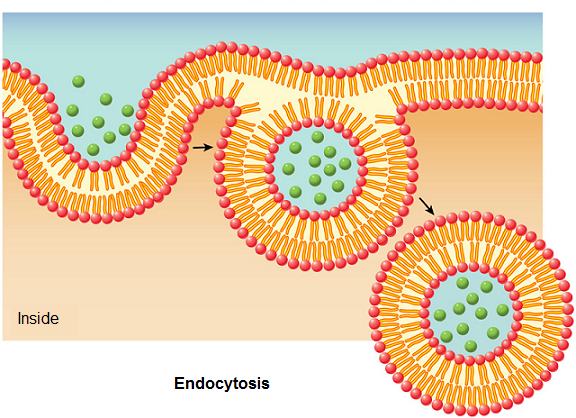
Endocytosis
Process where the cell membrane takes in large molecules by folding in on itself to form new vesicles.

Exocytosis
Process where internal vesicles containing large molecules move to the cell surface and fuse with the membrane to release the molecules.
Phagocytosis
A type of endocytosis referred to as cell eating, involving the ingestion of solid particles.
Pinocytosis
A type of endocytosis referred to as cell drinking, involving the ingestion of liquid.
Muscle Cells
Specialized cells packed with mitochondria to produce energy for muscle contraction.
Neuron
Specialized cell that carries electrical impulses, containing dendrites to connect to other neurons and a long axon to carry the impulse.
Sperm Cell
Specialized cell whose function is to fertilize a female egg cell, featuring a tail for swimming, many mitochondria for energy, and an acrosome with digestive enzymes to penetrate the egg.
Phloem Cells
Plant cells that transport dissolved food around the plant.
Xylem Cells
Plant cells that transport water and mineral ions from the roots to the rest of the plant.
Root Hair Cell
Specialized plant cell that absorbs water and mineral ions, featuring a large surface area and a permanent vacuole that helps to speed up osmosis.