Treating OCD
 View linked note
 Call Kai
 Learn
Learn Practice Test
 Spaced Repetition
 Match
Match Flashcards
 Knowt Play
1/6

There's no tags or description
Looks like no tags are added yet.
Name | Mastery | Learn | Test | Matching | Spaced | Call with Kai | Chat |
|---|
No analytics yet
Send a link to your students to track their progress
7 Terms
Aim of Drug Therapy
Increase or decrease levels of neurotransmitters in the brain or to increase/decrease their activity.
SSRIs (Selective Serotonin Reuptake Inhibitors)
Medications that work on the serotonin system by increasing serotonin levels in the synapse. E.g. prozac
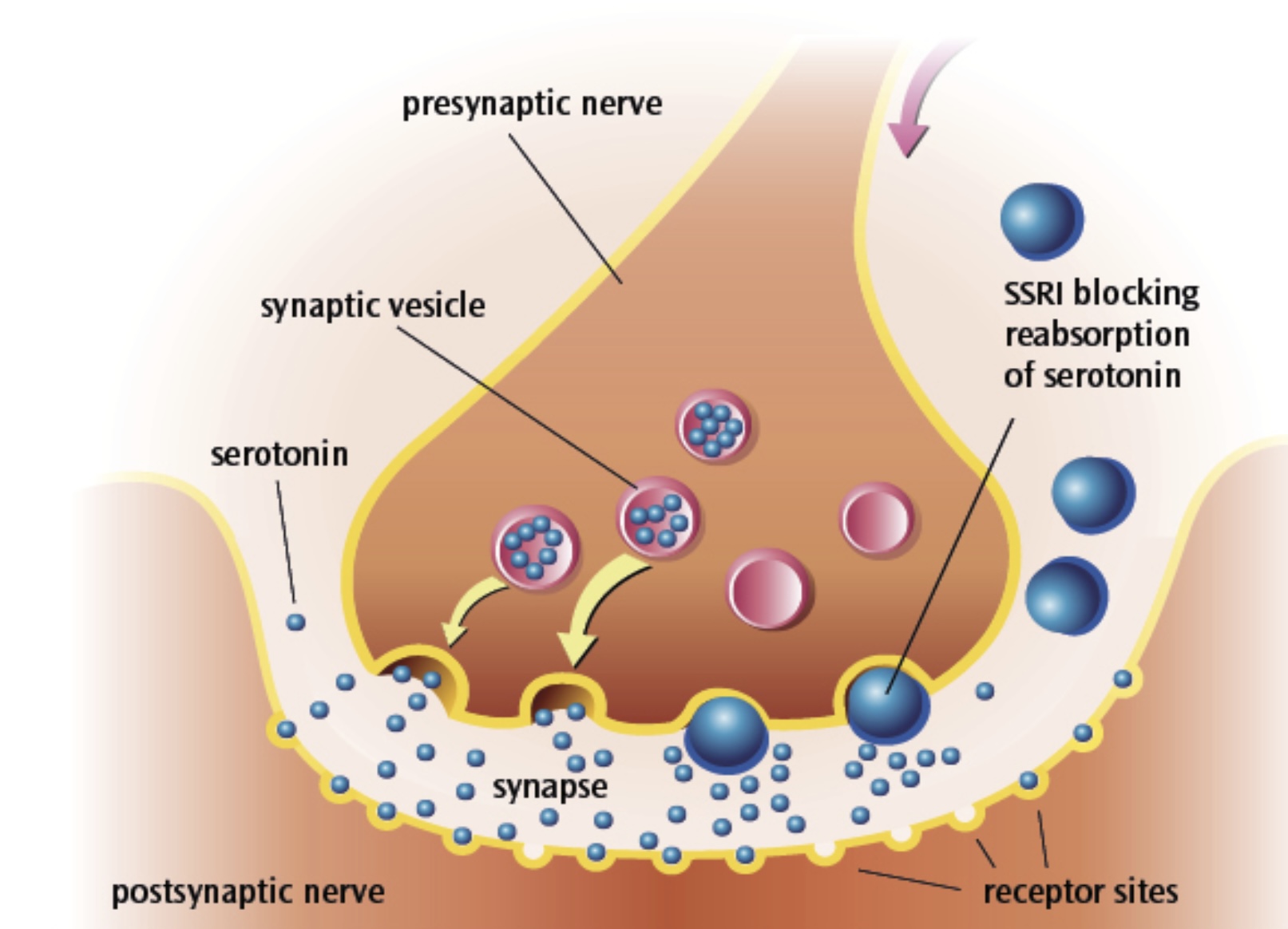
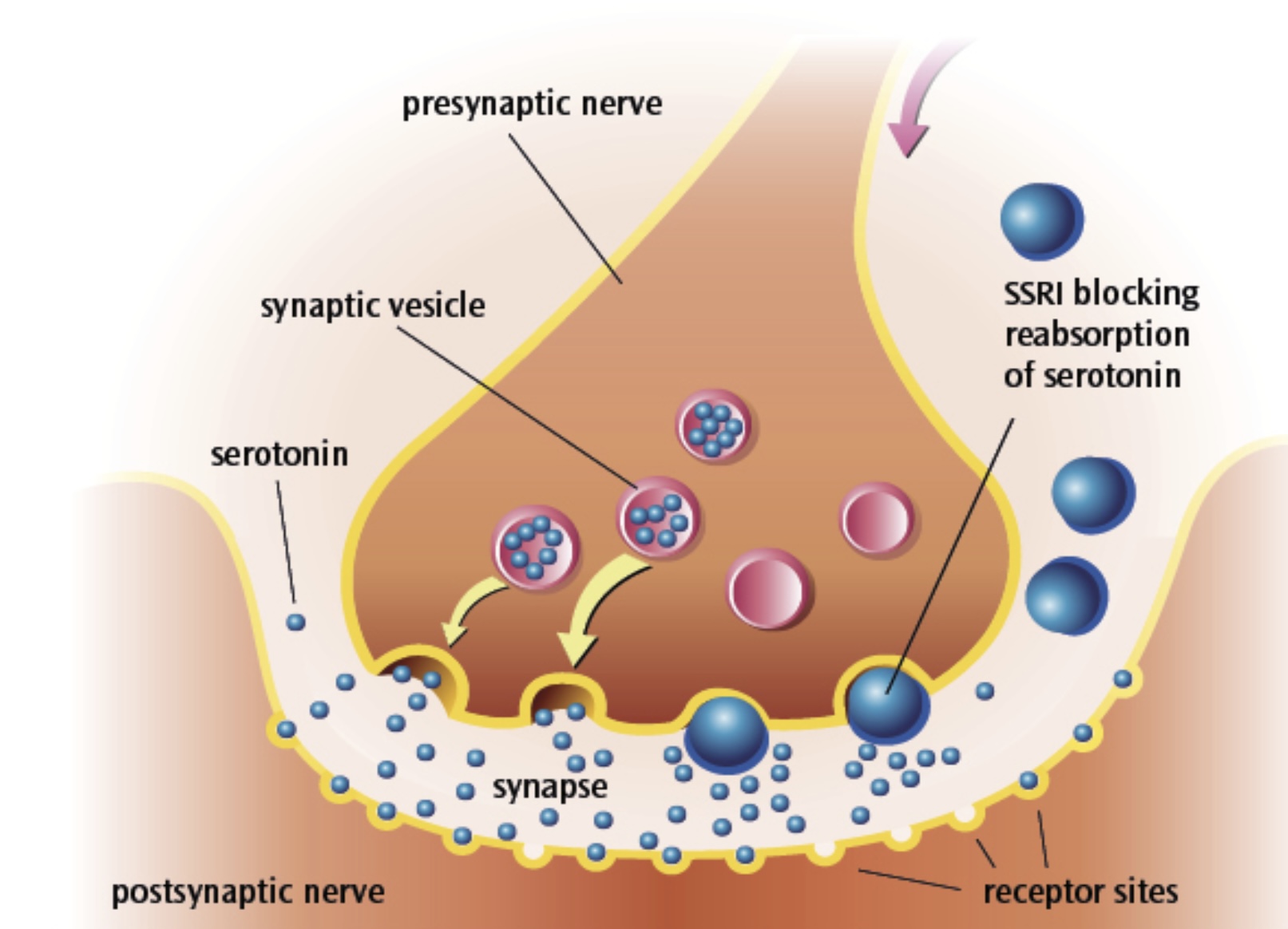
The process of how SSRIs affects on the levels of serotonin
Serotonin is released by certain neurons in the brain. In particular it is released by the presynaptic neurons and travels across a synapse
SSRIs are called Selective Serotonin Reuptake Inhibitors. They only influence (select) serotonin in the brain; as reuptake inhibitors, they inhibit (slow down) the reuptake process in the synapse.
Therefore serotonin is still present in the synaptic cleft and continues to stimulate the postsynaptic neuron.
This compensates for whatever is wrong with the serotonin system in OCD.
Alternatives to SSRIs
SSRIs can take three to four months to reduce symptoms, and for some patients, SSRIs are not effective.
The dosage can be increased for drug-resistant patients or other treatment options attempted, such as anti-anxiety drugs like benzodiazepines.
These work by enhancing a neurotransmitter called GABA, slowing the central nervous system and resulting in general relaxation.
Alternatives 2(Tricyclics and SNRIs)
Tricyclics (an older type of anti-depressant) and SNRIs (serotonin-noradrenaline reuptake inhibitors) work by increasing serotonin and noradrenaline; these drugs can be effective when SSRIs fail, but because they work on multiple neurotransmitters (non-selective), they tend to have more intense side effects.
Strengths of Drug Treatment for OCD
Soomro et al (2008) conducted a meta-analysis combining the data from 17 studies that compared SSRIs to placebos. 3097 participants
Found that SSRIs significantly reduced the symptoms of OCD in 70% of participants on SSRls between 6 and 17 weeks post-treatment.
These results suggest drug therapy is effective in the short term.
Less demanding
Comparing CBT and drug treatment, drugs are often work quicker and don’t have the demands of motivation and commitment. Often CBT may not be suitable or helpful for some people because of many discussions with therapist and homework, so requires fully engage with the treatment unlike drug treatment
They are cheap and thus good value for NHS as opposed to costly psychological therapies. They are also non disruptive to peoples lives, as you don’t have to attending any sessions and can simply take drugs until symptoms go away.
Limitations of Drug Treatments for OCD
Treating symptoms, not the cause
Because someone suffering from OCD has different levels of serotonin doesn’t mean that it is the cause, it might be just a symptom.
Cromer et al. (2007) Found that over 50% of the OCD patients in their sample had a traumatic event in the past.
So drugs=short-term solution, not dealing with a cause of OCD
Serious side-effects
Soomro et al(2009) reported that whilst the SSRIs were more effective than placebo in the short term, there were
Insomnia, headaches, nausea
In addition
Blurred vision
Loss of sex drive
For those taking tricyclic it is more serious. More than 1 in 10 people experience erection problems and weight gain. 1 in 100 become aggressive and experience heart-related problems.
Can be argued that CBT will be more positive experience for some people than bio treatment