IB HL Biology Topic B Form and Function (incomplete v2)
 Call Kai
 Learn
Learn Practice Test
 Spaced Repetition
 Match
Match Flashcards
 Knowt Play
1/228

Earn XP
Description and Tags
Name | Mastery | Learn | Test | Matching | Spaced | Call with Kai | Chat |
|---|
No analytics yet
Send a link to your students to track their progress
229 Terms
Habitat
The environment in which a species normally lives, or the location of a living organism
Species
A group of organisms that can potentially interbreed to produce fertile, viable offspring
Population
A group of organisms of the same species that are living in the same area at the same time
Community
A group of populations living together and interacting with each other within a given area
Ecosystem
A community and its abiotic environment (i.e. habitat)
Ecology
The study of the relationship between living organisms, or between living organisms and their environment
Xerophyte
A plant adapted and able to survive in an environment with little available water or moisture
Limiting Factor
A component of an ecosystem which limits the distribution or numbers of a population, defining optimal survival conditions
Biotic Factors
Interactions between organisms, either intraspecific (within species) or interspecific (between species)
Abiotic Factors
Environmental conditions such as light, temperature, salinity, rainfall, wind velocity, soil pH, etc.
Temperature
Plants can only survive within a narrow range of temperatures to which they are adapted.
Water Availability
Water is needed for photosynthetic processes and maintaining cell turgor.
Light Availability
Light is essential for photosynthesis, with low-growing plants possessing darker green leaves for optimal light conversion.
Salinity
Most plants have low soil salinity tolerance, with high salinity being toxic and hindering water uptake.
Territory
Territorial boundaries affect an animal's capacity for various activities like attracting mates, foraging, and avoiding predators.
Food Availability
The availability of food directly influences population size and distribution of animals.
Law of Tolerance
Populations have optimal survival conditions within critical minimal and maximal thresholds, as proposed by Victor Ernest Shelford.
Optimal Zone
Central portion of the bell-shaped curve representing conditions favoring maximal reproductive success and survivability.
Zones of Stress
Regions flanking the optimal zone where organisms can survive but with reduced reproductive success.
Zones of Intolerance
Outermost regions where organisms cannot survive, representing extremes of the limiting factor.
Glycophytes
Plant species not salt-tolerant, easily damaged by high salinity.
Halophytes
Salt-tolerant plant species that may become stressed in freshwater environments.
Quadrats
Rectangular frames of known dimensions used to establish population densities.
Transects
Straight lines along an abiotic gradient for recording population data to determine patterns.
Kite Graph
Represents changes in species distribution along a transect, with the width of each 'kite' indicating abundance.
Coral Reef Formation
Coral species form reefs impacted by oceanic temperature and pH changes, requiring shallow, clear water and specific temperature ranges.
Reef-building coral optimal growth range
Typical range in shallow, temperate waters between 20 - 30ºC
Biome
Geographical area with specific climate sustaining plant and animal community
Biosphere
Total area where all living things are found
Tropical Rainforest characteristics
Hot climate, high precipitation, high biodiversity, epiphytes
Taiga characteristics
Cold, coniferous forests, low precipitation, little species variation
Desert characteristics
Extreme temperature conditions, low precipitation, xerophytes
Whittaker's biome classification
Classified biomes based on yearly temperatures and rainfall
Temperate Grassland
Moderate temperatures, dominant grass vegetation
Mediterranean biome
Moderate temperatures, dry summers, woody shrubs
Tundra characteristics
Freezing temperatures, low precipitation, low-growing vegetation
Mountain Ranges
High altitude areas with low temperatures and rapid weather changes
Hot Desert adaptations
Expire, evade, endure methods for survival in extreme conditions
Tropical Rainforest structure
Complex ecosystem with ground to canopy layers, diverse adaptations
Ecological Niche
Functional role of an organism in its environment
Obligate aerobe
Requires oxygen for respiration
Obligate anaerobe
Respires only in absence of oxygen, poisoned by oxygen
Facultative anaerobe
Can switch between aerobic and anaerobic respiration
Autotrophs
Organisms that produce their own organic molecules using either light energy or energy derived from the oxidation of chemicals
Heterotrophs
Organisms that obtain organic molecules from other organisms through ingestion, detritus consumption, or absorption of external products of digestion
Consumers
Heterotrophs that ingest organic molecules from living or recently killed organisms
Detritivores
Heterotrophs that ingest organic molecules found in non-living remnants of organisms
Saprotrophs
Heterotrophs that release digestive enzymes to absorb external products of digestion, commonly referred to as decomposers
Photosynthesis
Process by which autotrophs synthesize organic molecules from simple inorganic substances using sunlight or chemosynthesis
Holozoic Nutrition
Type of nutrition in animals where organic molecules are obtained from other organisms through ingestion
Mixotrophic Nutrition
Nutrition in certain protists that involves both autotrophic and heterotrophic modes, depending on resource availability
Symbiotic Nutrition
Nutritional relationship between different species living in close physical association, often mutually beneficial
Archaea
One of the three domains of life, metabolically diverse and including various photosynthetic, chemosynthetic, and heterotrophic organisms
Extremophiles
Organisms, including some Archaea, that thrive in extreme environmental conditions
Dentition
The arrangement of teeth in a species
Organelles
Discrete subunits of a cell adapted to perform specific functions
types of organelles
nucleus, mitochondria, endoplasmic reticulum (rough and smooth), golgi apparatus, vesicles, chloroplasts, centrosome
nucleus
double membraned w/ pores, stores genetic material, has nucleolus responsible for ribosome assembly, controls transcription
mitochondria
responsible for ATP production (via aerobic cell respiration), highly folded inner membrane to increases SA:VOL ratio
endoplasmic reticulum
membranous network that synthesises and transports materials, smooth synthesises lipids, rough synthesises proteins via ribosomes
golgi apparatus
assembly of folded membranes → material secretion, material is sorted, stored, modified, and exported via vesicles (exocytosis)
vesicles
membranous containers involved in transport and storage
peroxisomes
type of vesicle, involved in oxidation of lipids and digestion of toxic metabolites
lysosomes
responsible for the break down of cellular waste and pathogenic debris
vacuoles
comparatively larger containers that store excess fluid and regulate pH
chloroplasts
responsible for photosynthesis (conversion of light energy into chemical energy), use photosynthetic pigment chlorophyll to absorb and utilise light energy
centrosome
function as microtubule-organising centres composed of paired centrioles, contribute towards cell division in animal cells
Plasma membrane
Semi-permeable barrier enclosing cell contents, controlling internal conditions
Ribosomes
Cellular structures responsible for protein synthesis
Eukaryotes
Cells with a distinct nucleus and membrane-bound organelles
Transcription
Process converting DNA instructions into RNA transcripts (mRNA), controlled by nucleus
Translation
Synthesis of proteins from RNA transcripts by ribosomes, occurs in cytoplasm
Post-transcriptional modification
Processes stabilizing mRNA and removing non-coding sequences following transcription but before translation
Compartmentalising cytoplasm
Separating cytoplasm into sections with membrane-bound organelles for specific functions
autophagy
hydrolytic enzymes freely digesting the contents of a cell (stopping is an advantage of compartmentalising cytoplasm)
Lysosomes
Organelles containing hydrolytic enzymes for digesting cellular debris
Phagocytic vacuoles
vesicles containing enzymes for engulfed pathogenic materials digestion
Stem Cells
Unspecialised cells with self-renewal and potency qualities
Totipotent
Stem cells capable of forming any cell type and developing into new organisms
Pluripotent
Stem cells capable of forming any cell type arising from the three germ layers
Multipotent
Stem cells capable of forming a number of closely related cell types
Stem cell niches
Sites within the body maintaining adult stem cells for future proliferation and differentiation
Haemopoietic stem cells
Located in bone marrow, giving rise to different types of blood cells (erythrocytes, leucocytes, thrombocytes)
epidermal stem cells
involved in cyclic bouts of hair growth, skin innervation, vascularisation, wound repair
Differentiation
Process during development whereby newly formed cells become more specialised and distinct
Embryonic Development
Process of unspecialised zygote dividing and developing into a mass of specialised cells
Morphogens
Gene regulating chemicals impacting embryonic development, concentration determines degree of differentiation
Cell Size
must be able to balance cell volume and surface area for optimal metabolism and material exchange
Red blood cells
Highly specialized cells with small size for efficient gas exchange
Phospholipid bilayer
Semi-permeable barrier formed by phospholipids enclosing cell contents
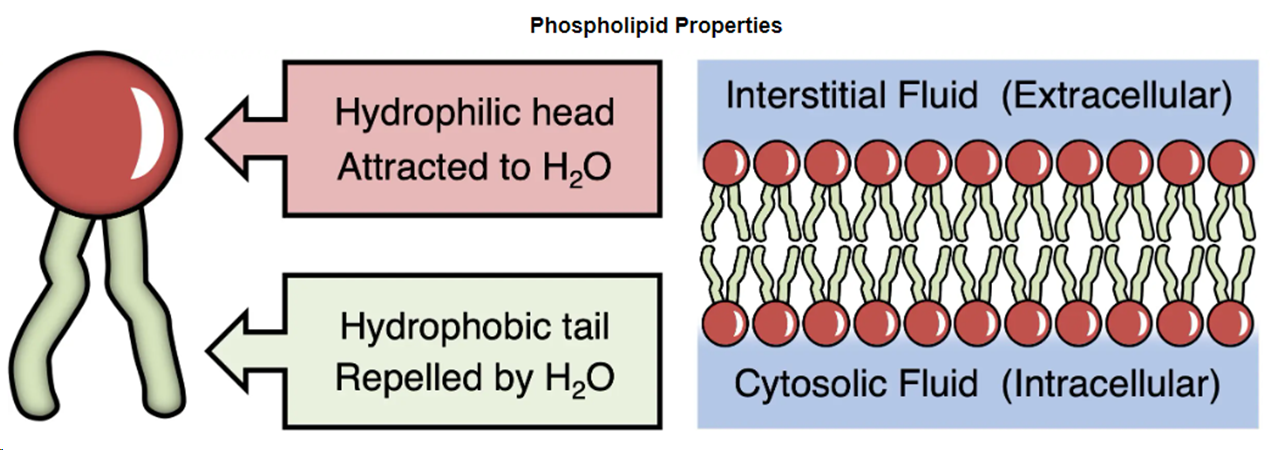
Membrane Protein
Proteins embedded in or attached to the cell membrane, with functions including junctions, enzymes, transport, recognition, anchorage, and transduction
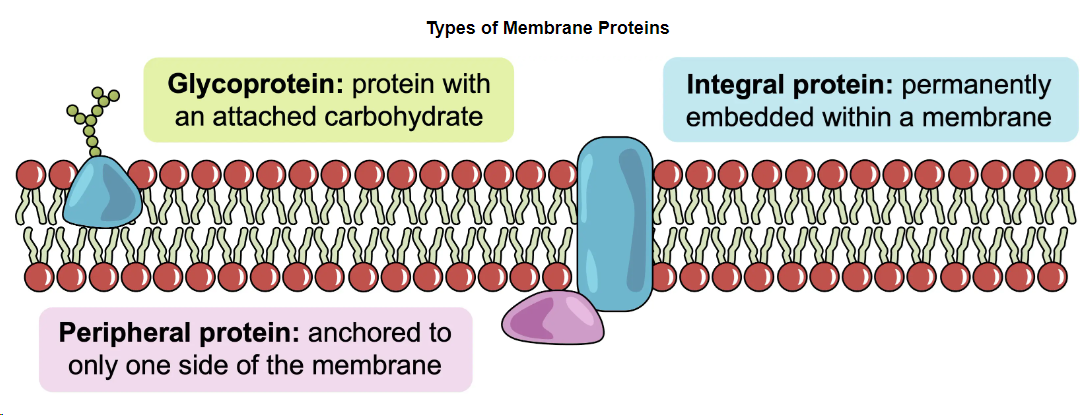
Integral Proteins
Permanently embedded within the cell membrane, with hydrophobic regions associating with the lipid bilayer and polar amino acids facing the aqueous solutions
Peripheral Proteins
proteins that are temporarily associated with one side of a membrane, either attached to integral proteins, linked to the polar heads of the bilayer, or held in place by the cytoskeleton or extracellular matrix
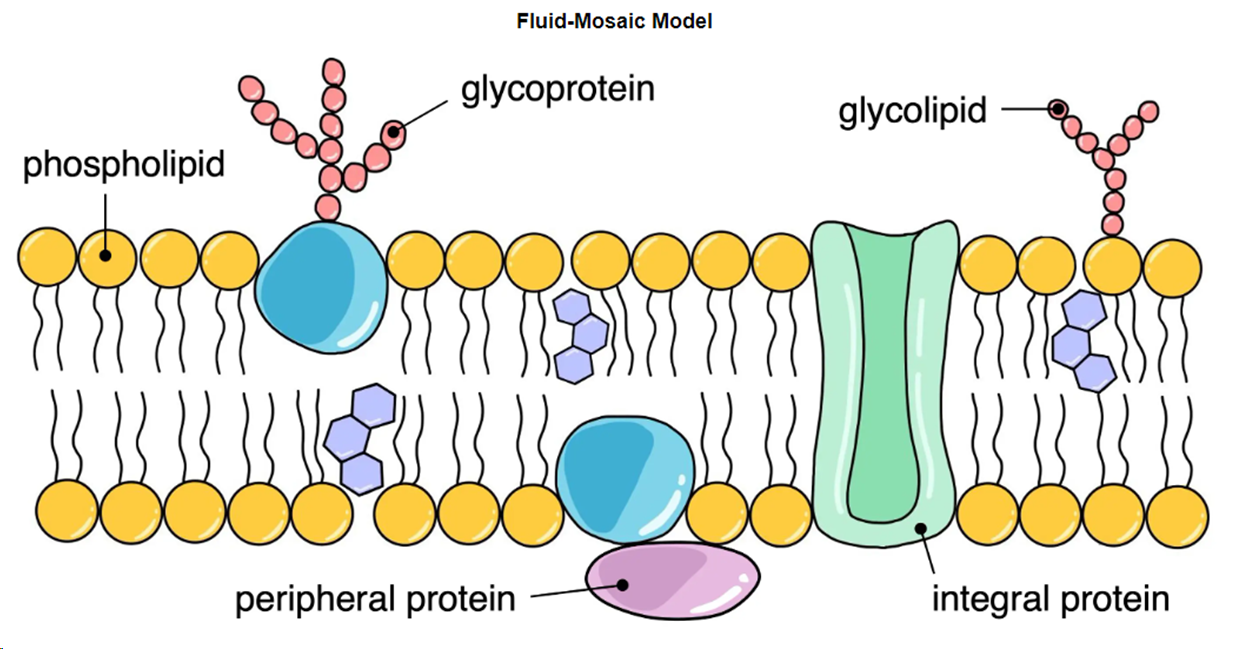
Glycosylation
The process of attaching carbohydrate chains to phospholipids or membrane proteins, located on the extracellular side and playing important roles in adhesion, recognition, and maintaining structural integrity
Fluid Mosaic Model
Representation of cell membranes as a fluid mosaic, with phospholipids arranged in a bilayer, embedded proteins, and cholesterol interspersed in animal cell membranes
Passive Transport
Movement of material along a concentration gradient without the expenditure of energy, including simple diffusion, osmosis, and facilitated diffusion
Active Transport
Movement of materials against a concentration gradient requiring energy expenditure, including primary (using ATP) and secondary (coupled to another molecule moving down an electrochemical gradient) transport
Diffusion
Net movement of molecules from a region of high concentration to a region of low concentration, influenced by factors such as temperature, molecular size, and steepness of gradient
Junctions
where Membrane proteins serve to connect and join cells together
Enzymes
Membrane proteins fixing to membranes to localize metabolic pathways