test 1: capacitance & circuits mcq
 Call Kai
 Learn
Learn Practice Test
 Spaced Repetition
 Match
Match Flashcards
 Knowt Play
1/10

There's no tags or description
Looks like no tags are added yet.
Name | Mastery | Learn | Test | Matching | Spaced | Call with Kai | Chat |
|---|
No analytics yet
Send a link to your students to track their progress
11 Terms
what equation do you use here? what is the answer?
“three identical capacitors are connected in parallel. their equivalent capacitance equals…”
A) C/3
B) C
C) 2C
D) 3C
E) 9C
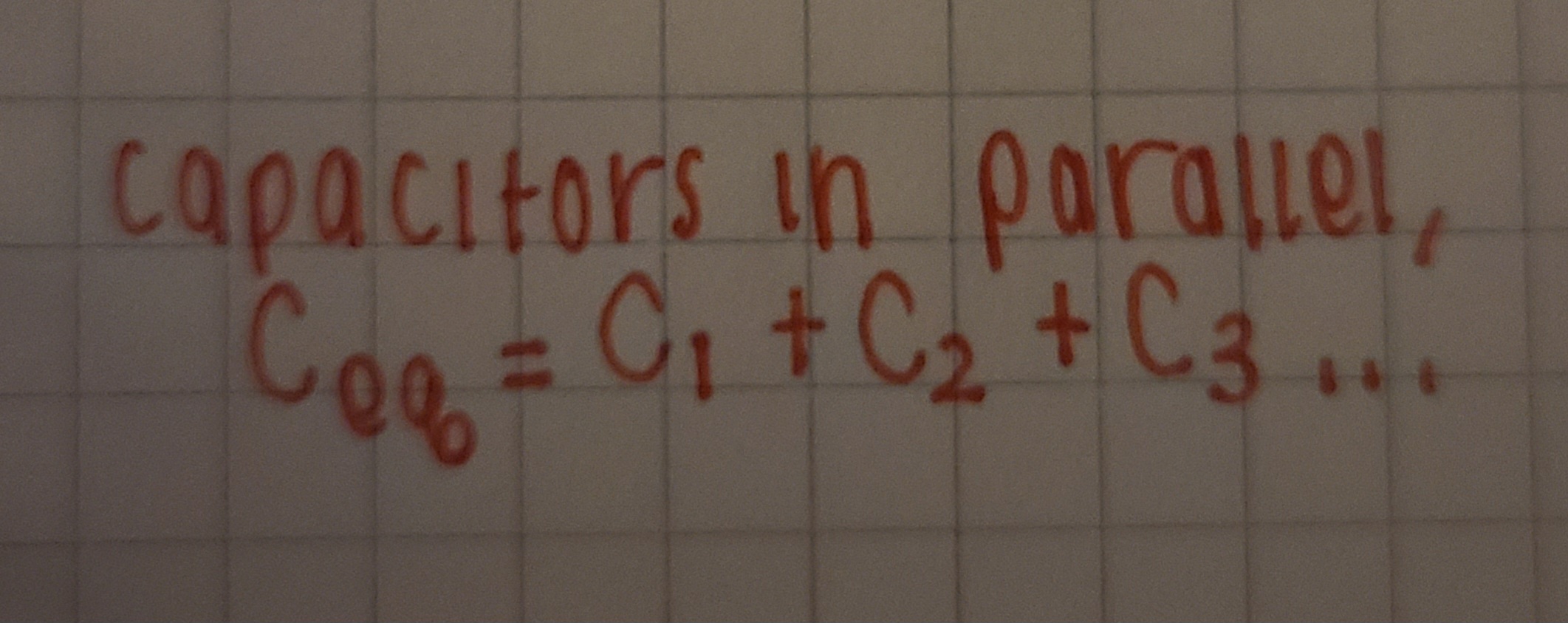
capacitors in parallel,
D) 3C
what equation do you use here? what is the answer?
“three identical capacitors are connected in series. their equivalent capacitance equals…”
A) 3C
B) C
C) C/2
D) C/3
E) 9C
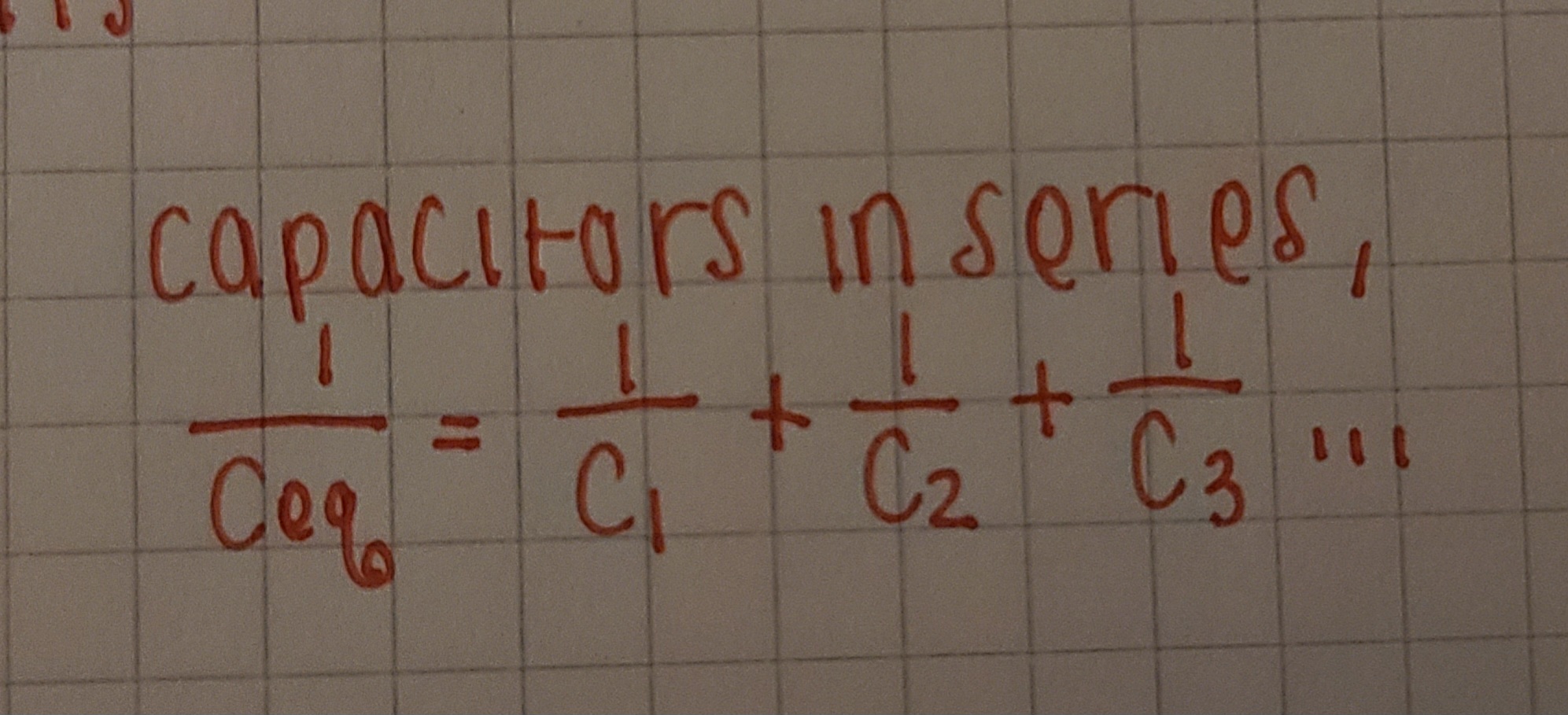
capacitors in series,
D) C/3
where does a capacitor store energy?
within its electric field between the plates
“a capacitor stores electrical energy in…”
A) moving e-
B) its electric field
C) magnetic domains
D) the battery
E) the wires
B) its electric field
what equation is being used here? what is the answer?
“if the voltage across a capacitor is doubled while its capacitance remains constant, the stored energy becomes…”
A) ½
B) unchanged
C) twice
D) 4 times
E) 8 times
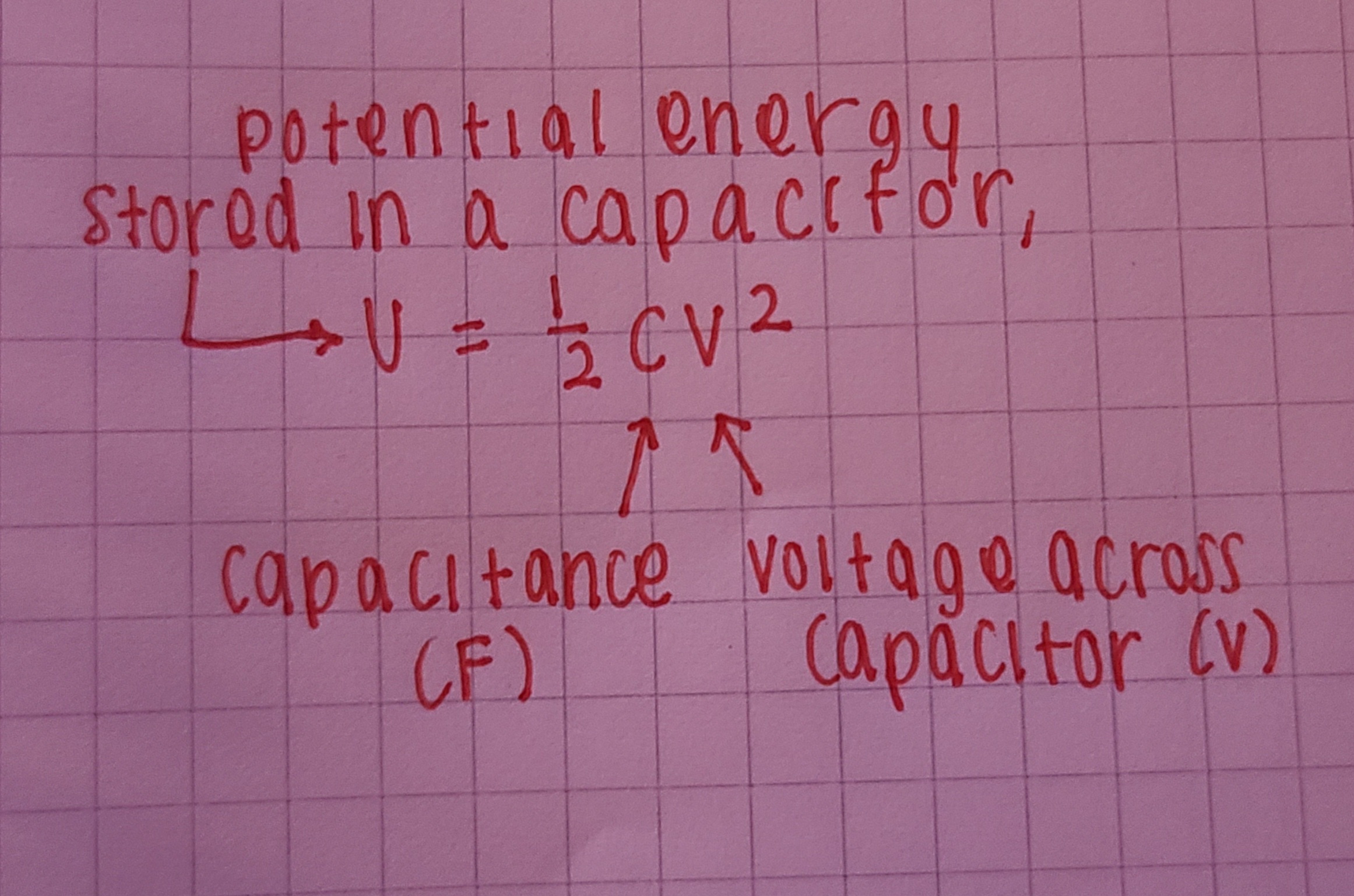
potential energy stored in a capacitor,
→ potential energy is proportional to voltage, so if V becomes (2)²→4, then U becomes 4 times
D) 4 times
what equation is being used here? what is the answer?
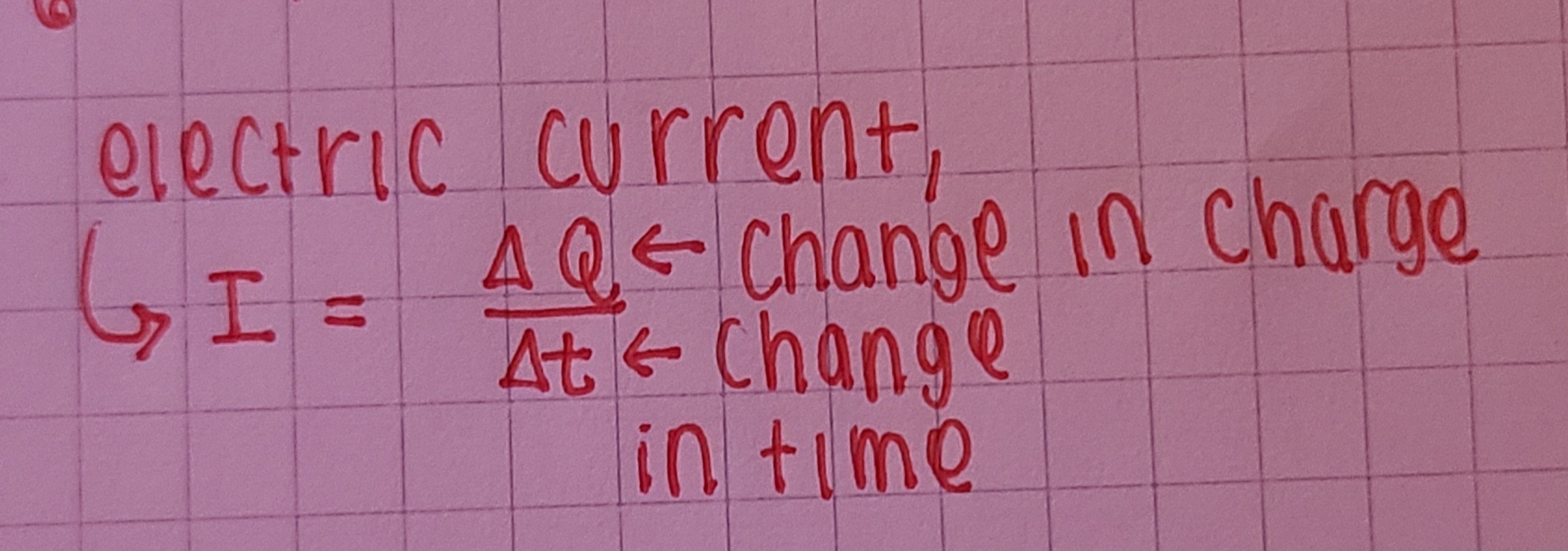
“electric current is defined as…”
A) charge per unit voltage
B) voltage per unit time
C) charge flowing per unit time
D) resistance per unit length
E) energy per unit charge
C) charge flowing per unit time
“the SI unit of resistance is…”
A) Volt
B) Ampere
C) Ohm
D) Coulomb
E) Watt
C) Ohm
what equation is being used here? what is the answer?
“a wire is stretched to twice its original length while its volume remains constant. its resistance…”
A) remains unchanged
B) doubles
C) triples
D) becomes four times large
E) becomes ¼
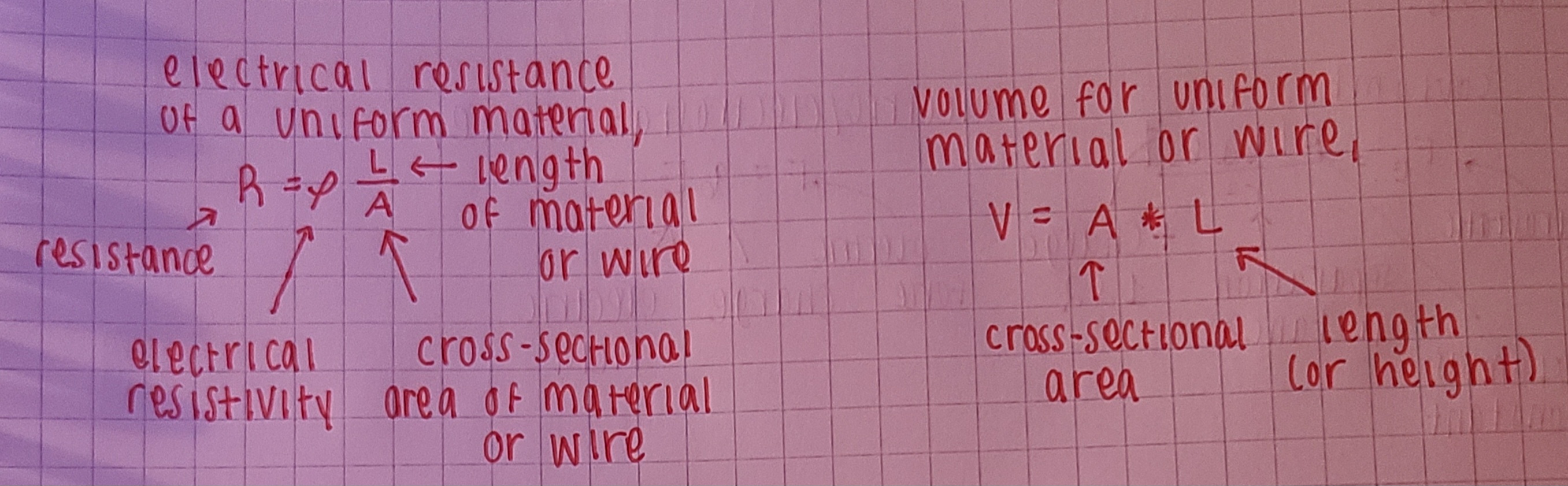
electrical resistance (wire) & volume (wire),
V does not change, so Vold must equal Vnew → AoldLold=AnewLnew
“twice original length” meaning AoldLold=Anew(2*Lnew)
solving for Anew=AoldLold/2Lnew
→ this means that 2Lnew is inversely proportional ½ of Anew
→ R is proportional to the numerator !!
→ substitute ½Anew into electrical resistance Rnew=p*2L/(A/2) → p(2×2)L/A → 4p(L/A) = Rnew
D) becomes four times as large
what equation is being used here? what is the answer?
“a 12.0V battery is connected across a 6Ω resistor. the current is…”
A) 0.5A
B) 1A
C) 2A
D) 6A
E) 72A
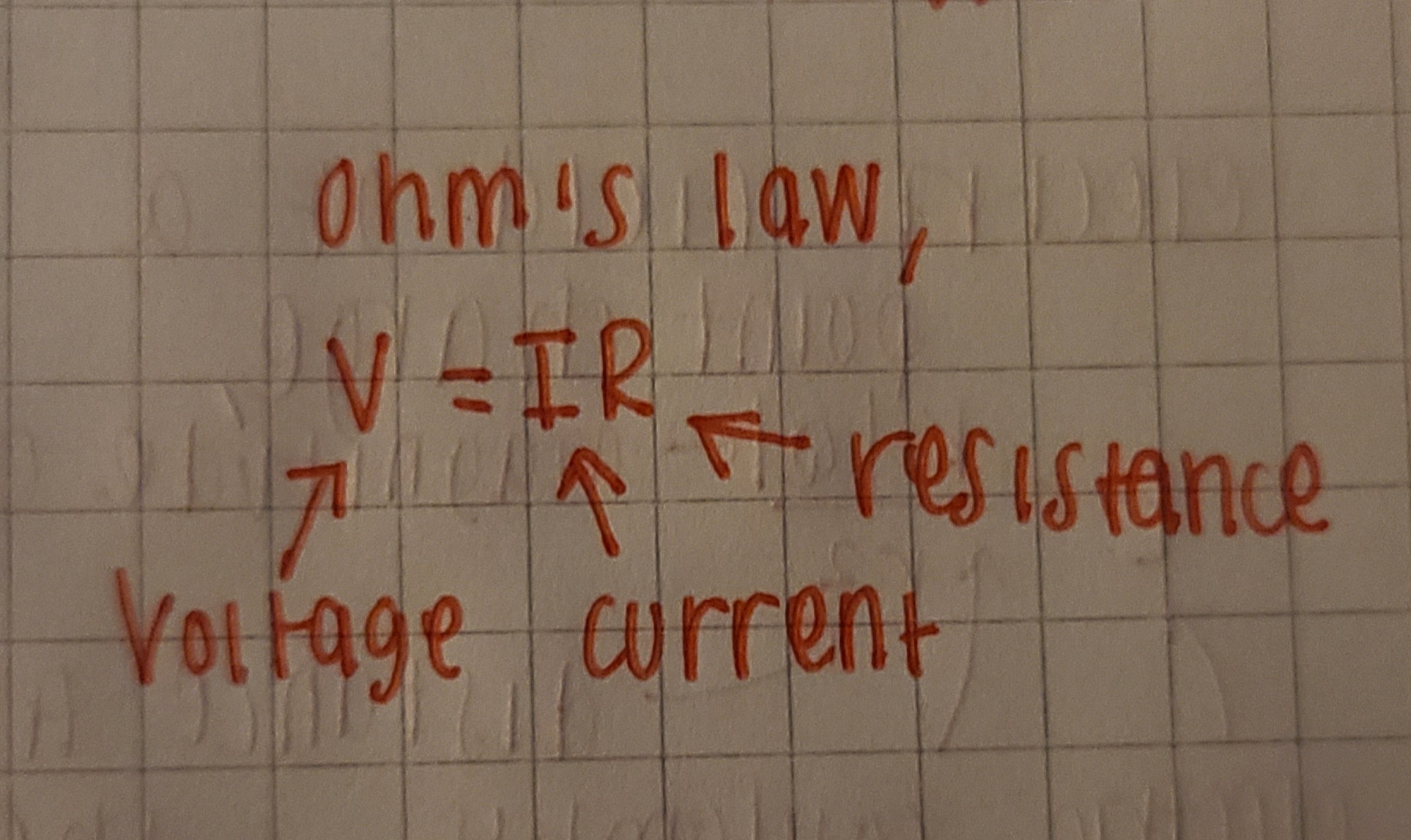
ohm’s law,
C) 2A
“which expression gives electrical power?”
A) P=IV
B) P=V/I
C) P=IR
D) P=(Q/t)
E) P=CV
A) P=IV
“the resistivity of a metallic conductor generally…”
A) decreases as temperature increases
B) remains constant for all temperatures
C) increases as temperature increases
D) becomes zero above room temperature
E) depends only on the length of the wire
in metallic conductors as temperature increases, atoms vibrate more which causes more collisions with flowing e-. these collisions are called “friction” which means resistivity
→ so as resistance increases, temperature also increases
C) increases as temperature increases