RNSG 1100 Pharmacology Course Lecture 2
 Call Kai
 Learn
Learn Practice Test
 Spaced Repetition
 Match
Match Flashcards
 Knowt Play
1/75

There's no tags or description
Looks like no tags are added yet.
Name | Mastery | Learn | Test | Matching | Spaced | Call with Kai | Chat |
|---|
No analytics yet
Send a link to your students to track their progress
76 Terms
All body functions, all disease processes and most drug actions occur at which level?
cellular level
Drugs are:
chemicals that alter basic processes in body cells
Drugs given for _________ must reach adequate concentrations in the blood and other tissue fluids surronding the cells
systemic effects
systemic effects
happens when a substance, medicine, or disease affects the entire body instead of just a single, small spot
Pharmacokinetics
involves drug movement through the body to reach sites of action, metabolism, and excretion
what the body does to a drug
Pharmacodynamics
what the drug does to the body
Local
a drug that acts where it is applied
Specific processes of pharmacokinetics include:
absorption
distribution
metabolism
excretion
ADME
Absorption
process that occurs from the time a drug enters the body to the time it enters the bloodstream to be circulated
Onset of drug action is determined by what?
rate of absorption
Factors that affect rate and extent of drug absorption
dosage form
route of administration
administration site blood flow
GI function
presence of food or other drugs
Distribution
after a drug is injected or absorbed in the bloodstream it is carried by the blood and tissue fluids to its sites of action, metabolism and excretion
Metabolism
method by which drugs are inactivated or biotransformed by the body before they are excreted
Elimination
to have effective excretion there must be adequate function of the circulatory system and the organs of excretion (kidney, bowel, lungs and skin)
Most drugs are excreted by the _____ and eliminated in the ________
kidneys, urine
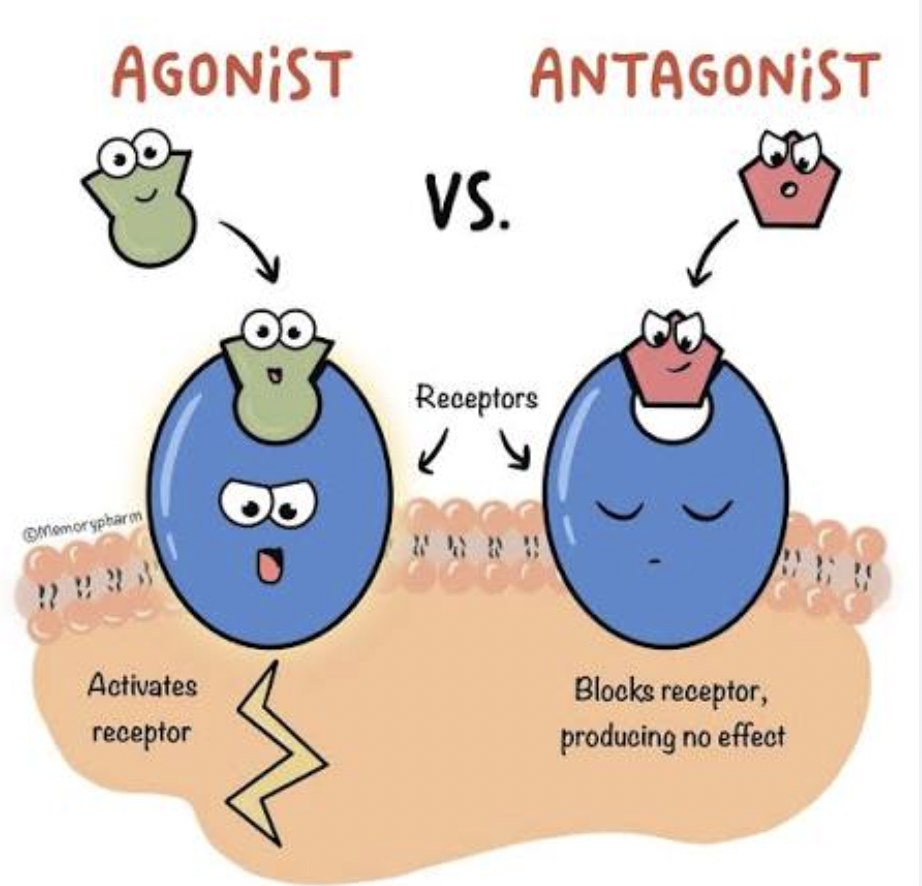
Agonists
drugs that produce effects like those produced by naturally occurring hormones, neurotransmitters, and other substances
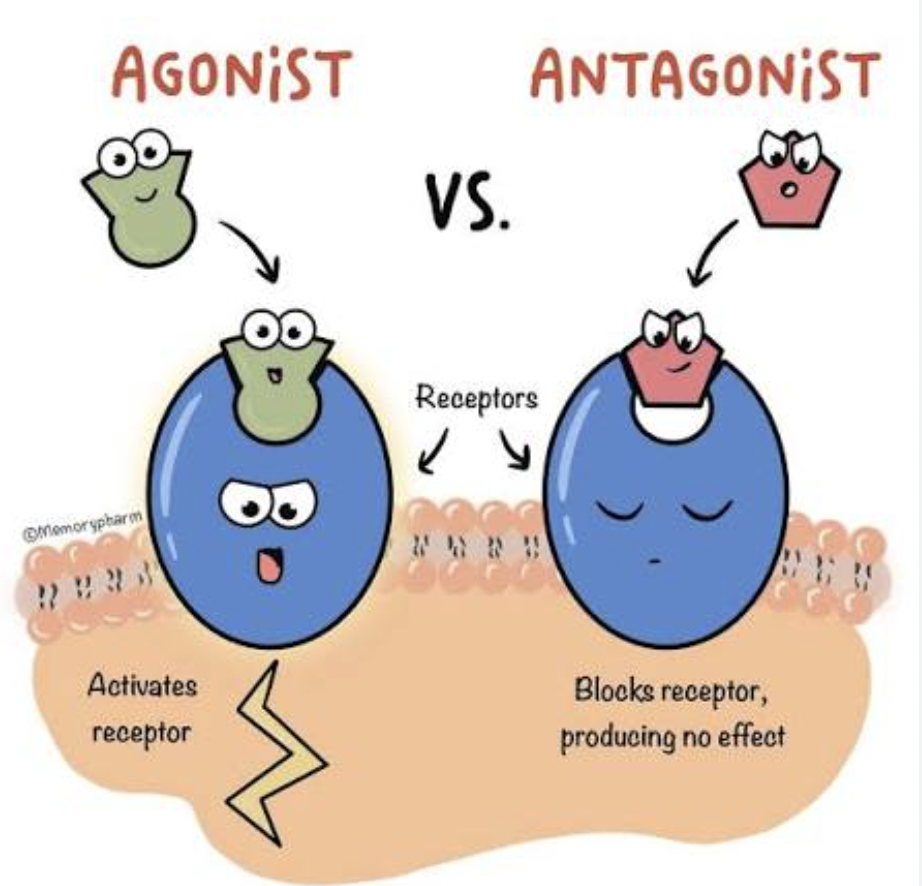
Antagonists
drugs that inhibit cell function by occupying receptor sites. It prevents natural body substances and other drugs from occupying the receptor sites
Aspirin
wonder drug that treats pain, inflammation, and fever and helps to prevent blood clots
Aspirin is excreted through _____
the kidneys
Aspirin is absorbed in the ______ then distributed to all body tissues
GI tract
What does aspirin inhibit, and how does it act?
Aspirin inhibits prostaglandin cyclooxygenase (COX) and acts as an antagonist
What effects result from aspirin inhibiting prostaglandin cyclooxygenase?
Analgesic, anti-inflammatory, and platelet aggregation-inhibiting effects
How does aspirin help decrease fever?
It acts on the temperature-regulating system in the brain
What does aspirin promote to decrease fever?
Vasodilation and sweating, which help decrease fever
Serum half-life (elimination half-life)
time required for the serum concentration of a drug to decrease by 50%
Serum half-life is determine by what?
metabolism, excretion
Serum drug level
laboratory measurement of the amount of a drug in the blood at a particular time
Serum drug levels reflect:
dosage
absorption
bioavailability
half-life
rate of metabolism
excretion
Toxic concentration
single large dose
repeated small doses
slow metabolism
Variables that affect drugs
dosage
route of administration
drug-diet interactions
drug-drug interactions
age, weight
Physiologic
relates to the normal functions and processes of living organisms
Physiologic changes may alter all pharmacokinetic processes in:
older adults (65 and older)
Beers list
a list of medications where risks may outweigh benefits in older adults
Adverse effects
any undesired responses to medication administration
What drugs can produce adverse effects
all drugs
Black box warnings
strongest warning the FDA can give consumers to improve the safety of using drugs
Drug toxicity (poisoning or overdose)
occurs when there is an excessive amount of a drug and may damage body tissues
common in both adults and pediatrics
Activated charcoal is considered the “universal antidote” for
drug overdoses
What can drugs do to normal cellular activities?
drugs can stimulate or inhibit normal cellular activities, but they cannot change the type of function that normally occurs
Drug-related variables that affect drug action:
dosage
route
drug-diet
drug-drug interactions
Patient-related variable that affect drug action
age
body weight
genetic and ethnic characteristics
sex
pathologic conditions
psychological status
Rights of medication administration
right drug
right dose
right patient
right assessment
right route
right time
right reason
right to refuse the medication
right documentation
right patient education
right evaluation
Preventing Medication Errors
unit-dose system
automated, computerized, locked cabinets
computerized provider order entry
bar coding
limiting use of abbreviations
computerized medication orders
medication reconciliation
Dosage Forms
regular
chewable
enteric coated
extended release (XL)
sustained release (SR)
long acting (LA)
sublingual
buccal
Regular routes of administration
PO, gastrointestinal (GI) tube (crushed and mixed with water)
Chewable route of administration
PO colored and flavored/children
Enteric coated route of administration
PO dissolve in small intestine/used for meds that cause gastric irritation
Extended release (XL) sustained release, (SR) long acting (LA)
PO slowly absorbed, effects prolonged 12-24 hours
Sublingual
under tongue, dissolve quickly
Buccal
held in cheek, absorbed directly into the blood stream - rapid systemic effects
Oral route of drug administration
Advantages: simple, convenient, inexpensive
Disadvantages: unknown absorption and generally sloe drug action
Regular Capsules
PO contain active drug, fillers, and preservatives (take with 8oz fluid)
gelatin dissolves in gastric fluid and release medication
Extended release (XL); sustained release (SR), long acting (LA)
slowly absorbed, effects prolonged 12-24 hours
don’t bite, chew, or empty these capsules
Oral solutions
PO, GI tube absorbed rapidly, use appropriate measuring device
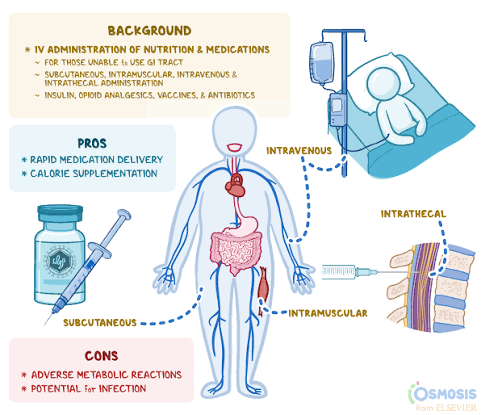
Parenteral solutions
IV, IM, Sub-Q, intradermal Sterile, IV rapid effects, sub-q for heparin and insulin, IM few drugs, intradermal inject skin test.
Insulin syringe for insulin, TB syringe for measuring small amounts
Suspensions
PO, sub-q
e.g.; NPH insulin - rotate or shake
Dermatologic Creams, Lotions, Ointments
minimally absorbed through skin and exert local effect
some (ex: skin patches) exert systemic effects
dispose properly
Solutions and powders for oral or nasal inhalation including metered dose inhalers (MDIs)
oral inhalation mainly for asthma, nasal sprays for allergic rhinitis, deliver specified dose
correct use essential
Eye solutions/ointment
sterile, can have systemic effects
Throat Lozenges
cough and sore throat
Ear solutions
ear infections
Vaginal creams and suppositories
vaginal infections
Rectal suppositories and Enemas
suppositories: sedative, analgesic, laxatives
enema: constipation or inflammatory bowel diseases
The rate of absorption depends on the ______
route
GI tubes (e.g.; nasogastric, gastrostomy)
Advantages: uses GI tract, avoid injections
Disadvantages: aspiration, clogging
Proper precautions and preparations. Liquid preferred over crushed and emptied capsules. If crushing, give meds one at a time and don’t use long-acting formulations. Tube should be rinsed before and after med. Request liquid form of drug where possible
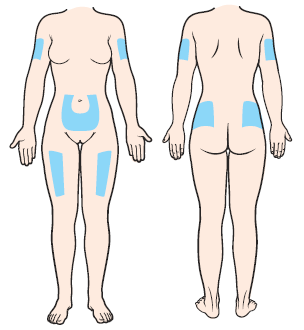
Subcutaneous (SQ)
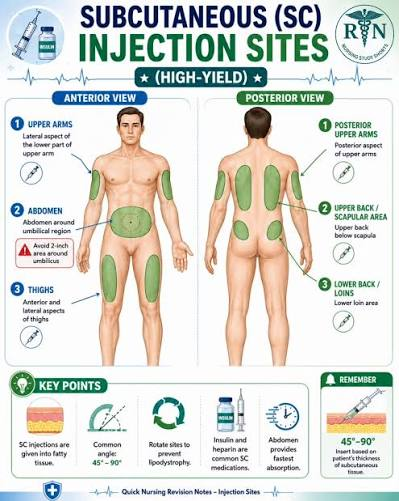
Advantages: small, less painful needles used (insulin, heparin)
Disadvantages: small amount of drug (up to 1 mL), slow absorption
irritating to sub-Q tissue-pain, risk of necrosis and abscess
Intramuscular (IM)
Advantages: rapid absorption
Disadvantages: small amount can be given (up to 3mL)
risk to blood vessels or nerves
use anatomical landmarks for sites
Intravenous (IV) Directly into blood stream
Advantages: bypass barriers, rapid action
Disadvantages: skill needed, phlebitis and thrombosis, increased risk of adverse reactions
gloves worn, prevent damage to sites
Topical skin or mucous membranes: nasal or oral inhalation, instillation into lungs, eyes, or nasal under tongue (sublingual) into cheek (buccal); into vagina or rectum
Advantages: intact skin-site of application. Some drugs given topically for system effects )ex: mucous membranes-rapidly absorbed)
Disadvantages: irritation to skin or mucous membranes. Mucous membranes may cause systemic effects
Preferred over oral or injected - fewer and/or less severe systemic effects
Parenteral
by some other means than through the gastrointestinal tract
Parenteral administration methods
intramuscular (IM)
subcutaneous (subq)
intradermal (ID)
intravenous (IV)
Subcutaneous Injection sites
Anatomic Landmarks and Intramuscular Sites

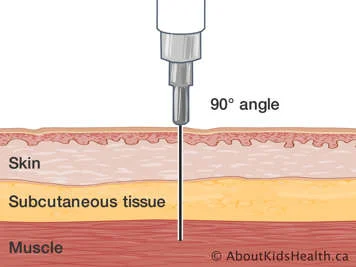
Intramuscular insertion angle
90 degrees
many vaccines
Subcutaneous insertion angle
45-90 degrees
insulin, heparin

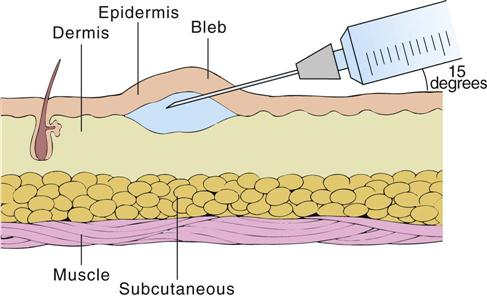
Intradermal insertion angle
15 degrees
TB skin tests