Anatomy | Development & Adult Anatomy of the Foregut (S1W3)
 Call Kai
 Learn
Learn Practice Test
 Spaced Repetition
 Match
Match Flashcards
 Knowt Play
1/23

There's no tags or description
Looks like no tags are added yet.
Name | Mastery | Learn | Test | Matching | Spaced | Call with Kai |
|---|
No analytics yet
Send a link to your students to track their progress
24 Terms
The gut tube is lined with ____
endoderm
What are the 3 sections of the gut tube?
Foregut, midgut, hindgut
The foregut extends from:
The head and neck, all the way into the thorax, the abdomen and the rectal region.
The lungs originally developed from which embryological structure?
The gut tube (they should, however, separate from the gut tube in development)
What are the structures which develop from the abdominal foregut?
Liver
Stomach
Pancreas
Spleen (doesn’t develop from the gut tube, migrates to the foregut area later)
What are the anatomical positions (relatively) of the liver, stomach and pancreas?
The liver sits up on the right side and superiorly, the stomach is located in the midline, and the pancreas is all the way posteriorly.
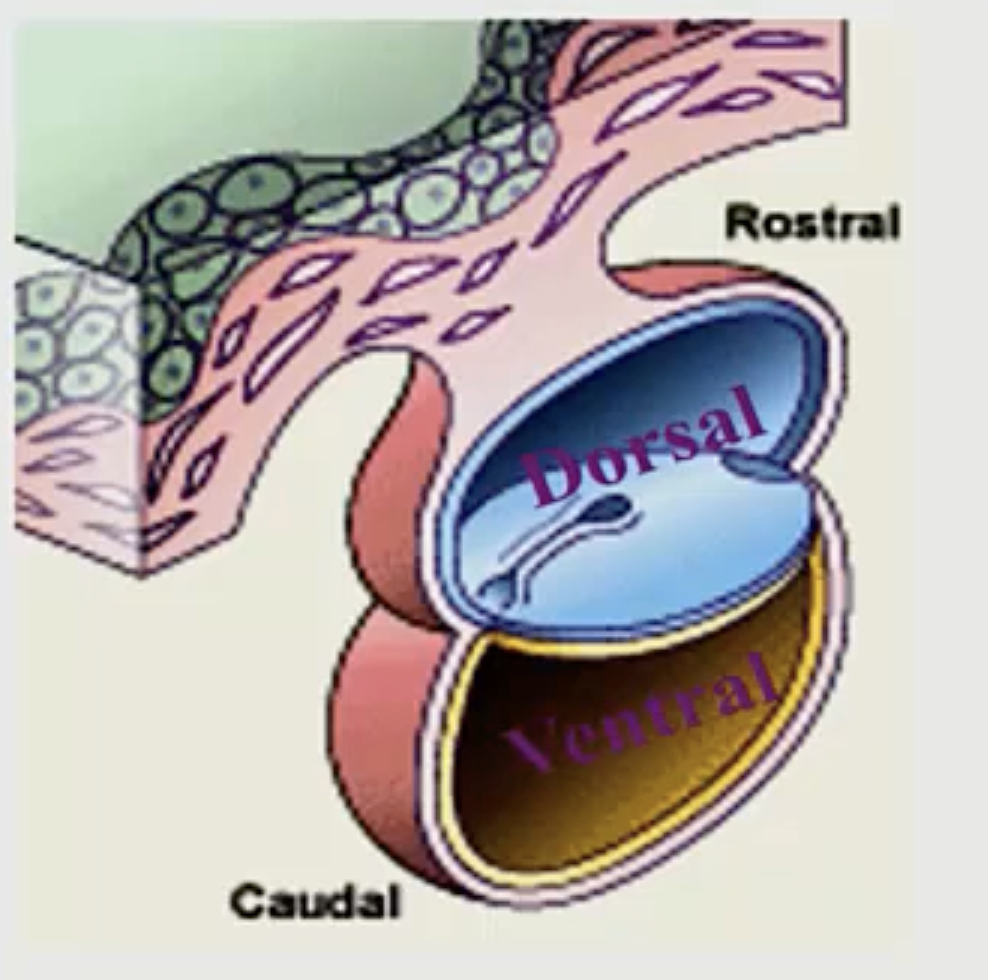
Explain the orientation of the embryo.
Dorsally sits the amniotic cavity, and ventrally sits the yolk sac.
Dorsally there is ectoderm, and ventrally, we have endoderm
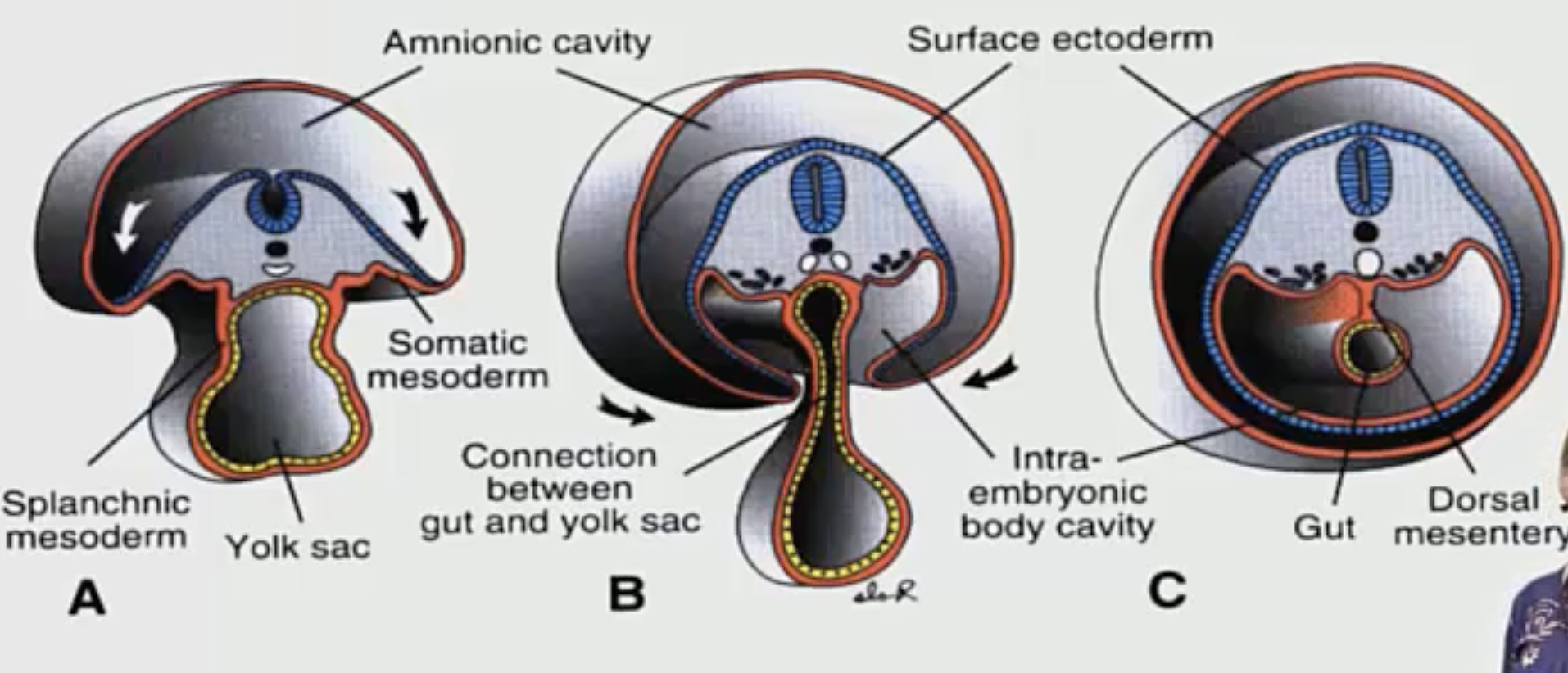
Explain how lateral folding incorporates the gut tube into the body.
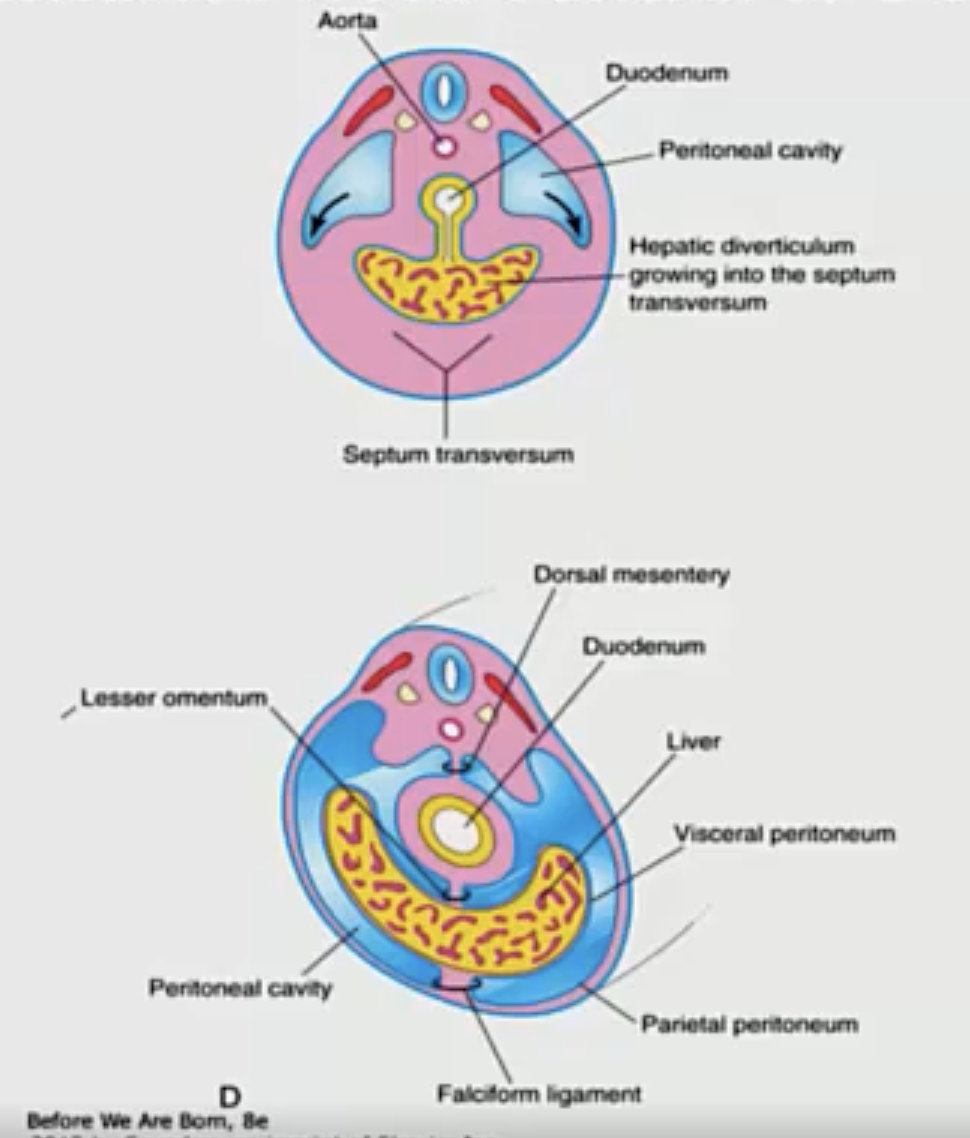
The amniotic cavity rapidly takes up water, and as it does so, it expands laterally and ventrally.
The amniotic cavity then encapsulates the yolk sac. Notice how the red mesoderm not only lines the gut tube (visceral peritoneum), but also the body wall (parietal peritoneum). They are one continuous layer though, reflected at the mesentary.
The peritoneum is evolved from ______
mesoderm
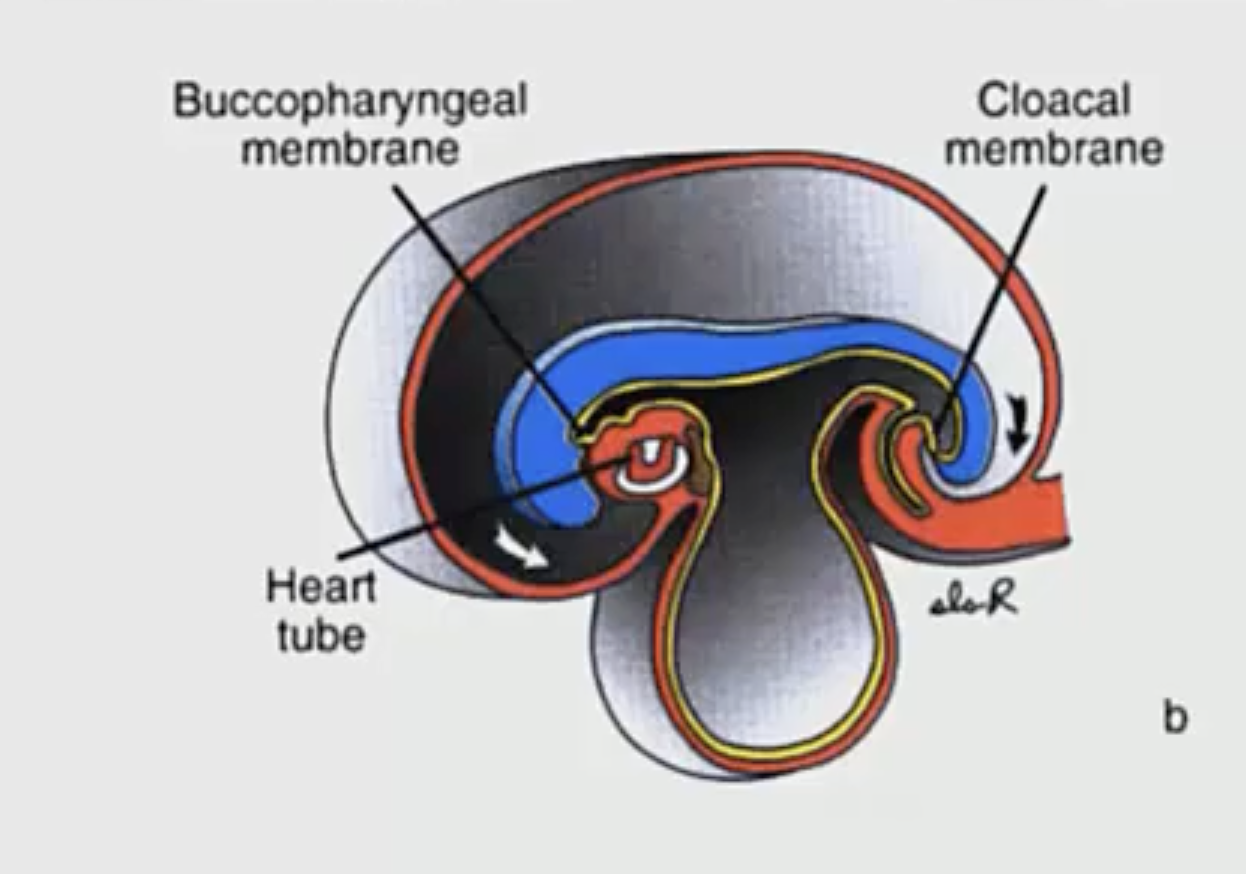
During the lateral folding of the amniotic cavity, the rapidly growing brain also plays a role. Explain this.
The rapidly growing brain pushes the heart and the diaphragm/lung contents inferiorly. This not only explains the cervical roots innervating the diaphragm, but also explains the boundaries of the different parts of the gut tube.
This is called cranial-caudal folding
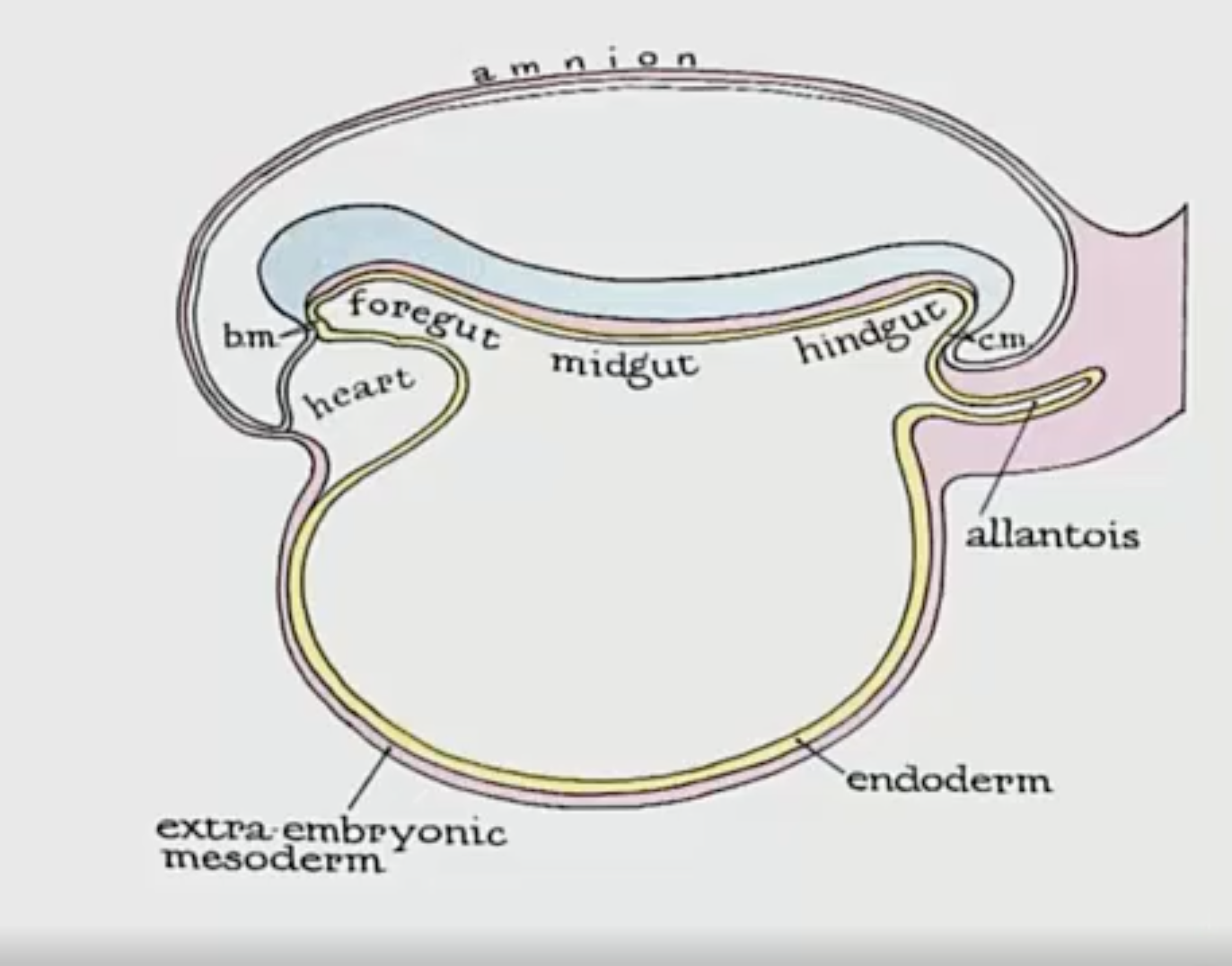
Lateral folding leads to ______ whereas cranial-caudal folding leads to _____
Lateral folding → the gut tube being incorporated into/inside the body wall
Cranial-Caudal folding → the different sections of the gut tube
Parietal/Somatic mesoderm lines the body wall, and visceral mesoderm lines the gut tube. What is in between these layers
A small amount of fluid, to decrease friction.
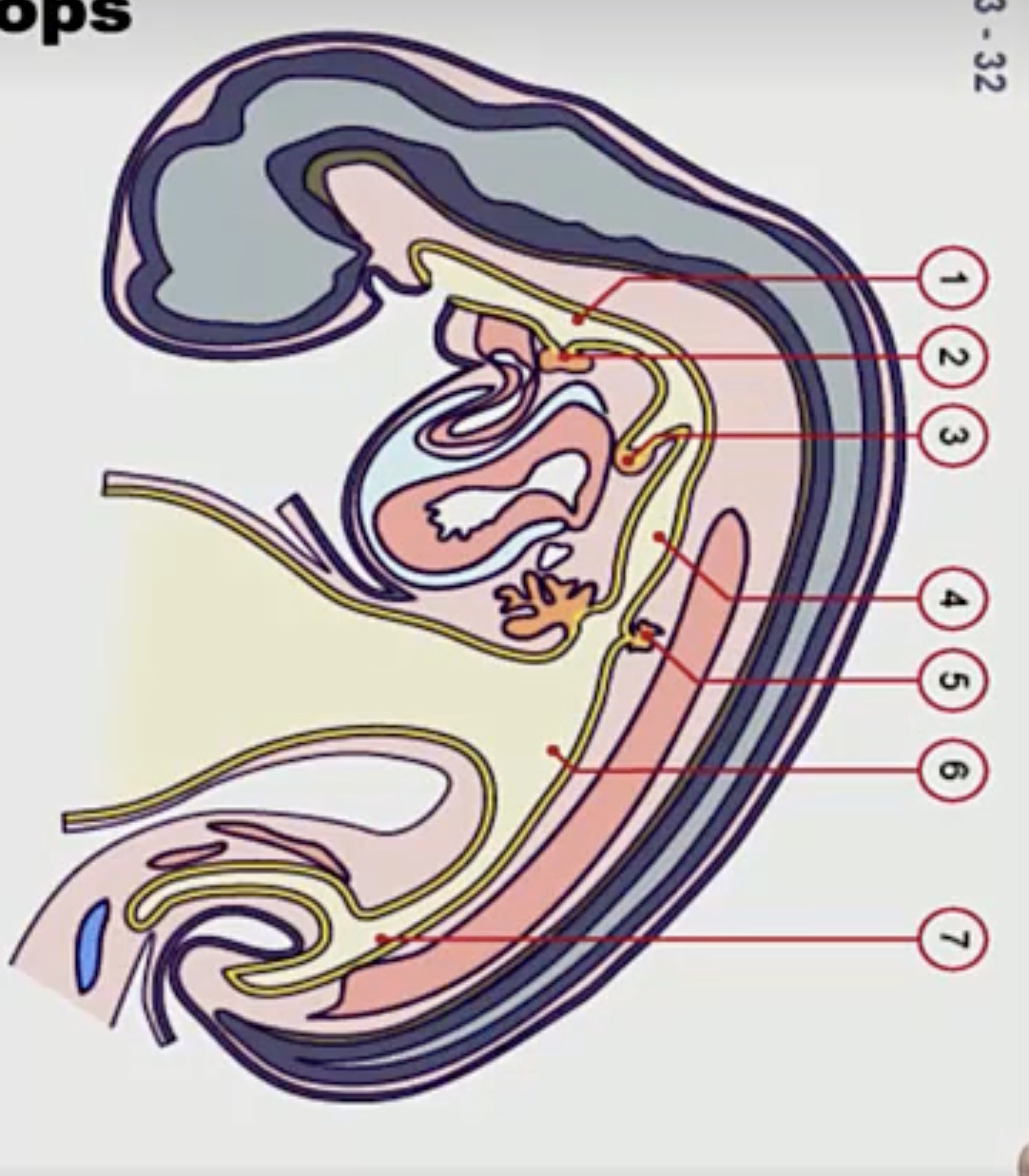
After cranio-caudal folding, this is what the fetus looks like. The gut tube develops into many different numbered structures. Number each:
Pharynx
Thyroid
Lungs
Stomach
Dorsal pancreas
Midgut
Hindgut
The foregut is the only one of the three guts that has both _____________
ventral mesentery (septum transversum — precursor to the diaphragm)
dorsal mesentery (a layer of peritoneum that connects these lower gut portions to the posterior body wall)
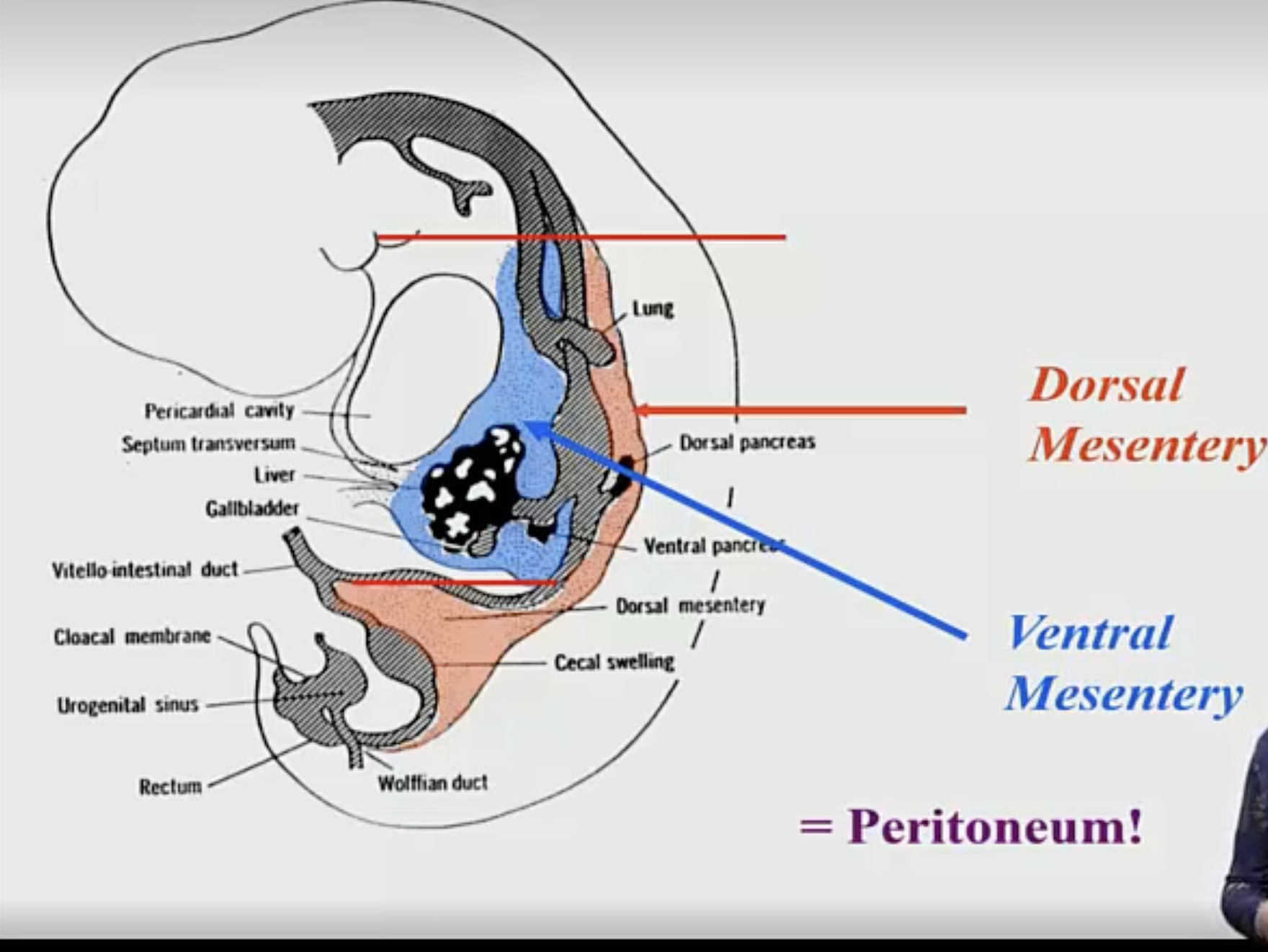
What is the bare area of the liver?
The portions of the liver that are in direct contact with the skeletal muscle of the diaphragm, and which are not covered by any peritoneum.
What is the position of the aorta in relation to the peritoneum?
It stays retroperitoneal (behind the peritoneum). However, the blood vessels that supply the different parts of the gut grow between the two parts of the mesentary (becoming intraperitoneal).
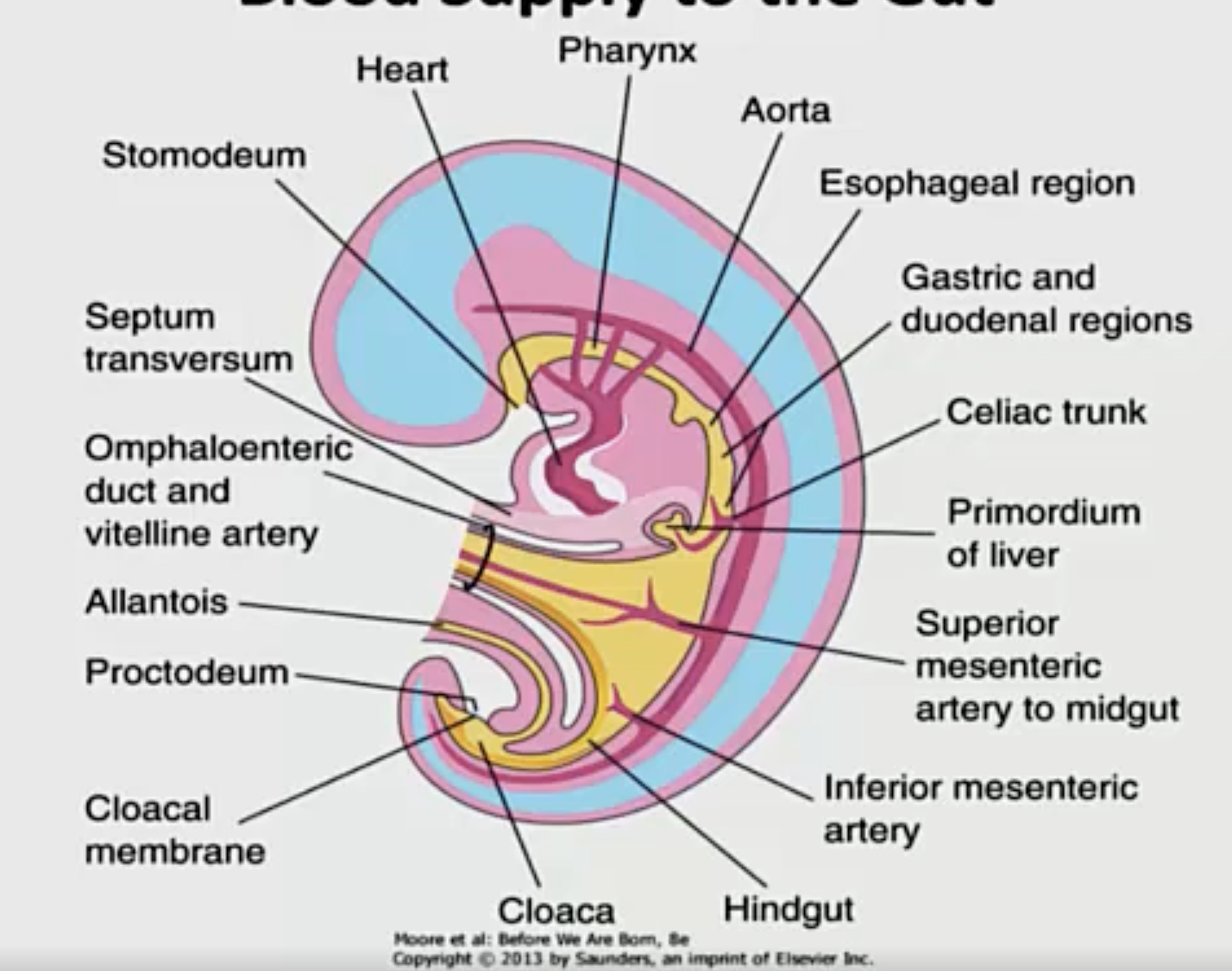
What trunk of the aorta provides the main supply to the foregut?
The celiac trunk (branches off from the aorta at the level of T12)
What is the main artery for the midgut?
Superior Mesenteric Artery (branches off from the aorta at L1)
What is the main artery for the hindgut?
Inferior Mesenteric Artery (branches off from the aorta at L3)
How does the foregut/stomach rotate?
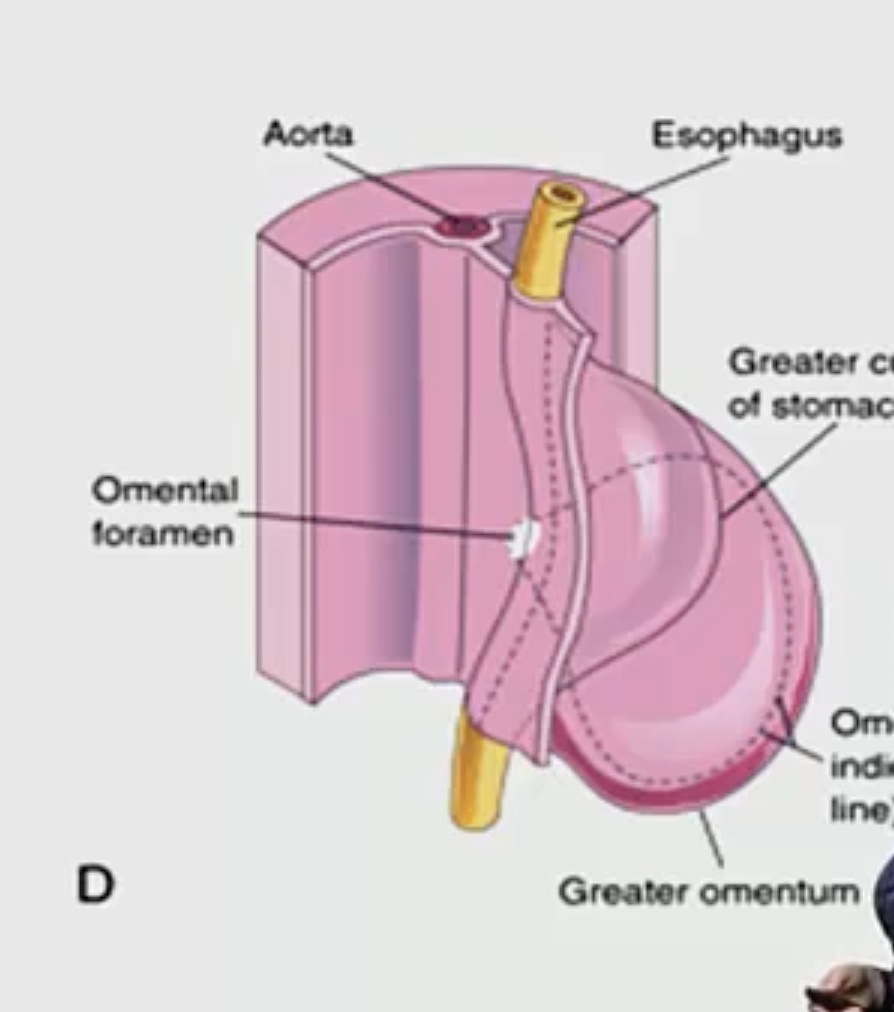
The stomach is an extension of the foregut which is inferior to the diaphragm. There is dorsal mesentery and ventral mesentery present.
Anterior to the stomach grows the liver, and it divides up that ventral mesentery.
The growth of the liver forces the stomach to rotate clockwise and go to the left
The dorsal aspect grows more rapidly than the ventral aspect, causing the stomach to sit down.
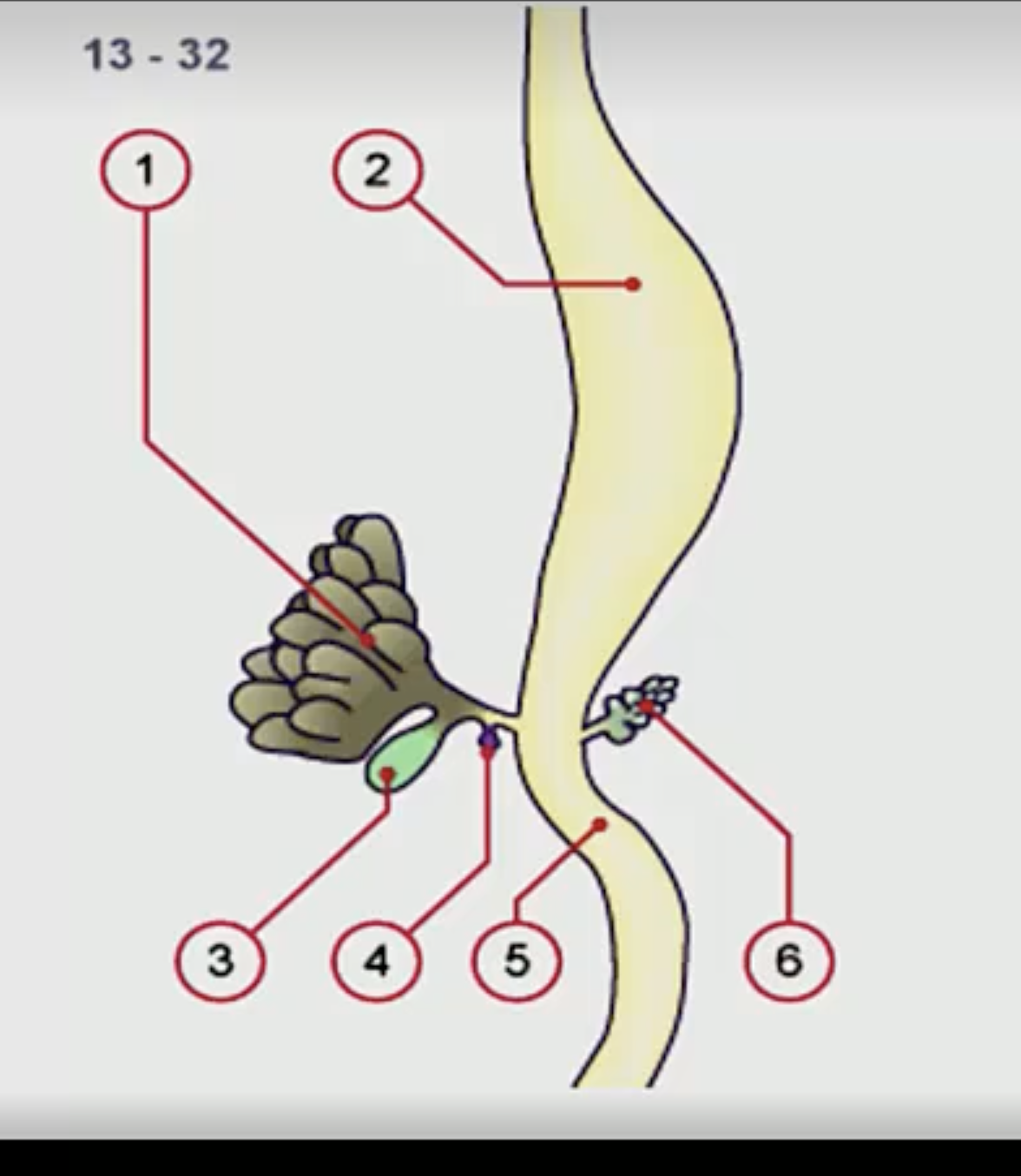
What is 1, 2, 4, and 6?
1 = liver
2 = stomach
4 = ventral pancreatic bud
6 = dorsal pancreatic bud
As the stomach rotates, the ventral pancreatic bud needs rotate excessively to meet the dorsal pancreatic bud.
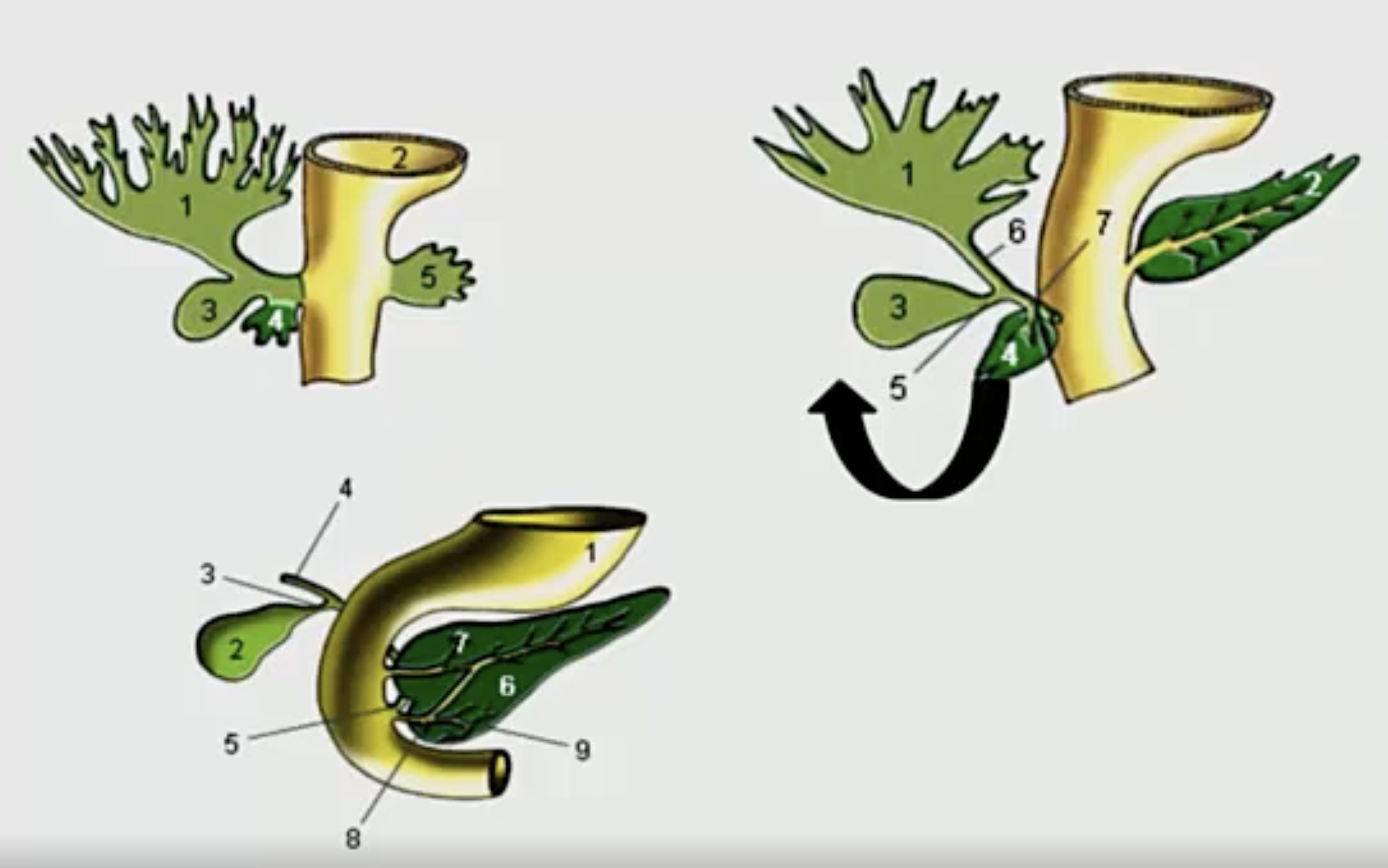
The pancreas becomes mostly retroperitoneal. What does this mean?
Since the pancreas started off intraperitoneal, and rotates posteriorly, the pancreas is secondarily retroperitoneal.
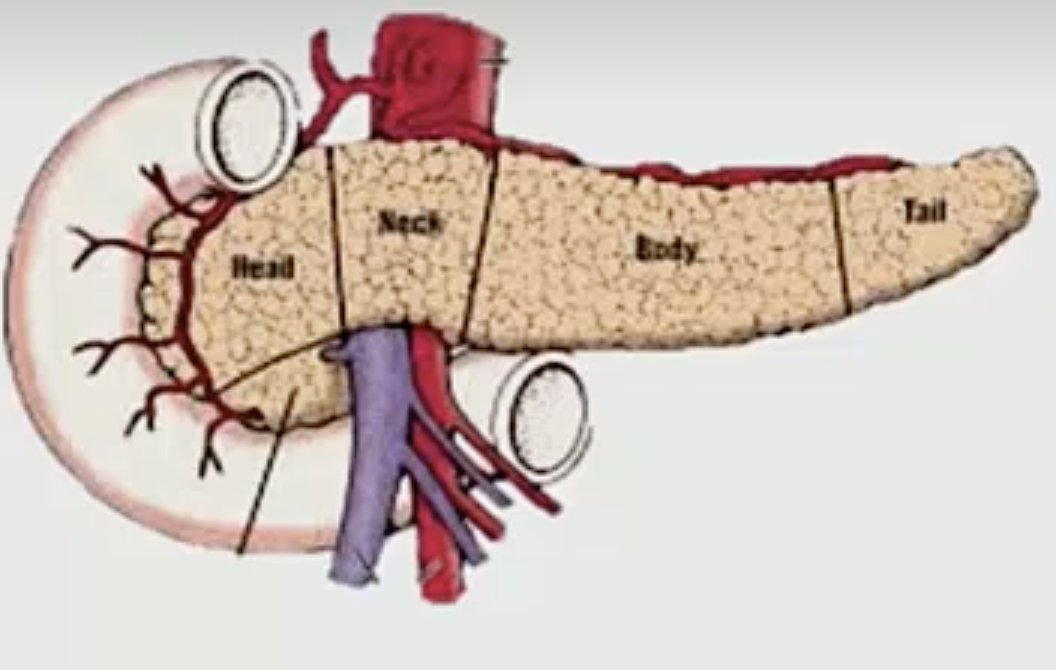
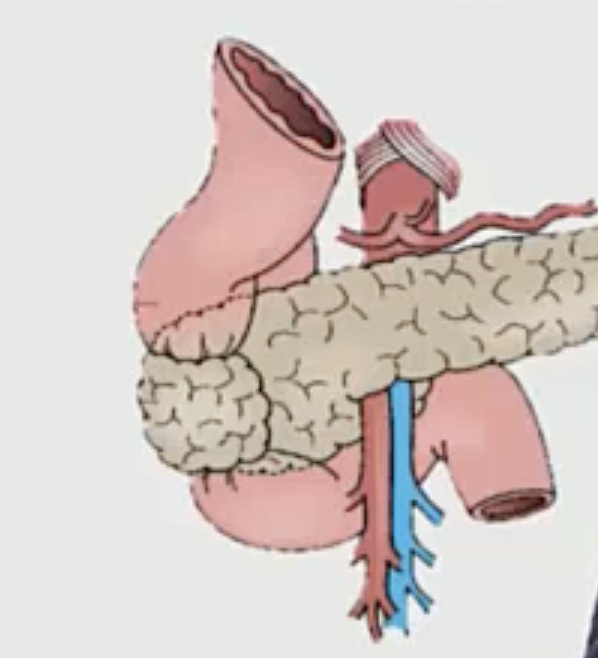
What happens if the pancreatic folding goes wrong? (Normal shown here, answer shows abnormal)
Then the pancreas can twist around the duodenum, and this leads to a condition called anular pancreas, where food cannot pass down into the duodenum.