L11 Reactivity of Transition Metal Complexes
 Call Kai
 Learn
Learn Practice Test
 Spaced Repetition
 Match
Match Flashcards
 Knowt Play
1/17

There's no tags or description
Looks like no tags are added yet.
Name | Mastery | Learn | Test | Matching | Spaced | Call with Kai | Chat |
|---|
No analytics yet
Send a link to your students to track their progress
18 Terms
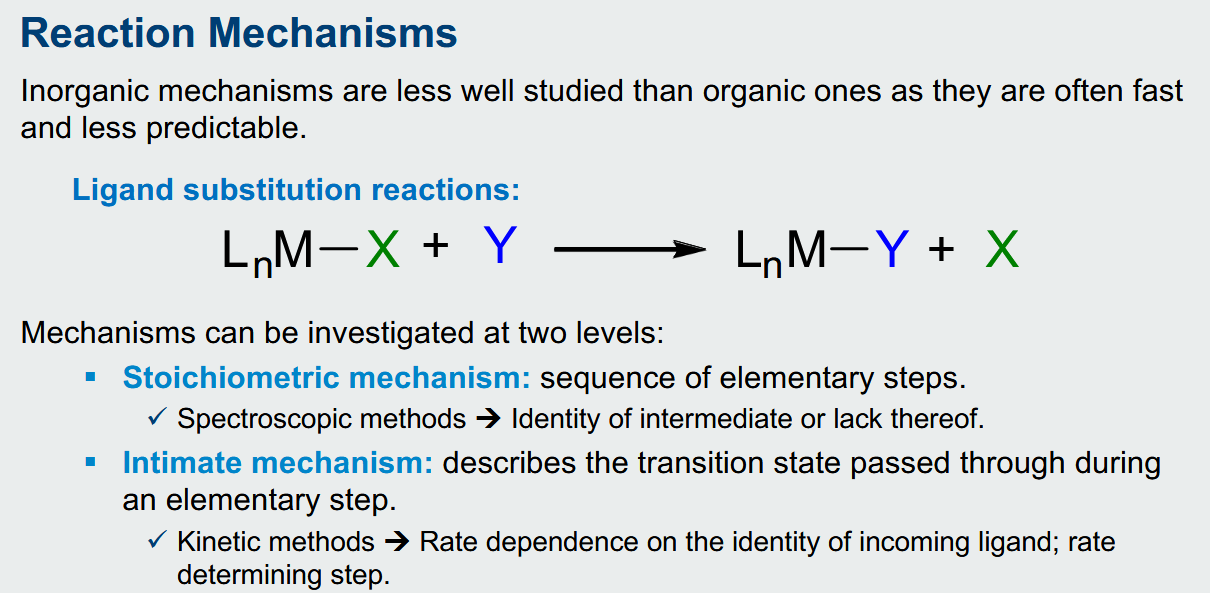
Study of reaction mechanisms of inorganic reactions

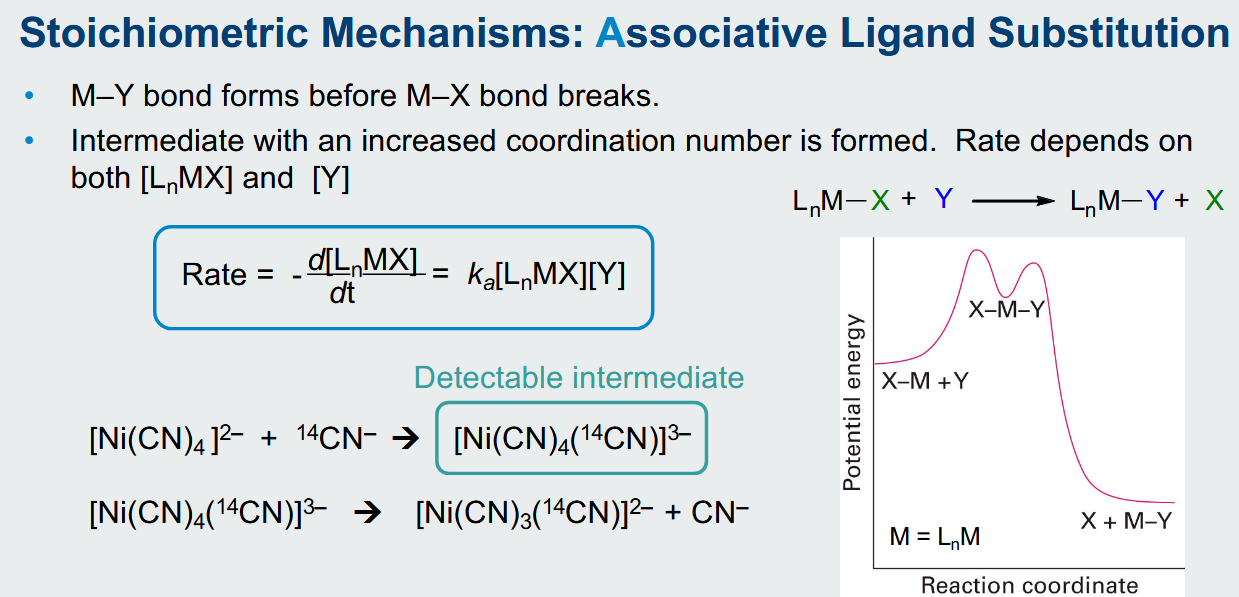
Stoichiometric Mechanisms: Associative ligand substitution

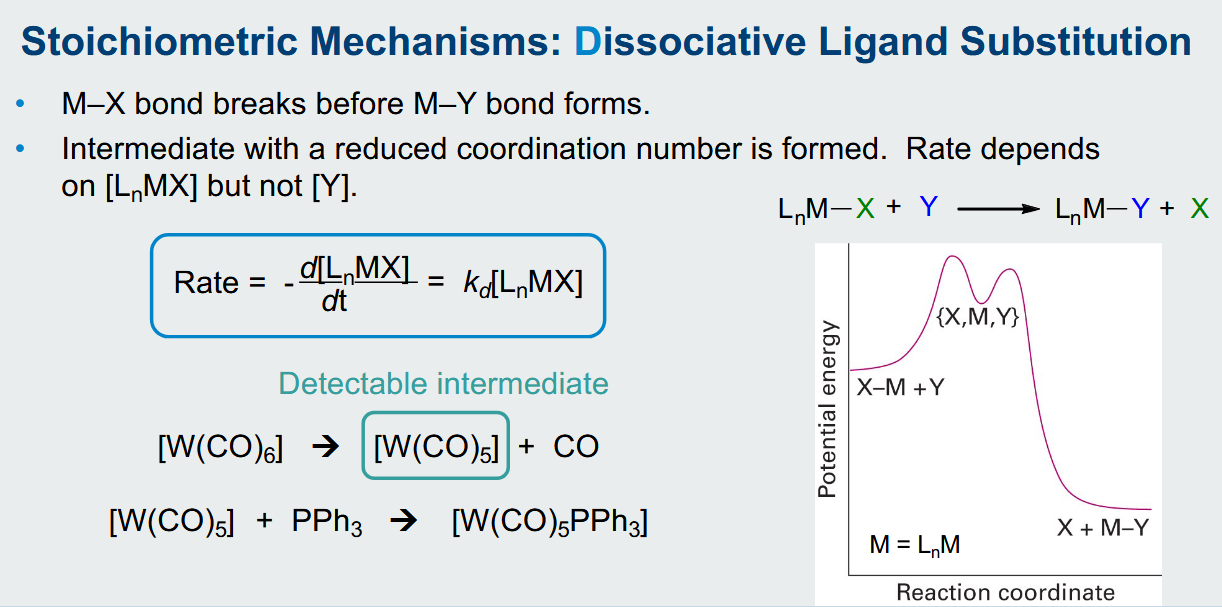
Stoichiometric Mechanisms: Dissociative ligand substitution
Stoichiometric Mechanisms: Interchange
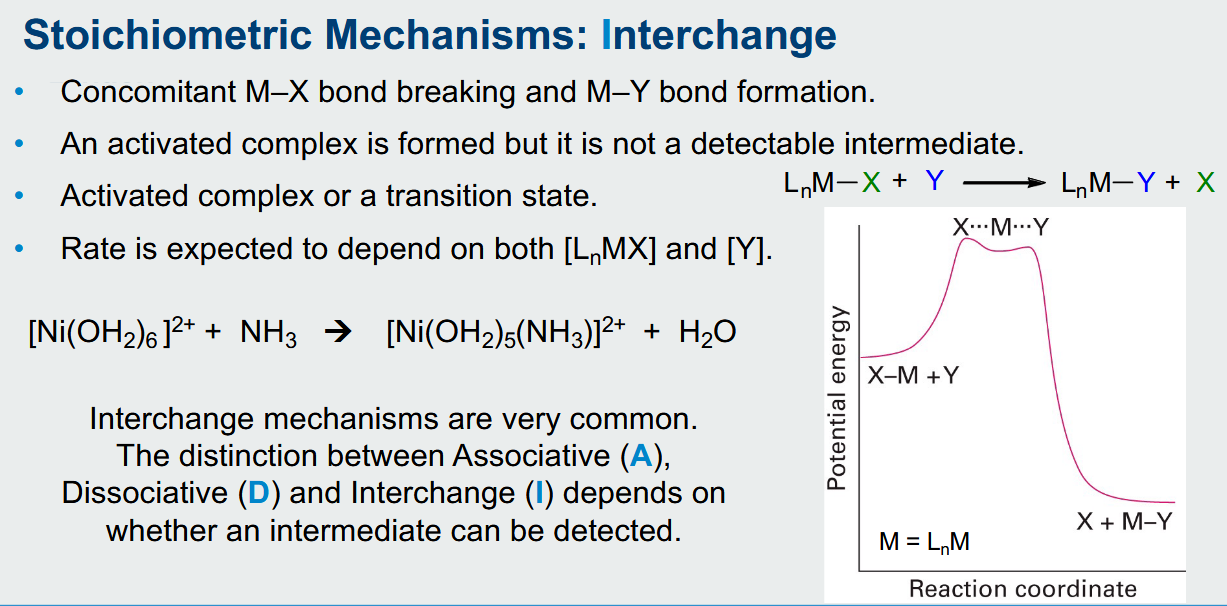
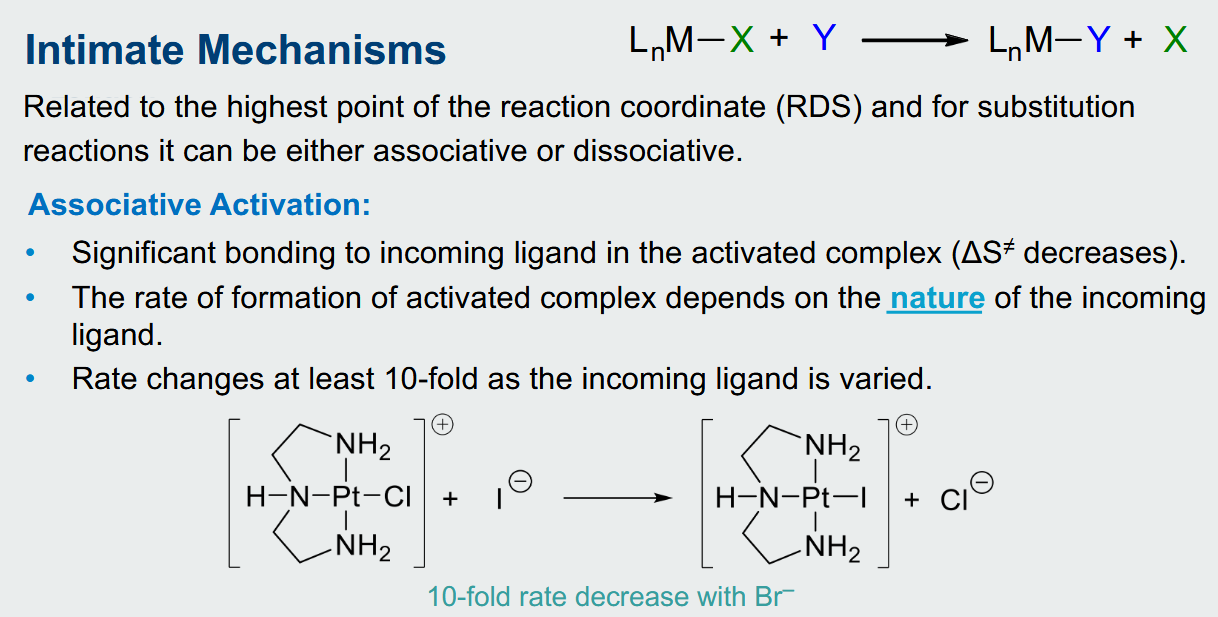
Intimate mechanisms: Associative activation
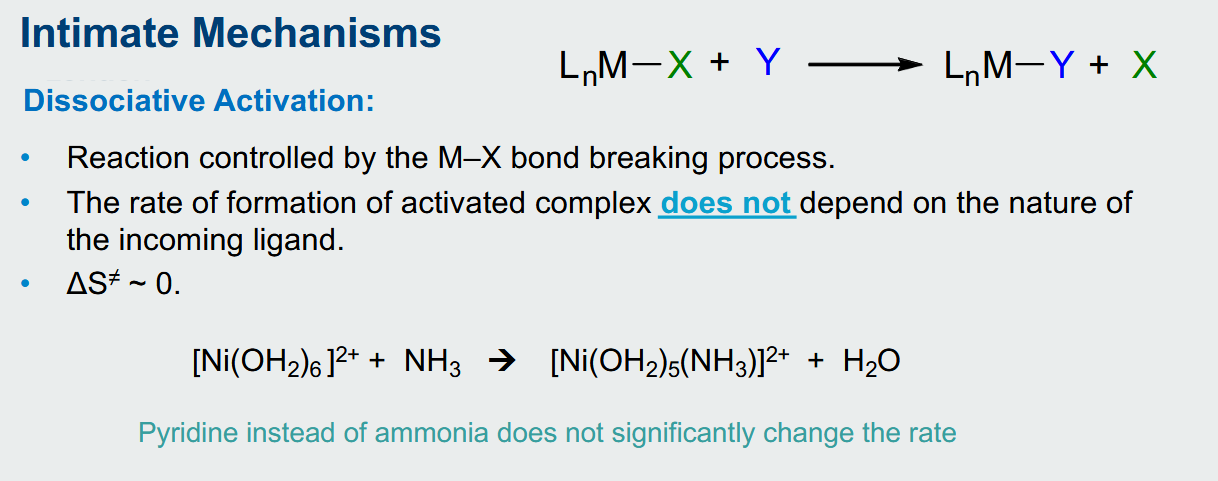
Intimate mechanisms: Dissociative activation
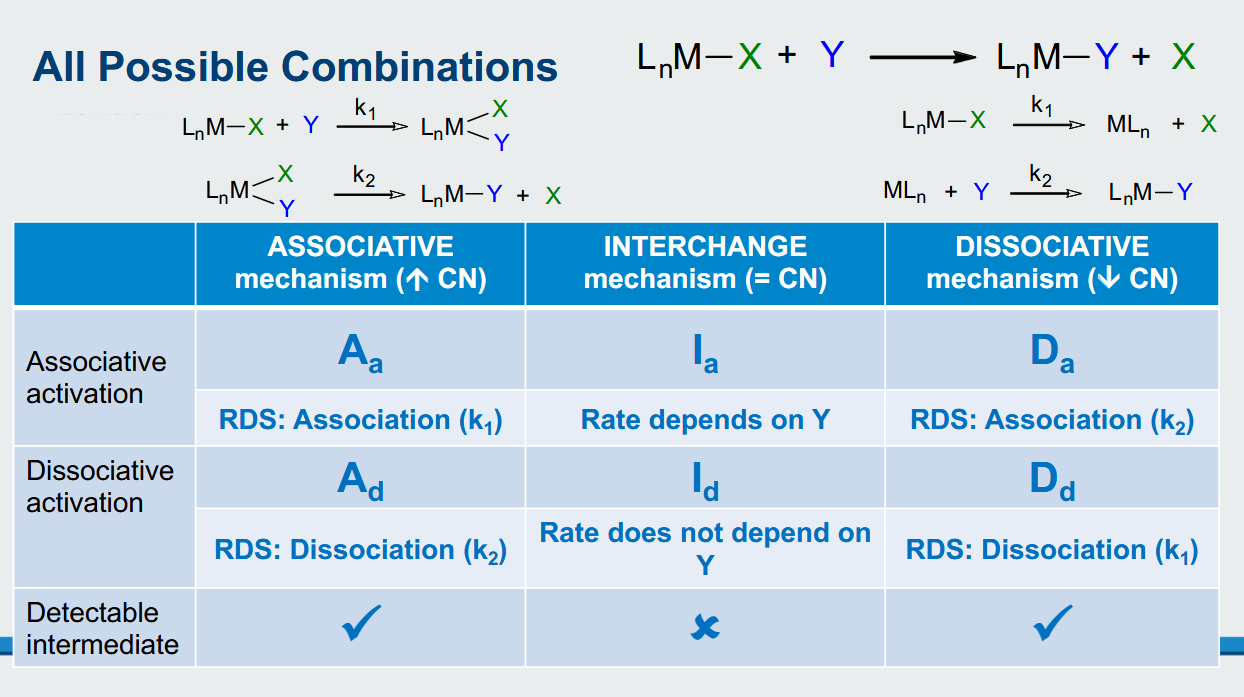
All possible combinations of activations and mechanisms
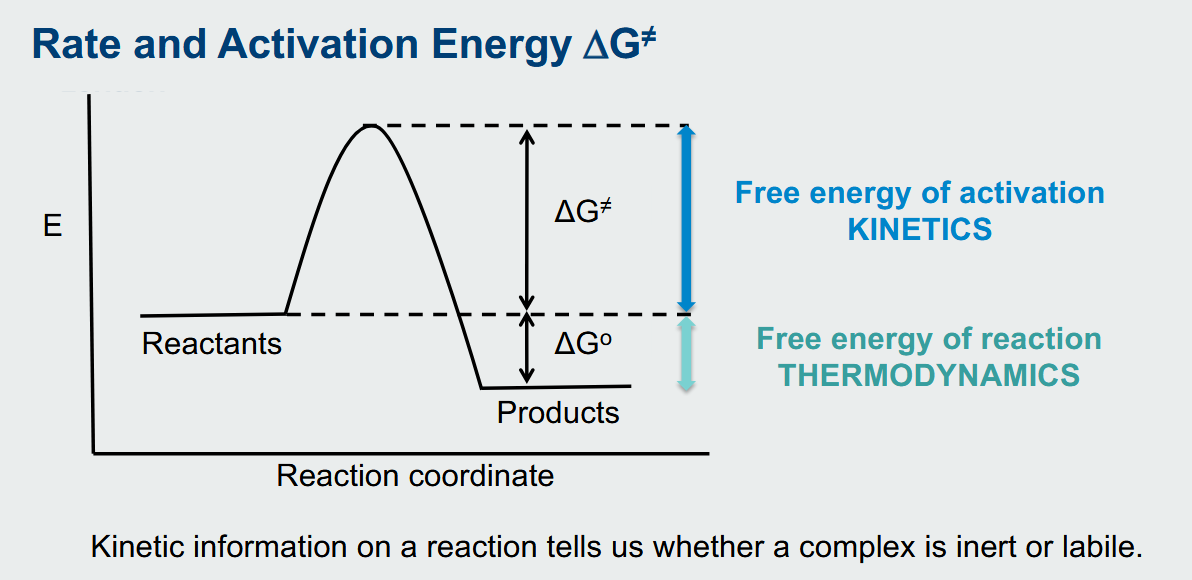
Rate and activation energy graph
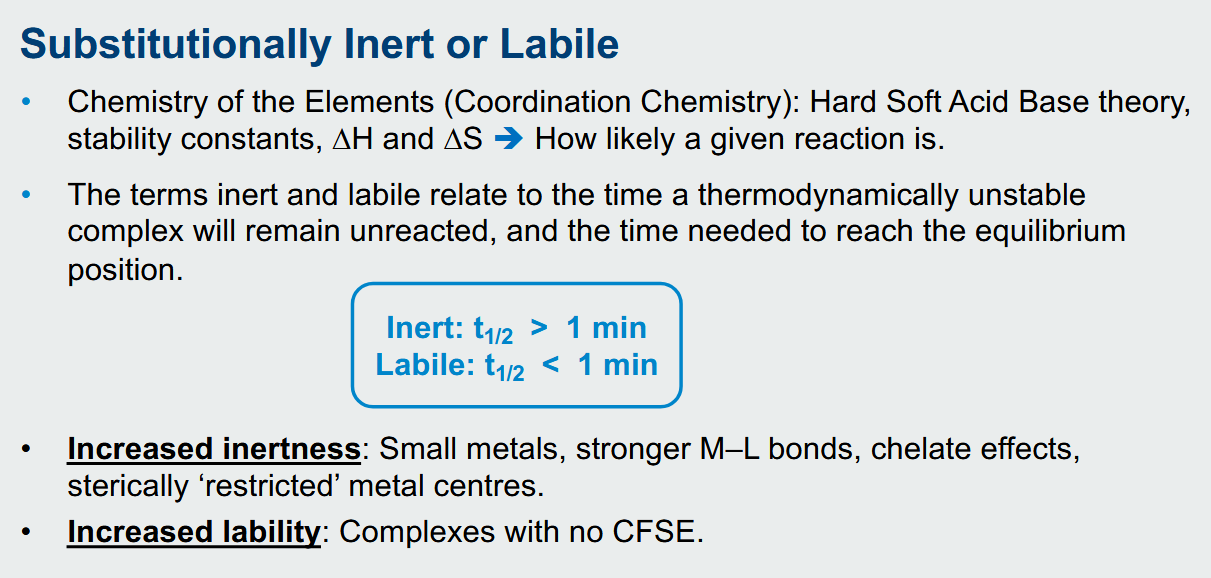
What does substitutionally inert/labile mean and what factors tend to affect it
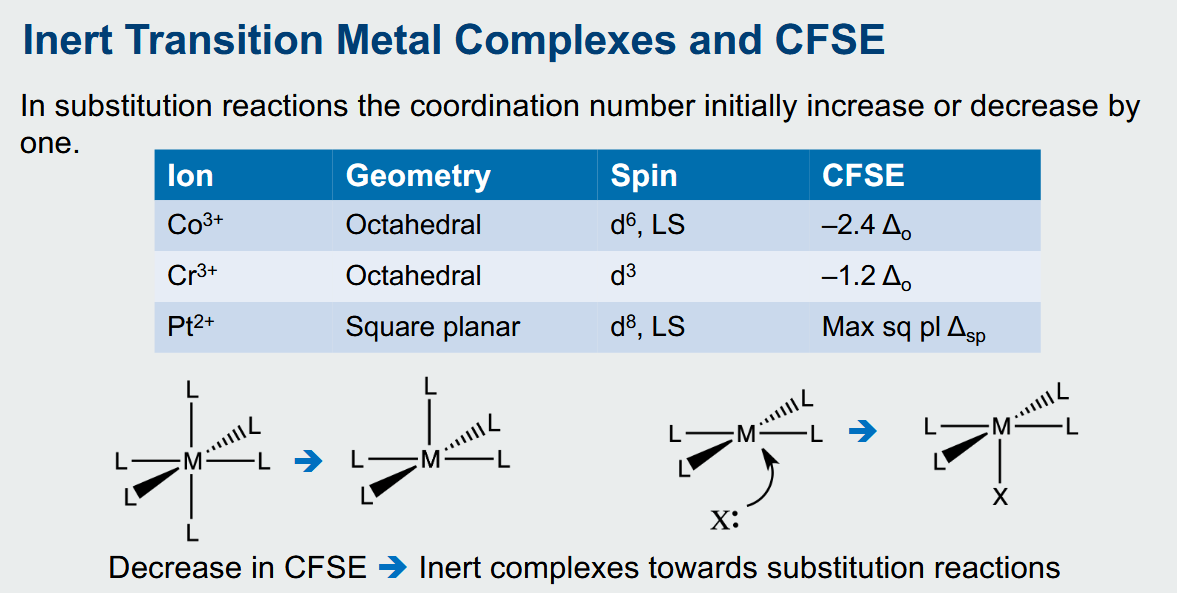
What typically happens to inert transition metal complexes during substitution reactions
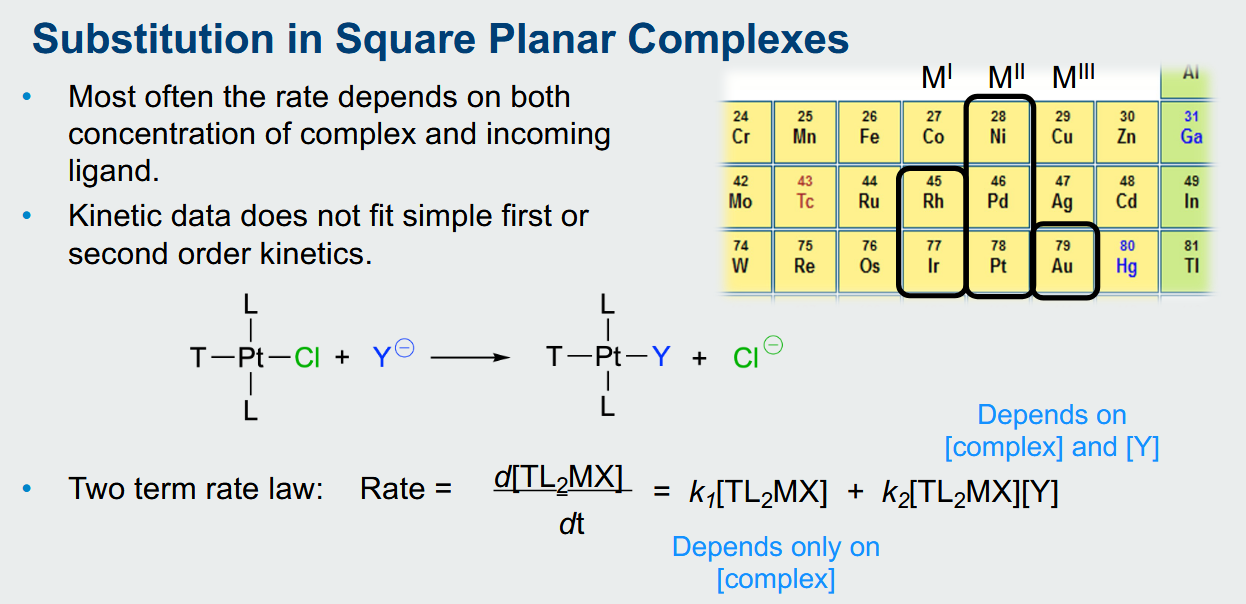
rate equation for substitution in square planar complexes
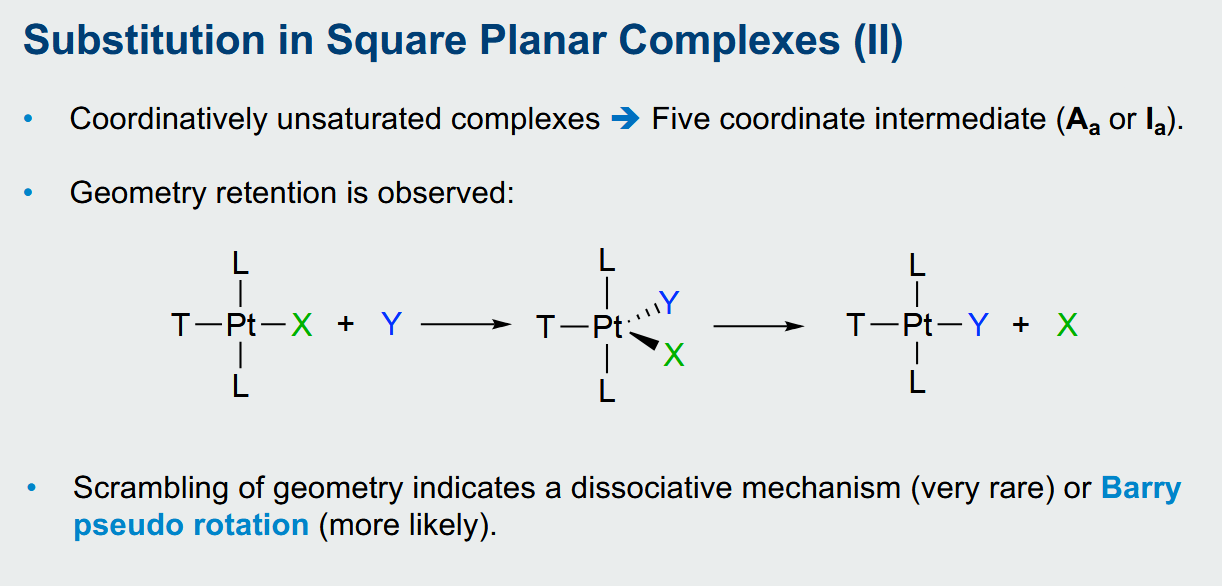
Intermediates and geometry preservation in substitution in square planar complexes
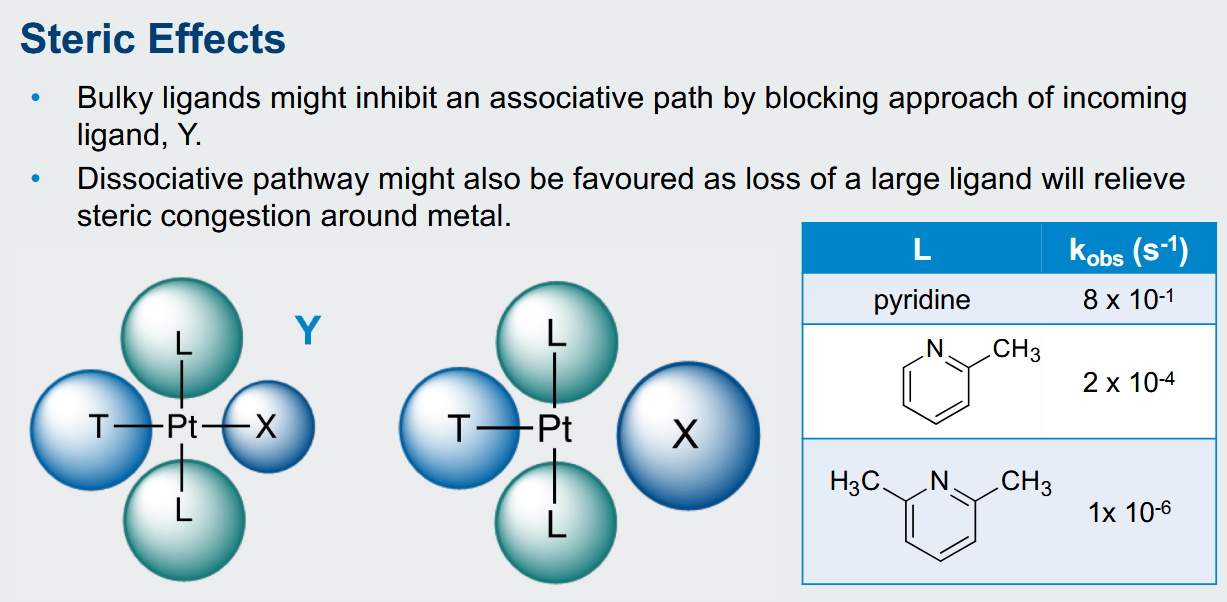
Do bulky ligands tend to favour associative or dissociative pathways
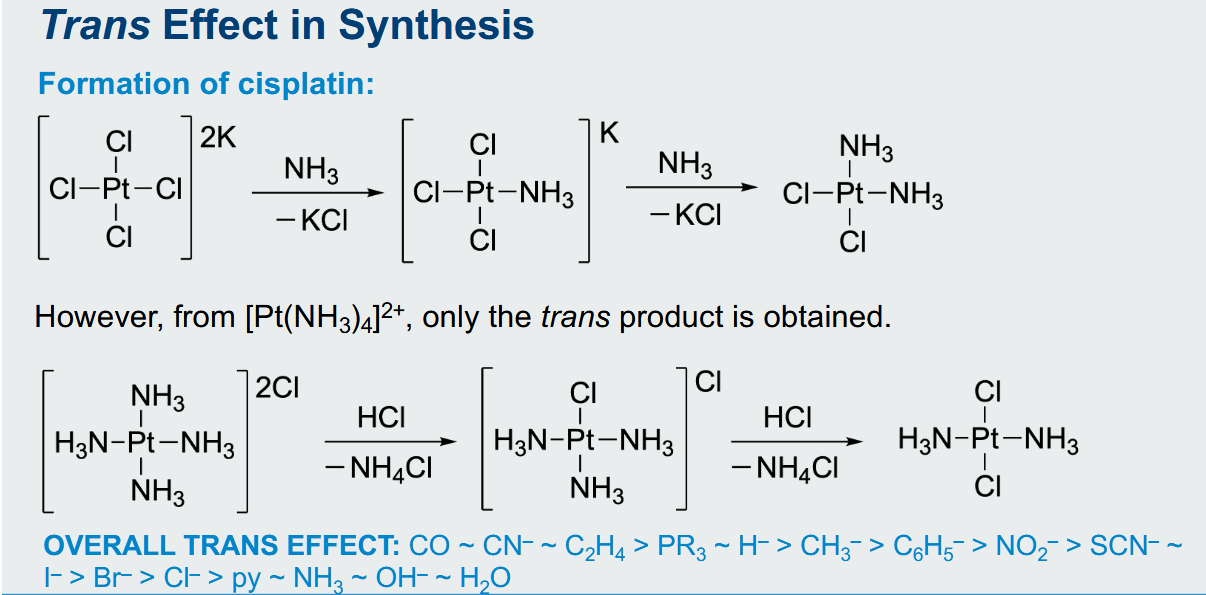
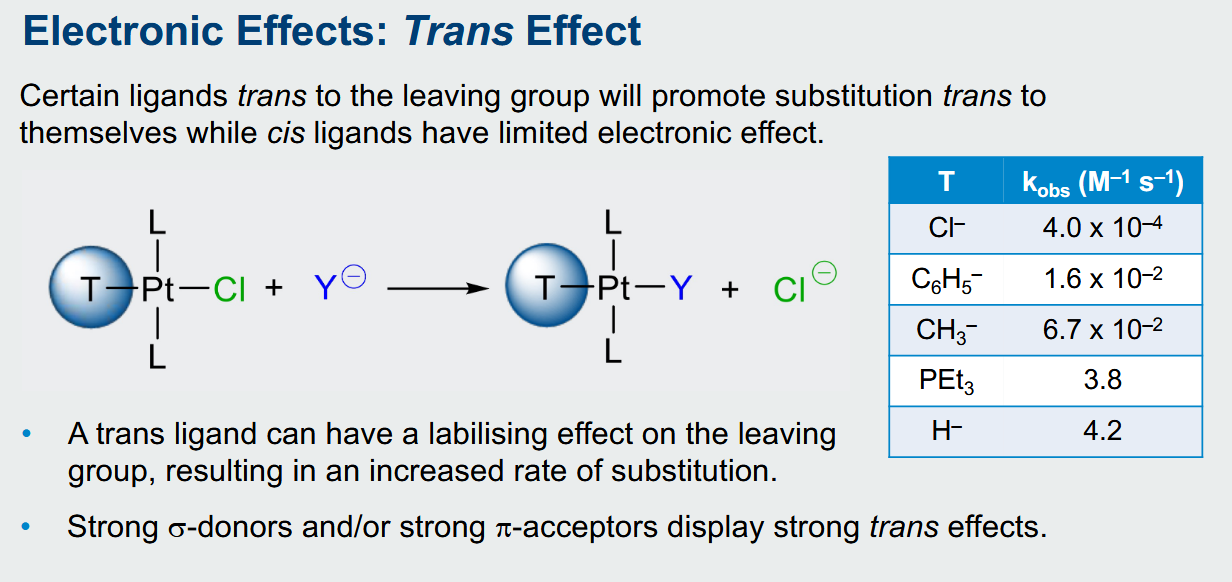
What is the trans effect in substitution
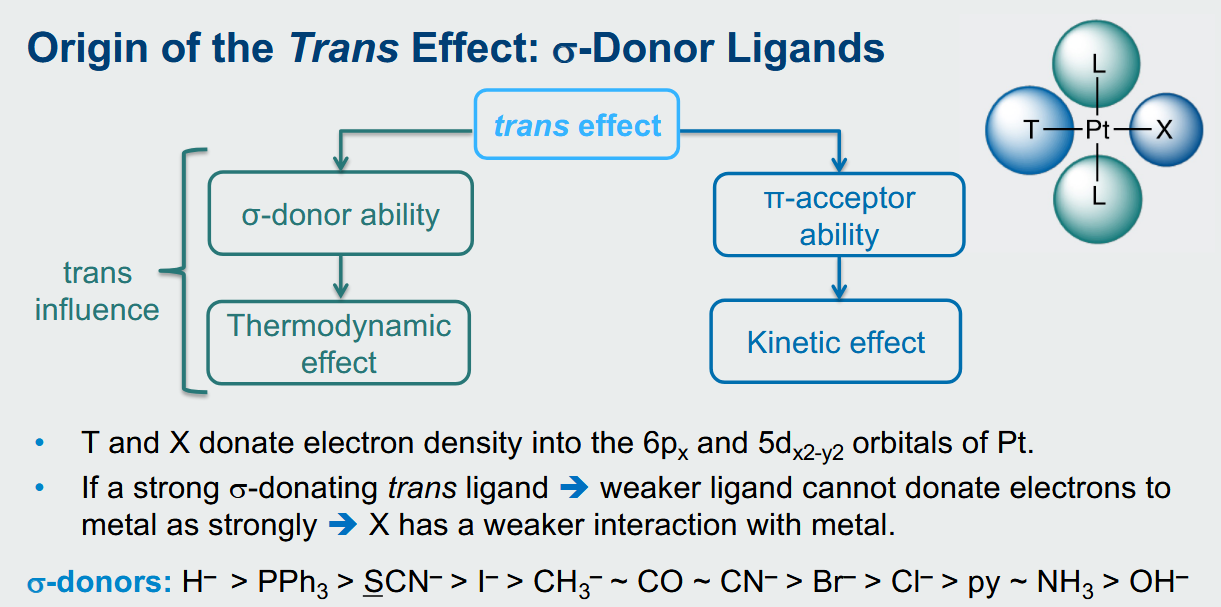
Origin of the trans effect for σ-donors
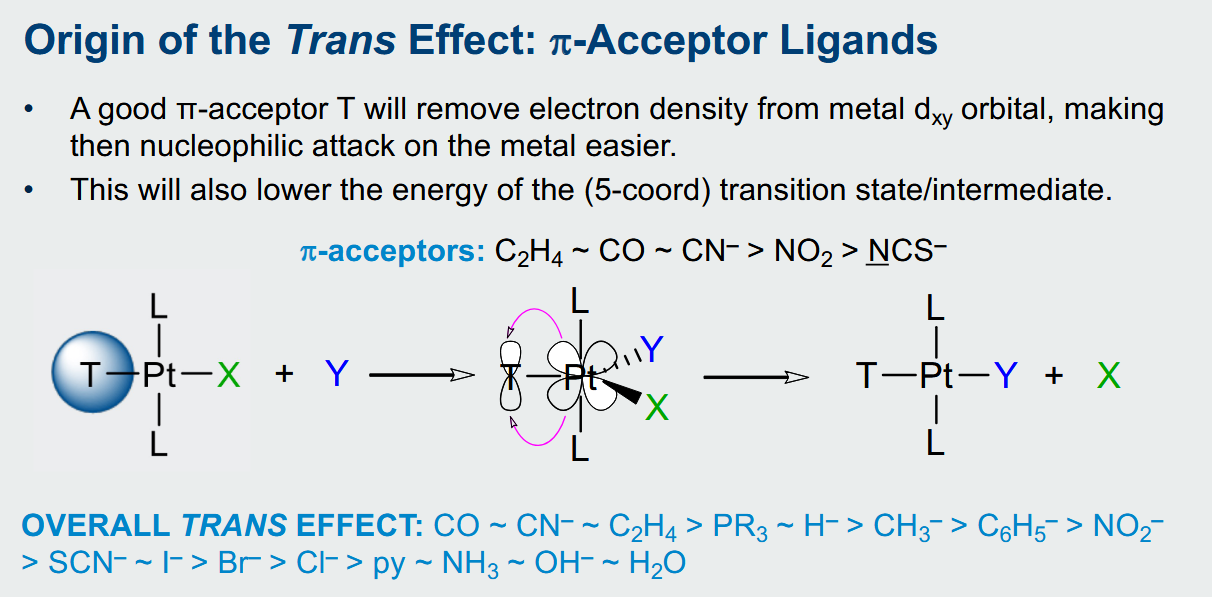
Origin of the trans effect for π-acceptors
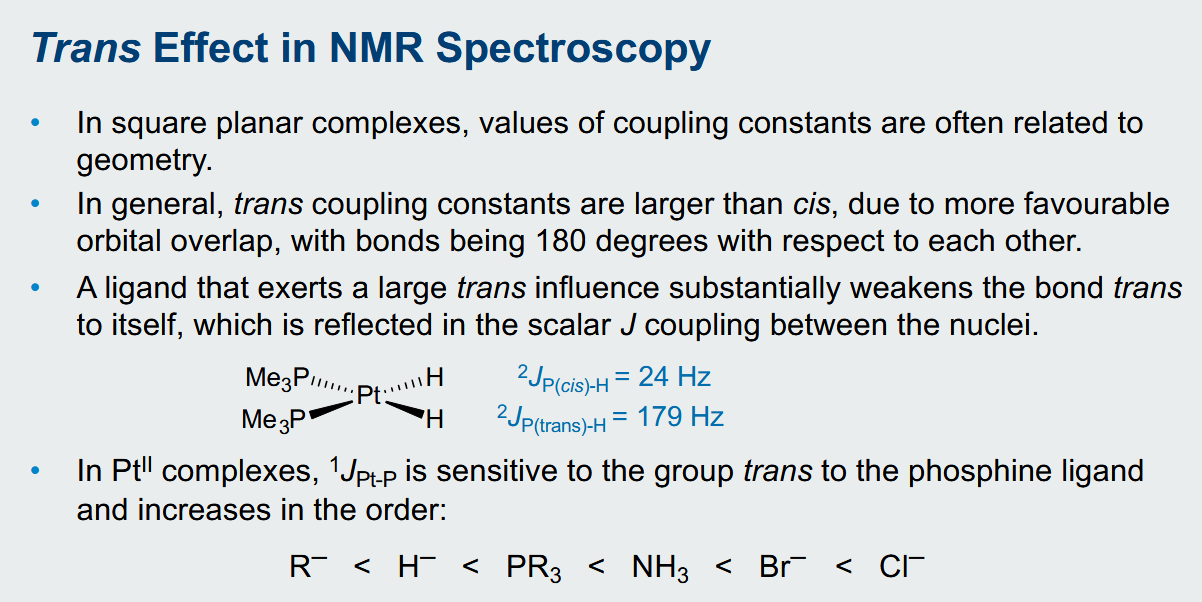
Trans effect in NMR
Trans effect in synthesis