SCI131 Examinations
 Call Kai
 Learn
Learn Practice Test
 Spaced Repetition
 Match
Match Flashcards
 Knowt Play
1/60

There's no tags or description
Looks like no tags are added yet.
Name | Mastery | Learn | Test | Matching | Spaced | Call with Kai | Chat |
|---|
No analytics yet
Send a link to your students to track their progress
61 Terms
Mechanics
Study of motion of objects and related concepts of force and energy form a field of physics
Kinematics
Mathematical description of motion, positions, velocity, and acceleration.
Dynamics
Study of the cause of motion
Position
Refers to the location of a body in space with reference to a fixed point, fundamental concept in describing the motion of the object
Distance
A scalar quantity that refers to “how much ground an object has covered” during its motion or the length of the path the body/object has taken.
Displacement
A vector quantity that refers to “how far out of place an object is”; it is the object’s overall change in position.
Speed
A scalar quantity that refers to how far an object travels in a given time interval, regardlessof direction.
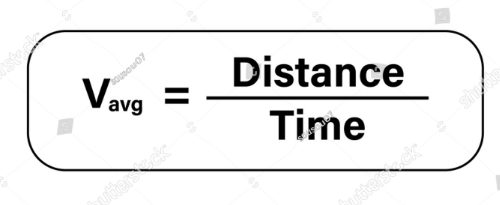
Average speed
The ratio of the total distance covered and the total amount of time it takes to travel this distance.
Velocity
Used to signify both the magnitude (numerical value) of how fast an object is moving and also the direction in which it is moving
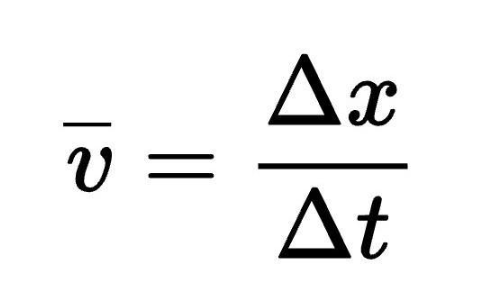
Average velocity
Defined in terms of displacement, rather than total distance travelled.
Acceleration
Measure of how fast or slow velocity changes, ____ whenever there is a change in speed, a change in direction, or a change in both speed and direction.
Free-fall in
Object falling under the influence of gravity.
Aristotle
He thought that heavier object will fall faster than lighter objects
Galileo Galilei
Argued that regardless of the weight, all object wil lfall at a constant downward acceleration in the absence of air or other resistance
— 9.8 m/s²
Magnitude is approximately ___
acceleration of gravity
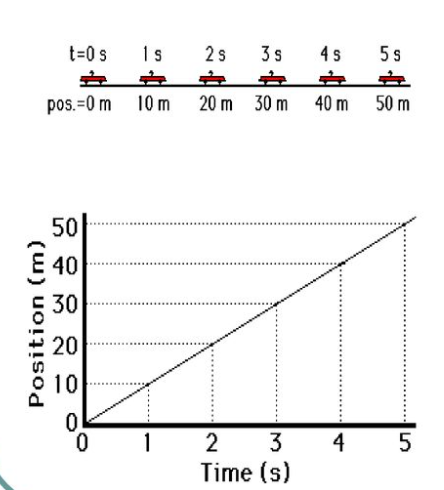
Position (Constant Velocity)
Wherein positive velocity results in a line of constant and positive slope when plotted as a position-time graph.
same distance between cars for each time interval
line on position and time graph is straight with constant slope
Position (Changing Velocity)
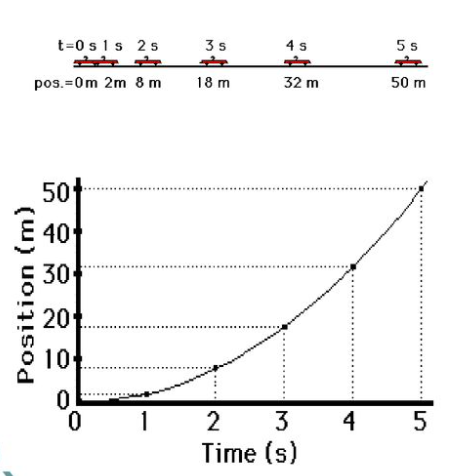
Wherein positive velocity results in a line of changing and positive slope when plotted as a position-time graph
accelerating with increasing velocity
curved line, with it becoming steeper
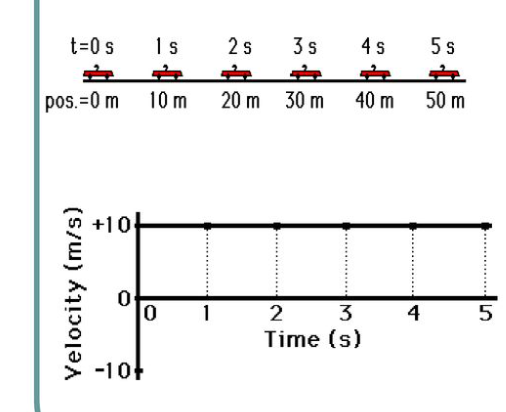
Velocity (Constant Velocity)
Wherein positive velocity results in a line of zero slope, a horizontal line has zero slope when plotted as a velocity-time graph.
Only positive values, corresponding to a motion with positive velocity
No acceleration = 0 in v-t graph
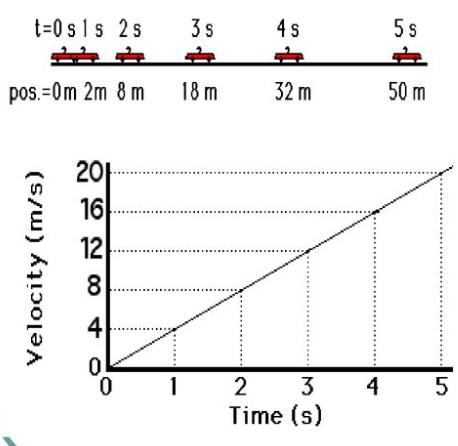
Velocity (Changing Velocity)
Wherein the slope of the line is positive, corresponding to the positive acceleration.
Only positive values, corresponding to a motion with positive velocity
Accelerating = slope of the v-t graph
Inertia (First Law of Motion)
An object at rest will remain at rest, and an object in motion will remain in motion with constant speed and direction unless acted upon by an unbalanced force.
forces acted on objects at rest and in motion are balanced, but only if it will they accelerate due to unbalanced force.
Acceleration (Second Law of Motion)
The acceleration of an object is directly proportional to and in the same direction as the net force acting on it, and inversely proportional to its mass.
it depends on the new force acting on the object and its mass
Interaction
For every action, there’s an equal and opposite reaction. The force that object A exerts on B is the same as the force that object B exerts on A but is in the opposite direction.
action-reaction pairs
Light
Either absorbed, reflected, or transmitted
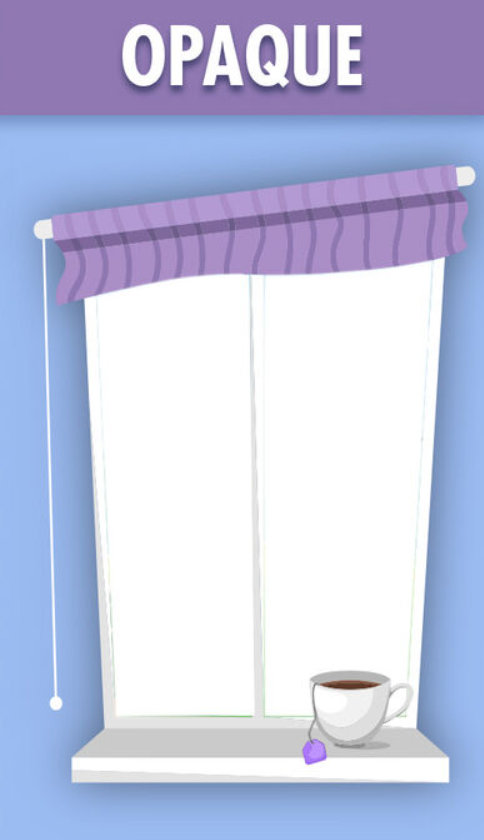
Opaque
Only absorbs and reflects light - no light passes through it;
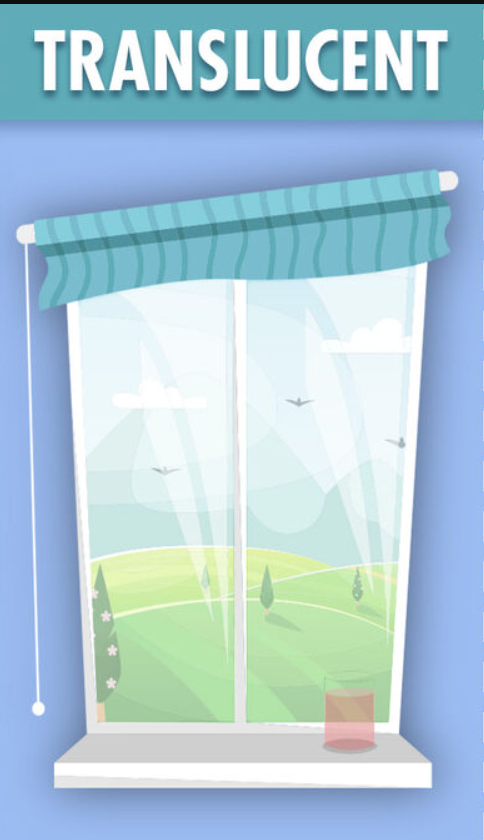
Translucent
These are materials that allow some light to pass through them; you cannot see clearly through these materials
Transparent
They transmit almost all the light striking them, so you can see objects clearly through them. Only a small amount of light is absorbed and reflected by these materials.

Law of reflection
The angle at which a light wave strikes a surface is the same as the angle at which it is reflected.
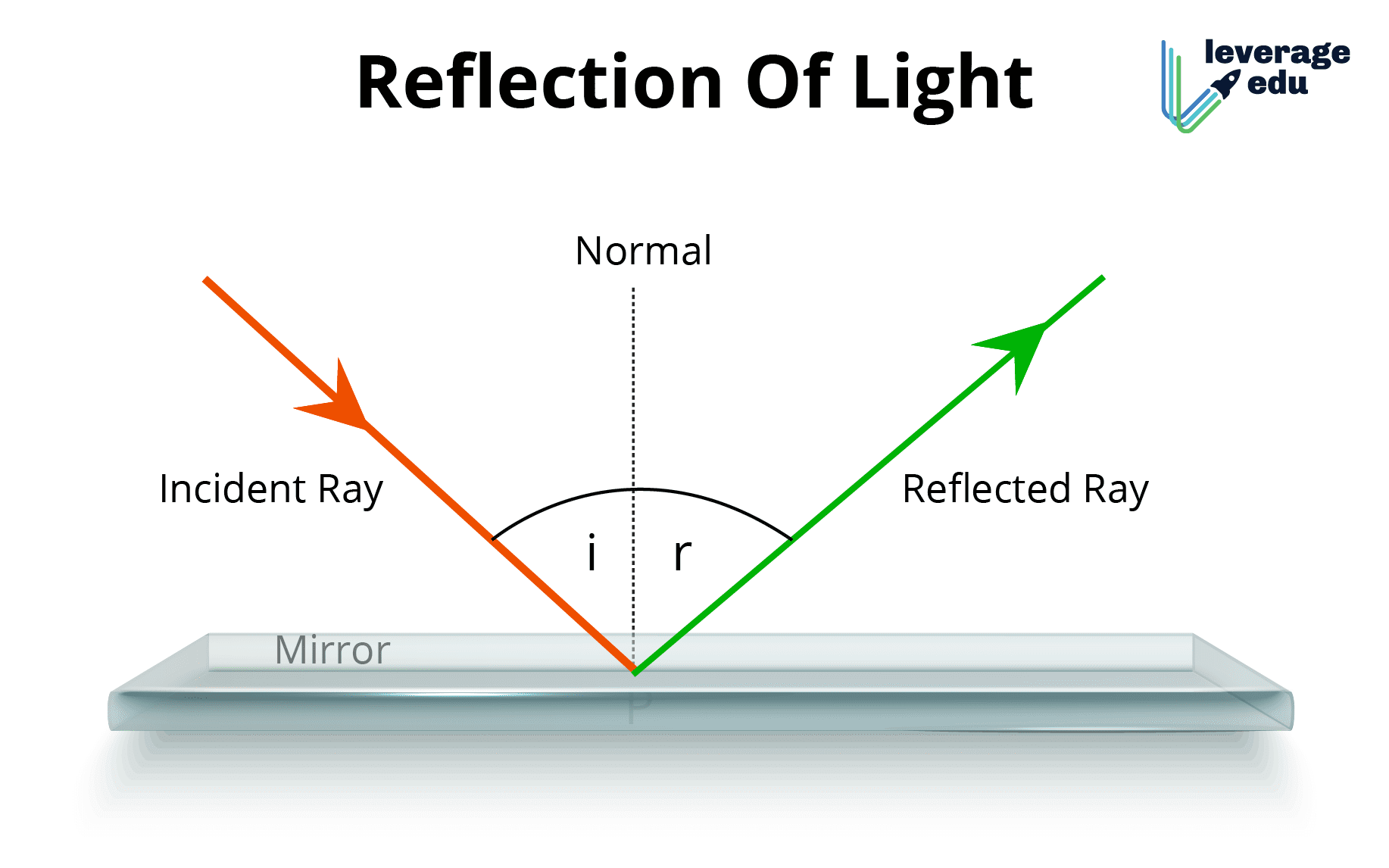
Specular or smooth reflection
If the surface is perfectly smooth, rays of light undergo _____, leaving the surface parallel of each other
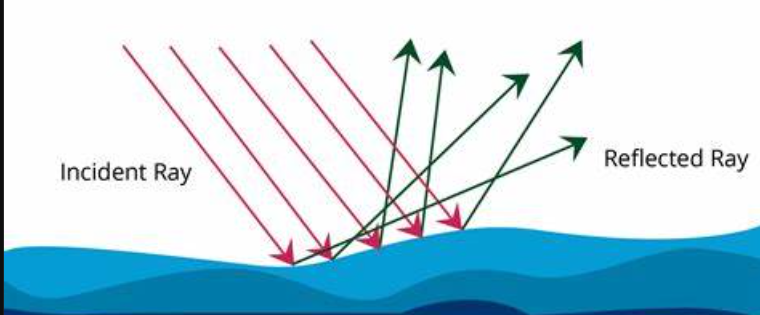
Diffuse reflection
If the surface is not smooth, the light waves are reflected in many random directions as ____ takes place.
Light refraction
Caused by a change in the speed of a wave when it passes from one material to another
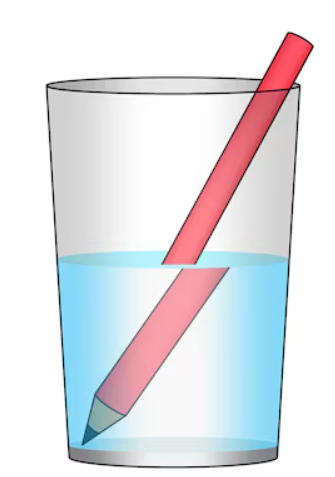
Bent or refracted
If the light wave is traveling at an angle to the boundary between the materials and the speed fo light is different in the two materials.
Index of refraction
Ratio of the speed of light in a vacuum to the speed of light in the material.
Electromagnetic waves
Travel with the speed of light with a whole spectrum of waves of various frequencies and wavelengths.
Visible light
Part of the electromagnetic spectrum that your eyes can detect, subdivided into different colors like red, orange, yellow, green, blue, indigo, and violet
White light
Interpreted this way, it has the same mixture of colors as the solar spectrum (ROYGBIV).
Spectrum
A beam of light falling on a glass prism in a darkened room produced a band of colors. If a spectrum hits another glass prism, it would go back to white
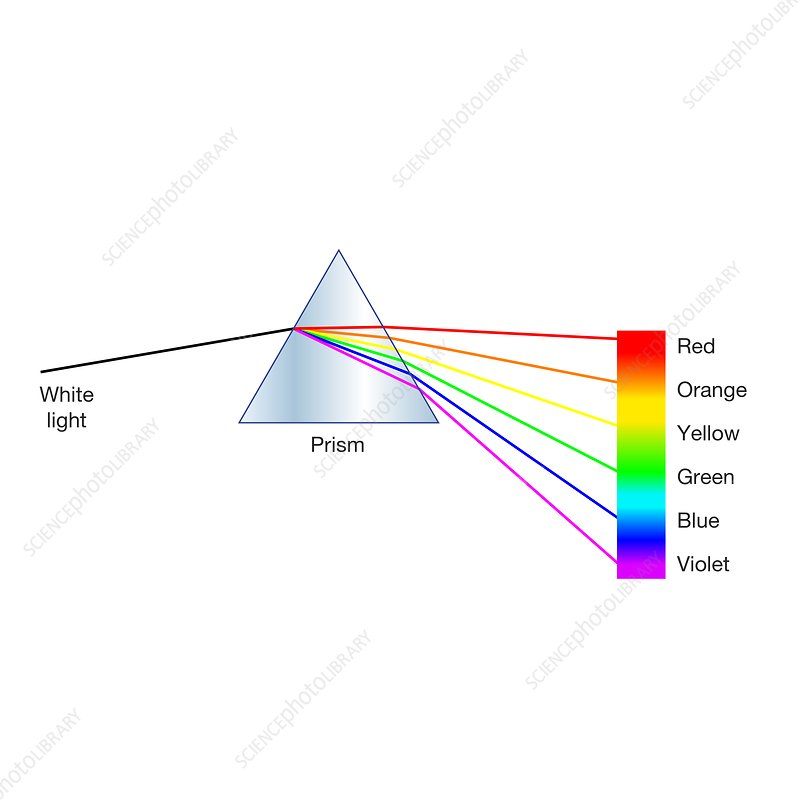
Violet light
Is refracted the most
Red light
Is refracted the leat
Wave Theory of Light
Proved by Thomas Young, where he discovered interference, a single source of light produces two beams that are in phase, having their crests and troughs together as they move away from the source.
Particle Theory of Light
Light is said to be a form of energy, and it gives its energy to matter when it is absorbed, like increase in temperature.
Line of sight principle
Suggests that to view an image of an object in a mirror, a person must sight along a line at the image of the object.
Ray diagram
A diagram that traces the path that light takes in order for a person to view a point on the image of an object
Rays
Drawn for the incident ray and the reflected ray
Complex objects
Such as people are often represented by stick figures or arrows
Real image
Formed when rays converge; can be seen on screen
VIrtual image
Is formed when rays only appear to diverge; cannot be formed on the screen
Plane mirrors
The image formed in this mirror is always a virtual image that is upright and left-right reversed.
Distance is the same to the object and the mirror
Size is the same as the object
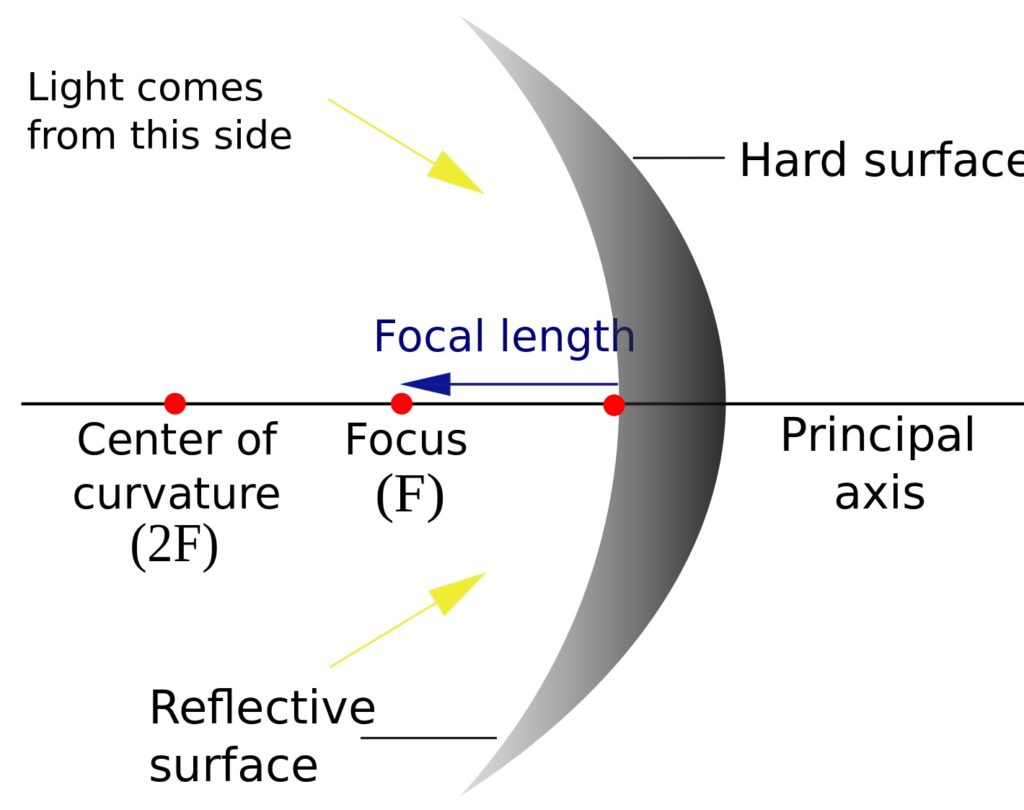
Principal axis
Line of symmetry of the curved/parabolic mirror perpendicular to the curved surface at its center
Center of curvature
The center of the sphere which the mirror is part
Vertex
The point where the principal axis meets the surface of the mirror
Focal Point
Which incident parallel rays come to a focus after reflection
Focal length
The distance between the F and the center of the mirror (vertex)
Radius of Curvature
The distance from the vertex to the center of curvature.
Concave mirror
Turns parallel rays into covergent rays, used for magnifying mirrors for shaving and applying makeup and are also used in reflecting telescopes.
Curves inward like a bowl
Convex Mirror
Diverging mirror, rays are reflected outwards, appears to be spreading out from point, principall focus, behind the mirror
Curves outward
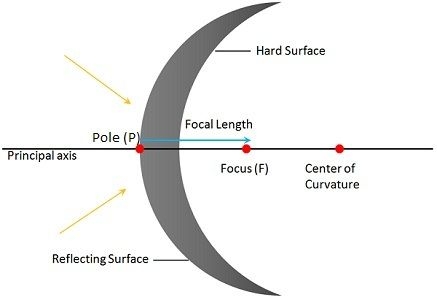
Image Formation in a Spoon
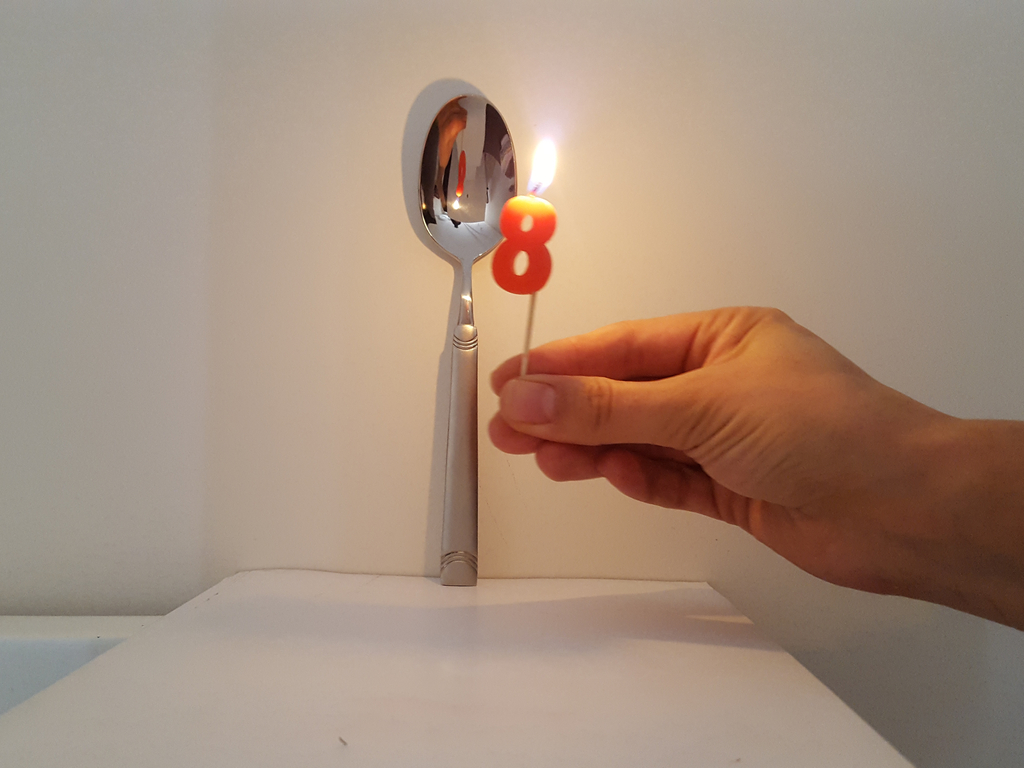
The front surface of a spoon acts like a concave mirror, while the back side acts like a convex mirror.
The Rainbow
A rainbow is a colorful arc that appears in the sky when sunlight shines through raindrops. It’s commonly seen when the Sun is low in the sky (early morning or late afternoon) and rain is falling in the opposite direction.
Why the Sky is Blue
Blue and violet light have shorter wavelengths, so they scatter more than other colors. Our eyes are more sensitive to blue than violet, which is why we see the sky as blue.
Why Sunsets are Reddish
During sunrise and sunset, sunlight has to travel a longer path through the atmosphere. By the time it reaches us, most of the blue and violet light has been scattered away.
What remains is the red and orange light, which gives the sky its warm colors at those times.
Mirage
A mirage is an optical illusion that makes it look like there’s water on the road or shimmering surfaces in the distance — especially on hot days.
Laser (Light Amplification by Stimulated Emission of Radiation)
A laser is a device that produces a strong, focused beam of light. Unlike regular light, laser light is very organized — the waves are all the same color, direction, and phase.