biology - metabolism and independence
 Call Kai
 Learn
Learn Practice Test
 Spaced Repetition
 Match
Match Flashcards
 Knowt Play
1/479

There's no tags or description
Looks like no tags are added yet.
Name | Mastery | Learn | Test | Matching | Spaced | Call with Kai | Chat |
|---|
No analytics yet
Send a link to your students to track their progress
480 Terms
What is metabolism?
sum of all chemical reactions in the body
What are the two types of metabolic reactions?
anabolism and catabolism
What is catabolism?
Breaking down complex molecules into simpler ones. releasing energy in the process
Examples of catabolism
Digestion and cellular respiration
What is anabolism?
building up smaller molecules into bigger ones, requiring energy
Examples of anabolism
- Protein synthesis
- DNA synthesis
- Photosynthesis
What are the main functions of the liver
-Controlling blood glucose levels
-deanimation
-Detoxifying poisonous substances (such as ethanol from alcoholic drinks)
-produces bile, which helps digest fats
-Removing lactic acid
How is the liver involved in controlling blood glucose levels?
When blood glucose levels are too high (after a meal), the liver stores glucose as glycogen (using insulin). When levels are too low, it breaks glycogen back into glucose (glucagon)
How does the liver break down alcohol?
Ethanol is broken down into water and carbon dioxide
How does the liver break down lactic acid?
blood flowing through the muscles transports the lactic acid to the liver, where it is converted back into glucose or oxidised to form CO2 and H2O
What is homeostasis?
Maintaining a stable internal environment despite external/internal changes.
Why is homeostasis important?
To maintain optimal conditions for enzyme action and all cell functions
Examples of homeostatsis
Body temperature
Glucose levels
Water content
Does homeostasis work through positive or negative feedback?
negative feedback
How does homeostasis work?
1. Receptors detect a stimulus (change)
2. Coordination centres receive and process the information and send out signals to the body
3. Effectors (like muscles or glands) respond to restore the conditions back to the optimum levels
What are receptors?
Specialised cells that detect changes in the internal or external environment
They convert a stimulus into an electrical impulse.
What are coordination centres?
areas in the body that receive and process information from the receptors and coordinate the appropriate response
this includes the brain, spinal chord, pancreas and pituitary gland
What are effectors?
muscles, glands or organs that responds to restore optimum conditions
How does homeostasis work? (simplified)
Stimuli →receptor→coordination centre→effector
Examples of homeostasis
sweating and shivering
What happens if you get too hot?
Sweat glands produce sweat. Blood vessels in the skin widen (vasodilation) to release heat
What happens if you get too cold?
Hairs stand on end which traps a layer of air. Blood vessels in the skin get narrower (vasoconstriction) to keep heat in. you start to shiver.
What is the nervous system
The body's communication system. It uses electrical impulses to enable you to react quickly to your surroundings and coordinate your behaviour
What does the nervous system do?
It allows you to react to your surroundings, control your body's movement and regulates processes inside the body (ike heart rate or breathing)
What is the function of the nervous system?
The nervous system allows the body to react to its surroundings and coordinate an appropriate response.
What is the difference between the endocrine system and the nervous system?
The nervous system uses fast, localized electrical and chemical signals (neurotransmitters) for immediate responses, while the endocrine system uses slower, widespread chemical signals (hormones) carried through the bloodstream for long-lasting effect
What are chemoreceptors?
Receptors that respond to chemical stimuli (like taste receptors in the mouth and olfactory receptors in the nose)
What are photoreceptors?
Receptors that detect light (Like rods and cones in the retina of the eyes, which are responsible for vision)
What are mechanoreceptors?
Receptors that detect mechanical stimuli such as touch, pressure, sound or vibrations (like receptors in the skin that detect touch or cochlear hair cells in the ears that detect sound vibration)
What are receptors?
Cells that detect stimuli (changes in the environment)
What are thermoreceptors?
receptors that respond to changes in temperature. found in the skin
What are nociceptors?
Pain receptors that detect harmful stimuli. They are found throughout the body and alert us to potential injuries or tissue damage
What are coordination centres?
areas that receive and process information from receptors and coordinate the appropriate response
What is the central nervous system?
made up of the brain and spinal cord. acts as the control centre. it processes information and makes decisions.
What is the peripheral nervous system?
consists of all the nerves outside the brain and spinal cord
What is the function of the CNS?
to act as the body's coordinator. It receives electrical impulses from receptors (which detect stimuli), processes this information, and coordinates a response by sending impulses to effectors
What is the function of the PNS?
to act as the communication network connecting the Central Nervous System (CNS) to the rest of the body
What are neurones?
Cells that carry electrical impulses. it is how the body sends messages through the body
What are the three main types of neurons?
sensory, motor and relay neurons
What do sensory neurons do?
carries messages from the sense organs to the central nervous system
Where are the sensory neurons located?
in the peripheral nervous system (PNS)
What do motor neurons do?
carries messages from the central nervous system to the muscles or glands
Where are the motor neurons located?
in the Central Nervous System
What do relay neurons do?
Links the sensory and motor neurons together. Found inside the central nervous system
Where are the relay neurons located?
in the Central Nervous System
How do neurons send messages?
by releasing chemicals called neurotransmitters
What are the adaptations of neurons?
-long axon
-myelin sheath (fatty insulating layer that covers the axon)
-many dendrites (Branch-like extensions that receive signals from other neurons)
-many mitochondria
What is the difference between a nerve and a neuron?
A neuron is a single, individual nerve cell responsible for carrying electrical impulses.
A nerve is a bundle of thousands of these individual neurons grouped, acting like a cable to transmit signals across the body
Why do neurons have lots of mitochondria
they require huge amounts of energy to transmit electrical impulses across the body and to produce chemical messenger molecules (neurotransmitters) at the synapse.
What is the function of dendrites in neurons?
Increases the surface area for receiving signals from other neurons or sensory receptors.
What is the function of the axon in neurons?
carries impulses away from the cell body
What is the function of the myelin sheath in neurons?
to speed up electrical nerve impulses and prevent the signal from leaking out as it travels along the nerve
Why do neurons have a long axon?
to carry electrical impulses quickly over long distances across the body
How do neurons work?
1. Electrical impulse travels along the first neuron and reaches the end of it
2. The impulse causes tiny sacs (vesicles) inside the neuron to release neurotransmitter chemicals into the synapse
3. Neurotransmitters diffuse across the gap to the second neuron
4. Receptors on the next neuron detect them. The neurotransmitters bind to the receptor sites on the surface of the second neuron
5. This starts a new electrical signal in the next neuron, continuing the message
6. The neurotransmitters are broken down by enzymes or reabsorbed by the first neurons. The synapse is ready for the next message
What is a synapse?
Gap between neurons
What are neurotransmitters?
chemical messengers that cross the synaptic gaps between neurons
How does the nervous system work?
The sensory receptor detects a stimulus, and the information about the change in the environment is sent as an electrical impulse that passes along neurons
The sensory neurons carry the impulses to the central nervous system from the sense organ or receptor
The brain processes the information and coordinates the response. The brain then sends an impulse to the motor neuron
The impulse the motor neuron carries stimulates the effectors to bring about responces
Examples of effectors
muscles and glands
How do muscles respond to an impulse?
by contracting
How do glands respond to an impulse?
they secrete hormones
Nervous system summary
Stimulus -> Receptor -> Sesory neuron -> Coordinator (CNS) -> Motor neuron -> Effector
Why are synapses important?
- ensure impulses travel in one direction only
- allows an impulse from one neuron to be transmitted to multiple other neurons
- can make signals faster or slower
What is a reflex arc
Involuntary response to an external stimulus.
How does the reflex arc work?
1. The stimulus is detected by a receptor, and an electrical impulse is passed on to the sensory neuron to the spinal cord, where it is passed to a relay neuron.
The relay neuron processes the information and transfers the impulse to the motor neuron
The motor neuron carries the impulse from the CNS to the effector, and the effector carries out a responce
How does the reflex arc react to touching a hot object?
When you touch a hot object, a receptor on the skin is stimulated, and an electrical impulse from a receptor is passed along the sensory neuron to the spinal cord, where it is passed to a relay neuron.
The relay neuron processes the information and transfers the impulse to the motor neuron
The motor neuron carries the impulse from the CNS to the muscles in the arm, causing them to contract
the relay neuron also sends a slower, secondary signal to the brain so you eventually feel the sensation
Reflex arc summary
Stimuli--> receptor--> sensory neuron--> relay neuron--> motor neuron
What is the coordinator in a reflex arc?
a relay neuron in the spinal cord or in the unconscious areas of the brain
Why is a reflex arc so fast?
because it skips conscious thought
What is the function of the brain?
Controls the body
What is the difference between the reflex arc and the nervous system?
The nervous system is the body's entire communication network.
A reflex arc is a specific, smaller pathway within it that allows for rapid, automatic responses to stimuli without conscious thought.
What is the cerebrum?
The largest part of the brain
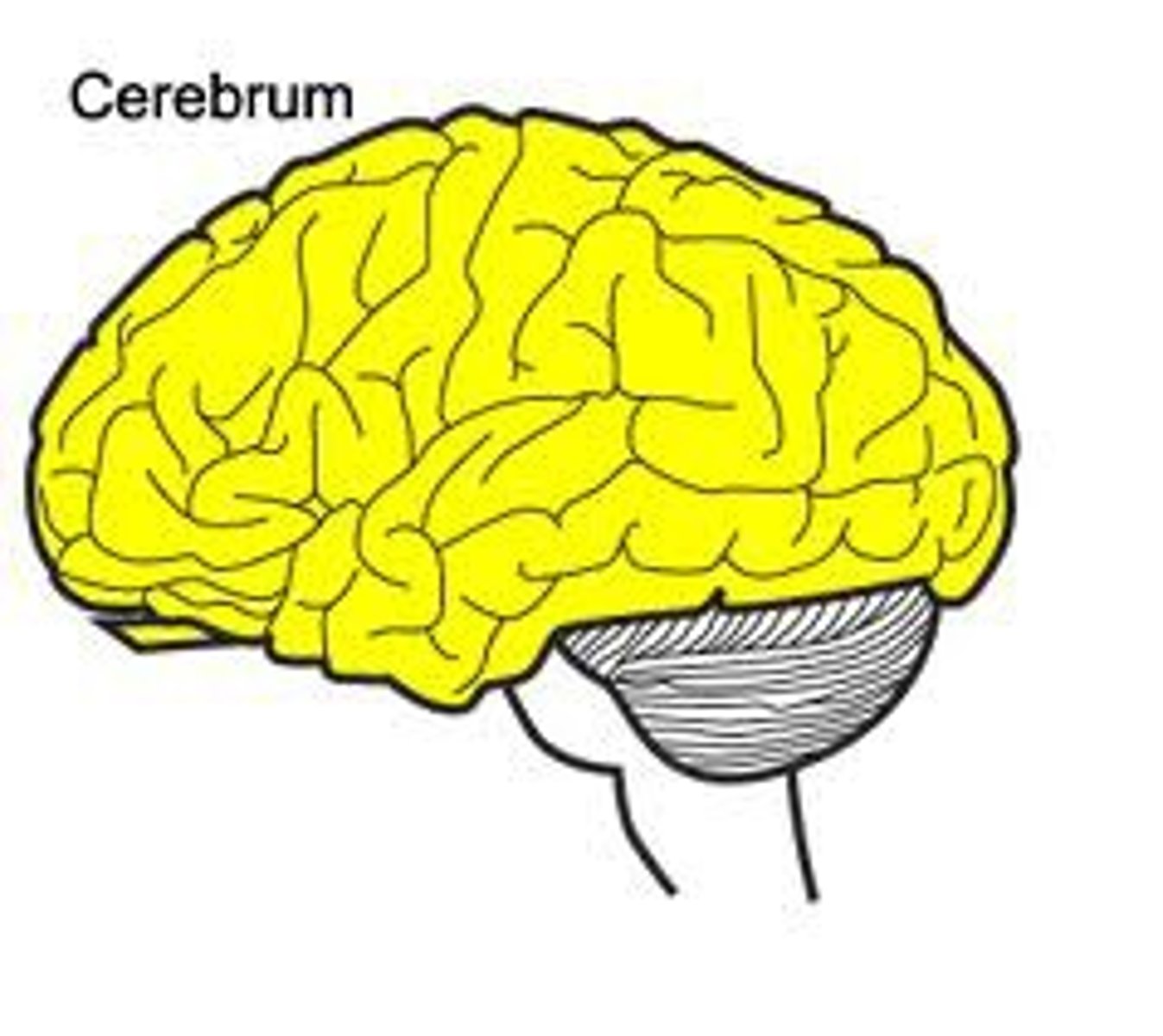
What is the function of the cerebrum?
Responsible for functions like:
conscious thought
learning
memory
senses
voluntary movement
What are the adaptations of the cerebrum?
The surface is wrinkled, which increases the surface area to fit more neurons
What is the cerebral cortex?
-The outer layer of the brain
-only a few millimetres thick but is packed with neurons
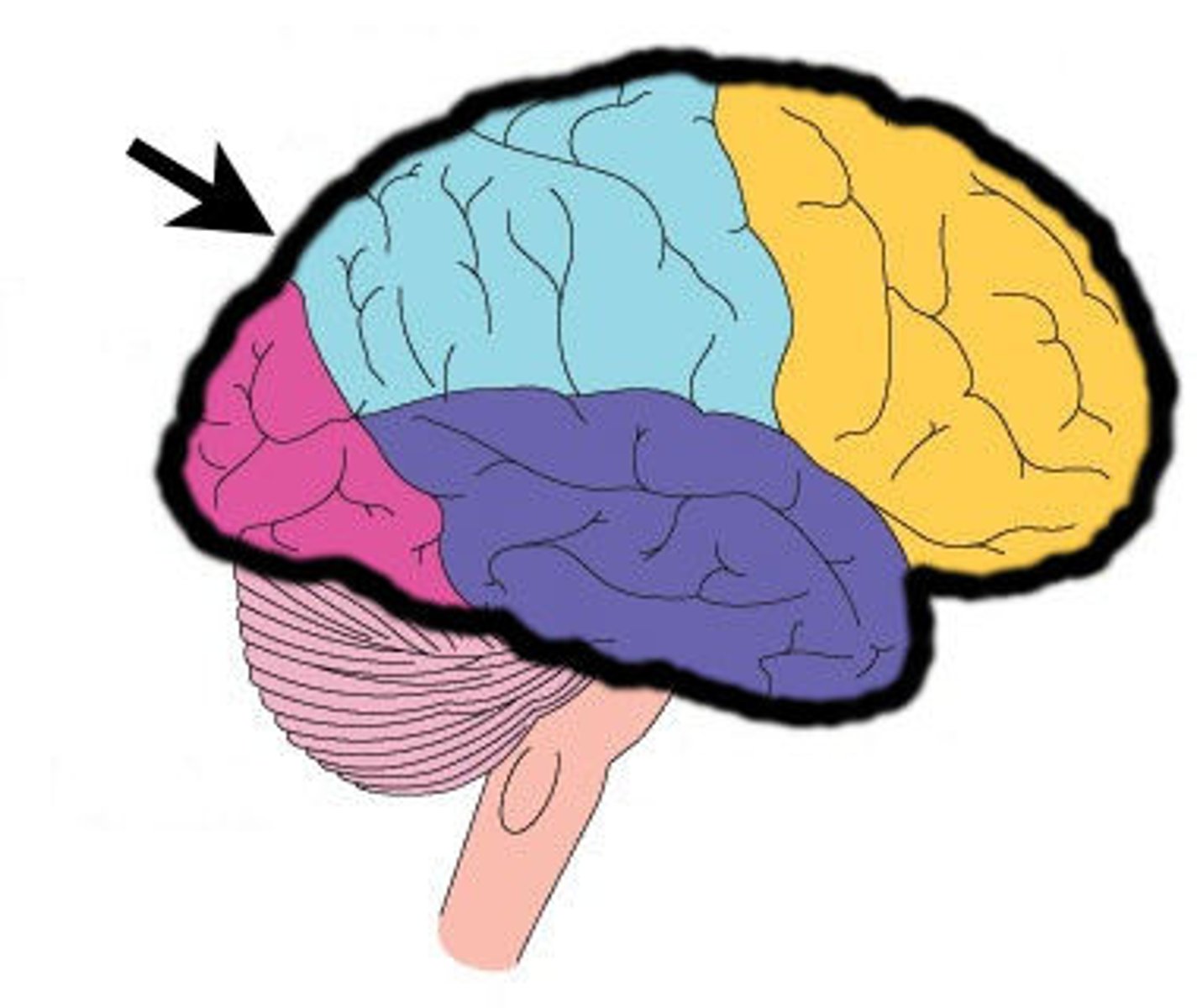
What is the function of the cerebral cortex?
consciousness
intelligence
emotions
decision making
language
personality
What is the cerebellum?
Found underneath the back of the brain
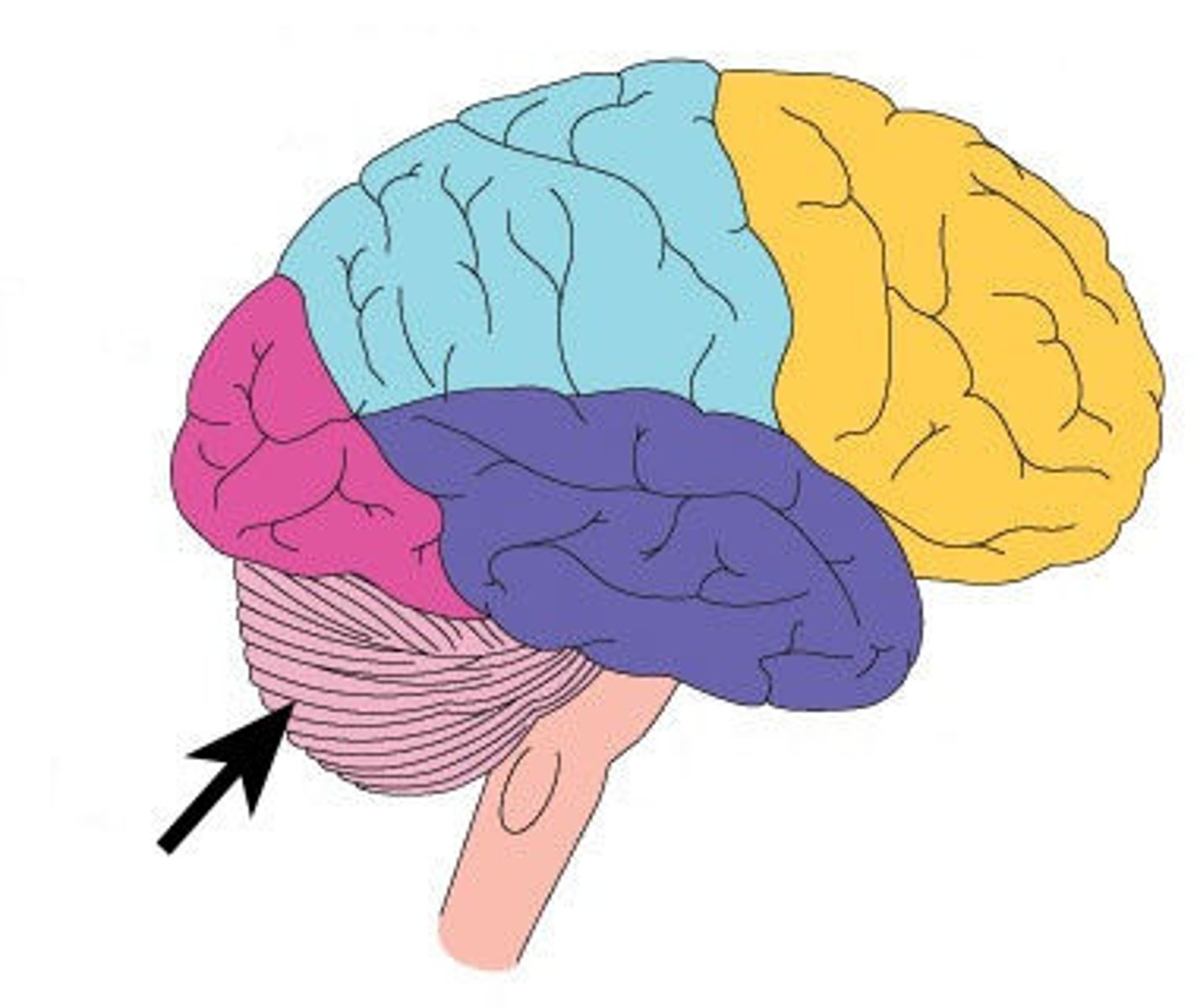
What is the function of the cerebellum?
Controls balance
muscle coordination
What is the medulla?
-At the base of the brain
-connected to the brainstem
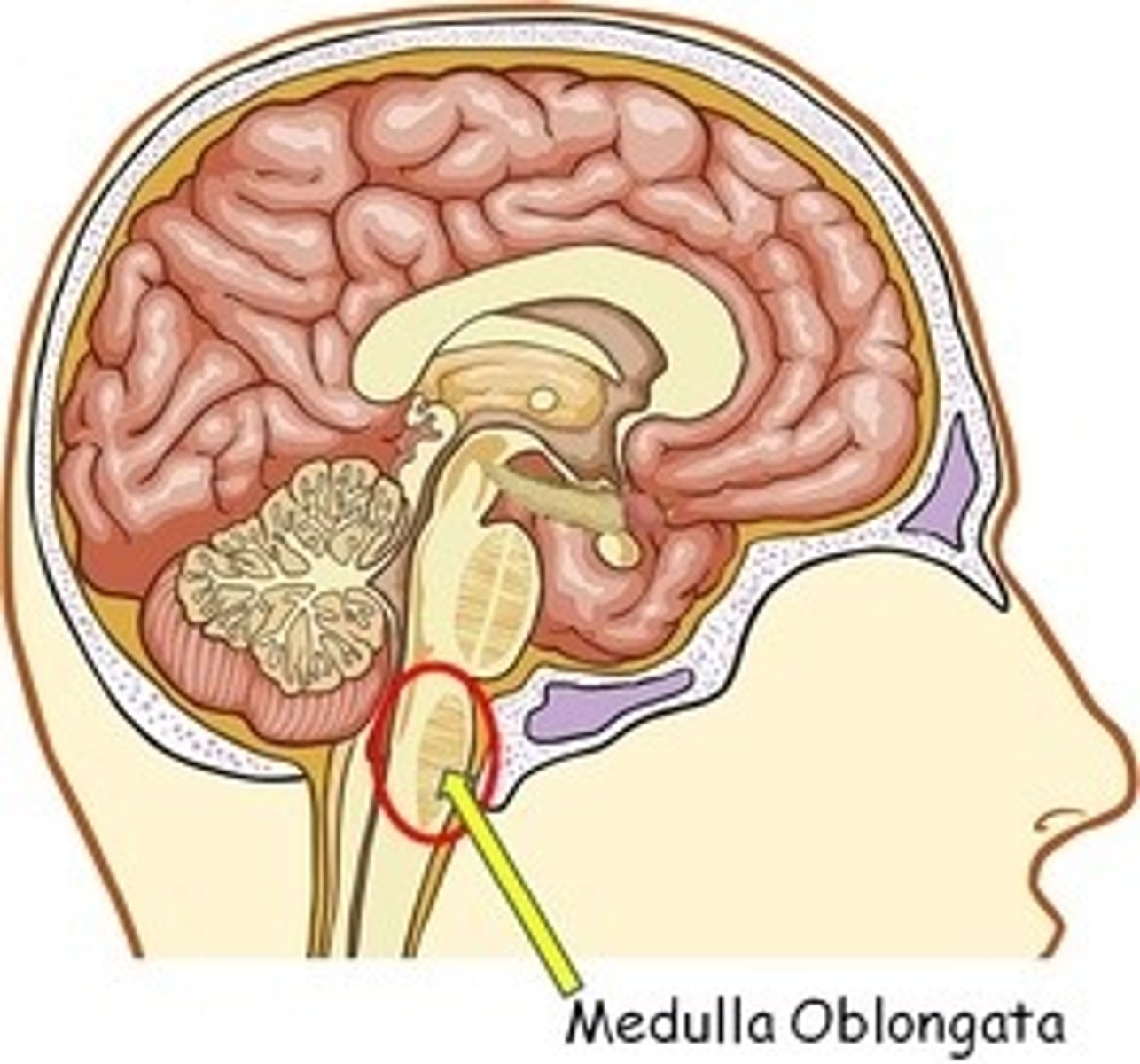
What is the function of the medulla?
controls unconscious, automatic functions like:
breathing rate
heart rate
What is the hypothalamus?
-controls homeostasis and pituitary gland
-controls body temperature, thirst and hunger
-sends signals to the pituitary glad
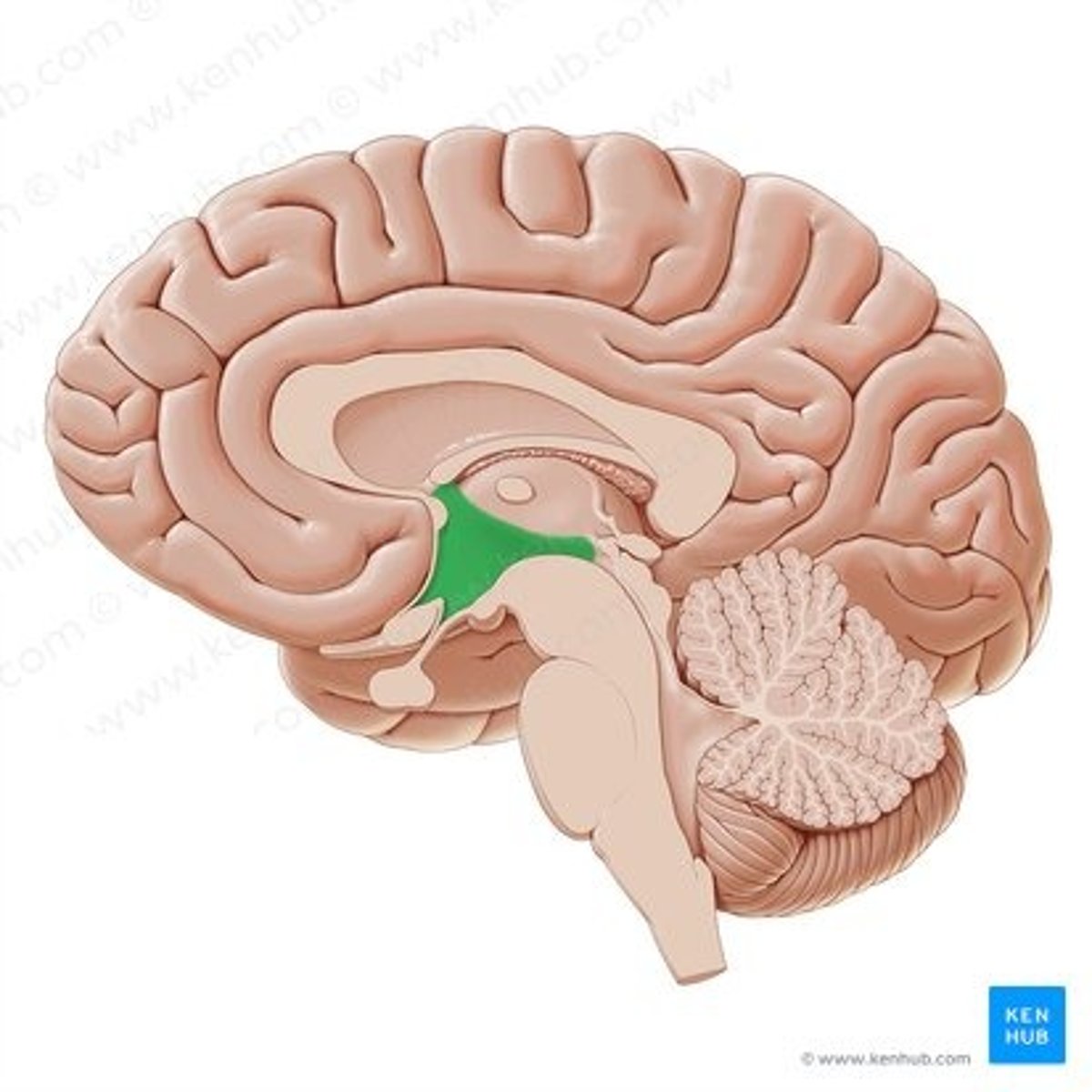
What is the function of the hypothalamus?
water balace
body temperature
controls the pituitary gland
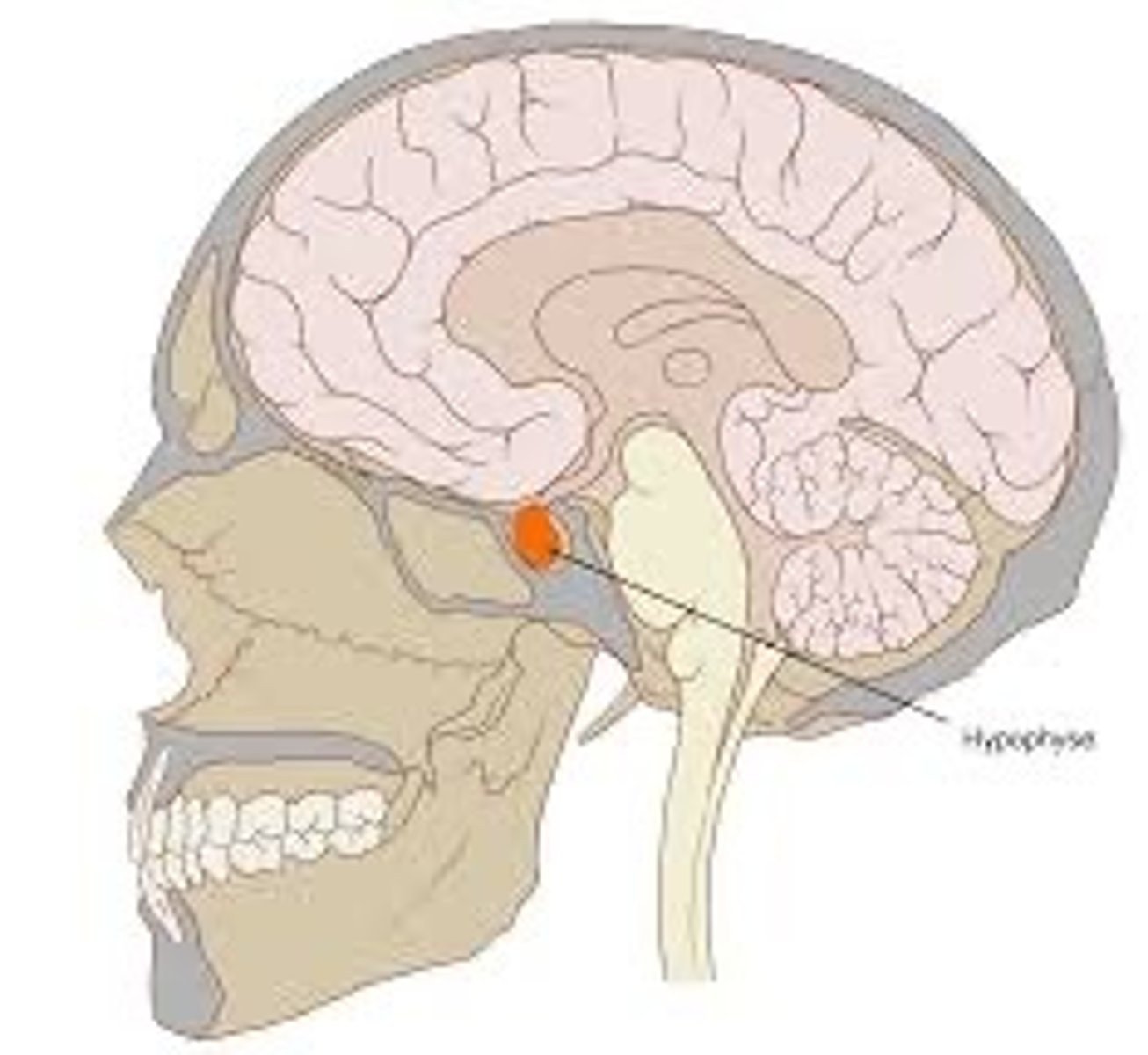
What is the pituitary gland?
It is the master gland. It produces many hormones that regulate homeostasis e.g ADH, FSH
Who is Phinneas Gage?
A man who was involved in an explosives accident. An iron rod passed through his skull which removed part of his cerebral cortext. he survived for 13 years but his personality changed. He became wild rude and unreliable.
What are MRI scans?
Magnetic resonance imaging. Use magnetic fields to produce clear and detailed images. Used to detect tumors or brain disorders
What are the problems with the brain?
-it is very delicate and complex
-as a result it is very difficult to investigate and treat brain disorders
-drugs don't always reach the brain through the membranes that surround it
-Surgery is difficult because it is not fully understood what areas of the brain do, so it is easy to cause unintended damage
What is the function of the eye
detects light energy (photons) and transmits information about intensity, color, and shape to the brain
What is the cornea?
-the transparent layer forming the front of the eye
-refracts light to help it focus on the retina
What is the lens?
-clear, flexible structure just behind the ppupil
-focuses light onto the retina
-fine tunes the focus by changing shape (accommodation)
-controlled by the ciliary muscles and suspensory ligaments
What is the iris?
-a ring of muscle
-colored part of the eye
-controls the size of the pupil
How does the iris control the amount of light entering the eye?
In bright lights:
-the circular muscles contract
-the radial muscles relax
-making the pupil smaller (constriction), so less light enters to protect the retina
In dim lights:
-The radial muscles contract
-The circular muscles relax
-This makes the pupil bigger(dilation) so more light can enter the eye, and you can see better
How does the pupil reflex act in bright lights?
-the circular muscles contract
-the radial muscles relax
-making the pupil smaller (constriction), so less light enters to protect the retina
How does the pupil reflex act in dim lights?
-The radial muscles contract
-The circular muscles relax
-This makes the pupil bigger(dilation) so more light can enter the eye, and you can see better
What is the pupil reflex?
reflex action carried out by the iris to protect the retina from damage in bright light, and protect us from not seeing objects in dim light
What are the two types of fibres in the iris?
-circular muscles (go around the pupil)
-radial muscles (stretch outwards from the pupil)
What is pupil?
-The hole in the centre where light enters
-the size of the pupil changes to control how much light enters the eye
What is the retina?
-found at the back of the eye
-contains light receptor cells (rods and cones)
What are rods?
Light receptor cells are responsible for seeing in the dark, sensitive to dim light.
What are cones?
Light receptor cells that work in bright light and detect colour
What is the optic nerve
Carries electrical impulses from the receptors in the retina to the brain
What is the sclera?
-the tough white outer layer of the eye
-protects the eye from damage